

Influence of diet on the gut microbiome and implications for human health
Open accessThe DOI matches its Crossref record; 198 of the 198 references it cites were found in a registry or an index.
Abstract
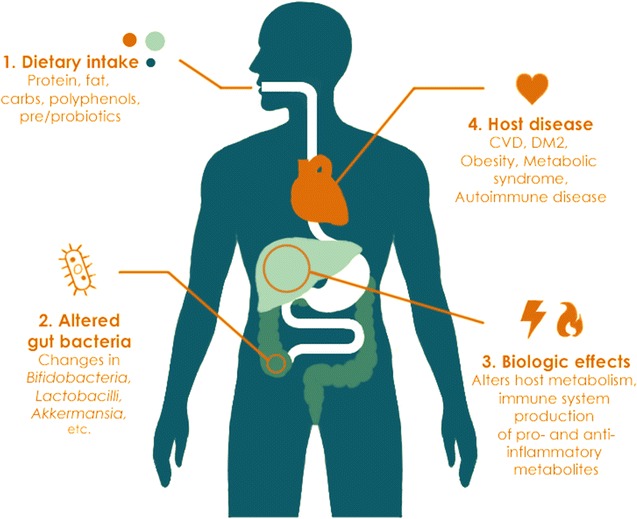
Recent studies have suggested that the intestinal microbiome plays an important role in modulating risk of several chronic diseases, including inflammatory bowel disease, obesity, type 2 diabetes, cardiovascular disease, and cancer. At the same time, it is now understood that diet plays a significant role in shaping the microbiome, with experiments showing that dietary alterations can induce large, temporary microbial shifts within 24 h. Given this association, there may be significant therapeutic utility in altering microbial composition through diet. This review systematically evaluates current data regarding the effects of several common dietary components on intestinal microbiota. We show that consumption of particular types of food produces predictable shifts in existing host bacterial genera. Furthermore, the identity of these bacteria affects host immune and metabolic parameters, with broad implications for human health. Familiarity with these associations will be of tremendous use to the practitioner as well as the patient.
Overview
The claims and statistics of this paper haven’t been checked yet.
Free: it reads the open-access text and checks the first 5 claims that cite a source we can check. Create a free account to check every claim.
Integrity signals
Registry
Cites
Statistics
Figures
Verification
Claims the paper makes
The claims and statistics of this paper haven’t been checked yet.
Free: it reads the open-access text and checks the first 5 claims that cite a source we can check. Create a free account to check every claim.
Claims other papers make about this one
Each is checked against this paper’s own text: does it say what the citing paper says it does?
The source backs part of the claim, not all of it — or backs it for a different population, condition or comparison.
In the citing paper
“Many bacteria associated with ICI response have known dietary associations, such that specific dietary patterns (e.g., plant-based versus western diet) are associated with increased or decreased relative abundances of these candidate taxa.131–135”
From Melanoma and microbiota: Current understanding and future directions (2024) · cites this paper as [134]
Experimental — accuracy not yet measuredThe cited source says what the claim attributes to it.
In the citing paper
“In addition, strategies that could mitigate the likelihood of LPS release into the blood and, thus, endotoxin-associated symptoms, include limiting the consumption of saturated fat [138], avoiding the consumption of non-steroidal anti-inflammatory drugs (NSAIDs) [139], and maintaining an adequate water intake [139].”
From International Society of Sports Nutrition Position Stand: nutritional considerations for single-stage ultra-marathon training and racing (2019) · cites this paper as [138]
The cited source says what the claim attributes to it.
In the citing paper
“Different sources of protein in a diet has been shown to influence different gut microbiota profiles (Singh et al., 2017).”
From The Microbiota-Gut-Brain Axis (2019) · cites this paper as Singh et al., 2017
In the citing paper
“In mice, animal-based protein increases potential detrimental gut microbes, e.g., Peptostreptococcaceae, Ruminococcaceae, Enterococcus, Streptococcus, Turicibacter, or Escherichia (92), and plant-based protein boosts the abundance of Bifidobacterium, Roseburia, and Lactobacillus and lowers the abundance of pathogens such as Bacteroides fragilis and Clostridium perfringens (37,42,80).”
From Diet and the Microbiota–Gut–Brain Axis: Sowing the Seeds of Good Mental Health (2021) · cites this paper as [80]
Self-check
Percentages, sums and reported differences re-computed from the paper’s own numbers.
The self-check needs the paper’s full text.
Citations
Cites
An obesity-associated gut microbiome with increased capacity for energy harvest
Turnbaugh, P. J., Ley, R. E., Mahowald, M. A., Magrini, V., Mardis, E. R., & Gordon, J. I. (2006) · Nature · doi:10.1038/nature05414 · Cited by 12,444 · cited 1×
“Furthermore, studies involving microbiota transplantation from obese to lean mice have shown that the obese phenotype is transmissible and may be promoted by microbiota that have increased capacity to harvest energy from the host diet [23].”
BackgroundDiet rapidly and reproducibly alters the human gut microbiome
David, L. A., Maurice, C. F., Carmody, R. N., Gootenberg, D. B., Button, J. E., Wolfe, B. E., Ling, A. V., Devlin, A. S., Varma, Y., Fischbach, M. A., et al. (2014) · Nature · doi:10.1038/nature12820 · Cited by 10,100
Human gut microbes associated with obesity
Ley, R. E., Turnbaugh, P. J., Klein, S., & Gordon, J. I. (2006) · Nature · doi:10.1038/4441022a · Cited by 8,785
Enterotypes of the human gut microbiome
MetaHIT Consortium (additional members), Arumugam, M., Raes, J., Pelletier, E., Le Paslier, D., Yamada, T., Mende, D. R., Fernandes, G. R., Tap, J., Bruls, T., et al. (2011) · Nature · doi:10.1038/nature09944 · Cited by 7,548 · cited 1×
“Recently, it has been shown that microbiota can effectively be subdivided into different enterotypes, each enriched by particular bacterial genera, but that all seem to share high functional uniformity [4].”
BackgroundChanges of Intestinal Functions in Liver Cirrhosis
Fukui, H., & Wiest, R. (2016) · Inflammatory Intestinal Diseases · doi:10.1159/000444436 · Cited by 6,808
A metagenome-wide association study of gut microbiota in type 2 diabetes
Qin, J., Li, Y., Cai, Z., Li, S., Zhu, J., Zhang, F., Liang, S., Zhang, W., Guan, Y., Shen, D., et al. (2012) · Nature · doi:10.1038/nature11450 · Cited by 6,762
Linking long-term dietary patterns with gut microbial enterotypes
Wu, G. D., Chen, J., Hoffmann, C., Bittinger, K., Chen, Y.-Y., Keilbaugh, S. A., Bewtra, M., Knights, D., Walters, W. A., Knight, R., et al. (2011) · Science · doi:10.1126/science.1208344 · Cited by 6,513 · cited 2×
“While the microbiome of a healthy individual is relatively stable, gut microbial dynamics can certainly be influenced by host lifestyle and dietary choices [26].”
BackgroundTrumbo, P., Schlicker, S., Yates, A. A., & Poos, M. (2002) · Journal of the American Dietetic Association · doi:10.1016/s0002-8223(02)90346-9 · Cited by 5,993
De Filippo, C., Cavalieri, D., Di Paola, M., Ramazzotti, M., Poullet, J. B., Massart, S., Collini, S., Pieraccini, G., & Lionetti, P. (2010) · Proceedings of the National Academy of Sciences · doi:10.1073/pnas.1005963107 · Cited by 5,579
Commensal microbe-derived butyrate induces the differentiation of colonic regulatory T cells
Furusawa, Y., Obata, Y., Fukuda, S., Endo, T. A., Nakato, G., Takahashi, D., Nakanishi, Y., Uetake, C., Kato, K., Kato, T., et al. (2013) · Nature · doi:10.1038/nature12721 · Cited by 5,549
Research works printed but not linked: 3
- Baron S Clostridium. Baron’s Med. microbiol 1996 4 Galveston University of Texas Medical Branch
- Todar K Pathogenic E coli. Online textbook of bacteriology 2007 Wisconsin University of Wisconsin-Madison Deparment of Bacteriology 11 30
- Patterson M. Streptococcus. In: Baron S, editor. Baron’s Med Microbiol. 4th ed. Galveston: University of Texas Medical Branch. 21413248
Cited by
Items 201–300 of 1,006
Gut and genital tract microbiomes: Dysbiosis and link to gynecological disorders
Elkafas, H., Walls, M., Al-Hendy, A. A., & Ismail, N. (2022) · Frontiers in Cellular and Infection Microbiology · doi:10.3389/fcimb.2022.1059825 · Cited by 144
“The microbiome can in turn influence the overall health of the host (Evans et al., 2014; Singh et al., 2017; Hasan and Yang, 2019; Rinninella et al., 2019).”
BackgroundEng, L., Sutradhar, R., Niu, Y., Liu, N., Liu, Y., Kaliwal, Y., Powis, M. L., Liu, G., Peppercorn, J. M., Bedard, P. L., et al. (2023) · Journal of Clinical Oncology · doi:10.1200/jco.22.00074 · Cited by 105
“3 (1-2) Total doses of antibiotics Doses, median (IQR) 30 (18-60) 21 (14-36)”
The Microbiota–Gut–Brain Axis: Psychoneuroimmunological Insights
Marano, G., Mazza, M., Lisci, F. M., Ciliberto, M., Traversi, G., Kotzalidis, G. D., De Berardis, D., Laterza, L., Sani, G., Gasbarrini, A., et al. (2023) · Nutrients · doi:10.3390/nu15061496 · Cited by 104
“Perfringens in particular), and an increase in Bifidobacteria and Lactobacillus [39].”
BackgroundInfluentialChemopreventive effects of some popular phytochemicals on human colon cancer: a review
Zhao, Y., Hu, X., Zuo, X., & Wang, M. (2018) · Food & Function · doi:10.1039/c8fo00850g · Cited by 109
The role of dietary proteins and carbohydrates in gut microbiome composition and activity: A review
Peled, S., & Livney, Y. D. (2021) · Food Hydrocolloids · doi:10.1016/j.foodhyd.2021.106911 · Cited by 118
Forte, N., Fernández-Rilo, A. C., Palomba, L., Di Marzo, V., & Cristino, L. (2020) · International Journal of Molecular Sciences · doi:10.3390/ijms21051554 · Cited by 103
The gut microbiome in Parkinson's disease: A culprit or a bystander?
(2020) · Progress in Brain Research · doi:10.1016/bs.pbr.2020.01.004 · Cited by 103
Multiple areas of the cerebral cortex influence the stomach
Levinthal, D. J., & Strick, P. L. (2020) · Proceedings of the National Academy of Sciences · doi:10.1073/pnas.2002737117 · Cited by 103
Luteolin, inflammation and cancer: Special emphasis on gut microbiota
Franza, L., Carusi, V., Nucera, E., & Pandolfi, F. (2021) · BioFactors · doi:10.1002/biof.1710 · Cited by 111
“histolyticum).(37) Clostridium perfringens, Clostridium difficile and Bacteroides spp seem to be directly inhibited in their growth by flavonoids, and polyphenols,(38) as demonstrated by Lee et al.”
BackgroundPeña-Jorquera, H., Cid-Jofré, V., Landaeta-Díaz, L., Petermann-Rocha, F., Martorell, M., Zbinden-Foncea, H., Ferrari, G., Jorquera-Aguilera, C., & Cristi-Montero, C. (2023) · Nutrients · doi:10.3390/nu15143244 · Cited by 103
“[95] analyzed the effect of different types of protein (animal-based protein and plant-based protein) and found that pea protein increased intestinal SCFAs levels, which are considered anti-inflammatory and essential to the maintenance of the mucosal barrier [96].”
BackgroundNutrition Interventions in Rheumatoid Arthritis: The Potential Use of Plant-Based Diets. A Review
Alwarith, J., Kahleová, H., Rembert, E., Yonas, W., Dort, S., Calcagno, M., Burgess, N. N., Crosby, L., & Barnard, N. D. (2019) · Frontiers in Nutrition · doi:10.3389/fnut.2019.00141 · Cited by 122
Diet, Microbiome, and Cancer Immunotherapy—A Comprehensive Review
Szczyrek, M., Bitkowska, P., Chunowski, P., Czuchryta, P., Krawczyk, P. A., & Milanowski, J. (2021) · Nutrients · doi:10.3390/nu13072217 · Cited by 113
“However, it has been shown that already two weeks of an animal-based diet can lead to an increased level of Fusobacterium nucleatum in the subject’s gut microbiota [41,54,56].”
BackgroundInfluentialLeis, R., de Castro, M.-J., de Lamas, C., Picáns, R., & Couce, M. L. (2020) · Nutrients · doi:10.3390/nu12051487 · Cited by 101
“Probiotics and prebiotics have attracted considerable interest in recent years as potential symptomatic treatments for lactase insufficiency, owing to their ability to modulate the gastrointestinal flora, promoting lactase digestion and increasing colonic compensation [24,25].”
BackgroundThe Human Gut Phageome: Origins and Roles in the Human Gut Microbiome
Townsend, E. M., Kelly, L., Muscatt, G., Box, J. D., Hargraves, N., Lilley, D., & Jameson, E. (2021) · Frontiers in Cellular and Infection Microbiology · doi:10.3389/fcimb.2021.643214 · Cited by 120
Kalkan, A. E., BinMowyna, M. N., Raposo, A., Ahmad, M. F., Ahmed, F., Otayf, A. Y., Carrascosa, C., Saraiva, A., & Karav, S. (2025) · Nutrients · doi:10.3390/nu17081305 · Cited by 135
“(highlighted by reduced diversity changes in composition) is associated with conditions such as obesity, diabetes, and inflammatory bowel disease (IBD) [32–34].”
Metabolomics and microbiomes as potential tools to evaluate the effects of the Mediterranean diet
Jin, Q., Black, A., Kales, S. N., Vattem, D., Ruiz-Canela, M., & Sotos-Prieto, M. (2019) · Nutrients · doi:10.3390/nu11010207 · Cited by 100
Partula, V., Mondot, S., Torres, M. J., Kesse-Guyot, E., Deschasaux, M., Assmann, K., Latino-Martel, P., Buscail, C., Julia, C., Galan, P., et al. (2019) · The American Journal of Clinical Nutrition · doi:10.1093/ajcn/nqz029 · Cited by 100
Burleigh, M., Liddle, L., Muggeridge, D. J., Monaghan, C., Sculthorpe, N., Butcher, J., Henriquez, F., & Easton, C. (2019) · Nitric Oxide · doi:10.1016/j.niox.2019.04.010 · Cited by 94
Gut microbiome and prostate cancer
Fujita, K., Matsushita, M., Banno, E., Velasco, M. A. D., Hatano, K., Nonomura, N., & Uemura, H. (2022) · International Journal of Urology · doi:10.1111/iju.14894 · Cited by 116
Mechanisms of gut bacterial metabolism of dietary polyphenols into bioactive compounds
Alqudah, S., & Claesen, J. (2024) · Gut Microbes · doi:10.1080/19490976.2024.2426614 · Cited by 125
Han, M., Yang, K., Yang, P., Zhong, C., Chen, C., Wang, S., Lu, Q., & Ning, K. (2020) · Gut Microbes · doi:10.1080/19490976.2020.1842991 · Cited by 131
“also induces a local and systemic antiinflammatory response.(48,49) We speculate that exercise leads the observed differences in the microbial composition of athletes, and the high proportion of Faecalibacterium (Figure 2b) can induce the production of more SCFAs to improve the sport performance for the AE cohort.”
BackgroundLozano, C. P., Wilkens, L. R., Shvetsov, Y. B., Maskarinec, G., Park, S., Shepherd, J., Boushey, C. J., Hébert, J. R., Wirth, M. D., Ernst, T., et al. (2021) · American Journal of Clinical Nutrition · doi:10.1093/ajcn/nqab398 · Cited by 113
“Mediterranean diet, with higher diversity (36,68).”
BackgroundFirth, J., Veronese, N., Cotter, J., Shivappa, N., Hébert, J. R., Ee, C., Smith, L., Stubbs, B., Jackson, S. E., & Sarris, J. J. (2019) · Frontiers in Psychiatry · doi:10.3389/fpsyt.2019.00350 · Cited by 115
“For instance, hyperglycemia and hyperinsulinemia after a meal of refined starches and sugars may promote inflammation by increasing production of free radicals and pro inflammatory cytokines (85, 86), whereas high levels of saturated fat intake decrease production of short chain fatty acids such as butyrate, which hav…”
BackgroundTan, J., Ni, D., Taitz, J., Pinget, G. V., Read, M. N., Senior, A. M., Wali, J. A., Elnour, R., Shanahan, E. R., Wu, H., et al. (2022) · Nature Communications · doi:10.1038/s41467-022-31761-y · Cited by 106
The gut microbiome: linking dietary fiber to inflammatory diseases
Zhang, F., Fan, D., Huang, J., & Zuo, T. (2022) · Medicine in Microecology · doi:10.1016/j.medmic.2022.100070 · Cited by 116
Diet induces parallel changes to the gut microbiota and problem solving performance in a wild bird
Davidson, G. L., Wiley, N., Cooke, A. C., Johnson, C. N., Fouhy, F., Reichert, M. S., de la Hera, I., Crane, J. M. S., Kulahci, I. G., Ross, R. P., et al. (2020) · Scientific Reports · doi:10.1038/s41598-020-77256-y · Cited by 112
Gut microbiota variations in patients diagnosed with major depressive disorder—A systematic review
Knudsen, J. K., Bundgaard‐Nielsen, C., Hjerrild, S., Nielsen, R. E., Leutscher, P., & Sørensen, S. (2021) · Brain and Behavior · doi:10.1002/brb3.2177 · Cited by 97
“Firstly, it is well established that dietary, geographical, and cultural impacts influence the stability, functionality, and structure of the bacterial communities (Conlon & Bird, 2014; Singh et al., 2017; Yatsunenko et al., 2012).”
BackgroundA review on gut microbiota: a central factor in the pathophysiology of obesity
Cunningham, A. L., Stephens, J. W., & Harris, D. A. (2021) · Lipids in Health and Disease · doi:10.1186/s12944-021-01491-z · Cited by 95
Gut microbial determinants of clinically important improvement in patients with rheumatoid arthritis
Gupta, V. K., Cunningham, K. Y., Bakshi, U., Hur, B., Huang, H., Warrington, K. J., Taneja, V., Myasoedova, E., Davis, J. M., & Sung, J. (2021) · Genome Medicine · doi:10.1186/s13073-021-00957-0 · Cited by 101
“However, dietary habits were not assessed, which is a variable well known to influence the composition of the gut microbiome [78, 79].”
BackgroundMoon, J., Zolnik, C. P., Wang, Z., Qiu, Y., Usyk, M., Wang, T., Kizer, J. R., LANDAY, A. L., Kurland, I. J., Anastos, K., et al. (2018) · EBioMedicine · doi:10.1016/j.ebiom.2018.10.037 · Cited by 104
Autism Spectrum Disorder and the Gut Microbiota in Children: A Systematic Review
Bezawada, N., Phang, T. H., Hold, G. L., & Hansen, R. (2020) · Annals of Nutrition and Metabolism · doi:10.1159/000505363 · Cited by 95
Dürholz, K., Hofmann, J., Iljazovic, A., Häger, J., Lucas, S., Sarter, K., Strowig, T., Bang, H., Rech, J., Schett, G., et al. (2020) · Nutrients · doi:10.3390/nu12103207 · Cited by 94
“Although it has become quite clear that a healthy diet has a strong impact on disease prevention [14], there are accumulating reports highlighting the difficulties of patients to follow strict nutritional advice [15,16].”
BackgroundThe role of the gut microbiome in eye diseases
Zysset‐Burri, D. C., Morandi, S. C., Herzog, E. L., Berger, L., & Zinkernagel, M. S. (2022) · Progress in Retinal and Eye Research · doi:10.1016/j.preteyeres.2022.101117 · Cited by 113
“the strinking influence of diet on GM composition (Singh et al., 2017), gut microbes and their metabolites may be play a key role in linking diet with AMD.”
BackgroundGut microbiota reshapes cancer immunotherapy efficacy: Mechanisms and therapeutic strategies
Xie, J., Liu, M., Deng, X., Tang, Y., Zheng, S., Ou, X., Tang, H., Xie, X., Wu, M., & Zou, Y. (2024) · iMeta · doi:10.1002/imt2.156 · Cited by 109
“A few studies have claimed that distinct diets could result in predictable shifts in existing host bacterial taxa [74].”
BackgroundLin, S., Wang, Z., Lam, K.-L., Zeng, S., Tan, B. K., & Hu, J. (2019) · Food & Nutrition Research · doi:10.29219/fnr.v63.1518 · Cited by 95
Kim, J.-K., Lee, K., Lee, S., Jang, H., & Kim, D. (2020) · Frontiers in Immunology · doi:10.3389/fimmu.2020.00273 · Cited by 104
Self-citationMetabolomics analysis of microbiota-gut-brain axis in neurodegenerative and psychiatric diseases
Konjevod, M., Perković, M. N., Sáiz, J., Štrac, D. Š., Barbas, C., & Rojo, D. (2020) · Journal of Pharmaceutical and Biomedical Analysis · doi:10.1016/j.jpba.2020.113681 · Cited by 106
Microbiome Research Is Becoming the Key to Better Understanding Health and Nutrition
Hadrich, D. (2018) · Frontiers in Genetics · doi:10.3389/fgene.2018.00212 · Cited by 93
“, the proportion of fibres, proteins, or fats) leads to relatively quick gut microbiome changes, in which around 30–40% of the bacterial strains vary in their abundance (Singh et al., 2017).”
BackgroundNot All Fibers Are Born Equal; Variable Response to Dietary Fiber Subtypes in IBD
Armstrong, H., Mander, I. K., Zhang, Z., Armstrong, D. W. J., & Wine, E. (2021) · Frontiers in Pediatrics · doi:10.3389/fped.2020.620189 · Cited by 110
Ng, Q. X., Lim, Y. L., Yaow, C. Y. L., Ng, W., Thumboo, J., & Liew, T. M. (2023) · Nutrients · doi:10.3390/nu15061351 · Cited by 110
“Third, the majority of the studies reviewed did not control for the effects of diet on gut microbiota; besides pre/probiotics, dietary polyphenols, which are often indigestible, would also influence gut microbiota diversity and composition [55].”
BackgroundShivappa, N., Wirth, M. D., Murphy, E. A., Hurley, T. G., & Hébert, J. R. (2018) · European Journal of Nutrition · doi:10.1007/s00394-018-1690-5 · Cited by 99
“Indeed, adherence to a pro-inflammatory dietary pattern, such as a Western diet characterized by increased intake of processed and red meat, has been shown to be associated with lower microbial diversity [11].”
BackgroundOf microbes and minds: A narrative review on the second brain aging
Calvani, R., Picca, A., Lo Monaco, M. R., Landi, F., Bernabei, R., & Marzetti, E. (2018) · Frontiers in Medicine · doi:10.3389/fmed.2018.00053 · Cited by 92
“Adult gut microbiota is influenced by several factors, including host genetics (73), nutrition and dietary habits (74, 75), xenobiotics (e.”
BackgroundPotential prebiotics and their transmission mechanisms: Recent approaches
Khangwal, I., & Shukla, P. (2019) · Journal of Food and Drug Analysis · doi:10.1016/j.jfda.2019.02.003 · Cited by 69
“[20] Singh RK, Chang H-W, Yan D, Lee KM, Ucmak D, Wong K, et al.”
BackgroundA cross-talk between gut microbiome, salt and hypertension
Naqvi, S., Asar, T. O., Kumar, V., Al-Abbasi, F. A., Alhayyani, S., Kamal, M. A., & Anwar, F. (2021) · Biomedicine & Pharmacotherapy · doi:10.1016/j.biopha.2020.111156 · Cited by 99
Relationship between sleep disorders and gut dysbiosis: what affects what?
Neroni, B., Evangelisti, M., Radocchia, G., Nardo, G. D., Pantanella, F., Villa, M. P., & Schippa, S. (2021) · Sleep Medicine · doi:10.1016/j.sleep.2021.08.003 · Cited by 101
Microbiome Dynamics: A Paradigm Shift in Combatting Infectious Diseases
Kamel, M. S., Aleya, S., Alsubih, M., & Aleya, L. (2024) · Journal of Personalized Medicine · doi:10.3390/jpm14020217 · Cited by 114
“Diet plays a crucial role in shaping the microbiome, and alterations can influence disease susceptibility [384,385].”
BackgroundShively, C. A., Appt, S. E., Vitolins, M. Z., Uberseder, B., Michalson, K. T., Silverstein‐Metzler, M. G., & Register, T. C. (2019) · Obesity · doi:10.1002/oby.22436 · Cited by 91
“There was a significant difference in BMI between treatment groups during months 6 to 31 (2 × 6 ANCOVA F[1,35] = 9.”
BackgroundMethodInfluentialDietary inflammatory index (DII®) and the risk of depression symptoms in adults
Shakya, P. R., Melaku, Y. A., Shivappa, N., Hébert, J. R., Adams, R., Page, A. J., & Gill, T. K. (2020) · Clinical Nutrition · doi:10.1016/j.clnu.2020.12.031 · Cited by 104
The Relationships between Gut Microbiota and Diabetes Mellitus, and Treatments for Diabetes Mellitus
Crăciun, C.-I., Neag, M. A., Cătinean, A., Mitre, A. O., Rusu, A., Bala, C. G., Román, G., Buzoianu, A. D., Muntean, D. M., & Craciun, A. E. (2022) · Biomedicines · doi:10.3390/biomedicines10020308 · Cited by 106
Melanoma and microbiota: Current understanding and future directions
Routy, B., Jackson, T., Mählmann, L., Baumgartner, C. K., Blaser, M., Byrd, A., Corvaia, N., Couts, K., Davar, D., Derosa, L., et al. (2024) · Cancer Cell · doi:10.1016/j.ccell.2023.12.003 · Cited by 89
Protein Quantity and Source, Fasting-Mimicking Diets, and Longevity
Brandhorst, S., & Longo, V. D. (2019) · Advances in Nutrition · doi:10.1093/advances/nmz079 · Cited by 100
“The intestinal microbiome plays an important role in modulating the risk of several chronic diseases such as obesity, type 2 diabetes, CVD, and cancer (89).”
BackgroundOxidative/Nitroxidative Stress and Multiple Sclerosis
Tobore, T. O. (2020) · Journal of Molecular Neuroscience · doi:10.1007/s12031-020-01672-y · Cited by 98
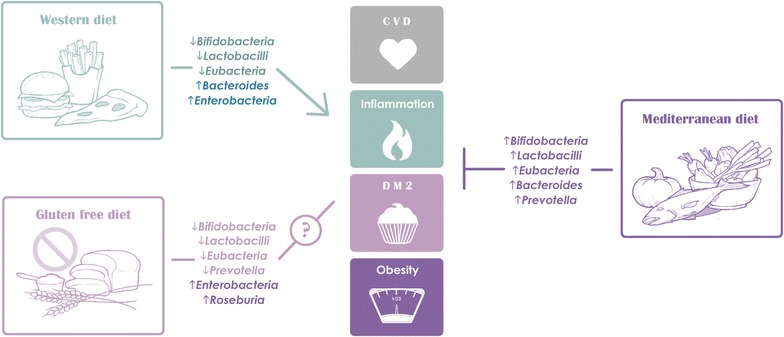
“In addition, Mediterranean diet modulates gut microbiome and adherence is associated with increased levels of certain bacteria taxa including fecal SCFAs, Prevotella, other Firmicutes, Lactobacillus, and Bifidobacterium and decreases in Clostridium (De Filippis et al. 2016; Singh et al. 2017).”
BackgroundThe “Virtual Digital Twins” Concept in Precision Nutrition
Gkouskou, K. K., Vlastos, I. M., Καρκαλούσος, Π., Chaniotis, D. I., Sanoudou, D., & Eliopoulos, A. G. (2020) · Advances in Nutrition · doi:10.1093/advances/nmaa089 · Cited by 98
“Adherence to the Mediterranean diet, for example, leads to increases in the genera Bacteroides, Prevotella, and Bifidobacteria (73), and long-term consumption of fiber results in a high abundance of Prevotella genus (74), both of which are associated with a healthy intestinal microbiota.”
BackgroundThe emerging role of probiotics in neurodegenerative diseases: new hope for Parkinson’s disease?
d’Angelo, M., Cimini, A., Castelli, V., Quintiliani, M., Benedetti, E., & Cifone, M. G. (2020) · Neural Regeneration Research · doi:10.4103/1673-5374.295270 · Cited by 99
“Recently, different studies emphasize the importance of preserving a healthy gut microbiome to maintain brain functions during aging (Singh et al., 2017).”
BackgroundEvolutionary Plant Breeding as a Response to the Complexity of Climate Change
Ceccarelli, S., & Grando, S. (2020) · iScience · doi:10.1016/j.isci.2020.101815 · Cited by 109
“, 2016), and the diet affects the composition and diversity of themicrobiota (Singh et al., 2017).”
BackgroundA systematic review on the role of microbiota in the pathogenesis and treatment of eating disorders
Carbone, E. A., D'Amato, P., Vicchio, G., De Fazio, P., & Segura-Garcia, C. (2021) · European Psychiatry · doi:10.1192/j.eurpsy.2020.109 · Cited by 87
“The intake of macronutrients, such as fatty acids, proteins, and carbohydrates, especially fibers, can significantly affect the gut microbiota composition [17], facilitating the onset of dysbiosis [18] or restoring it.”
BackgroundKimble, R., Gouinguenet, P., Ashor, A. W., Stewart, C. J., Deighton, K., Matu, J., Griffiths, A., Malcomson, F. C., Joel, A., Houghton, D., et al. (2022) · Critical Reviews in Food Science and Nutrition · doi:10.1080/10408398.2022.2057416 · Cited by 107
Jain, A., Li, X. H., & Chen, W. N. (2018) · AMB Express · doi:10.1186/s13568-018-0632-1 · Cited by 88
The alteration of gut microbiota in newly diagnosed type 2 diabetic patients
Chen, P., Chien, Y., & Yang, S. (2018) · Nutrition · doi:10.1016/j.nut.2018.11.019 · Cited by 99
Diet and gut microbiome in gastrointestinal disease
Trakman, G., Fehily, S. R., Basnayake, C., Hamilton, A. L., Russell, E., Wilson-O'Brien, A. L., & Kamm, M. A. (2021) · Journal of Gastroenterology and Hepatology · doi:10.1111/jgh.15728 · Cited by 98
Dietary Recommendations for Post-COVID-19 Syndrome
Barrea, L., Grant, W. B., Frías-Toral, E., Vetrani, C., Verde, L., de Alteriis, G., Docimo, A., Savastano, S., Colao, A., & Muscogiuri, G. (2022) · Nutrients · doi:10.3390/nu14061305 · Cited by 135
“For example, a high-fat diet reduces Lactobacilli, which are known to be associated with a healthy metabolic state, while digestible and non-digestible carbohydrates enrich Bifidobacterium and suppress pathogenic Clostridia [21].”
BackgroundHuang, Y., Zhu, N., Zheng, X., Liu, Y., Lu, H., Yin, X., Hao, H., Tan, Y., Wang, D., Hu, H., et al. (2022) · Frontiers in Immunology · doi:10.3389/fimmu.2022.785422 · Cited by 86
“Different diets may also be one of the important factors as dietary can influence the microbiota in the tumor microenvironment (41, 42).”
BackgroundAkobeng, A. K., Singh, P., Kumar, M., & Khodor, S. A. (2020) · European Journal of Nutrition · doi:10.1007/s00394-020-02324-y · Cited by 105
The Link between Obesity, Microbiota Dysbiosis, and Neurodegenerative Pathogenesis
Vamanu, E., & Nand, S. (2021) · Diseases · doi:10.3390/diseases9030045 · Cited by 96
Jarvis, P. R. E., Cardin, J. L., Nisevich-Bede, P. M., & McCarter, J. P. (2023) · Metabolism · doi:10.1016/j.metabol.2023.155640 · Cited by 86
Tiny but mighty: The role of the rumen microbes in livestock production
Cammack, K. M., Austin, K. J., Lamberson, W. R., Conant, G. C., & Cunningham-Hollinger, H. C. (2018) · Journal of Animal Science · doi:10.1093/jas/skx053 · Cited by 129
Fecal microbiota responses to rice RS3 are specific to amylose molecular structure
Gu, F., Li, C., Hamaker, B. R., Gilbert, R. G., & Zhang, X. (2020) · Carbohydrate Polymers · doi:10.1016/j.carbpol.2020.116475 · Cited by 88
Trimethylamine N-Oxide and Risk of Cardiovascular Disease and Mortality
Kanitsoraphan, C., Rattanawong, P., Charoensri, S., & Senthong, V. (2018) · Current Nutrition Reports · doi:10.1007/s13668-018-0252-z · Cited by 91
Rapid and Concomitant Gut Microbiota and Endocannabinoidome Response to Diet-Induced Obesity in Mice
Lacroix, S., Pechereau, F., Leblanc, N., Boubertakh, B., Houde, A., Martin, C., Flamand, N., Silvestri, C., Raymond, F., Di Marzo, V., et al. (2019) · mSystems · doi:10.1128/msystems.00407-19 · Cited by 84
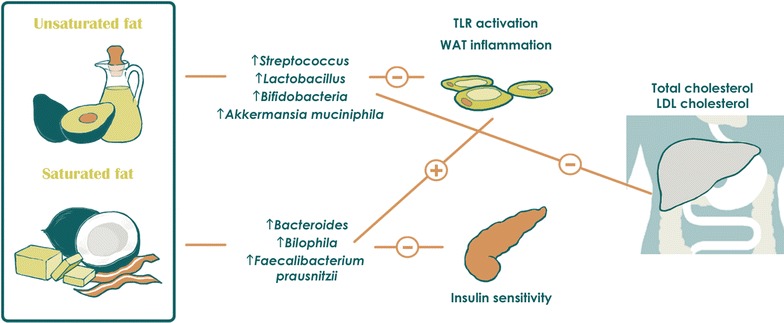
“Increased consumption of animal fats or simple sugars can indeed lead to compositional and functional modifications of the gut microbiome, potentially inducing dysbiosis and local/systemic repercussions such as impaired intestinal function, immune response, inflammation, insulin resistance, and dysmetabolism (2, 3).”
BackgroundCoras, R., Murillo‐Saich, J., & Gumá, M. (2020) · Cells · doi:10.3390/cells9040827 · Cited by 97
Zhao, Y., Zhan, J., Wang, Y., & Wang, D. (2022) · Frontiers in Public Health · doi:10.3389/fpubh.2022.892153 · Cited by 115
“Polyphenols and unsaturated fats increase the abundance of Bifidobacterium and Lactobacillus in the intestine, which inhibit gastrointestinal inflammation and carcinogenic effects by promoting the production of shortchain fatty acids (83).”
BackgroundMunteanu, C., & Schwartz, B. (2024) · International Journal of Molecular Sciences · doi:10.3390/ijms25158250 · Cited by 104
“Notably, dietary fibers, as non-digestible carbohydrates, serve as a significant energy source for gut microbes [166].”
BackgroundHuysmans, H., Zhong, Z., De Temmerman, J., Mui, B. L., Tam, Y. K., Mc Cafferty, S., Gitsels, A., Vanrompay, D., & Sanders, N. N. (2019) · Molecular Therapy - Nucleic Acids · doi:10.1016/j.omtn.2019.08.001 · Cited by 83
Do GLP-1 Analogs Have a Place in the Treatment of PCOS? New Insights and Promising Therapies
Szczesnowicz, A., Szeliga, A., Niwczyk, O., Bala, G., & Meczekalski, B. (2023) · Journal of Clinical Medicine · doi:10.3390/jcm12185915 · Cited by 83
“) adolescentis, a profile associated with an increased risk of cardiovascular disease [40].”
BackgroundPotentiality of probiotic yoghurt as a functional food – a review
Sarkar, S. (2018) · Nutrition & Food Science · doi:10.1108/nfs-05-2018-0139 · Cited by 103
Knox, N., Forbes, J. D., Peterson, C.-L., Domselaar, G. V., & Bernstein, C. N. (2019) · The American Journal of Gastroenterology · doi:10.14309/ajg.0000000000000305 · Cited by 95
The gut microbiome and thromboembolism
Hasan, R. A., Koh, A. Y., & Zia, A. N. (2020) · Thrombosis Research · doi:10.1016/j.thromres.2020.03.003 · Cited by 90
Gut, oral and skin microbiome of Indian patrilineal families reveal perceptible association with age
Chaudhari, D. S., Dhotre, D. P., Agarwal, D. M., Gaike, A. H., Bhalerao, D., Jadhav, P., Mongad, D., Lubree, H., Sinkar, V. P., Patil, U. K., et al. (2020) · Scientific Reports · doi:10.1038/s41598-020-62195-5 · Cited by 89
Khalyfa, A., Ericsson, A. C., Qiao, Z., Almendros, I., Farré, R., & Gozal, D. (2021) · EBioMedicine · doi:10.1016/j.ebiom.2021.103208 · Cited by 88
“Thus, alterations in GM as induced by episodic changes in blood oxygen content are of metabolic relevance, and their reversibility may be facilitated by targeted interventions in the GM [86, 91, 92] that aim at the alterations in microbiome diversity (richness, Shannon diversity, and inverse Simpson diversity) and met…”
BackgroundRole of food proteins and bioactive peptides in inflammatory bowel disease
Fernández‐Tomé, S., Hernández‐Ledesma, B., Chaparro, M., Indiano‐Romacho, P., Bernardo, D., & Gisbert, J. P. (2019) · Trends in Food Science & Technology · doi:10.1016/j.tifs.2019.03.017 · Cited by 88
Dullius, A., Fassina, P., Giroldi, M., Goettert, M. I., & de Souza, C. F. V. (2020) · Food Research International · doi:10.1016/j.foodres.2020.109002 · Cited by 92
Wang, Y., Zhao, A., Du, H., Liu, Y., Qi, B., & Yang, X. (2021) · Journal of Agricultural and Food Chemistry · doi:10.1021/acs.jafc.1c04626 · Cited by 83
Impact of Exercise on Gut Microbiota in Obesity
Aragón‐Vela, J., Solis‐Urra, P., Ruiz‐Ojeda, F. J., Álvarez‐Mercado, A. I., Arancibia, J. E. O., & Plaza‐Díaz, J. (2021) · Nutrients · doi:10.3390/nu13113999 · Cited by 103
“In this context, new treatments (including pre and probiotics) such as fecal microbiota transplantation [25], personalized nutrition, dietary education, and physical activity [26] may help to reestablish and/or preserve the composition of gut microbiota, changing the brain–gut axis and decreasing pathology risk [27].”
BackgroundMessengers From the Gut: Gut Microbiota-Derived Metabolites on Host Regulation
Li, C., Liang, Y., & Qiao, Y. (2022) · Frontiers in Microbiology · doi:10.3389/fmicb.2022.863407 · Cited by 109
Diet-Microbe-Host Interactions That Affect Gut Mucosal Integrity and Infection Resistance
Forgie, A. J., Fouhse, J. M., & Willing, B. P. (2019) · Frontiers in Immunology · doi:10.3389/fimmu.2019.01802 · Cited by 81
Trefflich, I., Jabakhanji, A., Menzel, J., Blaut, M., Michalsen, A., Lampen, A., Abraham, K., & Weikert, C. (2019) · Critical Reviews in Food Science and Nutrition · doi:10.1080/10408398.2019.1676697 · Cited by 91
Anthocyanins, Microbiome and Health Benefits in Aging
Hair, R., Sakaki, J. R., & Chun, O. K. (2021) · Molecules · doi:10.3390/molecules26030537 · Cited by 95
“While these changes can occur rapidly, the effects are temporary [25] unless continuous stimulus is applied to maintain the shift in diversity [26].”
BackgroundMiao, Z., Du, W., Xiao, C., Su, C., Gou, W., Shen, L., Zhang, J., Fu, Y., Jiang, Z., Wang, Z., et al. (2022) · BMC Medicine · doi:10.1186/s12916-022-02402-4 · Cited by 90
Effect of Non-Nutritive Sweeteners on the Gut Microbiota
Conz, A., Salmona, M., & Diomede, L. (2023) · Nutrients · doi:10.3390/nu15081869 · Cited by 121
“They are also a crucial energy source for intestinal epithelial cells, reinforcing the mucosal barrier [28,29].”
BackgroundModulation of gut‐microbiota through probiotics and dietary interventions to improve host health
Dasriya, V. L., Samtiya, M., Ranveer, S. A., Dhillon, H. S., Devi, N., Sharma, V., Nikam, P., Puniya, M., Chaudhary, P., Chaudhary, V., et al. (2024) · Journal of the Science of Food and Agriculture · doi:10.1002/jsfa.13370 · Cited by 93
Exploring the vitamin biosynthesis landscape of the human gut microbiota
Tarracchini, C., Lugli, G. A., Mancabelli, L., van Sinderen, D., Turroni, F., Ventura, M., & Milani, C. (2024) · mSystems · doi:10.1128/msystems.00929-24 · Cited by 120
“Environmental variables encompassing habitat types, diet, cultural tradition, and lifestyle, strongly influence gut microbiota composition and function, resulting in countryspecific microbial signatures (26, 27, 36, 37).”
The gut microbiome-immune axis as a target for nutrition-mediated modulation of food allergy
Wang, Z., Zhong, J., Meng, X., Gao, J., Li, H., Sun, J., Li, X., & Chen, H. (2021) · Trends in Food Science & Technology · doi:10.1016/j.tifs.2021.05.021 · Cited by 84
Cotillard, A., Cartier-Meheust, A., Litwin, N. S., Chaumont, S., Saccareau, M., Lejzerowicz, F., Tap, J., Koutnikova, H., Lopez, D. G., McDonald, D., et al. (2022) · The American Journal of Clinical Nutrition · doi:10.1093/ajcn/nqab332 · Cited by 79
Epigenetic effects of short-chain fatty acids from the large intestine on host cells
Stein, R. A., & Riber, L. (2023) · microLife · doi:10.1093/femsml/uqad032 · Cited by 97
“2021 , Wang et al. 2021 ), autism pectrum disorder (Rosenfeld 2015 ), and cancer (Singh et al. 2017 ). r ief descr iption of epigenetic changes mong the mechanisms that underlie the communication be- ween the gut microbiota and host cells, the ability of microbial etabolites to epigenetically…”
BackgroundFunctional yogurt, enriched and probiotic: A focus on human health
Abdi-Moghadam, Z., Darroudi, M., Mahmoudzadeh, M., Mohtashami, M., Jamal, A. M., Shamloo, E., & Rezaei, Z. B. (2023) · Clinical Nutrition ESPEN · doi:10.1016/j.clnesp.2023.08.005 · Cited by 101
The functional roles of short chain fatty acids as postbiotics in human gut: future perspectives
Ragavan, M. L., & Hemalatha, S. (2023) · Food Science and Biotechnology · doi:10.1007/s10068-023-01414-x · Cited by 90
“Increased levels of SCFAs have been linked to dietary fibers and amino acids, which are necessary for the production of serotonins in the GI to maintain healthy mind (Singh et al., 2017).”
Namba, M. D., Leyrer-Jackson, J. M., Nagy, E. K., Olive, M. F., & Neisewander, J. L. (2021) · Frontiers in Neuroscience · doi:10.3389/fnins.2021.650785 · Cited by 76
The Impact of Diet and Exercise on Drug Responses
Niederberger, E., & Parnham, M. J. (2021) · International Journal of Molecular Sciences · doi:10.3390/ijms22147692 · Cited by 88
Gut microbiota: a hidden player in polycystic ovary syndrome
Senthilkumar, H., & Arumugam, M. (2025) · Journal of Translational Medicine · doi:10.1186/s12967-025-06315-7 · Cited by 102
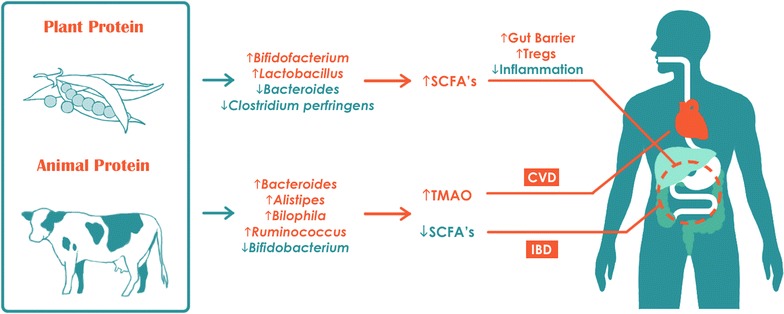
“On the other hand, plant proteins have been shown to boost Bifidobacterium and Lactobacillus while lowering Bacteroides fragilis and Clostridium perfringens , resulting in increased SCFA levels and decreased inflammation [61, 62].”
Pellegrini, M., Ippolito, M., Monge, T., Violi, R., Cappello, P., Ferrocino, I., Cocolin, L. S., De Francesco, A., Bo, S., & Finocchiaro, C. (2020) · Nutrition · doi:10.1016/j.nut.2020.110749 · Cited by 77
Metadata
- Authors
- Singh, R. K., Chang, H.-W., Yan, D., Lee, K. M., Ucmak, D., Wong, K., Abrouk, M., Farahnik, B., Nakamura, M., Zhu, T. H., Bhutani, T., & Liao, W.
- Affiliations
- University of California, Los Angeles (US)
- University of California, San Francisco (US)
- University of California, Irvine (US)
- University of Vermont (US)
- University of Southern California (US)
- Corresponding author
- Liao, Wilson
- ORCID
- Venue
- Journal of Translational Medicine
- Published
- 2017-04-08
- Volume
- 15
- Issue
- 1
- Pages
- 73-73
- ISSN
- 1479-5876 (ISSN-L)
- PMC
- PMC5385025
- OpenAlex
- W2605052214
- Cited by
- 2,599
- References
- 198
- Citations by year
- 2026: 202 · 2025: 287 · 2024: 341 · 2023: 375 · 2022: 364 · 2021: 381 · 2020: 299 · 2019: 219 · 2018: 109 · 2017: 22
- FWCI
- 16.61
- Type
- journal article
- Language
- en
- Open access
- gold
- doi.org
- Licence
- cc-by
- creativecommons.org/licenses/by/4.0/ (tdm)
- creativecommons.org/licenses/by/4.0/ (vor)
- Locations
- Journal of Translational Medicine (publishedVersion, cc-by)
- PubMed Central (publishedVersion, cc-by)
- PubMed (publishedVersion)
- DOAJ (DOAJ: Directory of Open Access Journals) (submittedVersion)
- eScholarship (California Digital Library) (submittedVersion)
- eScholarship (California Digital Library) (submittedVersion, cc-by)
- Funders
- National Institute of Arthritis and Musculoskeletal and Skin Diseases (R01AR065174)
- National Institute of Allergy and Infectious Diseases (U01AI119125)
- Topics
- Life Sciences › Biochemistry, Genetics and Molecular Biology › Molecular Biology › Gut microbiota and health
- Health Sciences › Medicine › Public Health, Environmental and Occupational Health › Nutritional Studies and Diet
- Life Sciences › Agricultural and Biological Sciences › Food Science › Probiotics and Fermented Foods
- Keywords
- diet, gut microbiota, food components, chronic disease, inflammatory bowel disease, obesity, type 2 diabetes, cardiovascular disease, cancer, host immune function, host metabolism, microbiota-based therapy
- MeSH terms
- Gastrointestinal Microbiome, Diet, Health, Humans, Probiotics, Polyphenols
About these checks
Registry, retraction, Cites and statistics results are computed, not judged, with one exception: a printed reference that no index lists is read once by a model before it counts as a citation error. Claims are extracted by a model and kept only when their quote appears verbatim in the text; each cited source is then checked, with a model’s help, for whether it says what the claim relies on. Those verdicts can be wrong — read the claim’s quote and the cited source before relying on one.
Statistics and arithmetic are recomputed, not judged.
Confidence bands are shown only for fields calibrated on our annotated test set. None is calibrated yet, so no band is shown.
What counts as a claim ›How we measure confidence ›How we check this ›
Are you an author, or do you see a problem with this page? Request a review
Data sources
Bibliographic data: Semantic Scholar, OpenAlex, Crossref.
Contains information from the Semantic Scholar Academic Graph Datasets, made available under the ODC Attribution License (ODC-BY 1.0).
Semantic Scholar’s data is described in: Kinney, R., et al. (2023). The Semantic Scholar Open Data Platform. arXiv:2301.10140.
