

Prevalence of stress, anxiety, depression among the general population during the COVID-19 pandemic: a systematic review and meta-analysis
Open accessThe DOI matches its Crossref record; 58 of the 58 references it cites were found in a registry or an index.
Abstract
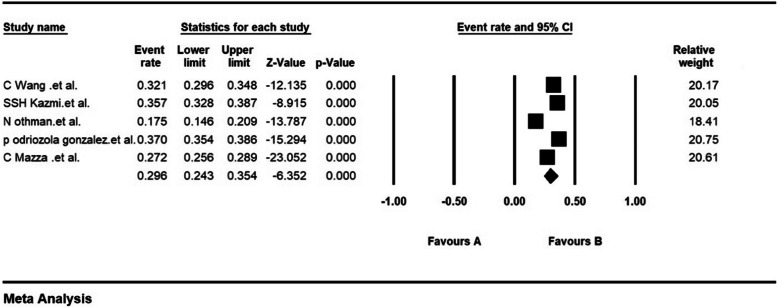
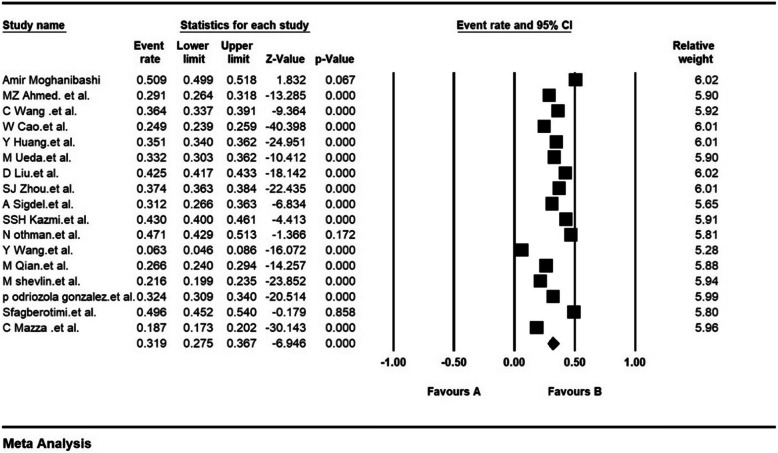
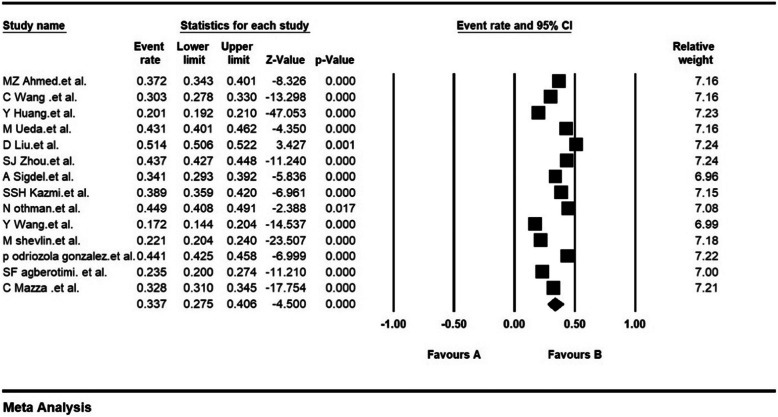
Background: The COVID-19 pandemic has had a significant impact on public mental health. Therefore, monitoring and oversight of the population mental health during crises such as a panedmic is an immediate priority. The aim of this study is to analyze the existing research works and findings in relation to the prevalence of stress, anxiety and depression in the general population during the COVID-19 pandemic. Method: In this systematic review and meta-analysis, articles that have focused on stress and anxiety prevalence among the general population during the COVID-19 pandemic were searched in the Science Direct, Embase, Scopus, PubMed, Web of Science (ISI) and Google Scholar databases, without a lower time limit and until May 2020. In order to perform a meta-analysis of the collected studies, the random effects model was used, and the heterogeneity of studies was investigated using the I 2 index. Moreover. data analysis was conducted using the Comprehensive Meta-Analysis (CMA) software. Results: The prevalence of stress in 5 studies with a total sample size of 9074 is obtained as 29.6% (95% confidence limit: 24.3–35.4), the prevalence of anxiety in 17 studies with a sample size of 63,439 as 31.9% (95% confidence interval: 27.5–36.7), and the prevalence of depression in 14 studies with a sample size of 44,531 people as 33.7% (95% confidence interval: 27.5–40.6). Conclusion: COVID-19 not only causes physical health concerns but also results in a number of psychological disorders. The spread of the new coronavirus can impact the mental health of people in different communities. Thus, it is essential to preserve the mental health of individuals and to develop psychological interventions that can improve the mental health of vulnerable groups during the COVID-19 pandemic.
Overview
The claims and statistics of this paper haven’t been checked yet.
Free: it reads the open-access text and checks the first 5 claims that cite a source we can check. Create a free account to check every claim.
Integrity signals
Registry
Cites
Statistics
Figures
Verification
Claims the paper makes
The claims and statistics of this paper haven’t been checked yet.
Free: it reads the open-access text and checks the first 5 claims that cite a source we can check. Create a free account to check every claim.
Claims other papers make about this one
Each is checked against this paper’s own text: does it say what the citing paper says it does?
The cited source doesn’t support the claim as written.
In the citing paper
“The prevalence was also lower than the estimated prevalence of depression, anxiety, and stress in the general population at 29.6%, 33.7%, and 31.9%, respectively [9].”
From Seroprevalence of COVID-19 and Psychological Distress among Front Liners at the Universiti Malaysia Sabah Campus during the Third Wave of COVID-19 (2022) · cites this paper as [9]
Checked by a reasoning model — may be wrong.
Experimental — accuracy not yet measuredThe source backs part of the claim, not all of it — or backs it for a different population, condition or comparison.
In the citing paper
“The COVID-19 pandemic has been associated with significantly higher levels of distress in the general population and people with persistent pain (Salari et al., 2020;Vindegaard & Benros, 2020;Yu al., 2021).”
From Acceptance and Commitment Therapy for women living with Vulvodynia: A single-case experimental design study of a treatment delivered online (2022) · cites this paper as Salari et al., 2020
Experimental — accuracy not yet measuredThe source backs part of the claim, not all of it — or backs it for a different population, condition or comparison.
In the citing paper
“Moreover, anxiety and stress are more likely to be feelings of worry and insecurity caused by negative events, whereas depression is more likely to be influenced by multiple factors, including biomedical factors, which could be difficult to change with short-term psychological interventions (60, 61).”
From Mindfulness-based online intervention on mental health among undergraduate nursing students during coronavirus disease 2019 pandemic in Beijing, China: A randomized controlled trial (2022) · cites this paper as [61]
Experimental — accuracy not yet measuredThe source backs part of the claim, not all of it — or backs it for a different population, condition or comparison.
In the citing paper
“the prevalence of somatic symptoms (56%), anxiety (36%), and depression (46%) in this sample were high compared to other studies done during the COVID-19 pandemic (Ran et al., 2020; Salari et al., 2020; Xiong et al., 2020).”
From Does the practice of mindfulness reduce somatic symptoms and COVID-19-related anxiety? A community-based survey (2022) · cites this paper as Salari et al., 2020
Experimental — accuracy not yet measuredThe cited source says what the claim attributes to it.
In the citing paper
“Greater fear and uncertainty can manifest in elevated levels of mental distress symptoms — anxiety, stress, depression — as confirmed by recently released COVID-19 studies”
From Anxiety Sensitivity Mediates Relations Between Mental Distress Symptoms and Medical Care Utilization During COVID-19 Pandemic. (2021) · cites this paper as Salari et al., 2020
3 more claims about this paper
Create a free account to see every claim other papers make about this one.
Self-check
Percentages, sums and reported differences re-computed from the paper’s own numbers.
The self-check needs the paper’s full text.
Citations
Cites
Chen, N., Zhou, M., Dong, X., Qu, J., Gong, F., Han, Y., Qiu, Y., Wang, J., Liu, Y., Wei, Y., et al. (2020) · The Lancet · doi:10.1016/s0140-6736(20)30211-7 · Cited by 21,415 · cited 1×
“Men with a history of underlying diseases are more likely to be infected with the virus and would experience worse outcomes [6].”
BackgroundThe Psychological Impact of Quarantine and How to Reduce It: Rapid Review of the Evidence
Brooks, S. K., Webster, R. K., Smith, L. E., Woodland, L., Wessely, S., Greenberg, N., & Rubin, G. J. (2020) · doi:10.2139/ssrn.3532534 · Cited by 16,394
The psychological impact of quarantine and how to reduce it: Rapid review of the evidence
Brooks, S. K., Webster, R. K., Smith, L. E., Woodland, L., Wessely, S., Greenberg, N., & Rubin, G. J. (2020) · The Lancet · doi:10.1016/s0140-6736(20)30460-8 · Cited by 16,378 · cited 1×
“Recent evidence suggests that people who are kept in isolation and quarantine experience significant levels of anxiety, anger, confusion, and stress [12].”
BackgroundWang, C., Pan, R., Wan, X., Tan, Y., Xu, L., Ho, C. S., & Ho, R. C. (2020) · International Journal of Environmental Research and Public Health · doi:10.3390/ijerph17051729 · Cited by 9,923 · cited 3×
“In addition, anxiety levels are significantly higher in people with at least one family member, relative, or a friend with the COVID-19 disease [21, 24, 42].”
BackgroundA novel coronavirus outbreak of global health concern
Wang, C., Horby, P. W., Hayden, F. G., & Gao, G. F. (2020) · The Lancet · doi:10.1016/s0140-6736(20)30185-9 · Cited by 7,700
First case of 2019 novel coronavirus in the United States
Holshue, M. L., DeBolt, C., Lindquist, S., Lofy, K. H., Wiesman, J., Bruce, H., Spitters, C., Ericson, K., Wilkerson, S., Tural, A., et al. (2020) · New England Journal of Medicine · doi:10.1056/nejmoa2001191 · Cited by 6,030 · cited 1×
“Severe cases of the disease can lead to heart, and respiratory failure, acute respiratory syndrome, or even death [7].”
BackgroundThe psychological impact of the COVID-19 epidemic on college students in China
Cao, W., Fang, Z., Hou, G., Han, M., Xu, X., Dong, J., & Zheng, J. (2020) · Psychiatry Research · doi:10.1016/j.psychres.2020.112934 · Cited by 5,843 · cited 2×
“In addition, anxiety levels are significantly higher in people with at least one family member, relative, or a friend with the COVID-19 disease [21, 24, 42].”
BackgroundHolmes, E. A., O'Connor, R. C., Perry, V. H., Tracey, I., Wessely, S., Arseneault, L., Ballard, C., Christensen, H., Cohen Silver, R., Everall, I., et al. (2020) · The Lancet Psychiatry · doi:10.1016/s2215-0366(20)30168-1 · Cited by 5,715
Presumed Asymptomatic Carrier Transmission of COVID-19
Bai, Y., Yao, L., Wei, T., Tian, F., Jin, D.-Y., Chen, L., & Wang, M. (2020) · JAMA · doi:10.1001/jama.2020.2565 · Cited by 4,498 · cited 1×
“In December 2019, in the city of Wuhan, China, unusual cases of patients with pneumonia caused by the new Coronavirus (COVID-19) were reported [1], and the spread of the virus swiftly became a global health threat [2].”
BackgroundHuang, Y., & Zhao, N. (2020) · Psychiatry Research · doi:10.1016/j.psychres.2020.112954 · Cited by 3,736 · cited 2×
“affected by redundancies and business closures [21, 22, 25].”
Background
Research works printed but not linked: 2
- Hahad O, Gilan D, Daiber A, Münzel T. Public Mental Health as One of the Key Factors in Dealing with COVID-19. Germany: Gesundheitswesen (Bundesverband der Arzte des Offentlichen Gesundheitsdienstes); 2020.
- World Health O. Mental health and psychosocial considerations during the COVID-19 outbreak, 18 March 2020. Geneva: World Health Organization; 2020. Contract No.: WHO/2019-nCoV/MentalHealth/2020.1.
Cited by
Items 901–1,000 of 1,028
Mental health of medical students during the COVID19: Impact of studies years
Essadek, A., Gressier, F., Robin, M., Shadili, G., Bastien, L., Peronnet, J.-C., Falissard, B., & Rabeyron, T. (2022) · Journal of Affective Disorders Reports · doi:10.1016/j.jadr.2022.100318 · Cited by 18
Kulcar, V., Siller, H. U., & Juen, B. H. (2022) · The Journal of Climate Change and Health · doi:10.1016/j.joclim.2022.100125 · Cited by 22
Faraci, P., Bottaro, R., Valenti, G. D., & Craparo, G. (2022) · Psychology Research and Behavior Management · doi:10.2147/prbm.s354083 · Cited by 20
Curran, E., Rosato, M., Ferry, F. R., & Leavey, G. (2022) · International Journal of Mental Health and Addiction · doi:10.1007/s11469-022-00820-2 · Cited by 19
Wang, H., Sun, K., & Wang, Y. (2022) · International Journal of Environmental Research and Public Health · doi:10.3390/ijerph19148377 · Cited by 20
Women's sexual function before and during COVID ‐19 pandemic: A systematic review and meta‐analysis
Hessami, K., Sayegh, N., Abdolmaleki, A. S., Bakht, S., Qaderi, S., Darabi, M. H., Shamsi, T., & Bagheri, F. (2022) · Journal of obstetrics and gynaecology research · doi:10.1111/jog.15337 · Cited by 17
Pet ownership, feelings of loneliness, and mood in people affected by the first COVID-19 lockdown
Martinez-Caja, A. M., Herdt, V. D., Enders‐Slegers, M., & Moons, C. P. H. (2022) · Journal of Veterinary Behavior · doi:10.1016/j.jveb.2022.09.008 · Cited by 22
Stress, Anxiety, and Depression for Chinese Residents in Japan during the COVID-19 Pandemic
Hu, Q., & Umeda, M. (2021) · International Journal of Environmental Research and Public Health · doi:10.3390/ijerph18094958 · Cited by 20
Ebrahimi, O. V., Burger, J., Hoffart, A., & Johnson, S. U. (2021) · PsyArXiv (OSF Preprints) · doi:10.31234/osf.io/af5dh · Cited by 18
Daşcı, E., Salihoğlu, K., & Daşcı, E. (2023) · Frontiers in Psychology · doi:10.3389/fpsyg.2023.1272205 · Cited by 21
“…have shown that people suffer from a variety of psychological issues, including anxiety, depression, stress, and sleep issues, and that their level of life satisfaction has significantly decreased as a result (Deng et al., 2020; Hyland et al., 2020; Özdin and Bayrak Özdin, 2020; Salari et al., 2020).”
BackgroundChisari, C., Budhraja, M., Monajemi, M. B., Lewis, F., Moss‐Morris, R., Scott, W., & McCracken, L. M. (2022) · European Journal of Pain · doi:10.1002/ejp.1841 · Cited by 16
Monzonís‐Carda, I., Adelantado‐Renau, M., Beltran‐Valls, M. R., & Moliner‐Urdiales, D. (2025) · Psychology in the Schools · doi:10.1002/pits.23382 · Cited by 25
UMBRELLA study group, van der Molen, D. R. M., Bargon, C. A., Batenburg, M. C. T., Gal, R., Young‐Afat, D. A., van Stam, L. E., van Dam, I., van der Leij, F., Baas, I. O., et al. (2021) · Breast Cancer Research and Treatment · doi:10.1007/s10549-021-06112-y · Cited by 15
Liu, X., Jin, X., Zhang, Y., Zhang, L., Li, Y., & Ma, J. (2021) · Frontiers in Psychiatry · doi:10.3389/fpsyt.2021.653662 · Cited by 18
Lifestyle predictors of depression and anxiety during COVID-19: a machine learning approach
Simjanoski, M., Ballester, P. L., da Mota, J. C., Boni, R. B. D., Balanzá‐Martínez, V., Atienza-Carbonell, B., Bastos, F. I., Frey, B. N., Minuzzi, L., Cardoso, T. D. A., et al. (2022) · Trends in Psychiatry and Psychotherapy · doi:10.47626/2237-6089-2021-0365 · Cited by 22
Reskati, M. H., Shafizad, M., Aarabi, M., Hedayatizadeh‐Omran, A., Khosravi, S., & Elyasi, F. (2021) · Current Psychology · doi:10.1007/s12144-021-02011-z · Cited by 17
Systematic Review on the Mental Health and Treatment Impacts of COVID-19 on Neurocognitive Disorders
Dellazizzo, L., Léveillé, N., Landry, C., & Dumais, A. (2021) · Journal of Personalized Medicine · doi:10.3390/jpm11080746 · Cited by 19
Howes, S. T., Gorey, K. M., & Charron, C. (2021) · Australian Social Work · doi:10.1080/0312407x.2021.2001832 · Cited by 16
Agyapong, B., Eboreime, E., Shalaby, R., Pazderka, H., Obuobi-Donkor, G., Adu, M. K., Mao, W., Oluwasina, F., Owusu, E., Greenshaw, A. J., et al. (2021) · International Journal of Environmental Research and Public Health · doi:10.3390/ijerph19010435 · Cited by 20
Thomas, M. F., Binder, A., & Matthes, J. (2022) · Archives of Sexual Behavior · doi:10.1007/s10508-022-02292-w · Cited by 21
Defense mechanism responses to COVID-19
Altwaijri, N. A., Abualait, T., Aljumaan, M. A., Albaradie, R., Arain, Z., & Bashir, S. (2022) · PeerJ · doi:10.7717/peerj.12811 · Cited by 22
Corno, G., Paquette, A., Monthuy‐Blanc, J., Ouellet, M., & Bouchard, S. (2022) · Frontiers in Psychology · doi:10.3389/fpsyg.2022.856933 · Cited by 21
Ying, Y., Jing, C., & Zhang, F. (2022) · Frontiers in Psychiatry · doi:10.3389/fpsyt.2022.878884 · Cited by 21
Kulcar, V., Bork‐Hüffer, T., & Schneider, A.-M. (2022) · Frontiers in Psychology · doi:10.3389/fpsyg.2022.880646 · Cited by 22
Pandemia COVID-19. Perspektywa psychologiczna
(2022) · Wydawnictwo Liberi Libri eBooks · doi:10.47943/lib.9788363487607 · Cited by 16
Prevalencia de los principales trastornos mentales durante la pandemia por COVID-19.
Mejía-Zambrano, H., & Ramos-Calsín, L. Y. (2022) · Revista de Neuro-Psiquiatría · doi:10.20453/rnp.v85i1.4157 · Cited by 41
Assessment of anxiety/depression among cancer patients before and during the COVID‐19 pandemic
Adzrago, D., Sulley, S., Tagoe, I., Ormiston, C. K., Odame, E., Mamudu, L., & Williams, F. (2022) · Psycho-Oncology · doi:10.1002/pon.6026 · Cited by 18
Howell, J. L., Sweeny, K. M., Hua, J., Werntz, A. J., Hussain, M., Hinojosa, B. M., Johnson, A. E., Lindgren, K. P., Meese, W. B., O'Shea, B. A., et al. (2022) · Emotion · doi:10.1037/emo0001163 · Cited by 16
Glowacz, F., Schmits, É., & Kinard, A. (2022) · International Journal of Environmental Research and Public Health · doi:10.3390/ijerph192114410 · Cited by 17
Schillings, C., Meißner, E., Erb, B., Schultchen, D., Bendig, E., & Pollatos, O. (2023) · Frontiers in Digital Health · doi:10.3389/fdgth.2023.1046202 · Cited by 23
Evans, S., Jones, R., Alkan, E., Sichman, J. S., Haque, A., Oliveira, F. B., & Mougouei, D. (2023) · Human Behavior and Emerging Technologies · doi:10.1155/2023/7283166 · Cited by 16
Guo, Z., Cui, Y., Yang, T., Liu, X., Lü, H., Zhang, Y., & Zhu, X. (2023) · Frontiers in Public Health · doi:10.3389/fpubh.2023.1144420 · Cited by 22
Collins, J. (2023) · European Journal on Criminal Policy and Research · doi:10.1007/s10610-023-09547-9 · Cited by 21
Alqahtani, I. M., Al-Garni, A. M., Abumelha, M. S., Alsagti, S. A., Alshehri, F. A. D., Alqahtani, A. A., & Alkhidhran, S. S. S. (2023) · Journal of Family Medicine and Primary Care · doi:10.4103/jfmpc.jfmpc_1943_22 · Cited by 27
“Although previous systematic reviews were conducted on our current subject, they did not report the risk factors of the three items and reported the prevalence only.[7,29] The prevalence of stress, anxiety, and depression was 29.”
BackgroundKim, S., Yang, S., Kim, J., Chung, K. W., Jung, Y., Chung, H. Y., & Lee, J. (2023) · Molecular Neurobiology · doi:10.1007/s12035-023-03785-y · Cited by 21
“The prevalence rates of stress, anxiety, and depression in a general population due to the pandemic were reported to be 29.6%, 31.9%, and 33.7%, respectively [2].”
InfluentialKim, C.-Y., Ko, K., Choi, S. H., Jo, M., Kim, J., Yoon, S., Yi, I. J., Morán-Valero, M. I., Kwon, M., Sohn, J., et al. (2023) · Nutrients · doi:10.3390/nu15234855 · Cited by 16
Cabrera-Suárez, B. M., Fleta, J. L. H., Molero, P., González-Pinto, A. M., Lahortiga‐Ramos, F., Cabrera, C., Actis, C. C., Sánchez‐Villegas, A., & PREDI-DEP investigators (2023) · Nutritional Neuroscience · doi:10.1080/1028415x.2023.2283290 · Cited by 19
“Evidence suggests a signi fi cant increase in the risk of depressive episodes has been observed during this period [26,27].”
Alasqah, I., Al-Hamdan, A., Alhouri, M., & Alfehaid, M. (2024) · Frontiers in Public Health · doi:10.3389/fpubh.2023.1271536 · Cited by 18
Mengin, A. C., Nourry, N., Séverac, F., Berna, F. S., Bemmouna, D., Costache, M. E., Fritsch, A., Frey, I., Ligier, F., Engel, N., et al. (2024) · Internet Interventions · doi:10.1016/j.invent.2024.100736 · Cited by 22
“The exposure to an increased workload, numerous and inevitable deaths and a permanent risk of infection for themselves and their relatives were among the main factors that could elevate stress levels in this population (Salari et al., 2020; Teo et al., 2021; Trumello et al., 2020).”
BackgroundGarrido‐Cumbrera, M., Navarro‐Compán, V., Poddubnyy, D., Sommerfleck, F. A., Makri, S., Correa-Fernández, J., Akerkar, S. M., Lowe, J., Karam, E., & Bundy, C. (2024) · RMD Open · doi:10.1136/rmdopen-2024-004218 · Cited by 16
“A holistic approach that encompasses both physical and mental health is essential to improve the quality of life and mental health of patients with axSpA.”
BackgroundInterdisciplinary research in artificial intelligence: Lessons from COVID-19
Abbonato, D., Bianchini, S., Gargiulo, F., & Venturini, T. (2024) · Quantitative Science Studies · doi:10.1162/qss_a_00329 · Cited by 29
Özcan, B. A., & Yeşilkaya, B. Y. (2021) · Revista Española de Nutrición Humana y Dietética · doi:10.14306/renhyd.25.s2.1144 · Cited by 17
Risk of Increased Acceptance for Organizational Nepotism and Cronyism during the COVID-19 Pandemic
Ignatowski, G., Sułkowski, Ł., & Stopczyński, B. (2021) · Risks · doi:10.3390/risks9040059 · Cited by 29
Gouvernet, B., & Bonierbale, M. (2021) · L Encéphale · doi:10.1016/j.encep.2021.03.002 · Cited by 17
Szałachowski, R. R., & Tuszyńska-Bogucka, W. (2021) · Religions · doi:10.3390/rel12040267 · Cited by 21
Wang, Y., Ariyo, T., Liu, H., & Ma, C. (2021) · Current Psychology · doi:10.1007/s12144-021-01663-1 · Cited by 18
Vancea, F., & Apostol, M.-Ş. (2021) · Science Progress · doi:10.1177/00368504211025873 · Cited by 22
Wang, X., Tao, J., Zhu, Q., Wu, X., Li, T., Zhao, C., Wang, X., Wang, X., Zhang, J., & Guan, N. (2021) · BMJ Open · doi:10.1136/bmjopen-2020-046350 · Cited by 20
Li, M., Xu, Z., He, X., Zhang, J., Song, R., Duan, W., Liu, T., & Yang, H. (2021) · Frontiers in Psychology · doi:10.3389/fpsyg.2021.687928 · Cited by 23
Rivan, N. F. M., Shahar, S., Singh, D. K. A., Ibrahim, N., Ludin, A. F. M., Yahya, H. M., Sakian, N. I. M., Mahadzir, H., Subramaniam, P., & Kamaruddin, M. Z. A. (2021) · Aging & Mental Health · doi:10.1080/13607863.2021.1972281 · Cited by 18
Smorti, M., Ponti, L., Ionio, C., Gallese, M., Andreol, A., & Bonassi, L. (2021) · International Journal of Psychology · doi:10.1002/ijop.12806 · Cited by 17
Loud, E. E., Gallegos-Carrillo, K., Barrientos‐Gutiérrez, I., Arillo‐Santillán, E., Lambert, V., Arciniega, L. Z., & Thrasher, J. F. (2021) · International Journal of Environmental Research and Public Health · doi:10.3390/ijerph182010905 · Cited by 20
Insomnia Symptoms in the General Population During the COVID-19 Pandemic
Halsøy, Ø., Johnson, S. U., Hoffart, A., & Ebrahimi, O. V. (2021) · Frontiers in Psychiatry · doi:10.3389/fpsyt.2021.762799 · Cited by 21
Bello-Castillo, I., Camilo, A. L. M., Elías, P. M. P., & Sánchez-Vincitore, L. V. (2021) · Ciencia y Sociedad · doi:10.22206/cys.2021.v46i4.pp31-48 · Cited by 41
Luber, R. P., Duff, A., Pavlidis, P., Honap, S., Meade, S., Ray, S., Anderson, S. H. C., Mawdsley, J. E. D., Samaan, M., & Irving, P. M. (2022) · JGH Open · doi:10.1002/jgh3.12699 · Cited by 18
Zhao, Y., Ding, Y., Shen, Y., Failing, S., & Hwang, J. (2022) · International Journal of Environmental Research and Public Health · doi:10.3390/ijerph19042430 · Cited by 21
Čavojová, V., Adamus, M., & Mikušková, E. B. (2022) · Current Psychology · doi:10.1007/s12144-022-03003-3 · Cited by 15
Panico, F., Luciano, S. M., Sagliano, L., Santangelo, G., & Trojano, L. (2022) · Personality and Individual Differences · doi:10.1016/j.paid.2022.111703 · Cited by 19
Mental Health during the Early Stage of the COVID-19 Pandemic: A Hong Kong Study
Cheung, P.-K., Wu, J., & Chui, W. H. (2022) · International Journal of Environmental Research and Public Health · doi:10.3390/ijerph19158957 · Cited by 18
Dinić, B. M., & Bodroža, B. (1970) · Primenjena psihologija · doi:10.19090/pp.20.4.489-504 · Cited by 21
Azar, S. K., Naeim, M., & Arjmand, H. (2024) · Asian Journal of Psychiatry · doi:10.1016/j.ajp.2024.104350 · Cited by 15
Pandemic COVID-19 and mental disorders international experience and therapeutic approaches
Vasileva, A. V. (2020) · S S Korsakov Journal of Neurology and Psychiatry · doi:10.17116/jnevro2020120091121 · Cited by 16
Metaanalisis Efektivitas Acceptance and Commitment Therapy untuk Menangani Gangguan Kecemasan Umum
Prajogo, S. L., & Yudiarso, A. (2021) · Psikologika Jurnal Pemikiran dan Penelitian Psikologi · doi:10.20885/psikologika.vol26.iss1.art5 · Cited by 35
Managing COVID-19 related distress in primary care: principles of assessment and management
Wright, L. A., Gnanapragasam, S., Downes, A. J., & Bisson, J. I. (2021) · BMC Family Practice · doi:10.1186/s12875-021-01399-8 · Cited by 17
Kong, Q., Riedewald, D., & Askari, M. (2021) · JMIR Human Factors · doi:10.2196/26003 · Cited by 18
COVID-19 and Male Sexual Functioning: A report of 3 Recovered Cases and Literature Review
Salama, N., & Blgozah, S. (2021) · Clinical Medicine Insights: Case Reports · doi:10.1177/11795476211020593 · Cited by 13
Mutair, A. S. A., Mutairi, A. O. A., Alabbasi, Y., Shamsan, A., Almahmoud, S. A., Alhumaid, S., Arshad, M., Awad, M., & Rabaan, A. A. (2021) · PeerJ · doi:10.7717/peerj.12119 · Cited by 16
Wang, J., Mao, Z., Wei, D., Liu, P., Fan, K., Xu, Q., Wang, L., Wang, X., Lou, X., Lin, H., et al. (2021) · Psychiatry Research · doi:10.1016/j.psychres.2021.114251 · Cited by 16
Kim, R. G., Medina, S. P., Magee, C., & Khalili, M. (2021) · Hepatology Communications · doi:10.1002/hep4.1873 · Cited by 17
Fountoulakis, K. Ν., Apostolidou, M. K., Atsiova, M. B., Filippidou, A. K., Florou, A., Gousiou, D. S., Katsara, A. R., Mantzari, S. N., Padouva-Markoulaki, M., Papatriantafyllou, E. I., et al. (2021) · Acta Neuropsychiatrica · doi:10.1017/neu.2021.38 · Cited by 19
Dental Service and Resource Needs during COVID-19 among Underserved Populations
Johnson, V., Brondani, M., von Bergmann, H., Grossman, S., & Donnelly, L. (2022) · JDR Clinical & Translational Research · doi:10.1177/23800844221083965 · Cited by 15
Khouri, M., Lassri, D., & Cohen, N. (2022) · PLoS ONE · doi:10.1371/journal.pone.0265659 · Cited by 19
Mulianda, D., Rahmanti, A., Margiyati, M., Sari, N. W., Haksara, E., & Pranata, S. (2022) · Open Access Macedonian Journal of Medical Sciences · doi:10.3889/oamjms.2022.8695 · Cited by 15
Odor cueing during sleep improves consolidation of a history lesson in a school setting
Vidal, V., Barbuzza, A. R., Tassone, L. M., Brusco, L. I., Ballarini, F., & Forcato, C. (2022) · Scientific Reports · doi:10.1038/s41598-022-14588-x · Cited by 15
Patella, V., Pelaia, C., Zunno, R., & Pelaia, G. (2022) · Respiratory Medicine · doi:10.1016/j.rmed.2022.106916 · Cited by 17
Mioni, G., Cellini, N., Romola, M., & Bruno, F. (2022) · Timing & Time Perception · doi:10.1163/22134468-bja10062 · Cited by 19
Practicing Online During COVID-19: Psychodynamic and Psychoanalytic Therapists’ Experiences
Doorn, K. A., Békés, V., Prout, T. A., & Hoffman, L. (2022) · Journal of the American Psychoanalytic Association · doi:10.1177/00030651221114053 · Cited by 20
Feng, T., Ren, L., Liu, C., Li, K., Wu, L., Wei, X., Yuan, S., Cui, L., Yang, X., Li, D., et al. (2022) · Frontiers in Psychiatry · doi:10.3389/fpsyt.2022.993814 · Cited by 17
Feraco, T., Casali, N., & Meneghetti, C. (2022) · European Journal of Psychology of Education · doi:10.1007/s10212-022-00667-0 · Cited by 30
Liang, Y., Zhao, Y., Ji, W., Bian, X., & Xi, J. (2022) · International Journal of Disaster Risk Reduction · doi:10.1016/j.ijdrr.2022.103520 · Cited by 15
Baldassano, S., Alioto, A., Amato, A., Rossi, C., Messina, G., Bruno, M. R., Stallone, R., & Proia, P. (2023) · Sustainability · doi:10.3390/su15032120 · Cited by 16
How COVID-19 News Affect Older Adults’ Mental Health—Evidence of a Positivity Bias
Ng, Z. Z., Li, G., Flynn, S., & Yow, W. Q. (2023) · International Journal of Environmental Research and Public Health · doi:10.3390/ijerph20053950 · Cited by 17
Calvo-López, M., Tolós, R. A., Expósito, J. M., Gruosso, D., Andrea, R., Roque, M., Falces, C., Yago, G., Araguas, J. S., Pastor, N., et al. (2023) · JMIR Cardio · doi:10.2196/44179 · Cited by 16
Kulcar, V., Kreh, A., Juen, B. H., & Siller, H. U. (2023) · SAGE Open · doi:10.1177/21582440231160123 · Cited by 21
Lassri, D. (2023) · Teaching and Teacher Education · doi:10.1016/j.tate.2023.104143 · Cited by 25
Mendes, R., Baccon, W. C., & Laranjeira, C. (2023) · International Journal of Environmental Research and Public Health · doi:10.3390/ijerph20085510 · Cited by 23
“9% [43]—and lower than among Iranian and Ethiopian prisoners, where depression varied between 44% and 66.”
BackgroundSousa, R. A. L. D., Yehia, A., & Abulseoud, O. A. (2023) · Frontiers in Neuroscience · doi:10.3389/fnins.2023.1237153 · Cited by 17
“Post-COVID neurological consequences are tightly linked to other systems, including changes in the cardiovascular and immune systems, as well as higher levels of stress, anxiety, and depression (Campos et al., 2019; Salari et al., 2020; Zubair et al., 2020; ImprotaCaria et al., 2021; Júnior et al., 2021; Sousa et al.,…”
BackgroundDurcan, E., Turan, Ş., Şahin, S., Sulu, C., Taze, S. S., Kavla, Y., Özkaya, H. M., & Kadıoğlu, P. (2021) · Pituitary · doi:10.1007/s11102-021-01136-5 · Cited by 16
Vulnerability to rumours during the COVID-19 pandemic in Singapore
Long, V. J. E., Koh, W. S., Saw, Y. E., & Liu, J. C. (2021) · Annals of the Academy of Medicine Singapore · doi:10.47102/annals-acadmedsg.2020523 · Cited by 21
Impact of the COVID-19 Pandemic on Emergency Department Transfers to a Higher Level of Care
Lee, S., Santarelli, A., Choi, H., & Ashurst, J. V. (2021) · Western Journal of Emergency Medicine · doi:10.5811/westjem.2021.3.50907 · Cited by 17
Kassie, A., Shitu, K., Adugna, A., & Handebo, S. (2021) · PLoS ONE · doi:10.1371/journal.pone.0258642 · Cited by 20
An investigation of COVID-19 related worry in a United States population sample
SAMUELS, J. F., Holingue, C., Nestadt, P. S., Bienvenu, O. J., Phan, P., & Nestadt, G. (2021) · Journal of Psychiatric Research · doi:10.1016/j.jpsychires.2021.10.036 · Cited by 16
Croissant, M., & Frister, M. (2021) · PLoS ONE · doi:10.1371/journal.pone.0261328 · Cited by 18
Mendonça, Â. B., Pereira, E. R., Magnago, C., da Silva, P. G., Leão, D. C. M. R., Silva, R. M. C. R. A., & Meira, K. C. (2021) · International Journal of Environmental Research and Public Health · doi:10.3390/ijerph182413200 · Cited by 18
Dillard, A. J., Weber, A. E., Chassee, A., & Thakur, M. (2022) · International Journal of Environmental Research and Public Health · doi:10.3390/ijerph19052577 · Cited by 15
Hoefnagels, J. W., Schoen, A. B., van der Laan, S. E. I., Rodijk, L. H., van der Ent, C. K., van de Putte, E. M., Dalmeijer, G. W., & Nijhof, S. L. (2022) · International Journal of Environmental Research and Public Health · doi:10.3390/ijerph19052953 · Cited by 20
Syed, N. K., Alqahtani, S. S., Meraya, A. M., Elnaem, M. H., Albarraq, A. A., Syed, M. H., Ahmed, R. A., & Griffiths, M. D. (2022) · Current Psychology · doi:10.1007/s12144-022-02892-8 · Cited by 19
Bajaj, M. A., Salimgaraev, R., Zhaunova, L., & Payne, J. L. (2022) · Journal of Psychiatric Research · doi:10.1016/j.jpsychires.2022.04.011 · Cited by 10
İlktaç, H. Y., Savcı, C., & Akıncı, A. Ç. (2022) · Eating and Weight Disorders - Studies on Anorexia Bulimia and Obesity · doi:10.1007/s40519-022-01409-3 · Cited by 21
Jeong, D., Cho, I., Kim, K., Lee, J., Choi, J. M., Kim, J.-H., Kim, C., Yoo, S., & Chung, S. (2022) · Psychiatry Investigation · doi:10.30773/pi.2021.0403 · Cited by 18
Metadata
- Authors
- Salari, N., Hosseinian-Far, A., Jalali, R., Vaisi-Raygani, A., Rasoulpoor, S., Mohammadi, M., Rasoulpoor, S., & Khaledi-Paveh, B.
- Affiliations
- Kermanshah University of Medical Sciences (IR)
- Corresponding author
- Rasoulpoor, Shna
- Mohammadi, Masoud
- Rasoulpoor, Shabnam
- Venue
- Globalization and Health
- Published
- 2020-07-06
- Volume
- 16
- Issue
- 1
- Pages
- 57-57
- ISSN
- 1744-8603 (ISSN-L)
- PMC
- PMC7338126
- OpenAlex
- W3039647217
- Semantic Scholar
- 20448e72ff52f2cc04fb73697cfc03af06f266ed
- Cited by
- 3,560
- References
- 54
- Citations by year
- 2026: 94 · 2025: 235 · 2024: 365 · 2023: 665 · 2022: 1037 · 2021: 1019 · 2020: 141
- FWCI
- 56.19
- Type
- journal article
- Language
- en
- Open access
- gold
- doi.org
- Licence
- cc-by
- creativecommons.org/licenses/by/4.0 (tdm)
- creativecommons.org/licenses/by/4.0 (vor)
- Locations
- Globalization and Health (publishedVersion, cc-by)
- PubMed Central (publishedVersion, cc-by)
- PubMed (publishedVersion)
- NECTAR - Northampton Electronic Collection of Thesis and Research (University of Northampton) (acceptedVersion)
- DOAJ (DOAJ: Directory of Open Access Journals) (submittedVersion, cc-by-sa)
- Funders
- Kermanshah University of Medical Sciences
- Student Research Committee, Tabriz University of Medical Sciences
- Topics
- Social Sciences › Psychology › Clinical Psychology › COVID-19 and Mental Health
- Health Sciences › Medicine › Public Health, Environmental and Occupational Health › Maternal Mental Health During Pregnancy and Postpartum
- Health Sciences › Medicine › Psychiatry and Mental health › Mental Health Treatment and Access
- Keywords
- COVID-19 pandemic, stress, anxiety, depression, prevalence, general population, mental health, mental illness
- MeSH terms
- COVID-19, Anxiety, Asia, Depression, Europe, Humans, Pneumonia, Viral, Stress, Psychological, Prevalence, Coronavirus Infections, Pandemics
About these checks
Registry, retraction, Cites and statistics results are computed, not judged, with one exception: a printed reference that no index lists is read once by a model before it counts as a citation error. Claims are extracted by a model and kept only when their quote appears verbatim in the text; each cited source is then checked, with a model’s help, for whether it says what the claim relies on. Those verdicts can be wrong — read the claim’s quote and the cited source before relying on one.
Statistics and arithmetic are recomputed, not judged.
Confidence bands are shown only for fields calibrated on our annotated test set. None is calibrated yet, so no band is shown.
What counts as a claim ›How we measure confidence ›How we check this ›
Are you an author, or do you see a problem with this page? Request a review
Data sources
Bibliographic data: Semantic Scholar, OpenAlex, Crossref.
Contains information from the Semantic Scholar Academic Graph Datasets, made available under the ODC Attribution License (ODC-BY 1.0).
Semantic Scholar’s data is described in: Kinney, R., et al. (2023). The Semantic Scholar Open Data Platform. arXiv:2301.10140.
