

Prevalence of stress, anxiety, depression among the general population during the COVID-19 pandemic: a systematic review and meta-analysis
Open accessThe DOI matches its Crossref record; 58 of the 58 references it cites were found in a registry or an index.
Abstract
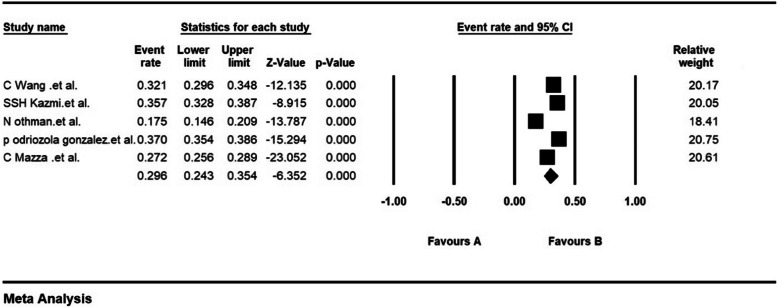
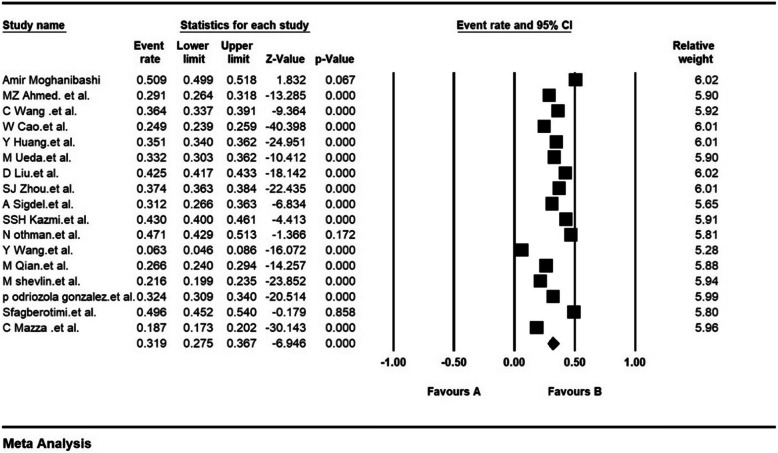
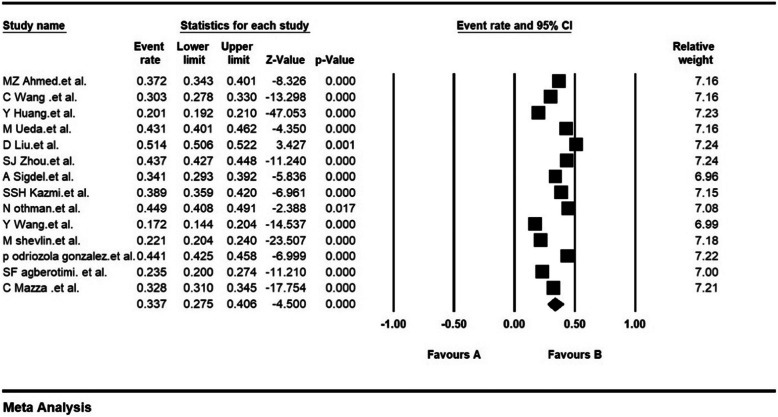
Background: The COVID-19 pandemic has had a significant impact on public mental health. Therefore, monitoring and oversight of the population mental health during crises such as a panedmic is an immediate priority. The aim of this study is to analyze the existing research works and findings in relation to the prevalence of stress, anxiety and depression in the general population during the COVID-19 pandemic. Method: In this systematic review and meta-analysis, articles that have focused on stress and anxiety prevalence among the general population during the COVID-19 pandemic were searched in the Science Direct, Embase, Scopus, PubMed, Web of Science (ISI) and Google Scholar databases, without a lower time limit and until May 2020. In order to perform a meta-analysis of the collected studies, the random effects model was used, and the heterogeneity of studies was investigated using the I 2 index. Moreover. data analysis was conducted using the Comprehensive Meta-Analysis (CMA) software. Results: The prevalence of stress in 5 studies with a total sample size of 9074 is obtained as 29.6% (95% confidence limit: 24.3–35.4), the prevalence of anxiety in 17 studies with a sample size of 63,439 as 31.9% (95% confidence interval: 27.5–36.7), and the prevalence of depression in 14 studies with a sample size of 44,531 people as 33.7% (95% confidence interval: 27.5–40.6). Conclusion: COVID-19 not only causes physical health concerns but also results in a number of psychological disorders. The spread of the new coronavirus can impact the mental health of people in different communities. Thus, it is essential to preserve the mental health of individuals and to develop psychological interventions that can improve the mental health of vulnerable groups during the COVID-19 pandemic.
Overview
The claims and statistics of this paper haven’t been checked yet.
Free: it reads the open-access text and checks the first 5 claims that cite a source we can check. Create a free account to check every claim.
Integrity signals
Registry
Cites
Statistics
Figures
Verification
Claims the paper makes
The claims and statistics of this paper haven’t been checked yet.
Free: it reads the open-access text and checks the first 5 claims that cite a source we can check. Create a free account to check every claim.
Claims other papers make about this one
Each is checked against this paper’s own text: does it say what the citing paper says it does?
The cited source doesn’t support the claim as written.
In the citing paper
“The prevalence was also lower than the estimated prevalence of depression, anxiety, and stress in the general population at 29.6%, 33.7%, and 31.9%, respectively [9].”
From Seroprevalence of COVID-19 and Psychological Distress among Front Liners at the Universiti Malaysia Sabah Campus during the Third Wave of COVID-19 (2022) · cites this paper as [9]
Checked by a reasoning model — may be wrong.
Experimental — accuracy not yet measuredThe source backs part of the claim, not all of it — or backs it for a different population, condition or comparison.
In the citing paper
“The COVID-19 pandemic has been associated with significantly higher levels of distress in the general population and people with persistent pain (Salari et al., 2020;Vindegaard & Benros, 2020;Yu al., 2021).”
From Acceptance and Commitment Therapy for women living with Vulvodynia: A single-case experimental design study of a treatment delivered online (2022) · cites this paper as Salari et al., 2020
Experimental — accuracy not yet measuredThe source backs part of the claim, not all of it — or backs it for a different population, condition or comparison.
In the citing paper
“Moreover, anxiety and stress are more likely to be feelings of worry and insecurity caused by negative events, whereas depression is more likely to be influenced by multiple factors, including biomedical factors, which could be difficult to change with short-term psychological interventions (60, 61).”
From Mindfulness-based online intervention on mental health among undergraduate nursing students during coronavirus disease 2019 pandemic in Beijing, China: A randomized controlled trial (2022) · cites this paper as [61]
Experimental — accuracy not yet measuredThe source backs part of the claim, not all of it — or backs it for a different population, condition or comparison.
In the citing paper
“the prevalence of somatic symptoms (56%), anxiety (36%), and depression (46%) in this sample were high compared to other studies done during the COVID-19 pandemic (Ran et al., 2020; Salari et al., 2020; Xiong et al., 2020).”
From Does the practice of mindfulness reduce somatic symptoms and COVID-19-related anxiety? A community-based survey (2022) · cites this paper as Salari et al., 2020
Experimental — accuracy not yet measuredThe cited source says what the claim attributes to it.
In the citing paper
“Greater fear and uncertainty can manifest in elevated levels of mental distress symptoms — anxiety, stress, depression — as confirmed by recently released COVID-19 studies”
From Anxiety Sensitivity Mediates Relations Between Mental Distress Symptoms and Medical Care Utilization During COVID-19 Pandemic. (2021) · cites this paper as Salari et al., 2020
3 more claims about this paper
Create a free account to see every claim other papers make about this one.
Self-check
Percentages, sums and reported differences re-computed from the paper’s own numbers.
The self-check needs the paper’s full text.
Citations
Cites
Chen, N., Zhou, M., Dong, X., Qu, J., Gong, F., Han, Y., Qiu, Y., Wang, J., Liu, Y., Wei, Y., et al. (2020) · The Lancet · doi:10.1016/s0140-6736(20)30211-7 · Cited by 21,415 · cited 1×
“Men with a history of underlying diseases are more likely to be infected with the virus and would experience worse outcomes [6].”
BackgroundThe Psychological Impact of Quarantine and How to Reduce It: Rapid Review of the Evidence
Brooks, S. K., Webster, R. K., Smith, L. E., Woodland, L., Wessely, S., Greenberg, N., & Rubin, G. J. (2020) · doi:10.2139/ssrn.3532534 · Cited by 16,394
The psychological impact of quarantine and how to reduce it: Rapid review of the evidence
Brooks, S. K., Webster, R. K., Smith, L. E., Woodland, L., Wessely, S., Greenberg, N., & Rubin, G. J. (2020) · The Lancet · doi:10.1016/s0140-6736(20)30460-8 · Cited by 16,378 · cited 1×
“Recent evidence suggests that people who are kept in isolation and quarantine experience significant levels of anxiety, anger, confusion, and stress [12].”
BackgroundWang, C., Pan, R., Wan, X., Tan, Y., Xu, L., Ho, C. S., & Ho, R. C. (2020) · International Journal of Environmental Research and Public Health · doi:10.3390/ijerph17051729 · Cited by 9,923 · cited 3×
“In addition, anxiety levels are significantly higher in people with at least one family member, relative, or a friend with the COVID-19 disease [21, 24, 42].”
BackgroundA novel coronavirus outbreak of global health concern
Wang, C., Horby, P. W., Hayden, F. G., & Gao, G. F. (2020) · The Lancet · doi:10.1016/s0140-6736(20)30185-9 · Cited by 7,700
First case of 2019 novel coronavirus in the United States
Holshue, M. L., DeBolt, C., Lindquist, S., Lofy, K. H., Wiesman, J., Bruce, H., Spitters, C., Ericson, K., Wilkerson, S., Tural, A., et al. (2020) · New England Journal of Medicine · doi:10.1056/nejmoa2001191 · Cited by 6,030 · cited 1×
“Severe cases of the disease can lead to heart, and respiratory failure, acute respiratory syndrome, or even death [7].”
BackgroundThe psychological impact of the COVID-19 epidemic on college students in China
Cao, W., Fang, Z., Hou, G., Han, M., Xu, X., Dong, J., & Zheng, J. (2020) · Psychiatry Research · doi:10.1016/j.psychres.2020.112934 · Cited by 5,843 · cited 2×
“In addition, anxiety levels are significantly higher in people with at least one family member, relative, or a friend with the COVID-19 disease [21, 24, 42].”
BackgroundHolmes, E. A., O'Connor, R. C., Perry, V. H., Tracey, I., Wessely, S., Arseneault, L., Ballard, C., Christensen, H., Cohen Silver, R., Everall, I., et al. (2020) · The Lancet Psychiatry · doi:10.1016/s2215-0366(20)30168-1 · Cited by 5,715
Presumed Asymptomatic Carrier Transmission of COVID-19
Bai, Y., Yao, L., Wei, T., Tian, F., Jin, D.-Y., Chen, L., & Wang, M. (2020) · JAMA · doi:10.1001/jama.2020.2565 · Cited by 4,498 · cited 1×
“In December 2019, in the city of Wuhan, China, unusual cases of patients with pneumonia caused by the new Coronavirus (COVID-19) were reported [1], and the spread of the virus swiftly became a global health threat [2].”
BackgroundHuang, Y., & Zhao, N. (2020) · Psychiatry Research · doi:10.1016/j.psychres.2020.112954 · Cited by 3,736 · cited 2×
“affected by redundancies and business closures [21, 22, 25].”
Background
Research works printed but not linked: 2
- Hahad O, Gilan D, Daiber A, Münzel T. Public Mental Health as One of the Key Factors in Dealing with COVID-19. Germany: Gesundheitswesen (Bundesverband der Arzte des Offentlichen Gesundheitsdienstes); 2020.
- World Health O. Mental health and psychosocial considerations during the COVID-19 outbreak, 18 March 2020. Geneva: World Health Organization; 2020. Contract No.: WHO/2019-nCoV/MentalHealth/2020.1.
Cited by
Items 601–700 of 1,028
Capitalism, COVID ‐19 and lockdowns
Bagus, P., Peña‐Ramos, J. A., & Sánchez‐Bayón, A. (2022) · Business Ethics the Environment & Responsibility · doi:10.1111/beer.12431 · Cited by 42
Well-being app to support young people during the COVID-19 pandemic: randomised controlled trial
Thabrew, H., Boggiss, A. L., Lim, D. H., Schache, K., Morunga, E., Cao, N., Cavadino, A., & Serlachius, A. S. (2022) · BMJ Open · doi:10.1136/bmjopen-2021-058144 · Cited by 32
Lee, J., & Howard, J. T. (2022) · Journal of Racial and Ethnic Health Disparities · doi:10.1007/s40615-022-01414-3 · Cited by 35
Shah, S. M., Sun, T., Xu, W. G., Jiang, W., & Yuan, Y. (2022) · General Psychiatry · doi:10.1136/gpsych-2022-100885 · Cited by 37
Lau, S. S. S., Leung, S. S. K., Wong, J. W. C., Lee, T. C. P., Cartwright, S. R., Wong, J. K. T., Man, J. O. T., Cheung, E. T. H., & Choi, R. P. W. (2023) · Frontiers in Public Health · doi:10.3389/fpubh.2022.1057020 · Cited by 31
Calvano, C., Engelke, L., Holl, A. K., Renneberg, B., & Winter, S. (2023) · European Child & Adolescent Psychiatry · doi:10.1007/s00787-023-02147-2 · Cited by 33
Calling for benefit–risk evaluations of COVID-19 control measures
Kampf, G., & Kulldorff, M. (2021) · The Lancet · doi:10.1016/s0140-6736(21)00193-8 · Cited by 27
Büssing, A., Recchia, D. R., Dienberg, T., Surżykiewicz, J., & Baumann, K. (2021) · Frontiers in Psychiatry · doi:10.3389/fpsyt.2021.685975 · Cited by 33
Merolla, A. J., Otmar, C. D., & Hernandez, C. R. (2021) · Journal of Social and Personal Relationships · doi:10.1177/02654075211020137 · Cited by 30
Higher incidence of Ménière’s disease during COVID-19 pandemic: a preliminary report
Lovato, A., Frosolini, A., Marioni, G., & de Filippis, C. (2021) · Acta Oto-Laryngologica · doi:10.1080/00016489.2021.1913288 · Cited by 29
Breen, K. E., Tuman, M., Bertelsen, C. E., Sheehan, M., Wylie, D., Fleischut, M. H., Offit, K., Stadler, Z. K., Salo-Mullen, E. E., & Hamilton, J. G. (2021) · JCO Oncology Practice · doi:10.1200/op.21.00301 · Cited by 27
Chahar, R., Dubey, A. K., & Narang, S. K. (2021) · International Journal of Advanced Technology and Engineering Exploration · doi:10.19101/ijatee.2021.874198 · Cited by 33
Jun, J., & Rosemberg, M.-A. S. (2021) · Policy Politics & Nursing Practice · doi:10.1177/15271544211054435 · Cited by 35
Álvarez, S. A., Rocha‐Guzmán, N. E., González‐Laredo, R. F., Gallegos‐Infante, J. A., Moreno‐Jiménez, M. R., & Bravo-Muñoz, M. (2022) · Journal of Agricultural and Food Chemistry · doi:10.1021/acs.jafc.1c06151 · Cited by 28
Hong, J., Mreydem, H. W., Ali, B. T. A., Saleh, N. O., Hammoudi, S. F., Lee, J., Ahn, J., Park, J., Hong, Y., Suh, S. A., et al. (2022) · Frontiers in Psychiatry · doi:10.3389/fpsyt.2021.733578 · Cited by 31
Yu, T., & Hu, J. (2022) · Frontiers in Psychiatry · doi:10.3389/fpsyt.2022.822699 · Cited by 32
Fear of COVID-19, anxiety, and social support among college students
Mauer, V. A., Littleton, H., Lim, S., Sall, K. E., Siller, L., & Edwards, K. M. (2022) · Journal of American College Health · doi:10.1080/07448481.2022.2053689 · Cited by 31
Fioravanti, G., Benucci, S. B., Prostamo, A., Banchi, V., & Casale, S. (2022) · Psychiatry Research · doi:10.1016/j.psychres.2022.114705 · Cited by 30
Ebrahimi, O. V., Bauer, D. J., Hoffart, A., & Johnson, S. U. (2022) · Journal of Psychopathology and Clinical Science · doi:10.1037/abn0000786 · Cited by 25
Lin, C., Pham, H., & Hser, Y. (2023) · Community Mental Health Journal · doi:10.1007/s10597-022-01081-y · Cited by 34
Anteneh, R. M., Dessie, A. M., Azanaw, M. M., Anley, D. T., Melese, B. D., Feleke, S. F., Abebe, T. G., & Muche, A. A. (2023) · Frontiers in Public Health · doi:10.3389/fpubh.2023.1136031 · Cited by 29
Mohammadkhah, F., Shamsalinia, A., Shirinkam, F., Daneshnia, M., Mahmoudian, A., Rafiei, N., Atashpoosh, A., & Ghaffari, F. (2021) · Heliyon · doi:10.1016/j.heliyon.2021.e07336 · Cited by 27
Min, A., & Hong, H. C. (2022) · BMC Nursing · doi:10.1186/s12912-022-00974-3 · Cited by 28
Slusher, A. L., & Acevedo, E. O. (2023) · Frontiers in Physiology · doi:10.3389/fphys.2023.1124121 · Cited by 36
Association between Stress and Social Support Perceived among Undergraduate Health Sciences Student
Aziz, N. A. A., Baharudin, N. S., & Alias, N. A. (2023) · Malaysian Journal of Medical Sciences · doi:10.21315/mjms2023.30.3.16 · Cited by 41
Basińska, B., & Kwissa‐Gajewska, Z. (2023) · International Journal of Occupational Medicine and Environmental Health · doi:10.13075/ijomeh.1896.02104 · Cited by 31
Neyazi, A., Mohammadi, A. Q., Razaqi, N., Rahimi, B. A., Sifat, S., Rahimy, N., Tareen, Z., Mehmood, Q., Satapathy, P., & Griffiths, M. D. (2024) · Discover Mental Health · doi:10.1007/s44192-024-00090-5 · Cited by 33
“These results diverge from those of a systematic meta-analytic review conducted by Salari et al. among general population [43], which identified a negative association between stress and the age group of participants (n = 9074).”
ResultInfluentialNavarro-Nolasco, D. A., Chi-Castañeda, D., López‐Meraz, M. L., Beltrán‐Parrazal, L., & Morgado‐Valle, C. (2025) · BMC Psychology · doi:10.1186/s40359-025-02449-x · Cited by 37
“Other studies estimate the prevalence during the pandemic at 25% [4], 31.9% [7], and up to 38.12% [3].”
InfluentialAdaptation of the Cuban version of the Coronavirus Anxiety Scale
Broche‐Pérez, Y., Castillo, E. F., Fernández-Fleites, Z., Jiménez-Puig, E., Vizcaíno-Escobar, A. E., Ferrer-Lozano, D. M., Rodríguez, L. M., & Martín-González, R. (2020) · Death Studies · doi:10.1080/07481187.2020.1855610 · Cited by 27
Guo, Y., Sims, O. T., Qin, W., & Yang, F. (2021) · Behavioral Sciences · doi:10.3390/bs11020013 · Cited by 29
Akalu, T. Y., Gelaye, K. A., Beshaw, M. A., Tilahun, S. Y., Yeshaw, Y., Azale, T., Tsegaye, T., Asmelash, D., & Akalu, Y. (2021) · Risk Management and Healthcare Policy · doi:10.2147/rmhp.s296796 · Cited by 28
Carbajal, A. B., Navarro‐Flores, A., & Villarreal‐Zegarra, D. (2021) · Frontiers in Psychology · doi:10.3389/fpsyg.2021.673945 · Cited by 39
Muro, A., Feliu‐Soler, A., & Castellà, J. (2021) · Women & Health · doi:10.1080/03630242.2021.1954133 · Cited by 31
(2021) · doi:10.1037/scp0000272 · Cited by 25
Leightley, D., Lavelle, G., White, K. M., Sun, S., Matcham, F., Ivan, A., Oetzmann, C., Penninx, B. W. J. H., Lamers, F., Siddi, S., et al. (2021) · BMC Psychiatry · doi:10.1186/s12888-021-03434-5 · Cited by 28
Hemmati, F., Sarokhani, M., Abdan, Z., Sarokhani, D., Dehkordi, A. H., & Fakhri, M. (2021) · Przeglad Epidemiologiczny · doi:10.32394/pe.75.24 · Cited by 29
Heeren, A., Hanseeuw, B. J., Cougnon, L., & Lits, G. (2021) · Psychologica Belgica · doi:10.5334/pb.1069 · Cited by 32
Depression deterioration of older adults during the first wave of the COVID-19 outbreak in Europe
Paccagnella, O., & Pongiglione, B. (2022) · Social Science & Medicine · doi:10.1016/j.socscimed.2022.114828 · Cited by 32
del Valle, M. V., López‐Morales, H., Trudo, R. G., Poó, F. M., García, M. J., Avincetto, M. M. Y., Andrés, M. L., Juric, L. C., & Urquijo, S. (2022) · Stress and Health · doi:10.1002/smi.3163 · Cited by 28
Schaffer, K. M., & Henry, M. L. (2022) · Aphasiology · doi:10.1080/02687038.2022.2076281 · Cited by 27
Effect of the COVID-19 pandemic on psychological aspects
Alqahtani, J. S., Almamary, A. S., Alghamdi, S. M., Komies, S., Althobiani, M. A., Aldhahir, A. M., & Naser, A. Y. (2022) · Elsevier eBooks · doi:10.1016/b978-0-323-91307-2.00007-9 · Cited by 30
Quality of life during the COVID-19 pandemic in Austria
Dale, R., Budimir, S., Probst, T., Humer, E. C., & Pieh, C. (2022) · Frontiers in Psychology · doi:10.3389/fpsyg.2022.934253 · Cited by 31
The Impact of COVID-19 on Mental Health in Medical Students: A Cross-Sectional Survey Study in Italy
Carletto, S., Moro, G. L., Lavista, V. Z., Soro, G., Siliquini, R., Bert, F., & Leombruni, P. (2022) · Psychological Reports · doi:10.1177/00332941221127632 · Cited by 29
Brelet, L., & Gaffary, Y. (2022) · Frontiers in Virtual Reality · doi:10.3389/frvir.2022.900970 · Cited by 32
Andrade, D. M. B., Ribeiro, Í. J. S., Prémusz, V., & Máté, O. (2023) · International Journal of Environmental Research and Public Health · doi:10.3390/ijerph20064832 · Cited by 53
Schnell, T., Spitzenstätter, D., & Krampe, H. (2021) · Psychology and Health · doi:10.1080/08870446.2021.1974861 · Cited by 27
Mental Health during a COVID-19 Lockdown Over the Christmas Period in AustriaPreprint
Dale, R., Budimir, S., Probst, T., Stippl, P., & Pieh, C. (2021) · SSRN Electronic Journal · doi:10.2139/ssrn.3773439 · Cited by 25
Evans, M., McDonald, A. C., Xiong, L., Crowley, D. C., & Guthrie, N. (2021) · Neurology and Therapy · doi:10.1007/s40120-021-00284-x · Cited by 25
“Systematic reviews and metaanalyses have reported a high prevalence of stress associated with the pandemic in over 23% of the general population in Europe, North America, and Asia [36, 37].”
BackgroundGarvey, L., Benson, A. C., Benger, D., Short, T., Banyard, H., & Edward, K. (2023) · International Journal of Mental Health Nursing · doi:10.1111/inm.13089 · Cited by 24
Kanes, S., Dennie, L., & Perera, P. (2023) · Neuropsychiatric Disease and Treatment · doi:10.2147/ndt.s402831 · Cited by 31
Aldkheel, A., & Zhou, L. (2023) · Journal of Healthcare Informatics Research · doi:10.1007/s41666-023-00152-3 · Cited by 51
Yeung, N. C. Y., Huang, B., Lau, C. Y. K., & Lau, J. T. F. (2020) · International Journal of Environmental Research and Public Health · doi:10.3390/ijerph17218102 · Cited by 27
Palego, L., Giannaccini, G., & Betti, L. (2020) · Central Nervous System Agents in Medicinal Chemistry · doi:10.2174/1871524920999201214231243 · Cited by 33
Coping with COVID-19: social representations underlying blaming processes and fear
Mondragón, N. I., Sancho, N. B., Ozamiz-Etxebarria, N., & Sáez, I. A. (2021) · Psychology and Health · doi:10.1080/08870446.2021.1896717 · Cited by 29
Bekele, F., & Hajure, M. (2021) · SAGE Open Medicine · doi:10.1177/20503121211012512 · Cited by 26
Froese, T., Broome, M. R., Carel, H., Humpston, C. S., Malpass, A., Mori, T., Ratcliffe, M., Rodrigues, J., & Sangati, F. (2021) · Frontiers in Public Health · doi:10.3389/fpubh.2021.725506 · Cited by 31
Hearne, B. N. (2021) · Ethnicity and Health · doi:10.1080/13557858.2021.1969537 · Cited by 28
Frankel, L. A., Kuno, C. B., & Sampige, R. R. (2021) · Current Psychology · doi:10.1007/s12144-021-02333-y · Cited by 32
Surżykiewicz, J., Konaszewski, K., Skalski‐Bednarz, S. B., Dobrakowski, P. P., & Muszyńska, J. (2021) · Journal of Clinical Medicine · doi:10.3390/jcm10214974 · Cited by 35
Systemic inflammation and emotional responses during the COVID-19 pandemic
Hamilton, O. S., Cadar, D., & Steptoe, A. (2021) · Translational Psychiatry · doi:10.1038/s41398-021-01753-5 · Cited by 26
Domaradzki, J. (2022) · Journal of Religion and Health · doi:10.1007/s10943-021-01492-3 · Cited by 32
He, Q., Chen, Z., Xie, C., Liu, L., & Wei, R. (2022) · Frontiers in Psychiatry · doi:10.3389/fpsyt.2021.802302 · Cited by 27
Caycho‐Rodríguez, T., Valencia, P. D., Vilca, L. W., Carbajal‐León, C., Vivanco-Vidal, A., Saroli-Araníbar, D., Reyes-Bossio, M. A., White, M., Rojas-Jara, C., Polanco-Carrasco, R., et al. (2022) · Current Psychology · doi:10.1007/s12144-021-02563-0 · Cited by 29
Robles, R., Chainé, S. M., Bosch, A., Astudillo‐García, C. I., Feria, M., Infante, S., Castillejos, N. A., Huertas, L. A., Real-Ramírez, J., Díaz-Sosa, D. M., et al. (2021) · International Journal of Environmental Research and Public Health · doi:10.3390/ijerph19010421 · Cited by 33
Nagawa, C. S., Fukunaga, M. I., Faro, J. M., Liu, F., Anderson, E., Kamberi, A., Orvek, E., Davis, M., Pbert, L. A., Cutrona, S. L., et al. (2022) · Nicotine & Tobacco Research · doi:10.1093/ntr/ntac033 · Cited by 25
Ventura‐León, J., Caycho‐Rodríguez, T., Talledo‐Sánchez, K., & Casiano‐Valdivieso, K. (2022) · Frontiers in Psychology · doi:10.3389/fpsyg.2022.837606 · Cited by 30
Dong, F., Hwang, Y., & Hodgson, N. A. (2022) · Journal of American College Health · doi:10.1080/07448481.2022.2052076 · Cited by 35
Calegaro, V. C., Ramos-Lima, L. F., Hoffmann, M. S., Zoratto, G., Kerber, N., Costa, F. C. D., Picinin, V. D., Köchler, J., Rodrigues, L., Maciel, L., et al. (2022) · Journal of Affective Disorders · doi:10.1016/j.jad.2022.05.052 · Cited by 26
Bonsaksen, T., Leung, J., Price, D., Ruffolo, M. C., Lamph, G., Kabelenga, I., Thygesen, H., & Geirdal, A. Ø. (2022) · Life · doi:10.3390/life12060901 · Cited by 26
Namazinia, M., Mohajer, S., Bagheri, N., & Sarboozi-hoseinabadi, T. (2022) · BMC Family Practice · doi:10.1186/s12875-022-01795-8 · Cited by 28
Sipos, D., Kunstár, O., Kov́acs, Á., & Csima, M. (2023) · Radiography · doi:10.1016/j.radi.2023.02.008 · Cited by 36
Beach, B., Steptoe, A., & Zaninotto, P. (2023) · PLoS Medicine · doi:10.1371/journal.pmed.1004162 · Cited by 26
Feter, N., Caputo, E. L., Leite, J. S., Delpino, F. M., da Silva, L. S., Vieira, Y. P., Paz, I. D. A., Rocha, J. Q. S., da Silva, C. N., Schröeder, N., et al. (2023) · Cadernos de Saúde Pública · doi:10.1590/0102-311xen098023 · Cited by 30
“Lastly, studies showed that the worsening in anxiety, depression, and sleep disorders due to the COVID-19 pandemic was higher in women than men, and that outbreak-related factors such as social isolation and physical inactivity may exacerbate the risk of post-COVID-19 symptoms in women 23,24 .”
BackgroundNohesara, S., Abdolmaleky, H. M., Zhou, J., & Thiagalingam, S. (2023) · Genes · doi:10.3390/genes14122217 · Cited by 26
“The prevalence of depressive disorders has doubled or even higher during the COVID-19 pandemic [4].”
BackgroundHoffart, A., Burger, J., Johnson, S. U., & Ebrahimi, O. V. (2023) · Journal of Anxiety Disorders · doi:10.1016/j.janxdis.2022.102658 · Cited by 21
Kupferschmitt, A. A., Jöbges, M., Randerath, J., Hinterberger, T., Loew, T. H., & Köllner, V. (2023) · Journal of Psychosomatic Research · doi:10.1016/j.jpsychores.2023.111540 · Cited by 29
AI-Led Mental Health Support (Wysa) for Health Care Workers During COVID-19: Service Evaluation
Chang, C. L., Sinha, C., Roy, M., & Wong, J. C. M. (2024) · JMIR Formative Research · doi:10.2196/51858 · Cited by 27
“Compared to the general population during the COVID-19 pandemic, this community of health care workers’anxiety and depression symptom prevalence rates were similarly higher and lower than the global prevalence rates of around 27.3%-31.9% and 33.7%, respectively [19,20].”
BackgroundInfluential(Mis)Information and Anxiety: Evidence from a Randomized COVID-19 Information Campaign
Sadish, D., Adhvaryu, A. R., & Nyshadham, A. (2021) · Journal of Development Economics · doi:10.1016/j.jdeveco.2021.102699 · Cited by 25
Moreta‐Herrera, R., López-Calle, C., Caycho‐Rodríguez, T., Guerra, C. B. C., Gallegos, M., Cervigni, M., Martino, P., Barés, I., & Calandra, M. (2021) · Death Studies · doi:10.1080/07481187.2021.1914240 · Cited by 29
Mental Health and COVID-19: Policies, Guidelines, and Initiatives from the Asia-Pacific Region
Samy, A. L., Bono, S. A., Tan, S. L., & Low, W. Y. (2021) · Asia Pacific Journal of Public Health · doi:10.1177/10105395211025901 · Cited by 23
Mental health of the Mexican population during the COVID-19 pandemic
Rodríguez-Hernández, C., Espinosa, O. M., & Hernández-Sánchez, A. (2021) · Gaceta Médica de México · doi:10.24875/gmm.20000612 · Cited by 42
Matthes, J., Koban, K., Neureiter, A., & Stević, A. (2021) · Journal of Medical Internet Research · doi:10.2196/28700 · Cited by 32
An overview of the ongoing challenges in SARS-CoV-2 global control
Shehata, A. A., Parvin, R., Nagy, A., Wang, Y., Azhar, T. M., Attia, Y. A., Azhar, E. I., Paul, A. K., & Rahmatullah, M. (2021) · German Journal of Microbiology · doi:10.51585/gjm.2021.2.0006 · Cited by 24
Enriquez, L. E., Morales, A. E., Rodríguez, V. E., Chavarria, K., & Ro, A. E. (2022) · Journal of Racial and Ethnic Health Disparities · doi:10.1007/s40615-021-01218-x · Cited by 33
Kokubun, K., Ino, Y., & Ishimura, K. (2022) · International Journal of Workplace Health Management · doi:10.1108/ijwhm-07-2021-0142 · Cited by 30
Hossain, M. J., Ahmmed, F., Khandokar, L., Rahman, S. M. A., Hridoy, A., Ripa, F. A., Emran, T. B., Islam, M. R., Mitra, S., & Alam, M. (2022) · PLOS Global Public Health · doi:10.1371/journal.pgph.0000315 · Cited by 26
Costa, S., Canale, N., Mioni, G., & Cellini, N. (2022) · Journal of Applied Social Psychology · doi:10.1111/jasp.12870 · Cited by 27
Chow, D. Y.-W., Jiang, X., & You, J. H. S. (2022) · Journal of Affective Disorders · doi:10.1016/j.jad.2022.05.048 · Cited by 30
Sleep quality and anxiety among Egyptian population during covid-19 pandemic
ElHafeez, S. A., Cruz, M. G. M. E., Gouda, S., Nofal, M., Fayed, A. M. S., Ghazy, R. M., & Mekky, J. F. (2022) · Sleep Science · doi:10.5935/1984-0063.20210020 · Cited by 30
The impact of COVID‐related economic shocks on household mental health in Pakistan
Baranov, V., Grosjean, P. A., Khan, F. J., & Walker, S. (2022) · Health Economics · doi:10.1002/hec.4571 · Cited by 33
The role of meaning in life in psychological distress during the COVID-19 pandemic
Seidel-Koulaxis, L. J., Daniels, J. K., & Ostafin, B. D. (2022) · Anxiety Stress & Coping · doi:10.1080/10615806.2022.2113993 · Cited by 31
Schaffler, Y., Probst, T., Jesser, A., Humer, E. C., Pieh, C., Stippl, P., Haid, B., & Schigl, B. (2022) · Healthcare · doi:10.3390/healthcare10112228 · Cited by 32
Zimmerman, M., D’Avanzato, C., & King, B. T. (2022) · Journal of Affective Disorders · doi:10.1016/j.jad.2022.12.015 · Cited by 28
Cole, M. B., Lee, E. K., Frogner, B. K., & Wright, B. (2023) · JAMA Health Forum · doi:10.1001/jamahealthforum.2023.0351 · Cited by 30
Atta, M. H. R., El-Gueneidy, M., & Lachine, O. A. R. (2024) · BMC Psychology · doi:10.1186/s40359-024-01949-6 · Cited by 36
“A systematic review revealed that the prevalence of depression during the COVID-19 pandemic was 33.7% among a sample of 44,531 individuals [7].”
BackgroundInfluentialTambelli, R., Cimino, S., Marzilli, E., Ballarotto, G., & Cerniglia, L. (2021) · International Journal of Environmental Research and Public Health · doi:10.3390/ijerph182010649 · Cited by 33
Ebrahimi, O. V., Hoffart, A., & Johnson, S. U. (2022) · Current Psychology · doi:10.1007/s12144-022-02732-9 · Cited by 22
Mulcahy, R. F., Prayag, G., & Pourfakhimi, S. (2024) · Journal of Travel Research · doi:10.1177/00472875241288481 · Cited by 32
“Firstly, the pandemic and associated restrictions had significant impacts on mental health and well-being, including increased stress, anxiety, and depression (Salari et al., 2020).”
Emerging strategies and clinical recommendations for the management of novel depression subtypes
Chiappini, S., Sampogna, G., Ventriglio, A., Menculini, G., Ricci, V., Pettorruso, M., Volpe, U., & Martinotti, G. (2025) · Expert Review of Neurotherapeutics · doi:10.1080/14737175.2025.2470973 · Cited by 24
Mina, F. B., Billah, M., Karmakar, S., Das, S., Rahman, M. S., Hasan, M. F., & Acharjee, U. K. (2021) · Journal of Public Health · doi:10.1007/s10389-020-01445-2 · Cited by 23
Metadata
- Authors
- Salari, N., Hosseinian-Far, A., Jalali, R., Vaisi-Raygani, A., Rasoulpoor, S., Mohammadi, M., Rasoulpoor, S., & Khaledi-Paveh, B.
- Affiliations
- Kermanshah University of Medical Sciences (IR)
- Corresponding author
- Rasoulpoor, Shna
- Mohammadi, Masoud
- Rasoulpoor, Shabnam
- Venue
- Globalization and Health
- Published
- 2020-07-06
- Volume
- 16
- Issue
- 1
- Pages
- 57-57
- ISSN
- 1744-8603 (ISSN-L)
- PMC
- PMC7338126
- OpenAlex
- W3039647217
- Semantic Scholar
- 20448e72ff52f2cc04fb73697cfc03af06f266ed
- Cited by
- 3,560
- References
- 54
- Citations by year
- 2026: 94 · 2025: 235 · 2024: 365 · 2023: 665 · 2022: 1037 · 2021: 1019 · 2020: 141
- FWCI
- 56.19
- Type
- journal article
- Language
- en
- Open access
- gold
- doi.org
- Licence
- cc-by
- creativecommons.org/licenses/by/4.0 (tdm)
- creativecommons.org/licenses/by/4.0 (vor)
- Locations
- Globalization and Health (publishedVersion, cc-by)
- PubMed Central (publishedVersion, cc-by)
- PubMed (publishedVersion)
- NECTAR - Northampton Electronic Collection of Thesis and Research (University of Northampton) (acceptedVersion)
- DOAJ (DOAJ: Directory of Open Access Journals) (submittedVersion, cc-by-sa)
- Funders
- Kermanshah University of Medical Sciences
- Student Research Committee, Tabriz University of Medical Sciences
- Topics
- Social Sciences › Psychology › Clinical Psychology › COVID-19 and Mental Health
- Health Sciences › Medicine › Public Health, Environmental and Occupational Health › Maternal Mental Health During Pregnancy and Postpartum
- Health Sciences › Medicine › Psychiatry and Mental health › Mental Health Treatment and Access
- Keywords
- COVID-19 pandemic, stress, anxiety, depression, prevalence, general population, mental health, mental illness
- MeSH terms
- COVID-19, Anxiety, Asia, Depression, Europe, Humans, Pneumonia, Viral, Stress, Psychological, Prevalence, Coronavirus Infections, Pandemics
About these checks
Registry, retraction, Cites and statistics results are computed, not judged, with one exception: a printed reference that no index lists is read once by a model before it counts as a citation error. Claims are extracted by a model and kept only when their quote appears verbatim in the text; each cited source is then checked, with a model’s help, for whether it says what the claim relies on. Those verdicts can be wrong — read the claim’s quote and the cited source before relying on one.
Statistics and arithmetic are recomputed, not judged.
Confidence bands are shown only for fields calibrated on our annotated test set. None is calibrated yet, so no band is shown.
What counts as a claim ›How we measure confidence ›How we check this ›
Are you an author, or do you see a problem with this page? Request a review
Data sources
Bibliographic data: Semantic Scholar, OpenAlex, Crossref.
Contains information from the Semantic Scholar Academic Graph Datasets, made available under the ODC Attribution License (ODC-BY 1.0).
Semantic Scholar’s data is described in: Kinney, R., et al. (2023). The Semantic Scholar Open Data Platform. arXiv:2301.10140.
