

Prevalence of stress, anxiety, depression among the general population during the COVID-19 pandemic: a systematic review and meta-analysis
Open accessThe DOI matches its Crossref record; 58 of the 58 references it cites were found in a registry or an index.
Abstract
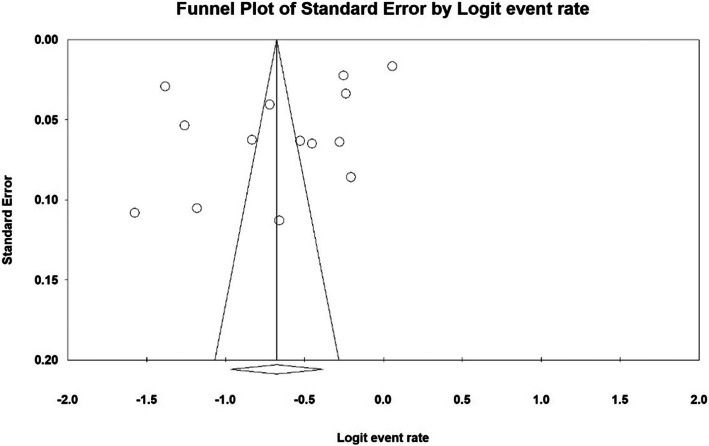
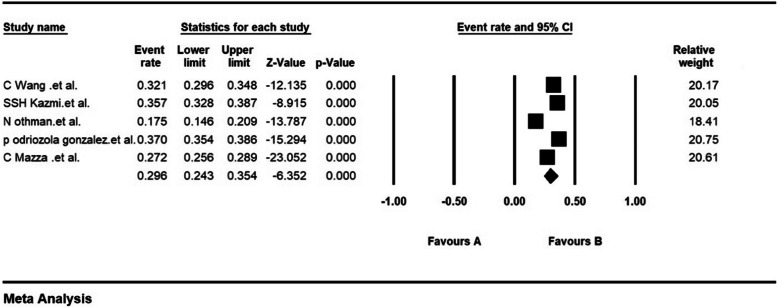
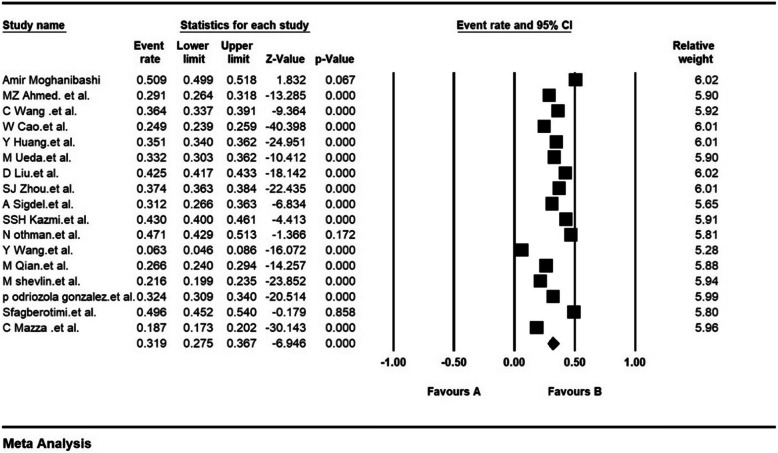
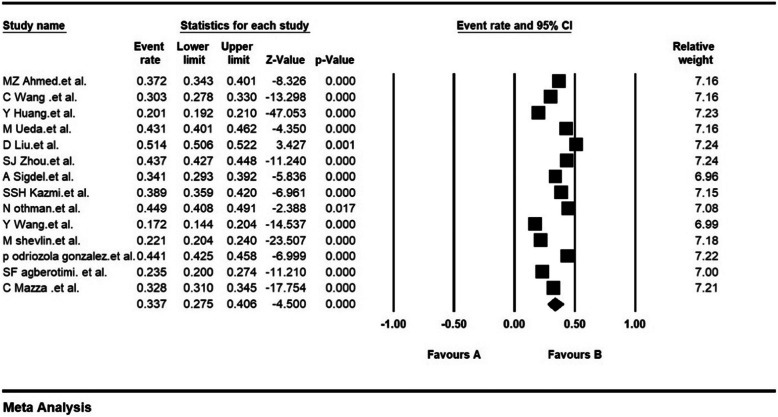
Background: The COVID-19 pandemic has had a significant impact on public mental health. Therefore, monitoring and oversight of the population mental health during crises such as a panedmic is an immediate priority. The aim of this study is to analyze the existing research works and findings in relation to the prevalence of stress, anxiety and depression in the general population during the COVID-19 pandemic. Method: In this systematic review and meta-analysis, articles that have focused on stress and anxiety prevalence among the general population during the COVID-19 pandemic were searched in the Science Direct, Embase, Scopus, PubMed, Web of Science (ISI) and Google Scholar databases, without a lower time limit and until May 2020. In order to perform a meta-analysis of the collected studies, the random effects model was used, and the heterogeneity of studies was investigated using the I 2 index. Moreover. data analysis was conducted using the Comprehensive Meta-Analysis (CMA) software. Results: The prevalence of stress in 5 studies with a total sample size of 9074 is obtained as 29.6% (95% confidence limit: 24.3–35.4), the prevalence of anxiety in 17 studies with a sample size of 63,439 as 31.9% (95% confidence interval: 27.5–36.7), and the prevalence of depression in 14 studies with a sample size of 44,531 people as 33.7% (95% confidence interval: 27.5–40.6). Conclusion: COVID-19 not only causes physical health concerns but also results in a number of psychological disorders. The spread of the new coronavirus can impact the mental health of people in different communities. Thus, it is essential to preserve the mental health of individuals and to develop psychological interventions that can improve the mental health of vulnerable groups during the COVID-19 pandemic.
Overview
The claims and statistics of this paper haven’t been checked yet.
Free: it reads the open-access text and checks the first 5 claims that cite a source we can check. Create a free account to check every claim.
Integrity signals
Registry
Cites
Statistics
Figures
Verification
Claims the paper makes
The claims and statistics of this paper haven’t been checked yet.
Free: it reads the open-access text and checks the first 5 claims that cite a source we can check. Create a free account to check every claim.
Claims other papers make about this one
Each is checked against this paper’s own text: does it say what the citing paper says it does?
The cited source doesn’t support the claim as written.
In the citing paper
“The prevalence was also lower than the estimated prevalence of depression, anxiety, and stress in the general population at 29.6%, 33.7%, and 31.9%, respectively [9].”
From Seroprevalence of COVID-19 and Psychological Distress among Front Liners at the Universiti Malaysia Sabah Campus during the Third Wave of COVID-19 (2022) · cites this paper as [9]
Checked by a reasoning model — may be wrong.
Experimental — accuracy not yet measuredThe source backs part of the claim, not all of it — or backs it for a different population, condition or comparison.
In the citing paper
“The COVID-19 pandemic has been associated with significantly higher levels of distress in the general population and people with persistent pain (Salari et al., 2020;Vindegaard & Benros, 2020;Yu al., 2021).”
From Acceptance and Commitment Therapy for women living with Vulvodynia: A single-case experimental design study of a treatment delivered online (2022) · cites this paper as Salari et al., 2020
Experimental — accuracy not yet measuredThe source backs part of the claim, not all of it — or backs it for a different population, condition or comparison.
In the citing paper
“Moreover, anxiety and stress are more likely to be feelings of worry and insecurity caused by negative events, whereas depression is more likely to be influenced by multiple factors, including biomedical factors, which could be difficult to change with short-term psychological interventions (60, 61).”
From Mindfulness-based online intervention on mental health among undergraduate nursing students during coronavirus disease 2019 pandemic in Beijing, China: A randomized controlled trial (2022) · cites this paper as [61]
Experimental — accuracy not yet measuredThe source backs part of the claim, not all of it — or backs it for a different population, condition or comparison.
In the citing paper
“the prevalence of somatic symptoms (56%), anxiety (36%), and depression (46%) in this sample were high compared to other studies done during the COVID-19 pandemic (Ran et al., 2020; Salari et al., 2020; Xiong et al., 2020).”
From Does the practice of mindfulness reduce somatic symptoms and COVID-19-related anxiety? A community-based survey (2022) · cites this paper as Salari et al., 2020
Experimental — accuracy not yet measuredThe cited source says what the claim attributes to it.
In the citing paper
“Greater fear and uncertainty can manifest in elevated levels of mental distress symptoms — anxiety, stress, depression — as confirmed by recently released COVID-19 studies”
From Anxiety Sensitivity Mediates Relations Between Mental Distress Symptoms and Medical Care Utilization During COVID-19 Pandemic. (2021) · cites this paper as Salari et al., 2020
3 more claims about this paper
Create a free account to see every claim other papers make about this one.
Self-check
Percentages, sums and reported differences re-computed from the paper’s own numbers.
The self-check needs the paper’s full text.
Citations
Cites
Chen, N., Zhou, M., Dong, X., Qu, J., Gong, F., Han, Y., Qiu, Y., Wang, J., Liu, Y., Wei, Y., et al. (2020) · The Lancet · doi:10.1016/s0140-6736(20)30211-7 · Cited by 21,415 · cited 1×
“Men with a history of underlying diseases are more likely to be infected with the virus and would experience worse outcomes [6].”
BackgroundThe Psychological Impact of Quarantine and How to Reduce It: Rapid Review of the Evidence
Brooks, S. K., Webster, R. K., Smith, L. E., Woodland, L., Wessely, S., Greenberg, N., & Rubin, G. J. (2020) · doi:10.2139/ssrn.3532534 · Cited by 16,394
The psychological impact of quarantine and how to reduce it: Rapid review of the evidence
Brooks, S. K., Webster, R. K., Smith, L. E., Woodland, L., Wessely, S., Greenberg, N., & Rubin, G. J. (2020) · The Lancet · doi:10.1016/s0140-6736(20)30460-8 · Cited by 16,378 · cited 1×
“Recent evidence suggests that people who are kept in isolation and quarantine experience significant levels of anxiety, anger, confusion, and stress [12].”
BackgroundWang, C., Pan, R., Wan, X., Tan, Y., Xu, L., Ho, C. S., & Ho, R. C. (2020) · International Journal of Environmental Research and Public Health · doi:10.3390/ijerph17051729 · Cited by 9,923 · cited 3×
“In addition, anxiety levels are significantly higher in people with at least one family member, relative, or a friend with the COVID-19 disease [21, 24, 42].”
BackgroundA novel coronavirus outbreak of global health concern
Wang, C., Horby, P. W., Hayden, F. G., & Gao, G. F. (2020) · The Lancet · doi:10.1016/s0140-6736(20)30185-9 · Cited by 7,700
First case of 2019 novel coronavirus in the United States
Holshue, M. L., DeBolt, C., Lindquist, S., Lofy, K. H., Wiesman, J., Bruce, H., Spitters, C., Ericson, K., Wilkerson, S., Tural, A., et al. (2020) · New England Journal of Medicine · doi:10.1056/nejmoa2001191 · Cited by 6,030 · cited 1×
“Severe cases of the disease can lead to heart, and respiratory failure, acute respiratory syndrome, or even death [7].”
BackgroundThe psychological impact of the COVID-19 epidemic on college students in China
Cao, W., Fang, Z., Hou, G., Han, M., Xu, X., Dong, J., & Zheng, J. (2020) · Psychiatry Research · doi:10.1016/j.psychres.2020.112934 · Cited by 5,843 · cited 2×
“In addition, anxiety levels are significantly higher in people with at least one family member, relative, or a friend with the COVID-19 disease [21, 24, 42].”
BackgroundHolmes, E. A., O'Connor, R. C., Perry, V. H., Tracey, I., Wessely, S., Arseneault, L., Ballard, C., Christensen, H., Cohen Silver, R., Everall, I., et al. (2020) · The Lancet Psychiatry · doi:10.1016/s2215-0366(20)30168-1 · Cited by 5,715
Presumed Asymptomatic Carrier Transmission of COVID-19
Bai, Y., Yao, L., Wei, T., Tian, F., Jin, D.-Y., Chen, L., & Wang, M. (2020) · JAMA · doi:10.1001/jama.2020.2565 · Cited by 4,498 · cited 1×
“In December 2019, in the city of Wuhan, China, unusual cases of patients with pneumonia caused by the new Coronavirus (COVID-19) were reported [1], and the spread of the virus swiftly became a global health threat [2].”
BackgroundHuang, Y., & Zhao, N. (2020) · Psychiatry Research · doi:10.1016/j.psychres.2020.112954 · Cited by 3,736 · cited 2×
“affected by redundancies and business closures [21, 22, 25].”
Background
Research works printed but not linked: 2
- Hahad O, Gilan D, Daiber A, Münzel T. Public Mental Health as One of the Key Factors in Dealing with COVID-19. Germany: Gesundheitswesen (Bundesverband der Arzte des Offentlichen Gesundheitsdienstes); 2020.
- World Health O. Mental health and psychosocial considerations during the COVID-19 outbreak, 18 March 2020. Geneva: World Health Organization; 2020. Contract No.: WHO/2019-nCoV/MentalHealth/2020.1.
Cited by
Items 701–800 of 1,028
Solbakken, O. A., Ebrahimi, O. V., Hoffart, A., Monsen, J. T., & Johnson, S. U. (2021) · Psychological Medicine · doi:10.1017/s0033291721001987 · Cited by 28
The Impact of COVID-19 Lockdown on Injuries in Saudi Arabia: Results From a Level-I Trauma Center
Hakeem, F. F., Alshahrani, S. M., Ghobain, M. A., Albabtain, I. T., Aldibasi, O. S., & Alghnam, S. A. (2021) · Frontiers in Public Health · doi:10.3389/fpubh.2021.704294 · Cited by 24
Habtamu, K., Desie, Y., Asnake, M., Gina, E., & Mequanint, T. (2021) · BMC Psychiatry · doi:10.1186/s12888-021-03429-2 · Cited by 23
Jones, G. L., York, H., Lawal, O., Cherrill, R., Mercer, S., & McCarthy, Z. (2021) · Journal of Medical Radiation Sciences · doi:10.1002/jmrs.544 · Cited by 25
COVID-19 Pandemic and Personality: Agreeable People Are More Stressed by the Feeling of Missing
Getzmann, S., Digutsch, J., & Kleinsorge, T. (2021) · International Journal of Environmental Research and Public Health · doi:10.3390/ijerph182010759 · Cited by 24
Behavioral Correlates of COVID-19 Worry: Stigma, Knowledge, and News Source
Meltzer, G., Chang, V. W., Lieff, S. A., Grivel, M. M., Yang, L. H., & Jarlais, D. C. D. (2021) · International Journal of Environmental Research and Public Health · doi:10.3390/ijerph182111436 · Cited by 23
The Exposome and Immune Health in Times of the COVID-19 Pandemic
Morales, J. S., Valenzuela, P. L., Castillo‐García, A., Butragueño, J., Jiménez‐Pavón, D., Carrera‐Bastos, P., & Lucía, A. (2021) · Nutrients · doi:10.3390/nu14010024 · Cited by 28
Gewirtz‐Meydan, A., & Lassri, D. (2021) · Child Abuse & Neglect · doi:10.1016/j.chiabu.2021.105442 · Cited by 23
Bovero, A., Pidinchedda, A. V., Clovis, F., Berchialla, P., & Carletto, S. (2021) · Death Studies · doi:10.1080/07481187.2021.2019144 · Cited by 28
Takubo, Y., Tsujino, N., Aikawa, Y., Fukiya, K., Iwai, M., Uchino, T., Ito, M., Akiba, Y., Mizuno, M., & Nemoto, T. (2021) · BMC Pregnancy and Childbirth · doi:10.1186/s12884-021-04331-1 · Cited by 27
Jaeghere, E. A. D., Kanervo, H., Colman, R., Schrauwen, W., West, P., Vandemaele, N., Pauw, A. D., Jacobs, C., Hilderson, I., Saerens, M., et al. (2022) · Cancers · doi:10.3390/cancers14041093 · Cited by 26
Crandall, A., Daines, C., Hanson, C. L., & Barnes, M. (2022) · Family Process · doi:10.1111/famp.12771 · Cited by 26
Latif, N. I. A., Ismail, N. A. M., Loh, S. Y. E., Azurah, A. G. N., Midin, M., Shah, S. A., & Kalok, A. H. M. (2022) · International Journal of Environmental Research and Public Health · doi:10.3390/ijerph19084590 · Cited by 23
Cerniglia, L., & Cimino, S. (2022) · Journal of the American Nutrition Association · doi:10.1080/07315724.2022.2063206 · Cited by 27
Thomson, G., Cook, J., Nowland, R. A., Donnellan, W. J., Topalidou, A., Jackson, L., & Fallon, V. (2022) · Scandinavian Journal of Caring Sciences · doi:10.1111/scs.13087 · Cited by 37
Evaluation of cognitive functions in adult individuals with COVID-19
Akıncı, B., Oğul, Ö. E., Hanoğlu, L., Kulaç, B., Ören, D., Ulu, O., & Basançelebi, B. (2022) · Neurological Sciences · doi:10.1007/s10072-022-06562-2 · Cited by 29
COVID Pandemic Aftermath: Changing Dynamics on Cosmetic and Aesthetic Surgery Demands
Aktas, E. H., Balci, U. D., & Karacaoğlu, E. (2023) · Aesthetic Plastic Surgery · doi:10.1007/s00266-022-03231-9 · Cited by 22
Low-Overhead Clustered Federated Learning for Personalized Stress Monitoring
Jiang, S., Firouzi, F., & Chakrabarty, K. (2023) · IEEE Internet of Things Journal · doi:10.1109/jiot.2023.3299736 · Cited by 28
“Under the circumstances of the pandemic, there has been an upsurge of stress and other psychological disorders among the general public [7].”
BackgroundSoares, E. F. P., Reis, J., Rodrigues, M. F., Ribeiro, C., & Pereira, F. C. (2021) · International Journal of Molecular Sciences · doi:10.3390/ijms22020542 · Cited by 24
Zhang, C., Yang, L., Liu, S., Xu, Y. J., Zheng, H., & Zhang, B. (2021) · Frontiers in Neuroscience · doi:10.3389/fnins.2020.622749 · Cited by 23
Gender differences in health anxiety and musculoskeletal symptoms during the COVID-19 pandemic
Kırmızı, M., Yalçinkaya, G., & Şengül, Y. S. (2021) · Journal of Back and Musculoskeletal Rehabilitation · doi:10.3233/bmr-200301 · Cited by 22
Assessing the Transitional Impact and Mental Health Consequences of the COVID-19 Pandemic Onset
Heanoy, E. Z., Shi, L., & Brown, N. R. (2021) · Frontiers in Psychology · doi:10.3389/fpsyg.2020.607976 · Cited by 26
Chaku, N., Kelly, D. P., & Beltz, A. M. (2021) · Computers in Human Behavior · doi:10.1016/j.chb.2021.106772 · Cited by 27
Education, Financial Stress, and Trajectory of Mental Health During the COVID-19 Pandemic
Jiang, Y., Zilioli, S., Balzarini, R. N., Zoppolat, G., & Slatcher, R. B. (2021) · Clinical Psychological Science · doi:10.1177/21677026211049374 · Cited by 24
Díaz, M. S., Martín, M. L., & Mateos-Campos, R. (2021) · International Journal of Environmental Research and Public Health · doi:10.3390/ijerph18115944 · Cited by 26
Understanding relational resilience of married adults in quarantine days
Aydoğan, D., Kara, E., & Kalkan, E. (2021) · Current Psychology · doi:10.1007/s12144-021-02224-2 · Cited by 28
Yeni, K., Tülek, Z., & Terzi, M. (2021) · Multiple Sclerosis and Related Disorders · doi:10.1016/j.msard.2021.103370 · Cited by 24
Joffe, A. R., & Redman, D. (2021) · Frontiers in Public Health · doi:10.3389/fpubh.2021.715904 · Cited by 21
Loch, A. A., Mota, N. B., Rössler, W., & Gattaz, W. F. (2021) · Psychiatry Research · doi:10.1016/j.psychres.2021.114319 · Cited by 24
Hwang, P., Ipekian, L., Jaiswal, N., Scott, G., Amirali, E. L., & Hechtman, L. T. (2022) · Current Psychology · doi:10.1007/s12144-021-02689-1 · Cited by 26
Penengo, C., Colli, C., Cesco, M., Croccia, V., Degano, M., Ferreghini, A., Garzitto, M., Lobel, M., Preis, H., Sala, A., et al. (2022) · Frontiers in Psychiatry · doi:10.3389/fpsyt.2021.775585 · Cited by 27
Spanish Translation and Validation of the COVID Stress Scales in Peru
Noé-Grijalva, M., Polo-Ambrocio, A., Gómez-Bedia, K., & Caycho‐Rodríguez, T. (2022) · Frontiers in Psychology · doi:10.3389/fpsyg.2022.840302 · Cited by 26
Grey, I. M., Arora, T., & Sanah, A. (2022) · Psychological Reports · doi:10.1177/00332941221079723 · Cited by 23
Hamka, H., Suen, M., Ramadhan, Y. A., Yusuf, M., & Wang, J.-H. (2022) · Psychology Research and Behavior Management · doi:10.2147/prbm.s381926 · Cited by 50
Psychological well-being during the COVID-19 pandemic in Italy assessed in a four-waves survey
de Girolamo, G., Ferrari, C., Candini, V., Buizza, C., Calamandrei, G., Caserotti, M., Gavaruzzi, T., Girardi, P., Habersaat, K. B., Lotto, L., et al. (2022) · Scientific Reports · doi:10.1038/s41598-022-22994-4 · Cited by 30
Korneeva, E. N., Striełkowski, W., Канафиевна, К. Р., & Анатольевна, Ш. А. (2022) · International Journal of Environmental Research and Public Health · doi:10.3390/ijerph192113928 · Cited by 40
Pre and Present COVID-19 Situation: A Framework of Educational Transformation in South Asia Region
Khan, S., Zayed, N. M., Darwish, S., Nitsenko, V. S., Islam, K. M. A., Hassan, M. A., & Дуброва, О. М. (2022) · Emerging Science Journal · doi:10.28991/esj-2023-sper-06 · Cited by 31
Nguyen, L. T. H., Nguyen, N. P. K., Tran, K. N., Shin, H., & Yang, I. (2022) · Molecules · doi:10.3390/molecules27227997 · Cited by 25
Hung, M. S. Y., Ng, W. W. M., & Choi, E. K. Y. (2022) · International Journal of Environmental Research and Public Health · doi:10.3390/ijerph192215117 · Cited by 25
García‐Lara, R. A., Suleiman‐Martos, N., Membrive‐Jiménez, M. J., García‐Morales, V., Quesada-Caballero, M., Guisado-Requena, I. M., & Gómez‐Urquiza, J. L. (2022) · Diagnostics · doi:10.3390/diagnostics12123094 · Cited by 26
Shannon, S., Shevlin, M. E., Brick, N., & Breslin, G. (2022) · Journal of Affective Disorders · doi:10.1016/j.jad.2022.12.063 · Cited by 29
Elder, G. J., Altena, E., Palagini, L., & Ellis, J. G. (2023) · Journal of Sleep Research · doi:10.1111/jsr.13842 · Cited by 33
Kor, A., & Shoshani, A. (2023) · Addictive Behaviors · doi:10.1016/j.addbeh.2023.107660 · Cited by 27
Fountoulakis, K. Ν., Karakatsoulis, G. N., Abraham, S., Adorjan, K., Ahmed, H. U., Alarcón, R. D., Arai, K., Salihu, A., Bobes, J., Bobes-Bascarán, T., et al. (2023) · Social Psychiatry and Psychiatric Epidemiology · doi:10.1007/s00127-023-02438-8 · Cited by 29
Smith, R. L., Bannard, T., McDaniel, J. M., Alıev, F., Brown, A., Holliday, E. D., Vest, N. A., DeFrantz-Dufor, W. E., Collaborative, R. S. R., & Dick, D. M. (2023) · Addiction Research & Theory · doi:10.1080/16066359.2023.2216459 · Cited by 23
“As expected based on prior studies of the detrimental impact of COVID-19 (Krishnamoorthy et al. 2020; Salari et al. 2020; Firkey et al. 2022), three-fourths of CRP students reported that COVID-19 worsened their mental health/stress levels.”
BackgroundResultShalev, T., Winocur-Arias, O., Friedman-Rubin, P., Naim, G., Keren, L., Eli, I., & Emodi‐Perlman, A. (2023) · BMC Oral Health · doi:10.1186/s12903-023-03447-4 · Cited by 27
Unveiling the Essential Role of Green Spaces during the COVID-19 Pandemic and Beyond
Ciesielski, M., Gołos, P., Stefán, F., & Taczanowska, K. (2024) · Forests · doi:10.3390/f15020354 · Cited by 26
Risk Communication Effectiveness During COVID-19 Pandemic Among General Population in Saudi Arabia
Almuzaini, Y. S., Mushi, A., Aburas, A., Yassin, Y. M., Alamri, F. A., Alahmari, A., Yezli, S., Khan, A. A., & Jokhdar, H. (2021) · Risk Management and Healthcare Policy · doi:10.2147/rmhp.s294885 · Cited by 25
Ahn, S., Kim, J. L., Kim, J. R., Lee, S. H., Yim, H. W., Jeong, H., Chae, J., Park, H. Y., Lee, J. J., & Lee, H. (2021) · Journal of Psychiatric Research · doi:10.1016/j.jpsychires.2021.02.029 · Cited by 22
Moreira‐Neto, A., Martins, B., Miliatto, A. C. D. L., Nucci, M. P., & Silva‐Batista, C. (2021) · Psychiatry Research · doi:10.1016/j.psychres.2021.113969 · Cited by 24
Daly, M., & Robinson, E. (2021) · Psychological Medicine · doi:10.1017/s003329172100324x · Cited by 22
Consequences of COVID-19 on Health, Economy, and Tourism in Asia: A Systematic Review
Saengtabtim, K., Leelawat, N., Tang, J., Suppasri, A., & Imamura, F. (2022) · Sustainability · doi:10.3390/su14084624 · Cited by 25
Prevalence of severe anxiety in the Philippines amid the COVID-19 outbreak
Mendoza, N. B., & Dizon, J. I. W. T. (2022) · Journal of Loss and Trauma · doi:10.1080/15325024.2021.2023298 · Cited by 20
“Our estimates align with current meta-analytic studies on the general population’s anxiety prevalence (Salari et al., 2020).”
ResultCoronavirus Stress and Overeating: The Role of Anxiety and COVID-19 Burnout
Wang, R., Ye, B., Wang, P., Tang, C., & Yang, Q. (2022) · Journal of Eating Disorders · doi:10.1186/s40337-022-00584-z · Cited by 20
Postpandemic Psychotherapy: Still Under Siege
Markowitz, J. C., & Milrod, B. L. (2021) · Psychiatric Services · doi:10.1176/appi.ps.202100349 · Cited by 20
Provision of Remote Psychotherapy during the COVID-19 Pandemic
Humer, E. C., & Probst, T. (2020) · Digital Psychology · doi:10.24989/dp.v1i2.1868 · Cited by 23
SARS-CoV-2 Emergency and Long-Term Cognitive Impairment in Older People
Rizzo, M. R., & Paolisso, G. (2021) · Aging and Disease · doi:10.14336/ad.2021.0109 · Cited by 19
Wynn, J. K., McCleery, A., Novacek, D. M., Reavis, E. A., Tsai, J., & Green, M. F. (2021) · Journal of Psychiatric Research · doi:10.1016/j.jpsychires.2021.03.051 · Cited by 21
Positive and Negative Impacts of the COVID-19 Pandemic on Relationship Satisfaction in Male Couples
Walsh, A. R., & Stephenson, R. B. (2021) · American Journal of Men s Health · doi:10.1177/15579883211022180 · Cited by 27
Liao, Q., Xiao, J., Cheung, J. K., Ng, T. W. Y., Lam, W., Ni, M. Y., & Cowling, B. J. (2021) · Scientific Reports · doi:10.1038/s41598-021-00616-9 · Cited by 20
Mary‐Krause, M., Bustamante, J. J. H., Héron, M., Andersen, A. J., Aarbaoui, T. E., & Melchior, M. (2021) · PLoS ONE · doi:10.1371/journal.pone.0255158 · Cited by 24
Management of Patients With Glucocorticoid-Related Diseases and COVID-19
Chifu, I. O., Detomas, M., Dischinger, U., Kimpel, O., Megerle, F., Hahner, S., Faßnacht, M., & Altieri, B. (2021) · Frontiers in Endocrinology · doi:10.3389/fendo.2021.705214 · Cited by 23
Smirnova, D. A., Syunyakov, T., Pavlichenko, A. V., Bragin, D., Fedotov, I. A., Filatova, V., Ignatenko, Y., Kuvshinova, N. Y., Prokopenko, E., Romanov, D. V., et al. (2021) · Psychiatria Danubina · Cited by 24
Hansmann, R., Fritz, L., Pagani, A., Clément, G., & Binder, C. R. (2021) · Frontiers in Psychology · doi:10.3389/fpsyg.2021.735293 · Cited by 19
Costa, M. L., Costa, M. G. O., de Souza, M. F. C., da Silva, D. G., Vieira, D. A. D. S., & Mendes-Netto, R. S. (2021) · Nutrients · doi:10.3390/nu13113861 · Cited by 23
Purcell, N., Sells, J. R., McGrath, S. L., Mehlman, H., Bertenthal, D., & Seal, K. H. (2021) · Global Advances in Health and Medicine · doi:10.1177/21649561211053828 · Cited by 26
The danger of the single storyline obfuscating the complexities of managing SARS‐CoV‐2/COVID‐19
Sturmberg, J. P., Paul, É., Damme, W. V., Ridde, V., Brown, G. W., & Kalk, A. (2021) · Journal of Evaluation in Clinical Practice · doi:10.1111/jep.13640 · Cited by 22
Aljurbua, F. I., Selaihem, A., Alomari, N. A., & Alrashoud, A. M. (2021) · Journal of Family Medicine and Primary Care · doi:10.4103/jfmpc.jfmpc_847_21 · Cited by 25
Skeens, M. A., Guttoo, P., Stanek, J. R., Taylor, K., Stratz, E., Ardura, M. I., & Rangarajan, H. G. (2022) · Bone Marrow Transplantation · doi:10.1038/s41409-022-01587-9 · Cited by 22
Deng, H., Zhao, J., Zhao, S., Jiang, S., & Cui, G. (2022) · The Analyst · doi:10.1039/d1an02318g · Cited by 20
Wu, Q., Duan, W.-Z., Chen, J., Zhao, X.-P., Li, X., Liu, Y., Ma, Q., Xue, Z., & Chen, J. (2022) · Frontiers in Pharmacology · doi:10.3389/fphar.2022.843412 · Cited by 23
Dream‐enactment behaviours during the COVID ‐19 pandemic: an international COVID ‐19 sleep study
Liu, Y., Partinen, E., Chan, N. Y., Dauvilliers, Y. A., Inoue, Y., Gennaro, L. D., Plazzi, G., Bolstad, C. J., Nadorff, M. R., Merikanto, I., et al. (2022) · Journal of Sleep Research · doi:10.1111/jsr.13613 · Cited by 25
Kapasia, N., Paul, P., Roy, A., Das, P., Ghosh, T., & Chouhan, P. (2022) · Heliyon · doi:10.1016/j.heliyon.2022.e09440 · Cited by 32
Berretz, G., Cebula, C., Wortelmann, B. M., Papadopoulou, P., Wolf, O. T., Ocklenburg, S., & Packheiser, J. (2022) · PLoS ONE · doi:10.1371/journal.pone.0266887 · Cited by 26
Jia, Y., Yao, Y., Zhuo, L., Chen, X., Yan, C., Ji, Y., Tao, J., & Zhu, Y. (2022) · Frontiers in Neurology · doi:10.3389/fneur.2022.862078 · Cited by 24
Tarsitani, L., Pinucci, I., Tedeschi, F., Patanè, M., Papola, D., Palantza, C., Acartürk, C., Björkenstam, E., Bryant, R. A., Burchert, S., et al. (2022) · BMC Psychiatry · doi:10.1186/s12888-022-04265-8 · Cited by 25
Pankowski, D., & Wytrychiewicz‐Pankowska, K. (2023) · Journal of Religion and Health · doi:10.1007/s10943-022-01720-4 · Cited by 43
Janitra, F. E., Jen, H., Chu, H., Chen, R., Pien, L., Liu, D., Lai, Y.-J., Banda, K. J., Lee, T., Lin, H., et al. (2023) · Journal of Affective Disorders · doi:10.1016/j.jad.2023.03.077 · Cited by 24
Being learners with mental resilience as outcomes of metacognitive strategies in an academic context
Anthonysamy, L. (2023) · Cogent Education · doi:10.1080/2331186x.2023.2219497 · Cited by 34
“According to recent meta-analyses, the prevalence of stress, anxiety, and depression in the general population as a result of the pandemic is over 30% (Luo et al., 2020; Salari et al., 2020).”
MethodCao, R., Lai, J., Fu, X., Qiu, P., Chen, J., & Liu, W. (2023) · BMC Oral Health · doi:10.1186/s12903-023-03151-3 · Cited by 36
“Results from previous studies indicated that college students were especially vulnerable to those adverse outcomes during the pandemic [6].”
ResultTsai, P.-H., Wu, P.-C., Li, H.-R., Kumar, K. J. S., & Wang, S. (2023) · Food & Function · doi:10.1039/d3fo01301d · Cited by 22
Younas, M. S., Dong, Y., Menhas, R., Li, X., Wang, Y., & Noor, U. (2023) · Psychology Research and Behavior Management · doi:10.2147/prbm.s441395 · Cited by 20
“13–16 Studies looked at the impact of adolescents’ perceptions of Coronavirus occurrence and dread on mental health and well-being, as well as the potential preventive role of physical exercise.”
BackgroundGrasmann, L., Morawa, E., Adler, W., Schug, C., Borho, A., Geiser, F., Beschoner, P., Jerg‐Bretzke, L., Albus, C., Weidner, K., et al. (2024) · Journal of Clinical Nursing · doi:10.1111/jocn.17079 · Cited by 19
Janoušková, M., Pekara, J., Kučera, M., Kearns, P. B., Šeblová, J., Wolfová, K., Kuklová, M., & Šeblová, D. (2024) · Scientific Reports · doi:10.1038/s41598-024-59700-5 · Cited by 27
“This is in line with the fact that younger adults might embrace their use of social media and an increase in economic challenges facing younger people during this time, as well as the demands of childcare and schooling at home 45 .”
ResultYi, J., Kang, L., Li, J., & Jian-fang, G. (2021) · Frontiers in Psychiatry · doi:10.3389/fpsyt.2020.590101 · Cited by 23
Rek, S. V., Freeman, D. H., Reinhard, M. A., Bühner, M., Grosen, S., Falkai, P., Adorjan, K., & Padberg, F. (2021) · European Archives of Psychiatry and Clinical Neuroscience · doi:10.1007/s00406-021-01291-7 · Cited by 22
Betini, G. S., Hirdes, J. P., Adekpedjou, R., Perlman, C. M., Huculak, N., & Hébert, P. C. (2021) · Frontiers in Psychiatry · doi:10.3389/fpsyt.2021.666261 · Cited by 23
Wamser‐Nanney, R. A., Nguyen‐Feng, V. N., Lotzin, A., & Zhou, X. (2023) · Couple and Family Psychology Research and Practice · doi:10.1037/cfp0000189 · Cited by 23
Factors Related to Mental Health During the COVID-19 Lockdown in Spain
González, R. P., Vicario‐Molina, I., Ortega, E. G., & Picos, A. P. (2021) · Frontiers in Psychology · doi:10.3389/fpsyg.2021.715792 · Cited by 27
Jesser, A., Schaffler, Y., Gächter, A., Dale, R., Humer, E. C., & Pieh, C. (2022) · Healthcare · doi:10.3390/healthcare10071334 · Cited by 24
Abbasi, P., Tanhaie, S., & Kazeminia, M. (2023) · The Italian Journal of Pediatrics/Italian journal of pediatrics · doi:10.1186/s13052-023-01562-0 · Cited by 26
“Also, Salari et al. reported the prevalence of anxiety and depression 29.6% and 33.7% in the general population during Covid-19 pandemic, respectively [29].”
BackgroundInfluentialSchiff, M., Pat‐Horenczyk, R., & Benbenishty, R. (2025) · Journal of American College Health · doi:10.1080/07448481.2024.2447854 · Cited by 24
“Salari et al 7 found the prevalence of anxiety among the general population in different countries and regions during the pandemic to be 31.9% ( based on 17 studies with a sample size of 63,439) and the prevalence of depression to be 33.7% (based on 14 studies with a sample size of 44,531).”
InfluentialThe Impact of COVID-19 on Depressive Symptoms through the Lens of Sexual Orientation
Duarte, M., & Pereira, H. (2021) · Brain Sciences · doi:10.3390/brainsci11040523 · Cited by 28
Toledo-Fernández, A., Ocampo, D. B., & González-González, A. (2021) · Behavioral Sciences · doi:10.3390/bs11050076 · Cited by 22
Domènech‐Abella, J., Gabarrell‐Pascuet, A., Faris, L. H., Cristóbal-Narváez, P., Félez-Nóbrega, M., Mortier, P., Vilagut, G., Olaya, B., Alonso, J., & Haro, J. M. (2021) · Journal of Affective Disorders · doi:10.1016/j.jad.2021.05.125 · Cited by 21
The Psychological Impact of COVID-19 on Individuals With and Without Mental Health Disorders
Campos, J. Á. D. B., Campos, L. A., Martins, B. G., Dias, F. V., Ruano, R., & Marôco, J. P. (2021) · Psychological Reports · doi:10.1177/00332941211026850 · Cited by 22
Min, S., Jeong, Y. H., Kim, J., Koo, J. W., & Ahn, Y. M. (2021) · Frontiers in Psychiatry · doi:10.3389/fpsyt.2021.671722 · Cited by 26
Mobin, M. A., Mahi, M., Hassan, M. K., Habib, M., Akter, S., & Hassan, T. (2020) · Eurasian economic review : · doi:10.1007/s40822-021-00193-2 · Cited by 27
Marino, P., Touzani, R., Pakradouni, J., Soussan, P. B., & Gravis, G. (2022) · Cancers · doi:10.3390/cancers14071794 · Cited by 20
Nia, H. S., She, L., Kaur, H., Boyle, C., Fomani, F. K., Hoseinzadeh, E., Kohestani, D., & Rahmatpour, P. (2022) · Frontiers in Psychiatry · doi:10.3389/fpsyt.2022.851212 · Cited by 19
Metadata
- Authors
- Salari, N., Hosseinian-Far, A., Jalali, R., Vaisi-Raygani, A., Rasoulpoor, S., Mohammadi, M., Rasoulpoor, S., & Khaledi-Paveh, B.
- Affiliations
- Kermanshah University of Medical Sciences (IR)
- Corresponding author
- Rasoulpoor, Shna
- Mohammadi, Masoud
- Rasoulpoor, Shabnam
- Venue
- Globalization and Health
- Published
- 2020-07-06
- Volume
- 16
- Issue
- 1
- Pages
- 57-57
- ISSN
- 1744-8603 (ISSN-L)
- PMC
- PMC7338126
- OpenAlex
- W3039647217
- Semantic Scholar
- 20448e72ff52f2cc04fb73697cfc03af06f266ed
- Cited by
- 3,560
- References
- 54
- Citations by year
- 2026: 94 · 2025: 235 · 2024: 365 · 2023: 665 · 2022: 1037 · 2021: 1019 · 2020: 141
- FWCI
- 56.19
- Type
- journal article
- Language
- en
- Open access
- gold
- doi.org
- Licence
- cc-by
- creativecommons.org/licenses/by/4.0 (tdm)
- creativecommons.org/licenses/by/4.0 (vor)
- Locations
- Globalization and Health (publishedVersion, cc-by)
- PubMed Central (publishedVersion, cc-by)
- PubMed (publishedVersion)
- NECTAR - Northampton Electronic Collection of Thesis and Research (University of Northampton) (acceptedVersion)
- DOAJ (DOAJ: Directory of Open Access Journals) (submittedVersion, cc-by-sa)
- Funders
- Kermanshah University of Medical Sciences
- Student Research Committee, Tabriz University of Medical Sciences
- Topics
- Social Sciences › Psychology › Clinical Psychology › COVID-19 and Mental Health
- Health Sciences › Medicine › Public Health, Environmental and Occupational Health › Maternal Mental Health During Pregnancy and Postpartum
- Health Sciences › Medicine › Psychiatry and Mental health › Mental Health Treatment and Access
- Keywords
- COVID-19 pandemic, stress, anxiety, depression, prevalence, general population, mental health, mental illness
- MeSH terms
- COVID-19, Anxiety, Asia, Depression, Europe, Humans, Pneumonia, Viral, Stress, Psychological, Prevalence, Coronavirus Infections, Pandemics
About these checks
Registry, retraction, Cites and statistics results are computed, not judged, with one exception: a printed reference that no index lists is read once by a model before it counts as a citation error. Claims are extracted by a model and kept only when their quote appears verbatim in the text; each cited source is then checked, with a model’s help, for whether it says what the claim relies on. Those verdicts can be wrong — read the claim’s quote and the cited source before relying on one.
Statistics and arithmetic are recomputed, not judged.
Confidence bands are shown only for fields calibrated on our annotated test set. None is calibrated yet, so no band is shown.
What counts as a claim ›How we measure confidence ›How we check this ›
Are you an author, or do you see a problem with this page? Request a review
Data sources
Bibliographic data: Semantic Scholar, OpenAlex, Crossref.
Contains information from the Semantic Scholar Academic Graph Datasets, made available under the ODC Attribution License (ODC-BY 1.0).
Semantic Scholar’s data is described in: Kinney, R., et al. (2023). The Semantic Scholar Open Data Platform. arXiv:2301.10140.
