

Prevalence of stress, anxiety, depression among the general population during the COVID-19 pandemic: a systematic review and meta-analysis
Open accessThe DOI matches its Crossref record; 58 of the 58 references it cites were found in a registry or an index.
Abstract
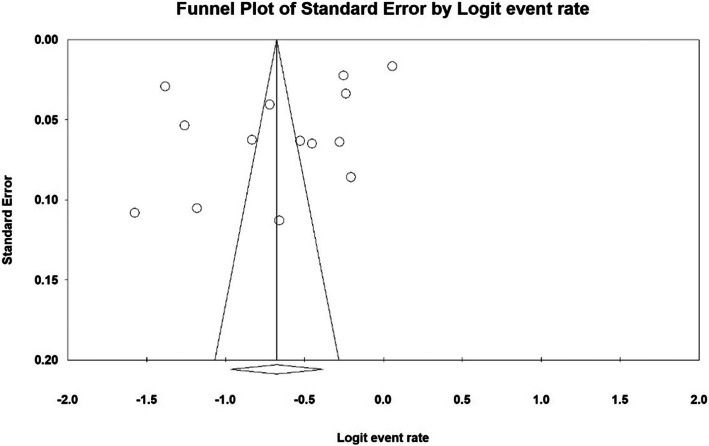
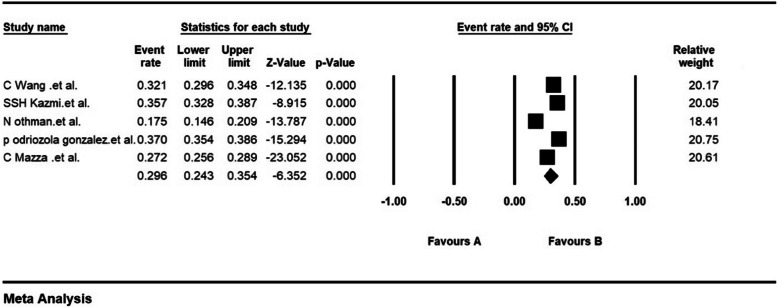
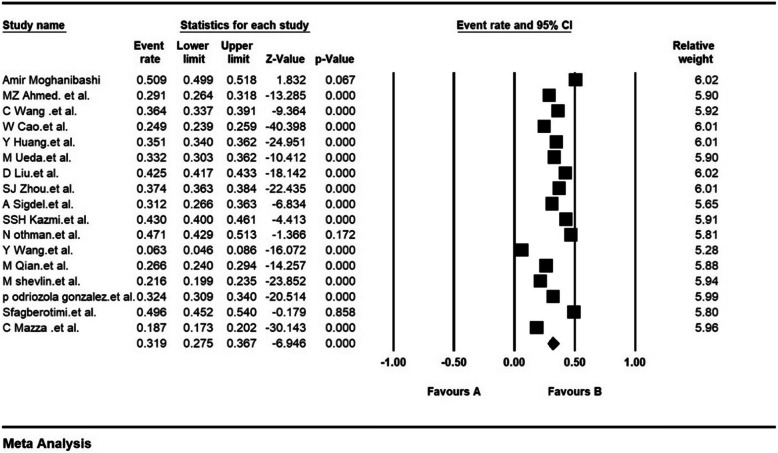
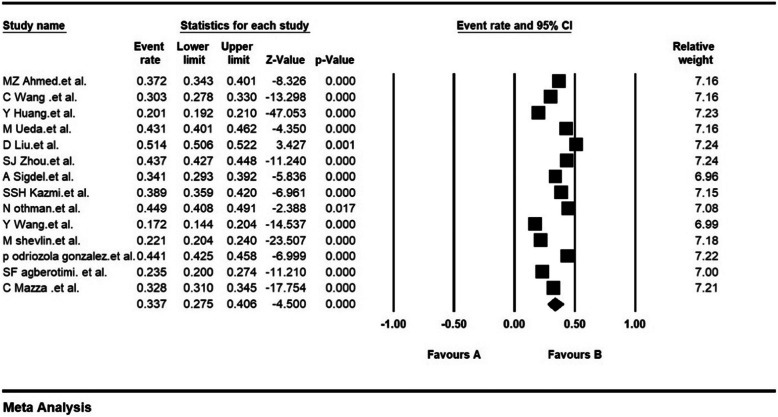
Background: The COVID-19 pandemic has had a significant impact on public mental health. Therefore, monitoring and oversight of the population mental health during crises such as a panedmic is an immediate priority. The aim of this study is to analyze the existing research works and findings in relation to the prevalence of stress, anxiety and depression in the general population during the COVID-19 pandemic. Method: In this systematic review and meta-analysis, articles that have focused on stress and anxiety prevalence among the general population during the COVID-19 pandemic were searched in the Science Direct, Embase, Scopus, PubMed, Web of Science (ISI) and Google Scholar databases, without a lower time limit and until May 2020. In order to perform a meta-analysis of the collected studies, the random effects model was used, and the heterogeneity of studies was investigated using the I 2 index. Moreover. data analysis was conducted using the Comprehensive Meta-Analysis (CMA) software. Results: The prevalence of stress in 5 studies with a total sample size of 9074 is obtained as 29.6% (95% confidence limit: 24.3–35.4), the prevalence of anxiety in 17 studies with a sample size of 63,439 as 31.9% (95% confidence interval: 27.5–36.7), and the prevalence of depression in 14 studies with a sample size of 44,531 people as 33.7% (95% confidence interval: 27.5–40.6). Conclusion: COVID-19 not only causes physical health concerns but also results in a number of psychological disorders. The spread of the new coronavirus can impact the mental health of people in different communities. Thus, it is essential to preserve the mental health of individuals and to develop psychological interventions that can improve the mental health of vulnerable groups during the COVID-19 pandemic.
Overview
The claims and statistics of this paper haven’t been checked yet.
Free: it reads the open-access text and checks the first 5 claims that cite a source we can check. Create a free account to check every claim.
Integrity signals
Registry
Cites
Statistics
Figures
Verification
Claims the paper makes
The claims and statistics of this paper haven’t been checked yet.
Free: it reads the open-access text and checks the first 5 claims that cite a source we can check. Create a free account to check every claim.
Claims other papers make about this one
Each is checked against this paper’s own text: does it say what the citing paper says it does?
The cited source doesn’t support the claim as written.
In the citing paper
“The prevalence was also lower than the estimated prevalence of depression, anxiety, and stress in the general population at 29.6%, 33.7%, and 31.9%, respectively [9].”
From Seroprevalence of COVID-19 and Psychological Distress among Front Liners at the Universiti Malaysia Sabah Campus during the Third Wave of COVID-19 (2022) · cites this paper as [9]
Checked by a reasoning model — may be wrong.
Experimental — accuracy not yet measuredThe source backs part of the claim, not all of it — or backs it for a different population, condition or comparison.
In the citing paper
“The COVID-19 pandemic has been associated with significantly higher levels of distress in the general population and people with persistent pain (Salari et al., 2020;Vindegaard & Benros, 2020;Yu al., 2021).”
From Acceptance and Commitment Therapy for women living with Vulvodynia: A single-case experimental design study of a treatment delivered online (2022) · cites this paper as Salari et al., 2020
Experimental — accuracy not yet measuredThe source backs part of the claim, not all of it — or backs it for a different population, condition or comparison.
In the citing paper
“Moreover, anxiety and stress are more likely to be feelings of worry and insecurity caused by negative events, whereas depression is more likely to be influenced by multiple factors, including biomedical factors, which could be difficult to change with short-term psychological interventions (60, 61).”
From Mindfulness-based online intervention on mental health among undergraduate nursing students during coronavirus disease 2019 pandemic in Beijing, China: A randomized controlled trial (2022) · cites this paper as [61]
Experimental — accuracy not yet measuredThe source backs part of the claim, not all of it — or backs it for a different population, condition or comparison.
In the citing paper
“the prevalence of somatic symptoms (56%), anxiety (36%), and depression (46%) in this sample were high compared to other studies done during the COVID-19 pandemic (Ran et al., 2020; Salari et al., 2020; Xiong et al., 2020).”
From Does the practice of mindfulness reduce somatic symptoms and COVID-19-related anxiety? A community-based survey (2022) · cites this paper as Salari et al., 2020
Experimental — accuracy not yet measuredThe cited source says what the claim attributes to it.
In the citing paper
“Greater fear and uncertainty can manifest in elevated levels of mental distress symptoms — anxiety, stress, depression — as confirmed by recently released COVID-19 studies”
From Anxiety Sensitivity Mediates Relations Between Mental Distress Symptoms and Medical Care Utilization During COVID-19 Pandemic. (2021) · cites this paper as Salari et al., 2020
3 more claims about this paper
Create a free account to see every claim other papers make about this one.
Self-check
Percentages, sums and reported differences re-computed from the paper’s own numbers.
The self-check needs the paper’s full text.
Citations
Cites
Chen, N., Zhou, M., Dong, X., Qu, J., Gong, F., Han, Y., Qiu, Y., Wang, J., Liu, Y., Wei, Y., et al. (2020) · The Lancet · doi:10.1016/s0140-6736(20)30211-7 · Cited by 21,415 · cited 1×
“Men with a history of underlying diseases are more likely to be infected with the virus and would experience worse outcomes [6].”
BackgroundThe Psychological Impact of Quarantine and How to Reduce It: Rapid Review of the Evidence
Brooks, S. K., Webster, R. K., Smith, L. E., Woodland, L., Wessely, S., Greenberg, N., & Rubin, G. J. (2020) · doi:10.2139/ssrn.3532534 · Cited by 16,394
The psychological impact of quarantine and how to reduce it: Rapid review of the evidence
Brooks, S. K., Webster, R. K., Smith, L. E., Woodland, L., Wessely, S., Greenberg, N., & Rubin, G. J. (2020) · The Lancet · doi:10.1016/s0140-6736(20)30460-8 · Cited by 16,378 · cited 1×
“Recent evidence suggests that people who are kept in isolation and quarantine experience significant levels of anxiety, anger, confusion, and stress [12].”
BackgroundWang, C., Pan, R., Wan, X., Tan, Y., Xu, L., Ho, C. S., & Ho, R. C. (2020) · International Journal of Environmental Research and Public Health · doi:10.3390/ijerph17051729 · Cited by 9,923 · cited 3×
“In addition, anxiety levels are significantly higher in people with at least one family member, relative, or a friend with the COVID-19 disease [21, 24, 42].”
BackgroundA novel coronavirus outbreak of global health concern
Wang, C., Horby, P. W., Hayden, F. G., & Gao, G. F. (2020) · The Lancet · doi:10.1016/s0140-6736(20)30185-9 · Cited by 7,700
First case of 2019 novel coronavirus in the United States
Holshue, M. L., DeBolt, C., Lindquist, S., Lofy, K. H., Wiesman, J., Bruce, H., Spitters, C., Ericson, K., Wilkerson, S., Tural, A., et al. (2020) · New England Journal of Medicine · doi:10.1056/nejmoa2001191 · Cited by 6,030 · cited 1×
“Severe cases of the disease can lead to heart, and respiratory failure, acute respiratory syndrome, or even death [7].”
BackgroundThe psychological impact of the COVID-19 epidemic on college students in China
Cao, W., Fang, Z., Hou, G., Han, M., Xu, X., Dong, J., & Zheng, J. (2020) · Psychiatry Research · doi:10.1016/j.psychres.2020.112934 · Cited by 5,843 · cited 2×
“In addition, anxiety levels are significantly higher in people with at least one family member, relative, or a friend with the COVID-19 disease [21, 24, 42].”
BackgroundHolmes, E. A., O'Connor, R. C., Perry, V. H., Tracey, I., Wessely, S., Arseneault, L., Ballard, C., Christensen, H., Cohen Silver, R., Everall, I., et al. (2020) · The Lancet Psychiatry · doi:10.1016/s2215-0366(20)30168-1 · Cited by 5,715
Presumed Asymptomatic Carrier Transmission of COVID-19
Bai, Y., Yao, L., Wei, T., Tian, F., Jin, D.-Y., Chen, L., & Wang, M. (2020) · JAMA · doi:10.1001/jama.2020.2565 · Cited by 4,498 · cited 1×
“In December 2019, in the city of Wuhan, China, unusual cases of patients with pneumonia caused by the new Coronavirus (COVID-19) were reported [1], and the spread of the virus swiftly became a global health threat [2].”
BackgroundHuang, Y., & Zhao, N. (2020) · Psychiatry Research · doi:10.1016/j.psychres.2020.112954 · Cited by 3,736 · cited 2×
“affected by redundancies and business closures [21, 22, 25].”
Background
Research works printed but not linked: 2
- Hahad O, Gilan D, Daiber A, Münzel T. Public Mental Health as One of the Key Factors in Dealing with COVID-19. Germany: Gesundheitswesen (Bundesverband der Arzte des Offentlichen Gesundheitsdienstes); 2020.
- World Health O. Mental health and psychosocial considerations during the COVID-19 outbreak, 18 March 2020. Geneva: World Health Organization; 2020. Contract No.: WHO/2019-nCoV/MentalHealth/2020.1.
Cited by
Items 801–900 of 1,028
Zhang, K., Mi, Z., Parks‐Stamm, E. J., Cao, W., Ji, Y., & Jiang, R. (2022) · Frontiers in Psychiatry · doi:10.3389/fpsyt.2022.868072 · Cited by 32
Alegria, M. M., Cruz-Gonzalez, M. A., O’Malley, I. S., Álvarez, K., Stein, G. L., Fuentes, L., Eddington, K. M., Poindexter, C., Markle, S. L., Thorndike, A. N., et al. (2022) · Behaviour Research and Therapy · doi:10.1016/j.brat.2022.104102 · Cited by 20
First-onset major depression during the COVID-19 pandemic: A predictive machine learning model
Caldirola, D., Daccò, S., Cuniberti, F., Grassi, M., Alciati, A., Torti, T., & Perna, G. (2022) · Journal of Affective Disorders · doi:10.1016/j.jad.2022.04.145 · Cited by 18
Mahadi, A. R., Rafi, M. A., Shahriar, T., Seemanta, S., Rabbani, M. G., Akter, M., Majumder, M. I., & Hasan, M. T. (2022) · Frontiers in Medicine · doi:10.3389/fmed.2022.876561 · Cited by 24
Association between sedentary behavior and depression among South Korean adolescents
Kim, J., Kim, H., Jang, S., & Park, E. (2022) · BMC Psychiatry · doi:10.1186/s12888-022-04262-x · Cited by 26
Dong, D., Feng, Y., & Qiao, Z. (2022) · Current Psychology · doi:10.1007/s12144-022-03780-x · Cited by 29
Pasha, H., Omidvar, S., Faramarzi, M., & Bakhtiari, A. (2023) · BMC Psychiatry · doi:10.1186/s12888-023-04677-0 · Cited by 22
“The impact of the pandemic on mental health, including high rates of anxiety, depression, and post-traumatic stress disorder (PTSD) in the general population, has been reported in several countries across the Americas, Asia, the Middle East, and Europe [4], with few studies on specific age groups such as young adults…”
BackgroundMental health across two years of the COVID-19 pandemic: a 5-wave longitudinal study in Germany
Weber, M., Burchert, S., Sijbrandij, M., Patanè, M., Pinucci, I., Renneberg, B., Knaevelsrud, C., & Schumacher, S. (2023) · Frontiers in Psychiatry · doi:10.3389/fpsyt.2023.1229700 · Cited by 25
The impact of COVID-19 on students’ anxiety and its clarification: a systematic review
Wu, J., Kuan, G., Lou, H., Hu, X., Masri, M. N., Sabo, A., & Kueh, Y. C. (2023) · Frontiers in Psychology · doi:10.3389/fpsyg.2023.1134703 · Cited by 26
Inteligencia Emocional como Factor Determinante en el Rendimiento Académico en Estudiantes
Rodriguez-Barboza, J. R. (2024) · Revista Docentes 2 0 · doi:10.37843/rted.v17i1.496 · Cited by 19
Fear and depression during the COVID-19 outbreak in Cameroon: a nation-wide observational study
Fodjo, J. N. S., Ngarka, L., Njamnshi, W. Y., Nfor, L. N., Mengnjo, M. K., Mendo, E. L., Angwafor, S. A., Atchou, J. G. B., Nkouonlack, C., Njit, E. N., et al. (2021) · BMC Psychiatry · doi:10.1186/s12888-021-03323-x · Cited by 20
Karabacak, D. E., Demir, S., Yeğit, O. O., Can, A., Terzioğlu, K., Ünal, D., Olgaç, M., Coşkun, R., Çolakoğlu, B., Büyüköztürk, S., et al. (2021) · Allergy · doi:10.1111/all.14796 · Cited by 20
COVID-19 related fear and mental health in Indian sample: The buffering effect of support system
Suhail, A., Dar, K. A., & Iqbal, N. (2021) · Current Psychology · doi:10.1007/s12144-021-01694-8 · Cited by 22
Dębski, P. G., Florek, S., Piegza, M. J., Pudło, R., & Gorczyca, P. W. (2021) · International Journal of Occupational Medicine and Environmental Health · doi:10.13075/ijomeh.1896.01766 · Cited by 22
Short-Term Effect of the COVID-19 Pandemic on Suicidal Ideation: A Prospective Cohort Study
Sueki, H., & Ueda, M. (2021) · Crisis · doi:10.1027/0227-5910/a000797 · Cited by 22
Assessing the impact of COVID-19 on mental health providers in the southeastern United States
Slone, H., Gutierrez, A., Lutzky, C., Zhu, D., Hedriana, H., Barrera, J. F., Paige, S. R., & Bunnell, B. E. (2021) · Psychiatry Research · doi:10.1016/j.psychres.2021.114055 · Cited by 22
Uzir, M. U. H., Bukari, Z., Jerin, I., Hasan, N., Hamid, A. B. A., & Ramayah, T. (2021) · Journal of Community Psychology · doi:10.1002/jcop.22716 · Cited by 32
Cipriani, G. E., Bartoli, M., & Amanzio, M. (2021) · International Journal of Environmental Research and Public Health · doi:10.3390/ijerph182010676 · Cited by 25
Kołomańska-Bogucka, D., Micek, A., & Mazur-Biały, A. I. (2022) · International Journal of Environmental Research and Public Health · doi:10.3390/ijerph19053066 · Cited by 20
Pan, N., Qin, K., Yu, Y., Long, Y., Zhang, X., He, M., Suo, X., Zhang, S., Sweeney, J. A., Wang, S., et al. (2022) · Psychological Medicine · doi:10.1017/s0033291722002173 · Cited by 19
When the worldwide response to the COVID-19 pandemic is done without health promotion
Cambon, L., Bergeron, H., Castel, P., Ridde, V., & Alla, F. (2021) · Global Health Promotion · doi:10.1177/17579759211015129 · Cited by 20
Semerci, M., & Uzun, S. (2023) · Asian Journal of Psychiatry · doi:10.1016/j.ajp.2023.103615 · Cited by 23
Physiological signal-based mental stress detection using hybrid deep learning models
Modi, N., Kumar, Y., Mehta, K., & Chaplot, N. (2025) · Discover Artificial Intelligence · doi:10.1007/s44163-025-00412-8 · Cited by 18
A first look at perceived stress in southeastern university students during the COVID-19 pandemic
Hathaway, E. D., Peyer, K. L., & Doyle, K. A. (2021) · Journal of American College Health · doi:10.1080/07448481.2021.1895809 · Cited by 20
Impact of COVID-19 pandemic lockdown on myocardial infarction care
Schmitz, T., Meisinger, C., Kirchberger, I., Thilo, C., Amann, U., Baumeister, S. E., & Linseisen, J. (2021) · European Journal of Epidemiology · doi:10.1007/s10654-021-00764-2 · Cited by 23
Prospective association between receipt of the economic impact payment and mental health outcomes
Tsai, J., Huang, M., Rajan, S. S., & Elbogen, E. B. (2021) · Journal of Epidemiology & Community Health · doi:10.1136/jech-2021-216661 · Cited by 18
Florek, S., Dębski, P. G., Piegza, M. J., Gorczyca, P. W., & Pudło, R. (2021) · Medicina · doi:10.3390/medicina57090959 · Cited by 24
Su, X., Cai, R. Y., Uljarević, M., Herwegen, J. V., Dukes, D., Yang, Y., Peng, X., & Samson, A. C. (2021) · Frontiers in Psychiatry · doi:10.3389/fpsyt.2021.708465 · Cited by 23
Entertain Me Well: An Entertaining, Tailorable, Online Platform Delivering CBT for Depression
Weaver, A., Zhang, A., Xiang, X., Felsman, P., Fischer, D., & Himle, J. A. (2021) · Cognitive and Behavioral Practice · doi:10.1016/j.cbpra.2021.09.003 · Cited by 18
Sitarz, R., Forma, A., Karakuła, K. H., Juchnowicz, D., Baj, J., Bogucki, J., & Karakuła‐Juchnowicz, H. (2021) · Journal of Clinical Medicine · doi:10.3390/jcm10214964 · Cited by 20
Essential workers: Past month suicidal ideation and COVID‐19 stress
Bond, A. E., Wagler, K., & Anestis, M. D. (2021) · Journal of Clinical Psychology · doi:10.1002/jclp.23276 · Cited by 24
Hajek, A., & König, H. (2021) · International Journal of Environmental Research and Public Health · doi:10.3390/ijerph182312302 · Cited by 20
Ionescu, T. C., Fetecau, B. I., Boșcaiu, V., & Tudose, C. (2021) · Brain Sciences · doi:10.3390/brainsci11111541 · Cited by 21
Feter, N., Caputo, E. L., Leite, J. S., Smith, E. C., Doring, I. R., Cassuriaga, J., Delpino, F. M., Huckembeck, C. M., Alt, R., Reichert, F. F., et al. (2021) · Public Health · doi:10.1016/j.puhe.2021.12.019 · Cited by 24
The Association Between Sleep Disturbances and Erectile Dysfunction During the COVID-19 Pandemic
Andersen, M. L., & Tufik, S. (2021) · Sexual Medicine Reviews · doi:10.1016/j.sxmr.2021.12.001 · Cited by 20
Sanwald, S., Widenhorn‐Müller, K., Gahr, M., Kammer, T., Schönfeldt‐Lecuona, C., Montag, C., & Kiefer, M. (2022) · BMC Psychiatry · doi:10.1186/s12888-021-03677-2 · Cited by 22
Predicting Psychological Distress During the COVID-19 Pandemic: Do Socioeconomic Factors Matter?
Bakkeli, N. Z. (2022) · Social Science Computer Review · doi:10.1177/08944393211069622 · Cited by 21
Tan, Y., Wu, Z., Qu, X., Liu, Y., Peng, L., Ge, Y. L., Li, S., Du, J., Tang, Q., Wang, J., et al. (2022) · Frontiers in Psychology · doi:10.3389/fpsyg.2022.860289 · Cited by 20
Epidemic Prediction using Machine Learning and Deep Learning Models on COVID-19 Data
Mohanraj, G., Mohanraj, V., Marimuthu, M., Sathiyamoorthi, V., Luhach, A. K., & Kumar, S. (2022) · Journal of Experimental & Theoretical Artificial Intelligence · doi:10.1080/0952813x.2022.2058618 · Cited by 19
Pat‐Horenczyk, R., Schiff, M., Arënliu, A., Zasiekina, L., Kagialis, A., Ferreira, N. B., Nesterko, Y., Glaesmer, H., Fernández‐Alcántara, M., & Benbenishty, R. (2022) · International Journal of Psychology · doi:10.1002/ijop.12846 · Cited by 22
Macciotta, A., Farinella, D., Dell’Aversana, G., Fornili, M., Petri, D., Baglietto, L., Baccini, M., Montiel, C. B., Fiorentino, G., Severi, G., et al. (2022) · Sustainability · doi:10.3390/su14138161 · Cited by 23
Broos, H. C., Llabre, M. M., Saab, P. G., Leite, R. O., Port, J. H., & Timpano, K. R. (2022) · British Journal of Clinical Psychology · doi:10.1111/bjc.12391 · Cited by 22
Adverse Childhood Experiences and COVID-19 Stress on Changes in Mental Health among Young Adults
Alradhi, M. A., Moore, J., Patte, K. A., O’Leary, D. D., & Wade, T. J. (2022) · International Journal of Environmental Research and Public Health · doi:10.3390/ijerph191912874 · Cited by 21
Oksanen, A., Oksa, R., Celuch, M., Cvetkovic, A., & Savolainen, I. (2022) · International Journal of Environmental Research and Public Health · doi:10.3390/ijerph20010680 · Cited by 35
COVID-19 and common mental disorders among university students in South Africa
Bantjes, J. R., Swanevelder, S. A., Jordaan, E., Sampson, N. A., Petukhova, M. V., Löchner, C., Stein, D. J., & Kessler, R. C. (2023) · South African Journal of Science · doi:10.17159/sajs.2023/13594 · Cited by 24
Batra, K., Pharr, J. R., Kachen, A., Godbey, S., & Terry, E. (2023) · LGBT Health · doi:10.1089/lgbt.2022.0249 · Cited by 21
“17,18 Research shows that there has been a 27.6% increase in depression and a 25.6% increase in anxiety attributable to the COVID-19 pandemic, globally.”
InfluentialSadarangani, K. P., Schuch, F. B., Roia, G. F. D., Martínez‐Gómez, D., Chávez, R., Lobo, P., Cristi‐Montero, C., Werneck, A. O., Alzahrani, H. A., Ferrari, G., et al. (2023) · Journal of science and medicine in sport · doi:10.1016/j.jsams.2023.04.007 · Cited by 20
“Increases in both screen exposure and mental health might be explained by the high level of scientific uncertainty and rapid virus dissemination during the early phase, summedwith information overload which was ambiguous and inaccurate.(26) Moreover, recreational screen-time while sitting (e.”
BackgroundRoever, L., Cavalcante, B. R. R., & Caria, A. C. I. (2023) · Annals of General Psychiatry · doi:10.1186/s12991-023-00448-z · Cited by 25
Crisis due to war: anxiety, depression and stress in the population of 13 Latin American countries
Mejia, C. R., Álvarez-Risco, A., Chamorro–Espinoza, S. E., Castrillón-Lozano, J. A., Paucar, M. C., Padilla-F, V. J., Pacheco, J. M. A., Vilela-Estrada, M. A., Serna-Alarcón, V., Del-Aguila-Arcentales, S., et al. (2023) · Frontiers in Psychiatry · doi:10.3389/fpsyt.2023.1218298 · Cited by 22
Brik, A. B., Williams, N. A., & Ladd, S. B. (2023) · Family Relations · doi:10.1111/fare.12982 · Cited by 25
Căliman-Sturdza, O. A., Gheorghita, R. E., & Lobiuc, A. (2025) · Life · doi:10.3390/life15030439 · Cited by 37
“The stress of dealing with the persistent symptoms of L-C19 and uncertainty about recovery can exacerbate or lead to PTSD-like symptoms [133,134].”
Barcessat, A. R. P., Bittencourt, M. N., Ferreira, L. D., Neri, E. D. S., Pereira, J. A. C., Bechelli, F., & Rinaldi, A. (2020) · Psychology Research and Behavior Management · doi:10.2147/prbm.s275730 · Cited by 21
Yan, T., Wang, Z., Jianzhong, Z., Yubo, Y., Jie, L., Junjun, Z., & Guangtian, L. (2021) · Frontiers in Psychiatry · doi:10.3389/fpsyt.2021.566241 · Cited by 20
After the Plague: Revisiting Experiential and Adventure Education Outcome Variables After Covid-19
Ewert, A., & Davidson, C. (2021) · Journal of Experiential Education · doi:10.1177/1053825921992388 · Cited by 23
Impact of the early COVID-19 era on endometriosis patients: Symptoms, stress, and access to care
Echevarria, P. M. R., Soto-Soto, D. M., Torres-Reverón, A., Appleyard, C. B., Akkawi, T., Barros-Cartagena, B., López-Rodríguez, V., Castro, E., & Flores, I. (2021) · Journal of Endometriosis and Pelvic Pain Disorders · doi:10.1177/22840265211009634 · Cited by 21
Abdoli, N., Farnia, V., Jahangiri, S., Radmehr, F., Alikhani, M., Abdoli, P., Davarinejad, O., Dürsteler, K. M., Brühl, A. B., Bahmani, D. S., et al. (2021) · International Journal of Environmental Research and Public Health · doi:10.3390/ijerph18126289 · Cited by 19
Hidaka, Y., Sasaki, N., Imamura, K., Tsuno, K., Kuroda, R., & Kawakami, N. (2021) · Public Health · doi:10.1016/j.puhe.2021.06.017 · Cited by 23
Subhas, N., Pang, N. T. P., Chua, W.-C., Kamu, A., Ho, C. M., David, I. S., Goh, W. W.-L., Gunasegaran, Y. I., & Tan, K. (2021) · International Journal of Environmental Research and Public Health · doi:10.3390/ijerph181910182 · Cited by 23
Kim, M. J., Park, C., Sharp, L. K., Quinn, L., Bronas, U. G., Gruss, V. A., & Fritschi, C. (2021) · Geriatric Nursing · doi:10.1016/j.gerinurse.2021.11.006 · Cited by 23
Erbesler, Z. A., & Demir, G. (2022) · OMEGA - Journal of Death and Dying · doi:10.1177/00302228221082429 · Cited by 24
Mental Health during COVID-19 Pandemic: Qualitative Perceptions among Lithuanian Adolescents
Lukoševičiūtė, J., & Šmigelskas, K. (2022) · International Journal of Environmental Research and Public Health · doi:10.3390/ijerph19127086 · Cited by 20
Aguirre, P., Michelini, Y., Bravo, A. J., Pautassi, R. M., & Pilatti, A. (2024) · PLoS ONE · doi:10.1371/journal.pone.0306146 · Cited by 34
“This historical event, associated with increased stress and social isolation levels [59], may have contributed to the relatively high prevalence of depression and anxiety symptoms, reported in this study.”
BackgroundThe Endocannabinoid System as Modulator of Exercise Benefits in Mental Health
Amatriain‐Fernández, S., Budde, H., Gronwald, T., Quiroga, C., Carreón, C., Viana-Torre, G., Yamamoto, T., Imperatori, C., Machado, S. E. D. C., & Murillo‐Rodríguez, E. (2020) · Current Neuropharmacology · doi:10.2174/1570159x19666201218112748 · Cited by 19
Psychological burden of COVID-19 on mild and moderate chronic spontaneous urticaria
Beyaz, Ş., Demir, S., Öztop, N., Karadağ, P., Coşkun, R., Çolakoğlu, B., Büyüköztürk, S., & Gelincik, A. A. (2021) · Allergy and Asthma Proceedings · doi:10.2500/aap.2021.42.210026 · Cited by 17
McCormack, G. R., Doyle–Baker, P. K., Petersen, J. A., & Ghoneim, D. (2021) · BMJ Open · doi:10.1136/bmjopen-2021-050550 · Cited by 20
Tejoyuwono, A. A. T., Nugraha, R. P., & Fahdi, F. K. (2021) · Open Access Macedonian Journal of Medical Sciences · doi:10.3889/oamjms.2021.6161 · Cited by 18
Fuller‐Rowell, T. E., Nichols, O. I., Doan, S. N., Adler‐Baeder, F. M., & El‐Sheikh, M. (2021) · Emerging Adulthood · doi:10.1177/21676968211042111 · Cited by 20
Psychosocial Effects of the COVID-19 Pandemic on Patients With Schizophrenia and Their Caregivers
Caqueo‐Urízar, A., Alfonso Urzúa, M., Ponce-Correa, F., & Ferrer‐Urbina, R. (2021) · Frontiers in Psychology · doi:10.3389/fpsyg.2021.729793 · Cited by 22
Busetta, G., Campolo, M. G., & Panarello, D. (2022) · Quality & Quantity · doi:10.1007/s11135-022-01330-y · Cited by 21
Lee, Y., Chung, Y., Kim, J. J., Kang, S. H., Lee, S., Lee, J., Lee, J., Jung, H.-R., Hyun, J., Jhon, M., et al. (2022) · Schizophrenia · doi:10.1038/s41537-022-00213-3 · Cited by 23
Kozina, A., Peras, I., Veldin, M., & Pivec, T. (2022) · Stress and Health · doi:10.1002/smi.3147 · Cited by 20
Student and Nature Interactions and Their Impact on Mental Health during the COVID-19 Pandemic
Trevino, J. E., Monsur, M., Lindquist, C. S., & Simpson, C. R. (2022) · International Journal of Environmental Research and Public Health · doi:10.3390/ijerph19095030 · Cited by 21
Papavă, I., Dehelean, L., Romoșan, R. S., Bondrescu, M., Dimeny, C. Z., Domuța, E. M., Bratosin, F., Bogdan, I. G., Grigoraş, M. L., Țigmeanu, C. V., et al. (2022) · International Journal of Environmental Research and Public Health · doi:10.3390/ijerph19116501 · Cited by 17
Depression detection based on linear and nonlinear speech features in I-vector/SVDA framework
Mobram, S., & Vali, M. (2022) · Computers in Biology and Medicine · doi:10.1016/j.compbiomed.2022.105926 · Cited by 17
Hauck, A., Michael, T., & de Sá, D. S. F. (2022) · Journal of Psychiatric Research · doi:10.1016/j.jpsychires.2022.07.068 · Cited by 19
The pandemic and social experience: For whom did discrimination and social isolation increase?
Fuller‐Rowell, T. E., Nichols, O. I., El‐Sheikh, M., Burrow, A. L., Ong, A. D., & Ryff, C. D. (2022) · Cultural Diversity & Ethnic Minority Psychology · doi:10.1037/cdp0000561 · Cited by 24
Gestational diabetes mellitus in the COVID ‐19 pandemic: A retrospective study from Hangzhou, China
Yin, B., Wu, K., Hu, L., Zheng, W., Zheng, Y., Duan, X., & Zhu, B. (2022) · Journal of Diabetes · doi:10.1111/1753-0407.13324 · Cited by 16
Kretzler, B., König, H., & Hajek, A. (2022) · Archives of Gerontology and Geriatrics · doi:10.1016/j.archger.2022.104900 · Cited by 21
Global occurrence of depressive symptoms during the COVID-19 pandemic
Egbert, A. R., Karpiak, S. E., Havlik, R. J., & Cankurtaran, S. (2023) · Journal of Psychosomatic Research · doi:10.1016/j.jpsychores.2022.111145 · Cited by 18
Xu, R. H., Bao, X.-L., Shi, L., & Wang, D. (2023) · Frontiers in Public Health · doi:10.3389/fpubh.2023.1139786 · Cited by 25
Peker, M., & Akkuş, K. (2023) · Current Psychology · doi:10.1007/s12144-023-04597-y · Cited by 18
“In the support of this concern, several studies reported that the COVID-19 pandemic is associated with elevated depression (Bueno-Notivol et al., 2021; Ettman et al., 2020), anxiety (Salari et al., 2020), and social anxiety (Hawes et al., 2022).”
Júnior, A. E. D. S., Gearhardt, A. N., & Bueno, N. B. (2023) · Appetite · doi:10.1016/j.appet.2023.106572 · Cited by 23
Assessing Anxiety and Depression Among Students Post-COVID-19: Exploring Associating Factors
Basheti, I. A., Assaraira, T. Y., Obeidat, N. M., Al‐haq, F. A., & Refai, M. (2023) · Psychology Research and Behavior Management · doi:10.2147/prbm.s409632 · Cited by 24
Villarreal‐Zegarra, D., Segovia-Bacilio, P., Paredes-Ángeles, R., Vilela-Estrada, A. L., Cavero, V., & Diez‐Canseco, F. (2023) · International Journal of Social Psychiatry · doi:10.1177/00207640231185026 · Cited by 17
“…in the general population, as occurred with depression, anxiety, and stress during the COVID-19 pandemic at 33%, 31.9%, and 29.6%, respectively (Salari et al., 2020), exceeding the prevalence prior to the pandemic (Salari et al., 2020), or as has been described, that confinement in COVID-19…”
BackgroundInfluentialWollast, R., Schmitz, M., Bigot, A., Speybroeck, N., Lacourse, É., de la Sablonnière, R., & Luminet, O. (2023) · Psychology and Health · doi:10.1080/08870446.2023.2278706 · Cited by 22
“The COVID-19 pandemic has had significant psychological and social effects on the population (Saladino et al., 2020; Salari et al., 2020).”
Mental health issues and revenge tourism
Zhao, S., & Liu, Y. (2024) · Journal of Travel & Tourism Marketing · doi:10.1080/10548408.2024.2318431 · Cited by 21
Vidović, S., Kotromanović, S., & Pogorelić, Z. (2024) · Journal of Clinical Medicine · doi:10.3390/jcm13206240 · Cited by 23
“A more pronounced effect on mental health was observed among young people, women, and individuals with pre-existing mental disorders [24].”
BackgroundMental health in Germany before, during and after the COVID-19 pandemic
Patzina, A., Collischon, M., Hoffmann, R., & Obrizan, M. (2025) · PLoS ONE · doi:10.1371/journal.pone.0313689 · Cited by 22
Impacts of the Depression among the Elderly in the South Korea Community in COVID-19 Pandemic
Suh, B.-D., & Kwon, K. H. (2021) · Journal of Health Informatics and Statistics · doi:10.21032/jhis.2021.46.1.54 · Cited by 16
Bonsaksen, T., Skogstad, L., Heir, T., Ekeberg, Ø., Schou‐Bredal, I., & Grimholt, T. K. (2021) · International Journal of Environmental Research and Public Health · doi:10.3390/ijerph18084102 · Cited by 18
Babicki, M., Kowalski, K. E., Bogudzińska, B., & Piotrowski, P. (2021) · International Journal of Environmental Research and Public Health · doi:10.3390/ijerph18094425 · Cited by 20
Berry, A., Burke, T., & Carr, A. (2021) · International Journal of Clinical Practice · doi:10.1111/ijcp.14941 · Cited by 16
Bekele, F., Feyissa, D., & Sefera, B. (2021) · Annals of Medicine and Surgery · doi:10.1016/j.amsu.2021.102403 · Cited by 23
Covid-19 Pandemic and Food Waste: An Empirical Analysis
Marcantonio, F. D., Twum, E. K., & Russo, C. (2021) · Agronomy · doi:10.3390/agronomy11061063 · Cited by 21
Nyar, A. (2021) · Journal of Student Affairs in Africa · doi:10.24085/jsaa.v9i1.1429 · Cited by 30
Irusen, H., Burger, H., Fernandez, P. W., Esterhuizen, T. M., Suliman, S., & Seedat, S. (2021) · Cancer Control · doi:10.1177/10732748211024239 · Cited by 18
Ribeiro, F. S., Schröder, V. E., Krüger, R., & Leist, A. K. (2021) · Psychiatry Research · doi:10.1016/j.psychres.2021.114090 · Cited by 20
“It Has Added Another Layer of Stress”: COVID-19’s Impact in the PICU
Balistreri, K. A., Lim, P. S., Tager, J. B., Davies, W. H., Karst, J. S., Scanlon, M. C., & Rothschild, C. B. (2021) · Hospital Pediatrics · doi:10.1542/hpeds.2021-005902 · Cited by 18
Quality evaluation of stress, anxiety and depression apps for COVID-19
Li, L. S. E., Wong, L. L., & Yap, K. Y. (2021) · Journal of Affective Disorders Reports · doi:10.1016/j.jadr.2021.100255 · Cited by 18
Alves, M. M., Gomes, C. M. A., Peixoto, C. B., Bocardi, M. B., Diniz, M. L. N., de Freitas, S. K. P., Pereira, E. G., Álvares-Teodoro, J., Ribeiro, P. C. C., & Teodoro, M. L. M. (2021) · Psico · doi:10.15448/1980-8623.2021.3.41332 · Cited by 25
Metadata
- Authors
- Salari, N., Hosseinian-Far, A., Jalali, R., Vaisi-Raygani, A., Rasoulpoor, S., Mohammadi, M., Rasoulpoor, S., & Khaledi-Paveh, B.
- Affiliations
- Kermanshah University of Medical Sciences (IR)
- Corresponding author
- Rasoulpoor, Shna
- Mohammadi, Masoud
- Rasoulpoor, Shabnam
- Venue
- Globalization and Health
- Published
- 2020-07-06
- Volume
- 16
- Issue
- 1
- Pages
- 57-57
- ISSN
- 1744-8603 (ISSN-L)
- PMC
- PMC7338126
- OpenAlex
- W3039647217
- Semantic Scholar
- 20448e72ff52f2cc04fb73697cfc03af06f266ed
- Cited by
- 3,560
- References
- 54
- Citations by year
- 2026: 94 · 2025: 235 · 2024: 365 · 2023: 665 · 2022: 1037 · 2021: 1019 · 2020: 141
- FWCI
- 56.19
- Type
- journal article
- Language
- en
- Open access
- gold
- doi.org
- Licence
- cc-by
- creativecommons.org/licenses/by/4.0 (tdm)
- creativecommons.org/licenses/by/4.0 (vor)
- Locations
- Globalization and Health (publishedVersion, cc-by)
- PubMed Central (publishedVersion, cc-by)
- PubMed (publishedVersion)
- NECTAR - Northampton Electronic Collection of Thesis and Research (University of Northampton) (acceptedVersion)
- DOAJ (DOAJ: Directory of Open Access Journals) (submittedVersion, cc-by-sa)
- Funders
- Kermanshah University of Medical Sciences
- Student Research Committee, Tabriz University of Medical Sciences
- Topics
- Social Sciences › Psychology › Clinical Psychology › COVID-19 and Mental Health
- Health Sciences › Medicine › Public Health, Environmental and Occupational Health › Maternal Mental Health During Pregnancy and Postpartum
- Health Sciences › Medicine › Psychiatry and Mental health › Mental Health Treatment and Access
- Keywords
- COVID-19 pandemic, stress, anxiety, depression, prevalence, general population, mental health, mental illness
- MeSH terms
- COVID-19, Anxiety, Asia, Depression, Europe, Humans, Pneumonia, Viral, Stress, Psychological, Prevalence, Coronavirus Infections, Pandemics
About these checks
Registry, retraction, Cites and statistics results are computed, not judged, with one exception: a printed reference that no index lists is read once by a model before it counts as a citation error. Claims are extracted by a model and kept only when their quote appears verbatim in the text; each cited source is then checked, with a model’s help, for whether it says what the claim relies on. Those verdicts can be wrong — read the claim’s quote and the cited source before relying on one.
Statistics and arithmetic are recomputed, not judged.
Confidence bands are shown only for fields calibrated on our annotated test set. None is calibrated yet, so no band is shown.
What counts as a claim ›How we measure confidence ›How we check this ›
Are you an author, or do you see a problem with this page? Request a review
Data sources
Bibliographic data: Semantic Scholar, OpenAlex, Crossref.
Contains information from the Semantic Scholar Academic Graph Datasets, made available under the ODC Attribution License (ODC-BY 1.0).
Semantic Scholar’s data is described in: Kinney, R., et al. (2023). The Semantic Scholar Open Data Platform. arXiv:2301.10140.
