

Prevalence of stress, anxiety, depression among the general population during the COVID-19 pandemic: a systematic review and meta-analysis
Open accessThe DOI matches its Crossref record; 58 of the 58 references it cites were found in a registry or an index.
Abstract
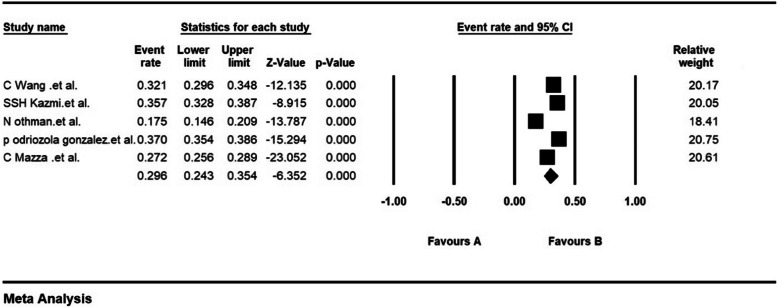
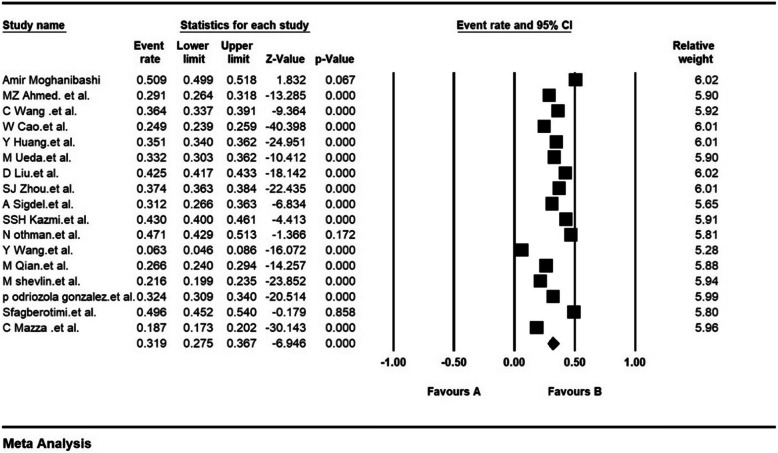
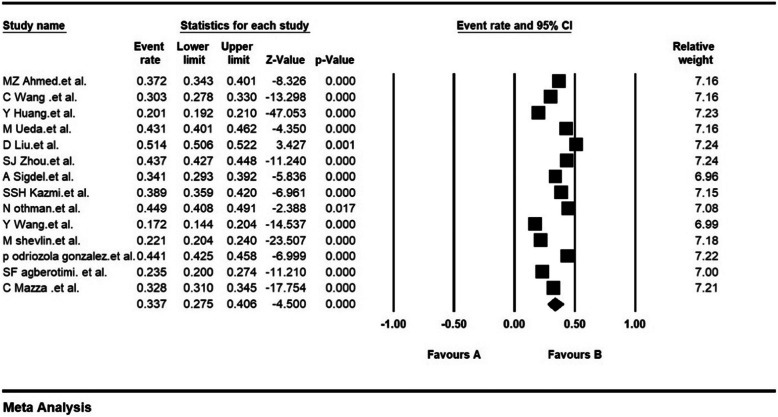
Background: The COVID-19 pandemic has had a significant impact on public mental health. Therefore, monitoring and oversight of the population mental health during crises such as a panedmic is an immediate priority. The aim of this study is to analyze the existing research works and findings in relation to the prevalence of stress, anxiety and depression in the general population during the COVID-19 pandemic. Method: In this systematic review and meta-analysis, articles that have focused on stress and anxiety prevalence among the general population during the COVID-19 pandemic were searched in the Science Direct, Embase, Scopus, PubMed, Web of Science (ISI) and Google Scholar databases, without a lower time limit and until May 2020. In order to perform a meta-analysis of the collected studies, the random effects model was used, and the heterogeneity of studies was investigated using the I 2 index. Moreover. data analysis was conducted using the Comprehensive Meta-Analysis (CMA) software. Results: The prevalence of stress in 5 studies with a total sample size of 9074 is obtained as 29.6% (95% confidence limit: 24.3–35.4), the prevalence of anxiety in 17 studies with a sample size of 63,439 as 31.9% (95% confidence interval: 27.5–36.7), and the prevalence of depression in 14 studies with a sample size of 44,531 people as 33.7% (95% confidence interval: 27.5–40.6). Conclusion: COVID-19 not only causes physical health concerns but also results in a number of psychological disorders. The spread of the new coronavirus can impact the mental health of people in different communities. Thus, it is essential to preserve the mental health of individuals and to develop psychological interventions that can improve the mental health of vulnerable groups during the COVID-19 pandemic.
Overview
The claims and statistics of this paper haven’t been checked yet.
Free: it reads the open-access text and checks the first 5 claims that cite a source we can check. Create a free account to check every claim.
Integrity signals
Registry
Cites
Statistics
Figures
Verification
Claims the paper makes
The claims and statistics of this paper haven’t been checked yet.
Free: it reads the open-access text and checks the first 5 claims that cite a source we can check. Create a free account to check every claim.
Claims other papers make about this one
Each is checked against this paper’s own text: does it say what the citing paper says it does?
The cited source doesn’t support the claim as written.
In the citing paper
“The prevalence was also lower than the estimated prevalence of depression, anxiety, and stress in the general population at 29.6%, 33.7%, and 31.9%, respectively [9].”
From Seroprevalence of COVID-19 and Psychological Distress among Front Liners at the Universiti Malaysia Sabah Campus during the Third Wave of COVID-19 (2022) · cites this paper as [9]
Checked by a reasoning model — may be wrong.
Experimental — accuracy not yet measuredThe source backs part of the claim, not all of it — or backs it for a different population, condition or comparison.
In the citing paper
“The COVID-19 pandemic has been associated with significantly higher levels of distress in the general population and people with persistent pain (Salari et al., 2020;Vindegaard & Benros, 2020;Yu al., 2021).”
From Acceptance and Commitment Therapy for women living with Vulvodynia: A single-case experimental design study of a treatment delivered online (2022) · cites this paper as Salari et al., 2020
Experimental — accuracy not yet measuredThe source backs part of the claim, not all of it — or backs it for a different population, condition or comparison.
In the citing paper
“Moreover, anxiety and stress are more likely to be feelings of worry and insecurity caused by negative events, whereas depression is more likely to be influenced by multiple factors, including biomedical factors, which could be difficult to change with short-term psychological interventions (60, 61).”
From Mindfulness-based online intervention on mental health among undergraduate nursing students during coronavirus disease 2019 pandemic in Beijing, China: A randomized controlled trial (2022) · cites this paper as [61]
Experimental — accuracy not yet measuredThe source backs part of the claim, not all of it — or backs it for a different population, condition or comparison.
In the citing paper
“the prevalence of somatic symptoms (56%), anxiety (36%), and depression (46%) in this sample were high compared to other studies done during the COVID-19 pandemic (Ran et al., 2020; Salari et al., 2020; Xiong et al., 2020).”
From Does the practice of mindfulness reduce somatic symptoms and COVID-19-related anxiety? A community-based survey (2022) · cites this paper as Salari et al., 2020
Experimental — accuracy not yet measuredThe cited source says what the claim attributes to it.
In the citing paper
“Greater fear and uncertainty can manifest in elevated levels of mental distress symptoms — anxiety, stress, depression — as confirmed by recently released COVID-19 studies”
From Anxiety Sensitivity Mediates Relations Between Mental Distress Symptoms and Medical Care Utilization During COVID-19 Pandemic. (2021) · cites this paper as Salari et al., 2020
3 more claims about this paper
Create a free account to see every claim other papers make about this one.
Self-check
Percentages, sums and reported differences re-computed from the paper’s own numbers.
The self-check needs the paper’s full text.
Citations
Cites
Chen, N., Zhou, M., Dong, X., Qu, J., Gong, F., Han, Y., Qiu, Y., Wang, J., Liu, Y., Wei, Y., et al. (2020) · The Lancet · doi:10.1016/s0140-6736(20)30211-7 · Cited by 21,415 · cited 1×
“Men with a history of underlying diseases are more likely to be infected with the virus and would experience worse outcomes [6].”
BackgroundThe Psychological Impact of Quarantine and How to Reduce It: Rapid Review of the Evidence
Brooks, S. K., Webster, R. K., Smith, L. E., Woodland, L., Wessely, S., Greenberg, N., & Rubin, G. J. (2020) · doi:10.2139/ssrn.3532534 · Cited by 16,394
The psychological impact of quarantine and how to reduce it: Rapid review of the evidence
Brooks, S. K., Webster, R. K., Smith, L. E., Woodland, L., Wessely, S., Greenberg, N., & Rubin, G. J. (2020) · The Lancet · doi:10.1016/s0140-6736(20)30460-8 · Cited by 16,378 · cited 1×
“Recent evidence suggests that people who are kept in isolation and quarantine experience significant levels of anxiety, anger, confusion, and stress [12].”
BackgroundWang, C., Pan, R., Wan, X., Tan, Y., Xu, L., Ho, C. S., & Ho, R. C. (2020) · International Journal of Environmental Research and Public Health · doi:10.3390/ijerph17051729 · Cited by 9,923 · cited 3×
“In addition, anxiety levels are significantly higher in people with at least one family member, relative, or a friend with the COVID-19 disease [21, 24, 42].”
BackgroundA novel coronavirus outbreak of global health concern
Wang, C., Horby, P. W., Hayden, F. G., & Gao, G. F. (2020) · The Lancet · doi:10.1016/s0140-6736(20)30185-9 · Cited by 7,700
First case of 2019 novel coronavirus in the United States
Holshue, M. L., DeBolt, C., Lindquist, S., Lofy, K. H., Wiesman, J., Bruce, H., Spitters, C., Ericson, K., Wilkerson, S., Tural, A., et al. (2020) · New England Journal of Medicine · doi:10.1056/nejmoa2001191 · Cited by 6,030 · cited 1×
“Severe cases of the disease can lead to heart, and respiratory failure, acute respiratory syndrome, or even death [7].”
BackgroundThe psychological impact of the COVID-19 epidemic on college students in China
Cao, W., Fang, Z., Hou, G., Han, M., Xu, X., Dong, J., & Zheng, J. (2020) · Psychiatry Research · doi:10.1016/j.psychres.2020.112934 · Cited by 5,843 · cited 2×
“In addition, anxiety levels are significantly higher in people with at least one family member, relative, or a friend with the COVID-19 disease [21, 24, 42].”
BackgroundHolmes, E. A., O'Connor, R. C., Perry, V. H., Tracey, I., Wessely, S., Arseneault, L., Ballard, C., Christensen, H., Cohen Silver, R., Everall, I., et al. (2020) · The Lancet Psychiatry · doi:10.1016/s2215-0366(20)30168-1 · Cited by 5,715
Presumed Asymptomatic Carrier Transmission of COVID-19
Bai, Y., Yao, L., Wei, T., Tian, F., Jin, D.-Y., Chen, L., & Wang, M. (2020) · JAMA · doi:10.1001/jama.2020.2565 · Cited by 4,498 · cited 1×
“In December 2019, in the city of Wuhan, China, unusual cases of patients with pneumonia caused by the new Coronavirus (COVID-19) were reported [1], and the spread of the virus swiftly became a global health threat [2].”
BackgroundHuang, Y., & Zhao, N. (2020) · Psychiatry Research · doi:10.1016/j.psychres.2020.112954 · Cited by 3,736 · cited 2×
“affected by redundancies and business closures [21, 22, 25].”
Background
Research works printed but not linked: 2
- Hahad O, Gilan D, Daiber A, Münzel T. Public Mental Health as One of the Key Factors in Dealing with COVID-19. Germany: Gesundheitswesen (Bundesverband der Arzte des Offentlichen Gesundheitsdienstes); 2020.
- World Health O. Mental health and psychosocial considerations during the COVID-19 outbreak, 18 March 2020. Geneva: World Health Organization; 2020. Contract No.: WHO/2019-nCoV/MentalHealth/2020.1.
Cited by
Items 301–400 of 1,028
Shi, L., Lu, Z.-A., Que, J., Huang, X., Lu, Q.-D., Liu, L., Zheng, Y., Liu, W.-J., Ran, M., Yuan, K., et al. (2021) · International Journal of Environmental Research and Public Health · doi:10.3390/ijerph18168790 · Cited by 56
Abroshan, H., Devos, J., Poels, G., & Laermans, E. (2021) · IEEE Access · doi:10.1109/access.2021.3109091 · Cited by 80
Factors associated with nurses emotional distress during the COVID-19 pandemic
Rosa, P. D., Brown, R., Pravecek, B., Carotta, C. L., Garcia, A. S., Carson, P., Callies, D., & Vukovich, M. D. (2021) · Applied Nursing Research · doi:10.1016/j.apnr.2021.151502 · Cited by 68
Kurki, M., Gilbert, S., Mishina, K. E., Lempinen, L., Luntamo, T., Hinkka‐Yli‐Salomäki, S., Sinokki, A., Upadhyaya, S., Wei, Y., & Sourander, A. (2021) · BMC Medical Education · doi:10.1186/s12909-021-02990-4 · Cited by 65
The effect of lavender on stress in individuals: A systematic review and meta-analysis
Ghavami, T., Kazeminia, M., & Rajati, F. (2022) · Complementary Therapies in Medicine · doi:10.1016/j.ctim.2022.102832 · Cited by 78
Mekhael, M., Lim, C., Hajjar, A. H. E., Noujaim, C., Pottle, C., Makan, N., Dagher, L., Zhang, Y., Chouman, N., Li, D. ‘., et al. (2022) · Journal of Medical Internet Research · doi:10.2196/38000 · Cited by 56
A tale of two transmitters: serotonin and histamine as in vivo biomarkers of chronic stress in mice
Hersey, M., Reneaux, M., Berger, S. N., Mena, S., Buchanan, A. M., Ou, Y., Tavakoli, N. S., Reagan, L. P., Clopath, C., & Hashemi, P. (2022) · Journal of Neuroinflammation · doi:10.1186/s12974-022-02508-9 · Cited by 59
Stress, alcohol use, and punitive parenting during the COVID-19 pandemic
Wolf, J. P., Freisthler, B., & Chadwick, C. (2021) · Child Abuse & Neglect · doi:10.1016/j.chiabu.2021.105090 · Cited by 52
Psychosocial impact of COVID-19 pandemic on LGBT people in Chile
Barrientos, J., Guzmán‐González, M., Alfonso Urzúa, M., & Ulloa, F. (2021) · Sexologies · doi:10.1016/j.sexol.2020.12.006 · Cited by 62
Sleep Dysfunction in COVID-19 Patients: Prevalence, Risk Factors, Mechanisms, and Management
Pataka, A., Kotoulas, S., Sakka, E., Katsaounou, P. A., & Pappa, S. (2021) · Journal of Personalized Medicine · doi:10.3390/jpm11111203 · Cited by 59
Aolymat, I., Khasawneh, A. I., & Al‐Tamimi, M. (2022) · International Journal of Environmental Research and Public Health · doi:10.3390/ijerph19031439 · Cited by 60
Tran, N. T., Franzén, J., Jermann, F., Rudaz, S. L., Bondolfi, G., & Ghisletta, P. (2022) · PLoS ONE · doi:10.1371/journal.pone.0266612 · Cited by 72
Predictors of managers’ mental health during the COVID-19 pandemic
Graf‐Vlachy, L., Sun, S., & Zhang, S. X. (2020) · European Journal of Psychotraumatology · doi:10.1080/20008198.2020.1834195 · Cited by 58
Shayganfard, M., Mahdavi, F., Haghighi, M., Bahmani, D. S., & Brand, S. (2020) · International Journal of Environmental Research and Public Health · doi:10.3390/ijerph17218272 · Cited by 61
Gori, A., Topino, E., Palazzeschi, L., & Fabio, A. D. (2021) · PLoS ONE · doi:10.1371/journal.pone.0251984 · Cited by 51
Andersen, A. J., Mary‐Krause, M., Bustamante, J. J. H., Héron, M., Aarbaoui, T. E., & Melchior, M. (2021) · BMC Psychiatry · doi:10.1186/s12888-021-03383-z · Cited by 64
Caycho‐Rodríguez, T., Tomás, J. M., Vilca, L. W., Carbajal‐León, C., Cervigni, M., Gallegos, M., Martino, P., Barés, I., Calandra, M., Anacona, C. A. R., et al. (2021) · Frontiers in Psychology · doi:10.3389/fpsyg.2021.695989 · Cited by 64
Sentiment Analysis on Customer Satisfaction of Digital Banking in Indonesia
Andrian, B., Simanungkalit, T., Budi, I. D., & Wicaksono, A. F. (2022) · International Journal of Advanced Computer Science and Applications · doi:10.14569/ijacsa.2022.0130356 · Cited by 77
Dedeilia, A., Papapanou, M., Παπαδόπουλος, Α., Karela, N.-R., Androutsou, A., Mitsopoulou, D., Nikolakea, M., Konstantinidis, C. I., Papageorgakopoulou, M. A., Sideris, M. C., et al. (2023) · Human Resources for Health · doi:10.1186/s12960-023-00799-4 · Cited by 58
Mental Health Conditions Among E-Learning Students During the COVID-19 Pandemic
Rutkowska, A., Cieślik, B., Tomaszczyk, A., & Szczepańska-Gieracha, J. (2022) · Frontiers in Public Health · doi:10.3389/fpubh.2022.871934 · Cited by 76
Dale, R., Jesser, A., Pieh, C., O’Rourke, T., Probst, T., & Humer, E. C. (2022) · European Child & Adolescent Psychiatry · doi:10.1007/s00787-022-02032-4 · Cited by 57
Ye, Z., Li, W., & Zhu, R. (2022) · Journal of Affective Disorders · doi:10.1016/j.jad.2022.08.023 · Cited by 56
Sadler, J. R., Thapaliya, G., Jansen, E., Aghababian, A. H., Smith, K., & Carnell, S. (2021) · Nutrients · doi:10.3390/nu13030901 · Cited by 53
Çelik, S., & Köse, G. G. (2021) · Progress in Neuro-Psychopharmacology and Biological Psychiatry · doi:10.1016/j.pnpbp.2021.110321 · Cited by 67
Brain volumetric changes in the general population following the COVID-19 outbreak and lockdown
Salomon, T., Cohen, A., Barazany, D., Ben-Zvi, G., Botvinik‐Nezer, R., Gera, R., Oren, S., Roll, D., Rozic, G., Saliy, A., et al. (2021) · NeuroImage · doi:10.1016/j.neuroimage.2021.118311 · Cited by 52
Molecularly Imprinted Polymer-Based Sensor for Electrochemical Detection of Cortisol
Yulianti, E. S., Rahman, S. F., & Whulanza, Y. (2022) · Biosensors · doi:10.3390/bios12121090 · Cited by 51
Blendermann, M., Ebalu, T. I., Obisie-Orlu, I. C., Fried, E. I., & Hallion, L. S. (2023) · Psychological Medicine · doi:10.1017/s0033291723002295 · Cited by 52
“…rates of clinically significant anxiety (ranging from 26% to 38%), depression (26–34%), and psychological distress (30–38%; Deng et al. 2021; Krishnamoorthy, Nagarajan, Saya, & Menon, 2020; Luo, Guo, Yu, Jiang, & Wang, 2020; Necho, Tsehay, Birkie, Biset, & Tadesse, 2021; Salari et al. 2020).”
Women’s Depressive Symptoms during the COVID-19 Pandemic: The Role of Pregnancy
Yirmiya, K., Yakirevich-Amir, N., Preis, H., Lotan, A., Atzil, S., & Reuveni, I. (2021) · International Journal of Environmental Research and Public Health · doi:10.3390/ijerph18084298 · Cited by 52
Factors associated with mental health and quality of life during the COVID-19 pandemic in Brazil
Vitorino, L. M., Yoshinari Júnior, G. H., Gonzaga, G., Dias, I. F., Pereira, J. P. L., Ribeiro, I. M. G., França, A. B., Al-Zaben, F., Koenig, H. G., & Trzesniak, C. (2021) · BJPsych Open · doi:10.1192/bjo.2021.62 · Cited by 47
Shields, M. E., Tonmyr, L., González, A., Weeks, M., Park, S., Robert, A.-M., Blair, D.-L., & MacMillan, H. L. (2021) · Health Promotion and Chronic Disease Prevention in Canada · doi:10.24095/hpcdp.41.11.04 · Cited by 69
Accoto, A., Chiarella, S. G., Raffone, A., Montano, A., de Marco, A., Mainiero, F., Rubbino, R., Valzania, A., & Conversi, D. (2021) · International Journal of Environmental Research and Public Health · doi:10.3390/ijerph18115512 · Cited by 46
Reigal, R. E., Páez-Maldonado, J. A., Brincones, J. L. P., Morillo-Baro, J. P., Hernández-Mendo, A., & Morales‐Sánchez, V. (2021) · Sustainability · doi:10.3390/su13105444 · Cited by 57
The Blursday database as a resource to study subjective temporalities during COVID-19
Chaumon, M., Rioux, P.-A., Herbst, S. K., Spiousas, I., Kübel, S. L., Hiroyasu, E. M. G., Runyun, Ş. L., Micillo, L., Thanopoulos, V., Mendoza-Durán, E., et al. (2022) · Nature Human Behaviour · doi:10.1038/s41562-022-01419-2 · Cited by 65
Longitudinal impact of COVID-19 pandemic on mental health of children in the ABCD study cohort
Hamatani, S., Hiraoka, D., Makita, K., Tomoda, A., & Mizuno, Y. (2022) · Scientific Reports · doi:10.1038/s41598-022-22694-z · Cited by 55
Giesbrecht, G. F., Bagshawe, M., van Sloten, M., MacKinnon, A., Dhillon, A. K., van de Wouw, M., Vaghef‐Mehrabany, E., Rojas, L., Cattani, D., Lebel, C. A., et al. (2021) · JMIR Research Protocols · doi:10.2196/25407 · Cited by 59
Abir, T. A., Kalimullah, N. A., Osuagwu, U. L., Yazdani, D. M. N., Husain, T., Goson, P. C., Basak, P., Rahman, M. A., Mamun, A. A., Permarupan, P. Y., et al. (2021) · Annals of Global Health · doi:10.5334/aogh.3269 · Cited by 54
Muro, A., Feliu‐Soler, A., Canals, J., Parrado, E., & Sanz, A. (2021) · Journal of Forest Research · doi:10.1080/13416979.2021.1996516 · Cited by 59
Silva, D. F. O., Cobucci, R. N., Soares-Rachetti, V. D. P., Lima, S. C. V. C., & de Andrade, F. B. (2021) · Ciência & Saúde Coletiva · doi:10.1590/1413-81232021262.38732020 · Cited by 144
Marciano, H., Eshel, Y., Kimhi, S., & Adini, B. B. (2022) · International Journal of Environmental Research and Public Health · doi:10.3390/ijerph19031123 · Cited by 57
A systematic hybrid machine learning approach for stress prediction
Ding, C., Zhang, Y., & Ding, T. (2023) · PeerJ Computer Science · doi:10.7717/peerj-cs.1154 · Cited by 57
Joffe, A. R., & Elliott, A. (2023) · SAGE Open Medicine · doi:10.1177/20503121231194400 · Cited by 56
Gao, X., & Liu, Z. (2024) · Annals of General Psychiatry · doi:10.1186/s12991-024-00492-3 · Cited by 50
“Additionally, a meta-analysis revealed that COVID-19 not only caused physical health issues but also led to various psychological disorders [55].”
BackgroundSalari, N., Heidarian, P., Far, A. H., Babajani, F., & Mohammadi, M. (2024) · Journal of Prevention · doi:10.1007/s10935-024-00784-0 · Cited by 58
Self-citationHajure, M., Tariku, M., Mohammedhussein, M., & Dule, A. (2020) · Neuropsychiatric Disease and Treatment · doi:10.2147/ndt.s281995 · Cited by 48
Suka, M., Yamauchi, T., & Yanagisawa, H. (2021) · Environmental Health and Preventive Medicine · doi:10.1186/s12199-021-00957-x · Cited by 51
Kira, I. A., Alpay, E. H., Ayna, Y. E., Shuwiekh, H. A. M., Ashby, J. S., & Türkeli, A. (2021) · Current Psychology · doi:10.1007/s12144-021-01743-2 · Cited by 54
Chung, A. H., Gevirtz, R., Gharbo, R. S., Thiam, M. A., & Ginsberg, J. P. (2021) · Applied Psychophysiology and Biofeedback · doi:10.1007/s10484-021-09519-x · Cited by 50
COVID‐19 and home confinement: A study on fathers, father–child relationships and child adjustment
Trumello, C., Bramanti, S. M., Lombardi, L., Ricciardi, P., Morelli, M., Candelori, C., Crudele, M., Cattelino, E., Baiocco, R., Chirumbolo, A., et al. (2021) · Child Care Health and Development · doi:10.1111/cch.12912 · Cited by 54
del-Valle, M. V., López-Morales, H., Andrés, M. L., Yerro-Avincetto, M., Gelpi Trudo, R., Urquijo, S., & Canet-Juric, L. (2022) · Journal of Anxiety Disorders · doi:10.1016/j.janxdis.2022.102531 · Cited by 45
Dai, Z., Jing, S., Wang, H., Xiao, W., Huang, Y., Chen, X., Fu, J., Pan, C., Tang, Q., Wang, H., et al. (2022) · Frontiers in Psychiatry · doi:10.3389/fpsyt.2022.949477 · Cited by 44
Bigras, N., Lemay, L., Lehrer, J. S., Charron, A., Duval, S., Robert-Mazaye, C., & Laurin, I. (2021) · Early Childhood Education Journal · doi:10.1007/s10643-021-01224-y · Cited by 65
Gündoğan, S. (2022) · The Asia-Pacific Education Researcher · doi:10.1007/s40299-021-00641-2 · Cited by 64
Quality of the Human–Animal Bond and Mental Wellbeing During a COVID-19 Lockdown
Wells, D. L., Clements, M. A., Elliott, L. J., Meehan, E. S., Montgomery, C. J., & Williams, G. A. (2022) · Anthrozoös · doi:10.1080/08927936.2022.2051935 · Cited by 56
Skjerdingstad, N., Johnson, M. S., Johnson, S. U., Hoffart, A., & Ebrahimi, O. V. (2021) · European Psychiatry · doi:10.1192/j.eurpsy.2021.2223 · Cited by 50
Solomonova, E., Picard‐Deland, C., Rapoport, I. L., Pennestri, M., Saad, M., Kendzerska, T., Veissière, S. P. L., Godbout, R., Edwards, J. D., Quilty, L. C., et al. (2021) · PLoS ONE · doi:10.1371/journal.pone.0259040 · Cited by 55
Bundy, R., Mandy, W., Crane, L., Belcher, H., Bourne, L., Brede, J., Hull, L., Brinkert, J., & Cook, J. (2022) · Autism · doi:10.1177/13623613211065543 · Cited by 43
“…conditions, being unemployed or a student, living alone or having a child, having lower household incomes, living in urban areas, and frequent exposure to social media or news relating to COVID-19 (Fancourt et al., 2021; Salari et al., 2020; Vindegaard & Benros, 2020; Xiong et al., 2020).”
BackgroundInfluentialMental Health Impact of COVID-19 on Quarantine Hotel Employees in China
Teng, Y.-M., Wu, K., Lin, K.-L., & Xu, D. (2020) · Risk Management and Healthcare Policy · doi:10.2147/rmhp.s286171 · Cited by 55
Fernandez, M. D. S., Vieira, I. S., da Silva-Garcia, N. R. J., Cardoso, T. D. A., Bielavski, C. H., Rakovski, C., & Silva, A. E. R. (2021) · Journal of Dental Education · doi:10.1002/jdd.12742 · Cited by 49
Dalpati, N., Jena, S., Jain, S., & Sarangi, P. P. (2022) · Brain Behavior & Immunity - Health · doi:10.1016/j.bbih.2022.100420 · Cited by 61
Khoury, J. E., Atkinson, L. R., Bennett, T. A., Jack, S. M., & González, A. (2022) · Early Human Development · doi:10.1016/j.earlhumdev.2022.105606 · Cited by 58
Pankowski, D., & Wytrychiewicz‐Pankowska, K. (2023) · Journal of Religion and Health · doi:10.1007/s10943-022-01703-5 · Cited by 77
Arcand, M., Bilodeau-Houle, A., Juster, R., & Marin, M. (2023) · Frontiers in Psychology · doi:10.3389/fpsyg.2023.1166154 · Cited by 56
“Metaanalyses of cross-sectional studies reported prevalence rates in these samples of up to 29.6% for stress symptoms, between 14.6% and 48.3% for depressive symptoms, Frontiers in Psychology 01 frontiersin.org and between 6.3% and 50.9% for anxiety symptoms for people living mainly in Asia, as well as those living in…”
BackgroundInfluentialThe Relationship Between COVID-19 and the Development of Depression: Implications on Mental Health
Shetty, P. A., Ayari, L., Madry, J. E., Betts, C., Robinson, D. M., & Kirmani, B. F. (2023) · Neuroscience Insights · doi:10.1177/26331055231191513 · Cited by 52
Hettich, N., Beutel, M. E., Ernst, M., Schließler, C., Kampling, H., Kruse, J., & Brähler, E. (2022) · PLoS ONE · doi:10.1371/journal.pone.0263301 · Cited by 60
Building the Positive Emotion-Resilience-Coping Efficacy Model for COVID-19 Pandemic
Ke, G. N., Grajfoner, D., Wong, R. M. M., Carter, S., Khairudin, R., Lau, W., Kamal, K. A., & Lee, S. C. (2022) · Frontiers in Psychology · doi:10.3389/fpsyg.2022.764811 · Cited by 54
Kumar, S. A., Edwards, M. E., Grandgenett, H. M., Scherer, L. L., DiLillo, D., & Jaffe, A. E. (2022) · Journal of Happiness Studies · doi:10.1007/s10902-022-00554-x · Cited by 59
Prevalence of depressive symptoms in U.S. adults during the COVID-19 pandemic: A systematic review
Ettman, C. K., Fan, A. Y., Subramanian, M., Adam, G. P., Goicoechea, E. B., Abdalla, S. M., Stuart, E. A., & Galea, S. (2023) · SSM - Population Health · doi:10.1016/j.ssmph.2023.101348 · Cited by 58
Gutiérrez-Cobo, M. J., Megías-Robles, A., Gómez-Leal, R., Cabello, R., & Fernández-Berrocal, P. (2021) · International Journal of Environmental Research and Public Health · doi:10.3390/ijerph18063211 · Cited by 42
Chan, C. S., Wong, C. Y.-F., Yu, B. Y., Hui, V. K., Ho, F. Y., & Cuijpers, P. J. (2021) · Psychological Medicine · doi:10.1017/s0033291721003421 · Cited by 45
da Cruz, W. M., D’Oliveira, A., Dominski, F. H., Diotaiuti, P., & Andrade, A. (2021) · Sport Sciences for Health · doi:10.1007/s11332-021-00825-9 · Cited by 52
The COVID-19 pandemic impacts psychiatric outcomes and alcohol use among college students
Bountress, K. E., Cusack, S. E., Conley, A. H., Aggen, S. H., The Spit for Science Working Group, Vassileva, J., Dick, D. M., & Amstadter, A. B. (2022) · European Journal of Psychotraumatology · doi:10.1080/20008198.2021.2022279 · Cited by 46
LMVD: A large-scale multimodal vlog dataset for depression detection in the wild
He, L., Chen, K., Zhao, J., Wang, Y., Pei, E., Chen, H., Jiang, J., Zhang, S., Zhang, J., Wang, Z., et al. (2025) · Information Fusion · doi:10.1016/j.inffus.2025.103632 · Cited by 62
Emerging Neurological and Psychobiological Aspects of COVID-19 Infection
Tancheva, L. P., Petralia, M. C., Miteva, S., Dragomanova, S., Solak, A., Kalfin, R. E., Lazarova, M. I., Yarkov, D., Ciurleo, R., Cavalli, E., et al. (2020) · Brain Sciences · doi:10.3390/brainsci10110852 · Cited by 44
Socio-ecological determinants of distress in Filipino adults during COVID-19 crisis
Aruta, J. J. B. R. (2021) · Current Psychology · doi:10.1007/s12144-020-01322-x · Cited by 51
Turan, G. B., Özer, Z., & Çiftçi, B. (2021) · Perspectives In Psychiatric Care · doi:10.1111/ppc.12766 · Cited by 43
Osmann, J., Selva, M., & Feinstein, A. (2021) · BMJ Open · doi:10.1136/bmjopen-2020-045675 · Cited by 42
You are not alone: Smartphone use, friendship satisfaction, and anxiety during the COVID-19 crisis
Stević, A., Koban, K., Binder, A., & Matthes, J. (2021) · Mobile Media & Communication · doi:10.1177/20501579211051820 · Cited by 52
A longitudinal study of depression, anxiety, and stress among Indians during COVID-19 pandemic
Rehman, U., Yıldırım, M., & Shahnawaz, M. (2022) · Psychology Health & Medicine · doi:10.1080/13548506.2021.2023751 · Cited by 45
Roy, A., Hoge, E. A., Abrante, P., Druker, S., Liu, T., & Brewer, J. A. (2021) · Journal of Medical Internet Research · doi:10.2196/26987 · Cited by 41
Kunzler, A. M., Stoffers-Winterling, J., Stoll, M., Mancini, A. L., Lehmann, S., Blessin, M., Gilan, D., Helmreich, I., Hufert, F., & Lieb, K. (2021) · PLOS ONE · doi:10.1371/journal.pone.0244748 · Cited by 41
Caycho‐Rodríguez, T., Vilca, L. W., Carbajal‐León, C., White, M., Vivanco-Vidal, A., Saroli-Araníbar, D., Peña-Calero, B. N., & Moreta‐Herrera, R. (2021) · Death Studies · doi:10.1080/07481187.2020.1865480 · Cited by 46
Sandín, B., Espinosa, V., Valiente, R. M., García-Escalera, J., Schmitt, J. C., Arnáez, S., & Chorot, P. (2021) · Frontiers in Psychology · doi:10.3389/fpsyg.2021.716528 · Cited by 51
Zoomed out: digital media use and depersonalization experiences during the COVID-19 lockdown
Ciaunica, A., McEllin, L. S., Kiverstein, J. D., Gallese, V., Hohwy, J., & Wozniak, M. M. (2022) · Scientific Reports · doi:10.1038/s41598-022-07657-8 · Cited by 54
Santabárbara, J., Olaya, B., Bueno‐Notivol, J., Pérez-Moreno, M., Gracia‐García, P., Ozamiz-Etxebarria, N., & Mondragón, N. I. (2021) · Revista médica de Chile · doi:10.4067/s0034-98872021001101579 · Cited by 43
Diaz‐Martinez, J., Tamargo, J. A., Delgado‐Enciso, I., Liu, Q., Acuña, L., Laverde, E. E., Barbieri, M. A., Trepka, M. J., Campa, A. L., Siminski, S. M., et al. (2021) · AIDS and Behavior · doi:10.1007/s10461-021-03292-y · Cited by 49
Schott, W., Tao, S., & Shea, L. (2021) · Autism · doi:10.1177/13623613211039662 · Cited by 45
Ejiri, M., Kawai, H., Kera, T., Ihara, K., Fujiwara, Y., Watanabe, Y., Hirano, H., Kim, H., & Obuchi, S. P. (2021) · Psychology of sport and exercise · doi:10.1016/j.psychsport.2021.102054 · Cited by 55
Dobrakowski, P. P., Skalski‐Bednarz, S. B., Surżykiewicz, J., Muszyńska, J., & Konaszewski, K. (2021) · Journal of Clinical Medicine · doi:10.3390/jcm10214865 · Cited by 49
Precht, L.-M., Margraf, J., Stirnberg, J., & Brailovskaia, J. (2021) · Current Psychology · doi:10.1007/s12144-021-02303-4 · Cited by 52
Hager, N., Judah, M. R., & Milam, A. L. (2022) · International Journal of Cognitive Therapy · doi:10.1007/s41811-022-00135-z · Cited by 65
Effects of COVID-19 lockdown on university students’ anxiety disorder in Italy
Busetta, G., Campolo, M. G., Fiorillo, F., Pagani, L., Panarello, D., & Augello, V. (2021) · Genus · doi:10.1186/s41118-021-00135-5 · Cited by 45
Moreno, L., Talavera‐Velasco, B., Vázquez-Estévez, D., & Martín‐García, J. (2021) · Journal of Occupational and Environmental Medicine · doi:10.1097/jom.0000000000002464 · Cited by 58
Naumann, S., Matyjek, M., Bögl, K., Minds, & Dziobek, I. (2022) · Scientific Reports · doi:10.1038/s41598-022-26601-4 · Cited by 63
Singh, P., Cumberland, W. G., Ugarte, D. A., Bruckner, T. A., & Young, S. D. (2020) · Journal of Medical Internet Research · doi:10.2196/21490 · Cited by 48
COVID-19-Pandemie trifft auf Psyche der Bevölkerung: Gibt es einen Tsunami psychischer Störungen?
Riedel-Heller, S., & Richter, D. (2020) · Psychiatrische Praxis · doi:10.1055/a-1290-3469 · Cited by 40
“2020 [7] legen eine frühe Metaanalyse vor, bei der sie in der Mehrheit chinesische Surveys mittlerer oder hoher Qualität bis zum Mai 2020 einschließen.”
BackgroundImpact of the first Covid-19 pandemic wave on first episode psychosis in Milan, italy.
Esposito, C. M., D’Agostino, A., Osso, B. D., Fiorentini, A., Prunas, C., Callari, A., Oldani, L., Fontana, E., Gargano, G., Viscardi, B., et al. (2021) · Psychiatry Research · doi:10.1016/j.psychres.2021.113802 · Cited by 47
Saw, Y. E., Tan, E. Y., Buvanaswari, P., Doshi, K., & Liu, J. C. (2021) · Journal of Migration and Health · doi:10.1016/j.jmh.2021.100062 · Cited by 50
Meta-Analysis of Prevalence of Depression in Dental Students during COVID-19 Pandemic
Santabárbara, J., Ozamiz-Etxebarria, N., Mondragón, N. I., Olaya, B., & Bueno-Novitol, J. (2021) · Medicina · doi:10.3390/medicina57111278 · Cited by 53
Laham, S., Bertuzzi, L. D., Deguen, S., Hecker, I., Melchior, M., Patanè, M., Pinucci, I., Sijbrandij, M., & van der Waerden, J. E. B. (2021) · International Journal of Environmental Research and Public Health · doi:10.3390/ijerph182312677 · Cited by 52
Atrial Fibrillation and Stress
Segan, L., Prabhu, S., Kalman, J. M., & Kistler, P. M. (2022) · JACC: Clinical Electrophysiology · doi:10.1016/j.jacep.2021.12.008 · Cited by 39
Metadata
- Authors
- Salari, N., Hosseinian-Far, A., Jalali, R., Vaisi-Raygani, A., Rasoulpoor, S., Mohammadi, M., Rasoulpoor, S., & Khaledi-Paveh, B.
- Affiliations
- Kermanshah University of Medical Sciences (IR)
- Corresponding author
- Rasoulpoor, Shna
- Mohammadi, Masoud
- Rasoulpoor, Shabnam
- Venue
- Globalization and Health
- Published
- 2020-07-06
- Volume
- 16
- Issue
- 1
- Pages
- 57-57
- ISSN
- 1744-8603 (ISSN-L)
- PMC
- PMC7338126
- OpenAlex
- W3039647217
- Semantic Scholar
- 20448e72ff52f2cc04fb73697cfc03af06f266ed
- Cited by
- 3,560
- References
- 54
- Citations by year
- 2026: 94 · 2025: 235 · 2024: 365 · 2023: 665 · 2022: 1037 · 2021: 1019 · 2020: 141
- FWCI
- 56.19
- Type
- journal article
- Language
- en
- Open access
- gold
- doi.org
- Licence
- cc-by
- creativecommons.org/licenses/by/4.0 (tdm)
- creativecommons.org/licenses/by/4.0 (vor)
- Locations
- Globalization and Health (publishedVersion, cc-by)
- PubMed Central (publishedVersion, cc-by)
- PubMed (publishedVersion)
- NECTAR - Northampton Electronic Collection of Thesis and Research (University of Northampton) (acceptedVersion)
- DOAJ (DOAJ: Directory of Open Access Journals) (submittedVersion, cc-by-sa)
- Funders
- Kermanshah University of Medical Sciences
- Student Research Committee, Tabriz University of Medical Sciences
- Topics
- Social Sciences › Psychology › Clinical Psychology › COVID-19 and Mental Health
- Health Sciences › Medicine › Public Health, Environmental and Occupational Health › Maternal Mental Health During Pregnancy and Postpartum
- Health Sciences › Medicine › Psychiatry and Mental health › Mental Health Treatment and Access
- Keywords
- COVID-19 pandemic, stress, anxiety, depression, prevalence, general population, mental health, mental illness
- MeSH terms
- COVID-19, Anxiety, Asia, Depression, Europe, Humans, Pneumonia, Viral, Stress, Psychological, Prevalence, Coronavirus Infections, Pandemics
About these checks
Registry, retraction, Cites and statistics results are computed, not judged, with one exception: a printed reference that no index lists is read once by a model before it counts as a citation error. Claims are extracted by a model and kept only when their quote appears verbatim in the text; each cited source is then checked, with a model’s help, for whether it says what the claim relies on. Those verdicts can be wrong — read the claim’s quote and the cited source before relying on one.
Statistics and arithmetic are recomputed, not judged.
Confidence bands are shown only for fields calibrated on our annotated test set. None is calibrated yet, so no band is shown.
What counts as a claim ›How we measure confidence ›How we check this ›
Are you an author, or do you see a problem with this page? Request a review
Data sources
Bibliographic data: Semantic Scholar, OpenAlex, Crossref.
Contains information from the Semantic Scholar Academic Graph Datasets, made available under the ODC Attribution License (ODC-BY 1.0).
Semantic Scholar’s data is described in: Kinney, R., et al. (2023). The Semantic Scholar Open Data Platform. arXiv:2301.10140.
