

The DOI matches its Crossref record; 83 of the 83 references it cites were found in a registry or an index.
PU.1 regulates Alzheimer’s disease-associated genes in primary human microglia
Open accessAbstract
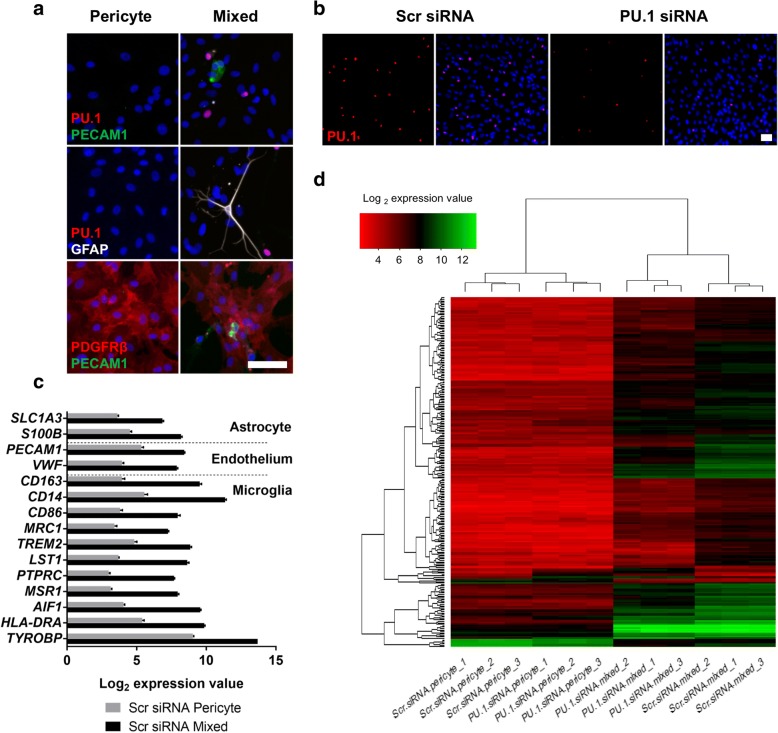
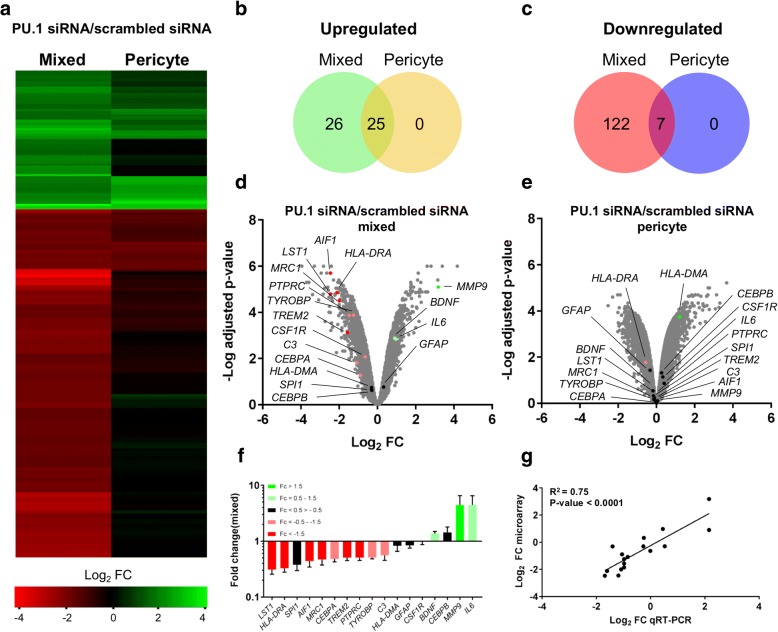
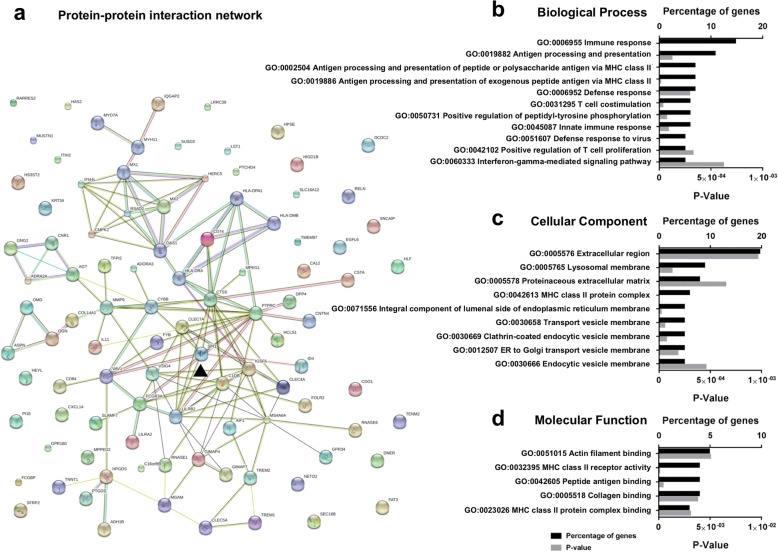
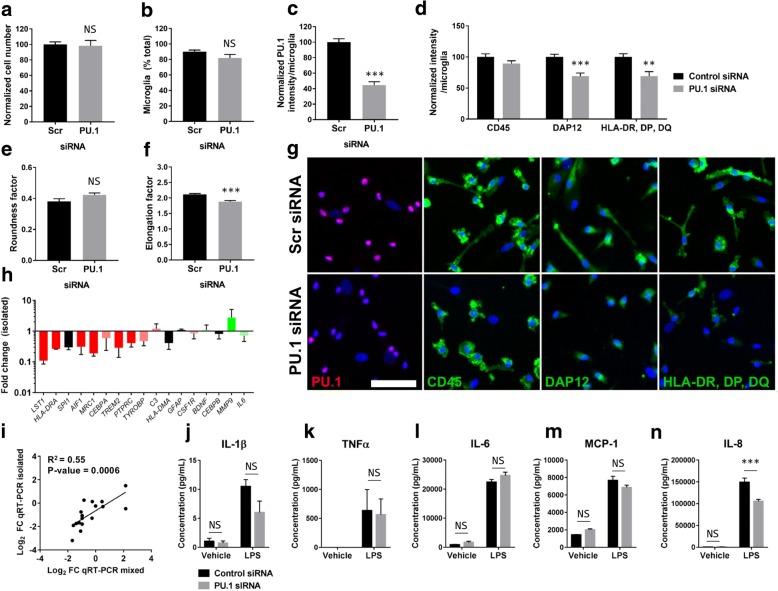
BACKGROUND: Microglia play critical roles in the brain during homeostasis and pathological conditions. Understanding the molecular events underpinning microglial functions and activation states will further enable us to target these cells for the treatment of neurological disorders. The transcription factor PU.1 is critical in the development of myeloid cells and a major regulator of microglial gene expression. In the brain, PU.1 is specifically expressed in microglia and recent evidence from genome-wide association studies suggests that reductions in PU.1 contribute to a delayed onset of Alzheimer's disease (AD), possibly through limiting neuroinflammatory responses. METHODS: To investigate how PU.1 contributes to immune activation in human microglia, microarray analysis was performed on primary human mixed glial cultures subjected to siRNA-mediated knockdown of PU.1. Microarray hits were confirmed by qRT-PCR and immunocytochemistry in both mixed glial cultures and isolated microglia following PU.1 knockdown. To identify attenuators of PU.1 expression in microglia, high throughput drug screening was undertaken using a compound library containing FDA-approved drugs. NanoString and immunohistochemistry was utilised to investigate the expression of PU.1 itself and PU.1-regulated mediators in primary human brain tissue derived from neurologically normal and clinically and pathologically confirmed cases of AD. RESULTS: Bioinformatic analysis of gene expression upon PU.1 silencing in mixed glial cultures revealed a network of modified AD-associated microglial genes involved in the innate and adaptive immune systems, particularly those involved in antigen presentation and phagocytosis. These gene changes were confirmed using isolated microglial cultures. Utilising high throughput screening of FDA-approved compounds in mixed glial cultures we identified the histone deacetylase inhibitor vorinostat as an effective attenuator of PU.1 expression in human microglia. Further characterisation of vorinostat in isolated microglial cultures revealed gene and protein changes partially recapitulating those seen following siRNA-mediated PU.1 knockdown. Lastly, we demonstrate that several of these PU.1-regulated genes are expressed by microglia in the human AD brain in situ. CONCLUSIONS: Collectively, these results suggest that attenuating PU.1 may be a valid therapeutic approach to limit microglial-mediated inflammatory responses in AD and demonstrate utility of vorinostat for this purpose.
Overview
The claims and statistics of this paper haven’t been checked yet.
Run the check — free, no account needed. It reads the open-access text and checks the sources it cites.
Integrity signals
Registry
Cites
Statistics
Figures
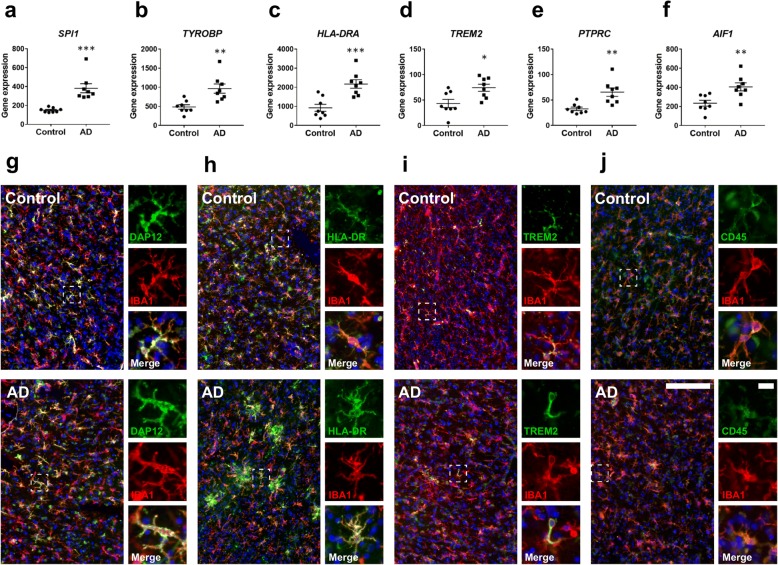
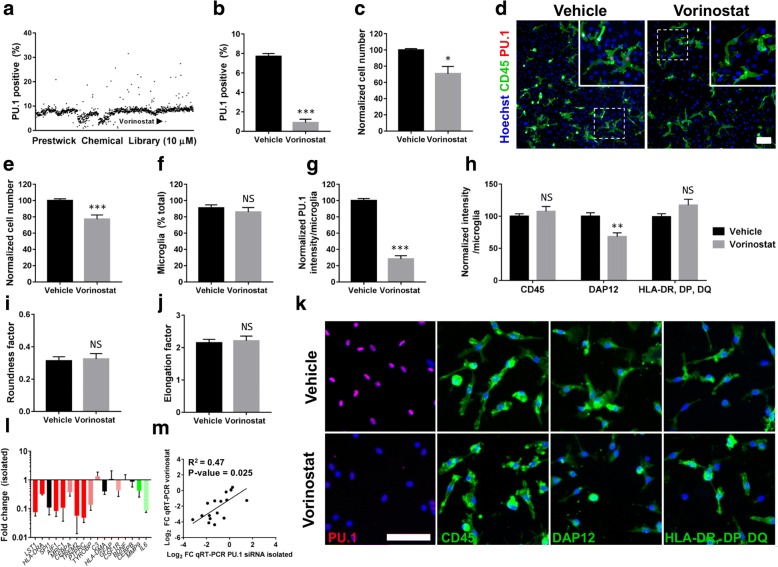
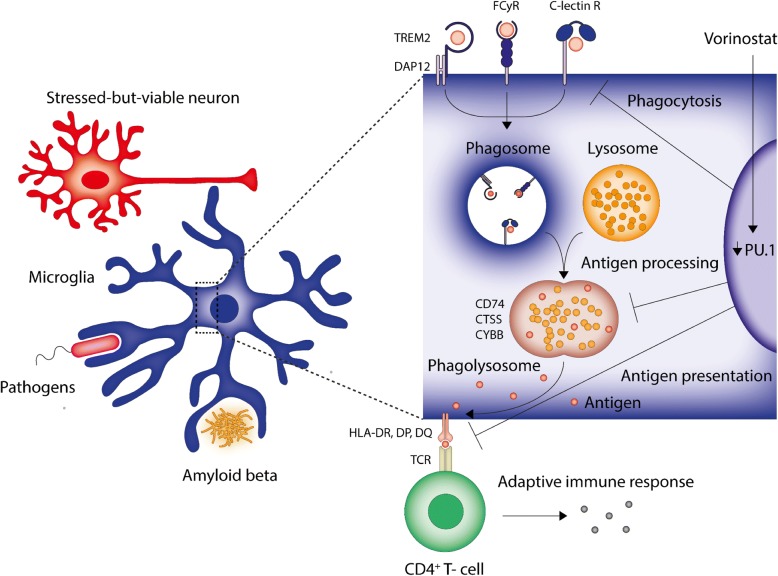
Verification
Claims the paper makes
The claims and statistics of this paper haven’t been checked yet.
Run the check — free, no account needed. It reads the open-access text and checks the sources it cites.
Claims other papers make about this one
Each is checked against this paper’s own text: does it say what the citing paper says it does?
The source backs part of the claim, not all of it — or backs it for a different population, condition or comparison.
In the citing paper
“given that PU.1 reduction has been reported to result in the down-regulation of massive proinflammatory genes and cell cycle–related genes (14, 43).”
From Arresting the bad seed: HDAC3 regulates proliferation of different microglia after ischemic stroke (2024) · cites this paper as [43]
Experimental — accuracy not yet measuredThe source backs part of the claim, not all of it — or backs it for a different population, condition or comparison.
In the citing paper
“Another similar study observed no reduction in microglia number, though PU.1 loss was measured at a culture level so the reduction could not be quantified on a single-cell level31.”
From Modest changes in Spi1 dosage reveal the potential for altered microglial function as seen in Alzheimer’s disease (2021) · cites this paper as [31]
Experimental — accuracy not yet measuredThe source backs part of the claim, not all of it — or backs it for a different population, condition or comparison.
In the citing paper
“Silencing of PU.1 in human microglia culture suppressed expression of myeloid adapter protein DAP12/TYROBP, TREM2, LST1, CD11b, MRC1, CEBPA, PTPRC and MHC class II genes HLA-DR, HLA-DP and HLA-DQ [30, 31], suggesting its role in antigen presentation and pro-inflammatory response by PU.1 [30, 31].”
From Transcriptional and Epigenetic Regulation of Microglia in Health and Disease (2019) · cites this paper as [30]
Experimental — accuracy not yet measuredThe cited source says what the claim attributes to it.
In the citing paper
“Increased PU.1 expression levels are associated with AD (Gjoneska et al., 2015; Huang et al., 2017; Rustenhoven et al., 2018) and Huntington’s disease (Crotti et al., 2014)”
From A novel molecular class that recruits HDAC/MECP2 complexes to PU.1 motifs reduces neuroinflammation (2023) · cites this paper as Rustenhoven et al., 2018
The cited source says what the claim attributes to it.
In the citing paper
“High-throughput screening of 1280 US Food and Drug Administration–approved compounds also identified an HDAC inhibitor, vorinostat, as a candidate drug for attenuating PU.1 level, which is then found to mimic partial effects of PU.1 knockdown (43).”
From Arresting the bad seed: HDAC3 regulates proliferation of different microglia after ischemic stroke (2024) · cites this paper as [43]
The cited source says what the claim attributes to it.
In the citing paper
“In BV2 microglial cells protective low expression of PU.1 led to decreased phagocytic uptake (Fig. 2), which is in line with previous data showing that siRNA knock-down of PU.1 in human microglia in vitro reduces expression of genes involved in phagocytic and antigen presentation pathways (Rustenhoven et al., 2018).”
From Alzheimer's-associated PU.1 expression levels regulate microglial inflammatory response (2021) · cites this paper as Rustenhoven et al., 2018
The cited source says what the claim attributes to it.
In the citing paper
“Analysis of mixed microglia/pericyte cultures where PU.1 was reduced via siRNA showed reduced expression of DAP12 and HLA-DR/DP/DQ31.”
From Modest changes in Spi1 dosage reveal the potential for altered microglial function as seen in Alzheimer’s disease (2021) · cites this paper as [31]
The cited source says what the claim attributes to it.
In the citing paper
“Previous work has identified that Spi1 is able to influence multiple gene networks in microglia5,7,31 and has been proposed as central to a network of AD risk genes that are conserved between species50.”
From Modest changes in Spi1 dosage reveal the potential for altered microglial function as seen in Alzheimer’s disease (2021) · cites this paper as [31]
The cited source says what the claim attributes to it.
In the citing paper
“In vitro cell culture studies have demonstrated that Spi1 regulates the expression of AD-associated genes involved in the phagocytic activity and immune response of microglia1,6.”
From Effects of SPI1-mediated transcriptome remodeling on Alzheimer's disease-related phenotypes in mouse models of Aβ amyloidosis (2024) · cites this paper as [6]
The cited source says what the claim attributes to it.
In the citing paper
“which encodes microglia receptors involved in antigen presentation and is regulated by PU.1 [61].”
From Sex-specific DNA methylation differences in Alzheimer’s disease pathology (2021) · cites this paper as [61]
The cited source says what the claim attributes to it.
In the citing paper
“In males, the most significant CpG-gene expression was for HLA-DRB1, another PU.1 target gene [61].”
From Sex-specific DNA methylation differences in Alzheimer’s disease pathology (2021) · cites this paper as [61]
In the citing paper
“In addition, PU.1 can regulate expression of genes associated with AD risk or onset, including ABCA7, CD33, TREM2, MS4A4A, MS4A6A, TYROBP, Aif1, and MYBPC3 [492, 493].”
From Molecular and cellular mechanisms underlying the pathogenesis of Alzheimer’s disease (2020) · cites this paper as [493]
In the citing paper
“Furthermore, Rustenhoven et al. identified another HDAC class I/II/IV inhibitor vorinostat as an effective attenuator of PU.1 in primary human microglia-enriched culture [30, 39].”
From Transcriptional and Epigenetic Regulation of Microglia in Health and Disease (2019) · cites this paper as [30]
In the citing paper
“However, vorinostat treatment showed reduction in DAP12 expression, whereas expression of CD45 and HLA-DR, HLA-DP or HLA-D1 remained unchanged [30].”
From Transcriptional and Epigenetic Regulation of Microglia in Health and Disease (2019) · cites this paper as [30]
In the citing paper
“suggesting its role in antigen presentation and pro-inflammatory response by PU.1 [30, 31].”
From Transcriptional and Epigenetic Regulation of Microglia in Health and Disease (2019) · cites this paper as [30]
Self-check
Percentages, sums and reported differences re-computed from the paper’s own numbers.
The self-check needs the paper’s full text.
Citations
Cites
1 retracted
RETRACTED ARTICLE: Pericyte loss influences Alzheimer-like neurodegeneration in mice
Sagare, A. P., Bell, R. D., Zhao, Z., Ma, Q., Winkler, E. A., Ramanathan, A., & Zlokovic, B. V. (2013) · Nature Communications · doi:10.1038/ncomms3932 · Cited by 589
RetractedSubramanian, A., Tamayo, P., Mootha, V. K., Mukherjee, S., Ebert, B. L., Gillette, M. A., Paulovich, A., Pomeroy, S. L., Golub, T. R., Lander, E. S., et al. (2005) · Proceedings of the National Academy of Sciences · doi:10.1073/pnas.0506580102 · Cited by 53,625
McKhann, G., Drachman, D., Folstein, M., Katzman, R., Price, D., & Stadlan, E. M. (1984) · Neurology · doi:10.1212/wnl.34.7.939 · Cited by 27,915
Neuropathological stageing of Alzheimer-related changes.
Braak, H., & Braak, E. (1991) · Acta Neuropathologica · doi:10.1007/bf00308809 · Cited by 16,123
Mootha, V. K., Lindgren, C. M., Eriksson, K.-F., Subramanian, A., Sihag, S., Lehar, J., Puigserver, P., Carlsson, E., Ridderstråle, M., Laurila, E., et al. (2003) · Nature Genetics · doi:10.1038/ng1180 · Cited by 10,197
Corder, E. H., Saunders, A. M., Strittmatter, W. J., Schmechel, D. E., Gaskell, P. C., Small, G. W., Roses, A. D., Haines, J. L., & Pericak-Vance, M. A. (1993) · Science · doi:10.1126/science.8346443 · Cited by 9,429
Polazzi, E., Mengoni, I., Caprini, M., Peña‐Altamira, E., Kurtys, E., & Monti, B. (2012) · Neurosignals · doi:10.1159/000337115 · Cited by 9,023
Microglia: a sensor for pathological events in the CNS
Kreutzberg, G. W. (1996) · Trends in Neurosciences · doi:10.1016/0166-2236(96)10049-7 · Cited by 4,396
Meta-Analysis of 74,046 Individuals Identifies 11 New Susceptibility Loci for Alzheimer’s Disease
(EADI), E. A. D. I., Lambert, J.-C., (GERAD), G. A. E. R. I. A. D., Alzheimer's Disease Genetic Consortium (ADGC), (CHARGE), C. F. H. A. A. R. I. G. E., Ibrahim-Verbaas, C. A., Harold, D., Naj, A. C., Sims, R., Bellenguez, C., et al. (2013) · Nature Genetics · doi:10.1038/ng.2802 · Cited by 4,336
Self-citationSynaptic Pruning by Microglia Is Necessary for Normal Brain Development
Paolicelli, R. C., Bolasco, G., Pagani, F., Maggi, L., Scianni, M., Panzanelli, P., Giustetto, M., Ferreira, T. A., Guiducci, E., Dumas, L., et al. (2011) · Science · doi:10.1126/science.1202529 · Cited by 4,244
Harold, D., Abraham, R., Hollingworth, P., Sims, R., Gerrish, A., Hamshere, M. L., Pahwa, J. S., Moskvina, V., Dowzell, K., Williams, A., et al. (2009) · Nature Genetics · doi:10.1038/ng.440 · Cited by 3,326
Self-citationTREM2 Variants in Alzheimer's Disease
Guerreiro, R., Wojtas, A., Bras, J., Carrasquillo, M., Rogaeva, E., Majounie, E., Cruchaga, C., Sassi, C., Kauwe, J. S. K., Younkin, S., et al. (2013) · New England Journal of Medicine · doi:10.1056/nejmoa1211851 · Cited by 3,020
Variant of TREM2 Associated with the Risk of Alzheimer's Disease
Jonsson, T., Stefansson, H., Steinberg, S., Jonsdottir, I., Jonsson, P. V., Snaedal, J., Bjornsson, S., Huttenlocher, J., Levey, A. I., Lah, J. J., et al. (2013) · New England Journal of Medicine · doi:10.1056/nejmoa1211103 · Cited by 2,558
Genome-wide association study identifies variants at CLU and CR1 associated with Alzheimer's disease
the European Alzheimer's Disease Initiative Investigators, Lambert, J.-C., Heath, S., Even, G., Campion, D., Sleegers, K., Hiltunen, M., Combarros, O., Zelenika, D., Bullido, M. J., et al. (2009) · Nature Genetics · doi:10.1038/ng.439 · Cited by 2,234
Initiative, T. A. D. N., Hollingworth, P., CHARGE consortium, EADI1 consortium, Harold, D., Sims, R., Gerrish, A., Lambert, J.-C., Carrasquillo, M. M., Abraham, R., et al. (2011) · Nature Genetics · doi:10.1038/ng.803 · Cited by 1,997
Self-citationNaj, A. C., Jun, G., Beecham, G. W., Wang, L.-S., Vardarajan, B. N., Buros, J., Gallins, P. J., Buxbaum, J. D., Jarvik, G. P., Crane, P. K., et al. (2011) · Nature Genetics · doi:10.1038/ng.801 · Cited by 1,901
WebGestalt: an integrated system for exploring gene sets in various biological contexts
Zhang, B., Kirov, S. A., & Snoddy, J. R. (2005) · Nucleic Acids Research · doi:10.1093/nar/gki475 · Cited by 1,803
Microglia in neurodegenerative disease
Perry, V. H., Nicoll, J. A. R., & Holmes, C. (2010) · Nature Reviews Neurology · doi:10.1038/nrneurol.2010.17 · Cited by 1,543
WEB-based GEne SeT AnaLysis Toolkit (WebGestalt): update 2013
Wang, J., Duncan, D. T., Shi, Z., & Zhang, B. (2013) · Nucleic Acids Research · doi:10.1093/nar/gkt439 · Cited by 1,512
The microglial sensome revealed by direct RNA sequencing
Hickman, S. E., Kingery, N. D., Ohsumi, T. K., Borowsky, M. L., Wang, L.-C., Means, T. K., & El Khoury, J. (2013) · Nature Neuroscience · doi:10.1038/nn.3554 · Cited by 1,511
Microglia emerge from erythromyeloid precursors via Pu.1- and Irf8-dependent pathways
Kierdorf, K., Erny, D., Goldmann, T., Sander, V., Schulz, C., Perdiguero, E. G., Wieghofer, P., Heinrich, A., Riemke, P., Hölscher, C., et al. (2013) · Nature Neuroscience · doi:10.1038/nn.3318 · Cited by 1,457
Holmes, C., Boche, D., Wilkinson, D., Yadegarfar, G., Hopkins, V., Bayer, A., Jones, R. W., Bullock, R., Love, S., Neal, J. W., et al. (2008) · The Lancet · doi:10.1016/s0140-6736(08)61075-2 · Cited by 1,416 · cited 1×
“Removal of parenchymal Aβ plaques has historically been considered to be advantageous through limiting microglial-mediated inflammation, however, whilst recent Aβ immunisation trials were effective in reducing plaque burden, they did not prevent progressive neurodegeneration [53].”
ResultAn environment-dependent transcriptional network specifies human microglia identity
Gosselin, D., Skola, D., Coufal, N. G., Holtman, I. R., Schlachetzki, J. C. M., Sajti, E., Jaeger, B. N., O’Connor, C., Fitzpatrick, C., Pasillas, M. P., et al. (2017) · Science · doi:10.1126/science.aal3222 · Cited by 1,220
Genome-wide Analysis of Genetic Loci Associated With Alzheimer Disease
Seshadri, S. (2010) · JAMA · doi:10.1001/jama.2010.574 · Cited by 1,219
Wang, J., Vasaikar, S. V., Shi, Z., Greer, M., & Zhang, B. (2017) · Nucleic Acids Research · doi:10.1093/nar/gkx356 · Cited by 1,161
Takahashi, K., Rochford, C. D. P., & Neumann, H. (2005) · The Journal of Experimental Medicine · doi:10.1084/jem.20041611 · Cited by 1,124
Review Article: Genetics of Alzheimer Disease
Bekris, L. M., Yu, C.-E., Bird, T. D., & Tsuang, D. W. (2010) · Journal of Geriatric Psychiatry and Neurology · doi:10.1177/0891988710383571 · Cited by 1,029
ARUK Consortium, Sims, R., GERAD/PERADES, C., van der Lee, S. J., Naj, A. C., Bellenguez, C., Badarinarayan, N., Jakobsdottir, J., Kunkle, B. W., Boland, A., et al. (2017) · Nature Genetics · doi:10.1038/ng.3916 · Cited by 1,012
Self-citationDepression as a Microglial Disease
Yirmiya, R., Rimmerman, N., & Reshef, R. (2015) · Trends in Neurosciences · doi:10.1016/j.tins.2015.08.001 · Cited by 944
Microglial Phagocytosis of Live Neurons
Brown, G. C., & Neher, J. J. (2014) · Nature Reviews Neuroscience · doi:10.1038/nrn3710 · Cited by 853
Hockly, E., Richon, V. M., Woodman, B., Smith, D. L., Zhou, X., Rosa, E., Sathasivam, K., Ghazi‐Noori, S., Mahal, A., Lowden, P. A. S., et al. (2003) · Proceedings of the National Academy of Sciences · doi:10.1073/pnas.0437870100 · Cited by 847
Ponomarev, E. D., Veremeyko, T., Barteneva, N., Krichevsky, A. M., & Weiner, H. L. (2011) · Nature Medicine · doi:10.1038/nm.2266 · Cited by 787
What is immune privilege (not)?
Galea, I., Bechmann, I., & Perry, V. H. (2007) · Trends in Immunology · doi:10.1016/j.it.2006.11.004 · Cited by 768
APOE and Alzheimer disease: a major gene with semi-dominant inheritance
Genin, E., Hannequin, D., Wallon, D., Sleegers, K., Hiltunen, M., Combarros, O., Bullido, M. J., Engelborghs, S., De Deyn, P., Berr, C., et al. (2011) · Molecular Psychiatry · doi:10.1038/mp.2011.52 · Cited by 714
Phagocytosis of Microglia in the Central Nervous System Diseases
Fu, R., Shen, Q., Xu, P., Luo, J. J., & Tang, Y. (2014) · Molecular Neurobiology · doi:10.1007/s12035-013-8620-6 · Cited by 687
The contribution of astrocytes and microglia to traumatic brain injury
Karve, I. P., Taylor, J. M., & Crack, P. J. (2015) · British Journal of Pharmacology · doi:10.1111/bph.13125 · Cited by 675
Late onset Alzheimer’s disease genetics implicates microglial pathways in disease risk
Efthymiou, A. G., & Goate, A. M. (2017) · Molecular Neurodegeneration · doi:10.1186/s13024-017-0184-x · Cited by 562
Inflammatory Neurodegeneration and Mechanisms of Microglial Killing of Neurons
Brown, G. C., & Neher, J. J. (2010) · Molecular Neurobiology · doi:10.1007/s12035-010-8105-9 · Cited by 526
Acute myeloid leukemia induced by graded reduction of a lineage-specific transcription factor, PU.1.
Rosenbauer, F., Wagner, K., Kutok, J. L., Iwasaki, H., Le Beau, M. M., Okuno, Y., Akashi, K., Fiering, S., & Tenen, D. G. (2004) · Nature Genetics · doi:10.1038/ng1361 · Cited by 506
A role for TREM2 ligands in the phagocytosis of apoptotic neuronal cells by microglia
Hsieh, C. L., Koike, M., Spusta, S. C., Niemi, E. C., Yenari, M., Nakamura, M. C., & Seaman, W. E. (2009) · Journal of Neurochemistry · doi:10.1111/j.1471-4159.2009.06042.x · Cited by 475
A common haplotype lowers PU.1 expression in myeloid cells and delays onset of Alzheimer's disease
The International Genomics of Alzheimer's Project, Huang, K.-L., Initiative, T. A. D. N., Marcora, E., Pimenova, A. A., Di Narzo, A. F., Kapoor, M., Jin, S. C., Harari, O., Bertelsen, S., et al. (2017) · Nature Neuroscience · doi:10.1038/nn.4587 · Cited by 423
Self-citationMicroglia and Inflammation in Alzheimers Disease
Mandrekar-Colucci, S., & Landreth, G. E. (2010) · CNS & Neurological Disorders - Drug Targets · doi:10.2174/187152710791012071 · Cited by 421
Aloisi, F., Ria, F., & Adorini, L. (2000) · Immunology Today · doi:10.1016/s0167-5699(99)01512-1 · Cited by 390
Inhibition of Microglial Phagocytosis Is Sufficient To Prevent Inflammatory Neuronal Death
Neher, J. J., Neniskyte, U., Zhao, J.-W., Bal-Price, A., Tolkovsky, A. M., & Brown, G. C. (2011) · The Journal of Immunology · doi:10.4049/jimmunol.1003600 · Cited by 373
Microglia and ischemic stroke: a double-edged sword.
Patel, A. R., Ritzel, R. M., McCullough, L. D., & Liu, F. (2013) · Europe PMC (PubMed Central) · Cited by 363
Microglia in ALS: The Good, The Bad, and The Resting
Henkel, J. S., Beers, D. R., Zhao, W., & Appel, S. H. (2009) · Journal of Neuroimmune Pharmacology · doi:10.1007/s11481-009-9171-5 · Cited by 353
Mutant Huntingtin promotes autonomous microglia activation via myeloid lineage-determining factors
Crotti, A., Benner, C., Kerman, B. E., Gosselin, D., Lagier-Tourenne, C., Zuccato, C., Cattaneo, E., Gage, F. H., Cleveland, D. W., & Glass, C. K. (2014) · Nature Neuroscience · doi:10.1038/nn.3668 · Cited by 333
Kim, D.-G., Krenz, A., Toussaint, L. E., Maurer, K. J., Robinson, S.-A., Yan, A., Torres, L., & Bynoe, M. S. (2016) · Journal of Neuroinflammation · doi:10.1186/s12974-015-0467-5 · Cited by 330
Brown, G. C., & Vilalta, A. (2015) · Brain Research · doi:10.1016/j.brainres.2015.08.031 · Cited by 322
Contribution of systemic inflammation to chronic neurodegeneration
Perry, V. H. (2010) · Acta Neuropathologica · doi:10.1007/s00401-010-0722-x · Cited by 286
The choreography of neuroinflammation in Huntington's disease
Crotti, A., & Glass, C. K. (2015) · Trends in Immunology · doi:10.1016/j.it.2015.04.007 · Cited by 276
Smith, A. M., & Dragunow, M. (2014) · Trends in Neurosciences · doi:10.1016/j.tins.2013.12.001 · Cited by 256
Self-citationAn updated role of microRNA-124 in central nervous system disorders: a review
Sun, Y., Luo, Z.-M., Guo, X.-M., Su, D.-F., & Liu, X. (2015) · Frontiers in Cellular Neuroscience · doi:10.3389/fncel.2015.00193 · Cited by 223
Evidence of microglial activation in autism and its possible role in brain underconnectivity
Rodriguez, J. I., & Kern, J. K. (2011) · Neuron Glia Biology · doi:10.1017/s1740925x12000142 · Cited by 214
Immunohistochemical staining of post-mortem adult human brain sections
Waldvogel, H. J., Curtis, M. A., Baer, K., Rees, M. I., & Faull, R. L. M. (2006) · Nature Protocols · doi:10.1038/nprot.2006.354 · Cited by 211
Self-citationMicroglia and multiple sclerosis
Jack, C. S., Ruffini, F., Bar‐Or, A., & Antel, J. P. (2005) · Journal of Neuroscience Research · doi:10.1002/jnr.20482 · Cited by 202
Rustenhoven, J., Aalderink, M., Scotter, E. L., Oldfield, R. L., Bergin, P. S., Mee, E. W., Graham, E. S., Faull, R. L. M., Curtis, M. A., Park, T. I.-H., et al. (2016) · Journal of Neuroinflammation · doi:10.1186/s12974-016-0503-0 · Cited by 201
Self-citationImmunological aspects of microglia: relevance to Alzheimer's disease
Benveniste, E. N., Nguyen, V. T., & O'Keefe, G. M. (2001) · Neurochemistry International · doi:10.1016/s0197-0186(01)00045-6 · Cited by 189
T-Cells in Alzheimer's Disease
Town, T., Tan, J., Flavell, R. A., & Mullan, M. (2005) · NeuroMolecular Medicine · doi:10.1385/nmm:7:3:255 · Cited by 183
Chronic divalproex sodium use and brain atrophy in Alzheimer disease
Fleisher, A., Truran, D., Mai, J. T., Langbaum, J. B. S., Aisen, P. S. S., Cummings, J. L., Jack, C. R., Weiner, M. W., Thomas, R. G., Schneider, L. S., et al. (2011) · Neurology · doi:10.1212/wnl.0b013e318230a16c · Cited by 177
A role for human brain pericytes in neuroinflammation
Jansson, D., Rustenhoven, J., Feng, S. X., Hurley, D., Oldfield, R. L., Bergin, P., Mee, E. W., Faull, R. L. M., & Dragunow, M. (2014) · Journal of Neuroinflammation · doi:10.1186/1742-2094-11-104 · Cited by 174
Self-citationPalmieri, D., Lockman, P. R., Thomas, F. C., Hua, E., Herring, J. M., Hargrave, E., Johnson, M., Flores, N. M., Qian, Y., Vega-Valle, E., et al. (2009) · Clinical Cancer Research · doi:10.1158/1078-0432.ccr-09-1039 · Cited by 165
Primary Phagocytosis of Neurons by Inflamed Microglia: Potential Roles in Neurodegeneration
Neher, J. J., Neniškytė, U., & Brown, G. C. (2012) · Frontiers in Pharmacology · doi:10.3389/fphar.2012.00027 · Cited by 157
The key role of PU.1/SPI-1 in B cells, myeloid cells and macrophages
Lloberas, J., Soler, C., & Celada, A. (1999) · Immunology Today · doi:10.1016/s0167-5699(99)01442-5 · Cited by 142
The transcription factor PU.1 is critical for viability and function of human brain microglia
Smith, A. M., Gibbons, H. M., Oldfield, R. L., Bergin, P. M., Mee, E. W., Faull, R. L. M., & Dragunow, M. (2013) · Glia · doi:10.1002/glia.22486 · Cited by 141
Self-citationGross, T. J., Kremens, K., Powers, L. S., Brink, B., Knutson, T. M., Domann, F. E., Philibert, R. A., Milhem, M. M., & Monick, M. M. (2014) · The Journal of Immunology · doi:10.4049/jimmunol.1301758 · Cited by 139
Fricker, M., Oliva-Martín, M. J., & Brown, G. C. (2012) · Journal of Neuroinflammation · doi:10.1186/1742-2094-9-196 · Cited by 137
Increased acetyl and total histone levels in post-mortem Alzheimer's disease brain
Narayan, P. J., Lill, C. L., Faull, R. L. M., Curtis, M. A., & Dragunow, M. (2014) · Neurobiology of Disease · doi:10.1016/j.nbd.2014.11.023 · Cited by 135
Self-citationBubna, A. (2015) · Indian Journal of Dermatology · doi:10.4103/0019-5154.160511 · Cited by 131
The adult human brain in preclinical drug development
Dragunow, M. (2008) · Nature Reviews Drug Discovery · doi:10.1038/nrd2617 · Cited by 121
Self-citationMicroglia and macrophages differ in their inflammatory profile after permanent brain ischemia
Zarruk, J. G., Greenhalgh, A. D., & David, S. (2018) · Experimental Neurology · doi:10.1016/j.expneurol.2017.08.011 · Cited by 119
Brennan, G. P., Dey, D., Chen, Y., Patterson, K. P., Magnetta, E., Hall, A. M., Dubé, C. M., Mei, Y., & Baram, T. Z. (2016) · Cell Reports · doi:10.1016/j.celrep.2016.02.042 · Cited by 116
Isolation of highly enriched primary human microglia for functional studies
Rustenhoven, J., Park, T. I.-H., Schweder, P., Scotter, J., Correia, J., Smith, A. M., Gibbons, H. M., Oldfield, R. L., Bergin, P. S., Mee, E. W., et al. (2016) · Scientific Reports · doi:10.1038/srep19371 · Cited by 99
Inactivation of PU.1 in adult mice leads to the development of myeloid leukemia
Metcalf, D., Dakic, A., Mifsud, S., Di Rago, L., Wu, L., & Nutt, S. (2006) · Proceedings of the National Academy of Sciences · doi:10.1073/pnas.0510616103 · Cited by 95
Microglial cells and Parkinson’s disease
Li, Q., & Flood, P. M. (2008) · Immunologic Research · doi:10.1007/s12026-008-8018-0 · Cited by 93
Valproic acid as a promising agent to combat Alzheimer's disease
Zhang, X., Li, X., & Zhang, H. (2009) · Brain Research Bulletin · doi:10.1016/j.brainresbull.2009.09.003 · Cited by 86
A comprehensive profile of ChIP-Seq-based PU.1/Spi1 target genes in microglia.
Satoh, J.-I., Asahina, N., Kitano, S., & Kino, Y. (2014) · Gene Regulation and Systems Biology · doi:10.4137/grsb.s19711 · Cited by 74
Walton, M. R., Gibbons, H., MacGibbon, G. A., Sirimanne, E., Saura, J., Gluckman, P. D., & Dragunow, M. (2000) · Journal of Neuroimmunology · doi:10.1016/s0165-5728(99)00262-3 · Cited by 73
Self-citationCellular composition of human glial cultures from adult biopsy brain tissue
Gibbons, H. M., Hughes, S. M., van Roon‐Mom, W., Greenwood, J. M., Narayan, P. J., Teoh, H. H., Bergin, P., Mee, E. W., Wood, P. C., Faull, R. L. M., et al. (2007) · Journal of Neuroscience Methods · doi:10.1016/j.jneumeth.2007.07.005 · Cited by 55
Self-citationValproic acid enhances microglial phagocytosis of amyloid-β1–42
Smith, A. M., Gibbons, H. M., & Dragunow, M. (2010) · Neuroscience · doi:10.1016/j.neuroscience.2010.04.041 · Cited by 54
Self-citationAn anti-inflammatory role for C/EBPδ in human brain pericytes
Rustenhoven, J., Scotter, E. L., Jansson, D., Kho, D. T., Oldfield, R. L., Bergin, P., Mee, E. W., Faull, R. L. M., Curtis, M. A., Graham, S. E., et al. (2015) · Scientific Reports · doi:10.1038/srep12132 · Cited by 53
Self-citationValproic acid induces microglial dysfunction, not apoptosis, in human glial cultures
Gibbons, H. M., Smith, A. M., Teoh, H. H., Bergin, P. M., Mee, E. W., Faull, R. L. M., & Dragunow, M. (2011) · Neurobiology of Disease · doi:10.1016/j.nbd.2010.08.024 · Cited by 49
Jian, W., Yan, B., Huang, S., & Qiu, Y. (2017) · The FASEB Journal · doi:10.1096/fj.201700022r · Cited by 23
Cited by
Sorted by citations
Molecular and cellular mechanisms underlying the pathogenesis of Alzheimer’s disease
Guo, T., Zhang, D., Zeng, Y., Huang, T. Y., Xu, H., & Zhao, Y. (2020) · Molecular Neurodegeneration · doi:10.1186/s13024-020-00391-7 · Cited by 994
Liu, Z., Yao, X., Sun, B., Jiang, W., Liao, C., Dai, X., Chen, Y., Chen, J., & Ding, R. (2021) · Free Radical Biology and Medicine · doi:10.1016/j.freeradbiomed.2021.03.037 · Cited by 196
Insights into Alzheimer’s disease from single-cell genomic approaches
Murdock, M. H., & Tsai, L.-H. (2023) · Nature Neuroscience · doi:10.1038/s41593-022-01222-2 · Cited by 148
Alzheimer's-associated PU.1 expression levels regulate microglial inflammatory response
Pimenova, A. A., Herbinet, M., Gupta, I., Machlovi, S. I., Bowles, K. R., Marcora, E., & Goate, A. M. (2021) · Neurobiology of Disease · doi:10.1016/j.nbd.2020.105217 · Cited by 120
“1 in human microglia in vitro reduces expression of genes involved in phagocytic and antigen presentation pathways (Rustenhoven et al., 2018).”
Zhang, L., Silva, T. C., Young, J. I., Gomez, L., Schmidt, M. A., Hamilton-Nelson, K. L., Kunkle, B. W., Chen, X., Martin, E. R., & Wang, L. (2020) · Nature Communications · doi:10.1038/s41467-020-19791-w · Cited by 139
Metadata
- Authors
- Rustenhoven, J., Smith, A. M., Smyth, L. C., Jansson, D., Scotter, E. L., Swanson, M. E. V., Aalderink, M., Coppieters, N., Narayan, P., Handley, R., Overall, C., Park, T. I. H., Schweder, P., Heppner, P., Curtis, M. A., Faull, R. L. M., & Dragunow, M.
- Affiliations
- University of Auckland (NZ)
- Imperial College London (GB)
- Auckland City Hospital (NZ)
- Corresponding author
- Dragunow, Mike
- ORCID
- Venue
- Molecular Neurodegeneration
- Published
- 2018-08-20
- Volume
- 13
- Issue
- 1
- Pages
- 44-44
- ISSN
- 1750-1326 (ISSN-L)
- PMC
- PMC6102813
- OpenAlex
- W2888188888
- Cited by
- 155
- References
- 83
- Citations by year
- 2026: 8 · 2025: 26 · 2024: 20 · 2023: 21 · 2022: 31 · 2021: 22 · 2020: 17 · 2019: 9 · 2018: 1
- FWCI
- 5.61
- Type
- journal article
- Language
- en
- Open access
- gold
- doi.org
- Licence
- Locations
- Molecular Neurodegeneration (publishedVersion, cc-by)
- Europe PMC (PubMed Central) (publishedVersion, cc-by)
- PubMed Central (publishedVersion, cc-by)
- PubMed (publishedVersion)
- DOAJ (DOAJ: Directory of Open Access Journals) (submittedVersion, cc-by-sa)
- ResearchSpace (University of Auckland) (submittedVersion, cc-by)
- Spiral (Imperial College London) (submittedVersion, other-oa)
- Funders
- Hugh Green Foundation
- Neurological Foundation of New Zealand
- Health Research Council of New Zealand
- Topics
- Life Sciences › Neuroscience › Neurology › Neuroinflammation and Neurodegeneration Mechanisms
- Life Sciences › Neuroscience › Cellular and Molecular Neuroscience › Alzheimer's disease research and treatments
- Life Sciences › Neuroscience › Neurology › Neurological Disease Mechanisms and Treatments
- Keywords
- PU.1, Alzheimer's disease, microglia, transcription factors, neuroinflammation, vorinostat, histone deacetylase inhibitors, microglial gene expression, antigen presentation, phagocytosis, mixed glial cultures, therapeutic target
- MeSH terms
- Vorinostat, Proto-Oncogene Protein Spi-1, Alzheimer Disease, Gene Expression Regulation, Humans, Proto-Oncogene Proteins, Trans-Activators, Microglia, Histone Deacetylase Inhibitors
About these checks
Registry, retraction, Cites and statistics results are computed, not judged, with one exception: a printed reference that no index lists is read once by a model before it counts as a citation error. Claims are extracted by a model and kept only when their quote appears verbatim in the text; each cited source is then checked, with a model’s help, for whether it says what the claim relies on. Those verdicts can be wrong — read the claim’s quote and the cited source before relying on one.
Statistics and arithmetic are recomputed, not judged.
Confidence bands are shown only for fields calibrated on our annotated test set. None is calibrated yet, so no band is shown.
What counts as a claim ›How we measure confidence ›How we check this ›
Are you an author, or do you see a problem with this page? Request a review
