

“It’s not you, it’s me”: identity disturbance as the main contributor to interpersonal problems in pathological narcissism
Open accessThe DOI matches its Crossref record; 86 of the 93 references it cites were found in a registry or an index; 4 of the 64 sources its claims cite were checked for support.
Abstract
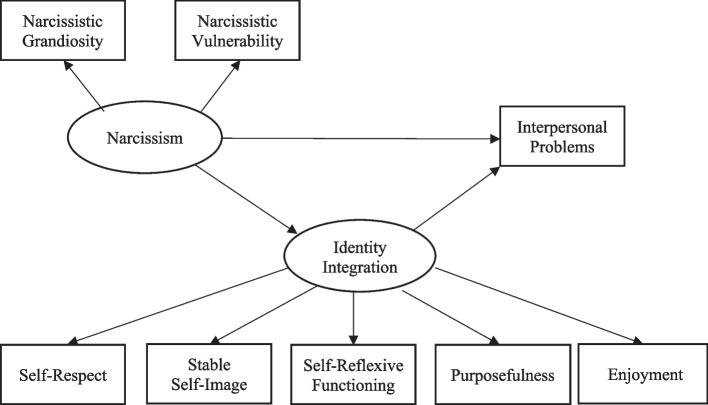
Background: Core impairments in self and other functioning typify individuals with personality disorder. While interpersonal dysfunction is a known element of narcissistic disorders, empirical research investigating intrapersonal elements is lacking. The aim of this study was to investigate the internal representations of individuals with grandiose and vulnerable features, as manifested through their attachment styles, and the specific role of identity disturbance in explaining the relationship between pathological narcissism and maladaptive interpersonal functioning. Methods: A sample of 270 university students completed the Brief Pathological Narcissism Inventory (B-PNI), the Severity Indices of Personality Problems (SIPP), the Relationship Questionnaire (RQ), and the Inventory of Interpersonal Problems (IIP-32). Results: Both vulnerable and grandiose narcissism were positively associated with both fearful and preoccupied attachment, and negatively associated with secure attachment, whilst grandiose narcissism was also positively associated with dismissive attachment. Furthermore, unstable representations of self, poor self-reflective functioning, and low sense of purpose fully mediated the relationship between interpersonal problems and grandiose narcissism while partially mediating the relationship between interpersonal problems and vulnerable narcissism. Conclusions: Overall, our findings suggest that for individuals presenting with narcissistic features, capacity for adaptive interpersonal functioning is grounded by deficits in identity integration. Implications of these findings are discussed.
Overview
CoChat Summary
TL;DR
In 270 university students, both grandiose and vulnerable pathological narcissism were linked to insecure attachment and interpersonal problems, with identity integration deficits explaining these associations. Identity disturbance fully mediated the grandiose narcissism–interpersonal problems link and partially mediated the vulnerable narcissism–interpersonal problems link.
Key findings
- Both vulnerable and grandiose narcissism were positively associated with fearful and preoccupied attachment and negatively associated with secure attachment; grandiose narcissism was also positively associated with dismissive attachment.
- Unstable self-image, poor self-reflexive functioning, and low purposefulness fully mediated the relationship between grandiose narcissism and interpersonal problems, and partially mediated the relationship between vulnerable narcissism and interpersonal problems; self-respect and enjoyment were non-significant mediators.
- The SEM mediation model showed excellent fit: CFI = 0.990, GFI = 0.974, NFI = 0.969, TLI = 0.982, RMSEA = 0.042, SRMR = 0.038. Significant indirect effects included grandiose narcissism via stable self-image (−.031*), self-reflexive functioning (−.030*), and purposefulness (−.030), and vulnerable narcissism via stable self-image (.122), self-reflexive functioning (.079*), and purposefulness (.088).
- Attachment did not moderate the association between identity integration and interpersonal problems; the mediating effect of identity disturbance remained significant.
Methods
- Sample: 270 first-year university students aged 18–25 (33 male, 236 female, 1 non-binary), English speaking, participating for course credit; 103 reported at least one previously diagnosed mental health condition and 147 reported at least one immediate relative with such a condition.
- Measures: Brief Pathological Narcissism Inventory (B-PNI), Severity Indices of Personality Problems (SIPP-118) Identity Integration domain, Relationship Questionnaire (RQ), and Inventory of Interpersonal Problems (IIP-32).
- Analysis: bivariate correlations, one-way ANOVAs across attachment styles, and structural equation modelling (SEM) mediation with 5,000 bootstrapped samples and 95% confidence intervals; a moderated mediation model added attachment as a moderator.
Limitations
- The paper states that both narcissism expressions were measured only by the B-PNI, whose capacity to capture grandiose narcissism has been questioned; the design was cross-sectional and trait-level, so dynamic fluctuations in grandiosity and vulnerability may not have been captured.
- The paper states that all measures were self-report and social desirability was not controlled; males were underrepresented (sample was 87% female), limiting gender-difference analyses.
- The paper states that the undergraduate sample was non-clinical and explicitly focused on pathological narcissism, so findings need replication in a clinical population; evident from the cross-sectional mediation design, causal direction cannot be established.
Model-written summary. Check it against the paper before relying on it.
Integrity signals
Registry
Cites
Statistics
Figures
Verification
Claims the paper makes
3 Valid · 1 Not valid · 30 Not checked · 59 Own results and interpretations
Every source the paper cites for this claim was checked and supports it.
In the paper
“This may be explained by the presence of a suppression effect [82], which occurs when an independent variable contributes significantly to the tested model despite weak initial association with the dependant variable, i.e. despite being a weak predictor on its own.”
§ “It’s not you, it’s me”: identity disturbance as the main contributor to interpersonal problems in pathological narcissism > Discussion
What the sources say
- Supportedcites [82] Watson D Clark LA Chmielewski M Kotov R The value of suppressor effects in explicating the construct validity of symptom measures Psychol Assess 2013 25 3 929 10.1037/a0032781 23795886 PMC3780394 source
The paper’s Abstract defines a suppressor effect as an increase in predictive power when another predictor is added. In Study 1, Results and Discussion, Appetite Loss is a weak predictor on its own but has a substantially stronger association after Dysphoria is included, supporting the cited explanation. The cited paper does not establish whether suppression explains the citing document’s particular negative association. (LLM, conf=0.88)
hedgedstates a possible cause- Asserted: passes — The authors put it forward as true.
- Checkable: passes — It can be checked against evidence.
- Load-bearing: passes — The paper’s conclusions depend on it.
- Based: passes — The paper gives a reason why it holds.
- Supported
The sources with a verdict support this claim; the rest weren’t checked yet, have no full text we could read, or their verdicts aren’t rated yet.
In the paper
“Despite their seemingly contrasting presentations, both share (overtly or covertly expressed) attitudes of being special and entitled to special treatment [37, 51].”
§ “It’s not you, it’s me”: identity disturbance as the main contributor to interpersonal problems in pathological narcissism > Pathological narcissism: a multifaceted construct
What the sources say
- Supportedcites [37] Jauk E, Kanske P. Can neuroscience help to understand narcissism? A systematic review of an emerging field. Personal Neurosci. 2021;4:e3,1–29. 10.1017/pen.2021.1. PMC8170532 34124536 source
The Narcissism: Concepts and Operationalizations section says that grandiose and vulnerable narcissism share overtly or covertly expressed attitudes of being special and entitled to special privileges. This directly supports the citing sentence’s paraphrase of “special treatment.” (LLM, conf=0.95)
- Not checked — no full text of the sourcecites [51] Krizan Z Herlache AD The narcissism spectrum model: A synthetic view of narcissistic personality Pers Soc Psychol Rev 2018 22 1 29 10.1177/1088868316685018 28132598 source
plain- Asserted: passes — The authors put it forward as true.
- Checkable: passes — It can be checked against evidence.
- Load-bearing: unclear — It is unclear whether the paper’s conclusions depend on it.
- Based: passes — The paper gives a reason why it holds.
- Supported
A result the paper reports from its own data — it cites no other source for it, so there is none to check. The quote shows it is in the paper.
In the paper
“Similarly, it is also interesting to note that the moderating mediation analysis that included attachment as a moderator of the association between identity integration and interpersonal problems was non-significant.”
§ “It’s not you, it’s me”: identity disturbance as the main contributor to interpersonal problems in pathological narcissism > Discussion
plain- Asserted: passes — The authors put it forward as true.
- Checkable: passes — It can be checked against evidence.
- Load-bearing: passes — The paper’s conclusions depend on it.
- Based: passes — The paper gives a reason why it holds.
A result the paper reports from its own data — it cites no other source for it, so there is none to check. The quote shows it is in the paper.
In the paper
“In particular, deficits in identity integration partially mediated the relationship between vulnerable narcissism and interpersonal problems, while fully mediating the association between the latter and grandiose narcissism.”
§ “It’s not you, it’s me”: identity disturbance as the main contributor to interpersonal problems in pathological narcissism > Discussion
plainstates a cause- Asserted: passes — The authors put it forward as true.
- Checkable: passes — It can be checked against evidence.
- Load-bearing: passes — The paper’s conclusions depend on it.
- Based: passes — The paper gives a reason why it holds.
37 more claims
Create a free account to see all 93 claims and to verify the 9 references still open.
- Probably not a substantial claim. 32
- It may state two separate claims as one. 27
- The quote only partly states this claim. 3
Self-check
Percentages, sums and reported differences re-computed from the paper’s own numbers.
Each contradiction between two passages listed here was confirmed by an independent check.
Rated major: it would touch a result — a value a result rests on, reported and recomputed p-values on opposite sides of the significance level, two passages that conflict with no sign which is right, or a cited work retracted before this paper was published.
In the paper
§ “It’s not you, it’s me”: identity disturbance as the main contributor to interpersonal problems in pathological narcissism > Results > Descriptives, correlations and between-group differences
“Similarly, those who endorsed a dismissive attachment style also scored significantly lower on vulnerable narcissism, identity integration, as well as interpersonal problems than those with a fearful/avoidant attachment.”
§ “It’s not you, it’s me”: identity disturbance as the main contributor to interpersonal problems in pathological narcissism > Results > Descriptives, correlations and between-group differences
“| IIP | 33.84 (17.37)a | 52.49 (16.03)bc | 45.45 (13.36)b | 43.55 (13.48)bd | 21.57** | 0.20 |”
Rated minor: it would not touch a result — a value no result rests on, a p-value that stays on the same side of the significance level, or a conflict that is clerical, resolved elsewhere in the paper, or outside its own findings.
In the paper
§ “It’s not you, it’s me”: identity disturbance as the main contributor to interpersonal problems in pathological narcissism > Results > Structural equation modelling
“Standardized coefficients can be found in Table 2”
§ “It’s not you, it’s me”: identity disturbance as the main contributor to interpersonal problems in pathological narcissism > Results > Structural equation modelling
“Table: Table 3 Path Standardized Coefficients and Indirect Effects for Identity Integration as Mediator”
Rated minor: it would not touch a result — a value no result rests on, a p-value that stays on the same side of the significance level, or a conflict that is clerical, resolved elsewhere in the paper, or outside its own findings.
In the paper
§ “It’s not you, it’s me”: identity disturbance as the main contributor to interpersonal problems in pathological narcissism > Results > Descriptives, correlations and between-group differences
“Similarly, with the exception of exploitativeness, pathological narcissism as well as identity disturbance and attachment all correlated positively with interpersonal problems.”
§ “It’s not you, it’s me”: identity disturbance as the main contributor to interpersonal problems in pathological narcissism > Results > Descriptives, correlations and between-group differences
“| 17 | Total Score | .09 | .25** | .29** | .49** | .51** | .45** | .31** | .56** | .59** | .54** | .54** | .43** | -.39** | .37** | .21** | .03 | 1.39 (.54) |”
Rated minor: it would not touch a result — a value no result rests on, a p-value that stays on the same side of the significance level, or a conflict that is clerical, resolved elsewhere in the paper, or outside its own findings.
In the paper
§ “It’s not you, it’s me”: identity disturbance as the main contributor to interpersonal problems in pathological narcissism > Results > Structural equation modelling
“| VN En IIP | | | | | | | -.010 | -.073 | -.047 |”
§ “It’s not you, it’s me”: identity disturbance as the main contributor to interpersonal problems in pathological narcissism > Results > Structural equation modelling
“| | Path Coefficients toSelf-respect | Path Coefficients toStable Self-image | Path Coefficients toSelf-reflexive Functioning | Path Coefficients toPurposefulness | Path Coefficients to Enjoyment | Path Coefficients to Interpersonal Problems | Estimate | Indirect Effects 95% Confidence Interval Lower | Indirect Effects 95% Confidence Interval Upper |”
Citations
Cites
Diagnostic and Statistical Manual of Mental Disorders
American Psychiatric Association (2013) · doi:10.1176/appi.books.9780890425596 · Cited by 116,369
Mediation in experimental and nonexperimental studies: New procedures and recommendations.
Shrout, P. E., & Bolger, N. (2002) · Psychological Methods · doi:10.1037/1082-989x.7.4.422 · Cited by 11,335 · cited 1×
“In line with existing recommendations, mediation analyses were conducted via bootstrapping, allowing to estimate the confidence intervals of the indirect effects [77].”
Attachment styles among young adults: A test of a four-category model.
Bartholomew, K., & Horowitz, L. M. (1991) · Journal of Personality and Social Psychology · doi:10.1037//0022-3514.61.2.226 · Cited by 8,384 · cited 1×
“The RQ is widely used and has demonstrated sound psychometric properties [5, 33].”
Affect Regulation, Mentalization, and the Development of the Self
Fonagy, P., Gergely, G., Jurist, E. L., & Target, M. (2018) · doi:10.4324/9780429471643 · Cited by 3,886 · cited 1×
“difficulties in reflective functioning [26].”
Models of the self and other: Fundamental dimensions underlying measures of adult attachment.
Griffin, D. W., & Bartholomew, K. (1994) · Journal of Personality and Social Psychology · doi:10.1037//0022-3514.67.3.430 · Cited by 1,756 · cited 1×
“The RQ is widely used and has demonstrated sound psychometric properties [5, 33].”
The International Journal of Psychoanalysis.
Cournut-Janin, M. (1996) · Revue française de psychanalyse · doi:10.3917/rfp.g1996.60n1.0256 · Cited by 1,513
Initial construction and validation of the Pathological Narcissism Inventory.
Pincus, A. L., Ansell, E. B., Pimentel, C. A., Cain, N. M., Wright, A. G. C., & Levy, K. N. (2009) · Psychological Assessment · doi:10.1037/a0016530 · Cited by 1,334 · cited 1×
“More recently, significant associations between narcissistic features and identity instability have also been established, with narcissism being linked with inflated but unstable representations of self [19, 22, 65, 71].”
Severe Personality Disorders: Psychotherapeutic Strategies
Kernberg, O. F. (1984) · Medical Entomology and Zoology · Cited by 1,308
Wink, P. (1991) · Journal of Personality and Social Psychology · doi:10.1037/0022-3514.61.4.590 · Cited by 1,107 · cited 2×
“These individuals have been found to be interpersonally domineering, antagonistic and vindictive [14, 74, 75, 84].”
Pathological narcissism and narcissistic personality disorder
Pincus, A. L., & Lukowitsky, M. R. (2010) · Annual Review of Clinical Psychology · doi:10.1146/annurev.clinpsy.121208.131215 · Cited by 1,082 · cited 4×
“Supporting this notion of both image distortion and negative interpersonal impacts in narcissistic disorders, research has identified discrepancies between self and informant ratings of interpersonal functioning, with individuals with narcissistic features “putting a positive and self-enhancing spin on their personali…”
InfluentialDevelopmental psychiatry comes of age
(1988) · American Journal of Psychiatry · doi:10.1176/ajp.145.1.1 · Cited by 978 · cited 1×
“Attachment theory postulates that early life experiences have an enduring effect on personality development through the formation of cognitive-affective templates of self and other, termed internal working models [10].”
Thoughts on Narcissism and Narcissistic Rage
Kohut, H. (1972) · The Psychoanalytic Study of the Child · doi:10.1080/00797308.1972.11822721 · Cited by 955 · cited 1×
“[35, 43, 49, 61]), there is both limited and mixed empirical findings that support the specific association between pathological narcissism, identity disturbance, and interpersonal dysfunction.”
Forms and Transformations of Narcissism
Kohut, H. (1966) · Journal of the American Psychoanalytic Association · doi:10.1177/000306516601400201 · Cited by 912 · cited 1×
“Such ‘healthy’ dimensions of narcissism have been historically theorised [47] as a normal or even essential part of psychological functioning.”
Cain, N. M., Pincus, A. L., & Ansell, E. B. (2008) · Clinical Psychology Review · doi:10.1016/j.cpr.2007.09.006 · Cited by 876 · cited 1×
“social withdrawal and emotional dysregulation) following the painful disappointment of losses and failures [12, 67].”
Handbook of Mentalizing in Mental Health Practice
LAZAR, S. G. (2013) · Journal of Psychiatric Practice · doi:10.1097/01.pra.0000426331.79890.cf · Cited by 876
The Narcissism Spectrum Model: A Synthetic View of Narcissistic Personality
Krizan, Z., & Herlache, A. D. (2018) · Personality and Social Psychology Review · doi:10.1177/1088868316685018 · Cited by 807 · cited 4×
“, identity cohesion, occupational functioning), however the true ‘adaptiveness’ of this process is worth questioning [51] as the resulting narcissistic style often begets significant distress for those in the individual’s relational sphere [16, 60].”
InfluentialInterpersonal Analysis of Grandiose and Vulnerable Narcissism
Dickinson, K. A., & Pincus, A. L. (2003) · Journal of Personality Disorders · doi:10.1521/pedi.17.3.188.22146 · Cited by 759 · cited 3×
“These results are consistent with previous findings [21, 27, 42, 69, 78, 80, 87] and extend the importance of negative internal representations of self in relation to narcissistic functioning.”
(1978) · The International Journal of Psychoanalysis · Cited by 684
Gender differences in narcissism: A meta-analytic review.
Grijalva, E., Newman, D. A., Tay, L., Donnellan, M. B., Harms, P. D., Robins, R. W., & Yan, T. (2015) · Psychological Bulletin · doi:10.1037/a0038231 · Cited by 654 · cited 2×
“Although the observed gender differences found in this study are consistent with the current literature, with males scoring exclusively higher on narcissistic grandiosity than females [34], recent empirical work on gender differences in pathological narcissism suggests gender disparities in both narcissistic expressio…”
Eight Myths About Causality and Structural Equation Models
Bollen, K. A., & Pearl, J. (2013) · Handbooks of Sociology and Social Research · doi:10.1007/978-94-007-6094-3_15 · Cited by 645
The IIP‐32: A short version of the Inventory of Interpersonal Problems
Barkham, M., Hardy, G. E., & Startup, M. (1996) · British Journal of Clinical Psychology · doi:10.1111/j.2044-8260.1996.tb01159.x · Cited by 430 · cited 6×
“IIP-32 requires participants to rate the items based on a 5-point scale, ranging from 0 (not at all) to 4 (extremely), with higher scores reflecting higher levels of interpersonal problems.”
InfluentialThe Five-Factor Narcissism Inventory: A Five-Factor Measure of Narcissistic Personality Traits
Glover, N., Miller, J. D., Lynam, D. R., Crego, C., & Widiger, T. A. (2012) · Journal of Personality Assessment · doi:10.1080/00223891.2012.670680 · Cited by 393 · cited 1×
“” Subsequent research has supported these clinical descriptions, with both types found to share a core of entitled and dismissive tendencies [30, 52].”
Brennan, K. A., & Shaver, P. R. (1998) · Journal of Personality · doi:10.1111/1467-6494.00034 · Cited by 353 · cited 3×
“Attachment avoidance reflects discomfort with dependency and closeness, with tendencies toward detachment from relationships [11].”
Handbook of Causal Analysis for Social Research
(2013) · Handbooks of Sociology and Social Research · doi:10.1007/978-94-007-6094-3 · Cited by 317
Untangling the Links between Narcissism and Self‐esteem: A Theoretical and Empirical Review
Bosson, J. K., Lakey, C. E., Campbell, W. K., Zeigler‐Hill, V., Jordan, C. H., & Kernis, M. H. (2008) · Social and Personality Psychology Compass · doi:10.1111/j.1751-9004.2008.00089.x · Cited by 314 · cited 1×
“Despite mixed empirical results supporting these results [9, 18, 40, 42], this association is in line with existing theories of pathological narcissism, such as those advanced by Kernberg [43] and [48, 50], which argue that narcissistic grandiosity essentially covers and protects an implicitly negative self-representa…”
Verheul, R., Andrea, H., Berghout, C. C., Dolan, C., Busschbach, J. J. V., van der Kroft, P. J. A., Bateman, A. W., & Fonagy, P. (2008) · Psychological Assessment · doi:10.1037/1040-3590.20.1.23 · Cited by 306 · cited 4×
“Severity Indices of Personality Problems‐118 (SIPP‐118) The SIPP-118 [81] is a dimensional self-report measure of the core components of (mal)adaptive personality functioning, and provides indices of the severity of personality pathology.”
InfluentialNarcissistic personality disorder: relations with distress and functional impairment
Miller, J. D., Campbell, W. K., & Pilkonis, P. A. (2007) · Comprehensive Psychiatry · doi:10.1016/j.comppsych.2006.10.003 · Cited by 278 · cited 1×
“, identity cohesion, occupational functioning), however the true ‘adaptiveness’ of this process is worth questioning [51] as the resulting narcissistic style often begets significant distress for those in the individual’s relational sphere [16, 60].”
Refining the Construct of Narcissistic Personality Disorder: Diagnostic Criteria and Subtypes
Russ, E., Shedler, J., Bradley, R., & Westen, D. (2008) · American Journal of Psychiatry · doi:10.1176/appi.ajp.2008.07030376 · Cited by 272 · cited 2×
“These individuals have been found to be interpersonally domineering, antagonistic and vindictive [14, 74, 75, 84].”
The Psychoanalytic Treatment of Narcissistic Personality Disorders: Outline of a Systematic Approach
Kohut, H. (1968) · The Psychoanalytic Study of the Child · doi:10.1080/00797308.1968.11822951 · Cited by 264
Identifying and Understanding the Narcissistic Personality
Ronningstam, E. (2005) · doi:10.1093/oso/9780195148732.001.0001 · Cited by 256
Major theories of personality disorder
Paris, J. (1997) · General Hospital Psychiatry · doi:10.1016/s0163-8343(97)00063-7 · Cited by 255
Attachment styles and parental representations.
Levy, K. N., Blatt, S. J., & Shaver, P. R. (1998) · Journal of Personality and Social Psychology · doi:10.1037//0022-3514.74.2.407 · Cited by 251 · cited 1×
“Internal working models have been operationalized through attachment styles, which reflect the relative security or insecurity of individuals’ attachment relationships [7, 54].”
Narcissistic Grandiosity and Narcissistic Vulnerability
Pincus, A. L., & Roche, M. J. (2011) · The Handbook of Narcissism and Narcissistic Personality Disorder · doi:10.1002/9781118093108.ch4 · Cited by 217 · cited 2×
“social withdrawal and emotional dysregulation) following the painful disappointment of losses and failures [12, 67].”
Mental representations in personality development, psychopathology, and the therapeutic process
Blatt, S. J., Auerbach, J. S., & Levy, K. N. (1997) · Review of General Psychology · doi:10.1037/1089-2680.1.4.351 · Cited by 217 · cited 1×
“Internal working models have been operationalized through attachment styles, which reflect the relative security or insecurity of individuals’ attachment relationships [7, 54].”
Disorders of Narcissism: Diagnostic, Clinical, and Empirical Implications
(1998) · American Psychiatric Association Publishing eBooks · doi:10.1176/appi.books.9798894550312 · Cited by 209 · cited 7×
“Consistent with Kernberg’s theory, TFP attempts to achieve a coherent sense of self by helping the patient integrate split-off (polarized) representations of self and others, and by helping the patient learn to reflect on emotional states that were previously not understood (and were thus acted upon).”
InfluentialDevelopment of a brief version of the Pathological Narcissism Inventory.
Schoenleber, M., Roche, M. J., Wetzel, E., Pincus, A. L., & Roberts, B. W. (2015) · Psychological Assessment · doi:10.1037/pas0000158 · Cited by 199 · cited 8×
“Within the current study, the B-PNI had high internal reliability (α = .91) .”
InfluentialA gender role view of the Dark Triad traits
Jonason, P. K., & Davis, M. D. (2018) · Personality and Individual Differences · doi:10.1016/j.paid.2018.01.004 · Cited by 184 · cited 1×
“, the items contained within instruments measuring pathological narcissism may have different meaning for the two genders, and more generally reflecting the male gender expression than that of females and feminine qualities, [32, 39], an equally-distributed sample across both genders as well as the inclusion of differ…”
The value of suppressor effects in explicating the construct validity of symptom measures.
Watson, D., Clark, L. A., Chmielewski, M., & Kotov, R. (2013) · Psychological Assessment · doi:10.1037/a0032781 · Cited by 176 · cited 1×
“This may be explained by the presence of a suppression effect [82], which occurs when an independent variable contributes significantly to the tested model despite weak initial association with the dependant variable, i.”
Envy Divides the Two Faces of Narcissism
Krizan, Z., & Johar, O. (2012) · Journal of Personality · doi:10.1111/j.1467-6494.2012.00767.x · Cited by 168 · cited 1×
“” Subsequent research has supported these clinical descriptions, with both types found to share a core of entitled and dismissive tendencies [30, 52].”
Narcissistic Personality Disorder
Campbell, W. K., & Baumeister, R. F. (2006) · Practitioner’s Guide to Evidence-Based Psychotherapy · doi:10.1007/978-0-387-28370-8_42 · Cited by 160
Clinical assessment of attachment patterns and personality disorder in adolescents and adults.
Westen, D., Nakash, O., Thomas, C., & Bradley, R. (2006) · Journal of Consulting and Clinical Psychology · doi:10.1037/0022-006x.74.6.1065 · Cited by 155 · cited 1×
“Insecure attachment has been associated with patterns of maladaptive personality functioning [11, 83], and has been identified as a risk factor for the development of narcissistic and borderline personality disorders [6, 57, 59].”
The Relationship between Grandiose and Vulnerable (Hypersensitive) Narcissism
Jauk, E., Weigle, E., Lehmann, K., Benedek, M., & Neubauer, A. C. (2017) · Frontiers in Psychology · doi:10.3389/fpsyg.2017.01600 · Cited by 154 · cited 1×
“In contrast, the vulnerable type is characterized by defensiveness, withdrawal, emotional dysregulation, and hypersensitivity to others’ evaluations [38].”
Clinical Correlates of Vulnerable and Grandiose Narcissism: A Personality Perspective
Kaufman, S. B., Weiss, B., Miller, J. D., & Campbell, W. K. (2020) · Journal of Personality Disorders · doi:10.1521/pedi_2018_32_384 · Cited by 148 · cited 1×
“Indeed, research has demonstrated that individuals with grandiose narcissism had less consistent and weaker self-reported indices of psychopathology, and instead were positively correlated with adaptive coping, life satisfaction, and image-distorting defense mechanisms [41].”
An Integrative Approach to the Assessment of Narcissism
Roche, M. J., Pincus, A. L., Lukowitsky, M. R., Ménard, K. S., & Conroy, D. E. (2013) · Journal of Personality Assessment · doi:10.1080/00223891.2013.770400 · Cited by 133 · cited 1×
“More recently, significant associations between narcissistic features and identity instability have also been established, with narcissism being linked with inflated but unstable representations of self [19, 22, 65, 71].”
Interpersonal problems associated with narcissism among psychiatric outpatients
Ogrodniczuk, J. S., Piper, W. E., Joyce, A. S., Steinberg, P. I., & Duggal, S. (2009) · Journal of Psychiatric Research · doi:10.1016/j.jpsychires.2008.12.005 · Cited by 130 · cited 1×
“It has been suggested that narcissistic individuals regulate their self-esteem through interpersonal dominance, denial of any form of reliance or dependency on others, and devaluation of others for not meeting expectations or for threatening their sense of superiority [13, 29, 64].”
Wright, A. G. C., Stepp, S. D., Scott, L. N., Hallquist, M. N., Beeney, J. E., Lazarus, S. A., & Pilkonis, P. A. (2017) · Journal of Abnormal Psychology · doi:10.1037/abn0000286 · Cited by 129 · cited 1×
“For example, representations of self as inferior and of others as potentially rejecting or domineering have been theorized to promote interpersonal withdrawal and avoidance [3, 43, 61], as reflected in recent empirical contributions [25, 85].”
Narcissistic Personality Disorder in DSM-V—In Support of Retaining a Significant Diagnosis
Ronningstam, E. (2011) · Journal of Personality Disorders · doi:10.1521/pedi.2011.25.2.248 · Cited by 122 · cited 1×
“There is however growing consensus, that most narcissistic patients present with some degree of fluctuation between grandiose and vulnerable selfesteem states [23, 35, 66, 35, 73].”
Fluctuations in grandiose and vulnerable narcissistic states: A momentary perspective.
Edershile, E. A., & Wright, A. G. C. (2021) · Journal of Personality and Social Psychology · doi:10.1037/pspp0000370 · Cited by 112 · cited 1×
“For example, representations of self as inferior and of others as potentially rejecting or domineering have been theorized to promote interpersonal withdrawal and avoidance [3, 43, 61], as reflected in recent empirical contributions [25, 85].”
A Glimpse Behind the Mask: Facets of Narcissism and Feelings of Self-Worth
Zeigler-Hill, V., & Besser, A. (2013) · Journal of Personality Assessment · doi:10.1080/00223891.2012.717150 · Cited by 108
Dimaggio, G., Procacci, M., Nicolò, G., Popolo, R., Semerari, A., Carcione, A., & Lysaker, P. H. (2007) · Clinical Psychology & Psychotherapy · doi:10.1002/cpp.541 · Cited by 105 · cited 1×
“More recently, significant associations between narcissistic features and identity instability have also been established, with narcissism being linked with inflated but unstable representations of self [19, 22, 65, 71].”
Narcissism and Adult Attachment: A Multivariate Approach
Smolewska, K., & Dion, K. (2005) · Self and Identity · doi:10.1080/13576500444000218 · Cited by 104 · cited 1×
“These results are consistent with previous findings [21, 27, 42, 69, 78, 80, 87] and extend the importance of negative internal representations of self in relation to narcissistic functioning.”
Convergence of Narcissism Measures From the Perspective of General Personality Functioning
Samuel, D. B., & Widiger, T. A. (2008) · Assessment · doi:10.1177/1073191108314278 · Cited by 99 · cited 1×
“These individuals have been found to be interpersonally domineering, antagonistic and vindictive [14, 74, 75, 84].”
Subtypes, Dimensions, Levels, and Mental States in Narcissism and Narcissistic Personality Disorder
Levy, K. N. (2012) · Journal of Clinical Psychology · doi:10.1002/jclp.21893 · Cited by 93 · cited 1×
“In this way, grandiose and vulnerable functioning are linked, reflecting a common core of impairment, and perhaps best viewed as reflecting two sides of the same coin [53].”
Oxford Textbook of Psychopathology
(2023) · doi:10.1093/med-psych/9780197542521.001.0001 · Cited by 91
Narcissism From the Perspective of the Dynamic Self‐Regulatory Processing Model
Morf, C. C., Torchetti, L., & Schürch, E. (2011) · The Handbook of Narcissism and Narcissistic Personality Disorder · doi:10.1002/9781118093108.ch6 · Cited by 77 · cited 1×
“Contemporary clinical conceptualizations of narcissistic pathology [44, 51, 62, 68, 72] thus suggest that grandiose and vulnerable expressions of narcissism are separable yet related expressions that manifest in distinct experiential and behavioural patterns (e.”
Countertransference when working with narcissistic personality disorder: An empirical investigation.
Tanzilli, A., Muzi, L., Ronningstam, E., & Lingiardi, V. (2017) · Psychotherapy · doi:10.1037/pst0000111 · Cited by 73 · cited 1×
“inevitably brought directly into the treatment relationship (in the form of transference and countertransference [79]), and offer an opportunity to understand the underlying self-related difficulties.”
Diamond, D., Levy, K. N., Clarkin, J. F., Fischer-Kern, M., Cain, N. M., Doering, S., Hörz, S., & Buchheim, A. (2014) · Personality Disorders: Theory, Research, and Treatment · doi:10.1037/per0000065 · Cited by 72
Current conceptualizations of narcissism
Ackerman, R. A., Donnellan, M. B., & Wright, A. G. C. (2019) · Current Opinion in Psychiatry · doi:10.1097/yco.0000000000000463 · Cited by 71
Female Narcissism: Assessment, Aetiology, and Behavioural Manifestations
Green, A., MacLean, R., & Charles, K. E. (2021) · Psychological Reports · doi:10.1177/00332941211027322 · Cited by 71 · cited 1×
“, the items contained within instruments measuring pathological narcissism may have different meaning for the two genders, and more generally reflecting the male gender expression than that of females and feminine qualities, [32, 39], an equally-distributed sample across both genders as well as the inclusion of differ…”
Can neuroscience help to understand narcissism? A systematic review of an emerging field
Jauk, E., & Kanske, P. (2021) · Personality Neuroscience · doi:10.1017/pen.2021.1 · Cited by 66 · cited 1×
“Despite their seemingly contrasting presentations, both share (overtly or covertly expressed) attitudes of being special and entitled to special treatment [37, 51].”
Fossati, A., Feeney, J., Pincus, A., Borroni, S., & Maffei, C. (2015) · Psychoanalytic Psychology · doi:10.1037/a0037175 · Cited by 64 · cited 2×
“These results are consistent with previous findings [21, 27, 42, 69, 78, 80, 87] and extend the importance of negative internal representations of self in relation to narcissistic functioning.”
Mentalization-Based Treatment for Pathological Narcissism
Drozek, R. P., & Unruh, B. T. (2020) · Journal of Personality Disorders · doi:10.1521/pedi.2020.34.supp.177 · Cited by 64 · cited 1×
“In turn, MBT typically involves helping the patient mentalize about alternative views of self and others as a way of integrating extreme self and other representations, which ultimately leads to a stronger sense of self-coherence [24].”
Dimaggio, G., Semerari, A., Falcone, M., Nicolò, G., Carcione, A., & Procacci, M. (2002) · Journal of Psychotherapy Integration · doi:10.1037/1053-0479.12.4.421 · Cited by 59 · cited 1×
“There is however growing consensus, that most narcissistic patients present with some degree of fluctuation between grandiose and vulnerable selfesteem states [23, 35, 66, 35, 73].”
Bennett, C. S. (2006) · Clinical Social Work Journal · doi:10.1007/s10615-005-0001-9 · Cited by 52 · cited 1×
“Insecure attachment has been associated with patterns of maladaptive personality functioning [11, 83], and has been identified as a risk factor for the development of narcissistic and borderline personality disorders [6, 57, 59].”
Unmasking gender differences in narcissism within intimate partner violence
Green, A., MacLean, R., & Charles, K. (2020) · Personality and Individual Differences · doi:10.1016/j.paid.2020.110247 · Cited by 49 · cited 1×
“Although the observed gender differences found in this study are consistent with the current literature, with males scoring exclusively higher on narcissistic grandiosity than females [34], recent empirical work on gender differences in pathological narcissism suggests gender disparities in both narcissistic expressio…”
Living with pathological narcissism: a qualitative study
Day, N. J. S., Townsend, M. L., & Grenyer, B. F. S. (2020) · Borderline Personality Disorder and Emotion Dysregulation · doi:10.1186/s40479-020-00132-8 · Cited by 47
Self-citationPathological narcissism: An analysis of interpersonal dysfunction within intimate relationships
Day, N. J. S., Townsend, M. L., & Grenyer, B. F. S. (2022) · Personality and Mental Health · doi:10.1002/pmh.1532 · Cited by 47 · cited 2×
“Despite mixed empirical results supporting these results [9, 18, 40, 42], this association is in line with existing theories of pathological narcissism, such as those advanced by Kernberg [43] and [48, 50], which argue that narcissistic grandiosity essentially covers and protects an implicitly negative self-representa…”
Self-citationPathological Narcissism: A Study of Burden on Partners and Family
Day, N. J. S., Bourke, M. E., Townsend, M. L., & Grenyer, B. F. S. (2020) · Journal of Personality Disorders · doi:10.1521/pedi_2019_33_413 · Cited by 40 · cited 1×
“, identity cohesion, occupational functioning), however the true ‘adaptiveness’ of this process is worth questioning [51] as the resulting narcissistic style often begets significant distress for those in the individual’s relational sphere [16, 60].”
Self-citationClinical Phenomenology of Narcissistic Pathology
Horowitz, M. (2009) · Psychiatric Annals · doi:10.3928/00485713-20090301-06 · Cited by 39 · cited 2×
“[35, 43, 49, 61]), there is both limited and mixed empirical findings that support the specific association between pathological narcissism, identity disturbance, and interpersonal dysfunction.”
Narcissistic Pathology: Empirical Approaches
Levy, K. N., Chauhan, P., Clarkin, J. F., Wasserman, R. H., & Reynoso, J. S. (2009) · Psychiatric Annals · doi:10.3928/00485713-20090401-03 · Cited by 39 · cited 1×
“They can also be socially charming despite being oblivious of others’ needs, interpersonally exploitative, and envious [55].”
Healthy Selfishness and Pathological Altruism: Measuring Two Paradoxical Forms of Selfishness
Kaufman, S. B., & Jauk, E. (2020) · Frontiers in Psychology · doi:10.3389/fpsyg.2020.01006 · Cited by 38 · cited 6×
“In contrast, vulnerable narcissism appears to be more consistently associated with insecure (anxious or avoidant) attachment, along with a negative working model of self [27, 40], or both [11, 21, 69, 80, 87].”
InfluentialAttachment Theory and Narcissistic Personality Disorder
Meyer, B., & Pilkonis, P. A. (2011) · The Handbook of Narcissism and Narcissistic Personality Disorder · doi:10.1002/9781118093108.ch39 · Cited by 36 · cited 2×
“Insecure attachment has been associated with patterns of maladaptive personality functioning [11, 83], and has been identified as a risk factor for the development of narcissistic and borderline personality disorders [6, 57, 59].”
Narcissistic needs of the self and perceptions of interpersonal behavior.
Robbins, S. B., & Dupont, P. (1992) · Journal of Counseling Psychology · doi:10.1037/0022-0167.39.4.462 · Cited by 34 · cited 2×
“In this regard, Robbins and Dupont [70] describe a vicious cycle in which the problematic interpersonal behaviour of the narcissistic individual leads to a breakdown of interpersonal relations, followed by the accompanying reinforcement of these same problematic behaviours that are used to reinforce a fragile sense of…”
van Schie, C. C., Jarman, H. L., Reis, S., & Grenyer, B. F. S. (2021) · BMC Psychiatry · doi:10.1186/s12888-021-03249-4 · Cited by 31
Cheek, J., Kealy, D., Joyce, A., & Ogrodniczuk, J. (2018) · Archives of Psychiatry and Psychotherapy · doi:10.12740/app/90328 · Cited by 30 · cited 1×
“These individuals have been found to be interpersonally domineering, antagonistic and vindictive [14, 74, 75, 84].”
The role of identity instability in the relationship between narcissism and emotional empathy.
Di Pierro, R., Di Sarno, M., Preti, E., Di Mattei, V. E., & Madeddu, F. (2018) · Psychoanalytic Psychology · doi:10.1037/pap0000159 · Cited by 27
Interpersonal problems of narcissistic patients.
Kealy, D. (2013) · Understanding and treating pathological narcissism. · doi:10.1037/14041-007 · Cited by 25
Narcissism and Relational Representations Among Psychiatric Outpatients
Kealy, D., Ogrodniczuk, J. S., Joyce, A. S., Steinberg, P. I., & Piper, W. E. (2015) · Journal of Personality Disorders · doi:10.1521/pedi_2013_27_084 · Cited by 24 · cited 3×
“These results are consistent with previous findings [21, 27, 42, 69, 78, 80, 87] and extend the importance of negative internal representations of self in relation to narcissistic functioning.”
Bollen, K. A. (1989) · doi:10.1002/9781118619179.ch3 · Cited by 23
Maxwell, K., & Huprich, S. (2014) · Personality and Mental Health · doi:10.1002/pmh.1269 · Cited by 21 · cited 1×
“Insecure attachment has been associated with patterns of maladaptive personality functioning [11, 83], and has been identified as a risk factor for the development of narcissistic and borderline personality disorders [6, 57, 59].”
Pathological Narcissism and Emotional Responses to Rejection: The Impact of Adult Attachment
Reis, S., Huxley, E., Eng Yong Feng, B., & Grenyer, B. F. S. (2021) · Frontiers in Psychology · doi:10.3389/fpsyg.2021.679168 · Cited by 20 · cited 2×
“These results are consistent with previous findings [21, 27, 42, 69, 78, 80, 87] and extend the importance of negative internal representations of self in relation to narcissistic functioning.”
Narcissistic Personality Disorder and Pathological Narcissism
Pincus, A. L. (2023) · Oxford University Press eBooks · doi:10.1093/med-psych/9780197542521.003.0027 · Cited by 18
Narcissistic Wounds: Clinical Perspectives
Cooper, J., & Maxwell, N. (1977) · Medical Entomology and Zoology · Cited by 16
Attachment, perceived parental trust and grandiose narcissism: Moderated mediation models
Zhang, Q., Zhang, L., & Li, C. (2017) · Personality and Individual Differences · doi:10.1016/j.paid.2016.09.013 · Cited by 9 · cited 3×
“These results are consistent with previous findings [21, 27, 42, 69, 78, 80, 87] and extend the importance of negative internal representations of self in relation to narcissistic functioning.”
(1989) · PubMed
(1975) · PubMed
Research works printed but not linked: 3
- Bacal HA, Newman KM, Newman K. Theories of object relations: Bridges to self psychology. Columbia University Press; 1990.
- Kernberg OF Ronningstam EF Pathological narcissism and narcissistic personality disorder: Theoretical background and diagnostic classification Disorders of narcissism: Diagnostic, clinical, and empirical implications 1998 American Psychiatric Association 29 51
- Meyer B, Pilkonis PA. An Attachment Model of Personality Disorders. In: Lenzenweger MF, Clarkin JF, editors. Major theories of personality disorder. Guilford Press; 2005. p. 231–281.
Cited by
Vierl, L., Hörz‐Sagstetter, S., Benecke, C., Spitzer, C., & Juen, F. (2023) · Journal of Personality Assessment · doi:10.1080/00223891.2023.2251150 · Cited by 10
“…(Kernberg & Caligor, 2005), such as borderline (Bogaerts et al., 2018; Diamond et al., 2023; Jørgensen, 2009; Westen et al., 2011), narcissistic (Biberdzic et al., 2023; Di Pierro et al., 2018), schizotypal (Meisner et al., 2021), or antisocial (Chabrol & Leichsenring, 2006; Leichsenring et…”
BackgroundZhang, Y., Zhang, J., & Wang, Y. (2024) · Journal of Family Theory & Review · doi:10.1111/jftr.12593 · Cited by 6
The relationship between attachment styles and narcissism: a systematic and meta-analytic review
Mohay, J., Cheng, K., Garcia, X. D. L. P., & Willis, M. L. (2025) · Personality and Individual Differences · doi:10.1016/j.paid.2025.113255 · Cited by 10
Can Patients With Narcissistic Personality Disorder Change? A Case Series
Weinberg, I., Ronningstam, E. F., Ravichandran, C. T., & Gunderson, J. G. (2024) · The Journal of Nervous and Mental Disease · doi:10.1097/nmd.0000000000001777 · Cited by 5
“Pathological narcissism was found to be negatively associated with attachment security, that is, grandiose narcissism re-lated to dismissive attachment (Biberdzic et al., 2023; Diamond et al., 2014a, 2014b) and vulnerable narcissism to fearful and preoccupied attachment (Biberdzic et al., 2023).”
BackgroundFayaz, I., & Dhankar, S. (2025) · Current Psychology · doi:10.1007/s12144-025-07389-8 · Cited by 4
“Considering NPD is prevalent, highly comorbid with other disorders, and associated with significant functional impairment and psychosocial disability (Biberdzic et al., 2023; Kampe et al., 2021).”
Metadata
- Authors
- Biberdzic, M., Tan, J., & Day, N. J. S.
- Affiliations
- University of Wollongong (AU)
- Corresponding author
- Biberdzic, Marko
- Venue
- Borderline Personality Disorder and Emotion Dysregulation
- Published
- 2023-02-01
- Volume
- 10
- Issue
- 1
- Pages
- 3-3
- ISSN
- 2051-6673 (ISSN-L)
- PMC
- PMC9890803
- OpenAlex
- W4318687041
- Semantic Scholar
- 38741f89d11c9a099f5dec4cc66877c64ac5d53d
- Cited by
- 13
- References
- 93
- Citations by year
- 2026: 2 · 2025: 6 · 2024: 2 · 2023: 3
- FWCI
- 2.96
- Type
- journal article
- Language
- en
- Update notices
- correction (2023-03-03)
- Open access
- gold
- doi.org
- Licence
- cc-by
- creativecommons.org/licenses/by/4.0 (tdm)
- creativecommons.org/licenses/by/4.0 (vor)
- Locations
- Borderline Personality Disorder and Emotion Dysregulation (publishedVersion, cc-by)
- PubMed Central (publishedVersion, cc-by)
- PubMed (publishedVersion)
- Research Online (University of Wollongong) (submittedVersion)
- DOAJ (DOAJ: Directory of Open Access Journals) (submittedVersion, cc-by-sa)
- Topics
- Social Sciences › Psychology › Clinical Psychology › Personality Disorders and Psychopathology
- Social Sciences › Psychology › Clinical Psychology › Personality Traits and Psychology
- Social Sciences › Psychology › Clinical Psychology › Psychoanalysis and Psychopathology Research
- Keywords
- pathological narcissism, grandiose narcissism, vulnerable narcissism, identity disturbance, interpersonal problems, attachment styles, sense of purpose, identity integration, personality disorders
About these checks
Registry, retraction, Cites and statistics results are computed, not judged, with one exception: a printed reference that no index lists is read once by a model before it counts as a citation error. Claims are extracted by a model and kept only when their quote appears verbatim in the text; each cited source is then checked, with a model’s help, for whether it says what the claim relies on. Those verdicts can be wrong — read the claim’s quote and the cited source before relying on one.
The claim verdicts this report counts are experimental: their accuracy is not yet measured.
A language model drew the claims from the paper on 2026-10-10, under version 3 of the claim definition (model deepseek-v4.1-flash, prompt extract-v3).
A second model labelled each claim on 2026-10-10 (model jev-1.13-20260917, definition revision gold-guideline-v0.2).
Cited sources are checked with a language model’s help (gpt-6-sol).
Statistics and arithmetic are recomputed, not judged.
Confidence bands are shown only for fields calibrated on our annotated test set. None is calibrated yet, so no band is shown.
What counts as a claim ›How we measure confidence ›How we check this ›
Are you an author, or do you see a problem with this page? Request a review
Data sources
Bibliographic data: Semantic Scholar, OpenAlex, Crossref.
Contains information from the Semantic Scholar Academic Graph Datasets, made available under the ODC Attribution License (ODC-BY 1.0).
Semantic Scholar’s data is described in: Kinney, R., et al. (2023). The Semantic Scholar Open Data Platform. arXiv:2301.10140.
