

Why Most Published Research Findings Are False
Open accessThe DOI matches its Crossref record; 40 of the 40 references it cites were found in a registry or an index.
Abstract
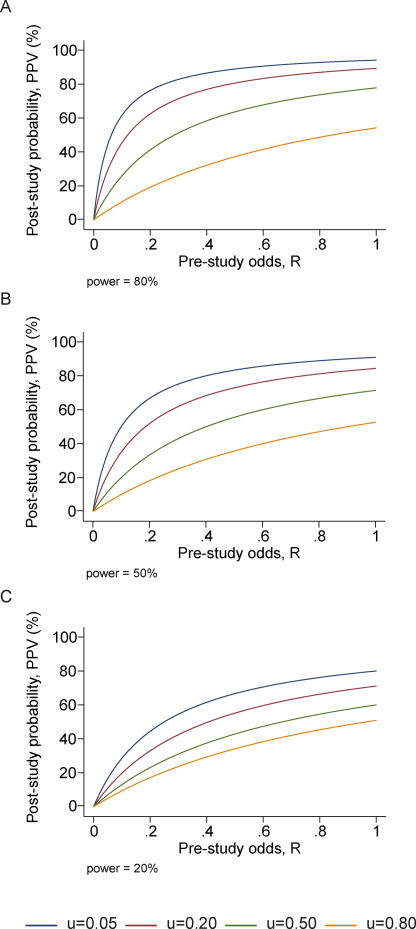
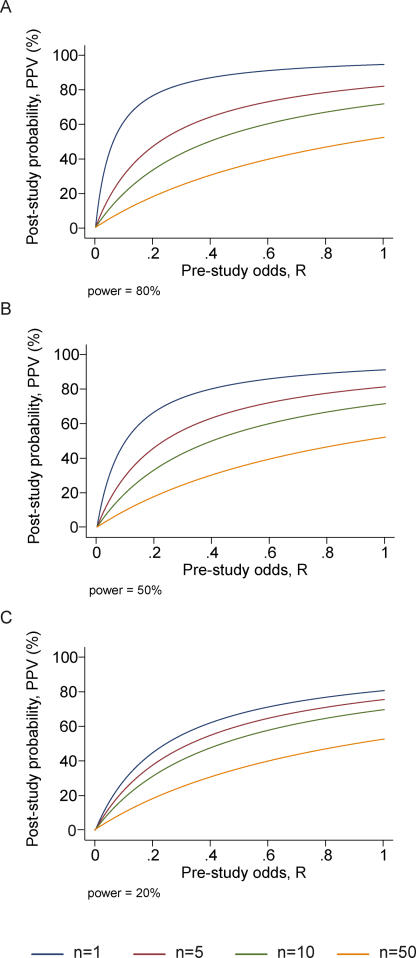
There is increasing concern that most current published research findings are false. The probability that a research claim is true may depend on study power and bias, the number of other studies on the same question, and, importantly, the ratio of true to no relationships among the relationships probed in each scientific field. In this framework, a research finding is less likely to be true when the studies conducted in a field are smaller; when effect sizes are smaller; when there is a greater number and lesser preselection of tested relationships; where there is greater flexibility in designs, definitions, outcomes, and analytical modes; when there is greater financial and other interest and prejudice; and when more teams are involved in a scientific field in chase of statistical significance. Simulations show that for most study designs and settings, it is more likely for a research claim to be false than true. Moreover, for many current scientific fields, claimed research findings may often be simply accurate measures of the prevailing bias. In this essay, I discuss the implications of these problems for the conduct and interpretation of research.
Overview
The claims and statistics of this paper haven’t been checked yet.
Free: it reads the open-access text and checks the first 5 claims that cite a source we can check. Create a free account to check every claim.
Integrity signals
Registry
Cites
Statistics
Figures
Verification
Claims the paper makes
The claims and statistics of this paper haven’t been checked yet.
Free: it reads the open-access text and checks the first 5 claims that cite a source we can check. Create a free account to check every claim.
Claims other papers make about this one
Each is checked against this paper’s own text: does it say what the citing paper says it does?
The source backs part of the claim, not all of it — or backs it for a different population, condition or comparison.
In the citing paper
“As noted, the pooled effect of risks and interventions trends towards the null result over time;189,190 the implication being that risks for which only a few studies have been done might have their effect overestimated compared with risks for which a large body of evidence exists.”
From A comparative risk assessment of burden of disease and injury attributable to 67 risk factors and risk factor clusters in 21 regions, 1990–2010: a systematic analysis for the Global Burden of Disease Study 2010 (2012) · cites this paper as [189]
Experimental — accuracy not yet measuredThe source backs part of the claim, not all of it — or backs it for a different population, condition or comparison.
In the citing paper
“Less clear, perhaps, is that low power can also increase the false discovery rate and the likelihood that reported effect sizes are inflated, due to their reduced ability to mute stochastic noise [13,63,64].”
From The natural selection of bad science (2016) · cites this paper as [13]
Experimental — accuracy not yet measuredThe source backs part of the claim, not all of it — or backs it for a different population, condition or comparison.
In the citing paper
“scholars have demonstrated that a large proportion of published articles contains flaws (Ioannidis 2005)”
From The ability of different peer review procedures to flag problematic publications (2019) · cites this paper as Ioannidis 2005
Experimental — accuracy not yet measuredThe source backs part of the claim, not all of it — or backs it for a different population, condition or comparison.
In the citing paper
“Furthermore, the publishing landscape in contemporary science rewards novel, positive findings over replications or negative results (Ioannidis 2005; Romero 2017).”
From The myth of the Bayesian brain (2025) · cites this paper as Ioannidis 2005
Experimental — accuracy not yet measuredThe source backs part of the claim, not all of it — or backs it for a different population, condition or comparison.
In the citing paper
“given the demonstrated association between small numbers and bias (Ioannidis 2005; Moore 2010; Nuesch 2009).”
From Psychological therapies for the management of chronic pain (excluding headache) in adults (2012) · cites this paper as Ioannidis 2005
Experimental — accuracy not yet measured
42 more claims about this paper
Create a free account to see every claim other papers make about this one.
Self-check
Percentages, sums and reported differences re-computed from the paper’s own numbers.
The self-check needs the paper’s full text.
Citations
Cites
Dermyshi, E., Wang, Y., Yan, C., Hong, W., Qiu, G., Gong, X., & Zhang, T. (2017) · Neonatology · doi:10.1159/000454668 · Cited by 24,451
Meta-analysis of Observational Studies in Epidemiology<SUBTITLE>A Proposal for Reporting</SUBTITLE>
Stroup, D. F. (2000) · JAMA · doi:10.1001/jama.283.15.2008 · Cited by 20,623
Golub, T. R., Slonim, D. K., Tamayo, P., Huard, C., Gaasenbeek, M., Mesirov, J. P., Coller, H., Loh, M. L., Downing, J. R., Caligiuri, M. A., et al. (1999) · Science · doi:10.1126/science.286.5439.531 · Cited by 11,516
Moher, D., Schulz, K. F., & Altman, D. G. (2001) · The Lancet · doi:10.1016/s0140-6736(00)04337-3 · Cited by 5,373
Moher, D., Cook, D. J., Eastwood, S., Olkin, I., Rennie, D., & Stroup, D. F. (1999) · The Lancet · doi:10.1016/s0140-6736(99)04149-5 · Cited by 4,826
Moher, D., Schulz, K. F., & Altman, D. G. (2001) · BMC Medical Research Methodology · doi:10.1186/1471-2288-1-2 · Cited by 2,755
Chan, A.-W., Hróbjartsson, A., Haahr, M. T., Gøtzsche, P. C., & Altman, D. G. (2004) · JAMA · doi:10.1001/jama.291.20.2457 · Cited by 1,845
Searching for genetic determinants in the new millennium
Risch, N. J. (2000) · Nature · doi:10.1038/35015718 · Cited by 1,839
Replication validity of genetic association studies
Ioannidis, J. P. A., Ntzani, E. E., Trikalinos, T. A., & Contopoulos-Ioannidis, D. G. (2001) · Nature Genetics · doi:10.1038/ng749 · Cited by 1,832
Self-citationWacholder, S., Chanock, S., Garcia-Closas, M., El ghormli, L., & Rothman, N. (2004) · JNCI: Journal of the National Cancer Institute · doi:10.1093/jnci/djh075 · Cited by 1,754
Cited by
Items 1,001–1,100 of 1,227
Modelling the effects of subjective and objective decision making in scientific peer review
Park, I.-U., Peacey, M. W., & Munafò, M. R. (2014) · Nature · doi:10.1038/nature12786 · Cited by 103
Holmes, M. V., Shah, T., Vickery, C., Smeeth, L. L., Hingorani, A. D., & Casas, J. P. (2009) · PLoS ONE · doi:10.1371/journal.pone.0007960 · Cited by 111
Peer review for biomedical publications: we can improve the system
Stahel, P. F., & Moore, E. E. (2014) · BMC Medicine · doi:10.1186/s12916-014-0179-1 · Cited by 103
Weighted false discovery rate controlling procedures for clinical trials
Benjamini, Y., & Cohen, R. (2016) · Biostatistics · doi:10.1093/biostatistics/kxw030 · Cited by 119
Han, H., & Park, J. (2018) · Frontiers in Neuroinformatics · doi:10.3389/fninf.2018.00001 · Cited by 103
Pinto, J. V., Moulin, T. C., & Amaral, O. B. (2017) · Neuroscience & Biobehavioral Reviews · doi:10.1016/j.neubiorev.2017.10.001 · Cited by 103
Pascucci, D., Sassano, M., Nurchis, M. C., Cicconi, M., Acampora, A., Park, D., Morano, C., & Damiani, G. (2021) · Health Policy · doi:10.1016/j.healthpol.2020.12.006 · Cited by 102
Cost-effectiveness of early intervention in psychosis: systematic review
Aceituno, D., Vera, N., Prina, A. M., & McCrone, P. (2019) · The British Journal of Psychiatry · doi:10.1192/bjp.2018.298 · Cited by 101
Gundersen, O. E., Gil, Y., & Aha, D. W. (2018) · AI Magazine · doi:10.1609/aimag.v39i3.2816 · Cited by 99
Mindfulness induction and cognition: A systematic review and meta-analysis
Gill, L.-N., Renault, R., Campbell, E., Rainville, P., & Khoury, B. (2020) · Consciousness and Cognition · doi:10.1016/j.concog.2020.102991 · Cited by 98
Giofrè, D., Cumming, G., Fresc, L., Boedker, I., & Tressoldi, P. (2017) · PLOS ONE · doi:10.1371/journal.pone.0175583 · Cited by 98
Calibrating the Scientific Ecosystem Through Meta-Research
Hardwicke, T. E., Serghiou, S., Janiaud, P., Danchev, V., Crüwell, S., Goodman, S. N., & Ioannidis, J. P. A. (2020) · Annual Review of Statistics and Its Application · doi:10.1146/annurev-statistics-031219-041104 · Cited by 98
Self-citationTo adjust, or not to adjust, for multiple comparisons
Hooper, R. (2025) · Journal of Clinical Epidemiology · doi:10.1016/j.jclinepi.2025.111688 · Cited by 97
Foundational Considerations for Artificial Intelligence Using Ophthalmic Images
Abràmoff, M. D., Cunningham, B., Patel, B., Eydelman, M. B., Leng, T., Sakamoto, T., Blodi, B., Grenon, S. M., Wolf, R. M., Manrai, A. K., et al. (2022) · Ophthalmology · doi:10.1016/j.ophtha.2021.08.023 · Cited by 96
Burke, L. M., Sharma, A. P., Heikura, I. A., Forbes, S. F., Holloway, M., McKay, A. K. A., Bone, J. L., Leckey, J. J., Welvaert, M., & Ross, M. L. (2020) · PLOS ONE · doi:10.1371/journal.pone.0234027 · Cited by 96
Horstmann, K. T., Rauthmann, J. F., Sherman, R. A., & Ziegler, M. (2021) · Journal of Personality and Social Psychology · doi:10.1037/pspp0000357 · Cited by 89
Biological embedding of early‐life exposures and disease risk in humans: a role for DNA methylation
Demetriou, C. A., van Veldhoven, K., Relton, C., Stringhini, S., Kyriacou, K., & Vineis, P. (2015) · European Journal of Clinical Investigation · doi:10.1111/eci.12406 · Cited by 95
Progress toward openness, transparency, and reproducibility in cognitive neuroscience
Gilmore, R. O., Diaz, M. T., Wyble, B. A., & Yarkoni, T. (2017) · Annals of the New York Academy of Sciences · doi:10.1111/nyas.13325 · Cited by 95
A Guide for Calculating Study-Level Statistical Power for Meta-Analyses
Quintana, D. S. (2023) · Advances in Methods and Practices in Psychological Science · doi:10.1177/25152459221147260 · Cited by 95
Understanding the roles of mutations in the amyloid precursor protein in Alzheimer disease
Hunter, S., & Brayne, C. (2018) · Molecular Psychiatry · doi:10.1038/mp.2017.218 · Cited by 94
Iacono, W. G., Heath, A. C., Hewitt, J. K., Neale, M. C., Banich, M. T., Luciana, M. M., Madden, P. A., Barch, D. M., & Bjork, J. M. (2018) · Developmental Cognitive Neuroscience · doi:10.1016/j.dcn.2017.09.001 · Cited by 94
10 years of Bayesian theories of autism: A comprehensive review
Angeletos Chrysaitis, N., & Seriès, P. (2023) · Neuroscience & Biobehavioral Reviews · doi:10.1016/j.neubiorev.2022.105022 · Cited by 92
Bishop, D. V. M., & Thompson, P. A. (2016) · PeerJ · doi:10.7717/peerj.1715 · Cited by 90
Interventions in Foster Family Care: A Systematic Review
Bergström, M., Cederblad, M., Håkansson, K., Jonsson, A. K., Munthe, C., Vinnerljung, B., Wirtberg, I., Östlund, P., & Sundell, K. (2020) · Research on Social Work Practice · doi:10.1177/1049731519832101 · Cited by 90
Prasad, V., Jorgenson, J., Ioannidis, J. P. A., & Cifu, A. (2013) · Journal of Clinical Epidemiology · doi:10.1016/j.jclinepi.2012.11.005 · Cited by 90
Self-citationHargis, K. E., & Blalock, E. M. (2017) · Behavioural Brain Research · doi:10.1016/j.bbr.2016.05.007 · Cited by 90
The Rigor and Transparency Index Quality Metric for Assessing Biological and Medical Science Methods
Menke, J., Roelandse, M., Ozyurt, B., Martone, M., & Bandrowski, A. (2020) · iScience · doi:10.1016/j.isci.2020.101698 · Cited by 90
Failure to Demonstrate That Playing Violent Video Games Diminishes Prosocial Behavior
Tear, M. J., & Nielsen, M. (2013) · PLoS ONE · doi:10.1371/journal.pone.0068382 · Cited by 90
Estimating the Reproducibility of Psychological Science
Nosek, B. A., Cohoon, J., Kidwell, M., & Spies, J. R. (2016) · doi:10.31219/osf.io/447b3 · Cited by 88
Reproducibility in Machine Learning-based Research: Overview, Barriers and Drivers
Semmelrock, H., Ross-Hellauer, T., Kopeinik, S., Theiler, D., Haberl, A., Thalmann, S., & Kowald, D. (2024) · arXiv · doi:10.48550/arxiv.2406.14325 · Cited by 88
Conceptual challenges for interpretable machine learning
Watson, D. S. (2022) · Synthese · doi:10.1007/s11229-022-03485-5 · Cited by 87
Cochrane Review: Universal school‐based prevention programs for alcohol misuse in young people
Foxcroft, D. R., & Tsertsvadze, A. (2012) · Evidence-Based Child Health: A Cochrane Review Journal · doi:10.1002/ebch.1829 · Cited by 87
Significance testing in empirical finance: a critical review and assessment
Kim, J. H., & Ji, P. I. (2015) · Journal of Empirical Finance · doi:10.1016/j.jempfin.2015.08.006 · Cited by 86
Data from Investigating Variation in Replicability: A “Many Labs” Replication Project
(2014) · Journal of Open Psychology Data · doi:10.5334/jopd.ad · Cited by 86
Ellis, R. J., Zhu, B., Koenig, J., Thayer, J. F., & Wang, Y. (2015) · Physiological Measurement · doi:10.1088/0967-3334/36/9/1827 · Cited by 85
Millar, N., Salager-Meyer, F., & Budgell, B. (2019) · English for Specific Purposes · doi:10.1016/j.esp.2019.02.004 · Cited by 85
Bespalov, A., Steckler, T., Altevogt, B., Koustova, E., Skolnick, P., Deaver, D., Millan, M. J., Bastlund, J. F., Doller, D., Witkin, J., et al. (2016) · Nature Reviews Drug Discovery · doi:10.1038/nrd.2016.88 · Cited by 84
Grossman, P. (2019) · Current Opinion in Psychology · doi:10.1016/j.copsyc.2018.11.008 · Cited by 84
Digital images are data: and should be treated as such
Cromey, D. W. (2012) · Methods in Molecular Biology · doi:10.1007/978-1-62703-056-4_1 · Cited by 82
Perception science in the age of deep neural networks.
VanRullen, R. (2017) · Frontiers in Psychology · doi:10.3389/fpsyg.2017.00142 · Cited by 82
Malignant side effects of null-hypothesis significance testing
Branch, M. (2014) · Theory & Psychology · doi:10.1177/0959354314525282 · Cited by 81
Gilpin, H. R., Keyes, A., Stahl, D. R., Greig, R., & McCracken, L. M. (2017) · The Journal of Pain · doi:10.1016/j.jpain.2017.04.003 · Cited by 81
Chow, J. C., & Ekholm, E. (2018) · Educational Psychology Review · doi:10.1007/s10648-018-9437-7 · Cited by 80
Risk factors and interventions with statistically significant tiny effects
Siontis, G. C., & Ioannidis, J. P. (2011) · International Journal of Epidemiology · doi:10.1093/ije/dyr099 · Cited by 80
Self-citationde Winter, J. C., & Dodou, D. (2015) · PeerJ · doi:10.7717/peerj.733 · Cited by 78
Reproducing Statistical Results
Stodden, V. (2015) · Annual Review of Statistics and Its Application · doi:10.1146/annurev-statistics-010814-020127 · Cited by 77
Poor replication validity of biomedical association studies reported by newspapers
Dumas-Mallet, E., Smith, A., Boraud, T., & Gonon, F. (2017) · PLOS ONE · doi:10.1371/journal.pone.0172650 · Cited by 76
Meta-analysis of virtual reality exposure therapy for social anxiety disorder
Morina, N., Kampmann, I., Emmelkamp, P., Barbui, C., & Hoppen, T. H. (2023) · Psychological Medicine · doi:10.1017/s0033291721001690 · Cited by 75
Improving reproducibility by using high-throughput observational studies with empirical calibration
Schuemie, M. J., Ryan, P. B., Hripcsak, G., Madigan, D., & Suchard, M. A. (2018) · Philosophical Transactions of the Royal Society A: Mathematical, Physical and Engineering Sciences · doi:10.1098/rsta.2017.0356 · Cited by 74
The ability of different peer review procedures to flag problematic publications
Horbach, S. P. J. M., & Halffman, W. (2019) · Scientometrics · doi:10.1007/s11192-018-2969-2 · Cited by 73
Illusions in Regression Analysis
Armstrong, J. S. (2011) · doi:10.2139/ssrn.1969740 · Cited by 73
The Stroke Preclinical Assessment Network: Rationale, Design, Feasibility, and Stage 1 Results
Lyden, P. D., Bosetti, F., Diniz, M. A., Rogatko, A., Koenig, J. I., Lamb, J., Nagarkatti, K. A., Cabeen, R. P., Hess, D. C., Kamat, P. K., et al. (2022) · Stroke · doi:10.1161/strokeaha.121.038047 · Cited by 73
A meta-analysis of cue reactivity in tobacco cigarette smokers
Betts, J. M., Dowd, A. N., Forney, M., Hetelekides, E., & Tiffany, S. T. (2021) · Nicotine & Tobacco Research · doi:10.1093/ntr/ntaa147 · Cited by 72
Caviola, S., Colling, L. J., Mammarella, I. C., & Szűcs, D. (2020) · Developmental Science · doi:10.1111/desc.12957 · Cited by 72
Valid Post-clustering Differential Analysis for Single-Cell RNA-Seq
Zhang, J. M., Kamath, G. M., & Tse, D. N. (2019) · Cell Systems · doi:10.1016/j.cels.2019.07.012 · Cited by 72
The researchers’ view of scientific rigor—survey on the conduct and reporting of in vivo research
Reichlin, T. S., Vogt, L., & Würbel, H. (2016) · PLOS ONE · doi:10.1371/journal.pone.0165999 · Cited by 72
Spoken Discourse Assessment and Analysis in Aphasia: An International Survey of Current Practices
Stark, B. C., Dutta, M., Murray, L. L., Fromm, D., Bryant, L., Harmon, T. G., Ramage, A. E., & Roberts, A. C. (2021) · Journal of Speech, Language, and Hearing Research · doi:10.1044/2021_jslhr-20-00708 · Cited by 72
Open Science 2.0: Towards a truly collaborative research ecosystem
Thibault, R. T., Amaral, O. B., Argolo, F., Bandrowski, A. E., Davidson, A. R., & Drude, N. I. (2023) · PLOS Biology · doi:10.1371/journal.pbio.3002362 · Cited by 72
Psychedelic Research and the Need for Transparency: Polishing Alice’s Looking Glass
Petranker, R., Anderson, T., & Farb, N. (2020) · Frontiers in Psychology · doi:10.3389/fpsyg.2020.01681 · Cited by 69
Barch, D. M., & Yarkoni, T. (2013) · Cognitive, Affective, & Behavioral Neuroscience · doi:10.3758/s13415-013-0201-7 · Cited by 67
Refining animal research: The Animal Study Registry
Bert, B., Heinl, C., Chmielewska, J., Schwarz, F., Grune, B., Hensel, A., Greiner, M., & Schönfelder, G. (2019) · PLOS Biology · doi:10.1371/journal.pbio.3000463 · Cited by 67
Leichtmann, B., Nitsch, V., & Mara, M. (2022) · Frontiers in Robotics and AI · doi:10.3389/frobt.2022.838116 · Cited by 66
Temporal patterns of genes in scientific publications
Pfeiffer, T., & Hoffmann, R. (2007) · Proceedings of the National Academy of Sciences · doi:10.1073/pnas.0701315104 · Cited by 64
Arginine vasopressin in cerebrospinal fluid is a marker of sociality in nonhuman primates
Parker, K. J., Garner, J. P., Oztan, O., Tarara, E. R., Li, J., Sclafani, V., Del Rosso, L. A., Chun, K., Berquist, S. W., Chez, M. G., et al. (2018) · Science Translational Medicine · doi:10.1126/scitranslmed.aam9100 · Cited by 64
Bias in emerging biomarkers for bipolar disorder
Carvalho, A. F., Köhler, C. A., Fernandes, B. S., Quevedo, J., Miskowiak, K. W., Brunoni, A. R., Machado-Vieira, R., Maes, M., Vieta, E., & Berk, M. (2016) · Psychological Medicine · doi:10.1017/s0033291716000957 · Cited by 63
Fraud or flawed: adverse impact of fabricated or poor quality research
Moore, R. A., Derry, S., & McQuay, H. J. (2010) · Anaesthesia · doi:10.1111/j.1365-2044.2010.06295.x · Cited by 62
Bite-size science and its undesired side effects
Bertamini, M., & Munafò, M. R. (2012) · Perspectives on Psychological Science · doi:10.1177/1745691611429353 · Cited by 62
Naci, H., Dias, S., & Ades, A. E. (2014) · BMJ · doi:10.1136/bmj.g5741 · Cited by 61
Necpálová, M., Anex, R. P., Kravchenko, A. N., Abendroth, L. J., Del Grosso, S. J., Dick, W. A., Helmers, M. J., Herzmann, D., Lauer, J. G., Nafziger, E. D., et al. (2014) · Journal of Soil and Water Conservation · doi:10.2489/jswc.69.6.517 · Cited by 62
Failed Replication of Oxytocin Effects on Trust: The Envelope Task Case
Lane, A., Mikolajczak, M., Treinen, E., Samson, D., Corneille, O., de Timary, P., & Luminet, O. (2015) · PLOS ONE · doi:10.1371/journal.pone.0137000 · Cited by 60
Smith, D. V., Gseir, M., Speer, M. E., & Delgado, M. R. (2016) · Human Brain Mapping · doi:10.1002/hbm.23216 · Cited by 61
Peltonen, K., & Kangaslampi, S. (2019) · European Journal of Psychotraumatology · doi:10.1080/20008198.2018.1558708 · Cited by 61
Biomedical text mining for research rigor and integrity: tasks, challenges, directions
Kilicoglu, H. (2017) · Briefings in Bioinformatics · doi:10.1093/bib/bbx057 · Cited by 61
Thomas Willis Lecture: Is Translational Stroke Research Broken, and if So, How Can We Fix It?
Dirnagl, U. (2016) · Stroke · doi:10.1161/strokeaha.116.013244 · Cited by 61
Marshall University, Gress, T. W., Denvir, J., Marshall University, Shapiro, J. I., & Marshall University (2018) · Marshall Journal of Medicine · doi:10.18590/mjm.2018.vol4.iss2.9 · Cited by 60
Gene-environment interaction of ApoE genotype and combat exposure on PTSD
Lyons, M. J., Genderson, M., Grant, M. D., Logue, M., Zink, T., McKenzie, R., Franz, C. E., Panizzon, M., Lohr, J. B., Jerskey, B., et al. (2013) · American Journal of Medical Genetics Part B: Neuropsychiatric Genetics · doi:10.1002/ajmg.b.32154 · Cited by 60
The role and value of replication in empirical software engineering results
Shepperd, M., Ajienka, N., & Counsell, S. (2018) · Information and Software Technology · doi:10.1016/j.infsof.2018.01.006 · Cited by 60
Autonomic nervous system activity during positive emotions: a meta-analytic review
Behnke, M., Kreibig, S. D., Kaczmarek, L. D., Assink, M., & Gross, J. J. (2022) · Emotion Review · doi:10.1177/17540739211073084 · Cited by 60
Clinical judgement in the era of big data and predictive analytics
Chin‐Yee, B., & Upshur, R. (2018) · Journal of Evaluation in Clinical Practice · doi:10.1111/jep.12852 · Cited by 59
Bartholomaeus, A., Parrott, W., Bondy, G., Walker, K., & on behalf of the ILSI International Food Biotechnology Committee Task Force on the Use of Mammalian Toxicology Studies in the Safety Assessment of GM Foods (2013) · Critical Reviews in Toxicology · doi:10.3109/10408444.2013.842955 · Cited by 59
Dynamics of cross-platform attention to retracted papers
Peng, H., Romero, D. M., & Horvát, E.-Á. (2022) · Proceedings of the National Academy of Sciences · doi:10.1073/pnas.2119086119 · Cited by 57
Introduction to the Special Section: Data, Data, Everywhere . . . Especially in My File Drawer
Spellman, B. A. (2012) · Perspectives on Psychological Science · doi:10.1177/1745691611432124 · Cited by 58
Vandenbroucke, J. P. (2007) · Epidemiology · doi:10.1097/ede.0b013e318157725d · Cited by 57
Glycomics meets genomics, epigenomics and other high throughput omics for system biology studies
Zoldoš, V., Horvat, T., & Lauc, G. (2013) · Current Opinion in Chemical Biology · doi:10.1016/j.cbpa.2012.12.007 · Cited by 56
Hullman, J., Kay, M., Kim, Y.-S., & Shrestha, S. (2018) · IEEE Transactions on Visualization and Computer Graphics · doi:10.1109/tvcg.2017.2743898 · Cited by 55
Tello, N., Harika-Germaneau, G., Serra, W., Jaafari, N., & Chatard, A. (2020) · Psychological Science · doi:10.1177/0956797619893062 · Cited by 54
The influence of the team in conducting a systematic review
Uttley, L., & Montgomery, P. (2017) · Systematic Reviews · doi:10.1186/s13643-017-0548-x · Cited by 54
(Escaping) the paradox of scientific storytelling
Dahlstrom, M. F., & Scheufele, D. A. (2018) · PLOS Biology · doi:10.1371/journal.pbio.2006720 · Cited by 54
Harrison, T. M. (2020) · doi:10.1007/978-3-030-46687-9 · Cited by 53
Mierop, A., Mikolajczak, M., Stahl, C., Béna, J., Luminet, O., Lane, A., & Corneille, O. (2020) · Perspectives on Psychological Science · doi:10.1177/1745691620921525 · Cited by 53
Duration of psychological therapy: Relation to recovery and improvement rates in UK routine practice
Stiles, W. B., Barkham, M., & Wheeler, S. (2015) · British Journal of Psychiatry · doi:10.1192/bjp.bp.114.145565 · Cited by 53
Bias in Peripheral Depression Biomarkers
Carvalho, A. F., Köhler, C. A., Brunoni, A. R., Miskowiak, K. W., Herrmann, N., Lanctôt, K. L., Hyphantis, T. N., Quevedo, J., Fernandes, B. S., & Berk, M. (2016) · Psychotherapy and Psychosomatics · doi:10.1159/000441457 · Cited by 52
A Systems-Based Approach to Fostering Robust Science in Industrial-Organizational Psychology
Grand, J. A., Rogelberg, S. G., Allen, T. D., Landis, R. S., Reynolds, D. H., Scott, J. C., Tonidandel, S., & Truxillo, D. M. (2018) · Industrial and Organizational Psychology · doi:10.1017/iop.2017.55 · Cited by 52
Bordignon, F. (2020) · Scientometrics · doi:10.1007/s11192-020-03536-z · Cited by 51
A Systematic Investigation of Replications in Computing Education Research
Hao, Q., Smith IV, D. H., Iriumi, N., Tsikerdekis, M., & Ko, A. J. (2019) · ACM Transactions on Computing Education · doi:10.1145/3345328 · Cited by 51
Smeets, F., Lataster, T., van Winkel, R., de Graaf, R., ten Have, M., & van Os, J. (2013) · Acta Psychiatrica Scandinavica · doi:10.1111/j.1600-0447.2012.01888.x · Cited by 50
ASTM international workshop on standards and measurements for tissue engineering scaffolds
Simon, C. G., Yaszemski, M. J., Ratcliffe, A., Tomlins, P., Luginbuehl, R., & Tesk, J. A. (2015) · Journal of Biomedical Materials Research Part B: Applied Biomaterials · doi:10.1002/jbm.b.33286 · Cited by 50
Workgroup, V. M.-A. M., Clausen, A. N., Clarke, E., Phillips, R. D., Haswell, C., & Morey, R. A. (2020) · Neuropsychopharmacology · doi:10.1038/s41386-019-0539-9 · Cited by 49
Replication in computing education research: researcher attitudes and experiences
Ahadi, A., Hellas, A., Ihantola, P., Korhonen, A., & Petersen, A. (2016) · Proceedings of the 16th Koli Calling International Conference on Computing Education Research · doi:10.1145/2999541.2999554 · Cited by 48
Gewandter, J. S., McKeown, A., McDermott, M. P., Dworkin, J. D., Smith, S. M., Gross, R. A., Hunsinger, M., Lin, A. H., Rappaport, B. A., Rice, A. S. C., et al. (2015) · The Journal of Pain · doi:10.1016/j.jpain.2014.10.003 · Cited by 47
Metadata
- Authors
- Ioannidis, J. P. A.
- Affiliations
- University of Ioannina (GR)
- Corresponding author
- Ioannidis, John P. A.
- Venue
- PLoS Medicine
- Publisher
- Public Library of Science (PLoS)
- Published
- 2005-08-30
- Volume
- 2
- Issue
- 8
- Pages
- e124
- ISSN
- 1549-1277 (ISSN-L)
- 1549-1676
- PMC
- PMC1182327
- OpenAlex
- W2144981148
- Cited by
- 10,505
- References
- 40
- Citations by year
- 2026: 628 · 2025: 666 · 2024: 649 · 2023: 706 · 2022: 783 · 2021: 834 · 2020: 836 · 2019: 897 · 2018: 778 · 2017: 759 · 2016: 716 · 2015: 542 · 2014: 427 · 2013: 344 · 2012: 227
- FWCI
- 97.37
- Type
- journal article
- Language
- en
- Update notices
- correction (2022-08-25)
- Open access
- gold
- doi.org
- Locations
- PLoS Medicine (publishedVersion, cc-by)
- Europe PMC (PubMed Central) (publishedVersion, cc-by)
- PubMed Central (publishedVersion, cc-by)
- PubMed (publishedVersion)
- RePEc: Research Papers in Economics (submittedVersion, cc-by)
- DOAJ (DOAJ: Directory of Open Access Journals) (submittedVersion, cc-by-sa)
- Topics
- Social Sciences › Decision Sciences › Statistics, Probability and Uncertainty › Meta-analysis and systematic reviews
- Social Sciences › Library and Information Sciences › Academic Publishing and Open Access
- Social Sciences › Education › Academic integrity and plagiarism
- Keywords
- replication crisis, false positives, research credibility, statistical power, research bias, p-hacking, effect size, multiple comparisons, financial conflicts of interest, research misconduct, significance testing
- MeSH terms
- Data Interpretation, Statistical, Publishing, Research Design, Meta-Analysis as Topic, Reproducibility of Results, Bias, Likelihood Functions, Odds Ratio, Sample Size
About these checks
Registry, retraction, Cites and statistics results are computed, not judged, with one exception: a printed reference that no index lists is read once by a model before it counts as a citation error. Claims are extracted by a model and kept only when their quote appears verbatim in the text; each cited source is then checked, with a model’s help, for whether it says what the claim relies on. Those verdicts can be wrong — read the claim’s quote and the cited source before relying on one.
Statistics and arithmetic are recomputed, not judged.
Confidence bands are shown only for fields calibrated on our annotated test set. None is calibrated yet, so no band is shown.
What counts as a claim ›How we measure confidence ›How we check this ›
Are you an author, or do you see a problem with this page? Request a review
Data sources
Bibliographic data: Semantic Scholar, OpenAlex, Crossref.
Contains information from the Semantic Scholar Academic Graph Datasets, made available under the ODC Attribution License (ODC-BY 1.0).
Semantic Scholar’s data is described in: Kinney, R., et al. (2023). The Semantic Scholar Open Data Platform. arXiv:2301.10140.
