

The DOI matches its Crossref record; 33 of the 33 references it cites were found in a registry or an index.
Projections of Global Mortality and Burden of Disease from 2002 to 2030
Open accessAbstract
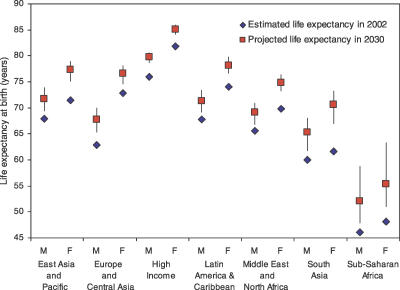
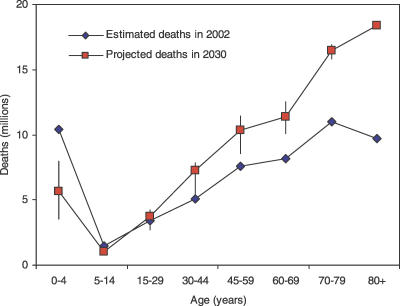
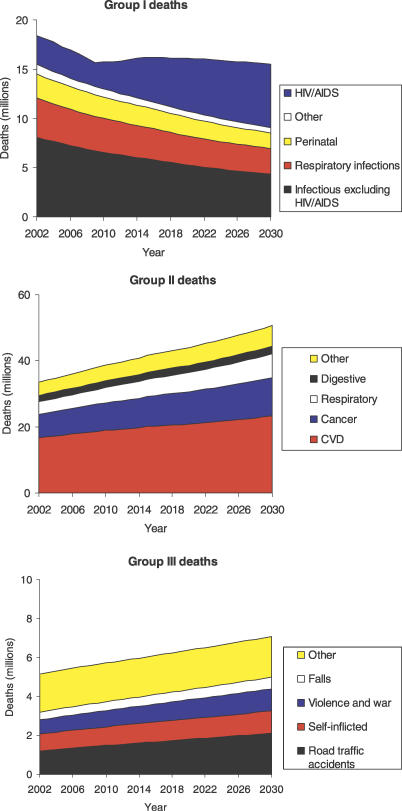
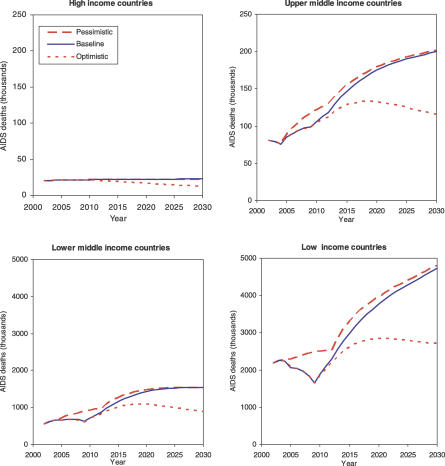
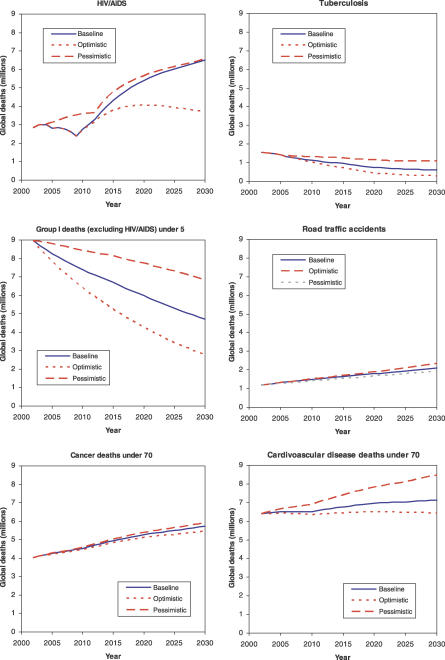
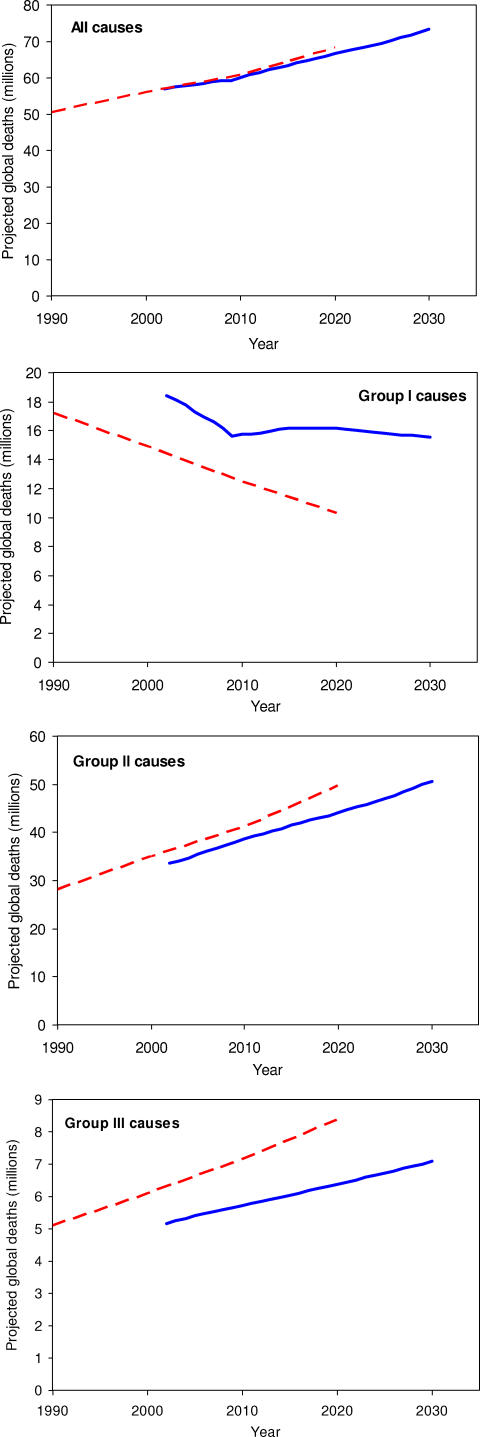
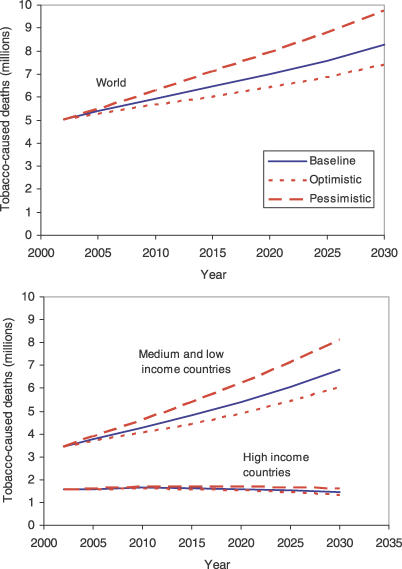
BACKGROUND: Global and regional projections of mortality and burden of disease by cause for the years 2000, 2010, and 2030 were published by Murray and Lopez in 1996 as part of the Global Burden of Disease project. These projections, which are based on 1990 data, continue to be widely quoted, although they are substantially outdated; in particular, they substantially underestimated the spread of HIV/AIDS. To address the widespread demand for information on likely future trends in global health, and thereby to support international health policy and priority setting, we have prepared new projections of mortality and burden of disease to 2030 starting from World Health Organization estimates of mortality and burden of disease for 2002. This paper describes the methods, assumptions, input data, and results. METHODS AND FINDINGS: Relatively simple models were used to project future health trends under three scenarios-baseline, optimistic, and pessimistic-based largely on projections of economic and social development, and using the historically observed relationships of these with cause-specific mortality rates. Data inputs have been updated to take account of the greater availability of death registration data and the latest available projections for HIV/AIDS, income, human capital, tobacco smoking, body mass index, and other inputs. In all three scenarios there is a dramatic shift in the distribution of deaths from younger to older ages and from communicable, maternal, perinatal, and nutritional causes to noncommunicable disease causes. The risk of death for children younger than 5 y is projected to fall by nearly 50% in the baseline scenario between 2002 and 2030. The proportion of deaths due to noncommunicable disease is projected to rise from 59% in 2002 to 69% in 2030. Global HIV/AIDS deaths are projected to rise from 2.8 million in 2002 to 6.5 million in 2030 under the baseline scenario, which assumes coverage with antiretroviral drugs reaches 80% by 2012. Under the optimistic scenario, which also assumes increased prevention activity, HIV/AIDS deaths are projected to drop to 3.7 million in 2030. Total tobacco-attributable deaths are projected to rise from 5.4 million in 2005 to 6.4 million in 2015 and 8.3 million in 2030 under our baseline scenario. Tobacco is projected to kill 50% more people in 2015 than HIV/AIDS, and to be responsible for 10% of all deaths globally. The three leading causes of burden of disease in 2030 are projected to include HIV/AIDS, unipolar depressive disorders, and ischaemic heart disease in the baseline and pessimistic scenarios. Road traffic accidents are the fourth leading cause in the baseline scenario, and the third leading cause ahead of ischaemic heart disease in the optimistic scenario. Under the baseline scenario, HIV/AIDS becomes the leading cause of burden of disease in middle- and low-income countries by 2015. CONCLUSIONS: These projections represent a set of three visions of the future for population health, based on certain explicit assumptions. Despite the wide uncertainty ranges around future projections, they enable us to appreciate better the implications for health and health policy of currently observed trends, and the likely impact of fairly certain future trends, such as the ageing of the population, the continued spread of HIV/AIDS in many regions, and the continuation of the epidemiological transition in developing countries. The results depend strongly on the assumption that future mortality trends in poor countries will have a relationship to economic and social development similar to those that have occurred in the higher-income countries.
Overview
The claims and statistics of this paper haven’t been checked yet.
Run the check — free, no account needed. It reads the open-access text and checks the sources it cites.
Integrity signals
Registry
Cites
Statistics
Figures
Verification
Claims the paper makes
The claims and statistics of this paper haven’t been checked yet.
Run the check — free, no account needed. It reads the open-access text and checks the sources it cites.
Claims other papers make about this one
Each is checked against this paper’s own text: does it say what the citing paper says it does?
In the citing paper
“The global burdens of cardiovascular diseases (CVD), type 2 diabetes mellitus (DM), and obesity are rising, producing enormous losses of life and disability-adjusted life-years in both developed and developing nations.1”
From Components of a Cardioprotective Diet: New Insights (2011) · cites this paper as [1]
In the citing paper
“Cardiovascular diseases (CVD), type 2 diabetes mellitus, and adiposity produce tremendous burdens of deaths, lost quality of life, and economic disruption globally.1,2”
From Population Approaches to Improve Diet, Physical Activity, and Smoking Habits: A Scientific Statement From the American Heart Association (2012) · cites this paper as [1]
Self-check
Percentages, sums and reported differences re-computed from the paper’s own numbers.
The self-check needs the paper’s full text.
Citations
Cites
Wild, S., Roglic, G., Green, A., Sicree, R., & King, H. (2004) · Diabetes Care · doi:10.2337/diacare.27.5.1047 · Cited by 15,297
Murray, C. J. L., & López, A. D. (1997) · The Lancet · doi:10.1016/s0140-6736(96)07492-2 · Cited by 7,007
(1996) · Cited by 6,884
Lopez, A. D., Mathers, C. D., Ezzati, M., Jamison, D. T., & Murray, C. J. (2006) · The Lancet · doi:10.1016/s0140-6736(06)68770-9 · Cited by 5,630
Self-citationEzzati, M., López, A. D., Rodgers, A., & Murray, C. J. L. (2004) · Cited by 3,319
Global Burden of Disease and Risk Factors
López, A. D., Mathers, C. D., Ezzati, M., Jamison, D. T. T., & Murray, C. J. L. (2006) · World Bank, Washington, DC eBooks · doi:10.1596/978-0-8213-6262-4 · Cited by 2,714
Self-citationModeling and Forecasting U. S. Mortality
Lee, R. D., & Carter, L. R. (1992) · Journal of the American Statistical Association · doi:10.1080/01621459.1992.10475265 · Cited by 2,348
(2005) · Europe PMC (PubMed Central) · Cited by 1,975
Self-citationThe Atlas of Heart Disease and Stroke
Mackay, J., Mensah, G. A., & Mendis, S. (2004) · Medical Entomology and Zoology · Cited by 1,550
Mortality from tobacco in developed countries: indirect estimation from national vital statistics.
Peto, R., Boreham, J., Lopez, A. D., Thun, M., & Heath, C. (1992) · The Lancet · doi:10.1016/0140-6736(92)91600-d · Cited by 1,394
Research works printed but not linked: 23
- Murray, 1996, The global burden of disease, 325
- Murray, 1997, Lancet, 349, 1498
- Lee, 1992, J Am Stat Assoc, 87, 659
- Lee, 2000, NAAJ, 4, 80
- Weinstein, 1987, Am J Public Health, 77, 1417
- Wolfson, 1994, World Health Stat Q, 47, 157
- Bronnum-Hansen, 1999, J Epidemiol Community Health, 53, 300
- Stover, 2002, Lancet, 360, 73
- Salomon, 2002, Popul Dev Rev, 28, 205
- Lopez, 2006, Lancet, 367, 1747
- Peto, 1992, Lancet, 339, 1268
- Mathers, 2005, Bull World Health Organ, 83, 171
- Barro, 1996, Am Econ Rev, 86, 218
- Ezzati, 2004, Comparative quantification of health risks: Global and regional burden of disease attributable to selected major risk factors, 959
- Ezzati, 2003, Tob Control, 12, 79
- Shibuya, 2005, Int J Cancer, 117, 476
- Walker, 2003, AIDS, 17, 2215
- Salomon, 2005, PLoS Med, 2, e16
- Bray, 2006, Nat Rev Cancer, 6, 63
- Wild, 2004, Diabetes Care, 27, 1047
- Ohinmaa, 2004, Can J Diabetes, 28, 1
- Boyle, 2001, Diabetes Care, 24, 1936
- Peto, 1996, Br Med Bull, 52, 12
Cited by
Sorted by citations
Items 1,101–1,142 of 1,142
Spindola, L. M., Santoro, M. L., Pan, P. M., Ota, V. K., Xavier, G., Carvalho, C. M., Talarico, F., Sleiman, P., March, M., Pellegrino, R., et al. (2019) · Clinical Epigenetics · doi:10.1186/s13148-019-0740-z · Cited by 25
Amelioration of Endothelial Dysfunction in Diabetes: Role of Takeda G Protein–Coupled Receptor 5
Cai, Z., Yuan, S., Zhong, Y., Deng, L., Li, J., Tan, X., & Feng, J. (2021) · Frontiers in Pharmacology · doi:10.3389/fphar.2021.637051 · Cited by 23
Chen, H., He, Q., Wang, M., Wang, X., Pu, C., Li, S., & Li, M. (2022) · Journal of Affective Disorders · doi:10.1016/j.jad.2022.09.027 · Cited by 27
Davaasambuu, S., Phillip, H., Ravindran, A., & Szatmari, P. (2019) · Community Mental Health Journal · doi:10.1007/s10597-019-00420-w · Cited by 23
Dong, Y., Zhang, T., Li, W., Doyon, W., & Dani, J. A. (2010) · Journal of Molecular Neuroscience · doi:10.1007/s12031-009-9231-6 · Cited by 23
Liu, H., Tian, Y., Liu, Y., Nigatu, Y. T., & Wang, J. (2019) · Journal of Psychosomatic Research · doi:10.1016/j.jpsychores.2019.01.007 · Cited by 23
Réus, G. Z., Stringari, R. B., Rezin, G. T., Fraga, D. B., Daufenbach, J. F., Scaini, G., Benedet, J., Rochi, N., Streck, E. L., & Quevedo, J. (2012) · Journal of Neural Transmission · doi:10.1007/s00702-011-0718-2 · Cited by 23
Radically open dialectical behaviour therapy for refractory depression: the RefraMED RCT
Lynch, T. R., Hempel, R. J., Whalley, B., Byford, S., Chamba, R., Clarke, P., Clarke, S., Kingdon, D., O’Mahen, H., Remington, B., et al. (2018) · Efficacy and Mechanism Evaluation · doi:10.3310/eme05070 · Cited by 22
Roulet, A., Armand, L., Dagouassat, M., Rogerieux, F., Simon-Deckers, A., Belade, E., Van Nhieu, J. T., Lanone, S., Pairon, J.-C., Lacroix, G., et al. (2012) · BMC Pulmonary Medicine · doi:10.1186/1471-2466-12-38 · Cited by 21
Nigatu, Y. T., Liu, Y., & Wang, J. (2016) · BMC Psychiatry · doi:10.1186/s12888-016-0971-x · Cited by 18
Ghabban, S. J., Althobaiti, B., Farouk, I., Al Hablany, M., Ghabban, A., Alghbban, R., Harbi, S., & Albalawi, A. E. (2020) · Cureus · doi:10.7759/cureus.11683 · Cited by 20
Luu, H. N., Qi, M., Wang, R., Adams-Haduch, J., Miljkovic, I., Opresko, P. L., Jin, A., Koh, W.-P., & Yuan, J.-M. (2019) · Clinical and Translational Gastroenterology · doi:10.14309/ctg.0000000000000043 · Cited by 20
Testing the social competition hypothesis of depression using a simple economic game
Kupferberg, A., Hager, O. M., Fischbacher, U., Brändle, L. S., Haynes, M., & Hasler, G. (2016) · BJPsych Open · doi:10.1192/bjpo.bp.115.001362 · Cited by 20
Spagnolo, J., Champagne, F., Leduc, N., Melki, W., Piat, M., Laporta, M., Bram, N., Guesmi, I., & Charfi, F. (2018) · BMC Public Health · doi:10.1186/s12889-018-6261-4 · Cited by 19
Pols, A. D., Adriaanse, M. C., van Tulder, M. W., Heymans, M. W., Bosmans, J. E., van Dijk, S. E., & van Marwijk, H. W. J. (2018) · BMJ Open · doi:10.1136/bmjopen-2017-020412 · Cited by 18
Astroglial Serotonin Receptors as the Central Target of Classic Antidepressants
Verkhratsky, A., Parpura, V., Scuderi, C., & Li, B. (2021) · Advances in Neurobiology · doi:10.1007/978-3-030-77375-5_13 · Cited by 19
Liu, S., Zhou, B., Wang, L., Hu, H., Yao, C., Cai, Z., & Cui, X. (2018) · Medical Science Monitor · doi:10.12659/msm.908543 · Cited by 18
Bardach, A., Cañete, F., Sequera, V. G., Palacios, A., Alcaraz, A., Rodríguez, B., Caporale, J., Augustovski, F., & Pichón-Riviere, A. (2018) · Revista Peruana de Medicina Experimental y Salud Pública · doi:10.17843/rpmesp.2018.354.3708 · Cited by 18
Depression in nonalcoholic fatty liver disease and all-cause/cause-specific mortality
Kim, D., Manikat, R., Shaikh, A., Cholankeril, G., & Ahmed, A. (2024) · European Journal of Clinical Investigation · doi:10.1111/eci.14087 · Cited by 17
Adewuya, A. O., Adewumi, T., Ola, B., Abosede, O., Oyeneyin, A., Fasawe, A., & Idris, O. (2017) · General Hospital Psychiatry · doi:10.1016/j.genhosppsych.2017.04.002 · Cited by 17
Mureşan, V., Montgomery, G. H., & David, D. (2012) · Journal of Technology in Human Services · doi:10.1080/15228835.2011.653290 · Cited by 16
Gill, H., Puramat, P., Patel, P., Gill, B., Marks, C. A., Rodrigues, N. B., Castle, D., Cha, D. S., Mansur, R. B., Rosenblat, J. D., et al. (2022) · Psychiatry Research · doi:10.1016/j.psychres.2022.114577 · Cited by 16
Wang, C., Huang, P., Shen, Z., Qian, W., Li, K., Luo, X., Zeng, Q., Guo, T., Yu, H., Yang, Y., et al. (2019) · Neuroscience Letters · doi:10.1016/j.neulet.2018.12.013 · Cited by 16
Alqarni, A., Badr, O., Aldhahir, A., Alqahtani, J., Siraj, R., Naser, A., Alghamdi, A., Majrshi, M., Alghamdi, S., Alyami, M., et al. (2024) · International Journal of Chronic Obstructive Pulmonary Disease · doi:10.2147/copd.s442851 · Cited by 15
Kenter, R. M., van Straten, A., Hobbel, S., Smit, F., Bosmans, J., Beekman, A., & Cuijpers, P. (2013) · Trials · doi:10.1186/1745-6215-14-412 · Cited by 13
Mediationg Role of Mindfulness as a Trait Between Attachment Styles and Depressive Symptoms
Linares, L., Jauregui, P., Herrero-Fernández, D., & Estévez, A. (2016) · The Journal of Psychology · doi:10.1080/00223980.2016.1207591 · Cited by 13
Fleischer, N. L., Thrasher, J. F., Reynales-Shigematsu, L. M., Cummings, K. M., Meza, R., Zhang, Y., & Levy, D. T. (2017) · Global Public Health · doi:10.1080/17441692.2015.1123749 · Cited by 12
Identification and treatment of depression in minority populations
Dejesus, S. A., Diaz, V. A., Gonsalves, W. C., & Carek, P. J. (2011) · The International Journal of Psychiatry in Medicine · doi:10.2190/pm.42.1.e · Cited by 11
Kawakami, N., Imamura, K., Watanabe, K., Sekiya, Y., Sasaki, N., Sato, N., & SMART-CBT Project Team (2021) · JMIR Research Protocols · doi:10.2196/30305 · Cited by 12
Modelling the effects of glucagon during glucose tolerance testing
Kelly, R. A., Fitches, M. J., Webb, S. D., Pop, S. R., & Chidlow, S. J. (2019) · Theoretical Biology and Medical Modelling · doi:10.1186/s12976-019-0115-3 · Cited by 11
Do, V. V., Spears, C. A., Van Minh, H., Huang, J., Redmon, P. B., Xuan Long, N., & Eriksen, M. P. (2020) · JMIR mHealth and uHealth · doi:10.2196/17337 · Cited by 10
Naito, R., Miyauchi, K., Konishi, H., Tsuboi, S., Ogita, M., Dohi, T., Kasai, T., Tamura, H., Okazaki, S., Isoda, K., et al. (2016) · Journal of Atherosclerosis and Thrombosis · doi:10.5551/jat.32284 · Cited by 10
Kingstone, T., Bartlam, B., Burroughs, H., Bullock, P., Lovell, K., Ray, M., Bower, P., Waheed, W., Gilbody, S., Nicholls, E., et al. (2019) · BMC Family Practice · doi:10.1186/s12875-019-0903-1 · Cited by 8
Mira, A., Díaz-García, A., Castilla, D., Campos, D., Romero, S., Bretón-López, J., García-Palacios, A., Baños, R., & Botella, C. (2019) · BMC Psychiatry · doi:10.1186/s12888-019-2099-2 · Cited by 9
Farhangi, M. A., & Jahangiry, L. (2020) · Diabetes & Metabolic Syndrome: Clinical Research & Reviews · doi:10.1016/j.dsx.2019.12.009 · Cited by 8
Alshehri, S., & Alshibani, M. (2023) · International Journal of Chronic Obstructive Pulmonary Disease · doi:10.2147/copd.s392946 · Cited by 7
Special Issue on Computerized Treatments of Depression
Cuijpers, P., & Andersson, G. (2009) · Cognitive Behaviour Therapy · doi:10.1080/16506070903302063 · Cited by 5
Schwab, J., Wachinger, J., Munana, R., Nabiryo, M., Sekitoleko, I., Cazier, J., Ingenhoff, R., Favaretti, C., Subramonia Pillai, V., Weswa, I., et al. (2023) · JMIR Research Protocols · doi:10.2196/46614 · Cited by 4
Hovmand, O. R., Reinholt, N., Dichmann, K., Borisov, R., & Arnfred, S. (2023) · Pilot and Feasibility Studies · doi:10.1186/s40814-023-01332-z · Cited by 3
Whole-Body Cryotherapy Alters Circulating MicroRNA Profile in Postmenopausal Women
Wiecek, M., Kusmierczyk, J., Szymura, J., Kreiner, G., & Szygula, Z. (2023) · Journal of Clinical Medicine · doi:10.3390/jcm12165265 · Cited by 2
Hovmand, O. R., Reinholt, N., Dichmann, K., Borisov, R., Hjorthøj, C., & Arnfred, S. (2024) · Trials · doi:10.1186/s13063-024-08517-8
“These disorders are one of the leading causes of the worldwide burden of disease, and their yearly costs in the European Union alone reached an estimated 74 billion euros in 2010 [8, 9].”
Background(2015) · PubMed · Cited by 104
Metadata
- Authors
- Mathers, C. D., & Loncar, D.
- Affiliations
- World Health Organization (CH)
- Corresponding author
- Mathers, Colin D
- ORCID
- Mathers, Colin D
- Venue
- PLoS Medicine
- Publisher
- Public Library of Science (PLoS)
- Published
- 2006-11-28
- Volume
- 3
- Issue
- 11
- Pages
- e442
- ISSN
- 1549-1277 (ISSN-L)
- 1549-1676
- PMC
- PMC1664601
- OpenAlex
- W2054931962
- Cited by
- 11,386
- References
- 33
- Citations by year
- 2026: 205 · 2025: 373 · 2024: 586 · 2023: 646 · 2022: 671 · 2021: 738 · 2020: 801 · 2019: 833 · 2018: 855 · 2017: 787 · 2016: 796 · 2015: 844 · 2014: 709 · 2013: 627 · 2012: 490
- FWCI
- 592.00
- Type
- journal article
- Language
- en
- Open access
- gold
- doi.org
- Locations
- PLoS Medicine (publishedVersion, cc-by)
- Europe PMC (PubMed Central) (publishedVersion, cc-by)
- PubMed Central (publishedVersion, cc-by)
- PubMed (publishedVersion)
- RePEc: Research Papers in Economics (publishedVersion)
- DOAJ (DOAJ: Directory of Open Access Journals) (submittedVersion, cc-by-sa)
- Figshare (submittedVersion, cc-by)
- Funders
- World Health Organization
- Strong
- Topics
- Social Sciences › Demography › Insurance, Mortality, Demography, Risk Management
- Health Sciences › Medicine › Public Health, Environmental and Occupational Health › Global Health and Epidemiology
- Health Sciences › Medicine › Epidemiology › Healthcare Systems and Public Health
- Keywords
- disease burden, non-communicable diseases, HIV mortality, communicable disease mortality, child mortality, economic development scenarios, age distribution of deaths, body mass index, human capital, income and mortality, death registration data
- MeSH terms
- Acquired Immunodeficiency Syndrome, Adolescent, Adult, Aged, Cause of Death, Child, Child, Preschool, Developing Countries, Epidemiology, Humans, Infant, Infant, Newborn, Middle Aged, Mortality, Smoking, Global Health, HIV Infections
About these checks
Registry, retraction, Cites and statistics results are computed, not judged, with one exception: a printed reference that no index lists is read once by a model before it counts as a citation error. Claims are extracted by a model and kept only when their quote appears verbatim in the text; each cited source is then checked, with a model’s help, for whether it says what the claim relies on. Those verdicts can be wrong — read the claim’s quote and the cited source before relying on one.
Statistics and arithmetic are recomputed, not judged.
Confidence bands are shown only for fields calibrated on our annotated test set. None is calibrated yet, so no band is shown.
What counts as a claim ›How we measure confidence ›How we check this ›
Are you an author, or do you see a problem with this page? Request a review
