

Burden of Depressive Disorders by Country, Sex, Age, and Year: Findings from the Global Burden of Disease Study 2010
Open accessThe DOI matches its Crossref record; 47 of the 48 references it cites were found in a registry or an index; 16 of the 41 sources its claims cite were checked for support.
Abstract
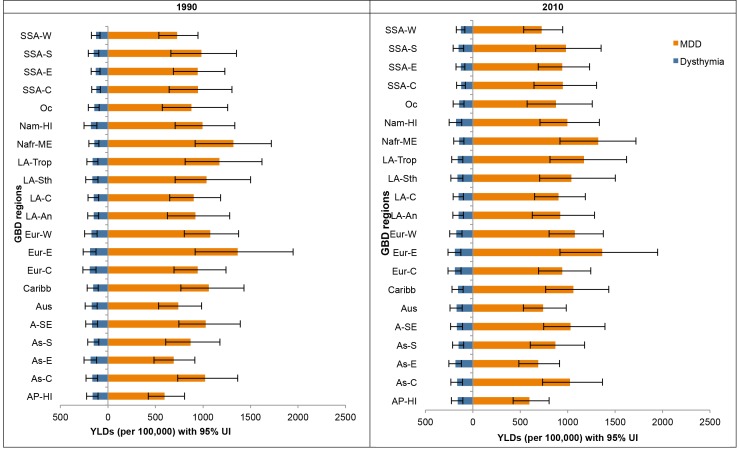
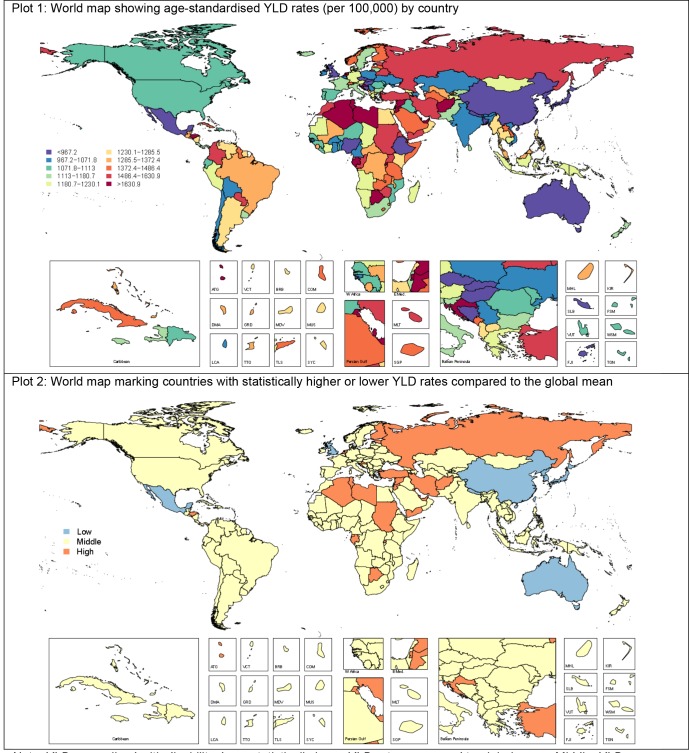
BACKGROUND: Depressive disorders were a leading cause of burden in the Global Burden of Disease (GBD) 1990 and 2000 studies. Here, we analyze the burden of depressive disorders in GBD 2010 and present severity proportions, burden by country, region, age, sex, and year, as well as burden of depressive disorders as a risk factor for suicide and ischemic heart disease. METHODS AND FINDINGS: Burden was calculated for major depressive disorder (MDD) and dysthymia. A systematic review of epidemiological data was conducted. The data were pooled using a Bayesian meta-regression. Disability weights from population survey data quantified the severity of health loss from depressive disorders. These weights were used to calculate years lived with disability (YLDs) and disability adjusted life years (DALYs). Separate DALYs were estimated for suicide and ischemic heart disease attributable to depressive disorders. Depressive disorders were the second leading cause of YLDs in 2010. MDD accounted for 8.2% (5.9%-10.8%) of global YLDs and dysthymia for 1.4% (0.9%-2.0%). Depressive disorders were a leading cause of DALYs even though no mortality was attributed to them as the underlying cause. MDD accounted for 2.5% (1.9%-3.2%) of global DALYs and dysthymia for 0.5% (0.3%-0.6%). There was more regional variation in burden for MDD than for dysthymia; with higher estimates in females, and adults of working age. Whilst burden increased by 37.5% between 1990 and 2010, this was due to population growth and ageing. MDD explained 16 million suicide DALYs and almost 4 million ischemic heart disease DALYs. This attributable burden would increase the overall burden of depressive disorders from 3.0% (2.2%-3.8%) to 3.8% (3.0%-4.7%) of global DALYs. CONCLUSIONS: GBD 2010 identified depressive disorders as a leading cause of burden. MDD was also a contributor of burden allocated to suicide and ischemic heart disease. These findings emphasize the importance of including depressive disorders as a public-health priority and implementing cost-effective interventions to reduce its burden. Please see later in the article for the Editors' Summary.
Overview
CoChat Summary
TL;DR
Ferrari and colleagues used GBD 2010 to estimate the global burden of major depressive disorder (MDD) and dysthymia by country, region, age, sex, and year. Depressive disorders were a leading cause of non-fatal burden, with MDD ranking 11th for global DALYs and 2nd for global YLDs in 2010.
Key findings
- In 2010, depressive disorders accounted for 3.0% (95% UI 2.2%–3.8%) of global DALYs: MDD 2.5% (1.9%–3.2%) and dysthymia 0.5% (0.3%–0.6%). MDD ranked 11th and dysthymia 51st among global DALY causes; MDD was the 2nd leading cause of YLDs (8.2% of all YLDs) and dysthymia 19th (1.4%).
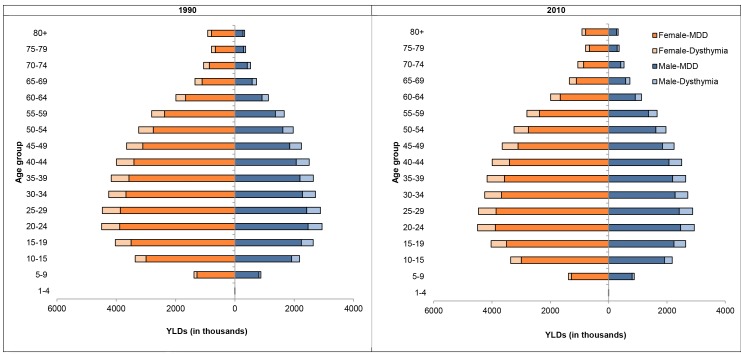
- Global prevalence was 4.4% (4.1%–4.7%) for MDD, or 298 million cases, and 1.55% (1.5%–1.6%) for dysthymia, or 106 million cases. Prevalence was higher in females than males for both disorders.
- Depressive disorder YLDs increased 37.5% between 1990 and 2010, driven by population growth (29.6%) and population aging (10.4%), with a −2.5% change due to prevalence.
- Attributable burden analyses found MDD explained an additional 16 million DALYs as a risk factor for suicide, with 46.1% (28.03%–60.8%) of suicide DALYs re-attributed to MDD; 2.9% (1.5%–4.5%) of ischemic heart disease DALYs (3.8 million DALYs, 93.5% YLLs) were attributable to MDD. Adding these increased MDD from 2.5% to 3.4% of global DALYs and depressive disorders from 3.0% to 3.8%, moving MDD from 11th to 8th place.
Methods
- GBD 2010 systematic review of literature from 1 January 1980 to 31 December 2008, with continued perusal to 31 December 2011, captured prevalence, incidence, remission/duration, and excess mortality for MDD and dysthymia. DisMod-MR, a Bayesian meta-regression tool, modeled prevalence for 187 countries, 21 world regions, males and females, 1990, 2005, and 2010, and 20 age groups.
- YLDs were calculated as prevalent cases multiplied by severity- and comorbidity-adjusted disability weights, without age-weighting or discounting. DALYs were YLDs plus YLLs, but no disorder-specific YLLs were recorded for depressive disorders. Disability weights came from population surveys in Bangladesh, Indonesia, Peru, Tanzania, and the USA (14,710 participants) and an internet survey (16,328 participants); severity distributions came from MEPS, NESARC, and NSMHWB.
- Attributable burden used GBD 2010 comparative risk assessment: meta-analyses of relative risks for MDD as a risk factor for suicide and ischemic heart disease, population attributable fractions, and multiplication by cause-specific DALYs. Time trends were decomposed into population growth, population age/sex structure, and YLD rates.
Limitations
- Stated: no disorder-specific YLLs were available for depressive disorders, and the authors could not quantify burden for all outcomes linked to MDD/dysthymia (e.g., stroke, diabetes, vascular dementia/Alzheimer’s disease), so estimates likely underestimate true burden. Meta-analyses for suicide and ischemic heart disease relied on data from only two countries, with uncertain generalizability.
- Stated: uncertainty may be larger than propagated because study-quality covariates were crude binary variables applied equally across ages and sexes; disability weights and health-state definitions may not represent all participants’ experiences; severity distributions came from three surveys in two high-income countries, limiting global representativeness and making it impossible to quantify treatment effects on severity.
- Evident from the text: country-level estimates often depended on imputation via DisMod-MR when raw epidemiological data were sparse, and regional/country differences were frequently within wide, overlapping uncertainty intervals.
Model-written summary. Check it against the paper before relying on it.
Integrity signals
Registry
Cites
Statistics
Figures
Verification
Claims the paper makes
10 Valid · 0 Not valid · 23 Not checked · 88 Own results and interpretations
Every source the paper cites for this claim was checked and supports it.
In the paper
“Out of the comprehensive list of health outcomes originally investigated for mental disorders [32], there was sufficient evidence for causal effects to quantify the burden attributable to MDD as a risk factor for suicide and ischemic heart disease.”
§ Burden of Depressive Disorders by Country, Sex, Age, and Year: Findings from the Global Burden of Disease Study 2010 > Methods > Calculation of Attributable Burden
What the sources say
- Supportedcites [32] AJ Baxter, 2011, Mental disorders as risk factors: assessing the evidence for the global burden of disease study, BMC Medicine source
The Results section says that, after the second evidence filter, suicide and ischemic heart disease had sufficient evidence for inclusion in attributable-burden estimates. It identifies major depression among the risk factors for suicide; the Abstract’s Results and discussion section identifies major depression as the risk factor for ischemic heart disease. The paper does not provide page numbers for these passages. (LLM, conf=0.90)
plainstates a cause- Asserted: passes — The authors put it forward as true.
- Checkable: passes — It can be checked against evidence.
- Load-bearing: passes — The paper’s conclusions depend on it.
- Based: passes — The paper gives a reason why it holds.
- Supported
The cited sources support only part of this claim — read each source’s verdict below.
In the paper
“Although there is literature linking stroke, diabetes, and vascular dementia/Alzheimer's disease to MDD, there was insufficient evidence at the time of our review for a causal relationship and more studies are needed to support these tentative associations [32].”
§ Burden of Depressive Disorders by Country, Sex, Age, and Year: Findings from the Global Burden of Disease Study 2010 > Discussion
What the sources say
- Partly supportedcites [32] AJ Baxter, 2011, Mental disorders as risk factors: assessing the evidence for the global burden of disease study, BMC Medicine sourceExperimental — accuracy not yet measured
The Abstract’s Results and discussion and the Summary say that evidence linking mental disorders to cardiovascular disease and type 2 diabetes was insufficient for inclusion in the Global Burden of Disease study and that further research was needed. The Discussion’s Temporality section also identifies difficulty establishing which condition came first. The paper does not address vascular dementia or Alzheimer’s disease, and its conclusion about cardiovascular disease and diabetes is broader than a conclusion specifically about MDD and stroke. (LLM, conf=0.87)
plain- Asserted: passes — The authors put it forward as true.
- Checkable: passes — It can be checked against evidence.
- Load-bearing: passes — The paper’s conclusions depend on it.
- Based: passes — The paper gives a reason why it holds.
- Partly supported
Every source the paper cites for this claim was checked and supports it.
In the paper
“This finding was driven by high prevalence estimates with 298 million MDD cases in 2010 [2] and 106 million cases of dysthymia [3].”
§ Burden of Depressive Disorders by Country, Sex, Age, and Year: Findings from the Global Burden of Disease Study 2010 > Discussion
What the sources say
- Supportedcites [2] AJ Ferrari, 2013, The epidemiological modelling of major depressive disorder: application for the Global Burden of Disease Study 2010, PLoS ONE source
The Abstract (Results, p. 1) states 'There were over 298 million cases of MDD globally at any point in time in 2010', matching the cited figure exactly. The Results section 'Final prevalence output' corroborates the underlying components (over 111 million male plus 187 million female prevalent cases in 2010) and the 4.4% global point prevalence for 2010. (LLM, conf=0.95)
plainn = 298- Asserted: passes — The authors put it forward as true.
- Checkable: passes — It can be checked against evidence.
- Load-bearing: unclear — It is unclear whether the paper’s conclusions depend on it.
- Based: passes — The paper gives a reason why it holds.
- Supported
Every source the paper cites for this claim was checked and supports it.
In the paper
“In spite of responses coming from a heterogeneous sample of individuals (e.g., a high proportion of highly educated individuals from the internet-based survey and the opposite from the population-based survey from Tanzania), the strength of the correlation between disability weights was at least 0·9 across all surveys except in Bangladesh where it was 0·75 [17].”
§ Burden of Depressive Disorders by Country, Sex, Age, and Year: Findings from the Global Burden of Disease Study 2010 > Discussion
What the sources say
- Supportedcites [17] JA Salomon, 2012, Common values in assessing health outcomes from disease and injury:disability weights measurement study for the Global Burden of Disease 2010, Lancet source
The Abstract Findings (p.1) state that 'correlations between individual survey results and results from analysis of the pooled dataset were 0·9 or higher in all surveys except in Bangladesh (r=0·75)', and the Results section repeats this ('Pearson's correlation coefficients between individual survey results and the results from the pooled analyses were 0·9 or higher in all cases except Bangladesh'). The heterogeneity framing is also supported: the Discussion notes a high degree of consistency 'across surveys with highly heterogeneous respondents', specifically the self-selected, highly educated web survey versus the representative population sample from Tanzania with the lowest educational attainment. Only minor caveat: the direct web-survey-vs-Tanzania comparison was 0·89, marginally under 0·9, but that is a pairwise survey comparison, not the survey-versus-pooled correlations the claim describes. (LLM, conf=0.92)
plainstates an association- Asserted: passes — The authors put it forward as true.
- Checkable: passes — It can be checked against evidence.
- Load-bearing: passes — The paper’s conclusions depend on it.
- Based: passes — The paper gives a reason why it holds.
- Supported
Every source the paper cites for this claim was checked and supports it.
In the paper
“We found evidence for an elevated risk for mortality in those diagnosed with MDD [2],[25]; however, since a health outcome could only occur once in the GBD cause list, MDD related deaths from suicide and ischemic heart disease were captured under the headings of intentional injuries and cardiovascular disease in the GBD capstone papers [14],[18].”
§ Burden of Depressive Disorders by Country, Sex, Age, and Year: Findings from the Global Burden of Disease Study 2010 > Discussion
What the sources say
- Supportedcites [2] AJ Ferrari, 2013, The epidemiological modelling of major depressive disorder: application for the Global Burden of Disease Study 2010, PLoS ONE source
The Results section (page unavailable), in its discussion of Figure 5, explicitly describes all-cause excess mortality experienced by people with MDD. The Methods section (page unavailable) defines the comparison as deaths among people with MDD versus those without MDD or the general population. (LLM, conf=0.92)
- Supportedcites [25] AJ Baxter, 2011, Factors influencing risk of premature mortality in community cases of depression: a meta-analytic review, Epidemiology Research International source
The paper’s Results, as reported in the Abstract, found significantly higher all-cause mortality risk for major depression (RR 1.92, 95% CI 1.65–2.23). The Discussion likewise reports almost twice the risk of premature mortality for community cases of major depression compared with those without depression. (LLM, conf=0.94)
plainstates an association- Asserted: passes — The authors put it forward as true.
- Checkable: passes — It can be checked against evidence.
- Load-bearing: passes — The paper’s conclusions depend on it.
- Based: passes — The paper gives a reason why it holds.
- Rests on an assumption not shown here.
- Supported
58 more claims · 1 with their cited sources checked
Create a free account to see all 121 claims and to verify the 25 references still open.
- Probably not a substantial claim. 42
- It may state two separate claims as one. 30
Claims other papers make about this one
Each is checked against this paper’s own text: does it say what the citing paper says it does?
The source backs part of the claim, not all of it — or backs it for a different population, condition or comparison.
In the citing paper
“The World Mental Health Survey estimated the annual prevalence of MDD to be 4.4% and the lifetime prevalence to be approximately 10% -15%36,37.”
From Temporal and spatial trend analysis of all-cause depression burden based on Global Burden of Disease (GBD) 2019 study (2024) · cites this paper as [36]
Experimental — accuracy not yet measuredThe source backs part of the claim, not all of it — or backs it for a different population, condition or comparison.
In the citing paper
“This may be attributed to the fact that depression and anxiety are the most common mental disorder around the world [44, 45], and chatbots are reported to be effective in improving social skills for patients with autism [14, 17, 46-48].”
From An overview of the features of chatbots in mental health: A scoping review (2019) · cites this paper as [44]
Experimental — accuracy not yet measuredThe source backs part of the claim, not all of it — or backs it for a different population, condition or comparison.
In the citing paper
“Direct and indirect costs of depression and anxiety make these disorders main contributors to the global burden of disease [42, 43]”
From Mobile Apps for the Management of Comorbid Overweight/Obesity and Depression/Anxiety: A Systematic Review (2020) · cites this paper as [43]
Experimental — accuracy not yet measuredIn the citing paper
“Major depressive disorder ranks among the leading mental health causes of the global burden of disease (104).”
From Vagus Nerve as Modulator of the Brain–Gut Axis in Psychiatric and Inflammatory Disorders (2018) · cites this paper as [104]
Citations
Cites
Diagnostic and Statistical Manual of Mental Disorders
Williams, J. B. W., & First, M. (2013) · Encyclopedia of Social Work · doi:10.1093/acrefore/9780199975839.013.104 · Cited by 109,519
Preferred Reporting Items for Systematic Reviews and Meta-Analyses: the PRISMA statement
Moher, D., Liberati, A., Tetzlaff, J., Altman, D. G., & for the PRISMA Group (2009) · BMJ · doi:10.1136/bmj.b2535 · Cited by 83,823
Preferred Reporting Items for Systematic Reviews and Meta-Analyses: The PRISMA Statement
Moher, D., Liberati, A., Tetzlaff, J., Altman, D. G., & The PRISMA Group (2009) · PLoS Medicine · doi:10.1371/journal.pmed.1000097 · Cited by 64,042
Preferred reporting items for systematic reviews and meta-analyses: the PRISMA Statement.
(2009) · PubMed Central · Cited by 44,859
Preferred Reporting Items for Systematic Reviews and Meta-Analyses: The PRISMA Statement
Moher, D., Liberati, A., Tetzlaff, J., & Altman, D. G. (2009) · Journal of Clinical Epidemiology · doi:10.1016/j.jclinepi.2009.06.005 · Cited by 19,575
Wang, G., Ma, R., Qiao, G., Wada, K., Aizawa, Y., & Satoh, T. (2015) · Integrative Medicine International · doi:10.1159/000368408 · Cited by 18,657
Lozano, R., Naghavi, M., Foreman, K., Lim, S., Shibuya, K., Aboyans, V., Abraham, J., Adair, T., Aggarwal, R., Ahn, S. Y., et al. (2012) · The Lancet · doi:10.1016/s0140-6736(12)61728-0 · Cited by 14,070
Lim, S. S., Vos, T., Flaxman, A. D., Danaei, G., Shibuya, K., Adair-Rohani, H., AlMazroa, M. A., Amann, M., Anderson, H. R., Andrews, K. G., et al. (2012) · The Lancet · doi:10.1016/s0140-6736(12)61766-8 · Cited by 11,805
Self-citationMurray, C. J. L., Vos, T., Lozano, R., Naghavi, M., Flaxman, A. D., Michaud, C., Ezzati, M., Shibuya, K., Salomon, J. A., Abdalla, S., et al. (2012) · The Lancet · doi:10.1016/s0140-6736(12)61689-4 · Cited by 8,888
Self-citationVos, T., Flaxman, A. D., Naghavi, M., Lozano, R., Michaud, C., Ezzati, M., Shibuya, K., Salomon, J. A., Abdalla, S., Aboyans, V., et al. (2012) · The Lancet · doi:10.1016/s0140-6736(12)61729-2 · Cited by 8,291
Self-citation
Cited by
Items 701–800 of 1,039
Wang, Q., & Dwivedi, Y. (2016) · The World Journal of Biological Psychiatry · doi:10.1080/15622975.2016.1197423 · Cited by 49
Kimball, S., Mirhosseini, N. Z., & Rucklidge, J. J. (2018) · Nutrients · doi:10.3390/nu10020152 · Cited by 51
Kim, H., Kwon, S., Hong, S., & Lee, S. (2018) · BMC Geriatrics · doi:10.1186/s12877-018-0882-4 · Cited by 49
The antidepressant impact of minocycline in rodents: A systematic review and meta-analysis
Reis, D. J., Casteen, E. J., & Ilardi, S. S. (2019) · Scientific Reports · doi:10.1038/s41598-018-36507-9 · Cited by 49
Integration of GWAS and brain eQTL identifies FLOT1 as a risk gene for major depressive disorder
Zhong, J., Li, S., Zeng, W., Li, X., Gu, C., Liu, J., & Luo, X. (2019) · Neuropsychopharmacology · doi:10.1038/s41386-019-0345-4 · Cited by 49
Khatri, G. K., Tran, T. D., & Fisher, J. (2019) · BMC Psychiatry · doi:10.1186/s12888-018-1986-2 · Cited by 45
Sander, L., Gerhardinger, K., Bailey, E., Robinson, J., Lin, J., Cuijpers, P., & Mühlmann, C. (2020) · Journal of Affective Disorders · doi:10.1016/j.jad.2019.11.045 · Cited by 44
Li, X., Sanford, L. D., Zong, Q., Zhang, Y., Tan, L., Li, T., Ren, R., Zhou, J., Han, F., & Tang, X. (2020) · Neuropsychology Review · doi:10.1007/s11065-020-09443-7 · Cited by 47
Hasselgren, C., Ekbrand, H., Halleröd, B., Mellqvist Fässberg, M., Zettergren, A., Johansson, L., Skoog, I., & Dellve, L. (2020) · BMC Psychiatry · doi:10.1186/s12888-020-02820-9 · Cited by 44
Kolář, D., Kletečková, L., Brožka, H., & Valeš, K. (2021) · Neuroscience Letters · doi:10.1016/j.neulet.2021.136003 · Cited by 53
Richard, A., Rohrmann, S., Vandeleur, C. L., Mohler‐Kuo, M., & Eichholzer, M. (2015) · BMC Psychiatry · doi:10.1186/s12888-015-0597-4 · Cited by 65
Novel Pathways in the Treatment of Major Depression: Focus on the Glutamatergic System
Tomasetti, C., Montemitro, C., Fiengo, A. L. C., Santone, C., Orsolini, L., Valchera, A., Carano, A., Pompili, M., Serafini, G., Perna, G., et al. (2019) · Current Pharmaceutical Design · doi:10.2174/1381612825666190312102444 · Cited by 44
Dawson, K. S., Schafer, A., Anjuri, D., Ndogoni, L., Musyoki, C., Sijbrandij, M., van Ommeren, M., & Bryant, R. A. (2016) · BMC Psychiatry · doi:10.1186/s12888-016-1117-x · Cited by 43
Priebe, S., Fung, C., Brusco, L. I., Carbonetti, F. L., Gómez–Restrepo, C., Uribe-Restrepo, J. M., Diez‐Canseco, F., Smuk, M., Holt, N. J., Kirkbride, J. B., et al. (2021) · BMJ Open · doi:10.1136/bmjopen-2021-052339 · Cited by 41
Dalpati, N., Jena, S., Jain, S., & Sarangi, P. P. (2022) · Brain Behavior & Immunity - Health · doi:10.1016/j.bbih.2022.100420 · Cited by 61
Errázuriz, A., Avello-Vega, D., Ramírez-Mahaluf, J. P., Torres, R., Crossley, N. A., Undurraga, E. A., & Jones, P. B. (2023) · The Lancet Regional Health - Americas · doi:10.1016/j.lana.2023.100587 · Cited by 71
Williams, N. R., Short, E. B., Hopkins, T., Bentzley, B. S., Sahlem, G. L., Pannu, J., Schmidt, M., Borckardt, J. J., Korte, J. E., George, M. S., et al. (2016) · Brain Stimulation · doi:10.1016/j.brs.2016.06.054 · Cited by 43
Christiani, Y., Byles, J., Tavener, M., & Dugdale, P. (2015) · Journal of Affective Disorders · doi:10.1016/j.jad.2015.04.042 · Cited by 49
dos Santos, E. R., Huang, H. Y., Menezes, P. R., & Scazufca, M. (2016) · PLoS ONE · doi:10.1371/journal.pone.0150046 · Cited by 49
Antidepressant-like effects of the Radix Bupleuri and Radix Paeoniae Alba drug pair
Wang, Y., Gao, S., Li, R., Zhang, M., Gao, S., & Chun-quan, Y. (2016) · Neuroscience Letters · doi:10.1016/j.neulet.2016.09.001 · Cited by 46
Steensma, C., Loukine, L., Orpana, H., Vachon, J., Mo, F., Boileau-Falardeau, M., Reid, C., & Choi, B. C. K. (2016) · Health Promotion and Chronic Disease Prevention in Canada · doi:10.24095/hpcdp.36.10.01 · Cited by 53
Matsuzaka, C. T., Wainberg, M., Norcini Pala, A., Hoffmann, E. V., Coimbra, B. M., Braga, R. F., Sweetland, A. C., & Mello, M. F. (2017) · BMC Psychiatry · doi:10.1186/s12888-017-1379-y · Cited by 41
Villarreal‐Zegarra, D., & Bernabé‐Ortiz, A. (2020) · Asia-Pacific Psychiatry · doi:10.1111/appy.12385 · Cited by 47
Transition and Dynamic Reconfiguration of Whole-Brain Network in Major Depressive Disorder
Wang, S., Wen, H., Hu, X., Xie, P., Qiu, S., Qian, Y., Qiu, J., & He, H. (2020) · Molecular Neurobiology · doi:10.1007/s12035-020-01995-2 · Cited by 46
Vegetarian Diet Is Associated with Lower Risk of Depression in Taiwan
Shen, Y., Chang, C.-E., Lin, M., & Lin, C.-L. (2021) · Nutrients · doi:10.3390/nu13041059 · Cited by 49
Osborn, T. L., Kleinman, A., & Weisz, J. R. (2021) · Transcultural Psychiatry · doi:10.1177/13634615211000555 · Cited by 50
Zacharias, H. U., Hertel, J., Johar, H., Pietzner, M., Lukaschek, K., Atasoy, S., Kunze, S., Völzke, H., Nauck, M. A., Friedrich, N., et al. (2021) · Molecular Psychiatry · doi:10.1038/s41380-021-01176-0 · Cited by 49
Bao, M., Chao, J., Sheng, M., Cai, R., Zhang, N., & Chen, H. (2022) · Journal of Affective Disorders · doi:10.1016/j.jad.2022.01.036 · Cited by 44
Botella, C., Mira, A., Moragrega, I., García-Palacios, A., Bretón-López, J., Castilla, D., Riera López del Amo, A., Soler, C., Molinari, G., Quero, S., et al. (2016) · Neuropsychiatric Disease and Treatment · doi:10.2147/ndt.s93315 · Cited by 42
“Introduction Depression is already estimated to be the second leading cause of disability worldwide.(1) There is evidence of a significant relationship between depression, stress, and emotion regulation ability.”
Liaqat, H., Parveen, A., & Kim, S. Y. (2022) · International Journal of Molecular Sciences · doi:10.3390/ijms232314968 · Cited by 53
Monferrer, M., García, A. S., Ricarte, J. J., Montes, M. J., Fernández‐Caballero, A., & Fernández-Sotos, P. (2023) · Scientific Reports · doi:10.1038/s41598-023-31277-5 · Cited by 52
Scarapicchia, T., Sabiston, C. M., O’Loughlin, E. K., Brunet, J., Chaiton, M., & O’Loughlin, J. L. (2014) · Preventive Medicine · doi:10.1016/j.ypmed.2014.05.017 · Cited by 47
Wu, H., Yu, B., Meng, G., Liu, F., Guo, Q., Wang, J., Du, H., Zhang, W., Shen, S., Han, P., et al. (2016) · International Journal of Geriatric Psychiatry · doi:10.1002/gps.4522 · Cited by 47
Mutiso, V., Musyimi, C. W., Nayak, S. S., Musau, A., Rebello, T. J., Nandoya, E., Tele, A., Pike, K. M., & Ndetei, D. M. (2017) · International Journal of Social Psychiatry · doi:10.1177/0020764017716953 · Cited by 59
Senra, H., Macedo, A. F., Nunes, N., Balaskas, K., Aslam, T. M., & Costa, E. (2019) · American Journal of Geriatric Psychiatry · doi:10.1016/j.jagp.2019.03.001 · Cited by 41
Pengpid, S., & Peltzer, K. (2019) · International Journal of Environmental Research and Public Health · doi:10.3390/ijerph16071251 · Cited by 48
Pharmacy-based management for depression in adults
Brown, J. V. E., Walton, N., Meader, N., Todd, A., Webster, L. A. D., Steele, R., Sampson, S. J., Churchill, R. C., McMillan, D., Gilbody, S. M., et al. (2019) · Cochrane Database of Systematic Reviews · doi:10.1002/14651858.cd013299.pub2 · Cited by 45
Aberrant Resting-State Brain Function in Adolescent Depression
Mao, N., Che, K., Chu, T., Li, Y., Wang, Q., Liu, M., Ma, H., Wang, Z., Lin, F., Wang, B., et al. (2020) · Frontiers in Psychology · doi:10.3389/fpsyg.2020.01784 · Cited by 42
Hang, X., Zhang, Y., Li, J., Li, Z., Zhang, Y., Ye, X., Tang, Q., & Sun, W. (2021) · Frontiers in Pharmacology · doi:10.3389/fphar.2021.691200 · Cited by 47
Ketamine for Treatment of Mood Disorders and Suicidality: A Narrative Review of Recent Progress
Kritzer, M. D., Mischel, N., Young, J. R., Lai, C. S., Masand, P. S., Szabo, S. T., & Mathew, S. J. (2022) · Annals of Clinical Psychiatry · doi:10.12788/acp.0048 · Cited by 45
for the iPrEx Study Team, Defechereux, P. A., Mehrotra, M., Liu, A., McMahan, V., Glidden, D. V., Mayer, K. H., Vargas, L. S., Amico, K. R., Chodacki, P., et al. (2015) · AIDS and Behavior · doi:10.1007/s10461-015-1082-2 · Cited by 50
Kingslake, J., Dias, R., Dawson, G. R., Simon, J., Goodwin, G. M., Harmer, C. J., Morriss, R., Brown, S., Guo, B., Dourish, C. T., et al. (2017) · Trials · doi:10.1186/s13063-017-2247-2 · Cited by 42
Increased IL-8 Concentrations in the Cerebrospinal Fluid of Patients with Unipolar Depression
Kuzior, H., Fiebich, B. L., Yousif, N. M., Saliba, S. W., Ziegler, C., Nickel, K., Maier, S. J., Süß, P., Runge, K., Matysik, M., et al. (2020) · Comprehensive Psychiatry · doi:10.1016/j.comppsych.2020.152196 · Cited by 41
Circular RNAs in depression: Biogenesis, function, expression, and therapeutic potential
Gan, H., Lei, Y., Yuan, N., Tang, K., Hao, W., Ma, Q., Wu, M., Zhou, X., Li, X., Huang, J., et al. (2021) · Biomedicine & Pharmacotherapy · doi:10.1016/j.biopha.2021.111244 · Cited by 41
Common variants on 6q16.2, 12q24.31 and 16p13.3 are associated with major depressive disorder
Team7, T. 2. R., Li, X., Luo, Z., Gu, C., Hall, L. S., McIntosh, A. M., Zeng, Y., Porteous, D. J., Hayward, C., Li, M., et al. (2018) · Neuropsychopharmacology · doi:10.1038/s41386-018-0078-9 · Cited by 41
Time to Remission for Depression with Collaborative Care Management (CCM) in Primary Care
Garrison, G. M., Angstman, K. B., O'Connor, S. S., Williams, M. D., & Lineberry, T. W. (2016) · The Journal of the American Board of Family Medicine · doi:10.3122/jabfm.2016.01.150128 · Cited by 41
Does a culture of happiness increase rumination over failure?
McGuirk, L., Kuppens, P., Kingston, R. E. F., & Bastian, B. B. (2018) · Emotion · doi:10.1037/emo0000322 · Cited by 56
Sousa, C., Mason, W. A., Herrenkohl, T. I., Prince, D. M., Herrenkohl, R. C., & Russo, M. J. (2018) · American Journal of Orthopsychiatry · doi:10.1037/ort0000283 · Cited by 47
Radiation-induced overexpression of transthyretin inhibits retinol-mediated hippocampal neurogenesis
Kang, J., Kim, W., Seo, H., Kim, E., Son, B., Lee, S., Park, G., Jo, S., Moon, C., Youn, H., et al. (2018) · Scientific Reports · doi:10.1038/s41598-018-26762-1 · Cited by 40
Aifred Health, a Deep Learning Powered Clinical Decision Support System for Mental Health
Benrimoh, D. A., Fratila, R., Israel, S. A., Perlman, K., Mirchi, N., Desai, S., Rosenfeld, A., Knappe, S., Behrmann, J., Rollins, C. P. E., et al. (2018) · The Springer series on challenges in machine learning · doi:10.1007/978-3-319-94042-7_13 · Cited by 46
Pöhlmann, M. L., Häusl, A. S., Harbich, D., Balsevich, G., Engelhardt, C., Feng, X., Breitsamer, M., Hausch, F., Winter, G., & Schmidt, M. V. (2018) · Frontiers in Behavioral Neuroscience · doi:10.3389/fnbeh.2018.00262 · Cited by 41
Zyoud, S. H., Shakhshir, M. H., Abushanab, A. S., Koni, A. A., Shahwan, M. J., Jairoun, A. A., & Al‐Jabi, S. W. (2023) · Journal of Health Population and Nutrition · doi:10.1186/s41043-023-00378-2 · Cited by 58
Catarino, A., Bateup, S., Tablan, V., Innes, K., Freer, S., Richards, A., Stott, R., Hollon, S. D., Chamberlain, S. R., Hayes, A., et al. (2018) · BJPsych Open · doi:10.1192/bjo.2018.57 · Cited by 40
González-Robles, A., Díaz-García, A., García-Palacios, A., Roca, P., Ramos-Quiroga, J. A., & Botella, C. (2020) · Journal of Medical Internet Research · doi:10.2196/18220 · Cited by 40
U.S. Simulation of Lifetime Major Depressive Episode Prevalence and Recall Error
Tam, J., Mezuk, B. R., Zivin, K., & Meza, R. (2020) · American Journal of Preventive Medicine · doi:10.1016/j.amepre.2020.03.021 · Cited by 47
Hage, Z., Madeira, M. M., Koliatsis, D., & Tsirka, S. E. (2024) · BMC Immunology · doi:10.1186/s12865-024-00653-9 · Cited by 50
Yeung, W., Chung, K., Ng, S., Yu, Y.-M., Ziea, E. T.-C., & Ng, B. F. L. (2014) · Journal of Ethnopharmacology · doi:10.1016/j.jep.2014.02.046 · Cited by 40
The Epidemiology of Major Depressive Episode in the Iraqi General Population
Al-Hamzawi, A. O., Bruffaerts, R., Bromet, E. J., Alkhafaji, A. M., & Kessler, R. C. (2015) · PLoS ONE · doi:10.1371/journal.pone.0131937 · Cited by 49
Gaye, B., Prugger, C., Perier, M., Thomas, F., Plichart, M., Guibout, C., Lemogne, C., Pannier, B., Boutouyrie, P., Jouven, X., et al. (2016) · Scientific Reports · doi:10.1038/srep18951 · Cited by 50
Covariates of depression and high utilizers of healthcare: Impact on resource use and costs
Robinson, R. L., Grabner, M., Palli, S. R., Faries, D. E., & Stephenson, J. J. (2016) · Journal of Psychosomatic Research · doi:10.1016/j.jpsychores.2016.04.002 · Cited by 49
Corden, M. E., Koucky, E. M., Brenner, C. J., Palac, H., Soren, A., Begale, M. J., Ruo, B., Kaiser, S. M., Duffecy, J., & Mohr, D. C. (2016) · Digital Health · doi:10.1177/2055207616663069 · Cited by 46
Predicting depressed patients with suicidal ideation from ECG recordings
Khandoker, A. H., Luthra, V., Abouallaban, Y., Saha, S., Ahmed, K. I. U., Mostafa, R., Chowdhury, N., & Jelinek, H. F. (2016) · Medical & Biological Engineering & Computing · doi:10.1007/s11517-016-1557-y · Cited by 48
The effect of vortioxetine on overall patient functioning in patients with major depressive disorder
Florea, I., Loft, H., Danchenko, N., Rive, B., Brignone, M., Merikle, E., Jacobsen, P. L., & Sheehan, D. V. (2017) · Brain and Behavior · doi:10.1002/brb3.622 · Cited by 40
Wei, L., Kan, L.-Y., Zeng, H.-Y., Tang, Y.-Y., Huang, H., Xie, M., Zou, W., Wang, C., Zhang, P., & Tang, X. (2018) · NeuroMolecular Medicine · doi:10.1007/s12017-018-8489-7 · Cited by 40
Papp, M., Gruca, P., Łasoń, M., Tota-Glowczyk, K., Niemczyk, M., Litwa, E., & Willner, P. (2018) · Journal of Psychopharmacology · doi:10.1177/0269881118791737 · Cited by 44
Depression and Its Association with Health-Related Quality of Life in Postmenopausal Women in Korea
Park, H., & Kim, K. (2018) · International Journal of Environmental Research and Public Health · doi:10.3390/ijerph15112327 · Cited by 44
Neural markers of depression risk predict the onset of depression
Shapero, B. G., Chai, X. J., Vangel, M. G., Biederman, J., Hoover, C., Whitfield, S., Gabrieli, J. D. E., & Hirshfeld‐Becker, D. R. (2019) · Psychiatry Research Neuroimaging · doi:10.1016/j.pscychresns.2019.01.006 · Cited by 55
Psychological Health Among Armed Forces Doctors During COVID-19 Pandemic in India
Gupta, S., Kohli, K., Padmakumari, P., Dixit, P. K., Prasad, A. S., Chakravarthy, B. S., Shukla, R., Ghana, P., Mahapatra, D. K., & Varadaraj, G. (2020) · Indian Journal of Psychological Medicine · doi:10.1177/0253717620934037 · Cited by 42
Singla, D. R., Meltzer-Brody, S. E., Silver, R. K., Vigod, S. N., Kim, J. J., Porte, L. M. L., Ravitz, P., Schiller, C. E., Schoueri‐Mychasiw, N., Hollon, S. D., et al. (2021) · Trials · doi:10.1186/s13063-021-05075-1 · Cited by 41
Islam, M. S., Tasnim, R., Sujan, M. S. H., Ferdous, M. Z., Sikder, M. T., Masud, J. H. B., Kundu, S., Tahsin, P., Mosaddek, A. S. M., & Griffiths, M. D. (2021) · BMC Psychiatry · doi:10.1186/s12888-021-03246-7 · Cited by 46
Kamis, K. F., Janevic, M. R., Marinec, N. S., Jantz, R., Valverde, H., & Piette, J. D. (2015) · Globalization and Health · doi:10.1186/s12992-015-0115-y · Cited by 46
Jia, H., & Lubetkin, E. I. (2016) · Quality of Life Research · doi:10.1007/s11136-016-1226-5 · Cited by 43
Prevalence of Childhood Mental Disorders Among School Children of Kashmir Valley
Paul, M. A., & Khan, W. (2018) · Community Mental Health Journal · doi:10.1007/s10597-018-0253-9 · Cited by 42
Bian, C., Zhao, W., Yan, S.-R., Chen, S., Cheng, Y., & Zhang, Y. (2022) · Journal of Affective Disorders · doi:10.1016/j.jad.2022.09.119 · Cited by 51
Mood instability as a precursor to depressive illness: A prospective and mediational analysis
Marwaha, S., Balbuena, L., Winsper, C., & Bowen, R. (2015) · Australian & New Zealand Journal of Psychiatry · doi:10.1177/0004867415579920 · Cited by 47
Annequin, M., Weill, A., Thomas, F., & Chaix, B. (2015) · Annals of Epidemiology · doi:10.1016/j.annepidem.2015.02.002 · Cited by 43
Demuyser, T., Deneyer, L., Bentea, E., Albertini, G., Liefferinge, J. V., Merckx, E., Prins, A. D., Bundel, D. D., Massie, A., & Smolders, I. J. (2015) · Physiology & Behavior · doi:10.1016/j.physbeh.2015.12.018 · Cited by 49
Barboza, K. C., Salinas, L., Sahebjam, F., Jesudian, A. B., Weisberg, I. L., & Sigal, S. H. (2016) · Metabolic Brain Disease · doi:10.1007/s11011-016-9817-y · Cited by 42
Hackman, J., Maupin, J., & Brewis, A. (2016) · Social Science & Medicine · doi:10.1016/j.socscimed.2016.05.032 · Cited by 49
Lv, X., Si, T., Wang, G., Wang, H., Liu, Q., Hu, C., Wang, J., Su, Y., Huang, Y., Jiang, H., et al. (2016) · BMC Psychiatry · doi:10.1186/s12888-016-0953-z · Cited by 41
Dietary patterns and depressive symptoms in a UK cohort of men and women: a longitudinal study
Northstone, K., Joinson, C. J., & Emmett, P. M. (2017) · Public Health Nutrition · doi:10.1017/s1368980017002324 · Cited by 42
Sultana, T., Mannan, M. A., & Ahmed, T. (2018) · Clinical Phytoscience · doi:10.1186/s40816-018-0063-1 · Cited by 55
The relation between obesity and depressed mood in a multi-ethnic population. The HELIUS study
Gibson-Smith, D., Bot, M., Snijder, M. B., Nicolaou, M., Derks, E. M., Stronks, K., Brouwer, I. A., Visser, M., & Penninx, B. W. J. H. (2018) · Social Psychiatry and Psychiatric Epidemiology · doi:10.1007/s00127-018-1512-3 · Cited by 45
Mishra, P. K., Kumar, A., Behar, K. L., & Patel, A. B. (2018) · Journal of Neurochemistry · doi:10.1111/jnc.14544 · Cited by 39
Asymmetry in cortical thickness and subcortical volume in treatment-naïve major depressive disorder
Zuo, Z., Ran, S., Wang, Y., Li, C., Han, Q., Tang, Q., Qu, W., & Li, H. (2018) · NeuroImage Clinical · doi:10.1016/j.nicl.2018.101614 · Cited by 43
Measuring the impact of multiple discrimination on depression in Europe
Álvarez‐Gálvez, J., & Rojas‐García, A. (2019) · BMC Public Health · doi:10.1186/s12889-019-6714-4 · Cited by 46
Senanayake, B., Wickramasinghe, S. I., Chatfield, M. D., Hansen, J., Edirippulige, S., & Smith, A. C. (2019) · Journal of Telemedicine and Telecare · doi:10.1177/1357633x19875852 · Cited by 46
Smith-Apeldoorn, S. Y., Veraart, J. K. E., Kamphuis, J., van Asselt, A. D. I., Touw, D. J., aan het Rot, M., & Schoevers, R. A. (2019) · BMC Psychiatry · doi:10.1186/s12888-019-2359-1 · Cited by 39
Ghazizadeh, H., Yaghooti‐Khorasani, M., Asadi, Z., Zare‐Feyzabadi, R., Saeidi, F., Shabani, N., Safari-Ghalezou, M., Yadegari, M., Tirkani, A. N., Shivappa, N., et al. (2020) · BMC Psychiatry · doi:10.1186/s12888-020-02663-4 · Cited by 43
Virtual Reality Behavioral Activation as an Intervention for Major Depressive Disorder: Case Report
Paul, M., Bullock, K., & Bailenson, J. (2020) · JMIR Mental Health · doi:10.2196/24331 · Cited by 38
Dannon, P., Magnezi, R., Aminov, E., Shmuel, D., & Dreifuss, M. (2016) · Patient Preference and Adherence · doi:10.2147/ppa.s105654 · Cited by 39
Grace, S. L., Medina-Inojosa, J. R., Thomas, R. J., Krause, H., Vickers-Douglas, K. S., Palmer, B. A., & Lopez-Jimenez, F. (2018) · Psychotherapy and Psychosomatics · doi:10.1159/000486794 · Cited by 39
Economic burden of relapse/recurrence in patients with major depressive disorder
Gauthier, G., Mucha, L., Shi, S., & Guerin, A. (2019) · Journal of Drug Assessment · doi:10.1080/21556660.2019.1612410 · Cited by 36
Bock, K., Bendstrup, E., Hilberg, O., & Løkke, A. (2017) · European Clinical Respiratory Journal · doi:10.1080/20018525.2017.1332931 · Cited by 38
The Economics of Treatment for Depression
Stecher, C. D., Cloonan, S., & Domino, M. E. (2023) · Annual Review of Public Health · doi:10.1146/annurev-publhealth-061022-040533 · Cited by 51
Zeng, Y., Navarro, P., Fernandez-Pujals, A. M., Hall, L. S., Clarke, T.-K., Thomson, P. A., Smith, B. H., Hocking, L. J., Padmanabhan, S., Hayward, C., et al. (2017) · Biological Psychiatry · doi:10.1016/j.biopsych.2016.04.017 · Cited by 38
Vasiliadis, H., Dezetter, A., Latimer, E. A., Drapeau, M., & LESAGE, A. D. (2017) · Psychiatric Services · doi:10.1176/appi.ps.201600395 · Cited by 51
Smith, R. S., Alkozei, A., Killgore, W. D. S., & Lane, R. D. (2017) · Brain Behavior and Immunity · doi:10.1016/j.bbi.2017.09.011 · Cited by 42
Khan, A. R., Hansen, B., Wiborg, O., Kroenke, C. D., & Jespersen, S. N. (2018) · NeuroImage · doi:10.1016/j.neuroimage.2017.11.053 · Cited by 38
Yates, T. E., Gray, L. J., Henson, J. J., Edwardson, C. L., Khunti, K., & Davies, M. J. (2019) · Diabetes Care · doi:10.2337/dc19-0400 · Cited by 41
Metadata
- Authors
- Ferrari, A. J., Charlson, F. J., Norman, R. E., Patten, S. B., Freedman, G., Murray, C. J. L., Vos, T., & Whiteford, H. A.
- Affiliations
- The University of Queensland (AU)
- University of Calgary (CA)
- University of Washington (US)
- Corresponding author
- Ferrari, Alize J.
- ORCID
- Venue
- PLoS Medicine
- Publisher
- Public Library of Science (PLoS)
- Published
- 2013-11-05
- Volume
- 10
- Issue
- 11
- Pages
- e1001547
- ISSN
- 1549-1277 (ISSN-L)
- 1549-1676
- PMC
- PMC3818162
- OpenAlex
- W2171340584
- Cited by
- 3,115
- References
- 48
- Citations by year
- 2026: 109 · 2025: 165 · 2024: 177 · 2023: 226 · 2022: 250 · 2021: 339 · 2020: 286 · 2019: 303 · 2018: 309 · 2017: 321 · 2016: 262 · 2015: 248 · 2014: 110 · 2013: 5
- FWCI
- 311.80
- Type
- journal article
- Language
- en
- Open access
- gold
- doi.org
- Locations
- PLoS Medicine (publishedVersion, cc-by)
- Europe PMC (PubMed Central) (publishedVersion, cc-by)
- PubMed Central (publishedVersion, cc-by)
- PubMed (publishedVersion)
- QUT ePrints (Queensland University of Technology) (submittedVersion, other-oa)
- DOAJ (DOAJ: Directory of Open Access Journals) (submittedVersion, cc-by-sa)
- Figshare (submittedVersion, cc-by)
- Funders
- Bill and Melinda Gates Foundation
- University of Washington
- Topics
- Health Sciences › Medicine › Psychiatry and Mental health › Mental Health Treatment and Access
- Health Sciences › Medicine › Pharmacology (medical) › Treatment of Major Depression
- Social Sciences › Economics, Econometrics and Finance › Economics and Econometrics › Health Systems, Economic Evaluations, Quality of Life
- Keywords
- depressive disorders, major depressive disorder, dysthymia, global burden of disease, disability-adjusted life years, years lived with disability, suicide, ischemic heart disease, disability weights, sex differences, age differences, temporal trends, regional variation, attributable burden, public health priorities, Global Burden of Disease Study 2010
- MeSH terms
- Adolescent, Adult, Age Factors, Aged, Child, Child, Preschool, Depression, Depressive Disorder, Female, Persons with Disabilities, Health Surveys, Humans, Infant, Male, Middle Aged, Public Health, Risk Factors, Sex Factors, Suicide, Global Health, Myocardial Ischemia, Cost of Illness, Quality-Adjusted Life Years, Young Adult
About these checks
Registry, retraction, Cites and statistics results are computed, not judged, with one exception: a printed reference that no index lists is read once by a model before it counts as a citation error. Claims are extracted by a model and kept only when their quote appears verbatim in the text; each cited source is then checked, with a model’s help, for whether it says what the claim relies on. Those verdicts can be wrong — read the claim’s quote and the cited source before relying on one.
The claim verdicts this report counts are experimental: their accuracy is not yet measured.
A language model drew the claims from the paper on 2026-10-04, under version 3 of the claim definition (model deepseek-v4.1-flash, prompt extract-v3).
A second model labelled each claim on 2026-10-04 (model jev-1.13-20260917, definition revision gold-guideline-v0.2).
Cited sources are checked with a language model’s help (gpt-6-sol and qwen3.8-omni-flash).
Statistics and arithmetic are recomputed, not judged.
Confidence bands are shown only for fields calibrated on our annotated test set. None is calibrated yet, so no band is shown.
What counts as a claim ›How we measure confidence ›How we check this ›
Are you an author, or do you see a problem with this page? Request a review
Data sources
Bibliographic data: Semantic Scholar, OpenAlex, Crossref.
Contains information from the Semantic Scholar Academic Graph Datasets, made available under the ODC Attribution License (ODC-BY 1.0).
Semantic Scholar’s data is described in: Kinney, R., et al. (2023). The Semantic Scholar Open Data Platform. arXiv:2301.10140.
