

Burden of Depressive Disorders by Country, Sex, Age, and Year: Findings from the Global Burden of Disease Study 2010
Open accessThe DOI matches its Crossref record; 47 of the 48 references it cites were found in a registry or an index; 16 of the 41 sources its claims cite were checked for support.
Abstract
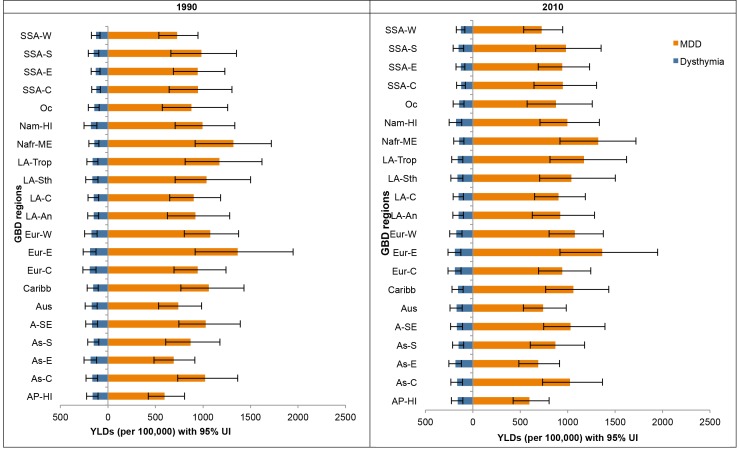
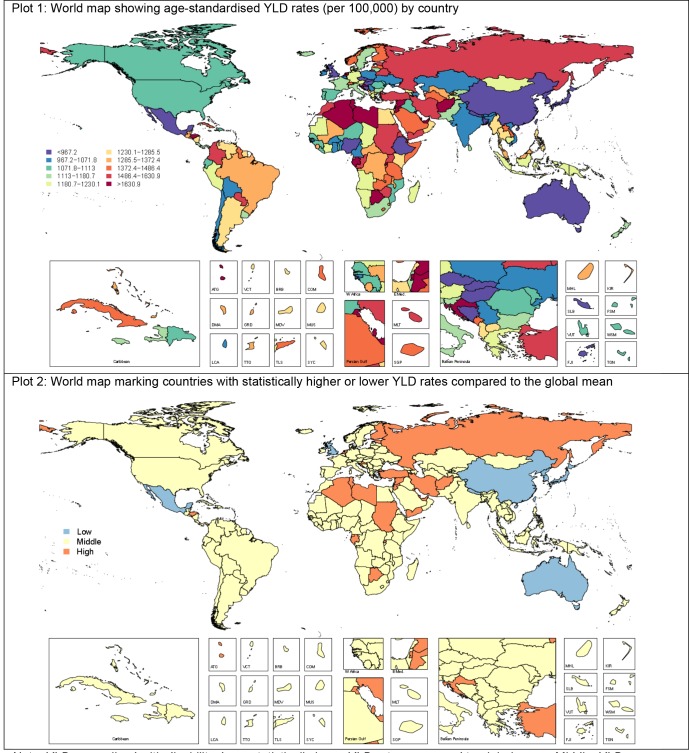
BACKGROUND: Depressive disorders were a leading cause of burden in the Global Burden of Disease (GBD) 1990 and 2000 studies. Here, we analyze the burden of depressive disorders in GBD 2010 and present severity proportions, burden by country, region, age, sex, and year, as well as burden of depressive disorders as a risk factor for suicide and ischemic heart disease. METHODS AND FINDINGS: Burden was calculated for major depressive disorder (MDD) and dysthymia. A systematic review of epidemiological data was conducted. The data were pooled using a Bayesian meta-regression. Disability weights from population survey data quantified the severity of health loss from depressive disorders. These weights were used to calculate years lived with disability (YLDs) and disability adjusted life years (DALYs). Separate DALYs were estimated for suicide and ischemic heart disease attributable to depressive disorders. Depressive disorders were the second leading cause of YLDs in 2010. MDD accounted for 8.2% (5.9%-10.8%) of global YLDs and dysthymia for 1.4% (0.9%-2.0%). Depressive disorders were a leading cause of DALYs even though no mortality was attributed to them as the underlying cause. MDD accounted for 2.5% (1.9%-3.2%) of global DALYs and dysthymia for 0.5% (0.3%-0.6%). There was more regional variation in burden for MDD than for dysthymia; with higher estimates in females, and adults of working age. Whilst burden increased by 37.5% between 1990 and 2010, this was due to population growth and ageing. MDD explained 16 million suicide DALYs and almost 4 million ischemic heart disease DALYs. This attributable burden would increase the overall burden of depressive disorders from 3.0% (2.2%-3.8%) to 3.8% (3.0%-4.7%) of global DALYs. CONCLUSIONS: GBD 2010 identified depressive disorders as a leading cause of burden. MDD was also a contributor of burden allocated to suicide and ischemic heart disease. These findings emphasize the importance of including depressive disorders as a public-health priority and implementing cost-effective interventions to reduce its burden. Please see later in the article for the Editors' Summary.
Overview
CoChat Summary
TL;DR
Ferrari and colleagues used GBD 2010 to estimate the global burden of major depressive disorder (MDD) and dysthymia by country, region, age, sex, and year. Depressive disorders were a leading cause of non-fatal burden, with MDD ranking 11th for global DALYs and 2nd for global YLDs in 2010.
Key findings
- In 2010, depressive disorders accounted for 3.0% (95% UI 2.2%–3.8%) of global DALYs: MDD 2.5% (1.9%–3.2%) and dysthymia 0.5% (0.3%–0.6%). MDD ranked 11th and dysthymia 51st among global DALY causes; MDD was the 2nd leading cause of YLDs (8.2% of all YLDs) and dysthymia 19th (1.4%).
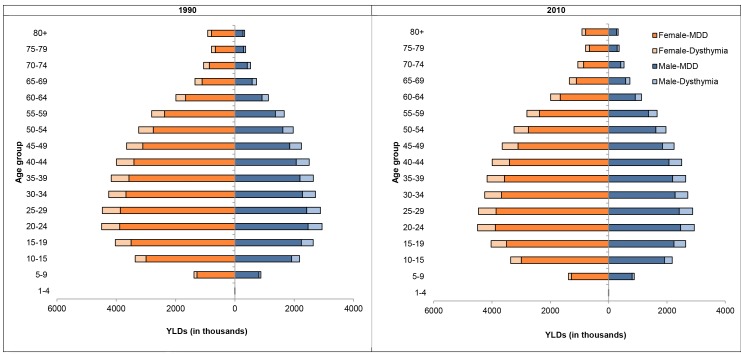
- Global prevalence was 4.4% (4.1%–4.7%) for MDD, or 298 million cases, and 1.55% (1.5%–1.6%) for dysthymia, or 106 million cases. Prevalence was higher in females than males for both disorders.
- Depressive disorder YLDs increased 37.5% between 1990 and 2010, driven by population growth (29.6%) and population aging (10.4%), with a −2.5% change due to prevalence.
- Attributable burden analyses found MDD explained an additional 16 million DALYs as a risk factor for suicide, with 46.1% (28.03%–60.8%) of suicide DALYs re-attributed to MDD; 2.9% (1.5%–4.5%) of ischemic heart disease DALYs (3.8 million DALYs, 93.5% YLLs) were attributable to MDD. Adding these increased MDD from 2.5% to 3.4% of global DALYs and depressive disorders from 3.0% to 3.8%, moving MDD from 11th to 8th place.
Methods
- GBD 2010 systematic review of literature from 1 January 1980 to 31 December 2008, with continued perusal to 31 December 2011, captured prevalence, incidence, remission/duration, and excess mortality for MDD and dysthymia. DisMod-MR, a Bayesian meta-regression tool, modeled prevalence for 187 countries, 21 world regions, males and females, 1990, 2005, and 2010, and 20 age groups.
- YLDs were calculated as prevalent cases multiplied by severity- and comorbidity-adjusted disability weights, without age-weighting or discounting. DALYs were YLDs plus YLLs, but no disorder-specific YLLs were recorded for depressive disorders. Disability weights came from population surveys in Bangladesh, Indonesia, Peru, Tanzania, and the USA (14,710 participants) and an internet survey (16,328 participants); severity distributions came from MEPS, NESARC, and NSMHWB.
- Attributable burden used GBD 2010 comparative risk assessment: meta-analyses of relative risks for MDD as a risk factor for suicide and ischemic heart disease, population attributable fractions, and multiplication by cause-specific DALYs. Time trends were decomposed into population growth, population age/sex structure, and YLD rates.
Limitations
- Stated: no disorder-specific YLLs were available for depressive disorders, and the authors could not quantify burden for all outcomes linked to MDD/dysthymia (e.g., stroke, diabetes, vascular dementia/Alzheimer’s disease), so estimates likely underestimate true burden. Meta-analyses for suicide and ischemic heart disease relied on data from only two countries, with uncertain generalizability.
- Stated: uncertainty may be larger than propagated because study-quality covariates were crude binary variables applied equally across ages and sexes; disability weights and health-state definitions may not represent all participants’ experiences; severity distributions came from three surveys in two high-income countries, limiting global representativeness and making it impossible to quantify treatment effects on severity.
- Evident from the text: country-level estimates often depended on imputation via DisMod-MR when raw epidemiological data were sparse, and regional/country differences were frequently within wide, overlapping uncertainty intervals.
Model-written summary. Check it against the paper before relying on it.
Integrity signals
Registry
Cites
Statistics
Figures
Verification
Claims the paper makes
10 Valid · 0 Not valid · 23 Not checked · 88 Own results and interpretations
Every source the paper cites for this claim was checked and supports it.
In the paper
“Out of the comprehensive list of health outcomes originally investigated for mental disorders [32], there was sufficient evidence for causal effects to quantify the burden attributable to MDD as a risk factor for suicide and ischemic heart disease.”
§ Burden of Depressive Disorders by Country, Sex, Age, and Year: Findings from the Global Burden of Disease Study 2010 > Methods > Calculation of Attributable Burden
What the sources say
- Supportedcites [32] AJ Baxter, 2011, Mental disorders as risk factors: assessing the evidence for the global burden of disease study, BMC Medicine source
The Results section says that, after the second evidence filter, suicide and ischemic heart disease had sufficient evidence for inclusion in attributable-burden estimates. It identifies major depression among the risk factors for suicide; the Abstract’s Results and discussion section identifies major depression as the risk factor for ischemic heart disease. The paper does not provide page numbers for these passages. (LLM, conf=0.90)
plainstates a cause- Asserted: passes — The authors put it forward as true.
- Checkable: passes — It can be checked against evidence.
- Load-bearing: passes — The paper’s conclusions depend on it.
- Based: passes — The paper gives a reason why it holds.
- Supported
The cited sources support only part of this claim — read each source’s verdict below.
In the paper
“Although there is literature linking stroke, diabetes, and vascular dementia/Alzheimer's disease to MDD, there was insufficient evidence at the time of our review for a causal relationship and more studies are needed to support these tentative associations [32].”
§ Burden of Depressive Disorders by Country, Sex, Age, and Year: Findings from the Global Burden of Disease Study 2010 > Discussion
What the sources say
- Partly supportedcites [32] AJ Baxter, 2011, Mental disorders as risk factors: assessing the evidence for the global burden of disease study, BMC Medicine sourceExperimental — accuracy not yet measured
The Abstract’s Results and discussion and the Summary say that evidence linking mental disorders to cardiovascular disease and type 2 diabetes was insufficient for inclusion in the Global Burden of Disease study and that further research was needed. The Discussion’s Temporality section also identifies difficulty establishing which condition came first. The paper does not address vascular dementia or Alzheimer’s disease, and its conclusion about cardiovascular disease and diabetes is broader than a conclusion specifically about MDD and stroke. (LLM, conf=0.87)
plain- Asserted: passes — The authors put it forward as true.
- Checkable: passes — It can be checked against evidence.
- Load-bearing: passes — The paper’s conclusions depend on it.
- Based: passes — The paper gives a reason why it holds.
- Partly supported
Every source the paper cites for this claim was checked and supports it.
In the paper
“This finding was driven by high prevalence estimates with 298 million MDD cases in 2010 [2] and 106 million cases of dysthymia [3].”
§ Burden of Depressive Disorders by Country, Sex, Age, and Year: Findings from the Global Burden of Disease Study 2010 > Discussion
What the sources say
- Supportedcites [2] AJ Ferrari, 2013, The epidemiological modelling of major depressive disorder: application for the Global Burden of Disease Study 2010, PLoS ONE source
The Abstract (Results, p. 1) states 'There were over 298 million cases of MDD globally at any point in time in 2010', matching the cited figure exactly. The Results section 'Final prevalence output' corroborates the underlying components (over 111 million male plus 187 million female prevalent cases in 2010) and the 4.4% global point prevalence for 2010. (LLM, conf=0.95)
plainn = 298- Asserted: passes — The authors put it forward as true.
- Checkable: passes — It can be checked against evidence.
- Load-bearing: unclear — It is unclear whether the paper’s conclusions depend on it.
- Based: passes — The paper gives a reason why it holds.
- Supported
Every source the paper cites for this claim was checked and supports it.
In the paper
“In spite of responses coming from a heterogeneous sample of individuals (e.g., a high proportion of highly educated individuals from the internet-based survey and the opposite from the population-based survey from Tanzania), the strength of the correlation between disability weights was at least 0·9 across all surveys except in Bangladesh where it was 0·75 [17].”
§ Burden of Depressive Disorders by Country, Sex, Age, and Year: Findings from the Global Burden of Disease Study 2010 > Discussion
What the sources say
- Supportedcites [17] JA Salomon, 2012, Common values in assessing health outcomes from disease and injury:disability weights measurement study for the Global Burden of Disease 2010, Lancet source
The Abstract Findings (p.1) state that 'correlations between individual survey results and results from analysis of the pooled dataset were 0·9 or higher in all surveys except in Bangladesh (r=0·75)', and the Results section repeats this ('Pearson's correlation coefficients between individual survey results and the results from the pooled analyses were 0·9 or higher in all cases except Bangladesh'). The heterogeneity framing is also supported: the Discussion notes a high degree of consistency 'across surveys with highly heterogeneous respondents', specifically the self-selected, highly educated web survey versus the representative population sample from Tanzania with the lowest educational attainment. Only minor caveat: the direct web-survey-vs-Tanzania comparison was 0·89, marginally under 0·9, but that is a pairwise survey comparison, not the survey-versus-pooled correlations the claim describes. (LLM, conf=0.92)
plainstates an association- Asserted: passes — The authors put it forward as true.
- Checkable: passes — It can be checked against evidence.
- Load-bearing: passes — The paper’s conclusions depend on it.
- Based: passes — The paper gives a reason why it holds.
- Supported
Every source the paper cites for this claim was checked and supports it.
In the paper
“We found evidence for an elevated risk for mortality in those diagnosed with MDD [2],[25]; however, since a health outcome could only occur once in the GBD cause list, MDD related deaths from suicide and ischemic heart disease were captured under the headings of intentional injuries and cardiovascular disease in the GBD capstone papers [14],[18].”
§ Burden of Depressive Disorders by Country, Sex, Age, and Year: Findings from the Global Burden of Disease Study 2010 > Discussion
What the sources say
- Supportedcites [2] AJ Ferrari, 2013, The epidemiological modelling of major depressive disorder: application for the Global Burden of Disease Study 2010, PLoS ONE source
The Results section (page unavailable), in its discussion of Figure 5, explicitly describes all-cause excess mortality experienced by people with MDD. The Methods section (page unavailable) defines the comparison as deaths among people with MDD versus those without MDD or the general population. (LLM, conf=0.92)
- Supportedcites [25] AJ Baxter, 2011, Factors influencing risk of premature mortality in community cases of depression: a meta-analytic review, Epidemiology Research International source
The paper’s Results, as reported in the Abstract, found significantly higher all-cause mortality risk for major depression (RR 1.92, 95% CI 1.65–2.23). The Discussion likewise reports almost twice the risk of premature mortality for community cases of major depression compared with those without depression. (LLM, conf=0.94)
plainstates an association- Asserted: passes — The authors put it forward as true.
- Checkable: passes — It can be checked against evidence.
- Load-bearing: passes — The paper’s conclusions depend on it.
- Based: passes — The paper gives a reason why it holds.
- Rests on an assumption not shown here.
- Supported
58 more claims · 1 with their cited sources checked
Create a free account to see all 121 claims and to verify the 25 references still open.
- Probably not a substantial claim. 42
- It may state two separate claims as one. 30
Claims other papers make about this one
Each is checked against this paper’s own text: does it say what the citing paper says it does?
The source backs part of the claim, not all of it — or backs it for a different population, condition or comparison.
In the citing paper
“The World Mental Health Survey estimated the annual prevalence of MDD to be 4.4% and the lifetime prevalence to be approximately 10% -15%36,37.”
From Temporal and spatial trend analysis of all-cause depression burden based on Global Burden of Disease (GBD) 2019 study (2024) · cites this paper as [36]
Experimental — accuracy not yet measuredThe source backs part of the claim, not all of it — or backs it for a different population, condition or comparison.
In the citing paper
“This may be attributed to the fact that depression and anxiety are the most common mental disorder around the world [44, 45], and chatbots are reported to be effective in improving social skills for patients with autism [14, 17, 46-48].”
From An overview of the features of chatbots in mental health: A scoping review (2019) · cites this paper as [44]
Experimental — accuracy not yet measuredThe source backs part of the claim, not all of it — or backs it for a different population, condition or comparison.
In the citing paper
“Direct and indirect costs of depression and anxiety make these disorders main contributors to the global burden of disease [42, 43]”
From Mobile Apps for the Management of Comorbid Overweight/Obesity and Depression/Anxiety: A Systematic Review (2020) · cites this paper as [43]
Experimental — accuracy not yet measuredIn the citing paper
“Major depressive disorder ranks among the leading mental health causes of the global burden of disease (104).”
From Vagus Nerve as Modulator of the Brain–Gut Axis in Psychiatric and Inflammatory Disorders (2018) · cites this paper as [104]
Citations
Cites
Diagnostic and Statistical Manual of Mental Disorders
Williams, J. B. W., & First, M. (2013) · Encyclopedia of Social Work · doi:10.1093/acrefore/9780199975839.013.104 · Cited by 109,519
Preferred Reporting Items for Systematic Reviews and Meta-Analyses: the PRISMA statement
Moher, D., Liberati, A., Tetzlaff, J., Altman, D. G., & for the PRISMA Group (2009) · BMJ · doi:10.1136/bmj.b2535 · Cited by 83,823
Preferred Reporting Items for Systematic Reviews and Meta-Analyses: The PRISMA Statement
Moher, D., Liberati, A., Tetzlaff, J., Altman, D. G., & The PRISMA Group (2009) · PLoS Medicine · doi:10.1371/journal.pmed.1000097 · Cited by 64,042
Preferred reporting items for systematic reviews and meta-analyses: the PRISMA Statement.
(2009) · PubMed Central · Cited by 44,859
Preferred Reporting Items for Systematic Reviews and Meta-Analyses: The PRISMA Statement
Moher, D., Liberati, A., Tetzlaff, J., & Altman, D. G. (2009) · Journal of Clinical Epidemiology · doi:10.1016/j.jclinepi.2009.06.005 · Cited by 19,575
Wang, G., Ma, R., Qiao, G., Wada, K., Aizawa, Y., & Satoh, T. (2015) · Integrative Medicine International · doi:10.1159/000368408 · Cited by 18,657
Lozano, R., Naghavi, M., Foreman, K., Lim, S., Shibuya, K., Aboyans, V., Abraham, J., Adair, T., Aggarwal, R., Ahn, S. Y., et al. (2012) · The Lancet · doi:10.1016/s0140-6736(12)61728-0 · Cited by 14,070
Lim, S. S., Vos, T., Flaxman, A. D., Danaei, G., Shibuya, K., Adair-Rohani, H., AlMazroa, M. A., Amann, M., Anderson, H. R., Andrews, K. G., et al. (2012) · The Lancet · doi:10.1016/s0140-6736(12)61766-8 · Cited by 11,805
Self-citationMurray, C. J. L., Vos, T., Lozano, R., Naghavi, M., Flaxman, A. D., Michaud, C., Ezzati, M., Shibuya, K., Salomon, J. A., Abdalla, S., et al. (2012) · The Lancet · doi:10.1016/s0140-6736(12)61689-4 · Cited by 8,888
Self-citationVos, T., Flaxman, A. D., Naghavi, M., Lozano, R., Michaud, C., Ezzati, M., Shibuya, K., Salomon, J. A., Abdalla, S., Aboyans, V., et al. (2012) · The Lancet · doi:10.1016/s0140-6736(12)61729-2 · Cited by 8,291
Self-citation
Cited by
Items 301–400 of 1,039
Sharma, A., Barrett, M. S., Cucchiara, A. J., Gooneratne, N. S., & Thase, M. E. (2017) · The Journal of Clinical Psychiatry · doi:10.4088/jcp.16m10819 · Cited by 92
Artigas, F., Bortolozzi, A. A., & Celada, P. (2017) · European Neuropsychopharmacology · doi:10.1016/j.euroneuro.2017.10.032 · Cited by 102
Bretschneider, J., Janitza, S., Jacobi, F., Thom, J., Hapke, U., Kurth, T., & Maske, U. E. (2018) · BMC Psychiatry · doi:10.1186/s12888-018-1973-7 · Cited by 91
Wang, Y.-H., Shi, Z.-T., & Luo, Q.-Y. (2017) · Medicine · doi:10.1097/md.0000000000006476 · Cited by 89
Immediate Mood Scaler: Tracking Symptoms of Depression and Anxiety Using a Novel Mobile Mood Scale
Nahum, M., Van Vleet, T. M., Sohal, V. S., Mirzabekov, J. J., Rao, V. R., Wallace, D. L., Lee, M. B., Dawes, H., Stark-Inbar, A., Jordan, J. T., et al. (2017) · JMIR mHealth and uHealth · doi:10.2196/mhealth.6544 · Cited by 91
Li, H., Zhao, Y.-H., Zeng, M.-J., Fang, F., Li, M., Qin, T.-T., Ye, L., Li, H.-W., Qu, R., & Ma, S.-P. (2017) · Psychopharmacology · doi:10.1007/s00213-017-4720-8 · Cited by 93
Association of Brain Cortical Changes With Relapse in Patients With Major Depressive Disorder
Zaremba, D., Dohm, K., Redlich, R., Grotegerd, D., Strojny, R., Meinert, S., Bürger, C., Enneking, V., Förster, K., Repple, J., et al. (2018) · JAMA Psychiatry · doi:10.1001/jamapsychiatry.2018.0123 · Cited by 99
From Emotions to Mood Disorders: A Survey on Gait Analysis Methodology
Deligianni, F., Guo, Y., & Yang, G. (2019) · IEEE Journal of Biomedical and Health Informatics · doi:10.1109/jbhi.2019.2938111 · Cited by 108
Chen, W., Du, J.-K., Hu, X., Yu, Q., Li, D., Wang, C.-N., Zhu, X., & Liu, Y. (2017) · Physiology & Behavior · doi:10.1016/j.physbeh.2017.09.024 · Cited by 94
Jonsson, U., Bertilsson, G., Allard, P., Gyllensvärd, H., Söderlund, A., Tham, A., & Andersson, G. (2016) · PLOS ONE · doi:10.1371/journal.pone.0160859 · Cited by 87
“Depression is a major public health problem and a leading cause of disability [1].”
BackgroundDepression in Children and Adolescents: A Review of Indian studies
Grover, S., Raju V, V., Sharma, A., & Shah, R. (2019) · Indian Journal of Psychological Medicine · doi:10.4103/ijpsym.ijpsym_5_19 · Cited by 90
Perspectives for therapy of treatment‐resistant depression
Papp, M., Cubała, W. J., Święcicki, Ł., Newman‐Tancredi, A., & Willner, P. (2021) · British Journal of Pharmacology · doi:10.1111/bph.15596 · Cited by 104
Molecular basis of dendritic atrophy and activity in stress susceptibility
Francis, T. C., Chandra, R., Gaynor, A., Konkalmatt, P., Metzbower, S. R., Evans, B., Engeln, M., Blanpied, T. A., & Lobo, M. K. (2017) · Molecular Psychiatry · doi:10.1038/mp.2017.178 · Cited by 89
Pasha, T., & Stokes, P. R. A. (2018) · Frontiers in Psychiatry · doi:10.3389/fpsyt.2018.00086 · Cited by 108
Markov, D. D., & Novosadova, E. V. (2022) · Biology · doi:10.3390/biology11111621 · Cited by 133
Willner, P., Gruca, P., Lason, M., Tota-Glowczyk, K., Litwa, E., Niemczyk, M., & Papp, M. (2019) · Behavioural Pharmacology · doi:10.1097/fbp.0000000000000431 · Cited by 87
White matter abnormalities in depression: A categorical and phenotypic diffusion MRI study
Coloigner, J., Batail, J.-M. V., Commowick, O., Corouge, I., Robert, G. H., Barillot, C., & Drapier, D. (2019) · NeuroImage Clinical · doi:10.1016/j.nicl.2019.101710 · Cited by 93
Languishing in the crossroad? A scoping review of intersectional inequalities in mental health
Trygg, N. F., Gustafsson, P. E., & Månsdotter, A. (2019) · International Journal for Equity in Health · doi:10.1186/s12939-019-1012-4 · Cited by 142
Woody, M. L., Feurer, C., Sosoo, E. E., Hastings, P. D., & Gibb, B. E. (2016) · Journal of Child Psychology and Psychiatry · doi:10.1111/jcpp.12562 · Cited by 87
Lovell, R., Husk, K., Bethel, A. C., & Garside, R. (2014) · Environmental Evidence · doi:10.1186/2047-2382-3-20 · Cited by 133
Batterham, P. J., Christensen, H., Mackinnon, A. J., Gosling, J. A., Thorndike, F. P., Ritterband, L. M., Glozier, N., & Griffiths, K. M. (2017) · BJPsych Open · doi:10.1192/bjpo.bp.117.005231 · Cited by 85
Gallis, J. A., Maselko, J., O’Donnell, K., Song, K., Saqib, K., Turner, E. L., & Sikander, S. (2018) · PeerJ · doi:10.7717/peerj.5185 · Cited by 103
Salamanca-Sanabria, A., Richards, D., Timulak, L., Connell, S., Mojica Perilla, M., Parra-Villa, Y., & Castro-Camacho, L. (2020) · JMIR Mental Health · doi:10.2196/13392 · Cited by 83
“High rates of prevalence of depression have been found worldwide and in various cultural groups [1-5], with an upward trend in prevalence in low- and middle-income countries (LMICs) [6].”
Schnohr, P., Marott, J. L., Kristensen, T. S., Gyntelberg, F., Gronbaek, M., Lange, P., Jensen, M. T., Jensen, G. B., & Prescott, E. (2015) · European Heart Journal · doi:10.1093/eurheartj/ehv027 · Cited by 86
Altered dynamic functional connectivity in weakly-connected state in major depressive disorder
Yao, Z., Shi, J., Zhang, Z., Zheng, W., Hu, T., Li, Y., Yu, Y., Zhang, Z., Fu, Y., Zou, Y., et al. (2019) · Clinical Neurophysiology · doi:10.1016/j.clinph.2019.08.009 · Cited by 90
Nyundo, A., Manu, A., Regan, M., Ismail, A., Chukwu, A., Dessie, Y., Njau, T., Kaaya, S. F., & Smith Fawzi, M. C. (2020) · Tropical Medicine & International Health · doi:10.1111/tmi.13336 · Cited by 85
Dionysopoulou, S., Charmandari, E., Bargiota, Α., Vlahos, N., Mastorakos, G. P., & Valsamakis, G. (2021) · Nutrients · doi:10.3390/nu13020498 · Cited by 102
Understanding Help-Seeking Behavior in Depression: A Qualitative Synthesis of Patients’ Experiences
Doblyte, S., & Jiménez-Mejías, E. (2017) · Qualitative Health Research · doi:10.1177/1049732316681282 · Cited by 86
“depression; illness identity; help-seeking; meta-ethnography; qualitative synthesis; qualitative; Europe; North America even if they do so, the initial contact with health care system is frequently delayed significantly—out of those who eventually seek help, 40% do so during the first year of onset but the remaining 6…”
InfluentialLee, Y. Y., Barendregt, J. J., Stockings, E. A., Ferrari, A. J., Whiteford, H. A., Patton, G. A., & Mihalopoulos, C. (2017) · Epidemiology and Psychiatric Sciences · doi:10.1017/s2045796016000469 · Cited by 85
“This weighted average was based on a severity distribution derived from the GBD study (Ferrari et al. 2013); which calculated the comorbidity-adjusted proportion of mild, moderate and severe depression using validated SF-12 cut-offs from the 1997 National Survey of Mental Health and Wellbeing…”
BackgroundMethodInfluentialSelf-citationKühn, S., Berna, F. S., Lüdtke, T., Gallinat, J., & Moritz, S. (2018) · Frontiers in Psychology · doi:10.3389/fpsyg.2018.00129 · Cited by 109
Moderate alcohol consumption and depression – a longitudinal population‐based study in Sweden
Gémes, K., Forsell, Y., Janszky, I., László, K. D., Lundin, A., de León, A. P., Mukamal, K. J., & Möller, J. (2019) · Acta Psychiatrica Scandinavica · doi:10.1111/acps.13034 · Cited by 99
Emon, M. P. Z., Das, R., Nishuty, N. L., Shalahuddin Qusar, M. M. A., Bhuiyan, M. A., & Islam, M. R. (2020) · BMC Research Notes · doi:10.1186/s13104-020-04952-3 · Cited by 85
Genetic evidence suggests posttraumatic stress disorder as a subtype of major depressive disorder
Zhang, F., Rao, S., Cao, H., Zhang, X., Wang, Q., Xu, Y., Sun, J., Wang, C., Chen, J., Xu, X., et al. (2022) · Journal of Clinical Investigation · doi:10.1172/jci145942 · Cited by 103
Terhorst, Y., Rathner, E.-M., Baumeister, H., & Sander, L. (2018) · Verhaltenstherapie · doi:10.1159/000481692 · Cited by 84
Ogbo, F. A., Mathsyaraja, S., Koti, R. K., Perz, J., & Page, A. (2018) · BMC Psychiatry · doi:10.1186/s12888-018-1918-1 · Cited by 84
Shen, Y., Wu, F., Zhou, Y., Ma, Y., Huang, X., Ning, Y., Lang, X., Luo, X., & Zhang, X. (2019) · Journal of Affective Disorders · doi:10.1016/j.jad.2019.08.067 · Cited by 88
Generalizable brain network markers of major depressive disorder across multiple imaging sites
Yamashita, A., Sakai, Y., Yamada, T., Yahata, N., Kunimatsu, A., Okada, N., Itahashi, T., Hashimoto, R., Mizuta, H., Ichikawa, N., et al. (2020) · PLoS Biology · doi:10.1371/journal.pbio.3000966 · Cited by 96
Tariq, A., Reid, C. L., & Chan, S. W. Y. (2021) · Psychological Medicine · doi:10.1017/s0033291721001458 · Cited by 96
Tadayonnejad, R., Yang, S., Kumar, A., & Ajilore, O. (2014) · Journal of Affective Disorders · doi:10.1016/j.jad.2014.10.017 · Cited by 93
Paans, N. P. G., Bot, M., Brouwer, I. A., Visser, M., Roca, M., Kohls, E., Watkins, E. R., & Penninx, B. W. J. H. (2018) · Journal of Psychosomatic Research · doi:10.1016/j.jpsychores.2018.03.003 · Cited by 104
Clevenger, S. S., Malhotra, D., Dang, J., Vanle, B., & IsHak, W. W. (2018) · Therapeutic Advances in Psychopharmacology · doi:10.1177/2045125317737264 · Cited by 83
Redei, E. E., Andrus, B. M., Kwasny, M. J., Seok, J., Cai, X., Ho, J., & Mohr, D. C. (2014) · Translational Psychiatry · doi:10.1038/tp.2014.66 · Cited by 83
Dong, B., Chen, Z., Yin, X., Li, D., Ma, J., Yin, P., Cao, Y., Lao, L., & Xu, S. (2017) · BioMed Research International · doi:10.1155/2017/9614810 · Cited by 83
Tan, A., Costi, S., Morris, L. S., Van Dam, N. T., Kautz, M., Whitton, A. E., Friedman, A. K., Collins, K. A., Ahle, G., Chadha, N., et al. (2020) · Molecular Psychiatry · doi:10.1038/s41380-018-0283-2 · Cited by 80
Dietary magnesium intake and risk of depression
Sun, C., Wang, R., Li, Z., & Zhang, D. (2018) · Journal of Affective Disorders · doi:10.1016/j.jad.2018.12.114 · Cited by 96
Cross-sectional and prospective relationship between physical activity and depression symptoms
Marques, A., Bordado, J., Peralta, M., Gouveia, É. R., Tesler, R., Demetriou, Y., & Gómez‐Baya, D. (2020) · Scientific Reports · doi:10.1038/s41598-020-72987-4 · Cited by 97
Miron, J., Jodoin, V. D., Lespérance, P., & Blumberger, D. M. (2021) · Therapeutic Advances in Psychopharmacology · doi:10.1177/20451253211042696 · Cited by 110
Kim, J. M., Chalem, Y., di Nicola, S., Hong, J. P., Won, S. H., & Milea, D. (2016) · Psychiatry Research · doi:10.1016/j.psychres.2016.01.022 · Cited by 83
Shallcross, A. J., Gross, J. J., Visvanathan, P. D., Kumar, N., Palfrey, A., Ford, B. Q., Dimidjian, S., Shirk, S., Holm-Denoma, J., Goode, K. M., et al. (2015) · Journal of Consulting and Clinical Psychology · doi:10.1037/ccp0000050 · Cited by 81
Almeida, O. P., Flicker, L. A., Fenner, S. G., Smith, K., Hyde, Z., Atkinson, D. N., Skeaf, L., Malay, R., & LoGiudice, D. (2014) · PLoS ONE · doi:10.1371/journal.pone.0094983 · Cited by 85
The interface of depression and diabetes: treatment considerations
Fanelli, G., Raschi, E., Hafez, G., Matura, S., Schiweck, C., Poluzzi, E., & Lunghi, C. (2025) · Translational Psychiatry · doi:10.1038/s41398-025-03234-5 · Cited by 129
Knowles, S. E., Chew-Graham, C., Adeyemi, I., Coupe, N., & Coventry, P. A. (2015) · BMC Family Practice · doi:10.1186/s12875-015-0246-5 · Cited by 82
Smoking, heavy drinking, and depression among U.S. middle-aged and older adults
An, R., & Xiang, X. (2015) · Preventive Medicine · doi:10.1016/j.ypmed.2015.09.026 · Cited by 93
Prevalence and treatment coverage for depression: a population-based survey in Vidarbha, India
Shidhaye, R., Gangale, S., & Patel, V. (2016) · Social Psychiatry and Psychiatric Epidemiology · doi:10.1007/s00127-016-1220-9 · Cited by 81
Immune and Neuroprotective Effects of Physical Activity on the Brain in Depression
Phillips, C., & Fahimi, A. (2018) · Frontiers in Neuroscience · doi:10.3389/fnins.2018.00498 · Cited by 81
Non-invasive vagus nerve stimulation boosts mood recovery after effort exertion
Ferstl, M., Teckentrup, V., Lin, W. M., Kräutlein, F., Kühnel, A., Klaus, J., Walter, M., & Kroemer, N. B. (2021) · Psychological Medicine · doi:10.1017/s0033291720005073 · Cited by 85
Functional Connectivity of the Nucleus Accumbens and Changes in Appetite in Patients With Depression
Kroemer, N. B., Opel, N., Teckentrup, V., Li, M., Grotegerd, D., Meinert, S., Lemke, H., Kircher, T., Nenadić, I., Krug, A., et al. (2022) · JAMA Psychiatry · doi:10.1001/jamapsychiatry.2022.2464 · Cited by 81
Nickson, D., Meyer, C., Walasek, L., & Toro, C. T. (2023) · BMC Medical Informatics and Decision Making · doi:10.1186/s12911-023-02341-x · Cited by 108
Fava, M., Thase, M. E., Trivedi, M. H., Ehrich, E., Martin, W. F., Memisoglu, A., Nangia, N., Stanford, A. D., Yu, M., & Pathak, S. (2020) · Molecular Psychiatry · doi:10.1038/s41380-018-0284-1 · Cited by 80
Talking sensibly about depression
Patel, V. (2017) · PLOS Medicine · doi:10.1371/journal.pmed.1002257 · Cited by 80
“Given that the population point prevalence of depression, based on the binary system, is estimated at about 5% of the adult population [26]—translating to over 200 million people globally—few countries, particularly in the global south, have a health care system that can cope with the massive numbers of people who wou…”
BackgroundBoda, E. (2021) · European Journal of Neuroscience · doi:10.1111/ejn.14621 · Cited by 80
Costi, S., Morris, L. S., Kirkwood, K. A., Hoch, M., Corniquel, M., Vo-Le, B., Iqbal, T., Chadha, N., Pizzagalli, D. A., Whitton, A., et al. (2021) · American Journal of Psychiatry · doi:10.1176/appi.ajp.2020.20050653 · Cited by 78
Kalenderoğlu, A., Çelik, M., Sevgi-Karadag, A., & Eğilmez, O. B. (2016) · Journal of Affective Disorders · doi:10.1016/j.jad.2016.06.039 · Cited by 93
Kondo, D. G., Forrest, L. N., Shi, X., Sung, Y.-H., Hellem, T. L., Huber, R. S., & Renshaw, P. F. (2016) · Amino Acids · doi:10.1007/s00726-016-2194-3 · Cited by 79
Cormack, F., McCue, M., Taptiklis, N., Skirrow, C., Glazer, E., Panagopoulos, E., van Schaik, T. A., Fehnert, B., King, J., & Barnett, J. H. (2019) · JMIR Mental Health · doi:10.2196/12814 · Cited by 79
Numata, S., Ishii, K., Tajima, A., Iga, J.-I., Kinoshita, M., Watanabe, S., Umehara, H., Fuchikami, M., Okada, S., Boku, S., et al. (2015) · Epigenetics · doi:10.1080/15592294.2014.1003743 · Cited by 79
“According to the Global Burden of Disease Study 2010, MDD was not only one of the major leading causes of global disability-adjusted life years but also a contributor of burden allocated to suicide.(2,3) Clinical diagnosis of MDD is made on the basis of clinical symptoms that are exhibited by patients.”
MethodAssessing the validity of the ICECAP-A capability measure for adults with depression
Mitchell, P. M., Al‐Janabi, H., Byford, S., Kuyken, W., Richardson, J. R. J., Iezzi, A., & Coast, J. (2017) · BMC Psychiatry · doi:10.1186/s12888-017-1211-8 · Cited by 87
Depression Screening and Measurement-Based Care in Primary Care
Siniscalchi, K. A. S., Broome, M. E., Fish, J., Ventimiglia, J., Thompson, J. A., Roy, P., Pipes, R., & Trivedi, M. H. (2020) · Journal of Primary Care & Community Health · doi:10.1177/2150132720931261 · Cited by 110
Savouring and Self‐compassion as Protective Factors for Depression
Ford, J., Klibert, J. J., Tarantino, N., & Lamis, D. A. (2017) · Stress and Health · doi:10.1002/smi.2687 · Cited by 78
The effectiveness and safety of acupuncture for depression: An overview of meta-analyses
Li, M., Niu, J., Yan, P., Yao, L., He, W., Wang, M., Li, H., Cao, L., Li, X., Shi, X., et al. (2019) · Complementary Therapies in Medicine · doi:10.1016/j.ctim.2019.102202 · Cited by 88
Depression in patients with peripheral arterial disease: A systematic review
Brostow, D. P., Petrik, M. L., Starosta, A. J., & Waldo, S. W. (2017) · European Journal of Cardiovascular Nursing · doi:10.1177/1474515116687222 · Cited by 100
Veronese, N., Stubbs, B., Solmi, M., Ajnakina, O., Carvalho, A. F., & Maggi, S. (2017) · Psychosomatic Medicine · doi:10.1097/psy.0000000000000537 · Cited by 83
Zagorscak, P., Heinrich, M., Sommer, D., Wagner, B., & Knaevelsrud, C. (2018) · Psychotherapy and Psychosomatics · doi:10.1159/000481515 · Cited by 78
Blomstedt, P., Naesström, M., & Bodlund, O. (2017) · Clinical Case Reports · doi:10.1002/ccr3.856 · Cited by 77
Cohort profile: the Australian genetics of depression study
Byrne, E. M., Kirk, K. M., Medland, S. E., McGrath, J. J., Colodro‐Conde, L., Parker, R., Cross, S., Sullivan, L., Statham, D. J., Levinson, D. F., et al. (2020) · BMJ Open · doi:10.1136/bmjopen-2019-032580 · Cited by 87
Marques, A., Gómez‐Baya, D., Peralta, M., Frasquilho, D., Santos, T., Martins, J., Ferrari, G., & de Matos, M. G. (2020) · International Journal of Environmental Research and Public Health · doi:10.3390/ijerph17165674 · Cited by 86
Khan, M. N., Akhtar, P. S., Ijaz, S., & Waqas, A. (2021) · Frontiers in Public Health · doi:10.3389/fpubh.2020.603357 · Cited by 123
Electroconvulsive Therapy: Mechanisms of Action, Clinical Considerations, and Future Directions
Kritzer, M. D., Peterchev, A. V., & Camprodon, J. A. (2023) · Harvard Review of Psychiatry · doi:10.1097/hrp.0000000000000365 · Cited by 99
Unhappy Development: Dissatisfaction With Life on the Eve of the Arab Spring
Arampatzi, E., Burger, M., Ianchovichina, E., Röhricht, T., & Veenhoven, R. (2018) · Review of Income and Wealth · doi:10.1111/roiw.12388 · Cited by 100
Syme, K., Garfield, Z. H., & Hagen, E. H. (2015) · Evolution and Human Behavior · doi:10.1016/j.evolhumbehav.2015.10.005 · Cited by 85
Heart rate variability as a biomarker of anxious depression response to antidepressant medication
Kircanski, K., Williams, L. M., & Gotlib, I. H. (2018) · Depression and Anxiety · doi:10.1002/da.22843 · Cited by 83
Osok, J., Kigamwa, P., Huang, K., Grote, N. K., & Kumar, M. (2018) · BMC Women s Health · doi:10.1186/s12905-018-0581-5 · Cited by 93
Zhang, Z., He, P., Liu, M., Zhou, C., Liu, C., Li, H., Zhang, Y., Li, Q., Ye, Z., Wu, Q., et al. (2021) · Clinical Journal of the American Society of Nephrology · doi:10.2215/cjn.18441120 · Cited by 88
Blood BDNF Level Is Gender Specific in Severe Depression
Kreinin, A., Lisson, S., Nesher, E., Schneider, J., Bergman, J., Farhat, K., Farah, J., Lejbkowicz, F., Yadid, G., Raskin, L., et al. (2015) · PLOS ONE · doi:10.1371/journal.pone.0127643 · Cited by 76
Silverstein, W. K., Noda, Y., Barr, M. S., Vila-Rodriguez, F., Rajji, T. K., Fitzgerald, P. B., Downar, J., Mulsant, B. H., Vigod, S., Daskalakis, Z. J., et al. (2015) · Depression and Anxiety · doi:10.1002/da.22424 · Cited by 76
Culture and National Well-Being: Should Societies Emphasize Freedom or Constraint?
Harrington, J. R., Boski, P., & Gelfand, M. J. (2015) · PLoS ONE · doi:10.1371/journal.pone.0127173 · Cited by 85
Čulig, L., Surget, A., Bourdey, M., Khemissi, W., Guisquet, A. L., Vogel, E., Sahay, A., Hen, R., & Belzung, C. (2017) · Neuropharmacology · doi:10.1016/j.neuropharm.2017.09.009 · Cited by 79
Rakofsky, J. J., & Rapaport, M. H. (2018) · CONTINUUM Lifelong Learning in Neurology · doi:10.1212/con.0000000000000604 · Cited by 101
Marx, P., Antal, P., Bolgár, B., Bagdy, G., Deakin, J. F. W., & Juhász, G. (2017) · PLoS Computational Biology · doi:10.1371/journal.pcbi.1005487 · Cited by 86
Watanabe, Z., Iwama, N., Nishigori, H., Nishigori, T., Mizuno, S., Sakurai, K., Ishikuro, M., Obara, T., Tatsuta, N., Nishijima, I., et al. (2015) · Journal of Affective Disorders · doi:10.1016/j.jad.2015.10.024 · Cited by 80
Acharya, B., Maru, D., Schwarz, R., Citrin, D., Tenpa, J., Hirachan, S., Basnet, M., Thapa, P., Swar, S., Halliday, S., et al. (2017) · Globalization and Health · doi:10.1186/s12992-016-0226-0 · Cited by 74
Smith, I. C., & White, S. W. (2020) · Autism · doi:10.1177/1362361320908101 · Cited by 72
Zhong, H., Xu, J., Yang, M., Hussain, M., Liu, X., Feng, F., & Guan, R. (2023) · Nutrients · doi:10.3390/nu15030496 · Cited by 88
Zhang, Z., Chen, X., Wu, S., Chen, X., Wang, X., Liu, C., Zeng, N., Liu, Y., Huo, T., Liu, X., et al. (2025) · Journal of Affective Disorders · doi:10.1016/j.jad.2025.120299 · Cited by 120
Grochtdreis, T., Brettschneider, C., Wegener, A., Watzke, B., Riedel-Heller, S., Härter, M., & König, H.-H. (2015) · PLOS ONE · doi:10.1371/journal.pone.0123078 · Cited by 74
The Serotonin Transporter and Early Life Stress: Translational Perspectives
Houwing, D. J., Buwalda, B., van der Zee, E. A., de Boer, S. F., & Olivier, J. D. A. (2017) · Frontiers in Cellular Neuroscience · doi:10.3389/fncel.2017.00117 · Cited by 88
Singla, D. R., MacKinnon, D. P., Fuhr, D. C., Sikander, S., Rahman, A., & Patel, V. (2019) · The British Journal of Psychiatry · doi:10.1192/bjp.2019.184 · Cited by 106
Hornstein, S., Forman‐Hoffman, V. L., Nazander, A., Ranta, K., & Hilbert, K. (2021) · Digital Health · doi:10.1177/20552076211060659 · Cited by 100
Non-invasive transcranial brain modulation for neurological disorders treatment: A narrative review
Mosilhy, E. A., Alshial, E. E., Eltaras, M. M., Rahman, M. M. A., Helmy, H. I., Elazoul, A. H., Hamdy, O., & Mohammed, H. S. (2022) · Life Sciences · doi:10.1016/j.lfs.2022.120869 · Cited by 86
A mechanistic account of serotonin’s impact on mood
Michely, J., Eldar, E., Martin, I. M., & Dolan, R. J. (2020) · Nature Communications · doi:10.1038/s41467-020-16090-2 · Cited by 72
Metadata
- Authors
- Ferrari, A. J., Charlson, F. J., Norman, R. E., Patten, S. B., Freedman, G., Murray, C. J. L., Vos, T., & Whiteford, H. A.
- Affiliations
- The University of Queensland (AU)
- University of Calgary (CA)
- University of Washington (US)
- Corresponding author
- Ferrari, Alize J.
- ORCID
- Venue
- PLoS Medicine
- Publisher
- Public Library of Science (PLoS)
- Published
- 2013-11-05
- Volume
- 10
- Issue
- 11
- Pages
- e1001547
- ISSN
- 1549-1277 (ISSN-L)
- 1549-1676
- PMC
- PMC3818162
- OpenAlex
- W2171340584
- Cited by
- 3,115
- References
- 48
- Citations by year
- 2026: 109 · 2025: 165 · 2024: 177 · 2023: 226 · 2022: 250 · 2021: 339 · 2020: 286 · 2019: 303 · 2018: 309 · 2017: 321 · 2016: 262 · 2015: 248 · 2014: 110 · 2013: 5
- FWCI
- 311.80
- Type
- journal article
- Language
- en
- Open access
- gold
- doi.org
- Locations
- PLoS Medicine (publishedVersion, cc-by)
- Europe PMC (PubMed Central) (publishedVersion, cc-by)
- PubMed Central (publishedVersion, cc-by)
- PubMed (publishedVersion)
- QUT ePrints (Queensland University of Technology) (submittedVersion, other-oa)
- DOAJ (DOAJ: Directory of Open Access Journals) (submittedVersion, cc-by-sa)
- Figshare (submittedVersion, cc-by)
- Funders
- Bill and Melinda Gates Foundation
- University of Washington
- Topics
- Health Sciences › Medicine › Psychiatry and Mental health › Mental Health Treatment and Access
- Health Sciences › Medicine › Pharmacology (medical) › Treatment of Major Depression
- Social Sciences › Economics, Econometrics and Finance › Economics and Econometrics › Health Systems, Economic Evaluations, Quality of Life
- Keywords
- depressive disorders, major depressive disorder, dysthymia, global burden of disease, disability-adjusted life years, years lived with disability, suicide, ischemic heart disease, disability weights, sex differences, age differences, temporal trends, regional variation, attributable burden, public health priorities, Global Burden of Disease Study 2010
- MeSH terms
- Adolescent, Adult, Age Factors, Aged, Child, Child, Preschool, Depression, Depressive Disorder, Female, Persons with Disabilities, Health Surveys, Humans, Infant, Male, Middle Aged, Public Health, Risk Factors, Sex Factors, Suicide, Global Health, Myocardial Ischemia, Cost of Illness, Quality-Adjusted Life Years, Young Adult
About these checks
Registry, retraction, Cites and statistics results are computed, not judged, with one exception: a printed reference that no index lists is read once by a model before it counts as a citation error. Claims are extracted by a model and kept only when their quote appears verbatim in the text; each cited source is then checked, with a model’s help, for whether it says what the claim relies on. Those verdicts can be wrong — read the claim’s quote and the cited source before relying on one.
The claim verdicts this report counts are experimental: their accuracy is not yet measured.
A language model drew the claims from the paper on 2026-10-04, under version 3 of the claim definition (model deepseek-v4.1-flash, prompt extract-v3).
A second model labelled each claim on 2026-10-04 (model jev-1.13-20260917, definition revision gold-guideline-v0.2).
Cited sources are checked with a language model’s help (gpt-6-sol and qwen3.8-omni-flash).
Statistics and arithmetic are recomputed, not judged.
Confidence bands are shown only for fields calibrated on our annotated test set. None is calibrated yet, so no band is shown.
What counts as a claim ›How we measure confidence ›How we check this ›
Are you an author, or do you see a problem with this page? Request a review
Data sources
Bibliographic data: Semantic Scholar, OpenAlex, Crossref.
Contains information from the Semantic Scholar Academic Graph Datasets, made available under the ODC Attribution License (ODC-BY 1.0).
Semantic Scholar’s data is described in: Kinney, R., et al. (2023). The Semantic Scholar Open Data Platform. arXiv:2301.10140.
