

Burden of Depressive Disorders by Country, Sex, Age, and Year: Findings from the Global Burden of Disease Study 2010
Open accessThe DOI matches its Crossref record; 47 of the 48 references it cites were found in a registry or an index; 16 of the 41 sources its claims cite were checked for support.
Abstract
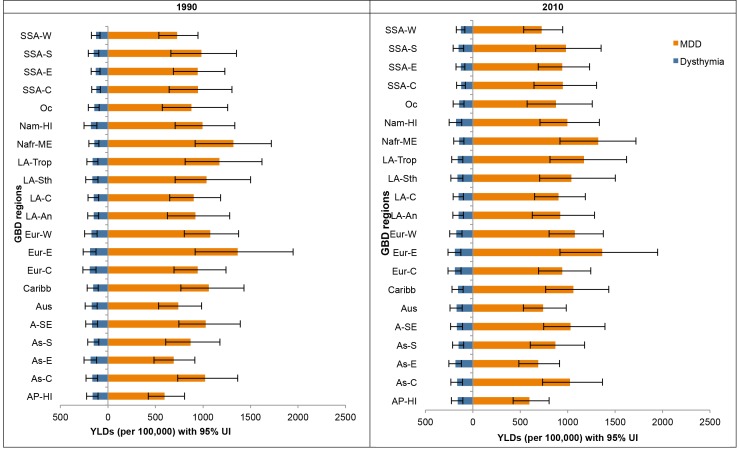
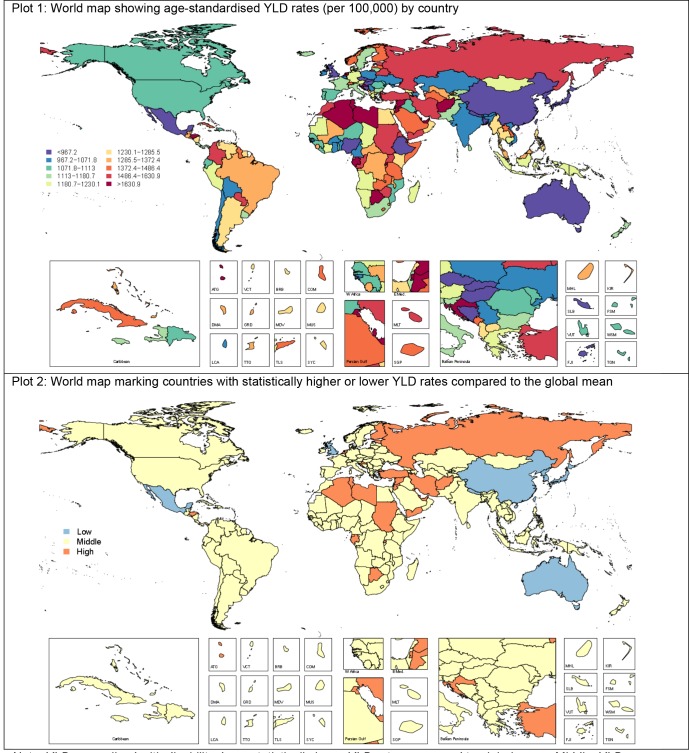
BACKGROUND: Depressive disorders were a leading cause of burden in the Global Burden of Disease (GBD) 1990 and 2000 studies. Here, we analyze the burden of depressive disorders in GBD 2010 and present severity proportions, burden by country, region, age, sex, and year, as well as burden of depressive disorders as a risk factor for suicide and ischemic heart disease. METHODS AND FINDINGS: Burden was calculated for major depressive disorder (MDD) and dysthymia. A systematic review of epidemiological data was conducted. The data were pooled using a Bayesian meta-regression. Disability weights from population survey data quantified the severity of health loss from depressive disorders. These weights were used to calculate years lived with disability (YLDs) and disability adjusted life years (DALYs). Separate DALYs were estimated for suicide and ischemic heart disease attributable to depressive disorders. Depressive disorders were the second leading cause of YLDs in 2010. MDD accounted for 8.2% (5.9%-10.8%) of global YLDs and dysthymia for 1.4% (0.9%-2.0%). Depressive disorders were a leading cause of DALYs even though no mortality was attributed to them as the underlying cause. MDD accounted for 2.5% (1.9%-3.2%) of global DALYs and dysthymia for 0.5% (0.3%-0.6%). There was more regional variation in burden for MDD than for dysthymia; with higher estimates in females, and adults of working age. Whilst burden increased by 37.5% between 1990 and 2010, this was due to population growth and ageing. MDD explained 16 million suicide DALYs and almost 4 million ischemic heart disease DALYs. This attributable burden would increase the overall burden of depressive disorders from 3.0% (2.2%-3.8%) to 3.8% (3.0%-4.7%) of global DALYs. CONCLUSIONS: GBD 2010 identified depressive disorders as a leading cause of burden. MDD was also a contributor of burden allocated to suicide and ischemic heart disease. These findings emphasize the importance of including depressive disorders as a public-health priority and implementing cost-effective interventions to reduce its burden. Please see later in the article for the Editors' Summary.
Overview
CoChat Summary
TL;DR
Ferrari and colleagues used GBD 2010 to estimate the global burden of major depressive disorder (MDD) and dysthymia by country, region, age, sex, and year. Depressive disorders were a leading cause of non-fatal burden, with MDD ranking 11th for global DALYs and 2nd for global YLDs in 2010.
Key findings
- In 2010, depressive disorders accounted for 3.0% (95% UI 2.2%–3.8%) of global DALYs: MDD 2.5% (1.9%–3.2%) and dysthymia 0.5% (0.3%–0.6%). MDD ranked 11th and dysthymia 51st among global DALY causes; MDD was the 2nd leading cause of YLDs (8.2% of all YLDs) and dysthymia 19th (1.4%).
- Global prevalence was 4.4% (4.1%–4.7%) for MDD, or 298 million cases, and 1.55% (1.5%–1.6%) for dysthymia, or 106 million cases. Prevalence was higher in females than males for both disorders.
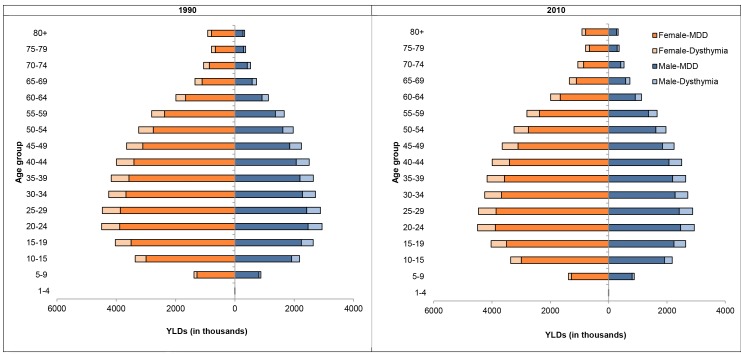
- Depressive disorder YLDs increased 37.5% between 1990 and 2010, driven by population growth (29.6%) and population aging (10.4%), with a −2.5% change due to prevalence.
- Attributable burden analyses found MDD explained an additional 16 million DALYs as a risk factor for suicide, with 46.1% (28.03%–60.8%) of suicide DALYs re-attributed to MDD; 2.9% (1.5%–4.5%) of ischemic heart disease DALYs (3.8 million DALYs, 93.5% YLLs) were attributable to MDD. Adding these increased MDD from 2.5% to 3.4% of global DALYs and depressive disorders from 3.0% to 3.8%, moving MDD from 11th to 8th place.
Methods
- GBD 2010 systematic review of literature from 1 January 1980 to 31 December 2008, with continued perusal to 31 December 2011, captured prevalence, incidence, remission/duration, and excess mortality for MDD and dysthymia. DisMod-MR, a Bayesian meta-regression tool, modeled prevalence for 187 countries, 21 world regions, males and females, 1990, 2005, and 2010, and 20 age groups.
- YLDs were calculated as prevalent cases multiplied by severity- and comorbidity-adjusted disability weights, without age-weighting or discounting. DALYs were YLDs plus YLLs, but no disorder-specific YLLs were recorded for depressive disorders. Disability weights came from population surveys in Bangladesh, Indonesia, Peru, Tanzania, and the USA (14,710 participants) and an internet survey (16,328 participants); severity distributions came from MEPS, NESARC, and NSMHWB.
- Attributable burden used GBD 2010 comparative risk assessment: meta-analyses of relative risks for MDD as a risk factor for suicide and ischemic heart disease, population attributable fractions, and multiplication by cause-specific DALYs. Time trends were decomposed into population growth, population age/sex structure, and YLD rates.
Limitations
- Stated: no disorder-specific YLLs were available for depressive disorders, and the authors could not quantify burden for all outcomes linked to MDD/dysthymia (e.g., stroke, diabetes, vascular dementia/Alzheimer’s disease), so estimates likely underestimate true burden. Meta-analyses for suicide and ischemic heart disease relied on data from only two countries, with uncertain generalizability.
- Stated: uncertainty may be larger than propagated because study-quality covariates were crude binary variables applied equally across ages and sexes; disability weights and health-state definitions may not represent all participants’ experiences; severity distributions came from three surveys in two high-income countries, limiting global representativeness and making it impossible to quantify treatment effects on severity.
- Evident from the text: country-level estimates often depended on imputation via DisMod-MR when raw epidemiological data were sparse, and regional/country differences were frequently within wide, overlapping uncertainty intervals.
Model-written summary. Check it against the paper before relying on it.
Integrity signals
Registry
Cites
Statistics
Figures
Verification
Claims the paper makes
10 Valid · 0 Not valid · 23 Not checked · 88 Own results and interpretations
Every source the paper cites for this claim was checked and supports it.
In the paper
“Out of the comprehensive list of health outcomes originally investigated for mental disorders [32], there was sufficient evidence for causal effects to quantify the burden attributable to MDD as a risk factor for suicide and ischemic heart disease.”
§ Burden of Depressive Disorders by Country, Sex, Age, and Year: Findings from the Global Burden of Disease Study 2010 > Methods > Calculation of Attributable Burden
What the sources say
- Supportedcites [32] AJ Baxter, 2011, Mental disorders as risk factors: assessing the evidence for the global burden of disease study, BMC Medicine source
The Results section says that, after the second evidence filter, suicide and ischemic heart disease had sufficient evidence for inclusion in attributable-burden estimates. It identifies major depression among the risk factors for suicide; the Abstract’s Results and discussion section identifies major depression as the risk factor for ischemic heart disease. The paper does not provide page numbers for these passages. (LLM, conf=0.90)
plainstates a cause- Asserted: passes — The authors put it forward as true.
- Checkable: passes — It can be checked against evidence.
- Load-bearing: passes — The paper’s conclusions depend on it.
- Based: passes — The paper gives a reason why it holds.
- Supported
The cited sources support only part of this claim — read each source’s verdict below.
In the paper
“Although there is literature linking stroke, diabetes, and vascular dementia/Alzheimer's disease to MDD, there was insufficient evidence at the time of our review for a causal relationship and more studies are needed to support these tentative associations [32].”
§ Burden of Depressive Disorders by Country, Sex, Age, and Year: Findings from the Global Burden of Disease Study 2010 > Discussion
What the sources say
- Partly supportedcites [32] AJ Baxter, 2011, Mental disorders as risk factors: assessing the evidence for the global burden of disease study, BMC Medicine sourceExperimental — accuracy not yet measured
The Abstract’s Results and discussion and the Summary say that evidence linking mental disorders to cardiovascular disease and type 2 diabetes was insufficient for inclusion in the Global Burden of Disease study and that further research was needed. The Discussion’s Temporality section also identifies difficulty establishing which condition came first. The paper does not address vascular dementia or Alzheimer’s disease, and its conclusion about cardiovascular disease and diabetes is broader than a conclusion specifically about MDD and stroke. (LLM, conf=0.87)
plain- Asserted: passes — The authors put it forward as true.
- Checkable: passes — It can be checked against evidence.
- Load-bearing: passes — The paper’s conclusions depend on it.
- Based: passes — The paper gives a reason why it holds.
- Partly supported
Every source the paper cites for this claim was checked and supports it.
In the paper
“This finding was driven by high prevalence estimates with 298 million MDD cases in 2010 [2] and 106 million cases of dysthymia [3].”
§ Burden of Depressive Disorders by Country, Sex, Age, and Year: Findings from the Global Burden of Disease Study 2010 > Discussion
What the sources say
- Supportedcites [2] AJ Ferrari, 2013, The epidemiological modelling of major depressive disorder: application for the Global Burden of Disease Study 2010, PLoS ONE source
The Abstract (Results, p. 1) states 'There were over 298 million cases of MDD globally at any point in time in 2010', matching the cited figure exactly. The Results section 'Final prevalence output' corroborates the underlying components (over 111 million male plus 187 million female prevalent cases in 2010) and the 4.4% global point prevalence for 2010. (LLM, conf=0.95)
plainn = 298- Asserted: passes — The authors put it forward as true.
- Checkable: passes — It can be checked against evidence.
- Load-bearing: unclear — It is unclear whether the paper’s conclusions depend on it.
- Based: passes — The paper gives a reason why it holds.
- Supported
Every source the paper cites for this claim was checked and supports it.
In the paper
“In spite of responses coming from a heterogeneous sample of individuals (e.g., a high proportion of highly educated individuals from the internet-based survey and the opposite from the population-based survey from Tanzania), the strength of the correlation between disability weights was at least 0·9 across all surveys except in Bangladesh where it was 0·75 [17].”
§ Burden of Depressive Disorders by Country, Sex, Age, and Year: Findings from the Global Burden of Disease Study 2010 > Discussion
What the sources say
- Supportedcites [17] JA Salomon, 2012, Common values in assessing health outcomes from disease and injury:disability weights measurement study for the Global Burden of Disease 2010, Lancet source
The Abstract Findings (p.1) state that 'correlations between individual survey results and results from analysis of the pooled dataset were 0·9 or higher in all surveys except in Bangladesh (r=0·75)', and the Results section repeats this ('Pearson's correlation coefficients between individual survey results and the results from the pooled analyses were 0·9 or higher in all cases except Bangladesh'). The heterogeneity framing is also supported: the Discussion notes a high degree of consistency 'across surveys with highly heterogeneous respondents', specifically the self-selected, highly educated web survey versus the representative population sample from Tanzania with the lowest educational attainment. Only minor caveat: the direct web-survey-vs-Tanzania comparison was 0·89, marginally under 0·9, but that is a pairwise survey comparison, not the survey-versus-pooled correlations the claim describes. (LLM, conf=0.92)
plainstates an association- Asserted: passes — The authors put it forward as true.
- Checkable: passes — It can be checked against evidence.
- Load-bearing: passes — The paper’s conclusions depend on it.
- Based: passes — The paper gives a reason why it holds.
- Supported
Every source the paper cites for this claim was checked and supports it.
In the paper
“We found evidence for an elevated risk for mortality in those diagnosed with MDD [2],[25]; however, since a health outcome could only occur once in the GBD cause list, MDD related deaths from suicide and ischemic heart disease were captured under the headings of intentional injuries and cardiovascular disease in the GBD capstone papers [14],[18].”
§ Burden of Depressive Disorders by Country, Sex, Age, and Year: Findings from the Global Burden of Disease Study 2010 > Discussion
What the sources say
- Supportedcites [2] AJ Ferrari, 2013, The epidemiological modelling of major depressive disorder: application for the Global Burden of Disease Study 2010, PLoS ONE source
The Results section (page unavailable), in its discussion of Figure 5, explicitly describes all-cause excess mortality experienced by people with MDD. The Methods section (page unavailable) defines the comparison as deaths among people with MDD versus those without MDD or the general population. (LLM, conf=0.92)
- Supportedcites [25] AJ Baxter, 2011, Factors influencing risk of premature mortality in community cases of depression: a meta-analytic review, Epidemiology Research International source
The paper’s Results, as reported in the Abstract, found significantly higher all-cause mortality risk for major depression (RR 1.92, 95% CI 1.65–2.23). The Discussion likewise reports almost twice the risk of premature mortality for community cases of major depression compared with those without depression. (LLM, conf=0.94)
plainstates an association- Asserted: passes — The authors put it forward as true.
- Checkable: passes — It can be checked against evidence.
- Load-bearing: passes — The paper’s conclusions depend on it.
- Based: passes — The paper gives a reason why it holds.
- Rests on an assumption not shown here.
- Supported
58 more claims · 1 with their cited sources checked
Create a free account to see all 121 claims and to verify the 25 references still open.
- Probably not a substantial claim. 42
- It may state two separate claims as one. 30
Claims other papers make about this one
Each is checked against this paper’s own text: does it say what the citing paper says it does?
The source backs part of the claim, not all of it — or backs it for a different population, condition or comparison.
In the citing paper
“The World Mental Health Survey estimated the annual prevalence of MDD to be 4.4% and the lifetime prevalence to be approximately 10% -15%36,37.”
From Temporal and spatial trend analysis of all-cause depression burden based on Global Burden of Disease (GBD) 2019 study (2024) · cites this paper as [36]
Experimental — accuracy not yet measuredThe source backs part of the claim, not all of it — or backs it for a different population, condition or comparison.
In the citing paper
“This may be attributed to the fact that depression and anxiety are the most common mental disorder around the world [44, 45], and chatbots are reported to be effective in improving social skills for patients with autism [14, 17, 46-48].”
From An overview of the features of chatbots in mental health: A scoping review (2019) · cites this paper as [44]
Experimental — accuracy not yet measuredThe source backs part of the claim, not all of it — or backs it for a different population, condition or comparison.
In the citing paper
“Direct and indirect costs of depression and anxiety make these disorders main contributors to the global burden of disease [42, 43]”
From Mobile Apps for the Management of Comorbid Overweight/Obesity and Depression/Anxiety: A Systematic Review (2020) · cites this paper as [43]
Experimental — accuracy not yet measuredIn the citing paper
“Major depressive disorder ranks among the leading mental health causes of the global burden of disease (104).”
From Vagus Nerve as Modulator of the Brain–Gut Axis in Psychiatric and Inflammatory Disorders (2018) · cites this paper as [104]
Citations
Cites
Diagnostic and Statistical Manual of Mental Disorders
Williams, J. B. W., & First, M. (2013) · Encyclopedia of Social Work · doi:10.1093/acrefore/9780199975839.013.104 · Cited by 109,519
Preferred Reporting Items for Systematic Reviews and Meta-Analyses: the PRISMA statement
Moher, D., Liberati, A., Tetzlaff, J., Altman, D. G., & for the PRISMA Group (2009) · BMJ · doi:10.1136/bmj.b2535 · Cited by 83,823
Preferred Reporting Items for Systematic Reviews and Meta-Analyses: The PRISMA Statement
Moher, D., Liberati, A., Tetzlaff, J., Altman, D. G., & The PRISMA Group (2009) · PLoS Medicine · doi:10.1371/journal.pmed.1000097 · Cited by 64,042
Preferred reporting items for systematic reviews and meta-analyses: the PRISMA Statement.
(2009) · PubMed Central · Cited by 44,859
Preferred Reporting Items for Systematic Reviews and Meta-Analyses: The PRISMA Statement
Moher, D., Liberati, A., Tetzlaff, J., & Altman, D. G. (2009) · Journal of Clinical Epidemiology · doi:10.1016/j.jclinepi.2009.06.005 · Cited by 19,575
Wang, G., Ma, R., Qiao, G., Wada, K., Aizawa, Y., & Satoh, T. (2015) · Integrative Medicine International · doi:10.1159/000368408 · Cited by 18,657
Lozano, R., Naghavi, M., Foreman, K., Lim, S., Shibuya, K., Aboyans, V., Abraham, J., Adair, T., Aggarwal, R., Ahn, S. Y., et al. (2012) · The Lancet · doi:10.1016/s0140-6736(12)61728-0 · Cited by 14,070
Lim, S. S., Vos, T., Flaxman, A. D., Danaei, G., Shibuya, K., Adair-Rohani, H., AlMazroa, M. A., Amann, M., Anderson, H. R., Andrews, K. G., et al. (2012) · The Lancet · doi:10.1016/s0140-6736(12)61766-8 · Cited by 11,805
Self-citationMurray, C. J. L., Vos, T., Lozano, R., Naghavi, M., Flaxman, A. D., Michaud, C., Ezzati, M., Shibuya, K., Salomon, J. A., Abdalla, S., et al. (2012) · The Lancet · doi:10.1016/s0140-6736(12)61689-4 · Cited by 8,888
Self-citationVos, T., Flaxman, A. D., Naghavi, M., Lozano, R., Michaud, C., Ezzati, M., Shibuya, K., Salomon, J. A., Abdalla, S., Aboyans, V., et al. (2012) · The Lancet · doi:10.1016/s0140-6736(12)61729-2 · Cited by 8,291
Self-citation
Cited by
Vos, T., Barber, R. M., Bell, B., Bertozzi-Villa, A., Biryukov, S., Bolliger, I., Charlson, F., Davis, A., Degenhardt, L., Dicker, D., et al. (2015) · The Lancet · doi:10.1016/s0140-6736(15)60692-4 · Cited by 6,414
Self-citationeQTLGen, Wray, N. R., 23andMe, the Major Depressive Disorder Working Group of the Psychiatric Genomics Consortium, Ripke, S., Mattheisen, M., Trzaskowski, M., Byrne, E. M., Abdellaoui, A., Adams, M. J., et al. (2018) · Nature Genetics · doi:10.1038/s41588-018-0090-3 · Cited by 3,005
Charlson, F., van Ommeren, M., Flaxman, A., Cornett, J., Whiteford, H., & Saxena, S. (2019) · The Lancet · doi:10.1016/s0140-6736(19)30934-1 · Cited by 1,702
Self-citationA systematic review and meta-regression of the prevalence and incidence of perinatal depression
Woody, C. A., Ferrari, A. J., Siskind, D. J., Whiteford, H. A., & Harris, M. G. (2017) · Journal of Affective Disorders · doi:10.1016/j.jad.2017.05.003 · Cited by 1,577
Self-citationShorey, S., Ng, E. D., & Wong, C. H. J. (2022) · British Journal of Clinical Psychology · doi:10.1111/bjc.12333 · Cited by 1,511
Liu, Q., He, H., Yang, J., Feng, X., Zhao, F., & Lyu, J. (2020) · Journal of Psychiatric Research · doi:10.1016/j.jpsychires.2019.08.002 · Cited by 1,452
Epidemiology of suicide and the psychiatric perspective
Bachmann, S. (2018) · International Journal of Environmental Research and Public Health · doi:10.3390/ijerph15071425 · Cited by 1,377
Vagus Nerve as Modulator of the Brain–Gut Axis in Psychiatric and Inflammatory Disorders
Breit, S., Kupferberg, A., Rogler, G., & Hasler, G. (2018) · Frontiers in Psychiatry · doi:10.3389/fpsyt.2018.00044 · Cited by 1,189
Whiteford, H. A., Ferrari, A. J., Degenhardt, L., Feigin, V., & Vos, T. (2015) · PLOS ONE · doi:10.1371/journal.pone.0116820 · Cited by 1,175
Self-citationUndertreatment of people with major depressive disorder in 21 countries
Thornicroft, G., Chatterji, S., Evans-Lacko, S., Gruber, M., Sampson, N., Aguilar-Gaxiola, S., Al-Hamzawi, A., Alonso, J., Andrade, L., Borges, G., et al. (2017) · British Journal of Psychiatry · doi:10.1192/bjp.bp.116.188078 · Cited by 1,121
The association between social relationships and depression: A systematic review
Santini, Z. I., Koyanagi, A., Tyrovolas, S., Mason, C., & Haro, J. M. (2015) · Journal of Affective Disorders · doi:10.1016/j.jad.2014.12.049 · Cited by 949
Psychological Treatments for the World: Lessons from Low- and Middle-Income Countries
Singla, D. R., Kohrt, B. A., Murray, L. K., Anand, A., Chorpita, B. F., & Patel, V. (2017) · Annual Review of Clinical Psychology · doi:10.1146/annurev-clinpsy-032816-045217 · Cited by 913
Yan, C.-G., Chen, X., Li, L., Castellanos, F. X., Bai, T.-J., Bo, Q.-J., Cao, J., Chen, G.-M., Chen, N.-X., Chen, W., et al. (2019) · Proceedings of the National Academy of Sciences · doi:10.1073/pnas.1900390116 · Cited by 895
Sagar, R., Dandona, R., Gururaj, G., Dhaliwal, R. S., Singh, A., Ferrari, A., Dua, T., Ganguli, A., Varghese, M., Chakma, J. K., et al. (2020) · The Lancet Psychiatry · doi:10.1016/s2215-0366(19)30475-4 · Cited by 886
Self-citationResting-state functional connectivity in major depressive disorder: A review
Mulders, P. C., van Eijndhoven, P. F., Schene, A. H., Beckmann, C. F., & Tendolkar, I. (2015) · Neuroscience & Biobehavioral Reviews · doi:10.1016/j.neubiorev.2015.07.014 · Cited by 884
Saeb, S., Zhang, M., Karr, C. J., Schueller, S. M., Corden, M. E., Kording, K. P., & Mohr, D. C. (2015) · Journal of Medical Internet Research · doi:10.2196/jmir.4273 · Cited by 782
Social functioning in major depressive disorder
Kupferberg, A., Bicks, L., & Hasler, G. (2016) · Neuroscience & Biobehavioral Reviews · doi:10.1016/j.neubiorev.2016.07.002 · Cited by 663
“Major depressive disorder (MDD) frequently affects psychiatric patients in both inpatient and outpatient treatment settings, and ranks among the leading mental health causes of the global burden of disease (Ferrari et al., 2013).”
Peters, S. K., Dunlop, K., & Downar, J. (2016) · Frontiers in Systems Neuroscience · doi:10.3389/fnsys.2016.00104 · Cited by 611
An overview of the features of chatbots in mental health: A scoping review
Abd-alrazaq, A. A., Alajlani, M., Alalwan, A. A., Bewick, B. M., Gardner, P., & Househ, M. (2019) · International Journal of Medical Informatics · doi:10.1016/j.ijmedinf.2019.103978 · Cited by 605
Intermittent metabolic switching, neuroplasticity and brain health
Mattson, M. P., Moehl, K., Ghena, N., Schmaedick, M., & Cheng, A. (2018) · Nature Reviews Neuroscience · doi:10.1038/nrn.2017.156 · Cited by 624
Richards, D. A., Ekers, D., McMillan, D., Taylor, R. S., Byford, S., Warren, F. C., Barrett, B., Farrand, P. A., Gilbody, S., Kuyken, W., et al. (2016) · The Lancet · doi:10.1016/s0140-6736(16)31140-0 · Cited by 595
Depression and anxiety in patients with Inflammatory Bowel Disease: a systematic review
Neuendorf, R., Harding, A., Stello, N., Hanes, D., & Wahbeh, H. (2016) · Journal of Psychosomatic Research · doi:10.1016/j.jpsychores.2016.06.001 · Cited by 561
The incidence and prevalence of psychiatric disorders in multiple sclerosis: A systematic review
Marrie, R. A., Reingold, S., Cohen, J., Stuve, O., Trojano, M., Sorensen, P. S., Cutter, G., & Reider, N. (2015) · Multiple Sclerosis Journal · doi:10.1177/1352458514564487 · Cited by 519
Brunoni, A. R., Chaimani, A., Moffa, A. H., Razza, L. B., Gattaz, W. F., Daskalakis, Z. J., & Carvalho, A. F. (2017) · JAMA Psychiatry · doi:10.1001/jamapsychiatry.2016.3644 · Cited by 520
Chibanda, D., Weiss, H. A., Verhey, R., Simms, V., Munjoma, R., Rusakaniko, S., Chingono, A., Munetsi, E., Bere, T., Manda, E., et al. (2016) · JAMA · doi:10.1001/jama.2016.19102 · Cited by 502
The Genetics of Stress-Related Disorders: PTSD, Depression, and Anxiety Disorders
Smoller, J. W. (2016) · Neuropsychopharmacology · doi:10.1038/npp.2015.266 · Cited by 480
Ferrari, A. J., Norman, R. E., Freedman, G., Baxter, A. J., Pirkis, J. E., Harris, M. G., Page, A., Carnahan, E., Degenhardt, L., Vos, T., et al. (2014) · PLoS ONE · doi:10.1371/journal.pone.0091936 · Cited by 480
Self-citationDawson, K. S., Bryant, R. A., Harper, M., Kuowei Tay, A., Rahman, A., Schafer, A., & van Ommeren, M. (2015) · World Psychiatry · doi:10.1002/wps.20255 · Cited by 440
Sex differences in depression: Insights from clinical and preclinical studies
Eid, R. S., Gobinath, A. R., & Galea, L. A. M. (2019) · Progress in Neurobiology · doi:10.1016/j.pneurobio.2019.01.006 · Cited by 457
Brain age and other bodily ‘ages’: implications for neuropsychiatry
Cole, J. H., Marioni, R. E., Harris, S. E., & Deary, I. J. (2019) · Molecular Psychiatry · doi:10.1038/s41380-018-0098-1 · Cited by 440
Lam, R. W., Kennedy, S. H., McIntyre, R. S., & Khullar, A. (2014) · The Canadian Journal of Psychiatry · doi:10.1177/070674371405901206 · Cited by 438
Depression and chronic pain in the elderly: links and management challenges
Zis, P., Daskalaki, A., Bountouni, I., Sykioti, P., Varrassi, G., & Paladini, A. (2017) · Clinical Interventions in Aging · doi:10.2147/cia.s113576 · Cited by 439
Dynamic Resting-State Functional Connectivity in Major Depression
Kaiser, R. H., Whitfield-Gabrieli, S., Dillon, D. G., Goer, F., Beltzer, M., Minkel, J., Smoski, M., Dichter, G., & Pizzagalli, D. A. (2016) · Neuropsychopharmacology · doi:10.1038/npp.2015.352 · Cited by 438
“Major depressive disorder (MDD) is a debilitating psychiatric illness that affects one in six people (Kessler et al, 2012), and is a leading cause of mortality worldwide (Ferrari et al, 2013).”
BackgroundDadi, A. F., Miller, E. R., Bisetegn, T. A., & Mwanri, L. (2020) · BMC Public Health · doi:10.1186/s12889-020-8293-9 · Cited by 421
Uher, R., Tansey, K. E., Dew, T., Maier, W., Mors, O., Hauser, J., Dernovsek, M. Z., Henigsberg, N., Souery, D., Farmer, A., et al. (2014) · American Journal of Psychiatry · doi:10.1176/appi.ajp.2014.14010094 · Cited by 418
College life is stressful today – Emerging stressors and depressive symptoms in college students
Acharya, L., Jin, L., & Collins, W. (2018) · Journal of American College Health · doi:10.1080/07448481.2018.1451869 · Cited by 410
Prevalence of depression in older adults: A systematic review and meta-analysis
Hu, T., Zhao, X., Wu, M., Li, Z., Luo, L., Yang, C., & Yang, F. (2022) · Psychiatry Research · doi:10.1016/j.psychres.2022.114511 · Cited by 409
The Impact of Project ECHO on Participant and Patient Outcomes: A Systematic Review
Zhou, C., Crawford, A., Serhal, E., Kurdyak, P., & Sockalingam, S. (2016) · Academic Medicine · doi:10.1097/acm.0000000000001328 · Cited by 405
Mood as representation of momentum
Eldar, E., Rutledge, R. B., Dolan, R. J., & Niv, Y. (2016) · Trends in Cognitive Sciences · doi:10.1016/j.tics.2015.07.010 · Cited by 383
Li, H., Zheng, D., Li, Z., Wu, Z., Feng, W., Cao, X., Wang, J., Gao, Q., Li, X., Wang, W., et al. (2019) · JAMA Network Open · doi:10.1001/jamanetworkopen.2019.16591 · Cited by 383
The current state of the neurogenic theory of depression and anxiety
Miller, B. R., & Hen, R. (2015) · Current Opinion in Neurobiology · doi:10.1016/j.conb.2014.08.012 · Cited by 386
Recognizing Depression from the Microbiota–Gut–Brain Axis
Liang, S., Wu, X., Hu, X., Wang, T., & Jin, F. (2018) · International Journal of Molecular Sciences · doi:10.3390/ijms19061592 · Cited by 380
Animal models of major depression and their clinical implications
Czéh, B., Fuchs, E., Wiborg, O., & Simon, M. (2016) · Progress in Neuro-Psychopharmacology and Biological Psychiatry · doi:10.1016/j.pnpbp.2015.04.004 · Cited by 375
Mental health interventions in schools in low-income and middle-income countries
Fazel, M., Patel, V., Thomas, S., & Tol, W. (2014) · The Lancet Psychiatry · doi:10.1016/s2215-0366(14)70357-8 · Cited by 371
von Rotz, R., Schindowski, E. M., Jungwirth, J., Schuldt, A., Rieser, N. M., Zahoranszky, K., Seifritz, E., Nowak, A., Nowak, P., Jäncke, L., et al. (2023) · eClinicalMedicine · doi:10.1016/j.eclinm.2022.101809 · Cited by 354
Detecting Depression with Audio/Text Sequence Modeling of Interviews
Al Hanai, T., Ghassemi, M., & Glass, J. (2018) · Interspeech 2018 · doi:10.21437/interspeech.2018-2522 · Cited by 343
Sarkar, C., Webster, C., & Gallacher, J. (2018) · The Lancet Planetary Health · doi:10.1016/s2542-5196(18)30051-2 · Cited by 339
Autonomic dysfunction and heart rate variability in depression
Sgoifo, A., Carnevali, L., Pico Alfonso, M. D. L. A., & Amore, M. (2015) · Stress · doi:10.3109/10253890.2015.1045868 · Cited by 334
Pereira-Miranda, E., Costa, P. R. F., Queiroz, V. A. O., Pereira-Santos, M., & Santana, M. L. P. (2017) · Journal of the American College of Nutrition · doi:10.1080/07315724.2016.1261053 · Cited by 335
“In recent decades, the prevalence of both depression and obesity has increased at an accelerating rate among adults of both sexes and across all ethnicities [3,4].”
BackgroundPickens, C. M., Pierannunzi, C., Garvin, W., & Town, M. (2018) · MMWR. Surveillance Summaries · doi:10.15585/mmwr.ss6709a1 · Cited by 332
Stein, D. J., Shoptaw, S. J., Vigo, D. V., Lund, C., Cuijpers, P., Bantjes, J., Sartorius, N., & Maj, M. (2022) · World Psychiatry · doi:10.1002/wps.20998 · Cited by 331
Treadway, M. T., Waskom, M. L., Dillon, D. G., Holmes, A. J., Park, M. T. M., Chakravarty, M. M., Dutra, S. J., Polli, F. E., Iosifescu, D. V., Fava, M., et al. (2015) · Biological Psychiatry · doi:10.1016/j.biopsych.2014.06.018 · Cited by 331
“Major Depressive Disorder (MDD) is a debilitating disease that affects over 20 million Americans every year (1), drains billions of dollars from the economy (2), and has recently become the second leading cause of disability worldwide (3).”
BackgroundAls, T. D., Kurki, M. I., Grove, J., Voloudakis, G., Therrien, K., Tasanko, E., Nielsen, T. T., Naamanka, J., Veerapen, K., Levey, D. F., et al. (2023) · Nature Medicine · doi:10.1038/s41591-023-02352-1 · Cited by 324
Creedy, D. K., Sidebotham, M., Gamble, J., Pallant, J., & Fenwick, J. (2017) · BMC Pregnancy and Childbirth · doi:10.1186/s12884-016-1212-5 · Cited by 319
Magaard, J. L., Seeralan, T., Schulz, H., & Brütt, A. L. (2017) · PLOS ONE · doi:10.1371/journal.pone.0176730 · Cited by 317
Social Participation and Depression in Old Age: A Fixed-Effects Analysis in 10 European Countries
Croezen, S., Avendano, M., Burdorf, A., & van Lenthe, F. J. (2015) · American Journal of Epidemiology · doi:10.1093/aje/kwv015 · Cited by 305
The relationship between mobile phone location sensor data and depressive symptom severity
Saeb, S., Lattie, E. G., Schueller, S. M., Kording, K. P., & Mohr, D. C. (2016) · PeerJ · doi:10.7717/peerj.2537 · Cited by 313
McEachan, R. R. C., Prady, S. L., Smith, G., Fairley, L., Cabieses, B., Gidlow, C., Wright, J., Dadvand, P., van Gent, D., & Nieuwenhuijsen, M. J. (2016) · Journal of Epidemiology and Community Health · doi:10.1136/jech-2015-205954 · Cited by 303
Patel, J. S., Oh, Y., Rand, K. L., Wu, W., Cyders, M. A., Kroenke, K., & Stewart, J. C. (2019) · Depression and Anxiety · doi:10.1002/da.22940 · Cited by 306
Razzak Kouider, D. A., Hassan, N. A. G., & Al-Worafi, Y. M. (2019) · Biomedical Research · doi:10.35841/biomedicalresearch.30-19-271 · Cited by 300
Capturing Social and Behavioral Domains and Measures in Electronic Health Records: Phase 2
Domains, B. (2015) · Cited by 352
Proudfoot, J., Clarke, J., Birch, M.-R., Whitton, A. E., Parker, G., Manicavasagar, V., Harrison, V., Christensen, H., & Hadzi-Pavlovic, D. (2013) · BMC Psychiatry · doi:10.1186/1471-244x-13-312 · Cited by 264
Lam, R. W., McIntosh, D., Wang, J., Enns, M. W., Kolivakis, T., Michalak, E. E., Sareen, J., Song, W.-Y., Kennedy, S. H., MacQueen, G. M., et al. (2016) · The Canadian Journal of Psychiatry · doi:10.1177/0706743716659416 · Cited by 288
Dokras, A., Stener-Victorin, E., Yildiz, B. O., Li, R., Ottey, S., Shah, D., Epperson, N., & Teede, H. (2018) · Fertility and Sterility · doi:10.1016/j.fertnstert.2018.01.038 · Cited by 285
Stubbs, B., Vancampfort, D., Rosenbaum, S., Ward, P. B., Richards, J., Soundy, A., Veronese, N., Solmi, M., & Schuch, F. B. (2016) · Journal of Affective Disorders · doi:10.1016/j.jad.2015.10.019 · Cited by 284
“In addition, sub-threshold depressive symptoms are also highly prevalent and together with MDD, ‘depression’ is pervasive and affects people of all ages, genders, countries and socioeconomic conditions (Ferrari et al., 2013).”
BackgroundLam, R. W., Levitt, A. J., Levitan, R. D., Michalak, E. E., Cheung, A. H., Morehouse, R., Ramasubbu, R., Yatham, L. N., & Tam, E. M. (2016) · JAMA Psychiatry · doi:10.1001/jamapsychiatry.2015.2235 · Cited by 275
Neurobiological effects of exercise on major depressive disorder: A systematic review
Schuch, F. B., Deslandes, A. C., Stubbs, B., Gosmann, N. P., Silva, C. T. B. D., & Fleck, M. P. D. A. (2016) · Neuroscience & Biobehavioral Reviews · doi:10.1016/j.neubiorev.2015.11.012 · Cited by 279
Geoffroy, P. A., Hoertel, N., Etain, B., Bellivier, F., Delorme, R., Limosin, F., & Peyre, H. (2018) · Journal of Affective Disorders · doi:10.1016/j.jad.2017.09.032 · Cited by 277
Social Defeat as an Animal Model for Depression
Hollis, F., & Kabbaj, M. (2014) · ILAR Journal · doi:10.1093/ilar/ilu002 · Cited by 273
Kim, T. J., & von dem Knesebeck, O. (2016) · International Archives of Occupational and Environmental Health · doi:10.1007/s00420-015-1107-1 · Cited by 271
Right unilateral ultrabrief pulse ECT in geriatric depression: phase 1 of the pride study
Kellner, C. H., Husain, M. M., Knapp, R. G., McCall, W. V., Petrides, G., Rudorfer, M. V., Young, R. C., Sampson, S., McClintock, S. M., Mueller, M., et al. (2016) · American Journal of Psychiatry · doi:10.1176/appi.ajp.2016.15081101 · Cited by 269
Machado, M. O., Veronese, N., Sanches, M., Stubbs, B., Koyanagi, A., Thompson, T., Tzoulaki, I., Solmi, M., Vancampfort, D., Schuch, F. B., et al. (2018) · BMC Medicine · doi:10.1186/s12916-018-1101-z · Cited by 264
Dong, M., Zeng, L.-N., Lu, L., Li, X.-H., Ungvari, G. S., Ng, C. H., Chow, I. H. I., Zhang, L., Zhou, Y., & Xiang, Y.-T. (2019) · Psychological Medicine · doi:10.1017/s0033291718002301 · Cited by 263
Bell, S. L., Audrey, S., Gunnell, D., Cooper, A., & Campbell, R. (2019) · International Journal of Behavioral Nutrition and Physical Activity · doi:10.1186/s12966-019-0901-7 · Cited by 262
Macedo, D., Filho, A. J. M. C., Soares de Sousa, C. N., Quevedo, J., Barichello, T., Júnior, H. V. N., & Freitas de Lucena, D. (2017) · Journal of Affective Disorders · doi:10.1016/j.jad.2016.09.012 · Cited by 261
Arrieta, J., Aguerrebere, M., Raviola, G., Flores, H., Elliott, P., Espinosa, A., Reyes, A., Ortiz-Panozo, E., Rodriguez-Gutierrez, E. G., Mukherjee, J., et al. (2017) · Journal of Clinical Psychology · doi:10.1002/jclp.22390 · Cited by 257
Acne vulgaris and risk of depression and anxiety: A meta-analytic review
Samuels, D. V., Rosenthal, R., Lin, R., Chaudhari, S., & Natsuaki, M. N. (2020) · Journal of the American Academy of Dermatology · doi:10.1016/j.jaad.2020.02.040 · Cited by 258
Co‐morbidity between mood and anxiety disorders: A systematic review and meta‐analysis
Saha, S., Lim, C. C. W., Cannon, D. L., Burton, L., Bremner, M., Cosgrove, P., Huo, Y., & McGrath, J. (2021) · Depression and Anxiety · doi:10.1002/da.23113 · Cited by 253
Cobb, J. A., O’Neill, K., Milner, J., Mahajan, G. J., Lawrence, T. J., May, W. L., Miguel-Hidalgo, J., Rajkowska, G., & Stockmeier, C. A. (2016) · Neuroscience · doi:10.1016/j.neuroscience.2015.12.044 · Cited by 254
Disrupted intrinsic functional brain topology in patients with major depressive disorder
Yang, H., Chen, X., Chen, Z.-B., Li, L., Li, X.-Y., Castellanos, F. X., Bai, T.-J., Bo, Q.-J., Cao, J., Chang, Z.-K., et al. (2021) · Molecular Psychiatry · doi:10.1038/s41380-021-01247-2 · Cited by 251
Coventry, P., Panagioti, M., Scott, C., & Blakemore, A. (2014) · International Journal of Chronic Obstructive Pulmonary Disease · doi:10.2147/copd.s72073 · Cited by 249
Gut microbiota–brain axis in depression: the role of neuroinflammation
Carlessi, A. S., Borba, L. A., Zugno, A. I., Quevedo, J., & Réus, G. Z. (2021) · European Journal of Neuroscience · doi:10.1111/ejn.14631 · Cited by 243
Herbal Medicine for Anxiety, Depression and Insomnia
Liu, L., Liu, C., Wang, Y., Wang, P., Li, Y., & Li, B. (2015) · Current Neuropharmacology · doi:10.2174/1570159x1304150831122734 · Cited by 239
Kendrick, T., El-Gohary, M., Stuart, B., Gilbody, S., Churchill, R., Aiken, L., Bhattacharya, A., Gimson, A., Brütt, A. L., de Jong, K., et al. (2016) · Cochrane Database of Systematic Reviews · doi:10.1002/14651858.cd011119.pub2 · Cited by 237
Leng, L., Zhuang, K., Liu, Z., Huang, C., Gao, Y., Chen, G., Lin, H., Hu, Y., Wu, D., Shi, M., et al. (2018) · Neuron · doi:10.1016/j.neuron.2018.08.031 · Cited by 236
Kohrt, B. A., Luitel, N. P., Acharya, P., & Jordans, M. J. D. (2016) · BMC Psychiatry · doi:10.1186/s12888-016-0768-y · Cited by 234
Demirtaş, M., Tornador, C., Falcón, C., López‐Solà, M., Hernández‐Ribas, R., Pujol, J., Menchón, J. M., Ritter, P., Cardoner, N., Soriano‐Mas, C., et al. (2016) · Human Brain Mapping · doi:10.1002/hbm.23215 · Cited by 231
Coventry, P. A., Hudson, J. L., Kontopantelis, E., Archer, J., Richards, D. A., Gilbody, S., Lovell, K., Dickens, C., Gask, L., Waheed, W., et al. (2014) · PLoS ONE · doi:10.1371/journal.pone.0108114 · Cited by 221
Halahakoon, D. C., Kieslich, K., O’Driscoll, C., Nair, A., Lewis, G., & Roiser, J. P. (2020) · JAMA Psychiatry · doi:10.1001/jamapsychiatry.2020.2139 · Cited by 222
A meta-analysis of correlations between depression and first person singular pronoun use
Edwards, T., & Holtzman, N. S. (2017) · Journal of Research in Personality · doi:10.1016/j.jrp.2017.02.005 · Cited by 224
“Depression is a massive burden to society and to the individuals it afflicts (Ferrari et al., 2013).”
BackgroundAn astroglial basis of major depressive disorder? An overview
Wang, Q., Jie, W., Liu, J., Yang, J., & Gao, T. (2017) · Glia · doi:10.1002/glia.23143 · Cited by 222
Réus, G. Z., Jansen, K., Titus, S., Carvalho, A. F., Gabbay, V., & Quevedo, J. (2015) · Journal of Psychiatric Research · doi:10.1016/j.jpsychires.2015.05.007 · Cited by 221
Impaired reward prediction error encoding and striatal-midbrain connectivity in depression
Kumar, P., Goer, F., Murray, L., Dillon, D. G., Beltzer, M. L., Cohen, A. L., Brooks, N. H., & Pizzagalli, D. A. (2018) · Neuropsychopharmacology · doi:10.1038/s41386-018-0032-x · Cited by 219
Current perspectives on gut microbiome dysbiosis and depression
Capuco, A., Urits, I., Hasoon, J., Chun, R., Gerald, B., Wang, J. K., Kassem, H., Ngo, A. L., Abd-Elsayed, A., Simopoulos, T., et al. (2020) · Advances in Therapy · doi:10.1007/s12325-020-01272-7 · Cited by 216
“Depression is one of the most prevalent mental health disorders in the USA and the second leading cause of disability worldwide [10].”
BackgroundBarnett, A., Zhang, C. J. P., Johnston, J. M., & Cerin, E. (2018) · International Psychogeriatrics · doi:10.1017/s104161021700271x · Cited by 213
Matveychuk, D., Thomas, R. K., Swainson, J., Khullar, A., MacKay, M.-A., Baker, G. B., & Dursun, S. M. (2020) · Therapeutic Advances in Psychopharmacology · doi:10.1177/2045125320916657 · Cited by 209
“an option for increasing accessibility of ketamine treatments for depression? J Clin Psychiatry 2020; 81(1): 19lr13146.”
BackgroundJukić, M. M., Haslemo, T., Molden, E., & Ingelman-Sundberg, M. (2018) · American Journal of Psychiatry · doi:10.1176/appi.ajp.2017.17050550 · Cited by 211
Carney, C. E., Edinger, J. D., Kuchibhatla, M., Lachowski, A. M., Bogouslavsky, O., Krystal, A. D., & Shapiro, C. M. (2017) · Sleep · doi:10.1093/sleep/zsx019 · Cited by 212
Li, Z., Tong, X., Ma, Y., Bao, T., & Yue, J. (2022) · Journal of Cachexia, Sarcopenia and Muscle · doi:10.1002/jcsm.12908 · Cited by 211
Mantani, A., Kato, T., Furukawa, T. A., Horikoshi, M., Imai, H., Hiroe, T., Chino, B., Funayama, T., Yonemoto, N., Zhou, Q., et al. (2017) · Journal of Medical Internet Research · doi:10.2196/jmir.8602 · Cited by 192
Metadata
- Authors
- Ferrari, A. J., Charlson, F. J., Norman, R. E., Patten, S. B., Freedman, G., Murray, C. J. L., Vos, T., & Whiteford, H. A.
- Affiliations
- The University of Queensland (AU)
- University of Calgary (CA)
- University of Washington (US)
- Corresponding author
- Ferrari, Alize J.
- ORCID
- Venue
- PLoS Medicine
- Publisher
- Public Library of Science (PLoS)
- Published
- 2013-11-05
- Volume
- 10
- Issue
- 11
- Pages
- e1001547
- ISSN
- 1549-1277 (ISSN-L)
- 1549-1676
- PMC
- PMC3818162
- OpenAlex
- W2171340584
- Cited by
- 3,115
- References
- 48
- Citations by year
- 2026: 109 · 2025: 165 · 2024: 177 · 2023: 226 · 2022: 250 · 2021: 339 · 2020: 286 · 2019: 303 · 2018: 309 · 2017: 321 · 2016: 262 · 2015: 248 · 2014: 110 · 2013: 5
- FWCI
- 311.80
- Type
- journal article
- Language
- en
- Open access
- gold
- doi.org
- Locations
- PLoS Medicine (publishedVersion, cc-by)
- Europe PMC (PubMed Central) (publishedVersion, cc-by)
- PubMed Central (publishedVersion, cc-by)
- PubMed (publishedVersion)
- QUT ePrints (Queensland University of Technology) (submittedVersion, other-oa)
- DOAJ (DOAJ: Directory of Open Access Journals) (submittedVersion, cc-by-sa)
- Figshare (submittedVersion, cc-by)
- Funders
- Bill and Melinda Gates Foundation
- University of Washington
- Topics
- Health Sciences › Medicine › Psychiatry and Mental health › Mental Health Treatment and Access
- Health Sciences › Medicine › Pharmacology (medical) › Treatment of Major Depression
- Social Sciences › Economics, Econometrics and Finance › Economics and Econometrics › Health Systems, Economic Evaluations, Quality of Life
- Keywords
- depressive disorders, major depressive disorder, dysthymia, global burden of disease, disability-adjusted life years, years lived with disability, suicide, ischemic heart disease, disability weights, sex differences, age differences, temporal trends, regional variation, attributable burden, public health priorities, Global Burden of Disease Study 2010
- MeSH terms
- Adolescent, Adult, Age Factors, Aged, Child, Child, Preschool, Depression, Depressive Disorder, Female, Persons with Disabilities, Health Surveys, Humans, Infant, Male, Middle Aged, Public Health, Risk Factors, Sex Factors, Suicide, Global Health, Myocardial Ischemia, Cost of Illness, Quality-Adjusted Life Years, Young Adult
About these checks
Registry, retraction, Cites and statistics results are computed, not judged, with one exception: a printed reference that no index lists is read once by a model before it counts as a citation error. Claims are extracted by a model and kept only when their quote appears verbatim in the text; each cited source is then checked, with a model’s help, for whether it says what the claim relies on. Those verdicts can be wrong — read the claim’s quote and the cited source before relying on one.
The claim verdicts this report counts are experimental: their accuracy is not yet measured.
A language model drew the claims from the paper on 2026-10-04, under version 3 of the claim definition (model deepseek-v4.1-flash, prompt extract-v3).
A second model labelled each claim on 2026-10-04 (model jev-1.13-20260917, definition revision gold-guideline-v0.2).
Cited sources are checked with a language model’s help (gpt-6-sol and qwen3.8-omni-flash).
Statistics and arithmetic are recomputed, not judged.
Confidence bands are shown only for fields calibrated on our annotated test set. None is calibrated yet, so no band is shown.
What counts as a claim ›How we measure confidence ›How we check this ›
Are you an author, or do you see a problem with this page? Request a review
Data sources
Bibliographic data: Semantic Scholar, OpenAlex, Crossref.
Contains information from the Semantic Scholar Academic Graph Datasets, made available under the ODC Attribution License (ODC-BY 1.0).
Semantic Scholar’s data is described in: Kinney, R., et al. (2023). The Semantic Scholar Open Data Platform. arXiv:2301.10140.
