

The DOI matches its Crossref record; 67 of the 67 references it cites were found in a registry or an index.
Triggering of inflammasome by aggregated α-synuclein, an inflammatory response in synucleinopathies
Open accessAbstract
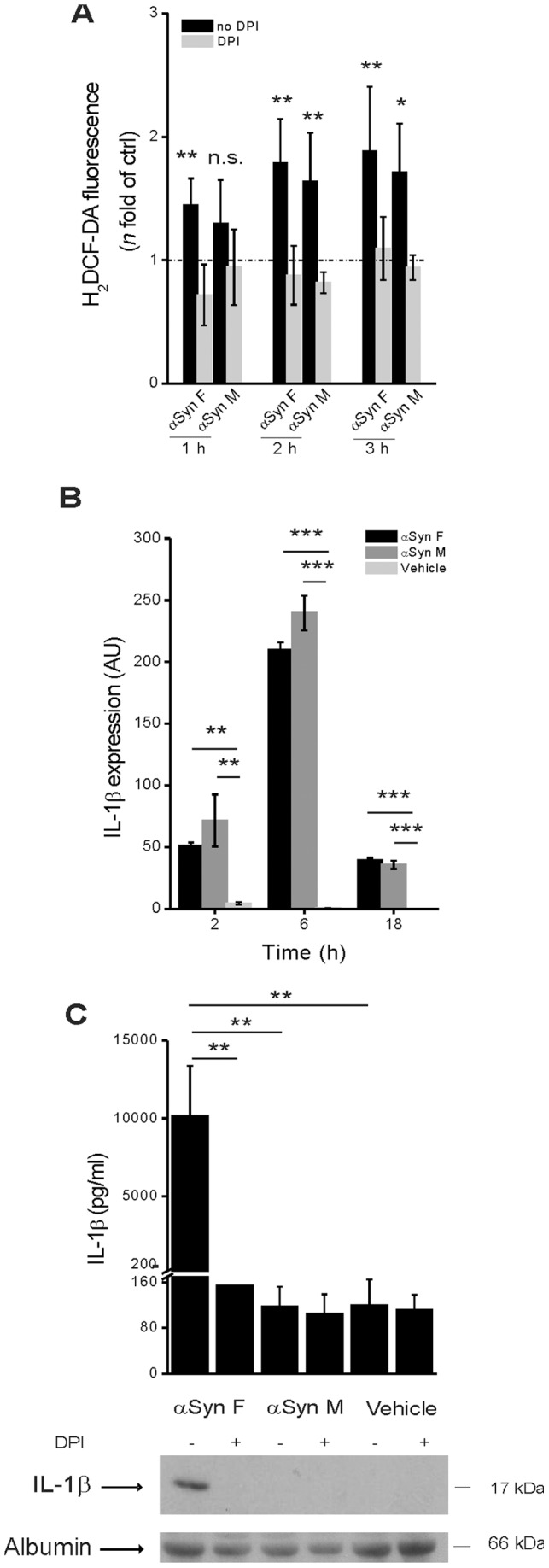
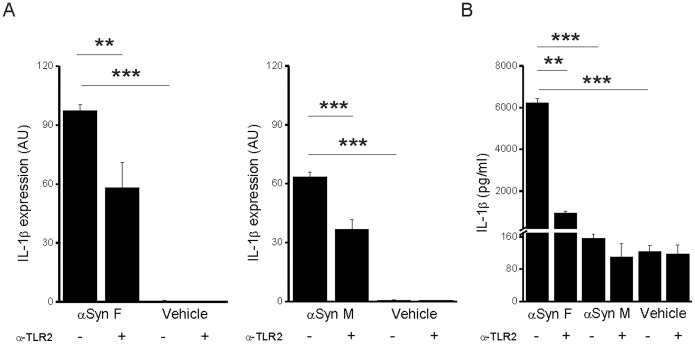
Parkinson's disease (PD) is one of the most common neurodegenerative diseases. It is characterized by the loss of dopaminergic neurons in the substantia nigra pars compacta of the brain. Another feature is represented by the formation in these cells of inclusions called Lewy bodies (LB), principally constituted by fibrillar α-synuclein (αSyn). This protein is considered a key element in the aetiology of a group of neurodegenerative disorders termed synucleinopathies, which include PD, but the cellular and molecular mechanisms involved are not completely clear. It is established that the inflammatory process plays a crucial role in the pathogenesis and/or progression of PD; moreover, it is known that aggregated αSyn, released by neurons, activates microglia cells to produce pro-inflammatory mediators, such as IL-1β. IL-1β is one of the strongest pro-inflammatory cytokines; it is produced as an inactive mediator, and its maturation and activation requires inflammasome activation. In particular, the NLRP3 inflammasome is activated by a wide variety of stimuli, among which are crystallized and particulate material. In this work, we investigated the possibility that IL-1β production, induced by fibrillar αSyn, is involved the inflammasome activation. We demonstrated the competence of monomeric and fibrillar αSyn to induce synthesis of IL-1β, through TLR2 interaction; we found that the secretion of the mature cytokine was a peculiarity of the fibrillated protein. Moreover, we observed that the secretion of IL-1β involves NLRP3 inflammasome activation. The latter relies on the phagocytosis of fibrillar αSyn, followed by increased ROS production and cathepsin B release into the cytosol. Taken together, our data support the notion that fibrillar αSyn, likely released by neuronal degeneration, acts as an endogenous trigger inducing a strong inflammatory response in PD.
Overview
The claims and statistics of this paper haven’t been checked yet.
Run the check — free, no account needed. It reads the open-access text and checks the sources it cites.
Integrity signals
Registry
Cites
Statistics
Figures
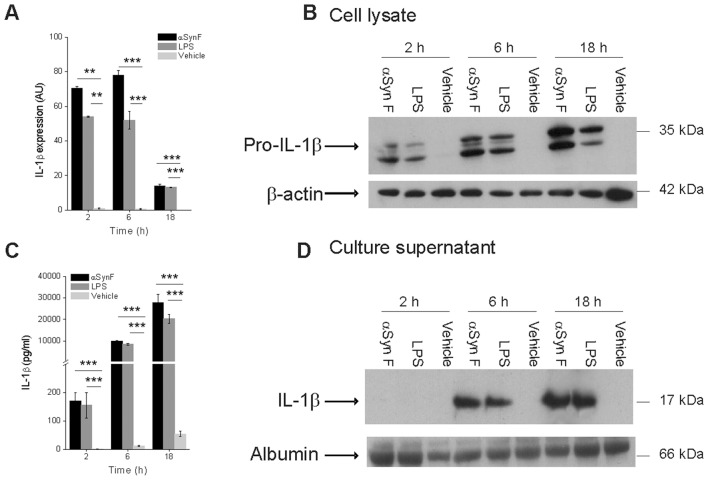
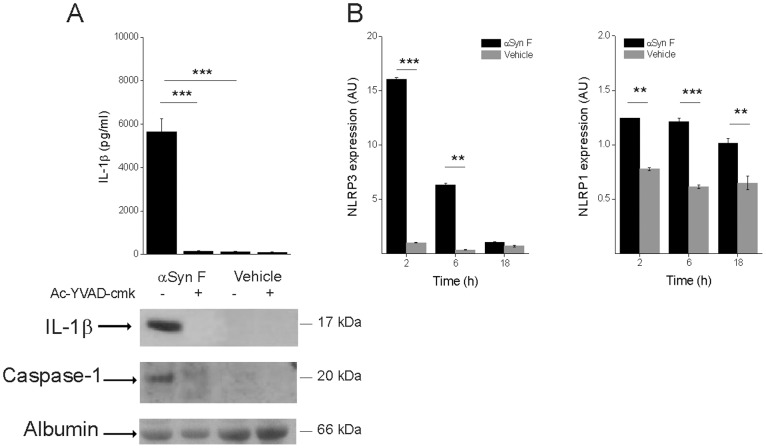
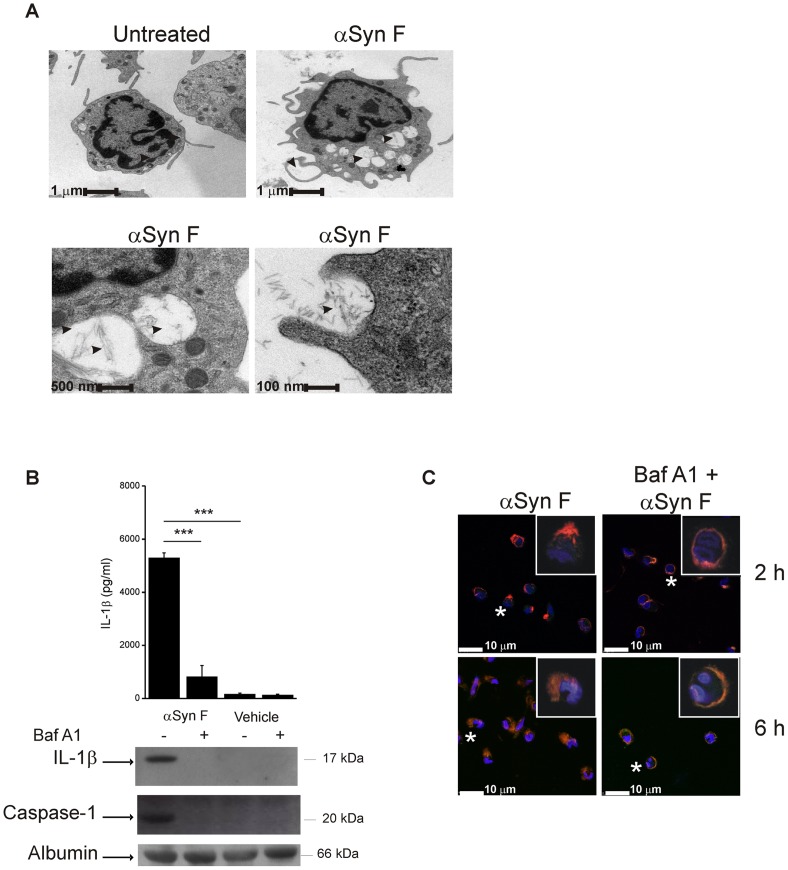
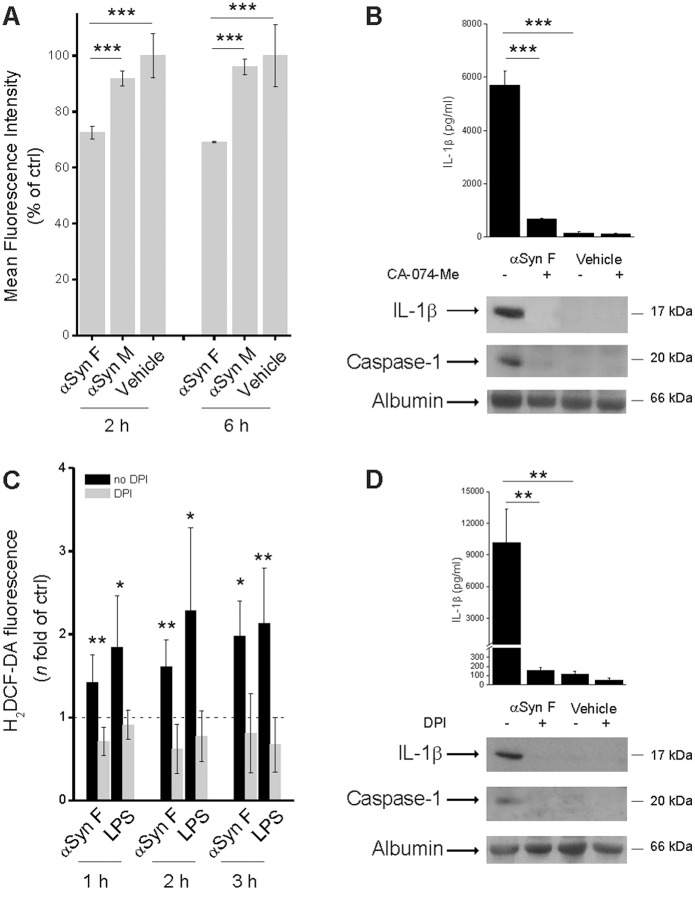
Verification
Claims the paper makes
The claims and statistics of this paper haven’t been checked yet.
Run the check — free, no account needed. It reads the open-access text and checks the sources it cites.
Claims other papers make about this one
Each is checked against this paper’s own text: does it say what the citing paper says it does?
The source backs part of the claim, not all of it — or backs it for a different population, condition or comparison.
In the citing paper
“In an in vitro experiment, both monomeric and fibrillary α-synuclein can stimulate TLR2 and induce the expression of pro-IL-1β, but only fibrillary α-synuclein can activate the NLRP3 inflammasome, resulting in the secretion of active IL-1β.358”
From Role of neuroinflammation in neurodegeneration development (2023) · cites this paper as [358]
Experimental — accuracy not yet measuredThe source backs part of the claim, not all of it — or backs it for a different population, condition or comparison.
In the citing paper
“Targeting caspase-1, a downstream molecule of NLRP3, is another promising method, which was found to decrease the secretion of IL-1β and attenuate the susceptibility of dopaminergic neurons.358”
From Role of neuroinflammation in neurodegeneration development (2023) · cites this paper as [358]
Experimental — accuracy not yet measuredIn the citing paper
“The fibrillar, but not monomeric, form of α-synuclein induced NLRP3- and caspase-1–mediated IL-1β secretion in human monocytes and BV2 microglial cell line (238), or via TLR-2 signaling pathway in rodents microglial cells (250).”
From The gut-brain axis: how microbiota and host inflammasome influence brain physiology and pathology (2020) · cites this paper as [238]
Self-check
Percentages, sums and reported differences re-computed from the paper’s own numbers.
The self-check needs the paper’s full text.
Citations
Cites
Analysis of Relative Gene Expression Data Using Real-Time Quantitative PCR and the 2−ΔΔCT Method
Livak, K. J., & Schmittgen, T. D. (2001) · Methods · doi:10.1006/meth.2001.1262 · Cited by 180,860
Staging of brain pathology related to sporadic Parkinson’s disease
Braak, H., Tredici, K. D., Rüb, U., de Vos, R. A. I., Jansen Steur, E. N. H., & Braak, E. (2003) · Neurobiology of Aging · doi:10.1016/s0197-4580(02)00065-9 · Cited by 10,777
Mutation in the α-Synuclein Gene Identified in Families with Parkinson's Disease
Polymeropoulos, M. H., Lavedan, C., Leroy, E., Ide, S. E., Dehejia, A., Dutra, A., Pike, B., Root, H., Rubenstein, J., Boyer, R., et al. (1997) · Science · doi:10.1126/science.276.5321.2045 · Cited by 8,240
Protein Misfolding, Functional Amyloid, and Human Disease
Chiti, F., & Dobson, C. M. (2006) · Annual Review of Biochemistry · doi:10.1146/annurev.biochem.75.101304.123901 · Cited by 6,497
Martinon, F., Burns, K., & Tschopp, J. (2002) · Molecular Cell · doi:10.1016/s1097-2765(02)00599-3 · Cited by 6,066
Schroder, K., & Tschopp, J. (2010) · Cell · doi:10.1016/j.cell.2010.01.040 · Cited by 5,475
Gout-associated uric acid crystals activate the NALP3 inflammasome
Martinon, F., Pétrilli, V., Mayor, A., Tardivel, A., & Tschopp, J. (2006) · Nature · doi:10.1038/nature04516 · Cited by 5,326
Microglia-mediated neurotoxicity: uncovering the molecular mechanisms
Block, M. L., Zecca, L., & Hong, J.-S. (2007) · Nature Reviews Neuroscience · doi:10.1038/nrn2038 · Cited by 4,110
AlaSOPro mutation in the gene encoding α-synuclein in Parkinson's disease
Krüger, R., Kuhn, W., Müller, T., Woitalla, D., Graeber, M., Kösel, S., Przuntek, H., Epplen, J. T., Schols, L., & Riess, O. (1998) · Nature Genetics · doi:10.1038/ng0298-106 · Cited by 3,836
Cryopyrin activates the inflammasome in response to toxins and ATP
Mariathasan, S., Weiss, D. S., Newton, K., McBride, J., O'Rourke, K., Roose-Girma, M., Lee, W. P., Weinrauch, Y., Monack, D. M., & Dixit, V. M. (2006) · Nature · doi:10.1038/nature04515 · Cited by 3,080
Cited by
Sorted by citations
The NLRP3 Inflammasome: an overview of mechanisms of activation and regulation
Kelley, N., Jeltema, D., Duan, Y., & He, Y. (2019) · International Journal of Molecular Sciences · doi:10.3390/ijms20133328 · Cited by 3,539
Inflammasomes: mechanism of action, role in disease, and therapeutics
Guo, H., Callaway, J. B., & Ting, J. P.-Y. (2015) · Nature Medicine · doi:10.1038/nm.3893 · Cited by 3,340
Ageing as a risk factor for neurodegenerative disease
Hou, Y., Dan, X., Babbar, M., Wei, Y., Hasselbalch, S. G., Croteau, D. L., & Bohr, V. A. (2019) · Nature Reviews Neurology · doi:10.1038/s41582-019-0244-7 · Cited by 3,310
Role of neuroinflammation in neurodegeneration development
Zhang, W., Xiao, D., Mao, Q., & Xia, H. (2023) · Signal Transduction and Targeted Therapy · doi:10.1038/s41392-023-01486-5 · Cited by 1,668
Microglia in physiology and disease
Wolf, S. A., Boddeke, H. W. G. M., & Kettenmann, H. (2017) · Annual Review of Physiology · doi:10.1146/annurev-physiol-022516-034406 · Cited by 1,426
Inflammation and immune dysfunction in Parkinson disease
Tansey, M. G., Wallings, R. L., Houser, M. C., Herrick, M. K., Keating, C. E., & Joers, V. (2022) · Nature Reviews Immunology · doi:10.1038/s41577-022-00684-6 · Cited by 1,382
Innate immune activation in neurodegenerative disease
Heneka, M. T., Kummer, M. P., & Latz, E. (2014) · Nature Reviews Immunology · doi:10.1038/nri3705 · Cited by 1,437
Dopamine controls systemic inflammation through inhibition of NLRP3 inflammasome
Yan, Y., Jiang, W., Liu, L., Wang, X., Ding, C., Tian, Z., & Zhou, R. (2015) · Cell · doi:10.1016/j.cell.2014.11.047 · Cited by 1,014
The Continuum of Aging and Age-Related Diseases: Common Mechanisms but Different Rates
Franceschi, C., Garagnani, P., Morsiani, C., Conte, M., Santoro, A., Grignolio, A., Monti, D., Capri, M., & Salvioli, S. (2018) · Frontiers in Medicine · doi:10.3389/fmed.2018.00061 · Cited by 945
Inflammasome inhibition prevents α-synuclein pathology and dopaminergic neurodegeneration in mice
Gordon, R., Albornoz, E. A., Christie, D. C., Langley, M. R., Kumar, V., Mantovani, S., Robertson, A. A. B., Butler, M. S., Rowe, D. B., O’Neill, L. A., et al. (2018) · Science Translational Medicine · doi:10.1126/scitranslmed.aah4066 · Cited by 897
Neuroinflammation in Parkinson's disease and its potential as therapeutic target
Wang, Q., Liu, Y., & Zhou, J. (2015) · Translational Neurodegeneration · doi:10.1186/s40035-015-0042-0 · Cited by 884
Inflammasome signalling in brain function and neurodegenerative disease
Heneka, M. T., McManus, R. M., & Latz, E. (2018) · Nature Reviews Neuroscience · doi:10.1038/s41583-018-0055-7 · Cited by 836
The gut-brain axis: how microbiota and host inflammasome influence brain physiology and pathology
Rutsch, A., Kantsjö, J. B., & Ronchi, F. (2020) · Frontiers in Immunology · doi:10.3389/fimmu.2020.604179 · Cited by 821
Inflammasomes in neuroinflammatory and neurodegenerative diseases
Voet, S., Srinivasan, S., Lamkanfi, M., & van Loo, G. (2019) · EMBO Molecular Medicine · doi:10.15252/emmm.201810248 · Cited by 761
Walsh, J. G., Muruve, D. A., & Power, C. (2014) · Nature Reviews Neuroscience · doi:10.1038/nrn3638 · Cited by 637
Microglia in Neuroinflammation and Neurodegeneration: From Understanding to Therapy
Muzio, L., Viotti, A., & Martino, G. (2021) · Frontiers in Neuroscience · doi:10.3389/fnins.2021.742065 · Cited by 581
Parkinson disease and the immune system - Associations, mechanisms and therapeutics
Tan, E.-K., Chao, Y.-X., West, A., Chan, L.-L., Poewe, W., & Jankovic, J. (2020) · Nature Reviews Neurology · doi:10.1038/s41582-020-0344-4 · Cited by 457
Poly(ADP-ribose) drives pathologic α-synuclein neurodegeneration in Parkinson’s disease
Kam, T.-I., Mao, X., Park, H., Chou, S.-C., Karuppagounder, S. S., Umanah, G. E., Yun, S. P., Brahmachari, S., Panicker, N., Chen, R., et al. (2018) · Science · doi:10.1126/science.aat8407 · Cited by 476
Stancu, I.-C., Cremers, N., Vanrusselt, H., Couturier, J., Vanoosthuyse, A., Kessels, S., Lodder, C., Brône, B., Huaux, F., Octave, J.-N., et al. (2019) · Acta Neuropathologica · doi:10.1007/s00401-018-01957-y · Cited by 447
A 360° view of the inflammasome: Mechanisms of activation, cell death, and diseases
Barnett, K. C., Li, S., Liang, K., & Ting, J. P.-Y. (2023) · Cell · doi:10.1016/j.cell.2023.04.025 · Cited by 458
Zhou, Y., Lu, M., Du, R.-H., Qiao, C., Jiang, C.-Y., Zhang, K.-Z., Ding, J.-H., & Hu, G. (2016) · Molecular Neurodegeneration · doi:10.1186/s13024-016-0094-3 · Cited by 455
The mechanisms of NLRP3 inflammasome/pyroptosis activation and their role in Parkinson's disease
Wang, S., Yuan, Y., Chen, N., & Wang, H. (2018) · International Immunopharmacology · doi:10.1016/j.intimp.2018.12.019 · Cited by 452
Healthy Effects of Plant Polyphenols: Molecular Mechanisms
Leri, M., Scuto, M. C., Ontario, M. L., Calabrese, V., Calabrese, E. J., Bucciantini, M., & Stefani, M. (2020) · International Journal of Molecular Sciences · doi:10.3390/ijms21041250 · Cited by 461
Lee, E., Hwang, I., Park, S., Hong, S., Hwang, B., Cho, Y., Son, J., & Yu, J.-W. (2019) · Cell Death & Differentiation · doi:10.1038/s41418-018-0124-5 · Cited by 431
Progress towards therapies for disease modification in Parkinson's disease
Vijiaratnam, N., Simuni, T., Bandmann, O., Morris, H. R., & Foltynie, T. (2021) · The Lancet Neurology · doi:10.1016/s1474-4422(21)00061-2 · Cited by 447
Han, X., Sun, S., Sun, Y., Song, Q., Zhu, J., Song, N., Chen, M., Sun, T., Xia, M., Ding, J., et al. (2019) · Autophagy · doi:10.1080/15548627.2019.1596481 · Cited by 408
Gut-seeded α-synuclein fibrils promote gut dysfunction and brain pathology specifically in aged mice
Challis, C., Hori, A., Sampson, T. R., Yoo, B. B., Challis, R. C., Hamilton, A. M., Mazmanian, S. K., Volpicelli-Daley, L. A., & Gradinaru, V. (2020) · Nature Neuroscience · doi:10.1038/s41593-020-0589-7 · Cited by 405
NLR members NLRC4 and NLRP3 mediate sterile inflammasome activation in microglia and astrocytes
Freeman, L., Guo, H., David, C. N., Brickey, W. J., Jha, S., & Ting, J. P.-Y. (2017) · Journal of Experimental Medicine · doi:10.1084/jem.20150237 · Cited by 397
Microglia Mediated Neuroinflammation in Parkinson’s Disease
Işık, S., Yeman-Kıyak, B., Akbayır, R., Şeyhali-Abutayeh, R., & Arpaci, T. (2023) · Cells · doi:10.3390/cells12071012 · Cited by 419
Mitochondria-associated membranes (MAMs) and inflammation
Missiroli, S., Patergnani, S., Caroccia, N., Pedriali, G., Perrone, M., Previati, M., Wieckowski, M. R., & Giorgi, C. (2018) · Cell Death and Disease · doi:10.1038/s41419-017-0027-2 · Cited by 398
Ubiquitin signalling in neurodegeneration: mechanisms and therapeutic opportunities
Schmidt, M. F., Gan, Z. Y., Komander, D., & Dewson, G. (2021) · Cell Death and Differentiation · doi:10.1038/s41418-020-00706-7 · Cited by 379
NLRP3 inflammasome is expressed and functional in mouse brain microglia but not in astrocytes
Gustin, A., Kirchmeyer, M., Koncina, E., Felten, P., Losciuto, S., Heurtaux, T., Tardivel, A., Heuschling, P., & Dostert, C. (2015) · PLoS ONE · doi:10.1371/journal.pone.0130624 · Cited by 369
Drugging the NLRP3 inflammasome: from signalling mechanisms to therapeutic targets
Walle, L. V., & Lamkanfi, M. (2023) · Nature Reviews Drug Discovery · doi:10.1038/s41573-023-00822-2 · Cited by 397
Calabrese, V., Santoro, A., Monti, D., Crupi, R., Di Paola, R., Latteri, S., Cuzzocrea, S., Zappia, M., Giordano, J., Calabrese, E. J., et al. (2018) · Free Radical Biology and Medicine · doi:10.1016/j.freeradbiomed.2017.10.379 · Cited by 356
Microbiome-Gut-Brain Axis and Toll-Like Receptors in Parkinson’s Disease
Caputi, V., & Giron, M. C. (2018) · International Journal of Molecular Sciences · doi:10.3390/ijms19061689 · Cited by 338
Sacino, A. N., Brooks, M., Thomas, M. A., McKinney, A. B., Lee, S., Regenhardt, R. W., McGarvey, N. H., Ayers, J. I., Notterpek, L. M., Borchelt, D., et al. (2014) · Proceedings of the National Academy of Sciences · doi:10.1073/pnas.1321785111 · Cited by 338
Ferroptosis and cell death mechanisms in Parkinson's disease
Guiney, S. J., Adlard, P. A., Bush, A. I., Finkelstein, D. I., & Ayton, S. (2017) · Neurochemistry International · doi:10.1016/j.neuint.2017.01.004 · Cited by 353
Innate Immunity and Neurodegeneration
Labzin, L. I., Heneka, M. T., & Latz, E. (2018) · Annual Review of Medicine · doi:10.1146/annurev-med-050715-104343 · Cited by 319
Daniele, S. G., Béraud, D., Davenport, C., Cheng, K., Yin, H., & Maguire-Zeiss, K. A. (2015) · Science Signaling · doi:10.1126/scisignal.2005965 · Cited by 303
Focus on the Role of NLRP3 Inflammasome in Diseases
Fusco, R., Siracusa, R., Genovese, T., Cuzzocrea, S., & Paola, R. D. (2020) · International Journal of Molecular Sciences · doi:10.3390/ijms21124223 · Cited by 301
TLR Agonists as Vaccine Adjuvants Targeting Cancer and Infectious Diseases
Luchner, M., Reinke, S., & Milicic, A. (2021) · Pharmaceutics · doi:10.3390/pharmaceutics13020142 · Cited by 296
DAMPs as mediators of sterile inflammation in aging-related pathologies
Feldman, N., Rotter-Maskowitz, A., & Okun, E. (2015) · Ageing Research Reviews · doi:10.1016/j.arr.2015.01.003 · Cited by 283
The role of Toll-like receptors and neuroinflammation in Parkinson’s disease
Heidari, A., Yazdanpanah, N., & Rezaei, N. (2022) · Journal of Neuroinflammation · doi:10.1186/s12974-022-02496-w · Cited by 275
Periphery and brain, innate and adaptive immunity in Parkinson’s disease
Harms, A. S., Ferreira, S. A., & Romero‐Ramos, M. (2021) · Acta Neuropathologica · doi:10.1007/s00401-021-02268-5 · Cited by 291
Immune aging, dysmetabolism, and inflammation in neurological diseases
Deleidi, M., Jäggle, M., & Rubino, G. (2015) · Frontiers in Neuroscience · doi:10.3389/fnins.2015.00172 · Cited by 260
Fyn kinase regulates misfolded α-synuclein uptake and NLRP3 inflammasome activation in microglia
Panicker, N., Sarkar, S., Harischandra, D. S., Neal, M. P., Kam, T., Jin, H., Saminathan, H., Langley, M. R., Charli, A., Samidurai, M., et al. (2019) · The Journal of Experimental Medicine · doi:10.1084/jem.20182191 · Cited by 257
The Ageing Brain: Molecular and Cellular Basis of Neurodegeneration
Azam, S., Haque, M. E., Balakrishnan, R., Kim, I., & Choi, D. (2021) · Frontiers in Cell and Developmental Biology · doi:10.3389/fcell.2021.683459 · Cited by 273
Doorn, K. J., Moors, T., Drukarch, B., van de Berg, W. D., Lucassen, P. J., & van Dam, A.-M. (2014) · Acta Neuropathologica Communications · doi:10.1186/s40478-014-0090-1 · Cited by 254
Uchihara, T., & Giasson, B. I. (2016) · Acta Neuropathologica · doi:10.1007/s00401-015-1485-1 · Cited by 249
microRNA-155 Regulates Alpha-Synuclein-Induced Inflammatory Responses in Models of Parkinson Disease
Thome, A. D., Harms, A. S., Volpicelli‐Daley, L. A., & Standaert, D. G. (2016) · Journal of Neuroscience · doi:10.1523/jneurosci.3900-15.2016 · Cited by 252
Role of α-Synuclein in Inducing Innate and Adaptive Immunity in Parkinson Disease
Allen Reish, H. E., & Standaert, D. G. (2015) · Journal of Parkinson’s Disease · doi:10.3233/jpd-140491 · Cited by 244
Targeting the Microglial NLRP3 Inflammasome and Its Role in Parkinson's Disease
Haque, M. E., Akther, M., Jakaria, M., Kim, I., Azam, S., & Choi, D. (2019) · Movement Disorders · doi:10.1002/mds.27874 · Cited by 251
Ma, Q. (2023) · Pharmacological Reviews · doi:10.1124/pharmrev.122.000629 · Cited by 260
The microglial NLRP3 inflammasome is activated by amyotrophic lateral sclerosis proteins
Deora, V., Lee, J. D., Albornoz, E. A., McAlary, L., Jagaraj, C. J., Robertson, A. A. B., Atkin, J. D., Cooper, M. A., Schroder, K., Yerbury, J. J., et al. (2020) · Glia · doi:10.1002/glia.23728 · Cited by 245
Inflammasome Priming in Sterile Inflammatory Disease
Patel, M. N., Carroll, R. G., Galván-Peña, S., Mills, E. L., Olden, R., Triantafilou, M., Wolf, A. I., Bryant, C. E., Triantafilou, K., & Masters, S. L. (2017) · Trends in Molecular Medicine · doi:10.1016/j.molmed.2016.12.007 · Cited by 241
Wang, D., Zhang, J., Jiang, W., Cao, Z., Zhao, F., Cai, T., Aschner, M., & Luo, W. (2017) · Autophagy · doi:10.1080/15548627.2017.1293766 · Cited by 236
Targeting Microglial α-Synuclein/TLRs/NF-kappaB/NLRP3 Inflammasome Axis in Parkinson’s Disease
Li, Y., Xia, Y., Yin, S., Wan, F., Hu, J., Kou, L., Sun, Y., Wu, J., Zhou, Q., Huang, J., et al. (2021) · Frontiers in Immunology · doi:10.3389/fimmu.2021.719807 · Cited by 230
Inflammasomes as therapeutic targets in human diseases
Li, Y., Huang, H., Liu, B., Zhang, Y. L., Pan, X., Yu, X., Shen, Z., & Song, Y. (2021) · Signal Transduction and Targeted Therapy · doi:10.1038/s41392-021-00650-z · Cited by 238
Inflammation is genetically implicated in Parkinson’s disease
Dzamko, N., Geczy, C. L., & Halliday, G. M. (2015) · Neuroscience · doi:10.1016/j.neuroscience.2014.10.028 · Cited by 222
Fan, Z., Pan, Y.-T., Zhang, Z.-Y., Yang, H., Yu, S.-Y., Zheng, Y., Ma, J.-H., & Wang, X.-M. (2020) · Journal of Neuroinflammation · doi:10.1186/s12974-019-1670-6 · Cited by 228
Microglia Response During Parkinson’s Disease: Alpha-Synuclein Intervention
Ferreira, S. A., & Romero‐Ramos, M. (2018) · Frontiers in Cellular Neuroscience · doi:10.3389/fncel.2018.00247 · Cited by 227
Microglia and CNS Interleukin-1: Beyond Immunological Concepts
Liu, X., & Quan, N. (2018) · Frontiers in Neurology · doi:10.3389/fneur.2018.00008 · Cited by 221
Transcriptional and epigenetic decoding of the microglial aging process
Li, X., Li, Y., Jin, Y., Zhang, Y., Wu, J., Xu, Z., Huang, Y., Cai, L., Gao, S., Liu, T., et al. (2023) · Nature Aging · doi:10.1038/s43587-023-00479-x · Cited by 234
Rimessi, A., Previati, M., Nigro, F., Wieckowski, M. R., & Pinton, P. (2016) · The International Journal of Biochemistry & Cell Biology · doi:10.1016/j.biocel.2016.06.015 · Cited by 216
Mitochondria and the NLRP3 inflammasome: physiological and pathological relevance
Yu, J., & Lee, M. (2016) · Archives of Pharmacal Research · doi:10.1007/s12272-016-0827-4 · Cited by 209
Bordt, E. A., & Polster, B. M. (2014) · Free Radical Biology and Medicine · doi:10.1016/j.freeradbiomed.2014.07.033 · Cited by 202
The role of lysosomal cysteine cathepsins in NLRP3 inflammasome activation
Campden, R. I., & Zhang, Y. (2019) · Archives of Biochemistry and Biophysics · doi:10.1016/j.abb.2019.02.015 · Cited by 203
Neurodegenerative Disease and the NLRP3 Inflammasome
Holbrook, J. A., Jarosz-Griffiths, H., Caseley, E. A., Reyna, S. J. L., Poulter, J. A., Williams‐Gray, C. H., Peckham, D. G., & McDermott, M. (2021) · Frontiers in Pharmacology · doi:10.3389/fphar.2021.643254 · Cited by 201
Wu, A., Zhou, X., Qiao, G., Yu, L., Tang, Y., Yan, L., Qiu, W., Pan, R., Yu, C., Law, B. Y. K., et al. (2020) · Ageing Research Reviews · doi:10.1016/j.arr.2020.101202 · Cited by 196
Mitophagy: a balance regulator of NLRP3 inflammasome activation
Kim, M., Yoon, J., & Ryu, J.-H. (2016) · BMB Reports · doi:10.5483/bmbrep.2016.49.10.115 · Cited by 202
Updated insights into the molecular networks for NLRP3 inflammasome activation
Paik, S., Kim, J. K., Shin, H. J., Park, E., Kim, I. S., & Jo, E. (2025) · Cellular and Molecular Immunology · doi:10.1038/s41423-025-01284-9 · Cited by 222
Neuroinflammation and Parkinson’s Disease—From Neurodegeneration to Therapeutic Opportunities
Araújo, B., Caridade-Silva, R., Soares-Guedes, C., Martins‐Macedo, J., Gomes, E. D., Monteiro, S., & Teixeira, F. G. (2022) · Cells · doi:10.3390/cells11182908 · Cited by 209
von Herrmann, K. M., Salas, L. A., Martinez, E. M., Young, A. L., Howard, J. M., Feldman, M. S., Christensen, B. C., Wilkins, O. M., Lee, S., Hickey, W. F., et al. (2018) · npj Parkinson s Disease · doi:10.1038/s41531-018-0061-5 · Cited by 190
Amyloid fibrils are the molecular trigger of inflammation in Parkinson's disease
Gustot, A., Gallea, J. I., Sarroukh, R., Celej, M. S., Ruysschaert, J., & Raussens, V. (2015) · Biochemical Journal · doi:10.1042/bj20150617 · Cited by 190
Recent Advances of the NLRP3 Inflammasome in Central Nervous System Disorders
Zhou, K., Shi, L., Wang, Y., Chen, S., & Zhang, J. (2016) · Journal of Immunology Research · doi:10.1155/2016/9238290 · Cited by 175
Corcoran, S. E., Halai, R., & Cooper, M. A. (2021) · Pharmacological Reviews · doi:10.1124/pharmrev.120.000171 · Cited by 180
Hughes, C. D., Choi, M. L., Ryten, M., Hopkins, L., Drews, A., Botía, J. A., Iljina, M., Rodrigues, M., Gagliano, S. A., Gandhi, S., et al. (2019) · Acta Neuropathologica · doi:10.1007/s00401-018-1907-y · Cited by 177
Haslund‐Vinding, J., McBean, G., Jaquet, V, & Vilhardt, F. (2017) · British Journal of Pharmacology · doi:10.1111/bph.13425 · Cited by 169
Rui, W., Li, S., Xiao, H., Xiao, M., & Shi, J. (2020) · The International Journal of Neuropsychopharmacology · doi:10.1093/ijnp/pyaa060 · Cited by 176
The relation between α-synuclein and microglia in Parkinson’s disease: Recent developments
Sánchez-Guajardo, V., Tentillier, N., & Romero‐Ramos, M. (2015) · Neuroscience · doi:10.1016/j.neuroscience.2015.02.008 · Cited by 178
Ortiz‐Virumbrales, M., Moreno, C. L., Kruglikov, I., Marazuela, P., Sproul, A. A., Jacob, S., Zimmer, M., Paull, D. J., Zhang, B., Schadt, E. E., et al. (2017) · Acta Neuropathologica Communications · doi:10.1186/s40478-017-0475-z · Cited by 179
Sarkar, S., Rokad, D., Malovic, E., Luo, J., Harischandra, D. S., Jin, H., Anantharam, V., Huang, X., Lewis, M., Kanthasamy, A., et al. (2019) · Science Signaling · doi:10.1126/scisignal.aat9900 · Cited by 171
Inflammasomes link vascular disease with neuroinflammation and brain disorders
Lénárt, N., Brough, D., & Dénes, Á. (2016) · Journal of Cerebral Blood Flow & Metabolism · doi:10.1177/0271678x16662043 · Cited by 170
Inflammasomes in neurological diseases: emerging pathogenic and therapeutic concepts
Mamik, M. K., & Power, C. (2017) · Brain · doi:10.1093/brain/awx133 · Cited by 169
NLRP3 inflammasome activation is associated with proliferative diabetic retinopathy
Loukovaara, S., Piippo, N., Kinnunen, K., Hytti, M., Kaarniranta, K., & Kauppinen, A. (2017) · Acta Ophthalmologica · doi:10.1111/aos.13427 · Cited by 160
NADPH oxidases in Parkinson’s disease: a systematic review
Bélarbi, K., Cuvelier, E., Destée, A., Gressier, B., & Chartier‐Harlin, M. (2017) · Molecular Neurodegeneration · doi:10.1186/s13024-017-0225-5 · Cited by 161
The NLRP3 Inflammasome is Involved in the Pathogenesis of Parkinson’s Disease in Rats
Mao, Z., Liu, C., Ji, S., Yang, Q., Ye, H., Han, H., & Xue, Z. (2017) · Neurochemical Research · doi:10.1007/s11064-017-2185-0 · Cited by 155
Mouton‐Liger, F., Rosazza, T., Sepulveda‐Diaz, J., Ieang, A., Hassoun, S., Claire, E., Mangone, G., Brice, A., Michel, P. P., Corvol, J., et al. (2018) · Glia · doi:10.1002/glia.23337 · Cited by 160
Glycosphingolipids and Neuroinflammation in Parkinson’s Disease
Belarbi, K., Cuvelier, E., Bonte, M.-A., Desplanque, M., Gressier, B., Devos, D., & Chartier-Harlin, M.-C. (2020) · Molecular Neurodegeneration · doi:10.1186/s13024-020-00408-1 · Cited by 155
Manganese exposure induces neuroinflammation by impairing mitochondrial dynamics in astrocytes
Sarkar, S., Malovic, E., Harischandra, D. S., Ngwa, H. A., Ghosh, A., Hogan, C., Rokad, D., Zenitsky, G. D., Jin, H., Anantharam, V., et al. (2017) · NeuroToxicology · doi:10.1016/j.neuro.2017.05.009 · Cited by 151
Mulay, S. R., & Anders, H. (2016) · New England Journal of Medicine · doi:10.1056/nejmra1601611 · Cited by 154
Toll-like receptors and their therapeutic potential in Parkinson’s disease and α-synucleinopathies
Kouli, A., Horne, C. B., & Williams-Gray, C. H. (2019) · Brain Behavior and Immunity · doi:10.1016/j.bbi.2019.06.042 · Cited by 143
Fu, P., Gao, M., & Yung, K. K. L. (2019) · ACS Chemical Neuroscience · doi:10.1021/acschemneuro.9b00607 · Cited by 146
Diet in Parkinson’s Disease: Critical Role for the Microbiome
Jackson, A., Forsyth, C. B., Shaikh, M., Voigt, R. M., Engen, P. A., Ramirez, V., & Keshavarzian, A. (2019) · Frontiers in Neurology · doi:10.3389/fneur.2019.01245 · Cited by 145
The Role of the Inflammasome in Neurodegenerative Diseases
Piancone, F., La Rosa, F., Marventano, I., Saresella, M., & Clerici, M. (2021) · Molecules · doi:10.3390/molecules26040953 · Cited by 144
Alpha-Synuclein Pathology and the Role of the Microbiota in Parkinson’s Disease
Fitzgerald, E., Murphy, S. A., & Martinson, H. A. (2019) · Frontiers in Neuroscience · doi:10.3389/fnins.2019.00369 · Cited by 151
The immune system in Parkinson's disease: what we know so far
Roodveldt, C., Bernardino, L. I., Çakmak, Ö. Ö., Dragić, M., Fladmark, K. E., Ertan, S., Aktaş, B., Pita, C., Ciglar, L., Garraux, G., et al. (2024) · Brain · doi:10.1093/brain/awae177 · Cited by 151
Campolo, M., Paterniti, I., Siracusa, R., Filippone, A., Esposito, E., & Cuzzocrea, S. (2018) · Brain Behavior and Immunity · doi:10.1016/j.bbi.2018.12.003 · Cited by 143
Sacino, A. N., Brooks, M., McKinney, A. B., Thomas, M. A., Shaw, G., Golde, T. E., & Giasson, B. I. (2014) · The Journal of Neuroscience · doi:10.1523/jneurosci.2102-14.2014 · Cited by 141
MicroRNA-30e regulates neuroinflammation in MPTP model of Parkinson’s disease by targeting Nlrp3
Li, D., Yang, H., Ma, J., Luo, S., Chen, S., & Gu, Q. (2017) · Human Cell · doi:10.1007/s13577-017-0187-5 · Cited by 146
Metadata
- Authors
- Codolo, G., Plotegher, N., Pozzobon, T., Brucale, M., Tessari, I., Bubacco, L., & de Bernard, M.
- Affiliations
- University of Padua (IT)
- Veneto Institute of Molecular Medicine (IT)
- Institute of Nanostructured Materials (IT)
- Corresponding author
- Bubacco, Luigi
- Venue
- PLoS ONE
- Publisher
- Public Library of Science (PLoS)
- Published
- 2013-01-31
- Volume
- 8
- Issue
- 1
- Pages
- e55375
- ISSN
- 1932-6203 (ISSN-L)
- PMC
- PMC3561263
- OpenAlex
- W2015283405
- Cited by
- 585
- References
- 67
- Citations by year
- 2026: 23 · 2025: 38 · 2024: 56 · 2023: 59 · 2022: 68 · 2021: 65 · 2020: 58 · 2019: 53 · 2018: 48 · 2017: 31 · 2016: 27 · 2015: 30 · 2014: 23 · 2013: 5
- FWCI
- 12.83
- Type
- journal article
- Language
- en
- Open access
- gold
- doi.org
- Locations
- PLoS ONE (publishedVersion, cc-by)
- Europe PMC (PubMed Central) (publishedVersion, other-oa)
- PubMed Central (publishedVersion, cc-by)
- PubMed (publishedVersion)
- Padua Research Archive (University of Padova) (submittedVersion, cc-by)
- DOAJ (DOAJ: Directory of Open Access Journals) (submittedVersion, cc-by-sa)
- Figshare (submittedVersion, cc-by)
- Funders
- Fondazione Cariplo (2011-0485)
- Università degli Studi di Padova
- Topics
- Life Sciences › Biochemistry, Genetics and Molecular Biology › Molecular Biology › Inflammasome and immune disorders
- Health Sciences › Medicine › Clinical Neurology › Parkinson's Disease Mechanisms and Treatments
- Life Sciences › Neuroscience › Neurology › Neuroinflammation and Neurodegeneration Mechanisms
- Keywords
- alpha-synuclein aggregation, NLRP3 inflammasome, IL-1β, Parkinson's disease, synucleinopathies, TLR2, microglial activation, phagocytosis, reactive oxygen species, cathepsin B, Lewy bodies, neuroinflammation, neurodegeneration
- MeSH terms
- NLR Family, Pyrin Domain-Containing 3 Protein, Analysis of Variance, Carrier Proteins, Humans, Inflammation, Neurons, Parkinson Disease, Phagocytosis, Spectrometry, Fluorescence, Spectrophotometry, Ultraviolet, Thiazoles, Blotting, Western, Lewy Bodies, DNA Primers, Microscopy, Confocal, Microscopy, Atomic Force, Microscopy, Electron, Transmission, Toll-Like Receptor 2, alpha-Synuclein, Benzothiazoles, Interleukin-1beta, Chromatography, Reverse-Phase, Inflammasomes, Real-Time Polymerase Chain Reaction
About these checks
Registry, retraction, Cites and statistics results are computed, not judged, with one exception: a printed reference that no index lists is read once by a model before it counts as a citation error. Claims are extracted by a model and kept only when their quote appears verbatim in the text; each cited source is then checked, with a model’s help, for whether it says what the claim relies on. Those verdicts can be wrong — read the claim’s quote and the cited source before relying on one.
Statistics and arithmetic are recomputed, not judged.
Confidence bands are shown only for fields calibrated on our annotated test set. None is calibrated yet, so no band is shown.
What counts as a claim ›How we measure confidence ›How we check this ›
Are you an author, or do you see a problem with this page? Request a review
