

SoilGrids250m: Global gridded soil information based on machine learning
Open accessThe DOI matches its Crossref record; 85 of the 89 references it cites were found in a registry or an index.
Abstract
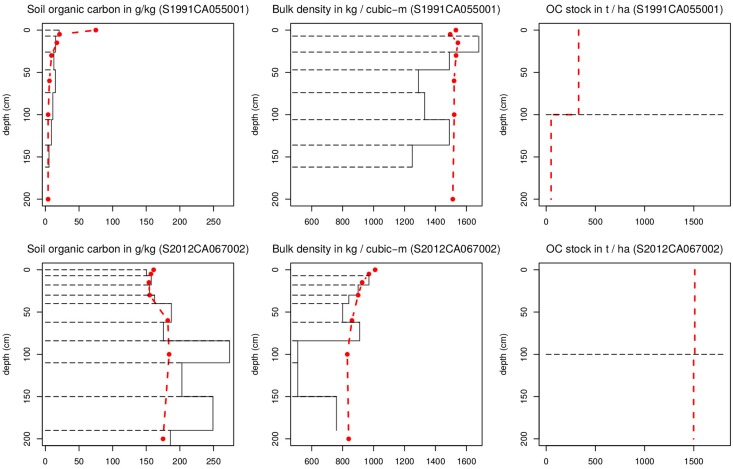
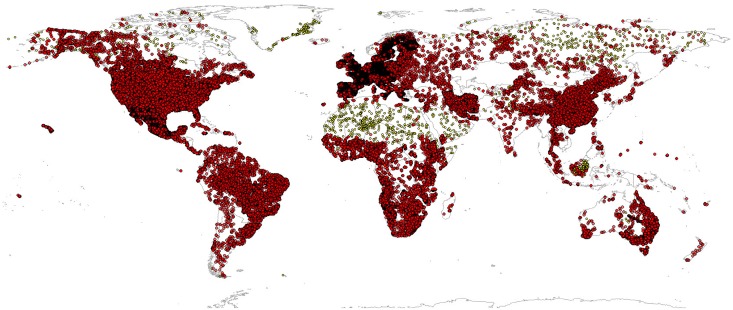
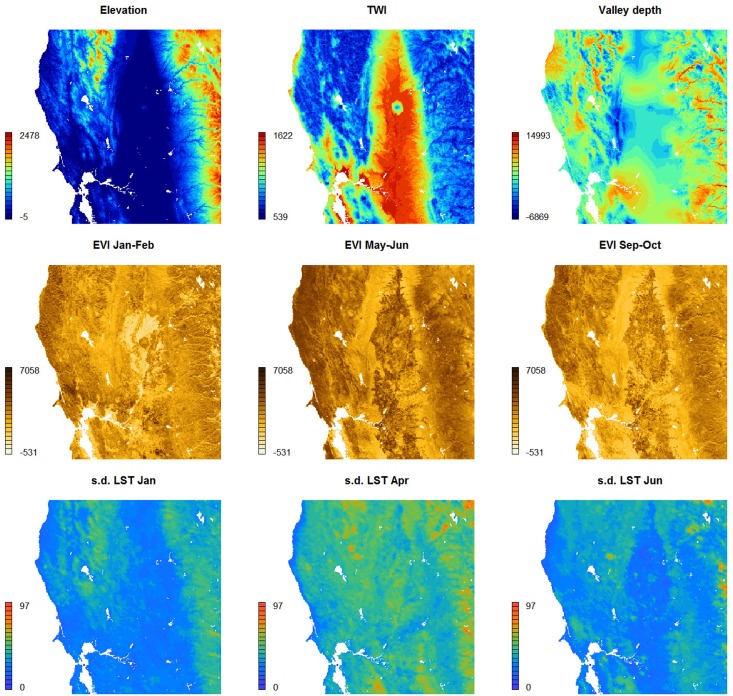
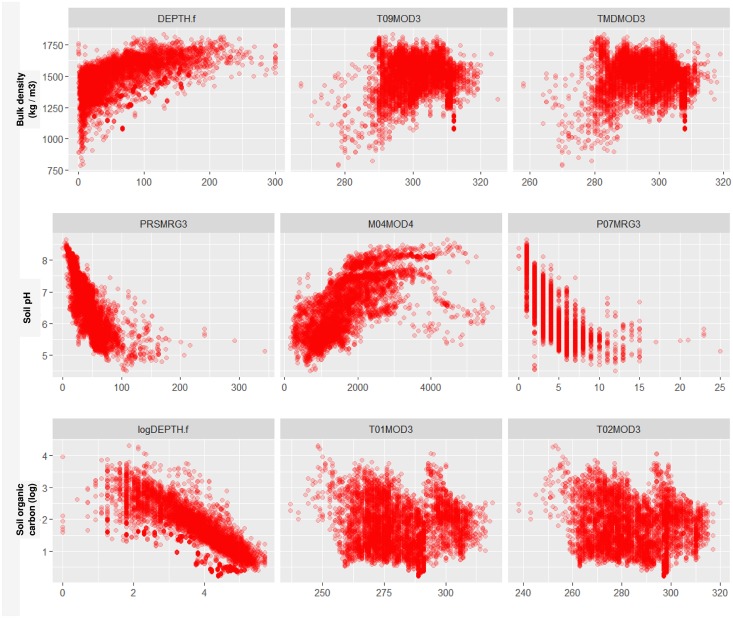
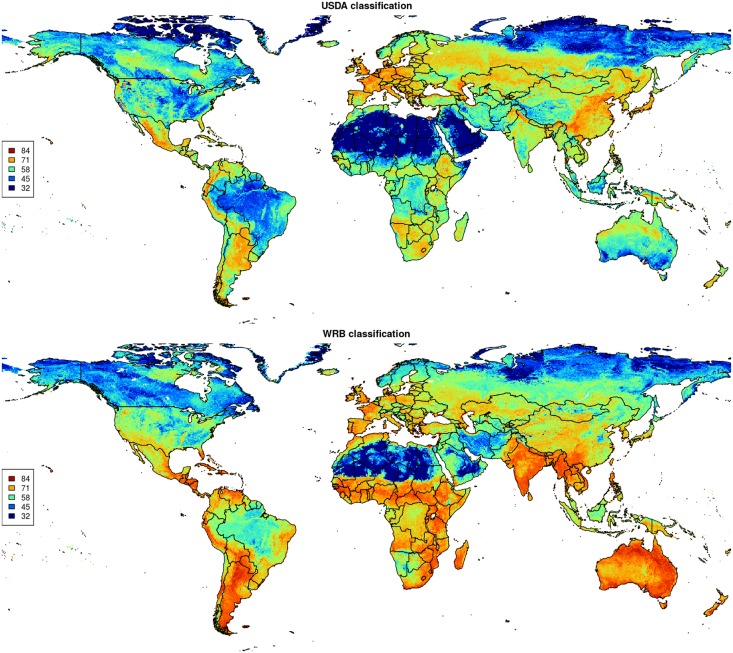
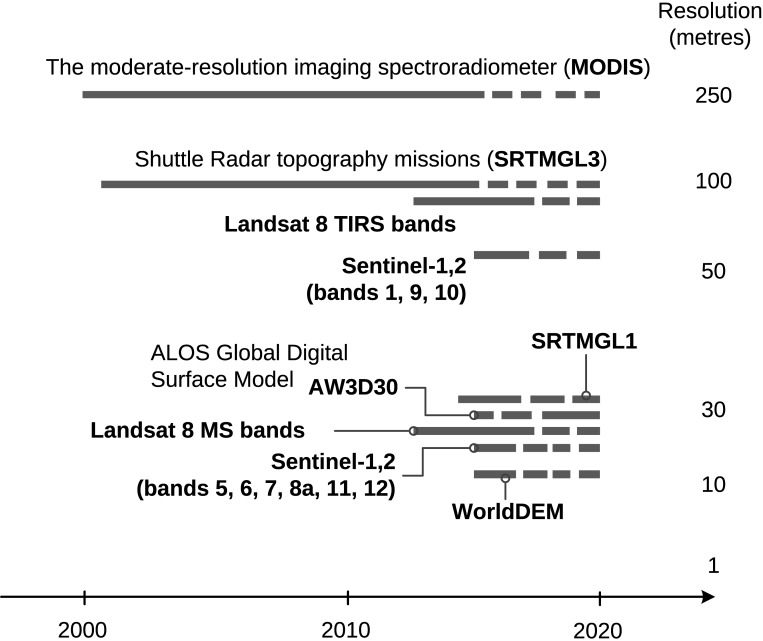
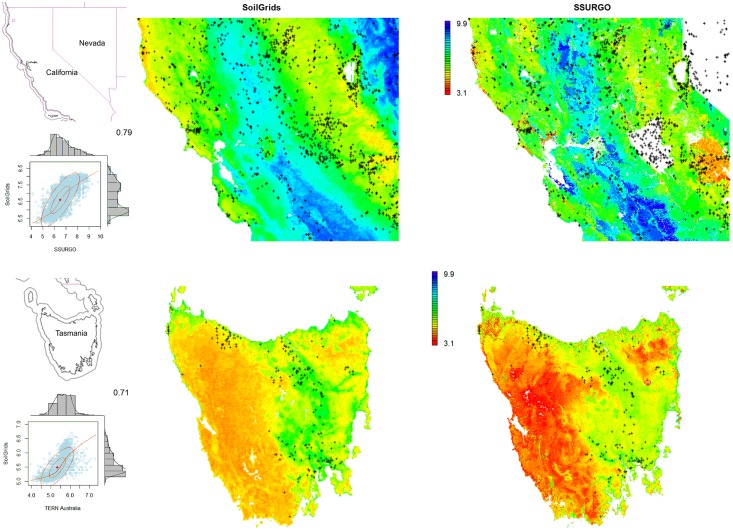
This paper describes the technical development and accuracy assessment of the most recent and improved version of the SoilGrids system at 250m resolution (June 2016 update). SoilGrids provides global predictions for standard numeric soil properties (organic carbon, bulk density, Cation Exchange Capacity (CEC), pH, soil texture fractions and coarse fragments) at seven standard depths (0, 5, 15, 30, 60, 100 and 200 cm), in addition to predictions of depth to bedrock and distribution of soil classes based on the World Reference Base (WRB) and USDA classification systems (ca. 280 raster layers in total). Predictions were based on ca. 150,000 soil profiles used for training and a stack of 158 remote sensing-based soil covariates (primarily derived from MODIS land products, SRTM DEM derivatives, climatic images and global landform and lithology maps), which were used to fit an ensemble of machine learning methods-random forest and gradient boosting and/or multinomial logistic regression-as implemented in the R packages ranger, xgboost, nnet and caret. The results of 10-fold cross-validation show that the ensemble models explain between 56% (coarse fragments) and 83% (pH) of variation with an overall average of 61%. Improvements in the relative accuracy considering the amount of variation explained, in comparison to the previous version of SoilGrids at 1 km spatial resolution, range from 60 to 230%. Improvements can be attributed to: (1) the use of machine learning instead of linear regression, (2) to considerable investments in preparing finer resolution covariate layers and (3) to insertion of additional soil profiles. Further development of SoilGrids could include refinement of methods to incorporate input uncertainties and derivation of posterior probability distributions (per pixel), and further automation of spatial modeling so that soil maps can be generated for potentially hundreds of soil variables. Another area of future research is the development of methods for multiscale merging of SoilGrids predictions with local and/or national gridded soil products (e.g. up to 50 m spatial resolution) so that increasingly more accurate, complete and consistent global soil information can be produced. SoilGrids are available under the Open Data Base License.
Overview
The claims and statistics of this paper haven’t been checked yet.
Free: it reads the open-access text and checks the first 5 claims that cite a source we can check. Create a free account to check every claim.
Integrity signals
Registry
Cites
Statistics
Figures






Verification
Claims the paper makes
The claims and statistics of this paper haven’t been checked yet.
Free: it reads the open-access text and checks the first 5 claims that cite a source we can check. Create a free account to check every claim.
Claims other papers make about this one
Each is checked against this paper’s own text: does it say what the citing paper says it does?
The source backs part of the claim, not all of it — or backs it for a different population, condition or comparison.
In the citing paper
“These uncertainties are mostly due to the uneven distribution and overall scarcity of field data for modelling and validating carbon stocks in the biomass and soil 27,64,65 .”
From Global priority areas for ecosystem restoration (2020) · cites this paper as [65]
Experimental — accuracy not yet measured
Self-check
Percentages, sums and reported differences re-computed from the paper’s own numbers.
The self-check needs the paper’s full text.
Citations
Cites
XGBoost: A Scalable Tree Boosting System
Chen, T., & Guestrin, C. (2016) · Proceedings of the 22nd ACM SIGKDD International Conference on Knowledge Discovery and Data Mining · doi:10.1145/2939672.2939785 · Cited by 54,569
Modern Applied Statistics with S
Venables, W. N., & Ripley, B. D. (2002) · Statistics and Computing · doi:10.1007/978-0-387-21706-2 · Cited by 24,305
Very high resolution interpolated climate surfaces for global land areas
Hijmans, R. J., Cameron, S. E., Parra, J. L., Jones, P. G., & Jarvis, A. (2005) · International Journal of Climatology · doi:10.1002/joc.1276 · Cited by 19,825
Total Carbon, Organic Carbon, and Organic Matter
Nelson, D. W., & Sommers, L. E. (1982) · Agronomy Monographs · doi:10.2134/agronmonogr9.2.2ed.c29 · Cited by 9,978
Building Predictive Models in R Using the caret Package
Kuhn, M. (2008) · Journal of Statistical Software · doi:10.18637/jss.v028.i05 · Cited by 8,863
Weighted kappa: nominal scale agreement provision for scaled disagreement or partial credit
Cohen, J. (1968) · Psychological Bulletin · doi:10.1037/h0026256 · Cited by 8,736
Kuhn, M., & Johnson, K. (2013) · doi:10.1007/978-1-4614-6849-3 · Cited by 6,788
Communication in the presence of noise
Shannon, C. E. (1949) · Proceedings of the IRE · doi:10.1109/jrproc.1949.232969 · Cited by 6,539
Anonim, A. (2010) · Cited by 4,945
Communication In The Presence Of Noise
Shannon, C. E. (1998) · Proceedings of the IEEE · doi:10.1109/jproc.1998.659497 · Cited by 4,804
Research works printed but not linked: 5
- D Arrouays, 2014, Soil carbon. vol. 125 of Advances in Agronomy, 93
- SA Lei, 1998, Soil Properties of the Kelso Sand Dunes in the Mojave Desert, The Southwestern Naturalist, 43, 47
- Huffman GJ, Bolvin DT. GPCP version 2 combined precipitation data set documentation. vol. 1. Laboratory for Atmospheres, NASA Goddard Space Flight Center and Science Systems and Applications; 2009.
- Kempen B. Updating soil information with digital soil mapping [PhD thesis]. Wageningen University. Wageningen; 2011. Available from: http://edepot.wur.nl/187198.
- Eberhardt E. Deriving WRB soil types using National German Soil Survey Guidelines. In: NCSS National Conference. NCSS Standards. Asheville, NC: United States Department of Agriculture USDA-NRCS; 2011. p. 1–2.
Cited by
Deep learning and process understanding for data-driven Earth system science
Reichstein, M., Camps-Valls, G., Stevens, B., Jung, M., Denzler, J., Carvalhais, N., & Prabhat (2019) · Nature · doi:10.1038/s41586-019-0912-1 · Cited by 5,673
SoilGrids 2.0: producing soil information for the globe with quantified spatial uncertainty
Poggio, L., de Sousa, L. M., Batjes, N. H., Heuvelink, G. B. M., Kempen, B., Ribeiro, E., & Rossiter, D. (2021) · SOIL · doi:10.5194/soil-7-217-2021 · Cited by 2,333
Self-citationA global atlas of the dominant bacteria found in soil
Delgado-Baquerizo, M., Oliverio, A. M., Brewer, T. E., Benavent-González, A., Eldridge, D. J., Bardgett, R. D., Maestre, F. T., Singh, B. K., & Fierer, N. (2018) · Science · doi:10.1126/science.aap9516 · Cited by 2,301
The global tree restoration potential
Bastin, J.-F., Finegold, Y., Garcia, C., Mollicone, D., Rezende, M., Routh, D., Zohner, C. M., & Crowther, T. W. (2019) · Science · doi:10.1126/science.aax0848 · Cited by 2,197
Rainfall–runoff modelling using Long Short-Term Memory (LSTM) networks
(2018) · doi:10.5194/hess-22-6005-2018 · Cited by 2,114
“In their study, Hsu et al. (1997) compared a RNN to a traditional ANN. Even though the traditional ANN in general performed equally well, they found that the number of delayed inputs, which are provided as driving inputs to the ANN, is a critical hyperparameter. However, the RNN, due to its architecture, made the sear…”
MethodResultWiesmeier, M., Urbanski, L., Hobley, E., Lang, B., von Lützow, M., Marin-Spiotta, E., van Wesemael, B., Rabot, E., Ließ, M., Garcia-Franco, N., et al. (2019) · Geoderma · doi:10.1016/j.geoderma.2018.07.026 · Cited by 1,953
Global threat of arsenic in groundwater
Podgorski, J., & Berg, M. (2020) · Science · doi:10.1126/science.aba1510 · Cited by 1,566
Soil carbon debt of 12,000 years of human land use
Sanderman, J., Hengl, T., & Fiske, G. J. (2017) · Proceedings of the National Academy of Sciences · doi:10.1073/pnas.1706103114 · Cited by 1,495
“This agreement is particularly encouraging because we excluded remote sensing data products characterizing current vegetation, which has been found to be particularly important in explaining SOC distribution (27), because of the requirement to be able to project this model back in time.”
BackgroundMethodInfluentialRisk of pesticide pollution at the global scale
Tang, F. H. M., Lenzen, M., McBratney, A., & Maggi, F. (2021) · Nature Geoscience · doi:10.1038/s41561-021-00712-5 · Cited by 1,340
Soil nematode abundance and functional group composition at a global scale
van den Hoogen, J., Geisen, S., Routh, D., Ferris, H., Traunspurger, W., Wardle, D. A., de Goede, R. G. M., Adams, B. J., Ahmad, W., Andriuzzi, W. S., et al. (2019) · Nature · doi:10.1038/s41586-019-1418-6 · Cited by 1,292
The Ecology of Soil Carbon: Pools, Vulnerabilities, and Biotic and Abiotic Controls
Jackson, R. B., Lajtha, K., Crow, S. E., Hugelius, G., Kramer, M. G., & Piñeiro, G. (2017) · Annual Review of Ecology, Evolution, and Systematics · doi:10.1146/annurev-ecolsys-112414-054234 · Cited by 1,249
“Using machine-learning techniques, Hengl et al. (2017) modeled soil properties for the world at a resolution as fine as 250 m.”
MethodThe global soil community and its influence on biogeochemistry
Crowther, T. W., van den Hoogen, J., Wan, J., Mayes, M. A., Keiser, A. D., Mo, L., Averill, C., & Maynard, D. S. (2019) · Science · doi:10.1126/science.aav0550 · Cited by 1,269
Global maps of twenty-first century forest carbon fluxes
Harris, N. L., Gibbs, D. A., Baccini, A., Birdsey, R. A., de Bruin, S., Farina, M., Fatoyinbo, L., Hansen, M. C., Herold, M., Houghton, R. A., et al. (2021) · Nature Climate Change · doi:10.1038/s41558-020-00976-6 · Cited by 1,186
Global priority areas for ecosystem restoration
Strassburg, B. B. N., Iribarrem, A., Beyer, H. L., Cordeiro, C. L., Crouzeilles, R., Jakovac, C. C., Braga Junqueira, A., Lacerda, E., Latawiec, A. E., Balmford, A., et al. (2020) · Nature · doi:10.1038/s41586-020-2784-9 · Cited by 1,175
Blue carbon as a natural climate solution
Macreadie, P. I., Costa, M. D. P., Atwood, T. B., Friess, D. A., Kelleway, J. J., Kennedy, H., Lovelock, C. E., Serrano, O., & Duarte, C. M. (2021) · Nature Reviews Earth & Environment · doi:10.1038/s43017-021-00224-1 · Cited by 1,081
Global food system emissions could preclude achieving the 1.5° and 2°C climate change targets
Clark, M. A., Domingo, N. G. G., Colgan, K., Thakrar, S. K., Tilman, D., Lynch, J., Azevedo, I. L., & Hill, J. D. (2020) · Science · doi:10.1126/science.aba7357 · Cited by 1,116
Harmonized World Soil Database version 2.0
(2023) · doi:10.4060/cc3823en · Cited by 1,064
Global predictions of primary soil salinization under changing climate in the 21st century
Hassani, A., Azapagic, A., & Shokri, N. (2021) · Nature Communications · doi:10.1038/s41467-021-26907-3 · Cited by 1,021
The CAMELS data set: catchment attributes and meteorology for large-sample studies
Addor, N., Newman, A. J., Mizukami, N., & Clark, M. P. (2017) · Hydrology and Earth System Sciences · doi:10.5194/hess-21-5293-2017 · Cited by 1,037
“The contribution of baseflow to the total discharge is estimated by the baseflow index computed by hydrograph separation using a digital filter implemented by Ladson et al. (2013). It has to be recognized that the 5 technique used for the separation influences the estimated baseflow index (see Beck et al.”
MethodGlobal stocks and capacity of mineral-associated soil organic carbon
Georgiou, K., Jackson, R. B., Vindušková, O., Abramoff, R. Z., Ahlström, A., Feng, W., Harden, J. W., Pellegrini, A. F. A., Polley, H. W., Soong, J. L., et al. (2022) · Nature Communications · doi:10.1038/s41467-022-31540-9 · Cited by 979
Smith, P., Soussana, J., Angers, D., Schipper, L., Chenu, C., Rasse, D. P., Batjes, N. H., van Egmond, F., McNeill, S., Kuhnert, M., et al. (2020) · Global Change Biology · doi:10.1111/gcb.14815 · Cited by 812
“…ates in digital soil mapping, where the relation between soil proper‐ ties and satellite information is used to predict SOC maps at various depths using point observations and satellite imagery products (Hengl et al., 2017; McBratney, Mendonça Santos, & Minasny, 2003; Minasny & McBratney, 2016).”
MethodSelf-citationLarge stocks of peatland carbon and nitrogen are vulnerable to permafrost thaw
Hugelius, G., Loisel, J., Chadburn, S., Jackson, R. B., Jones, M., MacDonald, G., Marushchak, M., Olefeldt, D., Packalen, M., Siewert, M. B., et al. (2020) · Proceedings of the National Academy of Sciences · doi:10.1073/pnas.1916387117 · Cited by 784
“The SoilGrids250m and the national/regional soil maps were combined and harmonized for this study; see SI Appendix for more details.”
A Global Deal For Nature: Guiding principles, milestones, and targets
Dinerstein, E., Vynne, C., Sala, E., Joshi, A. R., Fernando, S., Lovejoy, T. E., Mayorga, J., Olson, D., Asner, G. P., Baillie, J. E. M., et al. (2019) · Science Advances · doi:10.1126/sciadv.aaw2869 · Cited by 792
Beyond clay: towards an improved set of variables for predicting soil organic matter content
Rasmussen, C., Heckman, K., Wieder, W. R., Keiluweit, M., Lawrence, C. R., Berhe, A. A., Blankinship, J. C., Crow, S. E., Druhan, J. L., Hicks Pries, C. E., et al. (2018) · Biogeochemistry · doi:10.1007/s10533-018-0424-3 · Cited by 775
“Currently, only data products on clay content and pH are available at the global level (Hengl et al. 2017), but as this analysis shows, extractable metal data do exist for a wide range of locations and soil taxa, and some globally gridded information about soil mineral composition has been derived…”
BackgroundMachine learning for digital soil mapping: Applications, challenges and suggested solutions
Wadoux, A. M. J.-C., Minasny, B., & McBratney, A. B. (2020) · Earth-Science Reviews · doi:10.1016/j.earscirev.2020.103359 · Cited by 731
Global mapping of soil salinity change
Ivushkin, K., Bartholomeus, H., Bregt, A. K., Pulatov, A., Kempen, B., & de Sousa, L. (2019) · Remote Sensing of Environment · doi:10.1016/j.rse.2019.111260 · Cited by 678
Self-citationA trade-off between plant and soil carbon storage under elevated CO2
Terrer, C., Phillips, R. P., Hungate, B. A., Rosende, J., Pett-Ridge, J., Craig, M. E., van Groenigen, K. J., Keenan, T. F., Sulman, B. N., Stocker, B. D., et al. (2021) · Nature · doi:10.1038/s41586-021-03306-8 · Cited by 690
Mapping high resolution National Soil Information Grids of China
Liu, F., Wu, H., Zhao, Y., Li, D., Yang, J.-L., Song, X., Shi, Z., Zhu, A.-X., & Zhang, G.-L. (2022) · Science Bulletin · doi:10.1016/j.scib.2021.10.013 · Cited by 639
Predicting into unknown space? Estimating the area of applicability of spatial prediction models
Meyer, H., & Pebesma, E. (2021) · Methods in Ecology and Evolution · doi:10.1111/2041-210x.13650 · Cited by 662
Hillslope Hydrology in Global Change Research and Earth System Modeling
Fan, Y., Clark, M., Lawrence, D. M., Swenson, S., Band, L. E., Brantley, S. L., Brooks, P. D., Dietrich, W. E., Flores, A., Grant, G., et al. (2019) · Water Resources Research · doi:10.1029/2018wr023903 · Cited by 637
“The depth to the fresh bedrock has been estimated globally (e.g., Hengl et al., 2017; Pelletier et al., 2016; Xu & Liu, 2017) integrating various observations and models.”
BackgroundSchratz, P., Muenchow, J., Iturritxa, E., Richter, J., & Brenning, A. (2019) · Ecological Modelling · doi:10.1016/j.ecolmodel.2019.06.002 · Cited by 614
Mapping carbon accumulation potential from global natural forest regrowth
Cook-Patton, S. C., Leavitt, S. M., Gibbs, D., Harris, N. L., Lister, K., Anderson-Teixeira, K. J., Briggs, R. D., Chazdon, R. L., Crowther, T. W., Ellis, P. W., et al. (2020) · Nature · doi:10.1038/s41586-020-2686-x · Cited by 619
Global prevalence of non-perennial rivers and streams
Messager, M. L., Lehner, B., Cockburn, C., Lamouroux, N., Pella, H., Snelder, T., Tockner, K., Trautmann, T., Watt, C., & Datry, T. (2021) · Nature · doi:10.1038/s41586-021-03565-5 · Cited by 581
Pedotransfer Functions in Earth System Science: Challenges and Perspectives
Van Looy, K., Bouma, J., Herbst, M., Koestel, J., Minasny, B., Mishra, U., Montzka, C., Nemes, A., Pachepsky, Y. A., Padarian, J., et al. (2017) · Reviews of Geophysics · doi:10.1002/2017rg000581 · Cited by 567
“The availability of soil data globally that provides information up to 250 m resolution of texture, bulk density, and organic matter along the depth of soil profiles (Hengl et al., 2017) offers unseen opportunities for the development and application of PTFs in Earth system science.”
BackgroundMethodInfluentialNatural climate solutions for the United States
Fargione, J. E., Bassett, S., Boucher, T., Bridgham, S. D., Conant, R. T., Cook-Patton, S. C., Ellis, P. W., Falcucci, A., Fourqurean, J. W., Gopalakrishna, T., et al. (2018) · Science Advances · doi:10.1126/sciadv.aat1869 · Cited by 588
Biodiversity recovery of Neotropical secondary forests
Rozendaal, D. M. A., Bongers, F., Aide, T. M., Alvarez-Dávila, E., Ascarrunz, N., Balvanera, P., Becknell, J. M., Bentos, T. V., Brancalion, P. H. S., Cabral, G. A. L., et al. (2019) · Science Advances · doi:10.1126/sciadv.aau3114 · Cited by 557
The CAMELS-CL dataset: catchment attributes and meteorology for large sample studies – Chile dataset
Alvarez-Garreton, C., Mendoza, P. A., Boisier, J. P., Addor, N., Galleguillos, M., Zambrano-Bigiarini, M., Lara, A., Puelma, C., Cortes, G., Garreaud, R., et al. (2018) · Hydrology and Earth System Sciences · doi:10.5194/hess-22-5817-2018 · Cited by 519
Global Sequestration Potential of Increased Organic Carbon in Cropland Soils
Zomer, R. J., Bossio, D. A., Sommer, R., & Verchot, L. V. (2017) · Scientific Reports · doi:10.1038/s41598-017-15794-8 · Cited by 520
Dou, J., Yunus, A. P., Bui, D. T., Merghadi, A., Sahana, M., Zhu, Z., Chen, C.-W., Han, Z., & Pham, B. T. (2020) · Landslides · doi:10.1007/s10346-019-01286-5 · Cited by 519
Digital mapping of GlobalSoilMap soil properties at a broad scale: A review
Chen, S., Arrouays, D., Leatitia Mulder, V., Poggio, L., Minasny, B., Roudier, P., Libohova, Z., Lagacherie, P., Shi, Z., Hannam, J., et al. (2022) · Geoderma · doi:10.1016/j.geoderma.2021.115567 · Cited by 511
Lamichhane, S., Kumar, L., & Wilson, B. (2019) · Geoderma · doi:10.1016/j.geoderma.2019.05.031 · Cited by 509
Toward Global Soil Moisture Monitoring With Sentinel-1: Harnessing Assets and Overcoming Obstacles
Bauer-Marschallinger, B., Freeman, V., Cao, S., Paulik, C., Schaufler, S., Stachl, T., Modanesi, S., Massari, C., Ciabatta, L., Brocca, L., et al. (2019) · IEEE Transactions on Geoscience and Remote Sensing · doi:10.1109/tgrs.2018.2858004 · Cited by 498
“The Equi7Grid3 not only allows to handle conveniently large remote sensing spatiotemporal data but also to relate and transform data of diverse spatial scales [73].”
BackgroundSelf-citationGlobal distribution of earthworm diversity
Phillips, H. R. P., Guerra, C. A., Bartz, M. L. C., Briones, M. J. I., Brown, G., Crowther, T. W., Ferlian, O., Gongalsky, K. B., van den Hoogen, J., Krebs, J., et al. (2019) · Science · doi:10.1126/science.aax4851 · Cited by 483
Low growth resilience to drought is related to future mortality risk in trees
DeSoto, L., Cailleret, M., Sterck, F., Jansen, S., Kramer, K., Robert, E. M. R., Aakala, T., Amoroso, M. M., Bigler, C., Camarero, J. J., et al. (2020) · Nature Communications · doi:10.1038/s41467-020-14300-5 · Cited by 491
Critical knowledge gaps and research priorities in global soil salinity
(2021) · Advances in Agronomy · doi:10.1016/bs.agron.2021.03.001 · Cited by 458
A meta-analysis of global fungal distribution reveals climate-driven patterns
Větrovský, T., Kohout, P., Kopecký, M., Machac, A., Man, M., Bahnmann, B. D., Brabcová, V., Choi, J., Meszárošová, L., Human, Z. R., et al. (2019) · Nature Communications · doi:10.1038/s41467-019-13164-8 · Cited by 477
Predicting long-term dynamics of soil salinity and sodicity on a global scale
Hassani, A., Azapagic, A., & Shokri, N. (2020) · Proceedings of the National Academy of Sciences · doi:10.1073/pnas.2013771117 · Cited by 440
“Soil texture data including clay, silt, and sand content (weight percent) were collected from International Soil Reference and Information Centre (ISRIC) global gridded soil information at 250-m spatial resolutions at fivesoildepths:0,15,30,60,and100cm(34).”
InfluentialTransfer learning in environmental remote sensing
Ma, Y., Chen, S., Ermon, S., & Lobell, D. B. (2024) · Remote Sensing of Environment · doi:10.1016/j.rse.2023.113924 · Cited by 425
Soil and environmental issues in sandy soils
Huang, J., & Hartemink, A. E. (2020) · Earth-Science Reviews · doi:10.1016/j.earscirev.2020.103295 · Cited by 420
Impacts of nitrogen addition on plant species richness and abundance: A global meta‐analysis
Midolo, G., Alkemade, R., Schipper, A. M., Benítez‐López, A., Perring, M. P., & De Vries, W. (2019) · Global Ecology and Biogeography · doi:10.1111/geb.12856 · Cited by 430
“For the same reason, we extracted esti‐ mates of CEC and soil pH from the 250‐m resolution global SoilGrids data (Hengl et al., 2014, 2017), by averaging values provided for soil depths of 0–5, 5–15 and 15–30 cm. Data on temperature and pre‐ cipitation were derived from the global Climate Research…”
MethodGrazing and ecosystem service delivery in global drylands
Maestre, F. T., Le Bagousse-Pinguet, Y., Delgado-Baquerizo, M., Eldridge, D. J., Saiz, H., Berdugo, M., Gozalo, B., Ochoa, V., Guirado, E., García-Gómez, M., et al. (2022) · Science · doi:10.1126/science.abq4062 · Cited by 419
Sokol, N. W., Whalen, E. D., Jilling, A., Kallenbach, C., Pett‐Ridge, J., & Georgiou, K. (2022) · Functional Ecology · doi:10.1111/1365-2435.14040 · Cited by 414
Soil hydrology in the Earth system
Vereecken, H., Amelung, W., Bauke, S. L., Bogena, H., Brüggemann, N., Montzka, C., Vanderborght, J., Bechtold, M., Blöschl, G., Carminati, A., et al. (2022) · Nature Reviews Earth & Environment · doi:10.1038/s43017-022-00324-6 · Cited by 395
“These solutions open also the potential to apply deep learning methods, to perform advanced analytics approaches similar to those used for the SoilGrids250m soil information data such as random forest, gradient boosting or multinomial logistic regression techniques 192 .”
MethodAreas of global importance for conserving terrestrial biodiversity, carbon and water
Jung, M., Arnell, A., de Lamo, X., García-Rangel, S., Lewis, M., Mark, J., Merow, C., Miles, L., Ondo, I., Pironon, S., et al. (2021) · Nature Ecology & Evolution · doi:10.1038/s41559-021-01528-7 · Cited by 409
A global map of mangrove forest soil carbon at 30 m spatial resolution
Sanderman, J., Hengl, T., Fiske, G., Solvik, K., Adame, M. F., Benson, L., Bukoski, J. J., Carnell, P., Cifuentes-Jara, M., Donato, D., et al. (2018) · Environmental Research Letters · doi:10.1088/1748-9326/aabe1c · Cited by 393
“Soil carbon typically varies in highly non-linear ways with depth and across the landscape and as such the ability of standard parametric models to capture this variation is limited (Jardine and Siikamäki 2014, Hengl et al 2017).”
BackgroundInfluentialIncreased growing-season productivity drives earlier autumn leaf senescence in temperate trees
Zani, D., Crowther, T. W., Mo, L., Renner, S. S., & Zohner, C. M. (2020) · Science · doi:10.1126/science.abd8911 · Cited by 407
Standardised soil profile data to support global mapping and modelling (WoSIS snapshot 2019)
Batjes, N. H., Ribeiro, E., & van Oostrum, A. (2020) · Earth System Science Data · doi:10.5194/essd-12-299-2020 · Cited by 391
Self-citationArable lands under the pressure of multiple land degradation processes. A global perspective
Prăvălie, R., Patriche, C., Borrelli, P., Panagos, P., Roșca, B., Dumitraşcu, M., Nita, I.-A., Săvulescu, I., Birsan, M.-V., & Bandoc, G. (2021) · Environmental Research · doi:10.1016/j.envres.2020.110697 · Cited by 384
Clark, M. P., Bierkens, M. F. P., Samaniego, L., Woods, R. A., Uijlenhoet, R., Bennett, K. E., Pauwels, V. R. N., Cai, X., Wood, A. W., & Peters-Lidard, C. D. (2017) · Hydrology and Earth System Sciences · doi:10.5194/hess-21-3427-2017 · Cited by 384
Global patterns and climatic controls of forest structural complexity
Ehbrecht, M., Seidel, D., Annighöfer, P., Kreft, H., Köhler, M., Zemp, D. C., Puettmann, K., Nilus, R., Babweteera, F., Willim, K., et al. (2021) · Nature Communications · doi:10.1038/s41467-020-20767-z · Cited by 378
Saline soils worldwide: Identifying the most promising areas for saline agriculture
Negacz, K., Malek, Ž., de Vos, A., & Vellinga, P. (2022) · Journal of Arid Environments · doi:10.1016/j.jaridenv.2022.104775 · Cited by 356
Long-term thermal sensitivity of Earth’s tropical forests
Sullivan, M. J. P., Lewis, S. L., Affum-Baffoe, K., Castilho, C., Costa, F., Sanchez, A. C., Ewango, C. E. N., Hubau, W., Marimon, B., Monteagudo-Mendoza, A., et al. (2020) · Science · doi:10.1126/science.aaw7578 · Cited by 377
A Ranking of Hydrological Signatures Based on Their Predictability in Space
Addor, N., Nearing, G., Prieto, C., Newman, A. J., Le Vine, N., & Clark, M. P. (2018) · Water Resources Research · doi:10.1029/2018wr022606 · Cited by 359
“They have been successfully used in a various fields of geosciences, for instance, to predict hydrological signatures (Booker & Woods, 2014; Snelder et al., 2009) and soil characteristics (Chaney et al., 2016; Hengl et al., 2017).”
BackgroundMethodClimate-driven thresholds in reactive mineral retention of soil carbon at the global scale
Kramer, M. G., & Chadwick, O. A. (2018) · Nature Climate Change · doi:10.1038/s41558-018-0341-4 · Cited by 364
Do, H. X., Gudmundsson, L., Leonard, M., & Westra, S. (2018) · Earth System Science Data · doi:10.5194/essd-10-765-2018 · Cited by 349
Walker, W. S., Gorelik, S. R., Baccini, A., Aragon-Osejo, J. L., Josse, C., Meyer, C., Macedo, M. N., Augusto, C., Rios, S., Katan, T., et al. (2020) · Proceedings of the National Academy of Sciences · doi:10.1073/pnas.1913321117 · Cited by 343
“4 climate variables reflecting current (∼1960 to 1990) climatic conditions (58) and 59 SoilGrids soil variables (59) to the predictor stack; and (iii) extending the original 12-y time series (2003 to 2014) by 2 y (2003 to 2016).”
BackgroundThe global environmental hazard of glyphosate use
Maggi, F., la Cecilia, D., Tang, F. H. M., & McBratney, A. (2020) · Science of The Total Environment · doi:10.1016/j.scitotenv.2020.137167 · Cited by 354
Global climate-related predictors at kilometer resolution for the past and future
Brun, P., Zimmermann, N. E., Hari, C., Pellissier, L., & Karger, D. N. (2022) · Earth System Science Data · doi:10.5194/essd-14-5573-2022 · Cited by 328
Global maps of soil temperature
Lembrechts, J. J., van den Hoogen, J., Aalto, J., Ashcroft, M. B., De Frenne, P., Kemppinen, J., Kopecký, M., Luoto, M., Maclean, I. M. D., Crowther, T. W., et al. (2022) · Global Change Biology · doi:10.1111/gcb.16060 · Cited by 328
“In short, information about soil texture, structure and physiochemical properties was obtained from SoilGrids (version 1 [Hengl et al., 2017]), limited to the upper soil layer (top 5 cm).”
The age distribution of global soil carbon inferred from radiocarbon measurements
Shi, Z., Allison, S. D., He, Y., Levine, P. A., Hoyt, A. M., Beem-Miller, J., Zhu, Q., Wieder, W. R., Trumbore, S., & Randerson, J. T. (2020) · Nature Geoscience · doi:10.1038/s41561-020-0596-z · Cited by 334
Global mycorrhizal plant distribution linked to terrestrial carbon stocks
Soudzilovskaia, N. A., van Bodegom, P. M., Terrer, C., Zelfde, M. V., McCallum, I., Luke McCormack, M., Fisher, J. B., Brundrett, M. C., de Sá, N. C., & Tedersoo, L. (2019) · Nature Communications · doi:10.1038/s41467-019-13019-2 · Cited by 341
Deforestation and reforestation impacts on soils in the tropics
Veldkamp, E., Schmidt, M., Powers, J. S., & Corre, M. D. (2020) · Nature Reviews Earth & Environment · doi:10.1038/s43017-020-0091-5 · Cited by 326
Permafrost thawing puts the frozen carbon at risk over the Tibetan Plateau
Wang, T., Yang, D., Yang, Y., Piao, S., Li, X., Cheng, G., & Fu, B. (2020) · Science Advances · doi:10.1126/sciadv.aaz3513 · Cited by 329
Das, N. N., Entekhabi, D., Dunbar, R. S., Chaubell, M. J., Colliander, A., Yueh, S., Jagdhuber, T., Chen, F., Crow, W., O'Neill, P. E., et al. (2019) · Remote Sensing of Environment · doi:10.1016/j.rse.2019.111380 · Cited by 322
“Recent advances in the soil database such as GlobalGrid250m (Hengl et al., 2017) provides very high resolution and better accuracy.”
BackgroundHengl, T., Leenaars, J. G. B., Shepherd, K. D., Walsh, M. G., Heuvelink, G. B. M., Mamo, T., Tilahun, H., Berkhout, E., Cooper, M., Fegraus, E., et al. (2017) · Nutrient Cycling in Agroecosystems · doi:10.1007/s10705-017-9870-x · Cited by 321
“…covariates, a large stack of GIS layers as proxies for soil forming processes (climate, landform, lithology and vegetation) was used: Remote sensing data had been previously down-loaded and prepared via ISRIC’s massive storage server for the purpose of the SoilGrids project (Hengl et al. 2017).”
BackgroundMethodInfluentialSelf-citationHengl, T., Miller, M. A. E., Križan, J., Shepherd, K. D., Sila, A., Kilibarda, M., Antonijević, O., Glušica, L., Dobermann, A., Haefele, S. M., et al. (2021) · Scientific Reports · doi:10.1038/s41598-021-85639-y · Cited by 304
Self-citationGlobal hotspots of salt marsh change and carbon emissions
Campbell, A. D., Fatoyinbo, L., Goldberg, L., & Lagomasino, D. (2022) · Nature · doi:10.1038/s41586-022-05355-z · Cited by 311
“SOCS was extracted from the SoilGrids250m dataset 82 .”
MethodA comparison of global agricultural monitoring systems and current gaps
Fritz, S., See, L., Bayas, J. C. L., Waldner, F., Jacques, D., Becker-Reshef, I., Whitcraft, A., Baruth, B., Bonifacio, R., Crutchfield, J., et al. (2019) · Agricultural Systems · doi:10.1016/j.agsy.2018.05.010 · Cited by 319
“1, containing>10 K soil profiles globally, gridded data sets of soil water capacity and the more recent SoilGrids250m product (Hengl et al., 2017).”
BackgroundMaggi, F., Tang, F. H. M., la Cecilia, D., & McBratney, A. (2019) · Scientific Data · doi:10.1038/s41597-019-0169-4 · Cited by 314
Evaluation of digital soil mapping approaches with large sets of environmental covariates
Nussbaum, M., Spiess, K., Baltensweiler, A., Grob, U., Keller, A., Greiner, L., Schaepman, M. E., & Papritz, A. (2018) · SOIL · doi:10.5194/soil-4-1-2018 · Cited by 304
More green and less blue water in the Alps during warmer summers
Mastrotheodoros, T., Pappas, C., Molnar, P., Burlando, P., Manoli, G., Parajka, J., Rigon, R., Szeles, B., Bottazzi, M., Hadjidoukas, P., et al. (2020) · Nature Climate Change · doi:10.1038/s41558-019-0676-5 · Cited by 300
Protecting irrecoverable carbon in Earth’s ecosystems
Goldstein, A., Turner, W. R., Spawn, S. A., Anderson-Teixeira, K. J., Cook-Patton, S., Fargione, J., Gibbs, H. K., Griscom, B., Hewson, J. H., Howard, J. F., et al. (2020) · Nature Climate Change · doi:10.1038/s41558-020-0738-8 · Cited by 298
High-resolution and three-dimensional mapping of soil texture of China
Liu, F., Zhang, G.-L., Song, X., Li, D., Zhao, Y., Yang, J., Wu, H., & Yang, F. (2020) · Geoderma · doi:10.1016/j.geoderma.2019.114061 · Cited by 297
Machine learning-based global maps of ecological variables and the challenge of assessing them
Meyer, H., & Pebesma, E. (2022) · Nature Communications · doi:10.1038/s41467-022-29838-9 · Cited by 310
“…to the area of applicability of the model is not only relevant to avoid wrong conclusions about prediction patterns but also to avoid propagation of large errors: many global maps of environmental variables used the global soil maps produced by Hengl et al. 3 as input predictors 1,2,20 .”
MethodThe role of soil in regulation of climate
Lal, R., Monger, C., Nave, L., & Smith, P. (2021) · Philosophical Transactions of the Royal Society B · doi:10.1098/rstb.2021.0084 · Cited by 286
Carlson, C. J., Kracalik, I. T., Ross, N., Alexander, K. A., Hugh-Jones, M. E., Fegan, M., Elkin, B. T., Epp, T., Shury, T. K., Zhang, W., et al. (2019) · Nature Microbiology · doi:10.1038/s41564-019-0435-4 · Cited by 290
Augusto, L., & Boča, A. (2022) · Nature Communications · doi:10.1038/s41467-022-28748-0 · Cited by 286
Fois, M., Cuena-Lombraña, A., Fenu, G., & Bacchetta, G. (2018) · Ecological Modelling · doi:10.1016/j.ecolmodel.2018.07.018 · Cited by 287
“, 2014), soil USDA classification at 250 m resolution (Hengl et al., 2017) and the Shuttle Radar Topographic Mission (SRTM) digital elevation data at the 90 m resolution (Jarvis et al.”
BackgroundWang, X., Huang, J., Feng, Q., & Yin, D. (2020) · Remote Sensing · doi:10.3390/rs12111744 · Cited by 276
“In this study, the SoilGrids dataset was used, which is a global gridded soil information dataset, with a spatial resolution of 1 km or 250 m [42,43].”
MethodMoeck, C., Grech-Cumbo, N., Podgorski, J., Bretzler, A., Gurdak, J. J., Berg, M., & Schirmer, M. (2020) · Science of The Total Environment · doi:10.1016/j.scitotenv.2020.137042 · Cited by 278
Digital mapping of soil carbon fractions with machine learning
Keskin, H., Grunwald, S., & Harris, W. G. (2019) · Geoderma · doi:10.1016/j.geoderma.2018.12.037 · Cited by 288
Soil structure is an important omission in Earth System Models
Fatichi, S., Or, D., Walko, R., Vereecken, H., Young, M. H., Ghezzehei, T. A., Hengl, T., Kollet, S., Agam, N., & Avissar, R. (2020) · Nature Communications · doi:10.1038/s41467-020-14411-z · Cited by 269
Evidence for large microbial-mediated losses of soil carbon under anthropogenic warming
García-Palacios, P., Crowther, T. W., Dacal, M., Hartley, I. P., Reinsch, S., Rinnan, R., Rousk, J., van den Hoogen, J., Ye, J.-S., & Bradford, M. A. (2021) · Nature Reviews Earth & Environment · doi:10.1038/s43017-021-00178-4 · Cited by 275
Depth-to-bedrock map of China at a spatial resolution of 100 meters
Yan, F., Shangguan, W., Zhang, J., & Hu, B. (2020) · Scientific Data · doi:10.1038/s41597-019-0345-6 · Cited by 271
Self-citationDi Napoli, M., Carotenuto, F., Cevasco, A., Confuorto, P., Di Martire, D., Firpo, M., Pepe, G., Raso, E., & Calcaterra, D. (2020) · Landslides · doi:10.1007/s10346-020-01392-9 · Cited by 275
Zhou, T., Geng, Y., Chen, J., Pan, J., Haase, D., & Lausch, A. (2020) · Science of The Total Environment · doi:10.1016/j.scitotenv.2020.138244 · Cited by 274
Advances in global bioavailable strontium isoscapes
Bataille, C. P., Crowley, B. E., Wooller, M. J., & Bowen, G. J. (2020) · Palaeogeography, Palaeoclimatology, Palaeoecology · doi:10.1016/j.palaeo.2020.109849 · Cited by 268
Measuring, modelling and managing gully erosion at large scales: A state of the art
Vanmaercke, M., Panagos, P., Vanwalleghem, T., Hayas, A., Foerster, S., Borrelli, P., Rossi, M., Torri, D., Casali, J., Borselli, L., et al. (2021) · Earth-Science Reviews · doi:10.1016/j.earscirev.2021.103637 · Cited by 261
“At global scale, the most comprehensive soil property datasets are the Harmonized World Soil Database v 1.2 (FAO/IIASA/ISRIC/ISSCAS/ JRC, 2012) and SoilGrids (Hengl et al., 2017).”
BackgroundInfluentialCAMELS-BR: hydrometeorological time series and landscape attributes for 897 catchments in Brazil
Chagas, V. B. P., Chaffe, P. L. B., Addor, N., Fan, F. M., Fleischmann, A. S., Paiva, R. C. D., & Siqueira, V. A. (2020) · Earth System Science Data · doi:10.5194/essd-12-2075-2020 · Cited by 247
Ran, Y., Li, X., Cheng, G., Che, J., Aalto, J., Karjalainen, O., Hjort, J., Luoto, M., Jin, H., Obu, J., et al. (2022) · Earth System Science Data · doi:10.5194/essd-14-865-2022 · Cited by 257
Metadata
- Authors
- Hengl, T., Mendes de Jesus, J., Heuvelink, G. B. M., Ruiperez Gonzalez, M., Kilibarda, M., Blagotić, A., Shangguan, W., Wright, M. N., Geng, X., Bauer-Marschallinger, B., Guevara, M. A., Vargas, R., MacMillan, R. A., Batjes, N. H., Leenaars, J. G. B., Ribeiro, E., Wheeler, I., Mantel, S., & Kempen, B.
- Affiliations
- ISRIC - World Soil Information (NL)
- University of Belgrade (RS)
- Sun Yat-sen University (CN)
- University of Lübeck (DE)
- Agriculture and Agri-Food Canada (CA)
- TU Wien (AT)
- University of Delaware (US)
- ORCID
- Venue
- PLOS ONE
- Publisher
- Public Library of Science (PLoS)
- Published
- 2017-02-16
- Volume
- 12
- Issue
- 2
- Pages
- e0169748
- ISSN
- 1932-6203 (ISSN-L)
- PMC
- PMC5313206
- OpenAlex
- W2588003345
- Cited by
- 4,733
- References
- 89
- Citations by year
- 2026: 591 · 2025: 654 · 2024: 610 · 2023: 634 · 2022: 669 · 2021: 672 · 2020: 402 · 2019: 265 · 2018: 173 · 2017: 56
- FWCI
- 137.14
- Type
- journal article
- Language
- en
- Open access
- gold
- doi.org
- Licence
- Locations
- PLoS ONE (publishedVersion, cc-by)
- PubMed Central (publishedVersion, cc-by)
- PubMed (publishedVersion)
- RePEc: Research Papers in Economics (submittedVersion)
- DOAJ (DOAJ: Directory of Open Access Journals) (submittedVersion)
- GraFar (University of Belgrade, Faculty of Civil Engineering) (submittedVersion, cc-by)
- Socio-Environmental Systems Modeling (submittedVersion, cc-by)
- Data Archiving and Networked Services (DANS) (submittedVersion, other-oa)
- Topics
- Life Sciences › Agricultural and Biological Sciences › Soil Science › Soil Geostatistics and Mapping
- Physical Sciences › Environmental Science › Environmental Engineering › Soil Moisture and Remote Sensing
- Physical Sciences › Environmental Science › Management, Monitoring, Policy and Law › Soil and Land Suitability Analysis
- Keywords
- SoilGrids, soil properties, soil organic carbon, soil bulk density, cation exchange capacity, soil pH, soil texture, coarse fragments, bedrock depth, soil classification, USDA soil classification, MODIS, random forest, gradient boosting, multinomial logistic regression, ensemble learning, accuracy assessment, soil mapping
- MeSH terms
- Machine Learning, Algorithms, Conservation of Natural Resources, Environmental Monitoring, Humans, Models, Theoretical, Soil, Geographic Information Systems
About these checks
Registry, retraction, Cites and statistics results are computed, not judged, with one exception: a printed reference that no index lists is read once by a model before it counts as a citation error. Claims are extracted by a model and kept only when their quote appears verbatim in the text; each cited source is then checked, with a model’s help, for whether it says what the claim relies on. Those verdicts can be wrong — read the claim’s quote and the cited source before relying on one.
Statistics and arithmetic are recomputed, not judged.
Confidence bands are shown only for fields calibrated on our annotated test set. None is calibrated yet, so no band is shown.
What counts as a claim ›How we measure confidence ›How we check this ›
Are you an author, or do you see a problem with this page? Request a review
Data sources
Bibliographic data: Semantic Scholar, OpenAlex, Crossref.
Contains information from the Semantic Scholar Academic Graph Datasets, made available under the ODC Attribution License (ODC-BY 1.0).
Semantic Scholar’s data is described in: Kinney, R., et al. (2023). The Semantic Scholar Open Data Platform. arXiv:2301.10140.
