

The DOI matches its Crossref record; 4 of the 4 references it cites were found in a registry or an index.
The Translation Repressor 4E-BP2 Is Critical for eIF4F Complex Formation, Synaptic Plasticity, and Memory in the Hippocampus
Abstract
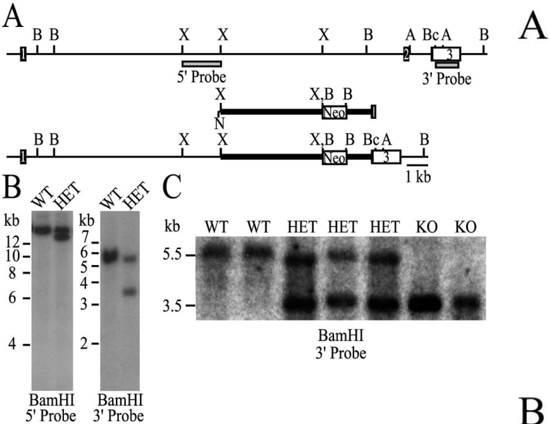
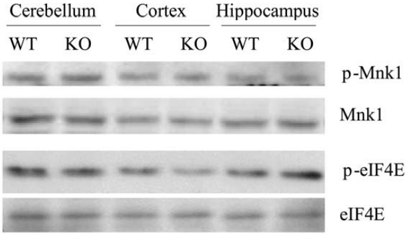
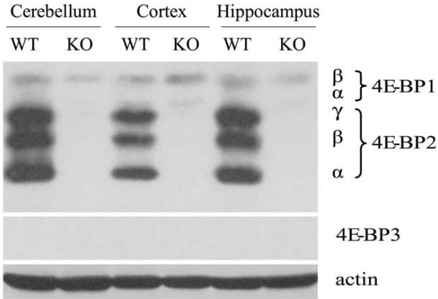
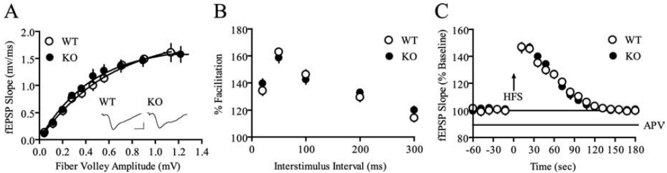
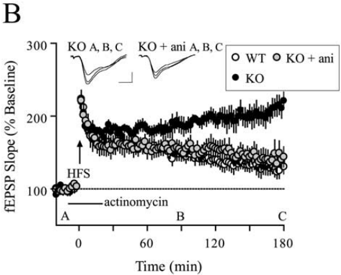
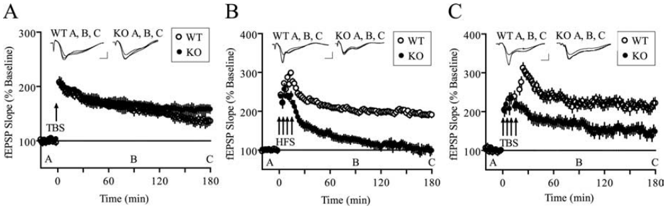
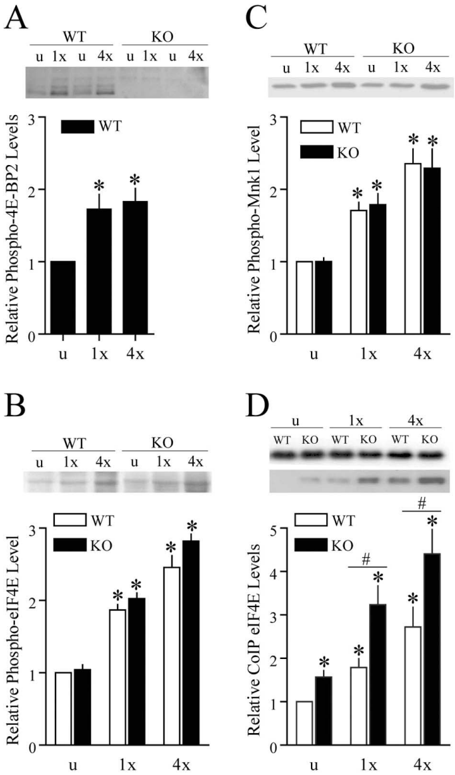
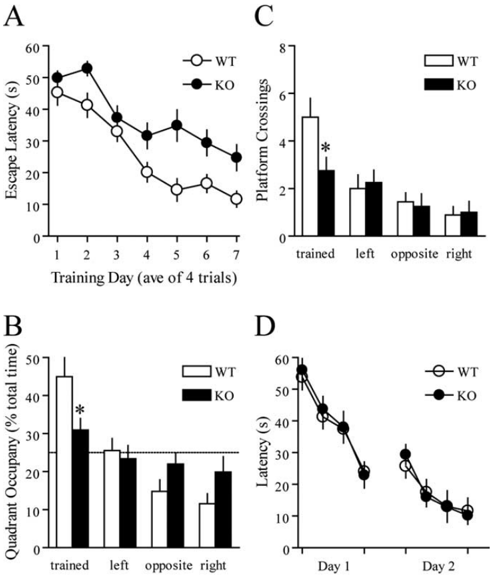
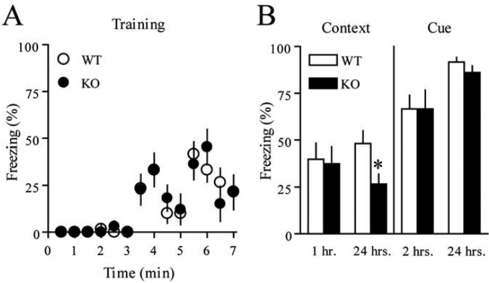
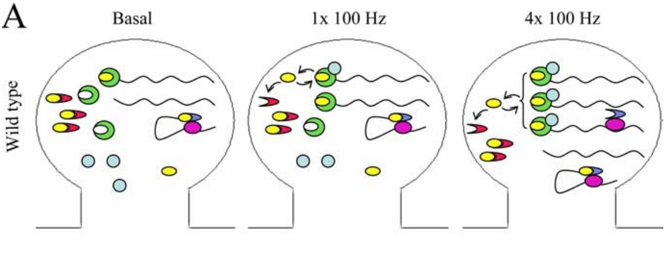
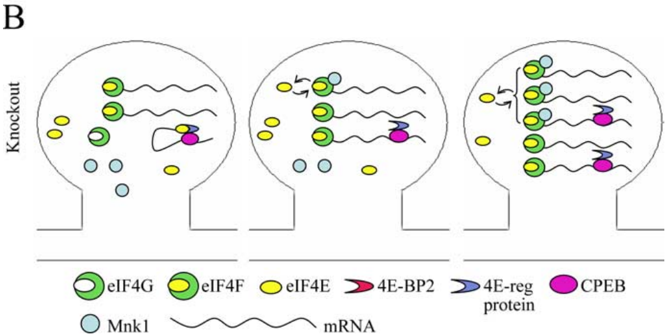
Long-lasting synaptic plasticity and memory requires mRNA translation, yet little is known as to how this process is regulated. To explore the role that the translation repressor 4E-BP2 plays in hippocampal long-term potentiation (LTP) and learning and memory, we examined 4E-BP2 knock-out mice. Interestingly, genetic elimination of 4E-BP2 converted early-phase LTP to late-phase LTP (L-LTP) in the Schaffer collateral pathway, likely as a result of increased eIF4F complex formation and translation initiation. A critical limit for activity-induced translation was revealed in the 4E-BP2 knock-out mice because L-LTP elicited by traditional stimulation paradigms was obstructed. Moreover, the 4E-BP2 knock-out mice also exhibited impaired spatial learning and memory and conditioned fear-associative memory deficits. These results suggest a crucial role for proper regulation of the eIF4F complex by 4E-BP2 during LTP and learning and memory in the mouse hippocampus.
Overview
The claims and statistics of this paper haven’t been checked yet.
Run the check — free, no account needed. It reads the open-access text and checks the sources it cites.
Integrity signals
Registry
Cites
Statistics
Figures
Verification
Claims the paper makes
The claims and statistics of this paper haven’t been checked yet.
Run the check — free, no account needed. It reads the open-access text and checks the sources it cites.
Claims other papers make about this one
Each is checked against this paper’s own text: does it say what the citing paper says it does?
In the citing paper
“Third, changes in the induction of the late phase of LTP as well as learning deficits have also been reported in mice lacking 4E-BP2, which also show increased mTOR-dependent translational initiation[27](#R27).”
From Reversal of learning deficits in a Tsc2+/− mouse model of tuberous sclerosis (2008) · cites this paper as [27]
Self-check
Percentages, sums and reported differences re-computed from the paper’s own numbers.
The self-check needs the paper’s full text.
Citations
Cites
Targeted mutation of the DNA methyltransferase gene results in embryonic lethality
Li, E., Bestor, T. H., & Jaenisch, R. (1992) · Cell · doi:10.1016/0092-8674(92)90611-f · Cited by 3,984
Differential contribution of amygdala and hippocampus to cued and contextual fear conditioning.
Phillips, R. G., & LeDoux, J. E. (1992) · Behavioral Neuroscience · doi:10.1037/0735-7044.106.2.274 · Cited by 3,292
Synaptic tagging and long-term potentiation
Frey, U., & Morris, R. G. M. (1997) · Nature · doi:10.1038/385533a0 · Cited by 1,736 · cited 2×
“…with increasing evidence for two distinct phases of L-LTP: an early transcriptionindependent , translation-dependent phase and a later phase that is dependent on both transcription and translation (Nguyen et al., 1994; Frey et al., 1996; Frey and Morris, 1997, 1998; Kelleher et al., 2004).”
BackgroundSynaptic tagging: implications for late maintenance of hippocampal long-term potentiation
Frey, U., & Morris, R. G. M. (1998) · Trends in Neurosciences · doi:10.1016/s0166-2236(97)01189-2 · Cited by 615
Research works printed but not linked: 47
- 10.1016/S0092-8674(00)81904-2 · DOI · Paper page
- 10.1101/lm.72704 · DOI
- 10.1523/JNEUROSCI.0854-04.2004 · DOI
- 10.1111/j.1471-4159.2004.02734.x · DOI
- 10.1016/S0092-8674(02)00657-8 · DOI
- 10.1016/S0896-6273(01)00483-4 · DOI
- 1996, EMBO J, 15, 658, 10.1002/j.1460-2075.1996.tb00398.x · DOI
- 10.1093/emboj/cdf353 · DOI
- 10.1016/S0092-8674(00)81653-0 · DOI · Paper page
- 10.1016/S0896-6273(03)00501-4 · DOI
- 10.1016/S0092-8674(02)00642-6 · DOI
- 10.1037/0735-7044.98.1.79 · DOI
- 10.1016/0006-8993(88)90008-X · DOI
- 1996, J Physiol (Lond), 490, 703, 10.1113/jphysiol.1996.sp021179 · DOI
- 10.1006/viro.1997.8757 · DOI
- 10.1101/gad.12.4.502 · DOI
- 10.1146/annurev.biochem.68.1.913 · DOI
- 1995, EMBO J, 14, 5701, 10.1002/j.1460-2075.1995.tb00257.x · DOI
- 10.1101/lm.1.1.74 · DOI
- 1968, J Physiol (Lond), 195, 481, 10.1113/jphysiol.1968.sp008469 · DOI
- 10.1016/S0092-8674(04)00115-1 · DOI · Paper page
- 10.1074/jbc.271.47.30199 · DOI
- 1995, Mol Cell Biol, 15, 4990, 10.1128/MCB.15.9.4990 · DOI
- 10.1038/ng1197-280 · DOI
- 10.1038/nrn942 · DOI
- 10.1016/S0092-8674(00)80484-5 · DOI
- 10.1016/0165-0270(84)90007-4 · DOI · Paper page
- 10.1126/science.8066450 · DOI · Paper page
- 10.1016/S0022-2836(02)00328-5 · DOI
- 10.1038/371762a0 · DOI
- 10.1016/S0896-6273(03)00813-4 · DOI
- 10.1074/jbc.273.22.14002 · DOI
- 10.1074/jbc.M310761200 · DOI
- 1985, Exp Brain Res, 58, 11
- 10.1074/jbc.M103607200 · DOI
- 10.1016/S0092-8674(03)01021-3 · DOI
- 10.1002/neu.10169 · DOI
- 1984, J Neurosci, 4, 3080, 10.1523/JNEUROSCI.04-12-03080.1984 · DOI
- 10.1016/S1097-2765(00)80230-0 · DOI
- 10.1073/pnas.012605299 · DOI · Paper page
- 10.1006/geno.1996.0638 · DOI
- 10.1038/nm1001-1128 · DOI
- 10.1074/jbc.273.16.9373 · DOI
- 1999, Mol Cell Biol, 19, 1871, 10.1128/MCB.19.3.1871 · DOI
- 10.1084/jem.186.5.683 · DOI
- 10.1261/rna.2133403 · DOI
- 10.1021/bi030266t · DOI
Cited by
Sorted by citations
Regulation of Translation Initiation in Eukaryotes: Mechanisms and Biological Targets
Sonenberg, N., & Hinnebusch, A. G. (2009) · Cell · doi:10.1016/j.cell.2009.01.042 · Cited by 3,304
“These results were interpreted to mean that the excessive translation could be deleterious to the synaptic plasticity required for learning and memory (Banko et al., 2005).”
Self-citationmTOR signaling: At the crossroads of plasticity, memory and disease
Hoeffer, C. A., & Klann, E. (2010) · Trends in Neurosciences · doi:10.1016/j.tins.2009.11.003 · Cited by 1,128
Self-citationTranslational control of long-lasting synaptic plasticity and memory
Costa-Mattioli, M., Sossin, W. S., Klann, E., & Sonenberg, N. (2009) · Neuron · doi:10.1016/j.neuron.2008.10.055 · Cited by 944
Self-citationReversal of learning deficits in a Tsc2+/− mouse model of tuberous sclerosis
Ehninger, D., Han, S., Shilyansky, C., Zhou, Y., Li, W., Kwiatkowski, D. J., Ramesh, V., & Silva, A. J. (2008) · Nature Medicine · doi:10.1038/nm1788 · Cited by 882
The mTOR pathway in the control of protein synthesis
Wang, X., & Proud, C. G. (2006) · Physiology · doi:10.1152/physiol.00024.2006 · Cited by 778
Autism-related deficits via dysregulated eIF4E-dependent translational control
Gkogkas, C. G., Khoutorsky, A., Ran, I., Rampakakis, E., Nevarko, T., Weatherill, D. B., Vasuta, C., Yee, S., Truitt, M., Dallaire, P., et al. (2013) · Nature · doi:10.1038/nature11628 · Cited by 522
Self-citationSignalling to translation: How signal transduction pathways control the protein synthetic machinery
Proud, C. G. (2007) · Biochemical Journal · doi:10.1042/bj20070024 · Cited by 520
Hou, L., Antion, M. D., Hu, D., Spencer, C. M., Paylor, R., & Klann, E. (2006) · Neuron · doi:10.1016/j.neuron.2006.07.005 · Cited by 469
Self-citationBramham, C. R., Alme, M. N., Bittins, M., Kuipers, S. D., Nair, R. R., Pai, B., Panja, D., Schubert, M., Soule, J., Tiron, A., et al. (2010) · Experimental Brain Research · doi:10.1007/s00221-009-1959-2 · Cited by 452
Dazert, E., & Hall, M. N. (2011) · Current Opinion in Cell Biology · doi:10.1016/j.ceb.2011.09.003 · Cited by 460
mTOR complexes in neurodevelopmental and neuropsychiatric disorders
Costa-Mattioli, M., & Monteggia, L. M. (2013) · Nature Neuroscience · doi:10.1038/nn.3546 · Cited by 367
Translational control in synaptic plasticity and cognitive dysfunction
Buffington, S. A., Huang, W., & Costa-Mattioli, M. (2014) · Annual Review of Neuroscience · doi:10.1146/annurev-neuro-071013-014100 · Cited by 348
A clustered plasticity model of long-term memory engrams.
Govindarajan, A., Kelleher, R. J., & Tonegawa, S. (2006) · Nature reviews. Neuroscience · doi:10.1038/nrn1937 · Cited by 355
BDNF mechanisms in late LTP formation: A synthesis and breakdown
Panja, D., & Bramham, C. R. (2014) · Neuropharmacology · doi:10.1016/j.neuropharm.2013.06.024 · Cited by 336
Stoica, L., Zhu, P. J., Huang, W., Zhou, H., Kozma, S. C., & Costa-Mattioli, M. (2011) · Proceedings of the National Academy of Sciences · doi:10.1073/pnas.1014715108 · Cited by 232
Ma, T., Chen, Y., Vingtdeux, V., Zhao, H., Viollet, B., Marambaud, P., & Klann, E. (2014) · The Journal of Neuroscience · doi:10.1523/jneurosci.1694-14.2014 · Cited by 191
Self-citationUnifying Views of Autism Spectrum Disorders: A Consideration of Autoregulatory Feedback Loops
Mullins, C., Fishell, G., & Tsien, R. W. (2016) · Neuron · doi:10.1016/j.neuron.2016.02.017 · Cited by 167
Dysregulation of Mammalian Target of Rapamycin Signaling in Mouse Models of Autism
Huber, K. M., Klann, E., Costa-Mattioli, M., & Zukin, R. S. (2015) · The Journal of Neuroscience · doi:10.1523/jneurosci.2656-15.2015 · Cited by 167
Self-citationDisruption of alcohol-related memories by mTORC1 inhibition prevents relapse
Barak, S., Liu, F., Hamida, S. B., Yowell, Q. V., Neasta, J., Kharazia, V., Janak, P. H., & Ron, D. (2013) · Nature Neuroscience · doi:10.1038/nn.3439 · Cited by 172
Current advances in local protein synthesis and synaptic plasticity
Pfeiffer, B. E., & Huber, K. M. (2006) · The Journal of Neuroscience · doi:10.1523/jneurosci.1797-06.2006 · Cited by 168
Antidepressant actions of ketamine engage cell-specific translation via eIF4E
Aguilar-Valles, A., De Gregorio, D., Matta-Camacho, E., Eslamizade, M. J., Khlaifia, A., Skaleka, A., Lopez-Canul, M., Torres-Berrio, A., Bermudez, S., Rurak, G. M., et al. (2021) · Nature · doi:10.1038/s41586-020-03047-0 · Cited by 144
Self-citationPanja, D., Kenney, J. W., D’Andrea, L., Zalfa, F., Vedeler, A., Wibrand, K., Fukunaga, R., Bagni, C., Proud, C. G., & Bramham, C. R. (2014) · Cell Reports · doi:10.1016/j.celrep.2014.10.016 · Cited by 143
Translational Control in the Brain in Health and Disease
Sossin, W. S., & Costa-Mattioli, M. (2019) · Cold Spring Harbor Perspectives in Biology · doi:10.1101/cshperspect.a032912 · Cited by 138
Ehninger, D., De Vries, P. J., & Silva, A. J. (2009) · Journal of Intellectual Disability Research · doi:10.1111/j.1365-2788.2009.01208.x · Cited by 120
Hoeffer, C. A., Cowansage, K. K., Arnold, E. C., Banko, J. L., Moerke, N. J., Rodriguez, R., Schmidt, E. K., Klosi, E., Chorev, M., Lloyd, R. E., et al. (2011) · Proceedings of the National Academy of Sciences · doi:10.1073/pnas.1013063108 · Cited by 114
Self-citationGafford, G. M., Parsons, R. G., & Helmstetter, F. J. (2011) · Neuroscience · doi:10.1016/j.neuroscience.2011.03.023 · Cited by 110
Lachance, V., Wang, Q., Sweet, E., Choi, I., Cai, C.-Z., Zhuang, X.-X., Zhang, Y., Jiang, J. L., Blitzer, R. D., Bozdagi-Gunal, O., et al. (2019) · Molecular Neurodegeneration · doi:10.1186/s13024-019-0342-4 · Cited by 96
Molecular and cellular aspects of age-related cognitive decline and Alzheimer’s disease
Hullinger, R., & Puglielli, L. (2017) · Behavioural Brain Research · doi:10.1016/j.bbr.2016.05.008 · Cited by 68
Ferreira, S. T. (2021) · Journal of Neuroendocrinology · doi:10.1111/jne.12959 · Cited by 59
Spatiotemporally resolved protein synthesis as a molecular framework for memory consolidation
Shrestha, P., & Klann, E. (2022) · Trends in Neurosciences · doi:10.1016/j.tins.2022.01.004 · Cited by 54
Self-citationRen, L. (2024) · Progress in Neuro-Psychopharmacology and Biological Psychiatry · doi:10.1016/j.pnpbp.2023.110910 · Cited by 23
Metadata
- Authors
- Banko, J. L., Poulin, F., Hou, L., DeMaria, C. T., Sonenberg, N., & Klann, E.
- Venue
- The Journal of Neuroscience
- Publisher
- Society for Neuroscience
- Published
- 2005-10-19
- Volume
- 25
- Issue
- 42
- Pages
- 9581-9590
- ISSN
- 0270-6474
- 1529-2401
- Cited by
- 290
- References
- 4
- Language
- en
About these checks
Registry, retraction, Cites and statistics results are computed, not judged, with one exception: a printed reference that no index lists is read once by a model before it counts as a citation error. Claims are extracted by a model and kept only when their quote appears verbatim in the text; each cited source is then checked, with a model’s help, for whether it says what the claim relies on. Those verdicts can be wrong — read the claim’s quote and the cited source before relying on one.
Statistics and arithmetic are recomputed, not judged.
Confidence bands are shown only for fields calibrated on our annotated test set. None is calibrated yet, so no band is shown.
What counts as a claim ›How we measure confidence ›How we check this ›
Are you an author, or do you see a problem with this page? Request a review
