

Conceptualisations of Leadership and Relevance to Health and Human Service Workforce Development: A Scoping Review
Open accessThe DOI matches its Crossref record; 125 of the 125 references it cites were found in a registry or an index.
Abstract
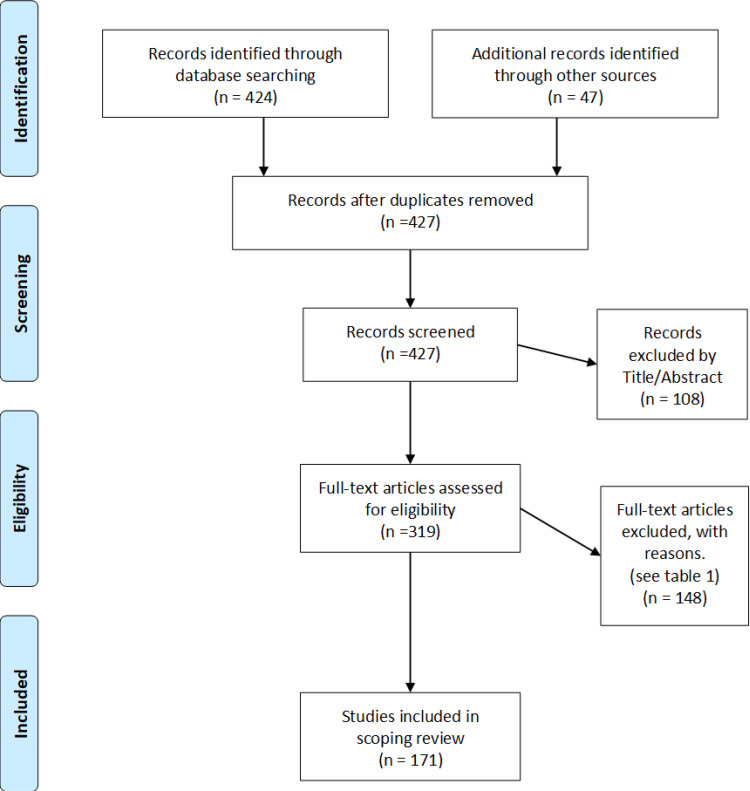
PURPOSE: This scoping review was undertaken to determine leadership definitions and approaches relevant to health and human service (H&HS) workforce development. This review provides a preliminary analysis of the potential size and scope of available research literature to inform ongoing research with the ultimate aim to inform a future systematic review in relation to leadership development interventions. METHODS: Following the methodology proposed by Arksey and O'Malley and using PRISMA-ScR, a systematic search was conducted using seven databases (PubMed, Health Business Elite, Medline, CINAHL, Ovid, Scopus, and Web of Science). Articles were screened and assessed for eligibility. From eligible studies, data were extracted to summarize, collate, and make a narrative account of the findings. RESULTS: Employing pre-selected criteria, a total of 424 records were identified and 171 full-text articles were assessed. The majority of the papers were studies undertaken by researchers based in North America. Leadership in the H&HS sector was addressed in 35% of the articles. The narrow disciplinary or workforce fields of the nursing and medical professions in hospitals and acute care settings dominated the literature. CONCLUSION: The findings suggest that while leadership has been studied extensively in the health system, there is a paucity of leadership development research specific to the broader H&HS sector. This review emphasises the need for further research, including a more critical examination of leadership development interventions and their application to the H&HS sector.
Overview
The claims and statistics of this paper haven’t been checked yet.
Free: it reads the open-access text and checks the first 5 claims that cite a source we can check. Create a free account to check every claim.
Integrity signals
Registry
Cites
Statistics
Figures
Verification
Claims the paper makes
The claims and statistics of this paper haven’t been checked yet.
Free: it reads the open-access text and checks the first 5 claims that cite a source we can check. Create a free account to check every claim.
Claims other papers make about this one
Each is checked against this paper’s own text: does it say what the citing paper says it does?
The source backs part of the claim, not all of it — or backs it for a different population, condition or comparison.
In the citing paper
“A comprehensive body of research supports transformational, authentic and shared leadership styles as superior approaches in health care, as traditional command-and-control styles have become obsolete (Fennell 2021).”
From Leadership of Nurses' Interprofessional Collaboration: A Mixed‐Methods Systematic Review (2026) · cites this paper as Fennell 2021
Experimental — accuracy not yet measuredThe cited source says what the claim attributes to it.
In the citing paper
“Early leadership theories addressed specific personal qualities, such as extroversion, openness or self-confidence, as traits that contribute to effective leadership (Fennell 2021).”
From Leadership of Nurses' Interprofessional Collaboration: A Mixed‐Methods Systematic Review (2026) · cites this paper as Fennell 2021
The cited source says what the claim attributes to it.
In the citing paper
“This leadership style is grounded in the principle of remaining true to oneself and one's values, with an emphasis on aligning those values with intentions and actions (Fennell 2021).”
From Leadership of Nurses' Interprofessional Collaboration: A Mixed‐Methods Systematic Review (2026) · cites this paper as Fennell 2021
The cited source says what the claim attributes to it.
In the citing paper
“Shared leadership is characterised by a distributed approach in which leadership is not confined to a single individual or organisational hierarchy, allowing any team member to assume a leadership role based on the situation (Fennell 2021).”
From Leadership of Nurses' Interprofessional Collaboration: A Mixed‐Methods Systematic Review (2026) · cites this paper as Fennell 2021
The cited source says what the claim attributes to it.
In the citing paper
“Transformational leadership focuses on the leader's ability to inspire and empower followers, fostering team development through a shared vision, innovation, motivation and effective communication (Fennell 2021).”
From Leadership of Nurses' Interprofessional Collaboration: A Mixed‐Methods Systematic Review (2026) · cites this paper as Fennell 2021
2 more claims about this paper
Create a free account to see every claim other papers make about this one.
Self-check
Percentages, sums and reported differences re-computed from the paper’s own numbers.
The self-check needs the paper’s full text.
Citations
Cites
Preferred Reporting Items for Systematic Reviews and Meta-Analyses: the PRISMA statement
Moher, D., Liberati, A., Tetzlaff, J., Altman, D. G., & for the PRISMA Group (2009) · BMJ · doi:10.1136/bmj.b2535 · Cited by 83,823
Preferred Reporting Items for Systematic Reviews and Meta-Analyses: The PRISMA Statement
Moher, D., Liberati, A., Tetzlaff, J., Altman, D. G., & The PRISMA Group (2009) · PLoS Medicine · doi:10.1371/journal.pmed.1000097 · Cited by 64,042
PRISMA Extension for Scoping Reviews (PRISMA-ScR): Checklist and Explanation
Tricco, A. C., Lillie, E., Zarin, W., O'Brien, K. K., Colquhoun, H., Levac, D., Moher, D., Peters, M. D. J., Horsley, T., Weeks, L., et al. (2018) · Annals of Internal Medicine · doi:10.7326/m18-0850 · Cited by 43,565
Scoping studies: towards a methodological framework
Arksey, H., & O'Malley, L. (2005) · International Journal of Social Research Methodology · doi:10.1080/1364557032000119616 · Cited by 36,742
Wang, G., Ma, R., Qiao, G., Wada, K., Aizawa, Y., & Satoh, T. (2015) · Integrative Medicine International · doi:10.1159/000368408 · Cited by 18,657
Scoping studies: advancing the methodology
Levac, D., Colquhoun, H., & O'Brien, K. K. (2010) · Implementation Science · doi:10.1186/1748-5908-5-69 · Cited by 15,268
A typology of reviews: an analysis of 14 review types and associated methodologies
Grant, M. J., & Booth, A. (2009) · Health Information & Libraries Journal · doi:10.1111/j.1471-1842.2009.00848.x · Cited by 10,817
Updated methodological guidance for the conduct of scoping reviews
Peters, M. D. J., Marnie, C., Tricco, A. C., Pollock, D., Munn, Z., Alexander, L., McInerney, P., Godfrey, C. M., & Khalil, H. (2020) · JBI Evidence Synthesis · doi:10.11124/jbies-20-00167 · Cited by 9,046
Authentic leadership development: Getting to the root of positive forms of leadership
Avolio, B. J., & Gardner, W. L. (2005) · The Leadership Quarterly · doi:10.1016/j.leaqua.2005.03.001 · Cited by 5,478
Two decades of research and development in transformational leadership
Bass, B. M. (1999) · European Journal of Work and Organizational Psychology · doi:10.1080/135943299398410 · Cited by 3,254
Leadership: Current Theories, Research, and Future Directions
Avolio, B. J., Walumbwa, F. O., & Weber, T. J. (2009) · Annual Review of Psychology · doi:10.1146/annurev.psych.60.110707.163621 · Cited by 3,000
A vertical dyad linkage approach to leadership within formal organizations
Dansereau, F., Graen, G., & Haga, W. J. (1975) · Organizational Behavior and Human Performance · doi:10.1016/0030-5073(75)90005-7 · Cited by 2,890
Personal Factors Associated with Leadership: A Survey of the Literature
Stogdill, R. M. (1948) · The Journal of Psychology · doi:10.1080/00223980.1948.9917362 · Cited by 2,535
Servant Leadership: A systematic review and call for future research
Eva, N., Robin, M., Sendjaya, S., van Dierendonck, D., & Liden, R. C. (2019) · The Leadership Quarterly · doi:10.1016/j.leaqua.2018.07.004 · Cited by 1,858
Managerial Leadership: A Review of Theory and Research
Yukl, G. (1989) · Journal of Management · doi:10.1177/014920638901500207 · Cited by 1,648
Path-goal theory of leadership: Lessons, legacy, and a reformulated theory
House, R. J. (1996) · The Leadership Quarterly · doi:10.1016/s1048-9843(96)90024-7 · Cited by 1,335
van Knippenberg, D., & Sitkin, S. B. (2013) · Academy of Management Annals · doi:10.5465/19416520.2013.759433 · Cited by 1,302
Advances in leader and leadership development: A review of 25 years of research and theory
Day, D. V., Fleenor, J. W., Atwater, L. E., Sturm, R. E., & McKee, R. A. (2014) · The Leadership Quarterly · doi:10.1016/j.leaqua.2013.11.004 · Cited by 1,285
Authentic leadership and eudaemonic well-being: Understanding leader–follower outcomes
Ilies, R., Morgeson, F. P., & Nahrgang, J. D. (2005) · The Leadership Quarterly · doi:10.1016/j.leaqua.2005.03.002 · Cited by 1,268
EDITOR'S COMMENTS: CONSTRUCT CLARITY IN THEORIES OF MANAGEMENT AND ORGANIZATION.
Suddaby, R. (2010) · Academy of Management Review · doi:10.5465/amr.2010.51141319 · Cited by 984
A systematic literature review of servant leadership theory in organizational contexts
Parris, D. L., & Peachey, J. W. (2013) · Journal of Business Ethics · doi:10.1007/s10551-012-1322-6 · Cited by 957
Leadership skills for a changing world
Mumford, M. D., Zaccaro, S. J., Harding, F. D., Jacobs, T. O., & Fleishman, E. A. (2000) · The Leadership Quarterly · doi:10.1016/s1048-9843(99)00041-7 · Cited by 888
Trait-based perspectives of leadership.
Zaccaro, S. J. (2007) · American Psychologist · doi:10.1037/0003-066x.62.1.6 · Cited by 844
Schriesheim, C. A., Castro, S. L., & Cogliser, C. C. (1999) · The Leadership Quarterly · doi:10.1016/s1048-9843(99)80009-5 · Cited by 819
Leadership in complex organizations
Marion, R., & Uhl-Bien, M. (2001) · The Leadership Quarterly · doi:10.1016/s1048-9843(01)00092-3 · Cited by 789
The role of the situation in leadership.
Vroom, V. H., & Jago, A. G. (2007) · American Psychologist · doi:10.1037/0003-066x.62.1.17 · Cited by 722
Managers and leaders. Are they different? 1977.
Zaleznik, A. (2004) · PubMed · Cited by 643
Teacher Leadership as Distributed Leadership: Heresy, fantasy or possibility?
Harris, A. (2003) · School Leadership & Management · doi:10.1080/1363243032000112801 · Cited by 634
Organizations as complex adaptive systems: Implications of Complexity Theory for leadership research
Schneider, M., & Somers, M. (2006) · The Leadership Quarterly · doi:10.1016/j.leaqua.2006.04.006 · Cited by 599
Leadership training design, delivery, and implementation: A meta-analysis.
Lacerenza, C. N., Reyes, D. L., Marlow, S. L., Joseph, D. L., & Salas, E. (2017) · Journal of Applied Psychology · doi:10.1037/apl0000241 · Cited by 596
The leadership skills strataplex: Leadership skill requirements across organizational levels
Mumford, T. V., Campion, M. A., & Morgeson, F. P. (2007) · The Leadership Quarterly · doi:10.1016/j.leaqua.2007.01.005 · Cited by 587
Taxonomic efforts in the description of leader behavior: A synthesis and functional interpretation
Fleishman, E. A., Mumford, M. D., Zaccaro, S. J., Levin, K. Y., Korotkin, A. L., & Hein, M. B. (1991) · The Leadership Quarterly · doi:10.1016/1048-9843(91)90016-u · Cited by 580
From sales obsession to marketing effectiveness
Kotler, P. (1977) · Harvard business review · Cited by 574
Meeting the review family: exploring review types and associated information retrieval requirements
Sutton, A., Clowes, M., Preston, L., & Booth, A. (2019) · Health Information & Libraries Journal · doi:10.1111/hir.12276 · Cited by 570
Reduced Self-Control after 3 Months of Imprisonment; A Pilot Study
Meijers, J., Harte, J. M., Meynen, G., Cuijpers, P., & Scherder, E. J. A. (2018) · Frontiers in Psychology · doi:10.3389/fpsyg.2018.00069 · Cited by 489
Leadership, affect and emotions: A state of the science review
Gooty, J., Connelly, S., Griffith, J., & Gupta, A. (2010) · The Leadership Quarterly · doi:10.1016/j.leaqua.2010.10.005 · Cited by 471
Leadership Development: An Outcome-Oriented Review Based on Time and Levels of Analyses
Day, D. V., & Dragoni, L. (2015) · Annual Review of Organizational Psychology and Organizational Behavior · doi:10.1146/annurev-orgpsych-032414-111328 · Cited by 451
An Experimental Approach to the Study of Autocracy and Democracy: A Preliminary Note
Lewin, K., & Lippitt, R. (1938) · Sociometry · doi:10.2307/2785585 · Cited by 429
Distributed Leadership: Friend or Foe?
Harris, A. (2013) · Educational Management Administration & Leadership · doi:10.1177/1741143213497635 · Cited by 409
An open letter to The BMJ editors on qualitative research
Greenhalgh, T., Annandale, E., Ashcroft, R., Barlow, J., Black, N., Bleakley, A., Boaden, R., Braithwaite, J., Britten, N., Carnevale, F., et al. (2016) · BMJ · doi:10.1136/bmj.i563 · Cited by 379
Priorities and challenges for health leadership and workforce management globally: a rapid review
Figueroa, C. A., Harrison, R., Chauhan, A., & Meyer, L. (2019) · BMC Health Services Research · doi:10.1186/s12913-019-4080-7 · Cited by 377
Examining the Nature and Significance of Leadership in Government Organizations
Trottier, T., Van Wart, M., & Wang, X. (2008) · Public Administration Review · doi:10.1111/j.1540-6210.2007.00865.x · Cited by 315
Conducting high quality scoping reviews-challenges and solutions
Khalil, H., Peters, M. D., Tricco, A. C., Pollock, D., Alexander, L., McInerney, P., Godfrey, C. M., & Munn, Z. (2021) · Journal of Clinical Epidemiology · doi:10.1016/j.jclinepi.2020.10.009 · Cited by 305
Antecedents, mediators, and outcomes of authentic leadership in healthcare: A systematic review
Alilyyani, B., Wong, C. A., & Cummings, G. (2018) · International Journal of Nursing Studies · doi:10.1016/j.ijnurstu.2018.04.001 · Cited by 305
Positive effects of laissez-faire leadership: conceptual exploration
Yang, I. (2015) · Journal of Management Development · doi:10.1108/jmd-02-2015-0016 · Cited by 274
Social network approaches to leadership: An integrative conceptual review.
Carter, D. R., DeChurch, L. A., Braun, M. T., & Contractor, N. S. (2015) · Journal of Applied Psychology · doi:10.1037/a0038922 · Cited by 250
Complexity theory and leadership practice: A review, a critique, and some recommendations
Rosenhead, J., Franco, L. A., Grint, K., & Friedland, B. (2019) · The Leadership Quarterly · doi:10.1016/j.leaqua.2019.07.002 · Cited by 233
Identifying paradox: A grounded theory of leadership in overcoming resistance to change
Kan, M. M., & Parry, K. W. (2004) · The Leadership Quarterly · doi:10.1016/j.leaqua.2004.05.003 · Cited by 214
A critique of the Leader-Member Exchange construct: Back to square one
Gottfredson, R. K., Wright, S. L., & Heaphy, E. D. (2020) · The Leadership Quarterly · doi:10.1016/j.leaqua.2020.101385 · Cited by 205
Winchester, C. L., & Salji, M. J. (2016) · Journal of Clinical Urology · doi:10.1177/2051415816650133 · Cited by 202
Sweeney, A., Clarke, N. M. P., & Higgs, M. J. (2018) · International Journal of Management Reviews · doi:10.1111/ijmr.12181 · Cited by 188
Transformational leadership in nursing: a concept analysis
Fischer, S. A. (2016) · Journal of Advanced Nursing · doi:10.1111/jan.13049 · Cited by 175
Pearson, A., Laschinger, H. K. S., Porritt, K. A., Jordan, Z., Tucker, D. F., & Long, L. (2007) · International Journal of Evidence-Based Healthcare · doi:10.1097/01258363-200706000-00004 · Cited by 174
Scully, N. J. (2014) · Collegian Journal of the Royal College of Nursing Australia · doi:10.1016/j.colegn.2014.09.004 · Cited by 173
Interventions to develop collectivistic leadership in healthcare settings: a systematic review
Brún, A. D., O’Donovan, R., & McAuliffe, É. (2019) · BMC Health Services Research · doi:10.1186/s12913-019-3883-x · Cited by 166
Developing leadership in nursing: exploring core factors
Curtis, E. A., de Vries, J., & Sheerin, F. K. (2011) · British Journal of Nursing · doi:10.12968/bjon.2011.20.5.306 · Cited by 163
Carlyle, Freud, and the Great Man Theory more fully considered
Spector, B. A. (2016) · Leadership · doi:10.1177/1742715015571392 · Cited by 158
Medical leaders or masters?—A systematic review of medical leadership in hospital settings
Berghout, M. A., Fabbricotti, I. N., Buljac‐Samardžić, M., & Hilders, C. G. J. M. (2017) · PLoS ONE · doi:10.1371/journal.pone.0184522 · Cited by 144
What is clinical leadership…and why is it important?
Swanwick, T., & McKimm, J. (2011) · The Clinical Teacher · doi:10.1111/j.1743-498x.2010.00423.x · Cited by 143
Pursuing the elusive construct of distributed leadership: Is the search over?
Hairon, S., & Goh, J. W. (2015) · Educational Management Administration & Leadership · doi:10.1177/1741143214535745 · Cited by 140
A New Leadership Development Model for Nursing Education
Miles, J. M., & Scott, E. S. (2018) · Journal of Professional Nursing · doi:10.1016/j.profnurs.2018.09.009 · Cited by 139
Transformational Leadership in Human Service Organizations
Mary, N. L. (2005) · Administration in Social Work · doi:10.1300/j147v29n02_07 · Cited by 135
Reed, B. N., Klutts, A. M., & Mattingly, T. J. (2019) · American Journal of Pharmaceutical Education · doi:10.5688/ajpe7520 · Cited by 134
Emerging Practices in Leadership Development: An Introduction
Ardichvili, A. A., & Manderscheid, S. V. (2008) · Advances in Developing Human Resources · doi:10.1177/1523422308321718 · Cited by 132
Authentic leadership and nurse-assessed adverse patient outcomes
Wong, C. A., & M. Giallonardo, L. (2013) · Journal of Nursing Management · doi:10.1111/jonm.12075 · Cited by 130
Staff nurse perceptions of nurse manager leadership styles and outcomes
CASIDA, J., & PARKER, J. (2011) · Journal of Nursing Management · doi:10.1111/j.1365-2834.2011.01252.x · Cited by 127
Complex Leadership in Healthcare: A Scoping Review
Belrhiti, Z., Giralt, A. N., & Marchal, B. (2018) · International Journal of Health Policy and Management · doi:10.15171/ijhpm.2018.75 · Cited by 127
Recognizing and defining clinical nurse leaders
Stanley, D. J. (2006) · British Journal of Nursing · doi:10.12968/bjon.2006.15.2.20373 · Cited by 117
A qualitative study of leadership characteristics among women who catalyze positive community change
Folta, S. C., Seguin‐Fowler, R. A., Ackerman, J., & Nelson, M. E. (2012) · BMC Public Health · doi:10.1186/1471-2458-12-383 · Cited by 116
Mianda, S., & Voce, A. S. (2018) · BMC Health Services Research · doi:10.1186/s12913-018-3561-4 · Cited by 103
The Effects of Leadership Training and Experience: A Contingency Model Interpretation
Fiedler, F. E. (1972) · Administrative Science Quarterly · doi:10.2307/2393826 · Cited by 103
Power, Influence, and Diversity in Organizations
Lucas, J. W., & Baxter, A. (2011) · The Annals of the American Academy of Political and Social Science · doi:10.1177/0002716211420231 · Cited by 101
Dutta, S., & Khatri, P. (2017) · On the Horizon The International Journal of Learning Futures · doi:10.1108/oth-06-2016-0029 · Cited by 101
Leadership in interprofessional health and social care teams: a literature review
Smith, T., Fowler-Davis, S., Nancarrow, S., Ariss, S. M. B., & Enderby, P. (2018) · Leadership in Health Services · doi:10.1108/lhs-06-2016-0026 · Cited by 99
Measuring Transformational and Charismatic Leadership: Why isn't Charisma Measured?
Levine, K. J., Muenchen, R. A., & Brooks, A. M. (2010) · Communication Monographs · doi:10.1080/03637751.2010.499368 · Cited by 96
Defining social work leadership: a theoretical and conceptual review and analysis
Peters, S. C. (2017) · Journal of Social Work Practice · doi:10.1080/02650533.2017.1300877 · Cited by 94
Gordon, L. J., Rees, C. E., Ker, J., & Cleland, J. (2015) · Medical Education · doi:10.1111/medu.12832 · Cited by 87
Effect of nurse managers’ leadership styles on predicted nurse turnover
Suliman, M., Almansi, S., MRAYYAN, M. T., ALBashtawy, M., & Aljezawi, M. (2020) · Nursing Management · doi:10.7748/nm.2020.e1928 · Cited by 87 · cited 1×
“Transformational leadership features heavily in healthcare leadership(87,98,114) and has been associated with high performing teams and improved patient care;(127,128) Magnet nursing organizations;(129) and a reduction in nursing staff turnover.(130) There is some evidence that transformational leadership has been sho…”
BackgroundAuthentic Leadership, Organizational Culture, and Healthy Work Environments
Shirey, M. R. (2009) · Critical Care Nursing Quarterly · doi:10.1097/cnq.0b013e3181ab91db · Cited by 86
Authentic leadership in healthcare: a scoping review
Malila, N., Lunkka, N., & Suhonen, M. (2017) · Leadership in health services · doi:10.1108/lhs-02-2017-0007 · Cited by 78
Zhang, H., Liu, Z., & Wang, Y. (2019) · Nonprofit Management and Leadership · doi:10.1002/nml.21391 · Cited by 77
Middleton, J., Harvey, S., & Esaki, N. (2015) · Families in Society The Journal of Contemporary Social Services · doi:10.1606/1044-3894.2015.96.21 · Cited by 71
The language of power and authority in leadership
Joullié, J., Gould, A. M., Spillane, R., & Luc, S. (2020) · The Leadership Quarterly · doi:10.1016/j.leaqua.2020.101491 · Cited by 70
Power, leadership and transformation: the doctor’s potential for influence
Gabel, S. (2012) · Medical Education · doi:10.1111/medu.12036 · Cited by 65
Sperlich, S., Peter, R., & Geyer, S. (2012) · BMC Public Health · doi:10.1186/1471-2458-12-12 · Cited by 60
Peyton, T., Zigarmi, D., & Fowler, S. N. (2019) · Frontiers in Psychology · doi:10.3389/fpsyg.2018.02620 · Cited by 57
Critical Review of Global Leadership Literature: Toward an Integrative Global Leadership Framework
Park, S., Jeong, S., Jang, S., Yoon, S. W., & Lim, D. H. (2018) · Human Resource Development Review · doi:10.1177/1534484317749030 · Cited by 56
Leading change: a concept analysis
Nelson‐Brantley, H. V., & Ford, D. J. (2016) · Journal of Advanced Nursing · doi:10.1111/jan.13223 · Cited by 56
Development of a national medical leadership competency framework: the Dutch approach
Keijser, W., Handgraaf, H. J. M., Isfordink, L. M., Janmaat, V. T., Vergroesen, P. A., Verkade, J. M. J. S., Wieringa, S., & Wilderom, C. P. M. (2019) · BMC Medical Education · doi:10.1186/s12909-019-1800-y · Cited by 56
Leadership and Management Are One and the Same
Azad, N., Anderson, H. G., Brooks, A. D., Garza, O., O’Neil, C. K., Stutz, M. M., & Sobotka, J. L. (2017) · American Journal of Pharmaceutical Education · doi:10.5688/ajpe816102 · Cited by 51
Studying subtle acts of leadership
Karp, T. (2013) · Leadership · doi:10.1177/1742715012447007 · Cited by 50
Aufegger, L., Alabi, M., Darzi, A. W., & Bicknell, C. D. (2020) · BMJ Leader · doi:10.1136/leader-2020-000228 · Cited by 44
Gender, Authenticity and Leadership: Thinking with Arendt
Gardiner, R. A. (2015) · Leadership · doi:10.1177/1742715015583623 · Cited by 43
Comparing hair-morphology and molecular methods to identify fecal samples from Neotropical felids
Alberts, C. C., Saranholi, B. H., Frei, F., & Galetti, P. M. (2017) · PLoS ONE · doi:10.1371/journal.pone.0184073 · Cited by 37
Optimising the process for conducting scoping reviews
Pawliuk, C., Brown, H. L., Widger, K., Dewan, T., Hermansen, A., Grégoire, M.-C., Steele, R., & Siden, H. B. (2020) · BMJ Evidence-Based Medicine · doi:10.1136/bmjebm-2020-111452 · Cited by 34
Power and physician leadership
Saxena, A., Meschino, D. D. C., Hazelton, L., Chan, M., Benrimoh, D. A., Matlow, A., Dath, D., & Busari, J. O. (2019) · BMJ Leader · doi:10.1136/leader-2019-000139 · Cited by 33
Positive Leadership in Organizations
Monzani, L., & van Dick, R. (2020) · Oxford University Press eBooks · doi:10.1093/acrefore/9780190236557.013.814 · Cited by 33
Literature Review on Leadership in Healthcare Management
Chatterjee, R., Suy, R., Yen, Y., & Chhay, L. (2017) · Journal of Social Science Studies · doi:10.5296/jsss.v5i1.11460 · Cited by 32
Power, trust and motivation in hospitals
Håvold, J. I., & Håvold, O. K. S. (2019) · Leadership in health services · doi:10.1108/lhs-03-2018-0023 · Cited by 31
Brún, A. D., Anjara, S., Cunningham, Ú., Khurshid, Z., Macdonald, S., O’Donovan, R., Rogers, L., & McAuliffe, É. (2020) · International Journal of Environmental Research and Public Health · doi:10.3390/ijerph17228673 · Cited by 30
Towards a theoretical framework for Integrated Team Leadership (IgTL)
Smith, T., Fowler‐Davis, S., Nancarrow, S., Ariss, S., & Enderby, P. (2019) · Journal of Interprofessional Care · doi:10.1080/13561820.2019.1676209 · Cited by 29
Human-Centered Leadership in Health Care
Leclerc, L., Campis, S., & Kennedy, K. (2020) · Nurse Leader · doi:10.1016/j.mnl.2026.102817 · Cited by 26
Exploring a shared leadership perspective for NHS doctors
Willcocks, S. G., & Wibberley, G. (2015) · Leadership in health services · doi:10.1108/lhs-08-2014-0060 · Cited by 26
The path-goal theory of leadership: A subtextual analysis
Jermier, J. M. (1996) · The Leadership Quarterly · doi:10.1016/s1048-9843(96)90022-3 · Cited by 26
Implementing collective leadership in healthcare organisations
Nightingale, A. (2020) · Nursing Standard · doi:10.7748/ns.2020.e11448 · Cited by 24
Developing nurses’ transformational leadership skills
Fischer, S. A. (2017) · Nursing Standard · doi:10.7748/ns.2017.e10857 · Cited by 23
Transparency in Nursing Leadership
Milton, C. L. (2009) · Nursing Science Quarterly · doi:10.1177/0894318408329159 · Cited by 19
Pochopień, M., Beiderbeck, A. B., McEwan, P. C., Zur, R. M., Toumi, M., & Aballéa, S. (2019) · BMC Health Services Research · doi:10.1186/s12913-018-3804-4 · Cited by 19
Fox‐Kirk, W. (2017) · Advances in Developing Human Resources · doi:10.1177/1523422317728939 · Cited by 18
Beentjes, T. A. A., Goossens, P. J. J., Vermeulen, H., Teerenstra, S., der Sanden, M. W. G. N., & van Gaal, B. G. I. (2018) · BMC Health Services Research · doi:10.1186/s12913-018-3767-5 · Cited by 18
Leader-member exchange relationships in health information management.
Hunt, T. J. (2014) · Europe PMC (PubMed Central) · Cited by 13
Are radiography lecturers, leaders?
Hendry, J. (2013) · Radiography · doi:10.1016/j.radi.2013.01.004 · Cited by 13
A teachable approach to leadership.
Leonard, H. S. (2017) · Consulting psychology journal · doi:10.1037/cpb0000096 · Cited by 13 · cited 1×
“This argument is supported by Kotter112 and Leonard,17 who say management is a set of well-known processes, like planning, budgeting, structuring jobs, staffing jobs, measuring performance and problem-solving, which help an organization to predictably do what it knows how to do well.”
What is the character of research on leadership character?
Conger, J. A., & Hollenbeck, G. P. (2010) · Consulting psychology journal · doi:10.1037/a0022358 · Cited by 13
Martin, J. (2020) · The Serials Librarian · doi:10.1080/0361526x.2020.1707022 · Cited by 13
Awakened leadership in action: a comparison of three exceptional business leaders
Marques, J. F. (2008) · Journal of Management Development · doi:10.1108/02621710810895640 · Cited by 9
Leadership Special Interest Group: What is leadership?
Janice, C., & James, K. (2015) · PubMed · Cited by 8
Social work leadership competencies in health and mental healthcare: a scoping review protocol
Hussain, A., & Ashcroft, R. (2020) · BMJ Open · doi:10.1136/bmjopen-2020-038790 · Cited by 5
Pearson, A., Laschinger, H. K. S., Porritt, K. A., Jordan, Z., Tucker, D. F., & Long, L. (2007) · The JBI Database of Systematic Reviews and Implementation Reports · doi:10.11124/01938924-200705050-00001 · Cited by 5
Understanding a new model of leadership
Johnson, D., Bainbridge, P., & Hazard, W. (2013) · Journal of Paramedic Practice · doi:10.12968/jpar.2013.5.12.686 · Cited by 3
Leading in a chaotic health care environment.
Bottles, K. (2000) · PubMed · Cited by 3
Instructional Leadership: It's Not Just for Principals Anymore
Flood, P. S. (2004) · Middle School Journal · doi:10.1080/00940771.2004.11461467 · Cited by 3
Training in human service management for future practitioner-managers.
Clements, C. B. (1992) · Professional Psychology Research and Practice · doi:10.1037/0735-7028.23.2.146 · Cited by 2
Rocking the boat: the link between transformational leadership and advocacy
Antill, C. (2015) · British Journal of Healthcare Assistants · doi:10.12968/bjha.2015.9.2.93 · Cited by 2
Human-Centered Leadership in Health Care: An Idea That's Time Has Come
Leclerc, L., Kennedy, K., & Campis, S. (2020) · Nursing Administration Quarterly · doi:10.1097/naq.0000000000000409
Research works printed but not linked: 48
- Joubert L, Boyce R, McKinnon K, Posenelli S, McKeever J. Strategies for Allied Health Leadership Development: Enhancing Quality, Safety and Productivity. Melbourne, Victoria, Australia: Department of Health and Human Services; 2016.
- Bennis W, Nanus N. Leaders: The Strategies for Taking Charge. New York, USA: Harper and Row; 1985.
- Bass BM. Leadership and Performance Beyond Expectations. New York, USA: The Free Press; 1985.
- Avery G. Understanding Leadership: Paradigms and Cases. Australia: Sage Publications; 2004.
- Sutherland J, Cameron R Employing phenomenology to highlight the richness of the leadership experience. Paper presented at: Proceedings of the European Conference on e-Learning; 2015; Europe.
- Creswell JW, Creswell JD. Research Design: Qualitative, Quantitative and Mixed Method Approaches. 5th ed. Thousand Oaks, California, USA: Sage Publishing; 2018.
- Suddaby R. Construct clarity in theories of management and organization. Acad Manage J. 2010; 35(3): 346– 357.
- Healy K, Lonne B. The Social Work and Human Services Workforce: Report from a National Study of Education, Training and Workforce Needs. Strawberry Hills, NSW, Australia: Australian Learning and Teaching Council; 2010.
- Woodside M, McClam T. Introduction to Human Services. 8th ed. Stamford, USA: Cengage Learning; 2015.
- Aveyard H. Doing a Literature Review in Health and Social Care: A Practical Guide. 2nd ed. Berkshire, UK: Open University Press; 2011.
- Hagen-Zanker J, Mallett R. How to Do a Rigorous, Evidence-Focused Literature Review on International Development: A Guidance Note. London, UK: Overseas Development Institute; 2013.
- Yukl G. Leadership in Organizations. 8th ed. London, UK: Pearson; 2012.
- Northouse PG. Leadership: Theory and Practice. 8th ed. Thousand Oaks, California, USA: Sage Publications; 2018.
- Burns JM. Leadership. New York, USA: Harper and Row; 1978.
- Bass BM. Bass and Stogdill’s Handbook of Leadership: Theory, Research, and Managerial Applications. 3rd ed. New York, USA: The Free Press; 1990.
- Rost JC. Leadership for the Twenty-First Century. New York: Praeger; 1991.
- Branchini AZ. Leadership of the Pioneers of Nursing Informatics: A Multiple Case Study Analysis. Connecticut, USA: Nursing, University of Connecticut; 2012.
- Smith P, Cockburn T. Leadership in the digital age: rhythms and the beat of change. In: Smith PC, editor. Impact of Emerging Digital Technologies on Leadership in Global Business. USA: IGI Global; 2014.
- Bass BM, Bass R. The Bass Handbook of Leadership: Theory, Research and Managerial Applications. 4th ed. New York, USA: The Free Press; 2008.
- University of Cambridge. Global definitions of leadership and theories of leadership development. SB Communications Weekly; 2017: 1. Available from: http://search.ebscohost.com/login.aspx?direct=true&db=bsu&AN=124166191&site=ehost-live. Accessed October 15, 2021.
- Katz RL. Skills of an Effective Administrator. USA: Harvard Business Review Press; 1955.
- Blake RR, Mouton J. The Managerial Grid III: The Key to Leadership Excellence. Houston, Texas, USA: Gulf Publishing; 1985.
- Xhelilaj E, Sakaj B. A review of leadership behaviour of maritime officers in international shipping. Sci J Marit Res. 2018; 32(1): 76– 79.
- Hersey P, Blanchard KH. Life cycle theory of leadership. Train Dev J. 1969; 23(5): 26– 34.
- Lorsch JW. A contingency theory of leadership. In: Nohria NaK R, editor. Handbook of Leadership Theory and Practice. USA: Harvard Business Press; 2010: 411– 432.
- House RJ, Mitchell TR. Path-Goal Theory of Leadership. Washington, Seattle, USA: University of Washington; 1975.
- Jandaghi G, Matin HZ, Farjami A. Comparing transformational leadership in successful and unsuccessful companies. J Int Soc Res. 2009; 1(6): 356– 372.
- Kouzes JM, Posner BZ. The Leadership Challenge. San Franscisco, USA: Jossey-Bass; 1995.
- Livingston D, Lusin J A prescriptive hybrid model of leadership: complexity leadership theory and authentic leadership theory. Proceedings of the European Conference on Management, Leadership & Governance; 2009: 102– 109. Available from: http://search.ebscohost.com/login.aspx?direct=true&db=bsu&AN=48918402&site=ehost-live. Accessed October 15, 2021.
- Greenleaf RK. Servant: retrospect and prospect. In: Spears LC, editor. The Power of Servant Leadership. Oakland, California, USA: Berrett-Koehler Publishers Inc; 1998: 17– 59.
- West M, Armit K, Lowenthal L, Eckhert R, West T, Lee A. Leadership and Leadership Development in Health Care: The Evidence Base. London, UK: The Kings Fund; 2015.
- Yang R. Examining the distinct concepts of “leadership” and “management” and the relationship between them. Adv Soc Sci Educ Hum Res. 2016; 85: 1168– 1171.
- Limb M. How does leadership differ from management in medicine? Br Med J. 2016; 352: 1– 2.
- Kotter J. What leaders do. In: Review HB, editor. Harvard Business review 10 Must Reads: On Leadership for Healthcare. Boston, USA: Harvard Business Press; 1990: 37– 56.
- West M, West T. Leadership in healthcare: a review of the evidence. Health Manage Forum. 2015; 15(2): 1– 5.
- Cangemi JP, Kowalski CJ, Khan KH. Leadership Behaviours. New York, USA: University Press of America; 1998.
- Lunenburg FC. Power and leadership: an influence process. Int J Manag Bus Adm. 2012; 15(1): 1– 9.
- French JRP, Raven B. The bases of social power. In: Cartwright D, editor. Studies in Social Power. Ann Arbor, Michigan, USA: Institute for Social Research; 1959: 259– 269.
- Faiz N. Impact of manager’s reward power and coercive power on employee’s job satisfaction: a comparative study of public and private sector. Int J Manag Bus Res. 2013; 3(4): 383– 392.
- Murphy SE, Blyth D, Fiedler F. Cognitive Resource Theory and the Utilization of the Leader’s and Group Members’ Technical Competence. Seattle, Washington, USA: U.S. Army Research Institute for the Behavioral and Social Sciences; 1995.
- Tafvelin S. The Transformational Leadership Process: Antecedents, Mechanisms, and Outcomes in the Social Services. Umea, Sweden: Department of Psychology, Umea University; 2013.
- Coxen L, van der Vaart L, Stander MW. Authentic leadership and organisational citizenship behaviour in the public health care sector: the role of workplace trust. S Afr J Ind Psychol. 2016; 42(1): 1– 13.
- Eckert R, West M, Altman DG, Steward K, Pasmore B. Delivering a Collective Leadership Strategy for Health Care. London, UK: The King’s Fund; 2014.
- Fleming ML. Nursing Home Leadership: Experience and Perceptions of Directors of Nursing. Ann Arbor, MI, USA: School of Nursing, University of California, San Francisco; 2007.
- Haworth S, Miller R, Schaub J. Leadership in Social Work: And Can It Learn from Clinical Healthcare? Birmingham, UK: University of Birmingham; 2018.
- Golman D. Emotional Intelligence: Why It Can Matter More Than Iq. New York, USA: Bantam Dell; 1995.
- McGregor D. The Human Side of Enterprise. 1st ed. New York, USA: McGraw-Hill; 1960.
- Blanchard K, Zigarmi P, Zigarmi D. Leadership and the One-Minute Manager: Increasing Effectiveness Through Situational Leadership® Ii. New York, USA: HarperCollins; 1994.
Cited by
Organizational Outcomes of Supervision within Human Services: A Scoping Review
Sewell, K. M., McMenemy, C., van Rensburg, M. J., & MacDonald, H. R. (2023) · Human Services Organizations Management Leadership & Governance · doi:10.1080/23303131.2023.2226197 · Cited by 24
“Defined as “a complex network of organizations whose primary goal is to help people in need” (Fennell, 2021, p. 3036), represented human service sector examples include child and family services, housing, mental health, and employment services.”
BackgroundChen, C., & Khan, S. (2025) · Sustainability · doi:10.3390/su17177931 · Cited by 15
Relevant HRH leadership during public health emergencies
Ferrinho, P. D. L. G. M., Lehmann, U., Kovacs, E., & Poz, M. R. D. (2022) · Human Resources for Health · doi:10.1186/s12960-022-00723-2 · Cited by 19
“These have “been positively correlated with increased team effectiveness and organizational performance” with “demonstrated applicability in healthcare settings and has been adopted by the National Health Service in the United Kingdom” [9, 15, 16].”
BackgroundSupervision and Wellness: A Survey of Human Service Practitioners
Sewell, K. M., van Rensburg, M. J., Peddle, M., Alschech, J., & Asakura, K. (2024) · Human Services Organizations Management Leadership & Governance · doi:10.1080/23303131.2024.2434527 · Cited by 12
“Defined as “a complex network of organizations whose primary goal is to help people in need” (Fennell, 2021, p. 3036), HSOs cover a wide range of sectors, including housing, health, education, child and family services, mental health, employment, and immigration and refugee services.”
Valiotis, G., Buttiġieġ, S. C., Cicchetti, A., Rui, D., Jamshed, N., Jevtić, M., Magalhães, T., Nies, H. L. G. R., Pferzinger, M., Santana, R. M., et al. (2025) · The International Journal of Health Planning and Management · doi:10.1002/hpm.3903 · Cited by 12
Metadata
- Authors
- Fennell, K. L.
- Affiliations
- University of Tasmania (AU)
- Corresponding author
- Fennell, Kate L
- ORCID
- Fennell, Kate L
- Venue
- Journal of Multidisciplinary Healthcare
- Publisher
- Informa UK Limited
- Published
- 2021-10
- Volume
- Volume 14
- Pages
- 3035-3051
- ISSN
- 1178-2390 (ISSN-L)
- PMC
- PMC8558050
- OpenAlex
- W3209992158
- Semantic Scholar
- 93f63eff69022dbe7d3d3133bc5f219697b6b7f1
- Cited by
- 33
- References
- 123
- Citations by year
- 2026: 9 · 2025: 9 · 2024: 6 · 2023: 5 · 2022: 4
- FWCI
- 0.64
- Type
- journal article
- Language
- en
- Open access
- gold
- doi.org
- Licence
- Locations
- Journal of Multidisciplinary Healthcare (publishedVersion, cc-by-nc)
- Europe PMC (PubMed Central) (publishedVersion, cc-by-nc)
- PubMed Central (publishedVersion, cc-by-nc)
- PubMed (publishedVersion)
- UTAS Research Repository (acceptedVersion)
- DOAJ (DOAJ: Directory of Open Access Journals) (submittedVersion, cc-by-sa)
- Dove Medical Press (Taylor and Francis Group) (submittedVersion, cc-by-nc)
- Figshare (submittedVersion, cc-by-nc)
- Funders
- University of Tasmania
- Topics
- Social Sciences › Business, Management and Accounting › Strategy and Management › Organizational Leadership and Management Strategies
- Health Sciences › Nursing › Research and Theory › Nursing education and management
- Social Sciences › Education › Innovations in Medical Education
- Keywords
- leadership, leadership development, health workforce development, definition of leadership, leadership development programs, nursing leadership, medical profession, health system leadership
About these checks
Registry, retraction, Cites and statistics results are computed, not judged, with one exception: a printed reference that no index lists is read once by a model before it counts as a citation error. Claims are extracted by a model and kept only when their quote appears verbatim in the text; each cited source is then checked, with a model’s help, for whether it says what the claim relies on. Those verdicts can be wrong — read the claim’s quote and the cited source before relying on one.
Statistics and arithmetic are recomputed, not judged.
Confidence bands are shown only for fields calibrated on our annotated test set. None is calibrated yet, so no band is shown.
What counts as a claim ›How we measure confidence ›How we check this ›
Are you an author, or do you see a problem with this page? Request a review
Data sources
Bibliographic data: Semantic Scholar, OpenAlex, Crossref.
Contains information from the Semantic Scholar Academic Graph Datasets, made available under the ODC Attribution License (ODC-BY 1.0).
Semantic Scholar’s data is described in: Kinney, R., et al. (2023). The Semantic Scholar Open Data Platform. arXiv:2301.10140.
