

The DOI matches its Crossref record; 254 of the 254 references it cites were found in a registry or an index.
Soluble amyloid-β oligomers as synaptotoxins leading to cognitive impairment in Alzheimer’s disease
Open accessAbstract
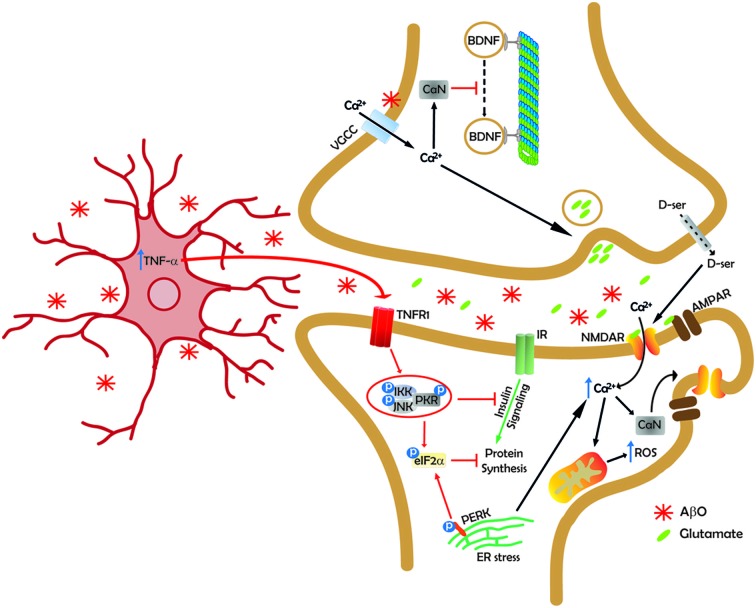
Alzheimer's disease (AD) is the most common form of dementia in the elderly, and affects millions of people worldwide. As the number of AD cases continues to increase in both developed and developing countries, finding therapies that effectively halt or reverse disease progression constitutes a major research and public health challenge. Since the identification of the amyloid-β peptide (Aβ) as the major component of the amyloid plaques that are characteristically found in AD brains, a major effort has aimed to determine whether and how Aβ leads to memory loss and cognitive impairment. A large body of evidence accumulated in the past 15 years supports a pivotal role of soluble Aβ oligomers (AβOs) in synapse failure and neuronal dysfunction in AD. Nonetheless, a number of basic questions, including the exact molecular composition of the synaptotoxic oligomers, the identity of the receptor(s) to which they bind, and the signaling pathways that ultimately lead to synapse failure, remain to be definitively answered. Here, we discuss recent advances that have illuminated our understanding of the chemical nature of the toxic species and the deleterious impact they have on synapses, and have culminated in the proposal of an Aβ oligomer hypothesis for Alzheimer's pathogenesis. We also highlight outstanding questions and challenges in AD research that should be addressed to allow translation of research findings into effective AD therapies.
Overview
The claims and statistics of this paper haven’t been checked yet.
Run the check — free, no account needed. It reads the open-access text and checks the sources it cites.
Integrity signals
Registry
Cites
Statistics
Figures
Verification
Claims the paper makes
The claims and statistics of this paper haven’t been checked yet.
Run the check — free, no account needed. It reads the open-access text and checks the sources it cites.
Claims other papers make about this one
Each is checked against this paper’s own text: does it say what the citing paper says it does?
The cited source says what the claim attributes to it.
In the citing paper
“It is worth noting that SCFAs interfere with protein-protein interactions between amyloid-β peptides (Aβ), thereby disrupting their assembly into neurotoxic oligomers (34), the main toxins responsible for synapse dysfunction and cognitive deficits in AD (164).”
From The Role of Short-Chain Fatty Acids From Gut Microbiota in Gut-Brain Communication (2020) · cites this paper as [164]
Self-check
Percentages, sums and reported differences re-computed from the paper’s own numbers.
The self-check needs the paper’s full text.
Citations
Cites
2 retracted
RETRACTED ARTICLE: A specific amyloid-β protein assembly in the brain impairs memory
Lesné, S., Koh, M. T., Kotilinek, L., Kayed, R., Glabe, C. G., Yang, A., Gallagher, M., & Ashe, K. H. (2006) · Nature · doi:10.1038/nature04533 · Cited by 2,769 · cited 4×
“Indeed, specific Aβ assemblies (e.g., dimers, trimers and Aβ*56) have been reported to mediate distinct pathological effects in the diseased brain (e.g., Lesné et al., 2006, 2013; Reed et al., 2011).”
BackgroundResultInfluentialRetractedRETRACTED: Cognitive effects of cell-derived and synthetically derived Aβ oligomers
Reed, M. N., Hofmeister, J. J., Jungbauer, L. M., Welzel, A. T., Yu, C., Sherman, M. A., Lesné, S., LaDu, M. J., Walsh, D. M., Ashe, K. H., et al. (2010) · Neurobiology of Aging · doi:10.1016/j.neurobiolaging.2009.11.007 · Cited by 135
RetractedThe Amyloid Hypothesis of Alzheimer’s Disease: Progress and Problems on the Road to Therapeutics
Hardy, J., & Selkoe, D. J. (2002) · Science · doi:10.1126/science.1072994 · Cited by 13,864
Amyloid oligomers exacerbate tau pathology in a mouse model of tauopathy
Selenica, M.-L. B., Brownlow, M., Jimenez, J. P., Lee, D. C., Pena, G., Dickey, C. A., Gordon, M. N., & Morgan, D. (2013) · Neurodegenerative Diseases · doi:10.1159/000337230 · Cited by 10,359
Glutamate neurotoxicity and diseases of the nervous system
Choi, D. W. (1988) · Neuron · doi:10.1016/0896-6273(88)90162-6 · Cited by 8,188
Alzheimer's disease: the amyloid cascade hypothesis
Hardy, J. A., & Higgins, G. A. (1992) · Science · doi:10.1126/science.1566067 · Cited by 7,484
Glenner, G. G., & Wong, C. W. (1984) · Biochemical and Biophysical Research Communications · doi:10.1016/s0006-291x(84)80190-4 · Cited by 5,404
2016 Alzheimer's disease facts and figures
Alzheimer's Association (2016) · Alzheimer's & Dementia · doi:10.1016/j.jalz.2016.03.001 · Cited by 5,069
The precursor of Alzheimer's disease amyloid A4 protein resembles a cell-surface receptor
Kang, J., Lemaire, H.-G., Unterbeck, A., Salbaum, J. M., Masters, C. L., Grzeschik, K.-H., Multhaup, G., Beyreuther, K., & Müller-Hill, B. (1987) · Nature · doi:10.1038/325733a0 · Cited by 4,619
Alzheimer's Disease Is a Synaptic Failure
Selkoe, D. J. (2002) · Science · doi:10.1126/science.1074069 · Cited by 4,420
Terry, R. D., Masliah, E., Salmon, D. P., Butters, N., DeTeresa, R., Hill, R., Hansen, L. A., & Katzman, R. (1991) · Annals of Neurology · doi:10.1002/ana.410300410 · Cited by 4,397
Walsh, D. M., Klyubin, I., Fadeeva, J. V., Cullen, W. K., Anwyl, R., Wolfe, M. S., Rowan, M. J., & Selkoe, D. J. (2002) · Nature · doi:10.1038/416535a · Cited by 4,291
Calamita, E., Schmid, M., Kunz, M., Ndebele-Murisa, M. R., Magadza, C. H. D., Nyambe, I., & Wehrli, B. (2019) · Figshare · doi:10.26181/6153922fe919c · Cited by 4,239
Common structure of soluble amyloid oligomers implies common mechanism of pathogenesis
Kayed, R., Head, E., Thompson, J. L., McIntire, T. M., Milton, S. C., Cotman, C. W., & Glabe, C. G. (2003) · Science · doi:10.1126/science.1079469 · Cited by 4,064
Inflammatory Mechanisms in Obesity
Gregor, M. F., & Hotamisligil, G. S. (2011) · Annual Review of Immunology · doi:10.1146/annurev-immunol-031210-101322 · Cited by 3,754
Shankar, G. M., Li, S., Mehta, T. H., Garcia-Munoz, A., Shepardson, N. E., Smith, I., Brett, F. M., Farrell, M. A., Rowan, M. J., Lemere, C. A., et al. (2008) · Nature Medicine · doi:10.1038/nm1782 · Cited by 3,685
Diffusible, nonfibrillar ligands derived from Aβ 1–42 are potent central nervous system neurotoxins
Lambert, M. P., Barlow, A. K., Chromy, B. A., Edwards, C., Freed, R., Liosatos, M., Morgan, T. E., Rozovsky, I., Trommer, B., Viola, K. L., et al. (1998) · Proceedings of the National Academy of Sciences · doi:10.1073/pnas.95.11.6448 · Cited by 3,506
Hotamisligil, G. S., Peraldi, P., Budavari, A., Ellis, R., White, M. F., & Spiegelman, B. M. (1996) · Science · doi:10.1126/science.271.5249.665 · Cited by 2,630
The toxic Aβ oligomer and Alzheimer's disease: an emperor in need of clothes
Benilova, I., Karran, E., & De Strooper, B. (2012) · Nature Neuroscience · doi:10.1038/nn.3028 · Cited by 1,962
Talbot, K., Wang, H.-Y., Kazi, H., Han, L.-Y., Bakshi, K. P., Stucky, A., Fuino, R. L., Kawaguchi, K. R., Samoyedny, A. J., Wilson, R. S., et al. (2012) · Journal of Clinical Investigation · doi:10.1172/jci59903 · Cited by 1,871
Mucke, L., Masliah, E., Yu, G.-Q., Mallory, M., Rockenstein, E. M., Tatsuno, G., Hu, K., Kholodenko, D., Johnson-Wood, K., & McConlogue, L. (2000) · The Journal of Neuroscience · doi:10.1523/jneurosci.20-11-04050.2000 · Cited by 1,856
Dendritic Function of Tau Mediates Amyloid-β Toxicity in Alzheimer's Disease Mouse Models
Ittner, L. M., Ke, Y. D., Delerue, F., Bi, M., Gladbach, A., van Eersel, J., Wölfing, H., Chieng, B. C., Christie, M. J., Napier, I. A., et al. (2010) · Cell · doi:10.1016/j.cell.2010.06.036 · Cited by 1,821
Natural oligomers of the amyloid-β protein specifically disrupt cognitive function
Cleary, J. P., Walsh, D. M., Hofmeister, J. J., Shankar, G. M., Kuskowski, M. A., Selkoe, D. J., & Ashe, K. H. (2004) · Nature Neuroscience · doi:10.1038/nn1372 · Cited by 1,722
2015 Alzheimer's disease facts and figures
Alzheimer's Association (2015) · Alzheimer s & Dementia · doi:10.1016/j.jalz.2015.02.003 · Cited by 1,684
Shankar, G. M., Bloodgood, B. L., Townsend, M., Walsh, D. M., Selkoe, D. J., & Sabatini, B. L. (2007) · The Journal of Neuroscience · doi:10.1523/jneurosci.4970-06.2007 · Cited by 1,592
Regulation of NMDA receptor trafficking by amyloid-β
Snyder, E. M., Nong, Y., Almeida, C. G., Paul, S., Moran, T., Choi, E. Y., Nairn, A. C., Salter, M. W., Lombroso, P. J., Gouras, G. K., et al. (2005) · Nature Neuroscience · doi:10.1038/nn1503 · Cited by 1,561 · cited 2×
“…pre-synaptic terminals and elevated D-serine levels, endoplasmic reticulum (ER) stress and inflammation (Roselli et al., 2005; Rowan et al., 2005; Snyder et al., 2005; Hsieh et al., 2006; De Felice et al., 2007, 2008; Shankar et al., 2008; Decker et al., 2010a,b; Kurup et al., 2010; Saraiva et…”
BackgroundCellular prion protein mediates impairment of synaptic plasticity by amyloid-β oligomers
Laurén, J., Gimbel, D. A., Nygaard, H. B., Gilbert, J. W., & Strittmatter, S. M. (2009) · Nature · doi:10.1038/nature07761 · Cited by 1,560
Uber eine eigenartige Erkrankung der Hirnrinde
Alzheimer, A. (1907) · Medical Entomology and Zoology · Cited by 1,503
An english translation of alzheimer’s 1907 paper, “über eine eigenartige erkankung der hirnrinde”
Stelzmann, R. A., Norman Schnitzlein, H., & Reed Murtagh, F. (1995) · Clinical Anatomy · doi:10.1002/ca.980080612 · Cited by 1,455
Neurodegeneration induced by beta-amyloid peptides in vitro: the role of peptide assembly state
Pike, C., Burdick, D., Walencewicz, A., Glabe, C., & Cotman, C. (1993) · The Journal of Neuroscience · doi:10.1523/jneurosci.13-04-01676.1993 · Cited by 1,417
Microglial Dysfunction and Defective β-Amyloid Clearance Pathways in Aging Alzheimer's Disease Mice
Hickman, S. E., Allison, E. K., & El Khoury, J. (2008) · The Journal of Neuroscience · doi:10.1523/jneurosci.0616-08.2008 · Cited by 1,329 · cited 8×
“AβOs also target microglia to promote TNF-α and IL-1β release (Ledo et al., 2013).”
BackgroundInfluentialBeta-amyloid neurotoxicity requires fibril formation and is inhibited by congo red.
Lorenzo, A., & Yankner, B. A. (1994) · Proceedings of the National Academy of Sciences · doi:10.1073/pnas.91.25.12243 · Cited by 1,324
Amyloid β-protein (Aβ) assembly: Aβ40 and Aβ42 oligomerize through distinct pathways
Bitan, G., Kirkitadze, M. D., Lomakin, A., Vollers, S. S., Benedek, G. B., & Teplow, D. B. (2002) · Proceedings of the National Academy of Sciences · doi:10.1073/pnas.222681699 · Cited by 1,316
Probing sporadic and familial Alzheimer’s disease using induced pluripotent stem cells
Israel, M. A., Yuan, S. H., Bardy, C., Reyna, S. M., Mu, Y., Herrera, C., Hefferan, M. P., Van Gorp, S., Nazor, K. L., Boscolo, F. S., et al. (2012) · Nature · doi:10.1038/nature10821 · Cited by 1,253
A three-dimensional human neural cell culture model of Alzheimer’s disease
Choi, S. H., Kim, Y. H., Hebisch, M., Sliwinski, C., Lee, S., D’Avanzo, C., Chen, H., Hooli, B., Asselin, C., Muffat, J., et al. (2014) · Nature · doi:10.1038/nature13800 · Cited by 1,195
Lacor, P. N., Buniel, M. C., Furlow, P. W., Sanz Clemente, A., Velasco, P. T., Wood, M., Viola, K. L., & Klein, W. L. (2007) · The Journal of Neuroscience · doi:10.1523/jneurosci.3501-06.2007 · Cited by 1,188
Plaque-independent disruption of neural circuits in Alzheimer’s disease mouse models
Hsia, A. Y., Masliah, E., McConlogue, L., Yu, G.-Q., Tatsuno, G., Hu, K., Kholodenko, D., Malenka, R. C., Nicoll, R. A., & Mucke, L. (1999) · Proceedings of the National Academy of Sciences · doi:10.1073/pnas.96.6.3228 · Cited by 1,123
Microglial cell origin and phenotypes in health and disease
Saijo, K., & Glass, C. K. (2011) · Nature Reviews Immunology · doi:10.1038/nri3086 · Cited by 1,100
Gong, Y., Chang, L., Viola, K. L., Lacor, P. N., Lambert, M. P., Finch, C. E., Krafft, G. A., & Klein, W. L. (2003) · Proceedings of the National Academy of Sciences · doi:10.1073/pnas.1834302100 · Cited by 1,061
Masters, C. L., Multhaup, G., Simms, G., Pottgiesser, J., Martins, R. N., & Beyreuther, K. T. (1985) · The EMBO Journal · doi:10.1002/j.1460-2075.1985.tb04000.x · Cited by 1,048
AMPAR Removal Underlies Aβ-Induced Synaptic Depression and Dendritic Spine Loss
Hsieh, H., Boehm, J., Sato, C., Iwatsubo, T., Tomita, T., Sisodia, S., & Malinow, R. (2006) · Neuron · doi:10.1016/j.neuron.2006.10.035 · Cited by 1,042
Targeting small Aβ oligomers: the solution to an Alzheimer's disease conundrum?
Klein, W. (2001) · Trends in Neurosciences · doi:10.1016/s0166-2236(00)01749-5 · Cited by 989
Li, S., Hong, S., Shepardson, N. E., Walsh, D. M., Shankar, G. M., & Selkoe, D. (2009) · Neuron · doi:10.1016/j.neuron.2009.05.012 · Cited by 972
Synaptic Targeting by Alzheimer's-Related Amyloid β Oligomers
Lacor, P. N., Buniel, M. C., Chang, L., Fernandez, S. J., Gong, Y., Viola, K. L., Lambert, M. P., Velasco, P. T., Bigio, E. H., Finch, C. E., et al. (2004) · The Journal of Neuroscience · doi:10.1523/jneurosci.3432-04.2004 · Cited by 954
Bernstein, S. L., Dupuis, N., Lazo, N. D., Wyttenbach, T., Condron, M. M., Bitan, G., Teplow, D. B., Shea, J., Ruotolo, B. T., Robinson, C. V., et al. (2009) · Nature Chemistry · doi:10.1038/nchem.247 · Cited by 943
Biochemistry and Cell Biology of Tau Protein in Neurofibrillary DegenerationPreprint
Mandelkow, E., & Mandelkow, E. (2012) · Cold Spring Harbor Perspectives in Medicine · doi:10.1101/cshperspect.a006247 · Cited by 897
De Felice, F. G., Velasco, P. T., Lambert, M. P., Viola, K., Fernandez, S. J., Ferreira, S. T., & Klein, W. L. (2007) · Journal of Biological Chemistry · doi:10.1074/jbc.m607483200 · Cited by 882
Self-citationHaes, A. J., Chang, L., Klein, W. L., & Duyne, R. P. V. (2005) · Journal of the American Chemical Society · doi:10.1021/ja044087q · Cited by 881
Jin, M., Shepardson, N., Yang, T., Chen, G., Walsh, D., & Selkoe, D. J. (2011) · Proceedings of the National Academy of Sciences · doi:10.1073/pnas.1017033108 · Cited by 876
The many faces of insulin-like peptide signalling in the brain
Fernandez, A. M., & Torres-Alemán, I. (2012) · Nature reviews. Neuroscience · doi:10.1038/nrn3209 · Cited by 872
Koffie, R. M., Meyer-Luehmann, M., Hashimoto, T., Adams, K. W., Mielke, M. L., Garcia-Alloza, M., Micheva, K. D., Smith, S. J., Kim, M. L., Lee, V. M., et al. (2009) · Proceedings of the National Academy of Sciences · doi:10.1073/pnas.0811698106 · Cited by 850
Bomfim, T. R., Forny‐Germano, L., Sathler, L. B., Brito‐Moreira, J., Houzel, J., Decker, H., Silverman, M. A., Kazi, H., Melo, H. M., McClean, P. L., et al. (2012) · Journal of Clinical Investigation · doi:10.1172/jci57256 · Cited by 849
Self-citationGeorganopoulou, D. G., Chang, L., Nam, J.-M., Thaxton, C. S., Mufson, E. J., Klein, W. L., & Mirkin, C. A. (2005) · Proceedings of the National Academy of Sciences · doi:10.1073/pnas.0409336102 · Cited by 835
Kondo, T., Asai, M., Tsukita, K., Kutoku, Y., Ohsawa, Y., Sunada, Y., Imamura, K., Egawa, N., Yahata, N., Okita, K., et al. (2013) · Cell Stem Cell · doi:10.1016/j.stem.2013.01.009 · Cited by 741
Picomolar Amyloid-β Positively Modulates Synaptic Plasticity and Memory in Hippocampus
Puzzo, D., Privitera, L., Leznik, E., Fà, M., Staniszewski, A., Palmeri, A., & Arancio, O. (2008) · The Journal of Neuroscience · doi:10.1523/jneurosci.2692-08.2008 · Cited by 740
The Relationship between Aβ and Memory in the Tg2576 Mouse Model of Alzheimer's Disease
Westerman, M. A., Cooper-Blacketer, D., Mariash, A., Kotilinek, L., Kawarabayashi, T., Younkin, L. H., Carlson, G. A., Younkin, S. G., & Ashe, K. H. (2002) · Journal of Neuroscience · doi:10.1523/jneurosci.22-05-01858.2002 · Cited by 731
Seizures and Epileptiform Activity in the Early Stages of Alzheimer Disease
Vossel, K. A., Beagle, A. J., Rabinovici, G., Shu, H., Lee, S. E., Naasan, G., Hegde, M., Cornes, S., Henry, M., Nelson, A. B., et al. (2013) · JAMA Neurology · doi:10.1001/jamaneurol.2013.136 · Cited by 709
Zempel, H., Thies, E., Mandelkow, E., & Mandelkow, E.-M. (2010) · The Journal of Neuroscience · doi:10.1523/jneurosci.2357-10.2010 · Cited by 686 · cited 2×
“Zempel and collaborators have shown that AβOs induce tau missorting, a phenomenon in which axonal taumoves to dendrites in hyperphosphorylated form, disrupting cytoskeletal organization and axonal transport (Zempel et al., 2010), ultimately instigating neuronal collapse.”
BackgroundAlzheimer amyloid-β oligomer bound to postsynaptic prion protein activates Fyn to impair neurons
Um, J. W., Nygaard, H. B., Heiss, J. K., Kostylev, M. A., Stagi, M., Vortmeyer, A. O., Wısnıewskı, T., Gunther, E. C., & Strittmatter, S. M. (2012) · Nature Neuroscience · doi:10.1038/nn.3178 · Cited by 682
De Felice, F. G., Vieira, M. N. N., Bomfim, T. R., Decker, H., Velasco, P. T., Lambert, M. P., Viola, K. L., Zhao, W.-Q., Ferreira, S. T., & Klein, W. L. (2009) · Proceedings of the National Academy of Sciences · doi:10.1073/pnas.0809158106 · Cited by 657 · cited 4×
“Calcium-dependent activation of calcium/calmodulin-dependent kinase II (CaMKII) and casein kinase II (CKII) also appears to mediate removal of NMDARs from synapses (De Felice et al., 2009; not represented in the current scheme).”
BackgroundInfluentialSelf-citationLombardo, I., Ramaswamy, G., Piscitelli, S. C., & Friedhoff, L. T. (2015) · Alzheimer s & Dementia · doi:10.1016/j.jalz.2015.08.154 · Cited by 656
Sanchez, P. E., Zhu, L., Verret, L., Vossel, K. A., Orr, A. G., Cirrito, J. R., Devidze, N., Ho, K., Yu, G.-Q., Palop, J. J., et al. (2012) · Proceedings of the National Academy of Sciences · doi:10.1073/pnas.1121081109 · Cited by 638
Amyloid β oligomers in Alzheimer’s disease pathogenesis, treatment, and diagnosis
Viola, K. L., & Klein, W. L. (2015) · Acta Neuropathologica · doi:10.1007/s00401-015-1386-3 · Cited by 628
Townsend, M., Shankar, G. M., Mehta, T., Walsh, D. M., & Selkoe, D. J. (2006) · The Journal of Physiology · doi:10.1113/jphysiol.2005.103754 · Cited by 619
Water-soluble Aβ(N-40, N-42) oligomers in normal and Alzheimer disease brains
Kuo, Y.-M., Emmerling, M. R., Vigo-Pelfrey, C., Kasunic, T. C., Kirkpatrick, J. B., Murdoch, G. H., Ball, M. J., & Roher, A. E. (1996) · Journal of Biological Chemistry · doi:10.1074/jbc.271.8.4077 · Cited by 618
Physiology of the prion protein
Linden, R., Martins, V. R., Prado, M. A. M., Cammarota, M., Izquierdo, I., & Brentani, R. R. (2008) · Physiological Reviews · doi:10.1152/physrev.00007.2007 · Cited by 617
The Unfolded Protein Response Is Activated in Pretangle Neurons in Alzheimer's Disease Hippocampus
Hoozemans, J. J. M., van Haastert, E. S., Nijholt, D. A. T., Rozemuller, A. J. M., Eikelenboom, P., & Scheper, W. (2009) · The American Journal of Pathology · doi:10.2353/ajpath.2009.080814 · Cited by 600
Modeling familial Alzheimer's disease with induced pluripotent stem cells
Yagi, T., Ito, D., Okada, Y., Akamatsu, W., Nihei, Y., Yoshizaki, T., Yamanaka, S., Okano, H., & Suzuki, N. (2011) · Human Molecular Genetics · doi:10.1093/hmg/ddr394 · Cited by 599
Amyloid beta oligomers induce impairment of neuronal insulin receptors
Zhao, W., De Felice, F. G., Fernandez, S., Chen, H., Lambert, M. P., Quon, M. J., Krafft, G. A., & Klein, W. L. (2008) · The FASEB Journal · doi:10.1096/fj.06-7703com · Cited by 587
Suppression of eIF2α kinases alleviates Alzheimer's disease–related plasticity and memory deficits
Ma, T., Trinh, M. A., Wexler, A. J., Bourbon, C., Gatti, E., Pierre, P., Cavener, D. R., & Klann, E. (2013) · Nature Neuroscience · doi:10.1038/nn.3486 · Cited by 575
Um, J. W., Kaufman, A. C., Kostylev, M., Heiss, J. K., Stagi, M., Takahashi, H., Kerrisk, M. E., Vortmeyer, A., Wisniewski, T., Koleske, A. J., et al. (2013) · Neuron · doi:10.1016/j.neuron.2013.06.036 · Cited by 572
Microglial Cx3cr1 knockout prevents neuron loss in a mouse model of Alzheimer's disease
Fuhrmann, M., Bittner, T., Jung, C. K. E., Burgold, S., Page, R. M., Mitteregger, G., Haass, C., LaFerla, F. M., Kretzschmar, H., & Herms, J. (2010) · Nature Neuroscience · doi:10.1038/nn.2511 · Cited by 562
Arispe, N. J., Pollard, H. B., & Rojas, E. (1993) · Proceedings of the National Academy of Sciences · doi:10.1073/pnas.90.22.10573 · Cited by 561
Cohen, R. M., Rezai-Zadeh, K. P., Weitz, T. M., Rentsendorj, A., Gate, D., Spivak, I. E., Bholat, Y., Vasilevko, V., Glabe, C. G., Breunig, J. J., et al. (2013) · Journal of Neuroscience · doi:10.1523/jneurosci.3672-12.2013 · Cited by 555
The unfolded protein response is activated in Alzheimer’s disease
Hoozemans, J. J. M., Veerhuis, R., van Haastert, E. S., Rozemüller, A. J. M., Baas, F., Eikelenboom, P., & Scheper, W. (2005) · Acta Neuropathologica · doi:10.1007/s00401-005-1038-0 · Cited by 549
Ma, Q.-L., Yang, F., Rosario, E. R., Ubeda, O. J., Beech, W., Gant, D. J., Chen, P. P., Hudspeth, B., Chen, C., Zhao, Y., et al. (2009) · Journal of Neuroscience · doi:10.1523/jneurosci.1071-09.2009 · Cited by 536
An in vivo model for the neurodegenerative effects of beta amyloid and protection by substance P.
Kowall, N. W., Beal, M. F., Busciglio, J. A., Duffy, L. K., & Yankner, B. A. (1991) · Proceedings of the National Academy of Sciences · doi:10.1073/pnas.88.16.7247 · Cited by 529
Wang, H.-W., Pasternak, J. F., Kuo, H., Ristic, H., Lambert, M. P., Chromy, B., Viola, K. L., Klein, W. L., Stine, W. B., Krafft, G. A., et al. (2002) · Brain Research · doi:10.1016/s0006-8993(01)03058-x · Cited by 527
Costa‐Mattioli, M., Gobert, D., Stern, E., Gamache, K., Colina, R., Cuello, A. C., Sossin, W. S., Kaufman, R. J., Pelletier, J., Rosenblum, K., et al. (2007) · Cell · doi:10.1016/j.cell.2007.01.050 · Cited by 515
Insulin and the insulin receptor in experimental models of learning and memory
Zhao, W., Chen, H., Quon, M. J., & Alkon, D. L. (2004) · European Journal of Pharmacology · doi:10.1016/j.ejphar.2004.02.045 · Cited by 508
Role of insulin and insulin receptor in learning and memory
Zhao, W., & Alkon, D. L. (2001) · Molecular and Cellular Endocrinology · doi:10.1016/s0303-7207(01)00455-5 · Cited by 498
Tau promotes neurodegeneration through global chromatin relaxation
Frost, B., Hemberg, M., Lewis, J., & Feany, M. B. (2014) · Nature Neuroscience · doi:10.1038/nn.3639 · Cited by 495 · cited 2×
“…pathology has further been shown to cause brain oxidative and ER stress in animal models of AD (DiasSantagata et al., 2007; Abisambra et al., 2013; Frost et al., 2014) and, of clinical relevance, Aβ-linked cortical volume loss only develops in the presence of p-tau, further connecting amyloid to…”
BackgroundRoher, A. E., Chaney, M. O., Kuo, Y., Webster, S. D., Stine, W. B., Haverkamp, L. J., Woods, A. S., Cotter, R. J., Tuohy, J. M., Krafft, G. A., et al. (1996) · Journal of Biological Chemistry · doi:10.1074/jbc.271.34.20631 · Cited by 494
Resolving controversies on the path to Alzheimer's therapeutics
Selkoe, D. J. (2011) · Nature Medicine · doi:10.1038/nm.2460 · Cited by 494
Amyloid β protein immunotherapy neutralizes Aβ oligomers that disrupt synaptic plasticity in vivo
Klyubin, I., Walsh, D. M., Lemere, C. A., Cullen, W. K., Shankar, G. M., Betts, V., Spooner, E. T., Jiang, L., Anwyl, R., Selkoe, D. J., et al. (2005) · Nature Medicine · doi:10.1038/nm1234 · Cited by 489
Alzheimer's disease: Aβ, tau and synaptic dysfunction
LaFerla, F. M., & Oddo, S. (2005) · Trends in Molecular Medicine · doi:10.1016/j.molmed.2005.02.009 · Cited by 477
Secreted form of amyloid β protein precursor is involved in the growth regulation of fibroblasts
Saitoh, T., Sundsmo, M. P., Roch, J., Kimura, N., Cole, G. M., Schubert, D. A., Oltersdorf, T., & Schenk, D. B. (1989) · Cell · doi:10.1016/0092-8674(89)90096-2 · Cited by 471
Deleterious Effects of Amyloid β Oligomers Acting as an Extracellular Scaffold for mGluR5
Renner, M., Lacor, P. N., Velasco, P. T., Xu, J., Contractor, A., Klein, W. L., & Triller, A. (2010) · Neuron · doi:10.1016/j.neuron.2010.04.029 · Cited by 468
Synthetic amyloid-β oligomers impair long-term memory independently of cellular prion protein
Balducci, C., Beeg, M., Stravalaci, M., Bastone, A., Sclip, A., Biasini, E., Tapella, L., Colombo, L., Manzoni, C., Borsello, T., et al. (2010) · Proceedings of the National Academy of Sciences · doi:10.1073/pnas.0911829107 · Cited by 466 · cited 1×
“…binds AβOs and transduces neurotoxic signals (Laurén et al., 2009), there has been some controversy as to whether PrPC is indeed necessary for oligomer binding and/or oligomer-induced brain dysfunction (Balducci et al., 2010; Kessels et al., 2010; Forloni and Balducci, 2011; Fluharty et al., 2013).”
BackgroundNew Frontiers in Alzheimer's Disease Genetics
Tanzi, R. E., & Bertram, L. (2001) · Neuron · doi:10.1016/s0896-6273(01)00476-7 · Cited by 464
Oligomerization of Alzheimer's β-Amyloid within Processes and Synapses of Cultured Neurons and Brain
Takahashi, R. H., Almeida, C. G., Kearney, P. F., Yu, F., Lin, M. T., Milner, T. A., & Gouras, G. K. (2004) · The Journal of Neuroscience · doi:10.1523/jneurosci.5167-03.2004 · Cited by 445
The Aβ oligomer hypothesis for synapse failure and memory loss in Alzheimer’s disease
Ferreira, S. T., & Klein, W. L. (2011) · Neurobiology of Learning and Memory · doi:10.1016/j.nlm.2011.08.003 · Cited by 442 · cited 7×
“In the following sections, we review multiple synaptotoxic/neurotoxic effects of AβOs, which led to the proposal of an ‘‘Aβ oligomer hypothesis’’ of AD (Ferreira and Klein, 2011) in an attempt to better explain how oligomer accumulation in the brain leads to memory decline and cognitive dysfunction in AD.”
BackgroundInfluentialSelf-citationAlzheimer's disease-type neuronal tau hyperphosphorylation induced by Aβ oligomers
De Felice, F. G., Wu, D., Lambert, M. P., Fernandez, S. J., Velasco, P. T., Lacor, P. N., Bigio, E. H., Jerecic, J., Acton, P. J., Shughrue, P. J., et al. (2008) · Neurobiology of Aging · doi:10.1016/j.neurobiolaging.2007.02.029 · Cited by 432
Lourenco, M. V., Clarke, J. R., Frozza, R. L., Bomfim, T. R., Forny‐Germano, L., Batista, A. F., Sathler, L. B., Brito‐Moreira, J., Amaral, O. B., Silva, C. A., et al. (2013) · Cell Metabolism · doi:10.1016/j.cmet.2013.11.002 · Cited by 430
Self-citationBrain amyloid-β oligomers in ageing and Alzheimer’s disease
Lesné, S., Sherman, M. A., Grant, M. K. O., Kuskowski, M. A., Schneider, J. A., Bennett, D. A., & Ashe, K. H. (2013) · Brain · doi:10.1093/brain/awt062 · Cited by 430
Gong, B., Cao, Z., Zheng, P., Vitolo, O. V., Liu, S., Staniszewski, A., Moolman, D. L., Zhang, H., Shelanski, M. L., & Arancio, O. (2006) · Cell · doi:10.1016/j.cell.2006.06.046 · Cited by 425
Chiu, S.-L., Chen, C.-M., & Cline, H. T. (2008) · Neuron · doi:10.1016/j.neuron.2008.04.014 · Cited by 425
Ricobaraza, A., Cuadrado-Tejedor, M., Pérez-Mediavilla, A., Frechilla, D., Del Río, J., & García-Osta, A. (2009) · Neuropsychopharmacology · doi:10.1038/npp.2008.229 · Cited by 423
Animal Models of Alzheimer Disease
LaFerla, F. M., & Green, K. N. (2012) · Cold Spring Harbor Perspectives in Medicine · doi:10.1101/cshperspect.a006320 · Cited by 419
Memory Impairment in Transgenic Alzheimer Mice Requires Cellular Prion Protein
Gimbel, D. A., Nygaard, H. B., Coffey, E. E., Gunther, E. C., Laurén, J., Gimbel, Z. A., & Strittmatter, S. M. (2010) · The Journal of Neuroscience · doi:10.1523/jneurosci.0395-10.2010 · Cited by 418
Translational control of hippocampal synaptic plasticity and memory by the eIF2α kinase GCN2
Costa‐Mattioli, M., Gobert, D., Harding, H. P., Herdy, B., Azzi, M., Bruno, M. A., Bidinosti, M., Mamou, C. B., Marcinkiewicz, E., Yoshida, M., et al. (2005) · Nature · doi:10.1038/nature03897 · Cited by 412
Correlations of synaptic and pathological markers with cognition of the elderly
Dickson, D. W., Crystal, H. A., Bevona, C., Honer, W., Vincent, I., & Davies, P. (1995) · Neurobiology of Aging · doi:10.1016/0197-4580(95)00013-5 · Cited by 410
Quantitative synaptic alterations in the human neocortex during normal aging
Masliah, E., Mallory, M. E., Hansen, L. A., DeTeresa, R. M., & Terry, R. D. (1993) · Neurology · doi:10.1212/wnl.43.1_part_1.192 · Cited by 408
Reimagining Alzheimer's Disease—An Age-Based Hypothesis
Herrup, K. (2010) · Journal of Neuroscience · doi:10.1523/jneurosci.4521-10.2010 · Cited by 408
Tomiyama, T., Matsuyama, S., Iso, H., Umeda, T., Takuma, H., Ohnishi, K., Ishibashi, K., Teraoka, R., Sakama, N., Yamashita, T., et al. (2010) · The Journal of Neuroscience · doi:10.1523/jneurosci.5825-09.2010 · Cited by 396
Hellstrand, E., Boland, B., Walsh, D. M., & Linse, S. S. (2009) · ACS Chemical Neuroscience · doi:10.1021/cn900015v · Cited by 394
He, P., Zhong, Z., Lindholm, K., Berning, L., Lee, W., Lemere, C., Staufenbiel, M., Li, R., & Shen, Y. (2007) · The Journal of Cell Biology · doi:10.1083/jcb.200705042 · Cited by 390
Ghosh, S., Wu, M. D., Shaftel, S. S., Kyrkanides, S., LaFerla, F. M., Olschowka, J. A., & O'Banion, M. K. (2013) · The Journal of Neuroscience · doi:10.1523/jneurosci.4361-12.2013 · Cited by 390
Dissecting phenotypic traits linked to human resilience to Alzheimer’s pathology
Perez-Nievas, B. G., Stein, T. D., Tai, H.-C., Dols-Icardo, O., Scotton, T. C., Barroeta-Espar, I., Fernandez-Carballo, L., de Munain, E. L., Perez, J., Marquie, M., et al. (2013) · Brain · doi:10.1093/brain/awt171 · Cited by 387
Podlisny, M. B., Ostaszewski, B. L., Squazzo, S. L., Koo, E. H., Rydel, R. E., Teplow, D. B., & Selkoe, D. J. (1995) · Journal of Biological Chemistry · doi:10.1074/jbc.270.16.9564 · Cited by 369
Wu, H.-Y., Hudry, E., Hashimoto, T., Kuchibhotla, K., Rozkalne, A., Fan, Z., Spires-Jones, T., Xie, H., Arbel-Ornath, M., Grosskreutz, C. L., et al. (2010) · The Journal of Neuroscience · doi:10.1523/jneurosci.4456-09.2010 · Cited by 367
Il10 Deficiency Rebalances Innate Immunity to Mitigate Alzheimer-Like Pathology
Guillot-Sestier, M.-V., Doty, K. R., Gate, D., Rodriguez, J., Leung, B. P., Rezai-Zadeh, K., & Town, T. (2015) · Neuron · doi:10.1016/j.neuron.2014.12.068 · Cited by 363
Axonally Synthesized ATF4 Transmits a Neurodegenerative Signal across Brain Regions
Baleriola, J., Walker, C. A., Jean, Y. Y., Crary, J. F., Troy, C. M., Nagy, P. L., & Hengst, U. (2014) · Cell · doi:10.1016/j.cell.2014.07.001 · Cited by 352
Vaccination with soluble Aβ oligomers generates toxicity‐neutralizing antibodies
Lambert, M. P., Viola, K. L., Chromy, B. A., Chang, L., Morgan, T. E., Yu, J., Venton, D. L., Krafft, G. A., Finch, C. E., & Klein, W. L. (2001) · Journal of Neurochemistry · doi:10.1046/j.1471-4159.2001.00592.x · Cited by 349
Translational control in synaptic plasticity and cognitive dysfunction
Buffington, S. A., Huang, W., & Costa-Mattioli, M. (2014) · Annual Review of Neuroscience · doi:10.1146/annurev-neuro-071013-014100 · Cited by 348
Alzheimer’s disease and insulin resistance: translating basic science into clinical applications
Felice, F. G. D. (2013) · Journal of Clinical Investigation · doi:10.1172/jci64595 · Cited by 336
Soluble protein oligomers as emerging toxins in Alzheimer’s and other amyloid diseases
Ferreira, S. T., Vieira, M. N. N., & De Felice, F. G. (2007) · IUBMB Life · doi:10.1080/15216540701283882 · Cited by 335
Self-citationFerrari, G. V. D., Chacón, M. A., Barría, M. I., Garrido, J., Godoy, J. A., Olivares, G. H., Reyes, A. E., Alvarez, A. R., Bronfman, M., & Inestrosa, N. C. (2003) · Molecular Psychiatry · doi:10.1038/sj.mp.4001208 · Cited by 333
Yamanaka, M., Ishikawa, T., Griep, A., Axt, D., Kummer, M. P., & Heneka, M. T. (2012) · The Journal of Neuroscience · doi:10.1523/jneurosci.1569-12.2012 · Cited by 326 · cited 1×
“Stimulation of the PPARy/RXRa heterodimer by selective agonists intensifies Aβ phagocytosis by microglial cells and improves memory performance in APP/PS1 mice (Yamanaka et al., 2012).”
BackgroundKlyubin, I., Betts, V., Welzel, A. T., Blennow, K., Zetterberg, H., Wallin, A., Lemere, C. A., Cullen, W. K., Peng, Y., Wisniewski, T., et al. (2008) · The Journal of Neuroscience · doi:10.1523/jneurosci.5161-07.2008 · Cited by 321
Oxidative stress mediates tau-induced neurodegeneration in Drosophila
Dias-Santagata, D., Fulga, T. A., Duttaroy, A., & Feany, M. B. (2007) · Journal of Clinical Investigation · doi:10.1172/jci28769 · Cited by 318
Soluble Aβ Inhibits Specific Signal Transduction Cascades Common to the Insulin Receptor Pathway
Townsend, M., Mehta, T., & Selkoe, D. J. (2007) · Journal of Biological Chemistry · doi:10.1074/jbc.m610390200 · Cited by 318
Fyn inhibition rescues established memory and synapse loss in Alzheimer mice
Kaufman, A. C., Salazar, S. V., Haas, L. T., Yang, J., Kostylev, M. A., Jeng, A. T., Robinson, S. A., Gunther, E. C., van Dyck, C. H., Nygaard, H. B., et al. (2015) · Annals of Neurology · doi:10.1002/ana.24394 · Cited by 314
Monoclonal antibodies that target pathological assemblies of Aβ
Lambert, M. P., Velasco, P. T., Chang, L., Viola, K. L., Fernandez, S., Lacor, P. N., Khuon, D., Gong, Y., Bigio, E. H., Shaw, P., et al. (2007) · Journal of Neurochemistry · doi:10.1111/j.1471-4159.2006.04157.x · Cited by 314
Toledo, E. M., & Inestrosa, N. C. (2009) · Molecular Psychiatry · doi:10.1038/mp.2009.72 · Cited by 292
Chang, R. C. C., Wong, A. K. Y., Ng, H.-K., & Hugon, J. (2002) · NeuroReport · doi:10.1097/00001756-200212200-00011 · Cited by 289
Roselli, F., Tirard, M., Lu, J., Hutzler, P., Lamberti, P., Livrea, P., Morabito, M. A., & Almeida, O. F. X. (2005) · Journal of Neuroscience · doi:10.1523/jneurosci.3034-05.2005 · Cited by 284
Zempel, H., Luedtke, J., Kumar, Y., Biernat, J., Dawson, H., Mandelkow, E., & Mandelkow, E. (2013) · The EMBO Journal · doi:10.1038/emboj.2013.207 · Cited by 283
Endogenous amyloid‐β is necessary for hippocampal synaptic plasticity and memory
Puzzo, D., Privitera, L., Fa', M., Staniszewski, A., Hashimoto, G., Aziz, F., Sakurai, M., Ribe, E. M., Troy, C. M., Mercken, M., et al. (2011) · Annals of Neurology · doi:10.1002/ana.22313 · Cited by 278
Prion protein attenuates excitotoxicity by inhibiting NMDA receptors
Khosravani, H., Zhang, Y., Tsutsui, S., Hameed, S., Altier, C., Hamid, J., Chen, L., Villemaire, M., Ali, Z., Jirik, F. R., et al. (2008) · The Journal of Cell Biology · doi:10.1083/jcb.200711002 · Cited by 275
Abisambra, J. F., Jinwal, U. K., Blair, L. J., O’Leary, J. C., Li, Q., Brady, S., Wang, L., Guidi, C., Zhang, B., Nordhues, B. A., et al. (2013) · Journal of Neuroscience · doi:10.1523/jneurosci.5397-12.2013 · Cited by 275
McAlpine, F. E., Lee, J., Harms, A. S., Ruhn, K. A., Blurton-Jones, M. M., Hong, J. J., Das, P., Golde, T. E., LaFerla, F. M., Oddo, S., et al. (2009) · Neurobiology of Disease · doi:10.1016/j.nbd.2009.01.006 · Cited by 274
Frandemiche, M. L., De Seranno, S., Rush, T., Borel, E., Elie, A., Arnal, I., Lanté, F., & Buisson, A. (2014) · The Journal of Neuroscience · doi:10.1523/jneurosci.4261-13.2014 · Cited by 272
High‐molecular‐weight β‐amyloid oligomers are elevated in cerebrospinal fluid of Alzheimer patients
Fukumoto, H., Tokuda, T., Kasai, T., Ishigami, N., Hidaka, H., Kondo, M., Allsop, D., & Nakagawa, M. (2010) · The FASEB Journal · doi:10.1096/fj.09-150359 · Cited by 264
Amyloid β-Protein Dimers Rapidly Form Stable Synaptotoxic Protofibrils
O'Nuallain, B., Freir, D. B., Nicoll, A. J., Risse, E., Ferguson, N., Herron, C. E., Collinge, J., & Walsh, D. M. (2010) · The Journal of Neuroscience · doi:10.1523/jneurosci.3537-10.2010 · Cited by 259
Zn2+ interaction with Alzheimer amyloid beta protein calcium channels.
Arispe, N. J., Pollard, H. B., & Rojas, E. (1996) · Proceedings of the National Academy of Sciences · doi:10.1073/pnas.93.4.1710 · Cited by 256
The prion protein as a receptor for amyloid-β
Kessels, H. W., Nguyen, L. N., Nabavi, S., & Malinow, R. (2010) · Nature · doi:10.1038/nature09217 · Cited by 253
Alzheimer's Disease-Like Pathology Induced by Amyloid-β Oligomers in Nonhuman Primates
Forny‐Germano, L., Silva, N. M. L. E., Batista, A. F., Brito‐Moreira, J., Gralle, M., Boehnke, S. E., Coe, B. C., Lablans, A., Marques, S. A., Martinez, A. M. B., et al. (2014) · Journal of Neuroscience · doi:10.1523/jneurosci.1353-14.2014 · Cited by 245
Self-citationJNK3 Perpetuates Metabolic Stress Induced by Aβ Peptides
Yoon, S. O., Park, D. J., Ryu, J. C., Özer, H. G., Tep, C., Shin, Y. J., Lim, T. H., Pastorino, L., Kunwar, A. J., Walton, J. C., et al. (2012) · Neuron · doi:10.1016/j.neuron.2012.06.024 · Cited by 243
d-serine levels in Alzheimer’s disease: implications for novel biomarker development
Madeira, C., Lourenco, M. V., Vargas-Lopes, C., Suemoto, C. K., Brandão, C. O., Reis, T., Leite, R. E. P., Laks, J., Jacob-Filho, W., Pasqualucci, C. A., et al. (2015) · Translational Psychiatry · doi:10.1038/tp.2015.52 · Cited by 239
Self-citationRicobaraza, A., Cuadrado‐Tejedor, M., Marco, S., Pérez‐Otaño, I., & García‐Osta, A. (2012) · Hippocampus · doi:10.1002/hipo.20883 · Cited by 239
Amyloid accelerates tau propagation and toxicity in a model of early Alzheimer’s disease
Pooler, A. M., Polydoro, M., Maury, E. A., Nicholls, S. B., Reddy, S. M., Wegmann, S., William, C., Saqran, L., Cagsal-Getkin, O., Pitstick, R., et al. (2015) · Acta Neuropathologica Communications · doi:10.1186/s40478-015-0199-x · Cited by 236
Deciphering the genesis and fate of amyloid β-protein yields novel therapies for Alzheimer disease
Selkoe, D. J. (2002) · Journal of Clinical Investigation · doi:10.1172/jci16783 · Cited by 230
Kurup, P. K., Zhang, Y., Xu, J., Venkitaramani, D. V., Haroutunian, V. H., Greengard, P., Nairn, A. C., & Lombroso, P. J. (2010) · Journal of Neuroscience · doi:10.1523/jneurosci.0157-10.2010 · Cited by 228
Zhu, P. J., Huang, W., Kalikulov, D., Yoo, J. W., Placzek, A. N., Stoica, L., Zhou, H., Bell, J. C., Friedlander, M. J., Krnjević, K., et al. (2011) · Cell · doi:10.1016/j.cell.2011.11.029 · Cited by 223
Magdesian, M. H., Carvalho, M. M. V. F., Mendes, F. A., Saraiva, L. M., Juliano, M. A., Juliano, L., Garcia-Abreu, J., & Ferreira, S. T. (2008) · Journal of Biological Chemistry · doi:10.1074/jbc.m707108200 · Cited by 221
Self-citationDecker, H., Lo, K. Y., Unger, S. M., Ferreira, S. T., & Silverman, M. A. (2010) · Journal of Neuroscience · doi:10.1523/jneurosci.1074-10.2010 · Cited by 221
Self-citationDistinct Early Folding and Aggregation Properties of Alzheimer Amyloid-β Peptides Aβ40 and Aβ42
Chen, Y., & Glabe, C. G. (2006) · Journal of Biological Chemistry · doi:10.1074/jbc.m602363200 · Cited by 221
Xia, W., Yang, T., Shankar, G. M., Smith, I. M., Shen, Y., Walsh, D. M., & Selkoe, D. J. (2009) · Archives of Neurology · doi:10.1001/archneurol.2008.565 · Cited by 218
Activity-Dependent Proteolytic Cleavage of Neuroligin-1
Suzuki, K., Hayashi, Y., Nakahara, S., Kumazaki, H., Prox, J., Horiuchi, K., Zeng, M., Tanimura, S., Nishiyama, Y., Osawa, S., et al. (2012) · Neuron · doi:10.1016/j.neuron.2012.10.003 · Cited by 216
Hong, S., Ostaszewski, B. L., Yang, T., O’Malley, T. T., Jin, M., Yanagisawa, K., Li, S., Bartels, T., & Selkoe, D. J. (2014) · Neuron · doi:10.1016/j.neuron.2014.02.027 · Cited by 213
Neuronal amyloid-β accumulation within cholinergic basal forebrain in ageing and Alzheimer’s disease
Baker‐Nigh, A., Vahedi, S., Davis, E., Weıntraub, S., Bigio, E. H., Klein, W. L., & Geula, C. (2015) · Brain · doi:10.1093/brain/awv024 · Cited by 211
Taniguchi, M., & Yoshida, H. (2011) · Elsevier eBooks · doi:10.1016/b978-0-444-64046-8.00033-1 · Cited by 211
Hung, L. W., Ciccotosto, G. D., Giannakis, E., Tew, D. J., Perez, K., Masters, C. L., Cappai, R., Wade, J. D., & Barnham, K. J. (2008) · The Journal of Neuroscience · doi:10.1523/jneurosci.3916-08.2008 · Cited by 210
Diffuse plaques do not accentuate synapse loss in Alzheimer's disease.
(1990) · Europe PMC (PubMed Central) · Cited by 209
Wnt signaling in the regulation of adult hippocampal neurogenesis
Varela‐Nallar, L., & Inestrosa, N. C. (2013) · Frontiers in Cellular Neuroscience · doi:10.3389/fncel.2013.00100 · Cited by 206
Gralle, M., & Ferreira, S. T. (2007) · Progress in Neurobiology · doi:10.1016/j.pneurobio.2007.02.001 · Cited by 202
Self-citationTranslational control of mGluR-dependent long-term depression and object-place learning by eIF2α
Prisco, G. V. D., Huang, W., Buffington, S. A., Hsu, C.-C., Bonnen, P. E., Placzek, A. N., Sidrauski, C., Krnjević, K., Kaufman, R. J., Walter, P., et al. (2014) · Nature Neuroscience · doi:10.1038/nn.3754 · Cited by 201
Fu, A. K. Y., Hung, K.-W., Huang, H., Gu, S., Shen, Y., Cheng, E. Y. L., Ip, F. C. F., Huang, X., Fu, W.-Y., & Ip, N. Y. (2014) · Proceedings of the National Academy of Sciences · doi:10.1073/pnas.1405803111 · Cited by 201
Sekar, S., McDonald, J., Cuyugan, L., Aldrich, J., Kurdoglu, A., Adkins, J., Serrano, G., Beach, T. G., Craig, D. W., Valla, J., et al. (2015) · Neurobiology of Aging · doi:10.1016/j.neurobiolaging.2014.09.027 · Cited by 199
Targeting the neurotoxic species in Alzheimer's disease: inhibitors of Aβ oligomerization
Felice, F. G. D., Vieira, M. N. N., Saraiva, L. M., Figueroa‐Villar, J. D., Garcia-Abreu, J., Liu, R., Chang, L., Klein, W. L., & Ferreira, S. T. (2004) · The FASEB Journal · doi:10.1096/fj.04-1764com · Cited by 196
Self-citationTowards non-invasive diagnostic imaging of early-stage Alzheimer's disease
Viola, K. L., Sbarboro, J., Sureka, R., De, M., Bicca, M. A., Wang, J., Vasavada, S. R., Satpathy, S., Wu, S., Joshi, H. M., et al. (2014) · Nature Nanotechnology · doi:10.1038/nnano.2014.254 · Cited by 196
Exosomes neutralize synaptic-plasticity-disrupting activity of Aβ assemblies in vivo
An, K., Klyubin, I. V., Kim, Y., Jung, J. H., Mably, A. J., O’Dowd, S., Lynch, T., Kanmert, D., Lemere, C. A., Finan, G. M., et al. (2013) · Molecular Brain · doi:10.1186/1756-6606-6-47 · Cited by 196
Hu, N., Nicoll, A. J., Zhang, D., Mably, A. J., O’Malley, T. T., Purro, S. A., Terry, C., Collinge, J., Walsh, D. M., & Rowan, M. J. (2014) · Nature Communications · doi:10.1038/ncomms4374 · Cited by 192
Fluharty, B. R., Biasini, E., Stravalaci, M., Sclip, A., Diomede, L., Balducci, C., Vitola, P. L., Messa, M., Colombo, L., Forloni, G., et al. (2013) · Journal of Biological Chemistry · doi:10.1074/jbc.m112.423954 · Cited by 189
Zhao, W.-Q., Santini, F., Breese, R., Ross, D., Zhang, X. D., Stone, D. J., Ferrer, M., Townsend, M., Wolfe, A. L., Seager, M. A., et al. (2010) · Journal of Biological Chemistry · doi:10.1074/jbc.m109.057182 · Cited by 188
Figueiredo, C. P., Clarke, J. R., Ledo, J. H., Ribeiro, F. C., Costa, C., Melo, H. M., Mota-Sales, A. P., Saraiva, L. M., Klein, W. L., Sebollela, A. S., et al. (2013) · Journal of Neuroscience · doi:10.1523/jneurosci.0482-13.2013 · Cited by 186
Self-citationBrouillette, J., Caillierez, R., Zommer, N., Pires, C. A., Benilova, I., Blum, D. L., Strooper, B. D., & Buée, L. (2012) · Journal of Neuroscience · doi:10.1523/jneurosci.5901-11.2012 · Cited by 186
Amyloid beta mediates memory formationPreprint
García‐Osta, A., & Alberini, C. M. (2009) · Learning & Memory · doi:10.1101/lm.1310209 · Cited by 185
Izzo, N. J., Staniszewski, A., To, L., Fa, M., Teich, A. F., Saeed, F., Wostein, H., Walko, T., Vaswani, A., Wardius, M., et al. (2014) · PLoS ONE · doi:10.1371/journal.pone.0111898 · Cited by 180
Finder, V. H., Vodopivec, I., Nitsch, R. M., & Glockshuber, R. (2009) · Journal of Molecular Biology · doi:10.1016/j.jmb.2009.12.016 · Cited by 175
Decker, H., Jürgensen, S., Adrover, M. F., Brito‐Moreira, J., Bomfim, T. R., Klein, W. L., Epstein, A. L., Felice, F. G. D., Jerusalinsky, D. A., & Ferreira, S. T. (2010) · Journal of Neurochemistry · doi:10.1111/j.1471-4159.2010.07058.x · Cited by 172
Self-citationNielsen, H. M., Mulder, S. D., Beliën, J. A. M., Musters, R. J. P., Eikelenboom, P., & Veerhuis, R. (2010) · Glia · doi:10.1002/glia.21004 · Cited by 170
Scala, C. D., Chahinian, H., Yahi, N., Garmy, N., & Fantini, J. (2014) · Biochemistry · doi:10.1021/bi500373k · Cited by 168
Serrano-Pozo, A., William, C. M., Ferrer, I., Uro-Coste, E., Delisle, M.-B., Maurage, C.-A., Hock, C., Nitsch, R. M., Masliah, E., Growdon, J. H., et al. (2010) · Brain · doi:10.1093/brain/awq056 · Cited by 159
Izzo, N. J., Xu, J., Zeng, C., Kirk, M. J., Mozzoni, K., Silky, C., Rehak, C., Yurko, R., Look, G., Rishton, G., et al. (2014) · PLoS ONE · doi:10.1371/journal.pone.0111899 · Cited by 157
Rangachari, V., Moore, B. D., Reed, D. K., Sonoda, L. K., Bridges, A. W., Conboy, E. E., Hartigan, D., & Rosenberry, T. L. (2007) · Biochemistry · doi:10.1021/bi701213s · Cited by 156
Amyloid-β oligomers link depressive-like behavior and cognitive deficits in mice
Ledo, J. H., Azevedo, E. P., Clarke, J. R., Ribeiro, F. C., Figueiredo, C. P., Foguel, D., Felice, F. G. D., & Ferreira, S. T. (2012) · Molecular Psychiatry · doi:10.1038/mp.2012.168 · Cited by 156
Self-citationVargas, J., Fuenzalida, M., & Inestrosa, N. C. (2014) · Journal of Neuroscience · doi:10.1523/jneurosci.0862-13.2014 · Cited by 149
Paula-Lima, A. C., Adasme, T., SanMartín, C. D., Sebollela, A. S., Hetz, C. A., Carrasco, M. A., Ferreira, S. T., & Hidalgo, C. (2010) · Antioxidants and Redox Signaling · doi:10.1089/ars.2010.3287 · Cited by 141
Self-citationGarai, K., & Frieden, C. (2013) · Proceedings of the National Academy of Sciences · doi:10.1073/pnas.1222478110 · Cited by 138
Hamilton, A., Esseltine, J. L., DeVries, R. A., Cregan, S. P., & Ferguson, S. S. G. (2014) · Molecular Brain · doi:10.1186/1756-6606-7-40 · Cited by 138
Carrero, I., Gonzalo, M. R., Martin, B., Sanz-Anquela, J. M., Arévalo-Serrano, J., & Gonzalo-Ruiz, A. (2012) · Experimental Neurology · doi:10.1016/j.expneurol.2012.05.004 · Cited by 132
Shankar, G. M., Leissring, M. A., Adame, A., Sun, X., Spooner, E., Masliah, E., Selkoe, D. J., Lemere, C. A., & Walsh, D. M. (2009) · Neurobiology of Disease · doi:10.1016/j.nbd.2009.07.021 · Cited by 126
Heraldo, F. H., Arantes, C., Santos, T. G., Machado, C. F., Roffé, M., Haji, G. N., Lee, K. S., Magalhães, A. C., Caetano, F. A., Mancini, G. L., et al. (2010) · The FASEB Journal · doi:10.1096/fj.10-161653 · Cited by 123
Soluble Aβ Promotes Wild-Type Tau Pathology In Vivo
Chabrier, M. A., Blurton-Jones, M., Agazaryan, A. A., Nerhus, J. L., Martinez-Coria, H., & LaFerla, F. M. (2012) · The Journal of Neuroscience · doi:10.1523/jneurosci.0172-12.2012 · Cited by 123
Amyloid‐β associated volume loss occurs only in the presence of phospho‐tau
Desikan, R. S., McEvoy, L. K., Thompson, W. K., Holland, D., Roddey, J. C., Blennow, K., Aisen, P. S. S., Brewer, J. B., Hyman, B. T., & Dale, A. M. (2011) · Annals of Neurology · doi:10.1002/ana.22509 · Cited by 118
Dohler, F., Falla, D. S., Krasemann, S., Altmeppen, H. C., Schlüter, H., Hildebrand, D., Zerr, I., Matschke, J., & Glatzel, M. (2014) · Brain · doi:10.1093/brain/awt375 · Cited by 117
Matsumura, S., Shinoda, K., Yamada, M., Yokojima, S., Inoue, M., Ohnishi, T., Shimada, T., Kikuchi, K., Masui, D., Hashimoto, S., et al. (2011) · Journal of Biological Chemistry · doi:10.1074/jbc.m110.181313 · Cited by 115
Miñano-Molina, A. J., España, J., Martín, E., Barneda‐Zahonero, B., Fadó, R., Solé, M., Trullás, R., Saura, C. A., & Rodrı́guez-Álvarez, J. (2011) · Journal of Biological Chemistry · doi:10.1074/jbc.m111.227504 · Cited by 114
ADDLs and the signaling web that leads to Alzheimer’s disease
Krafft, G. A., & Klein, W. L. (2010) · Neuropharmacology · doi:10.1016/j.neuropharm.2010.07.012 · Cited by 113
Kokubo, H., Kayed, R., Glabe, C. G., & Yamaguchi, H. (2004) · Brain Research · doi:10.1016/j.brainres.2004.10.041 · Cited by 112
Bao, F., Wicklund, L., Lacor, P. N., Klein, W. L., Nordberg, A. K., & Marutle, A. (2011) · Neurobiology of Aging · doi:10.1016/j.neurobiolaging.2011.05.003 · Cited by 112
Aβ Oligomers Induce Glutamate Release from Hippocampal Neurons
Brito‐Moreira, J., Paula-Lima, A. C., Bomfim, T. R., de Oliveira, F. F., Sepúlveda, F. J., Mello, F. G. D., Aguayo, L. G., Panizzutti, R., & Ferreira, S. T. (2011) · Current Alzheimer Research · doi:10.2174/156720511796391917 · Cited by 111
Self-citationIs Alzheimer's disease related to metabolic syndrome? A Wnt signaling conundrum
Ríos, J. A., Cisternas, P., Arrese, M. A., Salesa Barja, Y., & Inestrosa, N. C. (2014) · Progress in Neurobiology · doi:10.1016/j.pneurobio.2014.07.004 · Cited by 107
Rare Individual Amyloid-β Oligomers Act on Astrocytes to Initiate Neuronal Damage
Narayan, P. S., Holmström, K. M., Kim, D.-H., Whitcomb, D. J., Wilson, M. R., George‐Hyslop, P. S., Wood, N. W., Dobson, C. M., Cho, K., Abramov, A. Y., et al. (2014) · Biochemistry · doi:10.1021/bi401606f · Cited by 105
Epigenetic suppression of neuroligin 1 underlies amyloid-induced memory deficiency
Bie, B., Wu, J., Yang, H., Xu, J. J., Brown, D. L., & Naguib, M. (2014) · Nature Neuroscience · doi:10.1038/nn.3618 · Cited by 105
Alzheimer’s disease Aβ assemblies mediating rapid disruption of synaptic plasticity and memory
Klyubin, I. V., Cullen, W. K., Hu, N., & Rowan, M. J. (2012) · Molecular Brain · doi:10.1186/1756-6606-5-25 · Cited by 105
The World of Dementia Beyond 2020
Brodaty, H., Breteler, M. M. B., DeKosky, S. T., Dorenlot, P., Fratiglioni, L., Höck, C., Kenigsberg, P.-A., Scheltens, P., & Strooper, B. D. (2011) · Journal of the American Geriatrics Society · doi:10.1111/j.1532-5415.2011.03365.x · Cited by 103
Davis, R. C., Marsden, I. T., Maloney, M. T., Minamide, L. S., Podlisny, M. B., Selkoe, D. J., & Bamburg, J. R. (2011) · Molecular Neurodegeneration · doi:10.1186/1750-1326-6-10 · Cited by 102
Cited by
Sorted by citations
The Role of Short-Chain Fatty Acids From Gut Microbiota in Gut-Brain Communication
Silva, Y. P., Bernardi, A., & Frozza, R. L. (2020) · Frontiers in Endocrinology · doi:10.3389/fendo.2020.00025 · Cited by 3,043
“It is worth noting that SCFAs interfere with proteinprotein interactions between amyloid-β peptides (Aβ), thereby disrupting their assembly into neurotoxic oligomers (34), the main toxins responsible for synapse dysfunction and cognitive deficits in AD (164).”
BackgroundExercise-linked FNDC5/irisin rescues synaptic plasticity and memory defects in Alzheimer’s models
Lourenco, M. V., Frozza, R. L., de Freitas, G. B., Zhang, H., Kincheski, G. C., Ribeiro, F. C., Gonçalves, R. A., Clarke, J. R., Beckman, D., Staniszewski, A., et al. (2019) · Nature Medicine · doi:10.1038/s41591-018-0275-4 · Cited by 935
Self-citationThe Amyloid-β Oligomer Hypothesis: Beginning of the Third Decade
Cline, E. N., Bicca, M. A., Viola, K. L., & Klein, W. L. (2018) · Journal of Alzheimer's Disease · doi:10.3233/jad-179941 · Cited by 870
Role of gut-brain axis, gut microbial composition, and probiotic intervention in Alzheimer's disease
Kesika, P., Suganthy, N., Sivamaruthi, B. S., & Chaiyasut, C. (2021) · Life Sciences · doi:10.1016/j.lfs.2020.118627 · Cited by 479
Synaptopathies: synaptic dysfunction in neurological disorders – A review from students to students
Lepeta, K., Lourenco, M. V., Schweitzer, B. C., Martino Adami, P. V., Banerjee, P., Catuara‐Solarz, S., de La Fuente Revenga, M., Guillem, A. M., Haidar, M., Ijomone, O. M., et al. (2016) · Journal of Neurochemistry · doi:10.1111/jnc.13713 · Cited by 386
Self-citation
Metadata
- Authors
- Ferreira, S. T., Lourenco, M. V., Oliveira, M. M., & De Felice, F. G.
- Affiliations
- Universidade Federal do Rio de Janeiro (BR)
- Corresponding author
- Ferreira, Sergio T.
- Venue
- Frontiers in Cellular Neuroscience
- Publisher
- Frontiers Media SA
- Published
- 2015-05-26
- Volume
- 9
- Pages
- 191-191
- ISSN
- 1662-5102 (ISSN-L)
- PMC
- PMC4443025
- OpenAlex
- W1520284233
- Cited by
- 373
- References
- 254
- Citations by year
- 2026: 23 · 2025: 24 · 2024: 16 · 2023: 40 · 2022: 38 · 2021: 51 · 2020: 45 · 2019: 33 · 2018: 40 · 2017: 38 · 2016: 23 · 2015: 2
- FWCI
- 4.22
- Type
- journal article
- Language
- en
- Open access
- gold
- doi.org
- Licence
- cc-by
- Locations
- Frontiers in Cellular Neuroscience (publishedVersion, cc-by)
- PubMed Central (publishedVersion, cc-by)
- PubMed (publishedVersion)
- DOAJ (DOAJ: Directory of Open Access Journals) (submittedVersion, cc-by-sa)
- Funders
- Coordenação de Aperfeiçoamento de Pessoal de Nível Superior
- Conselho Nacional de Desenvolvimento Científico e Tecnológico
- Fundação Carlos Chagas Filho de Amparo à Pesquisa do Estado do Rio de Janeiro
- Institute for Translational Neuroscience
- Topics
- Life Sciences › Neuroscience › Cellular and Molecular Neuroscience › Alzheimer's disease research and treatments
- Health Sciences › Medicine › Psychiatry and Mental health › Dementia and Cognitive Impairment Research
- Life Sciences › Neuroscience › Neurology › Neuroinflammation and Neurodegeneration Mechanisms
- Keywords
- Alzheimer's disease, amyloid-beta oligomers, synaptotoxicity, cognitive impairment, amyloid plaques, neuronal dysfunction, memory loss, Alzheimer's disease pathogenesis, Alzheimer's disease treatment
About these checks
Registry, retraction, Cites and statistics results are computed, not judged, with one exception: a printed reference that no index lists is read once by a model before it counts as a citation error. Claims are extracted by a model and kept only when their quote appears verbatim in the text; each cited source is then checked, with a model’s help, for whether it says what the claim relies on. Those verdicts can be wrong — read the claim’s quote and the cited source before relying on one.
Statistics and arithmetic are recomputed, not judged.
Confidence bands are shown only for fields calibrated on our annotated test set. None is calibrated yet, so no band is shown.
What counts as a claim ›How we measure confidence ›How we check this ›
Are you an author, or do you see a problem with this page? Request a review
