

The DOI matches its Crossref record; 86 of the 86 references it cites were found in a registry or an index; none of the 89 sources its claims cite is checked for support yet.
Media for Coping During COVID-19 Social Distancing: Stress, Anxiety, and Psychological Well-Being
Open accessAbstract
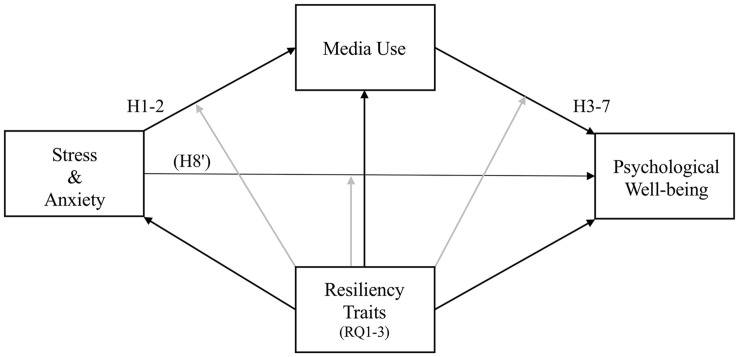
In spring 2020, COVID-19 and the ensuing social distancing and stay-at-home orders instigated abrupt changes to employment and educational infrastructure, leading to uncertainty, concern, and stress among United States college students. The media consumption patterns of this and other social groups across the globe were affected, with early evidence suggesting viewers were seeking both pandemic-themed media and reassuring, familiar content. A general increase in media consumption, and increased consumption of specific types of content, may have been due to media use for coping strategies. This paper examines the relationship between the stress and anxiety of university students and their strategic use of media for coping during initial social distancing periods in March-April 2020 using data from a cross-sectional survey. We examine links between specific types of media use with psychological well-being concepts, and examine the moderating roles of traits (hope, optimism, and resilience) as buffers against negative relationships between stress and anxiety and psychological well-being. Our findings indicate that stress was linked to more hedonic and less eudaimonic media use, as well as more avoidant and escapist media-based coping. Anxiety, on the other hand, was linked to more media use in general, specifically more eudaimonic media use and a full range of media-based coping strategies. In turn, escapist media was linked to negative affect, while reframing media and eudaimonic media were linked to positive affect. Avoidant coping was tied to poorer mental health, and humor coping was tied to better mental health. Hedonic and need-satisfying media use were linked to more flourishing. Hope, optimism, and resilience were all predictive of media use, with the latter two traits moderating responses to stress and anxiety. The findings give a nuanced portrait of college students’ media use during a pandemic-induced shutdown, showing that media use is closely intertwined with well-being in both adaptive and maladaptive patterns.
Overview
AI snapshot
Written from the paper’s full text.
TL;DR
In a cross-sectional survey of 425 U.S. university students during initial COVID-19 social distancing, stress and anxiety were linked to distinct patterns of media use for coping, with some strategies associated with better and others with worse well-being. Media use partially mediated these relationships, and trait optimism, hope, and resilience moderated several paths.
Key findings
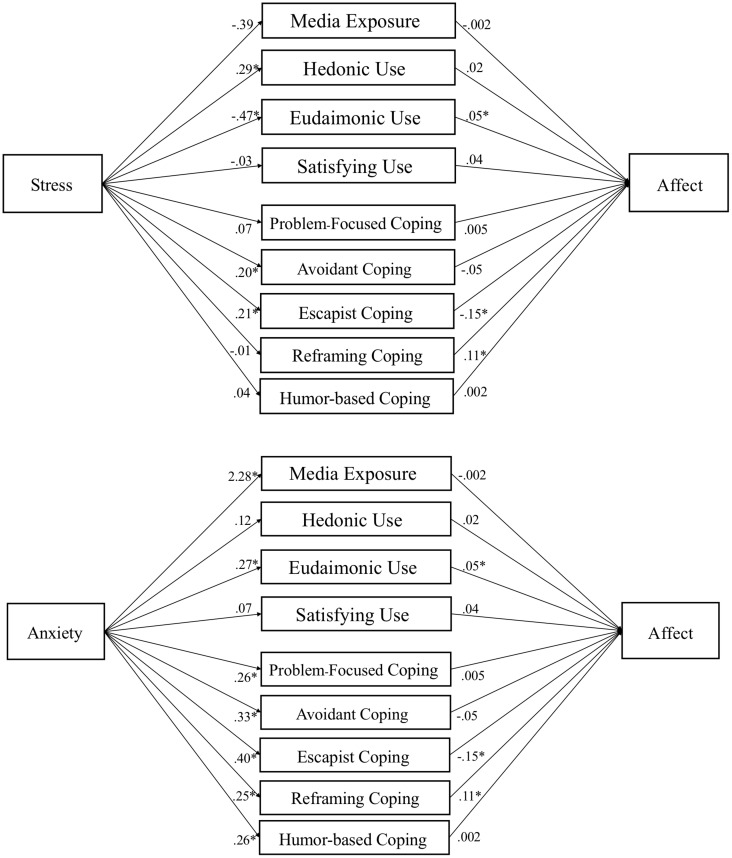
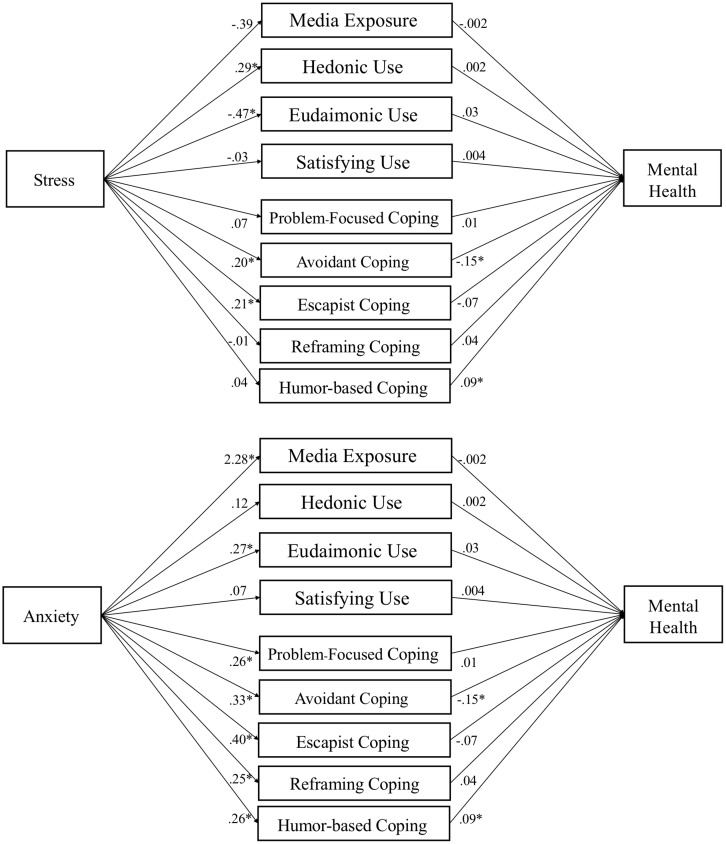
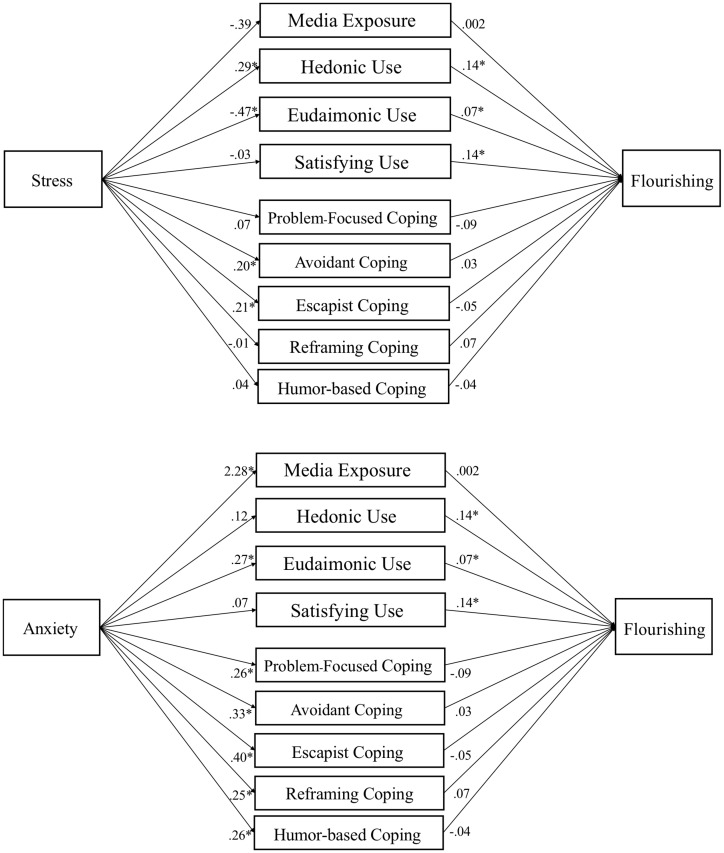
- Stress was associated with more hedonic media use (β = .129, p < .05) and less eudaimonic media use (β = −.167, p < .05), as well as more avoidant (β = .128, p < .05) and escapist (β = .133, p < .05) media coping. Anxiety was associated with more media exposure (β = .160, p < .05), more eudaimonic media use (β = .159, p < .05), and all five media-coping dimensions, including problem-focused (β = .263, p < .001), avoidant (β = .364, p < .001), escapist (β = .424, p < .001), reframing (β = .233, p < .001), and humor coping (β = .238, p < .001).
- Escapist coping was associated with less positive affect (β = −.162, p < .001), avoidant coping with lower mental health (β = −.157, p < .001), and reframing coping with more positive affect (β = .136, p < .01); humor coping was associated with higher mental health (β = .106, p < .01). Hedonic media (β = .157, p < .001) and media need satisfaction (β = .180, p < .001) were associated with more flourishing, and eudaimonic media with more positive affect (β = .094, p < .05).
- Mediation tests found reframing coping suppressed anxiety’s effect on affect (β = .032, SE = .013, 95% CI [.009, .061]), humor coping suppressed anxiety’s effect on mental health (β = .025, SE = .012, 95% CI [.006, .051]), and eudaimonic media suppressed anxiety’s effects on affect (β = .015, SE = .009, 95% CI [.001, .036]) and flourishing (β = .015, SE = .010, 95% CI [.000, .037]). Negative indirect effects appeared for escapist coping on affect and avoidant coping on mental health.
- Optimism, hope, and resilience showed main effects and moderation: optimism negatively predicted avoidant coping and positively predicted affect, mental health, and flourishing; hope positively predicted media exposure, several coping styles, and flourishing; resilience negatively predicted escapist and humor coping and positively predicted affect and mental health. Optimism and resilience moderated stress-to-coping paths, and moderated mediation was found for optimism and resilience via reframing, avoidant, humor, and escapist coping.
Methods
- Cross-sectional survey of students at two American universities that canceled face-to-face instruction the week of March 9, 2020; data collected March 23–April 17, 2020. After screening, N = 425 (M age = 20.19, SD = 2.18; 68.5% women).
- Measures included the 14-item Perceived Stress Scale, 7-item GAD-7, self-reported media exposure across 12 media types, a 28-item Brief COPE adapted to media use, hedonic and eudaimonic media motivations, intrinsic need satisfaction via media, trait optimism, hope, resilience, and outcomes of affect, mental health, and flourishing.
- Analyses included descriptive statistics and correlations, exploratory factor analysis of media coping, hierarchical regression models, and parallel mediation/moderation tests using PROCESS with 10,000 bootstrap samples.
Limitations
- Stated by the authors: the cross-sectional design cannot establish causal direction; the non-probability sample from two large public universities is not representative of all U.S. college students; self-reported media use may inflate relationships with well-being; the measure did not capture media multitasking or separate multitasking from solo media use; some effect sizes were small; and multiple testing of mediators and moderators may have inflated alpha error.
- Evident from the text: the sample was predominantly women (68.5%) and White/Caucasian (78.1%), which further limits generalizability beyond the authors’ stated non-representativeness.
- Evident from the text: several findings rely on small effects and near-zero estimates, and the authors caution against overinterpreting them without replication in larger samples.
Model-written summary. Check it against the paper before relying on it.
Integrity signals
Registry
Cites
Statistics
Figures
Verification
Claims the paper makes
114 Own result · 64 Not checked yet · 51 Own interpretation · 18 Own method · 8 No basis given
A result the paper reports from its own data — it cites no other source for it, so there is none to check. The quote shows it is in the paper.
In the paper
“Our findings indicate that stress was linked to more hedonic and less eudaimonic media use, as well as more avoidant and escapist media-based coping.”
§ Media for Coping During COVID-19 Social Distancing: Stress, Anxiety, and Psychological Well-Being > Abstract
hedgedcorrelational- Asserted: passes — The authors put it forward as true.
- Checkable: passes — It can be checked against evidence.
- Load-bearing: passes — The paper’s conclusions depend on it.
- Based: passes — The paper gives a reason why it holds.
A result the paper reports from its own data — it cites no other source for it, so there is none to check. The quote shows it is in the paper.
In the paper
“Avoidant coping was tied to poorer mental health, and humor coping was tied to better mental health.”
§ Media for Coping During COVID-19 Social Distancing: Stress, Anxiety, and Psychological Well-Being > Abstract
plaincorrelational- Asserted: passes — The authors put it forward as true.
- Checkable: passes — It can be checked against evidence.
- Load-bearing: passes — The paper’s conclusions depend on it.
- Based: passes — The paper gives a reason why it holds.
A result the paper reports from its own data — it cites no other source for it, so there is none to check. The quote shows it is in the paper.
In the paper
“Our findings indicate that stress was linked to more hedonic and less eudaimonic media use, as well as more avoidant and escapist media-based coping.”
§ Media for Coping During COVID-19 Social Distancing: Stress, Anxiety, and Psychological Well-Being > Abstract
hedgedcorrelational- Asserted: passes — The authors put it forward as true.
- Checkable: passes — It can be checked against evidence.
- Load-bearing: passes — The paper’s conclusions depend on it.
- Based: passes — The paper gives a reason why it holds.
A result the paper reports from its own data — it cites no other source for it, so there is none to check. The quote shows it is in the paper.
In the paper
“Hope, optimism, and resilience were all predictive of media use, with the latter two traits moderating responses to stress and anxiety.”
§ Media for Coping During COVID-19 Social Distancing: Stress, Anxiety, and Psychological Well-Being > Abstract
plaincorrelational- Asserted: passes — The authors put it forward as true.
- Checkable: passes — It can be checked against evidence.
- Load-bearing: passes — The paper’s conclusions depend on it.
- Based: passes — The paper gives a reason why it holds.
A result the paper reports from its own data — it cites no other source for it, so there is none to check. The quote shows it is in the paper.
In the paper
“Hedonic and need-satisfying media use were linked to more flourishing.”
§ Media for Coping During COVID-19 Social Distancing: Stress, Anxiety, and Psychological Well-Being > Abstract
plaincorrelational- Asserted: passes — The authors put it forward as true.
- Checkable: passes — It can be checked against evidence.
- Load-bearing: passes — The paper’s conclusions depend on it.
- Based: passes — The paper gives a reason why it holds.
A result the paper reports from its own data — it cites no other source for it, so there is none to check. The quote shows it is in the paper.
In the paper
“In turn, escapist media was linked to negative affect, while reframing media and eudaimonic media were linked to positive affect.”
§ Media for Coping During COVID-19 Social Distancing: Stress, Anxiety, and Psychological Well-Being > Abstract
plaincorrelational- Asserted: passes — The authors put it forward as true.
- Checkable: passes — It can be checked against evidence.
- Load-bearing: passes — The paper’s conclusions depend on it.
- Based: passes — The paper gives a reason why it holds.
A result the paper reports from its own data — it cites no other source for it, so there is none to check. The quote shows it is in the paper.
In the paper
“Hedonic and need-satisfying media use were linked to more flourishing.”
§ Media for Coping During COVID-19 Social Distancing: Stress, Anxiety, and Psychological Well-Being > Abstract
plaincorrelational- Asserted: passes — The authors put it forward as true.
- Checkable: passes — It can be checked against evidence.
- Load-bearing: passes — The paper’s conclusions depend on it.
- Based: passes — The paper gives a reason why it holds.
A result the paper reports from its own data — it cites no other source for it, so there is none to check. The quote shows it is in the paper.
In the paper
“Our findings indicate that stress was linked to more hedonic and less eudaimonic media use, as well as more avoidant and escapist media-based coping.”
§ Media for Coping During COVID-19 Social Distancing: Stress, Anxiety, and Psychological Well-Being > Abstract
hedgedcorrelational- Asserted: passes — The authors put it forward as true.
- Checkable: passes — It can be checked against evidence.
- Load-bearing: passes — The paper’s conclusions depend on it.
- Based: passes — The paper gives a reason why it holds.
A result the paper reports from its own data — it cites no other source for it, so there is none to check. The quote shows it is in the paper.
In the paper
“In turn, escapist media was linked to negative affect, while reframing media and eudaimonic media were linked to positive affect.”
§ Media for Coping During COVID-19 Social Distancing: Stress, Anxiety, and Psychological Well-Being > Abstract
plaincorrelational- Asserted: passes — The authors put it forward as true.
- Checkable: passes — It can be checked against evidence.
- Load-bearing: passes — The paper’s conclusions depend on it.
- Based: passes — The paper gives a reason why it holds.
A result the paper reports from its own data — it cites no other source for it, so there is none to check. The quote shows it is in the paper.
In the paper
“Hope, optimism, and resilience were all predictive of media use, with the latter two traits moderating responses to stress and anxiety.”
§ Media for Coping During COVID-19 Social Distancing: Stress, Anxiety, and Psychological Well-Being > Abstract
plaincorrelational- Asserted: passes — The authors put it forward as true.
- Checkable: passes — It can be checked against evidence.
- Load-bearing: passes — The paper’s conclusions depend on it.
- Based: passes — The paper gives a reason why it holds.
A result the paper reports from its own data — it cites no other source for it, so there is none to check. The quote shows it is in the paper.
In the paper
“Avoidant coping was tied to poorer mental health, and humor coping was tied to better mental health.”
§ Media for Coping During COVID-19 Social Distancing: Stress, Anxiety, and Psychological Well-Being > Abstract
plaincorrelational- Asserted: passes — The authors put it forward as true.
- Checkable: passes — It can be checked against evidence.
- Load-bearing: passes — The paper’s conclusions depend on it.
- Based: passes — The paper gives a reason why it holds.
A result the paper reports from its own data — it cites no other source for it, so there is none to check. The quote shows it is in the paper.
In the paper
“Anxiety, on the other hand, was linked to more media use in general, specifically more eudaimonic media use and a full range of media-based coping strategies.”
§ Media for Coping During COVID-19 Social Distancing: Stress, Anxiety, and Psychological Well-Being > Abstract
plaincorrelational- Asserted: passes — The authors put it forward as true.
- Checkable: passes — It can be checked against evidence.
- Load-bearing: passes — The paper’s conclusions depend on it.
- Based: passes — The paper gives a reason why it holds.
A result the paper reports from its own data — it cites no other source for it, so there is none to check. The quote shows it is in the paper.
In the paper
“Hope, optimism, and resilience were all predictive of media use, with the latter two traits moderating responses to stress and anxiety.”
§ Media for Coping During COVID-19 Social Distancing: Stress, Anxiety, and Psychological Well-Being > Abstract
plaincorrelational- Asserted: passes — The authors put it forward as true.
- Checkable: passes — It can be checked against evidence.
- Load-bearing: passes — The paper’s conclusions depend on it.
- Based: passes — The paper gives a reason why it holds.
A result the paper reports from its own data — it cites no other source for it, so there is none to check. The quote shows it is in the paper.
In the paper
“Hope was positively associated with media exposure; problem-focused, escapist, and reframing forms of coping; hedonic, eudaimonic, and need-satisfying media use; and flourishing.”
§ Media for Coping During COVID-19 Social Distancing: Stress, Anxiety, and Psychological Well-Being > Results > Moderation by Trait Resilience, Optimism, and Hope
plaincorrelational- Asserted: passes — The authors put it forward as true.
- Checkable: passes — It can be checked against evidence.
- Load-bearing: unclear — It is unclear whether the paper’s conclusions depend on it.
- Based: passes — The paper gives a reason why it holds.
A result the paper reports from its own data — it cites no other source for it, so there is none to check. The quote shows it is in the paper.
In the paper
“Avoidant coping mediated effects of stress on mental health, β = −.020, SE = .011, 95% CI [−.043, −.0003], and anxiety on mental health, β = −.057, SE = .016, 95% CI [−.092, −.028].”
§ Media for Coping During COVID-19 Social Distancing: Stress, Anxiety, and Psychological Well-Being > Results > Media Use Mediates Stress and Anxiety’s Effects on Well-Being
plaindirect- Asserted: passes — The authors put it forward as true.
- Checkable: passes — It can be checked against evidence.
- Load-bearing: passes — The paper’s conclusions depend on it.
- Based: passes — The paper gives a reason why it holds.
A result the paper reports from its own data — it cites no other source for it, so there is none to check. The quote shows it is in the paper.
In the paper
“Eudaimonic media mediated the effect of stress on affect, β = −.016, SE = .010, 95% CI [−.039, −.005].”
§ Media for Coping During COVID-19 Social Distancing: Stress, Anxiety, and Psychological Well-Being > Results > Media Use Mediates Stress and Anxiety’s Effects on Well-Being
plaindirect- Asserted: passes — The authors put it forward as true.
- Checkable: passes — It can be checked against evidence.
- Load-bearing: passes — The paper’s conclusions depend on it.
- Based: passes — The paper gives a reason why it holds.
A result the paper reports from its own data — it cites no other source for it, so there is none to check. The quote shows it is in the paper.
In the paper
“Hope was positively associated with media exposure; problem-focused, escapist, and reframing forms of coping; hedonic, eudaimonic, and need-satisfying media use; and flourishing.”
§ Media for Coping During COVID-19 Social Distancing: Stress, Anxiety, and Psychological Well-Being > Results > Moderation by Trait Resilience, Optimism, and Hope
plaincorrelational- Asserted: passes — The authors put it forward as true.
- Checkable: passes — It can be checked against evidence.
- Load-bearing: unclear — It is unclear whether the paper’s conclusions depend on it.
- Based: passes — The paper gives a reason why it holds.
A result the paper reports from its own data — it cites no other source for it, so there is none to check. The quote shows it is in the paper.
In the paper
“Optimism was negatively associated with avoidant coping, and positively with affect, mental health, and flourishing.”
§ Media for Coping During COVID-19 Social Distancing: Stress, Anxiety, and Psychological Well-Being > Results > Moderation by Trait Resilience, Optimism, and Hope
plaincorrelational- Asserted: passes — The authors put it forward as true.
- Checkable: passes — It can be checked against evidence.
- Load-bearing: unclear — It is unclear whether the paper’s conclusions depend on it.
- Based: passes — The paper gives a reason why it holds.
A result the paper reports from its own data — it cites no other source for it, so there is none to check. The quote shows it is in the paper.
In the paper
“Optimism also positively moderated the effect of stress on problem-focused coping, avoidant coping, reframing coping, and humor coping (Table 5).”
§ Media for Coping During COVID-19 Social Distancing: Stress, Anxiety, and Psychological Well-Being > Results > Moderation by Trait Resilience, Optimism, and Hope
plaincorrelational- Asserted: passes — The authors put it forward as true.
- Checkable: passes — It can be checked against evidence.
- Load-bearing: passes — The paper’s conclusions depend on it.
- Based: passes — The paper gives a reason why it holds.
A result the paper reports from its own data — it cites no other source for it, so there is none to check. The quote shows it is in the paper.
In the paper
“Stress also was negatively correlated with flourishing.”
§ Media for Coping During COVID-19 Social Distancing: Stress, Anxiety, and Psychological Well-Being > Results > Relationships With Affect, Mental Health, and Flourishing
plaincorrelational- Asserted: passes — The authors put it forward as true.
- Checkable: passes — It can be checked against evidence.
- Load-bearing: unclear — It is unclear whether the paper’s conclusions depend on it.
- Based: passes — The paper gives a reason why it holds.
A result the paper reports from its own data — it cites no other source for it, so there is none to check. The quote shows it is in the paper.
In the paper
“Eudaimonic media suppressed the effects of anxiety on affect, β = .015, SE = .009, 95% CI [.001, .036] and flourishing, β = .015, SE = .010, 95% CI [.000, .037].”
§ Media for Coping During COVID-19 Social Distancing: Stress, Anxiety, and Psychological Well-Being > Results > Media Use Mediates Stress and Anxiety’s Effects on Well-Being
plaindirect- Asserted: passes — The authors put it forward as true.
- Checkable: passes — It can be checked against evidence.
- Load-bearing: passes — The paper’s conclusions depend on it.
- Based: passes — The paper gives a reason why it holds.
A result the paper reports from its own data — it cites no other source for it, so there is none to check. The quote shows it is in the paper.
In the paper
“Optimism also positively moderated the effect of stress on problem-focused coping, avoidant coping, reframing coping, and humor coping (Table 5).”
§ Media for Coping During COVID-19 Social Distancing: Stress, Anxiety, and Psychological Well-Being > Results > Moderation by Trait Resilience, Optimism, and Hope
plaincorrelational- Asserted: passes — The authors put it forward as true.
- Checkable: passes — It can be checked against evidence.
- Load-bearing: passes — The paper’s conclusions depend on it.
- Based: passes — The paper gives a reason why it holds.
A result the paper reports from its own data — it cites no other source for it, so there is none to check. The quote shows it is in the paper.
In the paper
“Anxiety had medium-sized positive associations with all five dimensions of media coping.”
§ Media for Coping During COVID-19 Social Distancing: Stress, Anxiety, and Psychological Well-Being > Results > Relationships With Media Use
plaincorrelational- Asserted: passes — The authors put it forward as true.
- Checkable: passes — It can be checked against evidence.
- Load-bearing: passes — The paper’s conclusions depend on it.
- Based: passes — The paper gives a reason why it holds.
A result the paper reports from its own data — it cites no other source for it, so there is none to check. The quote shows it is in the paper.
In the paper
“We find that stress is associated with more hedonic media use and less eudaimonic media use.”
§ Media for Coping During COVID-19 Social Distancing: Stress, Anxiety, and Psychological Well-Being > Results > Relationships With Media Use
plaincorrelational- Asserted: passes — The authors put it forward as true.
- Checkable: passes — It can be checked against evidence.
- Load-bearing: passes — The paper’s conclusions depend on it.
- Based: passes — The paper gives a reason why it holds.
A result the paper reports from its own data — it cites no other source for it, so there is none to check. The quote shows it is in the paper.
In the paper
“Both stress and anxiety had substantial negative correlations with affect and mental health.”
§ Media for Coping During COVID-19 Social Distancing: Stress, Anxiety, and Psychological Well-Being > Results > Relationships With Affect, Mental Health, and Flourishing
plaincorrelational- Asserted: passes — The authors put it forward as true.
- Checkable: passes — It can be checked against evidence.
- Load-bearing: passes — The paper’s conclusions depend on it.
- Based: passes — The paper gives a reason why it holds.
A result the paper reports from its own data — it cites no other source for it, so there is none to check. The quote shows it is in the paper.
In the paper
“Hope was positively associated with media exposure; problem-focused, escapist, and reframing forms of coping; hedonic, eudaimonic, and need-satisfying media use; and flourishing.”
§ Media for Coping During COVID-19 Social Distancing: Stress, Anxiety, and Psychological Well-Being > Results > Moderation by Trait Resilience, Optimism, and Hope
plaincorrelational- Asserted: passes — The authors put it forward as true.
- Checkable: passes — It can be checked against evidence.
- Load-bearing: unclear — It is unclear whether the paper’s conclusions depend on it.
- Based: passes — The paper gives a reason why it holds.
A result the paper reports from its own data — it cites no other source for it, so there is none to check. The quote shows it is in the paper.
In the paper
“Eudaimonic media use was connected to more positive affect, and both hedonic media and media need-satisfaction were associated with higher levels of flourishing.”
§ Media for Coping During COVID-19 Social Distancing: Stress, Anxiety, and Psychological Well-Being > Results > Relationships With Affect, Mental Health, and Flourishing
plaincorrelational- Asserted: passes — The authors put it forward as true.
- Checkable: passes — It can be checked against evidence.
- Load-bearing: passes — The paper’s conclusions depend on it.
- Based: passes — The paper gives a reason why it holds.
A result the paper reports from its own data — it cites no other source for it, so there is none to check. The quote shows it is in the paper.
In the paper
“Optimism positively moderated the effect of stress on media exposure, but negatively moderated the effect of anxiety on media exposure (Table 4).”
§ Media for Coping During COVID-19 Social Distancing: Stress, Anxiety, and Psychological Well-Being > Results > Moderation by Trait Resilience, Optimism, and Hope
plaincorrelational- Asserted: passes — The authors put it forward as true.
- Checkable: passes — It can be checked against evidence.
- Load-bearing: passes — The paper’s conclusions depend on it.
- Based: passes — The paper gives a reason why it holds.
A result the paper reports from its own data — it cites no other source for it, so there is none to check. The quote shows it is in the paper.
In the paper
“Hope was positively associated with media exposure; problem-focused, escapist, and reframing forms of coping; hedonic, eudaimonic, and need-satisfying media use; and flourishing.”
§ Media for Coping During COVID-19 Social Distancing: Stress, Anxiety, and Psychological Well-Being > Results > Moderation by Trait Resilience, Optimism, and Hope
plaincorrelational- Asserted: passes — The authors put it forward as true.
- Checkable: passes — It can be checked against evidence.
- Load-bearing: unclear — It is unclear whether the paper’s conclusions depend on it.
- Based: passes — The paper gives a reason why it holds.
A result the paper reports from its own data — it cites no other source for it, so there is none to check. The quote shows it is in the paper.
In the paper
“Resilience was negatively associated with escapist and humor coping, hedonic media, and was positively associated with affect and mental health.”
§ Media for Coping During COVID-19 Social Distancing: Stress, Anxiety, and Psychological Well-Being > Results > Moderation by Trait Resilience, Optimism, and Hope
plaincorrelational- Asserted: passes — The authors put it forward as true.
- Checkable: passes — It can be checked against evidence.
- Load-bearing: unclear — It is unclear whether the paper’s conclusions depend on it.
- Based: passes — The paper gives a reason why it holds.
A result the paper reports from its own data — it cites no other source for it, so there is none to check. The quote shows it is in the paper.
In the paper
“reframing coping suppressed the effect of anxiety on affect, β = .032, SE = .013, 95% CI [.009, .061].”
§ Media for Coping During COVID-19 Social Distancing: Stress, Anxiety, and Psychological Well-Being > Results > Media Use Mediates Stress and Anxiety’s Effects on Well-Being
plaindirect- Asserted: passes — The authors put it forward as true.
- Checkable: passes — It can be checked against evidence.
- Load-bearing: passes — The paper’s conclusions depend on it.
- Based: passes — The paper gives a reason why it holds.
A result the paper reports from its own data — it cites no other source for it, so there is none to check. The quote shows it is in the paper.
In the paper
“Humor coping suppressed the effect of anxiety on mental health, β = .025, SE = .012, 95% CI [.006, .051].”
§ Media for Coping During COVID-19 Social Distancing: Stress, Anxiety, and Psychological Well-Being > Results > Media Use Mediates Stress and Anxiety’s Effects on Well-Being
plaindirect- Asserted: passes — The authors put it forward as true.
- Checkable: passes — It can be checked against evidence.
- Load-bearing: passes — The paper’s conclusions depend on it.
- Based: passes — The paper gives a reason why it holds.
A result the paper reports from its own data — it cites no other source for it, so there is none to check. The quote shows it is in the paper.
In the paper
“Both stress and anxiety had substantial negative correlations with affect and mental health.”
§ Media for Coping During COVID-19 Social Distancing: Stress, Anxiety, and Psychological Well-Being > Results > Relationships With Affect, Mental Health, and Flourishing
plaincorrelational- Asserted: passes — The authors put it forward as true.
- Checkable: passes — It can be checked against evidence.
- Load-bearing: unclear — It is unclear whether the paper’s conclusions depend on it.
- Based: passes — The paper gives a reason why it holds.
A result the paper reports from its own data — it cites no other source for it, so there is none to check. The quote shows it is in the paper.
In the paper
“Eudaimonic media use was connected to more positive affect, and both hedonic media and media need-satisfaction were associated with higher levels of flourishing.”
§ Media for Coping During COVID-19 Social Distancing: Stress, Anxiety, and Psychological Well-Being > Results > Relationships With Affect, Mental Health, and Flourishing
plaincorrelational- Asserted: passes — The authors put it forward as true.
- Checkable: passes — It can be checked against evidence.
- Load-bearing: passes — The paper’s conclusions depend on it.
- Based: passes — The paper gives a reason why it holds.
A result the paper reports from its own data — it cites no other source for it, so there is none to check. The quote shows it is in the paper.
In the paper
“Resilience was negatively associated with escapist and humor coping, hedonic media, and was positively associated with affect and mental health.”
§ Media for Coping During COVID-19 Social Distancing: Stress, Anxiety, and Psychological Well-Being > Results > Moderation by Trait Resilience, Optimism, and Hope
plaincorrelational- Asserted: passes — The authors put it forward as true.
- Checkable: passes — It can be checked against evidence.
- Load-bearing: unclear — It is unclear whether the paper’s conclusions depend on it.
- Based: passes — The paper gives a reason why it holds.
A result the paper reports from its own data — it cites no other source for it, so there is none to check. The quote shows it is in the paper.
In the paper
“Eudaimonic media suppressed the effects of anxiety on affect, β = .015, SE = .009, 95% CI [.001, .036] and flourishing, β = .015, SE = .010, 95% CI [.000, .037].”
§ Media for Coping During COVID-19 Social Distancing: Stress, Anxiety, and Psychological Well-Being > Results > Media Use Mediates Stress and Anxiety’s Effects on Well-Being
plaindirect- Asserted: passes — The authors put it forward as true.
- Checkable: passes — It can be checked against evidence.
- Load-bearing: passes — The paper’s conclusions depend on it.
- Based: passes — The paper gives a reason why it holds.
A result the paper reports from its own data — it cites no other source for it, so there is none to check. The quote shows it is in the paper.
In the paper
“Both stress and anxiety had substantial negative correlations with affect and mental health.”
§ Media for Coping During COVID-19 Social Distancing: Stress, Anxiety, and Psychological Well-Being > Results > Relationships With Affect, Mental Health, and Flourishing
plaincorrelational- Asserted: passes — The authors put it forward as true.
- Checkable: passes — It can be checked against evidence.
- Load-bearing: unclear — It is unclear whether the paper’s conclusions depend on it.
- Based: passes — The paper gives a reason why it holds.
A result the paper reports from its own data — it cites no other source for it, so there is none to check. The quote shows it is in the paper.
In the paper
“escapist coping mediated the effects of stress on affect, β = −.022, SE = .013, 95% CI [−.051, −.002] and anxiety on affect, β = −.069, SE = .024, 95% CI [−.120, −.027].”
§ Media for Coping During COVID-19 Social Distancing: Stress, Anxiety, and Psychological Well-Being > Results > Media Use Mediates Stress and Anxiety’s Effects on Well-Being
plaindirect- Asserted: passes — The authors put it forward as true.
- Checkable: passes — It can be checked against evidence.
- Load-bearing: passes — The paper’s conclusions depend on it.
- Based: passes — The paper gives a reason why it holds.
A result the paper reports from its own data — it cites no other source for it, so there is none to check. The quote shows it is in the paper.
In the paper
“In contrast, anxiety is associated with more eudaimonic media use, as well as more media exposure.”
§ Media for Coping During COVID-19 Social Distancing: Stress, Anxiety, and Psychological Well-Being > Results > Relationships With Media Use
plaincorrelational- Asserted: passes — The authors put it forward as true.
- Checkable: passes — It can be checked against evidence.
- Load-bearing: passes — The paper’s conclusions depend on it.
- Based: passes — The paper gives a reason why it holds.
A result the paper reports from its own data — it cites no other source for it, so there is none to check. The quote shows it is in the paper.
In the paper
“escapist coping was associated with less positive affect, and reframing coping with more positive affect.”
§ Media for Coping During COVID-19 Social Distancing: Stress, Anxiety, and Psychological Well-Being > Results > Relationships With Affect, Mental Health, and Flourishing
plaincorrelational- Asserted: passes — The authors put it forward as true.
- Checkable: passes — It can be checked against evidence.
- Load-bearing: passes — The paper’s conclusions depend on it.
- Based: passes — The paper gives a reason why it holds.
A result the paper reports from its own data — it cites no other source for it, so there is none to check. The quote shows it is in the paper.
In the paper
“Avoidant coping mediated effects of stress on mental health, β = −.020, SE = .011, 95% CI [−.043, −.0003], and anxiety on mental health, β = −.057, SE = .016, 95% CI [−.092, −.028].”
§ Media for Coping During COVID-19 Social Distancing: Stress, Anxiety, and Psychological Well-Being > Results > Media Use Mediates Stress and Anxiety’s Effects on Well-Being
plaindirect- Asserted: passes — The authors put it forward as true.
- Checkable: passes — It can be checked against evidence.
- Load-bearing: passes — The paper’s conclusions depend on it.
- Based: passes — The paper gives a reason why it holds.
A result the paper reports from its own data — it cites no other source for it, so there is none to check. The quote shows it is in the paper.
In the paper
“Resilience was negatively associated with escapist and humor coping, hedonic media, and was positively associated with affect and mental health.”
§ Media for Coping During COVID-19 Social Distancing: Stress, Anxiety, and Psychological Well-Being > Results > Moderation by Trait Resilience, Optimism, and Hope
plaincorrelational- Asserted: passes — The authors put it forward as true.
- Checkable: passes — It can be checked against evidence.
- Load-bearing: unclear — It is unclear whether the paper’s conclusions depend on it.
- Based: passes — The paper gives a reason why it holds.
A result the paper reports from its own data — it cites no other source for it, so there is none to check. The quote shows it is in the paper.
In the paper
“In contrast, anxiety is associated with more eudaimonic media use, as well as more media exposure.”
§ Media for Coping During COVID-19 Social Distancing: Stress, Anxiety, and Psychological Well-Being > Results > Relationships With Media Use
plaincorrelational- Asserted: passes — The authors put it forward as true.
- Checkable: passes — It can be checked against evidence.
- Load-bearing: passes — The paper’s conclusions depend on it.
- Based: passes — The paper gives a reason why it holds.
A result the paper reports from its own data — it cites no other source for it, so there is none to check. The quote shows it is in the paper.
In the paper
“Both stress and anxiety had substantial negative correlations with affect and mental health.”
§ Media for Coping During COVID-19 Social Distancing: Stress, Anxiety, and Psychological Well-Being > Results > Relationships With Affect, Mental Health, and Flourishing
plaincorrelational- Asserted: passes — The authors put it forward as true.
- Checkable: passes — It can be checked against evidence.
- Load-bearing: unclear — It is unclear whether the paper’s conclusions depend on it.
- Based: passes — The paper gives a reason why it holds.
A result the paper reports from its own data — it cites no other source for it, so there is none to check. The quote shows it is in the paper.
In the paper
“escapist coping was associated with less positive affect, and reframing coping with more positive affect.”
§ Media for Coping During COVID-19 Social Distancing: Stress, Anxiety, and Psychological Well-Being > Results > Relationships With Affect, Mental Health, and Flourishing
plaincorrelational- Asserted: passes — The authors put it forward as true.
- Checkable: passes — It can be checked against evidence.
- Load-bearing: passes — The paper’s conclusions depend on it.
- Based: passes — The paper gives a reason why it holds.
A result the paper reports from its own data — it cites no other source for it, so there is none to check. The quote shows it is in the paper.
In the paper
“Stress was positively associated with avoidant and escapist coping via media.”
§ Media for Coping During COVID-19 Social Distancing: Stress, Anxiety, and Psychological Well-Being > Results > Relationships With Media Use
plaincorrelational- Asserted: passes — The authors put it forward as true.
- Checkable: passes — It can be checked against evidence.
- Load-bearing: passes — The paper’s conclusions depend on it.
- Based: passes — The paper gives a reason why it holds.
A result the paper reports from its own data — it cites no other source for it, so there is none to check. The quote shows it is in the paper.
In the paper
“Media exposure was not linked to differences in affect, mental health, or flourishing.”
§ Media for Coping During COVID-19 Social Distancing: Stress, Anxiety, and Psychological Well-Being > Results > Relationships With Affect, Mental Health, and Flourishing
plain- Asserted: passes — The authors put it forward as true.
- Checkable: passes — It can be checked against evidence.
- Load-bearing: passes — The paper’s conclusions depend on it.
- Based: passes — The paper gives a reason why it holds.
A result the paper reports from its own data — it cites no other source for it, so there is none to check. The quote shows it is in the paper.
In the paper
“escapist coping mediated the effects of stress on affect, β = −.022, SE = .013, 95% CI [−.051, −.002] and anxiety on affect, β = −.069, SE = .024, 95% CI [−.120, −.027].”
§ Media for Coping During COVID-19 Social Distancing: Stress, Anxiety, and Psychological Well-Being > Results > Media Use Mediates Stress and Anxiety’s Effects on Well-Being
plaindirect- Asserted: passes — The authors put it forward as true.
- Checkable: passes — It can be checked against evidence.
- Load-bearing: passes — The paper’s conclusions depend on it.
- Based: passes — The paper gives a reason why it holds.
A result the paper reports from its own data — it cites no other source for it, so there is none to check. The quote shows it is in the paper.
In the paper
“Optimism also positively moderated the effect of stress on problem-focused coping, avoidant coping, reframing coping, and humor coping (Table 5).”
§ Media for Coping During COVID-19 Social Distancing: Stress, Anxiety, and Psychological Well-Being > Results > Moderation by Trait Resilience, Optimism, and Hope
plaincorrelational- Asserted: passes — The authors put it forward as true.
- Checkable: passes — It can be checked against evidence.
- Load-bearing: passes — The paper’s conclusions depend on it.
- Based: passes — The paper gives a reason why it holds.
A result the paper reports from its own data — it cites no other source for it, so there is none to check. The quote shows it is in the paper.
In the paper
“Eudaimonic media use was connected to more positive affect, and both hedonic media and media need-satisfaction were associated with higher levels of flourishing.”
§ Media for Coping During COVID-19 Social Distancing: Stress, Anxiety, and Psychological Well-Being > Results > Relationships With Affect, Mental Health, and Flourishing
plaincorrelational- Asserted: passes — The authors put it forward as true.
- Checkable: passes — It can be checked against evidence.
- Load-bearing: passes — The paper’s conclusions depend on it.
- Based: passes — The paper gives a reason why it holds.
A result the paper reports from its own data — it cites no other source for it, so there is none to check. The quote shows it is in the paper.
In the paper
“EFA found five factors with eigenvalues > 1.”
§ Media for Coping During COVID-19 Social Distancing: Stress, Anxiety, and Psychological Well-Being > Materials and Methods > Measures
plain- Asserted: passes — The authors put it forward as true.
- Checkable: passes — It can be checked against evidence.
- Load-bearing: passes — The paper’s conclusions depend on it.
- Based: passes — The paper gives a reason why it holds.
A result the paper reports from its own data — it cites no other source for it, so there is none to check. The quote shows it is in the paper.
In the paper
“Additionally, an interaction between trait optimism and reframing coping was tied to less positive affect (Table 6).”
§ Media for Coping During COVID-19 Social Distancing: Stress, Anxiety, and Psychological Well-Being > Results > Moderation by Trait Resilience, Optimism, and Hope
plaincorrelational- Asserted: passes — The authors put it forward as true.
- Checkable: passes — It can be checked against evidence.
- Load-bearing: unclear — It is unclear whether the paper’s conclusions depend on it.
- Based: passes — The paper gives a reason why it holds.
A result the paper reports from its own data — it cites no other source for it, so there is none to check. The quote shows it is in the paper.
In the paper
“Optimism was negatively associated with avoidant coping, and positively with affect, mental health, and flourishing.”
§ Media for Coping During COVID-19 Social Distancing: Stress, Anxiety, and Psychological Well-Being > Results > Moderation by Trait Resilience, Optimism, and Hope
plaincorrelational- Asserted: passes — The authors put it forward as true.
- Checkable: passes — It can be checked against evidence.
- Load-bearing: unclear — It is unclear whether the paper’s conclusions depend on it.
- Based: passes — The paper gives a reason why it holds.
A result the paper reports from its own data — it cites no other source for it, so there is none to check. The quote shows it is in the paper.
In the paper
“We find that stress is associated with more hedonic media use and less eudaimonic media use.”
§ Media for Coping During COVID-19 Social Distancing: Stress, Anxiety, and Psychological Well-Being > Results > Relationships With Media Use
plaincorrelational- Asserted: passes — The authors put it forward as true.
- Checkable: passes — It can be checked against evidence.
- Load-bearing: passes — The paper’s conclusions depend on it.
- Based: passes — The paper gives a reason why it holds.
A result the paper reports from its own data — it cites no other source for it, so there is none to check. The quote shows it is in the paper.
In the paper
“Hope was positively associated with media exposure; problem-focused, escapist, and reframing forms of coping; hedonic, eudaimonic, and need-satisfying media use; and flourishing.”
§ Media for Coping During COVID-19 Social Distancing: Stress, Anxiety, and Psychological Well-Being > Results > Moderation by Trait Resilience, Optimism, and Hope
plaincorrelational- Asserted: passes — The authors put it forward as true.
- Checkable: passes — It can be checked against evidence.
- Load-bearing: unclear — It is unclear whether the paper’s conclusions depend on it.
- Based: passes — The paper gives a reason why it holds.
A result the paper reports from its own data — it cites no other source for it, so there is none to check. The quote shows it is in the paper.
In the paper
“Optimism positively moderated the effect of stress on media exposure, but negatively moderated the effect of anxiety on media exposure (Table 4).”
§ Media for Coping During COVID-19 Social Distancing: Stress, Anxiety, and Psychological Well-Being > Results > Moderation by Trait Resilience, Optimism, and Hope
plaincorrelational- Asserted: passes — The authors put it forward as true.
- Checkable: passes — It can be checked against evidence.
- Load-bearing: passes — The paper’s conclusions depend on it.
- Based: passes — The paper gives a reason why it holds.
A result the paper reports from its own data — it cites no other source for it, so there is none to check. The quote shows it is in the paper.
In the paper
“Optimism was negatively associated with avoidant coping, and positively with affect, mental health, and flourishing.”
§ Media for Coping During COVID-19 Social Distancing: Stress, Anxiety, and Psychological Well-Being > Results > Moderation by Trait Resilience, Optimism, and Hope
plaincorrelational- Asserted: passes — The authors put it forward as true.
- Checkable: passes — It can be checked against evidence.
- Load-bearing: unclear — It is unclear whether the paper’s conclusions depend on it.
- Based: passes — The paper gives a reason why it holds.
A result the paper reports from its own data — it cites no other source for it, so there is none to check. The quote shows it is in the paper.
In the paper
“Hope was positively associated with media exposure; problem-focused, escapist, and reframing forms of coping; hedonic, eudaimonic, and need-satisfying media use; and flourishing.”
§ Media for Coping During COVID-19 Social Distancing: Stress, Anxiety, and Psychological Well-Being > Results > Moderation by Trait Resilience, Optimism, and Hope
plaincorrelational- Asserted: passes — The authors put it forward as true.
- Checkable: passes — It can be checked against evidence.
- Load-bearing: unclear — It is unclear whether the paper’s conclusions depend on it.
- Based: passes — The paper gives a reason why it holds.
A result the paper reports from its own data — it cites no other source for it, so there is none to check. The quote shows it is in the paper.
In the paper
“Avoidant coping was associated with lower mental health scores, but humor coping with higher mental health scores.”
§ Media for Coping During COVID-19 Social Distancing: Stress, Anxiety, and Psychological Well-Being > Results > Relationships With Affect, Mental Health, and Flourishing
plaincorrelational- Asserted: passes — The authors put it forward as true.
- Checkable: passes — It can be checked against evidence.
- Load-bearing: passes — The paper’s conclusions depend on it.
- Based: passes — The paper gives a reason why it holds.
A result the paper reports from its own data — it cites no other source for it, so there is none to check. The quote shows it is in the paper.
In the paper
“Optimism also positively moderated the effect of stress on problem-focused coping, avoidant coping, reframing coping, and humor coping (Table 5).”
§ Media for Coping During COVID-19 Social Distancing: Stress, Anxiety, and Psychological Well-Being > Results > Moderation by Trait Resilience, Optimism, and Hope
plaincorrelational- Asserted: passes — The authors put it forward as true.
- Checkable: passes — It can be checked against evidence.
- Load-bearing: passes — The paper’s conclusions depend on it.
- Based: passes — The paper gives a reason why it holds.
A result the paper reports from its own data — it cites no other source for it, so there is none to check. The quote shows it is in the paper.
In the paper
“Hope was positively associated with media exposure; problem-focused, escapist, and reframing forms of coping; hedonic, eudaimonic, and need-satisfying media use; and flourishing.”
§ Media for Coping During COVID-19 Social Distancing: Stress, Anxiety, and Psychological Well-Being > Results > Moderation by Trait Resilience, Optimism, and Hope
plaincorrelational- Asserted: passes — The authors put it forward as true.
- Checkable: passes — It can be checked against evidence.
- Load-bearing: unclear — It is unclear whether the paper’s conclusions depend on it.
- Based: passes — The paper gives a reason why it holds.
A result the paper reports from its own data — it cites no other source for it, so there is none to check. The quote shows it is in the paper.
In the paper
“Avoidant coping was associated with lower mental health scores, but humor coping with higher mental health scores.”
§ Media for Coping During COVID-19 Social Distancing: Stress, Anxiety, and Psychological Well-Being > Results > Relationships With Affect, Mental Health, and Flourishing
plaincorrelational- Asserted: passes — The authors put it forward as true.
- Checkable: passes — It can be checked against evidence.
- Load-bearing: passes — The paper’s conclusions depend on it.
- Based: passes — The paper gives a reason why it holds.
A result the paper reports from its own data — it cites no other source for it, so there is none to check. The quote shows it is in the paper.
In the paper
“Resilience was negatively associated with escapist and humor coping, hedonic media, and was positively associated with affect and mental health.”
§ Media for Coping During COVID-19 Social Distancing: Stress, Anxiety, and Psychological Well-Being > Results > Moderation by Trait Resilience, Optimism, and Hope
plaincorrelational- Asserted: passes — The authors put it forward as true.
- Checkable: passes — It can be checked against evidence.
- Load-bearing: unclear — It is unclear whether the paper’s conclusions depend on it.
- Based: passes — The paper gives a reason why it holds.
A result the paper reports from its own data — it cites no other source for it, so there is none to check. The quote shows it is in the paper.
In the paper
“Hope negatively moderated the effect of anxiety on flourishing, and hope positively moderated the effect of humor coping on flourishing (Table 6).”
§ Media for Coping During COVID-19 Social Distancing: Stress, Anxiety, and Psychological Well-Being > Results > Moderation by Trait Resilience, Optimism, and Hope
plaincorrelational- Asserted: passes — The authors put it forward as true.
- Checkable: passes — It can be checked against evidence.
- Load-bearing: passes — The paper’s conclusions depend on it.
- Based: passes — The paper gives a reason why it holds.
A result the paper reports from its own data — it cites no other source for it, so there is none to check. The quote shows it is in the paper.
In the paper
“Stress was also associated with avoidant and escapist coping via media (but less than anxiety).”
§ Media for Coping During COVID-19 Social Distancing: Stress, Anxiety, and Psychological Well-Being > Discussion
plaincorrelational- Asserted: passes — The authors put it forward as true.
- Checkable: passes — It can be checked against evidence.
- Load-bearing: passes — The paper’s conclusions depend on it.
- Based: passes — The paper gives a reason why it holds.
A result the paper reports from its own data — it cites no other source for it, so there is none to check. The quote shows it is in the paper.
In the paper
“The only unsupported prediction (H3) failed to show that the quantity of media exposure had any discernable influence on well-being outcomes.”
§ Media for Coping During COVID-19 Social Distancing: Stress, Anxiety, and Psychological Well-Being > Discussion
plain- Asserted: passes — The authors put it forward as true.
- Checkable: passes — It can be checked against evidence.
- Load-bearing: unclear — It is unclear whether the paper’s conclusions depend on it.
- Based: passes — The paper gives a reason why it holds.
A result the paper reports from its own data — it cites no other source for it, so there is none to check. The quote shows it is in the paper.
In the paper
“Resilience positively moderated the effect of stress on problem-focused, avoidant, reframing, and humor coping (Table 5).”
§ Media for Coping During COVID-19 Social Distancing: Stress, Anxiety, and Psychological Well-Being > Results > Moderation by Trait Resilience, Optimism, and Hope
plaincorrelational- Asserted: passes — The authors put it forward as true.
- Checkable: passes — It can be checked against evidence.
- Load-bearing: passes — The paper’s conclusions depend on it.
- Based: passes — The paper gives a reason why it holds.
A result the paper reports from its own data — it cites no other source for it, so there is none to check. The quote shows it is in the paper.
In the paper
“The mediation findings emphasize the role of diverse media-based coping strategies in the relationships between stress, anxiety, and psychological well-being.”
§ Media for Coping During COVID-19 Social Distancing: Stress, Anxiety, and Psychological Well-Being > Discussion
plaincorrelational- Asserted: passes — The authors put it forward as true.
- Checkable: passes — It can be checked against evidence.
- Load-bearing: passes — The paper’s conclusions depend on it.
- Based: passes — The paper gives a reason why it holds.
- The authors state this as an assumption: Psychological well-being variables (affect, mental health, and flourishing) are outcomes of media use.
A result the paper reports from its own data — it cites no other source for it, so there is none to check. The quote shows it is in the paper.
In the paper
“Hope negatively moderated the effect of anxiety on flourishing, and hope positively moderated the effect of humor coping on flourishing (Table 6).”
§ Media for Coping During COVID-19 Social Distancing: Stress, Anxiety, and Psychological Well-Being > Results > Moderation by Trait Resilience, Optimism, and Hope
plaincorrelational- Asserted: passes — The authors put it forward as true.
- Checkable: passes — It can be checked against evidence.
- Load-bearing: passes — The paper’s conclusions depend on it.
- Based: passes — The paper gives a reason why it holds.
A result the paper reports from its own data — it cites no other source for it, so there is none to check. The quote shows it is in the paper.
In the paper
“On the other hand, escapist and avoidant coping styles had negative indirect effects of stress and anxiety on affect and mental health.”
§ Media for Coping During COVID-19 Social Distancing: Stress, Anxiety, and Psychological Well-Being > Discussion
plaindirect- Asserted: passes — The authors put it forward as true.
- Checkable: passes — It can be checked against evidence.
- Load-bearing: passes — The paper’s conclusions depend on it.
- Based: passes — The paper gives a reason why it holds.
- The authors state this as an assumption: Psychological well-being variables (affect, mental health, and flourishing) are outcomes of media use.
A result the paper reports from its own data — it cites no other source for it, so there is none to check. The quote shows it is in the paper.
In the paper
“Resilience also interacted with anxiety to produce an indirect effect on mental health via humor, index = 0.012, SE = 0.007, 95% CI [0.000, 0.029].”
§ Media for Coping During COVID-19 Social Distancing: Stress, Anxiety, and Psychological Well-Being > Results > Traits Moderate the Mediation
plaindirect- Asserted: passes — The authors put it forward as true.
- Checkable: passes — It can be checked against evidence.
- Load-bearing: passes — The paper’s conclusions depend on it.
- Based: passes — The paper gives a reason why it holds.
A result the paper reports from its own data — it cites no other source for it, so there is none to check. The quote shows it is in the paper.
In the paper
“Neither trait optimism nor resilience moderated effects of media use on affect, mental health, or flourishing.”
§ Media for Coping During COVID-19 Social Distancing: Stress, Anxiety, and Psychological Well-Being > Results > Traits Moderate the Mediation
plain- Asserted: passes — The authors put it forward as true.
- Checkable: passes — It can be checked against evidence.
- Load-bearing: passes — The paper’s conclusions depend on it.
- Based: passes — The paper gives a reason why it holds.
A result the paper reports from its own data — it cites no other source for it, so there is none to check. The quote shows it is in the paper.
In the paper
“optimism moderated the indirect effect of stress on affect via reframing coping, index = 0.028, SE = 0.016, 95% CI [0.003, 0.065].”
§ Media for Coping During COVID-19 Social Distancing: Stress, Anxiety, and Psychological Well-Being > Results > Traits Moderate the Mediation
plaincorrelational- Asserted: passes — The authors put it forward as true.
- Checkable: passes — It can be checked against evidence.
- Load-bearing: passes — The paper’s conclusions depend on it.
- Based: passes — The paper gives a reason why it holds.
A result the paper reports from its own data — it cites no other source for it, so there is none to check. The quote shows it is in the paper.
In the paper
“Resilience also moderated the indirect effect of stress on mental health via avoidant coping, index = −0.039, SE = 0.014, 95% CI [−0.069, −0.014].”
§ Media for Coping During COVID-19 Social Distancing: Stress, Anxiety, and Psychological Well-Being > Results > Traits Moderate the Mediation
plaincorrelational- Asserted: passes — The authors put it forward as true.
- Checkable: passes — It can be checked against evidence.
- Load-bearing: passes — The paper’s conclusions depend on it.
- Based: passes — The paper gives a reason why it holds.
A result the paper reports from its own data — it cites no other source for it, so there is none to check. The quote shows it is in the paper.
In the paper
“Resilience positively moderated the effect of stress on problem-focused, avoidant, reframing, and humor coping (Table 5).”
§ Media for Coping During COVID-19 Social Distancing: Stress, Anxiety, and Psychological Well-Being > Results > Moderation by Trait Resilience, Optimism, and Hope
plaincorrelational- Asserted: passes — The authors put it forward as true.
- Checkable: passes — It can be checked against evidence.
- Load-bearing: passes — The paper’s conclusions depend on it.
- Based: passes — The paper gives a reason why it holds.
A result the paper reports from its own data — it cites no other source for it, so there is none to check. The quote shows it is in the paper.
In the paper
“Both reframing and humor coping suppressed the effect of anxiety on negative well-being outcomes, specifically affect and mental health.”
§ Media for Coping During COVID-19 Social Distancing: Stress, Anxiety, and Psychological Well-Being > Discussion
plaindirect- Asserted: passes — The authors put it forward as true.
- Checkable: passes — It can be checked against evidence.
- Load-bearing: passes — The paper’s conclusions depend on it.
- Based: passes — The paper gives a reason why it holds.
- The authors state this as an assumption: Psychological well-being variables (affect, mental health, and flourishing) are outcomes of media use.
A result the paper reports from its own data — it cites no other source for it, so there is none to check. The quote shows it is in the paper.
In the paper
“Resilience positively moderated the effect of stress on problem-focused, avoidant, reframing, and humor coping (Table 5).”
§ Media for Coping During COVID-19 Social Distancing: Stress, Anxiety, and Psychological Well-Being > Results > Moderation by Trait Resilience, Optimism, and Hope
plaincorrelational- Asserted: passes — The authors put it forward as true.
- Checkable: passes — It can be checked against evidence.
- Load-bearing: passes — The paper’s conclusions depend on it.
- Based: passes — The paper gives a reason why it holds.
A result the paper reports from its own data — it cites no other source for it, so there is none to check. The quote shows it is in the paper.
In the paper
“Resilience moderated the effect of stress on affect via escapist coping, index = −0.025, SE = 0.014, 95% CI [−0.058, −0.002].”
§ Media for Coping During COVID-19 Social Distancing: Stress, Anxiety, and Psychological Well-Being > Results > Traits Moderate the Mediation
plaindirect- Asserted: passes — The authors put it forward as true.
- Checkable: passes — It can be checked against evidence.
- Load-bearing: passes — The paper’s conclusions depend on it.
- Based: passes — The paper gives a reason why it holds.
A result the paper reports from its own data — it cites no other source for it, so there is none to check. The quote shows it is in the paper.
In the paper
“There was less evidence that traits interacted with media use to influence psychological well-being outcomes in the back half of the model.”
§ Media for Coping During COVID-19 Social Distancing: Stress, Anxiety, and Psychological Well-Being > Results > Traits Moderate the Mediation
plain- Asserted: passes — The authors put it forward as true.
- Checkable: passes — It can be checked against evidence.
- Load-bearing: unclear — It is unclear whether the paper’s conclusions depend on it.
- Based: passes — The paper gives a reason why it holds.
A result the paper reports from its own data — it cites no other source for it, so there is none to check. The quote shows it is in the paper.
In the paper
“Resilience also moderated a similar effect of anxiety on affect via escapist coping, index = −0.016, SE = 0.010, 95% CI [−0.038, −0.001].”
§ Media for Coping During COVID-19 Social Distancing: Stress, Anxiety, and Psychological Well-Being > Results > Traits Moderate the Mediation
plaindirect- Asserted: passes — The authors put it forward as true.
- Checkable: passes — It can be checked against evidence.
- Load-bearing: passes — The paper’s conclusions depend on it.
- Based: passes — The paper gives a reason why it holds.
A result the paper reports from its own data — it cites no other source for it, so there is none to check. The quote shows it is in the paper.
In the paper
“In contrast, stressed yet resilient individuals also sought more humor, but this was somewhat beneficial for their mental health, index = 0.026, SE = 0.013, 95% CI [0.006, 0.054].”
§ Media for Coping During COVID-19 Social Distancing: Stress, Anxiety, and Psychological Well-Being > Results > Traits Moderate the Mediation
plainconditional- Asserted: passes — The authors put it forward as true.
- Checkable: passes — It can be checked against evidence.
- Load-bearing: passes — The paper’s conclusions depend on it.
- Based: passes — The paper gives a reason why it holds.
A result the paper reports from its own data — it cites no other source for it, so there is none to check. The quote shows it is in the paper.
In the paper
“Optimism moderated the indirect effect of stress on mental health via avoidant coping, index = −0.051, SE = 0.020, 95% CI [−0.094, −0.016].”
§ Media for Coping During COVID-19 Social Distancing: Stress, Anxiety, and Psychological Well-Being > Results > Traits Moderate the Mediation
plaincorrelational- Asserted: passes — The authors put it forward as true.
- Checkable: passes — It can be checked against evidence.
- Load-bearing: passes — The paper’s conclusions depend on it.
- Based: passes — The paper gives a reason why it holds.
A result the paper reports from its own data — it cites no other source for it, so there is none to check. The quote shows it is in the paper.
In the paper
“Stress was associated with more hedonic media use and less eudaimonic media use than anxiety.”
§ Media for Coping During COVID-19 Social Distancing: Stress, Anxiety, and Psychological Well-Being > Discussion
plaincorrelational- Asserted: passes — The authors put it forward as true.
- Checkable: passes — It can be checked against evidence.
- Load-bearing: passes — The paper’s conclusions depend on it.
- Based: passes — The paper gives a reason why it holds.
A result the paper reports from its own data — it cites no other source for it, so there is none to check. The quote shows it is in the paper.
In the paper
“Trait hope did moderate the influence of media exposure on flourishing, index = −0.035, SE = 0.024, 95% CI [−0.096, −0.0003].”
§ Media for Coping During COVID-19 Social Distancing: Stress, Anxiety, and Psychological Well-Being > Results > Traits Moderate the Mediation
plaincorrelational- Asserted: passes — The authors put it forward as true.
- Checkable: passes — It can be checked against evidence.
- Load-bearing: passes — The paper’s conclusions depend on it.
- Based: passes — The paper gives a reason why it holds.
A result the paper reports from its own data — it cites no other source for it, so there is none to check. The quote shows it is in the paper.
In the paper
“only a single moderation effect was found between anxiety and any of the media use variables”
§ Media for Coping During COVID-19 Social Distancing: Stress, Anxiety, and Psychological Well-Being > Discussion
plain- Asserted: passes — The authors put it forward as true.
- Checkable: passes — It can be checked against evidence.
- Load-bearing: passes — The paper’s conclusions depend on it.
- Based: passes — The paper gives a reason why it holds.
A result the paper reports from its own data — it cites no other source for it, so there is none to check. The quote shows it is in the paper.
In the paper
“In addition to this general buffer effect, the three trait variables also significantly shaped the way that individuals used media in the coping process.”
§ Media for Coping During COVID-19 Social Distancing: Stress, Anxiety, and Psychological Well-Being > Discussion
plaindirect- Asserted: passes — The authors put it forward as true.
- Checkable: passes — It can be checked against evidence.
- Load-bearing: passes — The paper’s conclusions depend on it.
- Based: passes — The paper gives a reason why it holds.
The paper states this without a source or data behind it here, so there is nothing to check it against. The quote shows it is in the paper.
In the paper
“Overall, optimism and trait resiliency intensified the relationship between stress and media use for coping.”
§ Media for Coping During COVID-19 Social Distancing: Stress, Anxiety, and Psychological Well-Being > Discussion
plaincorrelational- Asserted: passes — The authors put it forward as true.
- Checkable: passes — It can be checked against evidence.
- Load-bearing: passes — The paper’s conclusions depend on it.
- Based: passes — The paper gives a reason why it holds.
The paper states this without a source or data behind it here, so there is nothing to check it against. The quote shows it is in the paper.
In the paper
“However, when individuals did experience high levels of stress despite scoring highly on trait optimism and trait resilience, they responded more strongly in terms of media-related coping efforts.”
§ Media for Coping During COVID-19 Social Distancing: Stress, Anxiety, and Psychological Well-Being > Discussion
plaincorrelational- Asserted: passes — The authors put it forward as true.
- Checkable: passes — It can be checked against evidence.
- Load-bearing: passes — The paper’s conclusions depend on it.
- Based: passes — The paper gives a reason why it holds.
A result the paper reports from its own data — it cites no other source for it, so there is none to check. The quote shows it is in the paper.
In the paper
“Trait resiliency factors also moderated the relationship between stress, anxiety, and many of the media use variables addressed in the present study.”
§ Media for Coping During COVID-19 Social Distancing: Stress, Anxiety, and Psychological Well-Being > Discussion
plaincorrelational- Asserted: passes — The authors put it forward as true.
- Checkable: passes — It can be checked against evidence.
- Load-bearing: passes — The paper’s conclusions depend on it.
- Based: passes — The paper gives a reason why it holds.
A result the paper reports from its own data — it cites no other source for it, so there is none to check. The quote shows it is in the paper.
In the paper
“Furthermore, all three trait resiliency variables positively predicted all three psychological well-being variables assessed in the present study.”
§ Media for Coping During COVID-19 Social Distancing: Stress, Anxiety, and Psychological Well-Being > Discussion
plaindirect- Asserted: passes — The authors put it forward as true.
- Checkable: passes — It can be checked against evidence.
- Load-bearing: passes — The paper’s conclusions depend on it.
- Based: passes — The paper gives a reason why it holds.
A result the paper reports from its own data — it cites no other source for it, so there is none to check. The quote shows it is in the paper.
In the paper
“Optimism also moderated the effect of stress on media exposure.”
§ Media for Coping During COVID-19 Social Distancing: Stress, Anxiety, and Psychological Well-Being > Discussion
plaincorrelational- Asserted: passes — The authors put it forward as true.
- Checkable: passes — It can be checked against evidence.
- Load-bearing: passes — The paper’s conclusions depend on it.
- Based: passes — The paper gives a reason why it holds.
A result the paper reports from its own data — it cites no other source for it, so there is none to check. The quote shows it is in the paper.
In the paper
“Resilience factors were generally less likely to moderate effects of media on well-being than they were to moderate effects of stress and anxiety on media use.”
§ Media for Coping During COVID-19 Social Distancing: Stress, Anxiety, and Psychological Well-Being > Discussion
hedged- Asserted: passes — The authors put it forward as true.
- Checkable: passes — It can be checked against evidence.
- Load-bearing: passes — The paper’s conclusions depend on it.
- Based: passes — The paper gives a reason why it holds.
A result the paper reports from its own data — it cites no other source for it, so there is none to check. The quote shows it is in the paper.
In the paper
“Under high levels of optimism or resilience, stress and anxiety were more likely to lead to avoidant and escapist media use which was harmful for well-being.”
§ Media for Coping During COVID-19 Social Distancing: Stress, Anxiety, and Psychological Well-Being > Discussion
hedgeddirect- Asserted: passes — The authors put it forward as true.
- Checkable: passes — It can be checked against evidence.
- Load-bearing: passes — The paper’s conclusions depend on it.
- Based: passes — The paper gives a reason why it holds.
A result the paper reports from its own data — it cites no other source for it, so there is none to check. The quote shows it is in the paper.
In the paper
“However, in contrast to that maladaptive coping, those same optimistic or resilient individuals were also more likely to find adaptive coping through humor.”
§ Media for Coping During COVID-19 Social Distancing: Stress, Anxiety, and Psychological Well-Being > Discussion
hedgedcorrelational- Asserted: passes — The authors put it forward as true.
- Checkable: passes — It can be checked against evidence.
- Load-bearing: passes — The paper’s conclusions depend on it.
- Based: passes — The paper gives a reason why it holds.
A result the paper reports from its own data — it cites no other source for it, so there is none to check. The quote shows it is in the paper.
In the paper
“some effect sizes in the study were small.”
§ Media for Coping During COVID-19 Social Distancing: Stress, Anxiety, and Psychological Well-Being > Discussion > Limitations
plain- Asserted: passes — The authors put it forward as true.
- Checkable: passes — It can be checked against evidence.
- Load-bearing: unclear — It is unclear whether the paper’s conclusions depend on it.
- Based: passes — The paper gives a reason why it holds.
The paper states this without a source or data behind it here, so there is nothing to check it against. The quote shows it is in the paper.
In the paper
“Pessimists saw helpful effects of their reframing coping on their affective states.”
§ Media for Coping During COVID-19 Social Distancing: Stress, Anxiety, and Psychological Well-Being > Discussion
plaindirect- Asserted: passes — The authors put it forward as true.
- Checkable: passes — It can be checked against evidence.
- Load-bearing: unclear — It is unclear whether the paper’s conclusions depend on it.
- Based: passes — The paper gives a reason why it holds.
A result the paper reports from its own data — it cites no other source for it, so there is none to check. The quote shows it is in the paper.
In the paper
“Trait hope, in contrast, did not moderate the relationship between stress and media use.”
§ Media for Coping During COVID-19 Social Distancing: Stress, Anxiety, and Psychological Well-Being > Discussion
plain- Asserted: passes — The authors put it forward as true.
- Checkable: passes — It can be checked against evidence.
- Load-bearing: passes — The paper’s conclusions depend on it.
- Based: passes — The paper gives a reason why it holds.
None of the sources cited for this claim have been checked yet.
In the paper
“Media use broadly has been demonstrated to reduce stress (Nabi et al., 2017; Prestin and Nabi, 2020)”
§ Media for Coping During COVID-19 Social Distancing: Stress, Anxiety, and Psychological Well-Being > Media and Coping
What the sources say
- Not checked yetcites Nabi et al., 2017 source
- Not checked yetcites Prestin and Nabi, 2020
boosteddirect- Asserted: passes — The authors put it forward as true.
- Checkable: passes — It can be checked against evidence.
- Load-bearing: passes — The paper’s conclusions depend on it.
- Based: passes — The paper gives a reason why it holds.
None of the sources cited for this claim have been checked yet.
In the paper
“Such research suggests that media exposure is frequently used to seek distraction from frustration, stress, and anxiety in everyday life (e.g., Kubey and Csikszentmihalyi, 1990; Moskalenko and Heine, 2003).”
§ Media for Coping During COVID-19 Social Distancing: Stress, Anxiety, and Psychological Well-Being > Media and Coping
What the sources say
- Not checked yetcites Kubey and Csikszentmihalyi, 1990
- Not checked yetcites Moskalenko and Heine, 2003
hedgedcorrelational- Asserted: passes — The authors put it forward as true.
- Checkable: passes — It can be checked against evidence.
- Load-bearing: unclear — It is unclear whether the paper’s conclusions depend on it.
- Based: passes — The paper gives a reason why it holds.
None of the sources cited for this claim have been checked yet.
In the paper
“However, other research suggests that, depending on the type of content and the surrounding environment, media can be an effective coping mechanism.”
§ Media for Coping During COVID-19 Social Distancing: Stress, Anxiety, and Psychological Well-Being > Media and Coping
hedgedconditional- Asserted: passes — The authors put it forward as true.
- Checkable: passes — It can be checked against evidence.
- Load-bearing: passes — The paper’s conclusions depend on it.
- Based: passes — The paper gives a reason why it holds.
In the paper
“and ultimately foster positive psychological well-being outcomes (Reinecke and Eden, 2016).”
§ Media for Coping During COVID-19 Social Distancing: Stress, Anxiety, and Psychological Well-Being > Media and Coping
What the sources say
- Not checked yetcites Reinecke and Eden, 2016
plaindirect- Asserted: passes — The authors put it forward as true.
- Checkable: passes — It can be checked against evidence.
- Load-bearing: passes — The paper’s conclusions depend on it.
- Based: passes — The paper gives a reason why it holds.
In the paper
“Mares and Cantor (1992) found that lonely individuals turned to portrayals of other lonely individuals for coping.”
§ Media for Coping During COVID-19 Social Distancing: Stress, Anxiety, and Psychological Well-Being > Media and Coping
What the sources say
- Not checked yetcites Mares and Cantor (1992)
plaindirect- Asserted: passes — The authors put it forward as true.
- Checkable: passes — It can be checked against evidence.
- Load-bearing: unclear — It is unclear whether the paper’s conclusions depend on it.
- Based: passes — The paper gives a reason why it holds.
None of the sources cited for this claim have been checked yet.
In the paper
“The coping literature suggests that emotion-focused coping strategies are particularly effective and functional if the individual has low control over the situation and stressor, making problem-focused coping difficult or even impossible (Lazarus and Folkman, 1987; Eatough and Chang, 2018).”
§ Media for Coping During COVID-19 Social Distancing: Stress, Anxiety, and Psychological Well-Being > Media and Coping
What the sources say
- Not checked yetcites Lazarus and Folkman, 1987
- Not checked yetcites Eatough and Chang, 2018
hedgedconditional- Asserted: passes — The authors put it forward as true.
- Checkable: passes — It can be checked against evidence.
- Load-bearing: passes — The paper’s conclusions depend on it.
- Based: passes — The paper gives a reason why it holds.
None of the sources cited for this claim have been checked yet.
In the paper
“individuals under high stress are likely to turn to media for relaxation and recovery (Anderson et al., 1996; Reinecke and Eden, 2016).”
§ Media for Coping During COVID-19 Social Distancing: Stress, Anxiety, and Psychological Well-Being > Media and Coping
What the sources say
- Not checked yetcites Anderson et al., 1996 source
- Not checked yetcites Reinecke and Eden, 2016
hedgedconditional- Asserted: passes — The authors put it forward as true.
- Checkable: passes — It can be checked against evidence.
- Load-bearing: passes — The paper’s conclusions depend on it.
- Based: passes — The paper gives a reason why it holds.
In the paper
“Hofer and Eden (2020) found that individuals experiencing decreased social support and opportunity for relationship building were more dependent on media to compensate for missed social connections than those who enjoyed strong social support.”
§ Media for Coping During COVID-19 Social Distancing: Stress, Anxiety, and Psychological Well-Being > Media and Coping
What the sources say
- Not checked yetcites Hofer and Eden (2020)
plaincorrelational- Asserted: passes — The authors put it forward as true.
- Checkable: passes — It can be checked against evidence.
- Load-bearing: passes — The paper’s conclusions depend on it.
- Based: passes — The paper gives a reason why it holds.
In the paper
“Preliminary evidence also indicates that college students reporting increased anxiety during initial COVID-19 outbreaks were concerned not only about the infection itself, but about the economic and academic impact of COVID on their futures (Cao et al., 2020).”
§ Media for Coping During COVID-19 Social Distancing: Stress, Anxiety, and Psychological Well-Being > Stress and Coping
What the sources say
- Not checked yetcites Cao et al., 2020 source
hedgedcorrelational- Asserted: passes — The authors put it forward as true.
- Checkable: passes — It can be checked against evidence.
- Load-bearing: unclear — It is unclear whether the paper’s conclusions depend on it.
- Based: passes — The paper gives a reason why it holds.
A conclusion the paper draws from its own results — it cites no other source for it, so there is none to check. The quote shows it is in the paper.
In the paper
“Both these responses suggest people use media to approach or define a problem as a form of coping.”
§ Media for Coping During COVID-19 Social Distancing: Stress, Anxiety, and Psychological Well-Being > Media and Coping
hedgeddirect- Asserted: passes — The authors put it forward as true.
- Checkable: passes — It can be checked against evidence.
- Load-bearing: passes — The paper’s conclusions depend on it.
- Based: passes — The paper gives a reason why it holds.
In the paper
“research on stress recovery demonstrates that entertaining media content is particularly used for stress relief when social support is unavailable (Reinecke, 2009a, b).”
§ Media for Coping During COVID-19 Social Distancing: Stress, Anxiety, and Psychological Well-Being > Media and Coping
What the sources say
- Not checked yetcites Reinecke, 2009a, b
boostedcorrelational- Asserted: passes — The authors put it forward as true.
- Checkable: passes — It can be checked against evidence.
- Load-bearing: passes — The paper’s conclusions depend on it.
- Based: passes — The paper gives a reason why it holds.
In the paper
“Nabi et al. (2017) found that media use is a primary coping strategy for people facing health or academic stress”
§ Media for Coping During COVID-19 Social Distancing: Stress, Anxiety, and Psychological Well-Being > Media and Coping
What the sources say
- Not checked yetcites Nabi et al. (2017) source
plaincorrelational- Asserted: passes — The authors put it forward as true.
- Checkable: passes — It can be checked against evidence.
- Load-bearing: passes — The paper’s conclusions depend on it.
- Based: passes — The paper gives a reason why it holds.
A conclusion the paper draws from its own results — it cites no other source for it, so there is none to check. The quote shows it is in the paper.
In the paper
“Thus, media use may be an important avenue of coping with stress and anxiety, particularly one that can be engaged while remaining sequestered at home.”
§ Media for Coping During COVID-19 Social Distancing: Stress, Anxiety, and Psychological Well-Being > Stress and Coping
hedgedconditional- Asserted: passes — The authors put it forward as true.
- Checkable: passes — It can be checked against evidence.
- Load-bearing: passes — The paper’s conclusions depend on it.
- Based: passes — The paper gives a reason why it holds.
None of the sources cited for this claim have been checked yet.
In the paper
“help alleviate anxiety (e.g., Khoo and Oliver, 2013; Perks, 2019)”
§ Media for Coping During COVID-19 Social Distancing: Stress, Anxiety, and Psychological Well-Being > Media and Coping
What the sources say
plaindirect- Asserted: passes — The authors put it forward as true.
- Checkable: passes — It can be checked against evidence.
- Load-bearing: passes — The paper’s conclusions depend on it.
- Based: passes — The paper gives a reason why it holds.
In the paper
“Knobloch-Westerwick et al. (2009) found individuals elect to spend more time with information that is relevant to successfully navigating areas of life where they were experiencing stress.”
§ Media for Coping During COVID-19 Social Distancing: Stress, Anxiety, and Psychological Well-Being > Media and Coping
What the sources say
- Not checked yetcites Knobloch-Westerwick et al. (2009) source
plaindirect- Asserted: passes — The authors put it forward as true.
- Checkable: passes — It can be checked against evidence.
- Load-bearing: unclear — It is unclear whether the paper’s conclusions depend on it.
- Based: passes — The paper gives a reason why it holds.
In the paper
“A survey of young adults in the UK with mental health needs found that media were a critical source of coping for those especially negatively impacted by the lack of social contact and support (Young Minds, 2020).”
§ Media for Coping During COVID-19 Social Distancing: Stress, Anxiety, and Psychological Well-Being > Stress and Coping
What the sources say
- Not checked yetcites Young Minds, 2020
plaincorrelational- Asserted: passes — The authors put it forward as true.
- Checkable: passes — It can be checked against evidence.
- Load-bearing: passes — The paper’s conclusions depend on it.
- Based: passes — The paper gives a reason why it holds.
None of the sources cited for this claim have been checked yet.
In the paper
“The stresses of quarantine and social isolation are known to have negative psychological effects, including heightened stress and anxiety (Brooks et al., 2020; Pfefferbaum and North, 2020; Tsamakis et al., 2020).”
§ Media for Coping During COVID-19 Social Distancing: Stress, Anxiety, and Psychological Well-Being > Stress and Coping
What the sources say
boosteddirect- Asserted: passes — The authors put it forward as true.
- Checkable: passes — It can be checked against evidence.
- Load-bearing: passes — The paper’s conclusions depend on it.
- Based: passes — The paper gives a reason why it holds.
None of the sources cited for this claim have been checked yet.
In the paper
“A large number of studies in the tradition of mood management theory (Zillmann and Bryant, 1985; Zillmann, 1988) demonstrate that entertaining media in particular can be used to positively influence or manage negative moods (Knobloch and Zillmann, 2002; Knobloch, 2003).”
§ Media for Coping During COVID-19 Social Distancing: Stress, Anxiety, and Psychological Well-Being > Media and Mood
What the sources say
- Not checked yetcites Zillmann and Bryant, 1985
- Not checked yetcites Zillmann, 1988 source
- Not checked yetcites Knobloch and Zillmann, 2002
boosteddirect- Asserted: passes — The authors put it forward as true.
- Checkable: passes — It can be checked against evidence.
- Load-bearing: passes — The paper’s conclusions depend on it.
- Based: passes — The paper gives a reason why it holds.
None of the sources cited for this claim have been checked yet.
In the paper
“Previous research also suggests that media exposure is a particularly common coping tool when other coping resources are limited or unavailable.”
§ Media for Coping During COVID-19 Social Distancing: Stress, Anxiety, and Psychological Well-Being > Media and Coping
hedgedcorrelational- Asserted: passes — The authors put it forward as true.
- Checkable: passes — It can be checked against evidence.
- Load-bearing: passes — The paper’s conclusions depend on it.
- Based: passes — The paper gives a reason why it holds.
None of the sources cited for this claim have been checked yet.
In the paper
“Finally, the satisfaction of the basic psychological needs for autonomy, competence, and relatedness, both in general and via media use specifically, has been linked to various psychological well-being indicators (e.g., Johnson et al., 2020; Vansteenkiste et al., 2020).”
§ Media for Coping During COVID-19 Social Distancing: Stress, Anxiety, and Psychological Well-Being > Effects on Affect, Mental Health, and Flourishing
What the sources say
plaincorrelational- Asserted: passes — The authors put it forward as true.
- Checkable: passes — It can be checked against evidence.
- Load-bearing: unclear — It is unclear whether the paper’s conclusions depend on it.
- Based: passes — The paper gives a reason why it holds.
In the paper
“First, previous research suggests a direct positive influence of trait resilience and protective and promotive resiliency factors on adaptation to stress and psychological well-being (Windle, 2011).”
§ Media for Coping During COVID-19 Social Distancing: Stress, Anxiety, and Psychological Well-Being > Moderating Traits
What the sources say
- Not checked yetcites Windle, 2011 source
hedgeddirect- Asserted: passes — The authors put it forward as true.
- Checkable: passes — It can be checked against evidence.
- Load-bearing: passes — The paper’s conclusions depend on it.
- Based: passes — The paper gives a reason why it holds.
In the paper
“as they often portray protagonists that show perseverance and positive adaptation to adversity, thus providing opportunities for the vicarious experience of meaning making and successful coping (Slater et al., 2018).”
§ Media for Coping During COVID-19 Social Distancing: Stress, Anxiety, and Psychological Well-Being > Media and Mood
What the sources say
- Not checked yetcites Slater et al., 2018 source
plaindirect- Asserted: passes — The authors put it forward as true.
- Checkable: passes — It can be checked against evidence.
- Load-bearing: passes — The paper’s conclusions depend on it.
- Based: passes — The paper gives a reason why it holds.
A conclusion the paper draws from its own results — it cites no other source for it, so there is none to check. The quote shows it is in the paper.
In the paper
“In sum, these findings suggest that all forms of media use addressed in the present study have the potential to show beneficial effects on different facets of media users’ well-being.”
§ Media for Coping During COVID-19 Social Distancing: Stress, Anxiety, and Psychological Well-Being > Effects on Affect, Mental Health, and Flourishing
hedgedconditional- Asserted: passes — The authors put it forward as true.
- Checkable: passes — It can be checked against evidence.
- Load-bearing: passes — The paper’s conclusions depend on it.
- Based: passes — The paper gives a reason why it holds.
None of the sources cited for this claim have been checked yet.
In the paper
“One key resiliency factor is the presence and cultivation of positive emotions and affect (Fletcher and Sarkar, 2013; Pangallo et al., 2015).”
§ Media for Coping During COVID-19 Social Distancing: Stress, Anxiety, and Psychological Well-Being > Moderating Traits
What the sources say
plaincorrelational- Asserted: passes — The authors put it forward as true.
- Checkable: passes — It can be checked against evidence.
- Load-bearing: unclear — It is unclear whether the paper’s conclusions depend on it.
- Based: passes — The paper gives a reason why it holds.
A conclusion the paper draws from its own results — it cites no other source for it, so there is none to check. The quote shows it is in the paper.
In the paper
“Therefore, individuals experiencing significant negative mood changes may be more likely to consume media to attempt to change their mood.”
§ Media for Coping During COVID-19 Social Distancing: Stress, Anxiety, and Psychological Well-Being > Media and Mood
hedgedconditional- Asserted: passes — The authors put it forward as true.
- Checkable: passes — It can be checked against evidence.
- Load-bearing: passes — The paper’s conclusions depend on it.
- Based: passes — The paper gives a reason why it holds.
None of the sources cited for this claim have been checked yet.
In the paper
“Second, the resilience literature further suggests that these factors may also moderate the effects of a stressor on well-being, as they promote positive adaptation to adversity (Windle, 2011; Kalisch et al., 2017).”
§ Media for Coping During COVID-19 Social Distancing: Stress, Anxiety, and Psychological Well-Being > Moderating Traits
What the sources say
hedgedconditional- Asserted: passes — The authors put it forward as true.
- Checkable: passes — It can be checked against evidence.
- Load-bearing: passes — The paper’s conclusions depend on it.
- Based: passes — The paper gives a reason why it holds.
None of the sources cited for this claim have been checked yet.
In the paper
“Moreover, basic psychological need satisfaction has been linked to the use of both interactive media, such as video games or social media (e.g., Ryan et al., 2006; Reinecke et al., 2014; Johnson et al., 2020) and non-interactive media, such as movies, TV series, or video clips (e.g., Adachi et al., 2018; Granow et al., 2018).”
§ Media for Coping During COVID-19 Social Distancing: Stress, Anxiety, and Psychological Well-Being > Media and Intrinsic Need Satisfaction
What the sources say
plaincorrelational- Asserted: passes — The authors put it forward as true.
- Checkable: passes — It can be checked against evidence.
- Load-bearing: passes — The paper’s conclusions depend on it.
- Based: passes — The paper gives a reason why it holds.
None of the sources cited for this claim have been checked yet.
In the paper
“Prior literature has demonstrated that entertainment can satisfy these needs in a number of ways (Tamborini et al., 2010; Reinecke et al., 2012).”
§ Media for Coping During COVID-19 Social Distancing: Stress, Anxiety, and Psychological Well-Being > Media and Intrinsic Need Satisfaction
What the sources say
boosteddirect- Asserted: passes — The authors put it forward as true.
- Checkable: passes — It can be checked against evidence.
- Load-bearing: passes — The paper’s conclusions depend on it.
- Based: passes — The paper gives a reason why it holds.
In the paper
“This may occur even when the mood is brought about by cyclical hormonal shifts (Meadowcroft and Zillmann, 1987).”
§ Media for Coping During COVID-19 Social Distancing: Stress, Anxiety, and Psychological Well-Being > Media and Mood
What the sources say
- Not checked yetcites Meadowcroft and Zillmann, 1987
hedgedconditional- Asserted: passes — The authors put it forward as true.
- Checkable: passes — It can be checked against evidence.
- Load-bearing: unclear — It is unclear whether the paper’s conclusions depend on it.
- Based: passes — The paper gives a reason why it holds.
In the paper
“All forms of media use discussed above (and addressed in H1 and H2) have been linked to psychological well-being in previous research (Reinecke and Oliver, 2016).”
§ Media for Coping During COVID-19 Social Distancing: Stress, Anxiety, and Psychological Well-Being > Effects on Affect, Mental Health, and Flourishing
What the sources say
- Not checked yetcites Reinecke and Oliver, 2016
plaincorrelational- Asserted: passes — The authors put it forward as true.
- Checkable: passes — It can be checked against evidence.
- Load-bearing: unclear — It is unclear whether the paper’s conclusions depend on it.
- Based: passes — The paper gives a reason why it holds.
A conclusion the paper draws from its own results — it cites no other source for it, so there is none to check. The quote shows it is in the paper.
In the paper
“Pessimists under stress were less likely to use media for problem-focused coping, reframing coping, or humor coping, while optimists under stress were more likely to use media for problem-focused coping, avoidant coping, or humor coping.”
§ Media for Coping During COVID-19 Social Distancing: Stress, Anxiety, and Psychological Well-Being > Results > Moderation by Trait Resilience, Optimism, and Hope
plaincorrelational- Asserted: passes — The authors put it forward as true.
- Checkable: passes — It can be checked against evidence.
- Load-bearing: passes — The paper’s conclusions depend on it.
- Based: passes — The paper gives a reason why it holds.
A conclusion the paper draws from its own results — it cites no other source for it, so there is none to check. The quote shows it is in the paper.
In the paper
“Pessimists observed stronger effects of anxiety on media exposure.”
§ Media for Coping During COVID-19 Social Distancing: Stress, Anxiety, and Psychological Well-Being > Results > Moderation by Trait Resilience, Optimism, and Hope
plaincorrelational- Asserted: passes — The authors put it forward as true.
- Checkable: passes — It can be checked against evidence.
- Load-bearing: passes — The paper’s conclusions depend on it.
- Based: passes — The paper gives a reason why it holds.
A conclusion the paper draws from its own results — it cites no other source for it, so there is none to check. The quote shows it is in the paper.
In the paper
“Pessimists under stress were less likely to use media for problem-focused coping, reframing coping, or humor coping, while optimists under stress were more likely to use media for problem-focused coping, avoidant coping, or humor coping.”
§ Media for Coping During COVID-19 Social Distancing: Stress, Anxiety, and Psychological Well-Being > Results > Moderation by Trait Resilience, Optimism, and Hope
plaincorrelational- Asserted: passes — The authors put it forward as true.
- Checkable: passes — It can be checked against evidence.
- Load-bearing: passes — The paper’s conclusions depend on it.
- Based: passes — The paper gives a reason why it holds.
A conclusion the paper draws from its own results — it cites no other source for it, so there is none to check. The quote shows it is in the paper.
In the paper
“Hopeful individuals showed less flourishing in response to anxiety.”
§ Media for Coping During COVID-19 Social Distancing: Stress, Anxiety, and Psychological Well-Being > Results > Moderation by Trait Resilience, Optimism, and Hope
plaincorrelational- Asserted: passes — The authors put it forward as true.
- Checkable: passes — It can be checked against evidence.
- Load-bearing: passes — The paper’s conclusions depend on it.
- Based: passes — The paper gives a reason why it holds.
A conclusion the paper draws from its own results — it cites no other source for it, so there is none to check. The quote shows it is in the paper.
In the paper
“The particularities of stress and anxiety provoked by COVID-19 and the associated stay-at-home orders resulted in clear patterns of media use for coping with negative emotions.”
§ Media for Coping During COVID-19 Social Distancing: Stress, Anxiety, and Psychological Well-Being > Discussion
boosteddirect- Asserted: passes — The authors put it forward as true.
- Checkable: passes — It can be checked against evidence.
- Load-bearing: passes — The paper’s conclusions depend on it.
- Based: passes — The paper gives a reason why it holds.
- Rests on an assumption: The stress and anxiety reported by students resulted from the COVID-19 situation and associated social distancing.
A conclusion the paper draws from its own results — it cites no other source for it, so there is none to check. The quote shows it is in the paper.
In the paper
“The fact that anxious individuals reported problem-focused coping played a role in their media use corresponds with their preference for eudaimonic entertainment.”
§ Media for Coping During COVID-19 Social Distancing: Stress, Anxiety, and Psychological Well-Being > Discussion
plaincorrelational- Asserted: passes — The authors put it forward as true.
- Checkable: passes — It can be checked against evidence.
- Load-bearing: passes — The paper’s conclusions depend on it.
- Based: passes — The paper gives a reason why it holds.
A conclusion the paper draws from its own results — it cites no other source for it, so there is none to check. The quote shows it is in the paper.
In the paper
“they also use media for problem-focused coping, presumably to address the more persistent nature of anxiety.”
§ Media for Coping During COVID-19 Social Distancing: Stress, Anxiety, and Psychological Well-Being > Discussion
hedgedconditional- Asserted: passes — The authors put it forward as true.
- Checkable: passes — It can be checked against evidence.
- Load-bearing: passes — The paper’s conclusions depend on it.
- Based: passes — The paper gives a reason why it holds.
In the paper
“Eudaimonic content, in contrast to hedonic content, frequently provides role models for positive adaptation to critical life events, rather than short-term mood enhancement (e.g., Slater et al., 2018).”
§ Media for Coping During COVID-19 Social Distancing: Stress, Anxiety, and Psychological Well-Being > Discussion
What the sources say
- Not checked yetcites Slater et al., 2018 source
plaindirect- Asserted: passes — The authors put it forward as true.
- Checkable: passes — It can be checked against evidence.
- Load-bearing: passes — The paper’s conclusions depend on it.
- Based: passes — The paper gives a reason why it holds.
A conclusion the paper draws from its own results — it cites no other source for it, so there is none to check. The quote shows it is in the paper.
In the paper
“Less resilient individuals under stress were less likely to use media for avoidant coping, reframing coping, or humor coping.”
§ Media for Coping During COVID-19 Social Distancing: Stress, Anxiety, and Psychological Well-Being > Results > Moderation by Trait Resilience, Optimism, and Hope
plaincorrelational- Asserted: passes — The authors put it forward as true.
- Checkable: passes — It can be checked against evidence.
- Load-bearing: passes — The paper’s conclusions depend on it.
- Based: passes — The paper gives a reason why it holds.
A conclusion the paper draws from its own results — it cites no other source for it, so there is none to check. The quote shows it is in the paper.
In the paper
“More pessimistic individuals had more negative effects of reframing on affect.”
§ Media for Coping During COVID-19 Social Distancing: Stress, Anxiety, and Psychological Well-Being > Results > Moderation by Trait Resilience, Optimism, and Hope
plaindirect- Asserted: passes — The authors put it forward as true.
- Checkable: passes — It can be checked against evidence.
- Load-bearing: passes — The paper’s conclusions depend on it.
- Based: passes — The paper gives a reason why it holds.
A conclusion the paper draws from its own results — it cites no other source for it, so there is none to check. The quote shows it is in the paper.
In the paper
“As a consequence, the use of short-term coping strategies such as avoidance and escapism may be particularly appealing for stressed individuals to address this more fleeting state of perceived threat.”
§ Media for Coping During COVID-19 Social Distancing: Stress, Anxiety, and Psychological Well-Being > Discussion
hedgedconditional- Asserted: passes — The authors put it forward as true.
- Checkable: passes — It can be checked against evidence.
- Load-bearing: passes — The paper’s conclusions depend on it.
- Based: passes — The paper gives a reason why it holds.
A conclusion the paper draws from its own results — it cites no other source for it, so there is none to check. The quote shows it is in the paper.
In the paper
“These different patterns of media use seem to suggest that media exposure is used differently in response to the psychological states of stress and anxiety.”
§ Media for Coping During COVID-19 Social Distancing: Stress, Anxiety, and Psychological Well-Being > Discussion
hedgedcorrelational- Asserted: passes — The authors put it forward as true.
- Checkable: passes — It can be checked against evidence.
- Load-bearing: passes — The paper’s conclusions depend on it.
- Based: passes — The paper gives a reason why it holds.
A conclusion the paper draws from its own results — it cites no other source for it, so there is none to check. The quote shows it is in the paper.
In the paper
“Previous contradictory findings on the role of media use as a coping mechanism may be due to different coping strategies used by the individuals experiencing negative mood states.”
§ Media for Coping During COVID-19 Social Distancing: Stress, Anxiety, and Psychological Well-Being > Discussion
hedgedconditional- Asserted: passes — The authors put it forward as true.
- Checkable: passes — It can be checked against evidence.
- Load-bearing: passes — The paper’s conclusions depend on it.
- Based: passes — The paper gives a reason why it holds.
A conclusion the paper draws from its own results — it cites no other source for it, so there is none to check. The quote shows it is in the paper.
In the paper
“Optimists (1 SD above the mean optimism score) showed a negative mediation effect: Their stress led to avoidant coping, which was then linked to lower mental health.”
§ Media for Coping During COVID-19 Social Distancing: Stress, Anxiety, and Psychological Well-Being > Results > Traits Moderate the Mediation
plaindirect- Asserted: passes — The authors put it forward as true.
- Checkable: passes — It can be checked against evidence.
- Load-bearing: passes — The paper’s conclusions depend on it.
- Based: passes — The paper gives a reason why it holds.
A conclusion the paper draws from its own results — it cites no other source for it, so there is none to check. The quote shows it is in the paper.
In the paper
“Generally, results suggest that acute stress and anxiety resulting from the COVID-19 situation were associated with an increased tendency to use media as a coping tool, and some (but not all) media coping strategies were associated with positive affect, positive mental health, and flourishing.”
§ Media for Coping During COVID-19 Social Distancing: Stress, Anxiety, and Psychological Well-Being > Discussion
hedgedcorrelational- Asserted: passes — The authors put it forward as true.
- Checkable: passes — It can be checked against evidence.
- Load-bearing: passes — The paper’s conclusions depend on it.
- Based: passes — The paper gives a reason why it holds.
A conclusion the paper draws from its own results — it cites no other source for it, so there is none to check. The quote shows it is in the paper.
In the paper
“Individuals scoring low in hope had negative effects of humor coping on their flourishing.”
§ Media for Coping During COVID-19 Social Distancing: Stress, Anxiety, and Psychological Well-Being > Results > Moderation by Trait Resilience, Optimism, and Hope
plaindirect- Asserted: passes — The authors put it forward as true.
- Checkable: passes — It can be checked against evidence.
- Load-bearing: passes — The paper’s conclusions depend on it.
- Based: passes — The paper gives a reason why it holds.
A conclusion the paper draws from its own results — it cites no other source for it, so there is none to check. The quote shows it is in the paper.
In the paper
“These latter forms of coping via media are of particular interest as they were positively related to our psychological well-being outcomes.”
§ Media for Coping During COVID-19 Social Distancing: Stress, Anxiety, and Psychological Well-Being > Discussion
plaincorrelational- Asserted: passes — The authors put it forward as true.
- Checkable: passes — It can be checked against evidence.
- Load-bearing: passes — The paper’s conclusions depend on it.
- Based: passes — The paper gives a reason why it holds.
None of the sources cited for this claim have been checked yet.
In the paper
“These results are in line with escapist theories of media use (e.g., Kubey and Csikszentmihalyi, 1990; Moskalenko and Heine, 2003) suggesting that stressed students were attempting to emotionally escape their current stress levels via hedonically pleasant media choices, unrelated to the COVID-19 crisis.”
§ Media for Coping During COVID-19 Social Distancing: Stress, Anxiety, and Psychological Well-Being > Discussion
What the sources say
- Not checked yetcites Kubey and Csikszentmihalyi, 1990
- Not checked yetcites Moskalenko and Heine, 2003
hedgeddirect- Asserted: passes — The authors put it forward as true.
- Checkable: passes — It can be checked against evidence.
- Load-bearing: passes — The paper’s conclusions depend on it.
- Based: passes — The paper gives a reason why it holds.
A conclusion the paper draws from its own results — it cites no other source for it, so there is none to check. The quote shows it is in the paper.
In the paper
“Generally, results suggest that acute stress and anxiety resulting from the COVID-19 situation were associated with an increased tendency to use media as a coping tool, and some (but not all) media coping strategies were associated with positive affect, positive mental health, and flourishing.”
§ Media for Coping During COVID-19 Social Distancing: Stress, Anxiety, and Psychological Well-Being > Discussion
hedgedcorrelational- Asserted: passes — The authors put it forward as true.
- Checkable: passes — It can be checked against evidence.
- Load-bearing: passes — The paper’s conclusions depend on it.
- Based: passes — The paper gives a reason why it holds.
- Rests on an assumption: The stress and anxiety reported by students resulted from the COVID-19 situation and associated social distancing.
A conclusion the paper draws from its own results — it cites no other source for it, so there is none to check. The quote shows it is in the paper.
In the paper
“These differences may be due to the ways in which stress and anxiety differ, particularly in terms of duration of the experience.”
§ Media for Coping During COVID-19 Social Distancing: Stress, Anxiety, and Psychological Well-Being > Discussion
hedgedconditional- Asserted: passes — The authors put it forward as true.
- Checkable: passes — It can be checked against evidence.
- Load-bearing: unclear — It is unclear whether the paper’s conclusions depend on it.
- Based: passes — The paper gives a reason why it holds.
None of the sources cited for this claim have been checked yet.
In the paper
“Prior literature on media use as a tool for coping tends to paint media use as a monolithic, and often problematic, coping behavior (e.g., Carver and Connor-Smith, 2010; Müller et al., 2016).”
§ Media for Coping During COVID-19 Social Distancing: Stress, Anxiety, and Psychological Well-Being > Discussion
What the sources say
- Not checked yetcites Carver and Connor-Smith, 2010 source
- Not checked yetcites Müller et al., 2016
plain- Asserted: passes — The authors put it forward as true.
- Checkable: passes — It can be checked against evidence.
- Load-bearing: passes — The paper’s conclusions depend on it.
- Based: passes — The paper gives a reason why it holds.
A conclusion the paper draws from its own results — it cites no other source for it, so there is none to check. The quote shows it is in the paper.
In the paper
“The positive relationships found between hope and media use for coping may reflect the dynamic interplay of hope and coping.”
§ Media for Coping During COVID-19 Social Distancing: Stress, Anxiety, and Psychological Well-Being > Discussion
hedgedconditional- Asserted: passes — The authors put it forward as true.
- Checkable: unclear — It is unclear whether it could be checked against evidence.
- Load-bearing: passes — The paper’s conclusions depend on it.
- Based: passes — The paper gives a reason why it holds.
A conclusion the paper draws from its own results — it cites no other source for it, so there is none to check. The quote shows it is in the paper.
In the paper
“Given the positive main effects of hope on media use for coping, this may suggest that hope generally increases the importance of media use for coping, and not only if a certain threshold level of stress is reached.”
§ Media for Coping During COVID-19 Social Distancing: Stress, Anxiety, and Psychological Well-Being > Discussion
hedgeddirect- Asserted: passes — The authors put it forward as true.
- Checkable: passes — It can be checked against evidence.
- Load-bearing: passes — The paper’s conclusions depend on it.
- Based: passes — The paper gives a reason why it holds.
A conclusion the paper draws from its own results — it cites no other source for it, so there is none to check. The quote shows it is in the paper.
In the paper
“This suggests that trait optimism and trait resilience act as internal resources, rendering media use a less relevant or appealing coping tool for these individuals.”
§ Media for Coping During COVID-19 Social Distancing: Stress, Anxiety, and Psychological Well-Being > Discussion
hedgeddirect- Asserted: passes — The authors put it forward as true.
- Checkable: passes — It can be checked against evidence.
- Load-bearing: passes — The paper’s conclusions depend on it.
- Based: passes — The paper gives a reason why it holds.
A conclusion the paper draws from its own results — it cites no other source for it, so there is none to check. The quote shows it is in the paper.
In the paper
“Small to medium effect sizes suggest that media played a modest role in university students’ well-being during the initial stage of COVID-19.”
§ Media for Coping During COVID-19 Social Distancing: Stress, Anxiety, and Psychological Well-Being > Discussion > Limitations
hedgeddirect- Asserted: passes — The authors put it forward as true.
- Checkable: passes — It can be checked against evidence.
- Load-bearing: passes — The paper’s conclusions depend on it.
- Based: passes — The paper gives a reason why it holds.
- The authors state this as an assumption: Psychological well-being variables (affect, mental health, and flourishing) are outcomes of media use.
A conclusion the paper draws from its own results — it cites no other source for it, so there is none to check. The quote shows it is in the paper.
In the paper
“Overall, these results demonstrate that media use and other coping resources, such as the protective and promotive traits addressed in this study, show complex interactions in the context of stress and anxiety”
§ Media for Coping During COVID-19 Social Distancing: Stress, Anxiety, and Psychological Well-Being > Discussion
boostedcorrelational- Asserted: passes — The authors put it forward as true.
- Checkable: passes — It can be checked against evidence.
- Load-bearing: passes — The paper’s conclusions depend on it.
- Based: passes — The paper gives a reason why it holds.
- The authors state this as an assumption: Psychological well-being variables (affect, mental health, and flourishing) are outcomes of media use.
A conclusion the paper draws from its own results — it cites no other source for it, so there is none to check. The quote shows it is in the paper.
In the paper
“The positive associations between hope and coping found in the present study may thus suggest that the presence of hope drives and facilitates active coping both generally as well as through media use.”
§ Media for Coping During COVID-19 Social Distancing: Stress, Anxiety, and Psychological Well-Being > Discussion
hedgedconditional- Asserted: passes — The authors put it forward as true.
- Checkable: passes — It can be checked against evidence.
- Load-bearing: passes — The paper’s conclusions depend on it.
- Based: passes — The paper gives a reason why it holds.
What the paper did — it cites no source for this, so there is none to check. The quote shows it is in the paper.
In the paper
“First, we note that the findings presented here are limited by the use of a cross-sectional survey design.”
§ Media for Coping During COVID-19 Social Distancing: Stress, Anxiety, and Psychological Well-Being > Discussion > Limitations
plain- Asserted: passes — The authors put it forward as true.
- Checkable: passes — It can be checked against evidence.
- Load-bearing: passes — The paper’s conclusions depend on it.
- Based: passes — The paper gives a reason why it holds.
In the paper
“a recent study (Shaw et al., 2020) illustrated that self-reports of media use tend to inflate relationships with psychological well-being variables, compared to unobtrusive tracking of device usage.”
§ Media for Coping During COVID-19 Social Distancing: Stress, Anxiety, and Psychological Well-Being > Discussion > Limitations
What the sources say
- Not checked yetcites Shaw et al., 2020 source
plaincorrelational- Asserted: passes — The authors put it forward as true.
- Checkable: passes — It can be checked against evidence.
- Load-bearing: unclear — It is unclear whether the paper’s conclusions depend on it.
- Based: passes — The paper gives a reason why it holds.
- It may state two separate claims as one. 54
- The quote only partly states this claim. 2
- Probably not a substantial claim. 46
A result the paper reports from its own data — it cites no other source for it, so there is none to check. The quote shows it is in the paper.
In the paper
“First, we would note that reports of stress and anxiety were very present in our sample, and they were, as predicted, negatively associated with psychological well-being indicators of positive affect, mental health, and (in the case of stress) flourishing.”
§ Media for Coping During COVID-19 Social Distancing: Stress, Anxiety, and Psychological Well-Being > Discussion
plaincorrelational- Asserted: passes — The authors put it forward as true.
- Checkable: passes — It can be checked against evidence.
- Load-bearing: passes — The paper’s conclusions depend on it.
- Based: passes — The paper gives a reason why it holds.
It may state two separate claims as one.
A result the paper reports from its own data — it cites no other source for it, so there is none to check. The quote shows it is in the paper.
In the paper
“Although, like stress, anxiety was associated with escapist and avoidant coping, anxious individuals also used media for problem-focused coping as well as to reframe the current situation, and to provide humor and insight.”
§ Media for Coping During COVID-19 Social Distancing: Stress, Anxiety, and Psychological Well-Being > Discussion
plaincorrelational- Asserted: passes — The authors put it forward as true.
- Checkable: passes — It can be checked against evidence.
- Load-bearing: passes — The paper’s conclusions depend on it.
- Based: passes — The paper gives a reason why it holds.
It may state two separate claims as one.
The paper states this without a source or data behind it here, so there is nothing to check it against. The quote shows it is in the paper.
In the paper
“While students reporting stress and students reporting anxiety both reported using media to cope in short-term ways, such as escapism, anxious individuals were far more likely to report adaptive forms of media coping, such as problem-focused media use.”
§ Media for Coping During COVID-19 Social Distancing: Stress, Anxiety, and Psychological Well-Being > Discussion
boostedcorrelational- Asserted: passes — The authors put it forward as true.
- Checkable: passes — It can be checked against evidence.
- Load-bearing: passes — The paper’s conclusions depend on it.
- Based: passes — The paper gives a reason why it holds.
It may state two separate claims as one.
A result the paper reports from its own data — it cites no other source for it, so there is none to check. The quote shows it is in the paper.
In the paper
“Yet, we would note that stress was not associated with overall increases in media exposure”
§ Media for Coping During COVID-19 Social Distancing: Stress, Anxiety, and Psychological Well-Being > Discussion
hedged- Asserted: passes — The authors put it forward as true.
- Checkable: passes — It can be checked against evidence.
- Load-bearing: passes — The paper’s conclusions depend on it.
- Based: passes — The paper gives a reason why it holds.
The quote only partly states this claim.
A result the paper reports from its own data — it cites no other source for it, so there is none to check. The quote shows it is in the paper.
In the paper
“Partial support was obtained for H1, H2, H4, H5, H6, H7, and H8, and a number of interactions were found for RQ1, RQ2, and RQ3.”
§ Media for Coping During COVID-19 Social Distancing: Stress, Anxiety, and Psychological Well-Being > Discussion
plaincorrelational- Asserted: passes — The authors put it forward as true.
- Checkable: passes — It can be checked against evidence.
- Load-bearing: passes — The paper’s conclusions depend on it.
- Based: passes — The paper gives a reason why it holds.
It may state two separate claims as one.
The paper states this without a source or data behind it here, so there is nothing to check it against. The quote shows it is in the paper.
In the paper
“Anxious individuals, in contrast, seem to demonstrate a twofold strategy: while they too addressed their negative affective state with short-term, emotion-focused coping strategies such as avoidance, escapism, and humor-based coping, they also use media for problem-focused coping, presumably to address the more persistent nature of anxiety.”
§ Media for Coping During COVID-19 Social Distancing: Stress, Anxiety, and Psychological Well-Being > Discussion
hedgedcorrelational- Asserted: passes — The authors put it forward as true.
- Checkable: passes — It can be checked against evidence.
- Load-bearing: passes — The paper’s conclusions depend on it.
- Based: passes — The paper gives a reason why it holds.
It may state two separate claims as one.
The paper states this without a source or data behind it here, so there is nothing to check it against. The quote shows it is in the paper.
In the paper
“The moderated mediation effects found for trait optimism and resilience showed mixed patterns, mostly driven by those with lower levels of the resiliency factors.”
§ Media for Coping During COVID-19 Social Distancing: Stress, Anxiety, and Psychological Well-Being > Discussion
plaincorrelational- Asserted: passes — The authors put it forward as true.
- Checkable: passes — It can be checked against evidence.
- Load-bearing: passes — The paper’s conclusions depend on it.
- Based: passes — The paper gives a reason why it holds.
It may state two separate claims as one.
A result the paper reports from its own data — it cites no other source for it, so there is none to check. The quote shows it is in the paper.
In the paper
“Finally, the three trait variables also moderated some of the relationships of media use with psychological well-being as well as some of the indirect effect of stress and anxiety on psychological well-being via media use.”
§ Media for Coping During COVID-19 Social Distancing: Stress, Anxiety, and Psychological Well-Being > Discussion
plaincorrelational- Asserted: passes — The authors put it forward as true.
- Checkable: passes — It can be checked against evidence.
- Load-bearing: passes — The paper’s conclusions depend on it.
- Based: passes — The paper gives a reason why it holds.
It may state two separate claims as one.
- The authors state this as an assumption: Psychological well-being variables (affect, mental health, and flourishing) are outcomes of media use.
A result the paper reports from its own data — it cites no other source for it, so there is none to check. The quote shows it is in the paper.
In the paper
“The present study further reveals the important role of trait resiliency factors in individual responses to stress, and the role of media use in the stress-coping context.”
§ Media for Coping During COVID-19 Social Distancing: Stress, Anxiety, and Psychological Well-Being > Discussion
boostedcorrelational- Asserted: passes — The authors put it forward as true.
- Checkable: passes — It can be checked against evidence.
- Load-bearing: passes — The paper’s conclusions depend on it.
- Based: passes — The paper gives a reason why it holds.
It may state two separate claims as one.
The paper states this without a source or data behind it here, so there is nothing to check it against. The quote shows it is in the paper.
In the paper
“Those with high hope experienced less flourishing when anxious, and those with low amounts of hope experienced less flourishing in response to humor.”
§ Media for Coping During COVID-19 Social Distancing: Stress, Anxiety, and Psychological Well-Being > Discussion
plaindirect- Asserted: passes — The authors put it forward as true.
- Checkable: passes — It can be checked against evidence.
- Load-bearing: passes — The paper’s conclusions depend on it.
- Based: passes — The paper gives a reason why it holds.
It may state two separate claims as one.
A result the paper reports from its own data — it cites no other source for it, so there is none to check. The quote shows it is in the paper.
In the paper
“The findings reported here demonstrate users’ traits and motivations interact with media use behavior to influence functional and dysfunctional outcomes of media-based coping, and results clearly demonstrate a range of coping styles may be associated with media use.”
§ Media for Coping During COVID-19 Social Distancing: Stress, Anxiety, and Psychological Well-Being > Conclusion
boostedcorrelational- Asserted: passes — The authors put it forward as true.
- Checkable: passes — It can be checked against evidence.
- Load-bearing: passes — The paper’s conclusions depend on it.
- Based: passes — The paper gives a reason why it holds.
It may state two separate claims as one.
- The authors state this as an assumption: Psychological well-being variables (affect, mental health, and flourishing) are outcomes of media use.
A result the paper reports from its own data — it cites no other source for it, so there is none to check. The quote shows it is in the paper.
In the paper
“Interestingly, while both optimism and trait resilience were negative predictors of media use for coping, hope showed positive associations with three out of the five media-related coping strategies.”
§ Media for Coping During COVID-19 Social Distancing: Stress, Anxiety, and Psychological Well-Being > Discussion
plaincorrelational- Asserted: passes — The authors put it forward as true.
- Checkable: passes — It can be checked against evidence.
- Load-bearing: passes — The paper’s conclusions depend on it.
- Based: passes — The paper gives a reason why it holds.
It may state two separate claims as one.
A result the paper reports from its own data — it cites no other source for it, so there is none to check. The quote shows it is in the paper.
In the paper
“First, our results replicate the findings of previous research on the beneficial effects of psychological resilience: all three resiliency factors showed negative zero-order correlations with stress, and optimism and resilience also showed negative zero-order correlations with anxiety.”
§ Media for Coping During COVID-19 Social Distancing: Stress, Anxiety, and Psychological Well-Being > Discussion
plaincorrelational- Asserted: passes — The authors put it forward as true.
- Checkable: passes — It can be checked against evidence.
- Load-bearing: passes — The paper’s conclusions depend on it.
- Based: passes — The paper gives a reason why it holds.
It may state two separate claims as one.
The paper states this without a source or data behind it here, so there is nothing to check it against. The quote shows it is in the paper.
In the paper
“Trait variables increased the likelihood for both adaptive and maladaptive media-related coping attempts as a reaction to stress and anxiety, and thus increased both the positive and negative indirect effects of stress on psychological well-being via media coping.”
§ Media for Coping During COVID-19 Social Distancing: Stress, Anxiety, and Psychological Well-Being > Discussion
plaindirect- Asserted: passes — The authors put it forward as true.
- Checkable: passes — It can be checked against evidence.
- Load-bearing: passes — The paper’s conclusions depend on it.
- Based: passes — The paper gives a reason why it holds.
It may state two separate claims as one.
- The authors state this as an assumption: Psychological well-being variables (affect, mental health, and flourishing) are outcomes of media use.
None of the sources cited for this claim have been checked yet.
In the paper
“stress can then lead to many negative psychological and physiological outcomes such as unhealthy behaviors and increased anxiety (Segrin, 1999; Hudd et al., 2000).”
§ Media for Coping During COVID-19 Social Distancing: Stress, Anxiety, and Psychological Well-Being > Stress and Coping
What the sources say
- Not checked yetcites Segrin, 1999 source
- Not checked yetcites Hudd et al., 2000
plaindirect- Asserted: passes — The authors put it forward as true.
- Checkable: passes — It can be checked against evidence.
- Load-bearing: fails — The paper’s conclusions may not depend on it.
- Based: passes — The paper gives a reason why it holds.
Probably not a substantial claim. The paper’s conclusions may not depend on it.
None of the sources cited for this claim have been checked yet.
In the paper
“Psychological stress is many-faceted, but usually stems from a disconnect (or disequilibrium) between one’s available resources and the demands they face (Lazarus, 1966; Folkman et al., 1986).”
§ Media for Coping During COVID-19 Social Distancing: Stress, Anxiety, and Psychological Well-Being > Stress and Coping
What the sources say
- Not checked yetcites Lazarus, 1966
- Not checked yetcites Folkman et al., 1986 source
plaindirect- Asserted: passes — The authors put it forward as true.
- Checkable: passes — It can be checked against evidence.
- Load-bearing: fails — The paper’s conclusions may not depend on it.
- Based: passes — The paper gives a reason why it holds.
Probably not a substantial claim. The paper’s conclusions may not depend on it.
In the paper
“other conceptualizations suggests that escapism through media use can be a functional short-term strategy, in that it may temporarily help the individual reduce stress and anxiety, and prepare for subsequent problem-focused coping attempts (Halfmann and Reinecke, 2021).”
§ Media for Coping During COVID-19 Social Distancing: Stress, Anxiety, and Psychological Well-Being > Media and Coping
What the sources say
- Not checked yetcites Halfmann and Reinecke, 2021
hedgedconditional- Asserted: passes — The authors put it forward as true.
- Checkable: passes — It can be checked against evidence.
- Load-bearing: fails — The paper’s conclusions may not depend on it.
- Based: passes — The paper gives a reason why it holds.
Probably not a substantial claim. The paper’s conclusions may not depend on it.
In the paper
“Wolfers and Schneider (2020) recently identified three major lines of research investigating media and coping: (a) media as a stress coping tool, (b) media as mood management, and (c) problematic media use as a form of dysfunctional attempts at coping.”
§ Media for Coping During COVID-19 Social Distancing: Stress, Anxiety, and Psychological Well-Being > Media and Coping
What the sources say
- Not checked yetcites Wolfers and Schneider (2020)
plain- Asserted: passes — The authors put it forward as true.
- Checkable: passes — It can be checked against evidence.
- Load-bearing: fails — The paper’s conclusions may not depend on it.
- Based: passes — The paper gives a reason why it holds.
Probably not a substantial claim. The paper’s conclusions may not depend on it. It may state two separate claims as one.
In the paper
“When confronted with stress, individuals seek support from social networks, hobbies, and leisure activities (Kitzrow, 2003).”
§ Media for Coping During COVID-19 Social Distancing: Stress, Anxiety, and Psychological Well-Being > Stress and Coping
What the sources say
- Not checked yetcites Kitzrow, 2003 source
plaindirect- Asserted: passes — The authors put it forward as true.
- Checkable: passes — It can be checked against evidence.
- Load-bearing: fails — The paper’s conclusions may not depend on it.
- Based: passes — The paper gives a reason why it holds.
Probably not a substantial claim. The paper’s conclusions may not depend on it.
In the paper
“Coping is multi-dimensional and encompasses both problem-focused and emotion-focused strategies (Lazarus and Folkman, 1984).”
§ Media for Coping During COVID-19 Social Distancing: Stress, Anxiety, and Psychological Well-Being > Stress and Coping
What the sources say
- Not checked yetcites Lazarus and Folkman, 1984
plain- Asserted: passes — The authors put it forward as true.
- Checkable: passes — It can be checked against evidence.
- Load-bearing: fails — The paper’s conclusions may not depend on it.
- Based: passes — The paper gives a reason why it holds.
Probably not a substantial claim. The paper’s conclusions may not depend on it. It may state two separate claims as one.
In the paper
“adolescents who reported stress in specific domains (e.g., parents, peers, appearance) preferred to watch talk shows on these topics (Trepte et al., 2001).”
§ Media for Coping During COVID-19 Social Distancing: Stress, Anxiety, and Psychological Well-Being > Media and Coping
What the sources say
- Not checked yetcites Trepte et al., 2001 source
plaincorrelational- Asserted: passes — The authors put it forward as true.
- Checkable: passes — It can be checked against evidence.
- Load-bearing: fails — The paper’s conclusions may not depend on it.
- Based: passes — The paper gives a reason why it holds.
Probably not a substantial claim. The paper’s conclusions may not depend on it.
In the paper
“while problem-focused coping, positive reappraisal, and meaning creation reliably predict positive emotional outcomes (Folkman and Moskowitz, 2000).”
§ Media for Coping During COVID-19 Social Distancing: Stress, Anxiety, and Psychological Well-Being > Stress and Coping
What the sources say
- Not checked yetcites Folkman and Moskowitz, 2000
boostedcorrelational- Asserted: passes — The authors put it forward as true.
- Checkable: passes — It can be checked against evidence.
- Load-bearing: fails — The paper’s conclusions may not depend on it.
- Based: passes — The paper gives a reason why it holds.
Probably not a substantial claim. The paper’s conclusions may not depend on it.
In the paper
“the disruption of daily life and routine during stressful events may lead to functional impairment and post-traumatic stress outcomes (Pat-Horenczyk et al., 2006).”
§ Media for Coping During COVID-19 Social Distancing: Stress, Anxiety, and Psychological Well-Being > Stress and Coping
What the sources say
- Not checked yetcites Pat-Horenczyk et al., 2006 source
hedgedconditional- Asserted: passes — The authors put it forward as true.
- Checkable: passes — It can be checked against evidence.
- Load-bearing: fails — The paper’s conclusions may not depend on it.
- Based: passes — The paper gives a reason why it holds.
Probably not a substantial claim. The paper’s conclusions may not depend on it.
None of the sources cited for this claim have been checked yet.
In the paper
“while eudaimonic entertainment has also been identified as a source of more complex forms of psychological well-being, such as feeling self-transcendent emotions such as elevation, awe, or gratitude (e.g., Oliver et al., 2018; Janicke-Bowles et al., 2019).”
§ Media for Coping During COVID-19 Social Distancing: Stress, Anxiety, and Psychological Well-Being > Effects on Affect, Mental Health, and Flourishing
What the sources say
plaindirect- Asserted: passes — The authors put it forward as true.
- Checkable: passes — It can be checked against evidence.
- Load-bearing: fails — The paper’s conclusions may not depend on it.
- Based: passes — The paper gives a reason why it holds.
Probably not a substantial claim. The paper’s conclusions may not depend on it.
In the paper
“whereas the state perspective suggests that resilience describes the dynamic process of a successful response to a specific stressor or life event (Aburn et al., 2016).”
§ Media for Coping During COVID-19 Social Distancing: Stress, Anxiety, and Psychological Well-Being > Moderating Traits
What the sources say
- Not checked yetcites Aburn et al., 2016 source
hedged- Asserted: passes — The authors put it forward as true.
- Checkable: passes — It can be checked against evidence.
- Load-bearing: fails — The paper’s conclusions may not depend on it.
- Based: passes — The paper gives a reason why it holds.
Probably not a substantial claim. The paper’s conclusions may not depend on it.
In the paper
“Both variables have consistently been linked to positive adaptation and increased psychological well-being (Alarcon et al., 2013).”
§ Media for Coping During COVID-19 Social Distancing: Stress, Anxiety, and Psychological Well-Being > Moderating Traits
What the sources say
- Not checked yetcites Alarcon et al., 2013 source
boostedcorrelational- Asserted: passes — The authors put it forward as true.
- Checkable: passes — It can be checked against evidence.
- Load-bearing: fails — The paper’s conclusions may not depend on it.
- Based: passes — The paper gives a reason why it holds.
Probably not a substantial claim. The paper’s conclusions may not depend on it. It may state two separate claims as one.
In the paper
“Hedonic media entertainment has primarily associated with increased well-being in the form of increased positive and decreased negative affect (for an overview, see Reinecke, 2017)”
§ Media for Coping During COVID-19 Social Distancing: Stress, Anxiety, and Psychological Well-Being > Effects on Affect, Mental Health, and Flourishing
What the sources say
- Not checked yetcites Reinecke, 2017 source
plaincorrelational- Asserted: passes — The authors put it forward as true.
- Checkable: passes — It can be checked against evidence.
- Load-bearing: unclear — It is unclear whether the paper’s conclusions depend on it.
- Based: passes — The paper gives a reason why it holds.
It may state two separate claims as one.
None of the sources cited for this claim have been checked yet.
In the paper
“The theoretical concept of resilience refers to positive adaptation after adversity (Fletcher and Sarkar, 2013; Kalisch et al., 2017).”
§ Media for Coping During COVID-19 Social Distancing: Stress, Anxiety, and Psychological Well-Being > Moderating Traits
What the sources say
plain- Asserted: passes — The authors put it forward as true.
- Checkable: fails — It may be too vague to check against evidence.
- Load-bearing: fails — The paper’s conclusions may not depend on it.
- Based: passes — The paper gives a reason why it holds.
Probably not a substantial claim. It may be too vague to check against evidence. The paper’s conclusions may not depend on it.
In the paper
“In line with Nabi and Krcmar (2004), we posit that the positive emotions associated with such hedonic forms of media enjoyment can have short-term psychological benefits, and this may be associated with stress-related coping.”
§ Media for Coping During COVID-19 Social Distancing: Stress, Anxiety, and Psychological Well-Being > Media and Mood
What the sources say
- Not checked yetcites Nabi and Krcmar (2004) source
hedgedcorrelational- Asserted: passes — The authors put it forward as true.
- Checkable: passes — It can be checked against evidence.
- Load-bearing: passes — The paper’s conclusions depend on it.
- Based: passes — The paper gives a reason why it holds.
It may state two separate claims as one.
None of the sources cited for this claim have been checked yet.
In the paper
“In addition to general trait resilience, several individual difference variables are known to facilitate positive adaptation to stressors and adversity, and these are often referred to as resiliency factors (Windle, 2011; Pangallo et al., 2015).”
§ Media for Coping During COVID-19 Social Distancing: Stress, Anxiety, and Psychological Well-Being > Moderating Traits
What the sources say
boosteddirect- Asserted: passes — The authors put it forward as true.
- Checkable: fails — It may be too vague to check against evidence.
- Load-bearing: fails — The paper’s conclusions may not depend on it.
- Based: passes — The paper gives a reason why it holds.
Probably not a substantial claim. It may be too vague to check against evidence. The paper’s conclusions may not depend on it.
In the paper
“The trait perspective treats resilience as a tendency to show positive adaptation to adversity in various situations and contexts of life (e.g., Smith et al., 2008)”
§ Media for Coping During COVID-19 Social Distancing: Stress, Anxiety, and Psychological Well-Being > Moderating Traits
What the sources say
- Not checked yetcites Smith et al., 2008 source
plain- Asserted: passes — The authors put it forward as true.
- Checkable: fails — It may be too vague to check against evidence.
- Load-bearing: fails — The paper’s conclusions may not depend on it.
- Based: passes — The paper gives a reason why it holds.
Probably not a substantial claim. It may be too vague to check against evidence. The paper’s conclusions may not depend on it.
None of the sources cited for this claim have been checked yet.
In the paper
“In this context, two variables have frequently been identified as resiliency factors: optimism and hope (Gillespie et al., 2007; Pangallo et al., 2015).”
§ Media for Coping During COVID-19 Social Distancing: Stress, Anxiety, and Psychological Well-Being > Moderating Traits
What the sources say
plaincorrelational- Asserted: passes — The authors put it forward as true.
- Checkable: passes — It can be checked against evidence.
- Load-bearing: fails — The paper’s conclusions may not depend on it.
- Based: passes — The paper gives a reason why it holds.
Probably not a substantial claim. The paper’s conclusions may not depend on it.
In the paper
“Previous research suggests that such forms of eudaimonic entertainment may provide important role models for dealing with critical life events (Greenwood and Long, 2015)”
§ Media for Coping During COVID-19 Social Distancing: Stress, Anxiety, and Psychological Well-Being > Media and Mood
What the sources say
- Not checked yetcites Greenwood and Long, 2015
hedgedconditional- Asserted: passes — The authors put it forward as true.
- Checkable: passes — It can be checked against evidence.
- Load-bearing: passes — The paper’s conclusions depend on it.
- Based: passes — The paper gives a reason why it holds.
Probably not a substantial claim.
None of the sources cited for this claim have been checked yet.
In the paper
“Two theoretical perspectives differentiate resilience as either a relatively stable trait or a dynamic process (Fletcher and Sarkar, 2013; Pangallo et al., 2015).”
§ Media for Coping During COVID-19 Social Distancing: Stress, Anxiety, and Psychological Well-Being > Moderating Traits
What the sources say
plain- Asserted: passes — The authors put it forward as true.
- Checkable: passes — It can be checked against evidence.
- Load-bearing: fails — The paper’s conclusions may not depend on it.
- Based: passes — The paper gives a reason why it holds.
Probably not a substantial claim. The paper’s conclusions may not depend on it.
In the paper
“Initial evidence suggests that resiliency factors, such as trait optimism, may influence the individual preference for hedonic versus eudaimonic media content (Oliver and Raney, 2011).”
§ Media for Coping During COVID-19 Social Distancing: Stress, Anxiety, and Psychological Well-Being > Moderating Traits
What the sources say
- Not checked yetcites Oliver and Raney, 2011
hedgedconditional- Asserted: passes — The authors put it forward as true.
- Checkable: passes — It can be checked against evidence.
- Load-bearing: fails — The paper’s conclusions may not depend on it.
- Based: passes — The paper gives a reason why it holds.
Probably not a substantial claim. The paper’s conclusions may not depend on it.
In the paper
“Adversity can occur both in the form of chronic, long-lasting, and systemic stressors (such as ongoing abuse), or in the form of acute stressors, (including isolated events such as personal loss or changes in life conditions; Pangallo et al., 2015).”
§ Media for Coping During COVID-19 Social Distancing: Stress, Anxiety, and Psychological Well-Being > Moderating Traits
What the sources say
- Not checked yetcites Pangallo et al., 2015 source
plain- Asserted: passes — The authors put it forward as true.
- Checkable: passes — It can be checked against evidence.
- Load-bearing: fails — The paper’s conclusions may not depend on it.
- Based: passes — The paper gives a reason why it holds.
Probably not a substantial claim. The paper’s conclusions may not depend on it.
In the paper
“Extant work on media use and coping clearly suggests that media exposure is a frequently used tool for stress coping and can significantly facilitate the coping process (Wolfers and Schneider, 2020).”
§ Media for Coping During COVID-19 Social Distancing: Stress, Anxiety, and Psychological Well-Being > Effects on Affect, Mental Health, and Flourishing
What the sources say
- Not checked yetcites Wolfers and Schneider, 2020
boosteddirect- Asserted: passes — The authors put it forward as true.
- Checkable: passes — It can be checked against evidence.
- Load-bearing: passes — The paper’s conclusions depend on it.
- Based: passes — The paper gives a reason why it holds.
It may state two separate claims as one.
None of the sources cited for this claim have been checked yet.
In the paper
“Furthermore, adversity may refer both to severe and traumatic life events but also to more common and less disruptive stressors such as daily hassles (Fletcher and Sarkar, 2013; Chmitorz et al., 2020).”
§ Media for Coping During COVID-19 Social Distancing: Stress, Anxiety, and Psychological Well-Being > Moderating Traits
What the sources say
hedged- Asserted: passes — The authors put it forward as true.
- Checkable: fails — It may be too vague to check against evidence.
- Load-bearing: fails — The paper’s conclusions may not depend on it.
- Based: passes — The paper gives a reason why it holds.
Probably not a substantial claim. It may be too vague to check against evidence. The paper’s conclusions may not depend on it.
What the paper did — it cites no source for this, so there is none to check. The quote shows it is in the paper.
In the paper
“The factors represented distinct coping dimensions with good face and content validity, of problem-focused, avoidant, escapist, reframing, and humor-based coping (Table 2).”
§ Media for Coping During COVID-19 Social Distancing: Stress, Anxiety, and Psychological Well-Being > Materials and Methods > Measures
plain- Asserted: passes — The authors put it forward as true.
- Checkable: passes — It can be checked against evidence.
- Load-bearing: passes — The paper’s conclusions depend on it.
- Based: passes — The paper gives a reason why it holds.
It may state two separate claims as one.
What the paper did — it cites no source for this, so there is none to check. The quote shows it is in the paper.
In the paper
“All procedures and measures were approved by the ethical board of each university.”
§ Media for Coping During COVID-19 Social Distancing: Stress, Anxiety, and Psychological Well-Being > Materials and Methods
plain- Asserted: passes — The authors put it forward as true.
- Checkable: passes — It can be checked against evidence.
- Load-bearing: fails — The paper’s conclusions may not depend on it.
- Based: passes — The paper gives a reason why it holds.
Probably not a substantial claim. The paper’s conclusions may not depend on it.
What the paper did — it cites no source for this, so there is none to check. The quote shows it is in the paper.
In the paper
“Items with loadings below 0.5 were omitted (with the exception of one item loading 0.497).”
§ Media for Coping During COVID-19 Social Distancing: Stress, Anxiety, and Psychological Well-Being > Materials and Methods > Measures
plain- Asserted: passes — The authors put it forward as true.
- Checkable: passes — It can be checked against evidence.
- Load-bearing: passes — The paper’s conclusions depend on it.
- Based: passes — The paper gives a reason why it holds.
Probably not a substantial claim.
In the paper
“In turn, exposure to media content may also strengthen resiliency, by eliciting feelings of hope for example (Prestin and Nabi, 2020).”
§ Media for Coping During COVID-19 Social Distancing: Stress, Anxiety, and Psychological Well-Being > Moderating Traits
What the sources say
- Not checked yetcites Prestin and Nabi, 2020
hedgedconditional- Asserted: passes — The authors put it forward as true.
- Checkable: passes — It can be checked against evidence.
- Load-bearing: fails — The paper’s conclusions may not depend on it.
- Based: passes — The paper gives a reason why it holds.
Probably not a substantial claim. The paper’s conclusions may not depend on it.
What the paper did — it cites no source for this, so there is none to check. The quote shows it is in the paper.
In the paper
“Screening criteria removed 29 incomplete cases as well as 5 cases that reported more than 24 h per day on a single media activity. This left N = 425 for analysis.”
§ Media for Coping During COVID-19 Social Distancing: Stress, Anxiety, and Psychological Well-Being > Materials and Methods > Participants
plainn = 425- Asserted: passes — The authors put it forward as true.
- Checkable: passes — It can be checked against evidence.
- Load-bearing: fails — The paper’s conclusions may not depend on it.
- Based: passes — The paper gives a reason why it holds.
Probably not a substantial claim. The paper’s conclusions may not depend on it. It may state two separate claims as one.
In the paper
“Furthermore, previous research suggests trait resilience significantly influences individual coping styles, revealing a positive correlation between trait resilience and active coping and positive reframing and a negative correlation with behavioral disengagement, denial, and self-blame (Smith et al., 2008).”
§ Media for Coping During COVID-19 Social Distancing: Stress, Anxiety, and Psychological Well-Being > Moderating Traits
What the sources say
- Not checked yetcites Smith et al., 2008 source
hedgedcorrelational- Asserted: passes — The authors put it forward as true.
- Checkable: passes — It can be checked against evidence.
- Load-bearing: fails — The paper’s conclusions may not depend on it.
- Based: passes — The paper gives a reason why it holds.
Probably not a substantial claim. The paper’s conclusions may not depend on it. It may state two separate claims as one.
A conclusion the paper draws from its own results — it cites no other source for it, so there is none to check. The quote shows it is in the paper.
In the paper
“This suggests that different media-related coping strategies were associated with different indicators of well-being, potentially suggesting adaptive or maladaptive functions.”
§ Media for Coping During COVID-19 Social Distancing: Stress, Anxiety, and Psychological Well-Being > Results > Relationships With Affect, Mental Health, and Flourishing
hedgedcorrelational- Asserted: passes — The authors put it forward as true.
- Checkable: passes — It can be checked against evidence.
- Load-bearing: passes — The paper’s conclusions depend on it.
- Based: passes — The paper gives a reason why it holds.
It may state two separate claims as one.
What the paper did — it cites no source for this, so there is none to check. The quote shows it is in the paper.
In the paper
“The study preregistration, data, and materials are available at https://osf.io/ktwrn/.”
§ Media for Coping During COVID-19 Social Distancing: Stress, Anxiety, and Psychological Well-Being > Materials and Methods
plain- Asserted: passes — The authors put it forward as true.
- Checkable: passes — It can be checked against evidence.
- Load-bearing: fails — The paper’s conclusions may not depend on it.
- Based: passes — The paper gives a reason why it holds.
Probably not a substantial claim. The paper’s conclusions may not depend on it.
What the paper did — it cites no source for this, so there is none to check. The quote shows it is in the paper.
In the paper
“A total of n = 112 reported media exposure > 24 h in a typical day. Given multitasking possibilities, we only excluded those reporting more than 24 h for a single medium.”
§ Media for Coping During COVID-19 Social Distancing: Stress, Anxiety, and Psychological Well-Being > Materials and Methods > Measures
plainn = 112- Asserted: passes — The authors put it forward as true.
- Checkable: passes — It can be checked against evidence.
- Load-bearing: fails — The paper’s conclusions may not depend on it.
- Based: passes — The paper gives a reason why it holds.
Probably not a substantial claim. The paper’s conclusions may not depend on it. It may state two separate claims as one.
In the paper
“Research on media use for stress coping demonstrates that the presence or absence of other coping resources, such as social support, moderates the effects of daily hassles on the frequency of media use for stress coping (Reinecke, 2009a).”
§ Media for Coping During COVID-19 Social Distancing: Stress, Anxiety, and Psychological Well-Being > Moderating Traits
What the sources say
- Not checked yetcites Reinecke, 2009a
boostedcorrelational- Asserted: passes — The authors put it forward as true.
- Checkable: passes — It can be checked against evidence.
- Load-bearing: passes — The paper’s conclusions depend on it.
- Based: passes — The paper gives a reason why it holds.
Probably not a substantial claim.
What the paper did — it cites no source for this, so there is none to check. The quote shows it is in the paper.
In the paper
“These are consistent with literature on coping and media, so we treat these five dimensions as distinct variables.”
§ Media for Coping During COVID-19 Social Distancing: Stress, Anxiety, and Psychological Well-Being > Materials and Methods > Measures
plain- Asserted: passes — The authors put it forward as true.
- Checkable: passes — It can be checked against evidence.
- Load-bearing: passes — The paper’s conclusions depend on it.
- Based: passes — The paper gives a reason why it holds.
It may state two separate claims as one.
In the paper
“However, media psychologists have amply demonstrated media may be sought for a variety of uses and may serve a number of diverse gratifications for users (Rubin, 2002).”
§ Media for Coping During COVID-19 Social Distancing: Stress, Anxiety, and Psychological Well-Being > Discussion
What the sources say
- Not checked yetcites Rubin, 2002
boostedconditional- Asserted: passes — The authors put it forward as true.
- Checkable: passes — It can be checked against evidence.
- Load-bearing: passes — The paper’s conclusions depend on it.
- Based: passes — The paper gives a reason why it holds.
Probably not a substantial claim. It may state two separate claims as one.
A conclusion the paper draws from its own results — it cites no other source for it, so there is none to check. The quote shows it is in the paper.
In the paper
“Those very low on optimism showed mediation via less reframing, and those very high on optimism showed suppression via more reframing via media.”
§ Media for Coping During COVID-19 Social Distancing: Stress, Anxiety, and Psychological Well-Being > Results > Traits Moderate the Mediation
plaindirect- Asserted: passes — The authors put it forward as true.
- Checkable: passes — It can be checked against evidence.
- Load-bearing: passes — The paper’s conclusions depend on it.
- Based: passes — The paper gives a reason why it holds.
It may state two separate claims as one.
A conclusion the paper draws from its own results — it cites no other source for it, so there is none to check. The quote shows it is in the paper.
In the paper
“In other words, stressed yet resilient people showed more avoidant media coping behaviors, which were associated with reduced levels of positive mental health.”
§ Media for Coping During COVID-19 Social Distancing: Stress, Anxiety, and Psychological Well-Being > Results > Traits Moderate the Mediation
plaincorrelational- Asserted: passes — The authors put it forward as true.
- Checkable: passes — It can be checked against evidence.
- Load-bearing: passes — The paper’s conclusions depend on it.
- Based: passes — The paper gives a reason why it holds.
It may state two separate claims as one.
A conclusion the paper draws from its own results — it cites no other source for it, so there is none to check. The quote shows it is in the paper.
In the paper
“These findings suggest that differentiating media-based coping styles has the potential to explicate the diverse outcomes associated with media use in times of distress – and potentially address the underlying complexity which drives the conflicting findings associating media use and well-being in other literature.”
§ Media for Coping During COVID-19 Social Distancing: Stress, Anxiety, and Psychological Well-Being > Discussion
hedgedconditional- Asserted: passes — The authors put it forward as true.
- Checkable: passes — It can be checked against evidence.
- Load-bearing: passes — The paper’s conclusions depend on it.
- Based: passes — The paper gives a reason why it holds.
It may state two separate claims as one.
A conclusion the paper draws from its own results — it cites no other source for it, so there is none to check. The quote shows it is in the paper.
In the paper
“Resilient individuals under stress were more likely to use media for problem-focused coping, avoidant coping, and humor coping.”
§ Media for Coping During COVID-19 Social Distancing: Stress, Anxiety, and Psychological Well-Being > Results > Moderation by Trait Resilience, Optimism, and Hope
hedgedcorrelational- Asserted: passes — The authors put it forward as true.
- Checkable: passes — It can be checked against evidence.
- Load-bearing: passes — The paper’s conclusions depend on it.
- Based: passes — The paper gives a reason why it holds.
It may state two separate claims as one.
A conclusion the paper draws from its own results — it cites no other source for it, so there is none to check. The quote shows it is in the paper.
In the paper
“Further, findings suggest trait resilience, hope, and optimism interact to influence these effects, and that stress and anxiety were both associated with adaptive and non-adaptive forms of media coping.”
§ Media for Coping During COVID-19 Social Distancing: Stress, Anxiety, and Psychological Well-Being > Discussion
hedgedcorrelational- Asserted: passes — The authors put it forward as true.
- Checkable: passes — It can be checked against evidence.
- Load-bearing: passes — The paper’s conclusions depend on it.
- Based: passes — The paper gives a reason why it holds.
It may state two separate claims as one.
A conclusion the paper draws from its own results — it cites no other source for it, so there is none to check. The quote shows it is in the paper.
In the paper
“These results underscore the relevance of media use for coping during the pandemic, and the potential importance of media use as a psychological resource in times of crisis.”
§ Media for Coping During COVID-19 Social Distancing: Stress, Anxiety, and Psychological Well-Being > Discussion
hedgedcorrelational- Asserted: passes — The authors put it forward as true.
- Checkable: unclear — It is unclear whether it could be checked against evidence.
- Load-bearing: passes — The paper’s conclusions depend on it.
- Based: passes — The paper gives a reason why it holds.
It may state two separate claims as one.
A conclusion the paper draws from its own results — it cites no other source for it, so there is none to check. The quote shows it is in the paper.
In the paper
“Anxiety was associated with more media exposure, and the effect of this greater quantity of media use on flourishing was negative for very hopeful individuals and positive for very un-hopeful individuals.”
§ Media for Coping During COVID-19 Social Distancing: Stress, Anxiety, and Psychological Well-Being > Results > Traits Moderate the Mediation
plaincorrelational- Asserted: passes — The authors put it forward as true.
- Checkable: passes — It can be checked against evidence.
- Load-bearing: passes — The paper’s conclusions depend on it.
- Based: passes — The paper gives a reason why it holds.
It may state two separate claims as one.
A conclusion the paper draws from its own results — it cites no other source for it, so there is none to check. The quote shows it is in the paper.
In the paper
“This appears to be a more adaptive form of media coping, as eudaimonic media was associated overall with more positive affect.”
§ Media for Coping During COVID-19 Social Distancing: Stress, Anxiety, and Psychological Well-Being > Discussion
hedgedcorrelational- Asserted: passes — The authors put it forward as true.
- Checkable: passes — It can be checked against evidence.
- Load-bearing: passes — The paper’s conclusions depend on it.
- Based: passes — The paper gives a reason why it holds.
It may state two separate claims as one.
A conclusion the paper draws from its own results — it cites no other source for it, so there is none to check. The quote shows it is in the paper.
In the paper
“Yet, we would note that stress was not associated with overall increases in media exposure, suggesting that the style of media coping and the type of media used are more relevant to understanding dysfunctional coping via media than the mere quantity of media exposure.”
§ Media for Coping During COVID-19 Social Distancing: Stress, Anxiety, and Psychological Well-Being > Discussion
hedged- Asserted: passes — The authors put it forward as true.
- Checkable: passes — It can be checked against evidence.
- Load-bearing: passes — The paper’s conclusions depend on it.
- Based: passes — The paper gives a reason why it holds.
It may state two separate claims as one.
A conclusion the paper draws from its own results — it cites no other source for it, so there is none to check. The quote shows it is in the paper.
In the paper
“Overall, these results suggest that when stressed, students turned to the media for escape, and to avoid unpleasant associations with the source of their stress, which may be a maladaptive coping technique for overall psychological well-being outcomes.”
§ Media for Coping During COVID-19 Social Distancing: Stress, Anxiety, and Psychological Well-Being > Discussion
hedgedconditional- Asserted: passes — The authors put it forward as true.
- Checkable: passes — It can be checked against evidence.
- Load-bearing: passes — The paper’s conclusions depend on it.
- Based: passes — The paper gives a reason why it holds.
It may state two separate claims as one.
A conclusion the paper draws from its own results — it cites no other source for it, so there is none to check. The quote shows it is in the paper.
In the paper
“Resilient people (1 SD above the mean optimism score) had a positive effect of stress on escapism which was then linked to negative affect.”
§ Media for Coping During COVID-19 Social Distancing: Stress, Anxiety, and Psychological Well-Being > Results > Traits Moderate the Mediation
plaincorrelational- Asserted: passes — The authors put it forward as true.
- Checkable: passes — It can be checked against evidence.
- Load-bearing: passes — The paper’s conclusions depend on it.
- Based: passes — The paper gives a reason why it holds.
The quote only partly states this claim.
A conclusion the paper draws from its own results — it cites no other source for it, so there is none to check. The quote shows it is in the paper.
In the paper
“The evidence presented here suggests that using media for coping is not only common, but that different types of media experiences are sought by stressed versus anxious individuals, and that different coping styles associated with these consumption patterns are associated with diverse outcomes relevant for psychological well-being.”
§ Media for Coping During COVID-19 Social Distancing: Stress, Anxiety, and Psychological Well-Being > Discussion
hedgedcorrelational- Asserted: passes — The authors put it forward as true.
- Checkable: passes — It can be checked against evidence.
- Load-bearing: passes — The paper’s conclusions depend on it.
- Based: passes — The paper gives a reason why it holds.
It may state two separate claims as one.
A conclusion the paper draws from its own results — it cites no other source for it, so there is none to check. The quote shows it is in the paper.
In the paper
“Moderate and high resilience (i.e., mean scores or higher) facilitated positive effects of anxiety on humor coping, which benefited mental health, suppressing anxiety’s overall effect.”
§ Media for Coping During COVID-19 Social Distancing: Stress, Anxiety, and Psychological Well-Being > Results > Traits Moderate the Mediation
plaindirect- Asserted: passes — The authors put it forward as true.
- Checkable: passes — It can be checked against evidence.
- Load-bearing: passes — The paper’s conclusions depend on it.
- Based: passes — The paper gives a reason why it holds.
It may state two separate claims as one.
A conclusion the paper draws from its own results — it cites no other source for it, so there is none to check. The quote shows it is in the paper.
In the paper
“Although anxiety was generally associated with more escapism, this relationship was stronger among more resilient individuals.”
§ Media for Coping During COVID-19 Social Distancing: Stress, Anxiety, and Psychological Well-Being > Results > Traits Moderate the Mediation
plaincorrelational- Asserted: passes — The authors put it forward as true.
- Checkable: passes — It can be checked against evidence.
- Load-bearing: passes — The paper’s conclusions depend on it.
- Based: passes — The paper gives a reason why it holds.
It may state two separate claims as one.
None of the sources cited for this claim have been checked yet.
In the paper
“Whereas stress refers to more ephemeral perceptions of situational threat (Cohen et al., 1983), anxiety as conceptualized by Spitzer et al. (2006) refers to more generalized and long-lasting feelings of worry and nervousness.”
§ Media for Coping During COVID-19 Social Distancing: Stress, Anxiety, and Psychological Well-Being > Discussion
What the sources say
plain- Asserted: passes — The authors put it forward as true.
- Checkable: passes — It can be checked against evidence.
- Load-bearing: passes — The paper’s conclusions depend on it.
- Based: passes — The paper gives a reason why it holds.
Probably not a substantial claim. It may state two separate claims as one.
A conclusion the paper draws from its own results — it cites no other source for it, so there is none to check. The quote shows it is in the paper.
In the paper
“Extremely stressed pessimists had decreased humor media use, while extreme optimists had greater humor media use which suppressed the effect of stress on mental health.”
§ Media for Coping During COVID-19 Social Distancing: Stress, Anxiety, and Psychological Well-Being > Results > Traits Moderate the Mediation
plaindirect- Asserted: passes — The authors put it forward as true.
- Checkable: passes — It can be checked against evidence.
- Load-bearing: passes — The paper’s conclusions depend on it.
- Based: passes — The paper gives a reason why it holds.
It may state two separate claims as one.
What the paper did — it cites no source for this, so there is none to check. The quote shows it is in the paper.
In the paper
“The studies involving human participants were reviewed and approved by the Human Research Protection Program, Michigan State University, and the Behavioral/NonMedical Institutional Review Board, University of Florida.”
§ Media for Coping During COVID-19 Social Distancing: Stress, Anxiety, and Psychological Well-Being > Ethics Statement
plain- Asserted: passes — The authors put it forward as true.
- Checkable: passes — It can be checked against evidence.
- Load-bearing: fails — The paper’s conclusions may not depend on it.
- Based: passes — The paper gives a reason why it holds.
Probably not a substantial claim. The paper’s conclusions may not depend on it.
What the paper did — it cites no source for this, so there is none to check. The quote shows it is in the paper.
In the paper
“The authors declare that the research was conducted in the absence of any commercial or financial relationships that could be construed as a potential conflict of interest.”
§ Media for Coping During COVID-19 Social Distancing: Stress, Anxiety, and Psychological Well-Being > Conflict of Interest
plain- Asserted: passes — The authors put it forward as true.
- Checkable: passes — It can be checked against evidence.
- Load-bearing: fails — The paper’s conclusions may not depend on it.
- Based: passes — The paper gives a reason why it holds.
Probably not a substantial claim. The paper’s conclusions may not depend on it.
What the paper did — it cites no source for this, so there is none to check. The quote shows it is in the paper.
In the paper
“our measure did not allow for specific probing into the use of media multitasking, or to separate multitasking from solo media use.”
§ Media for Coping During COVID-19 Social Distancing: Stress, Anxiety, and Psychological Well-Being > Discussion > Limitations
plain- Asserted: passes — The authors put it forward as true.
- Checkable: passes — It can be checked against evidence.
- Load-bearing: unclear — It is unclear whether the paper’s conclusions depend on it.
- Based: passes — The paper gives a reason why it holds.
It may state two separate claims as one.
A conclusion the paper draws from its own results — it cites no other source for it, so there is none to check. The quote shows it is in the paper.
In the paper
“This may suggest that individuals high in these resiliency traits may generally react more resolutely to perceived stress and that media use is an important tool in these coping efforts.”
§ Media for Coping During COVID-19 Social Distancing: Stress, Anxiety, and Psychological Well-Being > Discussion
hedgedconditional- Asserted: passes — The authors put it forward as true.
- Checkable: passes — It can be checked against evidence.
- Load-bearing: passes — The paper’s conclusions depend on it.
- Based: passes — The paper gives a reason why it holds.
It may state two separate claims as one.
A conclusion the paper draws from its own results — it cites no other source for it, so there is none to check. The quote shows it is in the paper.
In the paper
“Media are one piece in the puzzle of coping and well-being, especially during a complex and dynamic situation such as a global pandemic.”
§ Media for Coping During COVID-19 Social Distancing: Stress, Anxiety, and Psychological Well-Being > Discussion > Limitations
plaincorrelational- Asserted: passes — The authors put it forward as true.
- Checkable: fails — It may be too vague to check against evidence.
- Load-bearing: fails — The paper’s conclusions may not depend on it.
- Based: passes — The paper gives a reason why it holds.
Probably not a substantial claim. It may be too vague to check against evidence. The paper’s conclusions may not depend on it.
A conclusion the paper draws from its own results — it cites no other source for it, so there is none to check. The quote shows it is in the paper.
In the paper
“the effect sizes may reflect the true parameter in the population, particularly when dealing with distal effects such as those of trait variables on state appraisals.”
§ Media for Coping During COVID-19 Social Distancing: Stress, Anxiety, and Psychological Well-Being > Discussion > Limitations
hedged- Asserted: passes — The authors put it forward as true.
- Checkable: passes — It can be checked against evidence.
- Load-bearing: fails — The paper’s conclusions may not depend on it.
- Based: passes — The paper gives a reason why it holds.
Probably not a substantial claim. The paper’s conclusions may not depend on it.
In the paper
“it is likely that pre-existing levels of psychological well-being impact media use (cf. Zillmann and Vorderer, 2000) and they may also influence stress and anxiety.”
§ Media for Coping During COVID-19 Social Distancing: Stress, Anxiety, and Psychological Well-Being > Discussion > Limitations
What the sources say
- Not checked yetcites Zillmann and Vorderer, 2000
hedgedconditional- Asserted: passes — The authors put it forward as true.
- Checkable: passes — It can be checked against evidence.
- Load-bearing: unclear — It is unclear whether the paper’s conclusions depend on it.
- Based: passes — The paper gives a reason why it holds.
It may state two separate claims as one.
What the paper did — it cites no source for this, so there is none to check. The quote shows it is in the paper.
In the paper
“the sample was non-probability, and drawn from two large public universities in different parts of the country, so should not be taken as representative of all American college students.”
§ Media for Coping During COVID-19 Social Distancing: Stress, Anxiety, and Psychological Well-Being > Discussion > Limitations
plain- Asserted: passes — The authors put it forward as true.
- Checkable: passes — It can be checked against evidence.
- Load-bearing: unclear — It is unclear whether the paper’s conclusions depend on it.
- Based: passes — The paper gives a reason why it holds.
It may state two separate claims as one.
A conclusion the paper draws from its own results — it cites no other source for it, so there is none to check. The quote shows it is in the paper.
In the paper
“In sum, this suggests that individuals high in trait resilience, hope, and optimism were less negatively affected by the COVID-19 related social distancing measures, and more successfully upheld psychological well-being in the face of adversity.”
§ Media for Coping During COVID-19 Social Distancing: Stress, Anxiety, and Psychological Well-Being > Discussion
hedgeddirect- Asserted: passes — The authors put it forward as true.
- Checkable: passes — It can be checked against evidence.
- Load-bearing: passes — The paper’s conclusions depend on it.
- Based: passes — The paper gives a reason why it holds.
It may state two separate claims as one.
- The authors state this as an assumption: Psychological well-being variables (affect, mental health, and flourishing) are outcomes of media use.
What the paper did — it cites no source for this, so there is none to check. The quote shows it is in the paper.
In the paper
“More broadly, drawing inferences from these data about other populations’ media use and psychological well-being in the wake of the pandemic should be met with caution.”
§ Media for Coping During COVID-19 Social Distancing: Stress, Anxiety, and Psychological Well-Being > Discussion > Limitations
hedged- Asserted: passes — The authors put it forward as true.
- Checkable: fails — It may be too vague to check against evidence.
- Load-bearing: fails — The paper’s conclusions may not depend on it.
- Based: passes — The paper gives a reason why it holds.
Probably not a substantial claim. It may be too vague to check against evidence. The paper’s conclusions may not depend on it.
What the paper did — it cites no source for this, so there is none to check. The quote shows it is in the paper.
In the paper
“The participants provided their informed consent to participate in this study.”
§ Media for Coping During COVID-19 Social Distancing: Stress, Anxiety, and Psychological Well-Being > Ethics Statement
plain- Asserted: passes — The authors put it forward as true.
- Checkable: passes — It can be checked against evidence.
- Load-bearing: fails — The paper’s conclusions may not depend on it.
- Based: passes — The paper gives a reason why it holds.
Probably not a substantial claim. The paper’s conclusions may not depend on it.
None of the sources cited for this claim have been checked yet.
In the paper
“mental health problems, and heightened stress in particular, are rampant on American college campuses (Beiter et al., 2015; Francis and Horn, 2017)”
§ Media for Coping During COVID-19 Social Distancing: Stress, Anxiety, and Psychological Well-Being > Discussion > Limitations
What the sources say
- Not checked yetcites Beiter et al., 2015 source
- Not checked yetcites Francis and Horn, 2017
plain- Asserted: passes — The authors put it forward as true.
- Checkable: passes — It can be checked against evidence.
- Load-bearing: fails — The paper’s conclusions may not depend on it.
- Based: passes — The paper gives a reason why it holds.
Probably not a substantial claim. The paper’s conclusions may not depend on it. It may state two separate claims as one.
In the paper
“The negative associations found between optimism and avoidant coping, and also resilience with escapist and humor coping (Table 5), correspond with previous research demonstrating that media are more frequently used for stress coping when other coping resources are limited (e.g., Reinecke, 2009a, b).”
§ Media for Coping During COVID-19 Social Distancing: Stress, Anxiety, and Psychological Well-Being > Discussion
What the sources say
- Not checked yetcites Reinecke, 2009a, b
boostedcorrelational- Asserted: passes — The authors put it forward as true.
- Checkable: passes — It can be checked against evidence.
- Load-bearing: passes — The paper’s conclusions depend on it.
- Based: passes — The paper gives a reason why it holds.
It may state two separate claims as one.
A conclusion the paper draws from its own results — it cites no other source for it, so there is none to check. The quote shows it is in the paper.
In the paper
“presumably because individuals high in these traits experienced less stress and anxiety and thus had a lower need for coping.”
§ Media for Coping During COVID-19 Social Distancing: Stress, Anxiety, and Psychological Well-Being > Discussion
hedgeddirect- Asserted: passes — The authors put it forward as true.
- Checkable: passes — It can be checked against evidence.
- Load-bearing: passes — The paper’s conclusions depend on it.
- Based: fails — The paper may give no reason why it holds.
Probably not a substantial claim. The paper may give no reason why it holds. It may state two separate claims as one.
A conclusion the paper draws from its own results — it cites no other source for it, so there is none to check. The quote shows it is in the paper.
In the paper
“The results reported here, at a minimum, speak to this broader context, and point to continued avenues for inquiry exploring the variety of ways people use media to cope with new stresses and anxieties.”
§ Media for Coping During COVID-19 Social Distancing: Stress, Anxiety, and Psychological Well-Being > Discussion > Limitations
hedged- Asserted: passes — The authors put it forward as true.
- Checkable: fails — It may be too vague to check against evidence.
- Load-bearing: fails — The paper’s conclusions may not depend on it.
- Based: passes — The paper gives a reason why it holds.
Probably not a substantial claim. It may be too vague to check against evidence. The paper’s conclusions may not depend on it. It may state two separate claims as one.
- Rests on an assumption: The COVID-19 crisis and ensuing social distancing policies impacted people all around the globe.
What the paper did — it cites no source for this, so there is none to check. The quote shows it is in the paper.
In the paper
“including multiple testing of mediators and moderators in one study may have led to alpha error inflation.”
§ Media for Coping During COVID-19 Social Distancing: Stress, Anxiety, and Psychological Well-Being > Discussion > Limitations
hedgedconditional- Asserted: passes — The authors put it forward as true.
- Checkable: passes — It can be checked against evidence.
- Load-bearing: fails — The paper’s conclusions may not depend on it.
- Based: passes — The paper gives a reason why it holds.
Probably not a substantial claim. The paper’s conclusions may not depend on it.
A conclusion the paper draws from its own results — it cites no other source for it, so there is none to check. The quote shows it is in the paper.
In the paper
“Media may be a productive tool for strategic coping, however it is not a panacea.”
§ Media for Coping During COVID-19 Social Distancing: Stress, Anxiety, and Psychological Well-Being > Conclusion
hedgedconditional- Asserted: passes — The authors put it forward as true.
- Checkable: fails — It may be too vague to check against evidence.
- Load-bearing: passes — The paper’s conclusions depend on it.
- Based: passes — The paper gives a reason why it holds.
Probably not a substantial claim. It may be too vague to check against evidence. It may state two separate claims as one.
What the paper did — it cites no source for this, so there is none to check. The quote shows it is in the paper.
In the paper
“The dataset presented in this study can be found in an online repository at: https://osf.io/ktwrn.”
§ Media for Coping During COVID-19 Social Distancing: Stress, Anxiety, and Psychological Well-Being > Data Availability Statement
plain- Asserted: passes — The authors put it forward as true.
- Checkable: passes — It can be checked against evidence.
- Load-bearing: fails — The paper’s conclusions may not depend on it.
- Based: passes — The paper gives a reason why it holds.
Probably not a substantial claim. The paper’s conclusions may not depend on it.
What the paper did — it cites no source for this, so there is none to check. The quote shows it is in the paper.
In the paper
“In this way, our measure does validly assess the extent and intensity of media exposure, but less so the precise hours and minutes devoted to media versus non-media activities.”
§ Media for Coping During COVID-19 Social Distancing: Stress, Anxiety, and Psychological Well-Being > Discussion > Limitations
plain- Asserted: passes — The authors put it forward as true.
- Checkable: passes — It can be checked against evidence.
- Load-bearing: unclear — It is unclear whether the paper’s conclusions depend on it.
- Based: passes — The paper gives a reason why it holds.
It may state two separate claims as one.
- Rests on an assumption: Media exposure scores may in many cases reflect the accumulation of multiple media used concurrently.
In the paper
“prior literature demonstrates media use is a common coping tactic for this audience (Prestin and Nabi, 2020).”
§ Media for Coping During COVID-19 Social Distancing: Stress, Anxiety, and Psychological Well-Being > Discussion > Limitations
What the sources say
- Not checked yetcites Prestin and Nabi, 2020
boosted- Asserted: passes — The authors put it forward as true.
- Checkable: passes — It can be checked against evidence.
- Load-bearing: fails — The paper’s conclusions may not depend on it.
- Based: passes — The paper gives a reason why it holds.
Probably not a substantial claim. The paper’s conclusions may not depend on it.
In the paper
“Folkman (2010) proposes that hope and coping with life adversities mutually reinforce each other, and that hope helps the individual to persevere in coping efforts.”
§ Media for Coping During COVID-19 Social Distancing: Stress, Anxiety, and Psychological Well-Being > Discussion
What the sources say
- Not checked yetcites Folkman (2010) source
plaindirect- Asserted: passes — The authors put it forward as true.
- Checkable: passes — It can be checked against evidence.
- Load-bearing: passes — The paper’s conclusions depend on it.
- Based: passes — The paper gives a reason why it holds.
Probably not a substantial claim. It may state two separate claims as one.
What the paper did — it cites no source for this, so there is none to check. The quote shows it is in the paper.
In the paper
“We attempted to mitigate the limitations of self-reported media use by asking participants about a variety of specific media platforms, and asked them to report average daily hours for each platform in the context of social distancing, however we note this as a limitation.”
§ Media for Coping During COVID-19 Social Distancing: Stress, Anxiety, and Psychological Well-Being > Discussion > Limitations
plain- Asserted: passes — The authors put it forward as true.
- Checkable: passes — It can be checked against evidence.
- Load-bearing: fails — The paper’s conclusions may not depend on it.
- Based: passes — The paper gives a reason why it holds.
Probably not a substantial claim. The paper’s conclusions may not depend on it. It may state two separate claims as one.
The authors state this as an assumption.
Whether trait resilience patterns apply to media use for coping has not yet been demonstrated.
“Whether these patterns also apply to media use for coping, however, has not yet been demonstrated.”
The paper relies on this without support.
Stress and anxiety are important factors in psychological well-being more generally.
“On the contrary, stress and anxiety are important factors in psychological well-being more generally.”
The paper relies on this without support.
The stress and anxiety reported by students resulted from the COVID-19 situation and associated social distancing.
“acute stress and anxiety resulting from the COVID-19 situation were associated with an increased tendency to use media as a coping tool”
The paper relies on this without support.
The COVID-19 crisis and ensuing social distancing policies impacted people all around the globe.
“the COVID-19 crisis and the ensuing policies of social distancing and mass closures impacted people all around the globe.”
The authors state this as an assumption.
Psychological well-being variables (affect, mental health, and flourishing) are outcomes of media use.
“our theoretically grounded model conceptualizes psychological well-being variables (affect, mental health, and flourishing) as outcomes of media use”
The paper relies on this without support.
Media exposure scores may in many cases reflect the accumulation of multiple media used concurrently.
“We believe that the media exposure scores in our data may in many cases reflect the accumulation of multiple media which were used concurrently.”
Claims other papers make about this one
Each is checked against this paper’s own text: does it say what the citing paper says it does?
In the citing paper
“A survey of 685 respondents found that those who reported their mental health as “not good” were more likely to use streaming services as a coping mechanism.”
From Comprehensive review of chronic stress pathways and the efficacy of behavioral stress reduction programs (BSRPs) in managing diseases. (2024) · cites this paper as [99]
In the citing paper
“Stress during the COVID-19 pandemic led to an increased use of social media, television, YouTube, and streaming services.”
From Comprehensive review of chronic stress pathways and the efficacy of behavioral stress reduction programs (BSRPs) in managing diseases. (2024) · cites this paper as [99]
In the citing paper
“This phenomenon, perpetuated on a massive scale, affects hundreds of millions globally through the pervasive reach of mass media [97,98,99].”
From Comprehensive review of chronic stress pathways and the efficacy of behavioral stress reduction programs (BSRPs) in managing diseases. (2024) · cites this paper as [99]
In the citing paper
“A cross-sectional study of 400 community dwellers in suburban Delhi revealed that many individuals used mobile phones, television, and social networking sites as stress busters, highlighting the potential for media to serve as both a stress reliever and stressor.”
From Comprehensive review of chronic stress pathways and the efficacy of behavioral stress reduction programs (BSRPs) in managing diseases. (2024) · cites this paper as [99]
In the citing paper
“Increased stress was linked to more hedonic and escapist media use, suggesting that media consumption can become a maladaptive coping strategy.”
From Comprehensive review of chronic stress pathways and the efficacy of behavioral stress reduction programs (BSRPs) in managing diseases. (2024) · cites this paper as [99]
Self-check
Percentages, sums and reported differences re-computed from the paper’s own numbers.
Each contradiction between two passages listed here was confirmed by an independent check.
Rated major: it would touch a result — a value a result rests on, reported and recomputed p-values on opposite sides of the significance level, two passages that conflict with no sign which is right, or a cited work retracted before this paper was published.
In the paper
§ Media for Coping During COVID-19 Social Distancing: Stress, Anxiety, and Psychological Well-Being > Materials and Methods > Measures
“Mental health was measured with the 5-item mental health subscale of the SF-36 (Ware and Sherbourne, 1992), which assesses frequency of experiences, e.g., “You felt calm and peaceful,” Never (1) to Constantly (4).”
§ Media for Coping During COVID-19 Social Distancing: Stress, Anxiety, and Psychological Well-Being > Materials and Methods > Measures
“| Mental Health | 3.155 | 0.724 | 1.00 | 5.00 | .810 | −0.234 | −0.136 |”
Rated minor: it would not touch a result — a value no result rests on, a p-value that stays on the same side of the significance level, or a conflict that is clerical, resolved elsewhere in the paper, or outside its own findings.
In the paper
§ Media for Coping During COVID-19 Social Distancing: Stress, Anxiety, and Psychological Well-Being > Discussion
“Furthermore, all three trait resiliency variables positively predicted all three psychological well-being variables assessed in the present study.”
§ Media for Coping During COVID-19 Social Distancing: Stress, Anxiety, and Psychological Well-Being > Materials and Methods > Analysis Plan
“| Hope | .050 | −.017 | .429*** | | | Resilience | .237*** | .238*** | .068 | |”
Rated minor: it would not touch a result — a value no result rests on, a p-value that stays on the same side of the significance level, or a conflict that is clerical, resolved elsewhere in the paper, or outside its own findings.
In the paper
§ Media for Coping During COVID-19 Social Distancing: Stress, Anxiety, and Psychological Well-Being > Results > Moderation by Trait Resilience, Optimism, and Hope
“More pessimistic individuals had more negative effects of reframing on affect.”
§ Media for Coping During COVID-19 Social Distancing: Stress, Anxiety, and Psychological Well-Being > Discussion
“Pessimists saw helpful effects of their reframing coping on their affective states.”
Citations
Cites
Ryan, R. M., & Deci, E. L. (2000) · American Psychologist · doi:10.1037//0003-066x.55.1.68 · Cited by 54,599
(2013) · Cited by 44,563
(1992) · PubMed · Cited by 33,716
A Global Measure of Perceived Stress
Cohen, S., Kamarck, T., & Mermelstein, R. (1983) · Journal of Health and Social Behavior · doi:10.2307/2136404 · Cited by 32,807
Eysenck, H. J. (1985) · Behaviour Research and Therapy · doi:10.1016/0005-7967(85)90087-7 · Cited by 32,038
A Brief Measure for Assessing Generalized Anxiety Disorder: The GAD-7
Spitzer, R. L., Kroenke, K., Williams, J. B. W., & Löwe, B. (2006) · Archives of Internal Medicine · doi:10.1001/archinte.166.10.1092 · Cited by 31,765
The MOS 36-ltem Short-Form Health Survey (SF-36): I. Conceptual Framework and Item Selection
Ware, J. E., & Sherbourne, C. D. (1992) · Medical Care · doi:10.1097/00005650-199206000-00002 · Cited by 30,033
The Psychological Impact of Quarantine and How to Reduce It: Rapid Review of the Evidence
Brooks, S. K., Webster, R. K., Smith, L. E., Woodland, L., Wessely, S., Greenberg, N., & Rubin, G. J. (2020) · doi:10.2139/ssrn.3532534 · Cited by 16,394
The psychological impact of quarantine and how to reduce it: Rapid review of the evidence
Brooks, S. K., Webster, R. K., Smith, L. E., Woodland, L., Wessely, S., Greenberg, N., & Rubin, G. J. (2020) · The Lancet · doi:10.1016/s0140-6736(20)30460-8 · Cited by 16,378
Subjective well-being: Three decades of progress.
Diener, E., Suh, E. M., Lucas, R. E., & Smith, H. L. (1999) · Psychological Bulletin · doi:10.1037/0033-2909.125.2.276 · Cited by 12,910
Research works printed but not linked: 9
- Gold, 2020, Netflix and YouTube are Slowing Down in Europe to Keep the Internet From Breaking.
- Hess, 2020, How Coronavirus Dramatically Changed College for Over 14 Million Students.
- Hudd, 2000, Stress at college: effects omn health habits, health status and self-esteem., Coll. Student J., 34, 217
- 2020, COVID-19: Tracking the Impact on the Entertainment Industry.
- Müller, 2016, Excessive and addictive use of the internet: prevalence, related contents, predictors, and psychological consequences, The Routledge Handbook of Media Use and Well-Being: International Perspectives on Theory and Research on Positive Media Effects, 223
- Sutton, 2020, Pandemic-Related Programming Surges on Netflix Amid Coronavirus Spread.
- Szalai, 2020, Netflix Agrees to Limit Streaming Traffic in Europe to Ease Coronavirus-Related Congestion.
- Weissbrot, 2020, Daytime is Streaming Time: TV Viewing Habits in the Time of COVID-19.
- 2020, Coronavirus: Impact on Young People With Mental Health Needs.
Cited by
Sorted by citations
Social support and mental health: the mediating role of perceived stress
Acoba, E. F. (2024) · Frontiers in Psychology · doi:10.3389/fpsyg.2024.1330720 · Cited by 684
Music Listening as a Strategy for Managing COVID-19 Stress in First-Year University Students
Vidas, D., Larwood, J. L., Nelson, N. L., & Dingle, G. A. (2021) · Frontiers in Psychology · doi:10.3389/fpsyg.2021.647065 · Cited by 130
Fink, L., Warrenburg, L., Howlin, C., Randall, W. M., Hansen, N. C., & Wald‐Fuhrmann, M. (2021) · Humanities and Social Sciences Communications · doi:10.1057/s41599-021-00858-y · Cited by 123
Reinecke, L., Gilbert, A., & Eden, A. (2022) · Current Opinion in Psychology · doi:10.1016/j.copsyc.2021.12.008 · Cited by 111
Self-citationSun, X., Li, B. J., Zhang, H., & Zhang, G. (2023) · Frontiers in Psychology · doi:10.3389/fpsyg.2023.1140312 · Cited by 89
Metadata
- Authors
- Eden, A. L., Johnson, B. K., Reinecke, L., & Grady, S. M.
- Affiliations
- Michigan State University (US)
- University of Florida (US)
- Johannes Gutenberg University Mainz (DE)
- Corresponding author
- Eden, Allison L.
- Venue
- Frontiers in Psychology
- Publisher
- Frontiers Media SA
- Published
- 2020-12-18
- Volume
- 11
- Pages
- 577639-577639
- ISSN
- 1664-1078 (ISSN-L)
- PMC
- PMC7775316
- OpenAlex
- W3112675699
- Cited by
- 204
- References
- 86
- Citations by year
- 2026: 16 · 2025: 38 · 2024: 32 · 2023: 39 · 2022: 47 · 2021: 32
- FWCI
- 11.81
- Type
- journal article
- Language
- en
- Open access
- gold
- doi.org
- Licence
- Locations
- Frontiers in Psychology (publishedVersion, cc-by)
- Europe PMC (PubMed Central) (publishedVersion, cc-by)
- PubMed Central (publishedVersion, cc-by)
- PubMed (publishedVersion)
- DOAJ (DOAJ: Directory of Open Access Journals) (submittedVersion, cc-by-sa)
- Topics
- Social Sciences › Psychology › Clinical Psychology › COVID-19 and Mental Health
- Social Sciences › Communication › Communication and COVID-19 Impact
- Social Sciences › Communication › Media Influence and Health
- Keywords
- COVID-19 pandemic, social distancing, stress, anxiety, psychological well-being, university students, avoidance coping, coping humor, hope, optimism, resilience, eudaimonia, positive and negative affect
About these checks
Registry, retraction, Cites and statistics results are computed, not judged, with one exception: a printed reference that no index lists is read once by a model before it counts as a citation error. Claims are extracted by a model and kept only when their quote appears verbatim in the text; each cited source is then checked, with a model’s help, for whether it says what the claim relies on. Those verdicts can be wrong — read the claim’s quote and the cited source before relying on one.
A language model drew the claims from the paper on 2026-10-09, under version 3 of the claim definition (model deepseek-v4.1-flash, prompt extract-v3).
A second model labelled each claim on 2026-10-09 (model jev-1.13-20260917, definition revision gold-guideline-v0.2).
Statistics and arithmetic are recomputed, not judged.
Confidence bands are shown only for fields calibrated on our annotated test set. None is calibrated yet, so no band is shown.
What counts as a claim ›How we measure confidence ›How we check this ›
Are you an author, or do you see a problem with this page? Request a review
