

Associations between Personality Traits, Intolerance of Uncertainty, Coping Strategies, and Stress in Italian Frontline and Non-Frontline HCWs during the COVID-19 Pandemic—A Multi-Group Path-Analysis
Open accessThe DOI matches its Crossref record; 115 of the 117 references it cites were found in a registry or an index; 12 of the 55 sources its claims cite were checked for support.
Abstract
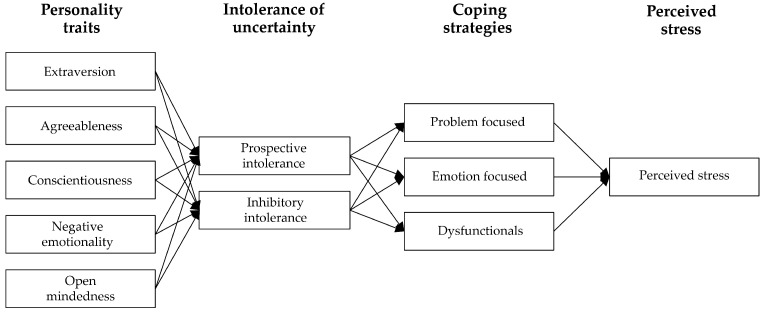
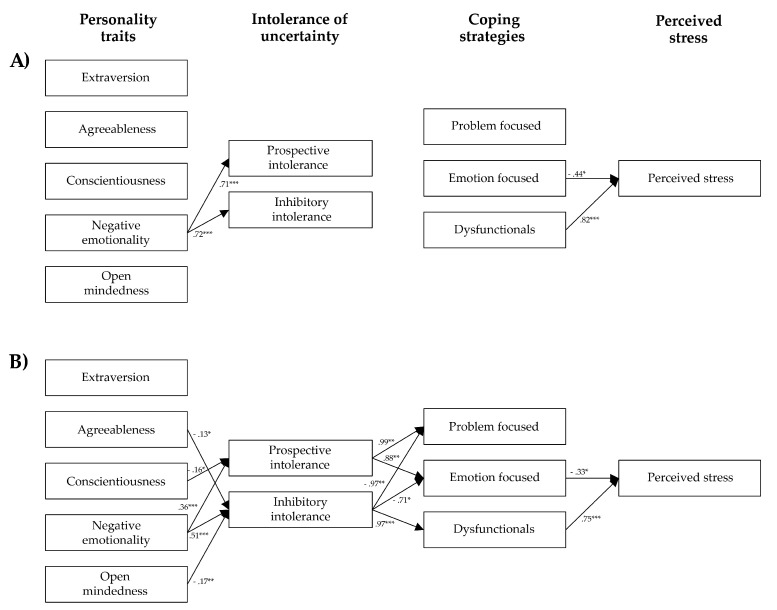
The COVID-19 pandemic represented a very difficult physical and psychological challenge for the general population and even more for healthcare workers (HCWs). The main aim of the present study is to test whether there were significant differences between frontline and non-frontline Italian HCWs concerning (a) personality traits, intolerance of uncertainty, coping strategies and perceived stress, and (b) the models of their associations. A total of 682 Italian HCWs completed a self-report questionnaire: 280 employed in COVID-19 wards and 402 in other wards. The analysis of variance omnibus test revealed significant differences between the two groups only for perceived stress, which was higher among the frontline. The multi-group path analysis revealed significant differences in the structure of the associations between the two groups of HCWs, specifically concerning the relations between: personality traits and intolerance of uncertainty; intolerance of uncertainty and coping strategies. Regarding the relation between coping strategies and stress no difference was identified between the two groups. In both of them, emotionally focused coping was negatively related with perceived stress, whereas dysfunctional coping was positively related with stress. These results could be useful in planning actions aiming to reduce stress and improve the effectiveness of HCWs’ interventions. Training programs aimed to provide HCWs with a skillset to tackle uncertain and stressful circumstances could represent an appropriate support to develop a preventive approach during outbreaks.
Overview
CoChat Summary
## TL;DR
This study of 682 Italian doctors and nurses found that frontline HCWs reported higher perceived stress than non-frontline HCWs, but the two groups did not differ in personality traits, intolerance of uncertainty, or coping strategies. A multi-group path analysis showed that the structure of associations differed by frontline status, especially for links between personality traits and intolerance of uncertainty and between intolerance of uncertainty and coping strategies.
## Key findings
- The sample included 682 Italian HCWs: 280 worked in COVID-19 wards (frontline) and 402 worked in other wards; 41.06% were frontline and 58.94% non-frontline.
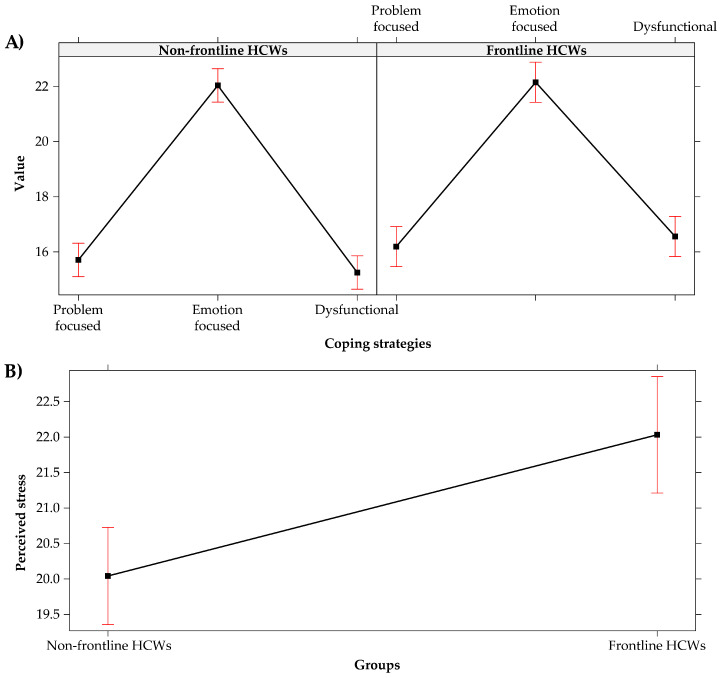
- Frontline HCWs had higher perceived stress than non-frontline HCWs: M = 22.032 (SD = 8.649) vs M = 20.042 (SD = 8.119), with a significant difference, F(1, 680) = 9.394, p = 0.002, Cohen’s d = 0.240.
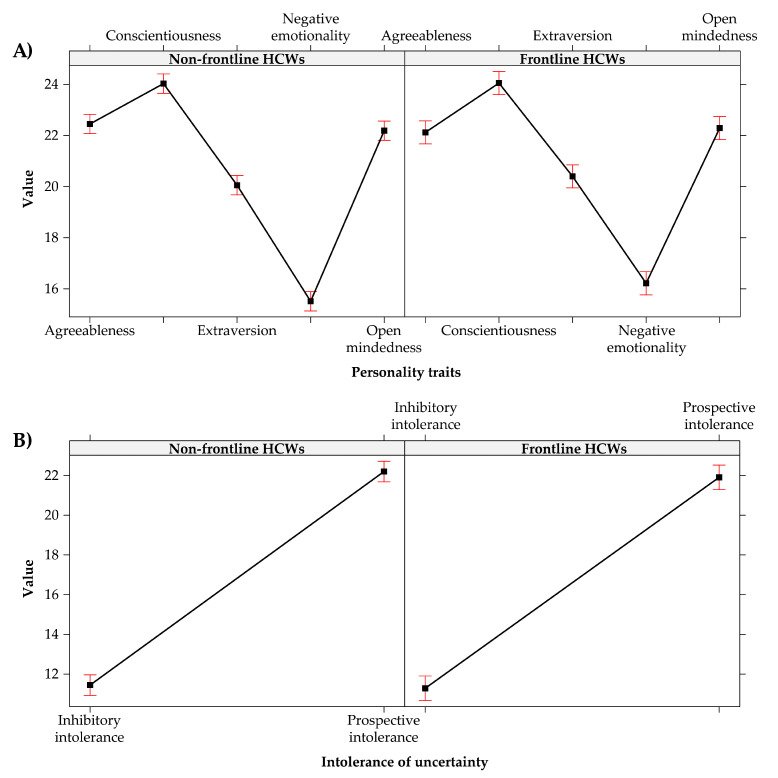
- No significant group differences were found for personality traits, intolerance of uncertainty, or coping strategies.
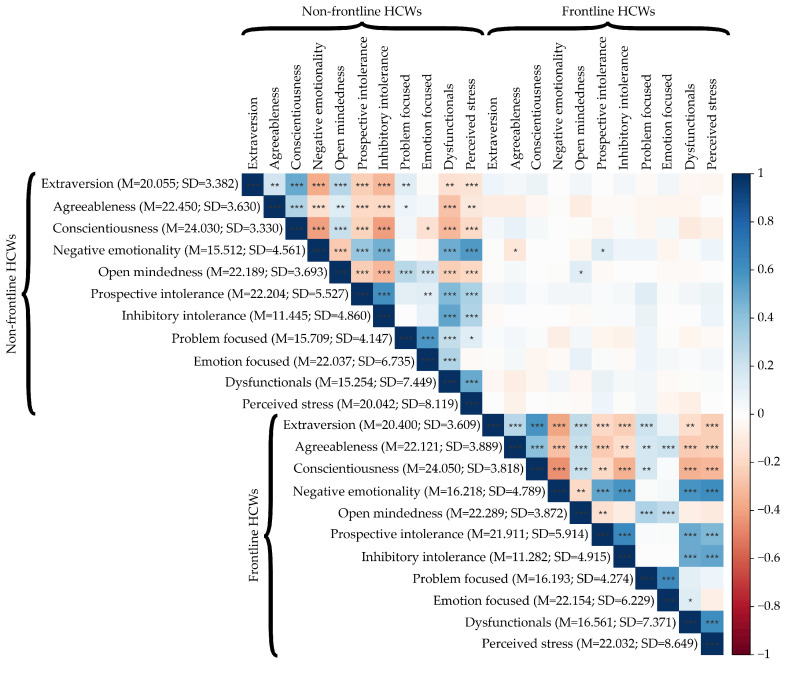
- In both groups, emotion-focused coping was negatively related to perceived stress, while dysfunctional coping was positively related to stress; problem-focused coping was not related to stress reduction.
- In the path model, neuroticism/negative emotionality was positively related to both prospective and inhibitory intolerance of uncertainty in both groups, but other trait–uncertainty links appeared only in the non-frontline group: conscientiousness was negatively related to prospective intolerance, and agreeableness and open-mindedness were negatively related to inhibitory intolerance.
## Methods
- Cross-sectional online survey of Italian HCWs (nurses and physicians) conducted from May 15 to July 30, 2020, during the first wave of COVID-19; snowball sampling was used.
- Measures included the BFI-2-S (personality traits), IUS-12 (intolerance of uncertainty), Brief-COPE (coping strategies), and IPSS-10 (perceived stress), plus demographic and work-related questions.
- Analysis used descriptive statistics, linear mixed models/linear models to compare frontline vs non-frontline groups, and a multi-group path analysis in lavaan with a DWLS estimator.
## Limitations
- The paper states that the study used self-report measures, a non-probabilistic sample, and a cross-sectional design, which may introduce bias and limit causal inference.
- The authors note that patient severity was not specified, and several variables were not considered, including years of service, age, medical specialization, and gender.
- Evident from the text: doctors and nurses were not randomly assigned to workplaces, so frontline vs non-frontline differences may reflect pre-existing workplace selection rather than exposure alone.
Model-written summary. Check it against the paper before relying on it.
Integrity signals
Registry
Cites
Statistics
Figures
Verification
Claims the paper makes
3 Valid · 0 Not valid · 15 Not checked · 48 Own results and interpretations
The cited sources support only part of this claim — read each source’s verdict below.
In the paper
“Consistently with the results of many studies on the psychological impact of past pandemics on health professionals [14,15,16], the literature published until now about COVID-19 revealed that HCWs are at particular risk of adverse psychological outcomes, i.e., of developing more severe mental symptoms, including stress, anxiety, depression, distress, insomnia, emotional exhaustion, burnout, as wel”
§ Associations between Personality Traits, Intolerance of Uncertainty, Coping Strategies, and Stress in Italian Frontline and Non-Frontline HCWs during the COVID-19 Pandemic—A Multi-Group Path-Analysis > 1. Introduction
What the sources say
- Supportedcites [14] Chong M.Y. Wang W.C. Hsieh W.C. Lee C.Y. Chiu N.M. Yeh W.C. Huang T.L. Wen J.H. Chen C.L. Psychological impact of severe acute respiratory syndrome on health workers in a tertiary hospital Br. J. Psychiatry 2004 185 127 133 10.1192/bjp.185.2.127 15286063 source
The cited paper is a study of the psychological impact of the SARS outbreak on health workers, matching the citing sentence’s reference to studies of past outbreaks. Its Psychiatric morbidity section (p. 5) reports anxiety, depression, stress and a high rate of psychiatric symptoms. The sentence attributes the COVID-19 findings to later literature, not to this SARS study. (LLM, conf=0.94)
- Not checked yetcites [15] Lee A.M. Wong J.G. McAlonan G.M. Cheung V. Cheung C. Sham P.C. Chu C.M. Wong P.C. Tsang K. Chua S.E. Stress and psychological distress among SARS survivors 1 year after the outbreak Can. J. Psychiatry 2007 52 233 240 10.1177/070674370705200405 17500304 source
- Not checked yetcites [16] Wu P. Fang Y. Guan Z. Fan B. Kong J. Yao Z. Liu X. Fuller C.J. Susser E. Lu J. The psychological impact of the SARS epidemic on hospital employees in China: Exposure, risk perception, and altruistic acceptance of risk Can. J. Psychiatry 2009 54 302 311 10.1177/070674370905400504 19497162 PMC3780353 source
- Partly supportedcites [17] Cabarkapa S. Nadjidai S.E. Murgier J. Ng C.H. The psychological impact of COVID-19 and other viral epidemics on frontline healthcare workers and ways to address it: A rapid systematic review Brain Behav. Immun. Health 2020 100144 10.1016/j.bbih.2020.100144 32959031 PMC7494453 sourceExperimental — accuracy not yet measured
The Results section (page unavailable) reports COVID-19-related stress, anxiety, depression, distress, insomnia and burnout among HCWs, including comparisons showing higher symptoms in HCWs than in non-HCWs. It reports post-traumatic stress symptoms during COVID-19, but the explicit PTSD diagnoses cited are from earlier outbreaks; it does not specifically report emotional exhaustion. Those distinctions limit support for the full list as stated. (LLM, conf=0.84)
- Partly supportedcites [18] Ahn M.H. Shin Y.W. Kim J.H. Kim H.J. Lee K.U. Chung S. High Work-related Stress and Anxiety Response to COVID-19 among Healthcare Workers in South Korea SAVE Study 2020 10.31234/osf.io/9nxth PMC8544732 34478401 sourceExperimental — accuracy not yet measured
The Introduction (page not provided) reports depression, anxiety, and stress among healthcare workers during COVID-19, and the Discussion reports elevated symptoms among nursing professionals. The Introduction links insomnia, burnout, and post-traumatic stress disorder to earlier outbreaks, not specifically to COVID-19; the paper does not establish emotional exhaustion as a COVID-19 outcome. (LLM, conf=0.87)
- Partly supportedcites [19] Barello S. Palamenghi L. Graffigna G. Burnout and somatic symptoms among frontline healthcare professionals at the peak of the Italian COVID-19 pandemic Psychiatry Res. 2020 290 113129 10.1016/j.psychres.2020.113129 32485487 PMC7255285 sourceExperimental — accuracy not yet measured
The Methods and findings section (page not available) reports elevated emotional exhaustion, burnout measures, and difficulty falling asleep among frontline Italian healthcare workers. The Discussions section describes substantial psychological pressure and risk of negative health consequences. The paper does not establish the full listed range of outcomes—including anxiety, depression, and post-traumatic stress disorder—or findings for HCWs generally. (LLM, conf=0.88)
- Partly supportedcites [20] Ricci-Cabello I. Meneses-Echavez J.F. Serrano-Ripoll M.J. Fraile-Navarro D. Fiol-Roque M.A. Moreno G.P. Castro A. Ruiz-Pérez I. Campos R.Z. Gonçalves-Bradley D. Impact of viral epidemic outbreaks on mental health of healthcare workers: A rapid systematic review and meta-analysis J. Affect. Disord. 2020 277 347 357 10.2139/ssrn.3569883 32861835 PMC7443314 sourceExperimental — accuracy not yet measured
The Results (Prevalence of mental health problems; page unavailable) report stress, anxiety, depression, burnout and PTSD among frontline healthcare workers during viral outbreaks; the study-characteristics table also lists insomnia. About half the reviewed studies concerned COVID-19, but the reported prevalence combines outbreaks, and the copy does not specifically report emotional exhaustion or establish the full list of outcomes for COVID-19 alone. (LLM, conf=0.86)
- Partly supportedcites [21] Du J. Dong L. Wang T. Yuan C. Fu R. Zhang L. Bo L. Zhang M. Yin Y. Qin J. Psychological symptoms among frontline healthcare workers during COVID-19 outbreak in Wuhan Gen. Hosp. Psychiatry 2020 67 144 145 10.1016/j.genhosppsych.2020.03.011 32381270 PMC7194721 sourceExperimental — accuracy not yet measured
The discussion reports moderate to severe stress and elevated anxiety and depression among frontline healthcare workers in Wuhan, and identifies them as a high-risk group for depression and anxiety. The results also report poor sleep quality, but our copy does not establish insomnia, emotional exhaustion, burnout, or post-traumatic stress disorder; its findings concern frontline workers in Wuhan rather than healthcare workers generally. (LLM, conf=0.88)
- Partly supportedcites [22] Giusti E.M. Pedroli E. D’Aniello G.E. Badiale C.S. Pietrabissa G. Manna G. Badiale M.S. Riva G. Castelnuovo G. Molinari E. The psychological impact of the COVID-19 outbreak on health professionals: A cross-sectional study Front. Psychol. 2020 11 1684 10.3389/fpsyg.2020.01684 32754102 PMC7366071 sourceExperimental — accuracy not yet measured
The Results and Discussion report anxiety, depression, stress, emotional exhaustion, burnout, and post-traumatic stress symptoms among health professionals during COVID-19; the Discussion also reports a review finding insomnia in this population. The paper does not establish that participants had post-traumatic stress disorder: it reports post-traumatic stress scores and symptoms, not PTSD diagnoses. (LLM, conf=0.85)
- Not checked yetcites [23] Guo J. Liao L. Wang B. Li X. Guo L. Tong Z. Guan Q. Zhou M. Wu Y. Zhang J. Psychological effects of COVID-19 on hospital staff: A national cross-sectional survey in mainland China Vasc. Investig. Ther. 2021 4 6 11 Available online: https://www.vitonline.org/article.asp?issn=2589-9686;year=2021;volume=4;issue=1;spage=6;epage=11;aulast=Guo (accessed on 23 July 2021) 10.4103/VIT-2 source
boostedstates an association- Asserted: passes — The authors put it forward as true.
- Checkable: passes — It can be checked against evidence.
- Load-bearing: passes — The paper’s conclusions depend on it.
- Based: passes — The paper gives a reason why it holds.
- Supported
A result the paper reports from its own data — it cites no other source for it, so there is none to check. The quote shows it is in the paper.
In the paper
“Regarding the relation between coping strategies and stress no difference was identified between the two groups.”
- Also stated in: § 1.3. Current Study · plain
“Regarding the relations between coping strategies and stress, no difference was identified.”
§ Associations between Personality Traits, Intolerance of Uncertainty, Coping Strategies, and Stress in Italian Frontline and Non-Frontline HCWs during the COVID-19 Pandemic—A Multi-Group Path-Analysis > Abstract The COVID-19 pandemic represented a very difficult physical and psychological challenge for the general population and even more for healthcare workers (HCWs). The main aim of the present study is to test whether there were significant differences between frontline and non-frontline Italian HCWs concerning (a) personality traits, intolerance of uncertainty, coping strategies and perceived stress, and (b) the models of their associations. A total of 682 Italian HCWs completed a self-report questionnaire: 280 employed in COVID-19 wards and 402 in other wards. The analysis of variance omnibus test revealed significant differences between the two groups only for perceived stress, which was higher among the frontline. The multi-group path analysis revealed significant differences in the structure of the associations between the two groups of HCWs, specifically concerning the relations between: personality traits and intolerance of uncertainty; intolerance of uncertainty and coping strategies. Regarding the relation between coping strategies and stress no difference was identified between the two groups. In both of them, emotionally focused coping was negatively related with perceived stress, whereas dysfunctional coping was positively related with stress. These results could be useful in planning actions aiming to reduce stress and improve the effectiveness of HCWs’ interventions. Training programs aimed to provide HCWs with a skillset to tackle uncertain and stressful circumstances could represent an appropriate support to develop a preventive approach during outbreaks.
plain- Asserted: passes — The authors put it forward as true.
- Checkable: passes — It can be checked against evidence.
- Load-bearing: passes — The paper’s conclusions depend on it.
- Based: passes — The paper gives a reason why it holds.
- Also stated in: § 1.3. Current Study · plain
A result the paper reports from its own data — it cites no other source for it, so there is none to check. The quote shows it is in the paper.
In the paper
“The multi-group path analysis revealed significant differences in the structure of the associations between the two groups of HCWs, specifically concerning the relations between: personality traits and intolerance of uncertainty; intolerance of uncertainty and coping strategies.”
- Also stated in: § 1.3. Current Study · plain
“The analyses revealed significant differences both in the levels of perceived stress, which were higher in the frontline HCWs than in the non-frontline, and in the structure of the associations between the two groups, specifically concerning the relations between: personality traits and intolerance of uncertainty; intolerance of uncertainty and coping strategies.”
§ Associations between Personality Traits, Intolerance of Uncertainty, Coping Strategies, and Stress in Italian Frontline and Non-Frontline HCWs during the COVID-19 Pandemic—A Multi-Group Path-Analysis > Abstract The COVID-19 pandemic represented a very difficult physical and psychological challenge for the general population and even more for healthcare workers (HCWs). The main aim of the present study is to test whether there were significant differences between frontline and non-frontline Italian HCWs concerning (a) personality traits, intolerance of uncertainty, coping strategies and perceived stress, and (b) the models of their associations. A total of 682 Italian HCWs completed a self-report questionnaire: 280 employed in COVID-19 wards and 402 in other wards. The analysis of variance omnibus test revealed significant differences between the two groups only for perceived stress, which was higher among the frontline. The multi-group path analysis revealed significant differences in the structure of the associations between the two groups of HCWs, specifically concerning the relations between: personality traits and intolerance of uncertainty; intolerance of uncertainty and coping strategies. Regarding the relation between coping strategies and stress no difference was identified between the two groups. In both of them, emotionally focused coping was negatively related with perceived stress, whereas dysfunctional coping was positively related with stress. These results could be useful in planning actions aiming to reduce stress and improve the effectiveness of HCWs’ interventions. Training programs aimed to provide HCWs with a skillset to tackle uncertain and stressful circumstances could represent an appropriate support to develop a preventive approach during outbreaks.
plainstates an association- Asserted: passes — The authors put it forward as true.
- Checkable: passes — It can be checked against evidence.
- Load-bearing: passes — The paper’s conclusions depend on it.
- Based: passes — The paper gives a reason why it holds.
- Also stated in: § 1.3. Current Study · plain
A result the paper reports from its own data — it cites no other source for it, so there is none to check. The quote shows it is in the paper.
In the paper
“The Chi-squared difference test between the multi-group unconstrained and constrained models revealed significant differences (see Table 2) between Italian frontline and non-frontline HCWs concerning the associations (structure of the relations) among personality traits, intolerance of uncertainty, coping strategies, and perceived stress.”
§ Associations between Personality Traits, Intolerance of Uncertainty, Coping Strategies, and Stress in Italian Frontline and Non-Frontline HCWs during the COVID-19 Pandemic—A Multi-Group Path-Analysis > 3. Results > 3.3. Multi-Group Path-Analysis
plainstates an association- Asserted: passes — The authors put it forward as true.
- Checkable: passes — It can be checked against evidence.
- Load-bearing: passes — The paper’s conclusions depend on it.
- Based: passes — The paper gives a reason why it holds.
A result the paper reports from its own data — it cites no other source for it, so there is none to check. The quote shows it is in the paper.
In the paper
“in the non-frontline one, while prospective intolerance of uncertainty was positively related to problem and emotion focused coping strategies (i.e., the more prospective intolerance of uncertainty, the more problem and emotion focused coping strategies)”
§ Associations between Personality Traits, Intolerance of Uncertainty, Coping Strategies, and Stress in Italian Frontline and Non-Frontline HCWs during the COVID-19 Pandemic—A Multi-Group Path-Analysis > 3. Results > 3.3. Multi-Group Path-Analysis
plainstates an association- Asserted: passes — The authors put it forward as true.
- Checkable: passes — It can be checked against evidence.
- Load-bearing: passes — The paper’s conclusions depend on it.
- Based: passes — The paper gives a reason why it holds.
22 more claims
Create a free account to see all 66 claims and to verify the 43 references still open.
- Probably not a substantial claim. 26
- It may state two separate claims as one. 21
- The quote only partly states this claim. 1
Claims other papers make about this one
Each is checked against this paper’s own text: does it say what the citing paper says it does?
The cited source says what the claim attributes to it.
In the citing paper
“In this scenario, stress related to the pandemic was affected by both dispositional and behavioral dimensions, and namely by variables like personality factors, intolerance to uncertainty, and coping strategies [16,17,18].”
From Impact of Stress during COVID-19 Pandemic in Italy: A Study on Dispositional and Behavioral Dimensions for Supporting Evidence-Based Targeted Strategies (2024) · cites this paper as [16]
Statistics that don’t add up
Each reported p-value recomputed from its test statistic and degrees of freedom, each partial η² from its F, and each ratio, mean difference or B printed with a p checked against its own confidence interval.
Rated minor: it would not touch a result — a value no result rests on, a p-value that stays on the same side of the significance level, or a conflict that is clerical, resolved elsewhere in the paper, or outside its own findings.
In the paper
“F(1, 1360) = 2.253, p = 0.106”
§ Associations between Personality Traits, Intolerance of Uncertainty, Coping Strategies, and Stress in Italian Frontline and Non-Frontline HCWs during the COVID-19 Pandemic—A Multi-Group Path-Analysis > 3. Results > 3.2. Analysis of Variance
Reported p = .106 · recomputed p = .134
Statistics recomputed
Every reported test result, recomputed from its test statistic and degrees of freedom. A result shows as not adding up only once an independent check has confirmed it.
- Doesn’t add upF(1, 1360) = 2.253reported p = .106 · recomputed p = .134
“F(1, 1360) = 2.253, p = .106”
- ConsistentF(4, 2720) = 1.664reported p = .155 · recomputed p = .156
“F(4, 2720) = 1.664, p = .155”
- ConsistentF(1, 680) = 0.131reported p = .718 · recomputed p = .718
“F(1, 680) = 0.131, p = .718”
- ConsistentF(1, 680) = 9.394reported p = .002 · recomputed p = .002
“F(1, 680) = 9.394, p = .002”
Self-check
Percentages, sums and reported differences re-computed from the paper’s own numbers.
Each contradiction between two passages listed here was confirmed by an independent check.
Rated minor: it would not touch a result — a value no result rests on, a p-value that stays on the same side of the significance level, or a conflict that is clerical, resolved elsewhere in the paper, or outside its own findings.
In the paper
§ Associations between Personality Traits, Intolerance of Uncertainty, Coping Strategies, and Stress in Italian Frontline and Non-Frontline HCWs during the COVID-19 Pandemic—A Multi-Group Path-Analysis > 2. Methods > 2.2. Measures
“We considered (throughout the article) as fit indexes the comparative fit index (CFI), the TLI, the RMSEA, and the SRMR, with CFI and TLI ≥ 0.90, RMSEA ≤ 0.08, and SRMR ≤ 0.06 as threshold values [85].”
§ Associations between Personality Traits, Intolerance of Uncertainty, Coping Strategies, and Stress in Italian Frontline and Non-Frontline HCWs during the COVID-19 Pandemic—A Multi-Group Path-Analysis > 2. Methods > 2.2. Measures
“The CFA outcomes supported the hypothesized structure: all standardized factor loadings resulted statistically significant (with values between 0.420 and 0.914), and the goodness of fit indexes acceptable (CFI = 0.911; TLI = 0.902; RMSEA = 0.079; SRMR = 0.088).”
Citations
Cites
A Global Measure of Perceived Stress
Cohen, S., Kamarck, T., & Mermelstein, R. (1983) · Journal of Health and Social Behavior · doi:10.2307/2136404 · Cited by 32,807 · cited 1×
“Although its original version consists of 14 items [92], the most commonly used is that consisting of”
Methodlavaan : An R Package for Structural Equation Modeling
Rosseel, Y. (2012) · Journal of Statistical Software · doi:10.18637/jss.v048.i02 · Cited by 27,955 · cited 1×
“A multi-group path-analysis was performed, using lavaan R software package [97], in order to test whether having worked in a dedicated COVID ward or not during the first wave of the pandemic in Italy would have determined differences in the associations (i.”
MethodAssessing coping strategies: A theoretically based approach.
Carver, C. S., Scheier, M. F., & Weintraub, J. K. (1989) · Journal of Personality and Social Psychology · doi:10.1037/0022-3514.56.2.267 · Cited by 11,507 · cited 1×
“The Italian HCWs’ coping strategies were evaluated using the Brief-COPE [66]; it is the short version of the original COPE (Coping Orientation to Problems Experienced) inventory [65].”
MethodJudgment under Uncertainty: Heuristics and Biases
(1982) · doi:10.1017/cbo9780511809477 · Cited by 8,240
Lai, J., Ma, S., Wang, Y., Cai, Z., Hu, J., Wei, N., Wu, J., Du, H., Chen, T., Li, R., et al. (2020) · JAMA Network Open · doi:10.1001/jamanetworkopen.2020.3976 · Cited by 8,015 · cited 1×
“Specifically, during the outbreak in 2020, both Italian [100,101] and Chinese [21] frontline HCWs reported high levels of perceived stress and were more exposed to psychological burden than second line HCWs in terms of anxiety, depression, insomnia, and distress [25].”
BackgroundYou want to measure coping but your protocol’ too long: Consider the brief cope
Carver, C. S. (1997) · International Journal of Behavioral Medicine · doi:10.1207/s15327558ijbm0401_6 · Cited by 7,361 · cited 8×
“In order to assess the goodness of fit indexes of the factor structure of the Italian version of the Brief-COPE scale, we performed a Confirmatory Factor Analysis (CFA).”
BackgroundMethodInfluentialAn Analysis of Coping in a Middle-Aged Community Sample
Folkman, S., & Lazarus, R. S. (1980) · Journal of Health and Social Behavior · doi:10.2307/2136617 · Cited by 6,328 · cited 1×
“, aiming to reduce or manage emotions related to the stressful situation) [63,64]; approach, (i.”
BackgroundJudgment Under Uncertainty: Heuristics and Biases.
Shafer, G. R., Kahnerman, D., Slovic, P., & Tversky, A. (1984) · Journal of the American Statistical Association · doi:10.2307/2288362 · Cited by 5,657
The structure of phenotypic personality traits.
Goldberg, L. R. (1993) · American Psychologist · doi:10.1037/0003-066x.48.1.26 · Cited by 4,816
(1988) · Cited by 4,111
On the Self-Regulation of Behavior
Carver, C. S., & Scheier, M. F. (1998) · Cambridge University Press eBooks · doi:10.1017/cbo9781139174794 · Cited by 4,110 · cited 2×
“, characterized by more probability of not obtaining a result) [67,68]).”
BackgroundGigerenzer, G., & Gaissmaier, W. (2011) · Annual Review of Psychology · doi:10.1146/annurev-psych-120709-145346 · Cited by 4,037 · cited 1×
“This may have led the frontline HCWs to resort more frequently to shortcuts in thinking (heuristics) [115,116], which may have had some influence on the associations between the variables we examined, perhaps even inhibiting or reducing the strength of dispositional traits and the associations between them.”
BackgroundPappa, S., Ntella, V., Giannakas, T., Giannakoulis, V. G., Papoutsi, E., & Katsaounou, P. (2020) · Brain Behavior and Immunity · doi:10.1016/j.bbi.2020.05.026 · Cited by 3,617
On the Self-Regulation of Behavior
Wright, B. R. E., Carver, C. S., & Scheier, M. F. (2000) · Contemporary Sociology · doi:10.2307/2654424 · Cited by 3,327
Appraisal, coping, health status, and psychological symptoms
Folkman, S., Lazarus, R. S., Gruen, R. J., & DeLongis, A. (1986) · Journal of Personality and Social Psychology · doi:10.1037/0022-3514.50.3.571 · Cited by 2,917
Fearing the unknown: A short version of the Intolerance of Uncertainty Scale
Carleton, R. N., Norton, M. A. P. J., & Asmundson, G. J. G. (2007) · Journal of Anxiety Disorders · doi:10.1016/j.janxdis.2006.03.014 · Cited by 2,288 · cited 4×
“IUS-12 is a two-factor scale that represents two different sub-dimensions of intolerance toward uncertainty: prospective and inhibitory [49,87].”
BackgroundMethodInfluentialSoto, C. J., & John, O. P. (2017) · Journal of Personality and Social Psychology · doi:10.1037/pspp0000096 · Cited by 2,075 · cited 5×
“The BFI-2 “operationalizes the hierarchical conceptualization of personality structure by assessing the Big Five domains and 15 facets: Extraversion (with facets of Sociability, Assertiveness, and Energy Level), Agreeableness (Compassion, Respectfulness, and Trust), Conscientiousness (Organization, Productiveness, and…”
MethodInfluentialFreeston, M. H., Rhéaume, J., Letarte, H., Dugas, M. J., & Ladouceur, R. (1994) · Personality and Individual Differences · doi:10.1016/0191-8869(94)90048-5 · Cited by 1,731
Ho, C. S., Chee, C. Y., & Ho, R. C. (2020) · Annals of the Academy of Medicine, Singapore · doi:10.47102/annals-acadmedsg.202043 · Cited by 1,699
Zhang, W.-R., Wang, K., Yin, L., Zhao, W.-F., Xue, Q., Peng, M., Min, B.-Q., Tian, Q., Leng, H.-X., Du, J.-L., et al. (2020) · Psychotherapy and Psychosomatics · doi:10.1159/000507639 · Cited by 1,690
Wu, P., Fang, Y., Guan, Z., Fan, B., Kong, J., Yao, Z., Liu, X., Fuller, C. J., Susser, E., Lu, J., et al. (2009) · The Canadian Journal of Psychiatry · doi:10.1177/070674370905400504 · Cited by 1,647
Luo, M., Guo, L., Yu, M., Jiang, W., & Wang, H. (2020) · Psychiatry Research · doi:10.1016/j.psychres.2020.113190 · Cited by 1,615
Relations between personality and coping: A meta-analysis.
Connor-Smith, J. K., & Flachsbart, C. (2007) · Journal of Personality and Social Psychology · doi:10.1037/0022-3514.93.6.1080 · Cited by 1,453 · cited 1×
“, neuroticism) positively correlate with emotion-focused and avoidant (dysfunctional) coping strategies; on the contrary, extraversion positively correlates with problem-focused and emotional-focused strategies [69].”
BackgroundRossi, R., Socci, V., Talevi, D., Mensi, S., Niolu, C., Pacitti, F., Di Marco, A., Rossi, A., Siracusano, A., & Di Lorenzo, G. (2020) · Frontiers in Psychiatry · doi:10.3389/fpsyt.2020.00790 · Cited by 1,448
Patients with mental health disorders in the COVID-19 epidemic
Yao, H., Chen, J.-H., & Xu, Y.-F. (2020) · The Lancet Psychiatry · doi:10.1016/s2215-0366(20)30090-0 · Cited by 1,393
Mental health problems faced by healthcare workers due to the COVID-19 pandemic–A review
Spoorthy, M. S., Pratapa, S. K., & Mahant, S. (2020) · Asian Journal of Psychiatry · doi:10.1016/j.ajp.2020.102119 · Cited by 1,364
Ho, C. S. H., Chee, C. Y., & Ho, R. (2020) · PubMed · Cited by 1,354
Mental health in the COVID-19 pandemic
Cullen, W., Gulati, G., & Kelly, B. D. (2020) · QJM: An International Journal of Medicine · doi:10.1093/qjmed/hcaa110 · Cited by 1,275
Stress and psychological distress among SARS survivors 1 year after the outbreak
Lee, A. M., Wong, J. G., McAlonan, G. M., Cheung, V., Cheung, C., Sham, P. C., Chu, C.-M., Wong, P.-C., Tsang, K. W., & Chua, S. E. (2007) · The Canadian Journal of Psychiatry · doi:10.1177/070674370705200405 · Cited by 1,195
Coronaphobia: Fear and the 2019-nCoV outbreak
Asmundson, G. J. G., & Taylor, S. (2020) · Journal of Anxiety Disorders · doi:10.1016/j.janxdis.2020.102196 · Cited by 1,103
Rossi, R., Socci, V., Pacitti, F., Di Lorenzo, G., Di Marco, A., Siracusano, A., & Rossi, A. (2020) · JAMA Network Open · doi:10.1001/jamanetworkopen.2020.10185 · Cited by 1,086
Hao, F., Tan, W., Jiang, L., Zhang, L., Zhao, X., Zou, Y., Hu, Y., Luo, X., Jiang, X., McIntyre, R. S., et al. (2020) · Brain, Behavior, and Immunity · doi:10.1016/j.bbi.2020.04.069 · Cited by 968
Short and extra-short forms of the Big Five Inventory–2: The BFI-2-S and BFI-2-XS
Soto, C. J., & John, O. P. (2017) · Journal of Research in Personality · doi:10.1016/j.jrp.2017.02.004 · Cited by 927 · cited 3×
“Big Five Inventory, Short Version (BFI-2-S) The Italian HCWs’ personality trait domains were assessed using the Italian translation of the 30-item BFI-2-S [80]; it is a short version of the 60-item BFI-2 [81], which, in its turn, represents a revision of the Big Five Inventory (BFI, [82–84]).”
MethodHuang, L., Lei, W., Xu, F., Liu, H., & Yu, L. (2020) · PLOS ONE · doi:10.1371/journal.pone.0237303 · Cited by 827 · cited 1×
“[75], comparing nurses with nursing students, found that the former use more problem-focused coping strategies than the latter.”
BackgroundMental health outcomes of the CoViD-19 pandemic
Talevi, D., Socci, V., Carai, M., Carnaghi, G., Faleri, S., Trebbi, E., di Bernardo, A., Capelli, F., & Pacitti, F. (2020) · Rivista di Psichiatria · doi:10.1708/3382.33569 · Cited by 821
Bakioğlu, F., Korkmaz, O., & Ercan, H. (2021) · International Journal of Mental Health and Addiction · doi:10.1007/s11469-020-00331-y · Cited by 812
Shi, L., Lu, Z.-A., Que, J.-Y., Huang, X.-L., Liu, L., Ran, M.-S., Gong, Y.-M., Yuan, K., Yan, W., Sun, Y.-K., et al. (2020) · JAMA Network Open · doi:10.1001/jamanetworkopen.2020.14053 · Cited by 804
Preti, E., Di Mattei, V., Perego, G., Ferrari, F., Mazzetti, M., Taranto, P., Di Pierro, R., Madeddu, F., & Calati, R. (2020) · Current Psychiatry Reports · doi:10.1007/s11920-020-01166-z · Cited by 739
TAM, C. W. C., PANG, E. P. F., LAM, L. C. W., & CHIU, H. F. K. (2004) · Psychological Medicine · doi:10.1017/s0033291704002247 · Cited by 735 · cited 1×
“This finding is consistent with the results of previous studies on both past epidemics [99] and the COVID-19 pandemic [17].”
ResultPsychological impact of severe acute respiratory syndrome on health workers in a tertiary hospital
Chong, M.-Y., Wang, W.-C., Hsieh, W.-C., Lee, C.-Y., Chiu, N.-M., Yeh, W.-C., Huang, T.-L., Wen, J.-K., & Chen, C.-L. (2004) · British Journal of Psychiatry · doi:10.1192/bjp.185.2.127 · Cited by 724
Barello, S., Palamenghi, L., & Graffigna, G. (2020) · Psychiatry Research · doi:10.1016/j.psychres.2020.113129 · Cited by 713
The COVID-19 pandemic and mental health impacts
Usher, K., Durkin, J., & Bhullar, N. (2020) · International Journal of Mental Health Nursing · doi:10.1111/inm.12726 · Cited by 674 · cited 1×
“Many research studies, focused on the impacts of COVID-19 on mental health [98], have revealed that HCWs, involved in fronting this pandemic as those engaged during the past ones [14–16], were at particular risk of developing severe mental symptoms due to the very demanding [24], uncertain [44], and stressful situatio…”
BackgroundCOVID stress syndrome: Concept, structure, and correlates
Taylor, S., Landry, C. A., Paluszek, M. M., Fergus, T. A., McKay, D., & Asmundson, G. J. G. (2020) · Depression and Anxiety · doi:10.1002/da.23071 · Cited by 673 · cited 1×
“[72], for example, revealed that during the lockdown, people have found many different ways of making self-isolation more tolerable, which include watching TV or movies.”
BackgroundCarleton, R. N. (2012) · Expert Review of Neurotherapeutics · doi:10.1586/ern.12.82 · Cited by 665
Carmassi, C., Foghi, C., Dell'Oste, V., Cordone, A., Bertelloni, C. A., Bui, E., & Dell'Osso, L. (2020) · Psychiatry Research · doi:10.1016/j.psychres.2020.113312 · Cited by 607
Moccia, L., Janiri, D., Pepe, M., Dattoli, L., Molinaro, M., De Martin, V., Chieffo, D., Janiri, L., Fiorillo, A., Sani, G., et al. (2020) · Brain, Behavior, and Immunity · doi:10.1016/j.bbi.2020.04.048 · Cited by 605
Serrano-Ripoll, M. J., Meneses-Echavez, J. F., Ricci-Cabello, I., Fraile-Navarro, D., Fiol-deRoque, M. A., Pastor-Moreno, G., Castro, A., Ruiz-Pérez, I., Zamanillo Campos, R., & Gonçalves-Bradley, D. C. (2020) · Journal of Affective Disorders · doi:10.1016/j.jad.2020.08.034 · Cited by 592
Zhu, Z., Xu, S., Wang, H., Liu, Z., Wu, J., Li, G., Miao, J., Zhang, C., Yang, Y., Sun, W., et al. (2020) · eClinicalMedicine · doi:10.1016/j.eclinm.2020.100443 · Cited by 591
Satici, B., Saricali, M., Satici, S. A., & Griffiths, M. D. (2022) · International Journal of Mental Health and Addiction · doi:10.1007/s11469-020-00305-0 · Cited by 580
The psychological impact of the COVID-19 outbreak on health professionals: A cross-sectional study
Giusti, E. M., Pedroli, E., D'Aniello, G. E., Stramba Badiale, C., Pietrabissa, G., Manna, C., Stramba Badiale, M., Riva, G., Castelnuovo, G., & Molinari, E. (2020) · Frontiers in Psychology · doi:10.3389/fpsyg.2020.01684 · Cited by 533 · cited 6×
“Thus, the main aim of the present paper was to investigate, in a sample of 682 Italian doctors and nurses, whether specific job conditions, i.e., having worked in a dedicated COVID ward (280) or not (402) during the first wave of the pandemic in Italy, would have determined differences in the associations (i.e., in th…”
BackgroundInfluentialRettie, H., & Daniels, J. (2021) · American Psychologist · doi:10.1037/amp0000710 · Cited by 526 · cited 1×
“Instead, Rettie and Daniels [77], studying a sample of the general population during the COVID-19 pandemic, found that maladaptive coping strategies mediate the relationship between intolerance of uncertainty and distress.”
BackgroundCabarkapa, S., Nadjidai, S. E., Murgier, J., & Ng, C. H. (2020) · Brain, Behavior, & Immunity - Health · doi:10.1016/j.bbih.2020.100144 · Cited by 522 · cited 2×
“These adverse consequences regard specifically those working on the frontline [17] (i.”
BackgroundResultPsychological symptoms among frontline healthcare workers during COVID-19 outbreak in Wuhan
Du, J., Dong, L., Wang, T., Yuan, C., Fu, R., Zhang, L., Liu, B., Zhang, M., Yin, Y., Qin, J., et al. (2020) · General Hospital Psychiatry · doi:10.1016/j.genhosppsych.2020.03.011 · Cited by 518 · cited 1×
“Specifically, during the outbreak in 2020, both Italian [100,101] and Chinese [21] frontline HCWs reported high levels of perceived stress and were more exposed to psychological burden than second line HCWs in terms of anxiety, depression, insomnia, and distress [25].”
BackgroundHuman Behavior and Environment: Advances in Theory and Research Volume 2
(1977) · Springer eBooks · doi:10.1007/978-1-4684-0808-9 · Cited by 482
McEvoy, P. M., & Mahoney, A. E. J. (2012) · Behavior Therapy · doi:10.1016/j.beth.2011.02.007 · Cited by 468 · cited 1×
“The finding according to which negative emotionality (neuroticism) affects intolerance of uncertainty is in line with the results of much research, mainly concerning general population samples [49,59,102,103], also during the pandemic [104], according to which “poor emotional regulation skills contribute to intoleranc…”
ResultMeyer, B. (2001) · Journal of Psychopathology and Behavioral Assessment · doi:10.1023/a:1012731520781 · Cited by 428 · cited 1×
“, characterized by more probability of not obtaining a result) [67,68]).”
BackgroundBabore, A., Lombardi, L., Viceconti, M. L., Pignataro, S., Marino, V., Crudele, M., Candelori, C., Bramanti, S. M., & Trumello, C. (2020) · Psychiatry Research · doi:10.1016/j.psychres.2020.113366 · Cited by 427 · cited 1×
“Specifically, during the outbreak in 2020, both Italian [100,101] and Chinese [21] frontline HCWs reported high levels of perceived stress and were more exposed to psychological burden than second line HCWs in terms of anxiety, depression, insomnia, and distress [25].”
BackgroundMcEvoy, P. M., & Mahoney, A. E. J. (2011) · Journal of Anxiety Disorders · doi:10.1016/j.janxdis.2010.08.010 · Cited by 412 · cited 3×
“Intolerance of uncertainty can be defined as a dispositional fear of the unknown [46–48], which seems to be related to certain personality traits [49], specifically to neuroticism (or negative emotionality, which is one of the five personality traits identified by the BIG Five Model [50]; see Section 2.”
BackgroundResultInsomnia during the COVID-19 pandemic in a Greek population
Voitsidis, P., Gliatas, I., Bairachtari, V., Papadopoulou, K., Papageorgiou, G., Parlapani, E., Syngelakis, M., Holeva, V., & Diakogiannis, I. (2020) · Psychiatry Research · doi:10.1016/j.psychres.2020.113076 · Cited by 411
The Impact of the COVID-19 Pandemic on Cancer Patients
Al-Quteimat, O. M., & Amer, A. M. (2020) · American Journal of Clinical Oncology · doi:10.1097/coc.0000000000000712 · Cited by 398 · cited 1×
“, [6–9]) on patients suffering from mental disorders, it has been particularly challenging also for cancer patients, who are at a high risk of contracting the virus and of developing more severe complications compared to the general population [10].”
BackgroundTrumello, C., Bramanti, S. M., Ballarotto, G., Candelori, C., Cerniglia, L., Cimino, S., Crudele, M., Lombardi, L., Pignataro, S., Viceconti, M. L., et al. (2020) · International Journal of Environmental Research and Public Health · doi:10.3390/ijerph17228358 · Cited by 363 · cited 2×
“Similarly, also the second association we identified, according to which, on the contrary, dysfunctional coping strategies (behavioral disengagement, denial, self-blame, self-distraction, substance use) are linked to higher levels of perceived stress, is consistent with the results of many other studies [79,100,110],…”
BackgroundResultWang, H.-Y., Xia, Q., Xiong, Z.-Z., Li, Z.-X., Xiang, W.-Y., Yuan, Y.-W., Liu, Y.-Y., & Li, Z. (2020) · doi:10.1101/2020.03.27.20045807 · Cited by 347
Wang, H., Xia, Q., Xiong, Z., Li, Z., Xiang, W., Yuan, Y., Liu, Y., & Li, Z. (2020) · PLOS ONE · doi:10.1371/journal.pone.0233410 · Cited by 347
Intolerance of uncertainty, appraisals, coping, and anxiety: The case of the 2009 H 1 N 1 pandemic
Taha, S., Matheson, K., Cronin, T., & Anisman, H. (2014) · British Journal of Health Psychology · doi:10.1111/bjhp.12058 · Cited by 323 · cited 1×
“[76] in a general population sample during the H1N1 pandemic of 2009.”
BackgroundLiu, S., Lithopoulos, A., Zhang, C.-Q., Garcia-Barrera, M. A., & Rhodes, R. E. (2021) · Personality and Individual Differences · doi:10.1016/j.paid.2020.110351 · Cited by 321
Psychometric evaluation of three versions of the Italian Perceived Stress Scale
Mondo, M., Sechi, C., & Cabras, C. (2021) · Current Psychology · doi:10.1007/s12144-019-0132-8 · Cited by 246
Posttraumatic stress symptoms of health care workers during the corona virus disease 2019
Yin, Q., Sun, Z., Liu, T., Ni, X., Deng, X., Jia, Y., Shang, Z., Zhou, Y., & Liu, W. (2020) · Clinical Psychology & Psychotherapy · doi:10.1002/cpp.2477 · Cited by 237
Symptoms in Health Care Workers during the COVID-19 Epidemic. A Cross-Sectional Survey
Magnavita, N., Tripepi, G., & Di Prinzio, R. R. (2020) · International Journal of Environmental Research and Public Health · doi:10.3390/ijerph17145218 · Cited by 235
Gupta, S., & Sahoo, S. (2020) · General Psychiatry · doi:10.1136/gpsych-2020-100284 · Cited by 223 · cited 1×
“These negative psychological outcomes on HCWSs are undoubtedly related to the situation—that, specifically during the first wave of the virus spread, was in itself particularly demanding [24], stressful, and characterized by high levels of uncertainty—but probably also to more specific contextual conditions (first of…”
BackgroundEisenberg, S. A., Shen, B.-J., Schwarz, E. R., & Mallon, S. (2012) · Journal of Behavioral Medicine · doi:10.1007/s10865-011-9358-0 · Cited by 222 · cited 1×
“Humor and religion are excluded from these styles, since, according to [90], they are both adaptive and problematic components.”
BackgroundLambert, V. A., Lambert, C. E., & Ito, M. (2004) · International Journal of Nursing Studies · doi:10.1016/s0020-7489(03)00080-4 · Cited by 221
Vagni, M., Maiorano, T., Giostra, V., & Pajardi, D. (2020) · Frontiers in Psychology · doi:10.3389/fpsyg.2020.566912 · Cited by 210
The association of personality traits and coping styles according to stress level
Mazaheri, M., Afshar, H., Roohafza, H., Keshteli, A., Feizi, A., & Adibi, P. (2015) · Journal of Research in Medical Sciences · doi:10.4103/1735-1995.158255 · Cited by 199 · cited 1×
“[71], maladaptive personality traits (e.”
Munawar, K., & Choudhry, F. R. (2021) · American Journal of Infection Control · doi:10.1016/j.ajic.2020.06.214 · Cited by 176
Psychological effects of nurses and midwives due to COVID-19 outbreak: The case of Turkey
Aksoy, Y. E., & Koçak, V. (2020) · Archives of Psychiatric Nursing · doi:10.1016/j.apnu.2020.07.011 · Cited by 171
Managing uncertainty in the covid-19 era
Rutter, H., Wolpert, M., & Greenhalgh, T. (2020) · BMJ · doi:10.1136/bmj.m3349 · Cited by 166
Di Trani, M., Mariani, R., Ferri, R., De Berardinis, D., & Frigo, M. G. (2021) · Frontiers in Psychology · doi:10.3389/fpsyg.2021.646435 · Cited by 133
Monzani, D., Steca, P., Greco, A., D’Addario, M., Cappelletti, E., & Pancani, L. (2015) · Europe’s Journal of Psychology · doi:10.5964/ejop.v11i2.935 · Cited by 129 · cited 1×
“[62] state, coping strategies have been classified differently, mainly in dichotomous pairs, by different authors: problem-focused, (i.”
BackgroundPsychological distress in outpatients with lymphoma during the COVID-19 pandemic
Romito, F., Dellino, M., Loseto, G., Opinto, G., Silvestris, E., Cormio, C., Guarini, A., & Minoia, C. (2020) · Frontiers in Oncology · doi:10.3389/fonc.2020.01270 · Cited by 113 · cited 1×
“Thus, the fear of being infected makes the COVID-19 a new stressor [11], able to affect their emotional and social functioning [12].”
BackgroundFluharty, M., Bu, F., Steptoe, A., & Fancourt, D. (2021) · Social Science & Medicine · doi:10.1016/j.socscimed.2021.113958 · Cited by 106 · cited 1×
“The first association we identified, according to which emotion-focused coping strategies are linked to lower level of perceived stress, thus functioning as a protective factor against negative psychological outcomes, is consistent with the results of many other studies on the general population during COVID-19 [106],…”
ResultVagni, M., Maiorano, T., Giostra, V., & Pajardi, D. (2020) · Sustainability · doi:10.3390/su12145592 · Cited by 105
Risk Perceptions and Psychological Effects During the Italian COVID-19 Emergency
Lanciano, T., Graziano, G., Curci, A., Costadura, S., & Monaco, A. (2020) · Frontiers in Psychology · doi:10.3389/fpsyg.2020.580053 · Cited by 104
McEvoy, P. M., & Mahoney, A. E. J. (2013) · Journal of Anxiety Disorders · doi:10.1016/j.janxdis.2013.01.006 · Cited by 99 · cited 4×
“which biases information processing, leading to faulty appraisals of threat, and reduces coping abilities [59].”
BackgroundResultInfluentialTull, M. T., Barbano, A. C., Scamaldo, K. M., Richmond, J. R., Edmonds, K. A., Rose, J. P., & Gratz, K. L. (2020) · Journal of Anxiety Disorders · doi:10.1016/j.janxdis.2020.102290 · Cited by 98 · cited 1×
“It is a cognitive, emotional, and behavioral tendency to react negatively to uncertain or ambiguous situations and unpredictable future events [57,58],”
BackgroundFergus, T. A., & Bardeen, J. R. (2013) · Personality and Individual Differences · doi:10.1016/j.paid.2013.05.016 · Cited by 97
Coping with stress and its relationship with personality dimensions, anxiety, and depression
Leandro, P. G., & Castillo, M. D. (2010) · Procedia - Social and Behavioral Sciences · doi:10.1016/j.sbspro.2010.07.326 · Cited by 79 · cited 2×
“For example, according to Leandro and Castillo [70], and Afshar et al. [71], maladaptive personality traits (e.g., neuroticism) positively correlate with emotion-focused and avoidant (dysfunctional) coping strategies; on the contrary, extraversion positively correlates with problem-focused and emotional-focused strate…”
MethodSalman, M., Mustafa, Z. U., Raza, M. H., Khan, T. M., Asif, N., Tahir, H., Shehzadi, N., Mallhi, T. H., Khan, Y. H., Sultana, K., et al. (2023) · Disaster Medicine and Public Health Preparedness · doi:10.1017/dmp.2022.4 · Cited by 76
The effects of perceived stress and ways of coping in a sample of Portuguese health workers
Laranjeira, C. (2011) · Journal of Clinical Nursing · doi:10.1111/j.1365-2702.2011.03948.x · Cited by 74
Lam, S. C., Arora, T., Grey, I., Suen, L. K. P., Huang, E. Y.-Z., Li, D., & Lam, K. B. H. (2020) · Frontiers in Psychiatry · doi:10.3389/fpsyt.2020.00686 · Cited by 74
Maiorano, T., Vagni, M., Giostra, V., & Pajardi, D. (2020) · Sustainability · doi:10.3390/su12219004 · Cited by 74
The Early Impact of the Covid-19 Emergency on Mental Health Workers: A Survey in Lombardy, Italy
Rapisarda, F., Vallarino, M., Cavallini, E., Barbato, A., Brousseau‐Paradis, C., Benedictis, L. D., & LESAGE, A. D. (2020) · International Journal of Environmental Research and Public Health · doi:10.3390/ijerph17228615 · Cited by 73
Ahn, M. H., Shin, Y., Suh, S. A., Kim, J. H., Kim, H. J., Lee, K., & Chung, S. (2021) · JMIR Public Health and Surveillance · doi:10.2196/25489 · Cited by 70
Coronavirus Disease Stress Among Italian Healthcare Workers: The Role of Coping Humor
Canestrari, C., Bongelli, R., Fermani, A., Riccioni, I., Bertolazzi, A., Muzi, M., & Burro, R. (2021) · Frontiers in Psychology · doi:10.3389/fpsyg.2020.601574 · Cited by 66 · cited 1×
“The first association we identified, according to which emotion-focused coping strategies are linked to lower level of perceived stress, thus functioning as a protective factor against negative psychological outcomes, is consistent with the results of many other studies on the general population during COVID-19 [106],…”
ResultSelf-citationAhn, M. H., Shin, Y. W., Suh, S., Kim, J. H., Kim, H. J., Lee, K.-U., & Chung, S. (2020) · doi:10.31234/osf.io/9nxth · Cited by 63
Lauriola, M., Mosca, O., & Carleton, R. N. (2016) · UNICA IRIS Institutional Research Information System (University of Cagliari) · doi:10.4473/tpm23.3.8 · Cited by 60
Salman, M., Raza, M. H., Mustafa, Z. U., et al. (2020) · medRxiv · doi:10.1101/2020.06.03.20119867 · Cited by 53
Emotional Health and the Big Five Personality Factors at the American State Level
McCann, S. J. H. (2010) · Journal of Happiness Studies · doi:10.1007/s10902-010-9215-9 · Cited by 52 · cited 2×
“Intolerance of uncertainty can be defined as a dispositional fear of the unknown [46–48], which seems to be related to certain personality traits [49], specifically to neuroticism (or negative emotionality, which is one of the five personality traits identified by the BIG Five Model [50]; see Section 2.”
BackgroundInfluentialMcKay, D., Minaya, C., & Storch, E. A. (2020) · Journal of Anxiety Disorders · doi:10.1016/j.janxdis.2020.102270 · Cited by 50 · cited 1×
“It is a cognitive, emotional, and behavioral tendency to react negatively to uncertain or ambiguous situations and unpredictable future events [57,58],”
BackgroundMarton, G., Vergani, L., Mazzocco, K., Garassino, M. C., & Pravettoni, G. (2020) · Frontiers in Psychology · doi:10.3389/fpsyg.2020.588762 · Cited by 45
Gica, S., Kavakli, M., Durduran, Y., & Ak, M. (2020) · Psychiatry and Clinical Psychopharmacology · doi:10.5455/pcp.20200514033022 · Cited by 41
Beşirli, A., Erden, S. C., Atilgan, M., Varlihan, A., Habaci, M. F., Yeniceri, T., Isler, A. C., Gumus, M., Kizileroglu, S., Ozturk, G., et al. (2020) · SiSli Etfal Hastanesi Tip Bulteni / The Medical Bulletin of Sisli Hospital · doi:10.14744/semb.2020.57259 · Cited by 40 · cited 2×
“Similarly, also the second association we identified, according to which, on the contrary, dysfunctional coping strategies (behavioral disengagement, denial, self-blame, self-distraction, substance use) are linked to higher levels of perceived stress, is consistent with the results of many other studies [79,100,110],…”
ResultFergus, T. A. (2013) · Psychological Assessment · doi:10.1037/a0034103 · Cited by 37
Vagni, M., Maiorano, T., Giostra, V., & Pajardi, D. (2021) · Social Sciences · doi:10.3390/socsci10050178 · Cited by 37 · cited 1×
“Analogously to the results of these studies [101,112–114], our findings revealed that, problem-focused coping strategies were not effective in the reduction of HCWs’ perceived stress during the first wave of the pandemic (that was the period the respondents of our questionnaire referred to) probably due to the “lack o…”
ResultFacing distress in Coronavirus era: The role of maladaptive personality traits and coping strategies
Sica, C., Latzman, R. D., Caudek, C., Cerea, S., Colpizzi, I., Caruso, M., Giulini, P., & Bottesi, G. (2021) · Personality and Individual Differences · doi:10.1016/j.paid.2021.110833 · Cited by 35 · cited 1×
“[78], for example, found, in a sample of”
BackgroundBargon, C., Batenburg, M., van Stam, L., van der Molen, D. M., van Dam, I., van der Leij, F., Baas, I., Ernst, M., Maarse, W., Vermulst, N., et al. (2020) · European Journal of Cancer · doi:10.1016/s0959-8049(20)30563-3 · Cited by 33 · cited 1×
“Thus, the fear of being infected makes the COVID-19 a new stressor [11], able to affect their emotional and social functioning [12].”
BackgroundGuo, J., Liao, L., Wang, B., Li, X., Guo, L., Tong, Z., Guan, Q., Zhou, M., Wu, Y., Zhang, J., et al. (2021) · Vascular Investigation and Therapy · doi:10.4103/vit-2 · Cited by 26
(2015) · Padua Research Archive (University of Padova) · Cited by 24
Ricci‐Cabello, I., Meneses-Echavez, J. F., Serrano-Ripoll, M. J., Navarro, D. F., Fiol-deRoque, M. A., Pastor‐Moreno, G., Castro, A., Ruiz-Pérez, I., Zamanillo‐Campos, R., & Gonçalves, D. C. (2020) · SSRN Electronic Journal · doi:10.2139/ssrn.3569883 · Cited by 24
Coping with job stress by hospital doctors: a comparative study
Mache, S. (2012) · Wiener Medizinische Wochenschrift · doi:10.1007/s10354-012-0144-6 · Cited by 20 · cited 3×
“, aiming to reduce or manage emotions related to the stressful situation) [63,64]; approach, (i.”
BackgroundMental health of scientists in the time of COVID-19
Chan, C. H.-S., Oey, N. E., & Tan, E.-K. (2020) · Brain Behavior and Immunity · doi:10.1016/j.bbi.2020.05.039 · Cited by 19 · cited 1×
“At the same time, the COVID-19 pandemic represents a very arduous challenge for both the scientific community—involved in finding vaccines to prevent its spread, and therapies to cure infected people [13]—and healthcare workers (HCWs) —who, working daily in facing it, not only jeopardize their own physical health (ris…”
BackgroundTaylor, S., Fong, A., & Asmundson, G. J. G. (2021) · Frontiers in Psychology · doi:10.3389/fpsyg.2021.632227 · Cited by 19 · cited 1×
“The finding according to which negative emotionality (neuroticism) affects intolerance of uncertainty is in line with the results of much research, mainly concerning general population samples [49,59,102,103], also during the pandemic [104], according to which “poor emotional regulation skills contribute to intoleranc…”
ResultEarly childhood temperament predicts intolerance of uncertainty in adolescence
Hawes, M. T., Farrell, M. R., Cannone, J. L., Finsaas, M. C., Olino, T. M., & Klein, D. N. (2021) · Journal of Anxiety Disorders · doi:10.1016/j.janxdis.2021.102390 · Cited by 15 · cited 1×
“The finding according to which negative emotionality (neuroticism) affects intolerance of uncertainty is in line with the results of much research, mainly concerning general population samples [49,59,102,103], also during the pandemic [104], according to which “poor emotional regulation skills contribute to intoleranc…”
ResultIntolerance of Uncertainty Scale Short Form--Italian Version
Lauriola, M., Mosca, O., & Carleton, R. N. (2016) · PsycTESTS Dataset · doi:10.1037/t57434-000 · Cited by 12
Song, X., Ni, C., Cai, W., Hou, T., Lian, B., Chen, A., Yin, Q., Deng, G., & Li, H. (2020) · Research Square · doi:10.21203/rs.3.rs-18641/v1 · Cited by 3
Research works printed but not linked: 4
- Taylor S. The Psychology of Pandemics: Preparing for the Next Global Outbreak of Infectious Disease Cambridge Scholars Publishing Newcastle, UK 2019
- Lazarus R.S. Folkman S. Stress, Appraisal, and Coping Springer Publishing Company New York, NY, USA 1984
- Lazarus R.S. Psychological Stress and the Coping Process McGraw-Hill New York, NY, USA 1996
- Ruckmani V.S. Psychological perspective of uncertainty The Opportunities of Uncertainties: Flexibility and Adaptation Needed in Current Climate Shahana A.M. Sivakumar A. Parthiban V. Lulu Publication Raleigh, NC, USA 2021 Volume 1 1 9
Cited by
Frontline physician burnout during the COVID-19 pandemic: national survey findings
Melnikow, J., Padovani, A., & Miller, M. (2022) · BMC Health Services Research · doi:10.1186/s12913-022-07728-6 · Cited by 101
Temsah, M.-H. A., Alenezi, S., Alarabi, M., Aljamaan, F., Alhasan, K. A., Assiri, R., Bassrawi, R. K., Alshahrani, F. S., Alhaboob, A. A. N., Alaraj, A., et al. (2022) · International Journal of Environmental Research and Public Health · doi:10.3390/ijerph19041944 · Cited by 58
“As demonstrated in other HCWs’ samples [33,38], a higher intolerance of uncertainty is associated with higher stress.”
BackgroundResultInfluentialYe, H., Chen, C., Chen, S., Jiang, N., Cai, Z., Liu, Y., Li, Y., Huang, Y., Yu, W., You, R., et al. (2023) · Child Psychiatry & Human Development · doi:10.1007/s10578-023-01603-z · Cited by 38
Menaldi, S. L., Raharjanti, N. W., Wahid, M. H., Ramadianto, A. S., Nugrahadi, N. R., Adhiguna, G. M. Y. P., & Kusumoningrum, D. A. (2023) · PLoS ONE · doi:10.1371/journal.pone.0280313 · Cited by 34
A systematic review and meta-analysis of neuroticism and anxiety during the COVID-19 pandemic
Regzedmaa, E., Ganbat, M., Sambuunyam, M., Tsogoo, S., Radnaa, O., Lkhagvasuren, N., & Zuunnast, K. (2024) · Frontiers in Psychiatry · doi:10.3389/fpsyt.2023.1281268 · Cited by 36
Metadata
- Authors
- Bongelli, R., Canestrari, C., Fermani, A., Muzi, M., Riccioni, I., Bertolazzi, A., & Burro, R.
- Affiliations
- University of Macerata (IT)
- University of Verona (IT)
- Corresponding author
- Bongelli, Ramona
- ORCID
- Venue
- Healthcare
- Publisher
- MDPI AG
- Published
- 2021-08-23
- Volume
- 9
- Issue
- 8
- Pages
- 1086
- ISSN
- 2227-9032 (ISSN-L)
- PMC
- PMC8391534
- OpenAlex
- W3194788348
- Semantic Scholar
- 221204ef3490e77671c12fb0e14bff35ea3cdc04
- Cited by
- 38
- References
- 117
- Citations by year
- 2026: 5 · 2025: 6 · 2024: 6 · 2023: 13 · 2022: 8
- FWCI
- 4.60
- Type
- journal article
- Language
- en
- Open access
- gold
- doi.org
- Licence
- Locations
- Healthcare (publishedVersion, cc-by)
- PubMed Central (publishedVersion, cc-by)
- PubMed (publishedVersion)
- U-PAD Unimc - Open Digital Publications (University of Macerata) (submittedVersion, cc-by)
- DOAJ (DOAJ: Directory of Open Access Journals) (submittedVersion, cc-by-sa)
- Topics
- Social Sciences › Psychology › Clinical Psychology › COVID-19 and Mental Health
- Social Sciences › Psychology › Social Psychology › Stress and Burnout Research
- Health Sciences › Health Professions › General Health Professions › Healthcare professionals’ stress and burnout
- Keywords
- COVID-19 pandemic, healthcare workers, personality traits, intolerance of uncertainty, coping strategies, perceived stress, dysfunctional coping, occupational stress
About these checks
Registry, retraction, Cites and statistics results are computed, not judged, with one exception: a printed reference that no index lists is read once by a model before it counts as a citation error. Claims are extracted by a model and kept only when their quote appears verbatim in the text; each cited source is then checked, with a model’s help, for whether it says what the claim relies on. Those verdicts can be wrong — read the claim’s quote and the cited source before relying on one.
The claim verdicts this report counts are experimental: their accuracy is not yet measured.
A language model drew the claims from the paper on 2026-10-11, under version 3 of the claim definition (model deepseek-v4.1-flash, prompt extract-v3).
A second model labelled each claim on 2026-10-11 (model jev-1.13-20260917, definition revision gold-guideline-v0.2).
Cited sources are checked with a language model’s help (gpt-6-sol).
Statistics and arithmetic are recomputed, not judged.
Confidence bands are shown only for fields calibrated on our annotated test set. None is calibrated yet, so no band is shown.
What counts as a claim ›How we measure confidence ›How we check this ›
Are you an author, or do you see a problem with this page? Request a review
Data sources
Bibliographic data: Semantic Scholar, OpenAlex, Crossref.
Contains information from the Semantic Scholar Academic Graph Datasets, made available under the ODC Attribution License (ODC-BY 1.0).
Semantic Scholar’s data is described in: Kinney, R., et al. (2023). The Semantic Scholar Open Data Platform. arXiv:2301.10140.
