

Gut microbiota changes in the extreme decades of human life: a focus on centenarians
Open accessThe DOI matches its Crossref record; 178 of the 178 references it cites were found in a registry or an index.
Abstract
The gut microbiota (GM) is a complex, evolutionarily molded ecological system, which contributes to a variety of physiological functions. The GM is highly dynamic, being sensitive to environmental stimuli, and its composition changes over the host's entire lifespan. However, the basic question of how much these changes may be ascribed to variables such as population, diet, genetics and gender, and/or to the aging process per se is still largely unanswered. We argue that comparison among studies on centenarians-the best model of healthy aging and longevity-recruited from different geographical areas/populations (different genetics and dietary habits) can help to disentangle the contribution of aging and non-aging-related variables to GM remodeling with age. The current review focuses on the role of population, gender and host genetics as possible drivers of GM modification along the human aging process. The feedback impact of age-associated GM variation on the GM-brain axis and GM metabolomics is also discussed. We likewise address the role of GM in neurodegenerative diseases such as Parkinson's and Alzheimer's, and its possible therapeutic use, taking advantage of the fact that centenarians are characterized by an extreme (healthy) phenotype versus patients suffering from age-related pathologies. Finally, it is argued that longitudinal studies combining metagenomics sequencing and in-depth phylogenetic analysis with a comprehensive phenotypic characterization of centenarians and patients using up-to-date omics (metabolomics, transcriptomics and meta-transcriptomics) are urgently needed.
Overview
The claims and statistics of this paper haven’t been checked yet.
Free: it reads the open-access text and checks the first 5 claims that cite a source we can check. Create a free account to check every claim.
Integrity signals
Registry
Cites
Statistics
Figures
Verification
Claims the paper makes
The claims and statistics of this paper haven’t been checked yet.
Free: it reads the open-access text and checks the first 5 claims that cite a source we can check. Create a free account to check every claim.
Claims other papers make about this one
Each is checked against this paper’s own text: does it say what the citing paper says it does?
The check wasn’t confident either way, so it gives no verdict — never disputed.
In the citing paper
“Supporting this contention, we and others reported that primary responses to anti-PD-1/ PD-L1 antibodies in patients with epithelial tumours and melanoma could, at least in part, be attributed to the taxonomic composition of the gut microbial ecosystem 18,20,25 .”
From Intestinal Akkermansia muciniphila predicts clinical response to PD-1 blockade in patients with advanced non-small-cell lung cancer (2022) · cites this paper as [25]
Experimental — accuracy not yet measuredIn the citing paper
“A diverse microbiota and the presence of specific bacteria such as Akkermansia muciniphila, Ruminococcus or Bifidobacterium genera were associated with improved clinical response to ICI, correlating with increased systemic immune tonus 18,20,25 .”
From Intestinal Akkermansia muciniphila predicts clinical response to PD-1 blockade in patients with advanced non-small-cell lung cancer (2022) · cites this paper as [25]
Self-check
Percentages, sums and reported differences re-computed from the paper’s own numbers.
The self-check needs the paper’s full text.
Citations
Cites
Diet rapidly and reproducibly alters the human gut microbiome
David, L. A., Maurice, C. F., Carmody, R. N., Gootenberg, D. B., Button, J. E., Wolfe, B. E., Ling, A. V., Devlin, A. S., Varma, Y., Fischbach, M. A., et al. (2014) · Nature · doi:10.1038/nature12820 · Cited by 10,100 · cited 1×
“It seems possible to modulate GM composition and activity within a single day, switching from herbivorous to carnivorous diet and as a consequence modulating GM metabolic pathways [131].”
BackgroundDiversity of the Human Intestinal Microbial Flora
Eckburg, P. B., Bik, E. M., Bernstein, C. N., Purdom, E., Dethlefsen, L., Sargent, M., Gill, S. R., Nelson, K. E., & Relman, D. A. (2005) · Science · doi:10.1126/science.1110591 · Cited by 7,913 · cited 4×
“The human GM metacommunity is estimated to consist of over 1000 different microbial species [38] belonging to 5 predominant phyla: Firmicutes and Bacteroidetes followed by Actinobacteria, Verrucomicrobia and Proteobacteria [39, 40].”
BackgroundInfluentialHuman gut microbiome viewed across age and geography
Yatsunenko, T., Rey, F. E., Manary, M. J., Trehan, I., Dominguez-Bello, M. G., Contreras, M., Magris, M., Hidalgo, G., Baldassano, R. N., Anokhin, A. P., et al. (2012) · Nature · doi:10.1038/nature11053 · Cited by 7,815 · cited 2×
“Twin studies have revealed that the once similar microbial composition of opposite-sex twins becomes distinctly different after puberty when compared to that of same-sex twins which remains compositionally similar [57].”
BackgroundDe Filippo, C., Cavalieri, D., Di Paola, M., Ramazzotti, M., Poullet, J. B., Massart, S., Collini, S., Pieraccini, G., & Lionetti, P. (2010) · Proceedings of the National Academy of Sciences · doi:10.1073/pnas.1005963107 · Cited by 5,579 · cited 1×
“, Prevotella, Treponema, Bacteroidetes and Clostridiales) in the GM from ancestral populations [56, 57].”
BackgroundDiversity, stability and resilience of the human gut microbiota
Lozupone, C. A., Stombaugh, J. I., Gordon, J. I., Jansson, J. K., & Knight, R. (2012) · Nature · doi:10.1038/nature11550 · Cited by 5,533 · cited 4×
“The human GM metacommunity is estimated to consist of over 1000 different microbial species [38] belonging to 5 predominant phyla: Firmicutes and Bacteroidetes followed by Actinobacteria, Verrucomicrobia and Proteobacteria [39, 40].”
BackgroundInfluentialInflamm‐aging: An Evolutionary Perspective on Immunosenescence
FRANCESCHI, C., BONAFÈ, M., VALENSIN, S., OLIVIERI, F., DE LUCA, M., OTTAVIANI, E., & DE BENEDICTIS, G. (2000) · Annals of the New York Academy of Sciences · doi:10.1111/j.1749-6632.2000.tb06651.x · Cited by 5,358 · cited 1×
“Indeed, in certain circumstances the age-related pathophysiological changes in the gastrointestinal tract, modification of lifestyle, nutrition [42] and behavior, as well as immunosenescence and “inflammaging” (the chronic low-grade inflammatory status typical of the elderly, [23]) strongly impact on the GM, eventuall…”
BackgroundSelf-citationThe gut microbiota shapes intestinal immune responses during health and disease
Round, J. L., & Mazmanian, S. K. (2009) · Nature Reviews Immunology · doi:10.1038/nri2515 · Cited by 5,029 · cited 2×
“, inflammation, they may escape surveillance, prevail over mutualistic symbionts and induce pathology [44, 53].”
BackgroundMind-altering microorganisms: the impact of the gut microbiota on brain and behaviour
Cryan, J. F., & Dinan, T. G. (2012) · Nature Reviews Neuroscience · doi:10.1038/nrn3346 · Cited by 4,572
Gut microbiota regulate motor deficits and neuroinflammation in a model of Parkinson's disease
Sampson, T. R., Debelius, J. W., Thron, T., Janssen, S., Shastri, G. G., Ilhan, Z. E., Challis, C., Schretter, C. E., Rocha, S., Gradinaru, V., et al. (2016) · Cell · doi:10.1016/j.cell.2016.11.018 · Cited by 3,622 · cited 1×
“In a mouse model of PD, it has been demonstrated that GM is a key player in motor deficits and microglia activation [117].”
BackgroundGut microbiota composition correlates with diet and health in the elderly
Claesson, M. J., Jeffery, I. B., Conde, S., Power, S. E., O’Connor, E. M., Cusack, S., Harris, H. M. B., Coakley, M., Lakshminarayanan, B., O’Sullivan, O., et al. (2012) · Nature · doi:10.1038/nature11319 · Cited by 3,314 · cited 1×
“Indeed, in certain circumstances the age-related pathophysiological changes in the gastrointestinal tract, modification of lifestyle, nutrition [42] and behavior, as well as immunosenescence and “inflammaging” (the chronic low-grade inflammatory status typical of the elderly, [23]) strongly impact on the GM, eventuall…”
Background
Cited by
Inflammaging: a new immune–metabolic viewpoint for age-related diseases
Franceschi, C., Garagnani, P., Parini, P., Giuliani, C., & Santoro, A. (2018) · Nature Reviews Endocrinology · doi:10.1038/s41574-018-0059-4 · Cited by 3,586
Self-citationImmunosenescence and Inflamm-Aging As Two Sides of the Same Coin: Friends or Foes?
Fulop, T., Larbi, A., Dupuis, G., Le Page, A., Frost, E. H., Cohen, A. A., Witkowski, J. M., & Franceschi, C. (2018) · Frontiers in Immunology · doi:10.3389/fimmu.2017.01960 · Cited by 1,364
“An increase in sub-dominant species and among them, species which are considered very “good,” was observed in Italian, Japanese, and Chinese centenarians despite the differences of diet and genetics in aged subjects, particularly in semi-supercentenarians (114, 115).”
BackgroundSelf-citationThe Continuum of Aging and Age-Related Diseases: Common Mechanisms but Different Rates
Franceschi, C., Garagnani, P., Morsiani, C., Conte, M., Santoro, A., Grignolio, A., Monti, D., Capri, M., & Salvioli, S. (2018) · Frontiers in Medicine · doi:10.3389/fmed.2018.00061 · Cited by 945
“Centenarians stand out as a separate population, as their GM shows high diversity in terms of species composition (173).”
BackgroundSelf-citationMicrobiota-Brain-Gut Axis and Neurodegenerative Diseases
Quigley, E. M. M. (2017) · Current Neurology and Neuroscience Reports · doi:10.1007/s11910-017-0802-6 · Cited by 804
Derosa, L., Routy, B., Thomas, A. M., Iebba, V., Zalcman, G., Friard, S., Mazieres, J., Audigier-Valette, C., Moro-Sibilot, D., Goldwasser, F., et al. (2022) · Nature Medicine · doi:10.1038/s41591-021-01655-5 · Cited by 685
The Gut Virome Database Reveals Age-Dependent Patterns of Virome Diversity in the Human Gut
Gregory, A. C., Zablocki, O., Zayed, A. A., Howell, A., Bolduc, B., & Sullivan, M. B. (2020) · Cell Host & Microbe · doi:10.1016/j.chom.2020.08.003 · Cited by 658
Wallace, T. C., Bailey, R. L., Blumberg, J. B., Burton-Freeman, B., Chen, C.-Y. O., Crowe-White, K. M., Drewnowski, A., Hooshmand, S., Johnson, E., Lewis, R., et al. (2020) · Critical Reviews in Food Science and Nutrition · doi:10.1080/10408398.2019.1632258 · Cited by 638
“Centenarians also stand out as their gut microbiota has been suggested to be of high diversity in regard to species composition (Kong et al. 2016; Santoro et al. 2018).”
BackgroundImmunosenescence and inflammaging in the aging process: age-related diseases or longevity?
Santoro, A., Bientinesi, E., & Monti, D. (2021) · Ageing Research Reviews · doi:10.1016/j.arr.2021.101422 · Cited by 603
Self-citationThe Gut Microbiome, Aging, and Longevity: A Systematic Review
Badal, V. D., Vaccariello, E. D., Murray, E. R., Yu, K. E., Knight, R., Jeste, D. V., & Nguyen, T. T. (2020) · Nutrients · doi:10.3390/nu12123759 · Cited by 551
Analysis of Gut Microbiota in Patients with Parkinson’s Disease
Petrov, V. A., Saltykova, I. V., Zhukova, I. A., Alifirova, V. M., Zhukova, N. G., Dorofeeva, Y. B., Tyakht, A. V., Kovarsky, B. A., Alekseev, D. G., Kostryukova, E. S., et al. (2017) · Bulletin of Experimental Biology and Medicine · doi:10.1007/s10517-017-3700-7 · Cited by 487
Immunology of aging: the birth of inflammaging
Fulop, T., Larbi, A., Pawelec, G., Khalil, A., Cohen, A. A., Hirokawa, K., Witkowski, J. M., & Franceschi, C. (2021) · Clinical Reviews in Allergy & Immunology · doi:10.1007/s12016-021-08899-6 · Cited by 464
Self-citationInflammaging and Osteoarthritis
Motta, F., Barone, E., Sica, A., & Selmi, C. (2022) · Clinical Reviews in Allergy & Immunology · doi:10.1007/s12016-022-08941-1 · Cited by 411
Inflamm-ageing: the role of inflammation in age-dependent cardiovascular disease
Liberale, L., Montecucco, F., Tardif, J.-C., Libby, P., & Camici, G. G. (2020) · European Heart Journal · doi:10.1093/eurheartj/ehz961 · Cited by 345
“In contrast, an increase in microbial diversity characterizes the composition of ultracentenarian gut flora and accompanies healthy ageing in several populations.(53)”
BackgroundTavella, T., Rampelli, S., Guidarelli, G., Bazzocchi, A., Gasperini, C., Pujos-Guillot, E., Comte, B., Barone, M., Biagi, E., Candela, M., et al. (2021) · Gut Microbes · doi:10.1080/19490976.2021.1880221 · Cited by 298
“how and especially when these age-related microbiome structures are established, it is worth noting that the increased representation of healthpromoting microbes in extremely old people appears to be robust to geography, as a sort of universal microbiome signature of healthy aging and longevity.(12) Aging involves a s…”
BackgroundSelf-citationAging and Alzheimer's disease: comparison and associations from molecular to system level
Xia, X., Jiang, Q., McDermott, J., & Han, J. J. (2018) · Aging Cell · doi:10.1111/acel.12802 · Cited by 301
Salazar, N., Arboleya, S., Fernández-Navarro, T., de los Reyes-Gavilán, C. G., Gonzalez, S., & Gueimonde, M. (2019) · Nutrients · doi:10.3390/nu11081765 · Cited by 225
“These data suggest that extremely old people may have a specific IM profile, distinct from that of elders not living so long, allowing the extremely old to postpone major age-related conditions [17].”
BackgroundMultisystem physiological perspective of human frailty and its modulation by physical activity
Taylor, J. A., Greenhaff, P. L., Bartlett, D. B., Jackson, T. A., Duggal, N. A., & Lord, J. M. (2023) · Physiological Reviews · doi:10.1152/physrev.00037.2021 · Cited by 197
Griñán-Ferré, C., Bellver-Sanchis, A., Izquierdo, V., Corpas, R., Roig-Soriano, J., Chillón, M., Andres-Lacueva, C., Somogyvári, M., Sőti, C., Sanfeliu, C., et al. (2021) · Ageing Research Reviews · doi:10.1016/j.arr.2021.101271 · Cited by 208
“Therefore, in recent years, targeting gut microbiota has emerged as a potential therapy for neurodegenerative diseases (Santoro et al., 2018; Franceschi et al., 2018).”
BackgroundAgeing of the gut microbiome: Potential influences on immune senescence and inflammageing
Conway, J., & A Duggal, N. (2021) · Ageing Research Reviews · doi:10.1016/j.arr.2021.101323 · Cited by 188
The Role of Gut Dysbiosis in the Pathophysiology of Neuropsychiatric Disorders
Anand, N., Gorantla, V. R., & Chidambaram, S. B. (2022) · Cells · doi:10.3390/cells12010054 · Cited by 171
“Both the composition and the diversity of the GM in infants are determined by endogenous factors such as the host genome, health status, mode of delivery (natural vaginal delivery or caesarean section) and feeding (breast fed or formula fed) [29,30], and are further determined by exogenous factors such as long-term di…”
BackgroundBiver, E., Berenbaum, F., Valdes, A. M., Araujo de Carvalho, I., Bindels, L. B., Brandi, M. L., Calder, P. C., Castronovo, V., Cavalier, E., Cherubini, A., et al. (2019) · Ageing Research Reviews · doi:10.1016/j.arr.2019.100946 · Cited by 183
“In particular, specific alterations of GMB composition were observed in centenarians, notably an increase of opportunistic proinflammatory bacteria generally present in the adult gut ecosystem in low numbers (facultative anaerobes, notably pathobionts), and a marked decrease in symbiotic species with reported anti-inf…”
BackgroundSelf-citationStrasser, B., Wolters, M., Weyh, C., Krüger, K., & Ticinesi, A. (2021) · Nutrients · doi:10.3390/nu13062045 · Cited by 176
“Centenarians are generally regarded as a biological model of successful aging, for their capacity of reaching the extreme decades of life in relatively good health [15,16].”
BackgroundAnti-senescence compounds: A potential nutraceutical approach to healthy aging
Gurău, F., Baldoni, S., Prattichizzo, F., Espinosa, E., Amenta, F., Procopio, A. D., Albertini, M. C., Bonafè, M., & Olivieri, F. (2018) · Ageing Research Reviews · doi:10.1016/j.arr.2018.05.001 · Cited by 179
Pacinella, G., Ciaccio, A. M., & Tuttolomondo, A. (2022) · International Journal of Molecular Sciences · doi:10.3390/ijms232415722 · Cited by 202
Phytochemicals as modifiers of gut microbial communities
Dingeo, G., Brito, A., Samouda, H., Iddir, M., La Frano, M. R., & Bohn, T. (2020) · Food & Function · doi:10.1039/d0fo01483d · Cited by 164
Unveiling the Role of Inflammation and Oxidative Stress on Age-Related Cardiovascular Diseases
de Almeida, A. J. P. O., de Almeida Rezende, M. S., Dantas, S. H., de Lima Silva, S., de Oliveira, J. C. P. L., de Lourdes Assunção Araújo de Azevedo, F., Alves, R. M. F. R., de Menezes, G. M. S., dos Santos, P. F., Gonçalves, T. A. F., et al. (2020) · Oxidative Medicine and Cellular Longevity · doi:10.1155/2020/1954398 · Cited by 162
“The elderly present a decrease in microbiota diversity (decrease of commensal bacteria and increase of opportunistic bacteria) [68], which has been associated with frailty in the elderly [69].”
BackgroundAging, inflammation and cancer
Bottazzi, B., Riboli, E., & Mantovani, A. (2018) · Seminars in Immunology · doi:10.1016/j.smim.2018.10.011 · Cited by 169
Rampelli, S., Soverini, M., D’Amico, F., Barone, M., Tavella, T., Monti, D., Capri, M., Astolfi, A., Brigidi, P., Biagi, E., et al. (2020) · mSystems · doi:10.1128/msystems.00124-20 · Cited by 160
Self-citationKim, B.-S., Choi, C. W., Shin, H., Jin, S.-P., Bae, J.-S., Han, M., Seo, E. Y., Chun, J., & Chung, J. H. (2019) · Journal of Microbiology and Biotechnology · doi:10.4014/jmb.1811.11023 · Cited by 149
“These discrepancies could be due to the differences in diet, lifestyle, genetic factors, and analysis methods [22].”
BackgroundDysbiosis, malnutrition and enhanced gut-lung axis contribute to age-related respiratory diseases
Saint‐Criq, V., Lugo‐Villarino, G., & Thomas, M. (2020) · Ageing Research Reviews · doi:10.1016/j.arr.2020.101235 · Cited by 166
“profiles have been identified as longevity signatures in centenarians (Biagi et al., 2017; Cӑtoi et al., 2020; Kong et al., 2016; Naito et al., 2019; Rampelli et al., 2020; Santoro et al., 2018; N. Wang et al., 2019; Wu et al., 2020).”
Sex gap in aging and longevity: can sex chromosomes play a role?
Marais, G. A. B., Gaillard, J.-M., Vieira, C., Plotton, I., Sanlaville, D., Gueyffier, F., & Lemaitre, J.-F. (2018) · Biology of Sex Differences · doi:10.1186/s13293-018-0181-y · Cited by 142
The microbiota-gut-bone axis and bone health
Tu, Y., Yang, R., Xu, X., & Zhou, X. (2021) · Journal of Leukocyte Biology · doi:10.1002/jlb.3mr0321-755r · Cited by 160
Nutrition and the ageing brain: Moving towards clinical applications
Flanagan, E. C., Lamport, D. J., Brennan, L., Burnet, P. W. J., Calabrese, V., Cunnane, S. C., de Wilde, M. C., Dye, L., Farrimond, J. A., Lombardo, N. B. E., et al. (2020) · Ageing Research Reviews · doi:10.1016/j.arr.2020.101079 · Cited by 139
“crobiota data from Italian centenarians to those from China and Japan revealed common features, including the decrease in SCFA producers and the enrichment in pathobionts as well as in health-associated taxa, which could represent robust, universal signatures of longevity (Santoro et al., 2018).”
Gut microbiota and old age: Modulating factors and interventions for healthy longevity
Coman, V., & Vodnar, D. C. (2020) · Experimental Gerontology · doi:10.1016/j.exger.2020.111095 · Cited by 118
“reflecting a maladaptive remodeling of the gut microbiota with age (Santoro et al., 2018).”
Age-related cerebral small vessel disease and inflammaging
Li, T., Huang, Y., Cai, W., Chen, X., Men, X., Lu, T., Wu, A., & Lu, Z. (2020) · Cell Death & Disease · doi:10.1038/s41419-020-03137-x · Cited by 124
Kong, F., Deng, F., Li, Y., & Zhao, J. (2019) · Gut Microbes · doi:10.1080/19490976.2018.1494102 · Cited by 124
“Regarding gut microbiome composition, however, contradictory results have been reported at the genus level, with some studies showing an increase in a specific genus in the elderly and other studies showing a decrease in that same genus.(7) At the phylum level, however, an increase in”
BackgroundResultCerovic, M., Forloni, G., & Balducci, C. (2019) · Frontiers in Aging Neuroscience · doi:10.3389/fnagi.2019.00284 · Cited by 128
Age-related changes in intestinal immunity and the microbiome
Walrath, T., Dyamenahalli, K. U., Hulsebus, H. J., McCullough, R. L., Idrovo, J., Boe, D. M., McMahan, R. H., & Kovacs, E. J. (2020) · Journal of Leukocyte Biology · doi:10.1002/jlb.3ri0620-405rr · Cited by 141
Ambrogi, V., Bottacini, F., Cao, L., Kuipers, B. J. H., Schoterman, M. H. C., & van Sinderen, D. (2021) · Critical Reviews in Food Science and Nutrition · doi:10.1080/10408398.2021.1953437 · Cited by 141
Gut microbes in neurocognitive and mental health disorders
Halverson, T., & Alagiakrishnan, K. (2020) · Annals of Medicine · doi:10.1080/07853890.2020.1808239 · Cited by 125
Nutrients in the Prevention of Alzheimer’s Disease
Cremonini, A. L., Caffa, I., Cea, M., Nencioni, A., Odetti, P., & Monacelli, F. (2019) · Oxidative Medicine and Cellular Longevity · doi:10.1155/2019/9874159 · Cited by 114
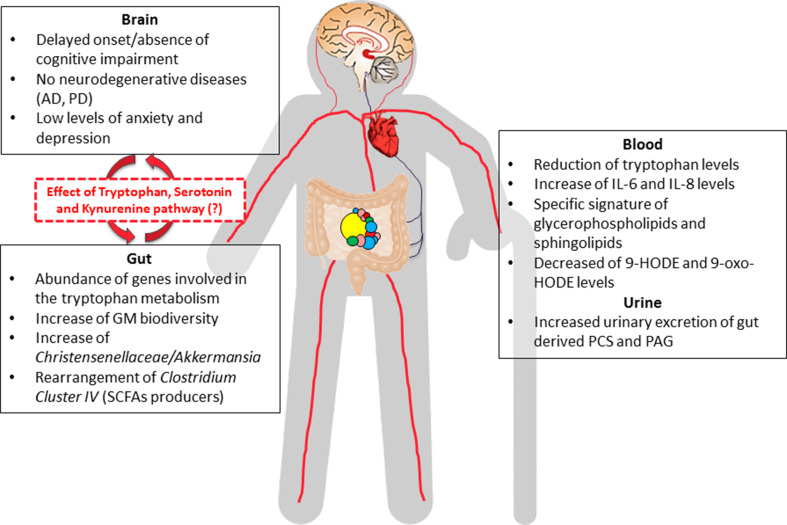
“These socalled “pathobionts” can survive in the presence of oxygen, so they can prosper in an inflamed gut, and in turn, they promote a proinflammatory profile (increase of Il-6 and Il-8 levels) and compromise the host immune homeostasis, in a sort of self-sustaining loop [141].”
BackgroundOxidative stress, aging, antioxidant supplementation and their impact on human health: An overview
Martemucci, G., Portincasa, P., Ciaula, A. D., Mariano, M., Centonze, V., & D‘Alessandro, A. G. (2022) · Mechanisms of Ageing and Development · doi:10.1016/j.mad.2022.111707 · Cited by 120
Alessandro de, S. I. R. E., de Sire, R., Petito, V., Masi, L., Cisari, C., Gasbarrini, A., Scaldaferri, F., & Invernizzi, M. (2020) · Nutrients · doi:10.3390/nu12020574 · Cited by 125
“A direct correlation between aging and gut dysbiosis has been previously demonstrated and is mainly characterized by an increase of pro-inflammatory anaerobes species and a consistent decrease in anti-inflammatory species such as Faecalibacterium prauznitzii [32].”
BackgroundJohansen, J., Atarashi, K., Arai, Y., Hirose, N., Sørensen, S. J., Vatanen, T., Knip, M., Honda, K., Xavier, R. J., Rasmussen, S., et al. (2023) · Nature Microbiology · doi:10.1038/s41564-023-01370-6 · Cited by 107
Wen, J., Ding, Y., Wang, L., & Xiao, Y. (2020) · Brain Research Bulletin · doi:10.1016/j.brainresbull.2020.08.017 · Cited by 109
Immunosenescence is both functional/adaptive and dysfunctional/maladaptive
Fulop, T., Larbi, A., Hirokawa, K., Cohen, A. A., & Witkowski, J. M. (2020) · Seminars in Immunopathology · doi:10.1007/s00281-020-00818-9 · Cited by 108
Microbiomes other than the gut: inflammaging and age-related diseases
Santoro, A., Zhao, J., Wu, L., Carru, C., Biagi, E., & Franceschi, C. (2020) · Seminars in Immunopathology · doi:10.1007/s00281-020-00814-z · Cited by 103
Self-citationTuikhar, N., Keisam, S., Labala, R. K., Imrat, Ramakrishnan, P., Arunkumar, M. C., Ahmed, G., Biagi, E., & Jeyaram, K. (2019) · Mechanisms of Ageing and Development · doi:10.1016/j.mad.2019.02.001 · Cited by 103
Self-citationInterventions on Gut Microbiota for Healthy Aging
Zeppa, S. D., Agostini, D., Ferrini, F., Gervasi, M., Barbieri, E., Bartolacci, A., Piccoli, G., Saltarelli, R., Sestili, P., & Stocchi, V. (2022) · Cells · doi:10.3390/cells12010034 · Cited by 116
“Similar results were obtained in previous studies where Italian centenarians had higher diversity and Indian, Japanese and Chinese centenarians had higher richness of gut microbiota than young people in these countries [45,47].”
ResultThe Microbiome and Eating Disorders
Seitz, J., Trinh, S., & Herpertz-Dahlmann, B. (2019) · Psychiatric Clinics of North America · doi:10.1016/j.psc.2018.10.004 · Cited by 94
Wang, J., Qie, J., Zhu, D., Zhang, X., Zhang, Q., Xu, Y., Wang, Y., Mi, K., Pei, Y., Liu, Y., et al. (2022) · Gut Microbes · doi:10.1080/19490976.2022.2107288 · Cited by 91
“reported that young adults and 70y-olds maintain a highly similar diversity of gut microbiota, which markedly changes in centenarians.(30) Consistent with this study, we also observed increased species α-diversity in centenarians compared with young adults and elderly people but no significant difference between the e…”
ResultModulating AHR function offers exciting therapeutic potential in gut immunity and inflammation
Chen, Y., Wang, Y., Fu, Y., Yin, Y., & Xu, K. (2023) · Cell & Bioscience · doi:10.1186/s13578-023-01046-y · Cited by 94
Long-term human spaceflight and inflammaging: Does it promote aging?
Capri, M., Conte, M., Ciurca, E., Pirazzini, C., Garagnani, P., Santoro, A., Longo, F., Salvioli, S., Lau, P., Moeller, R., et al. (2023) · Ageing Research Reviews · doi:10.1016/j.arr.2023.101909 · Cited by 98
“To our knowledge the tryptophan system has not been investigated in astronauts, even if circulating tryptophan may affect cognitive function in human beings (Santoro et al., 2018).”
Self-citationInteraction between gut microbiota and ethnomedicine constituents
Wu, X., & Tan, R. X. (2019) · Natural Product Reports · doi:10.1039/c8np00041g · Cited by 86
Münte, E., & Hartmann, P. (2025) · Biomolecules · doi:10.3390/biom15040469 · Cited by 89
“These dietary modifications play a crucial role in shaping the composition of the microbiota and, consequently, its metabolic outputs [104].”
Nutrition and Inflammation: Are Centenarians Similar to Individuals on Calorie-Restricted Diets?
Franceschi, C., Ostan, R., & Santoro, A. (2018) · Annual Review of Nutrition · doi:10.1146/annurev-nutr-082117-051637 · Cited by 81
Self-citationCurrent evidence linking diet to gut microbiota and brain development and function
Ceppa, F., Mancini, A., & Tuohy, K. M. (2018) · International Journal of Food Sciences and Nutrition · doi:10.1080/09637486.2018.1462309 · Cited by 93
“…hand, Enterobacteriaceae, defined as a marker for gut microbiota dysbiosis (alteration of gut microbiota homeostasis), include potential pathogenic microbes (i.e. pathobionts) implicated in colitis, colorectal cancer and non-alcoholic steatohepatitis (Sugahara et al. 2017; Santoro et al. 2018).”
BackgroundThe Core Human Microbiome: Does It Exist and How Can We Find It? A Critical Review of the Concept
Sharon, I., Quijada, N. M., Pasolli, E., Fabbrini, M., Vitali, F., Agamennone, V., Dötsch, A., Selberherr, E., Grau, J. H., Meixner, M., et al. (2022) · Nutrients · doi:10.3390/nu14142872 · Cited by 98
Self-citationThe tryptophan metabolic pathway of the microbiome and host cells in health and disease
Miyamoto, K., Sujino, T., & Kanai∥, T. (2024) · International Immunology · doi:10.1093/intimm/dxae035 · Cited by 94
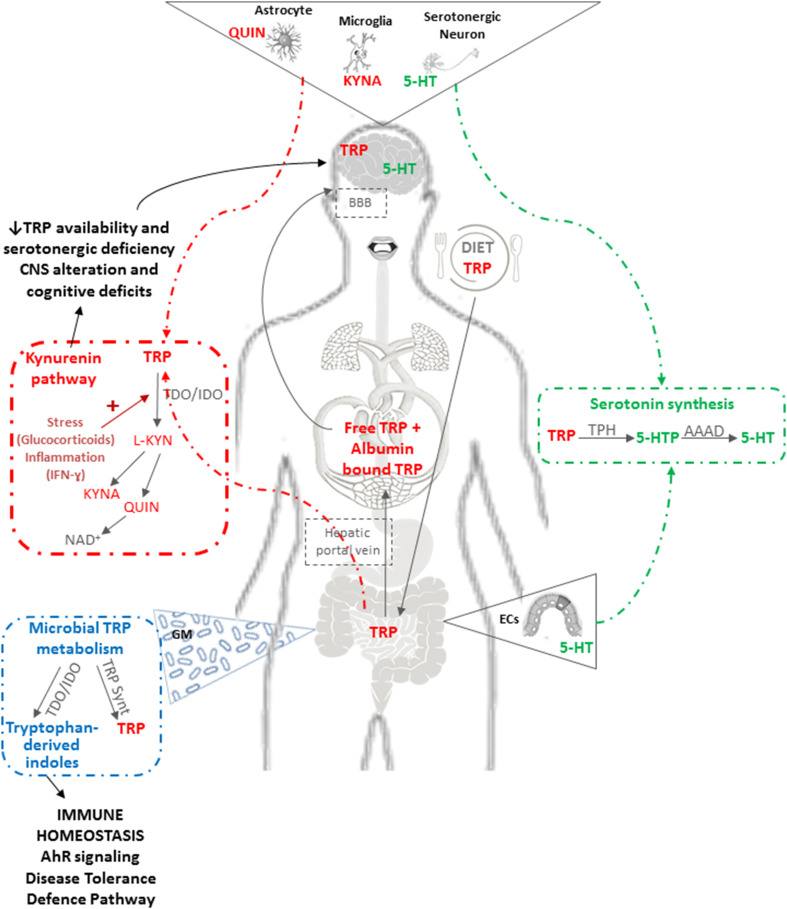
“…of 5-HT. Trp and Kyn can pass BBB, on the other hand, other metabolites, 5-HT, kynurenic acid (KYNA), and quinolinic acid (QA), cannot pass the BBB, which means these metabolites in the brain are derived from the neurons, astrocytes, and microglia or from the platelets that carry 5-HT (60–66).”
Does diet play a role in reducing nociception related to inflammation and chronic pain?
Bjørklund, G., Aaseth, J., Doşa, M. D., Pivina, L. M., Dadar, M., Pen, J. J., & Chirumbolo, S. (2019) · Nutrition · doi:10.1016/j.nut.2019.04.007 · Cited by 88
Gut microbiome and frailty: insight from genetic correlation and mendelian randomization
Cui, G., Li, S., Ye, H., Yang, Y., Jia, X., Lin, M., Chu, Y., Feng, Y., Wang, Z., Shi, Z., et al. (2023) · Gut Microbes · doi:10.1080/19490976.2023.2282795 · Cited by 90
“It seems to be gradually being identified as a potential biomarker of long-evity in studies on the characteristics of the gut microbiome from centenarians 82,83 .”
BackgroundTicinesi, A., Guerra, A., Nouvenne, A., Meschi, T., & Maggi, S. (2023) · Nutrients · doi:10.3390/nu15051138 · Cited by 79
“Centenarians who reach extreme ages in relatively good health generally show less pronounced changes, with the maintenance of some core taxa capable of modulating age-related chronic inflammation, gut intestinal permeability and the anabolic–catabolic balance [78,79].”
BackgroundMicrobiome: Effects of Ageing and Diet
Salazar, N., González, S., Nogacka, A. M., Ríos-Covián, D., Arboleya, S., Gueimonde, M., & Reyes‐Gavilán, C. G. D. L. (2019) · Current Issues in Molecular Biology · doi:10.21775/cimb.036.033 · Cited by 83
“…of centenarians and super-centenarians and their offspring deserves special mention, as a model to disentangle genetic and environmental lifestyles that determine healthy ageing and the characteristics of their microbiota in comparison to septuagenarians and octogenarians (Santoro et al., 2018).”
BackgroundThe gut microbiome of healthy long-living people
Deng, F., Li, Y., & Zhao, J. (2019) · Aging · doi:10.18632/aging.101771 · Cited by 80
Luan, Z., Sun, G., Huang, Y., Yang, Y., Yang, R., Li, C., Wang, T., Tan, D., Qi, S., Jun, C., et al. (2020) · Frontiers in Microbiology · doi:10.3389/fmicb.2020.01474 · Cited by 72
“This adaptability of gut microbiota helps modulate the host immune and metabolic pathways in response to individual requirements, and has a profound impact on the health status and biological processes (Santoro et al., 2018).”
BackgroundSingh, J., Vanlallawmzuali, Singh, A. K., Biswal, S., Zomuansangi, R., Lalbiaktluangi, C., Singh, B. P., Singh, P. K., Vellingiri, B., Iyer, M., et al. (2024) · Asian Journal of Psychiatry · doi:10.1016/j.ajp.2024.104068 · Cited by 76
The Aging Thyroid: A Reappraisal Within the Geroscience Integrated Perspective
Franceschi, C., Ostan, R., Mariotti, S., Monti, D., & Vitale, G. (2019) · Endocrine Reviews · doi:10.1210/er.2018-00170 · Cited by 80
Self-citationAryl hydrocarbon receptor activation mediates kidney disease and renal cell carcinoma
Zhao, H., Chen, L., Tian, Y., Feng, Y., Vaziri, N. D., Liu, B., Liu, Q., Guo, Y. P., & Zhao, Y. (2019) · Journal of Translational Medicine · doi:10.1186/s12967-019-2054-5 · Cited by 75
Host and microbiota metabolic signals in aging and longevity
Zhou, Y., Hu, G., & Wang, M. C. (2021) · Nature Chemical Biology · doi:10.1038/s41589-021-00837-z · Cited by 70
Gut microbiota and aging-A focus on centenarians
Cӑtoi, A. F., Corina, A., Katsiki, N., Vodnar, D. C., Andreicuț, A. D., Stoian, A. P., Rizzo, M., & Pérez-Martínez, P. (2020) · Biochimica et Biophysica Acta (BBA) - Molecular Basis of Disease · doi:10.1016/j.bbadis.2020.165765 · Cited by 70
Palmas, V., Pisanu, S., Madau, V., Casula, E., Deledda, A., Cusano, R., Uva, P., Loviselli, A., Velluzzi, F., & Manzin, A. (2022) · Nutrients · doi:10.3390/nu14122436 · Cited by 69
“On one hand, it is believed that age-related GM remodeling may contribute to systemic inflammation, which in turn can directly or indirectly affect the gut community structure in a self-sustaining cycle [39].”
BackgroundZhang, N., Zhang, Y., Li, M., Wang, W., Liu, Z., Xi, C., Huang, X., Liu, J., Huang, J., Tian, D., et al. (2020) · Brain and Behavior · doi:10.1002/brb3.1699 · Cited by 67
Nagu, P., Parashar, A., Behl, T., & Mehta, V. (2021) · Journal of Molecular Neuroscience · doi:10.1007/s12031-021-01829-3 · Cited by 70
“Aging results in a significant change in the gut microbiota composition, which is primarily due to lifestyle and dietary modification, resulting in a persistent inflammatory state of lower grade, known as “inflammaging” (Santoro et al. 2018).”
BackgroundWang, Y., Li, Y., Bo, L., Zhou, E., Chen, Y., Naranmandakh, S., Xie, W., Ru, Q., Chen, L., Zhu, Z., et al. (2023) · Gut Microbes · doi:10.1080/19490976.2023.2263207 · Cited by 73
“118 Alterations in intestinal permeability may explain the influence of intestinal microbiota on the emergence and persistence of inflammatory diseases.”
BackgroundInteractions between dietary polyphenols and aging gut microbiota: A review
Davinelli, S., & Scapagnini, G. (2021) · BioFactors · doi:10.1002/biof.1785 · Cited by 65
“However, long-living individuals appear to exhibit a delicate equilibrium between beneficial and harmful bacteria.(71) Although interventions involving diet modifications have shown modest effects on healthy adults and middleaged animal models, targeting the gut microbiota with dietary compounds improved some late-lif…”
BackgroundTacconi, E., Palma, G., Biase, D. D., Luciano, A., Barbieri, M., de Nigris, F., & Bruzzese, F. (2023) · Nutrients · doi:10.3390/nu15030563 · Cited by 66
“It is now clear that many gastrointestinal pathologies are related to bacteria families of Firmicutes phylum [49], which even includes healthy strains of gut microbiota [50,51].”
BackgroundKashtanova, D. A., Tkacheva, O. N., Strazhesko, I. D., Dudinskaya, Е. N., Kotovskaya, Y. V., Popenko, A., Tyakht, A., & Alexeev, D. G. (2019) · Healthy ageing and longevity · doi:10.1007/978-3-030-24970-0_17 · Cited by 59
Sepp, E., Smidt, I., Rööp, T., Štšepetova, J., Kõljalg, S., Mikelsaar, M., Soidla, I., Ainsaar, M., Kolk, H., Vallas, M., et al. (2022) · Frontiers in Cellular and Infection Microbiology · doi:10.3389/fcimb.2022.851404 · Cited by 67
Juárez‐Fernández, M., Porras, D., García‐Mediavilla, M. V., Román-Sagüillo, S., González‐Gallego, J., Nistal, E., & Sánchez‐Campos, S. (2020) · Nutrients · doi:10.3390/nu13010016 · Cited by 66
“hallii, Papillibacter cinnamovorans and Faecalibacterium prausnitzii), suggesting with these differences the presence of bacteria characteristics of longevity [77].”
BackgroundThe Impact of Starvation on the Microbiome and Gut-Brain Interaction in Anorexia Nervosa
Seitz, J., Belheouane, M., Schulz, N., Dempfle, A., Baines, J. F., & Herpertz‐Dahlmann, B. (2019) · Frontiers in Endocrinology · doi:10.3389/fendo.2019.00041 · Cited by 63
“, vaginally or via Csection, and whether we were breastfed strongly influence which bacteria inhabit our gastrointestinal tract, with probably lifelong consequences for our immune system (62).”
BackgroundWilson, K. A., Chamoli, M., Hilsabeck, T. A. U., Pandey, M., Bansal, S., Chawla, G., & Kapahi, P. (2021) · Cell Metabolism · doi:10.1016/j.cmet.2021.08.018 · Cited by 60
“, 2016), and prevention of inflammation due to intestinal microbiome leakage in flies, pigs, and humans (Fan et al., 2017; Rera et al., 2012; Santoro et al., 2018).”
BackgroundMartinis, M. D., Sirufo, M. M., Viscido, A., & Ginaldi, L. (2019) · International Journal of Molecular Sciences · doi:10.3390/ijms20225580 · Cited by 60
The peculiar aging of human liver: A geroscience perspective within transplant context
Morsiani, C., Bacalini, M. G., Santoro, A., Garagnani, P., Collura, S., D’Errico, A., de Eguileor, M., Grazi, G. L., Cescon, M., Franceschi, C., et al. (2019) · Ageing Research Reviews · doi:10.1016/j.arr.2019.02.002 · Cited by 53
Self-citationTicinesi, A., Nouvenne, A., Cerundolo, N., Parise, A., Mena, P. R., & Meschi, T. (2024) · Aging Clinical and Experimental Research · doi:10.1007/s40520-024-02707-9 · Cited by 55
Kong, X., Duan, W., Li, D., Tang, X., & Duan, Z. (2020) · Frontiers in Immunology · doi:10.3389/fimmu.2020.595700 · Cited by 62
Vinberg, M., Ottesen, N. M., Meluken, I., Sørensen, N., Pedersen, O. B., Kessing, L. V., & Miskowiak, K. W. (2018) · Acta Psychiatrica Scandinavica · doi:10.1111/acps.12976 · Cited by 60
“The relative composition of the intestinal microbiota is unique in each individual with multiple influencing factors including diet, medication, age, and sex (48, 49).”
BackgroundFrom Birth to Weaning: A Window of Opportunity for Microbiota
Biagioli, V., Volpedo, G., Riva, A., Mainardi, P., & Striano, P. (2024) · Nutrients · doi:10.3390/nu16020272 · Cited by 53
“On the contrary, the prolonged use of antibiotics causes an imbalance between the different strains that make up the microbiota, referred to as dysbiosis [4], a condition characterized by a shift in the composition of commensal bacterial strains toward a more pathogenic profile [2].”
BackgroundGut microbiome and aging nexus and underlying mechanism
Shi, X., Ma, T., Sakandar, H. A., Menghe, B., & Sun, Z. (2022) · Applied Microbiology and Biotechnology · doi:10.1007/s00253-022-12089-5 · Cited by 54
“Centenarians lost some important core microbiota in adults, but at the same time gained many new microbial components, including potential pathogens and foreign microbiota, but remained healthy, indicating that the gut microbiota of long-lived elderly people is unique (Biagi et al. 2016; Santoro et al. 2018).”
BackgroundDiverticular Disease: a Gut Microbiota Perspective
Ticinesi, A., Nouvenne, A., Corrente, V., Tana, C., Mario, F. D., & Meschi, T. (2019) · Journal of Gastrointestinal and Liver Diseases · doi:10.15403/jgld-277 · Cited by 52
“Conversely, aging in good health is generally associated with a gut microbiota profile resembling to that of younger persons [64].”
BackgroundHashim, H. M., & Makpol, S. (2022) · Frontiers in Cellular Neuroscience · doi:10.3389/fncel.2022.1007166 · Cited by 49
“Several studies have reported that the prevalence of major commensal organisms, including Bacteroides, Bifidobacterium, and Lactobacilli, decreases in old people (Santoro et al., 2018; Salazar et al., 2019).”
BackgroundAlmeida, H. M., Sardeli, A. V., Conway, J., Duggal, N. A., & Cavaglieri, C. R. (2022) · Ageing Research Reviews · doi:10.1016/j.arr.2022.101773 · Cited by 50
The gut microbiome and antipsychotic treatment response
Seeman, M. V. (2020) · Behavioural Brain Research · doi:10.1016/j.bbr.2020.112886 · Cited by 47
Influence of human gut microbiome on the healthy and the neurodegenerative aging
Borrego-Ruiz, A., & Borrego, J. J. (2024) · Experimental Gerontology · doi:10.1016/j.exger.2024.112497 · Cited by 48
Impact of Gut Microbiota in Brain Ageing: Polyphenols as Beneficial Modulators
Sarubbo, F., Moranta, D., Tejada, S., Jiménez-García, M., & Esteban, S. (2023) · Antioxidants · doi:10.3390/antiox12040812 · Cited by 52
“(a) Alterations of the gut microbi ta compositi n th an impact on brain ageing: Throughout life, many factors can influence the composition of the gut microbiota [56], such as th type f delivery at birth [57], genetics [58], infectious processes, antibiotic drug use, lifestyle, diet, stress factors, and th developmen…”
BackgroundRen, M., Li, H., Fu, Z., & Li, Q. (2021) · Microorganisms · doi:10.3390/microorganisms9122524 · Cited by 47
A biomarker framework for liver aging: the Aging Biomarker Consortium consensus statement
Aging Biomarker Consortium, Jiang, M., Zheng, Z., Wang, X., Chen, Y., Qu, J., Ding, Q., Zhang, W., Liu, Y.-S., Yang, J., et al. (2024) · Life Medicine · doi:10.1093/lifemedi/lnae004 · Cited by 41
Renson, A., Harris, K. M., Dowd, J. B., Gaydosh, L. M., McQueen, M. B., Krauter, K. S., Shanahan, M. J., & Aiello, A. E. (2020) · The Journals of Gerontology Series A · doi:10.1093/gerona/glaa122 · Cited by 45
“In contrast, bacteria highlighted in our estimated bacteria-gene expression network do include members of these core groups, many of which have previously shown markedly lower abundance in older versus younger adults, including Prevotella, Bacteroides, Ruminococcaceae, Lachnospiraceae (39), as well as Bifidobacterium,…”
BackgroundLi, Q., & de Wiele, T. V. (2021) · Critical Reviews in Food Science and Nutrition · doi:10.1080/10408398.2021.1965536 · Cited by 47
“In contrast with the poor absorption in the small intestine, most tea polyphenols are metabolized by the gut microbiota in the colon (Liu et al. 2018).”
BackgroundHewel, C., Kaiser, J., Wierczeiko, A., Linke, J., Reinhardt, C., Endres, K., & Gerber, S. (2019) · Frontiers in Neuroscience · doi:10.3389/fnins.2019.00113 · Cited by 39
Gemikonakli, G., Mach, J., & Hilmer, S. N. (2020) · The Journals of Gerontology Series A · doi:10.1093/gerona/glaa047 · Cited by 44
Metadata
- Authors
- Santoro, A., Ostan, R., Candela, M., Biagi, E., Brigidi, P., Capri, M., & Franceschi, C.
- Affiliations
- University of Bologna (IT)
- Corresponding author
- Santoro, Aurelia
- ORCID
- Venue
- Cellular and Molecular Life Sciences
- Published
- 2017-10-14
- Volume
- 75
- Issue
- 1
- Pages
- 129-148
- ISSN
- 1420-682X (ISSN-L)
- 1420-9071
- PMC
- PMC5752746
- OpenAlex
- W2764276208
- Semantic Scholar
- 95061e48ae455c76798f600f18ef29529cdd06b5
- Cited by
- 250
- References
- 178
- Citations by year
- 2026: 16 · 2025: 26 · 2024: 38 · 2023: 26 · 2022: 34 · 2021: 27 · 2020: 37 · 2019: 25 · 2018: 19 · 2017: 2
- FWCI
- 2.12
- Type
- journal article
- Language
- en
- Open access
- hybrid
- doi.org
- Locations
- Cellular and Molecular Life Sciences (publishedVersion, cc-by)
- Europe PMC (PubMed Central) (publishedVersion, cc-by)
- PubMed Central (publishedVersion, cc-by)
- PubMed (publishedVersion)
- Archivio istituzionale della ricerca (Alma Mater Studiorum Università di Bologna) (submittedVersion, cc-by)
- Funders
- EU Joint Programme – Neurodegenerative Disease Research
- European Commission (266486, EU-FP7, H2020, 634821)
- Ministero della Salute
- Università di Bologna (RFBO120790)
- Horizon 2020 Framework Programme (634821)
- Topics
- Life Sciences › Biochemistry, Genetics and Molecular Biology › Molecular Biology › Gut microbiota and health
- Life Sciences › Biochemistry, Genetics and Molecular Biology › Aging › Genetics, Aging, and Longevity in Model Organisms
- Health Sciences › Dentistry › Periodontics › Oral microbiology and periodontitis research
- Keywords
- gut microbiota, centenarians, healthy aging, longevity, aging, host genetics, population differences, gender differences, diet, microbiota-brain axis, neurodegenerative diseases, Parkinson's disease, Alzheimer's disease, microbiota-based therapy, metagenomics, metatranscriptomics, metabolomics
- MeSH terms
- Gastrointestinal Microbiome, Aged, Aged, 80 and over, Aging, Diet, Female, Genetics, Population, Humans, Longevity, Male
About these checks
Registry, retraction, Cites and statistics results are computed, not judged, with one exception: a printed reference that no index lists is read once by a model before it counts as a citation error. Claims are extracted by a model and kept only when their quote appears verbatim in the text; each cited source is then checked, with a model’s help, for whether it says what the claim relies on. Those verdicts can be wrong — read the claim’s quote and the cited source before relying on one.
Statistics and arithmetic are recomputed, not judged.
Confidence bands are shown only for fields calibrated on our annotated test set. None is calibrated yet, so no band is shown.
What counts as a claim ›How we measure confidence ›How we check this ›
Are you an author, or do you see a problem with this page? Request a review
Data sources
Bibliographic data: Semantic Scholar, OpenAlex, Crossref.
Contains information from the Semantic Scholar Academic Graph Datasets, made available under the ODC Attribution License (ODC-BY 1.0).
Semantic Scholar’s data is described in: Kinney, R., et al. (2023). The Semantic Scholar Open Data Platform. arXiv:2301.10140.
