

Gut microbiota changes in the extreme decades of human life: a focus on centenarians
Open accessThe DOI matches its Crossref record; 178 of the 178 references it cites were found in a registry or an index.
Abstract
The gut microbiota (GM) is a complex, evolutionarily molded ecological system, which contributes to a variety of physiological functions. The GM is highly dynamic, being sensitive to environmental stimuli, and its composition changes over the host's entire lifespan. However, the basic question of how much these changes may be ascribed to variables such as population, diet, genetics and gender, and/or to the aging process per se is still largely unanswered. We argue that comparison among studies on centenarians-the best model of healthy aging and longevity-recruited from different geographical areas/populations (different genetics and dietary habits) can help to disentangle the contribution of aging and non-aging-related variables to GM remodeling with age. The current review focuses on the role of population, gender and host genetics as possible drivers of GM modification along the human aging process. The feedback impact of age-associated GM variation on the GM-brain axis and GM metabolomics is also discussed. We likewise address the role of GM in neurodegenerative diseases such as Parkinson's and Alzheimer's, and its possible therapeutic use, taking advantage of the fact that centenarians are characterized by an extreme (healthy) phenotype versus patients suffering from age-related pathologies. Finally, it is argued that longitudinal studies combining metagenomics sequencing and in-depth phylogenetic analysis with a comprehensive phenotypic characterization of centenarians and patients using up-to-date omics (metabolomics, transcriptomics and meta-transcriptomics) are urgently needed.
Overview
The claims and statistics of this paper haven’t been checked yet.
Free: it reads the open-access text and checks the first 5 claims that cite a source we can check. Create a free account to check every claim.
Integrity signals
Registry
Cites
Statistics
Figures
Verification
Claims the paper makes
The claims and statistics of this paper haven’t been checked yet.
Free: it reads the open-access text and checks the first 5 claims that cite a source we can check. Create a free account to check every claim.
Claims other papers make about this one
Each is checked against this paper’s own text: does it say what the citing paper says it does?
The check wasn’t confident either way, so it gives no verdict — never disputed.
In the citing paper
“Supporting this contention, we and others reported that primary responses to anti-PD-1/ PD-L1 antibodies in patients with epithelial tumours and melanoma could, at least in part, be attributed to the taxonomic composition of the gut microbial ecosystem 18,20,25 .”
From Intestinal Akkermansia muciniphila predicts clinical response to PD-1 blockade in patients with advanced non-small-cell lung cancer (2022) · cites this paper as [25]
Experimental — accuracy not yet measuredIn the citing paper
“A diverse microbiota and the presence of specific bacteria such as Akkermansia muciniphila, Ruminococcus or Bifidobacterium genera were associated with improved clinical response to ICI, correlating with increased systemic immune tonus 18,20,25 .”
From Intestinal Akkermansia muciniphila predicts clinical response to PD-1 blockade in patients with advanced non-small-cell lung cancer (2022) · cites this paper as [25]
Self-check
Percentages, sums and reported differences re-computed from the paper’s own numbers.
The self-check needs the paper’s full text.
Citations
Cites
Diet rapidly and reproducibly alters the human gut microbiome
David, L. A., Maurice, C. F., Carmody, R. N., Gootenberg, D. B., Button, J. E., Wolfe, B. E., Ling, A. V., Devlin, A. S., Varma, Y., Fischbach, M. A., et al. (2014) · Nature · doi:10.1038/nature12820 · Cited by 10,100 · cited 1×
“It seems possible to modulate GM composition and activity within a single day, switching from herbivorous to carnivorous diet and as a consequence modulating GM metabolic pathways [131].”
BackgroundDiversity of the Human Intestinal Microbial Flora
Eckburg, P. B., Bik, E. M., Bernstein, C. N., Purdom, E., Dethlefsen, L., Sargent, M., Gill, S. R., Nelson, K. E., & Relman, D. A. (2005) · Science · doi:10.1126/science.1110591 · Cited by 7,913 · cited 4×
“The human GM metacommunity is estimated to consist of over 1000 different microbial species [38] belonging to 5 predominant phyla: Firmicutes and Bacteroidetes followed by Actinobacteria, Verrucomicrobia and Proteobacteria [39, 40].”
BackgroundInfluentialHuman gut microbiome viewed across age and geography
Yatsunenko, T., Rey, F. E., Manary, M. J., Trehan, I., Dominguez-Bello, M. G., Contreras, M., Magris, M., Hidalgo, G., Baldassano, R. N., Anokhin, A. P., et al. (2012) · Nature · doi:10.1038/nature11053 · Cited by 7,815 · cited 2×
“Twin studies have revealed that the once similar microbial composition of opposite-sex twins becomes distinctly different after puberty when compared to that of same-sex twins which remains compositionally similar [57].”
BackgroundDe Filippo, C., Cavalieri, D., Di Paola, M., Ramazzotti, M., Poullet, J. B., Massart, S., Collini, S., Pieraccini, G., & Lionetti, P. (2010) · Proceedings of the National Academy of Sciences · doi:10.1073/pnas.1005963107 · Cited by 5,579 · cited 1×
“, Prevotella, Treponema, Bacteroidetes and Clostridiales) in the GM from ancestral populations [56, 57].”
BackgroundDiversity, stability and resilience of the human gut microbiota
Lozupone, C. A., Stombaugh, J. I., Gordon, J. I., Jansson, J. K., & Knight, R. (2012) · Nature · doi:10.1038/nature11550 · Cited by 5,533 · cited 4×
“The human GM metacommunity is estimated to consist of over 1000 different microbial species [38] belonging to 5 predominant phyla: Firmicutes and Bacteroidetes followed by Actinobacteria, Verrucomicrobia and Proteobacteria [39, 40].”
BackgroundInfluentialInflamm‐aging: An Evolutionary Perspective on Immunosenescence
FRANCESCHI, C., BONAFÈ, M., VALENSIN, S., OLIVIERI, F., DE LUCA, M., OTTAVIANI, E., & DE BENEDICTIS, G. (2000) · Annals of the New York Academy of Sciences · doi:10.1111/j.1749-6632.2000.tb06651.x · Cited by 5,358 · cited 1×
“Indeed, in certain circumstances the age-related pathophysiological changes in the gastrointestinal tract, modification of lifestyle, nutrition [42] and behavior, as well as immunosenescence and “inflammaging” (the chronic low-grade inflammatory status typical of the elderly, [23]) strongly impact on the GM, eventuall…”
BackgroundSelf-citationThe gut microbiota shapes intestinal immune responses during health and disease
Round, J. L., & Mazmanian, S. K. (2009) · Nature Reviews Immunology · doi:10.1038/nri2515 · Cited by 5,029 · cited 2×
“, inflammation, they may escape surveillance, prevail over mutualistic symbionts and induce pathology [44, 53].”
BackgroundMind-altering microorganisms: the impact of the gut microbiota on brain and behaviour
Cryan, J. F., & Dinan, T. G. (2012) · Nature Reviews Neuroscience · doi:10.1038/nrn3346 · Cited by 4,572
Gut microbiota regulate motor deficits and neuroinflammation in a model of Parkinson's disease
Sampson, T. R., Debelius, J. W., Thron, T., Janssen, S., Shastri, G. G., Ilhan, Z. E., Challis, C., Schretter, C. E., Rocha, S., Gradinaru, V., et al. (2016) · Cell · doi:10.1016/j.cell.2016.11.018 · Cited by 3,622 · cited 1×
“In a mouse model of PD, it has been demonstrated that GM is a key player in motor deficits and microglia activation [117].”
BackgroundGut microbiota composition correlates with diet and health in the elderly
Claesson, M. J., Jeffery, I. B., Conde, S., Power, S. E., O’Connor, E. M., Cusack, S., Harris, H. M. B., Coakley, M., Lakshminarayanan, B., O’Sullivan, O., et al. (2012) · Nature · doi:10.1038/nature11319 · Cited by 3,314 · cited 1×
“Indeed, in certain circumstances the age-related pathophysiological changes in the gastrointestinal tract, modification of lifestyle, nutrition [42] and behavior, as well as immunosenescence and “inflammaging” (the chronic low-grade inflammatory status typical of the elderly, [23]) strongly impact on the GM, eventuall…”
BackgroundHsiao, E. Y., McBride, S. W., Hsien, S., Sharon, G., Hyde, E. R., McCue, T., Codelli, J. A., Chow, J., Reisman, S. E., Petrosino, J. F., et al. (2013) · Cell · doi:10.1016/j.cell.2013.11.024 · Cited by 3,283 · cited 1×
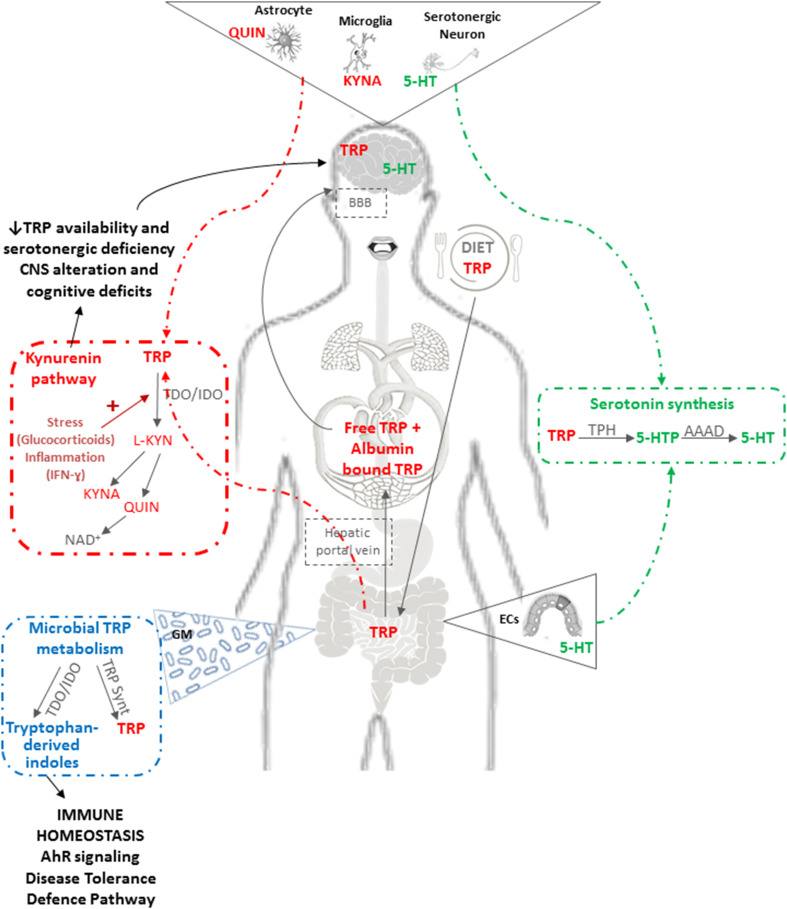
“1 3 directly utilize tryptophan, limiting its availability to the host because bacteria require tryptophan for their normal growth and some strains such as Bacteroides fragilis may produce a tryptophanase, an enzyme that has recently been associated with autism spectrum disorders [93] (Fig.”
BackgroundNormal gut microbiota modulates brain development and behavior
Heijtz, R. D., Wang, S., Anuar, F., Qian, Y., Björkholm, B., Samuelsson, A., Hibberd, M. L., Forssberg, H., & Pettersson, S. (2011) · Proceedings of the National Academy of Sciences · doi:10.1073/pnas.1010529108 · Cited by 3,228 · cited 2×
“Other works have focused on the impact of the GM on depression or anxiety, showing that pathogen-free mice exhibit reduced anxiety and increased motor activity [91, 125].”
BackgroundHuman Genetics Shape the Gut Microbiome
Goodrich, J. K., Waters, J. L., Poole, A. C., Sutter, J. L., Koren, O., Blekhman, R., Beaumont, M., Van Treuren, W., Knight, R., Bell, J. T., et al. (2014) · Cell · doi:10.1016/j.cell.2014.09.053 · Cited by 3,164 · cited 1×
“In this connection host genetics have been shown to influence the composition of the GM in twin studies [156, 157], while more recently in a wider population study, Christensenellaceae have been reported as the chief bacterium family associated with genetics [158].”
BackgroundVrieze, A., Van Nood, E., Holleman, F., Salojärvi, J., Kootte, R. S., Bartelsman, J. F. W. M., Dallinga–Thie, G. M., Ackermans, M. T., Serlie, M. J., Oozeer, R., et al. (2012) · Gastroenterology · doi:10.1053/j.gastro.2012.06.031 · Cited by 2,913 · cited 1×
“In a preliminary study of the effectiveness of FMT in humans, transferring GM from lean donors to persons with metabolic syndrome [153] beneficially affected the GM composition in recipients”
BackgroundMurray, D. D., Suzuki, K., Law, M., Trebicka, J., Neuhaus, J., Wentworth, D., Johnson, M., Vjecha, M. J., Kelleher, A. D., Emery, S., et al. (2015) · PLOS ONE · doi:10.1371/journal.pone.0139981 · Cited by 2,740
Sudo, N., Chida, Y., Aiba, Y., Sonoda, J., Oyama, N., Yu, X., Kubo, C., & Koga, Y. (2004) · The Journal of Physiology · doi:10.1113/jphysiol.2004.063388 · Cited by 2,735 · cited 1×
“Importantly, fecal microbiota transplantation (FMT) proved efficient only in animals’ early life [121].”
BackgroundGut–brain axis: How the microbiome influences anxiety and depression
Foster, J. A., & McVey Neufeld, K.-A. (2013) · Trends in Neurosciences · doi:10.1016/j.tins.2013.01.005 · Cited by 2,460 · cited 1×
“During life, chronic HPA axis hyperactivation by stress exposure damages the gut barrier integrity, causing intestinal dysbiosis, behavioral changes and stress-related symptoms, including mood disorders, anxiety and cognitive defects [122].”
BackgroundFranceschi, C., Capri, M., Monti, D., Giunta, S., Olivieri, F., Sevini, F., Panourgia, M. P., Invidia, L., Celani, L., Scurti, M., et al. (2007) · Mechanisms of Ageing and Development · doi:10.1016/j.mad.2006.11.016 · Cited by 2,087
Self-citationSex differences in the gut microbiome drive hormone-dependent regulation of autoimmunity
Markle, J. G. M., Frank, D. N., Mortin-Toth, S., Robertson, C. E., Feazel, L. M., Rolle-Kampczyk, U., von Bergen, M., McCoy, K. D., Macpherson, A. J., & Danska, J. S. (2013) · Science · doi:10.1126/science.1233521 · Cited by 2,025 · cited 1×
“showed that the gut commensal microbial community strongly conditions the pronounced sex bias in Type 1 Diabetes risk by controlling serum testosterone and metabolic phenotypes [170].”
BackgroundSerotonin, tryptophan metabolism and the brain-gut-microbiome axis
O’Mahony, S. M., Clarke, G., Borre, Y. E., Dinan, T. G., & Cryan, J. F. (2015) · Behavioural Brain Research · doi:10.1016/j.bbr.2014.07.027 · Cited by 2,012 · cited 3×
“Tryptophan is metabolized along the serotonin or the kynurenine pathway [86] with many implications for ENS and CNS functioning (Fig.”
BackgroundClarke, G., Grenham, S., Scully, P., Fitzgerald, P., Moloney, R. D., Shanahan, F., Dinan, T. G., & Cryan, J. F. (2013) · Molecular Psychiatry · doi:10.1038/mp.2012.77 · Cited by 1,893 · cited 1×
“These animals exhibited increased hippocampal 5-hydroxytryptophan (a serotonin precursor) concentration and significant CNS alterations, demonstrating that the GM is essential for normal brain development [91, 92].”
BackgroundComposition, variability, and temporal stability of the intestinal microbiota of the elderly
Claesson, M. J., Cusack, S., O'Sullivan, O., Greene-Diniz, R., de Weerd, H., Flannery, E., Marchesi, J. R., Falush, D., Dinan, T., Fitzgerald, G., et al. (2011) · Proceedings of the National Academy of Sciences · doi:10.1073/pnas.1000097107 · Cited by 1,754 · cited 1×
“Indeed, in certain circumstances the age-related pathophysiological changes in the gastrointestinal tract, modification of lifestyle, nutrition [42] and behavior, as well as immunosenescence and “inflammaging” (the chronic low-grade inflammatory status typical of the elderly, [23]) strongly impact on the GM, eventuall…”
BackgroundDe Filippis, F., Pellegrini, N., Vannini, L., Jeffery, I. B., La Storia, A., Laghi, L., Serrazanetti, D. I., Di Cagno, R., Ferrocino, I., Lazzi, C., et al. (2016) · Gut · doi:10.1136/gutjnl-2015-309957 · Cited by 1,638
Self-citationAn Interaction between Kynurenine and the Aryl Hydrocarbon Receptor Can Generate Regulatory T Cells
Mezrich, J. D., Fechner, J. H., Zhang, X., Johnson, B. P., Burlingham, W. J., & Bradfield, C. A. (2010) · The Journal of Immunology · doi:10.4049/jimmunol.0903670 · Cited by 1,601 · cited 1×
“Data obtained on murine models have shown that tryptophan catabolism by IDO assumes an immunoregulatory role acting via AhR ligands, boosting regulatory T cells and protecting mice from chronic hyperinflammatory responses [101].”
BackgroundOdamaki, T., Kato, K., Sugahara, H., Hashikura, N., Takahashi, S., Xiao, J.-Z., Abe, F., & Osawa, R. (2016) · BMC Microbiology · doi:10.1186/s12866-016-0708-5 · Cited by 1,521 · cited 2×
“Regarding the microbiota diversity, in the Japanese cohort the alpha diversity score and the Shannon index remained stable during adulthood and then increased in the elderly and centenarians, the later data confirming previous observations (Table 1) [70].”
BackgroundResultThrough Ageing, and Beyond: Gut Microbiota and Inflammatory Status in Seniors and Centenarians
Biagi, E., Nylund, L., Candela, M., Ostan, R., Bucci, L., Pini, E., Nikkïla, J., Monti, D., Satokari, R., Franceschi, C., et al. (2010) · PLoS ONE · doi:10.1371/journal.pone.0010667 · Cited by 1,483 · cited 5×
“These results contrast with previous studies suggesting that the microbial diversity of GM was significantly reduced in centenarians [51].”
BackgroundMethodResultInfluentialSelf-citationSignals from the gut microbiota to distant organs in physiology and disease
Schroeder, B. O., & Bäckhed, F. (2016) · Nature Medicine · doi:10.1038/nm.4185 · Cited by 1,409 · cited 2×
“The literature on this hot topic is extensive and more details can be found in recent reviews [76, 77].”
BackgroundNeufeld, K. M., Kang, N., Bienenstock, J., & Foster, J. A. (2011) · Neurogastroenterology & Motility · doi:10.1111/j.1365-2982.2010.01620.x · Cited by 1,392 · cited 1×
“Other works have focused on the impact of the GM on depression or anxiety, showing that pathogen-free mice exhibit reduced anxiety and increased motor activity [91, 125].”
BackgroundCattaneo, A., Cattane, N., Galluzzi, S., Provasi, S., Lopizzo, N., Festari, C., Ferrari, C., Guerra, U. P., Paghera, B., Muscio, C., et al. (2017) · Neurobiology of Aging · doi:10.1016/j.neurobiolaging.2016.08.019 · Cited by 1,382 · cited 1×
“The bacterial species residing in the intestine have been shown to release substantial amounts of amyloids and lipopolysaccharides, thereby promoting the production of pro-inflammatory cytokines and modulating the signaling pathways involved in the pathogenesis of AD [113, 114].”
BackgroundThevaranjan, N., Puchta, A., Schulz, C., Naidoo, A., Szamosi, J. C., Verschoor, C. P., Loukov, D., Schenck, L. P., Jury, J., Foley, K. P., et al. (2017) · Cell Host & Microbe · doi:10.1016/j.chom.2017.03.002 · Cited by 1,322 · cited 2×
“A very recent publication has demonstrated that germfree mice are protected from inflammaging [49].”
BackgroundNAD + in aging, metabolism, and neurodegeneration
Verdin, E. (2015) · Science · doi:10.1126/science.aac4854 · Cited by 1,319 · cited 2×
“Several papers have shown that in old animals, when the levels of NAD+ are restored, there is an increase in sirtuin1 and a reduction in mitochondrial stress, DNA damage and inflammation [95].”
BackgroundGut microbiome of the Hadza hunter-gatherers
Schnorr, S. L., Candela, M., Rampelli, S., Centanni, M., Consolandi, C., Basaglia, G., Turroni, S., Biagi, E., Peano, C., Severgnini, M., et al. (2014) · Nature Communications · doi:10.1038/ncomms4654 · Cited by 1,317 · cited 2×
“Along with extreme aging, it seems that the host tolerates the consolidation of new GM ecosystem balances in the gut, resembling a property typical of the ancestral human GM [54, 55].”
BackgroundSelf-citationPsychobiotics: A novel class of psychotropic
Dinan, T. G., Stanton, C., & Cryan, J. F. (2013) · Biological Psychiatry · doi:10.1016/j.biopsych.2013.05.001 · Cited by 1,287 · cited 1×
“For these reasons, probiotics with psychotropic functions in humans, such as Lactobacillus helveticus and Bifidobacterium longum, have recently been termed “psychobiotics” given their ability to reverse anxiety or depression-like behavior [128].”
BackgroundCommensal microbiota and myelin autoantigen cooperate to trigger autoimmune demyelination
Berer, K., Mues, M., Koutrolos, M., Rasbi, Z. A., Boziki, M., Johner, C., Wekerle, H., & Krishnamoorthy, G. (2011) · Nature · doi:10.1038/nature10554 · Cited by 1,251 · cited 1×
“The main microbial bioactive molecules are: proteins that may cross-react with human antigens and stimulate abnormal responses by the immune system [78, 79]; neurotoxic metabolites such as d-lactic acid and ammonia which are able to cross the blood–brain barrier and cause neurotoxicity or neuroinflammation [80–82]; ho…”
BackgroundO’Toole, P. W., & Jeffery, I. B. (2015) · Science · doi:10.1126/science.aac8469 · Cited by 1,202
Minireview: Gut microbiota: The neglected endocrine organ
Clarke, G., Stilling, R. M., Kennedy, P. J., Stanton, C., Cryan, J. F., & Dinan, T. G. (2014) · Molecular Endocrinology · doi:10.1210/me.2014-1108 · Cited by 1,192 · cited 1×
“This close symbiotic relationship makes humans inter-dependent “meta-organisms” [35, 36], where the commensal bacteria function as a metabolic and endocrine organ [37] and, in turn, the human immune system has properly evolved to control the physiological life-long low-grade inflammatory response triggered by the GM.”
BackgroundConsumption of fermented milk product with probiotic modulates brain activity
Tillisch, K., Labus, J., Kilpatrick, L., Jiang, Z., Stains, J., Ebrat, B., Guyonnet, D., Legrain–Raspaud, S., Trotin, B., Naliboff, B., et al. (2013) · Gastroenterology · doi:10.1053/j.gastro.2013.02.043 · Cited by 1,192 · cited 2×
“[126] demonstrated that brain activity and connectivity in healthy women following an emotive task could be attenuated by administering a 4-week course of a fermented Fig.”
BackgroundThe first 1000 cultured species of the human gastrointestinal microbiota
Rajilić-Stojanović, M., & de Vos, W. M. (2014) · FEMS Microbiology Reviews · doi:10.1111/1574-6976.12075 · Cited by 1,182 · cited 1×
“The human GM metacommunity is estimated to consist of over 1000 different microbial species [38] belonging to 5 predominant phyla: Firmicutes and Bacteroidetes followed by Actinobacteria, Verrucomicrobia and Proteobacteria [39, 40].”
BackgroundUnger, M. M., Spiegel, J., Dillmann, K.-U., Grundmann, D., Philippeit, H., Bürmann, J., Faßbender, K., Schwiertz, A., & Schäfer, K.-H. (2016) · Parkinsonism & Related Disorders · doi:10.1016/j.parkreldis.2016.08.019 · Cited by 1,159
Kynurenine pathway of tryptophan metabolism: regulatory and functional aspects
Badawy, A. A.-B. (2017) · International Journal of Tryptophan Research · doi:10.1177/1178646917691938 · Cited by 1,158 · cited 1×
“Little is known about plasma tryptophan disposition in aged experimental animals, while in humans the plasma concentration of tryptophan is moderately lower in the elderly [103].”
BackgroundHas the Microbiota Played a Critical Role in the Evolution of the Adaptive Immune System?
Lee, Y. K., & Mazmanian, S. K. (2010) · Science · doi:10.1126/science.1195568 · Cited by 1,121
Consequences of bile salt biotransformations by intestinal bacteria
Ridlon, J. M., Harris, S. C., Bhowmik, S., Kang, D.-J., & Hylemon, P. B. (2016) · Gut Microbes · doi:10.1080/19490976.2015.1127483 · Cited by 1,100
Collado, M. C., Rautava, S., Aakko, J., Isolauri, E., & Salminen, S. (2016) · Scientific Reports · doi:10.1038/srep23129 · Cited by 1,097
Genetic determinants of the gut microbiome in UK twins
Goodrich, J. K., Davenport, E. R., Beaumont, M., Jackson, M. A., Knight, R., Ober, C., Spector, T. D., Bell, J. T., Clark, A. G., & Ley, R. E. (2016) · Cell Host & Microbe · doi:10.1016/j.chom.2016.04.017 · Cited by 1,048 · cited 2×
“The abundance of Christensenellaceae was also associated with lower body mass index (BMI) in twins, and when introduced into a mouse model it led to reduced weight gain in treated mice compared with controls [158], suggesting that the microbiome can be an important mediator between host genetics and phenotype.”
BackgroundGut Microbiota and Extreme Longevity
Biagi, E., Franceschi, C., Rampelli, S., Severgnini, M., Ostan, R., Turroni, S., Consolandi, C., Quercia, S., Scurti, M., Monti, D., et al. (2016) · Current Biology · doi:10.1016/j.cub.2016.04.016 · Cited by 1,025 · cited 4×
“) and endogenous changes, contributing to the maintenance of metabolic and immunological homeostasis and promoting survival [1, 8].”
BackgroundInfluentialSelf-citationFranceschi, C., Garagnani, P., Vitale, G., Capri, M., & Salvioli, S. (2017) · Trends in Endocrinology & Metabolism · doi:10.1016/j.tem.2016.09.005 · Cited by 997
Self-citationThe core gut microbiome, energy balance and obesity
Turnbaugh, P. J., & Gordon, J. I. (2009) · The Journal of Physiology · doi:10.1113/jphysiol.2009.174136 · Cited by 993 · cited 1×
“In this connection host genetics have been shown to influence the composition of the GM in twin studies [156, 157], while more recently in a wider population study, Christensenellaceae have been reported as the chief bacterium family associated with genetics [158].”
BackgroundSeasonal cycling in the gut microbiome of the Hadza hunter-gatherers of Tanzania
Smits, S. A., Leach, J., Sonnenburg, E. D., Gonzalez, C. G., Lichtman, J. S., Reid, G., Knight, R., Manjurano, A., Changalucha, J., Elias, J. E., et al. (2017) · Science · doi:10.1126/science.aan4834 · Cited by 886 · cited 1×
“For instance, the GM of Hadza hunter–gatherers from Tanzania showed a unique enrichment in metabolic pathways that align with dietary and environmental factors peculiar to their foraging lifestyle, characterized by a broad-spectrum carbohydrate metabolism, reflecting the complex polysaccharides in their diet during th…”
BackgroundThe effect of host genetics on the gut microbiome
Bonder, M. J., Kurilshikov, A., Tigchelaar, E. F., Mujagic, Z., Imhann, F., Vila, A. V., Deelen, P., Vatanen, T., Schirmer, M., Smeekens, S. P., et al. (2016) · Nature Genetics · doi:10.1038/ng.3663 · Cited by 819 · cited 1×
“Recently, genome-wide association screening for host genetic associations with GM composition identified 42 loci (mainly related to innate immunity) associated with GM variation and function in humans [162].”
BackgroundScher, J. U., Ubeda, C., Artacho, A., Attur, M., Isaac, S., Reddy, S. M., Marmon, S., Neimann, A., Brusca, S., Patel, T., et al. (2015) · Arthritis & Rheumatology · doi:10.1002/art.38892 · Cited by 815
Gut instincts: microbiota as a key regulator of brain development, ageing and neurodegeneration
Dinan, T. G., & Cryan, J. F. (2017) · The Journal of Physiology · doi:10.1113/jp273106 · Cited by 813 · cited 1×
“The GM role has also been investigated regarding regulation of hypothalamic–pituitary–adrenal (HPA) axis development [119, 120].”
BackgroundThe host shapes the gut microbiota via fecal microRNA
Liu, S., da Cunha, A. P., Rezende, R. M., Cialic, R., Wei, Z., Bry, L., Comstock, L. E., Gandhi, R., & Weiner, H. L. (2016) · Cell Host & Microbe · doi:10.1016/j.chom.2015.12.005 · Cited by 808 · cited 1×
“MiRs produced by gut epithelial cells enter bacterial membrane, modifying bacterial gene expression in in vitro models [166].”
BackgroundSex differences and hormonal effects on gut microbiota composition in mice
Org, E., Mehrabian, M., Parks, B. W., Shipkova, P., Liu, X., Drake, T. A., & Lusis, A. J. (2016) · Gut Microbes · doi:10.1080/19490976.2016.1203502 · Cited by 796 · cited 3×
“A number of different taxa have been found between male and female mice, while the sex differences in GM composition depend in part on genetic background [172].”
BackgroundKynurenine pathway metabolism and the microbiota-gut-brain axis
Kennedy, P. J., Cryan, J. F., Dinan, T. G., & Clarke, G. (2017) · Neuropharmacology · doi:10.1016/j.neuropharm.2016.07.002 · Cited by 724 · cited 1×
“In the gastrointestinal tract serotonin is responsible for motility, secretion and absorption as well as intestinal transit, while it can also modulate food intake by stimulating vagal afferent pathways involved in the reduction of obesity and metabolic dysfunction [87].”
BackgroundAryl hydrocarbon receptor control of a disease tolerance defence pathway
Bessede, A., Gargaro, M., Pallotta, M. T., Matino, D., Servillo, G., Brunacci, C., Bicciato, S., Mazza, E. M. C., Macchiarulo, A., Vacca, C., et al. (2014) · Nature · doi:10.1038/nature13323 · Cited by 674 · cited 1×
“, the ability of the host to reduce the effect of infection on host fitness [100] (Fig.”
BackgroundRutayisire, E., Huang, K., Liu, Y., & Tao, F. (2016) · BMC Gastroenterology · doi:10.1186/s12876-016-0498-0 · Cited by 657
The Gut Microbiome and the Brain
Galland, L. (2014) · Journal of Medicinal Food · doi:10.1089/jmf.2014.7000 · Cited by 648
Wang, J., Thingholm, L. B., Skiecevičienė, J., Rausch, P., Kummen, M., Hov, J. R., Degenhardt, F., Heinsen, F.-A., Rühlemann, M. C., Szymczak, S., et al. (2016) · Nature Genetics · doi:10.1038/ng.3695 · Cited by 625 · cited 2×
“87% of the observed variations in the GM [163].”
BackgroundResultEffects of antibiotics on gut microbiota
Lange, K., Buerger, M., Stallmach, A., & Bruns, T. (2016) · Digestive Diseases · doi:10.1159/000443360 · Cited by 607
Individual diet has sex-dependent effects on vertebrate gut microbiota
Bolnick, D. I., Snowberg, L. K., Hirsch, P. E., Lauber, C. L., Org, E., Parks, B., Lusis, A. J., Knight, R., Caporaso, J. G., & Svanbäck, R. (2014) · Nature Communications · doi:10.1038/ncomms5500 · Cited by 596 · cited 1×
“, sex by diet) implies that therapies to treat dysbiosis might have sex-specific effects [176].”
BackgroundPetra, A. I., Panagiotidou, S., Hatziagelaki, E., Stewart, J. M., Conti, P., & Theoharides, T. C. (2015) · Clinical Therapeutics · doi:10.1016/j.clinthera.2015.04.002 · Cited by 592 · cited 1×
“The literature on this hot topic is extensive and more details can be found in recent reviews [76, 77].”
BackgroundCospeciation of gut microbiota with hominids
Moeller, A. H., Caro-Quintero, A., Mjungu, D., Georgiev, A. V., Lonsdorf, E. V., Muller, M. N., Pusey, A. E., Peeters, M., Hahn, B. H., & Ochman, H. (2016) · Science · doi:10.1126/science.aaf3951 · Cited by 568 · cited 2×
“Multiple lineages of the predominant bacterial taxa such as Bacteroidaceae and Bifidobacteriaceae in the gut arose via co-speciation within hominids over the past 15 million years [160].”
BackgroundLinkage of gut microbiome with cognition in hepatic encephalopathy
Bajaj, J. S., Ridlon, J. M., Hylemon, P. B., Thacker, L. R., Heuman, D. M., Smith, S., Sikaroodi, M., & Gillevet, P. M. (2012) · American Journal of Physiology-Gastrointestinal and Liver Physiology · doi:10.1152/ajpgi.00190.2011 · Cited by 547 · cited 1×
“In particular, high levels of inflammatory cytokines were found in cirrhotic patients with cognitive decline, as compared to those with normal cognitive function, and the bacterial families Alcaligeneceae and Porphyromonadaceae proved positively correlated with cognitive impairment [123, 124].”
ResultThe gut microbiome in human neurological disease: A review
Tremlett, H., Bauer, K. C., Appel‐Cresswell, S., Finlay, B. B., & Waubant, E. (2017) · Annals of Neurology · doi:10.1002/ana.24901 · Cited by 535 · cited 1×
“Recent studies showed that PD is associated with gut dysbiosis [115]; the fecal concentration of SCFAs is significantly reduced in PD patients compared to controls and this reduction could impact on CNS alterations and contribute to gastrointestinal dysmobility in PD [116].”
BackgroundThe immunology of exceptional individuals: the lesson of centenarians
Franceschi, C., Monti, D., Sansoni, P., & Cossarizza, A. (1995) · Immunology Today · doi:10.1016/0167-5699(95)80064-6 · Cited by 531
Self-citationUnraveling the processes shaping mammalian gut microbiomes over evolutionary time
Groussin, M., Mazel, F., Sanders, J. G., Smillie, C. S., Lavergne, S., Thuiller, W., & Alm, E. J. (2017) · Nature Communications · doi:10.1038/ncomms14319 · Cited by 508 · cited 1×
“Interestingly, it seems that gut microbiomes have recorded the information of major dietary shifts that occurred during the evolution of mammals, allowing us to predict ancient diets from the reconstruction of ancient microbiomes [161].”
BackgroundNAD + metabolism: Bioenergetics, signaling and manipulation for therapy
Yang, Y., & Sauve, A. A. (2016) · Biochimica et Biophysica Acta (BBA) - Proteins and Proteomics · doi:10.1016/j.bbapap.2016.06.014 · Cited by 497 · cited 1×
“Tryptophan, through the kynurenine pathway, is involved in the biosynthesis of nicotinamide adenine dinucleotide (NAD+) [94], which has a key role in human health as it is an essential coenzyme for the cellular processes of energy metabolism, cell protection and biosynthesis.”
BackgroundRole of gut microbiota and nutrients in amyloid formation and pathogenesis of Alzheimer disease
Pistollato, F., Sumalla Cano, S., Elio, I., Masias Vergara, M., Giampieri, F., & Battino, M. (2016) · Nutrition Reviews · doi:10.1093/nutrit/nuw023 · Cited by 496 · cited 1×
“The bacterial species residing in the intestine have been shown to release substantial amounts of amyloids and lipopolysaccharides, thereby promoting the production of pro-inflammatory cytokines and modulating the signaling pathways involved in the pathogenesis of AD [113, 114].”
BackgroundSex, body mass index, and dietary fiber intake influence the human gut microbiome
Dominianni, C., Sinha, R., Goedert, J. J., Pei, Z., Yang, L., Hayes, R. B., & Ahn, J. (2015) · PLOS ONE · doi:10.1371/journal.pone.0124599 · Cited by 468 · cited 1×
“Dietary effects on the composition and diversity of GM depend in part on sex-specific interactions [172, 175].”
BackgroundGut microbiota: A player in aging and a target for anti-aging intervention
Vaiserman, A. M., Koliada, A. K., & Marotta, F. (2017) · Ageing Research Reviews · doi:10.1016/j.arr.2017.01.001 · Cited by 465 · cited 1×
“In animal models, interventions aimed at reducing calorie intake have been shown to be accompanied by structural modulation of the GM [134].”
BackgroundStructural modulation of gut microbiota in life-long calorie-restricted mice
Zhang, C., Li, S., Yang, L., Huang, P., Li, W., Wang, S., Zhao, G., Zhang, M., Pang, X., Yan, Z., et al. (2013) · Nature Communications · doi:10.1038/ncomms3163 · Cited by 461 · cited 1×
“Calorie restriction was shown to enrich phylotypes positively correlating with longevity, such as the genus Lactobacillus, and to reduce phylotypes negatively associated with lifespan [135].”
BackgroundIntestinal bacteria and ageing
Woodmansey, E. J. (2007) · Journal of Applied Microbiology · doi:10.1111/j.1365-2672.2007.03400.x · Cited by 445
Signatures of early frailty in the gut microbiota
Jackson, M. A., Jeffery, I. B., Beaumont, M., Bell, J. T., Clark, A. G., Ley, R. E., O’Toole, P. W., Spector, T. D., & Steves, C. J. (2016) · Genome Medicine · doi:10.1186/s13073-016-0262-7 · Cited by 436 · cited 1×
“Frailty has been negatively associated with GM diversity [48] and Eubacterium dolichum and Eggerthella lenta have been found to be more abundant among frail individuals, while Faecalibacterium prausnitzii was less abundant, thus identifying a GM signature of frailty [48].”
Background(Dis)Trust your gut: the gut microbiome in age-related inflammation, health, and disease
Buford, T. W. (2017) · Microbiome · doi:10.1186/s40168-017-0296-0 · Cited by 409
Amyotrophic Lateral Sclerosis: A Focus on Disease Progression
Calvo, A. C., Manzano, R., Mendonça, D. M. F., Muñoz, M. J., Zaragoza, P., & Osta, R. (2014) · BioMed Research International · doi:10.1155/2014/925101 · Cited by 403
Metagenome Sequencing of the Hadza Hunter-Gatherer Gut Microbiota
Rampelli, S., Schnorr, S. L., Consolandi, C., Turroni, S., Severgnini, M., Peano, C., Brigidi, P., Crittenden, A. N., Henry, A. G., & Candela, M. (2015) · Current Biology · doi:10.1016/j.cub.2015.04.055 · Cited by 399 · cited 2×
“Along with extreme aging, it seems that the host tolerates the consolidation of new GM ecosystem balances in the gut, resembling a property typical of the ancestral human GM [54, 55].”
BackgroundSelf-citationCentenarians as a model for healthy aging
Franceschi, C., & Bonafè, M. (2003) · Biochemical Society Transactions · doi:10.1042/bst0310457 · Cited by 380 · cited 1×
“Centenarians represent the best model of “successful” aging showing a lower incidence of chronic illness, a reduction of morbidity and an extension of health span in comparison to octogenarians and nonagenarians from the same cohort [10, 11].”
BackgroundSelf-citationUnderstanding the role of tryptophan and serotonin metabolism in gastrointestinal function
Keszthelyi, D., Troost, F. J., & Masclee, A. A. M. (2009) · Neurogastroenterology & Motility · doi:10.1111/j.1365-2982.2009.01370.x · Cited by 371 · cited 1×
“Within the gastrointestinal tract, both molecules appear to be involved in immunoregulation [89] and in particular kynurenic acid may have anti-inflammatory properties [90].”
BackgroundChristensen, K., Thinggaard, M., Oksuzyan, A., Steenstrup, T., Andersen-Ranberg, K., Jeune, B., McGue, M., & Vaupel, J. W. (2013) · The Lancet · doi:10.1016/s0140-6736(13)60777-1 · Cited by 370
Gut microbiota signatures of longevity
Kong, F., Hua, Y., Zeng, B., Ning, R., Li, Y., & Zhao, J. (2016) · Current Biology · doi:10.1016/j.cub.2016.08.015 · Cited by 370 · cited 4×
“Thus, comparison between GM of Italian centenarians/semi-supercentenarians and Chinese old people (including centenarians) led to identification of gut–microbial signatures during healthy aging [52].”
BackgroundResultInfluentialSchoenmaker, M., de Craen, A. J. M., de Meijer, P. H. E. M., Beekman, M., Blauw, G. J., Slagboom, P. E., & Westendorp, R. G. J. (2006) · European Journal of Human Genetics · doi:10.1038/sj.ejhg.5201508 · Cited by 368 · cited 1×
“Human longevity has a strong familial and genetic component [12, 13].”
BackgroundAgeing of the human metaorganism: the microbial counterpart
Biagi, E., Candela, M., Fairweather-Tait, S., Franceschi, C., & Brigidi, P. (2012) · AGE · doi:10.1007/s11357-011-9217-5 · Cited by 365
Self-citationFunctional metagenomic profiling of intestinal microbiome in extreme ageing
Rampelli, S., Candela, M., Turroni, S., Biagi, E., Collino, S., Franceschi, C., O'Toole, P. W., & Brigidi, P. (2013) · Aging · doi:10.18632/aging.100623 · Cited by 359 · cited 1×
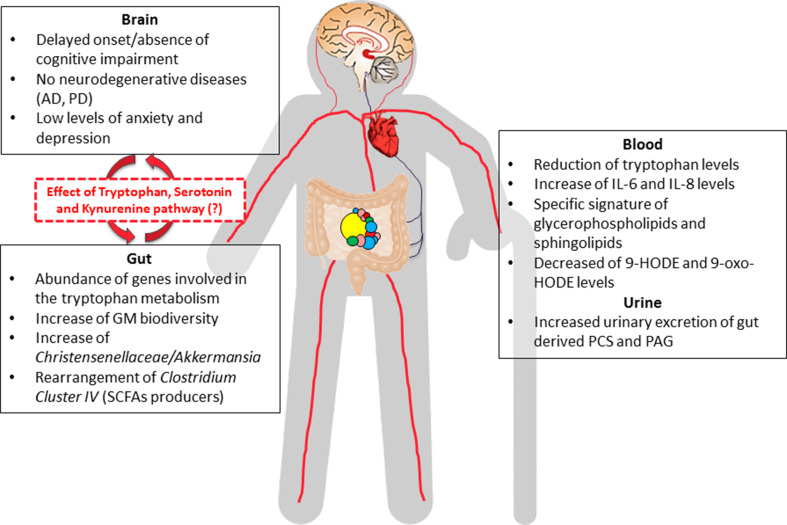
“Shotgun analysis on the bacterial metagenome of young, old and centenarian subjects showed an age-related amplified abundance of genes involved in the tryptophan metabolism pathway [102] and this finding is in agreement with the reduction of tryptophan due to its altered bio-availability found in the serum of centenar…”
ResultSelf-citationXie, H., Guo, R., Zhong, H., Feng, Q., Lan, Z., Qin, B., Ward, K. J., Jackson, M. A., Xia, Y., Chen, X., et al. (2016) · Cell Systems · doi:10.1016/j.cels.2016.10.004 · Cited by 341 · cited 2×
“Interestingly, this similarity is lost after decades of living apart [168], emphasizing the impact of household and geographic region on the GM.”
BackgroundThe network and the remodeling theories of aging: historical background and new perspectives
Franceschi, C., Valensin, S., Bonafè, M., Paolisso, G., Yashin, A. I., Monti, D., & De Benedictis, G. (2000) · Experimental Gerontology · doi:10.1016/s0531-5565(00)00172-8 · Cited by 335 · cited 1×
“[20], one may conceptualize the aging process as a continuous lifelong remodeling of the whole human organism [21].”
BackgroundSelf-citationAryl Hydrocarbon Receptor Control of Adaptive Immunity
Quintana, F. J., & Sherr, D. H. (2013) · Pharmacological Reviews · doi:10.1124/pr.113.007823 · Cited by 329 · cited 1×
“Tryptophan-derived indoles are involved in the host–microbiome interaction in the intestine [97].”
BackgroundConrad, M. L., Ferstl, R., Teich, R., Brand, S., Blümer, N., Yildirim, A. Ö., Patrascan, C. C., Hanuszkiewicz, A., Akira, S., Wagner, H., et al. (2009) · Journal of Experimental Medicine · doi:10.1084/jem.20090845 · Cited by 320
Fecal Microbiota Transplantation: Current Applications, Effectiveness, and Future Perspectives
Choi, H. H., & Cho, Y.-S. (2016) · Clinical Endoscopy · doi:10.5946/ce.2015.117 · Cited by 318 · cited 1×
“, atherosclerosis, metabolic syndrome, type 2 diabetes and neurodegenerative diseases [151, 152].”
BackgroundDecreased epigenetic age of PBMCs from Italian semi-supercentenarians and their offspring
Horvath, S., Pirazzini, C., Bacalini, M. G., Gentilini, D., Di Blasio, A. M., Delledonne, M., Mari, D., Arosio, B., Monti, D., Passarino, G., et al. (2015) · Aging · doi:10.18632/aging.100861 · Cited by 316
Self-citationKynurenine pathway abnormalities in Parkinson's disease
Ogawa, T., Matson, W. R., Beal, M. F., Myers, R. H., Bird, E. D., Milbury, P., & Saso, S. (1992) · Neurology · doi:10.1212/wnl.42.9.1702 · Cited by 315 · cited 1×
“In addition, alteration of the kynurenine metabolites may contribute to neurotoxicity [106] and has been associated with Huntington disease [107], HIV dementia [108] and Parkinson’s disease (PD) [109].”
BackgroundThe kynurenine pathway and neurodegenerative disease
Maddison, D. C., & Giorgini, F. (2015) · Seminars in Cell & Developmental Biology · doi:10.1016/j.semcdb.2015.03.002 · Cited by 309 · cited 1×
“In addition, alteration of the kynurenine metabolites may contribute to neurotoxicity [106] and has been associated with Huntington disease [107], HIV dementia [108] and Parkinson’s disease (PD) [109].”
BackgroundHost Genetics and Gut Microbiome: Challenges and Perspectives
Kurilshikov, A., Wijmenga, C., Fu, J., & Zhernakova, A. (2017) · Trends in Immunology · doi:10.1016/j.it.2017.06.003 · Cited by 309
Modulation of Gut Microbiota–Brain Axis by Probiotics, Prebiotics, and Diet
Liu, X., Cao, S., & Zhang, X. (2015) · Journal of Agricultural and Food Chemistry · doi:10.1021/acs.jafc.5b02404 · Cited by 304 · cited 1×
“The two-way interaction between GM and the brain can be modulated by diet and/or probiotic/prebiotic/symbiotic supplementation designed to positively impact on brain activity and behavior [127].”
BackgroundMatsumoto, M., Kurihara, S., Kibe, R., Ashida, H., & Benno, Y. (2011) · PLoS ONE · doi:10.1371/journal.pone.0023652 · Cited by 290 · cited 1×
“There is also evidence that probiotic treatment can promote longevity in mice, possibly through suppression of chronic low-grade inflammatory processes in the colon [147].”
BackgroundThe kynurenine pathway as a therapeutic target in cognitive and neurodegenerative disorders
Stone, T. W., & Darlington, L. G. (2013) · British Journal of Pharmacology · doi:10.1111/bph.12230 · Cited by 271 · cited 1×
“an excitotoxic NMDA receptor agonist [88].”
Collino, S., Montoliu, I., Martin, F.-P. J., Scherer, M., Mari, D., Salvioli, S., Bucci, L., Ostan, R., Monti, D., Biagi, E., et al. (2013) · PLoS ONE · doi:10.1371/journal.pone.0056564 · Cited by 270 · cited 5×
“A unique alteration of specific glycerophospholipids and sphingolipids [71] and decreased circulating levels of 9-hydroxy-octadecadienoic acid (9-HODE) and 9-oxo-octadecadienoic acid (9-oxoODE), markers of lipid peroxidation [7], are seen in the longevity phenotype in Italy.”
BackgroundResultInfluentialSelf-citationMacFabe, D. F. (2015) · Microbial Ecology in Health & Disease · doi:10.3402/mehd.v26.28177 · Cited by 259 · cited 1×
“SCFAs (acetate, propionate and butyrate), produced by GM (Firmicutes and Bacteroidetes strains) during fermentation of undigested polysaccharides, has a well-documented protective role on various inflammatory as well as behavioral disorders [129, 130].”
BackgroundThe inflammatory status of old age can be nurtured from the intestinal environment
Guigoz, Y., Doré, J., & Schiffrin, E. J. (2008) · Current Opinion in Clinical Nutrition and Metabolic Care · doi:10.1097/mco.0b013e3282f2bfdf · Cited by 218
The human gut sterolbiome: bile acid-microbiome endocrine aspects and therapeutics
Ridlon, J. M., & Bajaj, J. S. (2015) · Acta Pharmaceutica Sinica B · doi:10.1016/j.apsb.2015.01.006 · Cited by 210 · cited 2×
“The term “sterolbiome” [74] describes the genetic potential of the GM to produce endocrine molecules from endogenous and exogenous steroids in the mammalian gut.”
BackgroundFarm exposure in utero may protect against asthma, hay fever and eczema
Douwes, J., Cheng, S., Travier, N., Cohet, C., Niesink, A., McKenzie, J., Cunningham, C., Le Gros, G., von Mutius, E., & Pearce, N. (2008) · European Respiratory Journal · doi:10.1183/09031936.00033707 · Cited by 207
Microbiota-gut-brain signalling in Parkinson's disease: Implications for non-motor symptoms
Felice, V. D., Quigley, E. M., Sullivan, A. M., O'Keeffe, G. W., & O'Mahony, S. M. (2016) · Parkinsonism & Related Disorders · doi:10.1016/j.parkreldis.2016.03.012 · Cited by 205 · cited 12×
“Tryptophan is metabolized along the serotonin or the kynurenine pathway [86] with many implications for ENS and CNS functioning (Fig.”
BackgroundInfluentialCognitive decline, dietary factors and gut–brain interactions
Caracciolo, B., Xu, W., Collins, S., & Fratiglioni, L. (2014) · Mechanisms of Ageing and Development · doi:10.1016/j.mad.2013.11.011 · Cited by 204 · cited 2×
“In particular, high levels of inflammatory cytokines were found in cirrhotic patients with cognitive decline, as compared to those with normal cognitive function, and the bacterial families Alcaligeneceae and Porphyromonadaceae proved positively correlated with cognitive impairment [123, 124].”
BackgroundResultDebugging how Bacteria Manipulate the Immune Response
Sansonetti, P. J., & Di Santo, J. P. (2007) · Immunity · doi:10.1016/j.immuni.2007.02.004 · Cited by 197 · cited 1×
“, inflammation, they may escape surveillance, prevail over mutualistic symbionts and induce pathology [44, 53].”
BackgroundClinical Phenotype of Families with Longevity
Atzmon, G., Schechter, C., Greiner, W., Davidson, D., Rennert, G., & Barzilai, N. (2004) · Journal of the American Geriatrics Society · doi:10.1111/j.1532-5415.2004.52068.x · Cited by 191
Immunosenescence and Immunogenetics of Human Longevity
Ostan, R., Bucci, L., Capri, M., Salvioli, S., Scurti, M., Pini, E., Monti, D., & Franceschi, C. (2008) · Neuroimmunomodulation · doi:10.1159/000156466 · Cited by 189 · cited 1×
“, the overall age-related remodeling of the immune system [19]) and taking into account the increasing amount of experimental data on genetics, proteomics, epigenetics, metabolomics, glycomics, etc.”
BackgroundSelf-citationIncreased d-lactic Acid intestinal bacteria in patients with chronic fatigue syndrome.
Sheedy, J. R., Wettenhall, R. E. H., Scanlon, D. B., Gooley, P. R., Lewis, D. P., McGregor, N., Stapleton, D., Butt, H. L., & Meirleir, K. L. D. (2009) · PubMed · Cited by 188
Gut Microbiota Community and Its Assembly Associated with Age and Diet in Chinese Centenarians
Wang, F., Yu, T., Huang, G., Cai, D., Liang, X., Su, H., Zhu, Z., Li, D., Yang, Y., Shen, P., et al. (2015) · Journal of Microbiology and Biotechnology · doi:10.4014/jmb.1410.10014 · Cited by 184 · cited 1×
“Another paper, presenting the Illumina sequencing of 16S rRNA gene amplicons performed on the GM of centenarians living in one of the most long-lived villages in the world (Bama County, China), confirmed that the GM of centenarians was more diverse (count of the unique OTU numbers, Chao 1 index) than that of the young…”
BackgroundGrompone, G., Martorell, P., Llopis, S., González, N., Genovés, S., Mulet, A. P., Fernández-Calero, T., Tiscornia, I., Bollati-Fogolín, M., Chambaud, I., et al. (2012) · PLoS ONE · doi:10.1371/journal.pone.0052493 · Cited by 176
Genome-Wide Scan Informed by Age-Related Disease Identifies Loci for Exceptional Human Longevity
Fortney, K., Dobriban, E., Garagnani, P., Pirazzini, C., Monti, D., Mari, D., Atzmon, G., Barzilai, N., Franceschi, C., Owen, A. B., et al. (2015) · PLOS Genetics · doi:10.1371/journal.pgen.1005728 · Cited by 176
Self-citationLower All‐Cause, Cardiovascular, and Cancer Mortality in Centenarians' Offspring
Terry, D. F., Wilcox, M. A., McCormick, M. A., Pennington, J. Y., Schoenhofen, E. A., Andersen, S. L., & Perls, T. T. (2004) · Journal of the American Geriatrics Society · doi:10.1111/j.1532-5415.2004.52561.x · Cited by 170
Inflammaging and human longevity in the omics era
Monti, D., Ostan, R., Borelli, V., Castellani, G., & Franceschi, C. (2017) · Mechanisms of Ageing and Development · doi:10.1016/j.mad.2016.12.008 · Cited by 167 · cited 1×
“[20], one may conceptualize the aging process as a continuous lifelong remodeling of the whole human organism [21].”
BackgroundSelf-citationThe gut microbiota of centenarians: Signatures of longevity in the gut microbiota profile
Biagi, E., Rampelli, S., Turroni, S., Quercia, S., Candela, M., & Brigidi, P. (2017) · Mechanisms of Ageing and Development · doi:10.1016/j.mad.2016.12.013 · Cited by 166
Self-citationDistinct metabolomic signatures are associated with longevity in humans
Cheng, S., Larson, M. G., McCabe, E. L., Murabito, J. M., Rhee, E. P., Ho, J. E., Jacques, P. F., Ghorbani, A., Magnusson, M., Souza, A. L., et al. (2015) · Nature Communications · doi:10.1038/ncomms7791 · Cited by 161 · cited 2×
“However, studies on different populations reported that increased levels of secondary bile acids are associated with an increased risk of age-associated diseases [72] and specific diseases of the gastrointestinal tract system [75].”
BackgroundMediterranean diet and inflammaging within the hormesis paradigm
Martucci, M., Ostan, R., Biondi, F., Bellavista, E., Fabbri, C., Bertarelli, C., Salvioli, S., Capri, M., Franceschi, C., & Santoro, A. (2017) · Nutrition Reviews · doi:10.1093/nutrit/nux013 · Cited by 158 · cited 2×
“A lifelong exposure to the specific components of the MedDiet may, therefore, very likely counteract the effects of inflammatory stimuli, including those that may come from the GM metabolism, by acting as hormetins [132].”
BackgroundSelf-citationNakagawa, H., Shiozaki, T., Kobatake, E., Hosoya, T., Moriya, T., Sakai, F., Taru, H., & Miyazaki, T. (2016) · Aging Cell · doi:10.1111/acel.12431 · Cited by 156 · cited 1×
“Probiotic supplementation may also improve metabolic and cardiovascular health status [141] and promote longevity by stimulating the innate immune response [142, 143], improving resistance to oxidative stress [144], decreasing lipofuscin accumulation [145] and modulating serotonin signaling [146].”
BackgroundAging and the human gut microbiota—from correlation to causality
Saraswati, S., & Sitaraman, R. (2015) · Frontiers in Microbiology · doi:10.3389/fmicb.2014.00764 · Cited by 153
The Genetics of Human Longevity
CAPRI, M., SALVIOLI, S., SEVINI, F., VALENSIN, S., CELANI, L., MONTI, D., PAWELEC, G., DE BENEDICTIS, G., GONOS, E. S., & FRANCESCHI, C. (2006) · Annals of the New York Academy of Sciences · doi:10.1196/annals.1354.033 · Cited by 153 · cited 1×
“Human longevity has a strong familial and genetic component [12, 13].”
BackgroundSelf-citation(2015) · PubMed · Cited by 152
Montoliu, I., Scherer, M., Beguelin, F., DaSilva, L., Mari, D., Salvioli, S., Martin, F.-P. J., Capri, M., Bucci, L., Ostan, R., et al. (2014) · Aging · doi:10.18632/aging.100630 · Cited by 150 · cited 3×
“Shotgun analysis on the bacterial metagenome of young, old and centenarian subjects showed an age-related amplified abundance of genes involved in the tryptophan metabolism pathway [102] and this finding is in agreement with the reduction of tryptophan due to its altered bio-availability found in the serum of centenar…”
BackgroundResultSelf-citationIndoleamine 2,3-dioxygenase activity in nonagenarians is markedly increased and predicts mortality
Pertovaara, M., Raitala, A., Lehtimäki, T. J., Karhunen, P. J., Oja, S. S., Jylhä, M. K., Hervonen, A., & Hurme, M. (2006) · Mechanisms of Ageing and Development · doi:10.1016/j.mad.2006.01.020 · Cited by 150 · cited 1×
“1 3 nonagenarians than in young people [98].”
BackgroundNutrition in the age-related disablement process
Inzitari, M., Doets, E., Bartali, B., Benetou, V., Di Bari, M., Visser, M., Volpato, S., Gambassi, G., Topinkova, E., De Groot, L., et al. (2011) · The Journal of nutrition, health and aging · doi:10.1007/s12603-011-0053-1 · Cited by 148
The role of microbes and autoimmunity in the pathogenesis of neuropsychiatric illness
Hornig, M. (2013) · Current Opinion in Rheumatology · doi:10.1097/bor.0b013e32836208de · Cited by 138 · cited 1×
“The main microbial bioactive molecules are: proteins that may cross-react with human antigens and stimulate abnormal responses by the immune system [78, 79]; neurotoxic metabolites such as d-lactic acid and ammonia which are able to cross the blood–brain barrier and cause neurotoxicity or neuroinflammation [80–82]; ho…”
BackgroundCardiovascular benefits of probiotics: a review of experimental and clinical studies
Thushara, R. M., Gangadaran, S., Solati, Z., & Moghadasian, M. H. (2016) · Food & Function · doi:10.1039/c5fo01190f · Cited by 138 · cited 1×
“Probiotic supplementation may also improve metabolic and cardiovascular health status [141] and promote longevity by stimulating the innate immune response [142, 143], improving resistance to oxidative stress [144], decreasing lipofuscin accumulation [145] and modulating serotonin signaling [146].”
BackgroundAdding fuel to the fire: the impact of stress on the ageing brain
Prenderville, J. A., Kennedy, P. J., Dinan, T. G., & Cryan, J. F. (2015) · Trends in Neurosciences · doi:10.1016/j.tins.2014.11.001 · Cited by 136 · cited 1×
“The GM role has also been investigated regarding regulation of hypothalamic–pituitary–adrenal (HPA) axis development [119, 120].”
BackgroundXu, R., Shang, N., & Li, P. (2011) · Anaerobe · doi:10.1016/j.anaerobe.2011.07.010 · Cited by 133 · cited 1×
“For example, in a murine model, oral administration of purified exopolysaccharide fractions from Bifidobacterium animalis RH that were isolated from the fecal samples of centenarians residing in Bama longevity villages (Guangxi, China) resulted in significantly increased activity by superoxide dismutase, catalase and…”
BackgroundRossen, N. G., Fuentes, S., Boonstra, K., D’Haens, G. R., Heilig, H. G., Zoetendal, E. G., de Vos, W. M., & Ponsioen, C. Y. (2015) · Journal of Crohn's and Colitis · doi:10.1093/ecco-jcc/jju023 · Cited by 129
The Genetics of Exceptional Human Longevity
Perls, T., Kunkel, L. M., & Puca, A. A. (2002) · Journal of the American Geriatrics Society · doi:10.1046/j.1532-5415.2002.49283.x · Cited by 121
The role of gut microbiota in human obesity: Recent findings and future perspectives
Tagliabue, A., & Elli, M. (2013) · Nutrition, Metabolism and Cardiovascular Diseases · doi:10.1016/j.numecd.2012.09.002 · Cited by 118
Flak, M. B., Neves, J. F., & Blumberg, R. S. (2013) · Science · doi:10.1126/science.1236226 · Cited by 117
Gut feelings about smoking and coffee in Parkinson's disease
Derkinderen, P., Shannon, K. M., & Brundin, P. (2014) · Movement Disorders · doi:10.1002/mds.25882 · Cited by 115 · cited 1×
“Epidemiologic evidence also suggests that coffee drinkers have a lower risk of PD [133].”
BackgroundReview on microbiota and effectiveness of probiotics use in older
Rondanelli, M. (2015) · World Journal of Clinical Cases · doi:10.12998/wjcc.v3.i2.156 · Cited by 115
Mechanism underlying prolongevity induced by bifidobacteria in Caenorhabditis elegans
Komura, T., Ikeda, T., Yasui, C., Saeki, S., & Nishikawa, Y. (2013) · Biogerontology · doi:10.1007/s10522-012-9411-6 · Cited by 113 · cited 1×
“Probiotic supplementation may also improve metabolic and cardiovascular health status [141] and promote longevity by stimulating the innate immune response [142, 143], improving resistance to oxidative stress [144], decreasing lipofuscin accumulation [145] and modulating serotonin signaling [146].”
BackgroundComparative analysis of gut microbiota in elderly people of urbanized towns and longevity villages
Park, S.-H., Kim, K.-A., Ahn, Y.-T., Jeong, J.-J., Huh, C.-S., & Kim, D.-H. (2015) · BMC Microbiology · doi:10.1186/s12866-015-0386-8 · Cited by 107 · cited 1×
“Probiotic supplementation may also improve metabolic and cardiovascular health status [141] and promote longevity by stimulating the innate immune response [142, 143], improving resistance to oxidative stress [144], decreasing lipofuscin accumulation [145] and modulating serotonin signaling [146].”
BackgroundOxidative and nitrosative stress in ammonia neurotoxicity
Skowrońska, M., & Albrecht, J. (2012) · Neurochemistry International · doi:10.1016/j.neuint.2012.10.013 · Cited by 106
Udayappan, S. D., Hartstra, A. V., Dallinga-Thie, G. M., & Nieuwdorp, M. (2014) · Clinical and Experimental Immunology · doi:10.1111/cei.12293 · Cited by 101 · cited 1×
“1 3 by increasing amounts of butyrate-producing bacteria along with improved insulin sensitivity 6 weeks after the FMT procedure [154].”
BackgroundMaintenance of a healthy trajectory of the intestinal microbiome during aging: A dietary approach
Candela, M., Biagi, E., Brigidi, P., O’Toole, P. W., & de Vos, W. M. (2013) · Mechanisms of Ageing and Development · doi:10.1016/j.mad.2013.12.004 · Cited by 97 · cited 2×
“Inflammation, in particular, may result in a higher level of aerobiosis and production of reactive oxygen species that inactivate the strict anaerobic Firmicutes, while allowing a bloom of facultative aerobes, as frequently observed in the elderly [41].”
BackgroundSelf-citationSardar, A. M., Bell, J. E., & Reynolds, G. P. (1995) · Journal of Neurochemistry · doi:10.1046/j.1471-4159.1995.64020932.x · Cited by 95 · cited 1×
“In addition, alteration of the kynurenine metabolites may contribute to neurotoxicity [106] and has been associated with Huntington disease [107], HIV dementia [108] and Parkinson’s disease (PD) [109].”
BackgroundLiang, L., Ai, L., Qian, J., Fang, J.-Y., & Xu, J. (2015) · Scientific Reports · doi:10.1038/srep11763 · Cited by 92 · cited 1×
“A recent bioinformatics analysis predicts that long noncoding RNAs expressed in the intestinal epithelial cell in murine models constitute molecular signatures reflecting the different types of microbiome [165].”
BackgroundGu, S., Chen, Y., Zhang, X., Lu, H., Lv, T., Shen, P., Lv, L., Zheng, B., Jiang, X., & Li, L. (2015) · Microbes and Infection · doi:10.1016/j.micinf.2015.09.008 · Cited by 86
Microbiome manipulation modifies sex-specific risk for autoimmunity
Markle, J. G., Frank, D. N., Adeli, K., von Bergen, M., & Danska, J. S. (2014) · Gut Microbes · doi:10.4161/gmic.29795 · Cited by 86 · cited 1×
“The mechanism behind this protection critically depended on the impact of the GM on host metabolism and sex hormone signaling pathways [171].”
BackgroundA probiotics-containing biscuit modulates the intestinal microbiota in the elderly
Rampelli, S., Candela, M., Severgnini, M., Biagi, E., Turroni, S., Roselli, M., Carnevali, P., Donini, L., & Brigidi, P. (2013) · The Journal of nutrition, health and aging · doi:10.1007/s12603-012-0372-x · Cited by 85
Self-citationFamily clustering in Sardinian longevity: A genealogical approach
Caselli, G., Pozzi, L., Vaupel, J. W., Deiana, L., Pes, G. M., Carru, C., Franceschi, C., & Baggio, G. (2006) · Experimental Gerontology · doi:10.1016/j.exger.2006.05.009 · Cited by 85 · cited 1×
“Family genealogy data from Sardinian centenarian women have confirmed that maternal longevity is associated with lower infant mortality in offspring [18] suggesting that parents/ mothers who will later become centenarians very likely adopt healthier lifestyles for their children.”
BackgroundSelf-citationTryptophan Feeding of the IDO1-AhR Axis in Host–Microbial Symbiosis
Zelante, T., Iannitti, R. G., Fallarino, F., Gargaro, M., De Luca, A., Moretti, S., Bartoli, A., & Romani, L. (2014) · Frontiers in Immunology · doi:10.3389/fimmu.2014.00640 · Cited by 79 · cited 1×
“Microbial tryptophan metabolites generated by induction of IDO have recently been identified as human aryl hydrocarbon receptor (AhR)-selective agonists [99].”
BackgroundPerls, T. T. (2004) · Experimental Gerontology · doi:10.1016/j.exger.2004.08.015 · Cited by 79 · cited 1×
“Indeed, although the prevalence of cognitive impairment in centenarian studies varies widely [111], some of them (15–20%) preserve cognitive function and, even among those who show cognitive impairment at 100 years, approximately 90% delay the onset of clinically evident dementia until the advanced average age of 92 y…”
BackgroundKwon, G., Lee, J., & Lim, Y.-H. (2016) · Scientific Reports · doi:10.1038/srep31713 · Cited by 79 · cited 1×
“Probiotic supplementation may also improve metabolic and cardiovascular health status [141] and promote longevity by stimulating the innate immune response [142, 143], improving resistance to oxidative stress [144], decreasing lipofuscin accumulation [145] and modulating serotonin signaling [146].”
BackgroundUnderstanding gut microbiota in elderly's health will enable intervention through probiotics
Pérez Martínez, G., Bäuerl, C., & Collado, M. C. (2014) · Beneficial Microbes · doi:10.3920/bm2013.0079 · Cited by 76
Bucci, L., Ostan, R., Cevenini, E., Pini, E., Scurti, M., Vitale, G., Mari, D., Caruso, C., Sansoni, P., Fanelli, F., et al. (2016) · Aging · doi:10.18632/aging.100912 · Cited by 71 · cited 1×
“Considering that the study of centenarians has some obvious limitations (rarity, lack of an age-matched control group and frailty related to extreme age), centenarians’ offspring, representative of the elderly age bracket whose lifestyle can still be modified to attain better health, may provide a useful model to stud…”
BackgroundSelf-citationFecal microbiota transplantation for the treatment of Clostridium difficile infection
Rao, K., & Safdar, N. (2016) · Journal of Hospital Medicine · doi:10.1002/jhm.2449 · Cited by 70 · cited 1×
“Initially, bacteriotherapy was developed as an effective method of treating Clostridium difficile infection, which is a major cause of healthcare-associated diarrhea through perturbation of the normal GM [150].”
MethodKynurenines and intestinal neurotransmission: the role of N-methyl-d-aspartate receptors
Kaszaki, J., Érces, D., Varga, G., Szabó, A., Vécsei, L., & Boros, M. (2011) · Journal of Neural Transmission · doi:10.1007/s00702-011-0658-x · Cited by 70 · cited 1×
“Within the gastrointestinal tract, both molecules appear to be involved in immunoregulation [89] and in particular kynurenic acid may have anti-inflammatory properties [90].”
BackgroundBrown-Borg, H. M., & Buffenstein, R. (2017) · Ageing Research Reviews · doi:10.1016/j.arr.2016.08.007 · Cited by 70 · cited 1×
“It is interesting to note that in rodents, limiting the dietary intake of tryptophan and methionine may have a beneficial effect on health- and life span [104], while excess of tryptophan can be toxic and carcinogenic [105].”
BackgroundChronic antigenic load and apoptosis in immunosenescence
Ginaldi, L., Martinis, M. D., Monti, D., & Franceschi, C. (2004) · Trends in Immunology · doi:10.1016/j.it.2004.11.005 · Cited by 69
Self-citationNoristani, H. N., Verkhratsky, A., & Rodríguez, J. J. (2012) · Aging Cell · doi:10.1111/j.1474-9726.2012.00845.x · Cited by 67 · cited 1×
“Surprisingly, in a mouse model of Alzheimer’s disease (AD), a diet rich in tryptophan seems able to reduce the amyloid plaque content [110].”
BackgroundINCREASED BRAIN 3-HYDROXYKYNURENINE IN HUNTINGTON'S DISEASE
Reynolds, G. P. (1989) · The Lancet · doi:10.1016/s0140-6736(89)90987-2 · Cited by 66 · cited 1×
“In addition, alteration of the kynurenine metabolites may contribute to neurotoxicity [106] and has been associated with Huntington disease [107], HIV dementia [108] and Parkinson’s disease (PD) [109].”
BackgroundGaragnani, P., Giuliani, C., Pirazzini, C., Olivieri, F., Bacalini, M. G., Ostan, R., Mari, D., Passarino, G., Monti, D., Bonfigli, A. R., et al. (2013) · Aging · doi:10.18632/aging.100562 · Cited by 66
Self-citationArosio, B., Ostan, R., Mari, D., Damanti, S., Ronchetti, F., Arcudi, S., Scurti, M., Franceschi, C., & Monti, D. (2017) · Mechanisms of Ageing and Development · doi:10.1016/j.mad.2017.02.010 · Cited by 60 · cited 2×
“Indeed, although the prevalence of cognitive impairment in centenarian studies varies widely [111], some of them (15–20%) preserve cognitive function and, even among those who show cognitive impairment at 100 years, approximately 90% delay the onset of clinically evident dementia until the advanced average age of 92 y…”
BackgroundSelf-citationNAD+ Deficits in Age-Related Diseases and Cancer
Garrido, A., & Djouder, N. (2017) · Trends in cancer · doi:10.1016/j.trecan.2017.06.001 · Cited by 57 · cited 1×
“Moreover, decreased cellular NAD+ concentrations occur during aging and supplementation with NAD+ precursors can prolong both life span and health span [95, 96].”
BackgroundFaecal transplant eases symptoms of Parkinson's disease
Ananthaswamy, A. (2011) · The New Scientist · doi:10.1016/s0262-4079(11)60124-3 · Cited by 56
Cai, D., Zhao, S., Li, D., Chang, F., Tian, X., Huang, G., Zhu, Z., Liu, D., Dou, X., Li, S., et al. (2016) · Nutrients · doi:10.3390/nu8090564 · Cited by 55
Microbial perturbations and modulation in conditions associated with malnutrition and malabsorption
Jonkers, D. M. A. E. (2016) · Best Practice & Research Clinical Gastroenterology · doi:10.1016/j.bpg.2016.02.006 · Cited by 52 · cited 1×
“Since nutrient metabolism is highly dependent on the composition of the GM and vice versa [136], it can be assumed that certain anti-aging interventions may cause specific variations to gut microbial communities causing chronic calorie restriction conditions and thus promoting both the health span and the life span.”
BackgroundAmmonia levels and the severity of hepatic encephalopathy.
Qureshi, M. O., Khokhar, N., & Shafqat, F. (2014) · PubMed · Cited by 52
Freestone, P. P. E., Haigh, R. D., & Lyte, M. (2008) · The Journal of Infectious Diseases · doi:10.1086/529202 · Cited by 51
Alam, M., Alam, Q., Kamal, M., Abuzenadah, A., & Haque, A. (2014) · CNS & Neurological Disorders - Drug Targets · doi:10.2174/18715273113126660151 · Cited by 47
Garagnani, P., Pirazzini, C., Giuliani, C., Candela, M., Brigidi, P., Sevini, F., Luiselli, D., Bacalini, M. G., Salvioli, S., Capri, M., et al. (2014) · BioMed Research International · doi:10.1155/2014/560340 · Cited by 44 · cited 2×
“Among these, the genetic makeup of extreme longevity [159, 167], and the epigenetic changes associated with aging could have a deep impact together with nutrition and lifestyle habits.”
BackgroundSelf-citationDynamic efficiency of the human intestinal microbiota
Candela, M., Biagi, E., Turroni, S., Maccaferri, S., Figini, P., & Brigidi, P. (2015) · Critical Reviews in Microbiology · doi:10.3109/1040841x.2013.813900 · Cited by 43 · cited 1×
“1 3 composition and functionality to the varying conditions in which the human host lives to meet the changing demands of host metabolism [2].”
BackgroundSelf-citationMicrobiota and lifestyle interactions through the lifespan
Rampelli, S., Candela, M., Turroni, S., Biagi, E., Pflueger, M., Wolters, M., Ahrens, W., & Brigidi, P. (2016) · Trends in Food Science & Technology · doi:10.1016/j.tifs.2016.03.003 · Cited by 43 · cited 3×
“In studying the age-related remodeling of the human GM, one of the most challenging aspects is to discriminate effects due to the aging process per se from those due to the modification of diet and lifestyle that aging entails [3].”
BackgroundSelf-citationApostolopoulou, M. I., Savopoulos, C. G., Michalakis, K. G., Coppack, S. W., Dardavesis, T. I., & Hatzitolios, A. I. (2012) · Maturitas · doi:10.1016/j.maturitas.2011.11.015 · Cited by 41 · cited 1×
“In advanced age, tooth loss, chewing and swallowing problems, impaired sense of taste and smell and reduced physical activity strongly affect the quality of diet and lifestyle [59, 60] and these, in turn, are very well known short- and long-term determinants impacting on GM composition and functionality [3].”
BackgroundWelford, R. W. D., Vercauteren, M., Trébaul, A., Cattaneo, C., Eckert, D., Garzotti, M., Sieber, P., Segrestaa, J., Studer, R., Groenen, P. M. A., et al. (2016) · Scientific Reports · doi:10.1038/srep30059 · Cited by 41
Kheirbek, R., Fokar, A., Shara, N. M., Bell‐Wilson, L. K., Moore, H. J., Olsen, E. J., Blackman, M. R., & Llorente, M. D. (2017) · Journal of the American Geriatrics Society · doi:10.1111/jgs.14900 · Cited by 41
Predictors of fecal transplant failure
Meighani, A., Hart, B. R., Mittal, C., Miller, N., John, A., & Ramesh, M. (2016) · European Journal of Gastroenterology & Hepatology · doi:10.1097/meg.0000000000000614 · Cited by 39 · cited 1×
“Bacterial gene expression modulation by the host may partly explain the failure of FMT in certain specific cases, such as those related to Clostridium difficile infection treatment [174] and eventually impact on GM remodeling with age [8].”
BackgroundParental longevity and mortality amongst Japanese men and women: the JACC Study
Ikeda, A., Iso, H., Toyoshima, H., Kondo, T., Mizoue, T., Koizumi, A., Inaba, Y., Tamakoshi, A., & JACC STUDY GROUP (2006) · Journal of Internal Medicine · doi:10.1111/j.1365-2796.2005.01609.x · Cited by 33
Support for the microgenderome invites enquiry into sex differences
Wallis, A., Butt, H., Ball, M., Lewis, D. P., & Bruck, D. (2016) · Gut Microbes · doi:10.1080/19490976.2016.1256524 · Cited by 33 · cited 1×
“In humans, sex-specific interactions between Firmicutes and neurological, immune and mood symptoms of myalgic encephalomyelitis/chronic fatigue syndrome have been reported [173], but we are just beginning to appreciate the links between human microbiome composition and hormonal phenotypes.”
BackgroundThe Gut Microbiome and Obesity
Hullar, M. A. J., & Lampe, J. W. (2012) · Nestlé Nutrition Institute Workshop series · doi:10.1159/000341288 · Cited by 32
Autoimmunity in Crohn's Disease—A Putative Stratification Factor of the Clinical Phenotype
Roggenbuck, D., Reinhold, D., Baumgart, D. C., Schierack, P., Conrad, K., & Laass, M. W. (2016) · Advances in clinical chemistry · doi:10.1016/bs.acc.2016.06.002 · Cited by 32
Determinants and Duration of Impact of Early Gut Bacterial Colonization
Edwards, C. A. (2017) · Annals of Nutrition and Metabolism · doi:10.1159/000466711 · Cited by 31
Giuliani, C., Barbieri, C., Li, M., Bucci, L., Monti, D., Passarino, G., Luiselli, D., Franceschi, C., Stoneking, M., & Garagnani, P. (2014) · Aging · doi:10.18632/aging.100661 · Cited by 29 · cited 1×
“The strategy of focusing on individuals from welldefined populations and including the “extreme phenotypes” such as centenarians increases one’s power to identify physiological age trajectories, including the last 20–30 years of human life which are usually neglected [9].”
BackgroundSelf-citationGenes of Human Longevity: An Endless Quest?
Capri, M., Santoro, A., Garagnani, P., Bacalini, M. G., Pirazzini, C., Olivieri, F., Procopio, A. D., Salvioli, S., & Franceschi, C. (2013) · Current Vascular Pharmacology · doi:10.2174/1570161111666131219110301 · Cited by 23 · cited 1×
“Among these, the genetic makeup of extreme longevity [159, 167], and the epigenetic changes associated with aging could have a deep impact together with nutrition and lifestyle habits.”
BackgroundSelf-citationMicrobial Composition of the Initial Colonization of Newborns
Rautava, S. (2017) · Nestlé Nutrition Institute Workshop series · doi:10.1159/000455209 · Cited by 19
Environmental management in the gut: fecal transplantation to restore the intestinal ecosystem
Young, V. B., & Hayden, M. K. (2016) · Scandinavian Journal of Infectious Diseases · doi:10.1080/23744235.2016.1177200 · Cited by 14 · cited 1×
“Another approach to restoring the intestinal ecosystem is FMT, also called bacteriotherapy, a transfer of liquid filtrate feces from a healthy donor into the recipients’ gastrointestinal tract to treat a particular disease or condition [149].”
Background
Cited by
Inflammaging: a new immune–metabolic viewpoint for age-related diseases
Franceschi, C., Garagnani, P., Parini, P., Giuliani, C., & Santoro, A. (2018) · Nature Reviews Endocrinology · doi:10.1038/s41574-018-0059-4 · Cited by 3,586
Self-citationImmunosenescence and Inflamm-Aging As Two Sides of the Same Coin: Friends or Foes?
Fulop, T., Larbi, A., Dupuis, G., Le Page, A., Frost, E. H., Cohen, A. A., Witkowski, J. M., & Franceschi, C. (2018) · Frontiers in Immunology · doi:10.3389/fimmu.2017.01960 · Cited by 1,364
“An increase in sub-dominant species and among them, species which are considered very “good,” was observed in Italian, Japanese, and Chinese centenarians despite the differences of diet and genetics in aged subjects, particularly in semi-supercentenarians (114, 115).”
BackgroundSelf-citationThe Continuum of Aging and Age-Related Diseases: Common Mechanisms but Different Rates
Franceschi, C., Garagnani, P., Morsiani, C., Conte, M., Santoro, A., Grignolio, A., Monti, D., Capri, M., & Salvioli, S. (2018) · Frontiers in Medicine · doi:10.3389/fmed.2018.00061 · Cited by 945
“Centenarians stand out as a separate population, as their GM shows high diversity in terms of species composition (173).”
BackgroundSelf-citationMicrobiota-Brain-Gut Axis and Neurodegenerative Diseases
Quigley, E. M. M. (2017) · Current Neurology and Neuroscience Reports · doi:10.1007/s11910-017-0802-6 · Cited by 804
Derosa, L., Routy, B., Thomas, A. M., Iebba, V., Zalcman, G., Friard, S., Mazieres, J., Audigier-Valette, C., Moro-Sibilot, D., Goldwasser, F., et al. (2022) · Nature Medicine · doi:10.1038/s41591-021-01655-5 · Cited by 685
Metadata
- Authors
- Santoro, A., Ostan, R., Candela, M., Biagi, E., Brigidi, P., Capri, M., & Franceschi, C.
- Affiliations
- University of Bologna (IT)
- Corresponding author
- Santoro, Aurelia
- ORCID
- Venue
- Cellular and Molecular Life Sciences
- Published
- 2017-10-14
- Volume
- 75
- Issue
- 1
- Pages
- 129-148
- ISSN
- 1420-682X (ISSN-L)
- 1420-9071
- PMC
- PMC5752746
- OpenAlex
- W2764276208
- Cited by
- 250
- References
- 178
- Citations by year
- 2026: 16 · 2025: 26 · 2024: 38 · 2023: 26 · 2022: 34 · 2021: 27 · 2020: 37 · 2019: 25 · 2018: 19 · 2017: 2
- FWCI
- 2.12
- Type
- journal article
- Language
- en
- Open access
- hybrid
- doi.org
- Locations
- Cellular and Molecular Life Sciences (publishedVersion, cc-by)
- Europe PMC (PubMed Central) (publishedVersion, cc-by)
- PubMed Central (publishedVersion, cc-by)
- PubMed (publishedVersion)
- Archivio istituzionale della ricerca (Alma Mater Studiorum Università di Bologna) (submittedVersion, cc-by)
- Funders
- EU Joint Programme – Neurodegenerative Disease Research
- European Commission (266486, EU-FP7, H2020, 634821)
- Ministero della Salute
- Università di Bologna (RFBO120790)
- Horizon 2020 Framework Programme (634821)
- Topics
- Life Sciences › Biochemistry, Genetics and Molecular Biology › Molecular Biology › Gut microbiota and health
- Life Sciences › Biochemistry, Genetics and Molecular Biology › Aging › Genetics, Aging, and Longevity in Model Organisms
- Health Sciences › Dentistry › Periodontics › Oral microbiology and periodontitis research
- Keywords
- gut microbiota, centenarians, healthy aging, longevity, aging, host genetics, population differences, gender differences, diet, microbiota-brain axis, neurodegenerative diseases, Parkinson's disease, Alzheimer's disease, microbiota-based therapy, metagenomics, metatranscriptomics, metabolomics
- MeSH terms
- Gastrointestinal Microbiome, Aged, Aged, 80 and over, Aging, Diet, Female, Genetics, Population, Humans, Longevity, Male
About these checks
Registry, retraction, Cites and statistics results are computed, not judged, with one exception: a printed reference that no index lists is read once by a model before it counts as a citation error. Claims are extracted by a model and kept only when their quote appears verbatim in the text; each cited source is then checked, with a model’s help, for whether it says what the claim relies on. Those verdicts can be wrong — read the claim’s quote and the cited source before relying on one.
Statistics and arithmetic are recomputed, not judged.
Confidence bands are shown only for fields calibrated on our annotated test set. None is calibrated yet, so no band is shown.
What counts as a claim ›How we measure confidence ›How we check this ›
Are you an author, or do you see a problem with this page? Request a review
Data sources
Bibliographic data: Semantic Scholar, OpenAlex, Crossref.
Contains information from the Semantic Scholar Academic Graph Datasets, made available under the ODC Attribution License (ODC-BY 1.0).
Semantic Scholar’s data is described in: Kinney, R., et al. (2023). The Semantic Scholar Open Data Platform. arXiv:2301.10140.
