

The DOI matches its Crossref record; 101 of the 101 references it cites were found in a registry or an index; 1 of the 138 sources its claims cite were checked for support.
Strategies to achieve a carbon neutral society: a review
Open accessAbstract
The increasing global industrialization and over-exploitation of fossil fuels has induced the release of greenhouse gases, leading to an increase in global temperature and causing environmental issues. There is therefore an urgent necessity to reach net-zero carbon emissions. Only 4.5% of countries have achieved carbon neutrality, and most countries are still planning to do so by 2050–2070. Moreover, synergies between different countries have hampered synergies between adaptation and mitigation policies, as well as their co-benefits. Here, we present a strategy to reach a carbon neutral economy by examining the outcome goals of the 26th summit of the United Nations Climate Change Conference of the Parties (COP 26). Methods have been designed for mapping carbon emissions, such as input–output models, spatial systems, geographic information system maps, light detection and ranging techniques, and logarithmic mean divisia. We present decarbonization technologies and initiatives, and negative emissions technologies, and we discuss carbon trading and carbon tax. We propose plans for carbon neutrality such as shifting away from fossil fuels toward renewable energy, and the development of low-carbon technologies, low-carbon agriculture, changing dietary habits and increasing the value of food and agricultural waste. Developing resilient buildings and cities, introducing decentralized energy systems, and the electrification of the transportation sector is also necessary. We also review the life cycle analysis of carbon neutral systems.
Overview
AI snapshot
Written from the paper’s full text.
TL;DR
This review synthesizes COP26 outcomes, national carbon-neutrality initiatives, emissions-mapping methods, sectoral decarbonization and negative-emissions technologies, and life-cycle analysis. It reports that only 4.5% of 198 countries had achieved carbon neutrality, while most target 2050–2070.
Key findings
- Of 198 countries, 4.5% had achieved carbon neutrality, 10.6% had declared or committed to it, 8.6% had legislated for it, 29.3% had relevant policies, and 47% were discussing documents; 120 of 198 countries (60.6%) aimed for carbon neutrality by 2050–2070.
- In China, nearly 80% of CO2 emissions were attributed to electric/thermal energy production and supply, petroleum processing and coking, and metals mining and dressing; Melbourne’s carbon footprint was 25.1 t CO2-eq/capita, with households contributing 64%.
- Of 885 European city climate action plans assessed in a cited study, only 147 considered both mitigation and adaptation; about 50% addressed both through initial assessments, but only a quarter considered in-depth synergies and co-benefits.
- In Scotland, a mix of bioenergy carbon capture and storage, soil carbon sequestration, and enhanced weathering could reduce emissions by 8.3–36.8 Mt CO2 and eliminate up to 89.8% of annual emissions; enhanced weathering costs ranged from US$25/t CO2 to US$1600/t CO2, and direct air carbon capture could reach 3 Gt CO2/yr by 2035.
Methods
- Literature review and narrative synthesis covering COP26 outcome goals, worldwide carbon-neutrality initiatives, carbon-emissions mapping, emissions-reduction technologies, negative emissions, carbon trading and carbon tax, and life-cycle analysis.
- Uses tabulated evidence: Table 1 compiles initiatives and target status for 198 countries; Table 2 summarizes carbon-emissions mapping methods; Table 3 summarizes life-cycle analysis studies across sectors and countries.
- No formal meta-analysis, systematic search protocol, or primary quantitative modeling is reported; the main analysis is descriptive and tabular synthesis of cited studies.
Limitations
- Stated: negative emissions technologies are not yet ready for widespread use due to uncertainty about technologies, pricing, and environmental implications; pure life-cycle assessments have not yet fully integrated a life-cycle perspective into organizational and decision-making environments; achieving net-zero carbon emissions is challenging.
- Stated: synergies between adaptation and mitigation are lagging; only a quarter of European climate action plans included in-depth analysis of mitigation–adaptation synergies, and Cameroon’s climate initiatives focused on mitigation rather than adaptation.
- Evident from the text: as a narrative review, it does not report systematic search, inclusion/exclusion criteria, or quality appraisal; many country statuses in Table 1 are self-declared or marked N/A, limiting independent verification.
Model-written summary. Check it against the paper before relying on it.
Integrity signals
Registry
Cites
Statistics
Figures
Verification
Claims the paper makes
130 Not checked yet · 55 Own interpretation · 20 No basis given · 12 Own result · 1 Supported
A result the paper reports from its own data — it cites no other source for it, so there is none to check. The quote shows it is in the paper.
In the paper
“the remaining 47% are in the process of discussing relevant documents to achieve carbon neutrality”
§ Strategies to achieve a carbon neutral society: a review > Worldwide initiatives to achieve carbon neutrality
plain- Asserted: passes — The authors put it forward as true.
- Checkable: passes — It can be checked against evidence.
- Load-bearing: passes — The paper’s conclusions depend on it.
- Based: passes — The paper gives a reason why it holds.
A result the paper reports from its own data — it cites no other source for it, so there is none to check. The quote shows it is in the paper.
In the paper
“Overall, of the 198 countries that have committed to achieving carbon neutrality goals, 4.5% have already achieved carbon neutrality”
§ Strategies to achieve a carbon neutral society: a review > Worldwide initiatives to achieve carbon neutrality
plain- Asserted: passes — The authors put it forward as true.
- Checkable: passes — It can be checked against evidence.
- Load-bearing: unclear — It is unclear whether the paper’s conclusions depend on it.
- Based: passes — The paper gives a reason why it holds.
A result the paper reports from its own data — it cites no other source for it, so there is none to check. The quote shows it is in the paper.
In the paper
“10.6% have declared or committed to achieving carbon neutrality goals”
§ Strategies to achieve a carbon neutral society: a review > Worldwide initiatives to achieve carbon neutrality
plain- Asserted: passes — The authors put it forward as true.
- Checkable: passes — It can be checked against evidence.
- Load-bearing: unclear — It is unclear whether the paper’s conclusions depend on it.
- Based: passes — The paper gives a reason why it holds.
A result the paper reports from its own data — it cites no other source for it, so there is none to check. The quote shows it is in the paper.
In the paper
“In addition, 120 out of 198 countries, or 60.6%, aim to achieve carbon neutrality by 2050–2070”
§ Strategies to achieve a carbon neutral society: a review > Worldwide initiatives to achieve carbon neutrality
plain- Asserted: passes — The authors put it forward as true.
- Checkable: passes — It can be checked against evidence.
- Load-bearing: unclear — It is unclear whether the paper’s conclusions depend on it.
- Based: passes — The paper gives a reason why it holds.
A result the paper reports from its own data — it cites no other source for it, so there is none to check. The quote shows it is in the paper.
In the paper
“According to Table 1, a global count of 198 countries on initiatives to achieve carbon neutrality, we find that as of February 2022, all of these countries are committed to achieving carbon neutrality in the future”
§ Strategies to achieve a carbon neutral society: a review > Worldwide initiatives to achieve carbon neutrality
plain- Asserted: passes — The authors put it forward as true.
- Checkable: passes — It can be checked against evidence.
- Load-bearing: unclear — It is unclear whether the paper’s conclusions depend on it.
- Based: passes — The paper gives a reason why it holds.
The paper states this without a source or data behind it here, so there is nothing to check it against. The quote shows it is in the paper.
In the paper
“Furthermore, 58 countries have mentioned carbon neutrality targets in their policy documents”
§ Strategies to achieve a carbon neutral society: a review > Worldwide initiatives to achieve carbon neutrality
plain- Asserted: passes — The authors put it forward as true.
- Checkable: passes — It can be checked against evidence.
- Load-bearing: unclear — It is unclear whether the paper’s conclusions depend on it.
- Based: passes — The paper gives a reason why it holds.
A result the paper reports from its own data — it cites no other source for it, so there is none to check. The quote shows it is in the paper.
In the paper
“29.3% have formulated relevant policies to achieve carbon neutrality goals”
§ Strategies to achieve a carbon neutral society: a review > Worldwide initiatives to achieve carbon neutrality
plain- Asserted: passes — The authors put it forward as true.
- Checkable: passes — It can be checked against evidence.
- Load-bearing: unclear — It is unclear whether the paper’s conclusions depend on it.
- Based: passes — The paper gives a reason why it holds.
A result the paper reports from its own data — it cites no other source for it, so there is none to check. The quote shows it is in the paper.
In the paper
“8.6% have legislated for achieving carbon neutrality goals”
§ Strategies to achieve a carbon neutral society: a review > Worldwide initiatives to achieve carbon neutrality
plain- Asserted: passes — The authors put it forward as true.
- Checkable: passes — It can be checked against evidence.
- Load-bearing: unclear — It is unclear whether the paper’s conclusions depend on it.
- Based: passes — The paper gives a reason why it holds.
The paper states this without a source or data behind it here, so there is nothing to check it against. The quote shows it is in the paper.
In the paper
“Certain strategies found in the analysis may have a detrimental effect on the objective of net-zero carbon emissions.”
§ Strategies to achieve a carbon neutral society: a review > Conclusion
hedgedconditional- Asserted: passes — The authors put it forward as true.
- Checkable: passes — It can be checked against evidence.
- Load-bearing: passes — The paper’s conclusions depend on it.
- Based: unclear — It is unclear why the paper says it holds.
The paper states this without a source or data behind it here, so there is nothing to check it against. The quote shows it is in the paper.
In the paper
“The investigation indicated that synergies across countries are lagging.”
§ Strategies to achieve a carbon neutral society: a review > Conclusion
hedged- Asserted: passes — The authors put it forward as true.
- Checkable: passes — It can be checked against evidence.
- Load-bearing: passes — The paper’s conclusions depend on it.
- Based: passes — The paper gives a reason why it holds.
- It may state two separate claims as one. 69
- Probably not a substantial claim. 80
- The quote only partly states this claim. 1
Every source the paper cites for this claim was checked and supports it.
In the paper
“The findings indicated that households saved an average of 11% in carbon emissions, with some people saving up to 40% (Reusswig et al. 2021).”
§ Strategies to achieve a carbon neutral society: a review > Achieving carbon neutrality > Carbon emissions reduction
What the sources say
- Supportedcites Reusswig et al. 2021 source
The Conclusion and Outlook section reports that the Berlin KliB households reduced their carbon footprints by 11% on average, with a few participants reaching 40%. This directly supports the attributed figures. (LLM, conf=0.95)
hedged- Asserted: passes — The authors put it forward as true.
- Checkable: passes — It can be checked against evidence.
- Load-bearing: unclear — It is unclear whether the paper’s conclusions depend on it.
- Based: passes — The paper gives a reason why it holds.
It may state two separate claims as one.
- Supported
The paper states this without a source or data behind it here, so there is nothing to check it against. The quote shows it is in the paper.
In the paper
“In addition, 93 countries, including Afghanistan, Angola, Argentina, Armenia, Belgium, Burkina Faso, Bangladesh, and The Bahamas, along with others, are proposing or discussing documents related to achieving carbon neutrality targets”
§ Strategies to achieve a carbon neutral society: a review > Worldwide initiatives to achieve carbon neutrality
plain- Asserted: passes — The authors put it forward as true.
- Checkable: passes — It can be checked against evidence.
- Load-bearing: fails — The paper’s conclusions may not depend on it.
- Based: passes — The paper gives a reason why it holds.
Probably not a substantial claim. The paper’s conclusions may not depend on it.
The paper states this without a source or data behind it here, so there is nothing to check it against. The quote shows it is in the paper.
In the paper
“Additionally, 17 countries have proposed carbon-neutral legislation”
§ Strategies to achieve a carbon neutral society: a review > Worldwide initiatives to achieve carbon neutrality
plain- Asserted: passes — The authors put it forward as true.
- Checkable: passes — It can be checked against evidence.
- Load-bearing: fails — The paper’s conclusions may not depend on it.
- Based: passes — The paper gives a reason why it holds.
Probably not a substantial claim. The paper’s conclusions may not depend on it.
A result the paper reports from its own data — it cites no other source for it, so there is none to check. The quote shows it is in the paper.
In the paper
“In addition, 21 countries have declared or committed to be carbon neutral between 2030 and 2070”
§ Strategies to achieve a carbon neutral society: a review > Worldwide initiatives to achieve carbon neutrality
plain- Asserted: passes — The authors put it forward as true.
- Checkable: passes — It can be checked against evidence.
- Load-bearing: fails — The paper’s conclusions may not depend on it.
- Based: passes — The paper gives a reason why it holds.
Probably not a substantial claim. The paper’s conclusions may not depend on it.
A result the paper reports from its own data — it cites no other source for it, so there is none to check. The quote shows it is in the paper.
In the paper
“with Benin, Bhutan, Gabon, Guinea-Bissau, Guyana, Cambodia, Liberia, Madagascar, and Suriname already have achieved carbon neutrality”
§ Strategies to achieve a carbon neutral society: a review > Worldwide initiatives to achieve carbon neutrality
plain- Asserted: passes — The authors put it forward as true.
- Checkable: passes — It can be checked against evidence.
- Load-bearing: fails — The paper’s conclusions may not depend on it.
- Based: passes — The paper gives a reason why it holds.
Probably not a substantial claim. The paper’s conclusions may not depend on it.
The paper states this without a source or data behind it here, so there is nothing to check it against. The quote shows it is in the paper.
In the paper
“In conclusion, we identified that most projects use life cycle assessment to analyse carbon neutrality technologies or models and use a life cycle perspective to incorporate organizational and decision-making environments.”
§ Strategies to achieve a carbon neutral society: a review > Life cycle analysis of various carbon neutral systems
plain- Asserted: passes — The authors put it forward as true.
- Checkable: passes — It can be checked against evidence.
- Load-bearing: passes — The paper’s conclusions depend on it.
- Based: passes — The paper gives a reason why it holds.
It may state two separate claims as one.
A conclusion the paper draws from its own results — it cites no other source for it, so there is none to check. The quote shows it is in the paper.
In the paper
“To attain the targets stipulated by the Paris agreement and support sustainable development, it is necessary to not only reduce CO2 emissions but also to remove CO2 from the atmosphere to achieve net-zero carbon or negative carbon emissions through various social, economic, environmental and technological measures.”
§ Strategies to achieve a carbon neutral society: a review > Introduction
plaindirect- Asserted: passes — The authors put it forward as true.
- Checkable: fails — It may be too vague to check against evidence.
- Load-bearing: passes — The paper’s conclusions depend on it.
- Based: fails — The paper may give no reason why it holds.
Probably not a substantial claim. It may be too vague to check against evidence. The paper may give no reason why it holds. It may state two separate claims as one.
- Rests on an assumption: Only 4.5% of countries have achieved carbon neutrality, and most countries are still planning to do so by 2050–2070.
In the paper
“Moreover, to achieve net-zero carbon emissions and sustainable development, carbon removal or sequestration in terrestrial and marine ecosystems must be promoted (Cheng 2020).”
§ Strategies to achieve a carbon neutral society: a review > Introduction
What the sources say
- Not checked yetcites Cheng 2020 source
plaindirect- Asserted: passes — The authors put it forward as true.
- Checkable: fails — It may be too vague to check against evidence.
- Load-bearing: fails — The paper’s conclusions may not depend on it.
- Based: passes — The paper gives a reason why it holds.
Probably not a substantial claim. It may be too vague to check against evidence. The paper’s conclusions may not depend on it.
In the paper
“Furthermore, to achieve carbon neutrality, the intergovernmental panel on climate change (IPCC), in its special report on global warming of 1.5 °C, also emphasized the need to reduce and phase out fossil fuels, use more renewable energy, improve energy efficiency, and highlighted the importance of implementing these measures in cities to achieve carbon neutrality (Masson-Delmotte et al. 2018).”
§ Strategies to achieve a carbon neutral society: a review > Introduction
What the sources say
- Not checked yetcites Masson-Delmotte et al. 2018
plain- Asserted: passes — The authors put it forward as true.
- Checkable: passes — It can be checked against evidence.
- Load-bearing: fails — The paper’s conclusions may not depend on it.
- Based: passes — The paper gives a reason why it holds.
Probably not a substantial claim. The paper’s conclusions may not depend on it. It may state two separate claims as one.
None of the sources cited for this claim have been checked yet.
In the paper
“From pre-industrialization, around 1850, until 2022, the global average atmospheric carbon dioxide (CO2) concentration increased substantially from 285 to 419 ppm (Chen 2021; CO2 Daily 2022).”
§ Strategies to achieve a carbon neutral society: a review > Introduction
What the sources say
- Not checked yetcites Chen 2021 source
- Not checked yetcites CO2 Daily 2022
plaindirect- Asserted: passes — The authors put it forward as true.
- Checkable: passes — It can be checked against evidence.
- Load-bearing: fails — The paper’s conclusions may not depend on it.
- Based: passes — The paper gives a reason why it holds.
Probably not a substantial claim. The paper’s conclusions may not depend on it.
In the paper
“Furthermore, global greenhouse gas emissions are expected to rise by 50% by 2050, owing primarily to CO2 emissions from non-renewable energy use (Rabaey and Ragauskas 2014).”
§ Strategies to achieve a carbon neutral society: a review > Introduction
What the sources say
- Not checked yetcites Rabaey and Ragauskas 2014 source
plaindirect- Asserted: passes — The authors put it forward as true.
- Checkable: passes — It can be checked against evidence.
- Load-bearing: fails — The paper’s conclusions may not depend on it.
- Based: passes — The paper gives a reason why it holds.
Probably not a substantial claim. The paper’s conclusions may not depend on it. It may state two separate claims as one.
In the paper
“As a result, the United Kingdom meteorological office estimates a global average surface temperature increase of about 0.97 to 1.21 °C throughout 1850–2022, with a central estimate of 1.09 °C; they also predict that 2022 will continue the trend of the warmest years in the world (Sangomla 2022).”
§ Strategies to achieve a carbon neutral society: a review > Introduction
What the sources say
- Not checked yetcites Sangomla 2022
hedged- Asserted: passes — The authors put it forward as true.
- Checkable: passes — It can be checked against evidence.
- Load-bearing: fails — The paper’s conclusions may not depend on it.
- Based: passes — The paper gives a reason why it holds.
Probably not a substantial claim. The paper’s conclusions may not depend on it.
In the paper
“Under the Paris agreement, each country agreed to limit the global temperature increase to less than 2 °C and work to limit the global temperature increase to less than 1.5 °C (Agreement 2015).”
§ Strategies to achieve a carbon neutral society: a review > Introduction
What the sources say
- Not checked yetcites Agreement 2015
plain- Asserted: passes — The authors put it forward as true.
- Checkable: passes — It can be checked against evidence.
- Load-bearing: passes — The paper’s conclusions depend on it.
- Based: passes — The paper gives a reason why it holds.
It may state two separate claims as one.
In the paper
“As of February 2021, 124 countries worldwide have declared their intention to become carbon neutral and achieve net-zero carbon emissions by 2050 or 2060 (Chen 2021).”
§ Strategies to achieve a carbon neutral society: a review > Introduction
What the sources say
- Not checked yetcites Chen 2021 source
plain- Asserted: passes — The authors put it forward as true.
- Checkable: passes — It can be checked against evidence.
- Load-bearing: fails — The paper’s conclusions may not depend on it.
- Based: passes — The paper gives a reason why it holds.
Probably not a substantial claim. The paper’s conclusions may not depend on it.
In the paper
“The 2030 enhanced emission reduction targets (in the form of nationally determined contributions) and the mid-century long-term low greenhouse gas emission development strategies that the worldwide governments are supposed to submit to the 26th United Nations Climate Change Conference of the Parties have only been submitted by countries accounting for 55% and 32% of global greenhouse gas emissions”
§ Strategies to achieve a carbon neutral society: a review > United Nations Climate Change Conference of the Parties > Background of the Conference
What the sources say
- Not checked yetcites Wyns and Beagley 2021 source
plain- Asserted: passes — The authors put it forward as true.
- Checkable: passes — It can be checked against evidence.
- Load-bearing: fails — The paper’s conclusions may not depend on it.
- Based: passes — The paper gives a reason why it holds.
Probably not a substantial claim. The paper’s conclusions may not depend on it. It may state two separate claims as one.
A conclusion the paper draws from its own results — it cites no other source for it, so there is none to check. The quote shows it is in the paper.
In the paper
“To avoid the looming problem of global environmental change, global warming needs to be limited to less than 1.5 °C.”
§ Strategies to achieve a carbon neutral society: a review > United Nations Climate Change Conference of the Parties > Outcomes of the Conference
plaindirect- Asserted: passes — The authors put it forward as true.
- Checkable: passes — It can be checked against evidence.
- Load-bearing: passes — The paper’s conclusions depend on it.
- Based: fails — The paper may give no reason why it holds.
Probably not a substantial claim. The paper may give no reason why it holds.
- Rests on an assumption: Only 4.5% of countries have achieved carbon neutrality, and most countries are still planning to do so by 2050–2070.
In the paper
“One of them is the Paris climate agreement (Nations 2015), issued by the United Nations, which aims to keep global warming below 1.5 °C and states that each country needs to enact policies or develop measures to reduce carbon emissions effectively.”
§ Strategies to achieve a carbon neutral society: a review > Worldwide initiatives to achieve carbon neutrality
What the sources say
- Not checked yetcites Nations 2015
plain- Asserted: passes — The authors put it forward as true.
- Checkable: passes — It can be checked against evidence.
- Load-bearing: fails — The paper’s conclusions may not depend on it.
- Based: passes — The paper gives a reason why it holds.
Probably not a substantial claim. The paper’s conclusions may not depend on it. It may state two separate claims as one.
A conclusion the paper draws from its own results — it cites no other source for it, so there is none to check. The quote shows it is in the paper.
In the paper
“Without targeted improvements, global temperatures will continue to rise, leading to more catastrophic floods, bushfires, extreme weather, and species destruction.”
§ Strategies to achieve a carbon neutral society: a review > United Nations Climate Change Conference of the Parties > Outcomes of the Conference
plaindirect- Asserted: passes — The authors put it forward as true.
- Checkable: passes — It can be checked against evidence.
- Load-bearing: passes — The paper’s conclusions depend on it.
- Based: fails — The paper may give no reason why it holds.
Probably not a substantial claim. The paper may give no reason why it holds. It may state two separate claims as one.
In the paper
“Without effective initiatives, policies, and other measures taken by various countries worldwide, the deteriorating ecological environment will continue to affect future generations (Li et al. 2021).”
§ Strategies to achieve a carbon neutral society: a review > Worldwide initiatives to achieve carbon neutrality
What the sources say
- Not checked yetcites Li et al. 2021
plaindirect- Asserted: passes — The authors put it forward as true.
- Checkable: fails — It may be too vague to check against evidence.
- Load-bearing: fails — The paper’s conclusions may not depend on it.
- Based: passes — The paper gives a reason why it holds.
Probably not a substantial claim. It may be too vague to check against evidence. The paper’s conclusions may not depend on it.
A conclusion the paper draws from its own results — it cites no other source for it, so there is none to check. The quote shows it is in the paper.
In the paper
“Although the ultimate goal of this initiative is to achieve carbon neutrality in all countries, different regions, cities, and institutions have different initiatives, approaches, or measures to reduce carbon emissions.”
§ Strategies to achieve a carbon neutral society: a review > Worldwide initiatives to achieve carbon neutrality
plain- Asserted: passes — The authors put it forward as true.
- Checkable: passes — It can be checked against evidence.
- Load-bearing: fails — The paper’s conclusions may not depend on it.
- Based: passes — The paper gives a reason why it holds.
Probably not a substantial claim. The paper’s conclusions may not depend on it. It may state two separate claims as one.
A conclusion the paper draws from its own results — it cites no other source for it, so there is none to check. The quote shows it is in the paper.
In the paper
“The development of initiatives, policies, and measures related to reducing greenhouse gas emissions in each country is essential to fully achieve the goal of carbon neutrality by 2050 or 2060.”
§ Strategies to achieve a carbon neutral society: a review > Worldwide initiatives to achieve carbon neutrality
plaindirect- Asserted: passes — The authors put it forward as true.
- Checkable: fails — It may be too vague to check against evidence.
- Load-bearing: passes — The paper’s conclusions depend on it.
- Based: fails — The paper may give no reason why it holds.
Probably not a substantial claim. It may be too vague to check against evidence. The paper may give no reason why it holds.
- Rests on an assumption: Only 4.5% of countries have achieved carbon neutrality, and most countries are still planning to do so by 2050–2070.
In the paper
“This would require cooperation at the global level among governments, national functional sectors, and financial institutions (Arora and Mishra 2021).”
§ Strategies to achieve a carbon neutral society: a review > United Nations Climate Change Conference of the Parties > Outcomes of the Conference
What the sources say
- Not checked yetcites Arora and Mishra 2021 source
hedgeddirect- Asserted: passes — The authors put it forward as true.
- Checkable: passes — It can be checked against evidence.
- Load-bearing: fails — The paper’s conclusions may not depend on it.
- Based: passes — The paper gives a reason why it holds.
Probably not a substantial claim. The paper’s conclusions may not depend on it.
- Rests on an assumption: Synergies between different countries have hampered synergies between adaptation and mitigation policies, as well as their co-benefits.
In the paper
“At the same time, each nation party agreed to provide funding to achieve these goals (van den Berg et al. 2022).”
§ Strategies to achieve a carbon neutral society: a review > United Nations Climate Change Conference of the Parties > Background of the Conference
What the sources say
- Not checked yetcites van den Berg et al. 2022 source
plain- Asserted: passes — The authors put it forward as true.
- Checkable: passes — It can be checked against evidence.
- Load-bearing: fails — The paper’s conclusions may not depend on it.
- Based: passes — The paper gives a reason why it holds.
Probably not a substantial claim. The paper’s conclusions may not depend on it.
In the paper
“At a critical time for green recovery on a global scale, the 26th United Nations Climate Change Conference of the Parties was held in Glasgow from 31st October to 12th November 2021 (Masuda et al. 2022).”
§ Strategies to achieve a carbon neutral society: a review > United Nations Climate Change Conference of the Parties > Background of the Conference
What the sources say
- Not checked yetcites Masuda et al. 2022 source
plain- Asserted: passes — The authors put it forward as true.
- Checkable: passes — It can be checked against evidence.
- Load-bearing: fails — The paper’s conclusions may not depend on it.
- Based: passes — The paper gives a reason why it holds.
Probably not a substantial claim. The paper’s conclusions may not depend on it.
In the paper
“Different regions, countries, and cities have developed strategies to improve carbon removal or sequestration and achieve carbon neutrality (Hepburn et al. 2021; Pedersen et al. 2020; Huang and Zhai 2021), yet achieving net-zero carbon emissions is challenging (Wang et al. 2021).”
§ Strategies to achieve a carbon neutral society: a review > Introduction
What the sources say
- Not checked yetcites Wang et al. 2021 source
plain- Asserted: passes — The authors put it forward as true.
- Checkable: fails — It may be too vague to check against evidence.
- Load-bearing: fails — The paper’s conclusions may not depend on it.
- Based: passes — The paper gives a reason why it holds.
Probably not a substantial claim. It may be too vague to check against evidence. The paper’s conclusions may not depend on it.
In the paper
“In addition to this, in their study, Cheng et al. pointed out that some Nordic countries have developed and implemented Pigouvian tax mechanisms to help achieve carbon neutrality through tax policies (Cheng et al. 2021).”
§ Strategies to achieve a carbon neutral society: a review > Worldwide initiatives to achieve carbon neutrality
What the sources say
- Not checked yetcites Cheng et al. 2021 source
plaindirect- Asserted: passes — The authors put it forward as true.
- Checkable: passes — It can be checked against evidence.
- Load-bearing: fails — The paper’s conclusions may not depend on it.
- Based: passes — The paper gives a reason why it holds.
Probably not a substantial claim. The paper’s conclusions may not depend on it.
None of the sources cited for this claim have been checked yet.
In the paper
“In China, the Chinese government formulated the “guidance on accelerating the establishment of a sound green low-carbon circular development economic system”, which specifies reaching peak carbon by 2030, achieving carbon neutrality by 2060, and striving to gradually achieve net-zero CO2 emissions (SCPRC 2021; Zhao et al. 2022).”
§ Strategies to achieve a carbon neutral society: a review > Worldwide initiatives to achieve carbon neutrality
What the sources say
- Not checked yetcites SCPRC 2021
- Not checked yetcites Zhao et al. 2022 source
plain- Asserted: passes — The authors put it forward as true.
- Checkable: passes — It can be checked against evidence.
- Load-bearing: unclear — It is unclear whether the paper’s conclusions depend on it.
- Based: passes — The paper gives a reason why it holds.
It may state two separate claims as one.
In the paper
“Due to the continuous use of fossil fuels, global carbon dioxide emissions have reached an unprecedented peak in 2020 (IEA 2021), which has significantly contributed to global warming.”
§ Strategies to achieve a carbon neutral society: a review > Worldwide initiatives to achieve carbon neutrality
What the sources say
- Not checked yetcites IEA 2021
plaindirect- Asserted: passes — The authors put it forward as true.
- Checkable: passes — It can be checked against evidence.
- Load-bearing: fails — The paper’s conclusions may not depend on it.
- Based: passes — The paper gives a reason why it holds.
Probably not a substantial claim. The paper’s conclusions may not depend on it.
A conclusion the paper draws from its own results — it cites no other source for it, so there is none to check. The quote shows it is in the paper.
In the paper
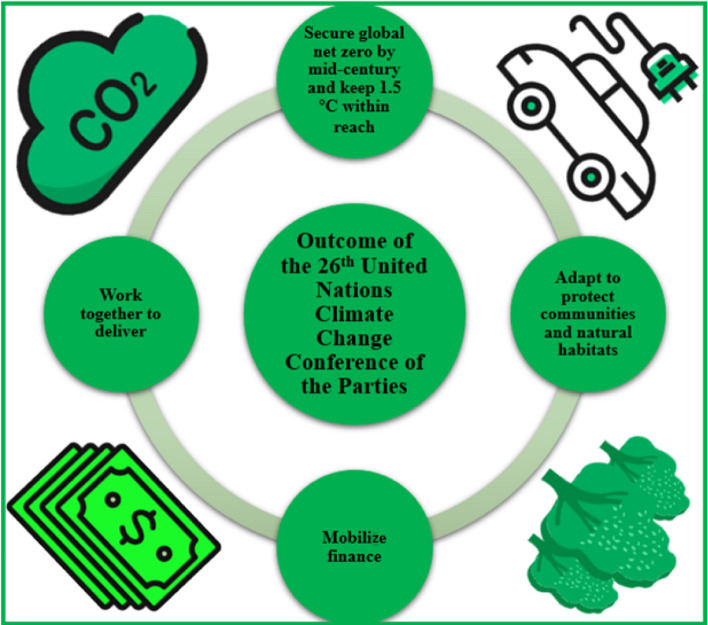
“The 26th United Nations Climate Change Conference of the Parties made progress in four key areas: coal, cars, cash, and trees.”
§ Strategies to achieve a carbon neutral society: a review > United Nations Climate Change Conference of the Parties > Outcomes of the Conference
plain- Asserted: passes — The authors put it forward as true.
- Checkable: passes — It can be checked against evidence.
- Load-bearing: fails — The paper’s conclusions may not depend on it.
- Based: passes — The paper gives a reason why it holds.
Probably not a substantial claim. The paper’s conclusions may not depend on it. It may state two separate claims as one.
In the paper
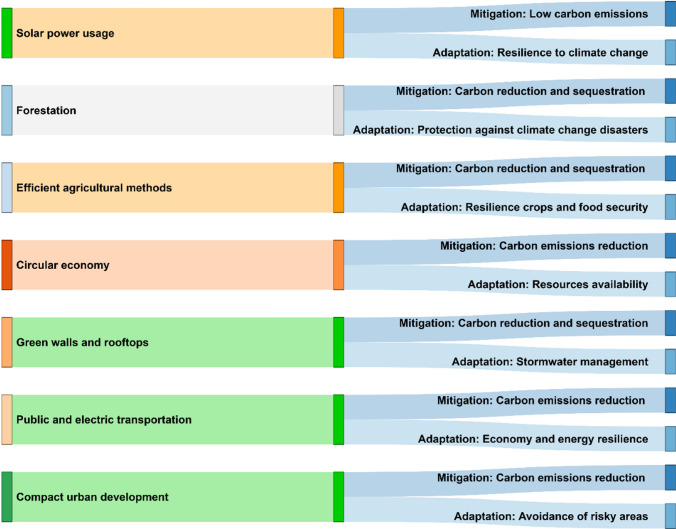
“Green walls and rooftops can mitigate climate change by reducing heat islands, lowering energy usage, and sequestering carbon.”
§ Strategies to achieve a carbon neutral society: a review > Interrelationships and synergies between adaptation and mitigation strategies
What the sources say
- Not checked yetcites Grafakos et al. 2019 source
plaindirect- Asserted: passes — The authors put it forward as true.
- Checkable: passes — It can be checked against evidence.
- Load-bearing: unclear — It is unclear whether the paper’s conclusions depend on it.
- Based: passes — The paper gives a reason why it holds.
It may state two separate claims as one.
The paper states this without a source or data behind it here, so there is nothing to check it against. The quote shows it is in the paper.
In the paper
“Government initiatives such as carbon taxes, zero-carbon industry incentives, and mitigation and adaptation policies can all contribute to the circular economy’s transformation.”
§ Strategies to achieve a carbon neutral society: a review > Interrelationships and synergies between adaptation and mitigation strategies
plainconditional- Asserted: passes — The authors put it forward as true.
- Checkable: passes — It can be checked against evidence.
- Load-bearing: fails — The paper’s conclusions may not depend on it.
- Based: passes — The paper gives a reason why it holds.
Probably not a substantial claim. The paper’s conclusions may not depend on it.
In the paper
“Several constraints to synergies include a lack of finance, collaboration, implementation, transparency, and public engagement.”
§ Strategies to achieve a carbon neutral society: a review > Interrelationships and synergies between adaptation and mitigation strategies
What the sources say
- Not checked yetcites Ngum et al. 2019 source
plaindirect- Asserted: passes — The authors put it forward as true.
- Checkable: passes — It can be checked against evidence.
- Load-bearing: fails — The paper’s conclusions may not depend on it.
- Based: passes — The paper gives a reason why it holds.
Probably not a substantial claim. The paper’s conclusions may not depend on it.
In the paper
“Additionally, green roofs increase stormwater management, allowing for adaptation to climate change-related flooding.”
§ Strategies to achieve a carbon neutral society: a review > Interrelationships and synergies between adaptation and mitigation strategies
What the sources say
- Not checked yetcites Grafakos et al. 2019 source
plaindirect- Asserted: passes — The authors put it forward as true.
- Checkable: passes — It can be checked against evidence.
- Load-bearing: unclear — It is unclear whether the paper’s conclusions depend on it.
- Based: passes — The paper gives a reason why it holds.
It may state two separate claims as one.
The paper states this without a source or data behind it here, so there is nothing to check it against. The quote shows it is in the paper.
In the paper
“Additionally, compact urban development decreases land demand, avoids risky locations, and is less susceptible to intense heat events than urban sprawl, allowing for climate change adaptation.”
§ Strategies to achieve a carbon neutral society: a review > Interrelationships and synergies between adaptation and mitigation strategies
plaindirect- Asserted: passes — The authors put it forward as true.
- Checkable: passes — It can be checked against evidence.
- Load-bearing: fails — The paper’s conclusions may not depend on it.
- Based: fails — The paper may give no reason why it holds.
Probably not a substantial claim. The paper’s conclusions may not depend on it. The paper may give no reason why it holds. It may state two separate claims as one.
The paper states this without a source or data behind it here, so there is nothing to check it against. The quote shows it is in the paper.
In the paper
“For instance, constructing a hydroelectric power plant will reduce greenhouse gas emissions due to its renewable energy source.”
§ Strategies to achieve a carbon neutral society: a review > Interrelationships and synergies between adaptation and mitigation strategies
hedgeddirect- Asserted: passes — The authors put it forward as true.
- Checkable: passes — It can be checked against evidence.
- Load-bearing: fails — The paper’s conclusions may not depend on it.
- Based: fails — The paper may give no reason why it holds.
Probably not a substantial claim. The paper’s conclusions may not depend on it. The paper may give no reason why it holds.
The paper states this without a source or data behind it here, so there is nothing to check it against. The quote shows it is in the paper.
In the paper
“On the other hand, while constructing a dam to prevent seawater intrusion will secure water supply and so reduce vulnerability”
§ Strategies to achieve a carbon neutral society: a review > Interrelationships and synergies between adaptation and mitigation strategies
plaindirect- Asserted: passes — The authors put it forward as true.
- Checkable: passes — It can be checked against evidence.
- Load-bearing: unclear — It is unclear whether the paper’s conclusions depend on it.
- Based: passes — The paper gives a reason why it holds.
It may state two separate claims as one.
In the paper
“Reduced forest conversion helps mitigate climate change by lowering greenhouse gas emissions and increasing carbon storage.”
§ Strategies to achieve a carbon neutral society: a review > Interrelationships and synergies between adaptation and mitigation strategies
What the sources say
- Not checked yetcites Montanaro et al. 2018 source
plaindirect- Asserted: passes — The authors put it forward as true.
- Checkable: passes — It can be checked against evidence.
- Load-bearing: unclear — It is unclear whether the paper’s conclusions depend on it.
- Based: passes — The paper gives a reason why it holds.
It may state two separate claims as one.
The paper states this without a source or data behind it here, so there is nothing to check it against. The quote shows it is in the paper.
In the paper
“A transition from a linear to a circular economy, in which end-of-life goods can be used to create new goods, is one strategy to mitigate and adapt to climate change.”
§ Strategies to achieve a carbon neutral society: a review > Interrelationships and synergies between adaptation and mitigation strategies
plaindirect- Asserted: passes — The authors put it forward as true.
- Checkable: passes — It can be checked against evidence.
- Load-bearing: fails — The paper’s conclusions may not depend on it.
- Based: fails — The paper may give no reason why it holds.
Probably not a substantial claim. The paper’s conclusions may not depend on it. The paper may give no reason why it holds.
The paper states this without a source or data behind it here, so there is nothing to check it against. The quote shows it is in the paper.
In the paper
“For example, afforestation creates a beneficial synergy since afforestation works as a carbon sink and protects from calamities.”
§ Strategies to achieve a carbon neutral society: a review > Interrelationships and synergies between adaptation and mitigation strategies
plaindirect- Asserted: passes — The authors put it forward as true.
- Checkable: passes — It can be checked against evidence.
- Load-bearing: fails — The paper’s conclusions may not depend on it.
- Based: fails — The paper may give no reason why it holds.
Probably not a substantial claim. The paper’s conclusions may not depend on it. The paper may give no reason why it holds. It may state two separate claims as one.
The paper states this without a source or data behind it here, so there is nothing to check it against. The quote shows it is in the paper.
In the paper
“Compact urban development reduces per capita travel demand, energy demand for heating and cooling, and provides energy systems that are more efficient, so lowering carbon emissions and mitigating climate change.”
§ Strategies to achieve a carbon neutral society: a review > Interrelationships and synergies between adaptation and mitigation strategies
plaindirect- Asserted: passes — The authors put it forward as true.
- Checkable: passes — It can be checked against evidence.
- Load-bearing: passes — The paper’s conclusions depend on it.
- Based: passes — The paper gives a reason why it holds.
It may state two separate claims as one.
In the paper
“All of these measures will reduce carbon emissions, ultimately mitigating climate change; simultaneously, they will result in cost and energy savings, thereby increasing economic and energy resilience and thus enabling climate change adaptation.”
§ Strategies to achieve a carbon neutral society: a review > Interrelationships and synergies between adaptation and mitigation strategies
What the sources say
- Not checked yetcites Sharifi 2021 source
plaindirect- Asserted: passes — The authors put it forward as true.
- Checkable: passes — It can be checked against evidence.
- Load-bearing: passes — The paper’s conclusions depend on it.
- Based: passes — The paper gives a reason why it holds.
It may state two separate claims as one.
The paper states this without a source or data behind it here, so there is nothing to check it against. The quote shows it is in the paper.
In the paper
“However, a hydroelectric power plant will increase competition for water with local communities, compromising adaptation.”
§ Strategies to achieve a carbon neutral society: a review > Interrelationships and synergies between adaptation and mitigation strategies
hedgeddirect- Asserted: passes — The authors put it forward as true.
- Checkable: passes — It can be checked against evidence.
- Load-bearing: unclear — It is unclear whether the paper’s conclusions depend on it.
- Based: unclear — It is unclear why the paper says it holds.
It may state two separate claims as one.
In the paper
“Additionally, improving efficient agricultural practices aids in climate change adaptation by increasing soil carbon and water efficiency, resulting in resilient crops and food security.”
§ Strategies to achieve a carbon neutral society: a review > Interrelationships and synergies between adaptation and mitigation strategies
What the sources say
- Not checked yetcites Montanaro et al. 2018 source
plaindirect- Asserted: passes — The authors put it forward as true.
- Checkable: passes — It can be checked against evidence.
- Load-bearing: unclear — It is unclear whether the paper’s conclusions depend on it.
- Based: passes — The paper gives a reason why it holds.
It may state two separate claims as one.
In the paper
“Promoting public transportation, increasing vehicle efficiency, electrifying transportation, and encouraging car-sharing services are all approaches to mitigate and adapt to climate change in the transportation sector (Sharifi 2021).”
§ Strategies to achieve a carbon neutral society: a review > Interrelationships and synergies between adaptation and mitigation strategies
What the sources say
- Not checked yetcites Sharifi 2021 source
plaindirect- Asserted: passes — The authors put it forward as true.
- Checkable: passes — It can be checked against evidence.
- Load-bearing: passes — The paper’s conclusions depend on it.
- Based: passes — The paper gives a reason why it holds.
It may state two separate claims as one.
In the paper
“The trend is evident from 2000 to 2010; the United States of America have maintained indirect household emissions at 400 million tonnes while China increased from 150 to 500 million tonnes.”
§ Strategies to achieve a carbon neutral society: a review > Mapping direct and indirect carbon emissions
What the sources say
- Not checked yetcites Ma et al. 2016
plain- Asserted: passes — The authors put it forward as true.
- Checkable: passes — It can be checked against evidence.
- Load-bearing: unclear — It is unclear whether the paper’s conclusions depend on it.
- Based: passes — The paper gives a reason why it holds.
It may state two separate claims as one.
In the paper
“In comparison, China’s indirect emissions were accounted for by residence; education, culture, and recreation; and transportation and communication, which accounted for 50%, 2.28%, and 2.48%, respectively.”
§ Strategies to achieve a carbon neutral society: a review > Mapping direct and indirect carbon emissions
What the sources say
- Not checked yetcites Ma et al. 2016
plain- Asserted: passes — The authors put it forward as true.
- Checkable: passes — It can be checked against evidence.
- Load-bearing: fails — The paper’s conclusions may not depend on it.
- Based: passes — The paper gives a reason why it holds.
Probably not a substantial claim. The paper’s conclusions may not depend on it. It may state two separate claims as one.
In the paper
“Another study of the ecosystem’s carbon footprint conducted in Romania discovered a density of 2949 ha and a projected crown coverage of 7616 ha.”
§ Strategies to achieve a carbon neutral society: a review > Mapping direct and indirect carbon emissions
What the sources say
- Not checked yetcites Mihut et al. 2019
plain- Asserted: passes — The authors put it forward as true.
- Checkable: passes — It can be checked against evidence.
- Load-bearing: unclear — It is unclear whether the paper’s conclusions depend on it.
- Based: passes — The paper gives a reason why it holds.
It may state two separate claims as one.
In the paper
“Additionally, carbon emissions were highest during July compared to other months, indicating that more energy was required for cooling, necessitating increased attention, particularly as global temperatures continue to rise.”
§ Strategies to achieve a carbon neutral society: a review > Mapping direct and indirect carbon emissions
What the sources say
- Not checked yetcites Yamagata et al. 2018 source
hedgeddirect- Asserted: passes — The authors put it forward as true.
- Checkable: passes — It can be checked against evidence.
- Load-bearing: unclear — It is unclear whether the paper’s conclusions depend on it.
- Based: passes — The paper gives a reason why it holds.
It may state two separate claims as one.
In the paper
“Among these emissions, the industries’ emissions incorporated in local and exported products are 4.3 t CO2-eq/capita and 5.3 t CO2-eq/capita, respectively.”
§ Strategies to achieve a carbon neutral society: a review > Mapping direct and indirect carbon emissions
What the sources say
- Not checked yetcites Wiedmann et al. 2016 source
plain- Asserted: passes — The authors put it forward as true.
- Checkable: passes — It can be checked against evidence.
- Load-bearing: fails — The paper’s conclusions may not depend on it.
- Based: passes — The paper gives a reason why it holds.
Probably not a substantial claim. The paper’s conclusions may not depend on it. It may state two separate claims as one.
The paper states this without a source or data behind it here, so there is nothing to check it against. The quote shows it is in the paper.
In the paper
“There are generally two viable approaches explored in the literature concerning achieving carbon neutrality. The first approach entails initiatives, policies, and technologies to reduce CO2 emissions. In addition to emissions reductions, further measures are required to achieve a net-zero carbon system. A second approach focuses on carbon removal from the atmosphere, also referred to as negative”
§ Strategies to achieve a carbon neutral society: a review > Achieving carbon neutrality
plain- Asserted: passes — The authors put it forward as true.
- Checkable: passes — It can be checked against evidence.
- Load-bearing: passes — The paper’s conclusions depend on it.
- Based: passes — The paper gives a reason why it holds.
Probably not a substantial claim.
In the paper
“Urbanization reduced per capita CO2 emissions from the transportation sector, with Hebei benefiting the most.”
§ Strategies to achieve a carbon neutral society: a review > Mapping direct and indirect carbon emissions
What the sources say
- Not checked yetcites Cai et al. 2018 source
plaindirect- Asserted: passes — The authors put it forward as true.
- Checkable: passes — It can be checked against evidence.
- Load-bearing: unclear — It is unclear whether the paper’s conclusions depend on it.
- Based: passes — The paper gives a reason why it holds.
It may state two separate claims as one.
In the paper
“The rates revealed in this study were higher than those obtained by global forest watch since the study carried out by global forest watch considered deforestation only in government forests, excluding agricultural lands and community forests.”
§ Strategies to achieve a carbon neutral society: a review > Mapping direct and indirect carbon emissions
What the sources say
- Not checked yetcites Skole et al. 2021 source
plaindirect- Asserted: passes — The authors put it forward as true.
- Checkable: passes — It can be checked against evidence.
- Load-bearing: unclear — It is unclear whether the paper’s conclusions depend on it.
- Based: passes — The paper gives a reason why it holds.
It may state two separate claims as one.
In the paper
“Additionally, power generation and demand emissions totalled 10 t CO2-eq/capita, while import-related emissions totalled 10.8 t CO2-eq/capita.”
§ Strategies to achieve a carbon neutral society: a review > Mapping direct and indirect carbon emissions
What the sources say
- Not checked yetcites Wiedmann et al. 2016 source
plainSingle case- Asserted: passes — The authors put it forward as true.
- Checkable: passes — It can be checked against evidence.
- Load-bearing: unclear — It is unclear whether the paper’s conclusions depend on it.
- Based: passes — The paper gives a reason why it holds.
It may state two separate claims as one.
A conclusion the paper draws from its own results — it cites no other source for it, so there is none to check. The quote shows it is in the paper.
In the paper
“The findings of these mapping studies assist policymakers in determining which sectors or sections of cities deserve attention, allowing for more efficient climate change policies than general approaches.”
§ Strategies to achieve a carbon neutral society: a review > Mapping direct and indirect carbon emissions
plaindirect- Asserted: passes — The authors put it forward as true.
- Checkable: fails — It may be too vague to check against evidence.
- Load-bearing: fails — The paper’s conclusions may not depend on it.
- Based: passes — The paper gives a reason why it holds.
Probably not a substantial claim. It may be too vague to check against evidence. The paper’s conclusions may not depend on it.
In the paper
“However, there has been a recent trend in which China’s household emissions have increased while those in the United States of America have decreased.”
§ Strategies to achieve a carbon neutral society: a review > Mapping direct and indirect carbon emissions
What the sources say
- Not checked yetcites Ma et al. 2016
plaincorrelational- Asserted: passes — The authors put it forward as true.
- Checkable: passes — It can be checked against evidence.
- Load-bearing: unclear — It is unclear whether the paper’s conclusions depend on it.
- Based: passes — The paper gives a reason why it holds.
It may state two separate claims as one.
In the paper
“The study also discovered that carbon emissions around the commercial district of Kinshi-Cho were higher than those around SkyTree due to Kinshi-Cho being unplanned and densely packed compared to SkyTree, which has well-planned energy-efficient buildings (Yamagata et al. 2018).”
§ Strategies to achieve a carbon neutral society: a review > Mapping direct and indirect carbon emissions
What the sources say
- Not checked yetcites Yamagata et al. 2018 source
plaindirect- Asserted: passes — The authors put it forward as true.
- Checkable: passes — It can be checked against evidence.
- Load-bearing: unclear — It is unclear whether the paper’s conclusions depend on it.
- Based: passes — The paper gives a reason why it holds.
It may state two separate claims as one.
In the paper
“Additionally, the forest had 27,800 m3 of green biomass and 13,066 t of carbon (Mihut et al. 2019).”
§ Strategies to achieve a carbon neutral society: a review > Mapping direct and indirect carbon emissions
What the sources say
- Not checked yetcites Mihut et al. 2019
plain- Asserted: passes — The authors put it forward as true.
- Checkable: passes — It can be checked against evidence.
- Load-bearing: fails — The paper’s conclusions may not depend on it.
- Based: passes — The paper gives a reason why it holds.
Probably not a substantial claim. The paper’s conclusions may not depend on it. It may state two separate claims as one.
In the paper
“The findings indicated that the United States has historically emitted more indirect CO2 than China.”
§ Strategies to achieve a carbon neutral society: a review > Mapping direct and indirect carbon emissions
What the sources say
- Not checked yetcites Ma et al. 2016
hedged- Asserted: passes — The authors put it forward as true.
- Checkable: passes — It can be checked against evidence.
- Load-bearing: unclear — It is unclear whether the paper’s conclusions depend on it.
- Based: passes — The paper gives a reason why it holds.
The quote only partly states this claim.
In the paper
“accounting for 2.489%, 2.425%, 2.439%, and 2.447% carbon emissions from all industries in China.”
§ Strategies to achieve a carbon neutral society: a review > Mapping direct and indirect carbon emissions
What the sources say
- Not checked yetcites Meng et al. 2016 source
plain- Asserted: passes — The authors put it forward as true.
- Checkable: passes — It can be checked against evidence.
- Load-bearing: fails — The paper’s conclusions may not depend on it.
- Based: passes — The paper gives a reason why it holds.
Probably not a substantial claim. The paper’s conclusions may not depend on it.
In the paper
“Apart from transportation, the other tourism sectors emitted three to four times the amount of direct carbon emissions indirectly.”
§ Strategies to achieve a carbon neutral society: a review > Mapping direct and indirect carbon emissions
What the sources say
- Not checked yetcites Meng et al. 2016 source
plaincorrelational- Asserted: passes — The authors put it forward as true.
- Checkable: passes — It can be checked against evidence.
- Load-bearing: fails — The paper’s conclusions may not depend on it.
- Based: passes — The paper gives a reason why it holds.
Probably not a substantial claim. The paper’s conclusions may not depend on it.
In the paper
“Wiedmann et al. created a carbon footprint map for Melbourne, revealing a total of 25.1 t CO2-eq/capita (Wiedmann et al. 2016).”
§ Strategies to achieve a carbon neutral society: a review > Mapping direct and indirect carbon emissions
What the sources say
- Not checked yetcites Wiedmann et al. 2016 source
plain- Asserted: passes — The authors put it forward as true.
- Checkable: passes — It can be checked against evidence.
- Load-bearing: fails — The paper’s conclusions may not depend on it.
- Based: passes — The paper gives a reason why it holds.
Probably not a substantial claim. The paper’s conclusions may not depend on it.
In the paper
“The analysis indicated that deforestation rates between 2000–2009 and 2009–2015 were 22,410 ha yr−1 and 38,937 ha yr−1, respectively.”
§ Strategies to achieve a carbon neutral society: a review > Mapping direct and indirect carbon emissions
What the sources say
- Not checked yetcites Skole et al. 2021 source
hedged- Asserted: passes — The authors put it forward as true.
- Checkable: passes — It can be checked against evidence.
- Load-bearing: unclear — It is unclear whether the paper’s conclusions depend on it.
- Based: passes — The paper gives a reason why it holds.
It may state two separate claims as one.
In the paper
“The road links had significant direct emissions from fossil fuels compared to indirect emissions, indicating that the transition from gasoline to electric vehicles will substantially reduce carbon emissions.”
§ Strategies to achieve a carbon neutral society: a review > Mapping direct and indirect carbon emissions
What the sources say
- Not checked yetcites Yamagata et al. 2018 source
hedgeddirect- Asserted: passes — The authors put it forward as true.
- Checkable: passes — It can be checked against evidence.
- Load-bearing: passes — The paper’s conclusions depend on it.
- Based: passes — The paper gives a reason why it holds.
It may state two separate claims as one.
In the paper
“The tourism industry generated total carbon emissions of 111.49 Mt, 141.88 Mt, 169.76 Mt, and 208.4 Mt in 2002, 2005, 2007, and 2010, respectively”
§ Strategies to achieve a carbon neutral society: a review > Mapping direct and indirect carbon emissions
What the sources say
- Not checked yetcites Meng et al. 2016 source
plain- Asserted: passes — The authors put it forward as true.
- Checkable: passes — It can be checked against evidence.
- Load-bearing: fails — The paper’s conclusions may not depend on it.
- Based: passes — The paper gives a reason why it holds.
Probably not a substantial claim. The paper’s conclusions may not depend on it.
A conclusion the paper draws from its own results — it cites no other source for it, so there is none to check. The quote shows it is in the paper.
In the paper
“In summary, achieving carbon neutrality is not a one-day accomplishment. Long-term strategies that promote renewable energy and energy efficiency are necessary to reduce carbon emissions and attain carbon neutrality.”
§ Strategies to achieve a carbon neutral society: a review > Achieving carbon neutrality > Carbon emissions reduction
plaindirect- Asserted: passes — The authors put it forward as true.
- Checkable: fails — It may be too vague to check against evidence.
- Load-bearing: passes — The paper’s conclusions depend on it.
- Based: passes — The paper gives a reason why it holds.
Probably not a substantial claim. It may be too vague to check against evidence.
In the paper
“The findings indicated that carbon neutrality is technically feasible with future energy technologies by mid-century.”
§ Strategies to achieve a carbon neutral society: a review > Achieving carbon neutrality > Carbon emissions reduction
What the sources say
- Not checked yetcites Rodrigues et al. 2022 source
hedged- Asserted: passes — The authors put it forward as true.
- Checkable: passes — It can be checked against evidence.
- Load-bearing: passes — The paper’s conclusions depend on it.
- Based: passes — The paper gives a reason why it holds.
Probably not a substantial claim.
A conclusion the paper draws from its own results — it cites no other source for it, so there is none to check. The quote shows it is in the paper.
In the paper
“For example, excessive demand for biofuels can lead to over-demand in biomass, increasing price and scarcity.”
§ Strategies to achieve a carbon neutral society: a review > Achieving carbon neutrality > Carbon emissions reduction
plaindirect- Asserted: passes — The authors put it forward as true.
- Checkable: passes — It can be checked against evidence.
- Load-bearing: fails — The paper’s conclusions may not depend on it.
- Based: fails — The paper may give no reason why it holds.
Probably not a substantial claim. The paper’s conclusions may not depend on it. The paper may give no reason why it holds.
In the paper
“Furthermore, a combination of all scenarios resulted in the most effective carbon emission reductions, meeting China’s target.”
§ Strategies to achieve a carbon neutral society: a review > Achieving carbon neutrality > Carbon emissions reduction
What the sources say
- Not checked yetcites Li et al. 2019
plaindirect- Asserted: passes — The authors put it forward as true.
- Checkable: passes — It can be checked against evidence.
- Load-bearing: unclear — It is unclear whether the paper’s conclusions depend on it.
- Based: passes — The paper gives a reason why it holds.
It may state two separate claims as one.
In the paper
“Additionally, the analysis revealed that supplying 10.4 PWh of renewable energy annually would result in a reduction of 2.08 Mt SO2 and 1.97 Mt NOx, bringing the country closer to meeting its carbon neutrality targets.”
§ Strategies to achieve a carbon neutral society: a review > Achieving carbon neutrality > Carbon emissions reduction
What the sources say
- Not checked yetcites Liu et al. 2022a
hedgeddirect- Asserted: passes — The authors put it forward as true.
- Checkable: passes — It can be checked against evidence.
- Load-bearing: unclear — It is unclear whether the paper’s conclusions depend on it.
- Based: passes — The paper gives a reason why it holds.
It may state two separate claims as one.
A conclusion the paper draws from its own results — it cites no other source for it, so there is none to check. The quote shows it is in the paper.
In the paper
“On the other hand, the shift to carbon neutrality cannot occur spontaneously because carbon neutrality is primarily motivated by environmental concerns and offers no immediate financial benefits to individuals or corporations.”
§ Strategies to achieve a carbon neutral society: a review > Achieving carbon neutrality > Carbon emissions reduction
plaindirect- Asserted: passes — The authors put it forward as true.
- Checkable: passes — It can be checked against evidence.
- Load-bearing: passes — The paper’s conclusions depend on it.
- Based: passes — The paper gives a reason why it holds.
It may state two separate claims as one.
- Rests on an assumption: Carbon neutrality is primarily motivated by environmental concerns and offers no immediate financial benefits to individuals or corporations.
In the paper
“However, the use of carbon molecular sieve membranes in flue gas separation has drawbacks, such as the huge area required to capture a given amount of CO2 and deteriorating performance over time due to carbon matrix species sorption.”
§ Strategies to achieve a carbon neutral society: a review > Achieving carbon neutrality > Carbon emissions reduction
What the sources say
- Not checked yetcites Lei et al. 2020 source
plaindirect- Asserted: passes — The authors put it forward as true.
- Checkable: passes — It can be checked against evidence.
- Load-bearing: unclear — It is unclear whether the paper’s conclusions depend on it.
- Based: passes — The paper gives a reason why it holds.
It may state two separate claims as one.
A conclusion the paper draws from its own results — it cites no other source for it, so there is none to check. The quote shows it is in the paper.
In the paper
“As a result, low-carbon technologies must be competitive in order to facilitate this energy transition.”
§ Strategies to achieve a carbon neutral society: a review > Achieving carbon neutrality > Carbon emissions reduction
plaindirect- Asserted: passes — The authors put it forward as true.
- Checkable: fails — It may be too vague to check against evidence.
- Load-bearing: passes — The paper’s conclusions depend on it.
- Based: passes — The paper gives a reason why it holds.
Probably not a substantial claim. It may be too vague to check against evidence.
In the paper
“Renewable energy sources improve environmental quality; nevertheless, their use in Bangladesh for electricity production is as low as 1%, which is insufficient to reduce carbon emissions (Murshed et al. 2021).”
§ Strategies to achieve a carbon neutral society: a review > Achieving carbon neutrality > Carbon emissions reduction
What the sources say
- Not checked yetcites Murshed et al. 2021 source
plaindirect- Asserted: passes — The authors put it forward as true.
- Checkable: passes — It can be checked against evidence.
- Load-bearing: unclear — It is unclear whether the paper’s conclusions depend on it.
- Based: passes — The paper gives a reason why it holds.
It may state two separate claims as one.
In the paper
“Additionally, demand-side emission reduction efforts include efficiency gains realized through the implementation of energy-efficient processes and sector-specific technologies that reduce energy consumption, as well as end-use fuel switching from fossil-based to renewable fuels and the deployment of renewable energy technologies (Fawzy et al. 2020).”
§ Strategies to achieve a carbon neutral society: a review > Achieving carbon neutrality > Carbon emissions reduction
What the sources say
- Not checked yetcites Fawzy et al. 2020 source
plain- Asserted: passes — The authors put it forward as true.
- Checkable: passes — It can be checked against evidence.
- Load-bearing: unclear — It is unclear whether the paper’s conclusions depend on it.
- Based: passes — The paper gives a reason why it holds.
It may state two separate claims as one.
A conclusion the paper draws from its own results — it cites no other source for it, so there is none to check. The quote shows it is in the paper.
In the paper
“Carbon trading and tax policies help reduce carbon emissions and eventually lead to carbon neutrality.”
§ Strategies to achieve a carbon neutral society: a review > Achieving carbon neutrality > Carbon emissions reduction
plaindirect- Asserted: passes — The authors put it forward as true.
- Checkable: passes — It can be checked against evidence.
- Load-bearing: passes — The paper’s conclusions depend on it.
- Based: passes — The paper gives a reason why it holds.
It may state two separate claims as one.
None of the sources cited for this claim have been checked yet.
In the paper
“However, post-combustion capture systems are ideal for retrofit projects and have a wide range of applications (Fawzy et al. 2020; Osman et al. 2020).”
§ Strategies to achieve a carbon neutral society: a review > Achieving carbon neutrality > Carbon emissions reduction
What the sources say
plain- Asserted: passes — The authors put it forward as true.
- Checkable: passes — It can be checked against evidence.
- Load-bearing: unclear — It is unclear whether the paper’s conclusions depend on it.
- Based: passes — The paper gives a reason why it holds.
It may state two separate claims as one.
A conclusion the paper draws from its own results — it cites no other source for it, so there is none to check. The quote shows it is in the paper.
In the paper
“In addition to emissions reductions, further measures are required to achieve a net-zero carbon system.”
§ Strategies to achieve a carbon neutral society: a review > Achieving carbon neutrality
plaindirect- Asserted: passes — The authors put it forward as true.
- Checkable: passes — It can be checked against evidence.
- Load-bearing: passes — The paper’s conclusions depend on it.
- Based: fails — The paper may give no reason why it holds.
Probably not a substantial claim. The paper may give no reason why it holds.
In the paper
“Another study examined the glass manufacturing sector and its decarbonization process, noting that the container and flat glass industries alone release over 60 million tonnes of CO2 per year and that around 75–85% of energy is used to heat raw materials in a furnace (Furszyfer Del Rio et al. 2022).”
§ Strategies to achieve a carbon neutral society: a review > Achieving carbon neutrality > Carbon emissions reduction
What the sources say
- Not checked yetcites Furszyfer Del Rio et al. 2022 source
plain- Asserted: passes — The authors put it forward as true.
- Checkable: passes — It can be checked against evidence.
- Load-bearing: fails — The paper’s conclusions may not depend on it.
- Based: passes — The paper gives a reason why it holds.
Probably not a substantial claim. The paper’s conclusions may not depend on it.
In the paper
“Until 2018, the energy programme was well-executed but fell short of reducing CO2 emissions.”
§ Strategies to achieve a carbon neutral society: a review > Achieving carbon neutrality > Carbon emissions reduction
What the sources say
- Not checked yetcites Schiffer and Trüby 2018 source
plain- Asserted: passes — The authors put it forward as true.
- Checkable: passes — It can be checked against evidence.
- Load-bearing: fails — The paper’s conclusions may not depend on it.
- Based: passes — The paper gives a reason why it holds.
Probably not a substantial claim. The paper’s conclusions may not depend on it. It may state two separate claims as one.
In the paper
“Another study conducted in China found that wind and solar capacity of 2495 and 2674 GW can meet 67% of China’s total energy consumption in 2050, respectively (Liu et al. 2022a).”
§ Strategies to achieve a carbon neutral society: a review > Achieving carbon neutrality > Carbon emissions reduction
What the sources say
- Not checked yetcites Liu et al. 2022a
plaindirect- Asserted: passes — The authors put it forward as true.
- Checkable: passes — It can be checked against evidence.
- Load-bearing: fails — The paper’s conclusions may not depend on it.
- Based: passes — The paper gives a reason why it holds.
Probably not a substantial claim. The paper’s conclusions may not depend on it. It may state two separate claims as one.
In the paper
“Additionally, the study identified impediments to the glass industry’s decarbonization, including a shortage of capital, fluctuating energy prices, and unreliable infrastructure.”
§ Strategies to achieve a carbon neutral society: a review > Achieving carbon neutrality > Carbon emissions reduction
What the sources say
- Not checked yetcites Furszyfer Del Rio et al. 2022 source
plaindirect- Asserted: passes — The authors put it forward as true.
- Checkable: passes — It can be checked against evidence.
- Load-bearing: fails — The paper’s conclusions may not depend on it.
- Based: passes — The paper gives a reason why it holds.
Probably not a substantial claim. The paper’s conclusions may not depend on it. It may state two separate claims as one.
In the paper
“Arens et al. examined worldwide steel production and its transition away from coal-fired power generation, as coal-fired steel manufacturing currently accounts for 8% of global energy CO2 emissions.”
§ Strategies to achieve a carbon neutral society: a review > Achieving carbon neutrality > Carbon emissions reduction
What the sources say
- Not checked yetcites Arens et al. 2021 source
plain- Asserted: passes — The authors put it forward as true.
- Checkable: passes — It can be checked against evidence.
- Load-bearing: fails — The paper’s conclusions may not depend on it.
- Based: passes — The paper gives a reason why it holds.
Probably not a substantial claim. The paper’s conclusions may not depend on it.
In the paper
“According to the analysis, the steel industry is not well-positioned to achieve carbon neutrality by 2050.”
§ Strategies to achieve a carbon neutral society: a review > Achieving carbon neutrality > Carbon emissions reduction
What the sources say
- Not checked yetcites Arens et al. 2021 source
plain- Asserted: passes — The authors put it forward as true.
- Checkable: passes — It can be checked against evidence.
- Load-bearing: fails — The paper’s conclusions may not depend on it.
- Based: passes — The paper gives a reason why it holds.
Probably not a substantial claim. The paper’s conclusions may not depend on it.
In the paper
“Buildings can achieve a carbon-free future by utilizing improved building envelopes, renewable materials, and 3D printing. Additionally, this can be achieved by developing heating and cooling systems powered by renewable energy and employing energy-efficient technologies (Fawzy et al. 2020).”
§ Strategies to achieve a carbon neutral society: a review > Achieving carbon neutrality > Carbon emissions reduction
What the sources say
- Not checked yetcites Fawzy et al. 2020 source
plaindirect- Asserted: passes — The authors put it forward as true.
- Checkable: passes — It can be checked against evidence.
- Load-bearing: unclear — It is unclear whether the paper’s conclusions depend on it.
- Based: passes — The paper gives a reason why it holds.
It may state two separate claims as one.
In the paper
“The utilization of such technologies results in an 18% reduction in energy consumption and a 12% reduction in greenhouse gas emissions.”
§ Strategies to achieve a carbon neutral society: a review > Achieving carbon neutrality > Carbon emissions reduction
What the sources say
- Not checked yetcites Griffin and Hammond 2019 source
plaindirect- Asserted: passes — The authors put it forward as true.
- Checkable: passes — It can be checked against evidence.
- Load-bearing: unclear — It is unclear whether the paper’s conclusions depend on it.
- Based: passes — The paper gives a reason why it holds.
It may state two separate claims as one.
In the paper
“Another study examined the glass manufacturing sector and its decarbonization process, noting that the container and flat glass industries alone release over 60 million tonnes of CO2 per year and that around 75–85% of energy is used to heat raw materials in a furnace (Furszyfer Del Rio et al. 2022).”
§ Strategies to achieve a carbon neutral society: a review > Achieving carbon neutrality > Carbon emissions reduction
What the sources say
- Not checked yetcites Furszyfer Del Rio et al. 2022 source
plain- Asserted: passes — The authors put it forward as true.
- Checkable: passes — It can be checked against evidence.
- Load-bearing: fails — The paper’s conclusions may not depend on it.
- Based: passes — The paper gives a reason why it holds.
Probably not a substantial claim. The paper’s conclusions may not depend on it.
A conclusion the paper draws from its own results — it cites no other source for it, so there is none to check. The quote shows it is in the paper.
In the paper
“Overall, the impact of transitioning from fossil-based to renewable energy is well documented and is considered the most important approach to achieving carbon neutrality in the energy sector.”
§ Strategies to achieve a carbon neutral society: a review > Achieving carbon neutrality > Carbon emissions reduction
boosteddirect- Asserted: passes — The authors put it forward as true.
- Checkable: passes — It can be checked against evidence.
- Load-bearing: fails — The paper’s conclusions may not depend on it.
- Based: fails — The paper may give no reason why it holds.
Probably not a substantial claim. The paper’s conclusions may not depend on it. The paper may give no reason why it holds. It may state two separate claims as one.
In the paper
“A typical household’s carbon footprint was determined to be 6.93 t CO2-eq/yr, which corresponds to the annual carbon absorbed by 0.51 hectare of forest (Pulselli et al. 2019).”
§ Strategies to achieve a carbon neutral society: a review > Achieving carbon neutrality > Carbon emissions reduction
What the sources say
- Not checked yetcites Pulselli et al. 2019 source
plain- Asserted: passes — The authors put it forward as true.
- Checkable: passes — It can be checked against evidence.
- Load-bearing: fails — The paper’s conclusions may not depend on it.
- Based: passes — The paper gives a reason why it holds.
Probably not a substantial claim. The paper’s conclusions may not depend on it. It may state two separate claims as one.
In the paper
“The data indicated that the campus produced 21,500 Mt CO2-eq in 2017, equating to 1.79 Mt CO2-eq per student.”
§ Strategies to achieve a carbon neutral society: a review > Achieving carbon neutrality > Carbon emissions reduction
What the sources say
- Not checked yetcites Mustafa et al. 2022 source
hedgedSingle case- Asserted: passes — The authors put it forward as true.
- Checkable: passes — It can be checked against evidence.
- Load-bearing: unclear — It is unclear whether the paper’s conclusions depend on it.
- Based: passes — The paper gives a reason why it holds.
It may state two separate claims as one.
A conclusion the paper draws from its own results — it cites no other source for it, so there is none to check. The quote shows it is in the paper.
In the paper
“Achieving carbon neutrality would decrease the frequency of catastrophic disasters, and its direct impact on society would be to preserve the existing social order, while its indirect impact would be to promote human society’s evolution.”
§ Strategies to achieve a carbon neutral society: a review > Sustainability resulting from carbon neutrality > Impact on society
hedgeddirect- Asserted: passes — The authors put it forward as true.
- Checkable: passes — It can be checked against evidence.
- Load-bearing: fails — The paper’s conclusions may not depend on it.
- Based: fails — The paper may give no reason why it holds.
Probably not a substantial claim. The paper’s conclusions may not depend on it. The paper may give no reason why it holds.
In the paper
“The study concluded that shifting to a more vegetarian diet, consuming less meat, and reducing food waste will mitigate climate change.”
§ Strategies to achieve a carbon neutral society: a review > Achieving carbon neutrality > Carbon emissions reduction
What the sources say
- Not checked yetcites Strapasson et al. 2020 source
plaindirect- Asserted: passes — The authors put it forward as true.
- Checkable: passes — It can be checked against evidence.
- Load-bearing: passes — The paper’s conclusions depend on it.
- Based: passes — The paper gives a reason why it holds.
Probably not a substantial claim. It may state two separate claims as one.
A conclusion the paper draws from its own results — it cites no other source for it, so there is none to check. The quote shows it is in the paper.
In the paper
“Achieving carbon neutrality would decrease the frequency of catastrophic disasters, and its direct impact on society would be to preserve the existing social order, while its indirect impact would be to promote human society’s evolution.”
§ Strategies to achieve a carbon neutral society: a review > Sustainability resulting from carbon neutrality > Impact on society
hedgeddirect- Asserted: passes — The authors put it forward as true.
- Checkable: fails — It may be too vague to check against evidence.
- Load-bearing: fails — The paper’s conclusions may not depend on it.
- Based: fails — The paper may give no reason why it holds.
Probably not a substantial claim. It may be too vague to check against evidence. The paper’s conclusions may not depend on it. The paper may give no reason why it holds.
In the paper
“As a result, achieving carbon neutrality is a critical objective for a variety of countries today and one of the possible solutions to the problem of climate change (Udemba 2021).”
§ Strategies to achieve a carbon neutral society: a review > Sustainability resulting from carbon neutrality > Impact on the environment
What the sources say
- Not checked yetcites Udemba 2021 source
plain- Asserted: passes — The authors put it forward as true.
- Checkable: passes — It can be checked against evidence.
- Load-bearing: fails — The paper’s conclusions may not depend on it.
- Based: passes — The paper gives a reason why it holds.
Probably not a substantial claim. The paper’s conclusions may not depend on it. It may state two separate claims as one.
In the paper
“Another study concluded that negative emissions technologies are not yet ready for widespread use due to uncertainty regarding their technologies, pricing, and environmental implications (Chavez 2018).”
§ Strategies to achieve a carbon neutral society: a review > Achieving carbon neutrality > Atmospheric carbon removal
What the sources say
- Not checked yetcites Chavez 2018 source
plaindirect- Asserted: passes — The authors put it forward as true.
- Checkable: passes — It can be checked against evidence.
- Load-bearing: passes — The paper’s conclusions depend on it.
- Based: passes — The paper gives a reason why it holds.
Probably not a substantial claim.
A conclusion the paper draws from its own results — it cites no other source for it, so there is none to check. The quote shows it is in the paper.
In the paper
“Overall, buildings and cities play a critical role in reducing carbon emissions and achieving carbon neutrality.”
§ Strategies to achieve a carbon neutral society: a review > Achieving carbon neutrality > Carbon emissions reduction
plaindirect- Asserted: passes — The authors put it forward as true.
- Checkable: passes — It can be checked against evidence.
- Load-bearing: passes — The paper’s conclusions depend on it.
- Based: passes — The paper gives a reason why it holds.
Probably not a substantial claim.
In the paper
“By 2030, the usage of biomethane in vehicles for compressed natural gas and liquified natural gas will increase to 30 billion m3/yr.”
§ Strategies to achieve a carbon neutral society: a review > Achieving carbon neutrality > Carbon emissions reduction
What the sources say
- Not checked yetcites Prussi et al. 2019 source
plaindirect- Asserted: passes — The authors put it forward as true.
- Checkable: passes — It can be checked against evidence.
- Load-bearing: fails — The paper’s conclusions may not depend on it.
- Based: passes — The paper gives a reason why it holds.
Probably not a substantial claim. The paper’s conclusions may not depend on it.
A conclusion the paper draws from its own results — it cites no other source for it, so there is none to check. The quote shows it is in the paper.
In the paper
“In summary, negative emissions technologies have enormous promise for achieving future carbon neutrality; hence, additional investment, research, and regulations are needed to encourage deployment.”
§ Strategies to achieve a carbon neutral society: a review > Achieving carbon neutrality > Atmospheric carbon removal
boostedconditional- Asserted: passes — The authors put it forward as true.
- Checkable: fails — It may be too vague to check against evidence.
- Load-bearing: passes — The paper’s conclusions depend on it.
- Based: passes — The paper gives a reason why it holds.
Probably not a substantial claim. It may be too vague to check against evidence.
A conclusion the paper draws from its own results — it cites no other source for it, so there is none to check. The quote shows it is in the paper.
In the paper
“The reintroduction of lumber into structures is critical because a cubic metre of wood stores half a tonne of carbon; hence, timber buildings and cities can act as carbon sinks.”
§ Strategies to achieve a carbon neutral society: a review > Achieving carbon neutrality > Carbon emissions reduction
plaindirect- Asserted: passes — The authors put it forward as true.
- Checkable: passes — It can be checked against evidence.
- Load-bearing: passes — The paper’s conclusions depend on it.
- Based: fails — The paper may give no reason why it holds.
Probably not a substantial claim. The paper may give no reason why it holds. It may state two separate claims as one.
In the paper
“Simultaneously, achieving carbon neutrality will help decrease global warming and resolve the world’s energy dilemma while also having good ecological impacts such as improved air quality, more sustainable landscapes, and ecological restoration (Chen 2021).”
§ Strategies to achieve a carbon neutral society: a review > Sustainability resulting from carbon neutrality > Impact on the environment
What the sources say
- Not checked yetcites Chen 2021 source
plaindirect- Asserted: passes — The authors put it forward as true.
- Checkable: passes — It can be checked against evidence.
- Load-bearing: unclear — It is unclear whether the paper’s conclusions depend on it.
- Based: passes — The paper gives a reason why it holds.
It may state two separate claims as one.
In the paper
“The overexploitation of non-renewable resources by global industrial development and other forms of environmental damage such as heavy reliance on fossil fuels, deforestation, and waste incineration have resulted in an increase in greenhouse gases in the atmosphere, ultimately causing environmental degradation such as global temperature increase and melting of the north and south pole glaciers (T”
§ Strategies to achieve a carbon neutral society: a review > Sustainability resulting from carbon neutrality > Impact on the environment
What the sources say
- Not checked yetcites Tan and Wang 2021 source
plaindirect- Asserted: passes — The authors put it forward as true.
- Checkable: passes — It can be checked against evidence.
- Load-bearing: passes — The paper’s conclusions depend on it.
- Based: passes — The paper gives a reason why it holds.
It may state two separate claims as one.
A conclusion the paper draws from its own results — it cites no other source for it, so there is none to check. The quote shows it is in the paper.
In the paper
“As noted, society can play an important role in carbon emission reduction.”
§ Strategies to achieve a carbon neutral society: a review > Achieving carbon neutrality > Carbon emissions reduction
plainconditional- Asserted: passes — The authors put it forward as true.
- Checkable: fails — It may be too vague to check against evidence.
- Load-bearing: passes — The paper’s conclusions depend on it.
- Based: passes — The paper gives a reason why it holds.
Probably not a substantial claim. It may be too vague to check against evidence.
The paper states this without a source or data behind it here, so there is nothing to check it against. The quote shows it is in the paper.
In the paper
“For instance, electricity can provide 72.3% of the total energy necessary for transport in the European Union using existing technologies.”
§ Strategies to achieve a carbon neutral society: a review > Achieving carbon neutrality > Carbon emissions reduction
plaindirect- Asserted: passes — The authors put it forward as true.
- Checkable: passes — It can be checked against evidence.
- Load-bearing: fails — The paper’s conclusions may not depend on it.
- Based: fails — The paper may give no reason why it holds.
Probably not a substantial claim. The paper’s conclusions may not depend on it. The paper may give no reason why it holds.
In the paper
“Economically, the enhanced weathering approach had the highest costs, with lower and upper costs of $US 25/t CO2 and $US 1600/t CO2, respectively.”
§ Strategies to achieve a carbon neutral society: a review > Achieving carbon neutrality > Atmospheric carbon removal
What the sources say
- Not checked yetcites Alcalde et al. 2018 source
plain- Asserted: passes — The authors put it forward as true.
- Checkable: passes — It can be checked against evidence.
- Load-bearing: unclear — It is unclear whether the paper’s conclusions depend on it.
- Based: passes — The paper gives a reason why it holds.
It may state two separate claims as one.
In the paper
“South America accounts for 31.3% of global annual greenhouse gas emissions from land use and land-use change, according to the study (Sa et al. 2017).”
§ Strategies to achieve a carbon neutral society: a review > Achieving carbon neutrality > Carbon emissions reduction
What the sources say
- Not checked yetcites Sa et al. 2017
plain- Asserted: passes — The authors put it forward as true.
- Checkable: passes — It can be checked against evidence.
- Load-bearing: fails — The paper’s conclusions may not depend on it.
- Based: passes — The paper gives a reason why it holds.
Probably not a substantial claim. The paper’s conclusions may not depend on it.
A conclusion the paper draws from its own results — it cites no other source for it, so there is none to check. The quote shows it is in the paper.
In the paper
“The primary and most direct benefit of achieving carbon neutrality is to mitigate negative environmental impacts and slow the rising rate of global temperature.”
§ Strategies to achieve a carbon neutral society: a review > Sustainability resulting from carbon neutrality > Impact on the environment
plaindirect- Asserted: passes — The authors put it forward as true.
- Checkable: passes — It can be checked against evidence.
- Load-bearing: passes — The paper’s conclusions depend on it.
- Based: passes — The paper gives a reason why it holds.
It may state two separate claims as one.
A conclusion the paper draws from its own results — it cites no other source for it, so there is none to check. The quote shows it is in the paper.
In the paper
“In summary, decarbonizing the transportation sector is feasible through the use of electricity, biofuels, hydrogen, and electro-fuels, with electricity being the most practical alternative.”
§ Strategies to achieve a carbon neutral society: a review > Achieving carbon neutrality > Carbon emissions reduction
plaindirect- Asserted: passes — The authors put it forward as true.
- Checkable: passes — It can be checked against evidence.
- Load-bearing: passes — The paper’s conclusions depend on it.
- Based: unclear — It is unclear why the paper says it holds.
It may state two separate claims as one.
In the paper
“Additionally, carbon neutrality is a twenty-first-century trend that can integrate a life cycle perspective into organizational and decision-making environments, although pure life cycle assessments have not yet accomplished this goal (Finkbeiner and Bach 2021).”
§ Strategies to achieve a carbon neutral society: a review > Life cycle analysis of various carbon neutral systems
What the sources say
- Not checked yetcites Finkbeiner and Bach 2021 source
plainconditional- Asserted: passes — The authors put it forward as true.
- Checkable: passes — It can be checked against evidence.
- Load-bearing: fails — The paper’s conclusions may not depend on it.
- Based: passes — The paper gives a reason why it holds.
Probably not a substantial claim. The paper’s conclusions may not depend on it. It may state two separate claims as one.
A conclusion the paper draws from its own results — it cites no other source for it, so there is none to check. The quote shows it is in the paper.
In the paper
“Overall, the main strategies to reduce carbon emissions around agriculture, food and waste include shifting to vegetarian diets, reducing food waste, pasture restoration, no-till farming, and repurposing food and agricultural wastes.”
§ Strategies to achieve a carbon neutral society: a review > Achieving carbon neutrality > Carbon emissions reduction
plaindirect- Asserted: passes — The authors put it forward as true.
- Checkable: passes — It can be checked against evidence.
- Load-bearing: passes — The paper’s conclusions depend on it.
- Based: unclear — It is unclear why the paper says it holds.
It may state two separate claims as one.
A conclusion the paper draws from its own results — it cites no other source for it, so there is none to check. The quote shows it is in the paper.
In the paper
“The coal sector’s backward production capacity will progressively be phased out; the coal chemical industry, coal power, and other coal conversion industries will face limited expansion space; and alternative energy sources will steadily weaken and eventually replace coal use.”
§ Strategies to achieve a carbon neutral society: a review > Sustainability resulting from carbon neutrality > Impact on the economy
plain- Asserted: passes — The authors put it forward as true.
- Checkable: passes — It can be checked against evidence.
- Load-bearing: fails — The paper’s conclusions may not depend on it.
- Based: fails — The paper may give no reason why it holds.
Probably not a substantial claim. The paper’s conclusions may not depend on it. The paper may give no reason why it holds.
A conclusion the paper draws from its own results — it cites no other source for it, so there is none to check. The quote shows it is in the paper.
In the paper
“Cities with decentralized energy systems and technology such as electric vehicles, the Internet of things, and big data can significantly contribute to climate change mitigation.”
§ Strategies to achieve a carbon neutral society: a review > Conclusion
plaindirect- Asserted: passes — The authors put it forward as true.
- Checkable: passes — It can be checked against evidence.
- Load-bearing: passes — The paper’s conclusions depend on it.
- Based: fails — The paper may give no reason why it holds.
Probably not a substantial claim. The paper may give no reason why it holds.
A conclusion the paper draws from its own results — it cites no other source for it, so there is none to check. The quote shows it is in the paper.
In the paper
“The application of negative emissions technologies, as well as for biotechnology, has the potential to create a carbon-free planet in the future, and additional investment, research, and legislation promoting negative emissions solutions are required.”
§ Strategies to achieve a carbon neutral society: a review > Conclusion
hedgedconditional- Asserted: passes — The authors put it forward as true.
- Checkable: passes — It can be checked against evidence.
- Load-bearing: passes — The paper’s conclusions depend on it.
- Based: fails — The paper may give no reason why it holds.
Probably not a substantial claim. The paper may give no reason why it holds.
A conclusion the paper draws from its own results — it cites no other source for it, so there is none to check. The quote shows it is in the paper.
In the paper
“The coal sector’s backward production capacity will progressively be phased out; the coal chemical industry, coal power, and other coal conversion industries will face limited expansion space; and alternative energy sources will steadily weaken and eventually replace coal use.”
§ Strategies to achieve a carbon neutral society: a review > Sustainability resulting from carbon neutrality > Impact on the economy
plain- Asserted: passes — The authors put it forward as true.
- Checkable: passes — It can be checked against evidence.
- Load-bearing: unclear — It is unclear whether the paper’s conclusions depend on it.
- Based: unclear — It is unclear why the paper says it holds.
It may state two separate claims as one.
A conclusion the paper draws from its own results — it cites no other source for it, so there is none to check. The quote shows it is in the paper.
In the paper
“Carbon neutrality for the industry in the future can be reached by climate and energy legislation, non-hydro, non-biofuel renewable energy expansion, and the circular economy, as well as the deployment of new technologies such as carbon capture, utilization and storage.”
§ Strategies to achieve a carbon neutral society: a review > Conclusion
plaindirect- Asserted: passes — The authors put it forward as true.
- Checkable: passes — It can be checked against evidence.
- Load-bearing: passes — The paper’s conclusions depend on it.
- Based: fails — The paper may give no reason why it holds.
Probably not a substantial claim. The paper may give no reason why it holds. It may state two separate claims as one.
A conclusion the paper draws from its own results — it cites no other source for it, so there is none to check. The quote shows it is in the paper.
In the paper
“The gradual use of alternative energy sources will gradually reduce the demand for natural gas in the energy sector.”
§ Strategies to achieve a carbon neutral society: a review > Sustainability resulting from carbon neutrality > Impact on the economy
plaindirect- Asserted: passes — The authors put it forward as true.
- Checkable: passes — It can be checked against evidence.
- Load-bearing: fails — The paper’s conclusions may not depend on it.
- Based: fails — The paper may give no reason why it holds.
Probably not a substantial claim. The paper’s conclusions may not depend on it. The paper may give no reason why it holds.
A conclusion the paper draws from its own results — it cites no other source for it, so there is none to check. The quote shows it is in the paper.
In the paper
“On the other hand, carbon neutrality will spur job creation in the clean energy, carbon-free energy, and renewable energy sectors, resulting in economic shocks.”
§ Strategies to achieve a carbon neutral society: a review > Sustainability resulting from carbon neutrality > Impact on the economy
plaindirect- Asserted: passes — The authors put it forward as true.
- Checkable: passes — It can be checked against evidence.
- Load-bearing: unclear — It is unclear whether the paper’s conclusions depend on it.
- Based: unclear — It is unclear why the paper says it holds.
It may state two separate claims as one.
A conclusion the paper draws from its own results — it cites no other source for it, so there is none to check. The quote shows it is in the paper.
In the paper
“Continued advancement of carbon neutrality targets is projected to considerably impact the development and reorganization of the energy mix, particularly in the higher carbon-emitting oil, coal, and natural gas sectors.”
§ Strategies to achieve a carbon neutral society: a review > Sustainability resulting from carbon neutrality > Impact on the economy
hedgedconditional- Asserted: passes — The authors put it forward as true.
- Checkable: passes — It can be checked against evidence.
- Load-bearing: fails — The paper’s conclusions may not depend on it.
- Based: fails — The paper may give no reason why it holds.
Probably not a substantial claim. The paper’s conclusions may not depend on it. The paper may give no reason why it holds.
A conclusion the paper draws from its own results — it cites no other source for it, so there is none to check. The quote shows it is in the paper.
In the paper
“The coal sector’s backward production capacity will progressively be phased out; the coal chemical industry, coal power, and other coal conversion industries will face limited expansion space; and alternative energy sources will steadily weaken and eventually replace coal use.”
§ Strategies to achieve a carbon neutral society: a review > Sustainability resulting from carbon neutrality > Impact on the economy
plaindirect- Asserted: passes — The authors put it forward as true.
- Checkable: passes — It can be checked against evidence.
- Load-bearing: passes — The paper’s conclusions depend on it.
- Based: fails — The paper may give no reason why it holds.
Probably not a substantial claim. The paper may give no reason why it holds. It may state two separate claims as one.
A conclusion the paper draws from its own results — it cites no other source for it, so there is none to check. The quote shows it is in the paper.
In the paper
“Additionally, new models will almost certainly displace certain economic activities or businesses; for example, the existing coal industry and its accompanying infrastructure, manufacturing, and service sectors will likely continue to lose jobs.”
§ Strategies to achieve a carbon neutral society: a review > Sustainability resulting from carbon neutrality > Impact on the economy
hedgedconditional- Asserted: passes — The authors put it forward as true.
- Checkable: passes — It can be checked against evidence.
- Load-bearing: fails — The paper’s conclusions may not depend on it.
- Based: fails — The paper may give no reason why it holds.
Probably not a substantial claim. The paper’s conclusions may not depend on it. The paper may give no reason why it holds. It may state two separate claims as one.
A conclusion the paper draws from its own results — it cites no other source for it, so there is none to check. The quote shows it is in the paper.
In the paper
“Consumption of refined oil will gradually be phased out in the oil sector; countries with a high demand for crude oil consumption will see their consumption steady and then fall.”
§ Strategies to achieve a carbon neutral society: a review > Sustainability resulting from carbon neutrality > Impact on the economy
plaindirect- Asserted: passes — The authors put it forward as true.
- Checkable: passes — It can be checked against evidence.
- Load-bearing: fails — The paper’s conclusions may not depend on it.
- Based: fails — The paper may give no reason why it holds.
Probably not a substantial claim. The paper’s conclusions may not depend on it. The paper may give no reason why it holds.
A conclusion the paper draws from its own results — it cites no other source for it, so there is none to check. The quote shows it is in the paper.
In the paper
“Simultaneously, modifying dietary habits (more vegetarian, less meat, less food waste) can help minimize the negative effects of climate change in terms of agricultural land use, food consumption patterns, and waste disposal.”
§ Strategies to achieve a carbon neutral society: a review > Conclusion
plaindirect- Asserted: passes — The authors put it forward as true.
- Checkable: passes — It can be checked against evidence.
- Load-bearing: passes — The paper’s conclusions depend on it.
- Based: fails — The paper may give no reason why it holds.
Probably not a substantial claim. The paper may give no reason why it holds.
A conclusion the paper draws from its own results — it cites no other source for it, so there is none to check. The quote shows it is in the paper.
In the paper
“Consumption of refined oil will gradually be phased out in the oil sector; countries with a high demand for crude oil consumption will see their consumption steady and then fall.”
§ Strategies to achieve a carbon neutral society: a review > Sustainability resulting from carbon neutrality > Impact on the economy
plain- Asserted: passes — The authors put it forward as true.
- Checkable: passes — It can be checked against evidence.
- Load-bearing: fails — The paper’s conclusions may not depend on it.
- Based: fails — The paper may give no reason why it holds.
Probably not a substantial claim. The paper’s conclusions may not depend on it. The paper may give no reason why it holds.
A conclusion the paper draws from its own results — it cites no other source for it, so there is none to check. The quote shows it is in the paper.
In the paper
“Achieving net-zero carbon emissions can benefit the environment, society, and economy, hence promoting global sustainable development.”
§ Strategies to achieve a carbon neutral society: a review > Conclusion
plaindirect- Asserted: passes — The authors put it forward as true.
- Checkable: fails — It may be too vague to check against evidence.
- Load-bearing: passes — The paper’s conclusions depend on it.
- Based: fails — The paper may give no reason why it holds.
Probably not a substantial claim. It may be too vague to check against evidence. The paper may give no reason why it holds. It may state two separate claims as one.
A conclusion the paper draws from its own results — it cites no other source for it, so there is none to check. The quote shows it is in the paper.
In the paper
“Meanwhile, in the field of non-fossil energy, new energy technologies will accelerate their development on a wide scale, and the development of its new power system will continue, gradually building a new energy consumption economy.”
§ Strategies to achieve a carbon neutral society: a review > Sustainability resulting from carbon neutrality > Impact on the economy
plaindirect- Asserted: passes — The authors put it forward as true.
- Checkable: passes — It can be checked against evidence.
- Load-bearing: fails — The paper’s conclusions may not depend on it.
- Based: fails — The paper may give no reason why it holds.
Probably not a substantial claim. The paper’s conclusions may not depend on it. The paper may give no reason why it holds. It may state two separate claims as one.
The paper relies on this without support.
Only 4.5% of countries have achieved carbon neutrality, and most countries are still planning to do so by 2050–2070.
“Only 4.5% of countries have achieved carbon neutrality, and most countries are still planning to do so by 2050–2070.”
The paper relies on this without support.
Synergies between different countries have hampered synergies between adaptation and mitigation policies, as well as their co-benefits.
“Moreover, synergies between different countries have hampered synergies between adaptation and mitigation policies, as well as their co-benefits.”
The paper relies on this without support.
Carbon neutrality is primarily motivated by environmental concerns and offers no immediate financial benefits to individuals or corporations.
“On the other hand, the shift to carbon neutrality cannot occur spontaneously because carbon neutrality is primarily motivated by environmental concerns and offers no immediate financial benefits to individuals or corporations.”
The paper relies on this without support.
Carbon neutrality cannot be achieved solely through carbon emissions reduction.
“Carbon neutrality cannot be achieved solely through carbon emissions reduction; therefore, negative emissions technologies are required to attain a carbon-free world.”
The paper relies on this without support.
Extreme weather frequently results in house collapses, human casualties, and crop failures, resulting in habitat destruction, loss of loved ones, and food scarcity, severely affecting the existing social order.
“Extreme weather frequently results in house collapses, human casualties, and crop failures, resulting in habitat destruction, loss of loved ones, and food scarcity, severely affecting the existing social order.”
The paper relies on this without support.
The vast number of trees that are felled would dramatically reduce forest cover, and many wild creatures will lose habitat, expediting species extinction and severely damaging the biological chain.
“Additionally, the vast number of trees that felled would dramatically reduce forest cover, and many wild creatures will lose habitat, expediting species extinction and severely damaging the biological chain.”
The paper relies on this without support.
The collapse of the biological chain will destroy the ecosystem, eventually resulting in human beings becoming unable to survive and the destabilization of society.
“The collapse of the biological chain will destroy the ecosystem, eventually resulting in human beings becoming unable to survive and the destabilization of society.”
The paper relies on this without support.
Rising sea levels will result in the global inundation of some island countries and coastal towns, resulting in enormous human migration and potentially wars, threatening global social stability.
“Additionally, rising sea levels will result in the global inundation of some island countries and coastal towns, resulting in enormous human migration and potentially wars, threatening global social stability.”
Claims other papers make about this one
Each is checked against this paper’s own text: does it say what the citing paper says it does?
The source backs part of the claim, not all of it — or backs it for a different population, condition or comparison.
In the citing paper
“Emissions trading is crucial in promoting environmental sustainability and facilitating the shift to a low-carbon economy in the conversion of agricultural waste to biogas [28].”
From Anaerobic digestion of agricultural waste for biogas production and sustainable bioenergy recovery: a review (2024) · cites this paper as [28]
Experimental — accuracy not yet measured
Self-check
Percentages, sums and reported differences re-computed from the paper’s own numbers.
Each contradiction between two passages listed here was confirmed by an independent check.
Rated minor: it would not touch a result — a value no result rests on, a p-value that stays on the same side of the significance level, or a conflict that is clerical, resolved elsewhere in the paper, or outside its own findings.
In the paper
§ Strategies to achieve a carbon neutral society: a review > Life cycle analysis of various carbon neutral systems
“researchers in the United Kingdom, Norway, and Italy had already adopted life cycle assessment in 2012, 2013 and 2014 in the transportation, biology, and drainage sectors, respectively, to achieve carbon neutrality.”
§ Strategies to achieve a carbon neutral society: a review > Life cycle analysis of various carbon neutral systems
“Drainage | Life cycle assessment of water and wastewater systems in Trondheim, Norway: a case study | Norway | 2014”
Citations
Cites
IPCC (2022) · Cambridge University Press eBooks · doi:10.1017/9781009157940 · Cited by 3,909
Paris Agreement climate proposals need a boost to keep warming well below 2 °C
Rogelj, J., den Elzen, M., Höhne, N., Fransen, T., Fekete, H., Winkler, H., Schaeffer, R., Sha, F., Riahi, K., & Meinshausen, M. (2016) · Nature · doi:10.1038/nature18307 · Cited by 3,637
Recent developments in life cycle assessment
Finnveden, G., Hauschild, M. Z., Ekvall, T., Guinée, J., Heijungs, R., Hellweg, S., Koehler, A., Pennington, D., & Suh, S. (2009) · Journal of Environmental Management · doi:10.1016/j.jenvman.2009.06.018 · Cited by 3,444
Rebitzer, G., Ekvall, T., Frischknecht, R., Hunkeler, D., Norris, G., Rydberg, T., Schmidt, W.-P., Suh, S., Weidema, B. P., & Pennington, D. W. (2004) · Environment International · doi:10.1016/j.envint.2003.11.005 · Cited by 2,753
Artz, J., Müller, T. E., Thenert, K., Kleinekorte, J., Meys, R., Sternberg, A., Bardow, A., & Leitner, W. (2017) · Chemical Reviews · doi:10.1021/acs.chemrev.7b00435 · Cited by 2,489
Challenges toward carbon neutrality in China: Strategies and countermeasures
Zhao, X., Ma, X., Chen, B., Shang, Y., & Song, M. (2022) · Resources, Conservation and Recycling · doi:10.1016/j.resconrec.2021.105959 · Cited by 1,535
Strategies for mitigation of climate change: a review
Fawzy, S., Osman, A. I., Doran, J., & Rooney, D. W. (2020) · Environmental Chemistry Letters · doi:10.1007/s10311-020-01059-w · Cited by 1,522
Self-citationTechnologies and perspectives for achieving carbon neutrality
Wang, F., Harindintwali, J. D., Yuan, Z., Wang, M., Wang, F., Li, S., Yin, Z., Huang, L., Fu, Y., Li, L., et al. (2021) · The Innovation · doi:10.1016/j.xinn.2021.100180 · Cited by 1,330
Recent advances in carbon capture storage and utilisation technologies: a review
Osman, A. I., Hefny, M., Abdel Maksoud, M. I. A., Elgarahy, A. M., & Rooney, D. W. (2021) · Environmental Chemistry Letters · doi:10.1007/s10311-020-01133-3 · Cited by 862
Self-citationBroad threat to humanity from cumulative climate hazards intensified by greenhouse gas emissions
Mora, C., Spirandelli, D., Franklin, E. C., Lynham, J. M., Kantar, M. B., Miles, W., Smith, C. Z., Freel, K. C., Moy, J., Louis, L. V., et al. (2018) · Nature Climate Change · doi:10.1038/s41558-018-0315-6 · Cited by 783
Conversion of biomass to biofuels and life cycle assessment: a review
Osman, A. I., Mehta, N., Elgarahy, A. M., Al-Hinai, A., Al-Muhtaseb, A. H., & Rooney, D. W. (2021) · Environmental Chemistry Letters · doi:10.1007/s10311-021-01273-0 · Cited by 761 · cited 1×
“Life cycle analysis is also frequently utilized in various car-bon-neutral systems to characterize greenhouse gases, and related climate change impacts objectively (Osman et al. 2021).”
BackgroundSelf-citationDwivedi, Y. K., Hughes, L., Kar, A. K., Baabdullah, A. M., Grover, P., Abbas, R., Andreini, D., Abumoghli, I., Barlette, Y., Bunker, D., et al. (2022) · International Journal of Information Management · doi:10.1016/j.ijinfomgt.2021.102456 · Cited by 761
Hepburn, C., Qi, Y., Stern, N., Ward, B., Xie, C., & Zenghelis, D. (2021) · Environmental Science and Ecotechnology · doi:10.1016/j.ese.2021.100130 · Cited by 583
Huang, M.-T., & Zhai, P.-M. (2021) · Advances in Climate Change Research · doi:10.1016/j.accre.2021.03.004 · Cited by 502
Sharifi, A. (2021) · Science of The Total Environment · doi:10.1016/j.scitotenv.2020.141642 · Cited by 465 · cited 2×
“1 3 Promoting public transportation, increasing vehicle efficiency, electrifying transportation, and encouraging carsharing services are all approaches to mitigate and adapt to climate change in the transportation sector (Sharifi 2021).”
BackgroundCarbon neutrality: Toward a sustainable future
Chen, J. M. (2021) · The Innovation · doi:10.1016/j.xinn.2021.100127 · Cited by 425
Brandão, M., Levasseur, A., Kirschbaum, M. U. F., Weidema, B. P., Cowie, A. L., Jørgensen, S. V., Hauschild, M. Z., Pennington, D. W., & Chomkhamsri, K. (2013) · The International Journal of Life Cycle Assessment · doi:10.1007/s11367-012-0451-6 · Cited by 371
Dominković, D. F., Bačeković, I., Pedersen, A. S., & Krajačić, G. (2018) · Renewable and Sustainable Energy Reviews · doi:10.1016/j.rser.2017.06.117 · Cited by 368
Bonsu, N. O. (2020) · Journal of Cleaner Production · doi:10.1016/j.jclepro.2020.120659 · Cited by 334 · cited 1×
“Another study examined the life expectancy of electric vehicle batteries in the context of a circular and low-carbon economy (Bonsu 2020).”
BackgroundLow-carbon agriculture in South America to mitigate global climate change and advance food security
Sá, J. C. D. M., Lal, R., Cerri, C. C., Lorenz, K. E., Hungría, M., & Carvalho, P. C. D. F. (2016) · Environment International · doi:10.1016/j.envint.2016.10.020 · Cited by 276
Ji, X., Zhang, Y., Mirza, N., Umar, M., & Rizvi, S. K. A. (2021) · Journal of Environmental Management · doi:10.1016/j.jenvman.2021.113228 · Cited by 259
Grafakos, S., Viero, G., Reckien, D., Trigg, K., Viguie, V., Sudmant, A., Graves, C., Foley, A., Heidrich, O., Mirailles, J. M., et al. (2020) · Renewable and Sustainable Energy Reviews · doi:10.1016/j.rser.2019.109623 · Cited by 246
Potential contributions of wind and solar power to China's carbon neutrality
Liu, L., Wang, Y., Wang, Z., Li, S., Li, J., He, G., Li, Y., Liu, Y., Piao, S. L., Gao, Z., et al. (2022) · Resources Conservation and Recycling · doi:10.1016/j.resconrec.2022.106155 · Cited by 232
Food–energy–water implications of negative emissions technologies in a +1.5 °C future
Fuhrman, J., McJeon, H., Patel, P., Doney, S. C., Shobe, W. M., & Clarens, A. F. (2020) · Nature Climate Change · doi:10.1038/s41558-020-0876-z · Cited by 229
Industrial biochar systems for atmospheric carbon removal: a review
Fawzy, S., Osman, A. I., Yang, H., Doran, J., & Rooney, D. W. (2021) · Environmental Chemistry Letters · doi:10.1007/s10311-021-01210-1 · Cited by 220
Self-citationCarbon membranes for CO2 removal: Status and perspectives from materials to processes
Lei, L., Bai, L., Lindbråthen, A., Pan, F., Zhang, X., & He, X. (2020) · Chemical Engineering Journal · doi:10.1016/j.cej.2020.126084 · Cited by 210
Wang, X., Huang, J., & Liu, H. (2022) · Journal of Environmental Management · doi:10.1016/j.jenvman.2021.114357 · Cited by 210
Review of technologies for biomethane production and assessment of Eu transport share in 2030
Prussi, M., Padella, M., Conton, M., Postma, E. D., & Lonza, L. (2019) · Journal of Cleaner Production · doi:10.1016/j.jclepro.2019.02.271 · Cited by 202
Mapping the Carbon Footprint of Nations
Kanemoto, K., Moran, D. D., & Hertwich, E. G. (2016) · Environmental Science & Technology · doi:10.1021/acs.est.6b03227 · Cited by 198
Industrial energy use and carbon emissions reduction in the iron and steel sector: A UK perspective
Griffin, P. W., & Hammond, G. P. (2019) · Applied Energy · doi:10.1016/j.apenergy.2019.04.148 · Cited by 179
Moomaw, W. R., Masino, S. A., & Faison, E. K. (2019) · Frontiers in Forests and Global Change · doi:10.3389/ffgc.2019.00027 · Cited by 179
Murshed, M., Ahmed, Z., Alam, M. S., Mahmood, H., Rehman, A., & Dagar, V. (2021) · Environmental Science and Pollution Research · doi:10.1007/s11356-021-15352-w · Cited by 179
Cheng, Y., Sinha, A., Ghosh, V., Sengupta, T., & Luo, H. (2021) · Journal of Environmental Management · doi:10.1016/j.jenvman.2021.112957 · Cited by 177
The UK transport carbon model: An integrated life cycle approach to explore low carbon futures
Brand, C., Tran, M., & Anable, J. (2010) · Energy Policy · doi:10.1016/j.enpol.2010.08.019 · Cited by 175
Grafakos, S., Trigg, K., Landauer, M., Chelleri, L., & Dhakal, S. (2019) · Climatic Change · doi:10.1007/s10584-019-02394-w · Cited by 174
Furszyfer Del Rio, D. D., Sovacool, B. K., Foley, A. M., Griffiths, S., Bazilian, M., Kim, J., & Rooney, D. (2022) · Renewable and Sustainable Energy Reviews · doi:10.1016/j.rser.2021.111885 · Cited by 171
Self-citationThonemann, N., & Pizzol, M. (2019) · Energy & Environmental Science · doi:10.1039/c9ee00914k · Cited by 170
COP26: more challenges than achievements
Arora, N. K., & Mishra, I. (2021) · Environmental Sustainability · doi:10.1007/s42398-021-00212-7 · Cited by 169
The Concept of City Carbon Maps: A Case Study of Melbourne, Australia
Wiedmann, T. O., Chen, G., & Barrett, J. (2016) · Journal of Industrial Ecology · doi:10.1111/jiec.12346 · Cited by 155
The role of scale in integrating climate change adaptation and mitigation in cities
Landauer, M., Juhola, S., & Klein, J. (2019) · Journal of Environmental Planning and Management · doi:10.1080/09640568.2018.1430022 · Cited by 149
Connotation, innovation and vision of “carbon neutrality”
Zou, C., Xue, H., Xiong, B., Zhang, G., Pan, S., Jia, C., Wang, Y., Ma, F., Sun, Q., Guan, C., et al. (2021) · Natural Gas Industry B · doi:10.1016/j.ngib.2021.08.009 · Cited by 147
Valorization of Food and Agricultural Waste: A Step towards Greener Future
Rao, P., & Rathod, V. (2019) · The Chemical Record · doi:10.1002/tcr.201800094 · Cited by 145
Yang, M., Chen, L., Msigwa, G., Tang, K. H. D., & Yap, P. (2021) · The Science of The Total Environment · doi:10.1016/j.scitotenv.2021.151657 · Cited by 143
Self-citationQuantifying direct and indirect carbon dioxide emissions of the Chinese tourism industry
Meng, W., Xu, L., Hu, B., Zhou, J., & Wang, Z. (2016) · Journal of Cleaner Production · doi:10.1016/j.jclepro.2016.03.067 · Cited by 139
Pollution and Environmental Perturbations in the Global System
Maximillian, J., Brusseau, M. L., Glenn, E. P., & Matthias, A. D. (2019) · Elsevier eBooks · doi:10.1016/b978-0-12-814719-1.00025-2 · Cited by 127
Wiloso, E. I., Heijungs, R., Huppes, G., & Fang, K. (2016) · Journal of Cleaner Production · doi:10.1016/j.jclepro.2016.03.096 · Cited by 125
Forest biomass, carbon neutrality and climate change mitigation
Berndes, G., Abt, B., Asikainen, A., Cowie, A., Dale, V. H., Egnell, G., Lindner, M., Luisa, M., Paré, D., Pingoud, K., et al. (2016) · From science to policy · doi:10.36333/fs03 · Cited by 117
Li, H.-S., Geng, Y.-C., Shinwari, R., Wang, Y., & Rjoub, H. (2021) · Journal of Environmental Management · doi:10.1016/j.jenvman.2021.113386 · Cited by 114
lin, J., Shen, Y., Li, X., & Hasnaoui, A. (2021) · Journal of Environmental Management · doi:10.1016/j.jenvman.2021.113460 · Cited by 112
Achieving Sustainability and Carbon Neutrality in Higher Education Institutions: A Review
Sen, G., Chau, H.-W., Tariq, M. A. U. R., Muttil, N., & Ng, A. W. M. (2021) · Sustainability · doi:10.3390/su14010222 · Cited by 105
Arens, M., Åhman, M., & Vogl, V. (2021) · Renewable and Sustainable Energy Reviews · doi:10.1016/j.rser.2021.110938 · Cited by 104
Recent advances, current issues and future prospects of bioenergy production: A review
Liu, T., Miao, P., Shi, Y., Tang, K. H. D., & Yap, P. (2021) · The Science of The Total Environment · doi:10.1016/j.scitotenv.2021.152181 · Cited by 98
Self-citationLi, Z., Dai, H., Song, J., Sun, L., Geng, Y., Lu, K., & Hanaoka, T. (2019) · Energy · doi:10.1016/j.energy.2019.06.099 · Cited by 93
Wang, N., Phelan, P. E., Harris, C., Langevin, J., Nelson, B., & Sawyer, K. (2017) · Renewable and Sustainable Energy Reviews · doi:10.1016/j.rser.2017.04.114 · Cited by 92
Wu, Y., Liu, F., He, J., Wu, M., & Ke, Y. (2021) · Energy Policy · doi:10.1016/j.enpol.2021.112643 · Cited by 92
Narrative-driven alternative roads to achieve mid-century CO2 net neutrality in Europe
Rodrigues, R., Pietzcker, R., Fragkos, P., Price, J., McDowall, W., Siskos, P., Fotiou, T., Luderer, G., & Capros, P. (2022) · Energy · doi:10.1016/j.energy.2021.121908 · Cited by 90
Adaptation and mitigation for combating climate change – from single to joint
Zhao, C., Yan, Y., Wang, C., Tang, M., Wu, G., Ding, D., & Song, Y. (2018) · Ecosystem Health and Sustainability · doi:10.1080/20964129.2018.1466632 · Cited by 89
Future Earth and Sustainable Developments
Cheng, H. (2020) · The Innovation · doi:10.1016/j.xinn.2020.100055 · Cited by 86
Tan, J., & Wang, R. (2021) · Journal of Environmental Management · doi:10.1016/j.jenvman.2021.113030 · Cited by 84
Carbon tax incentive policy towards air passenger transport carbon emissions reduction
Qiu, R., Xu, J., Xie, H., Zeng, Z., & Lv, C. (2020) · Transportation Research Part D: Transport and Environment · doi:10.1016/j.trd.2020.102441 · Cited by 83
Life Cycle Assessment of Building Materials for a Single-family House in Sweden
Petrovic, B., Myhren, J. A., Zhang, X., Wallhagen, M., & Eriksson, O. (2019) · Energy Procedia · doi:10.1016/j.egypro.2019.01.913 · Cited by 82
Carbon accounting framework for decarbonisation of European city neighbourhoods
Pulselli, R. M., Marchi, M., Neri, E., Marchettini, N., & Bastianoni, S. (2019) · Journal of Cleaner Production · doi:10.1016/j.jclepro.2018.10.102 · Cited by 78
Udemba, E. N. (2021) · Environmental Science and Pollution Research · doi:10.1007/s11356-021-12678-3 · Cited by 76
Life cycle assessment of decarbonization options—towards scientifically robust carbon neutrality
Finkbeiner, M., & Bach, V. (2021) · The International Journal of Life Cycle Assessment · doi:10.1007/s11367-021-01902-4 · Cited by 72
Life cycle assessment of the water and wastewater system in Trondheim, Norway – A case study
Slagstad, H., & Brattebø, H. (2013) · Urban Water Journal · doi:10.1080/1573062x.2013.795232 · Cited by 69
Cai, B., Li, W., Dhakal, S., & Wang, J. (2018) · Journal of Environmental Management · doi:10.1016/j.jenvman.2017.11.038 · Cited by 67
Smith, P., Beaumont, L. J., Bernacchi, C. J., Byrne, M., Cheung, W. W. L., Conant, R. T., Cotrufo, M. F., Feng, X., Janssens, I. A., Jones, H., et al. (2021) · Global Change Biology · doi:10.1111/gcb.15926 · Cited by 61
Smart windows for carbon neutral buildings: A life cycle approach
Pierucci, A., Cannavale, A., Martellotta, F., & Fiorito, F. (2018) · Energy and Buildings · doi:10.1016/j.enbuild.2018.01.021 · Cited by 59
From open-loop energy revolutions to closed-loop transition: What drives carbon neutrality?
Millot, A., & Maïzi, N. (2021) · Technological Forecasting and Social Change · doi:10.1016/j.techfore.2021.121003 · Cited by 59
The potential for implementation of Negative Emission Technologies in Scotland
Alcalde, J., Smith, P., Haszeldine, R. S., & Bond, C. E. (2018) · International Journal of Greenhouse Gas Control · doi:10.1016/j.ijggc.2018.06.021 · Cited by 53
Liu, W., Yu, Z., Xie, X., von Gadow, K., & Peng, C. H. (2017) · Environmental Reviews · doi:10.1139/er-2017-0060 · Cited by 52
Mustafa, A., Kazmi, M., Khan, H. R., Qazi, S. A., & Lodi, S. H. (2022) · Sustainability · doi:10.3390/su14020794 · Cited by 51
A network analysis of indirect carbon emission flows among different industries in China
Du, Q., Xu, Y., Wu, M., Sun, Q., Bai, L., & Yu, M. J. (2018) · Environmental Science and Pollution Research · doi:10.1007/s11356-018-2533-x · Cited by 48
Mapping inter-industrial CO2 flows within China
Bai, H., Feng, X., Hou, H., He, G., Dong, Y., & Xu, H. (2018) · Renewable and Sustainable Energy Reviews · doi:10.1016/j.rser.2018.05.054 · Cited by 47
Climate change mitigation and adaptation in agriculture: the case of the olive
Montanaro, G., Nuzzo, V., Xiloyannis, C., & Dichio, B. (2018) · Journal of Water and Climate Change · doi:10.2166/wcc.2018.023 · Cited by 37
Editorial overview: Energy Biotechnology
Rabaey, K., & Ragauskas, A. J. (2014) · Current Opinion in Biotechnology · doi:10.1016/j.copbio.2014.04.001 · Cited by 36 · cited 1×
“Furthermore, global greenhouse gas emissions are expected to rise by 50% by 2050, owing primarily to CO 2 emissions from non-renewable energy use (Rabaey and Ragauskas 2014).”
BackgroundEU land use futures: modelling food, bioenergy and carbon dynamics
Strapasson, A., Woods, J., Meessen, J., Mwabonje, O., Baudry, G., & Mbuk, K. (2020) · Energy Strategy Reviews · doi:10.1016/j.esr.2020.100545 · Cited by 34
Reflections on COP26 : International Diplomacy, Global Justice and the Greening of Capitalism
Jacobs, M. (2021) · The Political Quarterly · doi:10.1111/1467-923x.13083 · Cited by 34
Schiffer, H.-W., & Trüby, J. (2018) · Energy Transitions · doi:10.1007/s41825-018-0010-2 · Cited by 33
Future of forest industry in carbon-neutral reality: Finnish and Swedish visions
Lipiäinen, S., Sermyagina, E., Kuparinen, K., & Vakkilainen, E. (2022) · Energy Reports · doi:10.1016/j.egyr.2022.01.191 · Cited by 33
Skole, D. L., Samek, J. H., Mbow, C., Chirwa, M., Ndalowa, D., Tumeo, T., Kachamba, D., Kamoto, J., Chioza, A., & Kamangadazi, F. (2021) · Forests · doi:10.3390/f12040426 · Cited by 28
Ma, X., Du, J., Zhang, M., & Ye, Y. (2016) · Natural Hazards · doi:10.1007/s11069-016-2508-5 · Cited by 27
COP26 and beyond: long-term climate strategies are key to safeguard health and equity
Wyns, A., & Beagley, J. (2021) · The Lancet Planetary Health · doi:10.1016/s2542-5196(21)00294-1 · Cited by 27 · cited 1×
“…gas emission development strategies that the worldwide governments are supposed to submit to the 26th United Nations Climate Change Conference of the Parties have only been submitted by countries accounting for 55% and 32% of global green-house gas emissions, respectively (Wyns and Beagley 2021).”
BackgroundSix steps to integrate climate mitigation with adaptation for social justice
Ripple, W. J., Moomaw, W. R., Wolf, C., Betts, M. G., Law, B. E., Gregg, J., & Newsome, T. M. (2022) · Environmental Science & Policy · doi:10.1016/j.envsci.2021.11.007 · Cited by 26
Ngum, F., Alemagi, D., Duguma, L., Minang, P. A., Kehbila, A., & Tchoundjeu, Z. (2019) · International Journal of Climate Change Strategies and Management · doi:10.1108/ijccsm-04-2017-0084 · Cited by 22
Lyngfelt, A., Johansson, D. J. A., & Lindeberg, E. (2019) · International Journal of Greenhouse Gas Control · doi:10.1016/j.ijggc.2019.04.022 · Cited by 22
Seasonal Urban Carbon Emission Estimation Using Spatial Micro Big Data
Yamagata, Y., Yoshida, T., Murakami, D., Matsui, T., & Akiyama, Y. (2018) · Sustainability · doi:10.3390/su10124472 · Cited by 17
The Road towards Carbon Neutrality in the different Nordic Countries
Pedersen, J. L., Bey, N., Gerholt, S. F., Rohde, R., Berg, H. Ø., Almqvist, M., Halonen, M., Laine, A., Mikkola, J., & Gíslason, S. (2020) · TemaNord · doi:10.6027/temanord2020-527 · Cited by 17
Buchanan, T., Ackland, J., Lloyd, S., van der Linden, S., & de‐Wit, L. (2022) · Climatic Change · doi:10.1007/s10584-021-03262-2 · Cited by 15
COP26: what is the message for public health?
Masuda, J., McLaren, L., & Poland, B. (2022) · Canadian Journal of Public Health · doi:10.17269/s41997-022-00608-w · Cited by 14
What should evaluation learn from COP 26? Views of evaluation practitioners
van den Berg, R., Bours, D., Brousselle, A., Čekan, J., Chaplowe, S., Chelimsky, E., Davies, I., Felcis, W., Leiter, T., Menezes, D., et al. (2022) · Evaluation · doi:10.1177/13563890221074173 · Cited by 13
Pacheco-Angulo, C., Plata-Rocha, W., Serrano, J., Vilanova, E., Monjardin-Armenta, S., González, A., & Camargo, C. (2021) · Remote Sensing · doi:10.3390/rs13081435 · Cited by 12
The international politics of COP26
Vogler, J. B. (2020) · Scottish Geographical Journal · doi:10.1080/14702541.2020.1863610 · Cited by 11
Reusswig, F., Bock, S., Schleer, C., & Lass, W. (2021) · Frontiers in Sustainability · doi:10.3389/frsus.2021.648433 · Cited by 6 · cited 1×
“The findings indicated that households saved an average of 11% in carbon emissions, with some people saving up to 40% (Reusswig et al. 2021).”
BackgroundCOP26 and Health: Some Progress, But Too Slow and Not Enough
Laybourn‐Langton, L., & Smith, R. W. (2022) · International Journal of Medical Students · doi:10.5195/ijms.2021.1303 · Cited by 5
Kelly, F. J. (2021) · Air Quality, Atmosphere & Health · doi:10.1007/s11869-021-01150-3 · Cited by 4 · cited 1×
“Nevertheless, scientific data show that much work remains to be done to keep the temperature curve at 1.5 °C (Kelly 2021).”
BackgroundInfluentialClimate change and health research – lessons from COP26
Arasaradnam, R. P., & Hillman, T. (2022) · Clinical Medicine · doi:10.7861/clinmed.2021-0780 · Cited by 4 · cited 1×
“At present, the world has not yet limited global warming to 1.5 °C (Arasaradnam and Hillman 2022; COP26 2021; Dwivedi et al. 2022).”
BackgroundInfluentialdos Santos, M. (2022) · South African Journal of Science · doi:10.17159/sajs.2022/12860 · Cited by 4
The Dataset of Indirect Carbon Emissions of Provincial Urban Residents in China
P, C. P., & Zhang, L. (2018) · Journal of Global Change Data & Discovery · doi:10.3974/geodp.2018.04.07 · Cited by 2
Using Renewable Portfolio Standards to Accelerate Development of Negative Emissions Technologies
Chavez, A. (2018) · SSRN Electronic Journal · doi:10.2139/ssrn.3123125 · Cited by 2
Gross polluters and vehicles' emissions reductionPreprint
Böhm, M., Nanni, M., & Pappalardo, L. (2021) · arXiv (Cornell University) · doi:10.48550/arxiv.2107.03282
Research works printed but not linked: 4
- Paris Agreement (2015) Report of the conference of the parties to the united nations framework convention on climate change. https://unfccc.int/files/essential_background/convention/application/pdf/english_paris_agreement.pdf. Accessed 10 Feb 2022
- Masson-Delmotte V, Zhai P, Pörtner H, Roberts D et al (2018) Summary for policymakers. https://www.ipcc.ch/sr15/chapter/spm/. Accessed 6 Feb 2022
- Mihut L, Odagiu A, Mihut S (2019) The use of the LiDAR technology in calculation of the ecosystems carbon footprint. Res J Agricultural Sci 51:239–246
- United Nations (2015) Report of the conference of the Parties on its twenty-first session. https://unfccc.int/resource/docs/2015/cop21/eng/10.pdf. Accessed 10 Feb 2022
Cited by
Sorted by citations
Cost, environmental impact, and resilience of renewable energy under a changing climate: a review
Osman, A. I., Chen, L., Yang, M., Msigwa, G., Farghali, M., Fawzy, S., Rooney, D. W., & Yap, P.-S. (2023) · Environmental Chemistry Letters · doi:10.1007/s10311-022-01532-8 · Cited by 1,048
Self-citationCircular economy strategies for combating climate change and other environmental issues
Yang, M., Chen, L., Wang, J., Msigwa, G., Osman, A. I., Fawzy, S., Rooney, D. W., & Yap, P.-S. (2023) · Environmental Chemistry Letters · doi:10.1007/s10311-022-01499-6 · Cited by 835
Self-citationStrategies to save energy in the context of the energy crisis: a review
Farghali, M. R. F., Osman, A. I., Mohamed, I. M. A., Chen, Z., Chen, L., Ihara, I., Yap, P., & Rooney, D. W. (2023) · Environmental Chemistry Letters · doi:10.1007/s10311-023-01591-5 · Cited by 760
Self-citationInfluence of renewable energy power fluctuations on water electrolysis for green hydrogen production
Kojima, H., Nagasawa, K., Todoroki, N., Ito, Y., Matsui, T., & Nakajima, R. (2022) · International Journal of Hydrogen Energy · doi:10.1016/j.ijhydene.2022.11.018 · Cited by 559
Carbon neutrality and hydrogen energy systems
Evro, S., Oni, B. A., & Tomomewo, O. S. (2024) · International Journal of Hydrogen Energy · doi:10.1016/j.ijhydene.2024.06.407 · Cited by 496
Metadata
- Authors
- Chen, L., Msigwa, G., Yang, M., Osman, A. I., Fawzy, S., Rooney, D. W., & Yap, P.-S.
- Affiliations
- Xi’an Jiaotong-Liverpool University (CN)
- Queen's University Belfast (GB)
- Corresponding author
- Osman, Ahmed I.
- Yap, Pow-Seng
- Venue
- Environmental Chemistry Letters
- Published
- 2022-04-08
- Volume
- 20
- Issue
- 4
- Pages
- 2277-2310
- ISSN
- 1610-3653 (ISSN-L)
- 1610-3661
- PMC
- PMC8992416
- OpenAlex
- W4224213039
- Semantic Scholar
- a6ae897881a21e9fbdabf5eac450a891f514ee36
- Cited by
- 1,326
- References
- 100
- Citations by year
- 2026: 254 · 2025: 361 · 2024: 401 · 2023: 253 · 2022: 56
- FWCI
- 49.44
- Type
- journal article
- Language
- en
- Open access
- hybrid
- doi.org
- Locations
- Environmental Chemistry Letters (publishedVersion, cc-by)
- PubMed Central (publishedVersion, cc-by)
- PubMed (publishedVersion)
- Research Portal (Queen's University Belfast) (submittedVersion, cc-by)
- Funders
- SEUPB (Bryden Centre project (Project ID VA5048))
- Topics
- Social Sciences › Economics, Econometrics and Finance › Economics and Econometrics › Climate Change Policy and Economics
- Physical Sciences › Environmental Science › Environmental Engineering › Environmental Impact and Sustainability
- Physical Sciences › Environmental Science › Global and Planetary Change › Climate Change and Sustainable Development
- Keywords
- carbon neutrality, net-zero carbon emissions, greenhouse gas emissions, decarbonization technologies, negative emissions technologies, emissions trading, carbon tax, renewable energy transition, low-carbon agriculture, dietary change, distributed energy systems, electric mobility, life cycle assessment, COP26
About these checks
Registry, retraction, Cites and statistics results are computed, not judged, with one exception: a printed reference that no index lists is read once by a model before it counts as a citation error. Claims are extracted by a model and kept only when their quote appears verbatim in the text; each cited source is then checked, with a model’s help, for whether it says what the claim relies on. Those verdicts can be wrong — read the claim’s quote and the cited source before relying on one.
A language model drew the claims from the paper on 2026-10-10, under version 3 of the claim definition (model deepseek-v4.1-flash, prompt extract-v3).
A second model labelled each claim on 2026-10-10 (model jev-1.13-20260917, definition revision gold-guideline-v0.2).
Cited sources are checked with a language model’s help (gpt-6-sol).
Statistics and arithmetic are recomputed, not judged.
Confidence bands are shown only for fields calibrated on our annotated test set. None is calibrated yet, so no band is shown.
What counts as a claim ›How we measure confidence ›How we check this ›
Are you an author, or do you see a problem with this page? Request a review
