

Cognitive Architecture and Instructional Design: 20 Years Later
Open accessThe DOI matches its Crossref record; 127 of the 129 references it cites were found in a registry or an index, and 1 are not checked yet; 22 of the 116 sources its claims cite were checked for support.
Abstract
Cognitive load theory was introduced in the 1980s as an instructional design theory based on several uncontroversial aspects of human cognitive architecture. Our knowledge of many of the characteristics of working memory, long-term memory and the relations between them had been well-established for many decades prior to the introduction of the theory. Curiously, this knowledge had had a limited impact on the field of instructional design with most instructional design recommendations proceeding as though working memory and long-term memory did not exist. In contrast, cognitive load theory emphasised that all novel information first is processed by a capacity and duration limited working memory and then stored in an unlimited long-term memory for later use. Once information is stored in long-term memory, the capacity and duration limits of working memory disappear transforming our ability to function. By the late 1990s, sufficient data had been collected using the theory to warrant an extended analysis resulting in the publication of Sweller et al. (Educational Psychology Review, 10, 251–296, 1998). Extensive further theoretical and empirical work have been carried out since that time and this paper is an attempt to summarise the last 20 years of cognitive load theory and to sketch directions for future research.
Verified 2026-11-25 · 1 reference not checked yet
Overview
CoChat Summary
TL;DR
This review argues that cognitive load theory (CLT) has substantially advanced since its 1998 summary, with new theoretical grounding, new instructional effects, and improved measurement approaches. It also frames future work around working-memory resource depletion, self-regulated learning, emotions/stress/uncertainty, and human movement.
Key findings
- The paper states that the 1998 article reported 7 cognitive load effects, and that 8 new effects were added in the 1998–2018 period, including compound effects.
- It says CLT’s theoretical basis was strengthened by grounding human cognitive architecture in evolutionary psychology, especially Geary’s distinction between biologically primary and biologically secondary knowledge.
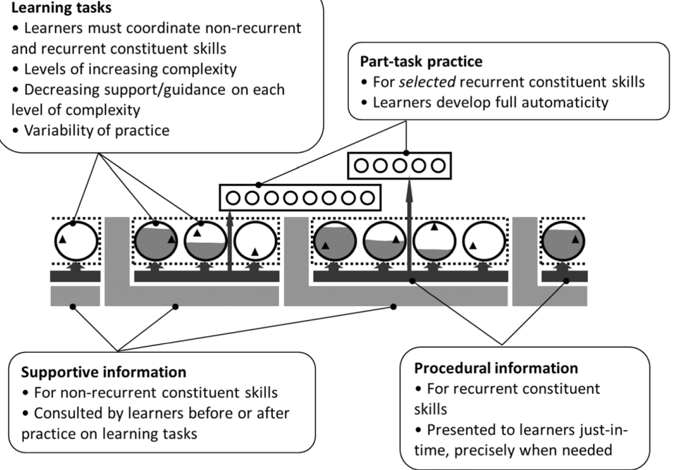
- The paper highlights 4C/ID as an extension of CLT for longer instructional programs and curricula, organized around 4 components: learning tasks, supportive information, procedural information, and part-task practice.
- It reports progress in measuring cognitive load, including a 10-item psychometric instrument that supported distinguishing intrinsic from extraneous load, and objective measures such as EEG, eye tracking, and secondary-task methods.
Methods
- This is a review article that retrospectively synthesizes CLT developments from 1998 to 2018, using the 1998 paper as a baseline and organizing the discussion into history, developments, future directions, and conclusions.
- The authors draw on prior theoretical and empirical studies and reviews cited throughout the paper; no new dataset or sample is reported in the text provided.
- Main analysis is a narrative synthesis of theoretical developments, instructional effects, and measurement approaches in CLT.
Limitations
- The paper explicitly says it is an attempt to summarise the last 20 years of CLT and sketch directions for future research, so it is a synthesis rather than a new empirical test.
- It repeatedly notes that more research is needed on cognitive-load measurement, including the optimal use of subjective rating scales, differentiating load types, and validating objective techniques.
- Evident from the text: several claims about future directions (e.g., resource depletion, self-regulated learning, emotions/stress/uncertainty, human movement) are presented as promising but not yet settled in the paper itself.
Model-written summary. Check it against the paper before relying on it.
Integrity signals
Registry
Cites
Statistics
Figures
Verification
Claims the paper makes
21 Valid · 23 Not valid · 90 Not checked · 158 Own results and interpretations
The sources with a verdict support this claim; the rest weren’t checked yet, have no full text we could read, or their verdicts aren’t rated yet.
In the paper
“Its basic premise is that human cognitive processing is heavily constrained by our limited working memory which can only process a limited number of information elements at a time.”
§ The Author(s) 2019 > Introduction
What the sources say
- Supportedcites Miller (1956) matched to “The magical number seven, plus or minus two: Some limits on our capacity for processing information.” (1956) source
The Summary says that immediate memory imposes severe limits on the information people can receive, process, and remember. The discussion of immediate memory (p. 93) specifies that its limit is the number of chunks, supporting the claim's broad paraphrase of a limited number of information elements at a time. (LLM, conf=0.91)
- Not checked — no full text of the sourcecites Peterson and Peterson (1959) matched to “Short-term retention of individual verbal items.” (1959) source
plainstates a cause- Asserted: passes — The authors put it forward as true.
- Checkable: passes — It can be checked against evidence.
- Load-bearing: passes — The paper’s conclusions depend on it.
- Based: passes — The paper gives a reason why it holds.
- Supported
The cited sources support only part of this claim — read each source’s verdict below.
In the paper
“The capacity and duration limits of working memory have been known at least since Miller (1956) and Peterson and Peterson (1959), although the fact that these limits effectively applied only to novel, not familiar information, seemed more implicit rather than explicit in most treatments.”
§ The Author(s) 2019 > Human Cognitive Architecture Used in 1998
What the sources say
- Partly supportedcites Miller (1956) matched to “The magical number seven, plus or minus two: Some limits on our capacity for processing information.” (1956) sourceExperimental — accuracy not yet measured
In the discussion of immediate memory (p. 93), Miller says its span is limited by the number of chunks and that familiar units allow more information to be packed into each chunk. That supports a distinction between novel material and familiar, recoded material, but not the claim that capacity limits apply only to novel information: the chunk limit remains. The paper also does not establish a duration limit that applies only to novel information. (LLM, conf=0.86)
- Not checked — no full text of the sourcecites Peterson and Peterson (1959) matched to “Short-term retention of individual verbal items.” (1959) source
hedged- Asserted: passes — The authors put it forward as true.
- Checkable: passes — It can be checked against evidence.
- Load-bearing: passes — The paper’s conclusions depend on it.
- Based: passes — The paper gives a reason why it holds.
- Partly supported
Every source the paper cites for this claim was checked and supports it.
In the paper
“The data summarised by Sala and Gobet (2017) provide a major justification for the post 1998 inclusion of evolutionary psychology into cognitive load theory.”
§ The Author(s) 2019 > Human Cognitive Architecture Seen Through the Prism of Evolutionary Psychology
What the sources say
- Supportedcites Sala and Gobet (2017) matched to “Does Far Transfer Exist? Negative Evidence From Chess, Music, and Working Memory Training” (2017) source
The Theoretical and Practical Implications section (page unavailable) summarises the paper’s evidence that chess, music and working-memory training do not reliably produce far transfer. The claim that these data justify a development in cognitive load theory is the citing authors’ interpretation, not a finding attributed to Sala and Gobet. (LLM, conf=0.86)
boostedstates a cause- Asserted: passes — The authors put it forward as true.
- Checkable: passes — It can be checked against evidence.
- Load-bearing: passes — The paper’s conclusions depend on it.
- Based: passes — The paper gives a reason why it holds.
- Supported
Every source the paper cites for this claim was checked and supports it.
In the paper
“The expertise reversal effect is, in essence, a variant of the more general element interactivity effect (Chen et al. 2017).”
§ The Author(s) 2019 > Instructional Effects Described After 1998
What the sources say
- Supportedcites Chen et al. 2017 matched to “The Expertise Reversal Effect is a Variant of the More General Element Interactivity Effect” (2017) source
The indexed copy lists the cited paper under the exact title “The Expertise Reversal Effect is a Variant of the More General Element Interactivity Effect.” Its title directly states the proposition attributed to it; no page number is available in the indexed passage. (LLM, conf=0.90)
plainstates a cause- Asserted: passes — The authors put it forward as true.
- Checkable: passes — It can be checked against evidence.
- Load-bearing: unclear — It is unclear whether the paper’s conclusions depend on it.
- Based: passes — The paper gives a reason why it holds.
- Supported
Every source the paper cites for this claim was checked and supports it.
In the paper
“When subsequently presented the fully integrated information, they only needed to learn how to integrate the individual elements and so more readily assimilated the entire, high element interactivity information.”
§ The Author(s) 2019 > Instructional Effects Described After 1998
What the sources say
- Supportedcites Pollock et al. 2002 matched to “Assimilating complex information” (2002) source
Split into 2 atoms — 2 confirmed, 0 partially supported, 0 disputed, 0 misattributed, 0 unverifiable. Expand the claim to see per-atom verdicts.
plainstates a cause- Asserted: passes — The authors put it forward as true.
- Checkable: passes — It can be checked against evidence.
- Load-bearing: passes — The paper’s conclusions depend on it.
- Based: passes — The paper gives a reason why it holds.
- Supported
132 more claims · 6 with their cited sources checked
Create a free account to see all 292 claims and to verify the 3 references still open.
- It may state two separate claims as one. 88
- Probably not a substantial claim. 95
Claims other papers make about this one
Each is checked against this paper’s own text: does it say what the citing paper says it does?
The source backs part of the claim, not all of it — or backs it for a different population, condition or comparison.
In the citing paper
“Another possible explanation is that the pre-training effect tends to be most effective for learners with minimal prior knowledge (Sweller et al., 2019)”
From Rethinking pre-training: cognitive load implications for learners with varying prior knowledge (2025) · cites this paper as Sweller et al., 2019
Experimental — accuracy not yet measuredThe cited source says what the claim attributes to it.
In the citing paper
“If the cognitive load imposed by a learning task is too high, it might interfere with the learner’s ability to effectively acquire and retain the skill [13, 25].”
From Teaching a single manual therapy technique at a time reduces cognitive load in physiotherapy students: a randomized controlled educational study (2025) · cites this paper as [13]
The cited source says what the claim attributes to it.
In the citing paper
“While cognitive load is often discussed in the context of instructional efficiency, it is important to note that cognitive load is not inherently detrimental. Rather, it is a natural component of learning that engages working memory resources for schema construction and automation [13].”
From Teaching a single manual therapy technique at a time reduces cognitive load in physiotherapy students: a randomized controlled educational study (2025) · cites this paper as [13]
The cited source says what the claim attributes to it.
In the citing paper
“Thus, an increased germane load is no longer believed to lead to cognitive overload and can thus no longer be assumed to be detrimental to learning performance.”
From Understanding Cognitive Load in Digital and Online Learning: a New Perspective on Extraneous Cognitive Load (2022) · cites this paper as Sweller et al., 2019
The cited source says what the claim attributes to it.
In the citing paper
“The major change from the 1998 model is that Sweller et al. (2019) have removed germane load from the additive equation of total load, but rather a dimension now called ' germane processing. '”
From Understanding Cognitive Load in Digital and Online Learning: a New Perspective on Extraneous Cognitive Load (2022) · cites this paper as Sweller et al., 2019
17 more claims about this paper
Create a free account to see every claim other papers make about this one.
Citations
Cites
The magical number seven, plus or minus two: Some limits on our capacity for processing information.
Miller, G. A. (1956) · Psychological Review · doi:10.1037/h0043158 · Cited by 17,812 · cited 1×
“The capacity and duration limits of working memory have been known at least since Miller (1956) and Peterson and Peterson (1959), although the fact that these limits effectively applied only to novel, not familiar information, seemed more implicit rather than explicit in most treatments.”
BackgroundThe magical number seven, plus or minus two: Some limits on our capacity for processing information.
Miller, G. A. (1994) · Psychological Review · doi:10.1037/0033-295x.101.2.343 · Cited by 17,161
Cognitive Load During Problem Solving: Effects on Learning
Sweller, J. (1988) · Cognitive Science · doi:10.1016/0364-0213(88)90023-7 · Cited by 11,048 · cited 4×
“Learning tasks (indicated by the big circles in Fig.”
BackgroundMethodInfluentialSelf-citationKirschner, P. A., Sweller, J., & Clark, R. E. (2006) · Educational Psychologist · doi:10.1207/s15326985ep4102_1 · Cited by 7,776
Self-citationRizzolatti, G., & Craighero, L. (2004) · Annual Review of Neuroscience · doi:10.1146/annurev.neuro.27.070203.144230 · Cited by 7,433
Cognitive Architecture and Instructional Design
Sweller, J., van Merrienboer, J. J. G., & Paas, F. G. W. C. (1998) · Educational Psychology Review · doi:10.1023/a:1022193728205 · Cited by 6,023
Self-citationCognitive load theory, learning difficulty, and instructional design
Sweller, J. (1994) · Learning and Instruction · doi:10.1016/0959-4752(94)90003-5 · Cited by 5,426 · cited 1×
“Element Interactivity Effect This effect was already known in 1998 but as a compound effect, it was not classed as a cognitive load effect (see Sweller 1994).”
BackgroundSelf-citationBaddeley, A. (1992) · Science · doi:10.1126/science.1736359 · Cited by 5,258
Ericsson, K. A., & Kintsch, W. (1995) · Psychological Review · doi:10.1037/0033-295x.102.2.211 · Cited by 3,498
Short-term retention of individual verbal items.
Peterson, L., & Peterson, M. J. (1959) · Journal of Experimental Psychology · doi:10.1037/h0049234 · Cited by 2,939 · cited 1×
“The capacity and duration limits of working memory have been known at least since Miller (1956) and Peterson and Peterson (1959), although the fact that these limits effectively applied only to novel, not familiar information, seemed more implicit rather than explicit in most treatments.”
Background
Research works printed but not linked: 4
- Centre for Education Statistics and Evaluation. (2017). Cognitive load theory: research that teachers really need to understand . Sydney: NSW Department of Education.
- Centre for Education Statistics and Evaluation. (2018). Cognitive load theory in practice . Sydney: NSW Department of Education.
- Clark, R. C. (2014). Evidence-based training methods: a guide for training professionals (2nd ed.). Alexandria: ATD Press.
- Miller, W. (1937). The picture crutch in reading. Elementary English Review, 14 , 263 -264.
Cited by
Items 1,901–2,000 of 2,268
Drill-type adaptive debugging to boost programming skills
Pozzan, G., Padova, C., Montuori, C., Arfé, B., & Vardanega, T. (2026) · Computer Science Education · doi:10.1080/08993408.2026.2672717
Xia, M., Feng, X.-M., Deng, W., & Zhang, B.-W. (2026) · EPJ Data Science · doi:10.1140/epjds/s13688-026-00664-z
“Central nodes represent core disciplinary concepts, whose dense connectivity supports higher-order cognition, echoing cognitive load theory [75].”
Personalized Learning Path Recommendation Based on Underachiever Profiles
Qi, Z., Li, H., & Liu, Y. (2026) · International Conference on Educational and Information Technology · doi:10.1109/iceit68991.2026.11521723 · Cited by 1
“The cognitive load penalty, R cog, penalizes recommending difficult content to learners with high anxiety and poor strategies, following Cognitive Load Theory [20].”
Research Fronts 2025: Mapping the evolving landscape of global science and technology
Wang, H., Zhou, Q., Fan, W., Yuan, J., Xing, Y., Li, J., Ji, Y., Li, Y., Bian, W., Zhang, C., et al. (2026) · The Innovation · doi:10.1016/j.xinn.2026.101427
Iqbal, M. F. B., Tran, K. T. P., Yan, W. Q., Abraham, H., & Nguyen, M. (2026) · Applied Sciences · doi:10.3390/app16105090
Does Virtual Simulation Facilitate Practical Skills for Vocational Secondary School Students?Preprint
Sang, X., Xiang, Y., Du, Y., & Zhan-yong, Q. (2026) · Research Square · doi:10.21203/rs.3.rs-8657755/v1
Say no to highly processed foods: do difficult-to-pronounce brand names lead to health concerns?
Xiao, T., 谌飞龙, & Wei, H. (2026) · European Journal of Marketing · doi:10.1108/ejm-11-2024-0938
Cognitive Mechanisms Underlying Learning Gains in Intelligent Tutoring Systems
Ibanga, I. J., Asukwo, A. E., & Bashir, M. (2026) · Journal of Educational Technology Innovation and Applications · doi:10.56741/iistr.jetia.001801 · Cited by 1
Ismail-Khan, M., Khan, M. S. A., Aslam, J., Kumari, R., Areej, A., Devi, R., Sreekanth, T., Mazher, F. F., Musheer, M., & Korompelis, P. (2026) · Frontiers in Medicine · doi:10.3389/fmed.2026.1827733 · Cited by 1
“These affordances may support learner-paced segmentation of complex visual information and reduce avoidable processing demands during initial encoding, consistent with CLT and multimedia principles of segmentation (23, 47).”
InfluentialJohnson, J. E., Rulo, K. M., & McCorry, L. S. (2026) · Journal of Professional Nursing · doi:10.1016/j.profnurs.2026.05.005 · Cited by 1
Nedaei, M., Kanwal, S., Säljö, R., & Goodchild, S. (2026) · International Journal of Research in Undergraduate Mathematics Education · doi:10.1007/s40753-026-00308-7
Obeidat, B. (2026) · Social Sciences & Humanities Open · doi:10.1016/j.ssaho.2026.102951 · Cited by 2
Zhang, C., Wei, W., & Hu, X. (2026) · Education Sciences · doi:10.3390/educsci16060824
Hidayati, Y. M., Arifin, A. J., Kholid, M. N., & Kusuma, A. A. S. (2026) · Discover Education · doi:10.1007/s44217-026-01675-8 · Cited by 4
“Complementary insights from Cognitive Load Theory emphasize the importance of managing working memory demands to prevent cognitive overload during complex learning tasks [62].”
Making the productive failure in PS-I more productive: the case of scaffolding the instruction phase
Safadi, R., & Diab, A. (2026) · Instructional Science · doi:10.1007/s11251-026-09802-6
Social media in goblin mode: an NLP approach to post-COVID behavioral patterns
Balcıoğlu, Y. S., & Rençber, Y. (2026) · Future Business Journal · doi:10.1186/s43093-026-00854-1
“It provides another perspective, indicating that excessive engagement in social media interactions, characteristic of goblin mode [31], may lead to cognitive overload, contributing to increased anxiety and emotional exhaustion [27].”
Li, Y., zhang, X., Wang, Y., & Chen, X. (2026) · SSRN Electronic Journal · doi:10.2139/ssrn.6836263
Mlambo, P. B., & Singh-Pillay, A. (2026) · Eurasia Journal of Mathematics Science and Technology Education · doi:10.29333/ejmste/18636
“The prevalence of the box method aligns with cognitive load theory, as articulated by Sweller et al. (2019), who propose that structured approaches reduce extraneous cognitive load during complex spatial tasks.”
Eureka in the Age of Agentic AI: Educational Foundations for Creative Futures
Andreadakis, Z. (2026) · Advances in computational intelligence and robotics book series · doi:10.4018/979-8-3373-6471-1.ch009
Cognitive load, affect, and regulatory strategies: a more integrated model
Brockbank, R. B., Feldon, D. F., & Litson, K. (2026) · Frontiers in Psychology · doi:10.3389/fpsyg.2026.1774619 · Cited by 2
“This gap persists even though emotions are acknowledged as potentially constraining working memory by competing with task-relevant processes, thereby increasing load and diminishing transfer (Sweller et al., 2019).”
InfluentialYao, N., & Huang, P. (2026) · JJournal of natural science education. · doi:10.62517/jnse.202617104
Xue, H. (2026) · Higher education and practice. · doi:10.62381/h261306
A redundant redundancy principle? examining the redundancy principle through cognitive load
Carranza, A., & Geller, E. H. (2026) · Educational Psychology · doi:10.1080/01443410.2026.2678483
“…increased germane processing, or both. unlike CTML, CLT does not focus on multimedia learning but instead provides a broader architecture for understanding human processing, with the assumption that working memory is limited in the amount of information it can process (Sweller et al., 1998; 2019).”
Erlebach, S. (2026) · Lecture notes in information systems and organisation · doi:10.1007/978-3-032-08486-6_13
Scholl, D., & Küth, S. (2026) · Teaching and Teacher Education · doi:10.1016/j.tate.2026.105600
The Historical Evolution of Microlearning in Health Professions Education: Bibliometric Analysis
Gagne, J. C. D., Randall, P. S., Blackwood, E. R., Carlson, K. A., & Kang, H. S. (2026) · JMIR Medical Education · doi:10.2196/91616 · Cited by 1
Development of an Automated Tool for Searching Research Materials in the Learning Process
Токова, О. В. (2026) · Information Technologies and Systems (Інформаційні технології та системи) · doi:10.15407/intechsys.2026.02.046
ChatGPT-Generated Comments Based on Scaffolding Theory for Online Learning Support
Wang, J., & Jin, Q. (2026) · Lecture notes in computer science · doi:10.1007/978-981-92-0042-9_1
Influence of accent and learning styles on online animation learning
Zhang, Y. L., Zhang, H., Wang, Y., Li, J., & Wang, H. (2026) · Cognitive Processing · doi:10.1007/s10339-026-01356-2
“It can be modified through instructional interventions (Sweller et al. 2019).”
Zhong, Z., & Zhang, Q. (2026) · Innovation in Language Learning and Teaching · doi:10.1080/17501229.2026.2682439 · Cited by 1
Huang, Q., Luo, Q., Wei, F., Zhao, T., Ji, X., & Hao, X. (2026) · Systems · doi:10.3390/systems14060637
Vasileiou, I., Polydoros, G., Antoniou, A.-S., Katsarou, D. V., Mantsos, E., Polydoros, C., & Krokou, Z. (2026) · Psychology International · doi:10.3390/psycholint8020034
“Cognitive Load Theory Perceived ease; frustration Supports examination of whether digitally supported computer-based writing is experienced as more manageable.”
Clarifying the concept of visual load: a systematic review
Wang, X., & Yu, R. (2026) · Ergonomics · doi:10.1080/00140139.2026.2678470
Instructor's pointing gestures promote learning more than guiding gaze
Wang, F., Kuang, Z., Andrasik, F., & Hu, X. (2026) · Computers & Education · doi:10.1016/j.compedu.2026.105692 · Cited by 1
Sokolyuk, O. M. (2026) · CTE Workshop Proceedings · doi:10.55056/cte.1415
Rethinking AI Ethics in Education: From Restrictive Policies to Learning-Oriented Design
Noor, S. M., & Momani, Z. (2026) · International Conference on Computational Intelligence Approaches and Applications (ICCIAA) · doi:10.1109/icciaa68481.2026.11543766
“Zero/one/few-shot[15] Chunking [29] Breaks tasks into steps Chain of Thought [27] Metacognition[32] Bias/hallucination[39] Cognitive load [31] Reduces error propagation Single prompt limits [19] Progressive processing Leads prompts”
InfluentialUnderstanding How Parsons Puzzles Scaffold Code Writing for Minoritized Women High School Students
Hou, X., Katmanivong, E., Wang, X., & Ericson, B. J. (2026) · Research on Equity and Sustained Participation in Engineering, Computing, and Technology (RESPECT) · doi:10.1145/3796496.3811779
“The instructional insight is to design the instructional activities that maintain appropriate intrinsic cognitive load while reducing extraneous cognitive load [33, 34].”
Kormos, J., Brunfaut, T., & Banfalvi, B. (2026) · Studies in Second Language Learning and Teaching · doi:10.14746/ssllt.52990
On the challenges of investigating lasting learning: A commentary
Scheiter, K., & Renkl, A. (2026) · Learning and Instruction · doi:10.1016/j.learninstruc.2026.102417 · Cited by 1
Zeitlhofer, I., & Zumbach, J. (2026) · International Journal of Educational Research · doi:10.1016/j.ijer.2026.103039 · Cited by 2
Putra, Y. A., Arwandi, J., Burhan, K., Sujadesman, B., Setiawan, Y., Mariati, S., Ramaita, R., Kurniawan, R., Effendi, R., & Putra, A. R. (2026) · Pedagogy of Physical Culture and Sports · doi:10.15561/26649837.2026.0406 · Cited by 1
Reisinger, B. A. A., Yu, N. G., Webb, S. N., Jurkovic, N. S., Riley, T., & Gleaves, D. H. (2026) · Advances in Mental Health · doi:10.1080/18387357.2026.2681679
Restorative biophilic classroom design: effects on student learning engagement and satisfaction
Dong, J., Chaumthong, P., & Suryanti, S. (2026) · Frontiers in Education · doi:10.3389/feduc.2026.1812283
The effects of contextual diversity on incidental vocabulary learning
Oikawa, G., & Uchihara, T. (2026) · Studies in Second Language Acquisition · doi:10.1017/s0272263126101818 · Cited by 3
“Due to the limited cognitive resources (Sweller, 1988; Sweller et al., 2019), the processing demands of HCD input may exceed the cognitive capacity for learners with lower lexical proficiency and therefore constrain learning.”
A silent drag: Does artificial intelligence lower adolescents' academic performance?
Yang, S., Bai, H., & Sun, S. (2026) · Technological Forecasting and Social Change · doi:10.1016/j.techfore.2026.124784
Kohar, D. A., Jahari, J., Sarbini, & Sulhan, M. (2026) · ShodhKosh Journal of Visual and Performing Arts · doi:10.29121/shodhkosh.v7.i15s.2026.8272
Automated Generation of Complexity-Validated Decision Scenarios Using Large Language ModelsPreprint
Chinnam, R. B., Somers, T. M., & Doleh, A. (2026) · SSRN Electronic Journal · doi:10.2139/ssrn.6928677
Zhang, H. F., Wen, L., Qian, J., Dai, Q., Wang, C., & Zhou, C. (2026) · Frontiers in Psychology · doi:10.3389/fpsyg.2026.1803766
Popa, N. L., & Assante, G. M. (2026) · Journal of Applied Research in Higher Education · doi:10.1108/jarhe-11-2025-0926 · Cited by 1
Gorbunova, A., Getman, A., Savelyev, A., Адамович, К., & Costley, J. (2026) · Innovations in Education and Teaching International · doi:10.1080/14703297.2026.2687014
Digital equity in physics education: A mixed-methods study of TikTok microlearning
Romadhon, D. R., Wijaya, A. I., Nurlaela, A., et al. (2026) · AIP conference proceedings · doi:10.1063/5.0337944
Munyanyi, A. (2026) · Journal of International Students · doi:10.32674/fm7beq18 · Cited by 2
“Phonological dissonance generated sustained extraneous cognitive load (Sweller et al., 2019), limited participation in the forms of academic activity most central to doctoral development, and triggered identity negotiations with consequences for long-term academic investment (Darvin & Norton, 2015).”
InfluentialAction-Based Encoding Improves Instruction Following in Children and Adolescents
Zhaotong, Y., Su, X., Zhao, Y., Allen, R. J., Waterman, A., & Yang, T. (2026) · Behavioral Sciences · doi:10.3390/bs16061008 · Cited by 1
“Understanding effective strategies to support working memory and avoid cognitive overload in the classroom is critical for research on working memory and its application to educational contexts (e.g., Atkinson et al., 2021; Gathercole & Alloway, 2008; Sweller et al., 2019).”
The impact of well-being on university students’ attention in foreign language classrooms in Japan
Nguyen, T. T. L., & Cam, D. T. (2026) · Societal Impacts · doi:10.1016/j.socimp.2026.100195
Zorlu, F. (2026) · Journal of Intelligence · doi:10.3390/jintelligence14060110
“…source domains and visualizing abstract astronomy concepts, thereby allowing preservice teachers to allocate more cognitive resources to relational mapping, conceptual accuracy, and the identification of possible mismatches (Plummer & Maynard, 2014; Sneider et al., 2011; Sweller et al., 2019).”
Zhuang, Y. N., Xu, Z., Lin, D. D., Zhan, Q. Q., Chen, Y., Lin, B. Q., & Ke, S. F. (2026) · BMC Nursing · doi:10.1186/s12912-026-04846-y
Indrapuri, R. S. A., Mahdum, M., Azhar, F., & Erni, E. (2026) · F1000Research · doi:10.12688/f1000research.182854.1
Конвергенция методов оптимизации и больших данных в когнитивную подготовку специалистов по ИИ
Goremykina, G. I. (2026) · Sovremennye informacionnye tehnologii i IT-obrazovanie. · doi:10.25559/sitito.022.202601.203-211
Extended reality in language learning and teaching: From general communication to specific purposes
Liao, M.-H., Hung, Y.-J., & Wu, J. G. (2026) · Computers & Education X Reality · doi:10.1016/j.cexr.2026.100169
Wang, Y., Zhang, X., Wang, C. P., Xing, X., & Nayak, V. (2026) · BMC Medical Education · doi:10.1186/s12909-026-09694-7 · Cited by 1
“Reducing EL from unnecessary details and focusing on GL that supports learning can help prevent cognitive overload [21].”
Hu, W., Qiao, Z., Huang, J., Lu, J., Liu, Y., & Song, F. (2026) · Displays · doi:10.1016/j.displa.2026.103593
Alyeşil, C., KARATAŞ, E., Ceylan, C., Sezer, A. N., Daylan, P., Kitapçıoğlu, D., & Özturan, İ. U. (2026) · doi:10.2196/preprints.104924
Impact of quiz frequency on knowledge retention among high school students in Shenyang
Sun, H., junran, S. O. N. G., Zhang, A., & wang, M. (2026) · Acta Psychologica · doi:10.1016/j.actpsy.2026.107312
Zhang, Y., Pang, S., & Jiang, R. (2026) · Journal of Science Education and Technology · doi:10.1007/s10956-026-10346-0 · Cited by 1
Fatimaha, S., Agustin, M., Sumarno, A., Fikrianto, M., & Nulhakim, L. (2026) · F1000Research · doi:10.12688/f1000research.182309.1
Hamash, M., Tiernan, P., Tabbaa, L., & Young, G. W. (2026) · International Journal of Human-Computer Interaction · doi:10.1080/10447318.2026.2690094 · Cited by 1
Guo, Y., Zhou, Y., Zhang, J., & Luo, Y. (2026) · Journal of Intelligence · doi:10.3390/jintelligence14070113
“While multimodal sensory engagement can enhance character recognition and memorization, it may overly consume cognitive resources needed for applying learned information, ultimately reducing learning effectiveness (Rejeki et al., 2025; Sweller et al., 2019).”
Fan, J., Wu, R., Tang, C., et al. (2026) · Thinking Skills and Creativity · doi:10.1016/j.tsc.2026.102295
王莹, Li, Q., & Liu, X. (2026) · Frontiers in Psychology · doi:10.3389/fpsyg.2026.1855051 · Cited by 1
Ogoy, J. I. N. (2026) · Raniag International Journal of Education Management and Social Action · doi:10.66332/ed.bbvp3051
Edwards, L., Hammerschmidt‐Snidarich, S. M., Christ, T. J., White, M. J., & Thayer, A. J. (2026) · Journal of School Psychology · doi:10.1016/j.jsp.2026.101553
ZHAO, H., Wei, W., & Huang, R. (2026) · SSRN Electronic Journal · doi:10.2139/ssrn.6999923
Sunil Kumar, D., Dandekar, S., & Prakash, G. H. (2026) · BMC Medical Education · doi:10.1186/s12909-026-09810-7 · Cited by 1
“Digital literacy varies considerably among Indian medical students, and interface barriers divert cognitive resources from the learning task itself [31, 32].”
Digitale Doppelgänger: Die Zukunft datengetriebener Eventplanung
Dams, C. M. (2026) · Springer eBooks · doi:10.1007/978-3-658-52062-5_3
Leshchuk, S. O., Tverdokhlib, I. A., Підгорна, Т. В., et al. (2025) · doi:10.55056/ceur-ws.org/vol-3949/paper17.pdf
“Subject-specific biologically secondary knowledge and skills need to be clearly taught and actively learned, which are usually not acquired easily, unconsciously, and automatically [26].”
Parent, G., & Mercier, J. (2026) · Lecture notes in computer science · doi:10.1007/978-3-032-29548-4_11
A workflow-based, digitally gamified teaching model for pathology education: a pilot study
ERTENER, Ö. (2026) · BMC Medical Education · doi:10.1186/s12909-026-09786-4
“Educational approaches that promote active learning and learner engagement are commonly used to address challenges related to cognitive load and fragmented learning experiences [3].”
Automated Assessment of Temporal Contiguity Principle in Instructional Videos
Kumaran, C. S., Sharma, A., & Chouhan, R. (2026) · IEEE Global Engineering Education Conference (EDUCON) · doi:10.1109/educon67543.2026.11574398
Türkyılmaz, B., Ayaz, A., & Bahçekapılı, E. (2026) · Journal of Technology in Behavioral Science · doi:10.1007/s41347-026-00671-x
GCI: Efficient Design of Gesture Based Human Computer Interaction Targeting Visually Impaired People
Lohar, D., Sen, B., Basu, A., & Ahmadpour, S. (2026) · Computers · doi:10.3390/computers15070408
García-López, I. M., & Guillén-Yparrea, N. (2026) · IEEE Global Engineering Education Conference (EDUCON) · doi:10.1109/educon67543.2026.11574218
An Agentic AI System for Personalized Learning in Computing Education
Sun, Y., Suleiman, B., & Singh, S. (2026) · IEEE Global Engineering Education Conference (EDUCON) · doi:10.1109/educon67543.2026.11574125
Impact of AI Explanation Styles on IT Students’ Debugging Accuracy, Confidence, and Reliance
Dzvapatsva, G. P., Ncube, P. D. N., Chinhamo, E., & Matobobo, C. (2026) · IEEE Global Engineering Education Conference (EDUCON) · doi:10.1109/educon67543.2026.11574352
Yadav, P. (2026) · Advances in computational intelligence and robotics book series · doi:10.4018/979-8-3373-9725-2.ch001
A serious game design framework: From learning and training to therapeutic applications
Feungchan, W., & Chaichitwanidchakol, P. (2026) · Computers in Human Behavior Reports · doi:10.1016/j.chbr.2026.101251
Bian, Y., & Jiang, Y. (2026) · International Journal of Mechanical Engineering Education · doi:10.1177/03064190261464478
Koudelíková, R., Vaníček, T., Moldříková, E., & Štarha, P. (2026) · Journal of Chemical Education · doi:10.1021/acs.jchemed.6c00078 · Cited by 1
Xu, L., Chen, S. H., Su, L.-F., Hwang, G., Wu, H.-H., Liu, H., & Wu, W. (2026) · Education and Information Technologies · doi:10.1007/s10639-026-14078-x
“…affects cognitive load, instructional design quality, flow experience, and motivation, guided by cognitive load theory (CLT; Paas et al., 2003; Sweller, 2020; Sweller et al., 2019 ), flow theory (Csikszentmihalyi, 1975), and self-determination theory (SDT; Deci and Ryan 2008b; Ryan and Deci 2008).”
Anonymous, Chen, X., Xiong, Y., Xu, S., Li, Q., & Zhou, S. (2026) · Physical Review Physics Education Research · doi:10.1103/9t5b-twsb
Meihan, S., Li, J., & Zhu, X. (2026) · Journal of the Society for Information Display · doi:10.1002/jsid.70094
Educating compliance: a foundation-first, hands-on approach to compliant mechanism design
Air, A., & Wodehouse, A. (2026) · Proceedings of the Design Society · doi:10.1017/pds.2026.10648
Tufail, M., Park, H., & Ho, J. C. F. (2026) · Proceedings of the Design Society · doi:10.1017/pds.2026.10472 · Cited by 1
“…“ collective working memory ” that distributes cognitive load (Kirschner et al., 2018), yet the coordination and communication it requires may induce extraneous load that overwhelms working memory capacity and impedes the schema ‑ building germane load essential for learning (Sweller et al., 2019).”
Gustafsson, M., & Claeson-Jonsson, C. (2026) · Lecture notes in civil engineering · doi:10.1007/978-3-032-18712-3_70
Learner-Related Sources of Mental Fatigue in Online Education: A Scoping Review
Marzban, F., Inan, F. A., & Unal, D. (2026) · The Open/Technology in Education Society and Scholarship Association Journal · doi:10.18357/otessaj.2025.5.2.112 · Cited by 1
“…literature has examined technological and instructional design factors contributing to fatigue, including cognitive load theory applications (Sweller et al., 2019), multimedia design principles (Huff, 2024; Mayer, 2021), online course design elements (Alleyne Bayne & Inan, 2022), and user…”
Uddin, N. (2026) · Behavioral Sciences · doi:10.3390/bs16071105
“More recent studies further show that excessive task demands relative to learner resources undermine self-regulation and increase the likelihood of disengagement, whereas well-calibrated instructional design supports sustained effort and persistence (de Bruin et al., 2020; Sweller et al., 2019).”
InfluentialEducational technology and cognitive diversity: exploring attitudinal responses of autistic students
Cerdán-Chacón, A., Lorenzo, G., Meliá, S., & Cabrera, E. A. (2026) · Disability and Rehabilitation Assistive Technology · doi:10.1080/17483107.2026.2689538
Razak, N. A., Abidin, M. I. Z., Razak, A. A., Assad, A., & El-Gendi, H. (2026) · Social Sciences · doi:10.3390/socsci15070441
Are worked examples always effective in learning? An experimental study with eighth graders
Retnowati, E., & Marissa, M. (2026) · Psychological Science and Education · doi:10.17759/pse.2026310317
Metadata
- Authors
- Sweller, J., van Merriënboer, J. J. G., & Paas, F.
- Affiliations
- UNSW Sydney (AU)
- University of Wollongong (AU)
- Corresponding author
- Sweller, John
- Venue
- Educational Psychology Review
- Published
- 2019-01-22
- Volume
- 31
- Issue
- 2
- Pages
- 261-292
- ISSN
- 1040-726X (ISSN-L)
- 1573-336X
- OpenAlex
- W2913144876
- Semantic Scholar
- e28d73214751d51c3f46a867920be41c49c45130
- Cited by
- 2,337
- References
- 129
- Citations by year
- 2026: 713 · 2025: 466 · 2024: 331 · 2023: 268 · 2022: 212 · 2021: 190 · 2020: 114 · 2019: 37
- FWCI
- 162.54
- Type
- journal article
- Language
- en
- Open access
- hybrid
- doi.org
- Licence
- cc-by
- creativecommons.org/licenses/by/4.0 (tdm)
- Locations
- Educational Psychology Review (publishedVersion, cc-by)
- EUR Research Repository (Erasmus University Rotterdam) (publishedVersion, other-oa)
- Research Online (University of Wollongong) (submittedVersion)
- EUR Research Repository (Erasmus University Rotterdam) (submittedVersion)
- Research Publications (Maastricht University) (submittedVersion, cc-by)
- Figshare (submittedVersion, cc-by)
- Research Publications (Maastricht University) (submittedVersion, other-oa)
- Topics
- Social Sciences › Psychology › Experimental and Cognitive Psychology › Visual and Cognitive Learning Processes
- Social Sciences › Psychology › Developmental and Educational Psychology › Innovative Teaching and Learning Methods
- Life Sciences › Neuroscience › Cognitive Neuroscience › Neuroscience, Education and Cognitive Function
- Keywords
- cognitive load theory, cognitive architecture, working memory, long-term memory, instructional design
About these checks
Registry, retraction, Cites and statistics results are computed, not judged, with one exception: a printed reference that no index lists is read once by a model before it counts as a citation error. Claims are extracted by a model and kept only when their quote appears verbatim in the text; each cited source is then checked, with a model’s help, for whether it says what the claim relies on. Those verdicts can be wrong — read the claim’s quote and the cited source before relying on one.
The claim verdicts this report counts are experimental: their accuracy is not yet measured.
A language model drew the claims from the paper on 2026-10-10, under version 3 of the claim definition (model deepseek-v4.1-flash, prompt extract-v3).
A second model labelled each claim on 2026-10-10 (model jev-1.13-20260917, definition revision gold-guideline-v0.2).
Cited sources are checked with a language model’s help (gpt-6-sol).
Statistics and arithmetic are recomputed, not judged.
Confidence bands are shown only for fields calibrated on our annotated test set. None is calibrated yet, so no band is shown.
What counts as a claim ›How we measure confidence ›How we check this ›
Are you an author, or do you see a problem with this page? Request a review
Data sources
Bibliographic data: Semantic Scholar, OpenAlex, Crossref.
Contains information from the Semantic Scholar Academic Graph Datasets, made available under the ODC Attribution License (ODC-BY 1.0).
Semantic Scholar’s data is described in: Kinney, R., et al. (2023). The Semantic Scholar Open Data Platform. arXiv:2301.10140.
