

Cognitive Architecture and Instructional Design: 20 Years Later
Open accessThe DOI matches its Crossref record; 127 of the 129 references it cites were found in a registry or an index, and 1 are not checked yet; 22 of the 116 sources its claims cite were checked for support.
Abstract
Cognitive load theory was introduced in the 1980s as an instructional design theory based on several uncontroversial aspects of human cognitive architecture. Our knowledge of many of the characteristics of working memory, long-term memory and the relations between them had been well-established for many decades prior to the introduction of the theory. Curiously, this knowledge had had a limited impact on the field of instructional design with most instructional design recommendations proceeding as though working memory and long-term memory did not exist. In contrast, cognitive load theory emphasised that all novel information first is processed by a capacity and duration limited working memory and then stored in an unlimited long-term memory for later use. Once information is stored in long-term memory, the capacity and duration limits of working memory disappear transforming our ability to function. By the late 1990s, sufficient data had been collected using the theory to warrant an extended analysis resulting in the publication of Sweller et al. (Educational Psychology Review, 10, 251–296, 1998). Extensive further theoretical and empirical work have been carried out since that time and this paper is an attempt to summarise the last 20 years of cognitive load theory and to sketch directions for future research.
Verified 2026-11-25 · 1 reference not checked yet
Overview
CoChat Summary
TL;DR
This review argues that cognitive load theory (CLT) has substantially advanced since its 1998 summary, with new theoretical grounding, new instructional effects, and improved measurement approaches. It also frames future work around working-memory resource depletion, self-regulated learning, emotions/stress/uncertainty, and human movement.
Key findings
- The paper states that the 1998 article reported 7 cognitive load effects, and that 8 new effects were added in the 1998–2018 period, including compound effects.
- It says CLT’s theoretical basis was strengthened by grounding human cognitive architecture in evolutionary psychology, especially Geary’s distinction between biologically primary and biologically secondary knowledge.
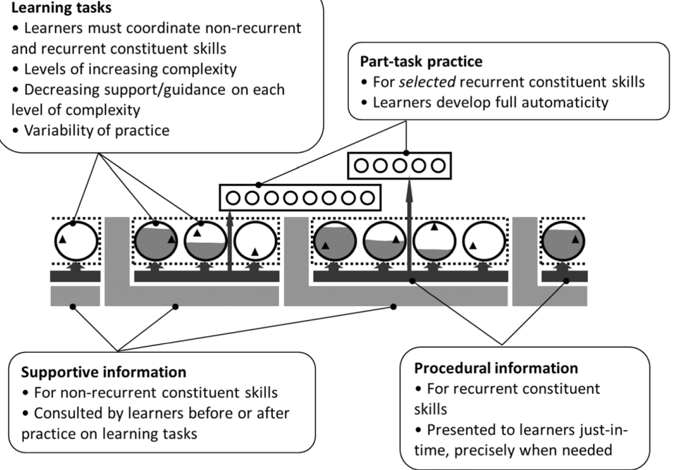
- The paper highlights 4C/ID as an extension of CLT for longer instructional programs and curricula, organized around 4 components: learning tasks, supportive information, procedural information, and part-task practice.
- It reports progress in measuring cognitive load, including a 10-item psychometric instrument that supported distinguishing intrinsic from extraneous load, and objective measures such as EEG, eye tracking, and secondary-task methods.
Methods
- This is a review article that retrospectively synthesizes CLT developments from 1998 to 2018, using the 1998 paper as a baseline and organizing the discussion into history, developments, future directions, and conclusions.
- The authors draw on prior theoretical and empirical studies and reviews cited throughout the paper; no new dataset or sample is reported in the text provided.
- Main analysis is a narrative synthesis of theoretical developments, instructional effects, and measurement approaches in CLT.
Limitations
- The paper explicitly says it is an attempt to summarise the last 20 years of CLT and sketch directions for future research, so it is a synthesis rather than a new empirical test.
- It repeatedly notes that more research is needed on cognitive-load measurement, including the optimal use of subjective rating scales, differentiating load types, and validating objective techniques.
- Evident from the text: several claims about future directions (e.g., resource depletion, self-regulated learning, emotions/stress/uncertainty, human movement) are presented as promising but not yet settled in the paper itself.
Model-written summary. Check it against the paper before relying on it.
Integrity signals
Registry
Cites
Statistics
Figures
Verification
Claims the paper makes
21 Valid · 23 Not valid · 90 Not checked · 158 Own results and interpretations
The sources with a verdict support this claim; the rest weren’t checked yet, have no full text we could read, or their verdicts aren’t rated yet.
In the paper
“Its basic premise is that human cognitive processing is heavily constrained by our limited working memory which can only process a limited number of information elements at a time.”
§ The Author(s) 2019 > Introduction
What the sources say
- Supportedcites Miller (1956) matched to “The magical number seven, plus or minus two: Some limits on our capacity for processing information.” (1956) source
The Summary says that immediate memory imposes severe limits on the information people can receive, process, and remember. The discussion of immediate memory (p. 93) specifies that its limit is the number of chunks, supporting the claim's broad paraphrase of a limited number of information elements at a time. (LLM, conf=0.91)
- Not checked — no full text of the sourcecites Peterson and Peterson (1959) matched to “Short-term retention of individual verbal items.” (1959) source
plainstates a cause- Asserted: passes — The authors put it forward as true.
- Checkable: passes — It can be checked against evidence.
- Load-bearing: passes — The paper’s conclusions depend on it.
- Based: passes — The paper gives a reason why it holds.
- Supported
The cited sources support only part of this claim — read each source’s verdict below.
In the paper
“The capacity and duration limits of working memory have been known at least since Miller (1956) and Peterson and Peterson (1959), although the fact that these limits effectively applied only to novel, not familiar information, seemed more implicit rather than explicit in most treatments.”
§ The Author(s) 2019 > Human Cognitive Architecture Used in 1998
What the sources say
- Partly supportedcites Miller (1956) matched to “The magical number seven, plus or minus two: Some limits on our capacity for processing information.” (1956) sourceExperimental — accuracy not yet measured
In the discussion of immediate memory (p. 93), Miller says its span is limited by the number of chunks and that familiar units allow more information to be packed into each chunk. That supports a distinction between novel material and familiar, recoded material, but not the claim that capacity limits apply only to novel information: the chunk limit remains. The paper also does not establish a duration limit that applies only to novel information. (LLM, conf=0.86)
- Not checked — no full text of the sourcecites Peterson and Peterson (1959) matched to “Short-term retention of individual verbal items.” (1959) source
hedged- Asserted: passes — The authors put it forward as true.
- Checkable: passes — It can be checked against evidence.
- Load-bearing: passes — The paper’s conclusions depend on it.
- Based: passes — The paper gives a reason why it holds.
- Partly supported
Every source the paper cites for this claim was checked and supports it.
In the paper
“The data summarised by Sala and Gobet (2017) provide a major justification for the post 1998 inclusion of evolutionary psychology into cognitive load theory.”
§ The Author(s) 2019 > Human Cognitive Architecture Seen Through the Prism of Evolutionary Psychology
What the sources say
- Supportedcites Sala and Gobet (2017) matched to “Does Far Transfer Exist? Negative Evidence From Chess, Music, and Working Memory Training” (2017) source
The Theoretical and Practical Implications section (page unavailable) summarises the paper’s evidence that chess, music and working-memory training do not reliably produce far transfer. The claim that these data justify a development in cognitive load theory is the citing authors’ interpretation, not a finding attributed to Sala and Gobet. (LLM, conf=0.86)
boostedstates a cause- Asserted: passes — The authors put it forward as true.
- Checkable: passes — It can be checked against evidence.
- Load-bearing: passes — The paper’s conclusions depend on it.
- Based: passes — The paper gives a reason why it holds.
- Supported
Every source the paper cites for this claim was checked and supports it.
In the paper
“The expertise reversal effect is, in essence, a variant of the more general element interactivity effect (Chen et al. 2017).”
§ The Author(s) 2019 > Instructional Effects Described After 1998
What the sources say
- Supportedcites Chen et al. 2017 matched to “The Expertise Reversal Effect is a Variant of the More General Element Interactivity Effect” (2017) source
The indexed copy lists the cited paper under the exact title “The Expertise Reversal Effect is a Variant of the More General Element Interactivity Effect.” Its title directly states the proposition attributed to it; no page number is available in the indexed passage. (LLM, conf=0.90)
plainstates a cause- Asserted: passes — The authors put it forward as true.
- Checkable: passes — It can be checked against evidence.
- Load-bearing: unclear — It is unclear whether the paper’s conclusions depend on it.
- Based: passes — The paper gives a reason why it holds.
- Supported
Every source the paper cites for this claim was checked and supports it.
In the paper
“When subsequently presented the fully integrated information, they only needed to learn how to integrate the individual elements and so more readily assimilated the entire, high element interactivity information.”
§ The Author(s) 2019 > Instructional Effects Described After 1998
What the sources say
- Supportedcites Pollock et al. 2002 matched to “Assimilating complex information” (2002) source
Split into 2 atoms — 2 confirmed, 0 partially supported, 0 disputed, 0 misattributed, 0 unverifiable. Expand the claim to see per-atom verdicts.
plainstates a cause- Asserted: passes — The authors put it forward as true.
- Checkable: passes — It can be checked against evidence.
- Load-bearing: passes — The paper’s conclusions depend on it.
- Based: passes — The paper gives a reason why it holds.
- Supported
132 more claims · 6 with their cited sources checked
Create a free account to see all 292 claims and to verify the 3 references still open.
- It may state two separate claims as one. 88
- Probably not a substantial claim. 95
Claims other papers make about this one
Each is checked against this paper’s own text: does it say what the citing paper says it does?
The source backs part of the claim, not all of it — or backs it for a different population, condition or comparison.
In the citing paper
“Another possible explanation is that the pre-training effect tends to be most effective for learners with minimal prior knowledge (Sweller et al., 2019)”
From Rethinking pre-training: cognitive load implications for learners with varying prior knowledge (2025) · cites this paper as Sweller et al., 2019
Experimental — accuracy not yet measuredThe cited source says what the claim attributes to it.
In the citing paper
“If the cognitive load imposed by a learning task is too high, it might interfere with the learner’s ability to effectively acquire and retain the skill [13, 25].”
From Teaching a single manual therapy technique at a time reduces cognitive load in physiotherapy students: a randomized controlled educational study (2025) · cites this paper as [13]
The cited source says what the claim attributes to it.
In the citing paper
“While cognitive load is often discussed in the context of instructional efficiency, it is important to note that cognitive load is not inherently detrimental. Rather, it is a natural component of learning that engages working memory resources for schema construction and automation [13].”
From Teaching a single manual therapy technique at a time reduces cognitive load in physiotherapy students: a randomized controlled educational study (2025) · cites this paper as [13]
The cited source says what the claim attributes to it.
In the citing paper
“Thus, an increased germane load is no longer believed to lead to cognitive overload and can thus no longer be assumed to be detrimental to learning performance.”
From Understanding Cognitive Load in Digital and Online Learning: a New Perspective on Extraneous Cognitive Load (2022) · cites this paper as Sweller et al., 2019
The cited source says what the claim attributes to it.
In the citing paper
“The major change from the 1998 model is that Sweller et al. (2019) have removed germane load from the additive equation of total load, but rather a dimension now called ' germane processing. '”
From Understanding Cognitive Load in Digital and Online Learning: a New Perspective on Extraneous Cognitive Load (2022) · cites this paper as Sweller et al., 2019
17 more claims about this paper
Create a free account to see every claim other papers make about this one.
Citations
Cites
The magical number seven, plus or minus two: Some limits on our capacity for processing information.
Miller, G. A. (1956) · Psychological Review · doi:10.1037/h0043158 · Cited by 17,812 · cited 1×
“The capacity and duration limits of working memory have been known at least since Miller (1956) and Peterson and Peterson (1959), although the fact that these limits effectively applied only to novel, not familiar information, seemed more implicit rather than explicit in most treatments.”
BackgroundThe magical number seven, plus or minus two: Some limits on our capacity for processing information.
Miller, G. A. (1994) · Psychological Review · doi:10.1037/0033-295x.101.2.343 · Cited by 17,161
Cognitive Load During Problem Solving: Effects on Learning
Sweller, J. (1988) · Cognitive Science · doi:10.1016/0364-0213(88)90023-7 · Cited by 11,048 · cited 4×
“Learning tasks (indicated by the big circles in Fig.”
BackgroundMethodInfluentialSelf-citationKirschner, P. A., Sweller, J., & Clark, R. E. (2006) · Educational Psychologist · doi:10.1207/s15326985ep4102_1 · Cited by 7,776
Self-citationRizzolatti, G., & Craighero, L. (2004) · Annual Review of Neuroscience · doi:10.1146/annurev.neuro.27.070203.144230 · Cited by 7,433
Cognitive Architecture and Instructional Design
Sweller, J., van Merrienboer, J. J. G., & Paas, F. G. W. C. (1998) · Educational Psychology Review · doi:10.1023/a:1022193728205 · Cited by 6,023
Self-citationCognitive load theory, learning difficulty, and instructional design
Sweller, J. (1994) · Learning and Instruction · doi:10.1016/0959-4752(94)90003-5 · Cited by 5,426 · cited 1×
“Element Interactivity Effect This effect was already known in 1998 but as a compound effect, it was not classed as a cognitive load effect (see Sweller 1994).”
BackgroundSelf-citationBaddeley, A. (1992) · Science · doi:10.1126/science.1736359 · Cited by 5,258
Ericsson, K. A., & Kintsch, W. (1995) · Psychological Review · doi:10.1037/0033-295x.102.2.211 · Cited by 3,498
Short-term retention of individual verbal items.
Peterson, L., & Peterson, M. J. (1959) · Journal of Experimental Psychology · doi:10.1037/h0049234 · Cited by 2,939 · cited 1×
“The capacity and duration limits of working memory have been known at least since Miller (1956) and Peterson and Peterson (1959), although the fact that these limits effectively applied only to novel, not familiar information, seemed more implicit rather than explicit in most treatments.”
Background
Research works printed but not linked: 4
- Centre for Education Statistics and Evaluation. (2017). Cognitive load theory: research that teachers really need to understand . Sydney: NSW Department of Education.
- Centre for Education Statistics and Evaluation. (2018). Cognitive load theory in practice . Sydney: NSW Department of Education.
- Clark, R. C. (2014). Evidence-based training methods: a guide for training professionals (2nd ed.). Alexandria: ATD Press.
- Miller, W. (1937). The picture crutch in reading. Elementary English Review, 14 , 263 -264.
Cited by
Items 1,301–1,400 of 2,268
Amirbek, A., Torebek, Y., Abdualiyeva, M., Altynbekov, S., Tursynbayev, A., Abdraimov, R. T., & Omashova, G. (2026) · Frontiers in Education · doi:10.3389/feduc.2026.1749929 · Cited by 4
The impact of mobile channel switching on purchase incidence: A cognitive load perspective
Zhang, X. H., Li, Y., Li, J., Wang, L., & Wang, F. (2026) · Journal of Business Research · doi:10.1016/j.jbusres.2026.116045 · Cited by 1
Cotrini, C., Thorgeirsson, S., Solano, J., & Su, Z. (2026) · ACM Technical Symposium on Computer Science Education (SIGCSE) · doi:10.1145/3770762.3772595 · Cited by 1
“Cognitive Load Theory (CLT) is an influential educational theory on how information should be presented to help people learn [24, 33, 36].”
Mersal, F. A., Ibrahim, A. M., Mohamed, H. A. O., Mersal, N. A., Elgazzar, S. E., Shahin, M. A. H., Hassabelnaby, F. G. E., Ibrahim, N. M., Khalil, A. H., Aldubikhi, A. I. S., et al. (2026) · Frontiers in Medicine · doi:10.3389/fmed.2026.1747624 · Cited by 3
“This phased approach aligns with cognitive load theory (56), which suggests that foundational knowledge acquisition should precede complex skill integration to avoid cognitive overload.”
Same Course, Open vs. Print: Learning, Access, and Perception
Singh, N. R., Najeeha, C. O. K. A., & Romero, O. M. (2026) · Open Praxis · doi:10.55982/openpraxis.18.1.1008 · Cited by 1
Perceptional gaps between professionals and drivers on automotive data privacy
Cho, S., Ryu, H. B., & Kim, J. (2026) · Transportation Research Part F Traffic Psychology and Behaviour · doi:10.1016/j.trf.2026.103558 · Cited by 1
Treve, M. (2026) · Improving Schools · doi:10.1177/13654802261420033 · Cited by 1
“Students been known to suffer from different types of cognitive load while engaging with new concept, and this can have a direct effect on their academic performance as well as understanding (Sweller et al., 2019).”
Tannoubi, A., Geantă, V. A., Ursu, V. E., & Azaiez, F. (2026) · Frontiers in Psychology · doi:10.3389/fpsyg.2026.1775088 · Cited by 2
“The limited capacity of working memory makes learning harder, and instructional materials that add too much extra load are likely to make learning harder, no matter how much information they contain (Sweller et al., 2019).”
Not simply “active”: identifying types of active-learning tasks in introductory biology
Jackson, B. D., Donham, C., & Andrews, T. C. (2026) · Journal of Microbiology and Biology Education · doi:10.1128/jmbe.00284-25 · Cited by 2
When feedback hurts: influence of feedback on rumination and performance
Mendiratta, H., & Soni, S. (2026) · Social Psychology of Education · doi:10.1007/s11218-026-10173-6 · Cited by 1
“This process can also be understood in light of cognitive load theory (Sweller et al., 2019), which posits that information processing is constrained by the limited capacity of working memory.”
Artificial Intelligence and Education (AI&ED)
Stracke, C. M. (2026) · De Gruyter eBooks · doi:10.1515/9783111586458-011 · Cited by 4
Seductive Details, Cognitive Load, and Learning Outcomes: A Multi-level Meta-analysis and MASEM
Cheng, C., Wu, Y., Wang, R., & Wang, Z. (2026) · Educational Psychology Review · doi:10.1007/s10648-025-10099-z · Cited by 5
Wu, H., & Wang, X. (2026) · Frontiers in Psychology · doi:10.3389/fpsyg.2026.1692949 · Cited by 8
The Mechanism and Design Principles of Serious Games in Enhancing Adolescents’ Internet Adaptability
Gao, S., Jia, M., Wang, W., Hu, J., & Ma, S.-H. (2026) · JMIR Serious Games · doi:10.2196/82505 · Cited by 4
“By lowering technical barriers and offering clear guidance, the interface functions as a scaffold that facilitates efficient information processing, responsible decision-making, and reflective engagement [92, 93].”
Şimşek, A. C., Merkt, M., Sondermann, C., & Huff, M. (2026) · Humanities and Social Sciences Communications · doi:10.1057/s41599-026-06917-6 · Cited by 3
Nalampang, S., Yanchinda, J., Prapayasatok, S., Charuakkra, A., Kaewkhong, K., & Järnstedt, J. (2026) · BMC Medical Education · doi:10.1186/s12909-026-09010-3 · Cited by 1
The Subject-English Curriculum War: A Struggle for Symbolic Control
McPhail, G. J., & Lourie, M. (2026) · New Zealand Journal of Educational Studies · doi:10.1007/s40841-026-00436-3 · Cited by 1
Nkrumah, J. (2026) · BMC Public Health · doi:10.1186/s12889-026-27166-x · Cited by 2
“(3) Germane or generative processing, the learner’s effort to integrate new information [24–30].”
Wang, P., & Luo, H. (2026) · The Internet and Higher Education · doi:10.1016/j.iheduc.2026.101088 · Cited by 2
Nathaniel, J., Oyelere, S. S., Suhonen, J. T., & Tedre, M. (2026) · Frontiers in Computer Science · doi:10.3389/fcomp.2026.1789829 · Cited by 5
Beyond the Limits (of Comprehensibility): Visual Media in the Teaching of Complex Content
Agrati, L. S., & Ganino, G. (2026) · doi:10.3390/proceedings2026139002 · Cited by 1
“…and complexity of multimedia instructional messages must be considered in relation to the mental effort imposed on working mem-Proceedings ory during learning tasks [5,6] to ensure that the maximum number of information units (chunks) that can be processed simultaneously [7] is not exceeded.”
Ghimire, A., & Qiu, Y. (2026) · Nurse Education Today · doi:10.1016/j.nedt.2026.107111 · Cited by 3
Schott, D., Kunz, M., Schrader, C., Ringler, E., Schwadtke, A., Mandel, J., Müller, P., Kleinbeck, C., Roth, D., Albrecht, A., et al. (2026) · IEEE Transactions on Visualization and Computer Graphics · doi:10.1109/tvcg.2026.3680702 · Cited by 3
“According to Cognitive Load Theory (CLT) [46], learning is influenced by three types of load: intrinsic load, determined by the inherent complexity of the learning material; extraneous load, arising from instructional design; and germane load, reflecting cognitive resources devoted to schema…”
InfluentialThe role of load reduction instruction in assisting students with weak mental imagery
Martin, A. J., Ginns, P., Pearson, J., Kennett, R., & Burns, E. C. (2026) · Learning and Individual Differences · doi:10.1016/j.lindif.2026.102913 · Cited by 1
Hadi, W., Hendriana, B., Noviana, W., & Csíkos, C. (2026) · Education Sciences · doi:10.3390/educsci16040608 · Cited by 4
“Worked examples help students by presenting sample problems along with solution steps, thereby reducing cognitive load when learning new concepts (Renkl, 2017; Sweller et al., 2019).”
Zhan-yong, Q., Wang, J., Du, Y., & Zhang, X. (2026) · Instructional Science · doi:10.1007/s11251-026-09793-4 · Cited by 22
“…transforms such transient inputs into non-transient formats, allowing learners to revisit critical steps in the process of skill learning (e.g., rewinding a circuit troubleshooting sequence), thereby redistributing cognitive resources from memorization to deeper processing (Sweller et al., 2019 ).”
Li, Y., Yan, C., Ye, H., Liu, M., Xiang, L., Lu, H., & Shan, Y. (2026) · BMC Medical Education · doi:10.1186/s12909-026-09230-7 · Cited by 2
“In line with contemporary interpretations of CLT [4], we focused on learners’ overall experienced cognitive load, reflecting the combined demands imposed by task and instructional design, as well as the working memory resources allocated to processing intrinsic task demands.”
InfluentialThe mind meets the museum: A psychology-based design framework for enhancing museum experiences
Pizzolante, M., Banzi, A., & Gaggioli, A. (2025) · Advanced Design Research · doi:10.1016/j.ijadr.2026.03.003 · Cited by 1
Chen, D., Liang, Z., Liu, B., & She, B. (2026) · Information & Management · doi:10.1016/j.im.2026.104365 · Cited by 1
Davis, R. O., Lee, Y. L., Vincent, J., & Lee, J. H. (2026) · Journal of Intelligence · doi:10.3390/jintelligence14050074 · Cited by 2
“Effective instruction should reduce extraneous cognitive load and support working memory allocation to learning (Sweller et al., 2019).”
Flores, I. M., Robles, R. A., & Peñero, I. P. (2026) · Frontiers in Education · doi:10.3389/feduc.2026.1821795 · Cited by 1
Czerwonka, M., Benedek, M., Zielińska, A., & Lebuda, I. (2026) · Learning and Individual Differences · doi:10.1016/j.lindif.2026.102872 · Cited by 1
Qinjie, S. (2026) · Computers and Education Artificial Intelligence · doi:10.1016/j.caeai.2026.100601 · Cited by 6
Cognitive Load During Student-Created Virtual Worlds: A NASA-TLX Assessment Using Spatial.io
Magetos, D., Mitropoulos, S., & Douligeris, C. (2026) · Virtual Worlds · doi:10.3390/virtualworlds5020022 · Cited by 2
“Extraneous load uses up cognitive resources but does not make a difference to learning and should be avoided by designing effective instruction [19].”
InfluentialEngel-Hermann, P., & Skulmowski, A. (2026) · Trends in Neuroscience and Education · doi:10.1016/j.tine.2026.100289 · Cited by 1
When to inquire and when to instruct: Prior knowledge and element interactivity in medical learning
Jimmy Zambrano, R., Narváez-Rivera, C., Sayago-Heredia, G., & León, S. M. J. (2026) · Learning and Instruction · doi:10.1016/j.learninstruc.2026.102392 · Cited by 1
How Does Generative AI Reshape Chinese Patients’ Perceptions of Medical Authority?
Yuan, X., Jin, Q., Tang, Y., & Xu, J. (2026) · Media and Communication · doi:10.17645/mac.11485 · Cited by 3
“CL serves as a key psychological mediator, grounded in cognitive load theory (Sweller, 1988; Sweller et al., 2019).”
The impact of an AI Digital Teacher on human-AI collaborative learning in higher education
Sun, Y., & Liu, F. (2026) · Smart Learning Environments · doi:10.1186/s40561-026-00454-0 · Cited by 4
Xu, J., Huang, Y., Pi, Z., & Li, L. (2026) · Education Sciences · doi:10.3390/educsci16050769 · Cited by 1
Vázquez‐Ingelmo, A., Ruiz, M. P. P., García‐Peñalvo, F. J., & García-Holgado, A. (2026) · Behaviour and Information Technology · doi:10.1080/0144929x.2026.2676747 · Cited by 1
Elshall, A. S., Badir, A. M., & Gebremedhin, M. A. (2026) · Frontiers in Education · doi:10.3389/feduc.2026.1834090 · Cited by 2
Cognitive Digital Twins: A Systematic Review of Definitions, Applications, and a Unified Definition
Bacnak, T. Z. B. T. Z., Arayıcı, Y., Doukari, O., Rogage, K., & Laing, R. (2026) · Information · doi:10.3390/info17060556 · Cited by 4
Poupard, M., Larrue, F., Bertrand, M. M., Liguoro, D., Sauzeon, H., & Tricot, A. (2026) · Educational Psychology Review · doi:10.1007/s10648-026-10170-3 · Cited by 2
Teng, M. F., & Yin, F. (. (2026) · Computers & Education X Reality · doi:10.1016/j.cexr.2026.100168 · Cited by 1
Colliot, T., & Amadieu, F. (2026) · Discourse Processes · doi:10.1080/0163853x.2026.2678175 · Cited by 1
“…complexity; (b) extraneous cognitive load, which refers to design issues that mobilize mental resources not useful for learning; and (c) germane cognitive load, which refers to deep processing underpinning the construction of knowledge for transfer (Paas & Sweller, 2021; Sweller et al., 2019).”
InfluentialSun, Y., Wang, X., & Wei, X. (2026) · Frontiers in Psychology · doi:10.3389/fpsyg.2026.1835027 · Cited by 1
“Higher element interactivity should generate higher intrinsic cognitive load, which in turn enlarges the scope for extraneous load reduction through transparent explanations of articulatory targets and acoustic outcomes (Sweller et al., 2019).”
InfluentialJiang, J., Rahbarimanesh, A., & Maqbool, R. (2026) · Project Leadership and Society · doi:10.1016/j.plas.2026.100233 · Cited by 4
Wu, Y., Lu, X. Y., & Chenghua, L. (2026) · The International Journal of Management Education · doi:10.1016/j.ijme.2026.101485 · Cited by 4
AbdElaal, F. A. (2026) · Humanities and Social Sciences Communications · doi:10.1057/s41599-026-08035-9 · Cited by 1
“…is also consistent with the updated account of Cognitive Load Theory, which emphasizes that instructional design should align with learners ’ cognitive architecture by reducing unnecessary processing demands while supporting schema construction for complex learning tasks (Sweller et al., 2019).”
Shahin, M., Maghanaki, M., & Chen, F. F. (2026) · Big Data and Cognitive Computing · doi:10.3390/bdcc10070215 · Cited by 1
“CLT asserts that learning and performance are maximized when the cognitive load of a task remains within the learner’s working memory capacity [20,21].”
Luo, Y., Ge, T., Luo, X., Lin, Z., Li, M., & Ke, B. (2026) · Frontiers in Medicine · doi:10.3389/fmed.2026.1868565 · Cited by 1
Alghamdi, L. H., & Alghizzi, T. M. (2026) · Behavioral Sciences · doi:10.3390/bs16071229 · Cited by 4
“From a cognitive load perspective (Sweller et al., 2019), AI reduces extraneous load for surface-level monitoring but may simultaneously increase germane load when learners must evaluate global coherence or negotiate stylistic intent.”
Panadero, E., & Brown, G. (2026) · Assessment & Evaluation in Higher Education · doi:10.1080/02602938.2026.2706014 · Cited by 3
Learning Dance Sequences From Passive and Interactive Videos at Different Times of Day
Mhamdi, E., Rekik, G., Belkhir, Y., & Jarraya, M. (2026) · Perceptual and Motor Skills · doi:10.1177/00315125261471224 · Cited by 1
Cèbe, S., Picard, P., & Guyon, R. (2025) · Diversité · doi:10.4000/13uc1 · Cited by 1
“Viser une plus grande accessibilité amène donc à examiner l’exigence cognitive des tâches scolaires comme relevant de trois sources (Sweller et al. , 2019) : la charge extrinsèque, liée aux informations inutiles ajoutées à la tâche ou introduites dans la situation qui consomment inutilement des…”
Lin, J., & Al‐Hada, N. M. (2026) · Frontiers in Psychology · doi:10.3389/fpsyg.2026.1906070 · Cited by 5
Effects of task complexity and pre-training on problem solving: A cognitive load perspective
Zeitlhofer, I., Zumbach, J., & Schwartz, N. (2026) · European Journal of Psychology of Education · doi:10.1007/s10212-026-01176-0 · Cited by 1
“While working memory is highly constrained when processing new information, these limitations diminish when dealing with information stored in long-term memory (Ericsson & Kintsch, 1995; Sweller et al., 2019).”
InfluentialFerreira, D.-F., Fonseca, A.-C., Ferreira, S., Coelho, L. P., & Rodrigues, M. A. (2026) · Frontiers in Public Health · doi:10.3389/fpubh.2026.1875100 · Cited by 1
“Cognitive load refers to the processing demands imposed on working memory by a task or learning material (10).”
van Broekhoven, K., Ouwehand, K., de Koning, B. B., Nederhand, M. L., & Bocanegra, B. R. (2026) · Springer eBooks · doi:10.1007/978-3-032-24819-0_12 · Cited by 1
Faiz, T., Tsun, M. T. K., & Mahmud, A. A. (2026) · Virtual Worlds · doi:10.3390/virtualworlds5030046 · Cited by 1
Augmentation or Erosion? Regulating Cognitive Offloading in Generative AI-Supported STEM Learning
Nakamura, D. (2026) · Educational Psychology Review · doi:10.1007/s10648-026-10224-6 · Cited by 8
“…intrinsic load imposed by the inherent complexity of the material from the extra-neous load imposed by how a task is presented, and holds that learning depends on engaging limited working-memory resources in the schema-constructing activity often termed germane processing (Sweller et al., 2019 ).”
Impedances of Memorable Passphrase Design on Augmented Cognition
Loos, L. A., Ogawa, M.-B. C., & Crosby, M. E. (2019) · Lecture notes in computer science · doi:10.1007/978-3-030-22419-6_7 · Cited by 1
Mini Review of Cognitive Load Studies
Li, H. (2020) · Psychology and Psychotherapy Research Study · doi:10.31031/pprs.2020.04.000587 · Cited by 2
“When unneeded demands are imposed, cognitive load will be increased and if it gets too high, it blocks learning and transfer and decreases accuracy [14].”
BackgroundInfluentialTimirova, A. M. (2021) · Informatics and Education · doi:10.32517/0234-0453-2021-36-4-47-53 · Cited by 1
Influence of Emotion on Cognitive Load Experienced by Trainees While Performing Patient Handoffs
Young, J. Q., Friedman, K. A., Sewell, J. L., Thakker, K., John, M., van Merriënboer, J. J. G., & O’Sullivan, P. (2021) · Academic Medicine · doi:10.1097/acm.0000000000004330 · Cited by 1
Self-citationStudent Autonomy and Self-Direction in the Secondary Flipped Chemistry Classroom
Farrell, S. B. (2021) · Digital Commons (Liberty University) · Cited by 1
Principles for Managing Essential Processing in Multimedia Learning
Mayer, R. E., & Fiorella, L. (2021) · Cambridge University Press eBooks · doi:10.1017/9781108894333.024 · Cited by 3
Psychologische Befunde zum Lernen mit digitalen Medien – ein Überblick
Schneider, S., Beege, M., Nebel, S., & Rey, G. D. (2022) · Springer eBooks · doi:10.1007/978-3-658-36113-6_28 · Cited by 6
Lin, Z. (2022) · Learning Research and Practice · doi:10.1080/23735082.2022.2105937 · Cited by 2
“Worked example effects provide strong empirical support that simply presenting answers to learners leads to greater learning gains than having students conduct investigations to obtain them (Sweller et al., 2011, 2019).”
BackgroundAn Overview to Games and Gaming for Native and Foreign Language Learning
Berkling, K., Guerrero, R. G., & Schaeffer‐Lacroix, E. (2022) · Alsic · doi:10.4000/alsic.6160 · Cited by 1
Rabaza, M., & Hamilton, J. (2022) · JOHME Journal of Holistic Mathematics Education · doi:10.19166/johme.v6i1.5264 · Cited by 3
On the Cognitive Load of Online Learners With Multi-Level Data Mining
Liu, L., Zhao, B., & Rao, Y. (2022) · International Journal of Information and Communication Technology Education · doi:10.4018/ijicte.314225 · Cited by 3
“Subjective assessment measurement was a commonly used method in the past (Sweller et al., 2019).”
MethodA Review for Neuroimaging Techniques in Multimedia Learning: An Experimental Framework
Özel, P., Bayraktar, D. M., Altan, T., Coşkun, V., & Olamat, A. (2023) · Advances in environmental engineering and green technologies book series · doi:10.4018/978-1-6684-5619-4.ch006 · Cited by 1
FUNDAMENTALS OF CAMPUS JOURNALISM: A RESOURCE LEARNING MATERIAL FOR STUDENT JOURNALISTS
DORADO, R. C. (2023) · International Journal of Research Publications · doi:10.47119/ijrp1001251520234886 · Cited by 1
Online Learner Engagement in Higher Education: Part 1 – Theory
Brad, B. E. L. L. (2023) · International Journal of Educational Spectrum · doi:10.47806/ijesacademic.1302112 · Cited by 1
Son, Y., Gurvitch, R., Luna-Vazquez, W. D., & Carmon, A. (2023) · Journal of Physical Education Recreation & Dance · doi:10.1080/07303084.2023.2237547 · Cited by 4
Tonhão, S. D. F., Shigenaga, M. Y., Silva, W., Colanzi, T. E., & Steinmacher, I. (2023) · Anais do ... Simpósio Brasileiro de Informática na Educação/Anais do Simpósio Brasileiro de Informática na Educação · doi:10.5753/sbie.2023.233544 · Cited by 1
“No entanto, uma limitac¸˜ao dos worked examples ´e que os estudantes podem n˜ao se envolver ativamente no seu estudo, sem realizar uma an´alise aprofundada do pro-blema [Sweller et al. 2019].”
BackgroundInfluentialA Framework for Developing Deeper Self-Directed Learning in Computer Science Education
van Zyl, S. (2024) · Advances in educational technologies and instructional design book series · doi:10.4018/979-8-3693-1066-3.ch004 · Cited by 2
Mutis, I., Оберемок, М., & Purushotham, N. (2023) · Proceedings e report · doi:10.36253/979-12-215-0289-3.14 · Cited by 1
Animated PowerPoint Videos: An Underutilized Anatomy Educational Tool?
Patera, E., & Khamuani, M. P. (2024) · Medical Science Educator · doi:10.1007/s40670-024-02007-x · Cited by 2
Pengaruh metode integrated worked example terhadap kemampuan pemecahan masalah dan cognitive load
Anisa, R., & Retnowati, E. (2024) · Jurnal Pengembangan Pembelajaran Matematika · doi:10.14421/jppm.2024.61.14-26 · Cited by 7
“Split-attention effect dapat dimanipulasi dengan melakukan integrasi antara kata-kata dan gambar yang bersesuaian yang dapat mencegah integrasi mental sehingga mengembalikan efek positif worked example (Sweller et al., 2019) .”
BackgroundInfluentialGhafoor, A., Shahzadi, A. G., & Aslam, M. F. (2023) · Panacea Journal of Linguistics & Literature · doi:10.59075/pjll.v2i2.318 · Cited by 1
The effect of micro‐level and macro‐level signalling on learning with 360° videos
Beege, M., Nebel, S., Schneider, S., & Rey, G. D. (2024) · Applied Cognitive Psychology · doi:10.1002/acp.4192 · Cited by 3
Li, C. C., & Luqman, A. (2024) · SAGE Open · doi:10.1177/21582440241239115 · Cited by 3
“This theory holds practical implications and finds extensive application in educational research and practice (Schnotz & K € urschner, 2007; Sweller et al., 2019).”
Griffith, J., Houghton, E., Slein, M. A., Franco, M. F., Chávez, J., Forsythe, A. B., Glynn, V. M., Katkov, E., Palmier, K. M., Sang, Z., et al. (2024) · Ecology and Evolution · doi:10.1002/ece3.11179 · Cited by 3
Éducation et formation aux pratiques inclusives. Tensions entre reproduction et innovation
Pérez, J.-M., Toullec-Théry, M., Dupré, F., Goulet, C., Flavier, É., Assude, T., Tambone, J., Millon-Faure, K., Leroyer, L., Midelet, J., et al. (2024) · doi:10.62688/edul/b9782384510856 · Cited by 1
Situation, reconnaissance, capabilité : des objets philosophiques pour la formation en inclusion
Husson, L. (2024) · doi:10.62688/edul/b9782384510856/23 · Cited by 1
Navigating the Zone: The Impact of Small Teaching Tactics
Mills, R. J., Beaulieu, T. Y., Fyfe, E. R., & Davies, H. (2024) · Journal of Computer Information Systems · doi:10.1080/08874417.2024.2374784 · Cited by 1
Using Debriefing to Address Disruptive Behaviors and Improve Clinician Well‐Being
Atkinson, J. M. A., Clark, P. M., & Hyrkäs, K. E. (2024) · AORN Journal · doi:10.1002/aorn.14193 · Cited by 2
Fundamental frequency as an acoustic mirror of interpreters’ cognitive states
Shao, Z., & Defrancq, B. (2024) · Interpreting International Journal of Research and Practice in Interpreting · doi:10.1075/intp.00107.sha · Cited by 1
Youssef, N. H. (2024) · Eurasia Journal of Mathematics Science and Technology Education · doi:10.29333/ejmste/15025 · Cited by 1
“…and studied before starting educational tasks that require decision-making because supportive information has a high interaction with all elements. presenting it during implementing tasks will increase students ’ cognitive load, accordingly, they cannot make decisions wisely (Sweller et al., 2019).”
BackgroundZhang, Y., He, J., Pi, Z., & Yang, J. (2024) · Active Learning in Higher Education · doi:10.1177/14697874241286706 · Cited by 3
“…and signposts in instructional materials can guide learners’ attention and support cognitive processing (Mayer, 2009; Mayer & Moreno, 2003; Merkt & Schwan, 2014; Sweller et al., 2019), although the cues did not directly enhance learning performance in this particular study (Cojean & Jamet, 2022).”
Amaaz, A., Mouradi, A., & Erradi, M. (2024) · Journal of Baltic Science Education · doi:10.33225/jbse/24.23.809 · Cited by 3
“…format, videos of experiments can assist in reducing the cognitive load required to comprehend and execute these procedures (Yang & Tao, 2015), thereby freeing up cognitive resources that can be allocated to the analysis and interpretation of results in laboratory reports (Sweller et al., 2019).”
BackgroundLiu, X., & Li, C. (2024) · International Journal of Sociologies and Anthropologies Science Reviews · doi:10.60027/ijsasr.2024.5135 · Cited by 2
“…more cognitive resources to deal with IL and therefore, GL performs redistribution from EL to IL. Extraneous cognitive load means the perceived cognitive load reported by the learner on the presentation and the learning procedures of the learning task (Sweller et al., 2019; Leppink et al., 2013).”
BackgroundSaban, M., Grünke, M., & Kahn‐Horwitz, J. (2024) · Frontiers in Education · doi:10.3389/feduc.2024.1434336 · Cited by 9
Lin, Y.-T. (2025) · International Journal of Information and Education Technology · doi:10.18178/ijiet.2025.15.1.2213 · Cited by 3
Leveraging Pedagogy: Virtual Anatomy as a Versatile Adjunct to Modern Anatomy Education
Evans, L., Singer, L., Agbeja, I., & Moyes, S. M. (2024) · Biomedical visualization · doi:10.1007/978-3-031-73270-6_1 · Cited by 1
Building Conceptual Understanding: Improving Mathematics Education in Online Courses
Heavner, S., & Devers, C. J. (2022) · Journal of Computers in Mathematics and Science Teaching · doi:10.70725/405331xgzpbv · Cited by 1
Estrategias de aprendizaje colaborativo y carga cognitiva en estudiantes universitarios
Dávila, L. A. O., Alburqueque, I. L. V., Ledesma-Pérez, F., & Cóndor, J. L. B. (2025) · doi:10.31876/rcs.v31i2.43771 · Cited by 6
“Sin embargo, Sweller et al. (2019) han actualizado esta teoría, redefiniendo estos conceptos.”
Bahtiar, R. S., Jarmani, J., Putri, E. A., Aulia, S. R., & Widyaningrum, R. (2025) · At-Thullab Jurnal Pendidikan Guru Madrasah Ibtidaiyah · doi:10.30736/atl.v8i2.2220 · Cited by 1
“…cause-and-effect relationships through visual aids, they could better articulate their understanding and apply it to problem-solving situations (Sweller et al., 2019)This underscores the importance of thoughtful instructional design that considers cognitive processes in learning, particularly…”
Metadata
- Authors
- Sweller, J., van Merriënboer, J. J. G., & Paas, F.
- Affiliations
- UNSW Sydney (AU)
- University of Wollongong (AU)
- Corresponding author
- Sweller, John
- Venue
- Educational Psychology Review
- Published
- 2019-01-22
- Volume
- 31
- Issue
- 2
- Pages
- 261-292
- ISSN
- 1040-726X (ISSN-L)
- 1573-336X
- OpenAlex
- W2913144876
- Semantic Scholar
- e28d73214751d51c3f46a867920be41c49c45130
- Cited by
- 2,337
- References
- 129
- Citations by year
- 2026: 713 · 2025: 466 · 2024: 331 · 2023: 268 · 2022: 212 · 2021: 190 · 2020: 114 · 2019: 37
- FWCI
- 162.54
- Type
- journal article
- Language
- en
- Open access
- hybrid
- doi.org
- Licence
- cc-by
- creativecommons.org/licenses/by/4.0 (tdm)
- Locations
- Educational Psychology Review (publishedVersion, cc-by)
- EUR Research Repository (Erasmus University Rotterdam) (publishedVersion, other-oa)
- Research Online (University of Wollongong) (submittedVersion)
- EUR Research Repository (Erasmus University Rotterdam) (submittedVersion)
- Research Publications (Maastricht University) (submittedVersion, cc-by)
- Figshare (submittedVersion, cc-by)
- Research Publications (Maastricht University) (submittedVersion, other-oa)
- Topics
- Social Sciences › Psychology › Experimental and Cognitive Psychology › Visual and Cognitive Learning Processes
- Social Sciences › Psychology › Developmental and Educational Psychology › Innovative Teaching and Learning Methods
- Life Sciences › Neuroscience › Cognitive Neuroscience › Neuroscience, Education and Cognitive Function
- Keywords
- cognitive load theory, cognitive architecture, working memory, long-term memory, instructional design
About these checks
Registry, retraction, Cites and statistics results are computed, not judged, with one exception: a printed reference that no index lists is read once by a model before it counts as a citation error. Claims are extracted by a model and kept only when their quote appears verbatim in the text; each cited source is then checked, with a model’s help, for whether it says what the claim relies on. Those verdicts can be wrong — read the claim’s quote and the cited source before relying on one.
The claim verdicts this report counts are experimental: their accuracy is not yet measured.
A language model drew the claims from the paper on 2026-10-10, under version 3 of the claim definition (model deepseek-v4.1-flash, prompt extract-v3).
A second model labelled each claim on 2026-10-10 (model jev-1.13-20260917, definition revision gold-guideline-v0.2).
Cited sources are checked with a language model’s help (gpt-6-sol).
Statistics and arithmetic are recomputed, not judged.
Confidence bands are shown only for fields calibrated on our annotated test set. None is calibrated yet, so no band is shown.
What counts as a claim ›How we measure confidence ›How we check this ›
Are you an author, or do you see a problem with this page? Request a review
Data sources
Bibliographic data: Semantic Scholar, OpenAlex, Crossref.
Contains information from the Semantic Scholar Academic Graph Datasets, made available under the ODC Attribution License (ODC-BY 1.0).
Semantic Scholar’s data is described in: Kinney, R., et al. (2023). The Semantic Scholar Open Data Platform. arXiv:2301.10140.
