

Cognitive Architecture and Instructional Design: 20 Years Later
Open accessThe DOI matches its Crossref record; 127 of the 129 references it cites were found in a registry or an index, and 1 are not checked yet; 22 of the 116 sources its claims cite were checked for support.
Abstract
Cognitive load theory was introduced in the 1980s as an instructional design theory based on several uncontroversial aspects of human cognitive architecture. Our knowledge of many of the characteristics of working memory, long-term memory and the relations between them had been well-established for many decades prior to the introduction of the theory. Curiously, this knowledge had had a limited impact on the field of instructional design with most instructional design recommendations proceeding as though working memory and long-term memory did not exist. In contrast, cognitive load theory emphasised that all novel information first is processed by a capacity and duration limited working memory and then stored in an unlimited long-term memory for later use. Once information is stored in long-term memory, the capacity and duration limits of working memory disappear transforming our ability to function. By the late 1990s, sufficient data had been collected using the theory to warrant an extended analysis resulting in the publication of Sweller et al. (Educational Psychology Review, 10, 251–296, 1998). Extensive further theoretical and empirical work have been carried out since that time and this paper is an attempt to summarise the last 20 years of cognitive load theory and to sketch directions for future research.
Verified 2026-11-25 · 1 reference not checked yet
Overview
CoChat Summary
TL;DR
This review argues that cognitive load theory (CLT) has substantially advanced since its 1998 summary, with new theoretical grounding, new instructional effects, and improved measurement approaches. It also frames future work around working-memory resource depletion, self-regulated learning, emotions/stress/uncertainty, and human movement.
Key findings
- The paper states that the 1998 article reported 7 cognitive load effects, and that 8 new effects were added in the 1998–2018 period, including compound effects.
- It says CLT’s theoretical basis was strengthened by grounding human cognitive architecture in evolutionary psychology, especially Geary’s distinction between biologically primary and biologically secondary knowledge.
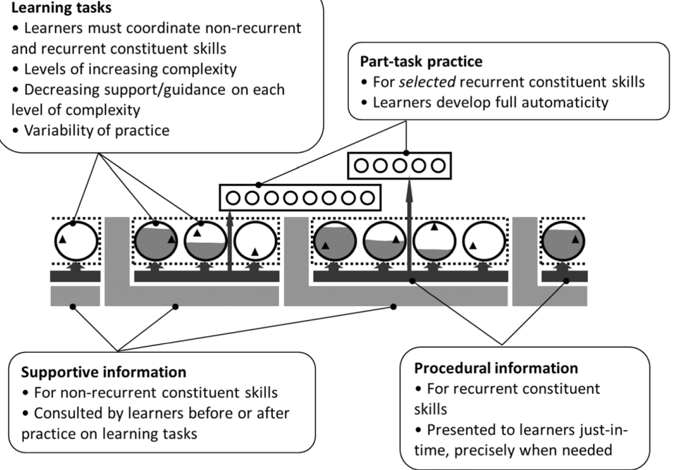
- The paper highlights 4C/ID as an extension of CLT for longer instructional programs and curricula, organized around 4 components: learning tasks, supportive information, procedural information, and part-task practice.
- It reports progress in measuring cognitive load, including a 10-item psychometric instrument that supported distinguishing intrinsic from extraneous load, and objective measures such as EEG, eye tracking, and secondary-task methods.
Methods
- This is a review article that retrospectively synthesizes CLT developments from 1998 to 2018, using the 1998 paper as a baseline and organizing the discussion into history, developments, future directions, and conclusions.
- The authors draw on prior theoretical and empirical studies and reviews cited throughout the paper; no new dataset or sample is reported in the text provided.
- Main analysis is a narrative synthesis of theoretical developments, instructional effects, and measurement approaches in CLT.
Limitations
- The paper explicitly says it is an attempt to summarise the last 20 years of CLT and sketch directions for future research, so it is a synthesis rather than a new empirical test.
- It repeatedly notes that more research is needed on cognitive-load measurement, including the optimal use of subjective rating scales, differentiating load types, and validating objective techniques.
- Evident from the text: several claims about future directions (e.g., resource depletion, self-regulated learning, emotions/stress/uncertainty, human movement) are presented as promising but not yet settled in the paper itself.
Model-written summary. Check it against the paper before relying on it.
Integrity signals
Registry
Cites
Statistics
Figures
Verification
Claims the paper makes
21 Valid · 23 Not valid · 90 Not checked · 158 Own results and interpretations
The sources with a verdict support this claim; the rest weren’t checked yet, have no full text we could read, or their verdicts aren’t rated yet.
In the paper
“Its basic premise is that human cognitive processing is heavily constrained by our limited working memory which can only process a limited number of information elements at a time.”
§ The Author(s) 2019 > Introduction
What the sources say
- Supportedcites Miller (1956) matched to “The magical number seven, plus or minus two: Some limits on our capacity for processing information.” (1956) source
The Summary says that immediate memory imposes severe limits on the information people can receive, process, and remember. The discussion of immediate memory (p. 93) specifies that its limit is the number of chunks, supporting the claim's broad paraphrase of a limited number of information elements at a time. (LLM, conf=0.91)
- Not checked — no full text of the sourcecites Peterson and Peterson (1959) matched to “Short-term retention of individual verbal items.” (1959) source
plainstates a cause- Asserted: passes — The authors put it forward as true.
- Checkable: passes — It can be checked against evidence.
- Load-bearing: passes — The paper’s conclusions depend on it.
- Based: passes — The paper gives a reason why it holds.
- Supported
The cited sources support only part of this claim — read each source’s verdict below.
In the paper
“The capacity and duration limits of working memory have been known at least since Miller (1956) and Peterson and Peterson (1959), although the fact that these limits effectively applied only to novel, not familiar information, seemed more implicit rather than explicit in most treatments.”
§ The Author(s) 2019 > Human Cognitive Architecture Used in 1998
What the sources say
- Partly supportedcites Miller (1956) matched to “The magical number seven, plus or minus two: Some limits on our capacity for processing information.” (1956) sourceExperimental — accuracy not yet measured
In the discussion of immediate memory (p. 93), Miller says its span is limited by the number of chunks and that familiar units allow more information to be packed into each chunk. That supports a distinction between novel material and familiar, recoded material, but not the claim that capacity limits apply only to novel information: the chunk limit remains. The paper also does not establish a duration limit that applies only to novel information. (LLM, conf=0.86)
- Not checked — no full text of the sourcecites Peterson and Peterson (1959) matched to “Short-term retention of individual verbal items.” (1959) source
hedged- Asserted: passes — The authors put it forward as true.
- Checkable: passes — It can be checked against evidence.
- Load-bearing: passes — The paper’s conclusions depend on it.
- Based: passes — The paper gives a reason why it holds.
- Partly supported
Every source the paper cites for this claim was checked and supports it.
In the paper
“The data summarised by Sala and Gobet (2017) provide a major justification for the post 1998 inclusion of evolutionary psychology into cognitive load theory.”
§ The Author(s) 2019 > Human Cognitive Architecture Seen Through the Prism of Evolutionary Psychology
What the sources say
- Supportedcites Sala and Gobet (2017) matched to “Does Far Transfer Exist? Negative Evidence From Chess, Music, and Working Memory Training” (2017) source
The Theoretical and Practical Implications section (page unavailable) summarises the paper’s evidence that chess, music and working-memory training do not reliably produce far transfer. The claim that these data justify a development in cognitive load theory is the citing authors’ interpretation, not a finding attributed to Sala and Gobet. (LLM, conf=0.86)
boostedstates a cause- Asserted: passes — The authors put it forward as true.
- Checkable: passes — It can be checked against evidence.
- Load-bearing: passes — The paper’s conclusions depend on it.
- Based: passes — The paper gives a reason why it holds.
- Supported
Every source the paper cites for this claim was checked and supports it.
In the paper
“The expertise reversal effect is, in essence, a variant of the more general element interactivity effect (Chen et al. 2017).”
§ The Author(s) 2019 > Instructional Effects Described After 1998
What the sources say
- Supportedcites Chen et al. 2017 matched to “The Expertise Reversal Effect is a Variant of the More General Element Interactivity Effect” (2017) source
The indexed copy lists the cited paper under the exact title “The Expertise Reversal Effect is a Variant of the More General Element Interactivity Effect.” Its title directly states the proposition attributed to it; no page number is available in the indexed passage. (LLM, conf=0.90)
plainstates a cause- Asserted: passes — The authors put it forward as true.
- Checkable: passes — It can be checked against evidence.
- Load-bearing: unclear — It is unclear whether the paper’s conclusions depend on it.
- Based: passes — The paper gives a reason why it holds.
- Supported
Every source the paper cites for this claim was checked and supports it.
In the paper
“When subsequently presented the fully integrated information, they only needed to learn how to integrate the individual elements and so more readily assimilated the entire, high element interactivity information.”
§ The Author(s) 2019 > Instructional Effects Described After 1998
What the sources say
- Supportedcites Pollock et al. 2002 matched to “Assimilating complex information” (2002) source
Split into 2 atoms — 2 confirmed, 0 partially supported, 0 disputed, 0 misattributed, 0 unverifiable. Expand the claim to see per-atom verdicts.
plainstates a cause- Asserted: passes — The authors put it forward as true.
- Checkable: passes — It can be checked against evidence.
- Load-bearing: passes — The paper’s conclusions depend on it.
- Based: passes — The paper gives a reason why it holds.
- Supported
132 more claims · 6 with their cited sources checked
Create a free account to see all 292 claims and to verify the 3 references still open.
- It may state two separate claims as one. 88
- Probably not a substantial claim. 95
Claims other papers make about this one
Each is checked against this paper’s own text: does it say what the citing paper says it does?
The source backs part of the claim, not all of it — or backs it for a different population, condition or comparison.
In the citing paper
“Another possible explanation is that the pre-training effect tends to be most effective for learners with minimal prior knowledge (Sweller et al., 2019)”
From Rethinking pre-training: cognitive load implications for learners with varying prior knowledge (2025) · cites this paper as Sweller et al., 2019
Experimental — accuracy not yet measuredThe cited source says what the claim attributes to it.
In the citing paper
“If the cognitive load imposed by a learning task is too high, it might interfere with the learner’s ability to effectively acquire and retain the skill [13, 25].”
From Teaching a single manual therapy technique at a time reduces cognitive load in physiotherapy students: a randomized controlled educational study (2025) · cites this paper as [13]
The cited source says what the claim attributes to it.
In the citing paper
“While cognitive load is often discussed in the context of instructional efficiency, it is important to note that cognitive load is not inherently detrimental. Rather, it is a natural component of learning that engages working memory resources for schema construction and automation [13].”
From Teaching a single manual therapy technique at a time reduces cognitive load in physiotherapy students: a randomized controlled educational study (2025) · cites this paper as [13]
The cited source says what the claim attributes to it.
In the citing paper
“Thus, an increased germane load is no longer believed to lead to cognitive overload and can thus no longer be assumed to be detrimental to learning performance.”
From Understanding Cognitive Load in Digital and Online Learning: a New Perspective on Extraneous Cognitive Load (2022) · cites this paper as Sweller et al., 2019
The cited source says what the claim attributes to it.
In the citing paper
“The major change from the 1998 model is that Sweller et al. (2019) have removed germane load from the additive equation of total load, but rather a dimension now called ' germane processing. '”
From Understanding Cognitive Load in Digital and Online Learning: a New Perspective on Extraneous Cognitive Load (2022) · cites this paper as Sweller et al., 2019
17 more claims about this paper
Create a free account to see every claim other papers make about this one.
Citations
Cites
The magical number seven, plus or minus two: Some limits on our capacity for processing information.
Miller, G. A. (1956) · Psychological Review · doi:10.1037/h0043158 · Cited by 17,812 · cited 1×
“The capacity and duration limits of working memory have been known at least since Miller (1956) and Peterson and Peterson (1959), although the fact that these limits effectively applied only to novel, not familiar information, seemed more implicit rather than explicit in most treatments.”
BackgroundThe magical number seven, plus or minus two: Some limits on our capacity for processing information.
Miller, G. A. (1994) · Psychological Review · doi:10.1037/0033-295x.101.2.343 · Cited by 17,161
Cognitive Load During Problem Solving: Effects on Learning
Sweller, J. (1988) · Cognitive Science · doi:10.1016/0364-0213(88)90023-7 · Cited by 11,048 · cited 4×
“Learning tasks (indicated by the big circles in Fig.”
BackgroundMethodInfluentialSelf-citationKirschner, P. A., Sweller, J., & Clark, R. E. (2006) · Educational Psychologist · doi:10.1207/s15326985ep4102_1 · Cited by 7,776
Self-citationRizzolatti, G., & Craighero, L. (2004) · Annual Review of Neuroscience · doi:10.1146/annurev.neuro.27.070203.144230 · Cited by 7,433
Cognitive Architecture and Instructional Design
Sweller, J., van Merrienboer, J. J. G., & Paas, F. G. W. C. (1998) · Educational Psychology Review · doi:10.1023/a:1022193728205 · Cited by 6,023
Self-citationCognitive load theory, learning difficulty, and instructional design
Sweller, J. (1994) · Learning and Instruction · doi:10.1016/0959-4752(94)90003-5 · Cited by 5,426 · cited 1×
“Element Interactivity Effect This effect was already known in 1998 but as a compound effect, it was not classed as a cognitive load effect (see Sweller 1994).”
BackgroundSelf-citationBaddeley, A. (1992) · Science · doi:10.1126/science.1736359 · Cited by 5,258
Ericsson, K. A., & Kintsch, W. (1995) · Psychological Review · doi:10.1037/0033-295x.102.2.211 · Cited by 3,498
Short-term retention of individual verbal items.
Peterson, L., & Peterson, M. J. (1959) · Journal of Experimental Psychology · doi:10.1037/h0049234 · Cited by 2,939 · cited 1×
“The capacity and duration limits of working memory have been known at least since Miller (1956) and Peterson and Peterson (1959), although the fact that these limits effectively applied only to novel, not familiar information, seemed more implicit rather than explicit in most treatments.”
Background
Research works printed but not linked: 4
- Centre for Education Statistics and Evaluation. (2017). Cognitive load theory: research that teachers really need to understand . Sydney: NSW Department of Education.
- Centre for Education Statistics and Evaluation. (2018). Cognitive load theory in practice . Sydney: NSW Department of Education.
- Clark, R. C. (2014). Evidence-based training methods: a guide for training professionals (2nd ed.). Alexandria: ATD Press.
- Miller, W. (1937). The picture crutch in reading. Elementary English Review, 14 , 263 -264.
Cited by
Items 401–500 of 2,268
Wu, L. Y., Chau, K. T., Yahaya, W. A. J. W., Wang, S., & Wu, X. (2024) · International Journal of Human-Computer Interaction · doi:10.1080/10447318.2024.2371692 · Cited by 17
“Similarly, Sweller et al. (2019) argued that external supports, such as vibrational cues, can reduce individuals’ processing and memorization of learning content, thus reducing internal cognitive load.”
Du, Y., Wang, J., Wang, Z., Liu, J., Li, S., Lv, J., Peng, Y., Chang, S., Li, M., Liu, H., et al. (2024) · Frontiers in Public Health · doi:10.3389/fpubh.2024.1450935 · Cited by 21
Wirth, J., Weber-Reuter, X.-L., Schuster, C., Fleischer, J., Leutner, D., & Stebner, F. (2025) · Educational Psychology Review · doi:10.1007/s10648-024-09983-x · Cited by 30
“…have gone so far as proposing the term “metacognitive load” (Bannert, 2002; Schwonke, 2015; Valcke, 2002) to describe this extra burden, as it compounds the existing cognitive learning processes and contributes to cognitive load on working memory (Sweller, 1988; Sweller et al., 1998, 2019).”
Goyal, H., Garg, G., Mordia, P., Ramachandran, V., Kumar, D., & Challa, J. S. (2025) · Scientific Reports · doi:10.1038/s41598-025-18047-1 · Cited by 32
Dual Process Theories: Computing Cognition in Context
Robins, A. V. (2022) · ACM Transactions on Computing Education · doi:10.1145/3487055 · Cited by 24
Educators’ perspectives about teaching and supporting students with learning difficulties in reading
Serry, T. A., Snow, P. C., Hammond, L. S., McLean, E., & McCormack, J. (2022) · Australian Journal of Education · doi:10.1177/00049441221130551 · Cited by 30
“…to teaching received notably less, yet around 40% of participants indicated they had not yet embraced evidence from cognitive psychology that emphasises the importance of explicit and direct instruction (Sweller et al., 2019) to optimise students’ learning across all domains, including reading.”
BackgroundKing, J., Marcus, T., & Markant, J. C. (2023) · Scientific Reports · doi:10.1038/s41598-023-32069-7 · Cited by 32
Taştan, H., & Tong, T. (2023) · Computer Applications in Engineering Education · doi:10.1002/cae.22631 · Cited by 19
Liu, Y.-C., Wang, W., & Huang, W.-H. (2023) · Education and Information Technologies · doi:10.1007/s10639-023-11856-9 · Cited by 22
“The capacity of an individual’s working memory is limited, allowing access only to short-term memory; otherwise, information disappears in a very brief period (Sweller et al., 2019).”
BackgroundInfluentialDoes imagination enhance learning? A systematic review and meta-analysis
Mguidich, H., Zoudji, B., & Khacharem, A. (2023) · European Journal of Psychology of Education · doi:10.1007/s10212-023-00754-w · Cited by 17
“The positive effect of imagination on learning is largely explained from the perspective of cognitive load theory (CLT, Sweller et al., 2011b, 2019).”
How Learners Use Their Hands for Learning: an Eye-Tracking Study
Park, B., Korbach, A., Ginns, P., & Brünken, R. (2023) · Educational Psychology Review · doi:10.1007/s10648-023-09833-2 · Cited by 21
“With respect to the revised version of CLT (Sweller et al., 2019), only extra-neous and intrinsic cognitive load was measured by a translated and adapted version of a cognitive load rating scale including eight items constructed by Lep-pink and Van den Heuvel (2015).”
BackgroundMethodDecristan, J., Bertram, V., Reitenbach, V., Schneider, K. M., & Rauch, D. P. (2023) · Teaching and Teacher Education · doi:10.1016/j.tate.2023.104437 · Cited by 26
A virtual driving instructor that assesses driving performance on par with human experts
Rehm, J., Reshodko, I., & Gundersen, O. E. (2024) · Expert Systems with Applications · doi:10.1016/j.eswa.2024.123355 · Cited by 16
Abeysekera, I., Sunga, E., Gonzales, A., & David, R. (2024) · Sustainability · doi:10.3390/su16041686 · Cited by 30
“Germane processing is the students’ effort to store knowledge in short-term and long-term memory by developing memory patterns known as schema, and pedagogy facilitates building and increasing schema (Jiang & Kalyuga, 2020; Sweller et al., 2019) [39,40].”
BackgroundEndres, T., Bender, L., Sepp, S., Zhang, S., David, L., Trypke, M., Lieck, D., Désiron, J. C., Bohm, J., Weißgerber, S. C., et al. (2025) · Educational Psychology Review · doi:10.1007/s10648-024-09978-8 · Cited by 20
“Cognitive load theory (CLT; Sweller et al., 1998, 2019) is a widely used model that describes cognitive demand in a way that supports instructional design to optimize working memory usage, thereby enhancing learners’ ability to process and retain new information.”
Self-citationLearning accounting through visual representations
Sithole, S. T. M., Datt, R., Lange, P. D., & Tharapos, M. (2021) · Accounting Research Journal · doi:10.1108/arj-06-2018-0100 · Cited by 21
Froese, L., & Roelle, J. (2022) · Metacognition and Learning · doi:10.1007/s11409-022-09293-z · Cited by 21
“As learners’ cognitive resources are limited (e.g., Sweller et al. 2019), this potential offloading function of idea unit standards in forming self-evaluations might contribute to the benefits of idea unit standards as well.”
Teaching Discipline-Based Problem Solving
Frey, R. F., Brame, C. J., Fink, A., & Lemons, P. P. (2022) · CBE—Life Sciences Education · doi:10.1187/cbe.22-02-0030 · Cited by 42
“Extensive research supports CLT and the effect of limited working memory capacity on student learning (Sweller et al., 2019).”
BackgroundRealistic details impact learners independently of split-attention effects
Skulmowski, A. (2023) · Cognitive Processing · doi:10.1007/s10339-022-01123-z · Cited by 19
Learner Control Aids Learning from Instructional Videos with a Virtual Human
Schroeder, N. L., Chin, J., & Craig, S. D. (2019) · Technology Knowledge and Learning · doi:10.1007/s10758-019-09417-6 · Cited by 19
The Worked Example Principle in Multimedia Learning
Renkl, A. (2021) · Cambridge University Press eBooks · doi:10.1017/9781108894333.023 · Cited by 32
Can Behavioral Interventions Be Too Salient? Evidence From Traffic Safety MessagesPreprint
Hall, J. D., & Madsen, J. M. (2020) · SSRN Electronic Journal · doi:10.2139/ssrn.3633014 · Cited by 14
Problem-solving support and instructional sequence: impact on cognitive load and student performance
Costley, J., Gorbunova, A., Courtney, M., Chen, O., & Lange, C. (2024) · European Journal of Psychology of Education · doi:10.1007/s10212-023-00757-7 · Cited by 13
“…and thus creating a different learning task with lower intrinsic load (Paas et al., 2003), there is a general consensus that extraneous load can be minimized without changing the learning task, simply by making sure the instructional content is relevant to learning the task (Sweller et al., 2019).”
InfluentialVideo Tutorials in the Traditional Classroom: The Effects on Different Types of Cognitive Load
Fan, E., Bower, M., & Siemon, J. (2024) · Technology Knowledge and Learning · doi:10.1007/s10758-024-09754-1 · Cited by 27
“Thus, germane load is a cognitive resource needed to deal with intrinsic cognitive load (Sweller et al., 2019).”
InfluentialExtending Cognitive Load Theory: The CLAM Framework for Biometric, Adaptive, and Ethical Learning
Vasilaki, E., & Mavrogianni, A. (2025) · Psychology International · doi:10.3390/psycholint7020040 · Cited by 30
Rethinking Cognitive Load Theory
Kalyuga, S., & Plass, J. L. (2025) · doi:10.1093/9780190078539.001.0001 · Cited by 24
Hsu, Y.-T., & Lee, S. W. (2025) · Education and Information Technologies · doi:10.1007/s10639-025-13807-y · Cited by 26
“Cognitive load in IVR can be categorized into three types (Krieglstein et al., 2023; Sweller et al., 2019), Studies have shown that VR environments increase extraneous cognitive load compared to PC-based learning (Parong & Mayer, 2021).”
An Item Response Modeling Approach to Cognitive Load Measurement
Ehrich, J. F., Howard, S. J., Bokosmaty, S., & Woodcock, S. (2021) · Frontiers in Education · doi:10.3389/feduc.2021.648324 · Cited by 19
“Further validation of this measure would benefit from evaluation of the index to determine whether it varies according to the learner task following CLT principles (e.g., extraneous and germane load) and through construct (i.e., convergent) validity testing to establish the measure’s relationship with other cognitive l…”
BackgroundInfluentialRichters, C., Stadler, M. J., Radkowitsch, A., Schmidmaier, R., Fischer, M. R., & Fischer, F. (2023) · Large-scale Assessments in Education · doi:10.1186/s40536-023-00151-1 · Cited by 15
“Exploring complex problem-solving tasks with the goal of finding out as much as possible, without the goal of establishing a well-supported solution or diagnosis may be an effective approach to learning, as it is connected to lower cognitive load (goal-free instruction; Sweller et al., 2019).”
BackgroundHaavisto, M., Jaakkola, T., & Lepola, J. (2023) · Computers & Education · doi:10.1016/j.compedu.2023.104775 · Cited by 21
Engaged learning during distraction: a case study of successful working moms in distance education
Fensie, A., Pierre, T. S., Jain, J., & Sezen‐Barrie, A. (2023) · Journal of Computing in Higher Education · doi:10.1007/s12528-023-09359-0 · Cited by 29
“Cognitive load theory is based on the notion that humans have a limited capacity for cognitive processing, and unnecessary demands on attention, working memory, and processing result in diminished learning and transfer (Sweller et al., 2019).”
InfluentialLiu, A., Duffy, M. C., Tse, S., Zucker, M., McMillan, H. J., Weldon, P., Quet, J., & Long, M. (2023) · Medical Teacher · doi:10.1080/0142159x.2023.2189540 · Cited by 15
“Concurrent feedback may specifically benefit novice learners by reducing anxiety and providing guidance to a group with little experience; together, these factors reduce cognitive load (Fraser et al. 2012; Young et al. 2014; Moran 2016; Sweller et al. 2019).”
BackgroundInstructional Strategies that Foster Effective Problem-Solving
Singh, C., Maries, A., Heller, K., & Heller, P. M. (2023) · doi:10.1063/9780735425477_017 · Cited by 33
“It adds a significant cognitive load that can limit their proficiency and add to their frustration (Sweller, 2019).”
BackgroundFinger pointing to support learning from split-attention examples
Zhang, S., de Koning, B. B., & PAAS, F. G. W. C. (2023) · Educational Psychology · doi:10.1080/01443410.2023.2193696 · Cited by 17
“Firstly, based on CLT and research on the split-attention effect (Sweller et al., 2019), we expected a split-attention effect: when no pointing instructions are given, participants presented with an integrated format would obtain higher retention (Hypothesis 1a) and comprehension (Hypothesis 1b)…”
BackgroundMethodSelf-citationAre Inductive Teaching Methods Compatible with Cognitive Load Theory?
Gorbunova, A., van Merriënboer, J. J. G., & Costley, J. (2023) · Educational Psychology Review · doi:10.1007/s10648-023-09828-z · Cited by 31
“Researchers who reject problem-first inductive teaching methods often claim that they are incompatible with human cognitive architecture as described by cognitive load theory (Sweller et al., 1998, 2019).”
BackgroundMethodInfluentialSelf-citationSchick, K., Reiser, S., Janssen, L., Schacht, L., Pittroff, S. I. D., Dörfler, E., Klein, E., Roenneberg, C., Dinkel, A., Fleischmann, A., et al. (2023) · Patient Education and Counseling · doi:10.1016/j.pec.2023.108132 · Cited by 20
Lin, Z., & Sweller, J. (2024) · European Journal of Psychology of Education · doi:10.1007/s10212-024-00799-5 · Cited by 23
“Therefore, learning is less likely to be productive through an exploration first than through an explicit instruction first approach (Sweller et al., 2010, 2019).”
InfluentialSelf-citationHow can procedural flowcharts support the development of mathematics problem-solving skills?
Chinofunga, M. D., Chigeza, P., & Taylor, S. (2024) · Mathematics Education Research Journal · doi:10.1007/s13394-024-00483-3 · Cited by 31
“The findings are consistent with previous literature that flowcharts can give an overall direction of the process, help explain what is involved, may help reduce cognitive load and allow students to focus on complex tasks (Davidowitz & Rollnick, 2001; Norton et al., 2007; Sweller et al., 2019).”
The influence of learning analytics dashboard information design on cognitive load and performance
Cheng, N., Zhao, W., Xu, X., Liu, H., & Tao, J. (2024) · Education and Information Technologies · doi:10.1007/s10639-024-12606-1 · Cited by 21
“However, oversimplified data representations can reduce the scientific validity and integrity of the data (Alhadad, 2018 ), whereas overly complex data representations may hinder concentration and cognitive function because learners’ working memory has capac - ity constraints (Sweller et al., 2019).”
Zhu, F., Pi, Z., & Yang, J. (2024) · Educational Psychology Review · doi:10.1007/s10648-024-09859-0 · Cited by 18
“Humans have a limited amount of cognitive resources, however, and are only able to process a certain amount of information at once (Sweller et al., 2019).”
Stark, L., Korbach, A., Brünken, R., & Park, B. (2024) · Journal of Computer Assisted Learning · doi:10.1111/jcal.13051 · Cited by 16
The influence of seductive details in learning environments with low and high extrinsic motivation
Wesenberg, L., Jansen, S., Krieglstein, F., Schneider, S., & Rey, G. D. (2024) · Learning and Instruction · doi:10.1016/j.learninstruc.2024.102054 · Cited by 20
Hawthorne, B. S., Slemp, G. R., Vella‐Brodrick, D., & Hattie, J. (2024) · Learning and Individual Differences · doi:10.1016/j.lindif.2024.102597 · Cited by 19
The Impact of Game-Based Interventions on Adult Cognition: A Systematic Review
Coelho, F., Gonçalves, D., & Abreu, A. M. (2025) · International Journal of Human–Computer Interaction · doi:10.1080/10447318.2025.2462746 · Cited by 14
“According to the literature, cognitive load is elevated when there are unnecessary demands that hinder effective learning (Sweller et al., 2019).”
Display interface design for rollers based on cognitive load of operator
Yan, K., Shao, J., Zhendong, Z., et al. (2021) · Journal of the Society for Information Display · doi:10.1002/jsid.1009 · Cited by 13
O’Leary, K. C., Gleasure, R., O’Reilly, P., & Feller, J. (2021) · Technovation · doi:10.1016/j.technovation.2021.102369 · Cited by 13
Explicit Instruction and Executive Functioning Capacity: A New Direction in Cognitive Load Theory
Siregar, N. R. (2021) · Journal of Education · doi:10.1177/00220574211033256 · Cited by 24
“Excessive loads lead to depletion of working memory (Chen et al., 2018; Sweller et al., 2019), thus reducing the performance of working memory capacity.”
BackgroundThe structured interview's resistance to gender discrimination under cognitive load
Kith, S., Cassidy, S. A., & Powell, D. M. (2022) · International Journal of Selection and Assessment · doi:10.1111/ijsa.12361 · Cited by 17
Why robots should be technical: Correcting mental models through technical architecture concepts
Hindemith, L., Göpfert, J. P., Wiebel-Herboth, C. B., Wrede, B., & Vollmer, A.-L. (2021) · Interaction Studies Social Behaviour and Communication in Biological and Artificial Systems · doi:10.1075/is.20023.hin · Cited by 19
“This results in stimulating the user in a multi-modal way and thereby improves the information reception (Sweller et al., 2019).”
BackgroundGeary, D. C., & Xu, K. M. (2022) · Educational Psychology Review · doi:10.1007/s10648-022-09710-4 · Cited by 13
“…practically, this perspective helps to organize research findings in instructional sciences, as illustrated by cognitive load theory (Sweller, 2022; Sweller et al., 2019), but at the same time empirical studies are needed to determine the best instructional approaches for specific academic…”
BackgroundDigital ink and differentiated subjective ratings for cognitive load measurement in middle childhood
Altmeyer, K., Barz, M., Lauer, L., Peschel, M., Sonntag, D., Brünken, R., & Malone, S. (2023) · British Journal of Educational Psychology · doi:10.1111/bjep.12595 · Cited by 17
“Cognitive load theory ( CLT ) is concerned with the ease of information processing in working memory (Sweller et al., 2019).”
Williams, K. R., Wasson, S., Barrett, A. A., Greenall, R. F., Jones, S. R., & Bailey, E. G. (2021) · CBE—Life Sciences Education · doi:10.1187/cbe.20-09-0219 · Cited by 17
Chen, T., Wang, L., Huang, B., Yu, J., & Wu, Y. (2024) · Journal of Building Engineering · doi:10.1016/j.jobe.2024.111144 · Cited by 19
Poupard, M., Larrue, F., Bertrand, M. M., Liguoro, D., Tricot, A., & Sauzeon, H. (2025) · Computers & Education · doi:10.1016/j.compedu.2025.105332 · Cited by 14
Sana, F., & Fenesi, B. (2025) · Behavioral Sciences · doi:10.3390/bs15060765 · Cited by 28
“Worked examples—step-by-step demonstrations of problem-solving procedures—are particularly beneficial for learners with lower working memory capacity (WMC), as they reduce cognitive load by minimizing the need for simultaneous problem-solving and information retention (Sweller et al., 2019).”
Siu, B., & White, J. E. (2025) · British Educational Research Journal · doi:10.1002/berj.4206 · Cited by 22
Personalizing simulation-based learning in higher education
Bauer, E., Heitzmann, N., Bannert, M., Chernikova, O., Fischer, M. R., Frenzel, A. C., Gartmeier, M., Hofer, S. I., Holzberger, D., Kasneci, E., et al. (2025) · Learning and Individual Differences · doi:10.1016/j.lindif.2025.102746 · Cited by 33
Zhang, Z., Wang, C., & Shang, Y. (2025) · The Asia-Pacific Education Researcher · doi:10.1007/s40299-025-01031-8 · Cited by 25
Tobias, R. G., Lozano, J. A. G., Torres, M. L. M., Ramírez, J. A., Baldini, G. M., & Okoye, K. (2025) · International Journal of STEM Education · doi:10.1186/s40594-025-00575-x · Cited by 12
“…these gaps, our intervention merges AI-driven scaffolding with VR simulations, drawing on the relevant existing frameworks: Cognitive Load Theory (Sweller et al., 2019) which shapes adaptive feedback that filters extraneous information; Kolb’s Experiential Learning Cycle (1984) which justifies…”
InfluentialOverloaded minds and machines: a cognitive load framework for human-AI symbiosis
Wang, P., Liu, H., Zou, L., & PAAS, F. G. W. C. (2026) · Artificial Intelligence Review · doi:10.1007/s10462-026-11510-z · Cited by 25
“Human cognition is fundamentally constrained by the severe capacity limits of working memory, yet we have evolved remarkably adaptive strategies to extend our effective cogni - tive reach without biological alteration (Sweller et al. 2019 ; Fig.”
Self-citationThe Transient Information Principle in Multimedia Learning
Jiang, D., & Sweller, J. (2021) · Cambridge University Press eBooks · doi:10.1017/9781108894333.027 · Cited by 18
Self-citationEnglish Phrase Learning With Multimodal Input
Huang, Y., Zhang, Z., Yu, J., Liu, X., & Huang, Y. (2022) · Frontiers in Psychology · doi:10.3389/fpsyg.2022.828022 · Cited by 20
“Cognitive load theory focuses on the effects of information processing load on the construction of long-term memory (Sweller et al., 2019).”
BackgroundGrundgeiger, T., Ertle, F., Diethei, D., Mengelkamp, C., & Held, V. (2022) · Advances in Health Sciences Education · doi:10.1007/s10459-022-10148-0 · Cited by 21
Effects of finger and mouse pointing on learning from online split‐attention examples
Zhang, S., de Koning, B. B., & PAAS, F. G. W. C. (2022) · British Journal of Educational Psychology · doi:10.1111/bjep.12556 · Cited by 16
Self-citationEberharter, K., Kormos, J., Guggenbichler, E., Ebner, V., Suzuki, S., Moser-Frötscher, D., Konrad, E., & Kremmel, B. (2023) · Language Testing · doi:10.1177/02655322221149642 · Cited by 17
Jawahar, I. M. “., Kisamore, J. L., & Stone, T. H. (2023) · Management Research Review · doi:10.1108/mrr-09-2022-0656 · Cited by 17
Effect of representation format on conceptual question performance and eye-tracking measures
Sušac, A., Planinić, M., Bubić, A., Jeličić, K., & Palmović, M. (2023) · Physical Review Physics Education Research · doi:10.1103/physrevphyseducres.19.020114 · Cited by 18
Designing immersive experiences in virtual reality for design for additive manufacturing training
Mathur, J., Miller, S. R., Simpson, T. W., & Meisel, N. A. (2023) · Additive manufacturing · doi:10.1016/j.addma.2023.103875 · Cited by 21
Federated Learning for Privacy-aware Cognitive Workload Estimation
Fenoglio, D., Josifovski, D., Gobbetti, A., Formo, M., Gjoreski, H., Gjoreski, M., & Langheinrich, M. (2023) · International Conference on Mobile and Ubiquitous Multimedia (MUM) · doi:10.1145/3626705.3627783 · Cited by 16
“First, the main limitation is the lack of objective ground truth data, as CW has a substantial subjective component, and it often relies on self-report measures or subjective ratings [31].”
BackgroundHaunstrup, J. S., & Jensen, U. T. (2024) · International Public Management Journal · doi:10.1080/10967494.2024.2314055 · Cited by 23
“However, multiple empirical studies already demonstrate how public managers are affected by cognitive limitations (Battaglio et al. 2018) and that cognitive limitations obstruct learning transfer (Blume et al. 2010; Sweller, van Merriënboer, and Paas 2019).”
The effects of visualisation literacy and data storytelling dashboards on teachers’ cognitive load
Liu, Y., Pozdniakov, S., & Martínez‐Maldonado, R. (2024) · Australasian Journal of Educational Technology · doi:10.14742/ajet.8988 · Cited by 27
“Sweller et al. (2019) evaluated the progress made since the introduction of cognitive load theory, highlighting three major developments in the measurement of cognitive load.”
BackgroundAtiomo, W., Ennab, F., Stanley, A. G., & Ezimokhai, M. (2024) · Frontiers in Medicine · doi:10.3389/fmed.2024.1304417 · Cited by 20
“On the other hand, long-term memory is believed to be infinite in capacity (9).”
BackgroundCognitive Load Estimation Using a Hybrid Cluster-Based Unsupervised Machine Learning Technique
Hassan, I., Zolezzi, M., Khalil, H. W., Al-Saady, R., Pedersen, S., & Chowdhury, M. E. H. (2024) · IEEE Access · doi:10.1109/access.2024.3428691 · Cited by 12
Polat, H., Taş, N., Kaban, A., Kayaduman, H., & Battal, A. (2024) · International Journal of Human-Computer Interaction · doi:10.1080/10447318.2024.2415762 · Cited by 13
“…as it contains attention-arousing cues (Ouwehand et al., 2015; Wang, Antonenko, & Dawson, 2020), potentially dividing attention between content and instructor (van Wermeskerken et al., 2018), which can negatively impact their ability to optimize memory resources and learning (Sweller et al., 2019).”
Differences that matter: inquiry-based learning approach to research writing instruction
Waked, A., Pilotti, M., & Abdelsalam, H. (2024) · Scientific Reports · doi:10.1038/s41598-024-78962-7 · Cited by 32
Not easy to “like”: How does cognitive load influence user engagement in online reviews?
Wang, Y., & Li, K. (2025) · Decision Support Systems · doi:10.1016/j.dss.2025.114436 · Cited by 16
Jhang, J.-N., Lin, Y.-C., & Lin, Y.-T. (2025) · Sustainability · doi:10.3390/su17156775 · Cited by 26
Dubovi, I., & Lee, V. R. (2019) · Computers & Education · doi:10.1016/j.compedu.2019.103644 · Cited by 18
Msane, J., Mutanga, M. B., & Chani, T. (2020) · International Journal of Advanced Computer Science and Applications · doi:10.14569/ijacsa.2020.0110724 · Cited by 17
“These elements or factors represent those characteristics of a person that affect the way they learn and perform [31].”
BackgroundCognitive Load During First Contact With Mixed Reality Learning Environments
Kockord, R., & Bodensiek, O. (2021) · Mensch und Computer (MuC) · doi:10.1145/3473856.3474003 · Cited by 14
“According to Sweller, Ayres and Kalyuga [8] it can be faceted into instrinsic cognitive load (ICL), germane cognitive load (GCL) and extraneous cognitive load (ECL).”
BackgroundInfluentialVaisarova, J., & Reynolds, A. J. (2022) · Educational Assessment Evaluation and Accountability · doi:10.1007/s11092-021-09376-6 · Cited by 30
“Children who are not yet proficient in foundational literacy, math, and self-regulation skills, for instance, might find it difficult to extract information from unstructured, child-initiated activities and may benefit from more structured, direct instruction (Becker & Carnine, 1980; Gersten et al., 1986; Kinder & Car…”
BackgroundEngaging learners by tracing and summarizing in a computer‐based environment
Zuo, G., & Lin, L. (2022) · Applied Cognitive Psychology · doi:10.1002/acp.3928 · Cited by 12
A new application of the temporal contiguity effect in designing narrated slideshows
Liu, T., Lin, Y.-C., & PAAS, F. G. W. C. (2022) · Educational Technology Research and Development · doi:10.1007/s11423-021-10076-7 · Cited by 15
“Spatial and temporal integration of verbal and visual information are considered critical factors for successful learning from multimedia materials composed of the two sources of information (Kalyuga, 2009; Mayer, 2017; Sweller et al., 2019).”
BackgroundSelf-citationChi, C., Chen, H. H.-J., Tseng, W., & Liu, Y. (2022) · ReCALL · doi:10.1017/s0958344022000088 · Cited by 15
Lämsä, J., Mannonen, J., Tuhkala, A., Heilala, V., Helovuo, A., Tynkkynen, I., Lampi, E., Sipiläinen, K., Kärkkäinen, T., & Hämäläinen, R. (2023) · Journal of Computer Assisted Learning · doi:10.1111/jcal.12817 · Cited by 19
Getchell, N., & Shewokis, P. A. (2023) · Brazilian Journal of Motor Behavior · doi:10.20338/bjmb.v17i1.344 · Cited by 13
Kang, L. (2024) · Journal of the Knowledge Economy · doi:10.1007/s13132-024-01797-0 · Cited by 25
“It is crucial to develop individualized instructional designs and incorporate the principles of information-based instruction to achieve the goal of effective teaching in this field (Sweller et al., 2019).”
RetractedSmart Sensors for Augmented Electrical Experiments
Kapp, S., Lauer, F., Beil, F., Rheinländer, C. C., Wehn, N., & Kühn, J. (2021) · Sensors · doi:10.3390/s22010256 · Cited by 21
“This causes search processes irrelevant to learning to result in an increased ECL [48,51–53].”
BackgroundMelanou, C., & Beege, M. (2026) · Education Sciences · doi:10.3390/educsci16040651 · Cited by 12
The relationship between interleaving and variability effects: a cognitive load theory perspective
Chen, O., Retnowati, E., Castro-Alonso, J. C., Paas, F., & Sweller, J. (2023) · Education Sciences · doi:10.3390/educsci13111138 · Cited by 11
Self-citationFluency Illusion: A Review on Influence of ChatGPT in Classroom Settings
Kumar, S., Mikayelyan, A., & Vorfolomeyeva, O. (2026) · Information · doi:10.3390/info17030299 · Cited by 11
Besche, H. C., King, R. W., Shafer, K. M., Fleet, S. E., Charles, J. F., Kaplan, T., Greenzang, K. A., Hoenig, M. P., Schwartzstein, R. M., Cockrill, B. A., et al. (2025) · Journal of Medical Education and Curricular Development · doi:10.1177/23821205251317149 · Cited by 24
Sustaining student concentration: the effectiveness of micro-breaks in a classroom setting
Sharpe, B. T., Trotter, M. G., & Hale, B. J. (2025) · Frontiers in Psychology · doi:10.3389/fpsyg.2025.1589411 · Cited by 35
“The importance of maintaining student attention in higher education can be understood through the lens of cognitive load theory (CLT; Sweller, 1988; Sweller et al., 2019).”
Mahfoudh, H. B., & Zoudji, B. (2022) · Perceptual and Motor Skills · doi:10.1177/00315125221076448 · Cited by 11
“This subjective scale has been one of the most commonly used measures of cognitive load, and it has been reliable tool for assessing perceived difficulty and mental effort (Paas et al., 2003; Sweller et al., 2019; Ouwehand et al., 2021).”
BackgroundMethodUniversitas Pendidikan Ganesha, B., Sudarma, I. K., Prabawa, D. G. A. P., et al. (2022) · International Journal of Information and Education Technology · doi:10.18178/ijiet.2022.12.10.1718 · Cited by 11
Privitera, M. R. (2022) · Health · doi:10.4236/health.2022.1412095 · Cited by 14
Development and Validation of a Cognitive Load Measure for General Educational Settings
Ober, T. M., Lu, Y., Blacklock, C., Liu, C., & Cheng, Y. (2023) · Journal of Psychoeducational Assessment · doi:10.1177/07342829231169171 · Cited by 14
“A considerable amount of educational research in recent decades has examined the applications of cognitive load theory in evaluating and designing learning environments (Kirschner et al., 2011; Mayer & Moreno, 2003; Sweller et al., 2019).”
BackgroundNickl, M., Sommerhoff, D., Böheim, R., Ufer, S., & Seidel, T. (2023) · Zeitschrift für Pädagogische Psychologie · doi:10.1024/1010-0652/a000362 · Cited by 25
Krieglstein, F., Meusel, F., Rothenstein, E., Scheller, N., Wesenberg, L., & Rey, G. D. (2023) · Smart Learning Environments · doi:10.1186/s40561-023-00258-6 · Cited by 13
“In general, ECL depends on the presentation and design of the learning material (Sweller et al., 2019).”
BackgroundInfluentialColliot, T., & Boucheix, J. (2023) · Journal of Computer Assisted Learning · doi:10.1111/jcal.12879 · Cited by 14
“The presence of seductive details would add extraneous cognitive load (i.e., the load is determined by how the information is presented and linked to the instructional design of a multimedia document; Sweller et al., 2019), which is irrelevant to learning.”
Background
Metadata
- Authors
- Sweller, J., van Merriënboer, J. J. G., & Paas, F.
- Affiliations
- UNSW Sydney (AU)
- University of Wollongong (AU)
- Corresponding author
- Sweller, John
- Venue
- Educational Psychology Review
- Published
- 2019-01-22
- Volume
- 31
- Issue
- 2
- Pages
- 261-292
- ISSN
- 1040-726X (ISSN-L)
- 1573-336X
- OpenAlex
- W2913144876
- Semantic Scholar
- e28d73214751d51c3f46a867920be41c49c45130
- Cited by
- 2,337
- References
- 129
- Citations by year
- 2026: 713 · 2025: 466 · 2024: 331 · 2023: 268 · 2022: 212 · 2021: 190 · 2020: 114 · 2019: 37
- FWCI
- 162.54
- Type
- journal article
- Language
- en
- Open access
- hybrid
- doi.org
- Licence
- cc-by
- creativecommons.org/licenses/by/4.0 (tdm)
- Locations
- Educational Psychology Review (publishedVersion, cc-by)
- EUR Research Repository (Erasmus University Rotterdam) (publishedVersion, other-oa)
- Research Online (University of Wollongong) (submittedVersion)
- EUR Research Repository (Erasmus University Rotterdam) (submittedVersion)
- Research Publications (Maastricht University) (submittedVersion, cc-by)
- Figshare (submittedVersion, cc-by)
- Research Publications (Maastricht University) (submittedVersion, other-oa)
- Topics
- Social Sciences › Psychology › Experimental and Cognitive Psychology › Visual and Cognitive Learning Processes
- Social Sciences › Psychology › Developmental and Educational Psychology › Innovative Teaching and Learning Methods
- Life Sciences › Neuroscience › Cognitive Neuroscience › Neuroscience, Education and Cognitive Function
- Keywords
- cognitive load theory, cognitive architecture, working memory, long-term memory, instructional design
About these checks
Registry, retraction, Cites and statistics results are computed, not judged, with one exception: a printed reference that no index lists is read once by a model before it counts as a citation error. Claims are extracted by a model and kept only when their quote appears verbatim in the text; each cited source is then checked, with a model’s help, for whether it says what the claim relies on. Those verdicts can be wrong — read the claim’s quote and the cited source before relying on one.
The claim verdicts this report counts are experimental: their accuracy is not yet measured.
A language model drew the claims from the paper on 2026-10-10, under version 3 of the claim definition (model deepseek-v4.1-flash, prompt extract-v3).
A second model labelled each claim on 2026-10-10 (model jev-1.13-20260917, definition revision gold-guideline-v0.2).
Cited sources are checked with a language model’s help (gpt-6-sol).
Statistics and arithmetic are recomputed, not judged.
Confidence bands are shown only for fields calibrated on our annotated test set. None is calibrated yet, so no band is shown.
What counts as a claim ›How we measure confidence ›How we check this ›
Are you an author, or do you see a problem with this page? Request a review
Data sources
Bibliographic data: Semantic Scholar, OpenAlex, Crossref.
Contains information from the Semantic Scholar Academic Graph Datasets, made available under the ODC Attribution License (ODC-BY 1.0).
Semantic Scholar’s data is described in: Kinney, R., et al. (2023). The Semantic Scholar Open Data Platform. arXiv:2301.10140.
