

Cognitive Architecture and Instructional Design: 20 Years Later
Open accessThe DOI matches its Crossref record; 127 of the 129 references it cites were found in a registry or an index, and 1 are not checked yet; 22 of the 116 sources its claims cite were checked for support.
Abstract
Cognitive load theory was introduced in the 1980s as an instructional design theory based on several uncontroversial aspects of human cognitive architecture. Our knowledge of many of the characteristics of working memory, long-term memory and the relations between them had been well-established for many decades prior to the introduction of the theory. Curiously, this knowledge had had a limited impact on the field of instructional design with most instructional design recommendations proceeding as though working memory and long-term memory did not exist. In contrast, cognitive load theory emphasised that all novel information first is processed by a capacity and duration limited working memory and then stored in an unlimited long-term memory for later use. Once information is stored in long-term memory, the capacity and duration limits of working memory disappear transforming our ability to function. By the late 1990s, sufficient data had been collected using the theory to warrant an extended analysis resulting in the publication of Sweller et al. (Educational Psychology Review, 10, 251–296, 1998). Extensive further theoretical and empirical work have been carried out since that time and this paper is an attempt to summarise the last 20 years of cognitive load theory and to sketch directions for future research.
Verified 2026-11-25 · 1 reference not checked yet
Overview
CoChat Summary
TL;DR
This review argues that cognitive load theory (CLT) has substantially advanced since its 1998 summary, with new theoretical grounding, new instructional effects, and improved measurement approaches. It also frames future work around working-memory resource depletion, self-regulated learning, emotions/stress/uncertainty, and human movement.
Key findings
- The paper states that the 1998 article reported 7 cognitive load effects, and that 8 new effects were added in the 1998–2018 period, including compound effects.
- It says CLT’s theoretical basis was strengthened by grounding human cognitive architecture in evolutionary psychology, especially Geary’s distinction between biologically primary and biologically secondary knowledge.
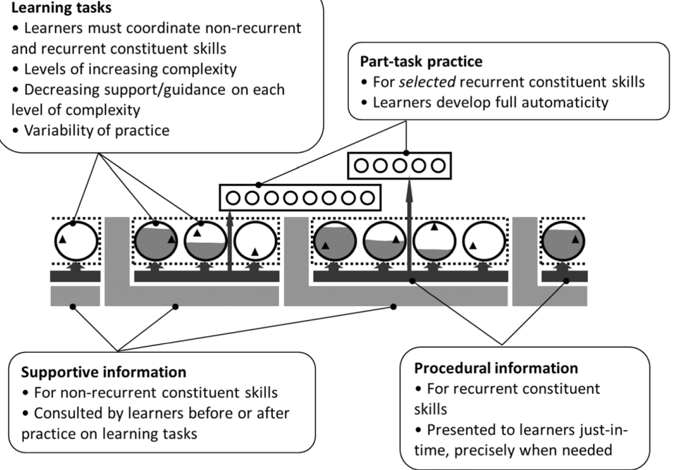
- The paper highlights 4C/ID as an extension of CLT for longer instructional programs and curricula, organized around 4 components: learning tasks, supportive information, procedural information, and part-task practice.
- It reports progress in measuring cognitive load, including a 10-item psychometric instrument that supported distinguishing intrinsic from extraneous load, and objective measures such as EEG, eye tracking, and secondary-task methods.
Methods
- This is a review article that retrospectively synthesizes CLT developments from 1998 to 2018, using the 1998 paper as a baseline and organizing the discussion into history, developments, future directions, and conclusions.
- The authors draw on prior theoretical and empirical studies and reviews cited throughout the paper; no new dataset or sample is reported in the text provided.
- Main analysis is a narrative synthesis of theoretical developments, instructional effects, and measurement approaches in CLT.
Limitations
- The paper explicitly says it is an attempt to summarise the last 20 years of CLT and sketch directions for future research, so it is a synthesis rather than a new empirical test.
- It repeatedly notes that more research is needed on cognitive-load measurement, including the optimal use of subjective rating scales, differentiating load types, and validating objective techniques.
- Evident from the text: several claims about future directions (e.g., resource depletion, self-regulated learning, emotions/stress/uncertainty, human movement) are presented as promising but not yet settled in the paper itself.
Model-written summary. Check it against the paper before relying on it.
Integrity signals
Registry
Cites
Statistics
Figures
Verification
Claims the paper makes
21 Valid · 23 Not valid · 90 Not checked · 158 Own results and interpretations
The sources with a verdict support this claim; the rest weren’t checked yet, have no full text we could read, or their verdicts aren’t rated yet.
In the paper
“Its basic premise is that human cognitive processing is heavily constrained by our limited working memory which can only process a limited number of information elements at a time.”
§ The Author(s) 2019 > Introduction
What the sources say
- Supportedcites Miller (1956) matched to “The magical number seven, plus or minus two: Some limits on our capacity for processing information.” (1956) source
The Summary says that immediate memory imposes severe limits on the information people can receive, process, and remember. The discussion of immediate memory (p. 93) specifies that its limit is the number of chunks, supporting the claim's broad paraphrase of a limited number of information elements at a time. (LLM, conf=0.91)
- Not checked — no full text of the sourcecites Peterson and Peterson (1959) matched to “Short-term retention of individual verbal items.” (1959) source
plainstates a cause- Asserted: passes — The authors put it forward as true.
- Checkable: passes — It can be checked against evidence.
- Load-bearing: passes — The paper’s conclusions depend on it.
- Based: passes — The paper gives a reason why it holds.
- Supported
The cited sources support only part of this claim — read each source’s verdict below.
In the paper
“The capacity and duration limits of working memory have been known at least since Miller (1956) and Peterson and Peterson (1959), although the fact that these limits effectively applied only to novel, not familiar information, seemed more implicit rather than explicit in most treatments.”
§ The Author(s) 2019 > Human Cognitive Architecture Used in 1998
What the sources say
- Partly supportedcites Miller (1956) matched to “The magical number seven, plus or minus two: Some limits on our capacity for processing information.” (1956) sourceExperimental — accuracy not yet measured
In the discussion of immediate memory (p. 93), Miller says its span is limited by the number of chunks and that familiar units allow more information to be packed into each chunk. That supports a distinction between novel material and familiar, recoded material, but not the claim that capacity limits apply only to novel information: the chunk limit remains. The paper also does not establish a duration limit that applies only to novel information. (LLM, conf=0.86)
- Not checked — no full text of the sourcecites Peterson and Peterson (1959) matched to “Short-term retention of individual verbal items.” (1959) source
hedged- Asserted: passes — The authors put it forward as true.
- Checkable: passes — It can be checked against evidence.
- Load-bearing: passes — The paper’s conclusions depend on it.
- Based: passes — The paper gives a reason why it holds.
- Partly supported
Every source the paper cites for this claim was checked and supports it.
In the paper
“The data summarised by Sala and Gobet (2017) provide a major justification for the post 1998 inclusion of evolutionary psychology into cognitive load theory.”
§ The Author(s) 2019 > Human Cognitive Architecture Seen Through the Prism of Evolutionary Psychology
What the sources say
- Supportedcites Sala and Gobet (2017) matched to “Does Far Transfer Exist? Negative Evidence From Chess, Music, and Working Memory Training” (2017) source
The Theoretical and Practical Implications section (page unavailable) summarises the paper’s evidence that chess, music and working-memory training do not reliably produce far transfer. The claim that these data justify a development in cognitive load theory is the citing authors’ interpretation, not a finding attributed to Sala and Gobet. (LLM, conf=0.86)
boostedstates a cause- Asserted: passes — The authors put it forward as true.
- Checkable: passes — It can be checked against evidence.
- Load-bearing: passes — The paper’s conclusions depend on it.
- Based: passes — The paper gives a reason why it holds.
- Supported
Every source the paper cites for this claim was checked and supports it.
In the paper
“The expertise reversal effect is, in essence, a variant of the more general element interactivity effect (Chen et al. 2017).”
§ The Author(s) 2019 > Instructional Effects Described After 1998
What the sources say
- Supportedcites Chen et al. 2017 matched to “The Expertise Reversal Effect is a Variant of the More General Element Interactivity Effect” (2017) source
The indexed copy lists the cited paper under the exact title “The Expertise Reversal Effect is a Variant of the More General Element Interactivity Effect.” Its title directly states the proposition attributed to it; no page number is available in the indexed passage. (LLM, conf=0.90)
plainstates a cause- Asserted: passes — The authors put it forward as true.
- Checkable: passes — It can be checked against evidence.
- Load-bearing: unclear — It is unclear whether the paper’s conclusions depend on it.
- Based: passes — The paper gives a reason why it holds.
- Supported
Every source the paper cites for this claim was checked and supports it.
In the paper
“When subsequently presented the fully integrated information, they only needed to learn how to integrate the individual elements and so more readily assimilated the entire, high element interactivity information.”
§ The Author(s) 2019 > Instructional Effects Described After 1998
What the sources say
- Supportedcites Pollock et al. 2002 matched to “Assimilating complex information” (2002) source
Split into 2 atoms — 2 confirmed, 0 partially supported, 0 disputed, 0 misattributed, 0 unverifiable. Expand the claim to see per-atom verdicts.
plainstates a cause- Asserted: passes — The authors put it forward as true.
- Checkable: passes — It can be checked against evidence.
- Load-bearing: passes — The paper’s conclusions depend on it.
- Based: passes — The paper gives a reason why it holds.
- Supported
132 more claims · 6 with their cited sources checked
Create a free account to see all 292 claims and to verify the 3 references still open.
- It may state two separate claims as one. 88
- Probably not a substantial claim. 95
Claims other papers make about this one
Each is checked against this paper’s own text: does it say what the citing paper says it does?
The source backs part of the claim, not all of it — or backs it for a different population, condition or comparison.
In the citing paper
“Another possible explanation is that the pre-training effect tends to be most effective for learners with minimal prior knowledge (Sweller et al., 2019)”
From Rethinking pre-training: cognitive load implications for learners with varying prior knowledge (2025) · cites this paper as Sweller et al., 2019
Experimental — accuracy not yet measuredThe cited source says what the claim attributes to it.
In the citing paper
“If the cognitive load imposed by a learning task is too high, it might interfere with the learner’s ability to effectively acquire and retain the skill [13, 25].”
From Teaching a single manual therapy technique at a time reduces cognitive load in physiotherapy students: a randomized controlled educational study (2025) · cites this paper as [13]
The cited source says what the claim attributes to it.
In the citing paper
“While cognitive load is often discussed in the context of instructional efficiency, it is important to note that cognitive load is not inherently detrimental. Rather, it is a natural component of learning that engages working memory resources for schema construction and automation [13].”
From Teaching a single manual therapy technique at a time reduces cognitive load in physiotherapy students: a randomized controlled educational study (2025) · cites this paper as [13]
The cited source says what the claim attributes to it.
In the citing paper
“Thus, an increased germane load is no longer believed to lead to cognitive overload and can thus no longer be assumed to be detrimental to learning performance.”
From Understanding Cognitive Load in Digital and Online Learning: a New Perspective on Extraneous Cognitive Load (2022) · cites this paper as Sweller et al., 2019
The cited source says what the claim attributes to it.
In the citing paper
“The major change from the 1998 model is that Sweller et al. (2019) have removed germane load from the additive equation of total load, but rather a dimension now called ' germane processing. '”
From Understanding Cognitive Load in Digital and Online Learning: a New Perspective on Extraneous Cognitive Load (2022) · cites this paper as Sweller et al., 2019
17 more claims about this paper
Create a free account to see every claim other papers make about this one.
Citations
Cites
The magical number seven, plus or minus two: Some limits on our capacity for processing information.
Miller, G. A. (1956) · Psychological Review · doi:10.1037/h0043158 · Cited by 17,812 · cited 1×
“The capacity and duration limits of working memory have been known at least since Miller (1956) and Peterson and Peterson (1959), although the fact that these limits effectively applied only to novel, not familiar information, seemed more implicit rather than explicit in most treatments.”
BackgroundThe magical number seven, plus or minus two: Some limits on our capacity for processing information.
Miller, G. A. (1994) · Psychological Review · doi:10.1037/0033-295x.101.2.343 · Cited by 17,161
Cognitive Load During Problem Solving: Effects on Learning
Sweller, J. (1988) · Cognitive Science · doi:10.1016/0364-0213(88)90023-7 · Cited by 11,048 · cited 4×
“Learning tasks (indicated by the big circles in Fig.”
BackgroundMethodInfluentialSelf-citationKirschner, P. A., Sweller, J., & Clark, R. E. (2006) · Educational Psychologist · doi:10.1207/s15326985ep4102_1 · Cited by 7,776
Self-citationRizzolatti, G., & Craighero, L. (2004) · Annual Review of Neuroscience · doi:10.1146/annurev.neuro.27.070203.144230 · Cited by 7,433
Cognitive Architecture and Instructional Design
Sweller, J., van Merrienboer, J. J. G., & Paas, F. G. W. C. (1998) · Educational Psychology Review · doi:10.1023/a:1022193728205 · Cited by 6,023
Self-citationCognitive load theory, learning difficulty, and instructional design
Sweller, J. (1994) · Learning and Instruction · doi:10.1016/0959-4752(94)90003-5 · Cited by 5,426 · cited 1×
“Element Interactivity Effect This effect was already known in 1998 but as a compound effect, it was not classed as a cognitive load effect (see Sweller 1994).”
BackgroundSelf-citationBaddeley, A. (1992) · Science · doi:10.1126/science.1736359 · Cited by 5,258
Ericsson, K. A., & Kintsch, W. (1995) · Psychological Review · doi:10.1037/0033-295x.102.2.211 · Cited by 3,498
Short-term retention of individual verbal items.
Peterson, L., & Peterson, M. J. (1959) · Journal of Experimental Psychology · doi:10.1037/h0049234 · Cited by 2,939 · cited 1×
“The capacity and duration limits of working memory have been known at least since Miller (1956) and Peterson and Peterson (1959), although the fact that these limits effectively applied only to novel, not familiar information, seemed more implicit rather than explicit in most treatments.”
Background
Research works printed but not linked: 4
- Centre for Education Statistics and Evaluation. (2017). Cognitive load theory: research that teachers really need to understand . Sydney: NSW Department of Education.
- Centre for Education Statistics and Evaluation. (2018). Cognitive load theory in practice . Sydney: NSW Department of Education.
- Clark, R. C. (2014). Evidence-based training methods: a guide for training professionals (2nd ed.). Alexandria: ATD Press.
- Miller, W. (1937). The picture crutch in reading. Elementary English Review, 14 , 263 -264.
Cited by
Items 701–800 of 2,268
Zha, X., Wang, X., Yan, Y., Gao, Y., & Yan, G. (2023) · The Journal of Academic Librarianship · doi:10.1016/j.acalib.2023.102705 · Cited by 9
Blissett, S., Mensour, E., Shaw, J. M., Martin, L. J., Gauthier, S. R., de Bruin, A. B. H., Siu, S. C., & Sibbald, M. (2023) · Medical Education · doi:10.1111/medu.15180 · Cited by 8
“30,31 We observed that perceptions of available mental effort prompted trainees to switch between goals: If available mental effort was high, trainees could engage in higher complexity tasks to learn content, whereas if available mental effort was low, trainees engaged in lower complexity tasks to…”
BackgroundUsing Worked Examples for Engaging in Epistemic Programming Projects
Hüsing, S., Schulte, C., Sparmann, S., & Bolte, M. (2024) · ACM Technical Symposium on Computer Science Education (SIGCSE) · doi:10.1145/3626252.3630961 · Cited by 11
Orrú, G., & Longo, L. (2019) · International Conference on Computer Supported Education · doi:10.5220/0007757204360444 · Cited by 12
Is contextual animation needed in multimedia learning games for children? An eye tracker study
Javora, O., Hannemann, T., Volná, K., Děchtěrenko, F., Tetourová, T., Stárková, T., & Brom, C. (2020) · Journal of Computer Assisted Learning · doi:10.1111/jcal.12489 · Cited by 15
Impact of the Stroop Effect on Cognitive Load Using Subjective and Psychophysiological Measures
Muke, P. Z., Piwowarczyk, M., Telec, Z., Trawiński, B., Maharani, P. A., & Bresso, P. (2021) · Lecture notes in computer science · doi:10.1007/978-3-030-88081-1_14 · Cited by 12
Voice’s Effect on Student Effort Ratings and Recall Performance While Under Cognitive Stress
Morris, T. W., & Chen, H.-T. M. (2021) · Proceedings of the Human Factors and Ergonomics Society Annual Meeting · doi:10.1177/1071181321651070 · Cited by 8
“The Cognitive Load Theory states that the alleviation of cognitive resources allows the listener to process information more deeply (Mayer et al., 2003; Sweller, 2019).”
BackgroundThe Cognitive Load Self-Management Principle in Multimedia Learning
Zhang, S., de Koning, B. B., Agostinho, S., Tindall‐Ford, S., Chandler, P., & PAAS, F. G. W. C. (2021) · Cambridge University Press eBooks · doi:10.1017/9781108894333.044 · Cited by 10
Self-citationInquiry-based mathematics education: a call for reform in tertiary education seems unjustified
Evans, T., & Dietrich, H. (2022) · STEM Education · doi:10.3934/steme.2022014 · Cited by 19
“However, these limitations disappear if the information is accessed from long-term memory [32].”
BackgroundOverview of Visuospatial Processing for Education in Health and Natural Sciences
Castro-Alonso, J. C. (2019) · Springer eBooks · doi:10.1007/978-3-030-20969-8_1 · Cited by 14
From movement to learning: Leveraging VR behavioral metrics to evaluate cognitive load and curiosity
Poupard, M., Larrue, F., Bertrand, M. M., Liguoro, D., Sauzeon, H., & Tricot, A. (2026) · International Journal of Human-Computer Studies · doi:10.1016/j.ijhcs.2026.103751 · Cited by 12
Self-directed learning: A case-study of school students scientific knowledge construction outdoors
Uus, Õ., Mettis, K., & Väljataga, T. (2022) · Cogent Education · doi:10.1080/2331186x.2022.2074342 · Cited by 19
“Therefore, too high a cognitive load, as a result, leads to insufficient/not deep enough or superficial knowledge gain (Sweller et al., 2019).”
BackgroundInfluentialCojean, S., & Grand, M. (2024) · British Journal of Educational Psychology · doi:10.1111/bjep.12663 · Cited by 11
Ha, H., & Lee, H. S. (2024) · Educational Psychology Review · doi:10.1007/s10648-024-09899-6 · Cited by 6
“Cognitive load theory (CLT) suggests that learners’ cognitive resources are limited, and high working memory demand can hinder learning (Sweller, 1994; Sweller et al., 2019).”
Storifying instructional videos on online credibility evaluation: Examining engagement and learning
Anttonen, R., Kiili, K. J. M., Räikkönen, E., & Kiili, C. (2024) · Computers in Human Behavior · doi:10.1016/j.chb.2024.108385 · Cited by 12
“Notably, although the instructor ’ s presence can provide social cues that can enhance learners ’ motivation and cognitive engagement (Fiorella & Mayer, 2018), it can also increase unnecessary cognitive and affective processing demands that may hinder learning (Sweller et al., 2019).”
Jeon, M., & Kwon, K. (2024) · TechTrends · doi:10.1007/s11528-024-00993-8 · Cited by 7
“An integrated system of information decreases extraneous load and fosters schema acquisition compared to learning from temporally and spatially distributed sources (Sweller et al., 2019).”
Xu, H., Deng, T., Xu, X., Gu, X., Huang, L., Xie, H., & Wang, M. (2024) · Education and Information Technologies · doi:10.1007/s10639-024-13037-8 · Cited by 11
“To support this journey, initial tasks are accompanied by substantial guidance (scaffolding), which is gradually scaled back as learners advance in competence, promoting a transition towards greater independence (Sweller et al., 2019).”
Teichmann, M. R. (2025) · IEEE Transactions on Learning Technologies · doi:10.1109/tlt.2025.3525949 · Cited by 10
Comparing the effects of typing and handwriting on spelling performance in school
Broc, L., Goudeau, S., & Colliot, T. (2025) · Scientific Reports · doi:10.1038/s41598-025-03369-x · Cited by 7
Sigayret, K., Blanc, N., & Tricot, A. (2025) · Journal of Computer Assisted Learning · doi:10.1111/jcal.70074 · Cited by 8
Eitel, A., Krebs, M.-C., & Schöne, C. (2025) · Educational Psychology Review · doi:10.1007/s10648-025-10045-z · Cited by 13
“Instructions with medium to high focus support consider the human cognitive system’s functioning with its limited working memory (e.g., Sweller et al., 2019) regardless of the type of technology used (e.g., multimedia, hypertext, simulations, virtual reality).”
Chen, C.-T. (2025) · Sustainable Futures · doi:10.1016/j.sftr.2025.101088 · Cited by 10
Conditions for Effective Learning from Erroneous Examples: A Systematic Review
Dieterich, S., Rumann, S., & Rodemer, M. (2025) · Educational Psychology Review · doi:10.1007/s10648-025-10071-x · Cited by 20
“At the novice level, example-based learning is especially beneficial because of the stepwise presentation that keeps extrane-ous cognitive load low and supports schema acquisition for successful transfer to new problems (Sweller & Cooper, 1985; Sweller et al., 1998, 2019).”
InfluentialEngineering Students' Experiences With ChatGPT to Generate Code for Disciplinary Programming
Vieira, C., Hoz, J. L. D. L., Magana, A. J., & Restrepo, D. (2025) · Computer Applications in Engineering Education · doi:10.1002/cae.70090 · Cited by 11
“This complexity can overwhelm novices, making programming a demanding skill to acquire [16].”
Lu, G., Ba, S., & Yang, L. (2025) · Education and Information Technologies · doi:10.1007/s10639-025-13778-0 · Cited by 17
“This result also suggests that the effectiveness of multilevel and elaborate feed - back is contingent on factors such as cognitive load, learner motivation, and clarity of presentation (Paas et al., 2003; Sweller et al., 2019; Wang et al., 2019).”
Assessment tasks in STEM education: integrating Bloom’s Revised Taxonomy and Cognitive Load Theory
Sultanova, G. (2025) · Research in Science & Technological Education · doi:10.1080/02635143.2025.2586564 · Cited by 16
Zhou, D., & Globa, A. (2026) · International Journal of Human-Computer Interaction · doi:10.1080/10447318.2025.2603632 · Cited by 6
“Beyond presence and embodiment, the Technology Acceptance Model (TAM) (Venkatesh et al., 2003) and Cognitive Load Theory (Sweller et al., 2019) provide complementary perspectives on barriers to adoption.”
A Meta-Analysis of the Impact of Feedback Timing on Learning Outcomes in Computer-Assisted Learning
Kandemir, E. N., Esposito, E., Gurgand, L., & Ramus, F. (2026) · Educational Psychology Review · doi:10.1007/s10648-026-10117-8 · Cited by 8
“Although this variable has not been previously examined in meta-analyses on feed-back timing, our findings align with cognitive load theory (Sweller, 1988; Sweller et al., 2019).”
Can augmented reality technology reduce learners' cognitive load? A meta-analysis
Zhu, X., Peng, K., Yu, S., & Wang, G. P. (2026) · Smart Learning Environments · doi:10.1186/s40561-025-00429-7 · Cited by 22
“It emphasizes that the capacity limitations of working memory should be considered when designing educational activities in order to minimize unnecessary cognitive load and optimize learning efficiency (Sweller et al., 2019).”
Deng, X. (2026) · Frontiers in Psychology · doi:10.3389/fpsyg.2026.1758104 · Cited by 16
“For learners with robust executive control and metacognitive strategies, AI may indeed create a cognitive surplus—that is, freed working memory capacity available for higher-order processing when routine demands are offloaded (Sweller et al., 2019)—by removing routine encoding burdens.”
InfluentialCojean, S., & Martin, N. (2021) · L’Année psychologique · doi:10.3917/anpsy1.214.0417 · Cited by 12
Yang, H.-Y. (2022) · International Journal of Mobile and Blended Learning · doi:10.4018/ijmbl.297973 · Cited by 10
Chang, C., & Chen, T.-C. (2023) · Education and Information Technologies · doi:10.1007/s10639-023-11779-5 · Cited by 9
“Therefore, well-designed learning materials can assist learners to reduce hindrance from cognitive processing and extraneous cognitive load, and improve learning effectiveness (Sweller, 2020; Sweller et al., 2011, 2019).”
BackgroundEffects of instruction colour and learner empathy on aesthetic appreciation of Chinese poetry
Wang, Y., Zhou, Z., & PAAS, F. G. W. C. (2023) · Instructional Science · doi:10.1007/s11251-023-09631-x · Cited by 5
Self-citationStiller, C., & Wilde, M. (2023) · The Journal of Experimental Education · doi:10.1080/00220973.2023.2269128 · Cited by 11
“In particular, if the cognitive demands are too high, student learning might suffer (Kirschner et al., 2006; Paas et al., 2003; Sweller et al., 2019).”
To Trace or Not to Trace? Mimicry in Timed Multimedia Lessons with Pointing and Tracing
Sepp, S., Agostinho, S., Tindall‐Ford, S., & PAAS, F. G. W. C. (2023) · Educational Psychology Review · doi:10.1007/s10648-023-09829-y · Cited by 9
“More recently, researchers consider germane and intrinsic to be one type of load, leaving intrinsic load as the resources devoted to learning (Kalyuga, 2011; Sweller et al., 2019) regardless of complexity.”
Self-citationImpact of TikTok Application to the Second Language Acquisition of Grade 10 Students
Alvarez, J.-J. C., Cuebillas, C. I., Solano, S. B., et al. (2024) · SHS Web of Conferences · doi:10.1051/shsconf/202418203002 · Cited by 6
Prediction versus production for teaching computer programming
Tucker, M. C., Wang, X., Son, J. Y., & Stigler, J. W. (2024) · Learning and Instruction · doi:10.1016/j.learninstruc.2023.101871 · Cited by 8
Examining the effects of cognitive load on information systems security policy compliance
Ganye, D., & Smith, K. (2024) · Internet Research · doi:10.1108/intr-04-2023-0329 · Cited by 13
Colantonio, J. A., Bascandziev, I., Theobald, M., Brod, G., & Bonawitz, E. B. (2024) · Topics in Cognitive Science · doi:10.1111/tops.12749 · Cited by 9
How Scientific Is Cognitive Load Theory Research Compared to the Rest of Educational Psychology?
Martella, A. M., Lawson, A. P., & Robinson, D. H. (2024) · Education Sciences · doi:10.3390/educsci14080920 · Cited by 14
Graham, M., Ilic, M., Baars, M., Ouwehand, K., & PAAS, F. G. W. C. (2024) · Education Sciences · doi:10.3390/educsci14111167 · Cited by 10
Self-citationEducational chatbot research: text mining and bibliometrics
Chen, X., Zou, D., Xie, H., & Wang, F. L. (2024) · Interactive Learning Environments · doi:10.1080/10494820.2024.2430632 · Cited by 7
“Additionally, according to cognitive load theory (Sweller et al., 2019), emotional processing is an additional cognitive burden for learners.”
Streamlining Assembly Instruction Design (S-AID): A comprehensive systematic framework
Bartolomei, M., Barravecchia, F., Mastrogiacomo, L., Gatta, D. M., & Franceschini, F. (2024) · Computers in Industry · doi:10.1016/j.compind.2024.104232 · Cited by 9
Empowering Novice Programmers: Redesigning Documentation for Effective Informal Learning
Zhang, I., Jia, Y., Cheng, X. “., Son, J. Y., & Stigler, J. W. (2025) · Journal of Educational Computing Research · doi:10.1177/07356331241311505 · Cited by 8
“In situations where learners have to integrate two sources of information before they can comprehend it (e.g., the code and its output), this simultaneous presentation of code and output organizes the documentation to avoid splits of attention (Sweller et al., 2019) and facilitating mapping.”
Investigating the use of multiple representations in university courses on quantum technologies
Rexigel, E., Bley, J., Arias, A., Qerimi, L., Küchemann, S., Kühn, J., & Widera, A. (2025) · EPJ Quantum Technology · doi:10.1140/epjqt/s40507-025-00327-4 · Cited by 10
Tomori, M., Ogunseiju, O. R., Tummalapudi, M., & Bangaru, S. S. (2024) · IEEE Frontiers in Education Conference (FIE) · doi:10.1109/fie61694.2024.10893418 · Cited by 8
Lieber, L. S., Graulich, N., Licini, G., & Orian, L. (2025) · Journal of Chemical Education · doi:10.1021/acs.jchemed.4c01483 · Cited by 8
van Berlo, Z. M. C., Sungur, H., & Gyarmati, F. M. (2025) · Journal of Media Psychology Theories Methods and Applications · doi:10.1027/1864-1105/a000460 · Cited by 9
Effects of an Onscreen Instructor’s Emotions and Picture Types on Poetry Appreciation
Wang, Y., Zhang, M., Yu, Q., Zhou, Z., & PAAS, F. G. W. C. (2025) · The Journal of Experimental Education · doi:10.1080/00220973.2025.2496709 · Cited by 6
Self-citationTang, X., Jiang, L., Liu, G., & Li, H. (2025) · Frontiers in Psychology · doi:10.3389/fpsyg.2025.1610550 · Cited by 10
“This may be because intrinsic cognitive load depends on the complexity of the task itself and the learners’ prior knowledge (Sweller et al., 2019), while a pedagogical agent, as an external element, has relatively limited influence on it.”
The Influence of Voice on Pedagogical Agent’s Persona and Recall Performance
Morris, T. W., & Chen, H.-T. M. (2020) · Proceedings of the Human Factors and Ergonomics Society Annual Meeting · doi:10.1177/1071181320641111 · Cited by 7
“According to this theory, the alleviation of cognitive resources allows the listener to process the information more deeply (Sweller, 2019).”
BackgroundDie Optimierung von Medienentscheidungen in der Unterrichtsplanung – eine Utopie?
Küth, S., Scholl, D., Schüle, C., & Rheinländer, K. (2021) · MedienPädagogik Zeitschrift für Theorie und Praxis der Medienbildung · doi:10.21240/mpaed/42/2021.06.20.x · Cited by 10
Dart, S. (2022) · Statistics Education Research Journal · doi:10.52041/serj.v21i1.93 · Cited by 14
“The second theory, the cognitive theory of multimedia learning, is based on assumptions that humans process visual and verbal information through separate channels that each have limited capacity (Mayer, 2008; Sweller et al., 2019).”
BackgroundSex, mathematics, and the brain: An evolutionary perspective
Geary, D. C. (2021) · Developmental Review · doi:10.1016/j.dr.2021.101010 · Cited by 9
Using iconic hand gestures in teaching a year 8 science lesson
Bentley, B., Walters, K., & Yates, G. C. R. (2023) · Applied Cognitive Psychology · doi:10.1002/acp.4052 · Cited by 6
Capturing Movement: A Tablet App, Geometry Touch, for Recording Onscreen Finger-Based Gesture Data
Sepp, S., Tindall‐Ford, S., Agostinho, S., & PAAS, F. G. W. C. (2023) · IEEE Transactions on Learning Technologies · doi:10.1109/tlt.2023.3246507 · Cited by 7
Self-citationApplying Cognitive Load Theory and the Split Attention Effect to Learning Data Structures
Mercado, C. A. A., Andrade, E. L. M., Cardona-Reyes, H., & Romero-Juárez, M. G. (2023) · IEEE Revista Iberoamericana de Tecnologias del Aprendizaje · doi:10.1109/rita.2023.3250580 · Cited by 7
“The Split Attention effect can be prevented by physically or temporally integrating diagrams and solution statements, making the mental integration minimal and reestablishing the positive effects of Worked Examples [21].”
BackgroundVilaro, M. J., McAlindon, K., Mertens, G. E., Ashley, T. T., Zalake, M. S., Cooks, E., & Krieger, J. L. R. (2023) · Cancer Control · doi:10.1177/10732748221130162 · Cited by 6
Effects of Worked Example on Students’ Learning Outcomes in Complex Algebraic Problems
Adeniji, S. M., & Baker, P. (2023) · International Journal of Instruction · doi:10.29333/iji.2023.16214a · Cited by 18
Cognitive Ergonomics on Employee Wellbeing: A Literature Review
Koirala, R., & Maharjan, K. K. (2022) · The Journal of Economic Concerns · doi:10.3126/tjec.v13i1.57064 · Cited by 23
“The performance of workload relies heavily on cognitive functioning – a mental profess that involves information processing such as attention, working memory, decision making and learning in workplace (Sweller et al., 2019; Ghalenoei et al., 2022).”
BackgroundMoon, J., Choi, G. W., & Seo, J. (2023) · Virtual Reality · doi:10.1007/s10055-023-00856-2 · Cited by 17
“Cognitive load theory identifies three types of cognitive load: intrinsic load, extraneous load, and germane processing (Sweller et al. 1998, 2019).”
BackgroundWotschack, P., Vladova, G., Lareiro, P. D. P., & Thim, C. (2023) · Journal of Workplace Learning · doi:10.1108/jwl-09-2022-0119 · Cited by 11
Choi, S., Ju, H., Kim, J. S., & Song, J. (2024) · Contemporary Educational Technology · doi:10.30935/cedtech/14418 · Cited by 9
van Gog, T., Janssen, E. M., Lucas, F., & Taheij, M. (2024) · Educational Psychology Review · doi:10.1007/s10648-024-09861-6 · Cited by 11
How sequencing content and fading instructional support reduce extraneous processing
Lange, C. H., & Costley, J. (2020) · Innovations in Education and Teaching International · doi:10.1080/14703297.2020.1861966 · Cited by 9
“It consists of three elements: intrinsic load, extraneous load, and germane load (Sweller et al., 2019).”
BackgroundMultiple mental representations in picture processing
Schnotz, W., Hauck, G., & Schwartz, N. H. (2021) · Psychological Research · doi:10.1007/s00426-021-01541-2 · Cited by 12
Walker, K., Asoodar, M., Rudolph, J. W., Meguerdichian, M. J., Yusaf, T., Campbell-Taylor, K., & van Merriënboer, J. J. G. (2022) · BMJ Open · doi:10.1136/bmjopen-2022-061144 · Cited by 8
Self-citationExtracting information from the Hertzsprung-Russell diagram: An eye-tracking study
Langendorf, R., Schneider, S., & Klein, P. (2022) · Physical Review Physics Education Research · doi:10.1103/physrevphyseducres.18.020121 · Cited by 11
The influence of cognitive load on susceptibility to audio
van der Heiden, R. M. A., Janssen, C. P., Donker, S. F., & Kenemans, J. L. (2020) · Acta Psychologica · doi:10.1016/j.actpsy.2020.103058 · Cited by 11
“…concern how cognitive (over-)load can be minimized during driving (e.g., Green, 2008) and how cognitive load theory can be used to optimize educational interventions and the design of educational resources (e.g., Castro-Alonso, Ayres, & Sweller, 2019; Sweller, van Merriënboer, & Paas, 2019).”
BackgroundWang, N., Stern, R. J., & Waite, L. (2022) · Journal of Geoscience Education · doi:10.1080/10899995.2022.2093543 · Cited by 9
“CLT asserts that learning is limited by working memory (Sweller & Chandler, 1994).”
BackgroundInfluentialKreijkes, P., Kewenig, V. N., Kuvalja, M., et al. (2025) · SSRN Electronic Journal · doi:10.2139/ssrn.5095149 · Cited by 6
Scheiter, K. (2025) · Educational Psychology Review · doi:10.1007/s10648-025-10037-z · Cited by 11
“According to Sweller et al. (2019) germane cognitive load is not considered an additional load anymore; rather, it is argued that it “redis-tributes working memory resources from extraneous activities to activities directly relevant to learning by dealing with information intrinsic to the learning…”
Development and validation of the generative AI engagement scale
Zhang, D., Tan, J. Y., Chew, Y. Y., Hew, L., & Choo, J. Y. (2025) · Computers in Human Behavior Artificial Humans · doi:10.1016/j.chbah.2025.100221 · Cited by 16
Reith, M., & Nehring, A. (2024) · International Journal of Science Education · doi:10.1080/09500693.2024.2394708 · Cited by 10
“It cannot be ruled out that greater differences, for example, experiments from different disciplines, can result in differing cognitive demands (Chi et al., 2019) which in turn affect learning gains (Sweller et al., 2019).”
Krieglstein, F., Schmitz, M., Wesenberg, L., & Rey, G. D. (2024) · Applied Cognitive Psychology · doi:10.1002/acp.4247 · Cited by 7
Szarkowska, A., Ragni, V., Szkriba, S., Black, S., Kruger, J., & Orrego-Carmona, D. (2024) · Perspectives · doi:10.1080/0907676x.2024.2386040 · Cited by 7
“Sweller et al. (2019) identify the main goal of CLT to be the explanation of how different learning tasks create workload that will in turn impact the way new information is processed, and how knowledge is stored in the long-term memory.”
InfluentialRasouli, M., Karimi, H., & Hatami, J. (2024) · Safety Science · doi:10.1016/j.ssci.2024.106769 · Cited by 12
Keehr, J., & Reardon, R. (2025) · Computers in Human Behavior · doi:10.1016/j.chb.2025.108556 · Cited by 8
Li, X., Tse, Y. K., & Bu, X. (2025) · International Journal of Production Economics · doi:10.1016/j.ijpe.2025.109539 · Cited by 9
“We suggest that greater visual attention on a specific information field indicates a higher concern aroused by that attribute (Orquin and Loose, 2013; Sweller et al., 2019).”
InfluentialKiili, C., Kiili, K. J. M., Räikkönen, E., & Coiro, J. (2025) · Computers & Education · doi:10.1016/j.compedu.2025.105252 · Cited by 12
Lang, Y., Gong, S., Wu, Y., Liu, Q., & Deng, W. (2025) · British Journal of Educational Psychology · doi:10.1111/bjep.12747 · Cited by 8
Insights from 40 years of educational research: honoring Jeroen van Merriënboer
Frèrejean, J., Walker, K., Symon, B., & Eppich, W. (2025) · Advances in Simulation · doi:10.1186/s41077-025-00332-8 · Cited by 6
Kuric, E., Demcak, P., & Krajcovic, M. (2025) · Information and Software Technology · doi:10.1016/j.infsof.2025.107740 · Cited by 9
A Technology-Driven Assistive Learning Tool and Framework for Personalized Dyscalculia Interventions
Jadhav, D., Chettri, S. K., Tripathy, A. K., & Saikia, M. J. (2025) · European Journal of Investigation in Health Psychology and Education · doi:10.3390/ejihpe15050085 · Cited by 18
“This can involve using scaffolding techniques, segmenting content, and providing customized feedback to meet the unique needs of each learner (Sweller et al., 2019).”
Anderson, J. E., Nguyen, C. A., & Hughes, M. Ü. (2025) · Journal of International Education in Business · doi:10.1108/jieb-07-2024-0081 · Cited by 12
DeCaro, M. S., McClellan, D., Patrick, R. J., Powe, A. M., Franco, D., Chastain, R. J., Fuselier, L., & Hieb, J. (2025) · British Journal of Educational Psychology · doi:10.1111/bjep.70007 · Cited by 8
Wyssenbach, T., Kaufmann, K., & Schwaninger, A. (2025) · Virtual Reality · doi:10.1007/s10055-025-01186-1 · Cited by 13
“Intrinsic Cognitive Load refers to the complexity of the information in the learning material and the knowledge of the person processing that information (Sweller et al. 2019).”
InfluentialWhat does it take to develop an effective climate change curriculum?
Eilam, E. (2025) · Frontiers in Education · doi:10.3389/feduc.2025.1572965 · Cited by 8
The Dual-Modality Cues Hinder Learning in Instructional Videos: Evidence from an Eye-Tracking Study
Jing, B., Ma, H., Zhang, Y., Zhou, Y., & Dong, Y. (2025) · International Journal of Human-Computer Interaction · doi:10.1080/10447318.2025.2537800 · Cited by 7
“Due to the limited working memory capacity (Sweller et al., 2019), this additional cognitive processing may exceed learners ’ capacity, resulting in a redundancy effect (Chandler & Sweller, 1991), which increases extrane-ous load.”
InfluentialKranz, D., Martin, P. P., Schween, M., & Graulich, N. (2026) · Chemistry Education Research and Practice · doi:10.1039/d4rp00241e · Cited by 10
Chao, Y.-H., Wu, H., & Chang, T. (2025) · Nurse Education Today · doi:10.1016/j.nedt.2025.106854 · Cited by 11
Charalambous, C. Y., Grob, U., Praetorius, A., Köhler, C., & Miao, Z. (2025) · Learning and Instruction · doi:10.1016/j.learninstruc.2025.102176 · Cited by 7
Consultation-oriented teacher support and student innovation literacy: a structural model
Gao, W., Wei, B., & Xiong, Y. (2025) · Frontiers in Psychology · doi:10.3389/fpsyg.2025.1697366 · Cited by 6
“Complementarily, Sweller’s (1988) cognitive load theory, later refined by Sweller et al. (2019), demonstrated that effective instructional design reduces unnecessary cognitive burden and fosters efficient problem-solving.”
Amzalag, M., Beimel, D., & Zviel-Girshin, R. (2025) · Computers and Education Open · doi:10.1016/j.caeo.2025.100313 · Cited by 22
Xin, Y., Yan, D., Shuren, L., Minyang, L., & Liuheng, L. (2026) · npj Digital Medicine · doi:10.1038/s41746-026-02521-9 · Cited by 21
“This aligns with Cognitive Load Theory, suggesting that novices may expend excessive cognitive resources merely navigating the interface and interpreting basic algorithmic outputs, leaving limited capacity for the metacognitive evaluation required for critical thinking 31 .”
Smith, N. E., Barbé, T., & Randolph, J. (2022) · International Journal of Nursing Education Scholarship · doi:10.1515/ijnes-2021-0127 · Cited by 6
Wang, Z., & Schroeder, N. L. (2022) · Applied Cognitive Psychology · doi:10.1002/acp.3932 · Cited by 6
Tian, X., Bao, L., Li, T., & Gu, Y. (2022) · Frontiers in Psychology · doi:10.3389/fpsyg.2022.873044 · Cited by 11
Mental Overload Assessment Method Considering the Effects of Performance Shaping Factors
Lu, X., Guo, J., Zeng, S., & Che, H. (2023) · IEEE Access · doi:10.1109/access.2023.3277254 · Cited by 5
Metadata
- Authors
- Sweller, J., van Merriënboer, J. J. G., & Paas, F.
- Affiliations
- UNSW Sydney (AU)
- University of Wollongong (AU)
- Corresponding author
- Sweller, John
- Venue
- Educational Psychology Review
- Published
- 2019-01-22
- Volume
- 31
- Issue
- 2
- Pages
- 261-292
- ISSN
- 1040-726X (ISSN-L)
- 1573-336X
- OpenAlex
- W2913144876
- Semantic Scholar
- e28d73214751d51c3f46a867920be41c49c45130
- Cited by
- 2,337
- References
- 129
- Citations by year
- 2026: 713 · 2025: 466 · 2024: 331 · 2023: 268 · 2022: 212 · 2021: 190 · 2020: 114 · 2019: 37
- FWCI
- 162.54
- Type
- journal article
- Language
- en
- Open access
- hybrid
- doi.org
- Licence
- cc-by
- creativecommons.org/licenses/by/4.0 (tdm)
- Locations
- Educational Psychology Review (publishedVersion, cc-by)
- EUR Research Repository (Erasmus University Rotterdam) (publishedVersion, other-oa)
- Research Online (University of Wollongong) (submittedVersion)
- EUR Research Repository (Erasmus University Rotterdam) (submittedVersion)
- Research Publications (Maastricht University) (submittedVersion, cc-by)
- Figshare (submittedVersion, cc-by)
- Research Publications (Maastricht University) (submittedVersion, other-oa)
- Topics
- Social Sciences › Psychology › Experimental and Cognitive Psychology › Visual and Cognitive Learning Processes
- Social Sciences › Psychology › Developmental and Educational Psychology › Innovative Teaching and Learning Methods
- Life Sciences › Neuroscience › Cognitive Neuroscience › Neuroscience, Education and Cognitive Function
- Keywords
- cognitive load theory, cognitive architecture, working memory, long-term memory, instructional design
About these checks
Registry, retraction, Cites and statistics results are computed, not judged, with one exception: a printed reference that no index lists is read once by a model before it counts as a citation error. Claims are extracted by a model and kept only when their quote appears verbatim in the text; each cited source is then checked, with a model’s help, for whether it says what the claim relies on. Those verdicts can be wrong — read the claim’s quote and the cited source before relying on one.
The claim verdicts this report counts are experimental: their accuracy is not yet measured.
A language model drew the claims from the paper on 2026-10-10, under version 3 of the claim definition (model deepseek-v4.1-flash, prompt extract-v3).
A second model labelled each claim on 2026-10-10 (model jev-1.13-20260917, definition revision gold-guideline-v0.2).
Cited sources are checked with a language model’s help (gpt-6-sol).
Statistics and arithmetic are recomputed, not judged.
Confidence bands are shown only for fields calibrated on our annotated test set. None is calibrated yet, so no band is shown.
What counts as a claim ›How we measure confidence ›How we check this ›
Are you an author, or do you see a problem with this page? Request a review
Data sources
Bibliographic data: Semantic Scholar, OpenAlex, Crossref.
Contains information from the Semantic Scholar Academic Graph Datasets, made available under the ODC Attribution License (ODC-BY 1.0).
Semantic Scholar’s data is described in: Kinney, R., et al. (2023). The Semantic Scholar Open Data Platform. arXiv:2301.10140.
