

Cognitive Architecture and Instructional Design: 20 Years Later
Open accessThe DOI matches its Crossref record; 127 of the 129 references it cites were found in a registry or an index, and 1 are not checked yet; 22 of the 116 sources its claims cite were checked for support.
Abstract
Cognitive load theory was introduced in the 1980s as an instructional design theory based on several uncontroversial aspects of human cognitive architecture. Our knowledge of many of the characteristics of working memory, long-term memory and the relations between them had been well-established for many decades prior to the introduction of the theory. Curiously, this knowledge had had a limited impact on the field of instructional design with most instructional design recommendations proceeding as though working memory and long-term memory did not exist. In contrast, cognitive load theory emphasised that all novel information first is processed by a capacity and duration limited working memory and then stored in an unlimited long-term memory for later use. Once information is stored in long-term memory, the capacity and duration limits of working memory disappear transforming our ability to function. By the late 1990s, sufficient data had been collected using the theory to warrant an extended analysis resulting in the publication of Sweller et al. (Educational Psychology Review, 10, 251–296, 1998). Extensive further theoretical and empirical work have been carried out since that time and this paper is an attempt to summarise the last 20 years of cognitive load theory and to sketch directions for future research.
Verified 2026-11-25 · 1 reference not checked yet
Overview
CoChat Summary
TL;DR
This review argues that cognitive load theory (CLT) has substantially advanced since its 1998 summary, with new theoretical grounding, new instructional effects, and improved measurement approaches. It also frames future work around working-memory resource depletion, self-regulated learning, emotions/stress/uncertainty, and human movement.
Key findings
- The paper states that the 1998 article reported 7 cognitive load effects, and that 8 new effects were added in the 1998–2018 period, including compound effects.
- It says CLT’s theoretical basis was strengthened by grounding human cognitive architecture in evolutionary psychology, especially Geary’s distinction between biologically primary and biologically secondary knowledge.
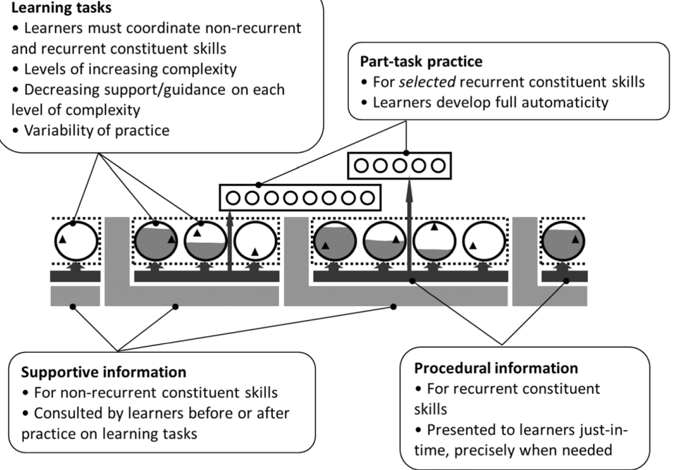
- The paper highlights 4C/ID as an extension of CLT for longer instructional programs and curricula, organized around 4 components: learning tasks, supportive information, procedural information, and part-task practice.
- It reports progress in measuring cognitive load, including a 10-item psychometric instrument that supported distinguishing intrinsic from extraneous load, and objective measures such as EEG, eye tracking, and secondary-task methods.
Methods
- This is a review article that retrospectively synthesizes CLT developments from 1998 to 2018, using the 1998 paper as a baseline and organizing the discussion into history, developments, future directions, and conclusions.
- The authors draw on prior theoretical and empirical studies and reviews cited throughout the paper; no new dataset or sample is reported in the text provided.
- Main analysis is a narrative synthesis of theoretical developments, instructional effects, and measurement approaches in CLT.
Limitations
- The paper explicitly says it is an attempt to summarise the last 20 years of CLT and sketch directions for future research, so it is a synthesis rather than a new empirical test.
- It repeatedly notes that more research is needed on cognitive-load measurement, including the optimal use of subjective rating scales, differentiating load types, and validating objective techniques.
- Evident from the text: several claims about future directions (e.g., resource depletion, self-regulated learning, emotions/stress/uncertainty, human movement) are presented as promising but not yet settled in the paper itself.
Model-written summary. Check it against the paper before relying on it.
Integrity signals
Registry
Cites
Statistics
Figures
Verification
Claims the paper makes
21 Valid · 23 Not valid · 90 Not checked · 158 Own results and interpretations
The sources with a verdict support this claim; the rest weren’t checked yet, have no full text we could read, or their verdicts aren’t rated yet.
In the paper
“Its basic premise is that human cognitive processing is heavily constrained by our limited working memory which can only process a limited number of information elements at a time.”
§ The Author(s) 2019 > Introduction
What the sources say
- Supportedcites Miller (1956) matched to “The magical number seven, plus or minus two: Some limits on our capacity for processing information.” (1956) source
The Summary says that immediate memory imposes severe limits on the information people can receive, process, and remember. The discussion of immediate memory (p. 93) specifies that its limit is the number of chunks, supporting the claim's broad paraphrase of a limited number of information elements at a time. (LLM, conf=0.91)
- Not checked — no full text of the sourcecites Peterson and Peterson (1959) matched to “Short-term retention of individual verbal items.” (1959) source
plainstates a cause- Asserted: passes — The authors put it forward as true.
- Checkable: passes — It can be checked against evidence.
- Load-bearing: passes — The paper’s conclusions depend on it.
- Based: passes — The paper gives a reason why it holds.
- Supported
The cited sources support only part of this claim — read each source’s verdict below.
In the paper
“The capacity and duration limits of working memory have been known at least since Miller (1956) and Peterson and Peterson (1959), although the fact that these limits effectively applied only to novel, not familiar information, seemed more implicit rather than explicit in most treatments.”
§ The Author(s) 2019 > Human Cognitive Architecture Used in 1998
What the sources say
- Partly supportedcites Miller (1956) matched to “The magical number seven, plus or minus two: Some limits on our capacity for processing information.” (1956) sourceExperimental — accuracy not yet measured
In the discussion of immediate memory (p. 93), Miller says its span is limited by the number of chunks and that familiar units allow more information to be packed into each chunk. That supports a distinction between novel material and familiar, recoded material, but not the claim that capacity limits apply only to novel information: the chunk limit remains. The paper also does not establish a duration limit that applies only to novel information. (LLM, conf=0.86)
- Not checked — no full text of the sourcecites Peterson and Peterson (1959) matched to “Short-term retention of individual verbal items.” (1959) source
hedged- Asserted: passes — The authors put it forward as true.
- Checkable: passes — It can be checked against evidence.
- Load-bearing: passes — The paper’s conclusions depend on it.
- Based: passes — The paper gives a reason why it holds.
- Partly supported
Every source the paper cites for this claim was checked and supports it.
In the paper
“The data summarised by Sala and Gobet (2017) provide a major justification for the post 1998 inclusion of evolutionary psychology into cognitive load theory.”
§ The Author(s) 2019 > Human Cognitive Architecture Seen Through the Prism of Evolutionary Psychology
What the sources say
- Supportedcites Sala and Gobet (2017) matched to “Does Far Transfer Exist? Negative Evidence From Chess, Music, and Working Memory Training” (2017) source
The Theoretical and Practical Implications section (page unavailable) summarises the paper’s evidence that chess, music and working-memory training do not reliably produce far transfer. The claim that these data justify a development in cognitive load theory is the citing authors’ interpretation, not a finding attributed to Sala and Gobet. (LLM, conf=0.86)
boostedstates a cause- Asserted: passes — The authors put it forward as true.
- Checkable: passes — It can be checked against evidence.
- Load-bearing: passes — The paper’s conclusions depend on it.
- Based: passes — The paper gives a reason why it holds.
- Supported
Every source the paper cites for this claim was checked and supports it.
In the paper
“The expertise reversal effect is, in essence, a variant of the more general element interactivity effect (Chen et al. 2017).”
§ The Author(s) 2019 > Instructional Effects Described After 1998
What the sources say
- Supportedcites Chen et al. 2017 matched to “The Expertise Reversal Effect is a Variant of the More General Element Interactivity Effect” (2017) source
The indexed copy lists the cited paper under the exact title “The Expertise Reversal Effect is a Variant of the More General Element Interactivity Effect.” Its title directly states the proposition attributed to it; no page number is available in the indexed passage. (LLM, conf=0.90)
plainstates a cause- Asserted: passes — The authors put it forward as true.
- Checkable: passes — It can be checked against evidence.
- Load-bearing: unclear — It is unclear whether the paper’s conclusions depend on it.
- Based: passes — The paper gives a reason why it holds.
- Supported
Every source the paper cites for this claim was checked and supports it.
In the paper
“When subsequently presented the fully integrated information, they only needed to learn how to integrate the individual elements and so more readily assimilated the entire, high element interactivity information.”
§ The Author(s) 2019 > Instructional Effects Described After 1998
What the sources say
- Supportedcites Pollock et al. 2002 matched to “Assimilating complex information” (2002) source
Split into 2 atoms — 2 confirmed, 0 partially supported, 0 disputed, 0 misattributed, 0 unverifiable. Expand the claim to see per-atom verdicts.
plainstates a cause- Asserted: passes — The authors put it forward as true.
- Checkable: passes — It can be checked against evidence.
- Load-bearing: passes — The paper’s conclusions depend on it.
- Based: passes — The paper gives a reason why it holds.
- Supported
132 more claims · 6 with their cited sources checked
Create a free account to see all 292 claims and to verify the 3 references still open.
- It may state two separate claims as one. 88
- Probably not a substantial claim. 95
Claims other papers make about this one
Each is checked against this paper’s own text: does it say what the citing paper says it does?
The source backs part of the claim, not all of it — or backs it for a different population, condition or comparison.
In the citing paper
“Another possible explanation is that the pre-training effect tends to be most effective for learners with minimal prior knowledge (Sweller et al., 2019)”
From Rethinking pre-training: cognitive load implications for learners with varying prior knowledge (2025) · cites this paper as Sweller et al., 2019
Experimental — accuracy not yet measuredThe cited source says what the claim attributes to it.
In the citing paper
“If the cognitive load imposed by a learning task is too high, it might interfere with the learner’s ability to effectively acquire and retain the skill [13, 25].”
From Teaching a single manual therapy technique at a time reduces cognitive load in physiotherapy students: a randomized controlled educational study (2025) · cites this paper as [13]
The cited source says what the claim attributes to it.
In the citing paper
“While cognitive load is often discussed in the context of instructional efficiency, it is important to note that cognitive load is not inherently detrimental. Rather, it is a natural component of learning that engages working memory resources for schema construction and automation [13].”
From Teaching a single manual therapy technique at a time reduces cognitive load in physiotherapy students: a randomized controlled educational study (2025) · cites this paper as [13]
The cited source says what the claim attributes to it.
In the citing paper
“Thus, an increased germane load is no longer believed to lead to cognitive overload and can thus no longer be assumed to be detrimental to learning performance.”
From Understanding Cognitive Load in Digital and Online Learning: a New Perspective on Extraneous Cognitive Load (2022) · cites this paper as Sweller et al., 2019
The cited source says what the claim attributes to it.
In the citing paper
“The major change from the 1998 model is that Sweller et al. (2019) have removed germane load from the additive equation of total load, but rather a dimension now called ' germane processing. '”
From Understanding Cognitive Load in Digital and Online Learning: a New Perspective on Extraneous Cognitive Load (2022) · cites this paper as Sweller et al., 2019
17 more claims about this paper
Create a free account to see every claim other papers make about this one.
Citations
Cites
The magical number seven, plus or minus two: Some limits on our capacity for processing information.
Miller, G. A. (1956) · Psychological Review · doi:10.1037/h0043158 · Cited by 17,812 · cited 1×
“The capacity and duration limits of working memory have been known at least since Miller (1956) and Peterson and Peterson (1959), although the fact that these limits effectively applied only to novel, not familiar information, seemed more implicit rather than explicit in most treatments.”
BackgroundThe magical number seven, plus or minus two: Some limits on our capacity for processing information.
Miller, G. A. (1994) · Psychological Review · doi:10.1037/0033-295x.101.2.343 · Cited by 17,161
Cognitive Load During Problem Solving: Effects on Learning
Sweller, J. (1988) · Cognitive Science · doi:10.1016/0364-0213(88)90023-7 · Cited by 11,048 · cited 4×
“Learning tasks (indicated by the big circles in Fig.”
BackgroundMethodInfluentialSelf-citationKirschner, P. A., Sweller, J., & Clark, R. E. (2006) · Educational Psychologist · doi:10.1207/s15326985ep4102_1 · Cited by 7,776
Self-citationRizzolatti, G., & Craighero, L. (2004) · Annual Review of Neuroscience · doi:10.1146/annurev.neuro.27.070203.144230 · Cited by 7,433
Cognitive Architecture and Instructional Design
Sweller, J., van Merrienboer, J. J. G., & Paas, F. G. W. C. (1998) · Educational Psychology Review · doi:10.1023/a:1022193728205 · Cited by 6,023
Self-citationCognitive load theory, learning difficulty, and instructional design
Sweller, J. (1994) · Learning and Instruction · doi:10.1016/0959-4752(94)90003-5 · Cited by 5,426 · cited 1×
“Element Interactivity Effect This effect was already known in 1998 but as a compound effect, it was not classed as a cognitive load effect (see Sweller 1994).”
BackgroundSelf-citationBaddeley, A. (1992) · Science · doi:10.1126/science.1736359 · Cited by 5,258
Ericsson, K. A., & Kintsch, W. (1995) · Psychological Review · doi:10.1037/0033-295x.102.2.211 · Cited by 3,498
Short-term retention of individual verbal items.
Peterson, L., & Peterson, M. J. (1959) · Journal of Experimental Psychology · doi:10.1037/h0049234 · Cited by 2,939 · cited 1×
“The capacity and duration limits of working memory have been known at least since Miller (1956) and Peterson and Peterson (1959), although the fact that these limits effectively applied only to novel, not familiar information, seemed more implicit rather than explicit in most treatments.”
Background
Research works printed but not linked: 4
- Centre for Education Statistics and Evaluation. (2017). Cognitive load theory: research that teachers really need to understand . Sydney: NSW Department of Education.
- Centre for Education Statistics and Evaluation. (2018). Cognitive load theory in practice . Sydney: NSW Department of Education.
- Clark, R. C. (2014). Evidence-based training methods: a guide for training professionals (2nd ed.). Alexandria: ATD Press.
- Miller, W. (1937). The picture crutch in reading. Elementary English Review, 14 , 263 -264.
Cited by
Items 301–400 of 2,268
Jiang, C. (2023) · Frontiers in Psychology · doi:10.3389/fpsyg.2023.1093044 · Cited by 37
“Researchers have identified three kinds of CL: intrinsic, extraneous, and germane cognitive (Sweller, 1994; Sweller et al., 2019).”
BackgroundBiosignals Monitoring of First Responders for Cognitive Load Estimation in Real-Time Operation
Gutiérrez, Á., Blanco, P., Bejerano, V. R., Chatzigeorgiou, C., Oregui, X., Álvarez, M., Navarro, S., Feidakis, M., Azpiroz, I., Izquierdo, G., et al. (2023) · Applied Sciences · doi:10.3390/app13137368 · Cited by 26
Mike, K. (2020) · ACM Conference on International Computing Education Research (ICER) · doi:10.1145/3372782.3407110 · Cited by 21
The ‘Teacher Research Group’ as a collaborative model of professional learning
Jones, L. (2021) · Educational Action Research · doi:10.1080/09650792.2021.1960577 · Cited by 33
Dönmez, O., Akbulut, Y., Telli, E., Kaptan, M., Özdemir, İ. H., & Erdem, M. (2022) · Education and Information Technologies · doi:10.1007/s10639-022-11035-2 · Cited by 20
“Through empirical studies on CL, several instructional design principles (i.e., cognitive load effects) have been proposed and boundary conditions for these principles have been investigated for several years (Moreno & Park, 2010; Sweller et al., 2019).”
BackgroundInfluentialCognitive load scale for AI-assisted L2 writing: scale development and validation
Yao, G., & Fan, L. (2025) · Frontiers in Psychology · doi:10.3389/fpsyg.2025.1666974 · Cited by 20
Learning programming from erroneous worked-examples. Which type of error is beneficial for learning?
Beege, M., Schneider, S., Nebel, S., Zimm, J., Windisch, S., & Rey, G. D. (2021) · Learning and Instruction · doi:10.1016/j.learninstruc.2021.101497 · Cited by 32
Kastaun, M., Meier, M., Küchemann, S., & Kühn, J. (2021) · Frontiers in Psychology · doi:10.3389/fpsyg.2021.703857 · Cited by 37
Ling, Y., Zhu, P., & Yu, J. (2021) · Educational Technology Research and Development · doi:10.1007/s11423-021-10050-3 · Cited by 27
Knowledge surveys: Supporting students along pathways to self-directed learning with self-assessment
Wirth, K. R., Nuhfer, E. B., Watson, R. M., Fleisher, S. C., & Bailey, R. (2021) · NWU self-directed learning series · doi:10.4102/aosis.2021.bk279.06 · Cited by 23
Liu, Y., Ma, W., Guo, X., Lin, X., Wu, C., & Zhu, T. (2021) · Frontiers in Psychology · doi:10.3389/fpsyg.2021.773328 · Cited by 35
Cognitive Load Approach to Digital Comics Creation: A Student-Centered Learning Case
Apostolou, D., & Linardatos, G. (2023) · Applied Sciences · doi:10.3390/app13137896 · Cited by 60
“Conversely, if the cognitive load exceeds the working memory capacity, learning could be hampered [27,31,33].”
BackgroundLatest trends to optimize computer-based learning: Guidelines from cognitive load theory
Castro-Alonso, J. C., & de Koning, B. B. (2020) · Computers in Human Behavior · doi:10.1016/j.chb.2020.106458 · Cited by 26
Colors and Learner’s Gender Evoke Different Emotional and Cognitive Effects in Multimedia Learning
Liew, T. W., Tan, S.-M., Gan, C. L., & Pang, W. M. (2022) · Human Behavior and Emerging Technologies · doi:10.1155/2022/1235732 · Cited by 20
Pupil dilation as cognitive load measure in instructional videos on complex chemical representations
Rodemer, M., Karch, J. M., & Bernholt, S. (2023) · Frontiers in Education · doi:10.3389/feduc.2023.1062053 · Cited by 38
Betts, K., Reddy, P., Galoyan, T., Delaney, B., McEachron, D. L., İzzetoğlu, K., & Shewokis, P. A. (2023) · Brain Sciences · doi:10.3390/brainsci13060890 · Cited by 39
Ratmono, D., Sari, R., Warsono, S., Ubaidillah, M., & Wibowo, L. M. (2024) · Cogent Business & Management · doi:10.1080/23311975.2024.2316890 · Cited by 27
“This is because the human cognitive architecture consists of a sensory register, a working memory with limited capacity, and a long-term memory with unlimited storage size (Sweller, 1988; Sweller et al., 1998, 2019).”
David, L., Biwer, F., Baars, M., Wijnia, L., PAAS, F. G. W. C., & de Bruin, A. B. H. (2024) · Educational Psychology Review · doi:10.1007/s10648-024-09903-z · Cited by 37
“The lack of a statistically significant direct relationship between perceived mental effort and learning outcomes could be explained by cognitive load theory (Sweller et al., 1998, 2019).”
Self-citationA testing load: a review of cognitive load in computer and paper-based learning and assessment
Pengelley, J., Whipp, P. R., & Malpique, A. (2024) · Technology Pedagogy and Education · doi:10.1080/1475939x.2024.2367517 · Cited by 39
“CLT is clearly premised on the assumption that WMC is the limiting factor in our capacity to learn (Sweller et al., 2019).”
InfluentialPredicting and Explaining Cognitive Load, Attention, and Working Memory in Virtual Multitasking
Setu, J. N., Le, J. M., Kundu, R. K., Giesbrecht, B., Höllerer, T., Hoque, K. A., Desai, K., & Quarles, J. P. (2025) · IEEE Transactions on Visualization and Computer Graphics · doi:10.1109/tvcg.2025.3549850 · Cited by 32
“Mental Load: In line with the Paas scale [58] and NASA-TLX [21], this was a participant’s response to: "How mentally demanding is the task on a scale of not mentally demanding/1-very high demand/10?" collected during the Q&A session.”
In search of adequate models of pedagogy
Nussbaum, M., Bekerman, Z., Archambault, L., Rainieri, M., Yılmaz, R., Zou, D., van Braak, J., & Tsai, C. (2025) · Computers & Education · doi:10.1016/j.compedu.2025.105345 · Cited by 30
Designing computer-based tests: design guidelines from multimedia learning studied with eye tracking
Dirkx, K., Skuballa, I. T., Manastirean-Zijlstra, C. S., & Jarodzka, H. (2021) · Instructional Science · doi:10.1007/s11251-021-09542-9 · Cited by 27
Cognitive load considerations for Augmented Reality in network security training
Herbert, B. M., Wigley, G., Ens, B. M., & Billinghurst, M. (2021) · Computers & Graphics · doi:10.1016/j.cag.2021.09.001 · Cited by 25
Learning Analytics for Diagnosing Cognitive Load in E-Learning Using Bayesian Network Analysis
Choi, Y., & Kim, J. (2021) · Sustainability · doi:10.3390/su131810149 · Cited by 25
“Therefore, the instructional design in multimedia learning focuses on how to reduce extraneous cognitive loads in the learning system [26,27].”
BackgroundThe Use of Augmented Reality for Teaching Kazakhstani Students Physics Lessons
Mukhtarkyzy, K., Abildinova, G., & Sayakov, O. (2022) · International Journal of Emerging Technologies in Learning (iJET) · doi:10.3991/ijet.v17i12.29501 · Cited by 50
A Synthetic Review of Cognitive Load in Distance Interpreting: Toward an Explanatory Model
Zhu, X., & Aryadoust, V. (2022) · Frontiers in Psychology · doi:10.3389/fpsyg.2022.899718 · Cited by 45
Ackerman, R. (2023) · Educational Psychology Review · doi:10.1007/s10648-023-09771-z · Cited by 29
A Critical Analysis of Theoretical Underpinnings of Universal Design for Learning
Anastasiou, D., Wiley, A. L., & Kauffman, J. M. (2024) · Exceptionality · doi:10.1080/09362835.2024.2426801 · Cited by 37
Make it relevant! How prior instructions foster the integration of teacher knowledge
Zeeb, H., Biwer, F., Brunner, G., Leuders, T., & Renkl, A. (2019) · Instructional Science · doi:10.1007/s11251-019-09497-y · Cited by 29
“Subjective ratings of difficulty and effort are frequently used in cognitive load research and are considered to provide valid data (e.g., van Gog and Paas 2008; Sweller et al. 2019).”
MethodUus, Õ., Seitlinger, P. C., & Ley, T. T. (2020) · Acta Psychologica · doi:10.1016/j.actpsy.2020.103089 · Cited by 31
Doolittle, P. E., & Byrnes, M. K. (2023) · Wiley eBooks · doi:10.1002/9781119852865.ch3 · Cited by 23
The Split-Attention Principle in Multimedia Learning
Ayres, P., & Sweller, J. (2021) · The Cambridge Handbook of Multimedia Learning · doi:10.1017/9781108894333.020 · Cited by 18
Self-citationTaylor, T. A. H., Kamel-ElSayed, S. A., Grogan, J., Hussein, I. H., Lerchenfeldt, S., & Mohiyeddini, C. (2022) · Frontiers in Psychology · doi:10.3389/fpsyg.2022.665835 · Cited by 29
Zhong, H.-X., Chiu, P., & Lai, C. (2021) · Sustainability · doi:10.3390/su13031381 · Cited by 23
“Recently, Sweller and van Merriënboer's [48] study summarized the last 20 years of cognitive load theory and mentioned the feasibility and main advantages of cognitive load.”
BackgroundOnline pair-programming: elementary school children learning scratch together online
Bodaker, L., & Rosenberg‐Kima, R. B. (2022) · Journal of Research on Technology in Education · doi:10.1080/15391523.2022.2036653 · Cited by 21
Aalioui, L., Gouzi, F., & Tricot, A. (2022) · AJP Advances in Physiology Education · doi:10.1152/advan.00185.2021 · Cited by 27
Investigating the role of hand perspective in learning from procedural animations
de Koning, B. B., Mok, K., Marcus, N., & Ayres, P. (2022) · British Journal of Educational Psychology · doi:10.1111/bjep.12542 · Cited by 19
Bauer, E., Heitzmann, N., & Fischer, F. (2022) · Studies In Educational Evaluation · doi:10.1016/j.stueduc.2022.101213 · Cited by 45
Wong, S. S. H. (2023) · Educational Psychology Review · doi:10.1007/s10648-023-09739-z · Cited by 22
“However, such difficulties may become “undesirable” when learners are not well-equipped to overcome them (McDaniel and Butler, 2011), such as when the task demands impose cognitive overload (Sweller et al., 1998, 2019).”
BackgroundBitzenbauer, P., Höfler, S., Veith, J. M., Winkler, B., Zenger, T., & Kulgemeyer, C. (2023) · International Journal of Science and Mathematics Education · doi:10.1007/s10763-022-10351-w · Cited by 39
“…cognitive load stemming from irrelevant cognitive processes that tie up working memory capacities and thus hinder the learning process According to Sweller et al. (2019), the Cognitive load theory “provides evidence-informed principles that can be applied to the design of instructional…”
InfluentialThe Evolved Mind and Modern Education: Status of Evolutionary Educational Psychology
Geary, D. C. (2024) · Cambridge University Press eBooks · doi:10.1017/9781009454858 · Cited by 22
The Effects of Augmented Reality: A Comparative Study in an Undergraduate Physics Laboratory Course
Kapp, S., Thees, M., Beil, F., Weatherby, T. S., Burde, J., Wilhelm, T. E., & Kühn, J. (2020) · International Conference on Computer Supported Education · doi:10.5220/0009793001970206 · Cited by 25
“Thees et al. reported a comparable internal structure as Leppink et al. for the modified six-point Likert scale as well as nearly excellent reliabilities for the three sub scales (αICL = .70, αECL = .66, αGCL = .86).”
BackgroundInfluentialFoster, C. F., Francome, T., Hewitt, D., & Shore, C. (2021) · Journal of Curriculum Studies · doi:10.1080/00220272.2021.1902569 · Cited by 32
“In our explanations of mathematical content, we will take full advantage of findings from cognitive load theory and multimedia learning (Mayer, 2019; Sweller et al., 2019), such as the modality/multimedia principle, that words and graphics are more effective when used together than either is when…”
BackgroundBakar, M. A., Mukhtar, M. B., & Khalid, F. B. (2019) · International Journal of Advanced Computer Science and Applications · doi:10.14569/ijacsa.2019.0101142 · Cited by 18
“Novice students frequently use the means-ends analysis strategy in solving problems in the problem-solving approach [32].”
BackgroundInfluentialDiscussion of the special issue on cognitive load theory
Sweller, J. (2023) · British Journal of Educational Psychology · doi:10.1111/bjep.12606 · Cited by 30
Self-citationLearning from interactive video: the influence of self-explanations, navigation, and cognitive load
Beege, M., & Ploetzner, R. (2024) · Instructional Science · doi:10.1007/s11251-024-09693-5 · Cited by 33
“Finally, extraneous cognitive load (ECL) arises from the way in which the learning material is designed and presented to the learner (cf. Sweller et al., 2019).”
Immersive virtual reality learning and cognitive load: A multiple-day field study
Witte, B. D., Reynaert, V., Kieken, D., Jabbour, J., Demarey, C., Dumoulin, A., & Possik, J. (2025) · Computers in Human Behavior · doi:10.1016/j.chb.2025.108853 · Cited by 42
Transforming clinical reasoning—the role of AI in supporting human cognitive limitations
Greengrass, C. J. (2026) · Frontiers in Digital Health · doi:10.3389/fdgth.2025.1715440 · Cited by 31
“While later conceptualisations (47) suggest that germane load may be better understood as a component of intrinsic cognitive load, rather than a distinct category, this article adopts the traditional tripartite model.”
The Effects of Temporal Contiguity and Expertise on Acquisition of Tactical Movements
Khacharem, A., Trabelsi, K., Engel, F. A., Sperlich, B., & Kalyuga, S. (2020) · Frontiers in Psychology · doi:10.3389/fpsyg.2020.00413 · Cited by 21
Bobrownicki, R., Carson, H. J., Macpherson, A. C., & Collins, D. J. (2021) · International Journal of Sport and Exercise Psychology · doi:10.1080/1612197x.2021.1956567 · Cited by 23
“…branches of psychology (e.g., educational psychology), where instructional designs have commonly eschewed established limitations of working memory (Sweller et al., 2019), scholars in motor learning and control research must better account for documented working memory constraints and carefully…”
BackgroundFinger pointing to self‐manage cognitive load in learning from split‐attention examples
Zhang, S., de Koning, B. B., & PAAS, F. G. W. C. (2022) · Applied Cognitive Psychology · doi:10.1002/acp.3961 · Cited by 24
Self-citationEngaging students in active exploration of programming worked examples
Garces, S., Vieira, C., Ravai, G., & Magana, A. J. (2022) · Education and Information Technologies · doi:10.1007/s10639-022-11247-6 · Cited by 27
“Its basic premise is that human cognitive processing is heavily constrained by our limited working memory, which can only process a limited number of information elements at a time (Sweller et al., 2019).”
BackgroundInfluentialSeidel, T., Farrell, M., Martin, M., Rieß, W., & Renkl, A. (2022) · Frontiers in Education · doi:10.3389/feduc.2022.965498 · Cited by 29
“org Cognitive Load Theory (Sweller et al., 2019), high germane load is most strongly linked to carrying out learning-related cognitive activities, indicated by the experience of keeping an overview and staying on track with the learning tasks.”
BackgroundSimulated skill complexity and perceived cognitive load during preclinical dental training
Al‐Saud, L. M. (2022) · European Journal Of Dental Education · doi:10.1111/eje.12891 · Cited by 24
Instructional efficiency: The role of prior knowledge and cognitive load
Ngu, B. H., Phan, H. P., Usop, H. H., & Hong, K. S. (2023) · Applied Cognitive Psychology · doi:10.1002/acp.4117 · Cited by 29
Erdoğmuş, Y. K., & Kurt, A. A. (2023) · Education and Information Technologies · doi:10.1007/s10639-023-12368-2 · Cited by 34
“(Sweller et al., 2019).”
Zheng, S., Yan, M., Liang, Y., Chen, Y., Wei, Q., & Li, S. (2024) · Human Resource Management Review · doi:10.1016/j.hrmr.2024.101013 · Cited by 27
Farrell, M., Martin, M., Böheim, R., Renkl, A., Rieß, W., Könings, K. D., van Merriënboer, J. J. G., & Seidel, T. (2024) · Instructional Science · doi:10.1007/s11251-024-09662-y · Cited by 30
“Therefore, instruction designed for novices should support generative processing and reduce the necessity for unproductive processing in dealing with extraneous information (CTML assumptions 1 and 2, Mayer, 2014; see also, Cognitive Load Theory, Sweller, 1988; Sweller et al., 2019).”
Self-citationEnhancing Teaching Strategies through Cognitive Load Theory: Process vs. Product Worked Examples
Sozio, G., Agostinho, S., Tindall‐Ford, S., & PAAS, F. G. W. C. (2024) · Education Sciences · doi:10.3390/educsci14080813 · Cited by 33
“CLT has played a pivotal role in developing various instructional designs, known as CLT effects, aimed at enhancing learning [4].”
InfluentialSelf-citationThe influence of spatial distance and signaling on the split-attention effect
Cammeraat, S., Rop, G., & de Koning, B. B. (2019) · Computers in Human Behavior · doi:10.1016/j.chb.2019.106203 · Cited by 22
Establishing a Scientific Consensus on the Cognitive Benefits of Physical Activity
Nazlieva, N., Mavilidi, M. F., Baars, M., & PAAS, F. G. W. C. (2019) · International Journal of Environmental Research and Public Health · doi:10.3390/ijerph17010029 · Cited by 25
Self-citationExploring the relationship between emotion and cognitive load types during patient handovers
Young, J. Q., Thakker, K., John, M., Friedman, K. A., Sugarman, R., van Merriënboer, J. J. G., Sewell, J. L., & O’Sullivan, P. (2021) · Advances in Health Sciences Education · doi:10.1007/s10459-021-10053-y · Cited by 23
“Recent work by Sweller and others has suggested that germane load may best be understood as a component of intrinsic load rather than a separate type of load (Leppink et al., 2014; Sweller et al., 2011, 2019).”
BackgroundSelf-citationCognitive-based methods to facilitate learning of software applications via E-learning systems
Darejeh, A., Mashayekh, S., & Marcus, N. (2022) · Cogent Education · doi:10.1080/2331186x.2022.2082085 · Cited by 30
“…load theory (CLT) is a current educational psychological theory based on empirical evidence whose prescriptions and implications can have significant positive effects on learning computer science and related content and can provide the guidelines needed in this domain (Sweller et al., 2011a, 2019).”
BackgroundChanging Behavior Beyond the Here and NowPreprint
Rogers, T., & Frey, E. (2014) · SSRN Electronic Journal · doi:10.2139/ssrn.2410465 · Cited by 23
Schuessler, K., Fischer, V., & Walpuski, M. (2024) · Instructional Science · doi:10.1007/s11251-024-09692-6 · Cited by 26
“A basic assumption of Cognitive Load Theory is that higher task demands induce higher cognitive load (e.g., Brünken et al., 2010; Paas & Sweller, 2014; Sweller et al., 2019).”
InfluentialGamifying anatomy outreach: An underexplored opportunity
Stiver, M. L., Naveed, A., Chilton, J. K., & Moyes, S. M. (2025) · Anatomical Sciences Education · doi:10.1002/ase.70019 · Cited by 23
“Once they have guessed correctly, they work as a group to add the guessed food item to their GI system near major structures where digestion and absorption take place.”
Romo, J., Pérez, J. C., Cumsille, P. E., Hollenstein, T., Torres, A. J. O., Rodríguez‐Rivas, M. E., & Melero, J. (2025) · Educational Psychology Review · doi:10.1007/s10648-025-10054-y · Cited by 42
“According to Cognitive Load Theory (CLT), human working memory has limited capacity, optimizing learning when cognitive demands are manageable (Sweller et al., 2019).”
Learning Letters: Evidence and Questions From a Science‐of‐Reading Perspective
Roberts, T. A. (2021) · Reading Research Quarterly · doi:10.1002/rrq.394 · Cited by 36
Writing Accessible Theory in Ecology and Evolution: Insights from Cognitive Load Theory
Ou, W. J.-A., Henriques, G. J. B., Senthilnathan, A., Ke, P.-J., Grainger, T. N., & Germain, R. M. (2022) · BioScience · doi:10.1093/biosci/biab133 · Cited by 12
Zhou, J. J., Miao, X., He, F., & Miao, Y. (2022) · IEEE Access · doi:10.1109/access.2022.3151915 · Cited by 25
Psychometric Properties for Multidimensional Cognitive Load Scale in an E-Learning Environment
Choi, Y., & Lee, H. (2022) · International Journal of Environmental Research and Public Health · doi:10.3390/ijerph19105822 · Cited by 30
On-Screen Texts in Audiovisual Input for L2 Vocabulary Learning: A Review
Wei, R., & Fan, L. (2022) · Frontiers in Psychology · doi:10.3389/fpsyg.2022.904523 · Cited by 40
“According to CLT, cognitive architecture is composed of “working memory, long-term memory and the relationships between them” (Sweller et al., 2019, p. 263).”
BackgroundCompeting cues in brand alliance advertisements
Voss, K. E., Li, Y. Y., & Song, Y. S. (2022) · Journal of Business Research · doi:10.1016/j.jbusres.2022.05.034 · Cited by 19
On the role of linguistic features for comprehension and learning from STEM texts. A meta-analysis
Strohmaier, A., Ehmke, T., Härtig, H., & Leiß, D. (2023) · Educational Research Review · doi:10.1016/j.edurev.2023.100533 · Cited by 42
Koh, M. Y., Tan, G. J. S., & Mogali, S. R. (2023) · Scientific Reports · doi:10.1038/s41598-023-35046-2 · Cited by 26
Ayre, J., Muscat, D. M., Mac, O. A., Bonner, C., Dunn, A. G., Dalmazzo, J., Mouwad, D., & McCaffery, K. J. (2023) · PEC Innovation · doi:10.1016/j.pecinn.2023.100162 · Cited by 15
“Modifications to better achieve these learning goals aligned with established strategies to reduce cognitive load, such as reducing initial complexity, reducing requirements for split attention, using worked examples, and providing ‘just-in-time’ prompts to encourage correct use of basic functions [32-34].”
Eilam, E. (2024) · ECNU Review of Education · doi:10.1177/20965311241240491 · Cited by 24
“For knowledge to be processed effectively it needs to be systematically structured and organized (Sweller et al., 2019).”
Shen, Y. (2024) · Journal of Computer Assisted Learning · doi:10.1111/jcal.12987 · Cited by 36
Wekerle, C., & Kollar, I. (2020) · Computers in Human Behavior · doi:10.1016/j.chb.2020.106617 · Cited by 21
“The positive effect of studying worked examples as compared to having students solve problems early-on by themselves is most often explained by Cognitive Load Theory (CLT; Sweller et al., 1998; Sweller et al., 2019).”
BackgroundMethodResultInfluentialA Framework for Applying the Learning Sciences to MOOC Design
Gordon, D. G., & Wiltrout, M. E. (2021) · Frontiers in Education · doi:10.3389/feduc.2020.500481 · Cited by 17
Wijnia, L., & Baars, M. (2021) · Instructional Science · doi:10.1007/s11251-020-09531-4 · Cited by 23
Pérez-Benítez, W. E., & Barreto, C. R. (2021) · Saber ciencia y libertad · doi:10.18041/2382-3240/saber.2021v16n1.7533 · Cited by 31
Measuring the Cognitive Load of Learning to Program: A Replication Study
Zavgorodniaia, A., Duran, R., Hellas, A., Seppälä, O., & Sorva, J. (2020) · doi:10.1145/3416465.3416468 · Cited by 17
“From this premise, the theory has spawned many specific design principles, or cognitive-load “effects” [63], examples of which include the worked-example effect, which promotes studying examples over problem-solving while prior knowledge is low, and the split-attention effect, which recommends integrating instructiona…”
BackgroundInfluentialPyke, W., Lunau, J., & Javadi, A.-H. (2025) · Quarterly Journal of Experimental Psychology · doi:10.1177/17470218241308143 · Cited by 15
“As a result, the emphasis has moved from simply increasing germane load to ensuring that learners’ cognitive efforts are directed towards the most meaningful and supportive tasks in the learning process (Sweller et al., 2019).”
InfluentialEnseignement explicite et développement decompétences : antinomie ou nécessité?
Bocquillon, M., Gauthier, C., Bissonnette, S., & Derobertmasure, A. (2020) · Formation et profession · doi:10.18162/fp.2020.513 · Cited by 15
Scaffolding of learning activities: Aptitude-treatment-interaction effects in math?
Hofer, S. I., & Reinhold, F. (2025) · Learning and Instruction · doi:10.1016/j.learninstruc.2025.102177 · Cited by 35
Rücker, C. R., & Becker, S. (2025) · Computers and Education Open · doi:10.1016/j.caeo.2025.100315 · Cited by 30
Revisiting cognitive load theory: second thoughts and unaddressed questions
Leppink, J. (2020) · Scientia Medica · doi:10.15448/1980-6108.2020.1.36918 · Cited by 21
“, [1-5, 20, 23]) and can be briefly summarised as follows.”
BackgroundLearning Echocardiography in the Workplace: A Cognitive Load Perspective
Blissett, S., Rodriguez, S., Qasim, A., & O’Sullivan, P. (2020) · Academic Medicine · doi:10.1097/acm.0000000000003789 · Cited by 16
King, R., Blayney, P., & Sweller, J. (2021) · Accounting Education · doi:10.1080/09639284.2021.1930562 · Cited by 23
“In view of the significant cognitive burden imposed on L2 students (and L1 students) by essay questions, instructional procedures should be designed to reduce the level of element interactivity and therefore the load on working memory (Sweller et al., 2011, 2019).”
BackgroundMethodSelf-citationLearning by Doing: Intrinsic Integration Directs Attention to Increase Learning In Games
Cutting, J., & Iacovides, I. (2022) · Proceedings of the ACM on Human-Computer Interaction · doi:10.1145/3549503 · Cited by 22
Characterizing effective teaching in nursing pharmacology YouTube videos: A mixed methods study
Margallo, M. C. M., Mariano, C. N. P., Martinez, K. N. F. L., Mariano, R. L. T., Maramag, L. M. L., Mariano, A. A. C., Mapue, R. C. L., Maturan, E. R. C., & Chua, R. L. E. (2022) · Nurse Education Today · doi:10.1016/j.nedt.2022.105624 · Cited by 24
Hou, X., Ericson, B. J., & Wang, X. (2023) · Koli Calling International Conference on Computing Education Research · doi:10.1145/3631802.3631832 · Cited by 25
Thorgeirsson, S., Weidmann, T. B., Weidmann, K.-H., & Su, Z. (2024) · ACM Technical Symposium on Computer Science Education (SIGCSE) · doi:10.1145/3626252.3630808 · Cited by 26
“Cognitive load theory posits that working memory has limited capacity, and that the amount of cognitive resources available for processing new information is limited [26].”
BackgroundLin, T. F., & Riccomini, P. J. (2024) · Journal of Special Education Technology · doi:10.1177/01626434241263045 · Cited by 26
“In the context of retrieval practice, a higher cognitive challenge (e.g., recalling information without cues) may impose a moderate cognitive load that promotes better memory consolidation (Sweller et al., 2019).”
Grant, M. M. (2021) · Impacting Education Journal on Transforming Professional Practice · doi:10.5195/ie.2021.191 · Cited by 20
Lin, X., & Powell, S. R. (2021) · Contemporary Educational Psychology · doi:10.1016/j.cedpsych.2021.102017 · Cited by 15
Hu, Y., Ouyang, J., Wang, H., Zhang, J., Liu, A., Min, X., & Du, X. (2022) · Frontiers in Psychology · doi:10.3389/fpsyg.2022.832194 · Cited by 19
The use of visual presentations for integrated reports in the investment decision-making process
Widyatama, A., & Narsa, I. M. (2022) · Journal of Applied Accounting Research · doi:10.1108/jaar-09-2021-0238 · Cited by 25
Chikha, H. B., Zoudji, B., & Khacharem, A. (2023) · International Journal of Sports Science & Coaching · doi:10.1177/17479541231177003 · Cited by 17
Metadata
- Authors
- Sweller, J., van Merriënboer, J. J. G., & Paas, F.
- Affiliations
- UNSW Sydney (AU)
- University of Wollongong (AU)
- Corresponding author
- Sweller, John
- Venue
- Educational Psychology Review
- Published
- 2019-01-22
- Volume
- 31
- Issue
- 2
- Pages
- 261-292
- ISSN
- 1040-726X (ISSN-L)
- 1573-336X
- OpenAlex
- W2913144876
- Semantic Scholar
- e28d73214751d51c3f46a867920be41c49c45130
- Cited by
- 2,337
- References
- 129
- Citations by year
- 2026: 713 · 2025: 466 · 2024: 331 · 2023: 268 · 2022: 212 · 2021: 190 · 2020: 114 · 2019: 37
- FWCI
- 162.54
- Type
- journal article
- Language
- en
- Open access
- hybrid
- doi.org
- Licence
- cc-by
- creativecommons.org/licenses/by/4.0 (tdm)
- Locations
- Educational Psychology Review (publishedVersion, cc-by)
- EUR Research Repository (Erasmus University Rotterdam) (publishedVersion, other-oa)
- Research Online (University of Wollongong) (submittedVersion)
- EUR Research Repository (Erasmus University Rotterdam) (submittedVersion)
- Research Publications (Maastricht University) (submittedVersion, cc-by)
- Figshare (submittedVersion, cc-by)
- Research Publications (Maastricht University) (submittedVersion, other-oa)
- Topics
- Social Sciences › Psychology › Experimental and Cognitive Psychology › Visual and Cognitive Learning Processes
- Social Sciences › Psychology › Developmental and Educational Psychology › Innovative Teaching and Learning Methods
- Life Sciences › Neuroscience › Cognitive Neuroscience › Neuroscience, Education and Cognitive Function
- Keywords
- cognitive load theory, cognitive architecture, working memory, long-term memory, instructional design
About these checks
Registry, retraction, Cites and statistics results are computed, not judged, with one exception: a printed reference that no index lists is read once by a model before it counts as a citation error. Claims are extracted by a model and kept only when their quote appears verbatim in the text; each cited source is then checked, with a model’s help, for whether it says what the claim relies on. Those verdicts can be wrong — read the claim’s quote and the cited source before relying on one.
The claim verdicts this report counts are experimental: their accuracy is not yet measured.
A language model drew the claims from the paper on 2026-10-10, under version 3 of the claim definition (model deepseek-v4.1-flash, prompt extract-v3).
A second model labelled each claim on 2026-10-10 (model jev-1.13-20260917, definition revision gold-guideline-v0.2).
Cited sources are checked with a language model’s help (gpt-6-sol).
Statistics and arithmetic are recomputed, not judged.
Confidence bands are shown only for fields calibrated on our annotated test set. None is calibrated yet, so no band is shown.
What counts as a claim ›How we measure confidence ›How we check this ›
Are you an author, or do you see a problem with this page? Request a review
Data sources
Bibliographic data: Semantic Scholar, OpenAlex, Crossref.
Contains information from the Semantic Scholar Academic Graph Datasets, made available under the ODC Attribution License (ODC-BY 1.0).
Semantic Scholar’s data is described in: Kinney, R., et al. (2023). The Semantic Scholar Open Data Platform. arXiv:2301.10140.
