

Cognitive Architecture and Instructional Design: 20 Years Later
Open accessThe DOI matches its Crossref record; 127 of the 129 references it cites were found in a registry or an index, and 1 are not checked yet; 22 of the 116 sources its claims cite were checked for support.
Abstract
Cognitive load theory was introduced in the 1980s as an instructional design theory based on several uncontroversial aspects of human cognitive architecture. Our knowledge of many of the characteristics of working memory, long-term memory and the relations between them had been well-established for many decades prior to the introduction of the theory. Curiously, this knowledge had had a limited impact on the field of instructional design with most instructional design recommendations proceeding as though working memory and long-term memory did not exist. In contrast, cognitive load theory emphasised that all novel information first is processed by a capacity and duration limited working memory and then stored in an unlimited long-term memory for later use. Once information is stored in long-term memory, the capacity and duration limits of working memory disappear transforming our ability to function. By the late 1990s, sufficient data had been collected using the theory to warrant an extended analysis resulting in the publication of Sweller et al. (Educational Psychology Review, 10, 251–296, 1998). Extensive further theoretical and empirical work have been carried out since that time and this paper is an attempt to summarise the last 20 years of cognitive load theory and to sketch directions for future research.
Verified 2026-11-25 · 1 reference not checked yet
Overview
CoChat Summary
TL;DR
This review argues that cognitive load theory (CLT) has substantially advanced since its 1998 summary, with new theoretical grounding, new instructional effects, and improved measurement approaches. It also frames future work around working-memory resource depletion, self-regulated learning, emotions/stress/uncertainty, and human movement.
Key findings
- The paper states that the 1998 article reported 7 cognitive load effects, and that 8 new effects were added in the 1998–2018 period, including compound effects.
- It says CLT’s theoretical basis was strengthened by grounding human cognitive architecture in evolutionary psychology, especially Geary’s distinction between biologically primary and biologically secondary knowledge.
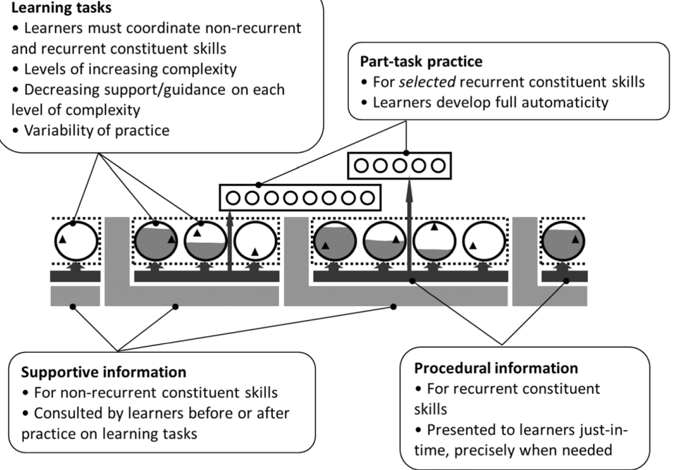
- The paper highlights 4C/ID as an extension of CLT for longer instructional programs and curricula, organized around 4 components: learning tasks, supportive information, procedural information, and part-task practice.
- It reports progress in measuring cognitive load, including a 10-item psychometric instrument that supported distinguishing intrinsic from extraneous load, and objective measures such as EEG, eye tracking, and secondary-task methods.
Methods
- This is a review article that retrospectively synthesizes CLT developments from 1998 to 2018, using the 1998 paper as a baseline and organizing the discussion into history, developments, future directions, and conclusions.
- The authors draw on prior theoretical and empirical studies and reviews cited throughout the paper; no new dataset or sample is reported in the text provided.
- Main analysis is a narrative synthesis of theoretical developments, instructional effects, and measurement approaches in CLT.
Limitations
- The paper explicitly says it is an attempt to summarise the last 20 years of CLT and sketch directions for future research, so it is a synthesis rather than a new empirical test.
- It repeatedly notes that more research is needed on cognitive-load measurement, including the optimal use of subjective rating scales, differentiating load types, and validating objective techniques.
- Evident from the text: several claims about future directions (e.g., resource depletion, self-regulated learning, emotions/stress/uncertainty, human movement) are presented as promising but not yet settled in the paper itself.
Model-written summary. Check it against the paper before relying on it.
Integrity signals
Registry
Cites
Statistics
Figures
Verification
Claims the paper makes
21 Valid · 23 Not valid · 90 Not checked · 158 Own results and interpretations
The sources with a verdict support this claim; the rest weren’t checked yet, have no full text we could read, or their verdicts aren’t rated yet.
In the paper
“Its basic premise is that human cognitive processing is heavily constrained by our limited working memory which can only process a limited number of information elements at a time.”
§ The Author(s) 2019 > Introduction
What the sources say
- Supportedcites Miller (1956) matched to “The magical number seven, plus or minus two: Some limits on our capacity for processing information.” (1956) source
The Summary says that immediate memory imposes severe limits on the information people can receive, process, and remember. The discussion of immediate memory (p. 93) specifies that its limit is the number of chunks, supporting the claim's broad paraphrase of a limited number of information elements at a time. (LLM, conf=0.91)
- Not checked — no full text of the sourcecites Peterson and Peterson (1959) matched to “Short-term retention of individual verbal items.” (1959) source
plainstates a cause- Asserted: passes — The authors put it forward as true.
- Checkable: passes — It can be checked against evidence.
- Load-bearing: passes — The paper’s conclusions depend on it.
- Based: passes — The paper gives a reason why it holds.
- Supported
The cited sources support only part of this claim — read each source’s verdict below.
In the paper
“The capacity and duration limits of working memory have been known at least since Miller (1956) and Peterson and Peterson (1959), although the fact that these limits effectively applied only to novel, not familiar information, seemed more implicit rather than explicit in most treatments.”
§ The Author(s) 2019 > Human Cognitive Architecture Used in 1998
What the sources say
- Partly supportedcites Miller (1956) matched to “The magical number seven, plus or minus two: Some limits on our capacity for processing information.” (1956) sourceExperimental — accuracy not yet measured
In the discussion of immediate memory (p. 93), Miller says its span is limited by the number of chunks and that familiar units allow more information to be packed into each chunk. That supports a distinction between novel material and familiar, recoded material, but not the claim that capacity limits apply only to novel information: the chunk limit remains. The paper also does not establish a duration limit that applies only to novel information. (LLM, conf=0.86)
- Not checked — no full text of the sourcecites Peterson and Peterson (1959) matched to “Short-term retention of individual verbal items.” (1959) source
hedged- Asserted: passes — The authors put it forward as true.
- Checkable: passes — It can be checked against evidence.
- Load-bearing: passes — The paper’s conclusions depend on it.
- Based: passes — The paper gives a reason why it holds.
- Partly supported
Every source the paper cites for this claim was checked and supports it.
In the paper
“The data summarised by Sala and Gobet (2017) provide a major justification for the post 1998 inclusion of evolutionary psychology into cognitive load theory.”
§ The Author(s) 2019 > Human Cognitive Architecture Seen Through the Prism of Evolutionary Psychology
What the sources say
- Supportedcites Sala and Gobet (2017) matched to “Does Far Transfer Exist? Negative Evidence From Chess, Music, and Working Memory Training” (2017) source
The Theoretical and Practical Implications section (page unavailable) summarises the paper’s evidence that chess, music and working-memory training do not reliably produce far transfer. The claim that these data justify a development in cognitive load theory is the citing authors’ interpretation, not a finding attributed to Sala and Gobet. (LLM, conf=0.86)
boostedstates a cause- Asserted: passes — The authors put it forward as true.
- Checkable: passes — It can be checked against evidence.
- Load-bearing: passes — The paper’s conclusions depend on it.
- Based: passes — The paper gives a reason why it holds.
- Supported
Every source the paper cites for this claim was checked and supports it.
In the paper
“The expertise reversal effect is, in essence, a variant of the more general element interactivity effect (Chen et al. 2017).”
§ The Author(s) 2019 > Instructional Effects Described After 1998
What the sources say
- Supportedcites Chen et al. 2017 matched to “The Expertise Reversal Effect is a Variant of the More General Element Interactivity Effect” (2017) source
The indexed copy lists the cited paper under the exact title “The Expertise Reversal Effect is a Variant of the More General Element Interactivity Effect.” Its title directly states the proposition attributed to it; no page number is available in the indexed passage. (LLM, conf=0.90)
plainstates a cause- Asserted: passes — The authors put it forward as true.
- Checkable: passes — It can be checked against evidence.
- Load-bearing: unclear — It is unclear whether the paper’s conclusions depend on it.
- Based: passes — The paper gives a reason why it holds.
- Supported
Every source the paper cites for this claim was checked and supports it.
In the paper
“When subsequently presented the fully integrated information, they only needed to learn how to integrate the individual elements and so more readily assimilated the entire, high element interactivity information.”
§ The Author(s) 2019 > Instructional Effects Described After 1998
What the sources say
- Supportedcites Pollock et al. 2002 matched to “Assimilating complex information” (2002) source
Split into 2 atoms — 2 confirmed, 0 partially supported, 0 disputed, 0 misattributed, 0 unverifiable. Expand the claim to see per-atom verdicts.
plainstates a cause- Asserted: passes — The authors put it forward as true.
- Checkable: passes — It can be checked against evidence.
- Load-bearing: passes — The paper’s conclusions depend on it.
- Based: passes — The paper gives a reason why it holds.
- Supported
132 more claims · 6 with their cited sources checked
Create a free account to see all 292 claims and to verify the 3 references still open.
- It may state two separate claims as one. 88
- Probably not a substantial claim. 95
Claims other papers make about this one
Each is checked against this paper’s own text: does it say what the citing paper says it does?
The source backs part of the claim, not all of it — or backs it for a different population, condition or comparison.
In the citing paper
“Another possible explanation is that the pre-training effect tends to be most effective for learners with minimal prior knowledge (Sweller et al., 2019)”
From Rethinking pre-training: cognitive load implications for learners with varying prior knowledge (2025) · cites this paper as Sweller et al., 2019
Experimental — accuracy not yet measuredThe cited source says what the claim attributes to it.
In the citing paper
“If the cognitive load imposed by a learning task is too high, it might interfere with the learner’s ability to effectively acquire and retain the skill [13, 25].”
From Teaching a single manual therapy technique at a time reduces cognitive load in physiotherapy students: a randomized controlled educational study (2025) · cites this paper as [13]
The cited source says what the claim attributes to it.
In the citing paper
“While cognitive load is often discussed in the context of instructional efficiency, it is important to note that cognitive load is not inherently detrimental. Rather, it is a natural component of learning that engages working memory resources for schema construction and automation [13].”
From Teaching a single manual therapy technique at a time reduces cognitive load in physiotherapy students: a randomized controlled educational study (2025) · cites this paper as [13]
The cited source says what the claim attributes to it.
In the citing paper
“Thus, an increased germane load is no longer believed to lead to cognitive overload and can thus no longer be assumed to be detrimental to learning performance.”
From Understanding Cognitive Load in Digital and Online Learning: a New Perspective on Extraneous Cognitive Load (2022) · cites this paper as Sweller et al., 2019
The cited source says what the claim attributes to it.
In the citing paper
“The major change from the 1998 model is that Sweller et al. (2019) have removed germane load from the additive equation of total load, but rather a dimension now called ' germane processing. '”
From Understanding Cognitive Load in Digital and Online Learning: a New Perspective on Extraneous Cognitive Load (2022) · cites this paper as Sweller et al., 2019
17 more claims about this paper
Create a free account to see every claim other papers make about this one.
Citations
Cites
The magical number seven, plus or minus two: Some limits on our capacity for processing information.
Miller, G. A. (1956) · Psychological Review · doi:10.1037/h0043158 · Cited by 17,812 · cited 1×
“The capacity and duration limits of working memory have been known at least since Miller (1956) and Peterson and Peterson (1959), although the fact that these limits effectively applied only to novel, not familiar information, seemed more implicit rather than explicit in most treatments.”
BackgroundThe magical number seven, plus or minus two: Some limits on our capacity for processing information.
Miller, G. A. (1994) · Psychological Review · doi:10.1037/0033-295x.101.2.343 · Cited by 17,161
Cognitive Load During Problem Solving: Effects on Learning
Sweller, J. (1988) · Cognitive Science · doi:10.1016/0364-0213(88)90023-7 · Cited by 11,048 · cited 4×
“Learning tasks (indicated by the big circles in Fig.”
BackgroundMethodInfluentialSelf-citationKirschner, P. A., Sweller, J., & Clark, R. E. (2006) · Educational Psychologist · doi:10.1207/s15326985ep4102_1 · Cited by 7,776
Self-citationRizzolatti, G., & Craighero, L. (2004) · Annual Review of Neuroscience · doi:10.1146/annurev.neuro.27.070203.144230 · Cited by 7,433
Cognitive Architecture and Instructional Design
Sweller, J., van Merrienboer, J. J. G., & Paas, F. G. W. C. (1998) · Educational Psychology Review · doi:10.1023/a:1022193728205 · Cited by 6,023
Self-citationCognitive load theory, learning difficulty, and instructional design
Sweller, J. (1994) · Learning and Instruction · doi:10.1016/0959-4752(94)90003-5 · Cited by 5,426 · cited 1×
“Element Interactivity Effect This effect was already known in 1998 but as a compound effect, it was not classed as a cognitive load effect (see Sweller 1994).”
BackgroundSelf-citationBaddeley, A. (1992) · Science · doi:10.1126/science.1736359 · Cited by 5,258
Ericsson, K. A., & Kintsch, W. (1995) · Psychological Review · doi:10.1037/0033-295x.102.2.211 · Cited by 3,498
Short-term retention of individual verbal items.
Peterson, L., & Peterson, M. J. (1959) · Journal of Experimental Psychology · doi:10.1037/h0049234 · Cited by 2,939 · cited 1×
“The capacity and duration limits of working memory have been known at least since Miller (1956) and Peterson and Peterson (1959), although the fact that these limits effectively applied only to novel, not familiar information, seemed more implicit rather than explicit in most treatments.”
Background
Research works printed but not linked: 4
- Centre for Education Statistics and Evaluation. (2017). Cognitive load theory: research that teachers really need to understand . Sydney: NSW Department of Education.
- Centre for Education Statistics and Evaluation. (2018). Cognitive load theory in practice . Sydney: NSW Department of Education.
- Clark, R. C. (2014). Evidence-based training methods: a guide for training professionals (2nd ed.). Alexandria: ATD Press.
- Miller, W. (1937). The picture crutch in reading. Elementary English Review, 14 , 263 -264.
Cited by
Items 101–200 of 2,268
Eye tracking technology for examining cognitive processes in education: a systematic review
Liu, X., & Cui, Y. (2025) · Computers & Education · doi:10.1016/j.compedu.2025.105263 · Cited by 59
Different effects of pausing on cognitive load in a medical simulation game
Lee, J. Y., Donkers, J. H. H. L. M., Jarodzka, H., Sellenraad, G., & van Merriënboer, J. J. G. (2020) · Computers in Human Behavior · doi:10.1016/j.chb.2020.106385 · Cited by 74
Self-citationNebel, S., Beege, M., Schneider, S., & Rey, G. D. (2020) · Frontiers in Education · doi:10.3389/feduc.2020.00144 · Cited by 79
“Imagination is understood as the learning-enhancing effect through mental visualization or mental rehearsal of concepts or processes (e.g., Sweller et al., 2019).”
BackgroundEndres, T., Lovell, O., Morkunas, D., Rieß, W., & Renkl, A. (2023) · British Journal of Educational Psychology · doi:10.1111/bjep.12563 · Cited by 57
Heuristic Cues for Meta-Reasoning Judgments: Review and Methodology
Ackerman, R. (2019) · Psihologijske teme · doi:10.31820/pt.28.1.1 · Cited by 56
Rubrics enhance accuracy and reduce cognitive load in self-assessment
Krebs, R., Rothstein, B., & Roelle, J. (2022) · Metacognition and Learning · doi:10.1007/s11409-022-09302-1 · Cited by 56
Wang, X., Zhang, Z., & Jiang, Q. (2024) · Journal of Retailing and Consumer Services · doi:10.1016/j.jretconser.2024.104005 · Cited by 70
Salimi, S., Asgari, Z., Mohammadnejad, A., Teimazi, A., & Bakhtiari, M. (2024) · Anatomical Sciences Education · doi:10.1002/ase.2501 · Cited by 85
Beege, M., Schneider, S., Nebel, S., & Rey, G. D. (2020) · Computers in Human Behavior · doi:10.1016/j.chb.2020.106483 · Cited by 61
A Meta-analysis of the Worked Examples Effect on Mathematics Performance
Barbieri, C. A., Miller-Cotto, D., Clerjuste, S. N., & Chawla, K. (2023) · Educational Psychology Review · doi:10.1007/s10648-023-09745-1 · Cited by 55
Caskurlu, S., Richardson, J. C., Alamri, H. A., Chartier, K., Farmer, T., Janakiraman, S., Strait, M., & Yang, M. (2021) · British Journal of Educational Technology · doi:10.1111/bjet.13043 · Cited by 55
Cognitive Load Theory: Emerging Trends and Innovations
Ouwehand, K., Lespiau, F., Tricot, A., & PAAS, F. G. W. C. (2025) · Education Sciences · doi:10.3390/educsci15040458 · Cited by 118
Self-citationTugtekin, U., & Odabasi, H. F. (2022) · Education and Information Technologies · doi:10.1007/s10639-022-10912-0 · Cited by 55
“There are three different types (i.e., intrinsic, extraneous, and germane) of cognitive load (Paas et al., 2003a,b; Sweller et al., 2019).”
BackgroundSavva, M., Higgins, S., & Beckmann, N. (2021) · Journal of Computer Assisted Learning · doi:10.1111/jcal.12623 · Cited by 99
Long-Term BCI Training of a Tetraplegic User: Adaptive Riemannian Classifiers and User Training
Benaroch, C., Sadatnejad, K., Roc, A., Appriou, A., Monseigne, T., Pramij, S., Mladenović, J., Pillette, L., Jeunet, C., & Lotte, F. (2021) · Frontiers in Human Neuroscience · doi:10.3389/fnhum.2021.635653 · Cited by 65
“Throughout progressive training, one might thus have expected a more stable or even decreasing load: the training could build and automatize patterns associated with MTs (Sweller et al., 2019) thereby freeing up processing resources for the execution and learning of new aspects of training exercises, e.g., for control…”
BackgroundInfluentialPulukuri, S., & Abrams, B. (2021) · Journal of Chemical Education · doi:10.1021/acs.jchemed.1c00237 · Cited by 53
Cognitive overload in immersive virtual reality in education: More presence but less learnt?
Sari, R., Pranesti, A., Solikhatun, I., Nurbaiti, N., & Yuniarti, N. (2023) · Education and Information Technologies · doi:10.1007/s10639-023-12379-z · Cited by 81
“Cognitive overload (CO) stems from the cognitive load theory (CLT), which explains things that affect users when processing new information (Sweller et al., 2019).”
Reinhold, F., Leuders, T., Loibl, K., Nückles, M., Beege, M., & Boelmann, J. (2024) · Educational Psychology Review · doi:10.1007/s10648-024-09845-6 · Cited by 108
“Whereas multiple aspects are important to be considered as mediators for learning success (e.g., cognitive load; Sweller et al., 2019), the activation of and engagement in specific learning activities is considered to be of particular relevance (e.g., Koedinger et al., 2012; Schumacher & Stern,…”
Four-component instructional design (4C/ID) model: a meta-analysis on use and effect
Costa, J. M., Miranda, G. L., & Melo, M. (2021) · Learning Environments Research · doi:10.1007/s10984-021-09373-y · Cited by 77
An empirical study on immersive technology in synchronous hybrid learning in design education
Kee, T., Zhang, H., & King, R. B. (2023) · International Journal of Technology and Design Education · doi:10.1007/s10798-023-09855-5 · Cited by 105
“These findings are actually in line with the notions of cognitive load theory which recognizes that humans have a limited capacity for taking in and storing information (Sweller et al., 2019).”
The instructor presence effect and its moderators in instructional video: A series of meta-analyses
Beege, M., Schroeder, N. L., Heidig, S., Rey, G. D., & Schneider, S. (2023) · Educational Research Review · doi:10.1016/j.edurev.2023.100564 · Cited by 77
Special Issue on Cognitive Load Theory: Editorial
Ginns, P., & Leppink, J. (2019) · Educational Psychology Review · doi:10.1007/s10648-019-09474-4 · Cited by 84
“In the first review, Sweller et al. (2019) discuss key developments from the past two decades: the introduction of the biologically primary-secondary knowledge distinction based on evolutionary theorizing (Geary 2008), the four-component instructional design (4C/ID) model, the discovery of ten new…”
BackgroundSkulmowski, A., & Rey, G. D. (2020) · Human Behavior and Emerging Technologies · doi:10.1002/hbe2.190 · Cited by 50
Liu, Z., Zhao, B., & Li, C. Q. (2023) · Disciplinary and Interdisciplinary Science Education Research · doi:10.1186/s43031-023-00078-1 · Cited by 141
“Similarly, if a project contains a greater number of core physics concepts, it can integrate knowledge and enhance classroom utilization, but it can also increase the cognitive load for students and decrease their learning efficiency (Sweller et al., 2019).”
BackgroundNelms, A. A., & Segura-Totten, M. (2019) · CBE—Life Sciences Education · doi:10.1187/cbe.18-05-0077 · Cited by 50
“Another insight from studies of experts in diverse fields like chess, music, sports, and science is the importance of building expert-level skills through years of practice and study (reviewed in Posner, 2014; Sweller et al., 2019).”
BackgroundInfluentialSomething old, something new from cognitive load theory
Ayres, P. (2020) · Computers in Human Behavior · doi:10.1016/j.chb.2020.106503 · Cited by 63
The Curriculum Design Coherence Model in the Knowledge‐Rich School Project
Rata, E. (2021) · Review of Education · doi:10.1002/rev3.3254 · Cited by 68
Integrating cognitive load theory with other theories, within and beyond educational psychology
Hanham, J., Castro‐Alonso, J. C., & Chen, O. (2023) · British Journal of Educational Psychology · doi:10.1111/bjep.12612 · Cited by 50
The power of affective pedagogical agent and self-explanation in computer-based learning
Wang, Y., Gong, S., Cao, Y., & Fan, W. (2023) · Computers & Education · doi:10.1016/j.compedu.2022.104723 · Cited by 60
Sweller, J., Zhang, L., Ashman, G., Cobern, W. W., & Kirschner, P. A. (2023) · Educational Research Review · doi:10.1016/j.edurev.2023.100584 · Cited by 78
Self-citationZhao, J., Lin, L., Sun, J., & Liao, Y. (2020) · The Asia-Pacific Education Researcher · doi:10.1007/s40299-020-00499-w · Cited by 58
“Researchers could also consider using multiple approaches, such as the combination of self-report assessment and objective measures, to collect cognitive load data in future studies (Sweller et al. 2019).”
BackgroundMethodSubjective cognitive load surveys lead to divergent results for interactive learning media
Skulmowski, A., & Rey, G. D. (2020) · Human Behavior and Emerging Technologies · doi:10.1002/hbe2.184 · Cited by 47
“Cognitive load theory postulates a mental capacity model in which the cognitive load types intrinsic load and extraneous load are used to describe the total mental load involved in learning processes (Sweller et al., 2019).”
BackgroundUmair, M., Sharafat, A., Lee, D., & Seo, J. (2022) · Applied Sciences · doi:10.3390/app12147249 · Cited by 59
Frustration in the Classroom: Causes and Strategies to Help Teachers Cope Productively
Park, D., & Ramirez, G. (2022) · Educational Psychology Review · doi:10.1007/s10648-022-09707-z · Cited by 73
Suazo-Flores, E., Ward, J., Richardson, S. E., Grant, M. R., Cox, D., Kastberg, S. E., & Chapman, O. (2020) · doi:10.51272/pmena.42.2020 · Cited by 46
A Schema-Based Instructional Design Model for Self-Paced Learning Environments
Jung, E., Lim, R., & Kim, D. (2022) · Education Sciences · doi:10.3390/educsci12040271 · Cited by 46
“The major strengths of subjective techniques are their simplicity and applicability; however, the simplicity can also be seen as a weakness, because results may provide a general rather than specific measure of cognitive load [60] (Sweller et al., 2019).”
BackgroundLui, A. L. C., Not, C., & Wong, G. K. W. (2023) · Journal of Science Education and Technology · doi:10.1007/s10956-023-10035-2 · Cited by 44
Frèrejean, J., van Merriënboer, J. J. G., Condron, C. M., Strauch, U., & Eppich, W. (2023) · Advances in Simulation · doi:10.1186/s41077-023-00242-7 · Cited by 55
“Cognitive load theory [48, 49, 60] Learning entails cognitively demanding processing, but people have limited processing capacity.”
BackgroundSelf-citationCodeTailor: LLM-Powered Personalized Parsons Puzzles for Engaging Support While Learning Programming
Hou, X., Wu, Z., Wang, X., & Ericson, B. J. (2024) · ACM Conference on Learning @ Scale (L@S) · doi:10.1145/3657604.3662032 · Cited by 90
Improving Computer-Assisted Language Learning Through the Lens of Cognitive Load
Bahari, A., Wu, S., & Ayres, P. (2023) · Educational Psychology Review · doi:10.1007/s10648-023-09764-y · Cited by 70
“Designs that increase extraneous and/or intrinsic cognitive load are likely to reduce learning, whereas designs that decrease extraneous or intrinsic cognitive load are more likely to increase germane cognitive load and thus learning (Sweller et al., 2019).”
BackgroundMethodInfluentialGrund, A., Fries, S., Nückles, M., Renkl, A., & Roelle, J. (2024) · Educational Psychology Review · doi:10.1007/s10648-024-09852-7 · Cited by 68
“It refers to the object-level processing requirements of a task, hence, data-driven sources of effort experience being central also in cognitive load research (Sweller et al., 1998, 2019).”
InfluentialPlacebo or Assistant? Generative AI Between Externalization and Anthropomorphization
Skulmowski, A. (2024) · Educational Psychology Review · doi:10.1007/s10648-024-09894-x · Cited by 43
Complexity affects performance, cognitive load, and awareness
Zeitlhofer, I., Zumbach, J., & Schweppe, J. (2024) · Learning and Instruction · doi:10.1016/j.learninstruc.2024.102001 · Cited by 81
Sequencing Tracing with Imagination
Wang, B., Ginns, P., & Mockler, N. (2021) · Educational Psychology Review · doi:10.1007/s10648-021-09625-6 · Cited by 50
Skulmowski, A., Nebel, S., Remmele, M., & Rey, G. D. (2021) · Educational Psychology Review · doi:10.1007/s10648-021-09638-1 · Cited by 64
“Essentially, cognitive load theory suggests that unnecessary cognitive load (extraneous cognitive load; ECL) may be created by inadequate instructional design and thus precludes learners from using their maximum cognitive capacity for the proper learning contents (intrinsic cognitive load; ICL; Sweller et al., 2019).”
BackgroundThe domain-specific approach of working memory training
Peng, P., & Swanson, H. L. (2022) · Developmental Review · doi:10.1016/j.dr.2022.101035 · Cited by 48
Bahari, A. (2023) · International Journal of Human–Computer Interaction · doi:10.1080/10447318.2021.2019957 · Cited by 42
“Working memory as the initial information processor has duration and capacity limitations while long-term memory where the information is stored is unlimited (Anmarkrud et al., 2019; Canham & Hegarty, 2010; Sweller et al., 2019).”
BackgroundHuang, X., Huss, J. M., North, L. A., Williams, K., & Boyd-Devine, A. (2023) · Computers and Education Open · doi:10.1016/j.caeo.2023.100124 · Cited by 64
Factors that impact student frustration in digital learning environments
Novak, E., McDaniel, K., & Li, J. (2023) · Computers and Education Open · doi:10.1016/j.caeo.2023.100153 · Cited by 43
Cognitive Reappraisal: The Bridge between Cognitive Load and Emotion
Brockbank, R. B., & Feldon, D. F. (2024) · Education Sciences · doi:10.3390/educsci14080870 · Cited by 73
“Because the primary purpose of instruction is to facilitate the accumulation of critical information in long-term memory (i.e., learning), instruction that overloads and exceeds the limits of working memory—particularly relating to novel information—will ultimately be ineffective [3,10,25].”
InfluentialLademann, J., Henze, J., & Becker, S. (2025) · Physical Review Physics Education Research · doi:10.1103/physrevphyseducres.21.010147 · Cited by 89
Solmaz, S., Kester, L., & Gerven, T. V. (2023) · Education and Information Technologies · doi:10.1007/s10639-023-11747-z · Cited by 53
“According to the Cognitive Load Theory, instructional design is an essential tool to develop learning experiences that the human brain appropriately manages (Sweller et al., 2019).”
BackgroundMethodBeauchemin, N., Charland, P., Karran, A. J., Boasen, J., Tadson, B., Sénécal, S., & Léger, P. (2024) · Frontiers in Human Neuroscience · doi:10.3389/fnhum.2024.1416683 · Cited by 65
Prediction of intrinsic and extraneous cognitive load with oculometric and biometric indicators
Ekin, M., Krejtz, K., Duarte, C., Duchowski, A. T., & Krejtz, I. (2025) · Scientific Reports · doi:10.1038/s41598-025-89336-y · Cited by 65
Can Behavioral Interventions Be Too Salient? Evidence From Traffic Safety Messages
Hall, J. D., & Madsen, J. M. (2020) · Science · doi:10.1126/science.abm3427 · Cited by 65
“…this surprising finding is that fatality messages add to drivers’ cognitive loads, temporarily interfering with their ability to respond safely and quickly to changes in traffic conditions (e.g., stay in lane, maintain proper distance, respond to a vehicle changing lanes–see Sweller et al., 2019).”
BackgroundEmotional design of pedagogical agents: the influence of enthusiasm and model-observer similarity
Beege, M., & Schneider, S. (2023) · Educational Technology Research and Development · doi:10.1007/s11423-023-10213-4 · Cited by 58
Hoch, E., Sidi, Y., Ackerman, R., Hoogerheide, V., & Scheiter, K. (2023) · Educational Psychology Review · doi:10.1007/s10648-023-09779-5 · Cited by 50
“Moreover, the distinction itself, as well as the construct of germane load as a distinguishable category of cognitive load, is under debate in the CLT literature (Sweller et al., 2019).”
BackgroundA Comprehensive Survey of EEG Preprocessing Methods for Cognitive Load Assessment
Kyriaki, K., Koukopoulos, D. K., & Fidas, C. A. (2024) · IEEE Access · doi:10.1109/access.2024.3360328 · Cited by 52
“It is powerful, with optimal cut-off parameters in the range of [20,30], and removes more internal artifacts than neuronal activity [66].”
BackgroundSkulmowski, A. (2024) · Educational Psychology Review · doi:10.1007/s10648-024-09869-y · Cited by 112
“In order to achieve this aim, cognitive load theory recommends to reduce unnecessary cognitive load as much as possible so that learners’ cognitive systems have the opportunity to focus on the relevant cognitive load of a task (Sweller et al., 2019).”
Es-Sajjade, A., & PAAS, F. G. W. C. (2020) · Educational Technology Research and Development · doi:10.1007/s11423-020-09799-w · Cited by 65
Self-citationRenkl, A. (2022) · Zeitschrift für Pädagogische Psychologie · doi:10.1024/1010-0652/a000345 · Cited by 55
Puterbaugh, B., Rogers, A., Swanson, M., Zeiner, K., Irvine, J., & Kimmons, R. M. (2021) · doi:10.59668/226.3990 · Cited by 40
Terras, M. M., Jarrett, D., & McGregor, S. A. (2021) · Disabilities · doi:10.3390/disabilities1030011 · Cited by 43
Pushing the button: Why do learners pause online videos?
Merkt, M., Hoppe, A., Bruns, G., Ewerth, R., & Huff, M. (2021) · Computers & Education · doi:10.1016/j.compedu.2021.104355 · Cited by 54
How the design and complexity of concept maps influence cognitive learning processes
Krieglstein, F., Schneider, S., Beege, M., & Rey, G. D. (2022) · Educational Technology Research and Development · doi:10.1007/s11423-022-10083-2 · Cited by 67
“In this vein, the Cognitive Load Theory (CLT, Sweller, 2010; Sweller et al., 2019) tries to reconcile human working memory characteristics and the instructional design of multimedia learning environments.”
BackgroundNickl, M., Huber, S. A., Sommerhoff, D., Codreanu, E., Ufer, S., & Seidel, T. (2022) · International Journal of Educational Technology in Higher Education · doi:10.1186/s41239-022-00351-9 · Cited by 70
Toward Mental Effort Measurement Using Electrodermal Activity Features
Romine, W. L., Schroeder, N. L., Banerjee, T., & Graft, J. (2022) · Sensors · doi:10.3390/s22197363 · Cited by 55
“…construction of mental models (i.e., germane cognitive load), or cognitive load can be expended on processing design elements that are not necessary for learning the material, but rather are present due to less than optimal instructional design decisions (i.e., extraneous cognitive load) [8–10].”
BackgroundA Design Theory for Transparency of Information Privacy Practices
Dehling, T., & Sunyaev, A. (2023) · Information Systems Research · doi:10.1287/isre.2019.0239 · Cited by 64
“The improvement of privacy notices aligns well with the general idea of cognitive load theory (Sweller 1988, Kalyuga 2011, Sweller et al. 2019) but does not account for the insights revealed by integrative social contracts theory (Donaldson and Dunfee 1999).”
BackgroundMeasuring Cognitive Load in Virtual Reality Training via Pupillometry
Lee, J. Y., de Jong, N., Donkers, J. H. H. L. M., Jarodzka, H., & van Merriënboer, J. J. G. (2023) · IEEE Transactions on Learning Technologies · doi:10.1109/tlt.2023.3326473 · Cited by 63
“Cognitive load provides a useful indicator to analyze learning processes in simulation training [12], [13], [14], [15].”
BackgroundMethodInfluentialSelf-citationExploring the Landscape of Cognitive Load in Creative Thinking: a Systematic Literature Review
Sibo, I. P. H., Celis, D. A. G., & Liou, S. (2024) · Educational Psychology Review · doi:10.1007/s10648-024-09866-1 · Cited by 48
“It’s noteworthy that scholars within the framework of CLT have employed a variety of tools to measure cognitive load, indicating a lack of consensus in this area (Sweller et al., 2019).”
InfluentialNazari, T., van de Graaf, F. W., Dankbaar, M. E. W., Lange, J. F., van Merriënboer, J. J. G., & Wiggers, T. (2020) · Journal of surgical education · doi:10.1016/j.jsurg.2020.02.020 · Cited by 43
“Germane cognitive load is determined by the construction and automation of cognitive schemas and is often categorized together with the intrinsic load.(10) Finally, extraneous cognitive load is determined by the suboptimal presentation of new information.”
BackgroundSelf-citationAcademic Performance and Cognitive Load in Mobile Learning
Zhampeisova, K. K., Gura, A., Vanina, E., & Egorova, Z. (2020) · International Journal of Interactive Mobile Technologies (iJIM) · doi:10.3991/ijim.v14i21.18439 · Cited by 53
“The resources of consciousness necessary to complete the task should be divided into several separate categories: intrinsic, extraneous, and germane cognitive load [7,15] (Fig.”
BackgroundThe medical pause: Importance, processes and training
Lee, J. Y., Szulewski, A., Young, J. Q., Donkers, J. H. H. L. M., Jarodzka, H., & van Merriënboer, J. J. G. (2021) · Medical Education · doi:10.1111/medu.14529 · Cited by 49
Self-citationGuidelines for Choosing Cognitive Load Measures in Perceptually Rich Environments
Skulmowski, A. (2022) · Mind Brain and Education · doi:10.1111/mbe.12342 · Cited by 52
Vosniadou, S., Bodner, E., Stephenson, H., Jeffries, D., Lawson, M. J., Darmawan, I. N., Kang, S. H. K., Graham, L. E., & Dignath, C. (2024) · Metacognition and Learning · doi:10.1007/s11409-024-09374-1 · Cited by 75
“Knowledge about emotions can help students understand how their performance is affected by their emotional states (Butler & Cartier, 2018; Rao & Gibson, 2019; Sweller et al., 2019).”
Neurodiversity and cognitive load in online learning: A focus group study
Cunff, A. L., Giampietro, V., & Dommett, E. J. (2024) · PLoS ONE · doi:10.1371/journal.pone.0301932 · Cited by 62
Faudzi, M. A., Cob, Z. C., Ghazali, M., Omar, R., & Sharudin, S. A. (2024) · Heliyon · doi:10.1016/j.heliyon.2024.e37494 · Cited by 89
de Koning, B. B., Rop, G., & Paas, F. (2020) · Computers in Human Behavior · doi:10.1016/j.chb.2020.106379 · Cited by 38
Self-citationBecker, S., Klein, P., Gößling, A., & Kühn, J. (2020) · Zeitschrift für Didaktik der Naturwissenschaften · doi:10.1007/s40573-020-00116-9 · Cited by 51
Learning with a digital escape room game: before or after instruction?
Buchner, J., Rüter, M., & Kerres, M. (2022) · Research and Practice in Technology Enhanced Learning · doi:10.1186/s41039-022-00187-x · Cited by 66
“Hence, critical for effective learning is the cognitive load imposed during instruction (Sweller et al., 2019).”
BackgroundSarailoo, R., Latifzadeh, K., Amiri, S. H., Bosaghzadeh, A., & Ebrahimpour, R. (2022) · Frontiers in Neuroscience · doi:10.3389/fnins.2022.744737 · Cited by 46
“There are three types of cognitive load: intrinsic, which is dependent on the nature of the task and cannot be modified by the designer; extraneous, which is related to the design of the task and can be altered by formatting the materials being presented; germane load which is associated with the amount of mental effo…”
BackgroundUsing Primary Knowledge in Unpopular Statistics Exercises
Lespiau, F., & Tricot, A. (2022) · Educational Psychology Review · doi:10.1007/s10648-022-09699-w · Cited by 38
“…on immersion and is further aided by social play and by exploring the environment and its objects (Geary, 2008); whereas the learning of secondary knowledge is based on complex tasks such as problem-solving, worked examples, reading or listening to a teacher’s explanations (Sweller et al., 2019) 6.”
BackgroundSkulmowski, A., & Rey, G. D. (2020) · Human Behavior and Emerging Technologies · doi:10.1002/hbe2.209 · Cited by 40
Fink, M. C., Reitmeier, V., Stadler, M., Siebeck, M., Fischer, F., & Fischer, M. R. (2021) · Journal of Medical Internet Research · doi:10.2196/21196 · Cited by 36
“reported negative effects of intrinsic and extraneous cognitive loads on complex problem solving in medical education [27] and other domains [51].”
BackgroundLearning Design for Future Higher Education – Insights From the Time of COVID-19
Dumulescu, D., Pop-Păcurar, I., & Necula, C. V. (2021) · Frontiers in Psychology · doi:10.3389/fpsyg.2021.647948 · Cited by 45
Oje, A. V., Hunsu, N. J., & Fiorella, L. (2025) · Educational Research Review · doi:10.1016/j.edurev.2025.100676 · Cited by 36
Sun, J. C., Liu, Y., Lin, X. Y., & Hu, X. (2023) · Frontiers in Psychology · doi:10.3389/fpsyg.2022.1096337 · Cited by 95
Li, T., Zhan, Z., Ji, Y., & Li, T. (2025) · The Internet and Higher Education · doi:10.1016/j.iheduc.2025.101003 · Cited by 47
Huang, Y.-M., Chen, P.-H., Lee, H.-Y., Sandnes, F. E., & Wu, T.-T. (2025) · Computers in Human Behavior · doi:10.1016/j.chb.2025.108659 · Cited by 35
Understanding the Role of Explanation Modality in AI-assisted Decision-making
Robbemond, V., Inel, O., & Gadiraju, U. (2022) · Proceedings of the 30th ACM Conference on User Modeling, Adaptation and Personalization · doi:10.1145/3503252.3531311 · Cited by 34
“A long-standing line of research in this area is the Cognitive Load Theory (CLT) and the Modality Effect [57, 58].”
BackgroundMeguerdichian, M. J., Bajaj, K., Ivanhoe, R., Lin, Y., Sloma, A., de Roche, A. M., Altonen, B. L., Bentley, S., Cheng, A., & Walker, K. (2022) · Advances in Simulation · doi:10.1186/s41077-022-00236-x · Cited by 43
Lyu, C., & Deng, S. (2024) · Learning and Individual Differences · doi:10.1016/j.lindif.2024.102564 · Cited by 54
Yu, N., Shi, W., Dong, W., & Kang, R. (2025) · Behavioral Sciences · doi:10.3390/bs15101322 · Cited by 53
“…is that the IVR’s high immersion may direct substantial cognitive resources to the processing of external stimuli, leaving insufficient capacity to support simultaneous, higher-order metacognitive reflection (Sweller et al., 2019) and impairing the monitoring of internal cognitive states.”
Park, B., Korbach, A., & Brünken, R. (2020) · Computers in Human Behavior · doi:10.1016/j.chb.2020.106411 · Cited by 48
Comparing face-to-face and computer-mediated collaboration when teaching EFL writing skills
Jiang, D., Kalyuga, S., & Sweller, J. (2020) · Educational Psychology · doi:10.1080/01443410.2020.1785399 · Cited by 49
Self-citationThees, M., Altmeyer, K., Kapp, S., Rexigel, E., Beil, F., Klein, P., Malone, S., Brünken, R., & Kühn, J. (2022) · Frontiers in Psychology · doi:10.3389/fpsyg.2022.804742 · Cited by 48
“Examples are the contiguity principles, which are assumed to reduce extraneous processing and avoid spatial and temporal split-attention effects (Sweller and Chandler, 1994; Mayer and Moreno, 2003; Mayer and Fiorella, 2014; Sweller et al., 2019).”
BackgroundBeege, M., Krieglstein, F., & Arnold, C. (2022) · Computers & Education · doi:10.1016/j.compedu.2022.104531 · Cited by 50
Traditional lectures versus active learning – A false dichotomy?
Dietrich, H., & Evans, T. (2022) · STEM Education · doi:10.3934/steme.2022017 · Cited by 85
“By this, we mean to select the new information (by paying attention) and then organize and integrate it with the existing knowledge activated from a learner’s long-term memory [26]).”
BackgroundTabatabaee, S. S., Jambarsang, S., & Keshmiri, F. (2024) · BMC Medical Education · doi:10.1186/s12909-024-05664-z · Cited by 59
Nückles, M. (2020) · Educational Psychology Review · doi:10.1007/s10648-020-09567-5 · Cited by 49
Metadata
- Authors
- Sweller, J., van Merriënboer, J. J. G., & Paas, F.
- Affiliations
- UNSW Sydney (AU)
- University of Wollongong (AU)
- Corresponding author
- Sweller, John
- Venue
- Educational Psychology Review
- Published
- 2019-01-22
- Volume
- 31
- Issue
- 2
- Pages
- 261-292
- ISSN
- 1040-726X (ISSN-L)
- 1573-336X
- OpenAlex
- W2913144876
- Semantic Scholar
- e28d73214751d51c3f46a867920be41c49c45130
- Cited by
- 2,337
- References
- 129
- Citations by year
- 2026: 713 · 2025: 466 · 2024: 331 · 2023: 268 · 2022: 212 · 2021: 190 · 2020: 114 · 2019: 37
- FWCI
- 162.54
- Type
- journal article
- Language
- en
- Open access
- hybrid
- doi.org
- Licence
- cc-by
- creativecommons.org/licenses/by/4.0 (tdm)
- Locations
- Educational Psychology Review (publishedVersion, cc-by)
- EUR Research Repository (Erasmus University Rotterdam) (publishedVersion, other-oa)
- Research Online (University of Wollongong) (submittedVersion)
- EUR Research Repository (Erasmus University Rotterdam) (submittedVersion)
- Research Publications (Maastricht University) (submittedVersion, cc-by)
- Figshare (submittedVersion, cc-by)
- Research Publications (Maastricht University) (submittedVersion, other-oa)
- Topics
- Social Sciences › Psychology › Experimental and Cognitive Psychology › Visual and Cognitive Learning Processes
- Social Sciences › Psychology › Developmental and Educational Psychology › Innovative Teaching and Learning Methods
- Life Sciences › Neuroscience › Cognitive Neuroscience › Neuroscience, Education and Cognitive Function
- Keywords
- cognitive load theory, cognitive architecture, working memory, long-term memory, instructional design
About these checks
Registry, retraction, Cites and statistics results are computed, not judged, with one exception: a printed reference that no index lists is read once by a model before it counts as a citation error. Claims are extracted by a model and kept only when their quote appears verbatim in the text; each cited source is then checked, with a model’s help, for whether it says what the claim relies on. Those verdicts can be wrong — read the claim’s quote and the cited source before relying on one.
The claim verdicts this report counts are experimental: their accuracy is not yet measured.
A language model drew the claims from the paper on 2026-10-10, under version 3 of the claim definition (model deepseek-v4.1-flash, prompt extract-v3).
A second model labelled each claim on 2026-10-10 (model jev-1.13-20260917, definition revision gold-guideline-v0.2).
Cited sources are checked with a language model’s help (gpt-6-sol).
Statistics and arithmetic are recomputed, not judged.
Confidence bands are shown only for fields calibrated on our annotated test set. None is calibrated yet, so no band is shown.
What counts as a claim ›How we measure confidence ›How we check this ›
Are you an author, or do you see a problem with this page? Request a review
Data sources
Bibliographic data: Semantic Scholar, OpenAlex, Crossref.
Contains information from the Semantic Scholar Academic Graph Datasets, made available under the ODC Attribution License (ODC-BY 1.0).
Semantic Scholar’s data is described in: Kinney, R., et al. (2023). The Semantic Scholar Open Data Platform. arXiv:2301.10140.
