

Cognitive Architecture and Instructional Design: 20 Years Later
Open accessThe DOI matches its Crossref record; 127 of the 129 references it cites were found in a registry or an index, and 1 are not checked yet; 22 of the 116 sources its claims cite were checked for support.
Abstract
Cognitive load theory was introduced in the 1980s as an instructional design theory based on several uncontroversial aspects of human cognitive architecture. Our knowledge of many of the characteristics of working memory, long-term memory and the relations between them had been well-established for many decades prior to the introduction of the theory. Curiously, this knowledge had had a limited impact on the field of instructional design with most instructional design recommendations proceeding as though working memory and long-term memory did not exist. In contrast, cognitive load theory emphasised that all novel information first is processed by a capacity and duration limited working memory and then stored in an unlimited long-term memory for later use. Once information is stored in long-term memory, the capacity and duration limits of working memory disappear transforming our ability to function. By the late 1990s, sufficient data had been collected using the theory to warrant an extended analysis resulting in the publication of Sweller et al. (Educational Psychology Review, 10, 251–296, 1998). Extensive further theoretical and empirical work have been carried out since that time and this paper is an attempt to summarise the last 20 years of cognitive load theory and to sketch directions for future research.
Verified 2026-11-25 · 1 reference not checked yet
Overview
CoChat Summary
TL;DR
This review argues that cognitive load theory (CLT) has substantially advanced since its 1998 summary, with new theoretical grounding, new instructional effects, and improved measurement approaches. It also frames future work around working-memory resource depletion, self-regulated learning, emotions/stress/uncertainty, and human movement.
Key findings
- The paper states that the 1998 article reported 7 cognitive load effects, and that 8 new effects were added in the 1998–2018 period, including compound effects.
- It says CLT’s theoretical basis was strengthened by grounding human cognitive architecture in evolutionary psychology, especially Geary’s distinction between biologically primary and biologically secondary knowledge.
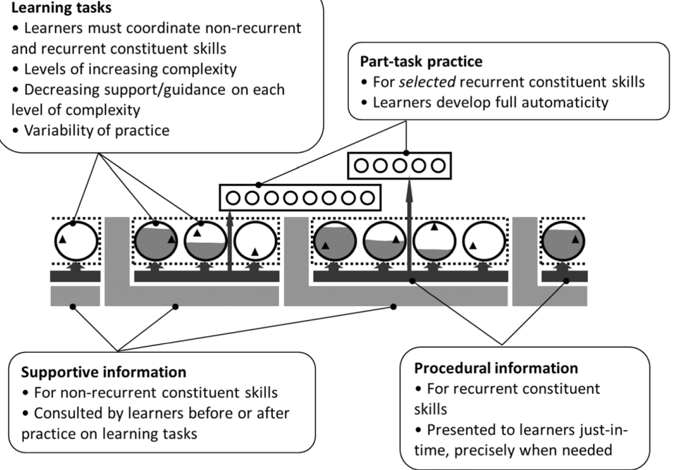
- The paper highlights 4C/ID as an extension of CLT for longer instructional programs and curricula, organized around 4 components: learning tasks, supportive information, procedural information, and part-task practice.
- It reports progress in measuring cognitive load, including a 10-item psychometric instrument that supported distinguishing intrinsic from extraneous load, and objective measures such as EEG, eye tracking, and secondary-task methods.
Methods
- This is a review article that retrospectively synthesizes CLT developments from 1998 to 2018, using the 1998 paper as a baseline and organizing the discussion into history, developments, future directions, and conclusions.
- The authors draw on prior theoretical and empirical studies and reviews cited throughout the paper; no new dataset or sample is reported in the text provided.
- Main analysis is a narrative synthesis of theoretical developments, instructional effects, and measurement approaches in CLT.
Limitations
- The paper explicitly says it is an attempt to summarise the last 20 years of CLT and sketch directions for future research, so it is a synthesis rather than a new empirical test.
- It repeatedly notes that more research is needed on cognitive-load measurement, including the optimal use of subjective rating scales, differentiating load types, and validating objective techniques.
- Evident from the text: several claims about future directions (e.g., resource depletion, self-regulated learning, emotions/stress/uncertainty, human movement) are presented as promising but not yet settled in the paper itself.
Model-written summary. Check it against the paper before relying on it.
Integrity signals
Registry
Cites
Statistics
Figures
Verification
Claims the paper makes
21 Valid · 23 Not valid · 90 Not checked · 158 Own results and interpretations
The sources with a verdict support this claim; the rest weren’t checked yet, have no full text we could read, or their verdicts aren’t rated yet.
In the paper
“Its basic premise is that human cognitive processing is heavily constrained by our limited working memory which can only process a limited number of information elements at a time.”
§ The Author(s) 2019 > Introduction
What the sources say
- Supportedcites Miller (1956) matched to “The magical number seven, plus or minus two: Some limits on our capacity for processing information.” (1956) source
The Summary says that immediate memory imposes severe limits on the information people can receive, process, and remember. The discussion of immediate memory (p. 93) specifies that its limit is the number of chunks, supporting the claim's broad paraphrase of a limited number of information elements at a time. (LLM, conf=0.91)
- Not checked — no full text of the sourcecites Peterson and Peterson (1959) matched to “Short-term retention of individual verbal items.” (1959) source
plainstates a cause- Asserted: passes — The authors put it forward as true.
- Checkable: passes — It can be checked against evidence.
- Load-bearing: passes — The paper’s conclusions depend on it.
- Based: passes — The paper gives a reason why it holds.
- Supported
The cited sources support only part of this claim — read each source’s verdict below.
In the paper
“The capacity and duration limits of working memory have been known at least since Miller (1956) and Peterson and Peterson (1959), although the fact that these limits effectively applied only to novel, not familiar information, seemed more implicit rather than explicit in most treatments.”
§ The Author(s) 2019 > Human Cognitive Architecture Used in 1998
What the sources say
- Partly supportedcites Miller (1956) matched to “The magical number seven, plus or minus two: Some limits on our capacity for processing information.” (1956) sourceExperimental — accuracy not yet measured
In the discussion of immediate memory (p. 93), Miller says its span is limited by the number of chunks and that familiar units allow more information to be packed into each chunk. That supports a distinction between novel material and familiar, recoded material, but not the claim that capacity limits apply only to novel information: the chunk limit remains. The paper also does not establish a duration limit that applies only to novel information. (LLM, conf=0.86)
- Not checked — no full text of the sourcecites Peterson and Peterson (1959) matched to “Short-term retention of individual verbal items.” (1959) source
hedged- Asserted: passes — The authors put it forward as true.
- Checkable: passes — It can be checked against evidence.
- Load-bearing: passes — The paper’s conclusions depend on it.
- Based: passes — The paper gives a reason why it holds.
- Partly supported
Every source the paper cites for this claim was checked and supports it.
In the paper
“The data summarised by Sala and Gobet (2017) provide a major justification for the post 1998 inclusion of evolutionary psychology into cognitive load theory.”
§ The Author(s) 2019 > Human Cognitive Architecture Seen Through the Prism of Evolutionary Psychology
What the sources say
- Supportedcites Sala and Gobet (2017) matched to “Does Far Transfer Exist? Negative Evidence From Chess, Music, and Working Memory Training” (2017) source
The Theoretical and Practical Implications section (page unavailable) summarises the paper’s evidence that chess, music and working-memory training do not reliably produce far transfer. The claim that these data justify a development in cognitive load theory is the citing authors’ interpretation, not a finding attributed to Sala and Gobet. (LLM, conf=0.86)
boostedstates a cause- Asserted: passes — The authors put it forward as true.
- Checkable: passes — It can be checked against evidence.
- Load-bearing: passes — The paper’s conclusions depend on it.
- Based: passes — The paper gives a reason why it holds.
- Supported
Every source the paper cites for this claim was checked and supports it.
In the paper
“The expertise reversal effect is, in essence, a variant of the more general element interactivity effect (Chen et al. 2017).”
§ The Author(s) 2019 > Instructional Effects Described After 1998
What the sources say
- Supportedcites Chen et al. 2017 matched to “The Expertise Reversal Effect is a Variant of the More General Element Interactivity Effect” (2017) source
The indexed copy lists the cited paper under the exact title “The Expertise Reversal Effect is a Variant of the More General Element Interactivity Effect.” Its title directly states the proposition attributed to it; no page number is available in the indexed passage. (LLM, conf=0.90)
plainstates a cause- Asserted: passes — The authors put it forward as true.
- Checkable: passes — It can be checked against evidence.
- Load-bearing: unclear — It is unclear whether the paper’s conclusions depend on it.
- Based: passes — The paper gives a reason why it holds.
- Supported
Every source the paper cites for this claim was checked and supports it.
In the paper
“When subsequently presented the fully integrated information, they only needed to learn how to integrate the individual elements and so more readily assimilated the entire, high element interactivity information.”
§ The Author(s) 2019 > Instructional Effects Described After 1998
What the sources say
- Supportedcites Pollock et al. 2002 matched to “Assimilating complex information” (2002) source
Split into 2 atoms — 2 confirmed, 0 partially supported, 0 disputed, 0 misattributed, 0 unverifiable. Expand the claim to see per-atom verdicts.
plainstates a cause- Asserted: passes — The authors put it forward as true.
- Checkable: passes — It can be checked against evidence.
- Load-bearing: passes — The paper’s conclusions depend on it.
- Based: passes — The paper gives a reason why it holds.
- Supported
132 more claims · 6 with their cited sources checked
Create a free account to see all 292 claims and to verify the 3 references still open.
- It may state two separate claims as one. 88
- Probably not a substantial claim. 95
Claims other papers make about this one
Each is checked against this paper’s own text: does it say what the citing paper says it does?
The source backs part of the claim, not all of it — or backs it for a different population, condition or comparison.
In the citing paper
“Another possible explanation is that the pre-training effect tends to be most effective for learners with minimal prior knowledge (Sweller et al., 2019)”
From Rethinking pre-training: cognitive load implications for learners with varying prior knowledge (2025) · cites this paper as Sweller et al., 2019
Experimental — accuracy not yet measuredThe cited source says what the claim attributes to it.
In the citing paper
“If the cognitive load imposed by a learning task is too high, it might interfere with the learner’s ability to effectively acquire and retain the skill [13, 25].”
From Teaching a single manual therapy technique at a time reduces cognitive load in physiotherapy students: a randomized controlled educational study (2025) · cites this paper as [13]
The cited source says what the claim attributes to it.
In the citing paper
“While cognitive load is often discussed in the context of instructional efficiency, it is important to note that cognitive load is not inherently detrimental. Rather, it is a natural component of learning that engages working memory resources for schema construction and automation [13].”
From Teaching a single manual therapy technique at a time reduces cognitive load in physiotherapy students: a randomized controlled educational study (2025) · cites this paper as [13]
The cited source says what the claim attributes to it.
In the citing paper
“Thus, an increased germane load is no longer believed to lead to cognitive overload and can thus no longer be assumed to be detrimental to learning performance.”
From Understanding Cognitive Load in Digital and Online Learning: a New Perspective on Extraneous Cognitive Load (2022) · cites this paper as Sweller et al., 2019
The cited source says what the claim attributes to it.
In the citing paper
“The major change from the 1998 model is that Sweller et al. (2019) have removed germane load from the additive equation of total load, but rather a dimension now called ' germane processing. '”
From Understanding Cognitive Load in Digital and Online Learning: a New Perspective on Extraneous Cognitive Load (2022) · cites this paper as Sweller et al., 2019
17 more claims about this paper
Create a free account to see every claim other papers make about this one.
Citations
Cites
The magical number seven, plus or minus two: Some limits on our capacity for processing information.
Miller, G. A. (1956) · Psychological Review · doi:10.1037/h0043158 · Cited by 17,812 · cited 1×
“The capacity and duration limits of working memory have been known at least since Miller (1956) and Peterson and Peterson (1959), although the fact that these limits effectively applied only to novel, not familiar information, seemed more implicit rather than explicit in most treatments.”
BackgroundThe magical number seven, plus or minus two: Some limits on our capacity for processing information.
Miller, G. A. (1994) · Psychological Review · doi:10.1037/0033-295x.101.2.343 · Cited by 17,161
Cognitive Load During Problem Solving: Effects on Learning
Sweller, J. (1988) · Cognitive Science · doi:10.1016/0364-0213(88)90023-7 · Cited by 11,048 · cited 4×
“Learning tasks (indicated by the big circles in Fig.”
BackgroundMethodInfluentialSelf-citationKirschner, P. A., Sweller, J., & Clark, R. E. (2006) · Educational Psychologist · doi:10.1207/s15326985ep4102_1 · Cited by 7,776
Self-citationRizzolatti, G., & Craighero, L. (2004) · Annual Review of Neuroscience · doi:10.1146/annurev.neuro.27.070203.144230 · Cited by 7,433
Cognitive Architecture and Instructional Design
Sweller, J., van Merrienboer, J. J. G., & Paas, F. G. W. C. (1998) · Educational Psychology Review · doi:10.1023/a:1022193728205 · Cited by 6,023
Self-citationCognitive load theory, learning difficulty, and instructional design
Sweller, J. (1994) · Learning and Instruction · doi:10.1016/0959-4752(94)90003-5 · Cited by 5,426 · cited 1×
“Element Interactivity Effect This effect was already known in 1998 but as a compound effect, it was not classed as a cognitive load effect (see Sweller 1994).”
BackgroundSelf-citationBaddeley, A. (1992) · Science · doi:10.1126/science.1736359 · Cited by 5,258
Ericsson, K. A., & Kintsch, W. (1995) · Psychological Review · doi:10.1037/0033-295x.102.2.211 · Cited by 3,498
Short-term retention of individual verbal items.
Peterson, L., & Peterson, M. J. (1959) · Journal of Experimental Psychology · doi:10.1037/h0049234 · Cited by 2,939 · cited 1×
“The capacity and duration limits of working memory have been known at least since Miller (1956) and Peterson and Peterson (1959), although the fact that these limits effectively applied only to novel, not familiar information, seemed more implicit rather than explicit in most treatments.”
Background
Research works printed but not linked: 4
- Centre for Education Statistics and Evaluation. (2017). Cognitive load theory: research that teachers really need to understand . Sydney: NSW Department of Education.
- Centre for Education Statistics and Evaluation. (2018). Cognitive load theory in practice . Sydney: NSW Department of Education.
- Clark, R. C. (2014). Evidence-based training methods: a guide for training professionals (2nd ed.). Alexandria: ATD Press.
- Miller, W. (1937). The picture crutch in reading. Elementary English Review, 14 , 263 -264.
Cited by
Items 601–700 of 2,268
Collaborative group work and the different types of cognitive load
Lange, C. H., Costley, J., & Fanguy, M. (2020) · Innovations in Education and Teaching International · doi:10.1080/14703297.2020.1788970 · Cited by 17
“This is due to self-explanation that reinforces the understanding of key concepts for individuals who explain the information (Sweller et al., 2019).”
BackgroundDawson, K., Zhu, J., Ritzhaupt, A. D., Antonenko, P., Saunders, K. V., Wang, J., & Lombardino, L. J. (2021) · Annals of Dyslexia · doi:10.1007/s11881-021-00219-z · Cited by 11
Probing the cognitive load of consecutive interpreters
Moratto, R., & Yang, Z. (2023) · Translation and Interpreting Studies · doi:10.1075/tis.22047.mor · Cited by 8
Comprensión lectora autorregulada apoyada en tecnología en estudiantes de Educación Básica
Benavides, N. M., & Jimmy Zambrano, R. (2023) · Revista Electrónica Educare · doi:10.15359/ree.27-3.17221 · Cited by 23
“La teoría de la carga cognitiva es un enfoque de la enseñanza y la instrucción que se fundamenta en las investigaciones de la arquitectura cognitiva humana (Kirschner et al, 2018; Sweller et al, 2019).”
BackgroundKarabay, F. H., & Meşe, C. (2024) · Asia Pacific Education Review · doi:10.1007/s12564-024-09951-8 · Cited by 16
“Determining intrinsic cognitive load depends on the complexity of the information provided and the knowledge of the student who processes this information (Sweller et al., 2019).”
InfluentialMeier, J., Hesse, P., Abele, S., Renkl, A., & Glogger‐Frey, I. (2024) · Journal of Computer Assisted Learning · doi:10.1111/jcal.12991 · Cited by 11
Why comparing matters – on case comparisons in organic chemistry
Graulich, N., & Lieber, L. S. (2024) · Frontiers in Education · doi:10.3389/feduc.2024.1374793 · Cited by 11
Pi, Z., Ling, H., Li, X., & Wang, Q. (2024) · Education and Information Technologies · doi:10.1007/s10639-024-12690-3 · Cited by 15
“This may trigger a strong cognitive competition between the learning materials and the instructor in students, leading to cognitive overload (Pi et al., 2023a; Sweller et al., 2019).”
Pflieger, L. C. J., Hartmann, C., & Bannert, M. (2024) · Discover Education · doi:10.1007/s44217-024-00154-2 · Cited by 18
Playing an Augmented Reality Escape Game Promotes Learning About Fake News
Buchner, J. (2024) · Technology Knowledge and Learning · doi:10.1007/s10758-024-09749-y · Cited by 18
“However, the latter is necessary to ensure that new information is processed in working memory by integrating prior knowledge from and transferring new knowledge to long-term memory (Paas & van Merriënboer, 2020; Sweller et al., 2019).”
Leng, X., Zhu, W., Mayer, R. E., & Wang, F. (2024) · Learning and Instruction · doi:10.1016/j.learninstruc.2024.102004 · Cited by 9
Tancredi, H., Graham, L. J., Killingly, C., & Sweller, N. (2024) · Learning Environments Research · doi:10.1007/s10984-024-09514-z · Cited by 16
“…(Graham & Tancredi, 2024), a 10-week pedagogical intervention designed to improve the accessibility of instructional practice by reducing barriers arising from extraneous language and cognitive load (Bussing et al., 2016; Gathercole & Alloway, 2004; Starling et al., 2012; Sweller et al., 2019).”
Schuessler, K., Fischer, V., Walpuski, M., & Leutner, D. (2024) · Education Sciences · doi:10.3390/educsci14101044 · Cited by 11
Validating a measure of computational thinking skills in Chinese kindergartners
Geng, Z., Zeng, B., Islam, A. Y. M. A., Zhang, X., & Huang, J. (2024) · Education and Information Technologies · doi:10.1007/s10639-024-13100-4 · Cited by 13
“…or unplugged approaches – should align with children’s cognitive development (McCormick & Hall, 2022), account for their limited cognitive load capacity (Sweller et al., 1998, 2019), and prioritize play-based learning environments that stimulate interest and encourage interaction and collaboration…”
Cheung, S. K., McBride, C. A., Purpura, D. J., Ho, A. P. L., & Ng, M. C. Y. (2024) · Learning and Individual Differences · doi:10.1016/j.lindif.2024.102596 · Cited by 8
Effects of self-explaining feedback on learning from problem-solving errors
Zhang, Q., & Fiorella, L. (2024) · Contemporary Educational Psychology · doi:10.1016/j.cedpsych.2024.102326 · Cited by 14
Liu, X., & Zhang, Y. (2024) · British Journal of Educational Psychology · doi:10.1111/bjep.12729 · Cited by 14
Inclusive and Digital Science Education—A Theoretical Framework for Lesson Planning
Pannullo, L., Böttinger, T., & Winkelmann, J. (2025) · Education Sciences · doi:10.3390/educsci15020148 · Cited by 18
Mani, M., Gezelius, M., Löwgren, J., Höst, G., Koć‐Januchta, M., Tibell, L. A. E., & Schönborn, K. J. (2025) · Interactive Learning Environments · doi:10.1080/10494820.2025.2494161 · Cited by 14
“In this regard, effectively utilising cognitive resources for actual learning requires avoiding elements that unnecessarily consume these resources (Sweller et al., 2019).”
Varrasi, S., Vagnetti, R., Camp, N., Hough, J., Nuovo, A. G. D., Castellano, S., & Magistro, D. (2025) · Information · doi:10.3390/info16050374 · Cited by 10
“There are a number of types of CL such as intrinsic, extraneous, and germane [3].”
Rösch, S. F., & Kopplin, C. S. (2025) · Journal of Retailing and Consumer Services · doi:10.1016/j.jretconser.2025.104297 · Cited by 12
Herold, F., Ludyga, S., Mavilidi, M. F., Benzing, V., Vazou, S., Tomporowski, P. D., & Pesce, C. (2025) · Educational Psychology Review · doi:10.1007/s10648-025-10031-5 · Cited by 15
“…et al., 2024; Faella et al., 2025; Paas & Sweller, 2012; Skulmowski & Rey, 2017, 2018; Sullivan, 2018; Zou et al., 2025) via the regulation of cognitive load (e.g., for cognitive offloading) based on the predictions of the cognitive load theory (Sweller, 1988; Sweller et al., 1998, 2019).”
Ma, X., Pan, W., & Yu, X. (2025) · BMC Medical Education · doi:10.1186/s12909-025-07706-6 · Cited by 17
“This finding aligns with previous literature, which noted similar difficulties in AI-generated clinical reasoning questions across surgical and procedural domains [4, 15, 20].”
Enhancing workplace e-learning with branching scenarios: an action case study
Pimblett, C., Rowe, L., & Fenton, A. (2025) · International Journal of Organization Theory and Behavior · doi:10.1108/ijotb-04-2025-0103 · Cited by 12
Que, Y. P., Zheng, Y., Hsiao, J. H., & Hu, X. (2025) · Scientific Reports · doi:10.1038/s41598-025-03052-1 · Cited by 13
Elzerman, G. H. (2025) · 2025 5th International Conference on Artificial Intelligence and Education (ICAIE) · doi:10.1109/icaie64856.2025.11158185 · Cited by 8
“Because AI tutors often break learning down into small, manageable chunks or provide quick feedback, students may end up going through the motions of exercises without fully processing the linguistic concepts at a deeper level [7], [27].”
Park, J. E., Fan, A., & So, K. K. F. (2025) · Journal of Hospitality & Tourism Research · doi:10.1177/10963480251401822 · Cited by 14
“These findings collectively suggest that managing these three cognitive load types can enhance information comprehension (Sweller et al., 2019; Van Gog & Paas, 2008).”
VerPlanck, J. (2020) · Policing An International Journal · doi:10.1108/pijpsm-06-2020-0101 · Cited by 13
Darejeh, A., Marcus, N., & Sweller, J. (2022) · L’Année psychologique · doi:10.3917/anpsy1.223.0405 · Cited by 12
Self-citationDu, X., & Sun, P. (2022) · Frontiers in Psychology · doi:10.3389/fpsyg.2022.1012081 · Cited by 8
“Cognitive load theory later introduced germane cognitive load to explain the positive effects of additional learning activities (Sweller, 2010; Sweller et al., 2019).”
BackgroundLi, W., Ren, X., Li, Q., Luo, H., & Liu, B. (2023) · Interactive Learning Environments · doi:10.1080/10494820.2023.2195450 · Cited by 10
“Intrinsic cognitive load and extraneous cognitive load are two categories of cognitive load (Sweller et al., 2019).”
Pengelley, J., Whipp, P. R., & Rovis-Hermann, N. (2023) · Educational Psychology Review · doi:10.1007/s10648-023-09781-x · Cited by 13
“This has since been incorporated into IL and has been removed from the tripartite model as a discrete type of load (Jiang & Kalyuga, 2020; Skulmowski & Xu, 2021), as it is no longer theorised to contribute to the overall load of a task (Sweller et al., 2019).”
BackgroundMethodInfluentialCatrysse, L., Kerckhoffs, A., & Jarodzka, H. (2023) · Journal of Eye Movement Research · doi:10.16910/jemr.16.3.4 · Cited by 10
Johnston, S., McGrane, J. A., Morancho, M. V., & Hopfenbeck, T. N. (2023) · Review of Education · doi:10.1002/rev3.3442 · Cited by 17
How to train students to engage in text‐picture integration for multimedia lessons
Leng, X., Wang, F., Mayer, R. E., & Zhao, T. (2023) · British Journal of Educational Technology · doi:10.1111/bjet.13419 · Cited by 16
An NCLEX-RN Improvement Project: A Study of Student Attributes Associated With Test Success
Jacobowitz, W., Mancini, K., Swenson, D., & Donohue-Porter, P. (2024) · Journal of Nursing Education · doi:10.3928/01484834-20231205-01 · Cited by 10
Teacher scaffolding for knowledge building in the educational research classroom
Gutiérrez-Braojos, C., Rodríguez-Chirino, P., Vico, B. P., & Rodríguez-Fernández, S. (2024) · RIED Revista Iberoamericana de Educación a Distancia · doi:10.5944/ried.27.2.38969 · Cited by 26
Asmussen, G., Rodemer, M., & Bernholt, S. (2024) · International Journal of Science Education · doi:10.1080/09500693.2024.2361933 · Cited by 10
“This required students to process more information, potentially making the problem-solving process cognitively demanding, which influenced the effectiveness of the ASSTs (Sweller et al., 2019).”
An Electroencephalography Study on Cognitive Load in Visual and Textual Programming
Thorgeirsson, S., Zhang, C., Weidmann, T. B., Weidmann, K.-H., & Su, Z. (2024) · ACM Conference on International Computing Education Research (ICER) · doi:10.1145/3632620.3671124 · Cited by 12
How to support self-assessment through standards in dissimilar-solution-tasks
Froese, L., & Roelle, J. (2024) · Learning and Instruction · doi:10.1016/j.learninstruc.2024.101998 · Cited by 49
Effects of Split-Attention and Task Complexity on Individual and Collaborative Learning
Guzmán, J., & Jimmy Zambrano, R. (2024) · Education Sciences · doi:10.3390/educsci14091035 · Cited by 17
Consalvi, L., Ouwehand, K., & PAAS, F. G. W. C. (2024) · Education Sciences · doi:10.3390/educsci14111204 · Cited by 11
Self-citationHaberbosch, M., Deiters, M., & Schaal, S. (2025) · Education Sciences · doi:10.3390/educsci15020123 · Cited by 19
Making the design process in design education explicit: two exploratory case studies
van Dooren, E., Asselbergs, T., van Dorst, M. J., et al. (2020) · Research Publications (Maastricht University) · Cited by 8
Self-citationKärner, T., Warwas, J., Krannich, M., & Weichsler, N. (2021) · Learning and Instruction · doi:10.1016/j.learninstruc.2020.101440 · Cited by 12
Torgersen, G.-E., & Boe, O. C. (2021) · Frontiers in Psychology · doi:10.3389/fpsyg.2021.545335 · Cited by 22
Communicating Data, Information, and Knowledge in the Nursing Handoff
Galatzan, B. J., & Carrington, J. M. (2021) · CIN Computers Informatics Nursing · doi:10.1097/cin.0000000000000806 · Cited by 11
“What is known based on the Nurse-toNurseTransition ofCareHand-offCommunicationFramework is that how information is presented and communicated does affect the receiving individual's ability to effectively process and then recall relevant information.(5,15,34) The amount and mix of data, information, and knowledge that…”
BackgroundDer Einsatz von Virtual-Reality Lernszenarien für Softskills-Trainings
Zak, K., & Oppl, S. (2021) · HMD Praxis der Wirtschaftsinformatik · doi:10.1365/s40702-021-00784-2 · Cited by 11
“Im VR-Lernformat K kann die schrittweise Demonstration von bestimmten Abläufen oder Musterdialogen (z.B. Best-Practice Verhandlungsdialog) gut umgesetzt werden, wodurch dem aus den kognitiven Theorien bekannten Worked-Examples-Effekt (Sweller et al. 2019) entsprochen wird.”
BackgroundInfluentialJaftha, N., Micallef, M. Z., & Chircop, T. (2021) · International Journal of Education · doi:10.5296/ije.v13i4.19193 · Cited by 12
Effects of outlines and information seeking on learning outcomes in video-based environments
Cojean, S., & Jamet, É. (2022) · Interactive Learning Environments · doi:10.1080/10494820.2022.2028854 · Cited by 9
“Sometimes, information is delivered too quickly to allow for optimum information processing (Hasler et al., 2007; Spanjers et al., 2012; Sweller et al., 2019).”
BackgroundSchade, S. (2022) · Springer eBooks · doi:10.1007/978-3-658-34158-9_5 · Cited by 9
Promoting online learning processes and outcomes via video examples and prompts
Hefter, M. H., & Berthold, K. (2023) · Interactive Learning Environments · doi:10.1080/10494820.2022.2164786 · Cited by 11
“From a cognitive load perspective (Castro-Alonso et al., 2021; Sweller et al., 2011, 2019), this makes sense.”
Mathur, J., Miller, S. R., Simpson, T. W., & Meisel, N. A. (2024) · 3D Printing and Additive Manufacturing · doi:10.1089/3dp.2022.0180 · Cited by 11
“46 Different cognitive load aspects affect learning, 47 including variations in modality between learning mediums of varying immersion.”
Kang, Y., Ha, H., & Lee, H. S. (2023) · Educational Psychology Review · doi:10.1007/s10648-023-09772-y · Cited by 7
Calvo, C. S., González‐Calero, J. A., & Arnau, D. (2023) · Educational Studies in Mathematics · doi:10.1007/s10649-023-10236-x · Cited by 26
Investigating the Use of Text Positions on Videos: An Eye Movement Study
Polat, H. (2020) · Contemporary Educational Technology · doi:10.30935/cedtech/7628 · Cited by 8
“When the cognitive demands of the learning task exceed the limited capacity in one or both channels, the learner becomes cognitive overload (Sweller et al., 2019), a situation that influences learning adversely (Mayer, 2001).”
BackgroundCognitive load theory and differential attainment
Atiomo, W. (2020) · BMJ · doi:10.1136/bmj.m965 · Cited by 15
Bogomolova, K., van Merriënboer, J. J. G., Sluimers, J. E., Donkers, J. H. H. L. M., Wiggers, T., Hovius, S. E. R., & van der Hage, J. A. (2021) · The American Journal of Surgery · doi:10.1016/j.amjsurg.2021.01.033 · Cited by 12
Self-citationTraun, C., Schreyer, M. L., & Wallentin, G. (2021) · ISPRS International Journal of Geo-Information · doi:10.3390/ijgi10040208 · Cited by 9
The effects of visual realism and visuospatial abilities on memorizing soccer tactics
Mahfoudh, H. B., Zoudji, B., & Cadi, A. A. E. (2021) · Journal of Imagery Research in Sport and Physical Activity · doi:10.1515/jirspa-2021-0007 · Cited by 9
Self-Directed Learning: An imperative for education in a complex society
Bailey, R., Bergamin, P. B., Blignaut, J. H., Chahine, I., Beer, J. J. D., Dhakulkar, A., Dudu, W. T., du Toit-Brits, C., Fleisher, S. C., Jagals, D., et al. (2021) · NWU self-directed learning series · doi:10.4102/aosis.2021.bk279 · Cited by 13
Moon, J. A., Lindner, M. A., Arslan, B., & Keehner, M. (2022) · Educational Measurement Issues and Practice · doi:10.1111/emip.12485 · Cited by 9
Beege, M., Krieglstein, F., Schneider, S., Nebel, S., & Rey, G. D. (2021) · Frontiers in Education · doi:10.3389/feduc.2021.678798 · Cited by 10
Mental imagery scaffolding: The effects of detail richness and text load on geography learning
Zhou, Y., Yi, F., Dong, B., Zhang, G., Zhang, Y., & Xu, T. (2024) · Education and Information Technologies · doi:10.1007/s10639-024-12540-2 · Cited by 17
“According to cognitive load theory (Sweller et al., 2019 ), which has been regarded as a theoretical foundation guiding visual representations research, unnecessary and complicated details may result in increased extraneous cognitive load (Castro-Alonso et al., 2019 ).”
Chen, O., Chan, B. K. Y., Anderson, E., O’Sullivan, R., Jay, T., Ouwehand, K., PAAS, F. G. W. C., & Sweller, J. (2024) · Contemporary Educational Psychology · doi:10.1016/j.cedpsych.2024.102281 · Cited by 15
Self-citationTeaching expectancy improves video‐based learning: Evidence from eye‐movement synchronization
Liang, Z., Ga, R., Bai, H., Zhao, Q., Wang, G., Lai, Q., Chen, S., Yu, Q., & Zhou, Z. (2024) · British Journal of Educational Technology · doi:10.1111/bjet.13496 · Cited by 13
Learning cardiac embryology on YouTube —What videos are there to view?
Mathew, R., Ramakrishnan, N., Boland, F., Pawlikowska, T. R. B., & Holland, J. (2024) · Anatomical Sciences Education · doi:10.1002/ase.2467 · Cited by 9
Kenneally, C. D., & Bentley, B. (2024) · Education Sciences · doi:10.3390/educsci14091036 · Cited by 23
Student's study behaviors as a predictor of performance in general chemistry I
Sickle, L. L. V., & Frey, R. F. (2025) · Chemistry Education Research and Practice · doi:10.1039/d3rp00207a · Cited by 11
Mundlos, P., Wulf, T., & Mueller, F. A. (2024) · European Business Review · doi:10.1108/ebr-08-2024-0253 · Cited by 14
Mahmood, A., Ahuja, N. A., Kedia, S., & Bailey, J. E. (2025) · Journal of Health Communication · doi:10.1080/10810730.2025.2465491 · Cited by 7
“The CLT encompasses three distinct cognitive categories namely, intrinsic, extraneous, and germane cognitive loads (Sweller et al., 1998).”
InfluentialNgu, B. H., Chen, O., Phan, H. P., Usop, H. H., & Anding, P. N. (2025) · Education Sciences · doi:10.3390/educsci15040504 · Cited by 11
“Research into effective instructional designs to enhance academic learning, particularly in mathematics, closely aligns with cognitive load theory (Sweller et al., 2011, 2019).”
Dechamps, T., & Skulmowski, A. (2025) · Educational Psychology Review · doi:10.1007/s10648-025-10026-2 · Cited by 19
“In line with cognitive load theory (Sweller et al., 2019), successful learning is at risk if the cognitive demands arising from the drawing task itself are exceedingly high, resulting in insufficient cognitive capacities to learn the studied contents (e.g., Leutner et al., 2009).”
Bradley, C. S., Loomis, A., DiClemente, L. M., Flaten, C., Rahman, S., Muehlbauer, M. K., Johnson, K., Mathiason, M. A., & Aebersold, M. (2025) · Journal of Nursing Regulation · doi:10.1016/j.jnr.2025.04.003 · Cited by 11
Integrating Self-Care into Nursing Education and Practice: Strategies for Sustainable Wellbeing
Ramluggun, P., & Morning, D. (2025) · Education Sciences · doi:10.3390/educsci15060721 · Cited by 14
Active learning strategies in video learning: A meta-analysis
Zhang, Y., Li, R., Pi, Z., & Yang, J. (2025) · Educational Research Review · doi:10.1016/j.edurev.2025.100708 · Cited by 38
Yan, Z., & Mendoza, N. B. (2025) · Assessment in Education Principles Policy and Practice · doi:10.1080/0969594x.2025.2534134 · Cited by 11
“According to cognitive load theory (Sweller et al., 2019), simultaneously processing intervention mechanics and developing growth mindset may have created temporary performance decrements.”
Team dynamics in human-AI collaboration: effects on confidence, satisfaction, and accountability
Yousefi, M., Shahi, A., Sharifi, M., J Jorge Romera, A., Hoermann, S., & Piumsomboon, T. (2025) · Proceedings of the 27th International Conference on Multimodal Interaction · doi:10.1145/3716553.3750776 · Cited by 7
An Integrated Human Cognitive Architecture
Sweller, J. (2025) · Educational Psychology Review · doi:10.1007/s10648-025-10089-1 · Cited by 18
“While there are few cognitive load effects that attempt to reduce intrinsic cognitive load, there are many effects caused by reductions in extraneous cognitive load that have been identified (Sweller et al., 2011; Sweller et al., 2019).”
Self-citationsuo, X., Yin, B., & Feng, X. (2026) · Frontiers in Psychology · doi:10.3389/fpsyg.2025.1712261 · Cited by 22
Working Memory Resource Depletion Effect in Academic Learning: Steps to an Integrated Approach
Tricot, A., Puma, S., Capa, R., Audiffren, M. F., André, N., Lespiau, F., Roussel, S., Jeunet, C., Massa, E., Bellec, D., et al. (2020) · Communications in computer and information science · doi:10.1007/978-3-030-62302-9_2 · Cited by 9
“experiments) that decreasing cognitive load in working memory could lead to a learning rise [1].”
BackgroundEickelmann, A.-K., Waldner, N., & Huwendiek, S. (2021) · BMC Medical Education · doi:10.1186/s12909-021-03027-6 · Cited by 11
“If the capacity of the working memory is overloaded, learning is hindered [6].”
BackgroundWesenberg, L., Krieglstein, F., Jansen, S., Rey, G. D., Beege, M., & Schneider, S. (2022) · Frontiers in Psychology · doi:10.3389/fpsyg.2022.1032003 · Cited by 13
“Recent conceptions of the CLT distinguish between the intrinsic cognitive load and the extraneous cognitive load (Sweller, 2010; Kalyuga, 2011; Kalyuga and Singh, 2016; Sweller et al., 2019; Jiang and Kalyuga, 2020).”
BackgroundInstructor's direct gaze not body orientation affects learning
Kuang, Z., Wang, F., Andrasik, F., & Hu, X. (2023) · Journal of Computer Assisted Learning · doi:10.1111/jcal.12917 · Cited by 7
Biological evolution and human cognition are analogous information processing systems
Castro-Alonso, J. C., Hidalgo, A. A., & Sweller, J. (2024) · Frontiers in Psychology · doi:10.3389/fpsyg.2023.1330345 · Cited by 12
“As the Narrow Limits of Change Principle operates on working memory, this memory processor cannot deal with large amounts of simultaneous novel information (see Sweller et al., 2019; Sweller, 2020).”
BackgroundSelf-citationRajendran, D. P. D., & Sundarraj, R. P. (2024) · Business & Information Systems Engineering · doi:10.1007/s12599-024-00852-z · Cited by 8
“The non-immersive artefact enabled reduction of the overload of players’ learning capacity as specified by CLT (Chandler and Sweller 1991; Schrader and Bastiaens 2012).”
InfluentialHo, Y. (2024) · Journal of Computer Assisted Learning · doi:10.1111/jcal.12983 · Cited by 14
A study on the effect of different channel cues on learning in immersive 360° videos
Huang, G., Chen, C., Tang, Y., Zhang, H., Liu, R., & Zhou, L. (2024) · Frontiers in Psychology · doi:10.3389/fpsyg.2024.1335022 · Cited by 14
Galatzan, B. J., Johnson, E. A., Judson, T., & Shan, L. (2024) · Journal of Clinical Nursing · doi:10.1111/jocn.17190 · Cited by 8
Tancredi, H., Graham, L. J., & Killingly, C. (2024) · The Australian Educational Researcher · doi:10.1007/s13384-024-00728-x · Cited by 10
“…of child or adolescent language and working memory, all students can experience barriers to information processing and comprehension (Cowan, 2014; Sweller et al., 2019), however these barriers are more acute for students with disabilities impacting language and/or information processing.”
Learning with videos: Do task instructions and the availability of a pause button matter?
Merkt, M., & Bodemer, D. (2024) · Journal of Computer Assisted Learning · doi:10.1111/jcal.13044 · Cited by 12
Some do's and don'ts of Educational Videos
Ayres, P., & Ackermans, K. (2025) · Learning and Instruction · doi:10.1016/j.learninstruc.2024.102077 · Cited by 12
Zheng, Y., Xu, A., Zheng, Q., & Shieh, C.-J. (2021) · Revista de Cercetare si Interventie Sociala · doi:10.33788/rcis.73.5 · Cited by 7
Looker, N. (2021) · ACM Conference on International Computing Education Research (ICER) · doi:10.1145/3446871.3469778 · Cited by 11
Cognitive Skills in Adolescents’ Self-Directed Learning Efficacy
Uus, Õ., Mettis, K., & Väljataga, T. (2022) · Creative Education · doi:10.4236/ce.2022.132035 · Cited by 15
Becoming metrics literate: An analysis of brief videos that teach about the h-index
Maggio, L. A., Jeffrey, A., Haustein, S., & Samuel, A. (2022) · PLoS ONE · doi:10.1371/journal.pone.0268110 · Cited by 8
Gamified Expert Annotation Systems: Meta-Requirements and Tentative Design
Warsinsky, S., Schmidt-Kraepelin, M., Thiebes, S., Wagner, M., & Sunyaev, A. (2022) · Lecture notes in computer science · doi:10.1007/978-3-031-06516-3_12 · Cited by 9
Designing Visualisations for Bayesian Problems According to Multimedia Principles
Büchter, T., Steib, N., Böcherer-Linder, K., Eichler, A., Krauß, S., Binder, K., & Vogel, M. (2022) · Education Sciences · doi:10.3390/educsci12110739 · Cited by 9
The effect of microlevel and macrolevel signaling on learning with 360° videos
Beege, M., Nebel, S., Schneider, S., & Rey, G. D. (2022) · Applied Cognitive Psychology · doi:10.1002/acp.4023 · Cited by 8
Renkl, A. (2023) · Unterrichtswissenschaft · doi:10.1007/s42010-023-00167-0 · Cited by 12
“Das Dublettenproblem gibt es aber auch bei Rahmentheorien, wenn man etwa an die Cognitive Load Theory (z.B. Sweller et al. 2019) und die Cognitive Theory of Multimedia Learning (z.B. Mayer 2021) denkt, welche sehr ähnliche Annahmen treffen und teils (fast) identische Effekte postulieren.”
Background
Metadata
- Authors
- Sweller, J., van Merriënboer, J. J. G., & Paas, F.
- Affiliations
- UNSW Sydney (AU)
- University of Wollongong (AU)
- Corresponding author
- Sweller, John
- Venue
- Educational Psychology Review
- Published
- 2019-01-22
- Volume
- 31
- Issue
- 2
- Pages
- 261-292
- ISSN
- 1040-726X (ISSN-L)
- 1573-336X
- OpenAlex
- W2913144876
- Semantic Scholar
- e28d73214751d51c3f46a867920be41c49c45130
- Cited by
- 2,337
- References
- 129
- Citations by year
- 2026: 713 · 2025: 466 · 2024: 331 · 2023: 268 · 2022: 212 · 2021: 190 · 2020: 114 · 2019: 37
- FWCI
- 162.54
- Type
- journal article
- Language
- en
- Open access
- hybrid
- doi.org
- Licence
- cc-by
- creativecommons.org/licenses/by/4.0 (tdm)
- Locations
- Educational Psychology Review (publishedVersion, cc-by)
- EUR Research Repository (Erasmus University Rotterdam) (publishedVersion, other-oa)
- Research Online (University of Wollongong) (submittedVersion)
- EUR Research Repository (Erasmus University Rotterdam) (submittedVersion)
- Research Publications (Maastricht University) (submittedVersion, cc-by)
- Figshare (submittedVersion, cc-by)
- Research Publications (Maastricht University) (submittedVersion, other-oa)
- Topics
- Social Sciences › Psychology › Experimental and Cognitive Psychology › Visual and Cognitive Learning Processes
- Social Sciences › Psychology › Developmental and Educational Psychology › Innovative Teaching and Learning Methods
- Life Sciences › Neuroscience › Cognitive Neuroscience › Neuroscience, Education and Cognitive Function
- Keywords
- cognitive load theory, cognitive architecture, working memory, long-term memory, instructional design
About these checks
Registry, retraction, Cites and statistics results are computed, not judged, with one exception: a printed reference that no index lists is read once by a model before it counts as a citation error. Claims are extracted by a model and kept only when their quote appears verbatim in the text; each cited source is then checked, with a model’s help, for whether it says what the claim relies on. Those verdicts can be wrong — read the claim’s quote and the cited source before relying on one.
The claim verdicts this report counts are experimental: their accuracy is not yet measured.
A language model drew the claims from the paper on 2026-10-10, under version 3 of the claim definition (model deepseek-v4.1-flash, prompt extract-v3).
A second model labelled each claim on 2026-10-10 (model jev-1.13-20260917, definition revision gold-guideline-v0.2).
Cited sources are checked with a language model’s help (gpt-6-sol).
Statistics and arithmetic are recomputed, not judged.
Confidence bands are shown only for fields calibrated on our annotated test set. None is calibrated yet, so no band is shown.
What counts as a claim ›How we measure confidence ›How we check this ›
Are you an author, or do you see a problem with this page? Request a review
Data sources
Bibliographic data: Semantic Scholar, OpenAlex, Crossref.
Contains information from the Semantic Scholar Academic Graph Datasets, made available under the ODC Attribution License (ODC-BY 1.0).
Semantic Scholar’s data is described in: Kinney, R., et al. (2023). The Semantic Scholar Open Data Platform. arXiv:2301.10140.
