

Cognitive Architecture and Instructional Design: 20 Years Later
Open accessThe DOI matches its Crossref record; 127 of the 129 references it cites were found in a registry or an index, and 1 are not checked yet; 22 of the 116 sources its claims cite were checked for support.
Abstract
Cognitive load theory was introduced in the 1980s as an instructional design theory based on several uncontroversial aspects of human cognitive architecture. Our knowledge of many of the characteristics of working memory, long-term memory and the relations between them had been well-established for many decades prior to the introduction of the theory. Curiously, this knowledge had had a limited impact on the field of instructional design with most instructional design recommendations proceeding as though working memory and long-term memory did not exist. In contrast, cognitive load theory emphasised that all novel information first is processed by a capacity and duration limited working memory and then stored in an unlimited long-term memory for later use. Once information is stored in long-term memory, the capacity and duration limits of working memory disappear transforming our ability to function. By the late 1990s, sufficient data had been collected using the theory to warrant an extended analysis resulting in the publication of Sweller et al. (Educational Psychology Review, 10, 251–296, 1998). Extensive further theoretical and empirical work have been carried out since that time and this paper is an attempt to summarise the last 20 years of cognitive load theory and to sketch directions for future research.
Verified 2026-11-25 · 1 reference not checked yet
Overview
CoChat Summary
TL;DR
This review argues that cognitive load theory (CLT) has substantially advanced since its 1998 summary, with new theoretical grounding, new instructional effects, and improved measurement approaches. It also frames future work around working-memory resource depletion, self-regulated learning, emotions/stress/uncertainty, and human movement.
Key findings
- The paper states that the 1998 article reported 7 cognitive load effects, and that 8 new effects were added in the 1998–2018 period, including compound effects.
- It says CLT’s theoretical basis was strengthened by grounding human cognitive architecture in evolutionary psychology, especially Geary’s distinction between biologically primary and biologically secondary knowledge.
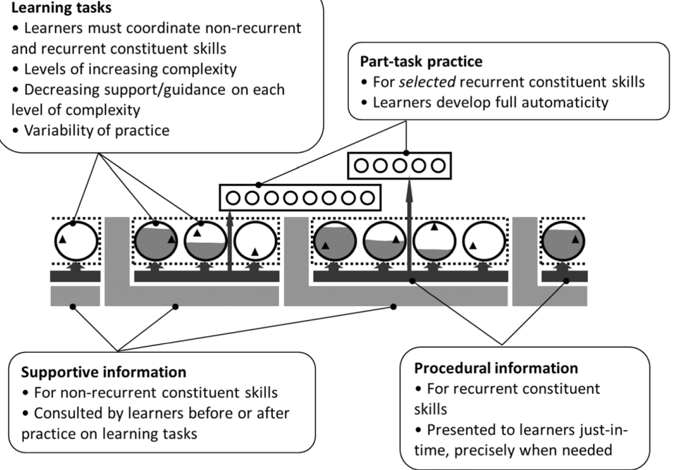
- The paper highlights 4C/ID as an extension of CLT for longer instructional programs and curricula, organized around 4 components: learning tasks, supportive information, procedural information, and part-task practice.
- It reports progress in measuring cognitive load, including a 10-item psychometric instrument that supported distinguishing intrinsic from extraneous load, and objective measures such as EEG, eye tracking, and secondary-task methods.
Methods
- This is a review article that retrospectively synthesizes CLT developments from 1998 to 2018, using the 1998 paper as a baseline and organizing the discussion into history, developments, future directions, and conclusions.
- The authors draw on prior theoretical and empirical studies and reviews cited throughout the paper; no new dataset or sample is reported in the text provided.
- Main analysis is a narrative synthesis of theoretical developments, instructional effects, and measurement approaches in CLT.
Limitations
- The paper explicitly says it is an attempt to summarise the last 20 years of CLT and sketch directions for future research, so it is a synthesis rather than a new empirical test.
- It repeatedly notes that more research is needed on cognitive-load measurement, including the optimal use of subjective rating scales, differentiating load types, and validating objective techniques.
- Evident from the text: several claims about future directions (e.g., resource depletion, self-regulated learning, emotions/stress/uncertainty, human movement) are presented as promising but not yet settled in the paper itself.
Model-written summary. Check it against the paper before relying on it.
Integrity signals
Registry
Cites
Statistics
Figures
Verification
Claims the paper makes
21 Valid · 23 Not valid · 90 Not checked · 158 Own results and interpretations
The sources with a verdict support this claim; the rest weren’t checked yet, have no full text we could read, or their verdicts aren’t rated yet.
In the paper
“Its basic premise is that human cognitive processing is heavily constrained by our limited working memory which can only process a limited number of information elements at a time.”
§ The Author(s) 2019 > Introduction
What the sources say
- Supportedcites Miller (1956) matched to “The magical number seven, plus or minus two: Some limits on our capacity for processing information.” (1956) source
The Summary says that immediate memory imposes severe limits on the information people can receive, process, and remember. The discussion of immediate memory (p. 93) specifies that its limit is the number of chunks, supporting the claim's broad paraphrase of a limited number of information elements at a time. (LLM, conf=0.91)
- Not checked — no full text of the sourcecites Peterson and Peterson (1959) matched to “Short-term retention of individual verbal items.” (1959) source
plainstates a cause- Asserted: passes — The authors put it forward as true.
- Checkable: passes — It can be checked against evidence.
- Load-bearing: passes — The paper’s conclusions depend on it.
- Based: passes — The paper gives a reason why it holds.
- Supported
The cited sources support only part of this claim — read each source’s verdict below.
In the paper
“The capacity and duration limits of working memory have been known at least since Miller (1956) and Peterson and Peterson (1959), although the fact that these limits effectively applied only to novel, not familiar information, seemed more implicit rather than explicit in most treatments.”
§ The Author(s) 2019 > Human Cognitive Architecture Used in 1998
What the sources say
- Partly supportedcites Miller (1956) matched to “The magical number seven, plus or minus two: Some limits on our capacity for processing information.” (1956) sourceExperimental — accuracy not yet measured
In the discussion of immediate memory (p. 93), Miller says its span is limited by the number of chunks and that familiar units allow more information to be packed into each chunk. That supports a distinction between novel material and familiar, recoded material, but not the claim that capacity limits apply only to novel information: the chunk limit remains. The paper also does not establish a duration limit that applies only to novel information. (LLM, conf=0.86)
- Not checked — no full text of the sourcecites Peterson and Peterson (1959) matched to “Short-term retention of individual verbal items.” (1959) source
hedged- Asserted: passes — The authors put it forward as true.
- Checkable: passes — It can be checked against evidence.
- Load-bearing: passes — The paper’s conclusions depend on it.
- Based: passes — The paper gives a reason why it holds.
- Partly supported
Every source the paper cites for this claim was checked and supports it.
In the paper
“The data summarised by Sala and Gobet (2017) provide a major justification for the post 1998 inclusion of evolutionary psychology into cognitive load theory.”
§ The Author(s) 2019 > Human Cognitive Architecture Seen Through the Prism of Evolutionary Psychology
What the sources say
- Supportedcites Sala and Gobet (2017) matched to “Does Far Transfer Exist? Negative Evidence From Chess, Music, and Working Memory Training” (2017) source
The Theoretical and Practical Implications section (page unavailable) summarises the paper’s evidence that chess, music and working-memory training do not reliably produce far transfer. The claim that these data justify a development in cognitive load theory is the citing authors’ interpretation, not a finding attributed to Sala and Gobet. (LLM, conf=0.86)
boostedstates a cause- Asserted: passes — The authors put it forward as true.
- Checkable: passes — It can be checked against evidence.
- Load-bearing: passes — The paper’s conclusions depend on it.
- Based: passes — The paper gives a reason why it holds.
- Supported
Every source the paper cites for this claim was checked and supports it.
In the paper
“The expertise reversal effect is, in essence, a variant of the more general element interactivity effect (Chen et al. 2017).”
§ The Author(s) 2019 > Instructional Effects Described After 1998
What the sources say
- Supportedcites Chen et al. 2017 matched to “The Expertise Reversal Effect is a Variant of the More General Element Interactivity Effect” (2017) source
The indexed copy lists the cited paper under the exact title “The Expertise Reversal Effect is a Variant of the More General Element Interactivity Effect.” Its title directly states the proposition attributed to it; no page number is available in the indexed passage. (LLM, conf=0.90)
plainstates a cause- Asserted: passes — The authors put it forward as true.
- Checkable: passes — It can be checked against evidence.
- Load-bearing: unclear — It is unclear whether the paper’s conclusions depend on it.
- Based: passes — The paper gives a reason why it holds.
- Supported
Every source the paper cites for this claim was checked and supports it.
In the paper
“When subsequently presented the fully integrated information, they only needed to learn how to integrate the individual elements and so more readily assimilated the entire, high element interactivity information.”
§ The Author(s) 2019 > Instructional Effects Described After 1998
What the sources say
- Supportedcites Pollock et al. 2002 matched to “Assimilating complex information” (2002) source
Split into 2 atoms — 2 confirmed, 0 partially supported, 0 disputed, 0 misattributed, 0 unverifiable. Expand the claim to see per-atom verdicts.
plainstates a cause- Asserted: passes — The authors put it forward as true.
- Checkable: passes — It can be checked against evidence.
- Load-bearing: passes — The paper’s conclusions depend on it.
- Based: passes — The paper gives a reason why it holds.
- Supported
132 more claims · 6 with their cited sources checked
Create a free account to see all 292 claims and to verify the 3 references still open.
- It may state two separate claims as one. 88
- Probably not a substantial claim. 95
Claims other papers make about this one
Each is checked against this paper’s own text: does it say what the citing paper says it does?
The source backs part of the claim, not all of it — or backs it for a different population, condition or comparison.
In the citing paper
“Another possible explanation is that the pre-training effect tends to be most effective for learners with minimal prior knowledge (Sweller et al., 2019)”
From Rethinking pre-training: cognitive load implications for learners with varying prior knowledge (2025) · cites this paper as Sweller et al., 2019
Experimental — accuracy not yet measuredThe cited source says what the claim attributes to it.
In the citing paper
“If the cognitive load imposed by a learning task is too high, it might interfere with the learner’s ability to effectively acquire and retain the skill [13, 25].”
From Teaching a single manual therapy technique at a time reduces cognitive load in physiotherapy students: a randomized controlled educational study (2025) · cites this paper as [13]
The cited source says what the claim attributes to it.
In the citing paper
“While cognitive load is often discussed in the context of instructional efficiency, it is important to note that cognitive load is not inherently detrimental. Rather, it is a natural component of learning that engages working memory resources for schema construction and automation [13].”
From Teaching a single manual therapy technique at a time reduces cognitive load in physiotherapy students: a randomized controlled educational study (2025) · cites this paper as [13]
The cited source says what the claim attributes to it.
In the citing paper
“Thus, an increased germane load is no longer believed to lead to cognitive overload and can thus no longer be assumed to be detrimental to learning performance.”
From Understanding Cognitive Load in Digital and Online Learning: a New Perspective on Extraneous Cognitive Load (2022) · cites this paper as Sweller et al., 2019
The cited source says what the claim attributes to it.
In the citing paper
“The major change from the 1998 model is that Sweller et al. (2019) have removed germane load from the additive equation of total load, but rather a dimension now called ' germane processing. '”
From Understanding Cognitive Load in Digital and Online Learning: a New Perspective on Extraneous Cognitive Load (2022) · cites this paper as Sweller et al., 2019
17 more claims about this paper
Create a free account to see every claim other papers make about this one.
Citations
Cites
The magical number seven, plus or minus two: Some limits on our capacity for processing information.
Miller, G. A. (1956) · Psychological Review · doi:10.1037/h0043158 · Cited by 17,812 · cited 1×
“The capacity and duration limits of working memory have been known at least since Miller (1956) and Peterson and Peterson (1959), although the fact that these limits effectively applied only to novel, not familiar information, seemed more implicit rather than explicit in most treatments.”
BackgroundThe magical number seven, plus or minus two: Some limits on our capacity for processing information.
Miller, G. A. (1994) · Psychological Review · doi:10.1037/0033-295x.101.2.343 · Cited by 17,161
Cognitive Load During Problem Solving: Effects on Learning
Sweller, J. (1988) · Cognitive Science · doi:10.1016/0364-0213(88)90023-7 · Cited by 11,048 · cited 4×
“Learning tasks (indicated by the big circles in Fig.”
BackgroundMethodInfluentialSelf-citationKirschner, P. A., Sweller, J., & Clark, R. E. (2006) · Educational Psychologist · doi:10.1207/s15326985ep4102_1 · Cited by 7,776
Self-citationRizzolatti, G., & Craighero, L. (2004) · Annual Review of Neuroscience · doi:10.1146/annurev.neuro.27.070203.144230 · Cited by 7,433
Cognitive Architecture and Instructional Design
Sweller, J., van Merrienboer, J. J. G., & Paas, F. G. W. C. (1998) · Educational Psychology Review · doi:10.1023/a:1022193728205 · Cited by 6,023
Self-citationCognitive load theory, learning difficulty, and instructional design
Sweller, J. (1994) · Learning and Instruction · doi:10.1016/0959-4752(94)90003-5 · Cited by 5,426 · cited 1×
“Element Interactivity Effect This effect was already known in 1998 but as a compound effect, it was not classed as a cognitive load effect (see Sweller 1994).”
BackgroundSelf-citationBaddeley, A. (1992) · Science · doi:10.1126/science.1736359 · Cited by 5,258
Ericsson, K. A., & Kintsch, W. (1995) · Psychological Review · doi:10.1037/0033-295x.102.2.211 · Cited by 3,498
Short-term retention of individual verbal items.
Peterson, L., & Peterson, M. J. (1959) · Journal of Experimental Psychology · doi:10.1037/h0049234 · Cited by 2,939 · cited 1×
“The capacity and duration limits of working memory have been known at least since Miller (1956) and Peterson and Peterson (1959), although the fact that these limits effectively applied only to novel, not familiar information, seemed more implicit rather than explicit in most treatments.”
Background
Research works printed but not linked: 4
- Centre for Education Statistics and Evaluation. (2017). Cognitive load theory: research that teachers really need to understand . Sydney: NSW Department of Education.
- Centre for Education Statistics and Evaluation. (2018). Cognitive load theory in practice . Sydney: NSW Department of Education.
- Clark, R. C. (2014). Evidence-based training methods: a guide for training professionals (2nd ed.). Alexandria: ATD Press.
- Miller, W. (1937). The picture crutch in reading. Elementary English Review, 14 , 263 -264.
Cited by
Items 501–600 of 2,268
Meier, J., Hesse, P., Abele, S., Renkl, A., & Glogger‐Frey, I. (2023) · Instructional Science · doi:10.1007/s11251-023-09651-7 · Cited by 15
Multi-Institutional Multi-National Studies of Parsons Problems
Ericson, B. J., Pearce, J. L., Rodger, S. H., Csizmadia, A. P., Garcia, R., Gutiérrez, F. J., Liaskos, K. B., Padiyath, A., Scott, M., Smith, D. H., et al. (2023) · ACM Conference on Innovation and Technology in Computer Science Education (ITiCSE) · doi:10.1145/3623762.3633498 · Cited by 15
A SWOT analysis of integrating cognitive and non‐cognitive learning strategies in education
Upreti, K., Kushwah, V. S., Vats, P., Alam, M. S., Singhai, R., Jain, D., & Tiwari, A. (2024) · European Journal of Education · doi:10.1111/ejed.12614 · Cited by 33
Sankaranarayanan, R., Yang, M., & Kwon, K. (2024) · Journal of Computing in Higher Education · doi:10.1007/s12528-024-09408-2 · Cited by 16
“As per Cognitive Load Theory (CLT), the learning tasks induce information processing load which affects students’ cognitive ability to process new information and to construct knowledge in their long-term memory (Sweller et al., 2019).”
InfluentialWaldeyer, J., Endres, T., Roelle, J., Baars, M., & Renkl, A. (2024) · Educational Psychology Review · doi:10.1007/s10648-024-09944-4 · Cited by 17
“The worked-example approach is a well-established method to foster initial cognitive skill acquisition (e.g., Sweller et al., 2019).”
Altmeyer, K., Brünken, R., Kühn, J., & Malone, S. (2024) · Education Sciences · doi:10.3390/educsci14111161 · Cited by 22
Creativity and the linguistic features of argumentative and narrative written task performance
Kormos, J., & Suzuki, S. (2024) · System · doi:10.1016/j.system.2024.103531 · Cited by 20
Introducing non-cognitive load to the educational discourse
Sultanova, G. (2025) · Frontiers in Psychology · doi:10.3389/fpsyg.2024.1411102 · Cited by 15
“Drawing from Cognitive Load Theory (Sweller, 2011; Sweller et al., 2019), three types of non-cognitive load can be delineated— unnecessary (extraneous), inherent (intrinsic), and beneficial (germane)—recognizing the interconnectedness of cognitive and non-cognitive functions in learning (Figure 1).”
Gui, Y., Cai, Z., Zhang, S., & Fan, X. (2025) · Computers & Education · doi:10.1016/j.compedu.2025.105266 · Cited by 19
Endres, T., Vössing, C., Renninger, K. A., Eitel, A., & Renkl, A. (2025) · Computers & Education · doi:10.1016/j.compedu.2025.105313 · Cited by 19
Lyu, B., Li, C., Li, H., & Xing, W. (2025) · Journal of Research on Technology in Education · doi:10.1080/15391523.2025.2511313 · Cited by 13
Enhancing or impairing? Exploring Indian EFL learners’ academic writing narratives with ChatGPT
Khan, R., Qamar, M. T., Ansari, M. S., & Yasmeen, J. (2025) · Cogent Education · doi:10.1080/2331186x.2025.2514329 · Cited by 39
“CLT distinguishes among intrinsic load (task complexity), extraneous load (inefficient instruction), and germane load (productive effort for learning) (Sweller et al., 2019).”
Beik, M., Taheri, H., Kakhki, A. S., & Ghoshuni, M. (2020) · Frontiers in Aging Neuroscience · doi:10.3389/fnagi.2020.00173 · Cited by 11
“According to cognitive load theory, working memory has a limited capacity for information processing (Sweller et al., 2019).”
BackgroundMeguerdichian, M. J., Bajaj, K., & Walker, K. (2021) · Advances in Simulation · doi:10.1186/s41077-021-00171-3 · Cited by 13
“The four components include (1) structuring learning tasks, (2) offering supportive information, (3) providing procedural information, and (4) focusing part-task practice [11, 15].”
BackgroundMethodOvadiya, T. (2021) · International Journal of Mathematical Education in Science and Technology · doi:10.1080/0020739x.2021.1944682 · Cited by 14
“knowledge to reorganizing it and tailoring it to new situations (Sweller et al., 2011; Sweller, 2016; Sweller et al., 2019).”
BackgroundMethodNeuroimaging tools in multimedia learning: a systematic review
Özel, P., Mutlu-Bayraktar, D., Altan, T., Coşkun, V., & Olamat, A. (2021) · Interactive Learning Environments · doi:10.1080/10494820.2021.1984255 · Cited by 14
When color coding backfires: A guidance reversal effect when learning with realistic visualizations
Skulmowski, A. (2021) · Education and Information Technologies · doi:10.1007/s10639-021-10796-6 · Cited by 16
“Lowering cognitive load is one of the main recommendations that cognitive load theory (Sweller et al., 1998, 2019) gives for the design of instruction.”
BackgroundHermanns, J., & Keller, D. R. (2022) · Journal of Chemical Education · doi:10.1021/acs.jchemed.2c00058 · Cited by 16
Watching a hands-on activity improves students’ understanding of randomness
Zhang, I., Tucker, M. C., & Stigler, J. W. (2022) · Computers & Education · doi:10.1016/j.compedu.2022.104545 · Cited by 26
A Teaching Model to Raise Awareness of Sustainability Using Geoinformation
Aguilar, M. Á. P., Conway, B., y Torres, M. L. D. L., González, R. D. M., Donert, K., Lindner-Fally, M., Parkinson, A., Prodan, D., Wilson, S., & Zwartjes, L. (2022) · Espacio Tiempo y Forma Serie VI Geografía · doi:10.5944/etfvi.15.2022.33687 · Cited by 11
“GIS needs to be embedded across the curriculum, and across subject teaching, and must be introduced to students in a stepped process, to ESPACIO, TIEMPO Y FORMA SERIE VI · GEOGRAFíA 15 · 2022 · 23–42 ISSN 1130-2968 · E-ISSN 2340-146x UNED26 avoid cognitive overload (Sweller et al., 2019).”
BackgroundMethodGhai, A., & Tandon, U. (2022) · Higher Learning Research Communications · doi:10.18870/hlrc.v12.i2.1325 · Cited by 28
Zhao, F., Schützler, L., Christ, O., & Gaschler, R. (2022) · Teaching Statistics · doi:10.1111/test.12324 · Cited by 12
Application of the R2C2 Model to In-the-Moment Feedback and Coaching
Lockyer, J., Lee-Krueger, R. C. W., Armson, H., Hanmore, T., Koltz, E., Könings, K. D., Mahalik, A., Ramani, S., Ordons, A. R. D., Trier, J., et al. (2023) · Academic Medicine · doi:10.1097/acm.0000000000005237 · Cited by 16
Examining interactive videos in an online flipped course context
Polat, H., & Taşlıbeyaz, E. (2023) · Education and Information Technologies · doi:10.1007/s10639-023-12048-1 · Cited by 17
“This criterion was set to control the “expertise reversal effect”, as suggested by Sweller et al. ( 2019 ).”
Co-Creation of a School-Based Motor Competence and Mental Health Intervention: Move Well, Feel Good
Clifford, L., Tyler, R., Knowles, Z. R., Ashworth, E., Boddy, L. M., Foweather, L., & Fairclough, S. J. (2023) · Children · doi:10.3390/children10081403 · Cited by 16
The influence of content-relevant background color as a retrieval cue on learning with multimedia
Meusel, F., Scheller, N., Rey, G. D., & Schneider, S. (2024) · Education and Information Technologies · doi:10.1007/s10639-024-12460-1 · Cited by 20
“Prior knowledge was included as a covariate because changes in the learner’s prior knowledge change 1 3 Education and Information Technologies (2024) 29:16051–16072 ICL, and ICL affects learning outcomes (Sweller et al., 2019).”
Exploring the Macrostructure of Research Articles in Economics
Jin, G., Li, C., & Sun, Y. (2020) · IEEE Transactions on Professional Communication · doi:10.1109/tpc.2020.3014535 · Cited by 11
“According to the Cognitive Load Theory [6] and the Cognitive Theory in Multimedia Learning [7], human cognitive capacity is limited.”
MethodAlgaraibeh, S., Dousay, T. A., & Jeffery, C. L. (2020) · IEEE Frontiers in Education Conference (FIE) · doi:10.1109/fie44824.2020.9273887 · Cited by 16
“The design of the ILDE model is built upon Cognitive Load Theory [2],[3], Kolb’s Experiential Learning Theory [4], Constructivism principles [5], Cognitive Theory of Multimedia Learning [6], software visualization technology, and an educationally customized compiler.”
MethodGaloyan, T., Betts, K., Abramian, H., Reddy, P., İzzetoğlu, K., & Shewokis, P. A. (2021) · Brain Sciences · doi:10.3390/brainsci11010045 · Cited by 15
“While subjective rating scales were widely used as a common technique for assessing cognitive load [17,18], Sweller and colleagues [10] called for the need of further research into physiological techniques (e.”
BackgroundMethodDoes handwriting impact learning on math tutoring systems?
de Morais, F., & Jaques, P. A. (2021) · Informatics in Education · doi:10.15388/infedu.2022.03 · Cited by 11
“This memory can handle a limited amount of information, thus “high cognitive load can hamper learning and transfer” (Sweller et al., 2019).”
BackgroundApplication of intervention mapping in cybersecurity education design
Pirta-Dreimane, R., Brilingaitė, A., Majore, G., Knox, B. J., Lapin, K., Parish, K., Sütterlin, S., & Lugo, R. G. (2022) · Frontiers in Education · doi:10.3389/feduc.2022.998335 · Cited by 20
“Therefore, unnecessary distractions that hamper learning and knowledge transfer should be eliminated (Sweller et al., 2019).”
BackgroundLawson, M. J., Deur, P. V., Scott, W., Stephenson, H., Kang, S. H. K., Wyra, M., Darmawan, I. G. N., Vosniadou, S., Murdoch, C., White, E., et al. (2023) · Teaching and Teacher Education · doi:10.1016/j.tate.2023.104043 · Cited by 30
Use of Knowledge Management Systems and the Impact on the Acquisition of Explicit KnowledgePreprint
McCall, H., Arnold, V., & Sutton, S. G. (2008) · SSRN Electronic Journal · doi:10.2139/ssrn.1121905 · Cited by 11
Trypke, M., Stebner, F., & Wirth, J. (2024) · Education Sciences · doi:10.3390/educsci14080872 · Cited by 11
Lazou, C., & Tsinakos, A. (2025) · Information · doi:10.3390/info16060482 · Cited by 10
Ngu, B. H., & Phan, H. P. (2024) · Asian Journal for Mathematics Education · doi:10.1177/27527263241266765 · Cited by 10
“Arising from cognitive load theory (Sweller et al., 2011, 2019) is the appropriate framing of instructional designs that may help reduce the negative impact of cognitive load imposition on a person ’ s learning experience.”
InfluentialElhilal, A. (2025) · Cogent Education · doi:10.1080/2331186x.2025.2494945 · Cited by 34
“To optimize learning outcomes, instructional design must account for three types of cognitive load: intrinsic load (complexity of the material), extraneous load (inefficient presentation of information), and germane load (cognitive effort directed at schema construction) (Sweller et al., 2019).”
Patera, E., Pickering, M., & Flanagan, T. C. (2025) · Anatomical Sciences Education · doi:10.1002/ase.70079 · Cited by 11
Zhang, F., Gou, J., Shen, K. N., Camarinha-Matos, L. M., & Wang, Z. (2025) · Education and Information Technologies · doi:10.1007/s10639-025-13717-z · Cited by 18
“This supports prior findings that effective cognitive load management enhances learning efficiency and decision-making qualit y (Sweller et al., 2019).”
Kreijkes, P., Kewenig, V. N., Kuvalja, M., Lee, M., Hofman, J. M., Vitello, S., Sellen, A. J., Rintel, S., Goldstein, D. G., Rothschild, D. M., et al. (2025) · Computers & Education · doi:10.1016/j.compedu.2025.105514 · Cited by 51
The Effects of Reflective Pauses on Performance in Simulation Training
Lee, J. Y., Donkers, J. H. H. L. M., Jarodzka, H., Sellenraad, G., Faber, T. J. E., & van Merriënboer, J. J. G. (2023) · Simulation in Healthcare The Journal of the Society for Simulation in Healthcare · doi:10.1097/sih.0000000000000729 · Cited by 17
Self-citationSelf‐explanation activities in statics: A knowledge‐building activity to promote conceptual change
Hoz, J. L. D. L., Vieira, C., & Arteta, C. A. (2023) · Journal of Engineering Education · doi:10.1002/jee.20531 · Cited by 15
“This has been referred to as “the expertise reversal effect” (Sweller et al., 2019, p. 277).”
BackgroundUnderstanding how to Design Health Data Visualizations for Chilean Older Adults on Mobile Devices
Cajamarca, G., Herskovic, V., Dondighual, S., Fuentes, C., & Verdezoto, N. X. (2023) · Designing Interactive Systems Conference · doi:10.1145/3563657.3596109 · Cited by 13
“However, regardless of literacy level, all individuals have a limited amount of working memory to learn new knowledge [68].”
BackgroundFaudzi, M. A., Cob, Z. C., Sharudin, S. A., Omar, R., & Ghazali, M. (2023) · Asian HCI Symposium · doi:10.1145/3604571.3604579 · Cited by 14
Nesli, K. A. L. A., & Ayas, A. (2023) · Journal of Turkish Science Education · doi:10.36681/tused.2023.027 · Cited by 31
“Intrinsic cognitive load is contingent upon both the nature or complexity of the subject that is being learned and the learner's level of experience (Große & Renkll, 2007; van Merriënboer & Ayres, 2005; Sweller et al., 1998, 2019).”
BackgroundInfluentialSkulmowski, A. (2024) · Cognitive Processing · doi:10.1007/s10339-024-01183-3 · Cited by 17
“As learners need to distinguish which details are relevant and which are not, this cognitive load has been characterized as a form of extraneous cognitive load as defined by Sweller et al. (1998, 2019) in previous research (e.g., Scheiter et al. 2009).”
ResultDoes worrying about money motivate counterproductive work behavior? A time-lagged study
Abedini, M., Schreurs, B. H. J., Jawahar, I. M. “., & Hamstra, M. R. W. (2024) · Journal of Managerial Psychology · doi:10.1108/jmp-04-2023-0223 · Cited by 12
Hu, Y., Wouters, P., van der Schaaf, M. F., & Kester, L. (2024) · Learning and Instruction · doi:10.1016/j.learninstruc.2024.101943 · Cited by 19
Khurshid, F., Hegazi, I., O’Connor, E., Noushad, B., & Thompson, R. (2024) · Teaching and Learning in Medicine · doi:10.1080/10401334.2024.2367670 · Cited by 13
Ma, J., Liu, Q., Yu, S., Liu, J., Li, X., & Wang, C. (2024) · British Journal of Educational Technology · doi:10.1111/bjet.13499 · Cited by 14
Chernikova, O., Stadler, M. J., Sommerhoff, D., Schons, C., Heitzmann, N., Holzberger, D., Seidel, T., Richters, C., Pickal, A. J., Wecker, C., et al. (2024) · Computers in Human Behavior Reports · doi:10.1016/j.chbr.2024.100454 · Cited by 16
Xiang, M., Zhang, L., Liu, Y., Wang, X., & Shang, J. (2024) · Entertainment Computing · doi:10.1016/j.entcom.2024.100869 · Cited by 28
Self-Explanation Effect of Cognitive Load Theory in Teaching Basic Programming
Sandoval-Medina, C., Mercado, C. A. A., Andrade, E. L. M., & Arteaga, J. M. (2024) · Journal of Information Systems Education · doi:10.62273/gmiv1698 · Cited by 17
“However, the brain has a limited capacity for information processing (Sweller et al., 2019), requiring significant effort, dedication, high levels of motivation, time, and ample practice and trial-and-error (Silva-Maceda et al., 2016).”
BackgroundMethodInfluentialPi, Z., Huang, X., Wen, Y., Wang, Q., Zhao, X., & Li, X. (2024) · British Journal of Educational Technology · doi:10.1111/bjet.13515 · Cited by 11
Witte, B. D., Reynaert, V., Hutain, J., Kieken, D., Jabbour, J., & Possik, J. (2024) · Computers & Education X Reality · doi:10.1016/j.cexr.2024.100085 · Cited by 20
Monib, W. K., Qazi, A., & Apong, R. A. A. H. M. (2024) · Interactive Learning Environments · doi:10.1080/10494820.2024.2402556 · Cited by 13
“By breaking down complex tasks into simpler, bite-sized segments while using appropriate design (e.g. avoiding redundancy, using multimodality) (e.g. see Sweller et al., 2019), microlearning aims to minimize mental load and make the learning process more efficient.”
Prompting for pedagogy? Australian F-10 teachers’ generative AI prompting use cases
Crosthwaite, P. R., Smala, S., & Spinelli, F. (2024) · The Australian Educational Researcher · doi:10.1007/s13384-024-00787-0 · Cited by 27
“Steps to stream-line (cognitive) processing and prevent overloading the learner’s (or, in this case, the system’s) working memory is important, therefore, in ensuring instructional content can facilitate more effective learning and schema acquisition (Chen et al., 2018; Sweller et al., 2019).”
Li, F., Zhang, Z., Xu, L., & Yin, J. (2024) · Cities · doi:10.1016/j.cities.2024.105654 · Cited by 14
Bozorgian, H., Muhammadpour, M., & Alehchali, A. B. (2025) · Language Awareness · doi:10.1080/09658416.2025.2489937 · Cited by 12
Systemic Gamification Theory (SGT): A Holistic Model for Inclusive Gamified Digital Learning
Coelho, F., & Abreu, A. M. (2025) · Multimodal Technologies and Interaction · doi:10.3390/mti9070070 · Cited by 20
Fang, J.-W., Ji, T.-T., Tu, Y., Hwang, G., Zou, D., & Chen, J. (2025) · Computers & Education · doi:10.1016/j.compedu.2025.105469 · Cited by 13
Meier, M., Thoms, L., Becker, S., Finger, A., Kremser, E., Huwer, J., von Kotzebue, L., Bruckermann, T., & Thyssen, C. (2021) · Waxmann Verlag GmbH eBooks · doi:10.31244/9783830994183 · Cited by 13
Evaluating Virtual Patient Interaction Fidelity With Advanced Communication Skills Learners
Carnell, S., Miles, A., & Lok, B. C. L. (2022) · Frontiers in Virtual Reality · doi:10.3389/frvir.2021.801793 · Cited by 10
Noroozi, S., & Karami, H. (2022) · Language Testing in Asia · doi:10.1186/s40468-022-00163-8 · Cited by 23
Zeitlhofer, I., Zumbach, J., & Aigner, V. (2023) · Knowledge · doi:10.3390/knowledge3010004 · Cited by 17
Skulmowski, A. (2023) · Mind Brain and Education · doi:10.1111/mbe.12369 · Cited by 15
Chikha, H. B., Zoudji, B., & Khacharem, A. (2023) · German Journal of Exercise and Sport Research · doi:10.1007/s12662-023-00907-5 · Cited by 13
Sudár, A., & Csapó, Á. (2024) · Heliyon · doi:10.1016/j.heliyon.2024.e31717 · Cited by 23
Multimedia glosses and second language vocabulary learning: A second-round meta-analysis
Mahdi, H. S., Mohsen, M. A., & Almanea, M. M. (2024) · Acta Psychologica · doi:10.1016/j.actpsy.2024.104341 · Cited by 36
The role of visuospatial abilities in memorizing animations among soccer players
Mahfoudh, H. B., & Zoudji, B. (2020) · Journal of Imagery Research in Sport and Physical Activity · doi:10.1515/jirspa-2020-0002 · Cited by 12
Trenholm, S. (2021) · International Journal of Mathematical Education in Science and Technology · doi:10.1080/0020739x.2021.1930221 · Cited by 14
“For example, particular to this medium, students may interpret easier processing as indicative of achieving understanding (Alter & Oppenheimer, 2009; Sweller et al., 2019).”
BackgroundCostley, J., Southam, A., Bailey, D., & Hajı, S. A. (2021) · Interactive Technology and Smart Education · doi:10.1108/itse-12-2020-0236 · Cited by 16
Scofield, J. E., Hoard, M. K., Nugent, L. D., LaMendola, J., & Geary, D. C. (2021) · Journal of Cognition and Development · doi:10.1080/15248372.2021.1939351 · Cited by 14
LEARNING GOAL-FREE PROBLEMS: COLLABORATIVELY OR INDIVIDUALLY?
Sugiman, S., Retnowati, E., Ayres, P., & Murdanu, M. (2019) · Jurnal Cakrawala Pendidikan · doi:10.21831/cp.v38i3.26914 · Cited by 19
Should Explanations of Program Code Use Audio, Text, or Both? A Replication Study
Zavgorodniaia, A., Hellas, A., Seppälä, O., & Sorva, J. (2020) · Koli Calling International Conference on Computing Education Research · doi:10.1145/3428029.3428050 · Cited by 10
“Researchers have come up with an assortment of methods for approximating cognitive load empirically; for recent reviews, see [47, 98, 106].”
BackgroundMethodInfluentialRethinking pre-training: cognitive load implications for learners with varying prior knowledge
Gorbunova, A., Kapuza, A., Chen, O., & Costley, J. (2025) · Frontiers in Psychology · doi:10.3389/fpsyg.2025.1628047 · Cited by 14
The relationship between e-learning personalisation and cognitive load
Lange, C. H. (2021) · Open Learning The Journal of Open Distance and e-Learning · doi:10.1080/02680513.2021.2019577 · Cited by 14
“The three main elements of cognitive load theory are intrinsic load, extraneous load, and germane load (Sweller et al., 2019).”
BackgroundInfluentialA Scholarly Knowledge Graph-Powered Dashboard: Implementation and User Evaluation
Lezhnina, O., Kismihók, G., Prinz, M., Stocker, M., & Auer, S. (2022) · Frontiers in Research Metrics and Analytics · doi:10.3389/frma.2022.934930 · Cited by 19
Kucirkova, N. I., & Leon, L. R. (2023) · Human Development · doi:10.1159/000531633 · Cited by 31
“Such a “ germane cognitive load ” allocates memory to learning-relevant activities and minimises task-irrelevant information (Sweller et al., 2019).”
BackgroundKuang, Z., Wang, F., Xie, H., Mayer, R. E., & Hu, X. (2023) · Educational Psychology Review · doi:10.1007/s10648-023-09820-7 · Cited by 14
“Extraneous cognitive load is determined by how the learning materials are presented and organized (Sweller et al., 2019).”
Optimal feedback improves behavioral focus during self-regulated computer-based work
Wirzberger, M., Lado, A., Prentice, M. S., Oreshnikov, I., Passy, J.-C., Stock, A., & Lieder, F. (2024) · Scientific Reports · doi:10.1038/s41598-024-53388-3 · Cited by 12
“Applying evidence on the expertise-reversal effect 57 , machine learning algorithms could be embedded in the software framework to provide fading instructional guidance and allow users to effectively internalize the external feedback provided by the application.”
MethodInterleaved Design for E-Learning: Theory, Design, and Empirical Findings
Li, A. T., De, L., Xu, S. X., & Cheng, Y. (2024) · MIS Quarterly · doi:10.25300/misq/2023/17206 · Cited by 17
“Then, schema building may occur (Sweller et al., 2019).”
Differentiated measurement of cognitive loads in computer programming
Quintero-Manes, R., & Vieira, C. (2024) · Journal of Computing in Higher Education · doi:10.1007/s12528-024-09411-7 · Cited by 21
“There are limited resources in the working memory that, if not taken into account, could affect learning (Sweller et al., 2019).”
Hennig, F., Tóth, K., Veith, J. M., & Bitzenbauer, P. (2024) · EPJ Quantum Technology · doi:10.1140/epjqt/s40507-024-00274-6 · Cited by 15
Adaptation of quizzing in learning psychology concepts
Obergassel, N., Heitmann, S., Grund, A., Fries, S., Berthold, K., & Roelle, J. (2024) · Learning and Instruction · doi:10.1016/j.learninstruc.2024.102028 · Cited by 12
Developing initial notions of variability when learning about box plots
Abt, M., Leuders, T., Loibl, K., & Reinhold, F. (2024) · Mathematical Thinking and Learning · doi:10.1080/10986065.2024.2421412 · Cited by 16
“…tendency-related box plot component (median) prior to variability-related box plot components (range, IQR) to induce extra-neous cognitive load (Sweller et al., 2019): This extraneous cognitive load comes from the assumption that previous reasoning about central tendency always leads to…”
Self-regulation of Flow: Creating “Seemingly Effortless” Learning Among Higher Education Students
Hui, L., Rovers, S. F. E., van Merriënboer, J. J. G., Donkers, J. H. H. L. M., & de Bruin, A. B. H. (2025) · International Journal of Educational Research · doi:10.1016/j.ijer.2025.102573 · Cited by 15
Self-citationDigitalization of Higher Education: Students’ Perspectives
Potočan, V., Nedelko, Z., & Rosi, M. (2025) · Education Sciences · doi:10.3390/educsci15070847 · Cited by 26
Bichler, S., Stadler, M. J., Bühner, M., Greiff, S., & Fischer, F. (2022) · Instructional Science · doi:10.1007/s11251-022-09579-4 · Cited by 13
“Self-explaining is particularly important in combination with worked examples, whose effect seems to depend on the quality of self-explanations learners generate while studying examples (Chi et al., 1989; Renkl, 1997; Sweller et al., 2019).”
BackgroundRosenberg‐Kima, R. B., Merrill, M., Baylor, A. L., & Johnson, T. E. (2022) · Educational Technology Research and Development · doi:10.1007/s11423-022-10143-7 · Cited by 15
“Germane cognitive load refers to the cognitive load required to learn (Sweller et al., 2019).”
BackgroundResultInfluentialPergakis, M. B., Chang, W.-T. W., Gutierrez, C., Neustein, B., Podell, J. E., Parikh, G. Y., Badjatia, N., Motta, M., Lerner, D. P., & Morris, N. A. (2022) · Neurology Education · doi:10.1212/ne9.0000000000200020 · Cited by 9
Azman, A. N., & Johari, M. (2022) · Jurnal Pendidikan IPA Indonesia · doi:10.15294/jpii.v11i3.37324 · Cited by 18
“Students in a group can combine each individual’s limited working memory and be considered as a single information processing system (Sweller et al., 2019).”
BackgroundInfluentialBeemer, L. R., Tackett, W., Schwartz, A. E., Schliebe, M., Miller, A. L., Eisman, A. B., Robinson, L. E., Templin, T. J., Brown, S. H., & Hasson, R. E. (2023) · International Journal of Environmental Research and Public Health · doi:10.3390/ijerph20166561 · Cited by 10
Contextualization, Authenticity, and the Problem Description Effect
Lovellette, E., Bouvier, D. J., & Matta, J. (2024) · ACM Transactions on Computing Education · doi:10.1145/3643864 · Cited by 13
Niu, X., Zhang, J., Xu, M. K., & Wang, X. (2021) · IEEE International Conference on Advanced Learning Technologies (ICALT) · doi:10.1109/icalt52272.2021.00016 · Cited by 11
Wasfy, N. F., Abed, R. A. R., Gouda, E. M., Ghaly, M. S., & El-Wazir, Y. M. (2021) · Advanced Education · doi:10.20535/2410-8286.225686 · Cited by 12
“Learning requires the acquisition and automation of schemas then alterations in long-term memory Sweller et al. (2019).”
BackgroundOrgoPrep: A Remote Peer-Led Summer Program Preparing Students for Organic Chemistry
Pulukuri, S. V., Torres, D., & Abrams, B. (2021) · Journal of Chemical Education · doi:10.1021/acs.jchemed.1c00846 · Cited by 8
Case, J., & Hallin, A. E. (2023) · Journal of Speech Language and Hearing Research · doi:10.1044/2023_jslhr-22-00615 · Cited by 12
Akihary, W., Maruanaya, R. F., Lestuny, C., et al. (2023) · Journal of Education and Learning (EduLearn) · doi:10.11591/edulearn.v17i4.20851 · Cited by 9
Running During Encoding Improves Word Learning for Children
Amico, G., & Schaefer, S. (2020) · Frontiers in Psychology · doi:10.3389/fpsyg.2020.00684 · Cited by 13
Metadata
- Authors
- Sweller, J., van Merriënboer, J. J. G., & Paas, F.
- Affiliations
- UNSW Sydney (AU)
- University of Wollongong (AU)
- Corresponding author
- Sweller, John
- Venue
- Educational Psychology Review
- Published
- 2019-01-22
- Volume
- 31
- Issue
- 2
- Pages
- 261-292
- ISSN
- 1040-726X (ISSN-L)
- 1573-336X
- OpenAlex
- W2913144876
- Semantic Scholar
- e28d73214751d51c3f46a867920be41c49c45130
- Cited by
- 2,337
- References
- 129
- Citations by year
- 2026: 713 · 2025: 466 · 2024: 331 · 2023: 268 · 2022: 212 · 2021: 190 · 2020: 114 · 2019: 37
- FWCI
- 162.54
- Type
- journal article
- Language
- en
- Open access
- hybrid
- doi.org
- Licence
- cc-by
- creativecommons.org/licenses/by/4.0 (tdm)
- Locations
- Educational Psychology Review (publishedVersion, cc-by)
- EUR Research Repository (Erasmus University Rotterdam) (publishedVersion, other-oa)
- Research Online (University of Wollongong) (submittedVersion)
- EUR Research Repository (Erasmus University Rotterdam) (submittedVersion)
- Research Publications (Maastricht University) (submittedVersion, cc-by)
- Figshare (submittedVersion, cc-by)
- Research Publications (Maastricht University) (submittedVersion, other-oa)
- Topics
- Social Sciences › Psychology › Experimental and Cognitive Psychology › Visual and Cognitive Learning Processes
- Social Sciences › Psychology › Developmental and Educational Psychology › Innovative Teaching and Learning Methods
- Life Sciences › Neuroscience › Cognitive Neuroscience › Neuroscience, Education and Cognitive Function
- Keywords
- cognitive load theory, cognitive architecture, working memory, long-term memory, instructional design
About these checks
Registry, retraction, Cites and statistics results are computed, not judged, with one exception: a printed reference that no index lists is read once by a model before it counts as a citation error. Claims are extracted by a model and kept only when their quote appears verbatim in the text; each cited source is then checked, with a model’s help, for whether it says what the claim relies on. Those verdicts can be wrong — read the claim’s quote and the cited source before relying on one.
The claim verdicts this report counts are experimental: their accuracy is not yet measured.
A language model drew the claims from the paper on 2026-10-10, under version 3 of the claim definition (model deepseek-v4.1-flash, prompt extract-v3).
A second model labelled each claim on 2026-10-10 (model jev-1.13-20260917, definition revision gold-guideline-v0.2).
Cited sources are checked with a language model’s help (gpt-6-sol).
Statistics and arithmetic are recomputed, not judged.
Confidence bands are shown only for fields calibrated on our annotated test set. None is calibrated yet, so no band is shown.
What counts as a claim ›How we measure confidence ›How we check this ›
Are you an author, or do you see a problem with this page? Request a review
Data sources
Bibliographic data: Semantic Scholar, OpenAlex, Crossref.
Contains information from the Semantic Scholar Academic Graph Datasets, made available under the ODC Attribution License (ODC-BY 1.0).
Semantic Scholar’s data is described in: Kinney, R., et al. (2023). The Semantic Scholar Open Data Platform. arXiv:2301.10140.
