

Cognitive Architecture and Instructional Design: 20 Years Later
Open accessThe DOI matches its Crossref record; 127 of the 129 references it cites were found in a registry or an index, and 1 are not checked yet; 22 of the 116 sources its claims cite were checked for support.
Abstract
Cognitive load theory was introduced in the 1980s as an instructional design theory based on several uncontroversial aspects of human cognitive architecture. Our knowledge of many of the characteristics of working memory, long-term memory and the relations between them had been well-established for many decades prior to the introduction of the theory. Curiously, this knowledge had had a limited impact on the field of instructional design with most instructional design recommendations proceeding as though working memory and long-term memory did not exist. In contrast, cognitive load theory emphasised that all novel information first is processed by a capacity and duration limited working memory and then stored in an unlimited long-term memory for later use. Once information is stored in long-term memory, the capacity and duration limits of working memory disappear transforming our ability to function. By the late 1990s, sufficient data had been collected using the theory to warrant an extended analysis resulting in the publication of Sweller et al. (Educational Psychology Review, 10, 251–296, 1998). Extensive further theoretical and empirical work have been carried out since that time and this paper is an attempt to summarise the last 20 years of cognitive load theory and to sketch directions for future research.
Verified 2026-11-25 · 1 reference not checked yet
Overview
CoChat Summary
TL;DR
This review argues that cognitive load theory (CLT) has substantially advanced since its 1998 summary, with new theoretical grounding, new instructional effects, and improved measurement approaches. It also frames future work around working-memory resource depletion, self-regulated learning, emotions/stress/uncertainty, and human movement.
Key findings
- The paper states that the 1998 article reported 7 cognitive load effects, and that 8 new effects were added in the 1998–2018 period, including compound effects.
- It says CLT’s theoretical basis was strengthened by grounding human cognitive architecture in evolutionary psychology, especially Geary’s distinction between biologically primary and biologically secondary knowledge.
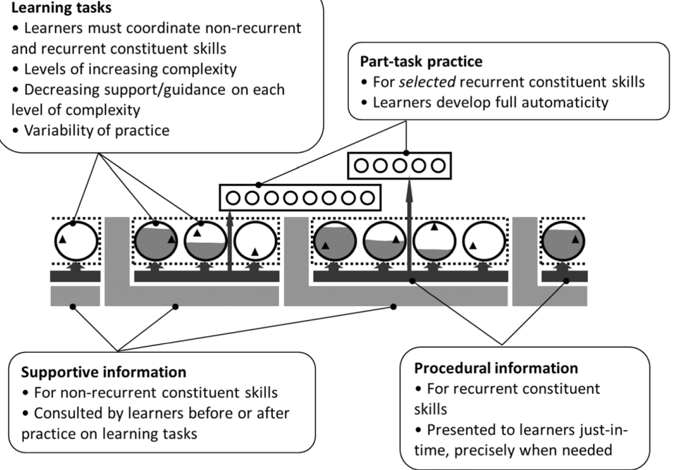
- The paper highlights 4C/ID as an extension of CLT for longer instructional programs and curricula, organized around 4 components: learning tasks, supportive information, procedural information, and part-task practice.
- It reports progress in measuring cognitive load, including a 10-item psychometric instrument that supported distinguishing intrinsic from extraneous load, and objective measures such as EEG, eye tracking, and secondary-task methods.
Methods
- This is a review article that retrospectively synthesizes CLT developments from 1998 to 2018, using the 1998 paper as a baseline and organizing the discussion into history, developments, future directions, and conclusions.
- The authors draw on prior theoretical and empirical studies and reviews cited throughout the paper; no new dataset or sample is reported in the text provided.
- Main analysis is a narrative synthesis of theoretical developments, instructional effects, and measurement approaches in CLT.
Limitations
- The paper explicitly says it is an attempt to summarise the last 20 years of CLT and sketch directions for future research, so it is a synthesis rather than a new empirical test.
- It repeatedly notes that more research is needed on cognitive-load measurement, including the optimal use of subjective rating scales, differentiating load types, and validating objective techniques.
- Evident from the text: several claims about future directions (e.g., resource depletion, self-regulated learning, emotions/stress/uncertainty, human movement) are presented as promising but not yet settled in the paper itself.
Model-written summary. Check it against the paper before relying on it.
Integrity signals
Registry
Cites
Statistics
Figures
Verification
Claims the paper makes
21 Valid · 23 Not valid · 90 Not checked · 158 Own results and interpretations
The sources with a verdict support this claim; the rest weren’t checked yet, have no full text we could read, or their verdicts aren’t rated yet.
In the paper
“Its basic premise is that human cognitive processing is heavily constrained by our limited working memory which can only process a limited number of information elements at a time.”
§ The Author(s) 2019 > Introduction
What the sources say
- Supportedcites Miller (1956) matched to “The magical number seven, plus or minus two: Some limits on our capacity for processing information.” (1956) source
The Summary says that immediate memory imposes severe limits on the information people can receive, process, and remember. The discussion of immediate memory (p. 93) specifies that its limit is the number of chunks, supporting the claim's broad paraphrase of a limited number of information elements at a time. (LLM, conf=0.91)
- Not checked — no full text of the sourcecites Peterson and Peterson (1959) matched to “Short-term retention of individual verbal items.” (1959) source
plainstates a cause- Asserted: passes — The authors put it forward as true.
- Checkable: passes — It can be checked against evidence.
- Load-bearing: passes — The paper’s conclusions depend on it.
- Based: passes — The paper gives a reason why it holds.
- Supported
The cited sources support only part of this claim — read each source’s verdict below.
In the paper
“The capacity and duration limits of working memory have been known at least since Miller (1956) and Peterson and Peterson (1959), although the fact that these limits effectively applied only to novel, not familiar information, seemed more implicit rather than explicit in most treatments.”
§ The Author(s) 2019 > Human Cognitive Architecture Used in 1998
What the sources say
- Partly supportedcites Miller (1956) matched to “The magical number seven, plus or minus two: Some limits on our capacity for processing information.” (1956) sourceExperimental — accuracy not yet measured
In the discussion of immediate memory (p. 93), Miller says its span is limited by the number of chunks and that familiar units allow more information to be packed into each chunk. That supports a distinction between novel material and familiar, recoded material, but not the claim that capacity limits apply only to novel information: the chunk limit remains. The paper also does not establish a duration limit that applies only to novel information. (LLM, conf=0.86)
- Not checked — no full text of the sourcecites Peterson and Peterson (1959) matched to “Short-term retention of individual verbal items.” (1959) source
hedged- Asserted: passes — The authors put it forward as true.
- Checkable: passes — It can be checked against evidence.
- Load-bearing: passes — The paper’s conclusions depend on it.
- Based: passes — The paper gives a reason why it holds.
- Partly supported
Every source the paper cites for this claim was checked and supports it.
In the paper
“The data summarised by Sala and Gobet (2017) provide a major justification for the post 1998 inclusion of evolutionary psychology into cognitive load theory.”
§ The Author(s) 2019 > Human Cognitive Architecture Seen Through the Prism of Evolutionary Psychology
What the sources say
- Supportedcites Sala and Gobet (2017) matched to “Does Far Transfer Exist? Negative Evidence From Chess, Music, and Working Memory Training” (2017) source
The Theoretical and Practical Implications section (page unavailable) summarises the paper’s evidence that chess, music and working-memory training do not reliably produce far transfer. The claim that these data justify a development in cognitive load theory is the citing authors’ interpretation, not a finding attributed to Sala and Gobet. (LLM, conf=0.86)
boostedstates a cause- Asserted: passes — The authors put it forward as true.
- Checkable: passes — It can be checked against evidence.
- Load-bearing: passes — The paper’s conclusions depend on it.
- Based: passes — The paper gives a reason why it holds.
- Supported
Every source the paper cites for this claim was checked and supports it.
In the paper
“The expertise reversal effect is, in essence, a variant of the more general element interactivity effect (Chen et al. 2017).”
§ The Author(s) 2019 > Instructional Effects Described After 1998
What the sources say
- Supportedcites Chen et al. 2017 matched to “The Expertise Reversal Effect is a Variant of the More General Element Interactivity Effect” (2017) source
The indexed copy lists the cited paper under the exact title “The Expertise Reversal Effect is a Variant of the More General Element Interactivity Effect.” Its title directly states the proposition attributed to it; no page number is available in the indexed passage. (LLM, conf=0.90)
plainstates a cause- Asserted: passes — The authors put it forward as true.
- Checkable: passes — It can be checked against evidence.
- Load-bearing: unclear — It is unclear whether the paper’s conclusions depend on it.
- Based: passes — The paper gives a reason why it holds.
- Supported
Every source the paper cites for this claim was checked and supports it.
In the paper
“When subsequently presented the fully integrated information, they only needed to learn how to integrate the individual elements and so more readily assimilated the entire, high element interactivity information.”
§ The Author(s) 2019 > Instructional Effects Described After 1998
What the sources say
- Supportedcites Pollock et al. 2002 matched to “Assimilating complex information” (2002) source
Split into 2 atoms — 2 confirmed, 0 partially supported, 0 disputed, 0 misattributed, 0 unverifiable. Expand the claim to see per-atom verdicts.
plainstates a cause- Asserted: passes — The authors put it forward as true.
- Checkable: passes — It can be checked against evidence.
- Load-bearing: passes — The paper’s conclusions depend on it.
- Based: passes — The paper gives a reason why it holds.
- Supported
132 more claims · 6 with their cited sources checked
Create a free account to see all 292 claims and to verify the 3 references still open.
- It may state two separate claims as one. 88
- Probably not a substantial claim. 95
Claims other papers make about this one
Each is checked against this paper’s own text: does it say what the citing paper says it does?
The source backs part of the claim, not all of it — or backs it for a different population, condition or comparison.
In the citing paper
“Another possible explanation is that the pre-training effect tends to be most effective for learners with minimal prior knowledge (Sweller et al., 2019)”
From Rethinking pre-training: cognitive load implications for learners with varying prior knowledge (2025) · cites this paper as Sweller et al., 2019
Experimental — accuracy not yet measuredThe cited source says what the claim attributes to it.
In the citing paper
“If the cognitive load imposed by a learning task is too high, it might interfere with the learner’s ability to effectively acquire and retain the skill [13, 25].”
From Teaching a single manual therapy technique at a time reduces cognitive load in physiotherapy students: a randomized controlled educational study (2025) · cites this paper as [13]
The cited source says what the claim attributes to it.
In the citing paper
“While cognitive load is often discussed in the context of instructional efficiency, it is important to note that cognitive load is not inherently detrimental. Rather, it is a natural component of learning that engages working memory resources for schema construction and automation [13].”
From Teaching a single manual therapy technique at a time reduces cognitive load in physiotherapy students: a randomized controlled educational study (2025) · cites this paper as [13]
The cited source says what the claim attributes to it.
In the citing paper
“Thus, an increased germane load is no longer believed to lead to cognitive overload and can thus no longer be assumed to be detrimental to learning performance.”
From Understanding Cognitive Load in Digital and Online Learning: a New Perspective on Extraneous Cognitive Load (2022) · cites this paper as Sweller et al., 2019
The cited source says what the claim attributes to it.
In the citing paper
“The major change from the 1998 model is that Sweller et al. (2019) have removed germane load from the additive equation of total load, but rather a dimension now called ' germane processing. '”
From Understanding Cognitive Load in Digital and Online Learning: a New Perspective on Extraneous Cognitive Load (2022) · cites this paper as Sweller et al., 2019
17 more claims about this paper
Create a free account to see every claim other papers make about this one.
Citations
Cites
The magical number seven, plus or minus two: Some limits on our capacity for processing information.
Miller, G. A. (1956) · Psychological Review · doi:10.1037/h0043158 · Cited by 17,812 · cited 1×
“The capacity and duration limits of working memory have been known at least since Miller (1956) and Peterson and Peterson (1959), although the fact that these limits effectively applied only to novel, not familiar information, seemed more implicit rather than explicit in most treatments.”
BackgroundThe magical number seven, plus or minus two: Some limits on our capacity for processing information.
Miller, G. A. (1994) · Psychological Review · doi:10.1037/0033-295x.101.2.343 · Cited by 17,161
Cognitive Load During Problem Solving: Effects on Learning
Sweller, J. (1988) · Cognitive Science · doi:10.1016/0364-0213(88)90023-7 · Cited by 11,048 · cited 4×
“Learning tasks (indicated by the big circles in Fig.”
BackgroundMethodInfluentialSelf-citationKirschner, P. A., Sweller, J., & Clark, R. E. (2006) · Educational Psychologist · doi:10.1207/s15326985ep4102_1 · Cited by 7,776
Self-citationRizzolatti, G., & Craighero, L. (2004) · Annual Review of Neuroscience · doi:10.1146/annurev.neuro.27.070203.144230 · Cited by 7,433
Cognitive Architecture and Instructional Design
Sweller, J., van Merrienboer, J. J. G., & Paas, F. G. W. C. (1998) · Educational Psychology Review · doi:10.1023/a:1022193728205 · Cited by 6,023
Self-citationCognitive load theory, learning difficulty, and instructional design
Sweller, J. (1994) · Learning and Instruction · doi:10.1016/0959-4752(94)90003-5 · Cited by 5,426 · cited 1×
“Element Interactivity Effect This effect was already known in 1998 but as a compound effect, it was not classed as a cognitive load effect (see Sweller 1994).”
BackgroundSelf-citationBaddeley, A. (1992) · Science · doi:10.1126/science.1736359 · Cited by 5,258
Ericsson, K. A., & Kintsch, W. (1995) · Psychological Review · doi:10.1037/0033-295x.102.2.211 · Cited by 3,498
Short-term retention of individual verbal items.
Peterson, L., & Peterson, M. J. (1959) · Journal of Experimental Psychology · doi:10.1037/h0049234 · Cited by 2,939 · cited 1×
“The capacity and duration limits of working memory have been known at least since Miller (1956) and Peterson and Peterson (1959), although the fact that these limits effectively applied only to novel, not familiar information, seemed more implicit rather than explicit in most treatments.”
Background
Research works printed but not linked: 4
- Centre for Education Statistics and Evaluation. (2017). Cognitive load theory: research that teachers really need to understand . Sydney: NSW Department of Education.
- Centre for Education Statistics and Evaluation. (2018). Cognitive load theory in practice . Sydney: NSW Department of Education.
- Clark, R. C. (2014). Evidence-based training methods: a guide for training professionals (2nd ed.). Alexandria: ATD Press.
- Miller, W. (1937). The picture crutch in reading. Elementary English Review, 14 , 263 -264.
Cited by
Items 801–900 of 2,268
Ünal, Z. E., Kartal, G., Ulusoy, S., Ala, A. M., Yilmaz, M., & Geary, D. C. (2023) · Intelligence · doi:10.1016/j.intell.2023.101797 · Cited by 6
Armani, F., Daly, I. P., Vernitski, A., Gillmeister, H., & Scherer, R. (2023) · IEEE International Conference on Metrology for eXtended Reality, Artificial Intelligence and Neural Engineering (MetroXRAINE) · doi:10.1109/metroxraine58569.2023.10405694 · Cited by 6
Mathur, J., Miller, S. R., Simpson, T. W., & Meisel, N. A. (2024) · Journal of Mechanical Design · doi:10.1115/1.4065232 · Cited by 5
Xu, M. K., Coertjens, S., Lespiau, F., Ouwehand, K., Korpershoek, H., PAAS, F. G. W. C., & Geary, D. C. (2024) · Educational Psychology Review · doi:10.1007/s10648-024-09880-3 · Cited by 14
“These built-in cognitive and motivational biases do not extend to most academic domains, such as physics and mathematics, and thus, these require more explicit, organized instruction (Paas & Sweller, 2012; Sweller et al., 2019).”
Self-citationZuo, G., & Lin, L. (2024) · Instructional Science · doi:10.1007/s11251-024-09664-w · Cited by 8
“According to cognitive load theory, three types of cognitive load are differentiated, which are intrinsic load, extra-neous load, and germane load (Sweller et al., 2019).”
A Digital and Interactive Tool to Learn 1H NMR Spectroscopy: The SpinDrops Learning Environment
Diermann, D., Huber, D., Glaser, S. J., & Koenen, J. (2024) · Journal of Chemical Education · doi:10.1021/acs.jchemed.4c00151 · Cited by 8
Learning via video: The effects of summarizing strategies and self-explanation prompts
Chen, W., Lin, L., & Pang, W. (2024) · Education and Information Technologies · doi:10.1007/s10639-024-12915-5 · Cited by 6
“Cognitive load theory posits that the cognitive demands placed on learners during learning have impacts on the working memory resources available to process information (Sweller et al., 2019).”
The effects of counterattitudinal seductive details on learning
Wesenberg, L., Schmidt, F., Schwintek, S., Jansen, S., Krieglstein, F., Schneider, S., & Rey, G. D. (2024) · Learning and Individual Differences · doi:10.1016/j.lindif.2024.102567 · Cited by 7
Schuessler, K., Striewe, M., Püschner, D., Luetzen, A., Goedicke, M., Giese, M., & Walpuski, M. (2024) · Frontiers in Education · doi:10.3389/feduc.2024.1355078 · Cited by 12
Schuessler, K., Rodemer, M., Giese, M., & Walpuski, M. (2024) · Journal of Chemical Education · doi:10.1021/acs.jchemed.4c00303 · Cited by 9
Ronconi, A., Altoè, G., & Masón, L. (2024) · Learning and Individual Differences · doi:10.1016/j.lindif.2024.102604 · Cited by 17
Arztmann, M., Alfaro, J. L. D., Hornstra, L., Wong, J., Jeuring, J. T., & Kester, L. (2025) · British Journal of Educational Technology · doi:10.1111/bjet.13565 · Cited by 11
Effects of Survey Order on Subjective Measures of Cognitive Load: A Randomized Controlled Trial
Dönmez, O., Akbulut, Y., Zabzun, G., & Köseoğlu, B. (2025) · Applied Cognitive Psychology · doi:10.1002/acp.70039 · Cited by 7
Abu-Rayyash, H., & Lacruz, I. (2025) · Journal of Eye Movement Research · doi:10.3390/jemr18040029 · Cited by 8
“CLT separates mental effort into intrinsic load, which arises from task complexity; extraneous load, which stems from information presentation; and germane load, which builds knowledge structures [16].”
Balancing teacher-led and student-led learning in science: the importance of cognitive load
Cairns, D. (2025) · Large-scale Assessments in Education · doi:10.1186/s40536-025-00263-w · Cited by 14
“However, extrane-ous cognitive load depends on the nature of the learning task itself, and this aspect of cognitive load reduction is most important to the instructional designer (Sweller et al., 2019).”
Hao, C., & Zhang, F. (2025) · System · doi:10.1016/j.system.2025.103879 · Cited by 9
Davis, J. S. (2020) · International Journal of Learning Teaching and Educational Research · doi:10.26803/ijlter.19.7.9 · Cited by 10
“The intrinsic load is both affected by the learner’s level of expertise and by the level of difficulty of the task (Sweller et al., 2019).”
BackgroundExamining the meaning of the language used to communicate the nursing hand‐off
Galatzan, B. J., & Carrington, J. M. (2021) · Research in Nursing & Health · doi:10.1002/nur.22175 · Cited by 7
Amico, G., & Schaefer, S. (2021) · Frontiers in Psychology · doi:10.3389/fpsyg.2021.688174 · Cited by 7
Measuring cognitive load using eye tracking technology in learning Content
Rondon, S. M. G., Rojas, L. E. B., & García, M. F. M. (2021) · Avances en Interacción Humano-Computadora · doi:10.47756/aihc.y6i1.82 · Cited by 7
“According to cognitive load theory, three types of cognitive load interfere with learning: (a) intrinsic load caused by the inherent complexity of instructional information, (b) load directly related to schema construction and automation, and (c) extraneous load caused by instructional elements that are unnecessary fo…”
BackgroundYang, E., Park, S., Ryu, J., & Lim, T. (2022) · Journal of Computing in Higher Education · doi:10.1007/s12528-022-09314-5 · Cited by 5
“Therefore, VRSs as a training intervention should be designed to optimize learners’ working memory capacity either by maximizing the mental processing of relevant tasks or minimizing irrelevant tasks that cause unnecessary cognitive load (Sweller et al., 2019).”
BackgroundLange, C. H., Gorbunova, A., Щеглова, И. А., & Costley, J. (2022) · Innovations in Education and Teaching International · doi:10.1080/14703297.2022.2130395 · Cited by 10
“The next element, extraneous load (EL), represents information that is not relevant to learning, contributing negatively to the processing load in working memory (Sweller et al., 2019).”
BackgroundInfluentialZhang, S., de Koning, B. B., & PAAS, F. G. W. C. (2023) · Computers in Human Behavior · doi:10.1016/j.chb.2023.107673 · Cited by 7
Self-citationEvoking Learning by Examples through Reducing Misconceptions and Highlighting Procedures
Barbieri, C., & Silla, E. (2023) · The Journal of Experimental Education · doi:10.1080/00220973.2023.2227969 · Cited by 8
“Many mechanisms of worked examples more generally have been proposed (Sweller et al., 2019 for a review) such as reductions in cognitive load yet many of these proposed mechanisms have not been tested empirically with middle school students on algebraic feature knowledge in particular.”
Systems Engineering Education: From Learning Program to Business Value
Müller, G., van Veen, L., & van den Aker, J. (2023) · Systems · doi:10.3390/systems11100510 · Cited by 5
Carga cognitiva y realidad mixta (aumentada y virtual)
Almenara, J. C., Cejudo, M. D. C. L., & Párraga, L. M. (2023) · Hachetetepé Revista científica de educación y comunicación · doi:10.25267/hachetetepe.2023.i27.2206 · Cited by 17
“Finalmente señalar, que es una teoría que, además de tener un recorrido histórico significativo, se encuentra en un proceso constante de actualización (Sweller et al.,2019; Sweller, 2023).”
BackgroundInfluentialChoi, S., Kang, S. O., Lee, K., Ju, H., & Song, J. (2024) · Contemporary Educational Technology · doi:10.30935/cedtech/14101 · Cited by 6
Accounting teachers’ teaching practices associated with learners’ performance in high schools
Ndlovu, B. B., Khumalo, N. P., & Mokoena, S. (2023) · South African Journal of Education · doi:10.15700/saje.v43ns2a2180 · Cited by 5
Baß, J., Winter, M. R., Pryss, R. C., & Reichert, M. (2024) · Brain Sciences · doi:10.3390/brainsci14040303 · Cited by 8
“Cognitive load: Following the framework of Cognitive Load Theory [32], cognitive load encompasses three dimensions: intrinsic (ICL), germane (GCL), and extraneous (ECL) [33].”
MethodChikha, H. B., Mguidich, H., Zoudji, B., & Khacharem, A. (2024) · International Journal of Sports Science & Coaching · doi:10.1177/17479541241258708 · Cited by 6
Enhancing teacher self-efficacy: The power of effective training programs
Almajnuni, K. M., & Alwerthan, T. A. (2024) · Journal of Pedagogical Research · doi:10.33902/jpr.202427265 · Cited by 22
Hsu, S.-K., & Hsu, Y. (2024) · International Journal of Science and Mathematics Education · doi:10.1007/s10763-024-10481-3 · Cited by 16
“According to Leopold et al. (2019) and Sweller et al. (2019), learners using an imagination learning strategy outperformed individuals not using an imagination learning strategy at both immediate and delayed posttests (Leahy & Sweller, 2005; Leopold & Mayer, 2015; Leopold et al., 2019; Sweller et…”
InfluentialSpringle, M., & Bourdage, J. S. (2024) · International Journal of Selection and Assessment · doi:10.1111/ijsa.12504 · Cited by 5
Pei, L., Jong, M. S., Shang, J., & Ouyang, G. (2024) · British Journal of Educational Technology · doi:10.1111/bjet.13535 · Cited by 8
The cognitive load of listening activities of a cognitive-based listening instruction
Rahimi, M., & Sayyadi, M. (2019) · Indonesian Journal of Applied Linguistics · doi:10.17509/ijal.v9i2.20236 · Cited by 9
Reynvoet, B., Marinova, M., & Sasanguie, D. (2020) · Research in Developmental Disabilities · doi:10.1016/j.ridd.2020.103745 · Cited by 8
Orrú, G., & Longo, L. (2020) · Communications in computer and information science · doi:10.1007/978-3-030-62302-9_7 · Cited by 8
“On the contrary, direct instructions methods, as per those used in CLT, usually employ quantitative analysis [2].”
BackgroundInfluentialFeldon, D. F., & Litson, K. (2021) · Educational Psychology Review · doi:10.1007/s10648-021-09596-8 · Cited by 9
OER and the Future of Digital Textbooks
Kotsiou, A., & Shores, T. (2021) · Springer eBooks · doi:10.1007/978-3-030-67349-9_2 · Cited by 8
Foundations of Multimedia Learning
Camp, G., Surma, T., & Kirschner, P. A. (2021) · Cambridge University Press eBooks · doi:10.1017/9781108894333.004 · Cited by 18
Schade, S., & Thielgen, M. M. (2022) · Springer eBooks · doi:10.1007/978-3-658-34158-9_34 · Cited by 5
Cyberphysical Systems in K–12 Education
Komninos, T., Paraskevas, M., Smyrnaiou, Z., & Serpanos, D. N. (2022) · Computer · doi:10.1109/mc.2022.3158165 · Cited by 6
Irmer, M., Traub, D., Kramer, M., Förtsch, C., & Neuhaus, B. J. (2022) · International Journal of Science Education · doi:10.1080/09500693.2022.2083253 · Cited by 10
“The learner then must process the fact, that the information of the two sources is identical what increases the cognitive load and thus makes learning less effective than if just one of the sources would be presented (Sweller et al., 2019).”
BackgroundMemory Transfer Language as a Tool for Visualization-Based-Pedagogy
Mselle, L. J., & Ishengoma, F. (2021) · Education and Information Technologies · doi:10.1007/s10639-022-11165-7 · Cited by 10
“The rest of the paper is organized as follows: Section 2 presents and discusses the MTL in the Context of CLT. Section 3 describes the study’s experiment details.”
BackgroundInfluentialInklusion in der Lehramtsausbildung – Lerngegenstände, Interaktionen und Prozesse
:null (2022) · Waxmann Verlag GmbH eBooks · doi:10.31244/9783830995999 · Cited by 14
Pengembangan Desain Pembelajaran Literasi Informasi Model I-LEARN Pada Penulisan Karya Tulis Ilmiah
Dole, D., Ulfa, S. U., & Soepriyanto, Y. (2021) · Jurnal Pendidikan Teori Penelitian dan Pengembangan · doi:10.17977/jptpp.v6i8.14946 · Cited by 5
“Adapun komponen-komponen yang patut dipertimbangkan dalam mendesain suatu pembelajaran adalah (Sweller et al., 2019).”
BackgroundNgu, B. H., & Phan, H. P. (2023) · European Journal of Psychology of Education · doi:10.1007/s10212-022-00670-5 · Cited by 14
“The empirical studies have supported the efficacy of the design principles generated by cognitive load theory (Sweller et al., 2011, 2019) and learning by analogy (Alfieri et al., 2013), which could provide guidance to improve instructional practices in maths class-rooms.”
BackgroundHermanns, J. (2021) · Journal of Chemical Education · doi:10.1021/acs.jchemed.0c01162 · Cited by 8
Using Augmented Reality in an Inquiry-Based Physics Laboratory Course
Kapp, S., Thees, M., Beil, F., Weatherby, T. S., Burde, J., Wilhelm, T. E., & Kühn, J. (2021) · Communications in computer and information science · doi:10.1007/978-3-030-86439-2_10 · Cited by 10
Cognitive Load Measurement Using Arithmetic and Graphical Tasks and Galvanic Skin Response
Muke, P. Z., Telec, Z., & Trawiński, B. (2022) · Lecture notes in computer science · doi:10.1007/978-3-031-16014-1_66 · Cited by 7
Adaptive Practice Quizzing in a University Lecture: A Pre-Registered Field Experiment
Heitmann, S., Obergassel, N., Fries, S., Grund, A., Berthold, K., & Roelle, J. (2021) · Journal of Applied Research in Memory and Cognition · doi:10.1016/j.jarmac.2021.07.008 · Cited by 8
Azure-Kinect and Augmented Reality for learning Basic Mathematics - A Case StudyPreprint
Lozada-Yánez, R., Palomino, N. B. L. S., Veloz-Cherrez, D., et al. (2020) · Preprints.org · doi:10.20944/preprints202009.0752.v1 · Cited by 5
Büssing, A. G., Thomsen, D., & Braun, N. (2022) · OSF Preprints (OSF Preprints) · doi:10.31219/osf.io/p9esz · Cited by 4
Poupard, M., Sauzeon, H., Tricot, A., & Larrue, F. (2023) · EdArXiv (OSF Preprints) · doi:10.35542/osf.io/q7tup · Cited by 9
Effect of pre-training on cognitive load and achievement in a computer-based learning environment
Akbulut, Y., Dönmez, O., Ceylan, B., & Firat, T. (2025) · Journal of Computing in Higher Education · doi:10.1007/s12528-024-09420-6 · Cited by 5
“Over the years, germane load has been linked to motivation, suggesting that it facilitates the germane processes necessary for deep learning (Sweller et al., 2019).”
Newton, P. M., Furby, K. H., Campbell, J., Salvi, A., Santiago, G., & Chau, M. (2025) · Medical Science Educator · doi:10.1007/s40670-025-02318-7 · Cited by 5
Cultivating computational thinking in a STEM course through the ICDCO instructional model
Peng, J., Hao, M., Chen, B., & Wang, M. (2025) · Education and Information Technologies · doi:10.1007/s10639-025-13716-0 · Cited by 6
“Such guidance releases learners’ working memory capacity for processing other information regarding the learning task (Sweller & van Merriënboer, 2019).”
Huang, T., Chen, K. Y., Huang, Y. M., & Chiang, Y. H. (2025) · Interactive Learning Environments · doi:10.1080/10494820.2025.2559918 · Cited by 16
“…contrast, coupling TPB’s attitudinal, normative, and control pathways with CLT’s type-specific decomposition of cognitive demand—intrinsic, extraneous, and germane—specifies which demands matter and how they operate within working-memory limits (Sweller, 1988; Sweller, 2020; Sweller et al., 2019).”
InfluentialInnovative strategies for reconstructing medical education through technology: a literature review
Li, B., Wu, G., Shi, L., Wang, F., & Yang, Z. (2025) · Frontiers in Psychology · doi:10.3389/fpsyg.2025.1609589 · Cited by 11
Różycka, A. (2025) · Assessment & Evaluation in Higher Education · doi:10.1080/02602938.2025.2588387 · Cited by 8
“The temporal patterns we observed also connect with cognitive load theory applications in complex learning environments (Sweller, van Merriënboer, and Paas 2019).”
Fadli, H. (2025) · Sustainability · doi:10.3390/su172411012 · Cited by 19
suo, X., Yin, B., Wang, W., & Guo, L. (2026) · Journal of Educational Computing Research · doi:10.1177/07356331261433396 · Cited by 9
“Feedback providers, however, may experience additional cognitive load from managing dialogue (Chen et al., 2024), which can reduce processing ef fi ciency (Sweller et al., 2019).”
Shen, S., Qi, W., Zeng, J., Li, S., Liu, X., Yaping, F., & Cao, S. (2026) · Nurse Education in Practice · doi:10.1016/j.nepr.2026.104799 · Cited by 7
Yang, S., & Luo, B. (2026) · Journal of Retailing and Consumer Services · doi:10.1016/j.jretconser.2026.104855 · Cited by 5
Chan, J. (2026) · International Journal of Contemporary Hospitality Management · doi:10.1108/ijchm-09-2025-1331 · Cited by 4
LLM-generated formative feedback in education: A qualitative systematic literature review
Maier, U., Seibold, M., & Klotz, C. (2026) · Computers and Education Open · doi:10.1016/j.caeo.2026.100374 · Cited by 14
Towards Multimodal Information Systems for Assisting Humans in Production and Logistics Processes
Börold, A., Schweers, D., & Freitag, M. (2023) · Procedia CIRP · doi:10.1016/j.procir.2023.09.130 · Cited by 4
How to Make Computer-Based Feedback More Productive: The Power of Erroneous Solutions
Wang, Z., Pei, X., Zhu, H., Gong, S., & Wang, E. (2024) · Journal of Educational Computing Research · doi:10.1177/07356331241247592 · Cited by 5
“One potential reason may be that intrinsic cognitive load is mainly caused by the complexity of the learning content and learners ’ prior knowledge (Sweller et al., 2019), and instructional interventions, such as the feedback in this study, can hardly change the intrinsic cognitive load.”
Teaching Tip Threaded Case-Studies to Deepen Engagement in Foundation Business Analytics Courses
Kachouie, R., Williams, S., & Suri, H. (2024) · Journal of Information Systems Education · doi:10.62273/pzan1114 · Cited by 8
“Cognitive Load Theory (Sweller et al., 2019) builds on human cognitive architecture such as the characteristics of and the relationships between working memory and long-term memory to increase the effectiveness of instruction.”
BackgroundResultDoes presentation size of instructional materials influence the split‐attention effect?
Zhang, S., de Koning, B. B., & PAAS, F. G. W. C. (2024) · Applied Cognitive Psychology · doi:10.1002/acp.4223 · Cited by 6
“…to the findings of Cammeraat et al. (2020), Pouw et al. (2019), and Zhang et al. (2022), our results could be seen as challenging the robustness of the split-attention effect across different studies and learning domains (Ayres & Sweller, 2021; Schroeder & Cenkci, 2018; Sweller et al., 2019).”
BackgroundResultInfluentialSelf-citationŞendurur, E., Gökrem, C., & Alıcı, N. S. (2024) · Interactive Learning Environments · doi:10.1080/10494820.2024.2361368 · Cited by 5
“The segmentation of the content into smaller parts, sequencing from simple to complex, fading the support as learners gain expertise, and providing signals and cues are certain strategies to manage this load indirectly (Clark et al., 2011; Sweller et al., 2019).”
Urech, A., Meier, P. V., Gut, S., Duchene, P., & Christ, O. (2024) · Multimodal Technologies and Interaction · doi:10.3390/mti8070059 · Cited by 6
“Sweller et al. [26] note that changing ICL by changing the learning task and, thus, the extraneous cognitive load is possible.”
BackgroundMethodAcquiring basketball plays through varied speeds of video demonstration: Effect of time of day
Rekik, G., Belkhir, Y., Jouira, G., Chen, Y., Kuo, C., & Jarraya, M. (2024) · Chronobiology International · doi:10.1080/07420528.2024.2379579 · Cited by 4
“According to cognitive load theory (Sweller 2020; Sweller et al. 2019), displaying videos slowly provides learners with more time to process/encode the diffused information into Working Memory (WM), thus reducing the probability that crucial information is missed or ignored.”
Mahfoudh, H. B., & Zoudji, B. (2024) · International Journal of Sport and Exercise Psychology · doi:10.1080/1612197x.2024.2380693 · Cited by 7
“This indicates that thanks to their additional cognitive resources, learners with high-VSA were able to cope with the constraints of dynamic visualisations and recall dynamic scenes efficiently with less cognitive load (Isaak & Just, 1995; Mayer & Sims, 1994; Sweller et al., 2019).”
Overcoming the Myths: Interactive Learning Environments as Myth Busters in Teaching and Learning
Deibl, I., Zeitlhofer, I., Geroldinger, A., & Zumbach, J. (2024) · Psychology Learning & Teaching · doi:10.1177/14757257241261351 · Cited by 6
“Based on the assumption that working memory capacity is limited, cognitive load theory (CLT; Sweller, 2010; Sweller et al., 2019) distinguishes three types of cognitive load: intrinsic cognitive load (ICL), extraneous cognitive load (ECL), and germane cognitive load (GCL).”
Towards an ontology for process compliance with the (machinery) legislations
Gallina, B., Steierhoffer, G. L., Olesen, T. Y., Parajdi, E., & Aarup, M. (2024) · Journal of Software Evolution and Process · doi:10.1002/smr.2728 · Cited by 6
Perceptions of Cognitive Load and Workload in Nurse Handoffs
Galatzan, B. J., Shan, L., Johnson, E. A., & Patrician, P. A. (2024) · CIN Computers Informatics Nursing · doi:10.1097/cin.0000000000001216 · Cited by 8
Shaban, A., Chang, V. I. C., Amodu, O. D., Attia, M. R., & Abdelhamid, G. S. M. (2024) · Education Sciences · doi:10.3390/educsci14111260 · Cited by 13
“Cognitive load theory explains how the information processing load caused by learning tasks can affect an individuals’ ability to process novel information and to construct schema in long-term memory [67].”
Wesenberg, L., Krieglstein, F., Schneider, S., & Rey, G. D. (2025) · Applied Cognitive Psychology · doi:10.1002/acp.70065 · Cited by 7
Zooming to work or working to Zoom: relations between Zoom fatigue, cognitive load, and boredom
Park, M. J., Calistro, T., & Lipnevich, A. A. (2025) · Research Papers in Education · doi:10.1080/02671522.2025.2507592 · Cited by 30
Chen, W., Lin, Z., Zheng, L., Ho, M. Y. M., Ali, F., & Teo, W. (2025) · Machine Learning and Knowledge Extraction · doi:10.3390/make7020051 · Cited by 9
STEM Workshop Learning: Content Load Effects on Cognitive, Interaction, and Emotional Outcomes
Gierczyk, M., Karwowski, M., PAAS, F. G. W. C., & Tai, R. H. (2025) · The Journal of Experimental Education · doi:10.1080/00220973.2025.2513254 · Cited by 7
Self-citationMulholland, K., Gray, W. S., Counihan, C., & Nichol, D. (2025) · Education Sciences · doi:10.3390/educsci15070892 · Cited by 8
Lyu, B., Li, C., Li, H., Xing, W., Gülfidan, G., & Wu, L. (2025) · Lecture notes in computer science · doi:10.1007/978-3-031-98459-4_10 · Cited by 6
A meta-analysis on the effect of learning analytics interventions on students’ academic performance
Kokoç, M., Bütüner, S. Ö., & Güler, M. (2025) · Journal of Research on Technology in Education · doi:10.1080/15391523.2025.2536571 · Cited by 13
Optimising expert dyad performance in acute care settings: a scoping review protocol
Walker, K., Asoodar, M., Rudolph, J. W., Meguerdichian, M. J., Yusaf, T., Campbell-Taylor, K., & van Merriënboer, J. J. G. (2021) · BMJ Open · doi:10.1136/bmjopen-2020-047260 · Cited by 4
Self-citationKienzler, J., Voss, T., & Wittwer, J. (2023) · Instructional Science · doi:10.1007/s11251-023-09627-7 · Cited by 11
Bauer, E., Sailer, M., Kiesewetter, J., Fischer, M. R., Gurevych, I., & Fischer, F. (2023) · Zeitschrift für Pädagogische Psychologie · doi:10.1024/1010-0652/a000363 · Cited by 8
Towards Cognitive Load-Based Decision Making in VR Training
Thomay, C., Fermitsch, A., Fessler, J., Garatva, P., Gollan, B., Lietz, A., Matscheko, M., & Wagner, M. (2023) · IEEE International Conference on Cognitive Aspects of Virtual Reality (CVR) · doi:10.1109/cvr58941.2023.10395602 · Cited by 7
“B. Cognitive Load in Medical Training Cognitive Load (CL) encompasses the mental effort required [12].”
BackgroundTask-oriented speech and information processing
Bhagwat, V., Shirley, S. E., & Stark, J. R. (2024) · Journal of Banking & Finance · doi:10.1016/j.jbankfin.2024.107095 · Cited by 4
Evaluating the effectiveness of spatial training for introductory geology students
Klyce, A., & Ryker, K. D. (2024) · Geosphere · doi:10.1130/ges02663.1 · Cited by 4
Li, Z., Luo, Y., Wang, J., Pan, Y., Yu, L., & Liang, H. (2024) · Personal and Ubiquitous Computing · doi:10.1007/s00779-024-01799-4 · Cited by 4
“Moreover, online learning platforms help students to reduce the cognitive load associated with the learning process by implementing easy and familiar lay-outs, thereby assisting students in improving their learning efficiency [40].”
Rao, T. S. S., Tiwari, A. S., Mitra, U., & Bhagat, K. K. (2024) · IEEE International Conference on Advanced Learning Technologies (ICALT) · doi:10.1109/icalt61570.2024.00071 · Cited by 5
“Mental effort involves exertion while engaging in a particular mental task, while mental load represents the overall demand placed on an individual’s cognitive system during that specific learning activity or task [21].”
BackgroundMathur, J., Miller, S. R., Simpson, T. W., & Meisel, N. A. (2024) · Additive manufacturing · doi:10.1016/j.addma.2024.104421 · Cited by 6
Oregui, X., García, A. F., Azpiroz, I., Larraga-García, B., Bejerano, V. R., Olaizola, I. G., & Gutiérrez, Á. (2024) · Electronics · doi:10.3390/electronics13183739 · Cited by 7
Chung, B. P. M., Chan, E. A., Chang, K., & Leung, D. Y. P. (2025) · Nurse Education Today · doi:10.1016/j.nedt.2025.106609 · Cited by 10
Tracing and Pointing Support Multimedia Learning: A Cross-Cultural Replication
Wang, Y., Han, K., & Ginns, P. (2025) · Educational Psychology Review · doi:10.1007/s10648-025-10005-7 · Cited by 4
“Informed by the intrinsic/extraneous load framework (Paas & van Mer-riënboer, 2020; Sweller et al., 2019) and consistent with recent tracing studies (e.g., Tang et al., 2019; Wang et al., 2022) and tracing and pointing studies (e.g., Ginns & King, 2021), our study focused on impacts of tracing and…”
Qerimi, L., Malone, S., Rexigel, E., Mehlhase, S., Kühn, J., & Küchemann, S. (2025) · EPJ Quantum Technology · doi:10.1140/epjqt/s40507-025-00346-1 · Cited by 8
Digital Learning Design: Designing Effective Online and Blended Learning
Müller, C. (2025) · Springer briefs in education · doi:10.1007/978-3-031-89045-1 · Cited by 14
Cheng, T., Wu, C., & Mao, H. (2025) · Geriatrics and gerontology international/Geriatrics & gerontology international · doi:10.1111/ggi.70098 · Cited by 5
Metadata
- Authors
- Sweller, J., van Merriënboer, J. J. G., & Paas, F.
- Affiliations
- UNSW Sydney (AU)
- University of Wollongong (AU)
- Corresponding author
- Sweller, John
- Venue
- Educational Psychology Review
- Published
- 2019-01-22
- Volume
- 31
- Issue
- 2
- Pages
- 261-292
- ISSN
- 1040-726X (ISSN-L)
- 1573-336X
- OpenAlex
- W2913144876
- Semantic Scholar
- e28d73214751d51c3f46a867920be41c49c45130
- Cited by
- 2,337
- References
- 129
- Citations by year
- 2026: 713 · 2025: 466 · 2024: 331 · 2023: 268 · 2022: 212 · 2021: 190 · 2020: 114 · 2019: 37
- FWCI
- 162.54
- Type
- journal article
- Language
- en
- Open access
- hybrid
- doi.org
- Licence
- cc-by
- creativecommons.org/licenses/by/4.0 (tdm)
- Locations
- Educational Psychology Review (publishedVersion, cc-by)
- EUR Research Repository (Erasmus University Rotterdam) (publishedVersion, other-oa)
- Research Online (University of Wollongong) (submittedVersion)
- EUR Research Repository (Erasmus University Rotterdam) (submittedVersion)
- Research Publications (Maastricht University) (submittedVersion, cc-by)
- Figshare (submittedVersion, cc-by)
- Research Publications (Maastricht University) (submittedVersion, other-oa)
- Topics
- Social Sciences › Psychology › Experimental and Cognitive Psychology › Visual and Cognitive Learning Processes
- Social Sciences › Psychology › Developmental and Educational Psychology › Innovative Teaching and Learning Methods
- Life Sciences › Neuroscience › Cognitive Neuroscience › Neuroscience, Education and Cognitive Function
- Keywords
- cognitive load theory, cognitive architecture, working memory, long-term memory, instructional design
About these checks
Registry, retraction, Cites and statistics results are computed, not judged, with one exception: a printed reference that no index lists is read once by a model before it counts as a citation error. Claims are extracted by a model and kept only when their quote appears verbatim in the text; each cited source is then checked, with a model’s help, for whether it says what the claim relies on. Those verdicts can be wrong — read the claim’s quote and the cited source before relying on one.
The claim verdicts this report counts are experimental: their accuracy is not yet measured.
A language model drew the claims from the paper on 2026-10-10, under version 3 of the claim definition (model deepseek-v4.1-flash, prompt extract-v3).
A second model labelled each claim on 2026-10-10 (model jev-1.13-20260917, definition revision gold-guideline-v0.2).
Cited sources are checked with a language model’s help (gpt-6-sol).
Statistics and arithmetic are recomputed, not judged.
Confidence bands are shown only for fields calibrated on our annotated test set. None is calibrated yet, so no band is shown.
What counts as a claim ›How we measure confidence ›How we check this ›
Are you an author, or do you see a problem with this page? Request a review
Data sources
Bibliographic data: Semantic Scholar, OpenAlex, Crossref.
Contains information from the Semantic Scholar Academic Graph Datasets, made available under the ODC Attribution License (ODC-BY 1.0).
Semantic Scholar’s data is described in: Kinney, R., et al. (2023). The Semantic Scholar Open Data Platform. arXiv:2301.10140.
