

Environmental shocks and migration among a climate-vulnerable population in Bangladesh
Open accessThe DOI matches its Crossref record; 89 of the 90 references it cites were found in a registry or an index; 16 of the 39 sources its claims cite were checked for support.
Abstract
Various studies predict large migration flows due to climatic and other environmental changes, yet the ex post empirical evidence for such migration is inconclusive. To examine the causal link between environmental changes and migration for a population residing along the Jamuna River in Bangladesh, an area heavily affected by floods and riverbank erosion, I relate the respondents' self-reported affectedness by environmental changes, their migration aspirations, and their capability to move to their migration likelihood. The analysis relies on a unique quasi-experimental research design based on original survey panel data of 1604 household heads. I find that erosion significantly and substantively increases the likelihood to migrate, leading to more than a doubling of the migration likelihood compared to the unaffected control group. Flooding has a significant effect only if it causes severe and irreversible impacts. Moreover, erosion affectedness increases the likelihood of moving permanently, with the whole household, and to a rural location. Individual, temporary moves to urban locations, by contrast, are primarily driven by low socio-economic status. Those who move with the whole household migrate mostly less than five kilometers. These findings call for a more nuanced understanding of the complex environment-migration nexus. Supplementary Information: The online version contains supplementary material available at 10.1007/s11111-025-00478-7.
Overview
CoChat Summary
TL;DR
This panel study of 1,604 household heads along the Jamuna River in Bangladesh finds that riverbank erosion, not flooding overall, is the environmental shock most strongly associated with migration. Erosion more than doubles migration likelihood, especially for permanent, whole-household, mostly rural and short-distance moves.
Key findings
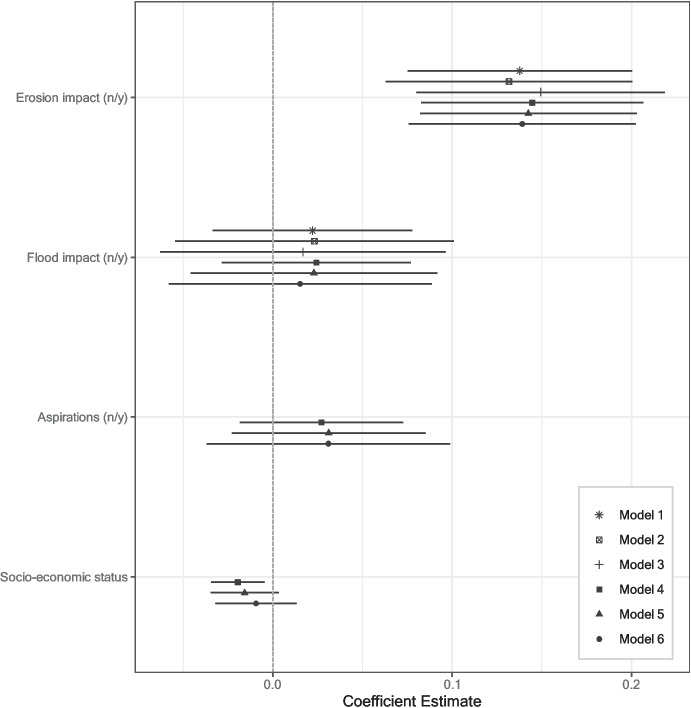
- Erosion in the previous monsoon season significantly increased the likelihood of moving between survey waves by 13–15 percentage points, which the paper says is more than a doubling relative to the 11% migration rate in the unaffected control group.
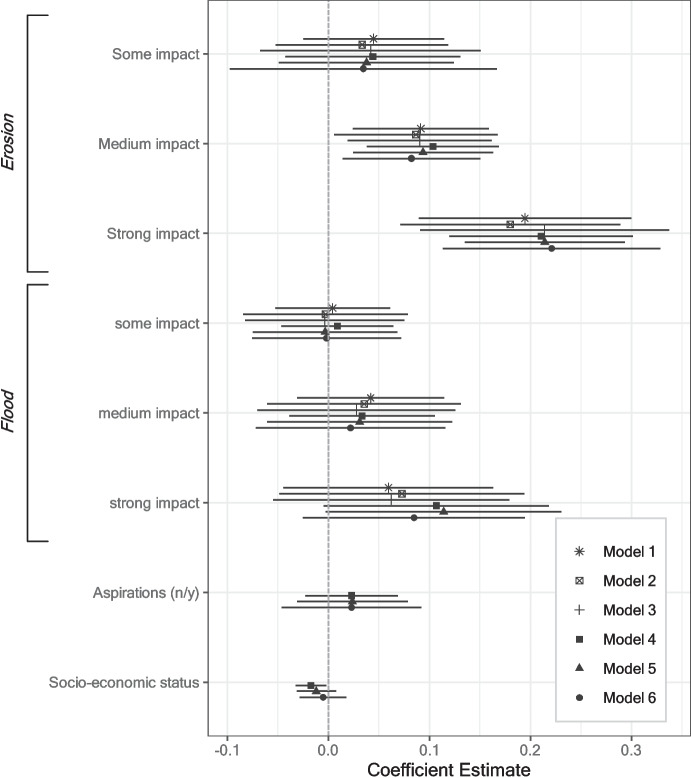
- When impacts are graded, medium and strong erosion impacts significantly increased migration likelihood, with up to a 22 percentage point increase for strong impacts, described as a tripling versus the control group; for floods, only strong impacts were significant in some models, with up to an 11 percentage point increase.
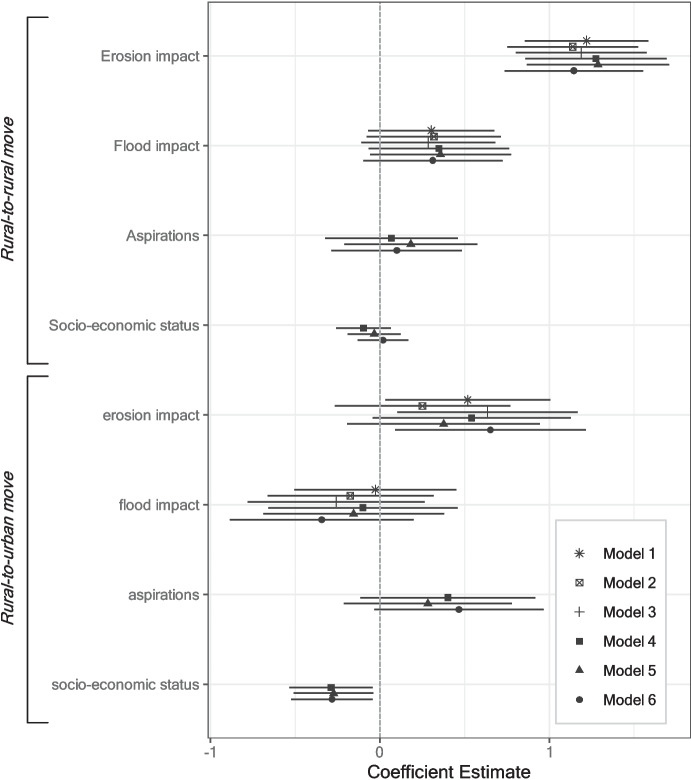
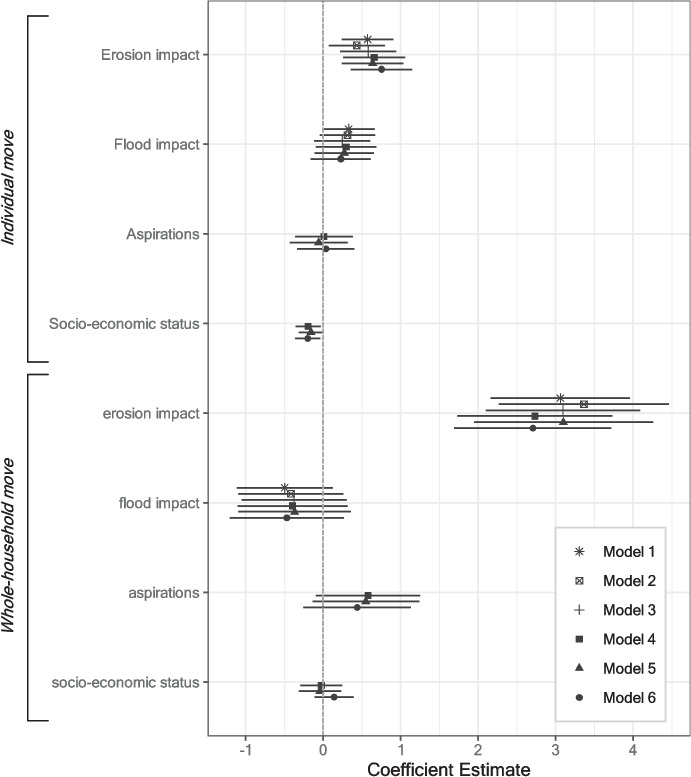
- Erosion affectedness was linked to permanent, whole-household, rural-to-rural migration; among whole-household migrants, 21% planned to return, compared with 61% of individual migrants, which the author interprets as mostly temporary.
- Of 217 migrants, only 6 (2.7%) moved outside Bangladesh, and 98% of moves were less than 20 km; 64% were less than 5 km.
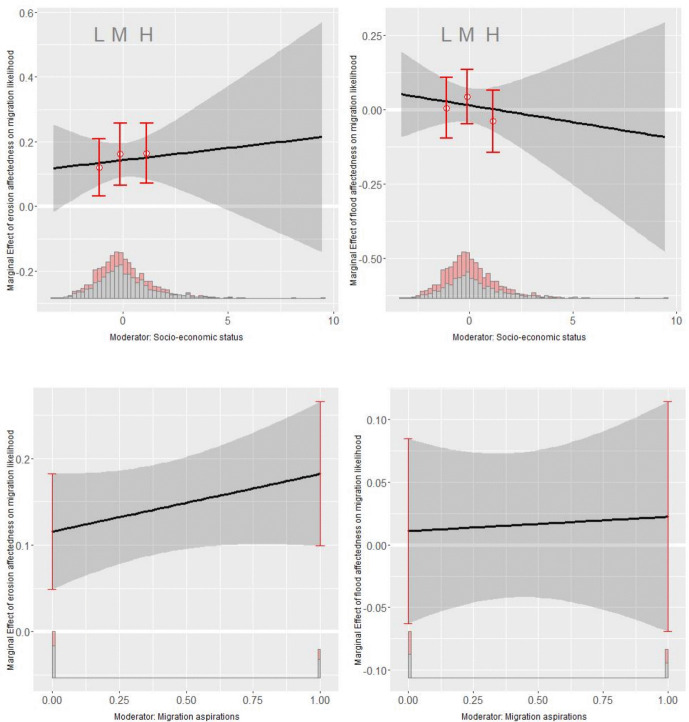
- Socio-economic status moderated erosion effects: the effect of erosion was stronger at higher socio-economic status, while lower socio-economic status was associated with more individual moves and more urban moves.
Methods
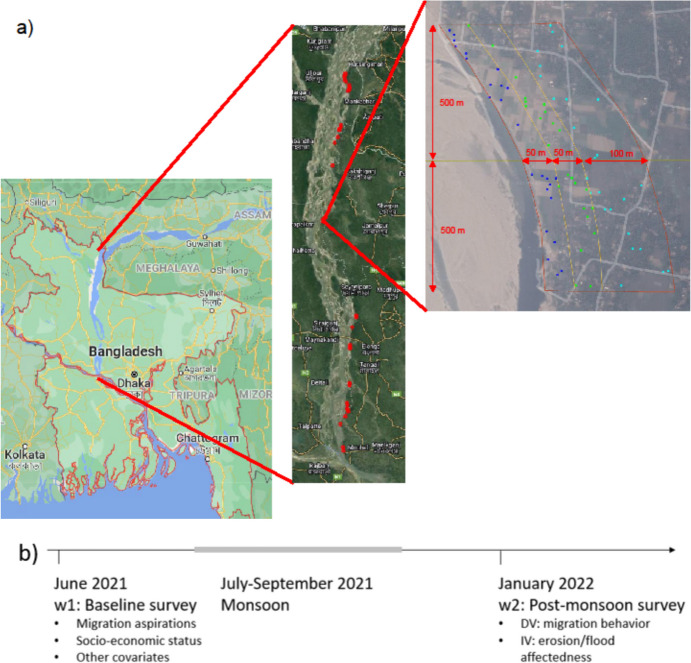
- The study uses a two-wave panel survey of 1,604 household heads from 36 locations along the Jamuna River in Bangladesh; wave 1 was in June–July 2021 and wave 2 in January–March 2022.
- The sample was drawn with a multi-stage cluster / stratified random spatial design targeting households at risk of riverbank erosion; panel attrition was less than 6%.
- Main analysis compares respondents self-reporting erosion/flood affectedness versus unaffected respondents, with models using entropy balancing weights, covariates, and interaction models for migration aspirations and socio-economic status; robustness checks include alternative specifications and an objective erosion measure.
Limitations
- The paper states the study is limited to a one-time environmental shock, even though many villages experience repeated erosion and flooding; it notes that examining cumulative effects is a future research need.
- It also says the findings are from one specific case study, so generalizability to other settings is not guaranteed and would require applying the design elsewhere.
- Evident from the text: migration is based on a single follow-up period after one monsoon season, so longer-term migration dynamics beyond that interval are not observed.
Model-written summary. Check it against the paper before relying on it.
Integrity signals
Registry
Cites
Statistics
Figures
Verification
Claims the paper makes
11 Valid · 1 Not valid · 10 Not checked · 55 Own results and interpretations
At least one cited source doesn’t support this claim or points to a different paper, and none confirmed it — see the verdicts below.
In the paper
“Comparable household level adaptation is barely possible for erosion except for deconstructing and shifting one’s house shortly before it gets eroded—a widespread adaptation strategy along the Jamuna (Hutton & Haque, 2004; Mamun et al., 2022; Penning-Rowsell et al., 2013).”
§ Environmental shocks and migration among a climate-vulnerable population in Bangladesh > Discussion
What the sources say
- Not checked — no full text of the sourcecites Hutton & Haque, 2004 matched to “Human Vulnerability, Dislocation and Resettlement: Adaptation Processes of River‐bank Erosion‐induced Displacees in Bangladesh” (2004) source
- Disputedcites Mamun et al., 2022 matched to “Assessing Riverbank Erosion and Livelihood Resilience Using Traditional Approaches in Northern Bangladesh” (2022) sourceExperimental — accuracy not yet measured
Section 3.3 (page unavailable) describes household-level erosion control using bamboo barriers and bank vegetation, rather than house relocation as the only feasible adaptation. Section 3.3.1 says households perceived these measures as protecting homesteads and reducing erosion-related migration. The paper does not establish that dismantling and shifting houses is widespread along the Jamuna. (LLM, conf=0.87)
Checked by a reasoning model — may be wrong.
- Not checked — no full text of the sourcecites Penning-Rowsell et al., 2013 matched to “The ‘last resort’? Population movement in response to climate-related hazards in Bangladesh” (2013) source
plain- Asserted: passes — The authors put it forward as true.
- Checkable: passes — It can be checked against evidence.
- Load-bearing: passes — The paper’s conclusions depend on it.
- Based: passes — The paper gives a reason why it holds.
The sources with a verdict support this claim; the rest weren’t checked yet, have no full text we could read, or their verdicts aren’t rated yet.
In the paper
“Micro-level studies are important given that a significant share of the empirical evidence gathered so far is derived from aggregated levels of analysis, i.e., the country or provincial level (Bohra-Mishra et al., 2017; Chen & Mueller, 2019; Feng et al., 2010; Hoffmann et al., 2020; Missirian & Schlenker, 2017; Thiede et al., 2016), which bears the danger of ecological fallacy”
§ Environmental shocks and migration among a climate-vulnerable population in Bangladesh > Introduction
What the sources say
- Supportedcites Bohra-Mishra et al., 2017 matched to “Climate variability and migration in the Philippines” (2017) source
The citation identifies an example of environmental-migration research conducted at an aggregated provincial level. In Data and methodology (page unavailable), the paper says it converts individual census responses into aggregate province-to-province flows and provincial migration rates. (LLM, conf=0.91)
- Not checked — no full text of the sourcecites Chen & Mueller, 2019 matched to “Climate-induced cross-border migration and change in demographic structure” (2019) source
- Not checked — no full text of the sourcecites Feng et al., 2010 matched to “Linkages among climate change, crop yields and Mexico–US cross-border migration” (2010) source
plain- Asserted: passes — The authors put it forward as true.
- Checkable: passes — It can be checked against evidence.
- Load-bearing: passes — The paper’s conclusions depend on it.
- Based: passes — The paper gives a reason why it holds.
- Supported
Every source the paper cites for this claim was checked and supports it.
In the paper
“Indeed, the literature has found that migration behavior is influenced by individual perceptions of environmental change rather than by objectively identified environmental stressors (Koubi et al., 2016a, 2016b).”
§ Environmental shocks and migration among a climate-vulnerable population in Bangladesh > Environmental change and migration
What the sources say
- Supportedcites Koubi et al., 2016a matched to “The role of environmental perceptions in migration decision-making: evidence from both migrants and non-migrants in five developing countries” (2016) source
In “What determines individual environmental migration decision?”, the authors explicitly argue that migration decisions are affected largely by individual perceptions of environmental change rather than objectively identified environmental change. The Conclusion reports that the effect of those perceptions varies by the type of environmental event. (LLM, conf=0.94)
- Supportedcites Koubi et al., 2016b matched to “Perceptions of environmental change and migration decisions” (2016) source
The Introduction (page not provided) explicitly argues that migration decisions are affected by perceptions of environmental change rather than by environmental change identified through scientific evidence. This directly supports the attributed paraphrase. (LLM, conf=0.93)
plainstates a cause- Asserted: passes — The authors put it forward as true.
- Checkable: passes — It can be checked against evidence.
- Load-bearing: unclear — It is unclear whether the paper’s conclusions depend on it.
- Based: passes — The paper gives a reason why it holds.
- Supported
Every source the paper cites for this claim was checked and supports it.
In the paper
“The impact of floods and erosion is not uniform along and across the river, but varies depending on local natural and anthropogenic characteristics such as elevation or embankments (Ferdous et al., 2018).”
§ Environmental shocks and migration among a climate-vulnerable population in Bangladesh > The case: Jamuna River in Bangladesh
What the sources say
- Supportedcites Ferdous et al., 2018 matched to “Socio-hydrological spaces in the Jamuna River floodplain in Bangladesh” (2018) source
Section 4.3 (page unavailable) says a natural levee protects one area from normal flooding, erodible bank materials contribute to severe erosion, and artificially raised house mounds reduce flood impacts. Section 5.4 (page unavailable) reports different erosion exposure across the study’s zones, while the Introduction describes embankments as flood-mitigation measures. Together, these support the claim that local natural and human-made characteristics shape the varying impacts of floods and erosion. (LLM, conf=0.91)
plainstates an association- Asserted: passes — The authors put it forward as true.
- Checkable: passes — It can be checked against evidence.
- Load-bearing: passes — The paper’s conclusions depend on it.
- Based: passes — The paper gives a reason why it holds.
- Supported
The sources with a verdict support this claim; the rest weren’t checked yet, have no full text we could read, or their verdicts aren’t rated yet.
In the paper
“The populations residing next to the rivers have developed a range of coping strategies to minimize the damage resulting from floods (e.g., raising the platform of the house; Paul & Routray, 2010) and erosion (e.g., planting vegetation on the riverbank; Mamun et al., 2022).”
§ Environmental shocks and migration among a climate-vulnerable population in Bangladesh > The case: Jamuna River in Bangladesh
What the sources say
- Not checked — no full text of the sourcecites Paul & Routray, 2010 matched to “Flood proneness and coping strategies: the experiences of two villages in Bangladesh” (2010) source
- Supportedcites Mamun et al., 2022 matched to “Assessing Riverbank Erosion and Livelihood Resilience Using Traditional Approaches in Northern Bangladesh” (2022) source
Mamun et al. is cited for the erosion example, not the flood example. Section 3.3 reports that riverine households used bank vegetation as a traditional erosion-control approach, and the Respondents section identifies the vegetation as bulrushes that protect the riverbank. Page numbers are not provided in our copy. (LLM, conf=0.93)
plainstates a cause- Asserted: passes — The authors put it forward as true.
- Checkable: passes — It can be checked against evidence.
- Load-bearing: passes — The paper’s conclusions depend on it.
- Based: passes — The paper gives a reason why it holds.
38 more claims
Create a free account to see all 77 claims and every source verdict.
- Probably not a substantial claim. 13
- It may state two separate claims as one. 21
Citations
Cites
The theory of planned behavior
Ajzen, I. (1991) · Organizational Behavior and Human Decision Processes · doi:10.1016/0749-5978(91)90020-t · Cited by 134,657
(IPCC), I. P. O. C. C. (2023) · doi:10.1017/9781009157896 · Cited by 6,972
Ecological Correlations and the Behavior of Individuals
Robinson, W. S. (1950) · American Sociological Review · doi:10.2307/2087176 · Cited by 4,513
Global flood risk under climate change
Hirabayashi, Y., Mahendran, R., Koirala, S., Konoshima, L., Yamazaki, D., Watanabe, S., Kim, H., & Kanae, S. (2013) · Nature Climate Change · doi:10.1038/nclimate1911 · Cited by 3,013 · cited 1×
“While flooding and its effects on human migration have been studied extensively (Hirabayashi et al., 2013; Kakinuma et al., 2020; Kam et al., 2021), erosion processes remain relatively understudied.”
Parry, M. L., Canziani, O. F., de Strihou, J.-P. V. Y., & Palutikof, J. P. (2007) · Cited by 2,783
The effect of environmental change on human migration
Black, R., Adger, W. N., Arnell, N. W., Dercon, S., Geddes, A., & Thomas, D. (2011) · Global Environmental Change · doi:10.1016/j.gloenvcha.2011.10.001 · Cited by 1,279 · cited 1×
“Black et al. (2011) propose a conceptual framework for the link between environmental change and migration that encompasses macro-(such as the political system or economic situation of the country), meso-(such as social networks or legal frameworks), and micro-level factors (such as age, gender, or…”
What's Driving Mexico-U.S. Migration? A Theoretical, Empirical, and Policy Analysis
Massey, D. S., & Espinosa, K. E. (1997) · American Journal of Sociology · doi:10.1086/231037 · Cited by 1,256 · cited 1×
“…two ways: On the one hand, individuals with a higher capability to move (which usually corresponds to higher socio-economic status, higher education, etc.) have more options to undertake a move after they have been affected by an environmental event (Gray & Mueller, 2012; Massey & Espinosa, 1997).”
A theory of migration: the aspirations-capabilities framework
de Haas, H. (2021) · Comparative Migration Studies · doi:10.1186/s40878-020-00210-4 · Cited by 1,137 · cited 2×
“Specifically, I draw upon two main theoretical frameworks: First, the aspirations-capabilities framework posits that people migrate if they possess both aspirations to migrate and the capability to realize this move (Carling, 2002; Carling & Collins, 2018; Carling & Schewel, 2018; de Haas, 2021).”
Migration in the age of involuntary immobility: Theoretical reflections and Cape Verdean experiences
Carling, J. (2002) · Journal of Ethnic and Migration Studies · doi:10.1080/13691830120103912 · Cited by 1,134 · cited 1×
“Specifically, I draw upon two main theoretical frameworks: First, the aspirations-capabilities framework posits that people migrate if they possess both aspirations to migrate and the capability to realize this move (Carling, 2002; Carling & Collins, 2018; Carling & Schewel, 2018; de Haas, 2021).”
Hainmueller, J., Mummolo, J., & Xu, Y. (2019) · Political Analysis · doi:10.1017/pan.2018.46 · Cited by 959 · cited 1×
“Hence, I also analyze interactive models (Hainmueller et al., 2019).”
Migration as an Adaptation to Climate Change
McLeman, R., & Smit, B. (2006) · Climatic Change · doi:10.1007/s10584-005-9000-7 · Cited by 811 · cited 1×
“Second, the respondents’ capability to move is proxied by their socio-economic status, given that economic resources are a prerequisite for migration (McLeman & Smit, 2006).”
Attribution of extreme weather and climate‐related events
Stott, P. A., Christidis, N., Otto, F. E. L., Sun, Y., Vanderlinden, J., van Oldenborgh, G. J., Vautard, R., von Storch, H., Walton, P., Yiou, P., et al. (2016) · WIREs Climate Change · doi:10.1002/wcc.380 · Cited by 781 · cited 1×
“Anthropogenic climate change increases the intensity, duration, and frequency of many hydrological, meteorological, climatological, and biological hazards (IPCC, 2018, 2021; Stott et al., 2016).”
Revisiting aspiration and ability in international migration
Carling, J., & Schewel, K. (2018) · Journal of Ethnic and Migration Studies · doi:10.1080/1369183x.2017.1384146 · Cited by 732 · cited 2×
“Specifically, I draw upon two main theoretical frameworks: First, the aspirations-capabilities framework posits that people migrate if they possess both aspirations to migrate and the capability to realize this move (Carling, 2002; Carling & Collins, 2018; Carling & Schewel, 2018; de Haas, 2021).”
Understanding Immobility: Moving Beyond the Mobility Bias in Migration Studies
Schewel, K. (2020) · International Migration Review · doi:10.1177/0197918319831952 · Cited by 732 · cited 1×
“In particular, most people see migration not as the first best strategy since they are tied to their location and/or are constrained by the economic as well as social/emotional costs of moving (Adams & Kay, 2019; Schewel, 2020).”
Underinvestment in a Profitable Technology: The Case of Seasonal Migration in Bangladesh
(2014) · Econometrica · doi:10.3982/ecta10489 · Cited by 710 · cited 1×
“Migration rates that have been observed in different natural hazard-prone areas range from 36% for seasonal migration (Bryan et al., 2014) over 40% for at least one permanent move in the respondents’ lifetime among the eastern riverbank population of the Jamuna— the survey location of this…”
Natural disasters and population mobility in Bangladesh
Gray, C. L., & Mueller, V. (2012) · Proceedings of the National Academy of Sciences · doi:10.1073/pnas.1115944109 · Cited by 687 · cited 2×
“…two ways: On the one hand, individuals with a higher capability to move (which usually corresponds to higher socio-economic status, higher education, etc.) have more options to undertake a move after they have been affected by an environmental event (Gray & Mueller, 2012; Massey & Espinosa, 1997).”
Ecological Correlations and the Behavior of Individuals*
Robinson, W. (2009) · International Journal of Epidemiology · doi:10.1093/ije/dyn357 · Cited by 685 · cited 1×
“…2017; Thiede et al., 2016), which bears the danger of ecological fallacy: Even if, for instance, inter-provincial migration increases in the aftermath of a drought, this does not necessarily mean that the drought was the primary reason motivating people to move (Piguet, 2010; Robinson, 1950).”
Rigaud, K. K., de Sherbinin, A., Jones, B., Bergmann, J., Clement, V., Ober, K., Schewe, J., Adamo, S., McCusker, B., Heuser, S., et al. (2018) · doi:10.1596/29461 · Cited by 664
Linkages among climate change, crop yields and Mexico–US cross-border migration
Feng, S., Krueger, A. B., & Oppenheimer, M. (2010) · Proceedings of the National Academy of Sciences · doi:10.1073/pnas.1002632107 · Cited by 635 · cited 1×
“…so far is derived from aggregated levels of analysis, i.e., the country or pro-vincial level (Bohra-Mishra et al., 2017; Chen & Mueller, 2019; Feng et al., 2010; Hoffmann et al., 2020; Missirian & Schlenker, 2017; Thiede et al., 2016), which bears the danger of ecological fallacy: Even if,…”
Brouwer, R., Akter, S., Brander, L., & Haque, E. (2007) · Risk Analysis · doi:10.1111/j.1539-6924.2007.00884.x · Cited by 628
Aspiration, desire and drivers of migration
Carling, J., & Collins, F. (2018) · Journal of Ethnic and Migration Studies · doi:10.1080/1369183x.2017.1384134 · Cited by 589 · cited 1×
“Specifically, I draw upon two main theoretical frameworks: First, the aspirations-capabilities framework posits that people migrate if they possess both aspirations to migrate and the capability to realize this move (Carling, 2002; Carling & Collins, 2018; Carling & Schewel, 2018; de Haas, 2021).”
Migration, immobility and displacement outcomes following extreme events
Black, R., Arnell, N. W., Adger, W. N., Thomas, D., & Geddes, A. (2013) · Environmental Science & Policy · doi:10.1016/j.envsci.2012.09.001 · Cited by 519 · cited 1×
“…the factors determining whether affected individuals move or not, the recent environmental migration literature has increasingly focused on differentiating the impact of environmental change on migration by event type (Black et al., 2013; Cattaneo et al., 2019; Koubi et al., 2022b; McLeman, 2014).”
Human Migration in the Era of Climate Change
Cattaneo, C., Beine, M., Fröhlich, C. J., Kniveton, D., Martinez-Zarzoso, I., Mastrorillo, M., Millock, K., Piguet, E., & Schraven, B. (2019) · Review of Environmental Economics and Policy · doi:10.1093/reep/rez008 · Cited by 482 · cited 2×
“These expectations have been confirmed empirically in various contexts (Cattaneo et al., 2019; McLeman & Gemenne, 2018).”
Environmental dimensions of migration
Hunter, L. M., Luna, J. K., & Norton, R. M. (2015) · Annual Review of Sociology · doi:10.1146/annurev-soc-073014-112223 · Cited by 449 · cited 2×
“Further covariates included in the analysis were the respondents’ age, education, sex, and marital status, since these have been shown to influence migration behavior (Adger et al., 2015; Hunter et al., 2015).”
Sea-level rise and human migration
Hauer, M. E., Fussell, E., Mueller, V., Burkett, M., Call, M., Abel, K., McLeman, R., & Wrathall, D. (2019) · Nature Reviews Earth & Environment · doi:10.1038/s43017-019-0002-9 · Cited by 426 · cited 1×
“Two hazards that are of particular relevance due to the large number of people projected to be displaced are floods (Kakinuma et al., 2020; Kam et al., 2021) and sea-level-rise-related coastal erosion (Hauer et al., 2020; Wrathall et al., 2019).”
Coastal climate change, soil salinity and human migration in Bangladesh
Chen, J., & Mueller, V. (2018) · Nature Climate Change · doi:10.1038/s41558-018-0313-8 · Cited by 406 · cited 1×
“The latter finding is in line with recent studies from Bangladesh reporting that flooding has an insignificant or even negative effect on migration (Call et al., 2017; Chen et al., 2017; Gray & Mueller, 2012; Chen & Mueller, 2018).”
A meta-analysis of country-level studies on environmental change and migration
Hoffmann, R., Dimitrova, A., Muttarak, R., Crespo Cuaresma, J., & Peisker, J. (2020) · Nature Climate Change · doi:10.1038/s41558-020-0898-6 · Cited by 362 · cited 1×
“…from aggregated levels of analysis, i.e., the country or pro-vincial level (Bohra-Mishra et al., 2017; Chen & Mueller, 2019; Feng et al., 2010; Hoffmann et al., 2020; Missirian & Schlenker, 2017; Thiede et al., 2016), which bears the danger of ecological fallacy: Even if, for instance,…”
Why populations persist: mobility, place attachment and climate change
Adams, H. (2016) · Population and Environment · doi:10.1007/s11111-015-0246-3 · Cited by 333 · cited 1×
“It has been shown that place attachment can have a stronger effect on immobility than resource constraints (Adams, 2016; Adams & Adger, 2013).”
van Rijn, L. C. (2011) · Ocean & Coastal Management · doi:10.1016/j.ocecoaman.2011.05.004 · Cited by 331 · cited 1×
“While the present study deals with riverbank erosion, yet its findings are likewise relevant for areas exposed to coastal erosion, given that the underlying mechanism (soil being carried away by water) is identical (van Rijn, 2011).”
Global environmental change and migration: Governance challenges
Warner, K. (2010) · Global Environmental Change · doi:10.1016/j.gloenvcha.2009.12.001 · Cited by 324 · cited 1×
“In situations that present an immediate danger to life, people might indeed need to “flee to save their lives” (Warner, 2010, p. 405).”
Clement, V., Rigaud, K. K., de Sherbinin, A., Jones, B., Adamo, S., Schewe, J., Sadiq, N., & Shabahat, E. (2021) · doi:10.1596/36248 · Cited by 292 · cited 1×
“This is in line with a large body of literature suggesting that most environmental migration occurs internally (Clement et al., 2021; Rigaud et al., 2018).”
Asylum applications respond to temperature fluctuations
Missirian, A., & Schlenker, W. (2017) · Science · doi:10.1126/science.aao0432 · Cited by 283 · cited 1×
“…of analysis, i.e., the country or pro-vincial level (Bohra-Mishra et al., 2017; Chen & Mueller, 2019; Feng et al., 2010; Hoffmann et al., 2020; Missirian & Schlenker, 2017; Thiede et al., 2016), which bears the danger of ecological fallacy: Even if, for instance, inter-provincial migration…”
The ‘last resort’? Population movement in response to climate-related hazards in Bangladesh
Penning-Rowsell, E. C., Sultana, P., & Thompson, P. M. (2013) · Environmental Science & Policy · doi:10.1016/j.envsci.2012.03.009 · Cited by 241 · cited 3×
“Comparable household level adaptation is barely possible for erosion except for deconstructing and shifting one’s house shortly before it gets eroded—a widespread adaptation strategy along the Jamuna (Hutton & Haque, 2004; Mamun et al., 2022; Penning-Rowsell et al., 2013).”
Routledge Handbook of Environmental Displacement and Migration
(2018) · doi:10.4324/9781315638843 · Cited by 240
Linking climate change, environmental degradation, and migration: a methodological overview
Piguet, E. (2010) · WIREs Climate Change · doi:10.1002/wcc.54 · Cited by 226 · cited 1×
“…2017; Thiede et al., 2016), which bears the danger of ecological fallacy: Even if, for instance, inter-provincial migration increases in the aftermath of a drought, this does not necessarily mean that the drought was the primary reason motivating people to move (Piguet, 2010; Robinson, 1950).”
Mutton, D., & Haque, C. E. (2004) · Disasters · doi:10.1111/j.0361-3666.2004.00242.x · Cited by 203
Livelihood Cycle and Vulnerability of Rural Households to Climate Change and Hazards in Bangladesh
Alam, G. M. M. (2017) · Environmental Management · doi:10.1007/s00267-017-0826-3 · Cited by 190 · cited 2×
“Regarding riverbank erosion, around 20 out of 64 districts in the country are prone to erosion, which consumes around 8700 ha of land each year and thereby affects around 200,000 people (Alam, 2017).”
Flood proneness and coping strategies: the experiences of two villages in Bangladesh
Paul, S. K., & Routray, J. K. (2010) · Disasters · doi:10.1111/j.1467-7717.2009.01139.x · Cited by 188 · cited 2×
“The populations residing next to the rivers have developed a range of coping strategies to minimize the damage resulting from floods (e.g., raising the platform of the house; Paul & Routray, 2010) and erosion (e.g., planting vegetation on the riverbank; Mamun et al., 2022).”
Focus on environmental risks and migration: causes and consequences
Adger, W. N., Arnell, N. W., Black, R., Dercon, S., Geddes, A., & Thomas, D. S. G. (2015) · Environmental Research Letters · doi:10.1088/1748-9326/10/6/060201 · Cited by 178 · cited 1×
“Further covariates included in the analysis were the respondents’ age, education, sex, and marital status, since these have been shown to influence migration behavior (Adger et al., 2015; Hunter et al., 2015).”
OSBAHR, H., DORWARD, P., STERN, R., & COOPER, S. (2011) · Experimental Agriculture · doi:10.1017/s0014479710000785 · Cited by 171 · cited 1×
“…important since no two people perceive environmental changes in the exact same way, be it due to demographic (such as age or gender) or socio-economic characteristics (such as the importance of the environment for one’s livelihood (Freihardt, 2024; Koubi et al., 2016a, 2016b; Osbahr et al., 2011).”
Climate variability and inter-provincial migration in South America, 1970–2011
Thiede, B., Gray, C., & Mueller, V. (2016) · Global Environmental Change · doi:10.1016/j.gloenvcha.2016.10.005 · Cited by 169 · cited 1×
“…or pro-vincial level (Bohra-Mishra et al., 2017; Chen & Mueller, 2019; Feng et al., 2010; Hoffmann et al., 2020; Missirian & Schlenker, 2017; Thiede et al., 2016), which bears the danger of ecological fallacy: Even if, for instance, inter-provincial migration increases in the aftermath of a…”
Disruption, not displacement: Environmental variability and temporary migration in Bangladesh
Call, M. A., Gray, C., Yunus, M., & Emch, M. (2017) · Global Environmental Change · doi:10.1016/j.gloenvcha.2017.08.008 · Cited by 166 · cited 2×
“Such temporary migration is a common strategy to cope with economic stress in Bangladesh (Call et al., 2017; Martin et al., 2014).”
Riverbank changes along the Mekong River: Remote sensing detection in the Vientiane–Nong Khai area
Kummu, M., Lu, X. X., Rasphone, A., Sarkkula, J., & Koponen, J. (2008) · Quaternary International · doi:10.1016/j.quaint.2007.10.015 · Cited by 163 · cited 2×
“…could be directly relevant for other riverine populations which are affected by riverbank erosion and flooding—two phenomena that occur not only in Bangladesh, but likewise along other major rivers worldwide such as the Nile, the Yellow River, or the Mekong (Kummu et al., 2008; Yao et al., 2011).”
Climate and human migration: past experiences, future challenges
(2014) · Choice Reviews Online · doi:10.5860/choice.185341 · Cited by 159
Toward a climate mobilities research agenda: Intersectionality, immobility, and policy responses
Cundill, G., Singh, C., Adger, W. N., Safra de Campos, R., Vincent, K., Tebboth, M., & Maharjan, A. (2021) · Global Environmental Change · doi:10.1016/j.gloenvcha.2021.102315 · Cited by 157 · cited 1×
“…adds to evidence from other studies in Bangladesh which find that disaster-affected people move on average less than two miles (Hutton & Haque, 2004; Islam et al., 2020), less than 5 km (Ferdous et al., 2018) or—more generally—within Bangladesh rather than inter-nationally (Cundill et al., 2021).”
Kam, P. M., Aznar–Siguán, G., Schewe, J., Milano, L., Ginnetti, J., Willner, S. N., McCaughey, J. W., & Bresch, D. N. (2021) · Environmental Research Letters · doi:10.1088/1748-9326/abd26c · Cited by 150 · cited 2×
“Two hazards that are of particular relevance due to the large number of people projected to be displaced are floods (Kakinuma et al., 2020; Kam et al., 2021) and sea-level-rise-related coastal erosion (Hauer et al., 2020; Wrathall et al., 2019).”
Morpho-dynamics of the Brahmaputra–Jamuna River, Bangladesh
Sarker, M. H., Thorne, C. R., Aktar, M. N., & Ferdous, M. R. (2014) · Geomorphology · doi:10.1016/j.geomorph.2013.07.025 · Cited by 145 · cited 2×
“However, the river erodes approximately seven times more land than it forms (Sarker et al., 2014).”
Laurice Jamero, M., Onuki, M., Esteban, M., Billones-Sensano, X. K., Tan, N., Nellas, A., Takagi, H., Thao, N. D., & Valenzuela, V. P. (2017) · Nature Climate Change · doi:10.1038/nclimate3344 · Cited by 144
Climate variability and migration in the Philippines
Bohra-Mishra, P., Oppenheimer, M., Cai, R., Feng, S., & Licker, R. (2017) · Population and Environment · doi:10.1007/s11111-016-0263-x · Cited by 137
Ayeb-Karlsson, S., Smith, C. D., & Kniveton, D. (2018) · Ambio · doi:10.1007/s13280-017-1007-6 · Cited by 136 · cited 1×
“While the term has seen a lot of conceptual discussion in recent literature (cf. Ayeb-Karlsson et al., 2018 for a discursive review), more thorough empirical work is required to investigate the extent and nature of trapped populations.”
Yao, Z., Ta, W., Jia, X., & Xiao, J. (2011) · Geomorphology · doi:10.1016/j.geomorph.2010.12.010 · Cited by 130 · cited 1×
“…could be directly relevant for other riverine populations which are affected by riverbank erosion and flooding—two phenomena that occur not only in Bangladesh, but likewise along other major rivers worldwide such as the Nile, the Yellow River, or the Mekong (Kummu et al., 2008; Yao et al., 2011).”
Longueville, F. D., Ozer, P., Gemenne, F., Henry, S. J. F., Mertz, O., & Nielsen, J. Ø. (2020) · Climatic Change · doi:10.1007/s10584-020-02704-7 · Cited by 127 · cited 1×
“Thereby, environmentally dependent respondents are expected to be more likely to migrate in the aftermath of an environmental event due to the strong link between their livelihood and the respective environmental conditions (de Longueville et al., 2020).”
Koubi, V., Spilker, G., Schaffer, L., & Böhmelt, T. (2016) · Population and Environment · doi:10.1007/s11111-016-0258-7 · Cited by 125 · cited 5×
“…improvement over existing micro-level studies which typically interview both non-migrants and migrants only cross-sectionally and retrospectively after an environmental shock has materialized (e.g., Afifi et al., 2016; Islam et al., 2020; Joarder & Miller, 2013; Koubi et al., 2016a, 2016b).”
InfluentialSeebauer, S., & Winkler, C. (2019) · Global Environmental Change · doi:10.1016/j.gloenvcha.2019.102018 · Cited by 123 · cited 1×
“Evidence from different contexts suggests that indeed, people prefer adapting in situ over relocating if they have a choice (Amakrane et al., 2023; Jamero et al., 2017; Mallick et al., 2020; Seebauer & Winkler, 2020).”
Climate-related migration in rural Bangladesh: a behavioural model
Martin, M., Billah, M., Siddiqui, T., Abrar, C., Black, R., & Kniveton, D. (2014) · Population and Environment · doi:10.1007/s11111-014-0207-2 · Cited by 121 · cited 1×
“Such temporary migration is a common strategy to cope with economic stress in Bangladesh (Call et al., 2017; Martin et al., 2014).”
Migration Theory in Climate Mobility Research
de Sherbinin, A., Grace, K., McDermid, S., van der Geest, K., Puma, M. J., & Bell, A. (2022) · Frontiers in Climate · doi:10.3389/fclim.2022.882343 · Cited by 118 · cited 1×
“To theoretically explain the link between environmental changes and migration, early environmental migration scholars drew on a neo-Malthusian argu-ment: Environmental change deprives people of their livelihood and therefore leads to migration (de Sherbinin et al., 2022).”
Afifi, T., Milan, A., Etzold, B., Schraven, B., Rademacher-Schulzb, C., Sakdapolrak, P., Reif, A., Geest, K. V. D., & Warner, K. (2016) · Migration and Development · doi:10.1080/21632324.2015.1022974 · Cited by 116 · cited 2×
“…improvement over existing micro-level studies which typically interview both non-migrants and migrants only cross-sectionally and retrospectively after an environmental shock has materialized (e.g., Afifi et al., 2016; Islam et al., 2020; Joarder & Miller, 2013; Koubi et al., 2016a, 2016b).”
Climate shocks and rural-urban migration in Mexico: exploring nonlinearities and thresholds
Nawrotzki, R. J., DeWaard, J., Bakhtsiyarava, M., & Ha, J. T. (2017) · Climatic Change · doi:10.1007/s10584-016-1849-0 · Cited by 108 · cited 1×
“Importantly, this finding contrasts previous literature which has found that climatic changes increase rural-to-urban migration (Ahsan et al., 2011; Bar-rios et al., 2006; Nawrotzki et al., 2017).”
Climate and Human Migration: Past Experiences, Future Challenges
McLeman, R. A. (2013) · Cambridge University Press eBooks · doi:10.1017/cbo9781139136938 · Cited by 100
Adams, H., & Kay, S. (2019) · Environmental Science & Policy · doi:10.1016/j.envsci.2018.10.015 · Cited by 98 · cited 1×
“In particular, most people see migration not as the first best strategy since they are tied to their location and/or are constrained by the economic as well as social/emotional costs of moving (Adams & Kay, 2019; Schewel, 2020).”
Meeting the looming policy challenge of sea-level change and human migration
Wrathall, D. J., Mueller, V., Clark, P. U., Bell, A. R., Oppenheimer, M., Hauer, M. E., Kulp, S., Gilmore, E., Adams, H., Kopp, R. E., et al. (2019) · Nature Climate Change · doi:10.1038/s41558-019-0640-4 · Cited by 89 · cited 1×
“Two hazards that are of particular relevance due to the large number of people projected to be displaced are floods (Kakinuma et al., 2020; Kam et al., 2021) and sea-level-rise-related coastal erosion (Hauer et al., 2020; Wrathall et al., 2019).”
Perceptions of environmental change and migration decisions
Koubi, V., Stoll, S., & Spilker, G. (2016) · Climatic Change · doi:10.1007/s10584-016-1767-1 · Cited by 87 · cited 5×
“…improvement over existing micro-level studies which typically interview both non-migrants and migrants only cross-sectionally and retrospectively after an environmental shock has materialized (e.g., Afifi et al., 2016; Islam et al., 2020; Joarder & Miller, 2013; Koubi et al., 2016a, 2016b).”
InfluentialValidating Migration Responses to Flooding Using Satellite and Vital Registration Data
Chen, J. J., Mueller, V., Jia, Y., & Tseng, S. K.-H. (2017) · American Economic Review · doi:10.1257/aer.p20171052 · Cited by 87 · cited 1×
“The latter finding is in line with recent studies from Bangladesh reporting that flooding has an insignificant or even negative effect on migration (Call et al., 2017; Chen et al., 2017; Gray & Mueller, 2012; Chen & Mueller, 2018).”
Flood-induced population displacements in the world
Kakinuma, K., Puma, M. J., Hirabayashi, Y., Tanoue, M., Baptista, E. A., & Kanae, S. (2020) · Environmental Research Letters · doi:10.1088/1748-9326/abc586 · Cited by 87 · cited 2×
“Two hazards that are of particular relevance due to the large number of people projected to be displaced are floods (Kakinuma et al., 2020; Kam et al., 2021) and sea-level-rise-related coastal erosion (Hauer et al., 2020; Wrathall et al., 2019).”
Al-Amin, A. K. M. A., Akhter, T., Islam, A. H. M. S., Jahan, H., Hossain, M. J., Prodhan, M. M. H., Mainuddin, M., & Kirby, M. (2019) · Climatic Change · doi:10.1007/s10584-019-02511-9 · Cited by 84 · cited 1×
“In Bangladesh, for instance, farmers change their crop varieties to cope with droughts (Al-Amin et al., 2019) or use sandbags and vegetation to protect riverbanks from eroding (Mamun et al., 2022).”
Joarder, M. A. M., & Miller, P. W. (2013) · Global Environmental Change · doi:10.1016/j.gloenvcha.2013.07.026 · Cited by 78 · cited 1×
“…improvement over existing micro-level studies which typically interview both non-migrants and migrants only cross-sectionally and retrospectively after an environmental shock has materialized (e.g., Afifi et al., 2016; Islam et al., 2020; Joarder & Miller, 2013; Koubi et al., 2016a, 2016b).”
Mallick, B. (2019) · Sustainability · doi:10.3390/su11123332 · Cited by 75
How do sustainable livelihoods influence environmental (non-)migration aspirations?
Mallick, B., Sultana, Z., & Bennett, C. M. (2020) · Applied Geography · doi:10.1016/j.apgeog.2020.102328 · Cited by 73 · cited 1×
“Evidence from different contexts suggests that indeed, people prefer adapting in situ over relocating if they have a choice (Amakrane et al., 2023; Jamero et al., 2017; Mallick et al., 2020; Seebauer & Winkler, 2020).”
Adams, H., & Neil Adger, W. (2013) · Environmental Research Letters · doi:10.1088/1748-9326/8/1/015006 · Cited by 60 · cited 1×
“It has been shown that place attachment can have a stronger effect on immobility than resource constraints (Adams, 2016; Adams & Adger, 2013).”
Climate Migration and Urban Planning System: A Study of Bangladesh
Ahsan, R., Karuppannan, S., & Kellett, J. (2011) · Environmental Justice · doi:10.1089/env.2011.0005 · Cited by 53 · cited 1×
“Importantly, this finding contrasts previous literature which has found that climatic changes increase rural-to-urban migration (Ahsan et al., 2011; Bar-rios et al., 2006; Nawrotzki et al., 2017).”
Socio-hydrological spaces in the Jamuna River floodplain in Bangladesh
Ferdous, M. R., Wesselink, A., Brandimarte, L., Slager, K., Zwarteveen, M., & Di Baldassarre, G. (2018) · Hydrology and Earth System Sciences · doi:10.5194/hess-22-5159-2018 · Cited by 52 · cited 3×
“…seasonal migration (Bryan et al., 2014) over 40% for at least one permanent move in the respondents’ lifetime among the eastern riverbank population of the Jamuna— the survey location of this study—(Ferdous et al., 2018) to 95% for temporary migration during the flood season (Paul & Routray, 2010).”
Mamun, A. A., Islam, A. R. M. T., Alam, E., Chandra Pal, S., & Alam, G. M. M. (2022) · Sustainability · doi:10.3390/su14042348 · Cited by 52 · cited 3×
“The populations residing next to the rivers have developed a range of coping strategies to minimize the damage resulting from floods (e.g., raising the platform of the house; Paul & Routray, 2010) and erosion (e.g., planting vegetation on the riverbank; Mamun et al., 2022).”
Han, S.-C., Ghobadi-Far, K., Yeo, I.-Y., McCullough, C. M., Lee, E., & Sauber, J. (2021) · Proceedings of the National Academy of Sciences · doi:10.1073/pnas.2109086118 · Cited by 45 · cited 1×
“For instance, the study region was hit by a severe flood in 2020, the year before the first wave of this panel study (Han et al., 2021).”
Freihardt, J., & Frey, O. (2023) · Natural Hazards and Earth System Sciences · doi:10.5194/nhess-23-751-2023 · Cited by 45 · cited 1×
“Specifically, this analysis uses respondents’ house coordinates as registered during wave 1 and the satellite-based erosion assessment tool developed by Freihardt and Frey (2023) to identify those respondents whose house was eroded during the 2021 monsoon.”
Self-citationIslam, M., Sultana, S., Saifunnahar, M., & Miah, M. (2015) · Journal of Environmental Science and Natural Resources · doi:10.3329/jesnr.v7i1.22138 · Cited by 39 · cited 1×
“Villages on chars (sandy islands in the river) were not considered since char populations have adapted their livelihoods to the yearly recurring flood and erosion events (Alam, 2017; Islam et al., 2015).”
A Century of Riverbank Protection and River Training in Bangladesh
Oberhagemann, K., Haque, A. M. A., & Thompson, A. (2020) · Water · doi:10.3390/w12113018 · Cited by 39 · cited 1×
“These characteristics vary not only in space, but also in time, given that the Jamuna River is among the most quickly widening and changing river systems in the world (Oberhagemann et al., 2020).”
Climate events and the role of adaptive capacity for (im-)mobility
Koubi, V., Schaffer, L., Spilker, G., & Böhmelt, T. (2022) · Population and Environment · doi:10.1007/s11111-021-00395-5 · Cited by 39 · cited 2×
“Koubi et al. (2022a) analyze the link between environmental changes and migration aspirations for the populations residing along the Jamuna Fig.”
Environmental migration research
McLeman, R. A., & Gemenne, F. (2018) · Routledge eBooks · doi:10.4324/9781315638843-1 · Cited by 38
Perceptions of environmental changes among a climate-vulnerable population from Bangladesh
Freihardt, J. (2024) · Climatic Change · doi:10.1007/s10584-024-03678-6 · Cited by 32 · cited 1×
“…important since no two people perceive environmental changes in the exact same way, be it due to demographic (such as age or gender) or socio-economic characteristics (such as the importance of the environment for one’s livelihood (Freihardt, 2024; Koubi et al., 2016a, 2016b; Osbahr et al., 2011).”
Self-citationCrawford, T. W., Rahman, M. K., Miah, M. G., Islam, M., Paul, B. K., Curtis, S., & Islam, M. S. (2020) · Annals of the American Association of Geographers · doi:10.1080/24694452.2020.1799746 · Cited by 27 · cited 3×
“…improvement over existing micro-level studies which typically interview both non-migrants and migrants only cross-sectionally and retrospectively after an environmental shock has materialized (e.g., Afifi et al., 2016; Islam et al., 2020; Joarder & Miller, 2013; Koubi et al., 2016a, 2016b).”
Climate-induced cross-border migration and change in demographic structure
Chen, J., & Mueller, V. (2019) · Population and Environment · doi:10.1007/s11111-019-00328-3 · Cited by 25 · cited 1×
“…empirical evidence gathered so far is derived from aggregated levels of analysis, i.e., the country or pro-vincial level (Bohra-Mishra et al., 2017; Chen & Mueller, 2019; Feng et al., 2010; Hoffmann et al., 2020; Missirian & Schlenker, 2017; Thiede et al., 2016), which bears the danger of…”
Perceptions of Flood Among Bangladeshi Villagers
Alam, S. M. N. (1990) · Disasters · doi:10.1111/j.1467-7717.1990.tb01080.x · Cited by 24 · cited 1×
“Only when a flood becomes too severe—either because the water rises too high or because it stays too long—does it turn into a disaster which damages crops, houses, or infrastructure (Alam, 1990).”
Climate change events in the Bengali migration to the Chittagong Hill Tracts (CHT) in Bangladesh
Islam, R., Schech, S., & Saikia, U. (2021) · Climate and Development · doi:10.1080/17565529.2020.1780191 · Cited by 24 · cited 2×
“…improvement over existing micro-level studies which typically interview both non-migrants and migrants only cross-sectionally and retrospectively after an environmental shock has materialized (e.g., Afifi et al., 2016; Islam et al., 2020; Joarder & Miller, 2013; Koubi et al., 2016a, 2016b).”
Islam, M. A., Munir, M. S., Bashar, M., Sumon, K. A., Kamruzzaman, M., & Mahmud, Y. (2021) · American Journal of Climate Change · doi:10.4236/ajcc.2021.102008 · Cited by 18 · cited 1×
“It is affected heavily by sea level rise, frequent cyclones, and high monsoon rainfall that increases river flow, which in turn contributes to extensive flooding and riverbank erosion (Hasan et al., 2018; Islam et al., 2021).”
Environmental change and migration aspirations: Evidence from Bangladesh
Rudolph, L., Koubi, V., & Freihardt, J. (2025) · Global Environmental Change · doi:10.1016/j.gloenvcha.2025.102966 · Cited by 18 · cited 2×
“Koubi et al. (2022a) analyze the link between environmental changes and migration aspirations for the populations residing along the Jamuna Fig.”
Self-citationRoutledge handbook of environmental displacement and migration
McLeman, R., & Gemenne, F. 1. (2018) · Cited by 7
Environmental Change and Migration Aspirations: Evidence from BangladeshPreprint
Koubi, V., Freihardt, J., & Rudolph, L. (2022) · doi:10.31235/osf.io/h5q9y · Cited by 5
Self-citation(2023) · Publication Database PIK (Potsdam Institute for Climate Impact Research (PIK)) · Cited by 4
Climate Risk, Land Loss, and Migration: Evidence from a Quasi-Experiment in BangladeshPreprint
Rudolph, L., Freihardt, J., & Koubi, V. (2021) · OSF Preprints (OSF Preprints) · doi:10.17605/osf.io/cqp8r · Cited by 1
Self-citationClimatic change and rural–urban migration: The case of sub-Saharan Africa
Barrios, S., Bertinelli, L., & Strobl, E. (2006) · Journal of Urban Economics · doi:10.1016/j.jue.2006.04.005
Research works printed but not linked: 1
- Hasan, M., Quamruzzaman, C., Rahim, A., Hasan, I., Methela, N. J., & Imran, S. A. (2018). Determination of river bank erosion probability: Vulnerability and risk in southern shoreline of Bangladesh. International Journal of Energy and Sustainable Development, 3 (3), 44–51.
Cited by
Environmental change and migration aspirations: Evidence from Bangladesh
Rudolph, L., Koubi, V., & Freihardt, J. (2025) · Global Environmental Change · doi:10.1016/j.gloenvcha.2025.102966 · Cited by 18
Self-citationTrapped by climate change? (In)voluntary immobility in Bangladesh
Freihardt, J. (2025) · Regional Environmental Change · doi:10.1007/s10113-025-02452-3 · Cited by 6
“…events are projected to intensify in the future (IPCC 2018; 2021), adversely affecting people and their livelihoods by damaging their homesteads and agricultural land, and potentially causing economic and social disruptions leading to large migration flows (Freihardt 2025; Rigaud et al. 2018).”
Self-citationLaila, G. A., Ford, J. D., Ivanova, D., & Paavola, J. (2025) · International Journal of Disaster Risk Reduction · doi:10.1016/j.ijdrr.2025.105646 · Cited by 12
Geospatial assessment of climate driven migration in the southwest coastal region of Bangladesh
Sikder, M. B., Kabir, M. N., Islam, M. A., Barua, E., Islam, M. M., & Hridi, T. T. (2025) · Discover Geoscience · doi:10.1007/s44288-025-00227-1 · Cited by 7
“Flood-prone zones were mapped via the decay coefficient method applied to digital elevation model (DEM) data, which allowed for the estimation of inundation depth [30].”
Smith, R., Nicholls, R. J., Tebboth, M. G. L., & Kent, A. (2026) · Climate and Development · doi:10.1080/17565529.2026.2619446 · Cited by 6
Metadata
- Authors
- Freihardt, J.
- Affiliations
- ETH Zurich (CH)
- Corresponding author
- Freihardt, Jan
- ORCID
- Freihardt, Jan
- Venue
- Population and Environment
- Published
- 2025-01-22
- Volume
- 47
- Issue
- 1
- Pages
- 6-6
- ISSN
- 0199-0039 (ISSN-L)
- 1573-7810
- PMC
- PMC11754328
- OpenAlex
- W4406716682
- Cited by
- 18
- References
- 86
- Citations by year
- 2026: 10 · 2025: 8
- FWCI
- 17.84
- Type
- journal article
- Language
- en
- Open access
- hybrid
- doi.org
- Licence
- cc-by
- creativecommons.org/licenses/by/4.0 (tdm)
- creativecommons.org/licenses/by/4.0 (vor)
- Locations
- Population and Environment (publishedVersion, cc-by)
- PubMed Central (publishedVersion, cc-by)
- PubMed (publishedVersion)
- Repository for Publications and Research Data (ETH Zurich) (publishedVersion, cc-by)
- ETH Zürich Research Collection (cc-by)
- Funders
- Schweizerischer Nationalfonds zur Förderung der Wissenschaftlichen Forschung (185210)
- Swiss Federal Institute of Technology Zurich
- Topics
- Social Sciences › Sociology and Political Science › Climate Change, Adaptation, Migration
- Social Sciences › Sociology and Political Science › Hydropower, Displacement, Environmental Impact
- Social Sciences › Sociology and Political Science › Climate Change Communication and Perception
- Keywords
- environmental shocks, climate-induced migration, bank erosion, floods, migration aspirations, Jamuna River, climate change vulnerability, household migration, urban migration, rural-urban migration, socioeconomic status
About these checks
Registry, retraction, Cites and statistics results are computed, not judged, with one exception: a printed reference that no index lists is read once by a model before it counts as a citation error. Claims are extracted by a model and kept only when their quote appears verbatim in the text; each cited source is then checked, with a model’s help, for whether it says what the claim relies on. Those verdicts can be wrong — read the claim’s quote and the cited source before relying on one.
The claim verdicts this report counts are experimental: their accuracy is not yet measured.
A language model drew the claims from the paper on 2026-10-09, under version 3 of the claim definition (model deepseek-v4.1-flash, prompt extract-v3).
A second model labelled each claim on 2026-10-09 (model jev-1.13-20260917, definition revision gold-guideline-v0.2).
Cited sources are checked with a language model’s help (gpt-6-sol).
Statistics and arithmetic are recomputed, not judged.
Confidence bands are shown only for fields calibrated on our annotated test set. None is calibrated yet, so no band is shown.
What counts as a claim ›How we measure confidence ›How we check this ›
Are you an author, or do you see a problem with this page? Request a review
Data sources
Bibliographic data: Semantic Scholar, OpenAlex, Crossref.
Contains information from the Semantic Scholar Academic Graph Datasets, made available under the ODC Attribution License (ODC-BY 1.0).
Semantic Scholar’s data is described in: Kinney, R., et al. (2023). The Semantic Scholar Open Data Platform. arXiv:2301.10140.
