

Conceptualising engagement with digital behaviour change interventions: a systematic review using principles from critical interpretive synthesis
Open accessThe DOI matches its Crossref record; 158 of the 160 references it cites were found in a registry or an index.
Abstract
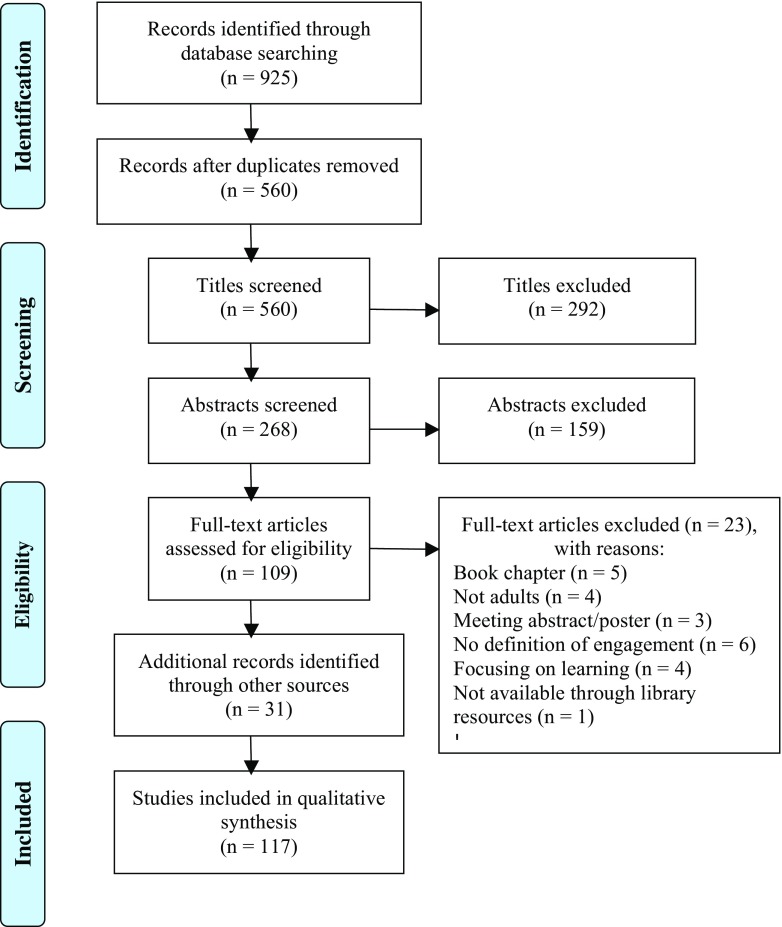
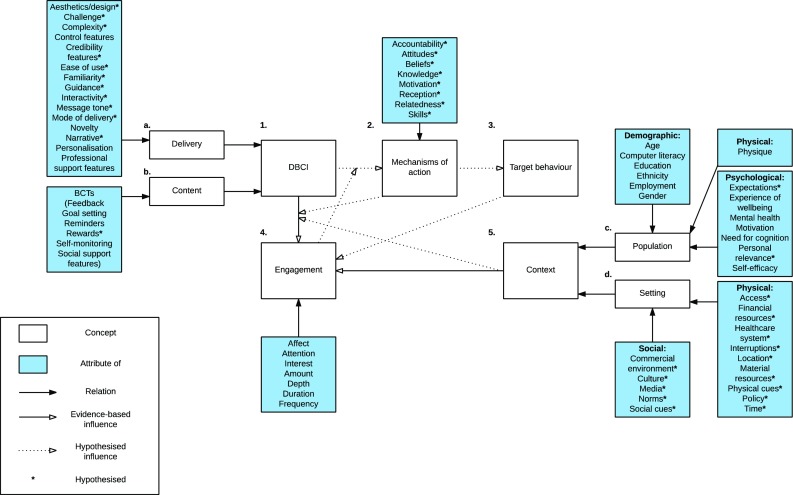
"Engagement" with digital behaviour change interventions (DBCIs) is considered important for their effectiveness. Evaluating engagement is therefore a priority; however, a shared understanding of how to usefully conceptualise engagement is lacking. This review aimed to synthesise literature on engagement to identify key conceptualisations and to develop an integrative conceptual framework involving potential direct and indirect influences on engagement and relationships between engagement and intervention effectiveness. Four electronic databases (Ovid MEDLINE, PsycINFO, ISI Web of Knowledge, ScienceDirect) were searched in November 2015. We identified 117 articles that met the inclusion criteria: studies employing experimental or non-experimental designs with adult participants explicitly or implicitly referring to engagement with DBCIs, digital games or technology. Data were synthesised using principles from critical interpretive synthesis. Engagement with DBCIs is conceptualised in terms of both experiential and behavioural aspects. A conceptual framework is proposed in which engagement with a DBCI is influenced by the DBCI itself (content and delivery), the context (the setting in which the DBCI is used and the population using it) and the behaviour that the DBCI is targeting. The context and "mechanisms of action" may moderate the influence of the DBCI on engagement. Engagement, in turn, moderates the influence of the DBCI on those mechanisms of action. In the research literature, engagement with DBCIs has been conceptualised in terms of both experience and behaviour and sits within a complex system involving the DBCI, the context of use, the mechanisms of action of the DBCI and the target behaviour.
Overview
The claims and statistics of this paper haven’t been checked yet.
Free: it reads the open-access text and checks the first 5 claims that cite a source we can check. Create a free account to check every claim.
Integrity signals
Registry
Cites
Statistics
Figures
Verification
Claims the paper makes
The claims and statistics of this paper haven’t been checked yet.
Free: it reads the open-access text and checks the first 5 claims that cite a source we can check. Create a free account to check every claim.
Claims other papers make about this one
Each is checked against this paper’s own text: does it say what the citing paper says it does?
The source backs part of the claim, not all of it — or backs it for a different population, condition or comparison.
In the citing paper
“In line with the emerging evidence from the human-computer interaction (HCI) literature, we found that an app coupled with human support [14,17] was likely to be more effective by increasing the intervention effectiveness and engagement [78,79].”
From Influences on the Uptake of and Engagement With Health and Well-Being Smartphone Apps: Systematic Review (2020) · cites this paper as [14]
Experimental — accuracy not yet measuredThe source backs part of the claim, not all of it — or backs it for a different population, condition or comparison.
In the citing paper
“In line with the findings of previous reviews, help with initial engagement could be achieved by improving the users’ app literacy skills and by providing knowledge [14,17].”
From Influences on the Uptake of and Engagement With Health and Well-Being Smartphone Apps: Systematic Review (2020) · cites this paper as [14]
Experimental — accuracy not yet measuredThe source backs part of the claim, not all of it — or backs it for a different population, condition or comparison.
In the citing paper
“Nonetheless, ECA use does decline over time, limiting long-term health effects [1,14-17].”
From Use and Effect of Embodied Conversational Agents for Improving Eating Behavior and Decreasing Loneliness Among Community-Dwelling Older Adults: Randomized Controlled Trial (2022) · cites this paper as [15]
Experimental — accuracy not yet measuredThe cited source says what the claim attributes to it.
In the citing paper
“A review based on experiential and behavioral perspectives conceptualized key factors that might affect engagement with digital behavior change interventions: the content (eg, behavior change techniques, social support, and reminders) and how the content is delivered (eg, professional support, personalization, and aesthetic features) [14].”
From Influences on the Uptake of and Engagement With Health and Well-Being Smartphone Apps: Systematic Review (2020) · cites this paper as [14]
The cited source says what the claim attributes to it.
In the citing paper
“Behavior change techniques, widely reported by others previously [14,17-19], were also identified as important factors to sustain engagement, including self-monitoring, feedback, goal setting, reminders, rewards, and social support.”
From Influences on the Uptake of and Engagement With Health and Well-Being Smartphone Apps: Systematic Review (2020) · cites this paper as [14]
5 more claims about this paper
Create a free account to see every claim other papers make about this one.
Self-check
Percentages, sums and reported differences re-computed from the paper’s own numbers.
The self-check needs the paper’s full text.
Citations
Cites
Preferred Reporting Items for Systematic Reviews and Meta-Analyses: the PRISMA statement
Moher, D., Liberati, A., Tetzlaff, J., Altman, D. G., & for the PRISMA Group (2009) · BMJ · doi:10.1136/bmj.b2535 · Cited by 83,823
Preferred Reporting Items for Systematic Reviews and Meta-Analyses: The PRISMA Statement
Moher, D., Liberati, A., Tetzlaff, J., Altman, D. G., & The PRISMA Group (2009) · PLoS Medicine · doi:10.1371/journal.pmed.1000097 · Cited by 64,042
Preferred reporting items for systematic reviews and meta-analyses: the PRISMA Statement.
(2009) · PubMed Central · Cited by 44,859
Wang, G., Ma, R., Qiao, G., Wada, K., Aizawa, Y., & Satoh, T. (2015) · Integrative Medicine International · doi:10.1159/000368408 · Cited by 18,657
Handbook of Qualitative Research
(1994) · Journal of Environmental Psychology · doi:10.1016/s0272-4944(05)80230-0 · Cited by 5,715
Data management and analysis methods.
Huberman, A. M., & Miles, M. B. (1994) · Cited by 3,400
Bellg, A. J., Treatment Fidelity Workgroup of the NIH Behavior Change Consortium, Borrelli, B., Resnick, B., Hecht, J., Minicucci, D. S., Ory, M., Ogedegbe, G., Orwig, D., Ernst, D., et al. (2004) · Health Psychology · doi:10.1037/0278-6133.23.5.443 · Cited by 2,620 · cited 1×
“A further distinction has been made between Bintervention receipt^, which refers to the extent to which participants understand and can perform the skills taught, and Benactment of intervention skills^, which refers to the extent to which participants use these skills [146, 147].”
BackgroundChecklists for improving rigour in qualitative research: a case of the tail wagging the dog?
Barbour, R. S. (2001) · BMJ · doi:10.1136/bmj.322.7294.1115 · Cited by 2,613 · cited 1×
“A subsample of codes was selected through random sequence generation (https://www.random.org/) for validation by an independent researcher to increase rigour [41].”
MethodEysenbach, G. (2005) · Journal of Medical Internet Research · doi:10.2196/jmir.7.1.e11 · Cited by 2,524 · cited 1×
“This kind of conceptualisation has emerged due to the observation that while many download and try DBCIs, sustained usage is typically low [21 – 24].”
BackgroundDixon-Woods, M., Cavers, D., Agarwal, S., Annandale, E., Arthur, A., Harvey, J., Hsu, R., Katbamna, S., Olsen, R., Smith, L., et al. (2006) · BMC Medical Research Methodology · doi:10.1186/1471-2288-6-35 · Cited by 2,289
Research works printed but not linked: 5
- 4. West R, Michie S. A Guide to Development and Evaluation of Digital Interventions in Healthcare. London: Silverback Publishing; 2016.
- 15. The Cochrane Collaboration. Cochrane Handbook for Systematic Reviews of Interventions Version 5.1.0. [Updated March 2011]. (J. Higgins & S. Green, Eds.) 2011 Retrieved from www.cochrane-handbook.org.
- 59. Chiang Y-T, Lin SSJ, Cheng C-Y, Liu EZ-F. Exploring online game players’ flow experiences and positive affect. The Turkish Online Journal of Educational Technology. 2011;10(1):106–114.
- 144. Miller AS, Cafazzo JA, Seto E. A game plan: gamification design principles in mHealth applications for chronic disease management. Health Informatics Journal. 2014 doi: 10.1177/1460458214537511. · DOI · Paper page
- 152. O’Brien HL, Toms EG. The development and evaluation of a survey to measure user engagement. Journal of the American Society for Information Science & Technology. 2010;61(1):50–69. doi: 10.1002/asi.21229. · DOI · Paper page
Cited by
What is the clinical value of mHealth for patients?
Rowland, S. P., Fitzgerald, J. E., Holme, T., Powell, J., & McGregor, A. (2020) · npj Digital Medicine · doi:10.1038/s41746-019-0206-x · Cited by 454
“Apps are potentially powerful platforms for delivery of behavior change interventions because they can improve engagement with established strategies for prevention and treatment of disease through personalized goal setting, individualized dosing reminders, and gamification.(9) Apps that are linked to wearable devices…”
BackgroundLiverpool, S., Mota, C. P., Sales, C. M. D., Čuš, A., Carletto, S., Hancheva, C., Sousa, S., Cerón, S. C., Moreno-Peral, P., Pietrabissa, G., et al. (2020) · Journal of Medical Internet Research · doi:10.2196/16317 · Cited by 408
The Handbook of Behavior Change
(2020) · Cambridge University Press eBooks · doi:10.1017/9781108677318 · Cited by 407
Short, C. E., DeSmet, A., Woods, C., Williams, S. L., Maher, C., Middelweerd, A., Müller, A. M., Wark, P. A., Vandelanotte, C., Poppe, L., et al. (2018) · Journal of Medical Internet Research · doi:10.2196/jmir.9397 · Cited by 400
“According to Perksi et al [4], high engagement influences behavior change through its influence on the determinants of behavior (similar to macroengagement, as described by Yardley et al).”
BackgroundMethodInfluentialA systematic review of just-in-time adaptive interventions (JITAIs) to promote physical activity
Hardeman, W., Houghton, J., Lane, K., Jones, A., & Naughton, F. (2019) · International Journal of Behavioral Nutrition and Physical Activity · doi:10.1186/s12966-019-0792-7 · Cited by 396
“Finally, we extracted data about the following outcomes: feasibility, acceptability, engagement [17], effectiveness and health-economic outcomes.”
MethodGan, D. Z. Q., McGillivray, L., Han, J., Christensen, H., & Torok, M. (2021) · Frontiers in Digital Health · doi:10.3389/fdgth.2021.764079 · Cited by 305
“…that research on the impact of engagement on mental health outcomes has been hindered by the lack of consensus over a suitable engagement measure (72, 73), we recommend that future studies consider including module completion as the primary engagement measure to facilitate future corroboration…”
MethodAcceptability of digital health interventions: embracing the complexity
Perski, O., & Short, C. E. (2021) · Translational Behavioral Medicine · doi:10.1093/tbm/ibab048 · Cited by 300
Self-citationUse of Social Robots in Mental Health and Well-Being Research: Systematic Review
Scoglio, A. A., Reilly, E. D., Gorman, J. A., & Drebing, C. E. (2019) · Journal of Medical Internet Research · doi:10.2196/13322 · Cited by 288
Szinay, D., Jones, A., Chadborn, T., Brown, J., & Naughton, F. (2020) · Journal of Medical Internet Research · doi:10.2196/17572 · Cited by 289
“amount, frequency, duration, depth) of usage and (2) a subjective experience characterized by attention, interest and affect” [14].”
BackgroundResultInfluentialChanging Behavior Using the Theory of Planned Behavior
Ajzen, I., & Schmidt, P. (2020) · The Handbook of Behavior Change · doi:10.1017/9781108677318.002 · Cited by 266
Prochaska, J. J., Vogel, E. A., Chieng, A., Kendra, M., Baiocchi, M., Pajarito, S., & Robinson, A. (2021) · Journal of Medical Internet Research · doi:10.2196/24850 · Cited by 257
“Study of engagement with digital health apps has been growing, with no consensus yet on ideal construct definitions [48-50].”
BackgroundHauser-Ulrich, S., Künzli, H., Meier-Peterhans, D., & Kowatsch, T. (2020) · JMIR mHealth and uHealth · doi:10.2196/15806 · Cited by 210
“An important aspect is to keep the goal of the app and the desired outcome in mind [114,115]; for example, assessing the time that participants spent on offline engagement with exercises, their motivation to exercise and engage with the intervention, or assessing specific elements of the intervention that were helpful…”
BackgroundElements of Trust in Digital Health Systems: Scoping Review
Adjekum, A., Blasimme, A., & Vayena, E. (2018) · Journal of Medical Internet Research · doi:10.2196/11254 · Cited by 211
Kelders, S. M., van Zyl, L. E., & Ludden, G. D. S. (2020) · Frontiers in Psychology · doi:10.3389/fpsyg.2020.00926 · Cited by 209
“However, it has been shown and argued that technologically driven interventions often do not fully engage people, thereby limiting the effectiveness thereof (Christensen et al., 2009; Donkin et al., 2011; Kelders et al., 2012; Perski et al., 2017).”
BackgroundResultInfluentialSeven lessons for interdisciplinary research on interactive digital health interventions
Blandford, A., Gibbs, J., Newhouse, N., Perski, O., Singh, A., & Murray, E. (2018) · DIGITAL HEALTH · doi:10.1177/2055207618770325 · Cited by 209
“…question is not about effectiveness, or where the literature is methodologically heterogeneous, have been acknowledged, and novel review methodologies such as critical interpretive synthesis 18,19 , realist review 20 , and hermeneutic review 21,22 have been developed and reported in recent years.”
BackgroundSelf-citationSaleem, M., Kühne, L., De Santis, K. K., Christianson, L., Brand, T., & Busse, H. (2021) · JMIR Mental Health · doi:10.2196/30000 · Cited by 199
“Our review corresponds to previous findings in the broader literature of digital health well-being interventions and digital behavior change interventions, which concluded that personalization, support, and guidance through the intervention’s duration can increase user engagement and uptake [9,10].”
BackgroundResultInfluentialPatel, M. L., Wakayama, L. N., & Bennett, G. G. (2021) · Obesity · doi:10.1002/oby.23088 · Cited by 196
“One such challenge, as has been identified previously (95,96), is that different operationalizations of engagement are used, precluding direct comparison of engagement across all studies via meta- analysis.”
BackgroundDigital Interventions on Healthy Lifestyle Management: Systematic Review
Chatterjee, A., Prinz, A., Gerdes, M., & Martinez, S. (2021) · Journal of Medical Internet Research · doi:10.2196/26931 · Cited by 194
“• Included studies with the Scale for the Assessment of Narrative Review Articles scale 2 (107 articles) [1,32-137]”
BackgroundThe history and future of digital health in the field of behavioral medicine
Arigo, D., Jake-Schoffman, D. E., Wolin, K., Beckjord, E., Hekler, E. B., & Pagoto, S. L. (2019) · Journal of Behavioral Medicine · doi:10.1007/s10865-018-9966-z · Cited by 189
A systematic review of tailored eHealth interventions for weight loss
Ryan, K., Dockray, S., & Linehan, C. (2019) · DIGITAL HEALTH · doi:10.1177/2055207619826685 · Cited by 183
“This is in line with how engagement has been conceptualised in eHealth interventions – in terms of both participant experience and behaviours.(40) Future efforts to examine tailoring in eHealth interventions should measure engagement both in terms of participants’ objective usage of intervention components (e.”
BackgroundEngagement and retention in digital mental health interventions: a narrative review
Boucher, E. M., & Raiker, J. S. (2024) · BMC Digital Health · doi:10.1186/s44247-024-00105-9 · Cited by 181
“Studies have attempted to do so using questionnaires, interviews or think aloud paradigms [110]; however, these do not translate well to real-world settings, where assessing engagement is particularly important.”
BackgroundEngagement in digital interventions.
Nahum-Shani, I., Shaw, S. D., Carpenter, S. M., Murphy, S. A., & Yoon, C. (2022) · American Psychologist · doi:10.1037/amp0000983 · Cited by 177
Digital Health Interventions for Adolescent and Young Adult Cancer Survivors
Devine, K. A., Viola, A. S., Coups, E. J., & Wu, Y. P. (2018) · JCO Clinical Cancer Informatics · doi:10.1200/cci.17.00138 · Cited by 174
Barriers to and Facilitators for Using Nutrition Apps: Systematic Review and Conceptual Framework
König, L. M., Attig, C., Franke, T., & Renner, B. (2021) · JMIR mHealth and uHealth · doi:10.2196/20037 · Cited by 158
Perski, O., Hébert, E. T., Naughton, F., Hekler, E. B., Brown, J., & Businelle, M. S. (2022) · Addiction · doi:10.1111/add.15687 · Cited by 150
Self-citationChanging Behavior Using the Model of Action Phases
Keller, L., Gollwitzer, P. M., & Sheeran, P. (2020) · The Handbook of Behavior Change · doi:10.1017/9781108677318.006 · Cited by 147
Potential Applications of Social Robots in Robot-Assisted Interventions for Social Anxiety
Rasouli, S., Gupta, G., Nilsen, E., & Dautenhahn, K. (2022) · International Journal of Social Robotics · doi:10.1007/s12369-021-00851-0 · Cited by 144
Xu, H., & Long, H. (2020) · JMIR mHealth and uHealth · doi:10.2196/21759 · Cited by 144
Digital technologies and adherence in respiratory diseases: the road ahead
Blakey, J. D., Bender, B. G., Dima, A. L., Weinman, J., Safioti, G., & Costello, R. W. (2018) · European Respiratory Journal · doi:10.1183/13993003.01147-2018 · Cited by 136
Perski, O., Crane, D., Beard, E., & Brown, J. (2019) · DIGITAL HEALTH · doi:10.1177/2055207619880676 · Cited by 135
Self-citationBaumel, A., & Kane, J. M. (2018) · Journal of Medical Internet Research · doi:10.2196/11491 · Cited by 131
Pham, Q., Graham, G., Carrion, C., Morita, P. P., Seto, E., Stinson, J. N., & Cafazzo, J. A. (2019) · JMIR mHealth and uHealth · doi:10.2196/11941 · Cited by 131
Evaluating the Impact of Physical Activity Apps and Wearables: Interdisciplinary Review
McCallum, C., Rooksby, J., & Gray, C. M. (2018) · JMIR mhealth and uhealth · doi:10.2196/mhealth.9054 · Cited by 126
“However, how to define and distinguish these constructs is still a subject of debate; for example, some digital health researchers have conceptualized engagement as a behavioral construct [21,22], whereas others propose that it is composed of both behavioral and subjective components [20,23].”
BackgroundPerski, O., Blandford, A., Ubhi, H. K., West, R., & Michie, S. (2017) · BMC Medical Informatics and Decision Making · doi:10.1186/s12911-017-0422-8 · Cited by 123
“amount, depth, duration, frequency), and 2) a subjective experience characterised by attention, interest and affect [35].”
BackgroundSelf-citationA Mobile Just-in-Time Adaptive Intervention for Smoking Cessation: Pilot Randomized Controlled Trial
Hébert, E. T., Ra, C. K., Alexander, A. C., Helt, A., Moisiuc, R., Kendzor, D. E., Vidrine, D. J., Funk-Lawler, R. K., & Businelle, M. S. (2020) · Journal of Medical Internet Research · doi:10.2196/16907 · Cited by 118
Karekla, M., Kasinopoulos, O., Neto, D. D., Ebert, D. D., Van Daele, T., Nordgreen, T., Höfer, S., Oeverland, S., & Jensen, K. L. (2019) · European Psychologist · doi:10.1027/1016-9040/a000349 · Cited by 117
Mohr, D. C., Schueller, S. M., Tomasino, K. N., Kaiser, S. M., Alam, N., Karr, C., Vergara, J. L., Gray, E. L., Kwasny, M. J., & Lattie, E. G. (2019) · Journal of Medical Internet Research · doi:10.2196/13609 · Cited by 116
Baumel, A., Fleming, T. M., & Schueller, S. M. (2020) · Journal of Medical Internet Research · doi:10.2196/20631 · Cited by 135
Taki, S., Lymer, S., Russell, C. G., Campbell, K., Laws, R., Ong, K.-L., Elliott, R., & Denney-Wilson, E. (2017) · JMIR mHealth and uHealth · doi:10.2196/mhealth.7236 · Cited by 114
“Little work has been done in the mHealth arena with respect to the conceptualization and measurement of user engagement [7,18,19].”
BackgroundYeager, C. M., & Benight, C. C. (2018) · mHealth · doi:10.21037/mhealth.2018.08.04 · Cited by 112
Crafoord, M.-T., Fjell, M., Sundberg, K., Nilsson, M., & Langius-Eklöf, A. (2020) · Journal of Medical Internet Research · doi:10.2196/17058 · Cited by 109
Chien, I., Enrique, A., Palacios, J., Regan, T., Keegan, D., Carter, D., Tschiatschek, S., Nori, A., Thieme, A., Richards, D., et al. (2020) · JAMA Network Open · doi:10.1001/jamanetworkopen.2020.10791 · Cited by 111
Escriva Boulley, G., Leroy, T., Bernetière, C., Paquienseguy, F., Desfriches‐Doria, O., & Préau, M. (2018) · Psycho-Oncology · doi:10.1002/pon.4867 · Cited by 110
Kelders, S. M., Sommers-Spijkerman, M., & Goldberg, J. (2018) · Journal of Medical Internet Research · doi:10.2196/jmir.9923 · Cited by 109
Changing Behavior Using the Health Action Process Approach
Schwarzer, R., & Hamilton, K. (2020) · The Handbook of Behavior Change · doi:10.1017/9781108677318.007 · Cited by 102
Mclaughlin, M., Delaney, T., Hall, A., Byaruhanga, J., Mackie, P., Grady, A., Reilly, K., Campbell, E., Sutherland, R., Wiggers, J., et al. (2021) · Journal of Medical Internet Research · doi:10.2196/23180 · Cited by 105
“To our knowledge, no review has explored the relationship between subjective experience with DHIs and physical activity or sedentary behavior [20].”
BackgroundMethodInfluentialMaheu‐Cadotte, M., Cossette, S., Dubé, V., Fontaine, G., Mailhot, T., Lavoie, P., Cournoyer, A., Balli, F., & Mathieu-Dupuis, G. (2018) · BMJ Open · doi:10.1136/bmjopen-2017-019871 · Cited by 133
Edney, S., Ryan, J. C., Olds, T., Monroe, C., Fraysse, F., Vandelanotte, C., Plotnikoff, R., Curtis, R., & Maher, C. (2019) · Journal of Medical Internet Research · doi:10.2196/14645 · Cited by 104
“To date, engagement has been conceptualized and operationalized in different ways, and attempts have been made to reach a shared understanding of approaches [11,12].”
InfluentialKorpershoek, Y. J. G., Vervoort, S. C. J. M., Trappenburg, J. C. A., & Schuurmans, M. J. (2018) · BMC Health Services Research · doi:10.1186/s12913-018-3545-4 · Cited by 87
Describing the Process of Adopting Nutrition and Fitness Apps: Behavior Stage Model Approach
König, L. M., Sproesser, G., Schupp, H. T., & Renner, B. (2018) · JMIR mHealth and uHealth · doi:10.2196/mhealth.8261 · Cited by 98
“This lack of engagement could, for example, be overcome by using effective behavior change techniques that help maintain the intention or the behavior [93], for example, by boosting self-efficacy or prompting planning [38].”
BackgroundNurmi, J., Knittle, K., Ginchev, T., Khattak, F., Helf, C., Zwickl, P., Castellano-Tejedor, C., Lusilla-Palacios, P., Costa-Requena, J., Ravaja, N., et al. (2020) · JMIR mHealth and uHealth · doi:10.2196/12884 · Cited by 97
Cao, W., Milks, M. W., Liu, X., Gregory, M. E., Addison, D., Zhang, P., & Li, L. (2022) · JMIR mhealth and uhealth · doi:10.2196/29415 · Cited by 122
Serious Gaming for Behaviour Change: A Systematic Review
Hammady, R., & Arnab, S. (2022) · Information · doi:10.3390/info13030142 · Cited by 134
Forbes, A., Keleher, M. R., Venditto, M., & DiBiasi, F. (2023) · Journal of Medical Internet Research · doi:10.2196/43727 · Cited by 94
Innovative methods for observing and changing complex health behaviors: four propositions
Chevance, G., Perski, O., & Hekler, E. B. (2021) · Translational Behavioral Medicine · doi:10.1093/tbm/ibaa026 · Cited by 95
Self-citationWatson, A., & Wilkinson, T. M. A. (2022) · Therapeutic Advances in Respiratory Disease · doi:10.1177/17534666221075493 · Cited by 110
Voorheis, P., Zhao, A., Kuluski, K., Pham, Q., Scott, T., Sztur, P., Khanna, N., Ibrahim, M., & Petch, J. (2022) · JMIR mHealth and uHealth · doi:10.2196/35799 · Cited by 94
Palermo, T. M., de la Vega, R., Murray, C., Law, E., & Zhou, C. (2020) · Pain · doi:10.1097/j.pain.0000000000001994 · Cited by 93
Eaton, C. K., Vallejo, N., McDonald, X., Wu, J., Rodríguez, R., Muthusamy, N., Mathioudakis, N. N., & Riekert, K. A. (2024) · Journal of Medical Internet Research · doi:10.2196/50508 · Cited by 142
Designing m-Health interventions for precision mental health support
Bidargaddi, N., Schrader, G., Klasnja, P., Licinio, J., & Murphy, S. (2020) · Translational Psychiatry · doi:10.1038/s41398-020-00895-2 · Cited by 92
Clinically Meaningful Use of Mental Health Apps and its Effects on Depression: Mixed Methods Study
Zhang, R., Nicholas, J., Knapp, A. A., Graham, A. K., Gray, E., Kwasny, M. J., Reddy, M., & Mohr, D. C. (2019) · Journal of Medical Internet Research · doi:10.2196/15644 · Cited by 91
Rhodes, A., Smith, A. D., Chadwick, P., Croker, H. A., & Llewellyn, C. H. (2020) · JMIR mhealth and uhealth · doi:10.2196/18255 · Cited by 111
Improving the public health impact of eHealth and mHealth interventions
Grady, A., Yoong, S., Sutherland, R., Lee, H., Nathan, N., & Wolfenden, L. (2018) · Australian and New Zealand Journal of Public Health · doi:10.1111/1753-6405.12771 · Cited by 79
Kelders, S. M., Kip, H., & Greeff, J. (2020) · Journal of Medical Internet Research · doi:10.2196/17757 · Cited by 88
Theoretical Perspectives of Adherence to Web-Based Interventions: a Scoping Review
Ryan, C., Bergin, M., & Wells, J. S. (2018) · International Journal of Behavioral Medicine · doi:10.1007/s12529-017-9678-8 · Cited by 86
Efficacy of Serious Games in Healthcare Professions Education: A Systematic Review and Meta-analysis
Maheu‐Cadotte, M., Cossette, S., Dubé, V., Fontaine, G., Lavallée, A., Lavoie, P., Mailhot, T., & Deschênes, M. (2020) · Simulation in Healthcare The Journal of the Society for Simulation in Healthcare · doi:10.1097/sih.0000000000000512 · Cited by 115
Petersen, J. M., Prichard, I., & Kemps, E. (2019) · Journal of Medical Internet Research · doi:10.2196/12687 · Cited by 83
Enrique, A., Palacios, J. E., Ryan, H., & Richards, D. (2019) · Journal of Medical Internet Research · doi:10.2196/12775 · Cited by 81
“Our results confirm the largely used statement the more usage, the better [5,16], although it is important to note that our variables account for active (ie, activities completed) and passive (ie, percentage viewed) engagement, and both elements are important to get the most out of these interventions [20].”
Berry, R., Kassavou, A., & Sutton, S. (2021) · Obesity Reviews · doi:10.1111/obr.13306 · Cited by 80
Sezgin, E., Militello, L. K., Huang, Y., & Lin, S. (2020) · Translational Behavioral Medicine · doi:10.1093/tbm/ibz141 · Cited by 83
Gonsalves, P. P., Hodgson, E. S., Kumar, A., Aurora, T., Chandak, Y., Sharma, R., Michelson, D., & Patel, V. (2019) · Frontiers in Public Health · doi:10.3389/fpubh.2019.00238 · Cited by 68
“…limitations, particularly the lack of online functionality, limited design decisions that might harness the full range of benefits of mobile health interventions for this population, such as “on-the-go” use to facilitate practice (40, 41) or the ability to connect with other users (12, 31).”
BackgroundBidargaddi, N., Pituch, T., Maaieh, H., Short, C., & Strecher, V. (2018) · Preventive Medicine Reports · doi:10.1016/j.pmedr.2018.07.004 · Cited by 77
“In prior research these metrics have been studied as quantitative indicators of engagement (Yardley et al., 2016; Perski et al., 2017; JMU-Evaluating the Impact of Physical Activity Apps and Wearables: Interdisciplinary Review , n.d.).”
MethodThe Promotion of Eating Behaviour Change through Digital Interventions
Chen, Y., Perez-Cueto, F. J. A., Giboreau, A., Mavridis, I., & Hartwell, H. (2020) · International Journal of Environmental Research and Public Health · doi:10.3390/ijerph17207488 · Cited by 75
The Use of Smartphone Fitness Applications: The Role of Self-Efficacy and Self-Regulation
Vinnikova, A., Lu, L., Wei, J., Fang, G., & Yan, J. (2020) · International Journal of Environmental Research and Public Health · doi:10.3390/ijerph17207639 · Cited by 79
Mörelius, E., Robinson, S., Arabiat, D. H., & Whitehead, L. (2021) · Journal of Medical Internet Research · doi:10.2196/31665 · Cited by 99
Szinay, D., Perski, O., Jones, A., Chadborn, T., Brown, J., & Naughton, F. (2021) · JMIR mhealth and uhealth · doi:10.2196/29098 · Cited by 91
Self-citationCheung, K. L., Durusu, D., Sui, X., & de Vries, H. (2019) · Digital Health · doi:10.1177/2055207618824727 · Cited by 89
Perski, O., Blandford, A., Garnett, C., Crane, D., West, R., & Michie, S. (2019) · Translational Behavioral Medicine · doi:10.1093/tbm/ibz039 · Cited by 73
Self-citationSzinay, D., Forbes, C. C., Busse, H., DeSmet, A., Smit, E. S., & König, L. M. (2023) · Obesity Reviews · doi:10.1111/obr.13542 · Cited by 71
Partridge, S. R., & Redfern, J. (2018) · Healthcare · doi:10.3390/healthcare6030070 · Cited by 71
Spaulding, E. M., Marvel, F. A., Piasecki, R. J., Martin, S. S., & Allen, J. K. (2021) · JMIR Cardio · doi:10.2196/18834 · Cited by 70
Milne-Ives, M., Homer, S. R., Andrade, J., & Meinert, E. (2023) · Frontiers in Psychology · doi:10.3389/fpsyg.2023.1227443 · Cited by 69
“Recent discussions in the literature have highlighted the importance of using mixed-methods designs to enable these elements to be assessed (Yardley et al., 2016; Perski et al., 2017; Short et al., 2018), which is supported by our findings.”
InfluentialLinardon, J. (2023) · Behaviour Research and Therapy · doi:10.1016/j.brat.2023.104421 · Cited by 69
Gardner, B., Rebar, A. L., & Lally, P. J. (2020) · Cambridge University Press eBooks · doi:10.1017/9781108677318.041 · Cited by 85
van Acker, J., Maenhout, L., & Compernolle, S. (2023) · Innovation in Aging · doi:10.1093/geroni/igad007 · Cited by 80
Miller, S., Ainsworth, B., Yardley, L., Milton, A., Weal, M. J., Smith, P. W. F., & Morrison, L. G. (2019) · Journal of Medical Internet Research · doi:10.2196/10966 · Cited by 77
Nutrition Education and Dietary Behavior Change Games: A Scoping Review
Baranowski, T., Ryan, C., Hoyos-Cespedes, A., & Lu, A. S. (2018) · Games for Health Journal · doi:10.1089/g4h.2018.0070 · Cited by 92
Roberts, A., POTTS, H. W. W., Koutoukidis, D. A., Smith, L., & Fisher, A. (2019) · JMIR mhealth and uhealth · doi:10.2196/10918 · Cited by 76
The development of Drink Less : an alcohol reduction smartphone app for excessive drinkers
Garnett, C. V., Crane, D., West, R., Brown, J., & Michie, S. (2018) · Translational Behavioral Medicine · doi:10.1093/tbm/iby043 · Cited by 86
Self-citationHightow‐Weidman, L., & Bauermeister, J. A. (2020) · mHealth · doi:10.21037/mhealth.2019.10.01 · Cited by 65
Uyumaz, B. E., Feijs, L. M. G., & Hu, J. (2021) · International Journal of Environmental Research and Public Health · doi:10.3390/ijerph18062929 · Cited by 74
Bijkerk, L. E., Oenema, A., Geschwind, N., & Spigt, M. (2022) · International Journal of Behavioral Medicine · doi:10.1007/s12529-022-10086-6 · Cited by 94
Furness, K., Sarkies, M. N., Huggins, C. E., Croagh, D., & Haines, T. P. (2020) · Journal of Medical Internet Research · doi:10.2196/16112 · Cited by 58
Changing Behavior Using Social Cognitive Theory
Łuszczyńska, A., & Schwarzer, R. (2020) · Cambridge University Press eBooks · doi:10.1017/9781108677318.003 · Cited by 106
Engagement with mobile health interventions for depression: A systematic review
Molloy, A., & Anderson, P. L. (2021) · Internet Interventions · doi:10.1016/j.invent.2021.100454 · Cited by 59
Advancing digital health equity: Directions for behavioral and social science research
Jaworski, B. K., Hooper, M. W., Aklin, W. M., Jean‐Francois, B., Elwood, W. N., Belis, D., Riley, W. T., & Hunter, C. M. (2022) · Translational Behavioral Medicine · doi:10.1093/tbm/ibac088 · Cited by 67
Measuring the active elements of cognitive-behavioral therapies
Cohen, Z. D., Barnes-Horowitz, N. M., Forbes, C. N., & Craske, M. G. (2023) · Behaviour Research and Therapy · doi:10.1016/j.brat.2023.104364 · Cited by 58
Schwarz, A. F., Huertas‐Delgado, F. J., Cardon, G., & DeSmet, A. (2020) · Games for Health Journal · doi:10.1089/g4h.2019.0058 · Cited by 72
Applicability of the User Engagement Scale to Mobile Health: A Survey-Based Quantitative Study
(2019) · doi:10.2196/13244 · Cited by 54
Chen, A. T., Wu, S., Tomasino, K. N., Lattie, E. G., & Mohr, D. C. (2019) · Journal of Biomedical Informatics · doi:10.1016/j.jbi.2019.103187 · Cited by 58
“Mechanisms of change, which mediate the effect of engagement with the intervention and intervention effectiveness, include knowledge/information, motivation, beliefs and attitudes, and skill building, account for behavior change and subsequent symptom improvement[10,13].”
BackgroundInfluential
Metadata
- Authors
- Perski, O., Blandford, A., West, R., & Michie, S.
- Affiliations
- University College London (GB)
- Cancer Research UK (GB)
- Corresponding author
- Perski, Olga
- Venue
- Translational Behavioral Medicine
- Publisher
- Oxford University Press (OUP)
- Published
- 2016-12-13
- Volume
- 7
- Issue
- 2
- Pages
- 254-267
- ISSN
- 1613-9860 (ISSN-L)
- 1869-6716
- PMC
- PMC5526809
- OpenAlex
- W2561174611
- Cited by
- 1,193
- References
- 160
- Citations by year
- 2026: 215 · 2025: 161 · 2024: 119 · 2023: 120 · 2022: 138 · 2021: 146 · 2020: 149 · 2019: 80 · 2018: 50 · 2017: 14
- FWCI
- 6.61
- Type
- journal article
- Language
- en
- Open access
- hybrid
- doi.org
- Locations
- Translational Behavioral Medicine (publishedVersion, cc-by)
- Europe PMC (PubMed Central) (publishedVersion, cc-by)
- PubMed Central (publishedVersion, cc-by)
- PubMed (publishedVersion)
- UCL Discovery (University College London) (submittedVersion)
- Funders
- Bupa Foundation
- Topics
- Social Sciences › Psychology › Applied Psychology › Digital Mental Health Interventions
- Health Sciences › Health Professions › General Health Professions › Mobile Health and mHealth Applications
- Social Sciences › Psychology › Developmental and Educational Psychology › Educational Games and Gamification
- Keywords
- engagement, digital behaviour change interventions, conceptual framework, intervention effectiveness, mechanism of action, context of use, video games, experiential engagement, behavioral engagement, complex systems
- MeSH terms
- Health Promotion, Humans, Patient Participation, Health Behavior, Telemedicine
About these checks
Registry, retraction, Cites and statistics results are computed, not judged, with one exception: a printed reference that no index lists is read once by a model before it counts as a citation error. Claims are extracted by a model and kept only when their quote appears verbatim in the text; each cited source is then checked, with a model’s help, for whether it says what the claim relies on. Those verdicts can be wrong — read the claim’s quote and the cited source before relying on one.
Statistics and arithmetic are recomputed, not judged.
Confidence bands are shown only for fields calibrated on our annotated test set. None is calibrated yet, so no band is shown.
What counts as a claim ›How we measure confidence ›How we check this ›
Are you an author, or do you see a problem with this page? Request a review
Data sources
Bibliographic data: Semantic Scholar, OpenAlex, Crossref.
Contains information from the Semantic Scholar Academic Graph Datasets, made available under the ODC Attribution License (ODC-BY 1.0).
Semantic Scholar’s data is described in: Kinney, R., et al. (2023). The Semantic Scholar Open Data Platform. arXiv:2301.10140.
