

Air Pollution and Skin Diseases: A Systematic Review of Epidemiological Evidence
Open accessThe DOI matches its Crossref record; 94 of the 94 references it cites were found in a registry or an index; 65 of the 157 sources its claims cite were checked for support.
Abstract
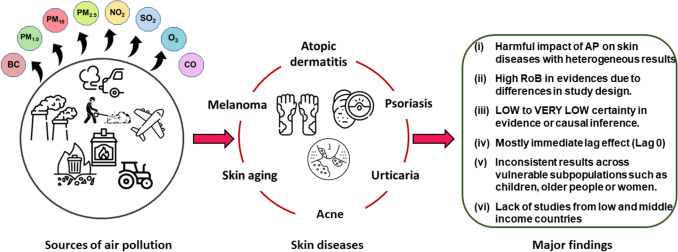
BACKGROUND: A growing number of epidemiological studies have suggested a causal link between air pollution and several common skin diseases. However, considerable variation in study design and heterogeneous results make it difficult for clinical dermatologists to judge the true relevance of air pollution as a risk factor for skin diseases. OBJECTIVE: We therefore conducted a systematic review of epidemiological studies to investigate the associations of short- and long-term exposure to ambient air pollutants with atopic dermatitis, psoriasis, urticaria, acne, melanoma skin cancer, non-melanoma skin cancer, and skin aging. METHODS: We systematically searched two comprehensive databases, SCOPUS and PubMed, from 1 January, 1990 to 30 April, 2025 for relevant observational studies. After screening 1393 eligible studies, 77 studies were selected. We defined the level of evidence for causality by assessing the risk of bias in such studies. Ambient air pollutants included particulate matter with an aerodynamic diameter of 10 µm or smaller, particulate matter with an aerodynamic diameter of 2.5 µm or smaller, and gaseous pollutants (nitrogen dioxide, sulfur dioxide, ozone, and carbon monoxide). RESULTS: We obtained five major results: (i) the majority of studies strongly advocated the harmful effects of air pollution on the above-mentioned skin diseases, but results across studies were heterogeneous in terms of direction and magnitude. (ii) For all skin diseases, the risk of bias assessment resulted in high risk, which was mainly observed in the domains of confounding, selection bias, and exposure assessment. Consequently, certainty in evidence or causal inference was usually low to very low. (iii) In most studies, high air pollution had a more immediate effect (same day) and lasted up to a week after exposure. (iv) The results on vulnerable subpopulations such as children, older people, or women were inconclusive. (v) Studies were mostly from the upper-middle and higher income countries. CONCLUSIONS: Despite numerous epidemiological studies on air pollution and skin diseases, the overall quality of evidence is low. We encourage more longitudinal studies, such as cohort studies or panel studies, to support causality and study change in disease severity over time and improved exposure assessments, and adjustment for critical confounding factors. Importantly, more studies are needed from low- to middle-income countries and on susceptible groups who are most vulnerable to climate change.
Overview
CoChat Summary
## TL;DR
This systematic review synthesized 77 epidemiological studies on ambient air pollution and skin diseases and found that the overall evidence points toward harmful effects, but the certainty is mostly low to very low because of bias and heterogeneity. The strongest recurring signals were for short-term effects, often with gaseous pollutants such as NO2 and SO2, but results varied by disease, design, and population.
## Key findings
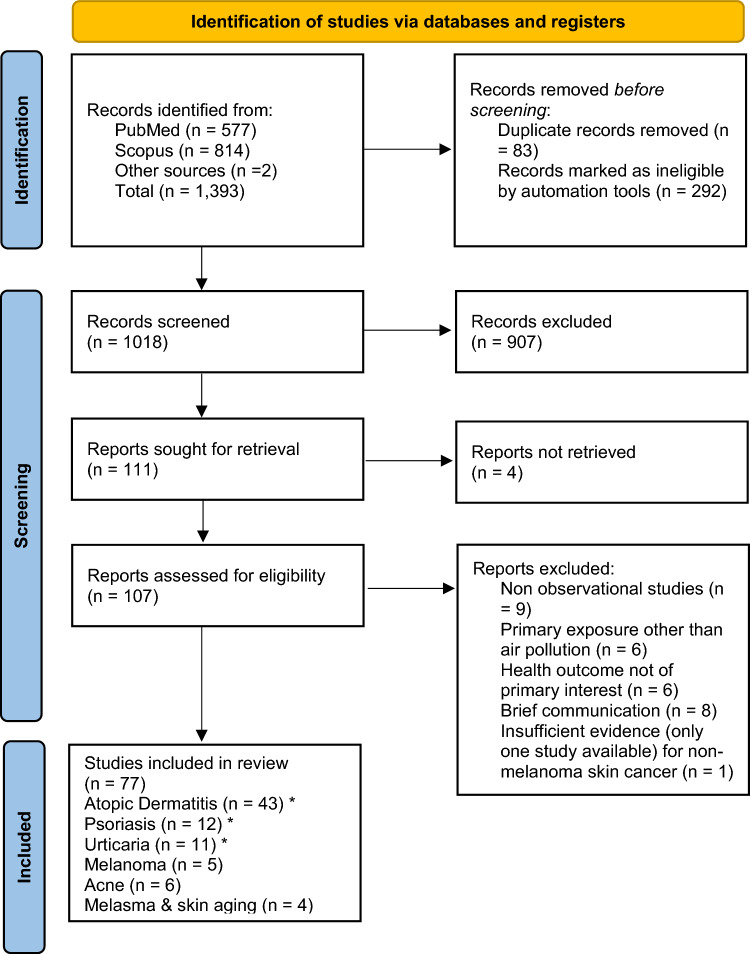
- The review screened 1,393 eligible studies, reviewed 107 full texts, and included 77 studies; 3 studies contributed multiple disease analyses, yielding 81 evidences.
- Across diseases, most studies favored harmful associations, but findings were heterogeneous in direction and magnitude; overall certainty in evidence was usually low to very low.
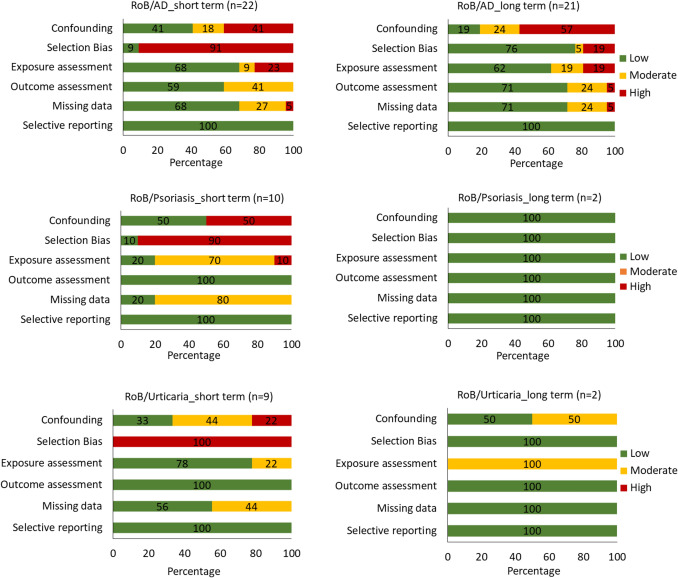
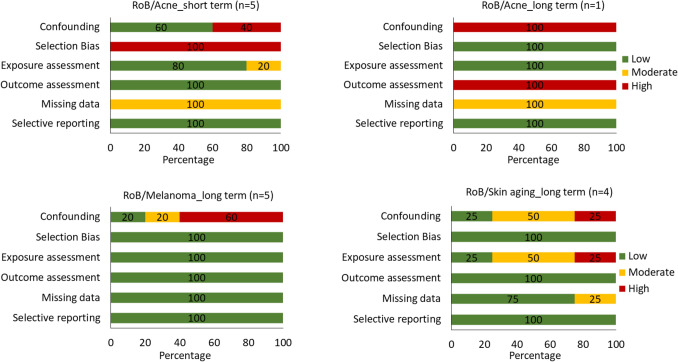
- Risk of bias was high in key domains, especially confounding, selection bias, and exposure assessment; for psoriasis, long-term exposure evidence was the exception with one disease subgroup rated as moderate certainty.
- Short-term effects were often immediate and lasted up to a week; the paper reports the highest associations commonly at lag 0–7 days, with some disease-specific peaks such as lag 2–5 for urticaria and lag 0–3 for psoriasis.
- The review reports specific effect estimates in some included studies, e.g., a 28% increase in melanoma skin cancer risk with industrial air pollution in one Israel study, 8.34% more forehead wrinkles on ozone exceedance days in Germany, and 0.15%/0.16% increases in hyperpigmentation with PM10/PM2.5 in Taiwan.
## Methods
- Systematic review following PRISMA; searches were run in SCOPUS and PubMed from 1 Jan 1990 to 30 Apr 2025, supplemented by reference/lateral searches; the study was not registered on PROSPERO.
- Included observational epidemiological studies in the general population or subgroups, covering short- and long-term ambient air pollution exposure and skin diseases (AD, psoriasis, urticaria, acne, melanoma skin cancer, non-melanoma skin cancer, and skin aging); 77 studies were included after screening 1,393 eligible records.
- Main synthesis combined study characteristics, lag effects, effect estimates, and a WHO-based risk-of-bias assessment by disease and exposure duration; evidence certainty was rated from very low to high.
## Limitations
- Stated in the paper: evidence was limited by heterogeneity across studies in design, statistical methods, sample sizes, confounder adjustment, lag choices, and exposure thresholds.
- Stated in the paper: most studies had high risk of bias, especially in confounding, selection bias, and exposure assessment; many studies also lacked clear reporting of missing data handling.
- Evident from the text: the review excluded non-English papers and could not assess nonmelanoma skin cancer in the final synthesis because only one study was found.
Model-written summary. Check it against the paper before relying on it.
Integrity signals
Registry
Cites
Statistics
Figures
Verification
Claims the paper makes
38 Valid · 8 Not valid · 29 Not checked · 117 Own results and interpretations
At least one cited source doesn’t support this claim or points to a different paper, and none confirmed it — see the verdicts below.
In the paper
“Further, they fail to evaluate evidence based on critical aspects of study design, for example, bias in the selection of participants, exposure and outcome assessments, and consideration of potential confounding effects.”
§ Air Pollution and Skin Diseases: A Systematic Review of Epidemiological Evidence > Introduction
What the sources say
- Not checked — no full text of the sourcecites [12] Huang J, Zheng W-H, Huang H-C, et al. Particulate matter, nitrogen dioxide, and sulfur dioxide and their associations with allergic skin diseases: a systematic review and meta-analysis. Atmos Pollut Res. 2023;14(7):101804. source
- Disputedcites [22] Yang Y, Huang B, Zhao L, et al. A systematic review and meta-analysis of short-term relationship between ambient air pollution and psoriasis. Aerosol Air Qual Res. 2024;24(10):240062. sourceExperimental — accuracy not yet measured
Section 2.4 (Risk of Bias Assessment; page not provided) says this systematic review evaluated included studies for selection bias, exposure assessment, outcome measurement, and confounding—the very aspects the claim says reviews fail to assess. Section 3.2 reports the resulting ratings. Our copy therefore makes the contrary point about this review. (LLM, conf=0.90)
Checked by a reasoning model — may be wrong.
plain- Asserted: passes — The authors put it forward as true.
- Checkable: passes — It can be checked against evidence.
- Load-bearing: passes — The paper’s conclusions depend on it.
- Based: passes — The paper gives a reason why it holds.
At least one cited source doesn’t support this claim or points to a different paper, and none confirmed it — see the verdicts below.
In the paper
“Studies showed a higher association between AD and air pollutants in children [33, 42, 49, 58].”
§ Air Pollution and Skin Diseases: A Systematic Review of Epidemiological Evidence > Results > Association Between Skin Diseases and AP
What the sources say
- Not checked — no full text of the sourcecites [33] Wang H, Sun J, Qian Z, et al. Association between air pollution and atopic dermatitis in Guangzhou, China: modification by age and season. Br J Dermatol. 2021;184(6):1068–76. 33131069 source
- Disputedcites [42] Mailepessov D, Ong J, Nasir MZM, et al. Association between exposure to ambient air pollution, meteorological factors and atopic dermatitis consultations in Singapore: a stratified nationwide time-series analysis. Sci Rep. 2024;14(1):10320. 38710739 PMC11074125 sourceExperimental — accuracy not yet measured
The Discussion (Gender and age effect modification; no page listed) reports a significant age-group difference for PM2.5, but says the association in children aged 8–12 was largely not statistically significant, while the adult effect resembled the overall effect. This does not support the claimed higher association in children; it points in the opposite direction for this study. (LLM, conf=0.86)
Checked by a reasoning model — may be wrong.
- Not checked — no full text of the sourcecites [49] Ye C, Gu H, Li M, et al. Air pollution and weather conditions are associated with daily outpatient visits of atopic dermatitis in Shanghai, China. Dermatology. 2022;238(5):939–49. 35313304 source
- Not checked — no full text of the sourcecites [58] Huang H-C, Zou M-L, Chen Y-H, et al. Effects of indoor air quality and home environmental characteristics on allergic diseases among preschool children in the Greater Taipei Area. Sci Total Environ. 2023;897:165392. 37423284 source
plainstates an association- Asserted: passes — The authors put it forward as true.
- Checkable: passes — It can be checked against evidence.
- Load-bearing: passes — The paper’s conclusions depend on it.
- Based: passes — The paper gives a reason why it holds.
Every source the paper cites for this claim was checked and supports it.
In the paper
“As there was only one potential article on NMSC and AP [28], we decided to exclude NMSC from the final synthesis.”
§ Air Pollution and Skin Diseases: A Systematic Review of Epidemiological Evidence > Results > Study Selection
What the sources say
- Supportedcites [28] Datzmann T, Markevych I, Trautmann F, et al. Outdoor air pollution, green space, and cancer incidence in Saxony: a semi-individual cohort study. BMC Public Health. 2018;18:1–10. PMC5994126 29884153 source
The Background identifies non-melanoma skin cancer as an outcome examined for air-pollution exposure, and the Conclusions report an association between higher ambient air pollution and NMSC. The citation identifies the potential article; the count of articles found and the decision to exclude NMSC from the synthesis are the citing authors’ own statements. (LLM, conf=0.93)
plain- Asserted: passes — The authors put it forward as true.
- Checkable: passes — It can be checked against evidence.
- Load-bearing: passes — The paper’s conclusions depend on it.
- Based: passes — The paper gives a reason why it holds.
- Supported
The cited sources that could be checked couldn’t confirm or dispute this claim.
In the paper
“These reviews also lack information on how AP interacts with other environmental parameters and thereby contributes to skin diseases.”
§ Air Pollution and Skin Diseases: A Systematic Review of Epidemiological Evidence > Introduction
What the sources say
- Not checked — no full text of the sourcecites [12] Huang J, Zheng W-H, Huang H-C, et al. Particulate matter, nitrogen dioxide, and sulfur dioxide and their associations with allergic skin diseases: a systematic review and meta-analysis. Atmos Pollut Res. 2023;14(7):101804. source
- Could not verifycites [22] Yang Y, Huang B, Zhao L, et al. A systematic review and meta-analysis of short-term relationship between ambient air pollution and psoriasis. Aerosol Air Qual Res. 2024;24(10):240062. sourceExperimental — accuracy not yet measured
The Introduction says air pollution can contribute to skin problems, and the Discussion examines seasonal differences in its association with psoriasis. Neither section says that existing systematic reviews lack information about interactions between air pollution and other environmental factors. Searches for that review gap and for temperature, humidity, and interactions found no passage establishing the attributed claim. (LLM, conf=0.72)
plain- Asserted: passes — The authors put it forward as true.
- Checkable: passes — It can be checked against evidence.
- Load-bearing: passes — The paper’s conclusions depend on it.
- Based: passes — The paper gives a reason why it holds.
The cited sources support only part of this claim — read each source’s verdict below.
In the paper
“While some studies reported women at a higher risk of developing AD on exposure to air pollutants [32, 49, 59, 60], other studies reported male individuals at higher risk of developing AD with association with PM [20, 61].”
§ Air Pollution and Skin Diseases: A Systematic Review of Epidemiological Evidence > Results > Association Between Skin Diseases and AP
What the sources say
- Not checked — no full text of the sourcecites [20] Tang K-T, Ku K-C, Chen D-Y, et al. Adult atopic dermatitis and exposure to air pollutants: a nationwide population-based study. Ann Allergy Asthma Immunol. 2017;118(3):351–5. 28126434 source
- Partly supportedcites [61] Kim Y-M, Kim J, Ha S-C, et al. Effects of exposure to indoor fine particulate matter on atopic dermatitis in children. Int J Environ Res Public Health. 2021;18(21):11509. 34770024 PMC8583533 sourceExperimental — accuracy not yet measured
The Discussion (section 4) reports that boys with AD were more vulnerable than girls to indoor PM2.5 exposure, with greater increases in symptom scores. The study enrolled children who already had AD and measured symptom worsening, not their risk of developing AD. (LLM, conf=0.88)
plainstates an association- Asserted: passes — The authors put it forward as true.
- Checkable: passes — It can be checked against evidence.
- Load-bearing: unclear — It is unclear whether the paper’s conclusions depend on it.
- Based: passes — The paper gives a reason why it holds.
82 more claims · 20 with their cited sources checked
Create a free account to see all 192 claims and to verify the 1 reference still open.
- Probably not a substantial claim. 34
- It may state two separate claims as one. 76
- The quote only partly states this claim. 6
Citations
Cites
The PRISMA 2020 statement: An updated guideline for reporting systematic reviews
Page, M. J., McKenzie, J. E., Bossuyt, P. M., Boutron, I., Hoffmann, T. C., Mulrow, C. D., Shamseer, L., Tetzlaff, J. M., Akl, E. A., Brennan, S. E., et al. (2021) · BMJ · doi:10.1136/bmj.n71 · Cited by 108,283
Murray, C. J. L., Aravkin, A. Y., Zheng, P., Abbafati, C., Abbas, K. M., Abbasi-Kangevari, M., Abd-Allah, F., Abdelalim, A., Abdollahi, M., Abdollahpour, I., et al. (2020) · The Lancet · doi:10.1016/s0140-6736(20)30752-2 · Cited by 9,854 · cited 1×
“The Lancet Global Burden of Disease (GBD) study [3] reports the largest increase in risk exposure for ambient particulate matter (PM) pollution from 2010 to 2019.”
Distributed Lag Linear and Non-Linear Models in R: The Package dlnm
Gasparrini, A. (2011) · Journal of Statistical Software · doi:10.18637/jss.v043.i08 · Cited by 1,704 · cited 1×
“DLNM is a modeling framework popularly used in TS data that allows flexible modeling of the potentially non-linear and delayed (lag) association between exposure and health effects [26].”
Global Skin Disease Morbidity and Mortality: An Update From the Global Burden of Disease Study 2013
Karimkhani, C., Dellavalle, R. P., Coffeng, L. E., Flohr, C., Hay, R. J., Langan, S. M., Nsoesie, E. O., Ferrari, A. J., Erskine, H. E., Silverberg, J. I., et al. (2017) · JAMA Dermatology · doi:10.1001/jamadermatol.2016.5538 · Cited by 742
Bickers (2006) · doi:10.1016/j.jaad.2006.05.048 · Cited by 741
Kim, K. E., Cho, D., & Park, H. J. (2016) · Life Sciences · doi:10.1016/j.lfs.2016.03.039 · Cited by 455 · cited 2×
“…that gaseous pollutants such as NO 2 , SO 2 , or O 3 may exert a more acute effects on skin through oxidative damage, lipid reactions, and barrier damage, whereas PM may need chronic exposure or a longer contact duration to penetrate skin hair follicles and cause secondary inflammation [91–93].”
Air pollution exposure—the (in)visible risk factor for respiratory diseases
Bălă, G.-P., Râjnoveanu, R.-M., Tudorache, E., Motișan, R., & Oancea, C. (2021) · Environmental Science and Pollution Research · doi:10.1007/s11356-021-13208-x · Cited by 298
Effects of air pollution on the skin: A review
Kathuria, S., Puri, P., Nandar, S., & Ramesh, V (2017) · Indian Journal of Dermatology, Venereology and Leprology · doi:10.4103/0378-6323.199579 · Cited by 282 · cited 1×
“…that gaseous pollutants such as NO 2 , SO 2 , or O 3 may exert a more acute effects on skin through oxidative damage, lipid reactions, and barrier damage, whereas PM may need chronic exposure or a longer contact duration to penetrate skin hair follicles and cause secondary inflammation [91–93].”
Environmentally-Induced (Extrinsic) Skin Aging: Exposomal Factors and Underlying Mechanisms
Krutmann, J., Schikowski, T., Morita, A., & Berneburg, M. (2021) · Journal of Investigative Dermatology · doi:10.1016/j.jid.2020.12.011 · Cited by 253 · cited 1×
“In addition, we have included skin aging because of the growing evidence of AP being an important part of the skin aging exposome [23].”
Self-citationJohnson, M. T., & Roberts, J. (1978) · PubMed · Cited by 253
Pénard‐Morand, C., Charpin, D., Raherison, C., Kopferschmitt, C., Caillaud, D., Lavaud, F., & Annesi‐Maesano, I. (2005) · Clinical & Experimental Allergy · doi:10.1111/j.1365-2222.2005.02336.x · Cited by 206 · cited 1×
“…of association, or a change in the significance level when multiple pollutants are taken into account together in the regression model [14, 33, 34, 48, 54, 63, 68, 69, 71, 80, 98, 99], while a handful of studies have reported that the effect remained steady and significant [29, 71, 77, 81].”
Air pollution from traffic and cancer incidence: a Danish cohort study
Raaschou-Nielsen, O., Andersen, Z. J., Hvidberg, M., Jensen, S. S., Ketzel, M., Sørensen, M., Hansen, J., Loft, S., Overvad, K., & Tjønneland, A. (2011) · Environmental Health · doi:10.1186/1476-069x-10-67 · Cited by 202 · cited 1×
“In contrast, Bellinato et al. [13] reported negative but significant associations between melanoma and PM (PM 10 and PM 2.5 ) across Italy, while Raaschou-Nielsen et al. [84] did not find any significant association between melanoma and NO x in Denmark.”
InfluentialSymptoms of atopic dermatitis are influenced by outdoor air pollution.
Kim, J., Kim, E.-H., Oh, I., Jung, K., Han, Y., Cheong, H.-K., & Ahn, K. (2013) · Journal of Allergy and Clinical Immunology · doi:10.1016/j.jaci.2013.04.019 · Cited by 198 · cited 2×
“Accordingly, studies based on similar populations, but with different periods, study designs and/or statistical analysis, obtained contrasting results [41, 44, 47, 53, 55, 61, 90, 91, 94, 95].”
Annesi-Maesano, I., Moreau, D., Caillaud, D., Lavaud, F., Le Moullec, Y., Taytard, A., Pauli, G., & Charpin, D. (2007) · Respiratory Medicine · doi:10.1016/j.rmed.2007.02.022 · Cited by 174 · cited 1×
“In the present review, we [37] found that AD has shown a significant association with different criteria pollutants; both in short-[19, 38–42] and long-term relationships [32, 43–46]; however, the strength of the association might vary.”
Acute health effects of urban fine and ultrafine particles on children with atopic dermatitis.
Song, S., Lee, K., Lee, Y.-M., Lee, J.-H., Il Lee, S., Yu, S.-D., & Paek, D. (2011) · Environmental Research · doi:10.1016/j.envres.2010.10.010 · Cited by 162 · cited 2×
“…of association, or a change in the significance level when multiple pollutants are taken into account together in the regression model [14, 33, 34, 48, 54, 63, 68, 69, 71, 80, 98, 99], while a handful of studies have reported that the effect remained steady and significant [29, 71, 77, 81].”
Wang, M., Kim, R., Kohonen‐Corish, M. R. J., Chen, H., Donovan, C., & Oliver, B. G. G. (2025) · British Journal of Cancer · doi:10.1038/s41416-025-02999-2 · Cited by 146 · cited 1×
“…demonstrated that AP was associated with morbidity and mortality related to lung cancer, heart (ischemic heart disease, stroke) and lung disease (exacerbation of asthma, chronic bronchitis), chronic obstructive pulmonary disease, and respiratory infections, including pneumonia [2, 4–6].”
Outdoor air pollution, green space, and cancer incidence in Saxony: a semi-individual cohort study
Datzmann, T., Markevych, I., Trautmann, F., Heinrich, J., Schmitt, J., & Tesch, F. (2018) · BMC Public Health · doi:10.1186/s12889-018-5615-2 · Cited by 141
Hüls, A., Vierkötter, A., Gao, W., Krämer, U., Yang, Y., Ding, A., Stolz, S., Matsui, M., Kan, H., Wang, S., et al. (2016) · Journal of Investigative Dermatology · doi:10.1016/j.jid.2015.12.045 · Cited by 122 · cited 1×
“No seasonal analysis was reported [86, 87].”
Self-citationOzone exposure activates oxidative stress responses in murine skin
Valacchi, G., van der Vliet, A., Schock, B. C., Okamoto, T., Obermuller-Jevic, U., Cross, C. E., & Packer, L. (2002) · Toxicology · doi:10.1016/s0300-483x(02)00240-8 · Cited by 120
Li, M., Vierkötter, A., Schikowski, T., Hüls, A., Ding, A., Matsui, M. S., Deng, B., Ma, C., Ren, A., Zhang, J., et al. (2015) · Journal of Dermatological Science · doi:10.1016/j.jdermsci.2015.04.001 · Cited by 119 · cited 1×
“Only eight studies have used other exposures, such as AP mixture, industrial AP, solid fuel pollution, and hydrocarbons [32–36].”
Self-citationAllergens, air pollutants, and childhood allergic diseases
Wang, I.-J., Tung, T.-H., Tang, C.-S., & Zhao, Z.-H. (2016) · International Journal of Hygiene and Environmental Health · doi:10.1016/j.ijheh.2015.09.001 · Cited by 113
Association Between Short-term Exposure to Environmental Air Pollution and Psoriasis Flare
Bellinato, F., Adami, G., Vaienti, S., Benini, C., Gatti, D., Idolazzi, L., Fassio, A., Rossini, M., Girolomoni, G., & Gisondi, P. (2022) · JAMA Dermatology · doi:10.1001/jamadermatol.2021.6019 · Cited by 101 · cited 4×
“In terms of geographical coverage, the studies on the association between AP and psoriasis span from East Asia [63, 64] to Europe [34, 39, 65, 66] to the USA [67].”
InfluentialEcology of the cardiovascular system: A focus on air-related environmental factors
Argacha, J., Bourdrel, T., & van de Borne, P. (2017) · Trends in Cardiovascular Medicine · doi:10.1016/j.tcm.2017.07.013 · Cited by 98 · cited 1×
“…demonstrated that AP was associated with morbidity and mortality related to lung cancer, heart (ischemic heart disease, stroke) and lung disease (exacerbation of asthma, chronic bronchitis), chronic obstructive pulmonary disease, and respiratory infections, including pneumonia [2, 4–6].”
Li, Q., Yang, Y., Chen, R., Kan, H., Song, W., Tan, J., Xu, F., & Xu, J. (2016) · International Journal of Environmental Research and Public Health · doi:10.3390/ijerph13111106 · Cited by 82
Prenatal air pollutant exposure and occurrence of atopic dermatitis.
Huang, C. C., Wen, H. J., Chen, P. C., Chiang, T. L., Lin, S. J., & Guo, Y. L. (2015) · British Journal of Dermatology · doi:10.1111/bjd.14039 · Cited by 78 · cited 1×
“…of association, or a change in the significance level when multiple pollutants are taken into account together in the regression model [14, 33, 34, 48, 54, 63, 68, 69, 71, 80, 98, 99], while a handful of studies have reported that the effect remained steady and significant [29, 71, 77, 81].”
Adult atopic dermatitis and exposure to air pollutants—a nationwide population-based study
Tang, K.-T., Ku, K.-C., Chen, D.-Y., Lin, C.-H., Tsuang, B.-J., & Chen, Y.-H. (2017) · Annals of Allergy, Asthma & Immunology · doi:10.1016/j.anai.2016.12.005 · Cited by 73 · cited 2×
“While some studies reported women at a higher risk of developing AD on exposure to air pollutants [32, 49, 59, 60], other studies reported male individuals at higher risk of developing AD with association with PM [20, 61].”
Kim, M.-S., Kim, Y. K., Lee, D. H., Seo, J. E., Cho, K. H., Eun, H. C., & Chung, J. H. (2009) · British Journal of Dermatology · doi:10.1111/j.1365-2133.2008.08838.x · Cited by 71 · cited 1×
“Accordingly, studies based on similar populations, but with different periods, study designs and/or statistical analysis, obtained contrasting results [41, 44, 47, 53, 55, 61, 90, 91, 94, 95].”
Tropospheric ozone and skin aging: Results from two German cohort studies
Fuks, K. B., Hüls, A., Sugiri, D., Altug, H., Vierkötter, A., Abramson, M. J., Goebel, J., Wagner, G. G., Demuth, I., Krutmann, J., et al. (2019) · Environment International · doi:10.1016/j.envint.2018.12.047 · Cited by 70 · cited 1×
“In a study across Germany, using two health cohorts of the older populations combined, Fuks et al. [85] showed a positive and significant association of wrinkles on the forehead with O 3 exceedance days (8.34%, 95% CI 2.01–14.7).”
InfluentialSelf-citationA Time-Series Study of the Effect of Air Pollution on Outpatient Visits for Acne Vulgaris in Beijing
Liu, W., Pan, X., Vierkötter, A., Guo, Q., Wang, X., Wang, Q., Seité, S., Moyal, D., Schikowski, T., & Krutmann, J. (2018) · Skin Pharmacology and Physiology · doi:10.1159/000484482 · Cited by 69 · cited 2×
“…of association, or a change in the significance level when multiple pollutants are taken into account together in the regression model [14, 33, 34, 48, 54, 63, 68, 69, 71, 80, 98, 99], while a handful of studies have reported that the effect remained steady and significant [29, 71, 77, 81].”
Self-citationPark, T. H., Park, S., Cho, M. K., & Kim, S. (2022) · Clinical and Experimental Dermatology · doi:10.1111/ced.14910 · Cited by 67 · cited 1×
“Among the included studies, three studies [29–31] analyzed multiple skin diseases, so that a total of 81 evidences were synthesized from 77 studies (see ESM for more information and references for all studies included in the review).”
The assessment of dermatological needs in resource‐poor regions
Hay, R. J., & Fuller, L. C. (2011) · International Journal of Dermatology · doi:10.1111/j.1365-4632.2011.04953.x · Cited by 61
Lee, J.-Y., Lamichhane, D., Lee, M., Ye, S., Kwon, J.-H., Park, M.-S., Kim, H.-C., Leem, J.-H., Hong, Y.-C., Kim, Y., et al. (2018) · International Journal of Environmental Research and Public Health · doi:10.3390/ijerph15010102 · Cited by 61
Park, S. K., Kim, J. S., & Seo, H.-M. (2022) · Journal of the American Academy of Dermatology · doi:10.1016/j.jaad.2021.05.061 · Cited by 54 · cited 1×
“However, several long-term studies also showed a stronger association with gaseous air pollutants [52, 53].”
Patella, V., Florio, G., Palmieri, M., Bousquet, J., Tonacci, A., Giuliano, A., & Gangemi, S. (2020) · Pediatric Allergy and Immunology · doi:10.1111/pai.13314 · Cited by 54 · cited 2×
“These studies showed a significant increase in AD symptom severity with an increase in PM 10 , NO 2 , and O 3 [19, 41, 57].”
Guo, Q., Xiong, X., Liang, F., Tian, L., Liu, W., Wang, Z., & Pan, X. (2019) · Journal of the European Academy of Dermatology and Venereology · doi:10.1111/jdv.15820 · Cited by 53
Kim, Y.-M., Kim, J., Jung, K., Eo, S., & Ahn, K. (2018) · International Journal of Hygiene and Environmental Health · doi:10.1016/j.ijheh.2018.05.006 · Cited by 43 · cited 1×
“Several short-term studies (mostly TS) have reported lag effects of air pollutants on AD, with the most popular lag choice varying from 0 to 5 days and with most studies showing the strongest effect at Lag0 (current day) [40, 51, 62].”
Guo, Q., Liang, F., Tian, L., Schikowski, T., Liu, W., & Pan, X. (2019) · Environmental Science: Processes & Impacts · doi:10.1039/c8em00494c · Cited by 43
Self-citationKim, H.-H., Lee, C.-S., Jeon, J.-M., Yu, S.-D., Lee, C.-W., Park, J.-H., Shin, D.-C., & Lim, Y.-W. (2013) · Environmental Science and Pollution Research · doi:10.1007/s11356-012-1358-2 · Cited by 42 · cited 1×
“Accordingly, studies based on similar populations, but with different periods, study designs and/or statistical analysis, obtained contrasting results [41, 44, 47, 53, 55, 61, 90, 91, 94, 95].”
Wang, H. L., Sun, J., Qian, Z. M., Gong, Y. Q., Zhong, J. B., Yang, R. D., Wan, C. L., Zhang, S. Q., Ning, D. F., Xian, H., et al. (2021) · British Journal of Dermatology · doi:10.1111/bjd.19645 · Cited by 40 · cited 4×
“Interestingly, a number of studies reported stronger associations of AP with skin diseases in women [14, 32, 49, 59, 69, 78] and a cold season [29, 33, 51, 63, 69, 71, 74].”
InfluentialAssociations between ambient air pollution and medical care visits for atopic dermatitis
Baek, J.-O., Cho, J., & Roh, J.-Y. (2021) · Environmental Research · doi:10.1016/j.envres.2020.110153 · Cited by 38 · cited 5×
“…when particulate and gaseous air pollutants both were analyzed in a study, most of the studies on the short-term association between AD and air pollutants showed a stronger association with the gaseous pollutants such as NO 2 [37, 39, 40, 47, 48] and SO 2 [33, 49–51] than particulate pollutants.”
InfluentialExposure to Air Pollution, Genetic Susceptibility, and Psoriasis Risk in the UK
Wu, J., Ma, Y., Yang, J., & Tian, Y. (2024) · JAMA Network Open · doi:10.1001/jamanetworkopen.2024.21665 · Cited by 38 · cited 2×
“…multiple air pollutants, it was observed that a short-term association between psoriasis and AP showed a strong relationship with gaseous pollutants such as NO 2 , SO 2 , and CO [66, 68, 69], while the long-term association of psoriasis was mainly stronger with particulate pollutants [34, 70].”
Lan, J., Huang, Q., Yang, L., Li, Y., Yang, J., Jiang, B., Zhao, L., Xia, Y., Yu, X., & Tao, J. (2023) · British Journal of Dermatology · doi:10.1093/bjd/ljac124 · Cited by 36 · cited 6×
“A season-specific analysis showed a higher risk during the cold season [22, 69, 71].”
InfluentialFeng, C., Shao, Y., Ye, T., Cai, C., Yin, C., Li, X., Liu, H., Ma, H., Yu, B., Qin, M., et al. (2023) · Science of The Total Environment · doi:10.1016/j.scitotenv.2023.166755 · Cited by 33 · cited 2×
“…of psoriasis, the short-term association between AP and hospital visits for urticaria was higher for gaseous pollutants such as NO 2 and SO 2 [72–74], while both short-and long-term studies reported strong associations between urticaria and particulate pollutants such as PM 2.5 and PM 10 [75, 76].”
InfluentialYe, C., Gu, H., Li, M., Chen, R., Xiao, X., & Zou, Y. (2022) · Dermatology · doi:10.1159/000522491 · Cited by 32 · cited 4×
“Interestingly, a number of studies reported stronger associations of AP with skin diseases in women [14, 32, 49, 59, 69, 78] and a cold season [29, 33, 51, 63, 69, 71, 74].”
InfluentialLentigine Formation in Caucasian Women—Interaction between Particulate Matter and Solar UVR
Hüls, A., Sugiri, D., Fuks, K., Krutmann, J., & Schikowski, T. (2019) · Journal of Investigative Dermatology · doi:10.1016/j.jid.2018.09.034 · Cited by 29 · cited 2×
“Whereas Hüls et al. [87] found that traffic-related AP interacts with UVR to increase the formation of facial lentigines.”
Self-citationGu, X., Jing, D., Xiao, Y., Zhou, G., Yang, S., Liu, H., Chen, X., & Shen, M. (2023) · Ecotoxicology and Environmental Safety · doi:10.1016/j.ecoenv.2023.114683 · Cited by 28 · cited 5×
“Interestingly, a number of studies reported stronger associations of AP with skin diseases in women [14, 32, 49, 59, 69, 78] and a cold season [29, 33, 51, 63, 69, 71, 74].”
InfluentialSpectrum of susceptibility to air quality and weather in individual children with atopic dermatitis
Noh, S. R., Kim, J., Kim, E., Jeon, B., Kim, J., Kim, Y., Kim, J., Han, Y., Ahn, K., & Cheong, H. (2019) · Pediatric Allergy and Immunology · doi:10.1111/pai.13005 · Cited by 27
El Haddad, C., Gerbaka, N.-E., Hallit, S., & Tabet, C. (2021) · BMC Public Health · doi:10.1186/s12889-021-11738-0 · Cited by 27
Association between Pollen Risk Indexes, Air Pollutants, and Allergic Diseases in Korea
Kim, H., Park, Y., Park, K., & Yoo, B. (2016) · Osong Public Health and Research Perspectives · doi:10.1016/j.phrp.2016.04.003 · Cited by 26 · cited 2×
“Accordingly, studies based on similar populations, but with different periods, study designs and/or statistical analysis, obtained contrasting results [41, 44, 47, 53, 55, 61, 90, 91, 94, 95].”
Huang, H.-C., Zou, M.-L., Chen, Y.-H., Jiang, C.-B., Wu, C.-D., Lung, S.-C. C., Chien, L.-C., Lo, Y.-C., & Chao, H. J. (2023) · Science of The Total Environment · doi:10.1016/j.scitotenv.2023.165392 · Cited by 26 · cited 4×
“No significant interaction effects were observed among sociodemographic factors and AP [58].”
InfluentialWang, W., Zhang, W., Zhao, J., Li, H., Wu, J., Deng, F., Ma, Q., & Guo, X. (2021) · Toxics · doi:10.3390/toxics9050108 · Cited by 25 · cited 1×
“However, studies have reported a higher risk in younger and older age groups, in female individuals and in the cold season [73, 74, 77, 78].”
Effects of Exposure to Indoor Fine Particulate Matter on Atopic Dermatitis in Children
Kim, Y.-M., Kim, J., Ha, S.-C., & Ahn, K. (2021) · International Journal of Environmental Research and Public Health · doi:10.3390/ijerph182111509 · Cited by 23 · cited 3×
“While some studies reported women at a higher risk of developing AD on exposure to air pollutants [32, 49, 59, 60], other studies reported male individuals at higher risk of developing AD with association with PM [20, 61].”
Detrimental correlation between air pollution with skin aging in Taiwan population
Huang, C.-H., Chen, S.-C., Wang, Y.-C., Wang, C.-F., Hung, C.-H., & Lee, S.-S. (2022) · Medicine · doi:10.1097/md.0000000000029380 · Cited by 23
Kim, D., Seo, S., Min, S., Simoni, Z., Kim, S., & Kim, M. (2018) · International Journal of Environmental Research and Public Health · doi:10.3390/ijerph15081625 · Cited by 22 · cited 1×
“Accordingly, studies based on similar populations, but with different periods, study designs and/or statistical analysis, obtained contrasting results [41, 44, 47, 53, 55, 61, 90, 91, 94, 95].”
Williams, L. A., Haynes, D., Sample, J. M., Lu, Z., Hossaini, A., McGuinn, L. A., Hoang, T. T., Lupo, P. J., & Scheurer, M. E. (2024) · JNCI: Journal of the National Cancer Institute · doi:10.1093/jnci/djae035 · Cited by 22 · cited 1×
“Another study shows that PM 2.5 interacts synergistically with the availability of green spaces to increase childhood melanoma development at higher levels [88].”
InfluentialLi, Q., Patrick, M. T., Sreeskandarajan, S., Kang, J., Kahlenberg, J. M., Gudjonsson, J. E., He, Z., & Tsoi, L. C. (2024) · Frontiers in Immunology · doi:10.3389/fimmu.2023.1309549 · Cited by 22 · cited 1×
“In older people, a weakened immune system and comorbidities might put them at higher risk [96].”
Luo, P., Wang, D., Luo, J., Li, S., Li, M.-M., Chen, H., Duan, Y., Fan, J., Cheng, Z., Zhao, M.-M., et al. (2022) · Frontiers in Public Health · doi:10.3389/fpubh.2022.990464 · Cited by 21 · cited 4×
“Interestingly, a number of studies reported stronger associations of AP with skin diseases in women [14, 32, 49, 59, 69, 78] and a cold season [29, 33, 51, 63, 69, 71, 74].”
InfluentialAssociation of Wildfire Air Pollution With Clinic Visits for Psoriasis
Fadadu, R. P., Green, M., Grimes, B. A., Jewell, N. P., Seth, D., Vargo, J., & Wei, M. L. (2023) · JAMA Network Open · doi:10.1001/jamanetworkopen.2022.51553 · Cited by 21 · cited 1×
“In terms of geographical coverage, the studies on the association between AP and psoriasis span from East Asia [63, 64] to Europe [34, 39, 65, 66] to the USA [67].”
Xiong, Y., Xia, Y., Zhang, X., Jiang, B., Zhang, Z., Xie, C., Miao, X., Lan, J., & Tao, J. (2025) · British Journal of Dermatology · doi:10.1093/bjd/ljae391 · Cited by 19 · cited 3×
“…of association, or a change in the significance level when multiple pollutants are taken into account together in the regression model [14, 33, 34, 48, 54, 63, 68, 69, 71, 80, 98, 99], while a handful of studies have reported that the effect remained steady and significant [29, 71, 77, 81].”
Chao, L., Lu, M., An, Z., Li, J., Li, Y., Zhao, Q., Wang, Y., Liu, Y., Wu, W., & Song, J. (2021) · Environmental Geochemistry and Health · doi:10.1007/s10653-021-00831-3 · Cited by 17
Horne, B. D., Johnson, M. M., Blagev, D. P., Haddad, F., Knowlton, K. U., Bride, D., Bair, T. L., Joy, E. A., & Nadeau, K. C. (2024) · CHEST Pulmonary · doi:10.1016/j.chpulm.2024.100053 · Cited by 17 · cited 1×
“Generally, the effects of AP on health may be greater during cold seasons because of temperature inversion, leading to an increased pollution load at ground level [97].”
Nie, Y., Liu, L., Xue, S., Yan, L., Ma, N., Liu, X., Liu, R., Wang, X., Wang, Y., Zhang, X., et al. (2022) · Environmental Science and Pollution Research · doi:10.1007/s11356-022-22901-4 · Cited by 15 · cited 1×
“Most studies analyzed the lag effect between 0 and 7 days, with the highest association observed at lag 2–5 [72–74, 78, 79].”
Bellinato, F., Adami, G., Furci, A., Cattani, G., Schena, D., Girolomoni, G., & Gisondi, P. (2023) · JAAD International · doi:10.1016/j.jdin.2023.01.018 · Cited by 15 · cited 4×
“…when particulate and gaseous air pollutants both were analyzed in a study, most of the studies on the short-term association between AD and air pollutants showed a stronger association with the gaseous pollutants such as NO 2 [37, 39, 40, 47, 48] and SO 2 [33, 49–51] than particulate pollutants.”
InfluentialShort-term exposure to air pollution might exacerbate autoimmune diseases
Faustini, A., Renzi, M., Kirchmayer, U., Balducci, M., Davoli, M., & Forastiere, F. (2018) · Environmental Epidemiology · doi:10.1097/ee9.0000000000000025 · Cited by 14 · cited 2×
“In terms of geographical coverage, the studies on the association between AP and psoriasis span from East Asia [63, 64] to Europe [34, 39, 65, 66] to the USA [67].”
InfluentialKim, Y.-M., Kim, J., Han, Y., Lee, B.-J., Choi, D.-C., Cheong, H.-K., Jeon, B.-H., Oh, I., Bae, G.-N., Lee, J. Y., et al. (2017) · Science of The Total Environment · doi:10.1016/j.scitotenv.2016.11.090 · Cited by 14
Li, X., Cao, Y., An, S.-J., Xiang, Y., Huang, H.-X., Xu, B., Zhang, Y., Li, Y.-F., Lu, Y.-G., & Cai, T.-J. (2022) · Environmental Science and Pollution Research · doi:10.1007/s11356-021-16607-2 · Cited by 13 · cited 2×
“However, the existing studies reveal insignificant and inconsistent results, with some studies reporting a higher effect in adults [14, 82].”
Associations of Adolescence Exposure to Industrial Air Pollution with Cancer in Young Adults
Lev Bar-Or, R., Yuval, Twig, G., Broday, D. M., Keinan-Boker, L., Paltiel, O., Sinnreich, R., Tzur, D., Derazne, E., & Raz, R. (2023) · Environment & Health · doi:10.1021/envhealth.3c00030 · Cited by 13 · cited 1×
“The study by Lev Bar-Or et al. [35] shows an increase in the risk of MSC in adolescents across Israel with exposure to industrial AP in the Haifa Bay Area (28% increase).”
Prenatal PM2.5 affects atopic dermatitis depending on maternal anxiety and gender: COCOA study
Kim, S., Yang, S., Lim, H., Lee, S., Park, M. J., Song, K., Choi, E. J., Oh, H. Y., Kim, H., Shin, Y., et al. (2021) · Clinical and Translational Allergy · doi:10.1002/clt2.12070 · Cited by 13 · cited 2×
“An additive effect of higher PM 2.5 (first trimester) and higher maternal anxiety was observed during pregnancy on the risk of AD, particularly in boys at gestational weeks 5–8 [90].”
InfluentialLi, J., Song, G., Mu, Z., Lan, X., Yang, F., Li, L., & Han, X. (2022) · Environmental Science and Pollution Research · doi:10.1007/s11356-022-22659-9 · Cited by 13 · cited 1×
“…of psoriasis, the short-term association between AP and hospital visits for urticaria was higher for gaseous pollutants such as NO 2 and SO 2 [72–74], while both short-and long-term studies reported strong associations between urticaria and particulate pollutants such as PM 2.5 and PM 10 [75, 76].”
InfluentialLee, C., Kim, H., Lim, Y., Yang, J., Yu, S., Lee, J., Chang, J., Son, H., Park, J., & Shin, D. (2015) · Atmospheric Pollution Research · doi:10.1016/j.apr.2015.05.006 · Cited by 12 · cited 1×
“Nevertheless, studies reporting non-significant associations between AD and AP were not uncommon; particularly important were the studies from the same study population and study region that found a significant association [45, 54–56].”
Li, X., An, S.-J., Liu, X.-L., Ji, A.-L., Cao, Y., Xiang, Y., Ma, X.-Y., Hu, Q., Yuan, Z.-Q., Li, Y.-F., et al. (2021) · Clinical, Cosmetic and Investigational Dermatology · doi:10.2147/ccid.s320248 · Cited by 11 · cited 5×
“%) for every 10-μg/m 3 increase at lag 0–7 days [14].”
InfluentialHuang, J., Zheng, W.-H., Huang, H.-C., Ran, Y.-G., Liu, Y., & Huang, P. (2023) · Atmospheric Pollution Research · doi:10.1016/j.apr.2023.101804 · Cited by 11 · cited 2×
“The same is evident from a recent systematic review and meta-analysis that showed the association of AD was higher with NO 2 (12% increase), followed by PM 2.5 (8%), SO 2 (6%), and PM 10 (5%), respectively, for every 10-μg/ m 3 increase [12].”
InfluentialWang, Y., Li, C., Ruan, Z., Ye, R., Yang, B., & Ho, H. C. (2022) · Aerosol and Air Quality Research · doi:10.4209/aaqr.220166 · Cited by 11 · cited 3×
“Interestingly, a number of studies reported stronger associations of AP with skin diseases in women [14, 32, 49, 59, 69, 78] and a cold season [29, 33, 51, 63, 69, 71, 74].”
Li, X., Zhou, L.-X., Yang, L.-L., Huang, X.-L., Wang, N., Hu, Y.-G., Tang, E.-J., Xiao, H., Zhou, Y.-M., Li, Y.-F., et al. (2022) · Environmental Science and Pollution Research · doi:10.1007/s11356-022-20236-8 · Cited by 10 · cited 2×
“…of association, or a change in the significance level when multiple pollutants are taken into account together in the regression model [14, 33, 34, 48, 54, 63, 68, 69, 71, 80, 98, 99], while a handful of studies have reported that the effect remained steady and significant [29, 71, 77, 81].”
Tseng, H.-W., Lu, L.-Y., & Shiue, Y.-L. (2021) · Air Quality, Atmosphere & Health · doi:10.1007/s11869-021-00999-8 · Cited by 9 · cited 2×
“…case of psoriasis, the short-term association between AP and hospital visits for urticaria was higher for gaseous pollutants such as NO 2 and SO 2 [72–74], while both short-and long-term studies reported strong associations between urticaria and particulate pollutants such as PM 2.5 and PM 10…”
InfluentialLiu, L., Liu, C., Chen, R., Feng, R., Zhou, Y., Wang, L., Hong, J., Cao, L., Lu, Y., Dong, X., et al. (2024) · Ecotoxicology and Environmental Safety · doi:10.1016/j.ecoenv.2024.117231 · Cited by 9 · cited 4×
“…of association, or a change in the significance level when multiple pollutants are taken into account together in the regression model [14, 33, 34, 48, 54, 63, 68, 69, 71, 80, 98, 99], while a handful of studies have reported that the effect remained steady and significant [29, 71, 77, 81].”
InfluentialYuan, H., Kehm, R. D., Daaboul, J. M., Lloyd, S. E., McDonald, J. A., Mu, L., Tehranifar, P., Zhang, K., Terry, M. B., & Yang, W. (2024) · Scientific Reports · doi:10.1038/s41598-024-56634-w · Cited by 9 · cited 1×
“Similarly, the study by Yuan et al. [83] reported a significant association between PM 2.5 , black carbon, and NO 3-and melanoma in different age groups of men in New York, USA.”
InfluentialKim, Y.-M., Oh, I., Kim, J., Kang, Y.-H., & Ahn, K. (2020) · Atmosphere · doi:10.3390/atmos11090921 · Cited by 7 · cited 2×
“These studies showed a significant increase in AD symptom severity with an increase in PM 10 , NO 2 , and O 3 [19, 41, 57].”
Wu, C.-Y., Wu, C.-Y., Li, M.-C., Ho, H. J., & Ao, C.-K. (2024) · Journal of the American Academy of Dermatology · doi:10.1016/j.jaad.2024.01.058 · Cited by 7 · cited 1×
“While some studies reported women at a higher risk of developing AD on exposure to air pollutants [32, 49, 59, 60], other studies reported male individuals at higher risk of developing AD with association with PM [20, 61].”
Liao, M., Xiao, Y., Li, S., Su, J., Li, J., Zou, B., Chen, X., & Shen, M. (2022) · International Journal of Environmental Research and Public Health · doi:10.3390/ijerph191610011 · Cited by 7
Mailepessov, D., Ong, J., Nasir, M. Z. M., Aik, J., Woo, M., Zhao, X., Tey, H. L., & Yew, Y. W. (2024) · Scientific Reports · doi:10.1038/s41598-024-60712-4 · Cited by 7
Raz, R., Yuval, Bar‐Or, R. L., Kark, J. D., Sinnreich, R., Broday, D. M., Harari‐Kremer, R., Bentur, L., Gileles‐Hillel, A., Keinan‐Boker, L., et al. (2021) · Atmosphere · doi:10.3390/atmos12040516 · Cited by 6 · cited 1×
“In the present review, we [37] found that AD has shown a significant association with different criteria pollutants; both in short-[19, 38–42] and long-term relationships [32, 43–46]; however, the strength of the association might vary.”
Wang, H., Matusik, M., Wunderlich, R., Hanson, S. E., Babich, K., Samad, L., Qian, A. M., McMillin, S. E., Ye, X., Zhang, S., et al. (2023) · Toxics · doi:10.3390/toxics11120949 · Cited by 6 · cited 4×
“Interestingly, a number of studies reported stronger associations of AP with skin diseases in women [14, 32, 49, 59, 69, 78] and a cold season [29, 33, 51, 63, 69, 71, 74].”
InfluentialLee, E. H., Ryu, D., Hong, N.-S., Kim, J. Y., Park, K. D., Lee, W. J., Lee, S.-J., Kim, S.-H., Do, Y., & Jang, Y. H. (2022) · Annals of Dermatology · doi:10.5021/ad.2022.34.1.40 · Cited by 6 · cited 2×
“In terms of geographical coverage, the studies on the association between AP and psoriasis span from East Asia [63, 64] to Europe [34, 39, 65, 66] to the USA [67].”
Mrad-Nakhlé, M., Farah, W., Ziade, N., Abboud, M., Chalhoub, E., Ghabi, E., Dib, N., & Annesi-Maesano, I. (2021) · Toxicology and Environmental Health Sciences · doi:10.1007/s13530-021-00078-6 · Cited by 5 · cited 1×
“Based on age, sex, and season, no significant difference was observed across studies [21, 76].”
Trinh, P., Allerup, J. A. C., Li, S., Ko, J., Chen, J., Linos, E., & Chiou, A. S. (2023) · JAAD International · doi:10.1016/j.jdin.2023.04.017 · Cited by 4 · cited 1×
“These studies showed a significant increase in AD symptom severity with an increase in PM 10 , NO 2 , and O 3 [19, 41, 57].”
He, Y., Shi, C., Ling, F., Qi, J., Guang, Q., Luo, Z., & Xi, Q. (2021) · Air Quality, Atmosphere & Health · doi:10.1007/s11869-021-01036-4 · Cited by 3 · cited 2×
“…of association, or a change in the significance level when multiple pollutants are taken into account together in the regression model [14, 33, 34, 48, 54, 63, 68, 69, 71, 80, 98, 99], while a handful of studies have reported that the effect remained steady and significant [29, 71, 77, 81].”
Chen, Y.-T., Li, Y.-L., Wu, C.-Y., Chen, L.-Y., & Chiou, H.-Y. (2025) · Asia Pacific Journal of Public Health · doi:10.1177/10105395251328405 · Cited by 3 · cited 3×
“In contrast, a study in Taiwan showed a higher risk of psoriasis for men, and for older patients (aged >60 years) due to NO 2 and CO, and a study from China showed a higher risk for people aged 40 years and above and being male [68, 71].”
Kim, A. R., Bang, J.-H., Lee, S., Sim, C. S., Kim, Y., & Lee, J. (2024) · International Journal of Environmental Health Research · doi:10.1080/09603123.2024.2339550 · Cited by 3 · cited 1×
“Accordingly, studies based on similar populations, but with different periods, study designs and/or statistical analysis, obtained contrasting results [41, 44, 47, 53, 55, 61, 90, 91, 94, 95].”
Impact of particulate matter exposure on melanoma risk: A multicentre case–control study
Bellinato, F., Adami, G., Reatini, M. A., Cattani, G., Cannizzaro, M. V., Del Regno, L., Peris, K., Gisondi, P., & Girolomoni, G. (2025) · Journal of the European Academy of Dermatology and Venereology · doi:10.1111/jdv.20539 · Cited by 3 · cited 1×
“In contrast, Bellinato et al. [13] reported negative but significant associations between melanoma and PM (PM 10 and PM 2.5 ) across Italy, while Raaschou-Nielsen et al. [84] did not find any significant association between melanoma and NO x in Denmark.”
InfluentialLiu, H., Wang, K., Yang, L., Zhou, Y., Li, Y., Tang, E., Li, D., Gan, Y., Zhou, C., Wang, L., et al. (2025) · International Journal of Biometeorology · doi:10.1007/s00484-024-02847-7 · Cited by 2 · cited 5×
“A season-specific analysis showed a higher risk during the cold season [22, 69, 71].”
InfluentialLev Bar-Or, R., Levy, I., Twig, G., Broday, D. M., Lyubarsky, A., Derazne, E., Tzur, D., Simon, B., Levin, N., Gileles-Hillel, A., et al. (2021) · Environments · doi:10.3390/environments8100110 · Cited by 2 · cited 1×
“In the present review, we [37] found that AD has shown a significant association with different criteria pollutants; both in short-[19, 38–42] and long-term relationships [32, 43–46]; however, the strength of the association might vary.”
Short-term effects of multiple ozone metrics on outpatient visits for urticaria in Lanzhou, China
Zhang, J., He, Y., & Shi, C. (2022) · Stochastic Environmental Research and Risk Assessment · doi:10.1007/s00477-021-02141-7 · Cited by 2
Yang, Y., Huang, B., Zhao, L., Liu, J., Han, Z., Xiao, M., Zhao, Y., Liu, C., Zhang, R., & Li, P. (2024) · Aerosol and Air Quality Research · doi:10.4209/aaqr.240062 · Cited by 1 · cited 1×
“A season-specific analysis showed a higher risk during the cold season [22, 69, 71].”
Research works printed but not linked: 1
- World Health Organization. Risk of bias assessment instrument for systematic reviews informing WHO global air quality guidelines. Geneva: World Health Organization; 2020. p. 1–17.
Cited by
Exploration of Natural Adsorbents for Applications in Pollution-Reducing Cosmetic Formulations
Kaspute, G., Ručinskienė, A., Ramanavičius, A., & Prentice, U. (2026) · Gels · doi:10.3390/gels12030232 · Cited by 2
Effect of excipients on the efficacy and safety of external polycomponent products
Filippova, O. V. (2026) · Meditsinskiy sovet = Medical Council · doi:10.21518/ms2026-082
K, G. S. R., Yogesh, M., & Nithya, M. (2026) · International Conference on Recent Advances in Electrical, Electronics, Ubiquitous Communication, and Computational Intelligence (RAEEUCCI) · doi:10.1109/raeeucci67649.2026.11504543
Metadata
- Authors
- Singh, N., Schikowski, T., & Krutmann, J.
- Affiliations
- Leibniz Institute of Environmental Medicine (DE)
- Corresponding author
- Krutmann, Jean
- Venue
- American Journal of Clinical Dermatology
- Published
- 2026-02-06
- Volume
- 27
- Issue
- 2
- Pages
- 261-276
- ISSN
- 1175-0561 (ISSN-L)
- 1179-1888
- PMC
- PMC13032956
- OpenAlex
- W7128084188
- Cited by
- 4
- References
- 93
- Citations by year
- 2026: 4
- FWCI
- 4.05
- Type
- journal article
- Language
- en
- Open access
- hybrid
- doi.org
- Licence
- cc-by-nc
- creativecommons.org/licenses/by-nc/4.0 (tdm)
- creativecommons.org/licenses/by-nc/4.0 (vor)
- Locations
- American Journal of Clinical Dermatology (publishedVersion, cc-by-nc)
- PubMed Central (publishedVersion, cc-by-nc)
- PubMed (publishedVersion)
- Funders
- Deutsche Forschungsgemeinschaft (KR 871/10-1, FOR 5489)
- Ministerium für Kultur und Wissenschaft des Landes Nordrhein-Westfalen
- Topics
- Physical Sciences › Environmental Science › Health, Toxicology and Mutagenesis › Air Quality and Health Impacts
- Health Sciences › Medicine › Dermatology › Dermatology and Skin Diseases
- Physical Sciences › Environmental Science › Health, Toxicology and Mutagenesis › Indoor Air Quality and Microbial Exposure
- Keywords
- air pollution, skin diseases, particulate matter, nitrogen dioxide, sulfur dioxide, ozone, carbon monoxide, atopic dermatitis, psoriasis, urticaria, acne, melanoma, non-melanoma skin cancer, skin aging, short-term exposure, long-term exposure, risk of bias, confounding, exposure assessment, vulnerable populations
- MeSH terms
- Air Pollutants, Air Pollution, Environmental Exposure, Humans, Risk Factors, Skin Diseases, Risk Assessment, Particulate Matter
About these checks
Registry, retraction, Cites and statistics results are computed, not judged, with one exception: a printed reference that no index lists is read once by a model before it counts as a citation error. Claims are extracted by a model and kept only when their quote appears verbatim in the text; each cited source is then checked, with a model’s help, for whether it says what the claim relies on. Those verdicts can be wrong — read the claim’s quote and the cited source before relying on one.
The claim verdicts this report counts are experimental: their accuracy is not yet measured.
A language model drew the claims from the paper on 2026-10-10, under version 3 of the claim definition (model deepseek-v4.1-flash, prompt extract-v3).
A second model labelled each claim on 2026-10-10 (model jev-1.13-20260917, definition revision gold-guideline-v0.2).
Cited sources are checked with a language model’s help (gpt-6-sol).
Statistics and arithmetic are recomputed, not judged.
Confidence bands are shown only for fields calibrated on our annotated test set. None is calibrated yet, so no band is shown.
What counts as a claim ›How we measure confidence ›How we check this ›
Are you an author, or do you see a problem with this page? Request a review
Data sources
Bibliographic data: Semantic Scholar, OpenAlex, Crossref.
Contains information from the Semantic Scholar Academic Graph Datasets, made available under the ODC Attribution License (ODC-BY 1.0).
Semantic Scholar’s data is described in: Kinney, R., et al. (2023). The Semantic Scholar Open Data Platform. arXiv:2301.10140.
