

The DOI matches its Crossref record; 216 of the 218 references it cites were found in a registry or an index; 43 of the 83 sources its claims cite were checked for support.
Nutritional Strategies to Improve Post-exercise Recovery and Subsequent Exercise Performance: A Narrative Review
Open accessAbstract
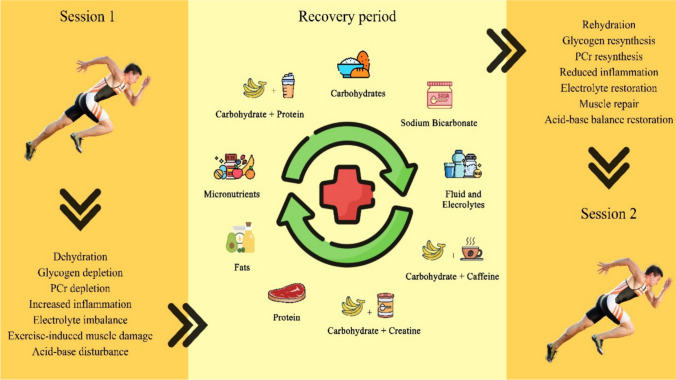
Post-exercise recovery strategies influence the body’s ability to restore physiological homeostasis, replenish energy stores, repair muscle damage, and promote desired adaptations, which improve exercise performance. This narrative review examines the impact of nutritional strategies commonly used for enhancing recovery and subsequent exercise performance, particularly when athletes face short recovery periods. Carbohydrate ingestion is essential for glycogen replenishment, especially within the initial hours post-exercise, with its impact dependent on the types, timing, and amount. Protein is essential for accelerating muscle recovery and achieving a positive nitrogen balance, depending on the type and dosage. The co-ingestion of carbohydrates with proteins or fats is explored for its role in maximizing glycogen resynthesis and muscle repair, with evidence supporting the addition of protein to suboptimal carbohydrate intake for enhanced recovery. Moreover, this review addresses the potential benefits of creatine and caffeine co-ingestion for accelerating glycogen synthesis and improving subsequent performance. Hydration strategies, including the use of milk-based beverages and electrolyte solutions, are also discussed, emphasizing their importance in maintaining fluid balance and optimizing recovery. This review also highlights the emerging role of micronutrients such as omega-3 fatty acids, antioxidants, and sodium bicarbonate in reducing muscle damage and improving acid–base balance. Evidence supports the tailored use of these nutritional strategies, particularly for athletes managing tight competition/training schedules. Future research should focus on refining individualized approaches for recovery and investigating the impact of novel supplements on subsequent performance.
Overview
AI snapshot
Written from the paper’s full text.
TL;DR
This narrative review synthesizes nutritional strategies for post-exercise recovery and subsequent exercise performance, defined as performance within ~2–24 h after a prior exhaustive bout. Carbohydrate and protein are central, with conditional evidence for creatine, caffeine, sodium bicarbonate, hydration, fats, and micronutrients.
Key findings
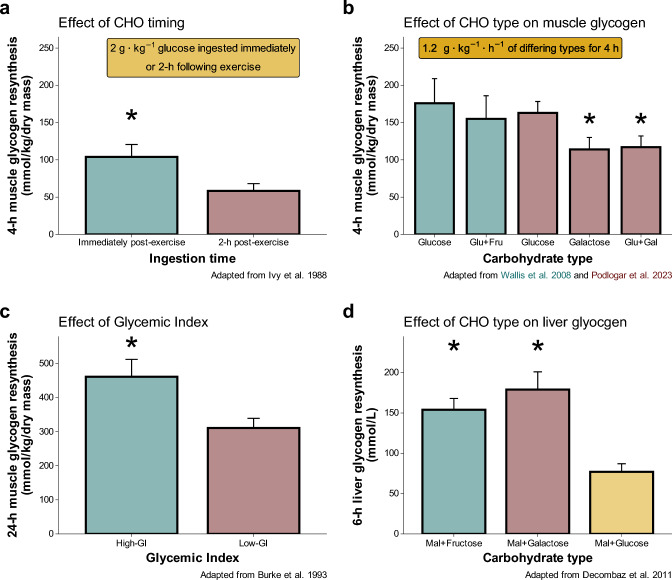
- Carbohydrate ingestion of 1–1.2 g·kg⁻¹·h⁻¹ during the initial 4 h post-exercise is recommended, with glucose/glucose-derived sources and optional fructose co-ingestion; glucose–fructose improved subsequent endurance capacity by ~33% and ~27% in two studies versus glucose alone, but other performance studies found no benefit. Complete muscle glycogen replenishment typically takes 24–36 h with 7–12 g·kg⁻¹ carbohydrate per day; high-GI carbohydrate increased 24-h glycogen (~106 vs 72 mmol·kg⁻¹ wet weight) but performance effects were inconsistent.
- Protein at 20–40 g post-exercise maximizes muscle protein synthesis for 3–4 h; endurance athletes are advised ~1.2–1.8 g·kg⁻¹·day⁻¹ and power athletes 1.7–2.2 g·kg⁻¹·day⁻¹. Carbohydrate–protein co-ingestion has small positive performance effects (~0.6–1.6%), with examples of ~14 min and ~8.5 min longer subsequent exercise capacity, especially when added to suboptimal carbohydrate.
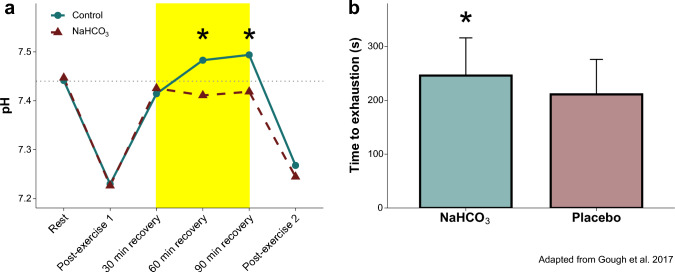
- Creatine plus carbohydrate may enhance glycogen storage (e.g., 82% greater resynthesis within 24 h; 18% increase after 5 days of 20 g·day⁻¹ loading; 53% with moderate carbohydrate), but effects on subsequent performance remain debated. Caffeine–carbohydrate co-ingestion shows mixed glycogen and performance results; sodium bicarbonate after exercise may restore acid–base balance and improve subsequent performance with 30–90 min recovery, though 35 min may be inadequate.
- Rehydration should replace 125–150% of body mass lost; milk-based beverages, oral rehydration solutions, and water with solid meals can support recovery, while water alone has low beverage hydration index. Dietary fats have limited evidence and no clear effect on subsequent performance; micronutrients reduce exercise-induced muscle damage but not consistently performance, with >1000 mg polyphenols/day for at least 3 days recommended.
Methods
- Narrative review with literature searched in PubMed/MEDLINE and Google Scholar using keyword and Boolean combinations covering carbohydrate, protein, fat, creatine, sodium bicarbonate, caffeine, micronutrients, and fluids/electrolytes.
- Evidence was classified as grade I (strong), grade II (moderate), or grade III (limited) based on consistency and volume of controlled trials.
- The review synthesized findings on recovery and subsequent exercise performance occurring within ~2–24 h of prior exhaustive exercise; no systematic meta-analysis or formal risk-of-bias assessment is reported.
Limitations
- Stated by the authors: much of the literature is based on male athletes, creating potential sex bias; exercise protocols vary and may not reflect real-world conditions; responses to creatine and caffeine co-ingestion are highly individualized; personalization literature is lacking; supplement interactions may not be additive; more research is needed in real-world sports, team sports, ultra-endurance events, and resistance-training athletes training twice daily.
- Evident from the text: as a narrative review, it does not systematically quantify study quality or pool effect sizes; many cited studies use different doses, timing, glycogen-depletion protocols, and performance tests, and several conclusions rely on markers of muscle damage or glycogen rather than subsequent performance.
Model-written summary. Check it against the paper before relying on it.
Integrity signals
Registry
Cites
Statistics
Figures
Verification
Claims the paper makes
21 Partly supported · 18 No full text of the sources · 5 Supported · 4 Own interpretation · 2 Supported so far · 1 Not supported · 1 Couldn’t confirm · accuracy not yet measured
At least one cited source doesn’t support this claim or points to a different paper, and none confirmed it — see the verdicts below.
In the paper
“There is currently no evidence to recommend consuming more than 1.2 g·kg−1⋅h−1 of carbohydrates, regardless of type [22, 25].”
§ Nutritional Strategies to Improve Post-exercise Recovery and Subsequent Exercise Performance: A Narrative Review > Grade I—Strong Evidence > Dietary Carbohydrates
What the sources say
- Not checked — no full text of the sourcecites [22] Trommelen J, et al. Fructose coingestion does not accelerate postexercise muscle glycogen repletion. Med Sci Sports Exerc. 2016;48(5):907–12. source
- Disputedcites [25] Fuchs CJ, et al. Sucrose ingestion after exhaustive exercise accelerates liver, but not muscle glycogen repletion compared with glucose ingestion in trained athletes. J Appl Physiol. 2016;120(11):1328–34. sourceExperimental — accuracy not yet measured
The NEW & NOTEWORTHY passage explicitly recommends sucrose at 1.5 g·kg−1·h−1 over glucose when rapid recovery of endogenous carbohydrate stores is the goal. Although the DISCUSSION says 1.2 g·kg−1·h−1 maximizes postexercise muscle glycogen synthesis, the paper reports faster liver glycogen repletion with sucrose at 1.5 g·kg−1·h−1. The claim's blanket statement, regardless of carbohydrate type, conflicts with that recommendation. (LLM, conf=0.88)
Checked by a reasoning model — may be wrong.
plain- Asserted: passes — The authors put it forward as true.
- Checkable: passes — It can be checked against evidence.
- Load-bearing: passes — The paper’s conclusions depend on it.
- Based: passes — The paper gives a reason why it holds.
The cited sources support only part of this claim — read each source’s verdict below.
In the paper
“Replenishing glycogen stores through immediate post-exercise carbohydrate intake is crucial for recovery, especially when athletes need to be fully prepared for another training session or competition within 24 h [7–9].”
§ Nutritional Strategies to Improve Post-exercise Recovery and Subsequent Exercise Performance: A Narrative Review > Grade I—Strong Evidence > Dietary Carbohydrates
What the sources say
- Supportedcites [7] Bonilla DA, et al. The 4R’s framework of nutritional strategies for post-exercise recovery: a review with emphasis on new generation of carbohydrates. Int J Environ Res Public Health. 2021;18(1):103. source
Section 3.2, “Refuel” (page unavailable), recommends a high-carbohydrate meal within two hours of exercise when rapid recovery is needed. It specifically emphasizes glycogen replenishment for athletes training twice in one day or competing on consecutive days, consistent with the claim’s short turnaround. (LLM, conf=0.89)
- Supportedcites [8] Fuchs CJ, Gonzalez JT, van Loon LJC. Fructose co-ingestion to increase carbohydrate availability in athletes. J Physiol. 2019;597(14):3549–60. source
The Introduction says glycogen repletion is especially important when optimal performance must be regained within 24 hours, including during intensive training and multiday competitions. The Conclusions and recommendations advise starting carbohydrate intake as soon as possible after exercise when rapid recovery and maximal performance within 24 hours are needed. (LLM, conf=0.94)
- Not matchedcites [9] Ivy JL. Regulation of muscle glycogen repletion, muscle protein synthesis and repair following exercise. J Sports Sci Med. 2004;3(3):131–8.
Couldn’t be matched to a paper in Crossref, so it can’t be checked.
plaindirect- Asserted: passes — The authors put it forward as true.
- Checkable: passes — It can be checked against evidence.
- Load-bearing: passes — The paper’s conclusions depend on it.
- Based: passes — The paper gives a reason why it holds.
- Supported
The cited sources support only part of this claim — read each source’s verdict below.
In the paper
“Complete replenishment of muscle glycogen stores typically unfolds over a 24–36 h period post-exercise, provided that 7–12 g·kg−1 carbohydrate are consumed per day [15–18].”
§ Nutritional Strategies to Improve Post-exercise Recovery and Subsequent Exercise Performance: A Narrative Review > Grade I—Strong Evidence > Dietary Carbohydrates
What the sources say
- Partly supportedcites [15] Burke LM, et al. Carbohydrates for training and competition. J Sports Sci. 2011;29(Suppl 1):S17-27. sourceExperimental — accuracy not yet measured
In “Acute strategies to promote high carbohydrate availability for exercise” (page unavailable), the paper says glycogen stores can normalize within 24 hours with reduced training and adequate fuel, and that high glycogen concentrations can be achieved with 24–36 hours of high carbohydrate intake and rest. Table II gives 7–12 g/kg per 24 hours for general fuelling, but does not establish that this entire intake range typically produces complete post-exercise replenishment in 24–36 hours. (LLM, conf=0.85)
- Partly supportedcites [16] Gonzalez JT, Betts JA. Dietary sugars, exercise and hepatic carbohydrate metabolism. Proc Nutr Soc. 2019;78(2):246–56. sourceExperimental — accuracy not yet measured
The Exercise performance section says muscle glycogen may take 20–24 h to fully recover after exhaustive exercise with high carbohydrate intake, or up to 46 h on a moderate-carbohydrate diet (page unavailable in our copy). It does not give the claimed 24–36 h range or specify 7–12 g/kg of carbohydrate per day; its intake recommendation is 1–1.2 g/kg per hour during the first 4 h of recovery. (LLM, conf=0.88)
- Partly supportedcites [17] Murray B, Rosenbloom C. Fundamentals of glycogen metabolism for coaches and athletes. Nutr Rev. 2018;76(4):243–59. sourceExperimental — accuracy not yet measured
The Time Course of Glycogen Replenishment section says adequate carbohydrate can restore muscle glycogen within 24 hours, and Other Nutrient Interventions specifies at least 24 hours of rest with 10 g/kg/day for full restoration. The paper does not give 24–36 hours as the typical period or 7–12 g/kg/day as the requisite intake; Glycogen Resynthesis After Exercise also says sufficient total energy is needed. (LLM, conf=0.86)
- Partly supportedcites [18] Podlogar T, Wallis GA. New horizons in carbohydrate research and application for endurance athletes. Sports Med. 2022;52(Suppl 1):5–23. sourceExperimental — accuracy not yet measured
The Post-Competition section says full muscle-glycogen repletion is believed to require 24–36 hours. It recommends an initial hourly carbohydrate intake when rapid repletion is needed, followed by a diet that may provide up to 12 g/kg daily; it does not give a 7–12 g/kg daily range or say that this range ensures complete repletion. (LLM, conf=0.87)
plaindirect- Asserted: passes — The authors put it forward as true.
- Checkable: passes — It can be checked against evidence.
- Load-bearing: passes — The paper’s conclusions depend on it.
- Based: passes — The paper gives a reason why it holds.
- Partly supported
The cited sources support only part of this claim — read each source’s verdict below.
In the paper
“and may impair exercise performance the following day [14]”
§ Nutritional Strategies to Improve Post-exercise Recovery and Subsequent Exercise Performance: A Narrative Review > Grade I—Strong Evidence > Dietary Carbohydrates
What the sources say
- Partly supportedcites [14] Díaz-Lara J, et al. Delaying post-exercise carbohydrate intake impairs next-day exercise capacity but not muscle glycogen or molecular responses. Acta Physiol (Oxf). 2024;240(10): e14215. sourceExperimental — accuracy not yet measured
The Discussion reports reduced next-day high-intensity exercise capacity after delaying post-exercise carbohydrate intake. It specifies a 3-hour delay, not the 2-hour delay in the attributed claim; no page number is available in our copy. (LLM, conf=0.90)
hedgedconditional- Asserted: passes — The authors put it forward as true.
- Checkable: passes — It can be checked against evidence.
- Load-bearing: passes — The paper’s conclusions depend on it.
- Based: passes — The paper gives a reason why it holds.
- Partly supported
The cited sources support only part of this claim — read each source’s verdict below.
In the paper
“Liver glycogen resynthesis proceeds at a slower pace during the initial post-exercise hours, achieving saturation only after 11–25 h, contingent upon adherence to a high-carbohydrate diet [16].”
§ Nutritional Strategies to Improve Post-exercise Recovery and Subsequent Exercise Performance: A Narrative Review > Grade I—Strong Evidence > Dietary Carbohydrates
What the sources say
- Partly supportedcites [16] Gonzalez JT, Betts JA. Dietary sugars, exercise and hepatic carbohydrate metabolism. Proc Nutr Soc. 2019;78(2):246–56. sourceExperimental — accuracy not yet measured
The Exercise performance section reports that liver glycogen resynthesis is about 30–50% slower in the first 2 hours than at 3–5 hours post-exercise. It estimates 11 hours with glucose–fructose mixtures and about 25 hours with glucose alone, but those times are extrapolations under high carbohydrate ingestion, not observed saturation times or a general requirement for a high-carbohydrate diet. (LLM, conf=0.86)
plaindirect- Asserted: passes — The authors put it forward as true.
- Checkable: passes — It can be checked against evidence.
- Load-bearing: unclear — It is unclear whether the paper’s conclusions depend on it.
- Based: passes — The paper gives a reason why it holds.
- Partly supported
The cited sources support only part of this claim — read each source’s verdict below.
In the paper
“However, it seems that more than the timing of the meals, the total amount of protein plays a more important role than the timing itself [53, 68].”
§ Nutritional Strategies to Improve Post-exercise Recovery and Subsequent Exercise Performance: A Narrative Review > Grade I—Strong Evidence > Protein
What the sources say
- Not checked — no full text of the sourcecites [53] Pasiakos SM, Lieberman HR, McLellan TM. Effects of protein supplements on muscle damage, soreness and recovery of muscle function and physical performance: a systematic review. Sports Med. 2014;44(5):655–70. source
- Partly supportedcites [68] Trommelen J, et al. The anabolic response to protein ingestion during recovery from exercise has no upper limit in magnitude and duration in vivo in humans. Cell Rep Med. 2023;4(12): 101324. sourceExperimental — accuracy not yet measured
The Discussion reports that a single large protein dose produces prolonged anabolism, allowing more flexibility in meal timing. However, the study compared single doses after exercise; it did not directly compare total daily protein intake with meal timing or establish which is more important. (LLM, conf=0.82)
hedgeddirect- Asserted: passes — The authors put it forward as true.
- Checkable: passes — It can be checked against evidence.
- Load-bearing: passes — The paper’s conclusions depend on it.
- Based: passes — The paper gives a reason why it holds.
The cited sources that could be checked couldn’t confirm or dispute this claim.
In the paper
“However, the influence of GI on subsequent exercise performance appears inconsistent.”
§ Nutritional Strategies to Improve Post-exercise Recovery and Subsequent Exercise Performance: A Narrative Review > Grade I—Strong Evidence > Dietary Carbohydrates
What the sources say
- Not checked — no full text of the sourcecites [39] Wong SH, et al. Effect of glycemic index meals on recovery and subsequent endurance capacity. Int J Sports Med. 2009;30(12):898–905. source
- Not checked — no full text of the sourcecites [40] Erith S, et al. The effect of high carbohydrate meals with different glycemic indices on recovery of performance during prolonged intermittent high-intensity shuttle running. Int J Sport Nutr Exerc Metab. 2006;16(4):393–404. source
- Not checked — no full text of the sourcecites [41] Stevenson E, et al. Influence of the glycaemic index of an evening meal on substrate oxidation following breakfast and during exercise the next day in healthy women. Eur J Clin Nutr. 2008;62(5):608–16. source
- Not checked — no full text of the sourcecites [42] Brown LJ, et al. High versus low glycemic index 3-h recovery diets following glycogen-depleting exercise has no effect on subsequent 5-km cycling time trial performance. J Sci Med Sport. 2013;16(5):450–4. source
- Could not verifycites [43] Stevenson E, Williams C, Nute M. The influence of the glycaemic index of breakfast and lunch on substrate utilisation during the postprandial periods and subsequent exercise. Br J Nutr. 2005;93(6):885–93. sourceExperimental — accuracy not yet measured
The study’s Abstract and Discussion report substrate utilisation during a fixed-duration run, not whether GI affects exercise performance inconsistently. A search for exercise performance and conflicting findings found references to performance studies, but no passage in our copy assessing the consistency of their results. (LLM, conf=0.76)
hedged- Asserted: passes — The authors put it forward as true.
- Checkable: passes — It can be checked against evidence.
- Load-bearing: passes — The paper’s conclusions depend on it.
- Based: passes — The paper gives a reason why it holds.
The cited sources support only part of this claim — read each source’s verdict below.
In the paper
“However, this benefit appears to occur only when protein is added to a suboptimal amount of carbohydrate (e.g., 0.3 g·kg⁻1·h⁻1 protein and 0.9 g·kg−1⋅h−1 carbohydrate) [85].”
§ Nutritional Strategies to Improve Post-exercise Recovery and Subsequent Exercise Performance: A Narrative Review > Grade I—Strong Evidence > Carbohydrate and Protein Co-ingestion
What the sources say
- Partly supportedcites [85] Margolis LM, et al. Coingestion of carbohydrate and protein on muscle glycogen synthesis after exercise: a meta-analysis. Med Sci Sports Exerc. 2021;53(2):384–93. sourceExperimental — accuracy not yet measured
The Conclusion proposes 0.9 g·kg−1·h−1 carbohydrate plus 0.3 g·kg−1·h−1 protein as a way to support overall postexercise recovery. But the Results found no significant glycogen-synthesis benefit in either the high- or low-carbohydrate subgroup, and the Discussion says the analysis does not establish that a benefit occurs only at lower carbohydrate intakes. The cited amounts are supported; the exclusive condition is not. (LLM, conf=0.87)
hedgedconditional- Asserted: passes — The authors put it forward as true.
- Checkable: passes — It can be checked against evidence.
- Load-bearing: passes — The paper’s conclusions depend on it.
- Based: passes — The paper gives a reason why it holds.
- Partly supported
The cited sources support only part of this claim — read each source’s verdict below.
In the paper
“Gray et al. [34] reported that consuming glucose and fructose during the initial 4 h and again at 15 h of recovery from exhaustive exercise resulted in a notable increase in cycling performance capacity, ~ 27% longer compared with glucose alone.”
§ Nutritional Strategies to Improve Post-exercise Recovery and Subsequent Exercise Performance: A Narrative Review > Grade I—Strong Evidence > Dietary Carbohydrates
What the sources say
- Partly supportedcites [34] Gray EA, et al. Postexercise glucose-fructose coingestion augments cycling capacity during short-term and overnight recovery from exhaustive exercise, compared with isocaloric glucose. Int J Sport Nutr Exerc Metab. 2020;30(1):54–61. sourceExperimental — accuracy not yet measured
The Discussion (page unavailable) reports greater cycling capacity with glucose–fructose than with glucose alone after both 4-hour and 15-hour recoveries. It gives a 27.2% improvement for the 4-hour experiment, but 18.0% for the overnight experiment. The Experimental Trials section says carbohydrate was ingested during the first four hours and cycling capacity was tested at 15 hours; it does not say participants consumed it again at 15 hours. (LLM, conf=0.90)
plaindirect- Asserted: passes — The authors put it forward as true.
- Checkable: passes — It can be checked against evidence.
- Load-bearing: passes — The paper’s conclusions depend on it.
- Based: passes — The paper gives a reason why it holds.
- Partly supported
Every source the paper cites for this claim was checked and supports it.
In the paper
“reporting that co-ingestion of carbohydrate (0.86 g·kg−1⋅h−1) with protein (0.27 g·kg−1⋅h−1) did not increase muscle glycogen re-synthesis more than carbohydrate per se when ingested at 0.95 g·kg−1⋅h−1 during short-term post-exercise recovery (≤ 8 h) [86]”
§ Nutritional Strategies to Improve Post-exercise Recovery and Subsequent Exercise Performance: A Narrative Review > Grade I—Strong Evidence > Carbohydrate and Protein Co-ingestion
What the sources say
- Supportedcites [86] Craven J, et al. The effect of consuming carbohydrate with and without protein on the rate of muscle glycogen re-synthesis during short-term post-exercise recovery: a systematic review and meta-analysis. Sports Med Open. 2021;7(1):9. source
The Abstract Results report the same mean carbohydrate and protein intake rates and find no improvement in muscle glycogen re-synthesis with carbohydrate plus protein versus carbohydrate alone. The Conclusion places this finding in short-term post-exercise recovery (≤8 h). Page numbers are not provided in our copy. (LLM, conf=0.94)
plain- Asserted: passes — The authors put it forward as true.
- Checkable: passes — It can be checked against evidence.
- Load-bearing: passes — The paper’s conclusions depend on it.
- Based: passes — The paper gives a reason why it holds.
- Supported
- Probably not a substantial claim. 3
- It may state two separate claims as one. 13
The cited sources support only part of this claim — read each source’s verdict below.
In the paper
“while those engaged in power-based sports are advised to ingest 1.7–2.2 g·kg–1 [73]”
§ Nutritional Strategies to Improve Post-exercise Recovery and Subsequent Exercise Performance: A Narrative Review > Grade I—Strong Evidence > Protein
What the sources say
- Partly supportedcites [73] Chapman S, et al. Does protein supplementation support adaptations to arduous concurrent exercise training? A systematic review and meta-analysis with military based applications. Nutrients. 2021;13(5):1416. sourceExperimental — accuracy not yet measured
The Discussion (§4.1; page not provided) calls 1.7–2.2 g·kg−1·day−1 a current recommendation in the context of arduous concurrent training. It does not identify that range as advice specifically for athletes in power-based sports; §4.2 also discusses the range for periods of intense or high-volume endurance training. (LLM, conf=0.85)
plain- Asserted: passes — The authors put it forward as true.
- Checkable: passes — It can be checked against evidence.
- Load-bearing: passes — The paper’s conclusions depend on it.
- Based: passes — The paper gives a reason why it holds.
Probably not a substantial claim.
- Partly supported
The cited sources support only part of this claim — read each source’s verdict below.
In the paper
“a pre-sleep protein dose of ≥ 40 g has been recommended to sustain MPS rates and minimize overnight muscle protein breakdown [75, 76]”
§ Nutritional Strategies to Improve Post-exercise Recovery and Subsequent Exercise Performance: A Narrative Review > Grade I—Strong Evidence > Protein
What the sources say
- Not checked — no full text of the sourcecites [75] Res PT, et al. Protein ingestion before sleep improves postexercise overnight recovery. Med Sci Sports Exerc. 2012;44(8):1560–9. source
- Partly supportedcites [76] Trommelen J, et al. Presleep dietary protein-derived amino acids are incorporated in myofibrillar protein during postexercise overnight recovery. Am J Physiol Endocrinol Metab. 2018;314(5):E457-e467. sourceExperimental — accuracy not yet measured
The Discussion (page unavailable) reports that 40 g of casein before sleep increased overnight muscle protein synthesis in previous work, while 30 g did not increase myofibrillar protein synthesis in this study. It calls for research to identify the maximal effective dose; it does not recommend a ≥40 g threshold or show that this dose minimizes overnight muscle protein breakdown. (LLM, conf=0.85)
plaindirect- Asserted: passes — The authors put it forward as true.
- Checkable: passes — It can be checked against evidence.
- Load-bearing: passes — The paper’s conclusions depend on it.
- Based: passes — The paper gives a reason why it holds.
Probably not a substantial claim.
The cited sources support only part of this claim — read each source’s verdict below.
In the paper
“it is inferred that the co-ingestion of glucose and fructose-based carbohydrates during the post-exercise recovery phase is likely more beneficial than other carbohydrate sources, given its superior efficacy in faster gastrointestinal absorption and glycogen stores and its association with reduced gastrointestinal discomfort when an optimal carbohydrate dosage of 1–1.2 g·kg−1⋅h−1 is consumed [18]”
§ Nutritional Strategies to Improve Post-exercise Recovery and Subsequent Exercise Performance: A Narrative Review > Grade I—Strong Evidence > Dietary Carbohydrates
What the sources say
- Partly supportedcites [18] Podlogar T, Wallis GA. New horizons in carbohydrate research and application for endurance athletes. Sports Med. 2022;52(Suppl 1):5–23. sourceExperimental — accuracy not yet measured
Split into 2 atoms — 0 confirmed, 2 partially supported, 0 disputed, 0 misattributed, 0 unverifiable. Expand the claim to see per-atom verdicts.
hedgedconditional- Asserted: passes — The authors put it forward as true.
- Checkable: passes — It can be checked against evidence.
- Load-bearing: passes — The paper’s conclusions depend on it.
- Based: passes — The paper gives a reason why it holds.
It may state two separate claims as one.
- Partly supported
The cited sources support only part of this claim — read each source’s verdict below.
In the paper
“Endurance athletes are recommended to consume ~ 1.2–1.8 g·kg–1 of high-quality protein [69–72]”
§ Nutritional Strategies to Improve Post-exercise Recovery and Subsequent Exercise Performance: A Narrative Review > Grade I—Strong Evidence > Protein
What the sources say
- Not checked — no full text of the sourcecites [69] Tarnopolsky M. Protein requirements for endurance athletes. Nutrition. 2004;20(7–8):662–8. source
- Partly supportedcites [70] Kato H, et al. Protein requirements are elevated in endurance athletes after exercise as determined by the indicator amino acid oxidation method. PLoS ONE. 2016;11(6): e0157406. sourceExperimental — accuracy not yet measured
The Discussion reports earlier recommendations of 1.2–1.4 g/kg/day for endurance athletes and this study’s recommended intake of 1.83 g/kg/day, supporting the approximate endpoints. It does not recommend a single 1.2–1.8 g/kg/day range of high-quality protein; the 1.83 estimate comes from a specific controlled-training and post-exercise setting. No page numbers are available in our copy. (LLM, conf=0.85)
- Partly supportedcites [71] Bandegan A, et al. Indicator amino acid oxidation protein requirement estimate in endurance-trained men 24 h postexercise exceeds both the EAR and current athlete guidelines. Am J Physiol Endocrinol Metab. 2019;316(5):E741-e748. sourceExperimental — accuracy not yet measured
The Introduction (page unavailable) reports recommendations of 1.2–1.6 g·kg⁻¹·day⁻¹ for endurance-trained individuals. The Discussion (page unavailable) describes 1.8 g·kg⁻¹·day⁻¹ as typical intake, not a recommendation; the cited passages also do not specify high-quality protein. (LLM, conf=0.90)
- Not checked — no full text of the sourcecites [72] Wooding DJ, et al. Increased protein requirements in female athletes after variable-intensity exercise. Med Sci Sports Exerc. 2017;49(11):2297–304. source
plain- Asserted: passes — The authors put it forward as true.
- Checkable: passes — It can be checked against evidence.
- Load-bearing: passes — The paper’s conclusions depend on it.
- Based: passes — The paper gives a reason why it holds.
Probably not a substantial claim.
Every source the paper cites for this claim was checked and supports it.
In the paper
“current research suggests that glucose and glucose-derived carbohydrates, with or without the addition of fructose, are the most effective sources for replenishing post-exercise muscle glycogen within a recovery window ≤ 8 h, and that addition of monosaccharide galactose results in inferior replenishment rates [24]”
§ Nutritional Strategies to Improve Post-exercise Recovery and Subsequent Exercise Performance: A Narrative Review > Grade I—Strong Evidence > Dietary Carbohydrates
What the sources say
- Supportedcites [24] Podlogar T, et al. Postexercise muscle glycogen synthesis with glucose, galactose, and combined galactose-glucose ingestion. Am J Physiol Endocrinol Metab. 2023;325(6):E672–81. source
Split into 2 atoms — 2 confirmed, 0 partially supported, 0 disputed, 0 misattributed, 0 unverifiable. Expand the claim to see per-atom verdicts.
hedgeddirect- Asserted: passes — The authors put it forward as true.
- Checkable: passes — It can be checked against evidence.
- Load-bearing: passes — The paper’s conclusions depend on it.
- Based: passes — The paper gives a reason why it holds.
It may state two separate claims as one.
- Supported
The cited sources support only part of this claim — read each source’s verdict below.
In the paper
“research suggesting that 20–40 g of high-quality protein consumed after exercise maximizes MPS rates for several hours (i.e., 3–4 h), the exact dose dependent on muscle mass involved during exercise [56–58]”
§ Nutritional Strategies to Improve Post-exercise Recovery and Subsequent Exercise Performance: A Narrative Review > Grade I—Strong Evidence > Protein
What the sources say
- Partly supportedcites [56] Churchward-Venne TA, Burd NA, Phillips SM. Nutritional regulation of muscle protein synthesis with resistance exercise: strategies to enhance anabolism. Nutr Metab (Lond). 2012;9(1):40. sourceExperimental — accuracy not yet measured
The Conclusions (page unavailable) recommend about 20–25 g of rapidly absorbed protein to maximize post-exercise MPS in young healthy individuals. The ‘Leucine as a nutrient signal’ section (page unavailable) reports that 40 g did not increase MPS beyond 20 g in young men; it does not establish a 20–40 g optimal range or make the dose dependent on muscle mass exercised. The ‘window of anabolic potential’ section says the amino-acid-mediated increase lasts a few hours at most, but does not establish the stated 3–4-hour duration. (LLM, conf=0.89)
- Partly supportedcites [57] Macnaughton LS, et al. The response of muscle protein synthesis following whole-body resistance exercise is greater following 40 g than 20 g of ingested whey protein. Physiol Rep. 2016;4(15):e12893. sourceExperimental — accuracy not yet measured
The Introduction recommends about 20–25 g after leg-only resistance exercise, while the Discussion reports that 40 g produced greater MPS than 20 g after whole-body exercise in young resistance-trained men. The Discussion suggests that the amount of muscle activated may affect the effective dose, but explicitly says the study cannot determine the dose that maximizes MPS. It measured recovery over five hours, not a specified 3–4-hour period. (LLM, conf=0.90)
- Partly supportedcites [58] Moore DR, et al. Ingested protein dose response of muscle and albumin protein synthesis after resistance exercise in young men. Am J Clin Nutr. 2009;89(1):161–8. sourceExperimental — accuracy not yet measured
The Abstract and Discussion report that 20 g of high-quality protein maximized muscle protein synthesis after leg-based resistance exercise in six young men; the study measured synthesis over four hours. They do not establish that the optimal dose varies with the muscle mass exercised, and the Results found no greater response to 40 g than to 20 g. (LLM, conf=0.88)
hedgeddirect- Asserted: passes — The authors put it forward as true.
- Checkable: passes — It can be checked against evidence.
- Load-bearing: passes — The paper’s conclusions depend on it.
- Based: passes — The paper gives a reason why it holds.
It may state two separate claims as one.
- Partly supported
The sources with a verdict support this claim; the rest weren’t checked yet, have no full text we could read, or their verdicts aren’t rated yet.
In the paper
“Nevertheless, co-ingestion of glucose with fructose is preferred owing to reduced gastrointestinal complaints and the beneficial effect on liver glycogen replenishment, as discussed below [18, 22, 26]”
§ Nutritional Strategies to Improve Post-exercise Recovery and Subsequent Exercise Performance: A Narrative Review > Grade I—Strong Evidence > Dietary Carbohydrates
What the sources say
- Supportedcites [18] Podlogar T, Wallis GA. New horizons in carbohydrate research and application for endurance athletes. Sports Med. 2022;52(Suppl 1):5–23. source
The During Competition section says gastrointestinal issues are less prevalent when fructose is co-ingested with glucose and recommends glucose–fructose mixtures. The Post-Competition section reports quicker liver glycogen replenishment with these mixtures than with glucose-based carbohydrates alone. Page numbers are unavailable in our copy. (LLM, conf=0.92)
- Not checked — no full text of the sourcecites [22] Trommelen J, et al. Fructose coingestion does not accelerate postexercise muscle glycogen repletion. Med Sci Sports Exerc. 2016;48(5):907–12. source
- Not checked — no full text of the sourcecites [26] Gonzalez JT, et al. Liver glycogen metabolism during and after prolonged endurance-type exercise. Am J Physiol Endocrinol Metab. 2016;311(3):E543–53. source
plaindirect- Asserted: passes — The authors put it forward as true.
- Checkable: passes — It can be checked against evidence.
- Load-bearing: passes — The paper’s conclusions depend on it.
- Based: passes — The paper gives a reason why it holds.
It may state two separate claims as one.
- Supported
The cited sources support only part of this claim — read each source’s verdict below.
In the paper
“Moreover, liver glycogen resynthesis is inherently slower than that of muscle, possibly owing to its higher rate of glycogen turnover and/or distinct glycogen synthesis pathways that are contingent on hormonal fluctuations (notably insulin, glucagon, and epinephrine) [45, 47].”
§ Nutritional Strategies to Improve Post-exercise Recovery and Subsequent Exercise Performance: A Narrative Review > Grade I—Strong Evidence > Dietary Carbohydrates
What the sources say
- Partly supportedcites [45] Gonzalez JT, Wallis GA. Carb-conscious: the role of carbohydrate intake in recovery from exercise. Curr Opin Clin Nutr Metab Care. 2021;24(4):364–71. sourceExperimental — accuracy not yet measured
In “Understanding liver glycogen metabolism cannot be simply extrapolated from evidence collection on muscle glycogen metabolism” (page not provided), the paper describes different post-exercise repletion patterns: liver repletion is slower in the first two hours than in hours 2–5, while muscle repletion is fastest early. It also describes substantial liver glycogen turnover and hormonal regulation, but does not establish that liver resynthesis is inherently slower than muscle resynthesis, that liver turnover is higher than muscle turnover, or that distinct synthesis pathways explain the difference. (LLM, conf=0.88)
- Partly supportedcites [47] Gonzalez JT, et al. Glucose plus fructose ingestion for post-exercise recovery-greater than the sum of its parts? Nutrients. 2017;9(4):344. sourceExperimental — accuracy not yet measured
Section 3.2 suggests that liver glycogen stores may take longer than muscle stores to recover after exercise, but it does not say liver resynthesis is inherently slower. It attributes the possible difference to post-exercise handling of glucose, not higher glycogen turnover. Sections 5.2 and 2 describe distinct liver synthesis pathways and insulin regulation, but do not establish the claimed explanation involving fluctuations in insulin, glucagon, and epinephrine. Page numbers are unavailable in our copy. (LLM, conf=0.86)
hedgedconditional- Asserted: passes — The authors put it forward as true.
- Checkable: passes — It can be checked against evidence.
- Load-bearing: passes — The paper’s conclusions depend on it.
- Based: passes — The paper gives a reason why it holds.
It may state two separate claims as one.
- Partly supported
The cited sources support only part of this claim — read each source’s verdict below.
In the paper
“it may confer additional benefits, including positive nitrogen balance leading to increased whole-body muscle protein synthesis [93], increased protein content related to mitochondrial biogenesis [94], reduced muscle damage markers [95], and accelerated post-exercise rehydration [96]”
§ Nutritional Strategies to Improve Post-exercise Recovery and Subsequent Exercise Performance: A Narrative Review > Grade I—Strong Evidence > Carbohydrate and Protein Co-ingestion
What the sources say
- Partly supportedcites [93] Churchward-Venne TA, et al. Dose-response effects of dietary protein on muscle protein synthesis during recovery from endurance exercise in young men: a double-blind randomized trial. Am J Clin Nutr. 2020;112(2):303–17. sourceExperimental — accuracy not yet measured
The Discussion (page unavailable) reports that whole-body net protein balance was negative with carbohydrate alone but positive after protein co-ingestion. The Results also report higher myofibrillar protein synthesis with 30 or 45 g of protein. The paper does not establish that positive whole-body balance leads to increased muscle protein synthesis; its Discussion cautions that whole-body protein metabolism is not necessarily reflective of the skeletal-muscle response. The other benefits in the sentence have separate citations and are not assessed here. (LLM, conf=0.85)
- Supportedcites [94] Hansen M, et al. Supplement with whey protein hydrolysate in contrast to carbohydrate supports mitochondrial adaptations in trained runners. J Int Soc Sports Nutr. 2020;17(1):46. source
Split into 2 atoms — 2 confirmed, 0 partially supported, 0 disputed, 0 misattributed, 0 unverifiable. Expand the claim to see per-atom verdicts.
- Partly supportedcites [95] Huang WC, et al. Whey protein improves marathon-induced injury and exercise performance in elite track runners. Int J Med Sci. 2017;14(7):648–54. sourceExperimental — accuracy not yet measured
The Discussions report lower CK, LDH and AST after the marathon in athletes given whey protein than in the placebo group, supporting the cited point about reduced muscle-damage markers. However, the Methods (Experimental design) describe whey protein versus maltodextrin, not carbohydrate–protein co-ingestion, so the study does not establish that benefit for the combination. (LLM, conf=0.86)
hedgedconditional- Asserted: passes — The authors put it forward as true.
- Checkable: passes — It can be checked against evidence.
- Load-bearing: passes — The paper’s conclusions depend on it.
- Based: passes — The paper gives a reason why it holds.
It may state two separate claims as one.
- Partly supported
The cited sources support only part of this claim — read each source’s verdict below.
In the paper
“Milk-based beverages have also led to greater exercise capacity in subsequent exercise performance when compared with both noncaloric and energy-matched beverages, likely due to simultaneously increasing glycogen resynthesis and stimulating muscle protein synthesis [114].”
§ Nutritional Strategies to Improve Post-exercise Recovery and Subsequent Exercise Performance: A Narrative Review > Grade I—Strong Evidence > Fluid and Electrolytes
What the sources say
- Partly supportedcites [114] Russo I, et al. Systematic literature review: the effect of dairy milk on markers of recovery optimisation in response to endurance exercise. Int J sports Sci. 2019:69–85. sourceExperimental — accuracy not yet measured
Split into 2 atoms — 1 confirmed, 1 partially supported, 0 disputed, 0 misattributed, 0 unverifiable. Expand the claim to see per-atom verdicts.
hedgeddirect- Asserted: passes — The authors put it forward as true.
- Checkable: passes — It can be checked against evidence.
- Load-bearing: passes — The paper’s conclusions depend on it.
- Based: passes — The paper gives a reason why it holds.
It may state two separate claims as one.
- Partly supported
The sources with a verdict support this claim; the rest weren’t checked yet, have no full text we could read, or their verdicts aren’t rated yet.
In the paper
“research has shown that administering NaHCO3 within approximately < 30 min following exercise can restore extracellular acid–base balance during a 75–90 min recovery period between two bouts of exercise and may improve subsequent exercise performance [129, 130]”
§ Nutritional Strategies to Improve Post-exercise Recovery and Subsequent Exercise Performance: A Narrative Review > Grade II—Moderate Evidence > Sodium Bicarbonate
What the sources say
- Not checked — no full text of the sourcecites [129] Gough LA, et al. Ingestion of sodium bicarbonate (NaHCO3) following a fatiguing bout of exercise accelerates postexercise acid-base balance recovery and improves subsequent high-intensity cycling time to exhaustion. Int J Sport Nutr Exerc Metab. 2017;27(5):429–38. source
- Supportedcites [130] Gough LA, et al. Post-exercise supplementation of sodium bicarbonate improves acid base balance recovery and subsequent high-intensity boxing specific performance. Front Nutr. 2019;6:155. source
The Experimental Design and Protocol section reports NaHCO3 ingestion 10 minutes into a 75-minute recovery period. The Discussion reports that acid–base measures recovered and subsequent boxing performance improved; it also describes a prior study using ingestion 30 minutes into a 90-minute recovery period that improved subsequent cycling capacity. The supplied passages have no page numbers. (LLM, conf=0.93)
hedgedconditional- Asserted: passes — The authors put it forward as true.
- Checkable: passes — It can be checked against evidence.
- Load-bearing: passes — The paper’s conclusions depend on it.
- Based: passes — The paper gives a reason why it holds.
It may state two separate claims as one.
The cited sources support only part of this claim — read each source’s verdict below.
In the paper
“Exercising in a dehydrated state is well-established to negatively affect both performance and health [97, 98].”
§ Nutritional Strategies to Improve Post-exercise Recovery and Subsequent Exercise Performance: A Narrative Review > Grade I—Strong Evidence > Fluid and Electrolytes
What the sources say
- Partly supportedcites [97] Lorenzo I, Serra-Prat M, Yébenes JC. The role of water homeostasis in muscle function and frailty: a review. Nutrients. 2019;11(8):1857. sourceExperimental — accuracy not yet measured
Section 7 (Dehydration in the Elderly; page unavailable) links dehydration with reduced muscle strength and adverse health outcomes in older adults. Section 10 (Water’s Role in Metabolic Muscle Function; page unavailable) says water loss can affect muscle function. Neither establishes that exercising while dehydrated negatively affects both performance and health, particularly as a well-established general finding. (LLM, conf=0.84)
- Partly supportedcites [98] Maughan RJ, Shirreffs SM. Dehydration and rehydration in competative sport. Scand J Med Sci Sports. 2010;20(Suppl 3):40–7. sourceExperimental — accuracy not yet measured
The Summary (page not supplied) says dehydration can impair performance and pose a health risk, especially during or after exercise in warm climates. It qualifies this finding: dehydration must be sufficiently severe, and low levels are well tolerated in cool environments. The citing sentence omits those limits. (LLM, conf=0.88)
boosteddirect- Asserted: passes — The authors put it forward as true.
- Checkable: passes — It can be checked against evidence.
- Load-bearing: passes — The paper’s conclusions depend on it.
- Based: passes — The paper gives a reason why it holds.
It may state two separate claims as one.
- Partly supported
A claim is checked only against the cited paper’s full text, never its abstract, and none is available for its sources.
In the paper
“Protein ingestion after exercise is considered one of the pillars of recovery owing to its role in promoting muscle protein synthesis (MPS), reducing muscle protein breakdown, and facilitating muscle repair and adaptation following exercise-induced damage [51–54].”
§ Nutritional Strategies to Improve Post-exercise Recovery and Subsequent Exercise Performance: A Narrative Review > Grade I—Strong Evidence > Protein
What the sources say
- Not checked — no full text of the sourcecites [51] Moore DR, et al. Beyond muscle hypertrophy: why dietary protein is important for endurance athletes. Appl Physiol Nutr Metab. 2014;39(9):987–97. source
- Not checked — no full text of the sourcecites [52] Doering TM, et al. Postexercise dietary protein strategies to maximize skeletal muscle repair and remodeling in masters endurance athletes: a review. Int J Sport Nutr Exerc Metab. 2016;26(2):168–78. source
- Not checked — no full text of the sourcecites [53] Pasiakos SM, Lieberman HR, McLellan TM. Effects of protein supplements on muscle damage, soreness and recovery of muscle function and physical performance: a systematic review. Sports Med. 2014;44(5):655–70. source
- Not checked — no full text of the sourcecites [54] Tipton KD, Wolfe RR. Protein and amino acids for athletes. J Sports Sci. 2004;22(1):65–79. source
plaindirect- Asserted: passes — The authors put it forward as true.
- Checkable: passes — It can be checked against evidence.
- Load-bearing: passes — The paper’s conclusions depend on it.
- Based: passes — The paper gives a reason why it holds.
It may state two separate claims as one.
In the paper
“Effective post-exercise recovery is critical for restoring physiological homeostasis, repairing muscle damage, replenishing energy stores, and facilitating adaptations that enhance athletic performance [1].”
§ Nutritional Strategies to Improve Post-exercise Recovery and Subsequent Exercise Performance: A Narrative Review > Introduction
What the sources say
- Not checked — no full text of the sourcecites [1] Kenttä G, Hassmén P. Overtraining and recovery. A conceptual model. Sports Med. 1998;26(1):1–16. source
plaindirect- Asserted: passes — The authors put it forward as true.
- Checkable: passes — It can be checked against evidence.
- Load-bearing: passes — The paper’s conclusions depend on it.
- Based: passes — The paper gives a reason why it holds.
It may state two separate claims as one.
In the paper
“although high-GI carbohydrate ingestion leads to higher glycogen content after 24 h of recovery [27], during very short recovery periods the total carbohydrate dose appears more important than the GI”
§ Nutritional Strategies to Improve Post-exercise Recovery and Subsequent Exercise Performance: A Narrative Review > Grade I—Strong Evidence > Dietary Carbohydrates
What the sources say
- Not checked — no full text of the sourcecites [27] Burke LM, Collier GR, Hargreaves M. Muscle glycogen storage after prolonged exercise: effect of the glycemic index of carbohydrate feedings. J Appl Physiol (1985). 1993;75(2):1019–23. source
hedgeddirect- Asserted: passes — The authors put it forward as true.
- Checkable: passes — It can be checked against evidence.
- Load-bearing: passes — The paper’s conclusions depend on it.
- Based: passes — The paper gives a reason why it holds.
It may state two separate claims as one.
A conclusion the paper draws from its own results — it cites no other source for it, so there is none to check. The quote shows it is in the paper.
In the paper
“These mixed results suggest that the type of exercise, its intensity and duration, the specific carbohydrate dosages used, and the glycogen depletion protocols might play critical roles in determining the efficacy of carbohydrate supplementation”
§ Nutritional Strategies to Improve Post-exercise Recovery and Subsequent Exercise Performance: A Narrative Review > Grade I—Strong Evidence > Dietary Carbohydrates
hedgedconditional- Asserted: passes — The authors put it forward as true.
- Checkable: passes — It can be checked against evidence.
- Load-bearing: passes — The paper’s conclusions depend on it.
- Based: passes — The paper gives a reason why it holds.
It may state two separate claims as one.
The paper relies on this without support.
The findings from controlled laboratory studies of recovery nutrition are applicable to athletes in real-world competition and training settings with short recovery periods.
“Evidence supports the tailored use of these nutritional strategies, particularly for athletes managing tight competition/training schedules.”
The paper relies on this without support.
Performance improvements measured in laboratory time trials or capacity tests translate into competitive performance outcomes.
“However, even a 1% improvement can be critical in elite sports, potentially making the difference between finishing fourth and securing a podium position in Olympic competitions [88].”
The paper relies on this without support.
The cited studies' participants and protocols are sufficiently comparable to synthesize into general recommendations for athletes.
“These discrepancies may be attributed to interindividual variations in training status and genetic factors, as well as differences in recovery durations, glycogen depletion protocols, performance tests, amounts and types of protein ingested, and methods of nutrient provision during recovery.”
Self-check
Percentages, sums and reported differences re-computed from the paper’s own numbers.
Each contradiction between two passages listed here was confirmed by an independent check.
Rated major: it would touch a result — a value a result rests on, reported and recomputed p-values on opposite sides of the significance level, two passages that conflict with no sign which is right, or a cited work retracted before this paper was published.
In the paper
§ Nutritional Strategies to Improve Post-exercise Recovery and Subsequent Exercise Performance: A Narrative Review > Conclusions
“Replacement of 150–200% of lost sweat within 4–8 h is advised for effective rehydration”
§ Nutritional Strategies to Improve Post-exercise Recovery and Subsequent Exercise Performance: A Narrative Review > Grade I—Strong Evidence > Fluid and Electrolytes
“rehydration strategies between exercise bouts recommend that athletes drink fluids equivalent to 125–150% of their body mass lost during exercise [107, 108].”
Rated minor: it would not touch a result — a value no result rests on, a p-value that stays on the same side of the significance level, or a conflict that is clerical, resolved elsewhere in the paper, or outside its own findings.
In the paper
§ Nutritional Strategies to Improve Post-exercise Recovery and Subsequent Exercise Performance: A Narrative Review > Conclusions
“followed by a total daily intake of 1.2–1.8 g·kg–1 for endurance athletes and intake of 1.2–1.8 g·kg–1 for strength power athletes”
§ Nutritional Strategies to Improve Post-exercise Recovery and Subsequent Exercise Performance: A Narrative Review > Grade I—Strong Evidence > Protein
“Endurance athletes are recommended to consume ~ 1.2–1.8 g·kg–1 of high-quality protein [69–72], while those engaged in power-based sports are advised to ingest 1.7–2.2 g·kg–1 [73].”
Citations
Cites
Exercise Metabolism and the Molecular Regulation of Skeletal Muscle Adaptation
Egan, B., & Zierath, J. R. (2013) · Cell Metabolism · doi:10.1016/j.cmet.2012.12.012 · Cited by 2,084 · cited 1×
“Beyond RONS, exercise adaptations are also regulated by contraction-induced changes in mechanical strain, adenosine triphosphate (ATP) turnover, calcium flux, redox balance, and intracellular oxygen pressure [215].”
Monitoring Training Load to Understand Fatigue in Athletes
Halson, S. L. (2014) · Sports Medicine · doi:10.1007/s40279-014-0253-z · Cited by 1,953 · cited 1×
“In addition, managing fatigue and training load is essential for athletes aiming to achieve peak performance and prevent overtraining [1–3].”
Romijn, J. A., Coyle, E. F., Sidossis, L. S., Gastaldelli, A., Horowitz, J. F., Endert, E., & Wolfe, R. R. (1993) · American Journal of Physiology-Endocrinology and Metabolism · doi:10.1152/ajpendo.1993.265.3.e380 · Cited by 1,747 · cited 1×
“IMTG stores are used as an energy source mainly during early stages of endurance exercise, with the reliance on them diminishing as exercise duration extends in favor of plasma-derived substrate oxidation [175].”
Antioxidants prevent health-promoting effects of physical exercise in humans
Ristow, M., Zarse, K., Oberbach, A., Klöting, N., Birringer, M., Kiehntopf, M., Stumvoll, M., Kahn, C. R., & Blüher, M. (2009) · Proceedings of the National Academy of Sciences · doi:10.1073/pnas.0903485106 · Cited by 1,582 · cited 1×
“For example, two human studies showing a blunting of some markers of training adaptations also had the largest sample sizes [211, 212], whereas a study showing no statistical effect of vitamin C on increases in V O 2max reported increases of 10.8% in the supplementation group ( n = 5) and an…”
InfluentialNutrition and Athletic Performance
(2016) · Medicine & Science in Sports & Exercise · doi:10.1249/mss.0000000000000852 · Cited by 1,305 · cited 1×
“Although some muscle glycogen can be repleted in the absence of food ingestion [11], contemporary guidelines recommend ingesting 1–1.2 g·kg −1 ⋅ h −1 of carbohydrate in the initial 4-h post-exercise window [12].”
InfluentialMuscle glycogen utilization during prolonged strenuous exercise when fed carbohydrate
Coyle, E. F., Coggan, A. R., Hemmert, M. K., & Ivy, J. L. (1986) · Journal of Applied Physiology · doi:10.1152/jappl.1986.61.1.165 · Cited by 1,022 · cited 1×
“While carbohydrate ingestion during exercise does not substantially affect muscle glycogen utilization [48, 49], it can reduce or even completely suppress liver glycogen breakdown, thereby improving subsequent recovery [49, 50].”
Tang, J. E., Moore, D. R., Kujbida, G. W., Tarnopolsky, M. A., & Phillips, S. M. (2009) · Journal of Applied Physiology · doi:10.1152/japplphysiol.00076.2009 · Cited by 998
Carbohydrates for training and competition
Burke, L. M., Hawley, J. A., Wong, S. H. S., & Jeukendrup, A. E. (2011) · Journal of Sports Sciences · doi:10.1080/02640414.2011.585473 · Cited by 985 · cited 1×
“Complete replenishment of muscle glycogen stores typically unfolds over a 24–36 h period post-exercise, provided that 7–12 g·kg −1 carbohydrate are consumed per day [15–18].”
Moore, D. R., Robinson, M. J., Fry, J. L., Tang, J. E., Glover, E. I., Wilkinson, S. B., Prior, T., Tarnopolsky, M. A., & Phillips, S. M. (2009) · The American Journal of Clinical Nutrition · doi:10.3945/ajcn.2008.26401 · Cited by 973 · cited 1×
“The optimal dose of protein for post-exercise recovery has been extensively studied, with research suggesting that 20–40 g of high-quality protein consumed after exercise maximizes MPS rates for several hours (i.e., 3–4 h), the exact dose dependent on muscle mass involved during exercise [56–58].”
Gomez-Cabrera, M.-C., Domenech, E., Romagnoli, M., Arduini, A., Borras, C., Pallardo, F. V., Sastre, J., & Viña, J. (2008) · The American Journal of Clinical Nutrition · doi:10.1093/ajcn/87.1.142 · Cited by 844 · cited 1×
“…212], whereas a study showing no statistical effect of vitamin C on increases in V O 2max reported increases of 10.8% in the supplementation group ( n = 5) and an increase of 22% in the group ( n = 9) without supplementation (Cohen’s d = − 1.1, [95% confidence interval (CI) − 2.2, 0.04]) [213].”
Influential
Research works printed but not linked: 2
- Jeukendrup AE, Gleeson M. Sport nutrition. 4th ed. Champaign: Human Kinetics; 2025.
- Gough LA, et al. Post-exercise supplementation of sodium bicarbonate improves acid base balance recovery and subsequent high-intensity boxing specific performance. Front Nutr. 2019;6:155. · DOI · Paper page
Cited by
Sorted by citations
Goals in Nutrition Science 2025–2030
Berry, E. M., Cardoso, B. R. L., Cash, S. B., Cifuentes, A., Collado, M. C., le Coutre, J., German, J. B., Ibáñez, E., Lawrence, M. A., Nieman, D. C., et al. (2026) · Frontiers in Nutrition · doi:10.3389/fnut.2026.1784021 · Cited by 8
“Sport and exercise nutrition is focused on the optimization of dietary strategies to support and enhance training adaptations, performance, health, and metabolic recovery (155–157).”
Dou, Y., Wang, Y., Zhang, W., Jiang, Y., Zhang, J., Yang, T., Han, Z., Li, Y., Liu, C., & Ren, D. (2026) · Nutrients · doi:10.3390/nu18050724 · Cited by 5
“…maximal output, recent research has increasingly shifted attention toward the role of nutritional supplementation in supporting metabolic efficiency, recovery processes, and performance maintenance during repeated high-intensity loading, particularly when recovery windows are limited [2].”
Triathlon: Ergo Nutrition for Training, Competing, and Recovering
Miguel‐Ortega, Á., Rodríguez-Rodrigo, M.-A., Mielgo‐Ayuso, J., & Calleja-González, J. (2025) · Nutrients · doi:10.3390/nu17111846 · Cited by 5
“Studies show that consuming 7–12 g of CHO per kilogram of body weight in the 1–3 days before the competition can significantly improve performance in prolonged tests [95].”
Stalmans, M., Narang, B. J., Vermaerke, N., Engelbrecht, L., Lauriks, W., Robberechts, R., Ramaekers, M., Koppo, K., Debevec, T., & Poffé, C. (2026) · The Journal of Physiology · doi:10.1113/jp290041 · Cited by 5
Exploring the Gut Microbiome in Combat Sports: A Systematic Scoping Review
Carlone, J., Rossi, C., Bianco, A., Drid, P., Parisi, A., & Fasano, A. (2026) · Sports · doi:10.3390/sports14010019 · Cited by 2
“Incorporating dietary variables as covariates allows for a clearer understanding of the relative influence of training and competitive stress versus diet [82].”
Sasikumar, R., Gupta, A., Selva Kumar, T., Kaviarasu, G., Haorongbam, S., Rajarathinam, R., Janghu, S., Panda, S. K., & Jaiswal, A. K. (2026) · Journal of the Science of Food and Agriculture · doi:10.1002/jsfa.70775 · Cited by 2
A U-shaped dose–response of carbohydrate–protein supplementation on rowing performance
Wang, X., & Wu, H. (2025) · Frontiers in Nutrition · doi:10.3389/fnut.2025.1651457 · Cited by 2
Medium-chain fatty acids activate fructose metabolism via up-regulating GLUT5-KHK axis
Hou, J., Li, J., Zhao, C., Yin, S., & Hu, H. (2026) · Biochemical and Biophysical Research Communications · doi:10.1016/j.bbrc.2026.153358 · Cited by 1
Synergistic effects of creatine, carbs, protein on repeated sprint performance
Wang, Y., Wei, H., Cheng, X., & Chen, Z. (2026) · Scientific Reports · doi:10.1038/s41598-026-44278-x · Cited by 1
Crisafulli, O., Fortunati, M., Brindisi, F., Nuredini, A., Palermi, S., Tupler, R. G., Voet, N. B. M., Odone, A., & D’Antona, G. (2026) · European Journal of Applied Physiology · doi:10.1007/s00421-026-06338-y · Cited by 2
“It is well established that both aerobic and anaerobic training adaptations can be enhanced through the synergistic effects of appropriate nutritional strategies and/or supplementation (Deng et al. 2025; Naderi et al. 2025).”
Caffeine and human performance: from molecular mechanisms to exercise and recovery
Leng, J., Yu, J. K., Li, Z. L., Zhang, Y., & Cui, J. (2026) · Frontiers in Physiology · doi:10.3389/fphys.2026.1871149 · Cited by 2
Qamar, M., & Khan, M. Z. (2025) · Premier Journal of Sports Science · doi:10.70389/pjsps.100009
Altarriba-Bartés, A., Peña, J., Puig-Povill, M., Bau, J. C., Calleja-González, J., & Vicens‐Bordas, J. (2025) · International Journal of Sports Science & Coaching · doi:10.1177/17479541251390501
Post-Exercise Nutrition Knowledge and Adherence to Recommendations Among Amateur Endurance Athletes
Csanaky, L., Asztalos, Á. C., Tóth, D., Polyák, É., & Figler, M. (2025) · Nutrients · doi:10.3390/nu17223629 · Cited by 1
“Consuming adequate carbohydrates in this critical period is essential for athletes engaging in frequent and intensive endurance training, as it enables proper recovery before the next training session [13,14,17].”
Cahyono, D., Indardi, N., Huda, M. S., et al. (2025) · Research Square · doi:10.21203/rs.3.rs-7917627/v1
Kim, J. Y., Kim, S. Y., Lee, S. M., & An, Y. H. (2025) · Physical Activity and Nutrition · doi:10.20463/pan.2025.0038
“These factors directly contribute to improved performance 3 .”
SLEEP OPTIMIZATION FOR RECOVERY, HEALTH AND PERFORMANCE IN ATHLETES - A LITERATURE REVIEW
Bernecka, P., Sójkowska-Sławińska, O., Leśniewska, A., Macuk, P., Gniedziejko, M., Roszak, J., Skorupski, B. M., Strumnik, N., & Firkowska, A. (2025) · International Journal of Innovative Technologies in Social Science · doi:10.31435/ijitss.4(48).2025.4426
A influência de micronutrientes na recuperação de jogadores de futebol: Revisão narrativa
Rodrigues, W. C. C., Junior, A. M. A. F., Paraguassu, L. T. V., et al. (2026) · Research Society and Development · doi:10.33448/rsd-v15i1.50514
Micronutrients in Sports Supplements: Biochemical Functions and Health Impacts
Jadeja, H., Patel, M., & Patel, B. M. (2026) · Advances in biochemistry in health and disease · doi:10.1007/978-3-032-14441-6_1
Kosendiak, A. A., Konieczko, D., & Biernat, E. (2026) · Nutrients · doi:10.3390/nu18060887
“Inversely, adequate nutrition and supplementation help limit injuries, inflammation, and post-exercise pain [7,8].”
Plant-derived exosome-like vesicles enhance exercise-induced muscle recovery and sleep quality
Aykora, E., & Aykora, D. (2026) · Nutrition Research · doi:10.1016/j.nutres.2026.03.005
Advances in Sport Physiology, Nutrition, and Metabolism
Bojarczuk, A. (2026) · Applied Sciences · doi:10.3390/app16063061
“Consequently, research in sport and exercise science aims to understand physiological responses to exercise [7], metabolic adaptations to training [8], and the role of nutritional strategies in supporting performance and recovery in physically active and athletic populations [9].”
Dietary Fiber in Sport: Implications for Performance and Body Composition Optimization
Özduran, E., & Karadağ, M. G. (2026) · International Journal of Sport Nutrition and Exercise Metabolism · doi:10.1123/ijsnem.2025-0170
Stelzer, T. C., Kripp, A. M., Draxler, A., Maqboul, L., Pfeiffer, K. T., Bulmer, A. C., König, D., & Wagner, K.-H. (2026) · Sports Medicine - Open · doi:10.1186/s40798-026-01011-2
“However, this only becomes relevant at exercise durations of 90 min and more [31].”
Yaghoobi, E., Pashaei, F., Allsopp, G. L., Retallack, M., Charalambous, N., Snipe, R. M. J., Shaw, C. S., Kowalski, G. M., Bruce, C. R., Hunter, A. M., et al. (2026) · Nutrients · doi:10.3390/nu18091447 · Cited by 1
Kamkaen, N., Tanantong, T., Siri, P., et al. (2026) · IGI Global eBooks · doi:10.4018/979-8-3373-9544-9.ch002
Villanova, S., Gatti, M., Colosio, M., et al. (2026) · Nutrients · doi:10.3390/nu18101598
“Recent studies have indicated that certain dietary interventions, such as a carbohydrate-rich diet, can help prevent the onset of OTS and facilitate recovery [11].”
There are different types of fitness. An exercise expert explains
Bennett, H. (2026) · The Conversation · doi:10.64628/aa.hwmp4vhe9
Mardiana, Oksidriyani, S., Rokhmah, F. D., et al. (2026) · Sport Sciences for Health · doi:10.1007/s11332-026-01811-9
“This observation indicates that carbohydrate source may play a more important role during the early stages of recovery, whereas longer-term adaptations may be influenced by broader physiological processes related to training stimulus and metabolic regulation [3].”
InfluentialNassif, C., Cannon, J., & Marino, F. E. (2026) · European Journal of Applied Physiology · doi:10.1007/s00421-026-06368-6 · Cited by 1
“Recent work has renewed attention on the post-exercise period, where CHO intake is recommended to accelerate glycogen restoration and support capacity for subsequent endurance exercise (Gonzalez and Wallis 2021; Naderi et al. 2025 ).”
dos Santos, J. A. R., Zacca, R., Fernandes, D. G., Oliveira, P. S., & Carvalho, D. (2026) · Sports · doi:10.3390/sports14080325
“Variations in training volume [7], intensity [8], and frequency [9], alongside recovery strategies [10] and nutritional status [11], modulate the direction and magnitude of these adaptations.”
Książek, A. (2026) · Nutrients · doi:10.3390/nu18152552
“Because effective recovery may facilitate subsequent exercise performance and support long-term training adaptations, nutritional and supplementation interventions are receiving increasing attention as potential strategies to support post-exercise recovery [12].”
Żmuda, A. R., Kudłacik, A., Łukasik, J., Franków, M., Jarosz, K. A., Schmidt, A. K., Całusińska-Skowron, M., Jeziorowska, K., Bałdys, K., & Kaczmarek, O. (2026) · International Journal of Innovative Technologies in Social Science · doi:10.31435/ijitss.3(51).2026.6511
Song, K.-T., Lee, H., Sung, J., Baek, J.-K., Park, S.-W., Hyun, K.-J., Jin, E.-H., Noh, K.-W., & Park, S. (2026) · Nutrients · doi:10.3390/nu18172855
“Pertaining to CHO availability, contemporary reviews have highlighted that protein co-ingestion appears most ergogenic when total CHO intake is moderate, rather than maximized, and when exercise duration or frequency imposes repeated stress within a single day or a short microcycle [46,47].”
Lee, E.-J., & Kim, J. (2026) · Applied Sciences · doi:10.3390/app16178713
Integrative Nutritional Strategies for Performance, Recovery, and Weight Management in Taekwondo
Amawi, A. T., Alkasasbeh, W. J., Grivas, G. V., Jalali, P., & Mohammadi, A. (2026) · Nutrients · doi:10.3390/nu18172894
“High-intensity combat efforts may result in glycogen depletion, neuromuscular fatigue, muscle damage, and fluid loss, making the timing and practical implementation of recovery strategies particularly important when subsequent bouts or training sessions follow within a short period [8,78].”
Dairy-derived nutrition across the lifespan: digestion, bioavailability, and healthy aging
Hasegawa, Y., Adams, J. A., Weaver, S. R., & Öztürk, G. (2026) · International Journal of Food Properties · doi:10.1080/10942912.2026.2722805
Nieman, D. C., Sakaguchi, C. A., & Scalli, A. C. A. M. (2026) · Elsevier eBooks · doi:10.1016/b978-0-443-40334-7.00041-1
Hadi, E. M. A. A., Ouali, E. M. E., Akhittouch, A., Rimy, H., Zehhaf, F., Kassimi, K., Chokri, A., Zahi, B., Elgot, A., & Barkaoui, M. (2026) · Journal of the International Society of Sports Nutrition · doi:10.1080/15502783.2026.2730213
“In this context, dietary intake and energy availability play a central role in supporting muscle regeneration, glycogen resynthesis and overall recovery processes [11].”
Suruji, A., Alkhaldy, A. A., Alghafari, W. T., & Qahwaji, D. M. (2026) · Frontiers in Nutrition · doi:10.3389/fnut.2026.1940147
Zhang, J., Li, Y., Wei, B., Li, X., Xiao, Z., Wu, X., Ye, X., & Zhang, S. (2026) · Frontiers in Physiology · doi:10.3389/fphys.2026.1960237
“This is particularly important for athletes facing short recovery intervals or repeated competition demands (Bongiovanni et al., 2020; Naderi et al., 2025).”
Nguyen, D. H. N., Yu, T.-W., Quach, Q. B., Raja, A., Chen, C., Kuo, M. J., Truong, T. N., & Li, S. (2026) · Nutrients · doi:10.3390/nu18183049
“Post-exercise recovery is a central component of sports nutrition because it influences subsequent training quality, performance readiness, and long-term adaptation [1,2].”
Enhancing Recovery in Soccer: A Scoping Review on Nutritional and Supplementation Strategies
Martinho, D. V., Clemente, F. M., Sarmento, H., Costa, J. A., Oliveira, M. V., Field, A., Rebelo, A., Nunes, N. A., Kaľata, M., Zahálka, F., et al. (2026) · International Journal of Sports Physiology and Performance · doi:10.1123/ijspp.2025-0634
Nutrition, Hydration, and Recovery: Optimizing Performance
Ketterly, J., Mandel, C., Hueglin, S., Baker, L., Lozano, J. M. O., Murray, T., King, K., Nguyen, D., Mack, R., & Wittstein, J. R. (2026) · Operative Techniques in Sports Medicine · doi:10.1016/j.otsm.2026.151289
Metadata
- Authors
- Naderi, A., Rothschild, J. A., Santos, H. O., Hamidvand, A., Koozehchian, M. S., Ghazzagh, A., Berjisian, E., & Podlogar, T.
- Affiliations
- Islamic Azad University Boroujerd Branch (IR)
- Auckland University of Technology (NZ)
- Shahid Beheshti University (IR)
- Jacksonville State University (US)
- Tarbiat Modares University (IR)
- Edith Cowan University (AU)
- University of Exeter (GB)
- Corresponding author
- Naderi, Alireza
- Podlogar, Tim
- ORCID
- Venue
- Sports Medicine
- Published
- 2025-04-12
- Volume
- 55
- Issue
- 7
- Pages
- 1559-1577
- ISSN
- 0112-1642 (ISSN-L)
- 1179-2035
- PMC
- PMC12297025
- OpenAlex
- W4409384105
- Cited by
- 77
- References
- 218
- Citations by year
- 2026: 62 · 2025: 15
- FWCI
- 8.14
- Type
- journal article
- Language
- en
- Open access
- hybrid
- doi.org
- Locations
- Sports Medicine (publishedVersion, cc-by)
- PubMed Central (publishedVersion, cc-by)
- PubMed (publishedVersion)
- Australasian Journal of Paramedicine (submittedVersion, cc-by)
- Topics
- Health Sciences › Nursing › Nutrition and Dietetics › Muscle metabolism and nutrition
- Health Sciences › Medicine › Orthopedics and Sports Medicine › Sports Performance and Training
- Health Sciences › Medicine › Physiology (medical) › Exercise and Physiological Responses
- Keywords
- post-exercise recovery, exercise performance, carbohydrate intake, glycogen resynthesis, protein intake, muscle damage, creatine, caffeine, hydration, electrolyte solutions, milk beverages, omega-3 fatty acids, antioxidants, sodium bicarbonate, acid-base balance, micronutrients, athletes
- MeSH terms
- Post-Exercise Recovery, Antioxidants, Caffeine, Creatine, Dietary Carbohydrates, Dietary Proteins, Glycogen, Humans, Exercise, Fatty Acids, Omega-3, Muscle, Skeletal, Micronutrients, Dietary Supplements, Athletic Performance, Sports Nutritional Physiological Phenomena
About these checks
Registry, retraction, Cites and statistics results are computed, not judged, with one exception: a printed reference that no index lists is read once by a model before it counts as a citation error. Claims are extracted by a model and kept only when their quote appears verbatim in the text; each cited source is then checked, with a model’s help, for whether it says what the claim relies on. Those verdicts can be wrong — read the claim’s quote and the cited source before relying on one.
A language model drew the claims from the paper on 2026-10-08, under version 3 of the claim definition (model deepseek-v4.1-flash, prompt extract-v3).
A second model labelled each claim on 2026-10-08 (model jev-1.13-20260917, definition revision gold-guideline-v0.2).
Cited sources are checked with a language model’s help (gpt-6-sol).
Statistics and arithmetic are recomputed, not judged.
Confidence bands are shown only for fields calibrated on our annotated test set. None is calibrated yet, so no band is shown.
What counts as a claim ›How we measure confidence ›How we check this ›
Are you an author, or do you see a problem with this page? Request a review
