

The ecology of Archaeopteryx
Open accessThe DOI matches its Crossref record; 108 of the 108 references it cites were found in a registry or an index; 58 of the 214 sources its claims cite were checked for support.
Abstract
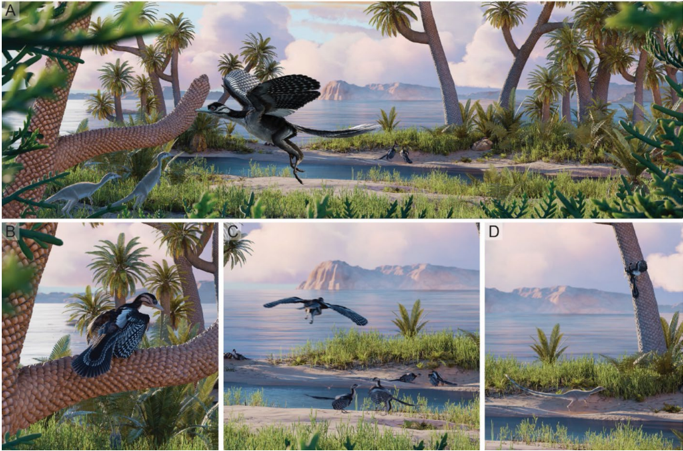
As the oldest known dinosaur to use aerodynamic surfaces comprised of asymmetrical feathers for flight, Archaeopteryx undoubtedly occupied a unique ecological niche unlike that utilized by closely related fully terrestrial non-avian theropods, more derived Mesozoic birds, and extant taxa. New specimens together with computed tomography data elucidate how the ecology of Archaeopteryx is shaped both by its position as a basal avian close to the terrestrial-volant transition and its environment. The size of the feathered wings, primary vane asymmetry, and the large tertial tract all indicate Archaeopteryx was capable of volant locomotion. The reversed hallux, absent in closely related non-avian terrestrial dinosaurs, indicates incipient perching abilities, whereas the proportions of the footpads and morphology of the scales indicate the soft tissue of the foot was predominantly adapted for terrestrial locomotion. Curved manual claws, well developed articular surfaces on the minor digit phalanges, separate major and minor digits, and manual proportions all indicate ancestral grasping abilities were retained and possibly exapted for climbing. All known specimens fit a growth curve suggesting somatic maturity was achieved over a protracted period although even the smallest known individuals preserve wing feathers indicating aerial capabilities. Diet is unknown but avian features of the rostrum indicate increased rostral sensitivity and oral dexterity, which suggests a diet targeting small, energy rich foods. Together these morphologies reveal a generalist bird that foraged on the ground and utilized a diverse set of locomotor behaviors including incipient powered flight.
Overview
CoChat Summary
## TL;DR
This review synthesizes evidence that *Archaeopteryx* was an ecologically flexible early bird with limited powered flight, possible gliding and WAIR, scansorial abilities, and terrestrial foraging habits. The authors argue that its morphology must be interpreted in an ecological context because several traits likely reflect its Solnhofen environment as much as its phylogenetic position.
## Key findings
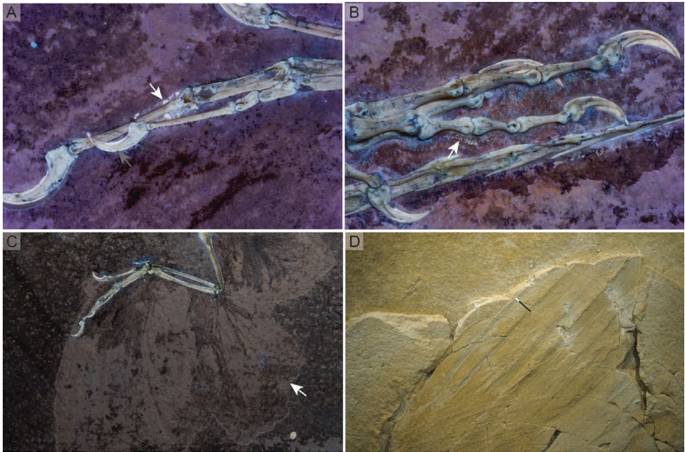
- Wing anatomy indicates flight capability: the forelimb feather surfaces are larger than in closely related non-avian taxa, primary vane asymmetry is reported at 3.47, and tertials close the wing-body gap; together these features are interpreted as consistent with intermittent flight such as flap-gliding.
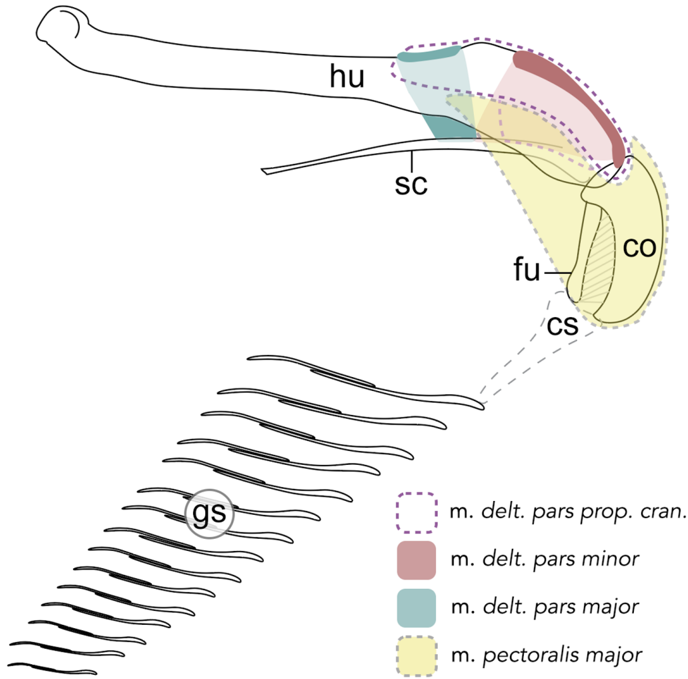
- The paper argues against a gliding-only model and favors limited powered flight, noting that the pectoral girdle suggests restricted motion and that takeoff from a standstill was likely unlikely; launch probably required a run, elevation, or headwinds.
- Hindlimb and foot evidence point to terrestrial locomotion with perching/scansorial capability: a reversed hallux is interpreted as aiding grasping, footpads and scales suggest terrestrial adaptation, and claw morphology is discussed as possibly supporting climbing.
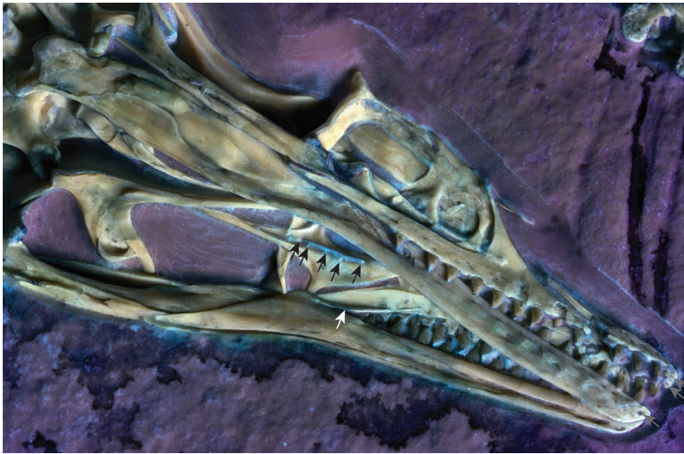
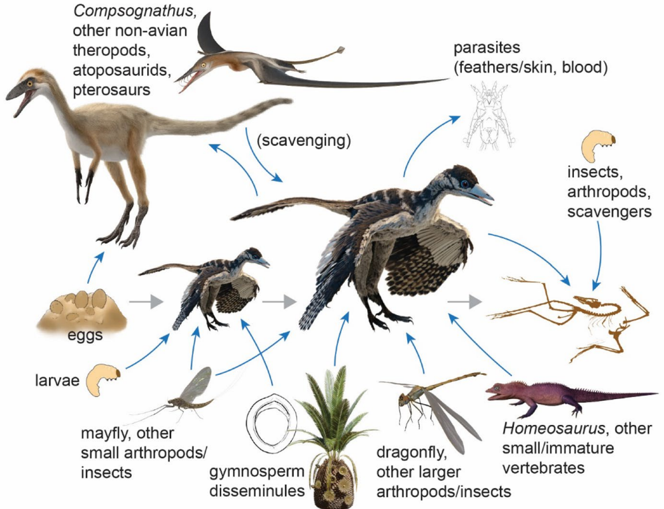
- Diet is treated as uncertain, but the paper links cranial and oral features to small, energy-rich foods and concludes the Solnhofen climate suggests an omnivorous generalist diet with seasonal variation.
## Methods
- This is a review article, not a new data-collection study; it synthesizes previously published fossils, CT data, and comparative anatomy.
- The paper draws on newly described *Archaeopteryx* specimens plus computed tomographic scans and compares them with living birds and other non-avian/paravian dinosaurs.
- Main analysis is qualitative comparative morphology across flight apparatus, hindlimb/foot, manus, plumage, cranial feeding features, growth, and inferred ecology.
## Limitations
- The paper explicitly notes that “preservational limitations and differences regarding interpretations of the skeleton” leave many aspects of *Archaeopteryx* paleobiology controversial.
- It states that there is no direct preserved evidence for diet or reproductive habits, so those inferences remain indirect.
- It also says the paleoflora of the Solnhofen archipelagos is poorly understood and that studies are few, which limits ecological reconstruction.
- Evident from the text: the article is hypothesis-driven and synthesizes prior work rather than testing a new dataset, so many conclusions remain interpretive rather than experimentally resolved.
Model-written summary. Check it against the paper before relying on it.
Integrity signals
Registry
Cites
Statistics
Figures
Verification
Claims the paper makes
25 Valid · 27 Not valid · 83 Not checked · 41 Own results and interpretations
Some cited sources support this claim and some don’t — read each source’s verdict below.
In the paper
“However, comparison with volant paravians Microraptor and Confuciusornis strongly suggests the remiges would have molted sequentially [110, 111] whereas the non-volant Anchiornis exhibits an irregular molt [4].”
What the sources say
- Disputedcites [110] 110. Wang X-L, O'Connor JK, Zheng X-T, Wang Y, Kiat Y. Earliest evidence of avian primary feather moult. Biol Lett. 2024;20:1-6. sourceExperimental — accuracy not yet measured
The paper says the Thermopolis Archaeopteryx specimen cannot distinguish sequential from non-sequential molt and that its feather ages and molt sequence are undeterminable. It also considers the purported feather sheaths equivocal (main text). Although it reports sequential molt in Microraptor, it does not infer that Archaeopteryx’s remiges would have molted sequentially. (LLM, conf=0.86)
Checked by a reasoning model — may be wrong.
- Partly supportedcites [111] 111. Kiat Y, et al. Sequential moult in a feathered dinosaur and implications for early paravian locomotion and ecology. Curr Biol. 2020;30:3633-8. sourceExperimental — accuracy not yet measured
Wang et al. (2024) document a gradual, sequential remex moult in the two confuciusornithiform specimens STM7-21/STM7-22 (Results (a) STM7-21; Discussion, p. 'The sequential moult observed in the two specimens...') and note the same strategy in Microraptor ('all three moulting mature specimens of non-neornithine paravians indicates a sequential moult of the remiges', Discussion), so the comparison part of the citing sentence is supported. However, our copy never addresses Archaeopteryx moult: 'Archaeopteryx' appears only in reference titles (refs 6, 7, 41), and the paper states it is 'impossible to determine the ancestral moult condition in this clade' (Introduction) and only hedges that 'it is possible that a sequential moult was the ancestral condition in Pennaraptora, or that this moult strategy co-evolved with flight' (Discussion). The extension of sequential moult to Archaeopteryx is therefore not supported by this source. (LLM, conf=0.78)
hedged- Asserted: passes — The authors put it forward as true.
- Checkable: passes — It can be checked against evidence.
- Load-bearing: unclear — It is unclear whether the paper’s conclusions depend on it.
- Based: passes — The paper gives a reason why it holds.
- Disputed
At least one cited source doesn’t support this claim or points to a different paper, and none confirmed it — see the verdicts below.
In the paper
“Chemical analyses of the isolated feather (holotype), interpreted as a dorsal wing covert, indicate it was white and black [112, 113].”
What the sources say
- Not checked — no full text of the sourcecites [112] 112. Carney RM, Vinther J, Shawkey MD, D'Alba L, Ackermann J. New evidence on the colour and nature of the isolated Archaeopteryx feather. Nat Commun. 2012;3:1-8. https://doi.org/10.1038/ncomms1642. source
- Disputedcites [113] 113. Manning PL, et al. Synchrotron-based chemical imaging reveals plumage patterns in a 150million year old early bird. J Anal At Spectrom. 2013;28:1024-30. sourceExperimental — accuracy not yet measured
The paper predicts that the isolated feather was black, not white and black. In the Discussion (page unavailable), it says melanic residue is ubiquitous across the feather vanes and explicitly rejects visible light-and-dark variation as evidence of a pigmentation pattern. (LLM, conf=0.88)
Checked by a reasoning model — may be wrong.
hedgedSingle case- Asserted: passes — The authors put it forward as true.
- Checkable: passes — It can be checked against evidence.
- Load-bearing: unclear — It is unclear whether the paper’s conclusions depend on it.
- Based: passes — The paper gives a reason why it holds.
The cited sources that could be checked couldn’t confirm or dispute this claim.
In the paper
“The feathered surfaces on the elongate forelimb of Archaeopteryx are proportionately larger than in closely related non-avian taxa”
- Also stated in: § Abstract As the oldest known dinosaur to use aerodynamic surfaces comprised of asymmetrical feathers for flight, Archaeopteryx undoubtedly occupied a unique ecological niche unlike that utilized by closely related fully terrestrial non-avian theropods, more derived Mesozoic birds, and extant taxa. New specimens together with computed tomography data elucidate how the ecology of Archaeopteryx is shaped both by its position as a basal avian close to the terrestrial-volant transition and its environment. The size of the feathered wings, primary vane asymmetry, and the large tertial tract all indicate Archaeopteryx was capable of volant locomotion. The reversed hallux, absent in closely related non-avian terrestrial dinosaurs, indicates incipient perching abilities, whereas the proportions of the footpads and morphology of the scales indicate the soft tissue of the foot was predominantly adapted for terrestrial locomotion. Curved manual claws, well developed articular surfaces on the minor digit phalanges, separate major and minor digits, and manual proportions all indicate ancestral grasping abilities were retained and possibly exapted for climbing. All known specimens fit a growth curve suggesting somatic maturity was achieved over a protracted period although even the smallest known individuals preserve wing feathers indicating aerial capabilities. Diet is unknown but avian features of the rostrum indicate increased rostral sensitivity and oral dexterity, which suggests a diet targeting small, energy rich foods. Together these morphologies reveal a generalist bird that foraged on the ground and utilized a diverse set of locomotor behaviors including incipient powered flight. · hedged
“The size of the feathered wings, primary vane asymmetry, and the large tertial tract all indicate Archaeopteryx was capable of volant locomotion.”
What the sources say
- Not checked — no full text of the sourcecites [17] 17. Hu D-Y, Hou L-H, Zhang L-J, You H-L. A preArchaeopteryx troodontid theropod from China with long feathers on the metatarsus. Nature. 2009;461:640-3. source
- Could not verifycites [18] 18. Lü J-C, Brusatte SL. A large, short-armed, winged dromaeosaurid (Dinosauria: Theropoda) from the Early Cretaceous of China and its implications for feather evolution. Sci Rep. 2015;5:1-11. https://doi.org/10.1038/srep11775. sourceExperimental — accuracy not yet measured
The Results > Description describes Archaeopteryx’s wing feathers but does not assess whether it was capable of volant locomotion. It also describes the wings of Zhenyuanlong as generally similar to those of Archaeopteryx and several non-avian taxa, without the proportional comparison in the verbatim citing sentence. The Discussion’s references to volant ability concern dromaeosaurids, not Archaeopteryx. (LLM, conf=0.76)
- Not checked — no full text of the sourcecites [19] 19. Ji Q, Currie PJ, Norell MA, Ji S-A. Two feathered dinosaurs from northeastern China. Nature. 1998;393:753-61. source
hedged- Asserted: passes — The authors put it forward as true.
- Checkable: passes — It can be checked against evidence.
- Load-bearing: passes — The paper’s conclusions depend on it.
- Based: passes — The paper gives a reason why it holds.
- Also stated in: § Abstract As the oldest known dinosaur to use aerodynamic surfaces comprised of asymmetrical feathers for flight, Archaeopteryx undoubtedly occupied a unique ecological niche unlike that utilized by closely related fully terrestrial non-avian theropods, more derived Mesozoic birds, and extant taxa. New specimens together with computed tomography data elucidate how the ecology of Archaeopteryx is shaped both by its position as a basal avian close to the terrestrial-volant transition and its environment. The size of the feathered wings, primary vane asymmetry, and the large tertial tract all indicate Archaeopteryx was capable of volant locomotion. The reversed hallux, absent in closely related non-avian terrestrial dinosaurs, indicates incipient perching abilities, whereas the proportions of the footpads and morphology of the scales indicate the soft tissue of the foot was predominantly adapted for terrestrial locomotion. Curved manual claws, well developed articular surfaces on the minor digit phalanges, separate major and minor digits, and manual proportions all indicate ancestral grasping abilities were retained and possibly exapted for climbing. All known specimens fit a growth curve suggesting somatic maturity was achieved over a protracted period although even the smallest known individuals preserve wing feathers indicating aerial capabilities. Diet is unknown but avian features of the rostrum indicate increased rostral sensitivity and oral dexterity, which suggests a diet targeting small, energy rich foods. Together these morphologies reveal a generalist bird that foraged on the ground and utilized a diverse set of locomotor behaviors including incipient powered flight. · hedged
Every source the paper cites for this claim was checked and supports it.
In the paper
“The reported cross-sectional geometry most closely resembles birds that utilize short-distance flapping flight.”
What the sources say
- Supportedcites [22] 22. Voeten DFAE, et al. Wing bone geometry reveals active flight in Archaeopteryx. Nat Commun. 2018;9:1-9. source
The Results (Locomotor mode) report that all Archaeopteryx specimens grouped with short- or burst-flight birds and chiefly occupied the same position in the analysis, although the flight-mode groups overlap. The Results (Mass-normalised torsional resistance) also say their relative humeral resistance approached that of modern short- or burst-flight birds. (LLM, conf=0.92)
plainstates an association- Asserted: passes — The authors put it forward as true.
- Checkable: passes — It can be checked against evidence.
- Load-bearing: passes — The paper’s conclusions depend on it.
- Based: passes — The paper gives a reason why it holds.
- Supported
The cited sources that could be checked couldn’t confirm or dispute this claim.
In the paper
“Archaeopteryx lived in a semiarid, seasonally wet environment most likely dominated by bushy conifers”
What the sources say
- Not matchedcites [1] 1. Wellnhofer P. Archaeopteryx, English Edition: The Icon Of Evolution, vol. 208. Verlag Dr. Friedrich Pfeil; 2009.
We searched by its title and found no matching paper.
- Could not verifycites [7] 7. Hao W-X, et al. Climate-change-enhanced habitat diversification for the Middle Jurassic Yanliao Biota in East Asia. Natl Sci Rev. 2025;12:1-9. sourceExperimental — accuracy not yet measured
The Results and Discussion sections describe a shift to sub-humid conditions and seasonally active alluvial plains in the Middle Jurassic Yanliao region, with increased conifer pollen. Searches for Archaeopteryx, semiarid conditions, and bushy conifers found no passage describing Archaeopteryx’s habitat or supporting the specific vegetation claim; the paper’s reference to an Archaeopteryx-like theropod does not establish it. (LLM, conf=0.76)
hedged- Asserted: passes — The authors put it forward as true.
- Checkable: passes — It can be checked against evidence.
- Load-bearing: passes — The paper’s conclusions depend on it.
- Based: passes — The paper gives a reason why it holds.
- Not matched
97 more claims · 26 with their cited sources checked
Create a free account to see all 176 claims and to verify the 30 references still open.
- It may state two separate claims as one. 65
- Probably not a substantial claim. 14
Citations
Cites
Two feathered dinosaurs from northeastern China
Qiang, J., Currie, P. J., Norell, M. A., & Shu-An, J. (1998) · Nature · doi:10.1038/31635 · Cited by 580
Four-winged dinosaurs from China
Xu, X., Zhou, Z., Wang, X., Kuang, X., Zhang, F., & Du, X. (2003) · Nature · doi:10.1038/nature01342 · Cited by 485
A pre-Archaeopteryx troodontid theropod from China with long feathers on the metatarsus
Hu, D., Hou, L., Zhang, L., & Xu, X. (2009) · Nature · doi:10.1038/nature08322 · Cited by 365
Archaeopteryx and the origin of birds
OSTROM, J. H. (1976) · Biological Journal of the Linnean Society · doi:10.1111/j.1095-8312.1976.tb00244.x · Cited by 361
Mesozoic Birds: Above the Heads of Dinosaurs
(2003) · Journal of Paleontology · doi:10.1666/0022-3360(2003)077<0822:mbatho>2.0.co;2 · Cited by 320
Caudofemoral musculature and the evolution of theropod locomotion
Gatesy, S. M. (1990) · Paleobiology · doi:10.1017/s0094837300009866 · Cited by 312
An Archaeopteryx-like theropod from China and the origin of Avialae
Xu, X., You, H., Du, K., & Han, F. (2011) · Nature · doi:10.1038/nature10288 · Cited by 311
Locomotor modules and the evolution of avian flight
Gatesy, S. M., & Dial, K. P. (1996) · Evolution · doi:10.1111/j.1558-5646.1996.tb04496.x · Cited by 290
Archaeopteryx and the Origin of Flight
Ostrom, J. H. (1974) · The Quarterly Review of Biology · doi:10.1086/407902 · Cited by 253
Wing-assisted incline running and the evolution of flight.
Dial, K. P. (2003) · Science · doi:10.1126/science.1078237 · Cited by 236
New specimen of Archaeopteryx provides insights into the evolution of pennaceous feathers
Foth, C., Tischlinger, H., & Rauhut, O. W. M. (2014) · Nature · doi:10.1038/nature13467 · Cited by 228
The avian nature of the brain and inner ear of Archaeopteryx
Alonso, P. D., Milner, A. C., Ketcham, R. A., Cookson, M. J., & Rowe, T. B. (2004) · Nature · doi:10.1038/nature02706 · Cited by 219
Bipedalism, flight, and the evolution of theropod locomotor diversity
Gatesy, S. M., & Middleton, K. M. (1997) · Journal of Vertebrate Paleontology · doi:10.1080/02724634.1997.10010977 · Cited by 209
Was Dinosaurian Physiology Inherited by Birds? Reconciling Slow Growth in Archaeopteryx
Erickson, G. M., Rauhut, O. W. M., Zhou, Z., Turner, A. H., Inouye, B. D., Hu, D., & Norell, M. A. (2009) · PLoS ONE · doi:10.1371/journal.pone.0007390 · Cited by 195
Evolutionary origins of the avian brain
Balanoff, A. M., Bever, G. S., Rowe, T. B., & Norell, M. A. (2013) · Nature · doi:10.1038/nature12424 · Cited by 195
Flight speed of seabirds in relation to wind speed and direction
SPEAR, L. B., & AINLEY, D. G. (1997) · Ibis · doi:10.1111/j.1474-919x.1997.tb04621.x · Cited by 182
Modelling cartilage mechanobiology
Carter, D. R., & Wong, M. (2003) · Philosophical Transactions of the Royal Society of London. Series B: Biological Sciences · doi:10.1098/rstb.2003.1346 · Cited by 177
A new feathered maniraptoran dinosaur fossil that fills a morphological gap in avian origin
Xu, X., Zhao, Q., Norell, M., Sullivan, C., Hone, D., Erickson, G., Wang, X., Han, F., & Guo, Y. (2009) · Science Bulletin · doi:10.1007/s11434-009-0009-6 · Cited by 175
Nocturnality in Dinosaurs Inferred from Scleral Ring and Orbit Morphology
Schmitz, L., & Motani, R. (2011) · Science · doi:10.1126/science.1200043 · Cited by 173
Pre‐modern Birds: Avian Divergences in the Mesozoic
O'Connor, J., Chiappe, L. M., & Bell, A. (2011) · Living Dinosaurs · doi:10.1002/9781119990475.ch3 · Cited by 163
Self-citationEvidence from Claw Geometry Indicating Arboreal Habits of Archaeopteryx
Feduccia, A. (1993) · Science · doi:10.1126/science.259.5096.790 · Cited by 156
A fundamental avian wing-stroke provides a new perspective on the evolution of flight
Dial, K. P., Jackson, B. E., & Segre, P. (2008) · Nature · doi:10.1038/nature06517 · Cited by 153
Rauhut, O. W. M., Foth, C., Tischlinger, H., & Norell, M. A. (2012) · Proceedings of the National Academy of Sciences · doi:10.1073/pnas.1203238109 · Cited by 151
Effects of Body Size on Take-off Flight Performance in the Phasianidae (Aves)
Tobalske, B. W., & Dial, K. P. (2000) · Journal of Experimental Biology · doi:10.1242/jeb.203.21.3319 · Cited by 135
A Well-Preserved Archaeopteryx Specimen with Theropod Features
Mayr, G., Pohl, B., & Peters, D. S. (2005) · Science · doi:10.1126/science.1120331 · Cited by 132
The wing of Archaeopteryx as a primary thrust generator
Burgers, P., & Chiappe, L. M. (1999) · Nature · doi:10.1038/19967 · Cited by 121
Hind limb scaling in birds and other theropods: Implications for terrestrial locomotion
Gatesy, S. M. (1991) · Journal of Morphology · doi:10.1002/jmor.1052090107 · Cited by 120
Reproduction in Mesozoic birds and evolution of the modern avian reproductive mode
Varricchio, D. J., & Jackson, F. D. (2016) · The Auk · doi:10.1642/auk-15-216.1 · Cited by 100
Rauhut, O. W. M., Foth, C., & Tischlinger, H. (2018) · PeerJ · doi:10.7717/peerj.4191 · Cited by 100
FROM FROND TO FAN: ARCHAEOPTERYX AND THE EVOLUTION OF SHORT‐TAILED BIRDS
Gatesy, S. M., & Dial, K. P. (1996) · Evolution · doi:10.1111/j.1558-5646.1996.tb03590.x · Cited by 100
The evolution of the avian shoulder joint
Jenkins, F. A. (1993) · American Journal of Science · doi:10.2475/ajs.293.a.253 · Cited by 99
Zheng, X., O’Connor, J., Wang, X., Wang, M., Zhang, X., & Zhou, Z. (2014) · Proceedings of the National Academy of Sciences · doi:10.1073/pnas.1411070111 · Cited by 96
Self-citationThe trophic habits of early birds
O'Connor, J. K. (2019) · Palaeogeography, Palaeoclimatology, Palaeoecology · doi:10.1016/j.palaeo.2018.03.006 · Cited by 92
Self-citationNew evidence on the colour and nature of the isolated Archaeopteryx feather
Carney, R. M., Vinther, J., Shawkey, M. D., D'Alba, L., & Ackermann, J. (2012) · Nature Communications · doi:10.1038/ncomms1642 · Cited by 83
Dinosaur egg colour had a single evolutionary origin
Wiemann, J., Yang, T.-R., & Norell, M. A. (2018) · Nature · doi:10.1038/s41586-018-0646-5 · Cited by 83
Fossil biomolecules reveal an avian metabolism in the ancestral dinosaur
Wiemann, J., Menéndez, I., Crawford, J. M., Fabbri, M., Gauthier, J. A., Hull, P. M., Norell, M. A., & Briggs, D. E. G. (2022) · Nature · doi:10.1038/s41586-022-04770-6 · Cited by 82
Juvenile Birds from the Early Cretaceous of China: Implications for Enantiornithine Ontogeny
CHIAPPE, L. M., SHU'AN, J., & QIANG, J. (2007) · American Museum Novitates · doi:10.1206/0003-0082(2007)3594[1:jbftec]2.0.co;2 · Cited by 81
Nesbitt, S. J., Turner, A. H., Spaulding, M., Conrad, J. L., & Norell, M. A. (2009) · Journal of Morphology · doi:10.1002/jmor.10724 · Cited by 78
Wing bone geometry reveals active flight in Archaeopteryx
Voeten, D. F. A. E., Cubo, J., de Margerie, E., Röper, M., Beyrand, V., Bureš, S., Tafforeau, P., & Sanchez, S. (2018) · Nature Communications · doi:10.1038/s41467-018-03296-8 · Cited by 77
Flight capability and the pectoral girdle of Archaeopteryx
OLSON, S. L., & FEDUCCIA, A. (1979) · Nature · doi:10.1038/278247a0 · Cited by 74
Lü, J., & Brusatte, S. L. (2015) · Scientific Reports · doi:10.1038/srep11775 · Cited by 74
Allometric Scaling in the Earliest Fossil Bird, Archaeopteryx lithographica
Houck, M. A., Gauthier, J. A., & Strauss, R. E. (1990) · Science · doi:10.1126/science.247.4939.195 · Cited by 73
Birn-Jeffery, A. V., Miller, C. E., Naish, D., Rayfield, E. J., & Hone, D. W. E. (2012) · PLoS ONE · doi:10.1371/journal.pone.0050555 · Cited by 73
New Specimens of Anchiornis huxleyi(Theropoda: Paraves) from the Late Jurassic of Northeastern China
Pei, R., Li, Q., Meng, Q., Norell, M. A., & Gao, K.-Q. (2017) · Bulletin of the American Museum of Natural History · doi:10.1206/0003-0090-411.1.1 · Cited by 70
Additional specimen of Microraptor provides unique evidence of dinosaurs preying on birds
O'Connor, J., Zhou, Z., & Xu, X. (2011) · Proceedings of the National Academy of Sciences · doi:10.1073/pnas.1117727108 · Cited by 69
Self-citationSynchrotron-based chemical imaging reveals plumage patterns in a 150 million year old early bird
Manning, P. L., Edwards, N. P., Wogelius, R. A., Bergmann, U., Barden, H. E., Larson, P. L., Schwarz-Wings, D., Egerton, V. M., Sokaras, D., Mori, R. A., et al. (2013) · Journal of Analytical Atomic Spectrometry · doi:10.1039/c3ja50077b · Cited by 67
Life history of a basal bird: morphometrics of the Early Cretaceous Confuciusornis
Chiappe, L. M., Marugán-Lobón, J., Ji, S., & Zhou, Z. (2008) · Biology Letters · doi:10.1098/rsbl.2008.0409 · Cited by 64
New Specimens of Yanornis Indicate a Piscivorous Diet and Modern Alimentary Canal
Zheng, X., O'Connor, J. K., Huchzermeyer, F., Wang, X., Wang, Y., Zhang, X., & Zhou, Z. (2014) · PLoS ONE · doi:10.1371/journal.pone.0095036 · Cited by 62
Self-citationNorell, M. A., Balanoff, A. M., Barta, D. E., & Erickson, G. M. (2018) · American Museum Novitates · doi:10.1206/3899.1 · Cited by 49
Sullivan, C., Hone, D. W. E., Xu, X., & Zhang, F. (2010) · Proceedings of the Royal Society B: Biological Sciences · doi:10.1098/rspb.2009.2281 · Cited by 48
The first specimen of Archaeopteryx from the Upper Jurassic Mörnsheim Formation of Germany
Kundrát, M., Nudds, J., Kear, B. P., Lü, J., & Ahlberg, P. (2019) · Historical Biology · doi:10.1080/08912963.2018.1518443 · Cited by 48
Foraging modes of Mesozoic birds and non-avian theropods
Glen, C. L., & Bennett, M. B. (2007) · Current Biology · doi:10.1016/j.cub.2007.09.026 · Cited by 46
Soaring energetics and glide performance in a moving atmosphere
Taylor, G. K., Reynolds, K. V., & Thomas, A. L. R. (2016) · Philosophical Transactions of the Royal Society B: Biological Sciences · doi:10.1098/rstb.2015.0398 · Cited by 46
Fischer, C., Gerstmeier, R., & Wagner, T. C. (2022) · Scientific Reports · doi:10.1038/s41598-022-07716-0 · Cited by 45
The palatal dentition of tetrapods and its functional significance
Matsumoto, R., & Evans, S. E. (2017) · Journal of Anatomy · doi:10.1111/joa.12534 · Cited by 44
Microraptor with Ingested Lizard Suggests Non-specialized Digestive Function
O’Connor, J., Zheng, X., Dong, L., Wang, X., Wang, Y., Zhang, X., & Zhou, Z. (2019) · Current Biology · doi:10.1016/j.cub.2019.06.020 · Cited by 44
Self-citationUnique caudal plumage of Jeholornis and complex tail evolution in early birds
O’Connor, J., Wang, X., Sullivan, C., Zheng, X., Tubaro, P., Zhang, X., & Zhou, Z. (2013) · Proceedings of the National Academy of Sciences · doi:10.1073/pnas.1316979110 · Cited by 43
Self-citationInferring lifestyle for Aves and Theropoda: A model based on curvatures of extant avian ungual bones
Cobb, S. E., & Sellers, W. I. (2020) · PLOS ONE · doi:10.1371/journal.pone.0211173 · Cited by 43
O’Connor, J., Erickson, G. M., Norell, M., Bailleul, A. M., Hu, H., & Zhou, Z. (2018) · Nature Communications · doi:10.1038/s41467-018-07621-z · Cited by 36
Self-citationExceptional dinosaur fossils reveal early origin of avian-style digestion
Zheng, X., Wang, X., Sullivan, C., Zhang, X., Zhang, F., Wang, Y., Li, F., & Xu, X. (2018) · Scientific Reports · doi:10.1038/s41598-018-32202-x · Cited by 34
Pittman, M., Bell, P. R., Miller, C. V., Enriquez, N. J., Wang, X., Zheng, X., Tsang, L. R., Tse, Y. T., Landes, M., & Kaye, T. G. (2022) · Nature Communications · doi:10.1038/s41467-022-35039-1 · Cited by 34
Conrad, J. L. (2017) · Zoological Journal of the Linnean Society · doi:10.1093/zoolinnean/zlx055 · Cited by 32
Morphological Disparity of the Humerus in Modern Birds
Serrano, F. J., Costa-Pérez, M., Navalón, G., & Martín-Serra, A. (2020) · Diversity · doi:10.3390/d12050173 · Cited by 30
Functional constraints on the number and shape of flight feathers
Kiat, Y., & O’Connor, J. K. (2024) · Proceedings of the National Academy of Sciences · doi:10.1073/pnas.2306639121 · Cited by 30
Self-citationCretaceous origins of the vibrotactile bill-tip organ in birds
du Toit, C. J., Chinsamy, A., & Cunningham, S. J. (2020) · Proceedings of the Royal Society B: Biological Sciences · doi:10.1098/rspb.2020.2322 · Cited by 30
New, T. R. (2010) · doi:10.1002/9781444318623 · Cited by 29
THE FLYING ABILITY OF ARCHAEOPTERYX
Yalden, D. W. (1971) · Ibis · doi:10.1111/j.1474-919x.1971.tb05165.x · Cited by 28
Convergent evolution of a mobile bony tongue in flighted dinosaurs and pterosaurs
Li, Z., Zhou, Z., & Clarke, J. A. (2018) · PLOS ONE · doi:10.1371/journal.pone.0198078 · Cited by 27
Sequential Molt in a Feathered Dinosaur and Implications for Early Paravian Ecology and Locomotion
Kiat, Y., Balaban, A., Sapir, N., O’Connor, J. K., Wang, M., & Xu, X. (2020) · Current Biology · doi:10.1016/j.cub.2020.06.046 · Cited by 27
Self-citationCéspedes, B., Torres, I., Urbieta, I. R., & Moreno, J. M. (2012) · Plant Ecology · doi:10.1007/s11258-012-0053-1 · Cited by 26
Evolution of avian flight: muscles and constraints on performance
Tobalske, B. W. (2016) · Philosophical Transactions of the Royal Society B: Biological Sciences · doi:10.1098/rstb.2015.0383 · Cited by 26
Growth and miniaturization among alvarezsauroid dinosaurs
Qin, Z., Zhao, Q., Choiniere, J. N., Clark, J. M., Benton, M. J., & Xu, X. (2021) · Current Biology · doi:10.1016/j.cub.2021.06.013 · Cited by 25
Taxonomic status of the specimens of Archaeopteryx
Senter, P., & Robins, J. H. (2003) · Journal of Vertebrate Paleontology · doi:10.1671/22 · Cited by 24
Bailleul, A. M., Li, Z., O’Connor, J., & Zhou, Z. (2019) · Proceedings of the National Academy of Sciences · doi:10.1073/pnas.1911820116 · Cited by 24
Self-citationMarugán-Lobón, J., Chiappe, L. M., Ji, S., Zhou, Z., Chunling, G., Hu, D., & Meng, Q. (2011) · Journal of Systematic Palaeontology · doi:10.1080/14772019.2010.517786 · Cited by 21
Earliest short-tailed bird from the Late Jurassic of China
Chen, R., Wang, M., Dong, L., Zhou, G., Xu, X., Deng, K., Xu, L., Zhang, C., Wang, L., Du, H., et al. (2025) · Nature · doi:10.1038/s41586-024-08410-z · Cited by 21
Chicago Archaeopteryx informs on the early evolution of the avian bauplan
O’Connor, J., Clark, A., Kuo, P.-C., Kiat, Y., Fabbri, M., Shinya, A., Van Beek, C., Lu, J., Wang, M., & Hu, H. (2025) · Nature · doi:10.1038/s41586-025-08912-4 · Cited by 21
Self-citationFalk, A. R., Lamsdell, J. C., & Gong, E. (2021) · Paleobiology · doi:10.1017/pab.2020.39 · Cited by 20
Krulis, V (1978) · Revue suisse de zoologie. · doi:10.5962/bhl.part.82241 · Cited by 18
Reorganization of the theropod wrist preceded the origin of avian flight
Napoli, J. G., Fabbri, M., Ruebenstahl, A. A., O’Connor, J. K., Bhullar, B.-A. S., & Norell, M. A. (2025) · Nature · doi:10.1038/s41586-025-09232-3 · Cited by 17
Self-citationRainfall seasonality predicts the germination behavior of a tropical dry‐forest vine
Martins, A. A., Opedal, Ø. H., Armbruster, W. S., & Pélabon, C. (2019) · Ecology and Evolution · doi:10.1002/ece3.5108 · Cited by 16
Wu, Q., Bailleul, A. M., Li, Z., O’Connor, J., & Zhou, Z. (2021) · Frontiers in Earth Science · doi:10.3389/feart.2021.617124 · Cited by 16
Self-citationPerspectives in Ornithology Archaeopteryx 2007: Quo Vadis?
Feduccia, A., Martin, L. D., & Tarsitano, S. (2007) · The Auk · doi:10.1093/auk/124.2.373 · Cited by 16
Wu, Q., O’Connor, J. K., Wang, S., & Zhou, Z. (2024) · PeerJ · doi:10.7717/peerj.16960 · Cited by 14
Self-citationEpidermal complexity in the theropod dinosaur Juravenator from the Upper Jurassic of Germany
Bell, P. R., & Hendrickx, C. (2020) · Palaeontology · doi:10.1111/pala.12517 · Cited by 13
Zheng, S., Cha, X., Dong, Q., Guo, H., Sun, L., Zhao, Q., & Gong, Y. (2024) · Frontiers in Plant Science · doi:10.3389/fpls.2024.1344717 · Cited by 12
Comment on the absence of ossified sternal elements in basal paravian dinosaurs
Foth, C. (2014) · Proceedings of the National Academy of Sciences · doi:10.1073/pnas.1419023111 · Cited by 11
Growth and miniaturization among alvarezsauroid dinosaurs
Qin, Z., Zhao, Q., Choiniere, J. N., Clark, J. M., Benton, M. J., & Xu, X. (2021) · Current Biology · doi:10.1016/j.cub.2021.07.060 · Cited by 8
Review of the InternationalArchaeopteryxConference (Eichstätt, September 1984)
Dodson, P. (1985) · Journal of Vertebrate Paleontology · doi:10.1080/02724634.1985.10011856 · Cited by 7
A new Archaeopteryx from the lower Tithonian Mörnsheim Formation at Mühlheim (Late Jurassic)
Foth, C., van de Kamp, T., Tischlinger, H., Kantelis, T., Carney, R. M., Zubér, M. S., Hamann, E., Wallaard, J. J. W., Lenz, N., Rauhut, O. W. M., et al. (2025) · Fossil record · doi:10.3897/fr.28.e131671 · Cited by 7
Nel, A., Bechly, G., & Martínez-Delclòs, X. (1996) · Senckenbergiana lethaea · doi:10.1007/bf03042848 · Cited by 6
WANG, B., ZHANG, H., WAPPLER, T., & RUST, J. (2010) · Geological Magazine · doi:10.1017/s0016756809990896 · Cited by 6
Reinterpretation of purported molting evidence in the Thermopolis Archaeopteryx
Kiat, Y., Pyle, P., Balaban, A., & O’Connor, J. K. (2021) · Communications Biology · doi:10.1038/s42003-021-02349-x · Cited by 6
Self-citationEarliest evidence of avian primary feather moult
Wang, X., O'Connor, J., Zheng, X., Wang, Y., & Kiat, Y. (2024) · Biology Letters · doi:10.1098/rsbl.2024.0106 · Cited by 6
Self-citationO’Connor, J. K., Atterholt, J., Bailleul, A. M., Wang, M., Kuo, P.-C., & Zhou, Z. (2025) · Geobios · doi:10.1016/j.geobios.2024.05.004 · Cited by 6
Self-citationClimate-change-enhanced habitat diversification for the Middle Jurassic Yanliao Biota in East Asia
Hao, W., Yang, J., Wang, H., Mitchell, R. N., Zhang, C., Qiu, R., Guo, J., Zhang, W., Bao, X., Deng, C., et al. (2025) · National Science Review · doi:10.1093/nsr/nwaf194 · Cited by 6
Foraging modes of Mesozoic birds and non-avian theropods
Glen, C. L., & Bennett, M. B. (2007) · Current Biology · doi:10.1016/j.cub.2007.11.014 · Cited by 6
Wind effects on bounding flight
Sachs, G. (2013) · Journal of Theoretical Biology · doi:10.1016/j.jtbi.2012.08.039 · Cited by 5
Avian features of Archaeopteryx feeding apparatus reflect elevated demands of flight
O’Connor, J. K., Clark, A. D., Kuo, P.-C., Wang, M., Shinya, A., Van Beek, C., & Chang, H. (2026) · The Innovation · doi:10.1016/j.xinn.2025.101086 · Cited by 5
Self-citationHeers, A. M., Tobalske, B. W., Jackson, B. E., & Dial, K. P. (2022) · Biological Journal of the Linnean Society · doi:10.1093/biolinnean/blac078 · Cited by 3
Wing morphology of Anchiornis huxleyi and the evolution of molt strategies in paravian dinosaurs
Kiat, Y., Wang, X., Zheng, X., Wang, Y., & O’Connor, J. (2025) · Communications Biology · doi:10.1038/s42003-025-09019-2 · Cited by 3
Self-citationEvaluating variation in Solnhofen avialans
O’Connor, J., & Marugán-Lobón, J. (2026) · Biology Letters · doi:10.1098/rsbl.2025.0601 · Cited by 3
Self-citationClimatic seasonality shapes insect community composition on the Mongolian Plateau
Tang, K., Hilal, M. G., Yue, H., Ding, X., Xing, Y., Zhao, J., Liu, Y., Liu, H., He, Z., Lin, K., et al. (2025) · Ecological Indicators · doi:10.1016/j.ecolind.2025.113595 · Cited by 3
Shags take advantage of headwind to take off
Knight, K. (2016) · Journal of Experimental Biology · doi:10.1242/jeb.137497 · Cited by 1
Sequential Moult in a Feathered Dinosaur: Implications for Early Paravian Locomotion and EcologyPreprint
Kiat, Y., Balaban, A., Sapir, N., O'Connor, J. K., Wang, M., & Xu, X. (2020) · SSRN Electronic Journal · doi:10.2139/ssrn.3584345
Self-citation(2003) · doi:10.1206/0003-0082(2003)402
Inferring lifestyle for Aves and Theropoda: a model based on curvatures of extant avian ungual bones
Cobb, S. E., & Sellers, W. I. (2019) · doi:10.1101/517375
Foth, F., Tischlinger, T., & Rauhut, W. (2014) · MorphoBank datasets · doi:10.7934/x2483
Research works printed but not linked: 16
- 1. Wellnhofer P. Archaeopteryx, English Edition: The Icon Of Evolution, vol. 208. Verlag Dr. Friedrich Pfeil; 2009.
- 8. Elzanowski A. in VII International Symposium on Mesozoic Terrestrial Ecosystems Vol. 7 Asociación Paleontológica Argentina Publicación Especial 91-99 (Asociación Paleontológica Argentina, 2001).
- 9. de Beer G. Archaeopteryx lithographica , a study based upon the British Museum specimen. Br Museum Publication. 1954;224:1-68.
- 10. Heilmann G. The Origin of Birds. D. Appleton and Company; 1926.
- 22. Voeten DFAE, et al. Wing bone geometry reveals active flight in Archaeopteryx. Nat Commun. 2018;9:1-9. · DOI · Paper page
- 30. Wellnhofer P, Tischlinger H. Das 'Brustbein' von Archaeopteryx bavarica Wellnhofer 1993 - eine Revision. Archaeopteryx. 2004;22:3-15.
- 31. Wellnhofer P. Das siebte exemplar von Archaeopteryx aus den Solnhofer Schichten. Archaeopteryx. 1993;11:1-47.
- 33. O'Connor JK, Zheng X-T, Wang X-L, Zhang X-M, Zhou Z-H. The gastral basket in basal birds and their close relatives: size and possible function. Vertebr Palasiat. 2015;53:133-52.
- 43. Ostrom JH, Poore SO, Goslow GE et al. Jr. in Avian Paleontology at the Close of the 20th Century: Proceedings of the 4th International Meeting of the Society of Avian Paleontology and Evolution, Washington, D.C., 4-7 June 1996 Vol. 89 Smithsonian Contributions to Paleobiology (eds S.L. Olson 301-309 (1999).
- 44. Rayner JMV. In: Rayner JMV, Wootton RJ, editors. Biomechanics in Evolution. Cambridge University Press; 1991. pp. 183-212.
- 62. Chiappe LM, Ji S, Ji Q, Norell MA. Anatomy and systematics of the Confuciusornithidae (Theropoda: Aves) from the Late Mesozoic of northeastern China. Bull Am Mus Nat Hist. 1999;242:1-89.
- 73. Chiappe LM. Climbing Archaeopteryx ? A response to Yalden. Archaeopteryx. 1997;15:109-12.
- 74. Norell MA, Makovicky PJ. Important features of the dromaeosaurid skeleton II: information from newly collected specimens of Velociraptor mongoliensis . Am Mus Novit. 1999;3282:1-45.
- 79. Senter P . Scapular orientation in theropods and basal birds, and the origin of flapping flight. Acta Palaeontol Pol. 2006;51:305-13.
- 117. Pennycuick CJ. Modelling the flying bird, vol. 4. Academic Press; 2008.
- 118. Kielan-Jaworowska Z, Barsbold R. Narrative of the Polish-Mongolian palaeontological expeditions 1967-1971. Palaeontol Pol. 1972;27:5-13.
Metadata
- Authors
- O’Connor, J. K., & Clark, A. D.
- Affiliations
- Field Museum of Natural History (US)
- ORCID
- Clark, Alexander D.
- Venue
- Discover Ecology
- Published
- 2026-04-21
- Volume
- 2
- Issue
- 1
- ISSN
- 3005-1843 (ISSN-L)
- OpenAlex
- W7155086842
- Semantic Scholar
- e4b0f4ceeaf216b1509d3ead0477dbe49a1bfde5
- Cited by
- 0
- References
- 97
- FWCI
- 0.00
- Type
- journal article
- Language
- en
- Open access
- gold
- doi.org
- Licence
- cc-by-nc-nd
- creativecommons.org/licenses/by-nc-nd/4.0 (tdm)
- creativecommons.org/licenses/by-nc-nd/4.0 (vor)
- Locations
- Discover Ecology (publishedVersion, cc-by-nc-nd)
- Topics
- Physical Sciences › Earth and Planetary Sciences › Paleontology › Paleontology and Evolutionary Biology
- Physical Sciences › Earth and Planetary Sciences › Paleontology › Evolution and Paleontology Studies
- Life Sciences › Agricultural and Biological Sciences › Ecology, Evolution, Behavior and Systematics › Fossil Insects in Amber
- Keywords
- Archaeopteryx, flight evolution, perching, climbing, growth curves, somatic maturity, rostrum, diet, ecological niche, theropod dinosaurs, Mesozoic birds, locomotor behavior
About these checks
Registry, retraction, Cites and statistics results are computed, not judged, with one exception: a printed reference that no index lists is read once by a model before it counts as a citation error. Claims are extracted by a model and kept only when their quote appears verbatim in the text; each cited source is then checked, with a model’s help, for whether it says what the claim relies on. Those verdicts can be wrong — read the claim’s quote and the cited source before relying on one.
The claim verdicts this report counts are experimental: their accuracy is not yet measured.
A language model drew the claims from the paper on 2026-10-10, under version 3 of the claim definition (model deepseek-v4.1-flash, prompt extract-v3).
A second model labelled each claim on 2026-10-10 (model jev-1.13-20260917, definition revision gold-guideline-v0.2).
Cited sources are checked with a language model’s help (gpt-6-sol and qwen3.8-omni-flash).
Statistics and arithmetic are recomputed, not judged.
Confidence bands are shown only for fields calibrated on our annotated test set. None is calibrated yet, so no band is shown.
What counts as a claim ›How we measure confidence ›How we check this ›
Are you an author, or do you see a problem with this page? Request a review
Data sources
Bibliographic data: Semantic Scholar, OpenAlex, Crossref.
Contains information from the Semantic Scholar Academic Graph Datasets, made available under the ODC Attribution License (ODC-BY 1.0).
Semantic Scholar’s data is described in: Kinney, R., et al. (2023). The Semantic Scholar Open Data Platform. arXiv:2301.10140.
