

Human gut microbiome viewed across age and geography
Open accessThe DOI matches its Crossref record; 41 of the 41 references it cites were found in a registry or an index.
Abstract
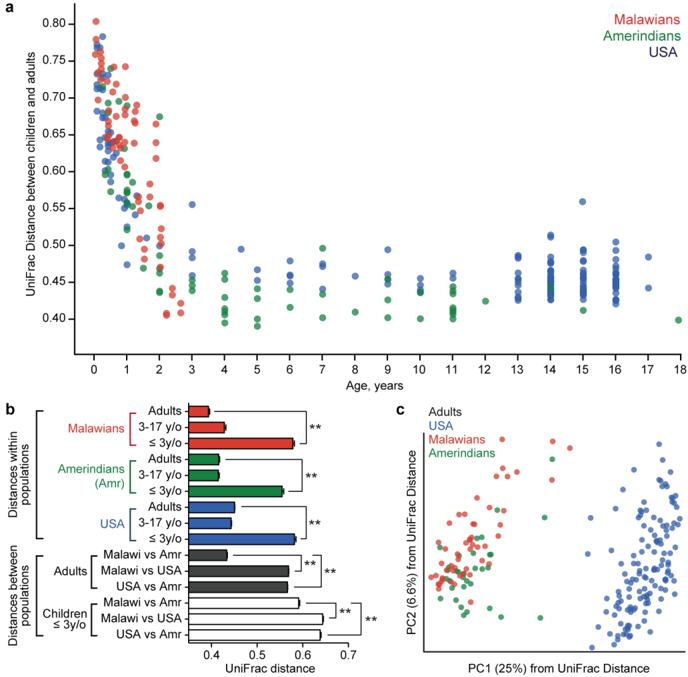
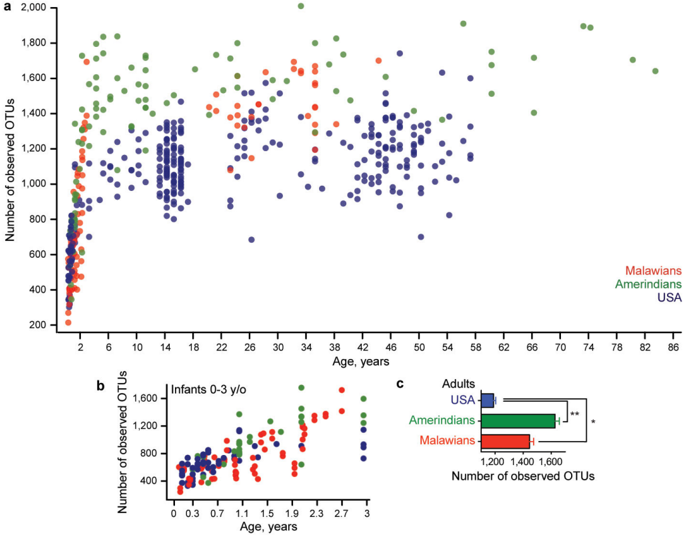
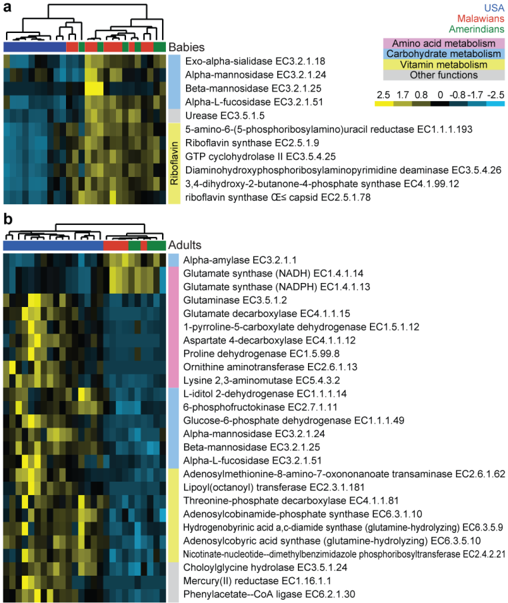
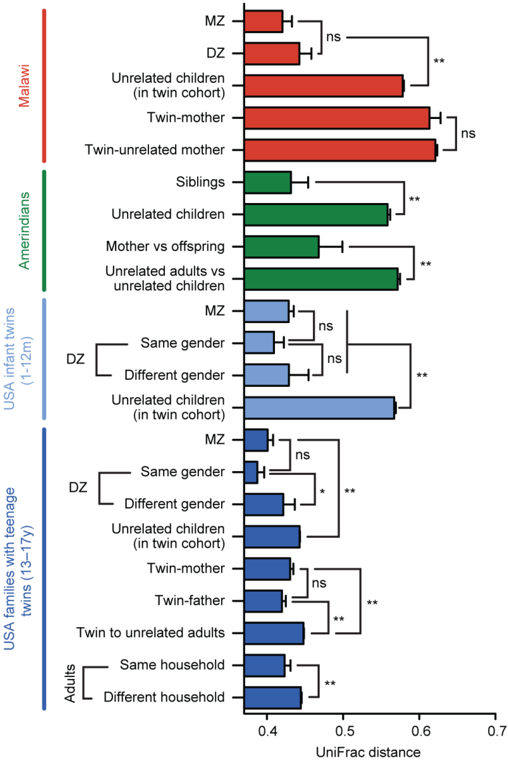
Gut microbial communities represent one source of human genetic and metabolic diversity. To examine how gut microbiomes differ among human populations, here we characterize bacterial species in fecal samples from 531 individuals, plus the gene content of 110 of them. The cohort encompassed healthy children and adults from the Amazonas of Venezuela, rural Malawi and US metropolitan areas and included mono- and dizygotic twins. Shared features of the functional maturation of the gut microbiome were identified during the first three years of life in all three populations, including age-associated changes in the genes involved in vitamin biosynthesis and metabolism. Pronounced differences in bacterial assemblages and functional gene repertoires were noted between US residents and those in the other two countries. These distinctive features are evident in early infancy as well as adulthood. Our findings underscore the need to consider the microbiome when evaluating human development, nutritional needs, physiological variations and the impact of westernization.
Overview
The claims and statistics of this paper haven’t been checked yet.
Free: it reads the open-access text and checks the first 5 claims that cite a source we can check. Create a free account to check every claim.
Integrity signals
Registry
Cites
Statistics
Figures
Verification
Claims the paper makes
The claims and statistics of this paper haven’t been checked yet.
Free: it reads the open-access text and checks the first 5 claims that cite a source we can check. Create a free account to check every claim.
Claims other papers make about this one
Each is checked against this paper’s own text: does it say what the citing paper says it does?
The cited source doesn’t support the claim as written.
In the citing paper
“Similar, albeit less marked, patterns were already observed for adults22,23,24,25 with different lifestyles but were never investigated in younger individuals.”
From Maternal and food microbial sources shape the infant microbiome of a rural Ethiopian population (2023) · cites this paper as [22]
Checked by a reasoning model — may be wrong.
Experimental — accuracy not yet measuredThe source backs part of the claim, not all of it — or backs it for a different population, condition or comparison.
In the citing paper
“The inverse relationship between Prevotella and Bacteroides has been reproduced in studies comparing the intestinal microbiota of residents of agrarian societies in South America and Bangladesh with residents of industrialized societies4, 37.”
From Diet and the Intestinal Microbiome: Associations, Functions, and Implications for Health and Disease (2014) · cites this paper as [4]
Experimental — accuracy not yet measuredThe source backs part of the claim, not all of it — or backs it for a different population, condition or comparison.
In the citing paper
“Moreover, geographic variations in the composition of intestinal microbiota have been described and implicated in the development of autoimmunity.28,29”
From Microbiota as Predictor of Mortality in Allogeneic Hematopoietic-Cell Transplantation (2020) · cites this paper as [28]
Experimental — accuracy not yet measuredThe source backs part of the claim, not all of it — or backs it for a different population, condition or comparison.
In the citing paper
“different human host cohorts may harbor remarkably different Gram-negative versus Gram-positive diversity3, 30, and a protocol appropriate for one type of community may work well in one study but not in another.”
From Assessment of variation in microbial community amplicon sequencing by the Microbiome Quality Control (MBQC) project consortium (2017) · cites this paper as [3]
Experimental — accuracy not yet measuredThe source backs part of the claim, not all of it — or backs it for a different population, condition or comparison.
In the citing paper
“Most critical events in education of host immunity may take place during the first years of life, in which microbiota composition displays the highest intra- and inter-individual variability before reaching a more stable adult-like configuration at the age of ~3 years.18–20”
From Interaction between microbiota and immunity in health and disease (2020) · cites this paper as [20]
Experimental — accuracy not yet measured
24 more claims about this paper
Create a free account to see every claim other papers make about this one.
Self-check
Percentages, sums and reported differences re-computed from the paper’s own numbers.
The self-check needs the paper’s full text.
Citations
Cites
QIIME allows analysis of high-throughput community sequencing data
Caporaso, J. G., Kuczynski, J., Stombaugh, J., Bittinger, K., Bushman, F. D., Costello, E. K., Fierer, N., Peña, A. G., Goodrich, J. K., Gordon, J. I., et al. (2010) · Nature Methods · doi:10.1038/nmeth.f.303 · Cited by 34,887
Self-citationSilhouettes: A graphical aid to the interpretation and validation of cluster analysis
Rousseeuw, P. J. (1987) · Journal of Computational and Applied Mathematics · doi:10.1016/0377-0427(87)90125-7 · Cited by 21,392
Classification and Regression by randomForest
Liaw, A. I., & Wiener, M. C. (2007) · Cited by 18,594
A human gut microbial gene catalogue established by metagenomic sequencing
MetaHIT Consortium, Qin, J., Li, R., Raes, J., Arumugam, M., Burgdorf, K. S., Manichanh, C., Nielsen, T., Pons, N., Levenez, F., et al. (2010) · Nature · doi:10.1038/nature08821 · Cited by 11,624 · cited 1×
“Shotgun reads were filtered using custom Perl scripts and publicly available software to remove (1) all reads ,60 nucleotides; (2) Titanium pyrosequencing reads with two continuous and/or three total degenerate bases (N); (3) all duplicates (a known artefact of pyrosequencing), defined as sequences in which the initia…”
MethodFinding groups in data: an introduction to cluster analysis
(1991) · Choice Reviews Online · doi:10.5860/choice.28-4558 · Cited by 10,474
UniFrac: a New Phylogenetic Method for Comparing Microbial Communities
Lozupone, C., & Knight, R. (2005) · Applied and Environmental Microbiology · doi:10.1128/aem.71.12.8228-8235.2005 · Cited by 8,227
Self-citationA core gut microbiome in obese and lean twins
Turnbaugh, P. J., Hamady, M., Yatsunenko, T., Cantarel, B. L., Duncan, A., Ley, R. E., Sogin, M. L., Jones, W. J., Roe, B. A., Affourtit, J. P., et al. (2009) · Nature · doi:10.1038/nature07540 · Cited by 7,823
Self-citationEnterotypes of the human gut microbiome
MetaHIT Consortium (additional members), Arumugam, M., Raes, J., Pelletier, E., Le Paslier, D., Yamada, T., Mende, D. R., Fernandes, G. R., Tap, J., Bruls, T., et al. (2011) · Nature · doi:10.1038/nature09944 · Cited by 7,548
Linking long-term dietary patterns with gut microbial enterotypes
Wu, G. D., Chen, J., Hoffmann, C., Bittinger, K., Chen, Y.-Y., Keilbaugh, S. A., Bewtra, M., Knights, D., Walters, W. A., Knight, R., et al. (2011) · Science · doi:10.1126/science.1208344 · Cited by 6,513
Self-citationDe Filippo, C., Cavalieri, D., Di Paola, M., Ramazzotti, M., Poullet, J. B., Massart, S., Collini, S., Pieraccini, G., & Lionetti, P. (2010) · Proceedings of the National Academy of Sciences · doi:10.1073/pnas.1005963107 · Cited by 5,579
Cited by
Items 901–1,000 of 1,221
Gut Dysbiosis and Muscle Aging: Searching for Novel Targets against Sarcopenia
Picca, A., Fanelli, F., Calvani, R., Mulè, G., Pesce, V., Sisto, A., Pantanelli, C., Bernabei, R., Landi, F., & Marzetti, E. (2018) · Mediators of Inflammation · doi:10.1155/2018/7026198 · Cited by 181
“Age-related changes in the bacterial composition of the microbiota are well known, and alterations of gut microbiota driven by the diet may affect the health of elderly people [9, 10].”
BackgroundDo bacteria shape our development? Crosstalk between intestinal microbiota and HPA axis
de Weerth, C. (2017) · Neuroscience & Biobehavioral Reviews · doi:10.1016/j.neubiorev.2017.09.016 · Cited by 181
“In adulthood, the microbial communities in the gut are stable (i.e. predominantly invariable taxonomic composition over time), but the specific composition is quite variable and distinct for each person (Yatsunenko et al., 2012).”
Bacterial community collapse: a meta‐analysis of the sinonasal microbiota in chronic rhinosinusitis
Wagner Mackenzie, B., Waite, D. W., Hoggard, M., Douglas, R. G., Taylor, M. W., & Biswas, K. (2017) · Environmental Microbiology · doi:10.1111/1462-2920.13632 · Cited by 181
Yang, L., & Chen, J. (2022) · Microbiome · doi:10.1186/s40168-022-01320-0 · Cited by 187
“based on experimental datasets The experimental datasets consist of 106 datasets retrieved from curatedMetagenomicData [53] (48 datasets), HMP16SData [54] (54 datasets), and others [17, 55] (4 datasets) (Table S5).”
Avershina, E., Storrø, O., Øien, T., Johnsen, R., Pope, P., & Rudi, K. (2014) · FEMS Microbiology Ecology · doi:10.1111/1574-6941.12223 · Cited by 181
“All rights reserved fewer or more infrequent time points (Yatsunenko et al., 2012).”
BackgroundInfluentialMeta-analysis of human genome-microbiome association studies: the MiBioGen consortium initiative
MiBioGen Consortium Initiative, Wang, J., Kurilshikov, A., Radjabzadeh, D., Turpin, W., Croitoru, K., Bonder, M. J., Jackson, M. A., Medina-Gomez, C., Frost, F., et al. (2018) · Microbiome · doi:10.1186/s40168-018-0479-3 · Cited by 181
“Much effort has been devoted to understanding the taxonomic and functional diversity of the microbiota and their encoded collective gene pool, the microbiome, with most research activity focusing on the microbes in our gastrointestinal tract [2, 3].”
BackgroundAge-Related Changes in the Composition of Gut Bifidobacterium Species
Kato, K., Odamaki, T., Mitsuyama, E., Sugahara, H., Xiao, J.-Z., & Osawa, R. (2017) · Current Microbiology · doi:10.1007/s00284-017-1272-4 · Cited by 180
“However, the numbers of this genus substantially decrease after weaning and continue to decrease with age [33, 40, 44].”
The Impact of the Milk Glycobiome on the Neonate Gut Microbiota
Pacheco, A. R., Barile, D., Underwood, M. A., & Mills, D. A. (2015) · Annual Review of Animal Biosciences · doi:10.1146/annurev-animal-022114-111112 · Cited by 180
“It is well established now that bifidobacteria dominate the intestinal microbial population of infants (72, 74, 75), reaching∼75%of the gut microbial population (51).”
BackgroundMaternal Obesity Is Associated with Alterations in the Gut Microbiome in Toddlers
Galley, J. D., Bailey, M., Kamp Dush, C., Schoppe-Sullivan, S., & Christian, L. M. (2014) · PLoS ONE · doi:10.1371/journal.pone.0113026 · Cited by 180
“closely resembling adult profiles, when the range of dietary exposures for the child expands [20,49].”
BackgroundParfrey, L. W., Walters, W. A., Lauber, C. L., Clemente, J. C., Berg-Lyons, D., Teiling, C., Kodira, C., Mohiuddin, M., Brunelle, J., Driscoll, M., et al. (2014) · Frontiers in Microbiology · doi:10.3389/fmicb.2014.00298 · Cited by 181
“These samples have been described in detail previously and bacterial diversity was previously reported (Costello et al., 2009; Yatsunenko et al., 2012; Smith et al., 2013).”
BackgroundInfluentialSelf-citationIntestinal Microbiota Influences Non-intestinal Related Autoimmune Diseases
Opazo, M. C., Ortega-Rocha, E. M., Coronado-Arrázola, I., Bonifaz, L. C., Boudin, H., Neunlist, M., Bueno, S. M., Kalergis, A. M., & Riedel, C. A. (2018) · Frontiers in Microbiology · doi:10.3389/fmicb.2018.00432 · Cited by 179
“Interestingly, induction of TH17 response by SFB has been shown to modulate gene expression of enteric neurons, which in turn influences microbiome/immune system crosstalk (Yissachar et al., 2017).”
BackgroundDietary silver nanoparticles can disturb the gut microbiota in mice
van den Brule, S., Ambroise, J., Lecloux, H., Levard, C., Soulas, R., De Temmerman, P.-J., Palmai-Pallag, M., Marbaix, E., & Lison, D. (2015) · Particle and Fibre Toxicology · doi:10.1186/s12989-016-0149-1 · Cited by 179
“It continuously evolves from birth to adulthood and an alteration in the bacterial balance can occur following changes in the host environment, diet or circadian rhythm [22–24].”
BackgroundDrug Metabolism by the Host and Gut Microbiota: A Partnership or Rivalry?
Swanson, H. I. (2015) · Drug Metabolism and Disposition · doi:10.1124/dmd.115.065714 · Cited by 178
“the phylogenetic composition of the bacterial communities found within the gut of most children closely mirrors that of the adult (Yatsunenko et al., 2012).”
InfluentialUtilization of the microbiome in personalized medicine
Ratiner, K., Ciocan, D., Abdeen, S. K., & Elinav, E. (2024) · Nature Reviews Microbiology · doi:10.1038/s41579-023-00998-9 · Cited by 170
“Whereas large-scale studies comprehensively demonstrated geographical microbiome variations across cultures, countries and continents 197–199 , most mechanistic microbiome studies to date included patients residing in developed countries in Europe, North America and some Asian countries 200 .”
Priming for health: gut microbiota acquired in early life regulates physiology, brain and behaviour
Clarke, G., O'Mahony, S., Dinan, T., & Cryan, J. (2014) · Acta Paediatrica · doi:10.1111/apa.12674 · Cited by 179
“Geographical and cultural factors also appear to contribute to differential patterns of gut microbiota development in early life, as seen in differences in the microbiota profiles of the Amazonas of Venezuela, rural Malawi and the US metropolitan area, which are quite pronounced, even during infancy (28).”
BackgroundDiet influence on the gut microbiota and dysbiosis related to nutritional disorders
Tidjani Alou, M., Lagier, J.-C., & Raoult, D. (2016) · Human Microbiome Journal · doi:10.1016/j.humic.2016.09.001 · Cited by 179
“Geographic locations such as country, continent or metropolitan areas as opposed to rural areas seem to have an influence on the gut microbiota diversity but this influence to the variation in diet associated with geographic location [21].”
BackgroundGut Microbiota Differs Between Parkinson’s Disease Patients and Healthy Controls in Northeast China
Li, C., Cui, L., Yang, Y., Miao, J., Zhao, X., Zhang, J., Cui, G., & Zhang, Y. (2019) · Frontiers in Molecular Neuroscience · doi:10.3389/fnmol.2019.00171 · Cited by 178
Geographical patterns of the standing and active human gut microbiome in health and IBD
Rehman, A., Rausch, P., Wang, J., Skieceviciene, J., Kiudelis, G., Bhagalia, K., Amarapurkar, D., Kupcinskas, L., Schreiber, S., Rosenstiel, P., et al. (2016) · Gut · doi:10.1136/gutjnl-2014-308341 · Cited by 178
Comparative Analysis of 16S rRNA Gene and Metagenome Sequencing in Pediatric Gut Microbiomes
Peterson, D., Bonham, K. S., Rowland, S., Pattanayak, C. W., RESONANCE Consortium, & Klepac-Ceraj, V. (2021) · Frontiers in Microbiology · doi:10.3389/fmicb.2021.670336 · Cited by 178
“…for experimentation with shallower sequencing depths because their communities have lower gut microbial diversity until their microbiomes stabilize and become more adult-like around 2-3 years of age (Palmer et al., 2007; Radjabzadeh et al., 2020; Stewart et al., 2018; Yatsunenko et al., 2012).”
BackgroundGenetic manipulation of gut microbes enables single-gene interrogation in a complex microbiome
Jin, W.-B., Li, T.-T., Huo, D., Qu, S., Li, X. V., Arifuzzaman, M., Lima, S. F., Shi, H.-Q., Wang, A., Putzel, G. G., et al. (2022) · Cell · doi:10.1016/j.cell.2021.12.035 · Cited by 169
Vatanen, T., Jabbar, K. S., Ruohtula, T., Honkanen, J., Avila-Pacheco, J., Siljander, H., Stražar, M., Oikarinen, S., Hyöty, H., Ilonen, J., et al. (2022) · Cell · doi:10.1016/j.cell.2022.11.023 · Cited by 179
Examining the healthy human microbiome concept
Joos, R., Boucher, K., Lavelle, A., Arumugam, M., Blaser, M. J., Claesson, M. J., Clarke, G., Cotter, P. D., De Sordi, L., Dominguez-Bello, M. G., et al. (2025) · Nature Reviews Microbiology · doi:10.1038/s41579-024-01107-0 · Cited by 166
Viral Infections, the Microbiome, and Probiotics
Harper, A., Vijayakumar, V., Ouwehand, A. C., ter Haar, J., Obis, D., Espadaler, J., Binda, S., Desiraju, S., & Day, R. (2021) · Frontiers in Cellular and Infection Microbiology · doi:10.3389/fcimb.2020.596166 · Cited by 177
“Leaving the human virome to one side and returning to the wider human GI microbiome, this has been repeatedly shown to be an important variable in human health, given its contribution to multiple aspects of human physiology including digestion, vitamin synthesis, and development and maintenance of the immune system (O…”
BackgroundHuman gut microbiota: Does diet matter?
Maukonen, J., & Saarela, M. (2015) · Proceedings of The Nutrition Society · doi:10.1017/s0029665114000688 · Cited by 177
“By the end of the second to third year, the phylogenetic composition evolves towards the adult-like composition((66,91)).”
Micronutrient Requirements and Sharing Capabilities of the Human Gut Microbiome
Rodionov, D. A., Arzamasov, A. A., Khoroshkin, M. S., Iablokov, S. N., Leyn, S. A., Peterson, S. N., Novichkov, P. S., & Osterman, A. L. (2019) · Frontiers in Microbiology · doi:10.3389/fmicb.2019.01316 · Cited by 177
“These networks are driving numerous metabolic interactions within the microbial community and with the human host in the context of highly variable dietary supply of nutrients (Yatsunenko et al., 2012; David et al., 2014; Zhang et al., 2014; Wu et al., 2015; Blanton et al., 2016; Hibberd et al., 2017; Sheflin et al.,…”
An Immunologic Mode of Multigenerational Transmission Governs a Gut Treg Setpoint
Ramanan, D., Sefik, E., Galván-Peña, S., Wu, M., Yang, L., Yang, Z., Kostic, A., Golovkina, T. V., Kasper, D. L., Mathis, D., et al. (2020) · Cell · doi:10.1016/j.cell.2020.04.030 · Cited by 177
“In 3-dayold neonates, the gut microbiota was extremely simple as expected (Yatsunenko et al., 2012; Knoop et al., 2015), dominated by Lactobacilli (murinis or johnsonii) and Prevotella pneumotropica (Figure 4E).”
Cowan, C. S. M., Dinan, T. G., & Cryan, J. F. (2020) · Journal of Child Psychology and Psychiatry · doi:10.1111/jcpp.13156 · Cited by 176
Tong, M., Li, X., Wegener Parfrey, L., Roth, B., Ippoliti, A., Wei, B., Borneman, J., McGovern, D. P. B., Frank, D. N., Li, E., et al. (2013) · PLoS ONE · doi:10.1371/journal.pone.0080702 · Cited by 177
“Prior studies of the fecal compartment have not reported such microbial modules between individuals, and early findings of recurrent communities dominating the entire fecal microbiome [73] have not been consistently observed [13,74-76].”
BackgroundSelf-citationClaassen, S., du Toit, E., Kaba, M., Moodley, C., Zar, H. J., & Nicol, M. P. (2013) · Journal of Microbiological Methods · doi:10.1016/j.mimet.2013.05.008 · Cited by 174
“…extraction efficiency from a broad range of microbial profiles, ranging from a highly variable and less stable microbial profile found in infants during the first year of life to a more stable profile typically found in adults (Palmer et al., 2007; Yatsunenko et al., 2012; Zoetendal et al., 1998).”
BackgroundThe gut virome: the ‘missing link’ between gut bacteria and host immunity?
Mukhopadhya, I., Segal, J. P., Carding, S. R., Hart, A. L., & Hold, G. L. (2019) · Therapeutic Advances in Gastroenterology · doi:10.1177/1756284819836620 · Cited by 177
Microbial Contribution to the Human Metabolome: Implications for Health and Disease
Van Treuren, W., & Dodd, D. (2020) · Annual Review of Pathology: Mechanisms of Disease · doi:10.1146/annurev-pathol-020117-043559 · Cited by 181
Zheng, Z., Lyu, W., Ren, Y., Li, X., Zhao, S., Yang, H., & Xiao, Y. (2021) · Frontiers in Nutrition · doi:10.3389/fnut.2021.690138 · Cited by 169
“Extensive studies have shown that the gut microbiota affects the body’s immune response (37), neural signal (38), and bone density (39), regulates intestinal endocrine function (40), provides energy (41), synthesizes vitamins (42) and many other compounds (43).”
BackgroundMalnutrition and Gut Microbiota in Children
Iddrisu, I., Monteagudo-Mera, A., Poveda, C., Pyle, S., Shahzad, M., Andrews, S., & Walton, G. E. (2021) · Nutrients · doi:10.3390/nu13082727 · Cited by 167
“The gut microbiota has also been observed to play an important role in absorption, storage and expenditure of energy from the diet [17–19] as well as synthesis of vitamins K and B12 [20,21].”
BackgroundMetformin attenuated sepsis-related liver injury by modulating gut microbiota
Liang, H., Song, H., Zhang, X., Song, G., Wang, Y., Ding, X., Duan, X., Li, L., Sun, T., & Kan, Q. (2022) · Emerging Microbes & Infections · doi:10.1080/22221751.2022.2045876 · Cited by 176
“Gut microbial composition varies with age [11], undergoing dramatic changes from infant to adult and from dominant Bifidobacterium to Bacteroidetes and Clostridia genus [11,12].”
BackgroundEffect of body mass and clothing on decomposition of pig carcasses
Matuszewski, S., Konwerski, S., Frątczak, K., & Szafałowicz, M. (2014) · International Journal of Legal Medicine · doi:10.1007/s00414-014-0965-5 · Cited by 176
“Bloating started significantly earlier and lasted slightly longer on larger carcasses, suggesting that putrefaction is more efficient in these carcasses probably due to larger and more complex microbial communities [40] and slower heat loss [41].”
BackgroundThe Interplay Between Fiber and the Intestinal Microbiome in the Inflammatory Response
Kuo, S.-M. (2013) · Advances in Nutrition · doi:10.3945/an.112.003046 · Cited by 174
Logan, A. C., & Jacka, F. N. (2014) · Journal of Physiological Anthropology · doi:10.1186/1880-6805-33-22 · Cited by 168
“[264-267].”
Simms-Waldrip, T. R., Sunkersett, G., Coughlin, L. A., Savani, M. R., Arana, C., Kim, J., Kim, M., Zhan, X., Greenberg, D. E., Xie, Y., et al. (2017) · Biology of Blood and Marrow Transplantation · doi:10.1016/j.bbmt.2017.02.004 · Cited by 175
Soil exposure modifies the gut microbiota and supports immune tolerance in a mouse model
Ottman, N., Ruokolainen, L., Suomalainen, A., Sinkko, H., Karisola, P., Lehtimäki, J., Lehto, M., Hanski, I., Alenius, H., & Fyhrquist, N. (2019) · Journal of Allergy and Clinical Immunology · doi:10.1016/j.jaci.2018.06.024 · Cited by 177
Compromised Gut Microbiota Networks in Children With Anti-Islet Cell Autoimmunity
Endesfelder, D., zu Castell, W., Ardissone, A., Davis-Richardson, A. G., Achenbach, P., Hagen, M., Pflueger, M., Gano, K. A., Fagen, J. R., Drew, J. C., et al. (2014) · Diabetes · doi:10.2337/db13-1676 · Cited by 175
“These studies suggest that the phylogenetic composition of the bacterial communities evolves towards an adult-like configuration within the three-year period after birth (14, 17-19).”
BackgroundHuman microbiome myths and misconceptions
Walker, A. W., & Hoyles, L. (2023) · Nature Microbiology · doi:10.1038/s41564-023-01426-7 · Cited by 163
Clostridium difficile – From Colonization to Infection
Schäffler, H., & Breitrück, A. (2018) · Frontiers in Microbiology · doi:10.3389/fmicb.2018.00646 · Cited by 174
Discovering new indicators of fecal pollution
McLellan, S. L., & Eren, A. M. (2014) · Trends in Microbiology · doi:10.1016/j.tim.2014.08.002 · Cited by 175
Alterations to the Gut Microbiome Impair Bone Strength and Tissue Material Properties
Guss, J. D., Horsfield, M. W., Fontenele, F. F., Sandoval, T. N., Luna, M., Apoorva, F., Lima, S. F., Bicalho, R. C., Singh, A., Ley, R. E., et al. (2017) · Journal of Bone and Mineral Research · doi:10.1002/jbmr.3114 · Cited by 176
“The gut microbiome is initially obtained at birth((11)) and subsequently shaped by factors such as environment((12)) and diet.”
BackgroundLongevity of centenarians is reflected by the gut microbiome with youth-associated signatures
Pang, S., Chen, X., Lu, Z., Meng, L., Huang, Y., Yu, X., Huang, L., Ye, P., Chen, X., Liang, J., et al. (2023) · Nature Aging · doi:10.1038/s43587-023-00389-y · Cited by 173
Signaling in Host-Associated Microbial Communities
Fischbach, M. A., & Segre, J. A. (2016) · Cell · doi:10.1016/j.cell.2016.02.037 · Cited by 172
Adhesion Properties of Lactic Acid Bacteria on Intestinal Mucin
Nishiyama, K., Sugiyama, M., & Mukai, T. (2016) · Microorganisms · doi:10.3390/microorganisms4030034 · Cited by 170
“In recent years, whole-genome sequencing of bacteria and metagenomic analyses of microbiota performed using comprehensive genomic analytical techniques have revealed the structure of the symbiotic relationship between the host and the bacteria within the complex ecosystem that is the human body [8,9].”
BackgroundUnderstanding the gut microbiome of dairy calves: Opportunities to improve early-life gut health
Malmuthuge, N., & Guan, L. L. (2017) · Journal of Dairy Science · doi:10.3168/jds.2016-12239 · Cited by 166
“Studies on human gut (Yatsunenko et al., 2012) and rumen (Jami et al., 2013) microbiomes have revealed that individual animal variation is higher in early life than in adulthood, and this might have contributed to the lack of statistical differences between bacterial groups.”
BackgroundSelway, C. A., Mills, J. G., Weinstein, P., Skelly, C., Yadav, S., Lowe, A., Breed, M. F., & Weyrich, L. S. (2020) · Environment International · doi:10.1016/j.envint.2020.106084 · Cited by 172
Tavakoli, P., Vollmer-Conna, U., Hadzi-Pavlovic, D., & Grimm, M. C. (2021) · Public Health Reviews · doi:10.3389/phrs.2021.1603990 · Cited by 168
“Therefore, in spite of the phylogenetic diversity only a subset of identifiable microbial niches with overlapping functional properties and products but not microbial species, were shared between all individuals which refutes the existence of a “core” microbiome [154, 165, 182, 183].”
BackgroundHow Diet and Physical Activity Modulate Gut Microbiota: Evidence, and Perspectives
Campaniello, D., Corbo, M. R., Sinigaglia, M., Speranza, B., Racioppo, A., Altieri, C., & Bevilacqua, A. (2022) · Nutrients · doi:10.3390/nu14122456 · Cited by 167
“[10], who documented variations in gut microbiota between Americans and Africans.”
BackgroundMeta‐analysis of the human gut microbiome from urbanized and pre‐agricultural populations
Mancabelli, L., Milani, C., Lugli, G. A., Turroni, F., Ferrario, C., van Sinderen, D., & Ventura, M. (2017) · Environmental Microbiology · doi:10.1111/1462-2920.13692 · Cited by 173
Antibiotic-induced changes in the microbiota disrupt redox dynamics in the gut
Reese, A. T., Cho, E. H., Klitzman, B., Nichols, S. P., Wisniewski, N. A., Villa, M. M., Durand, H. K., Jiang, S., Midani, F. S., Nimmagadda, S. N., et al. (2018) · eLife · doi:10.7554/elife.35987 · Cited by 173
“…regardless of host biology leading to the broad, phylum-level consistency of composition seen between humans regardless of diet, geography, or genetics (David et al., 2014; Claesson et al., 2012; Goodrich et al., 2014; De Filippo et al., 2010; Yatsunenko et al., 2012; Arumugam et al., 2011).”
BackgroundInfluentialGordon, J. I. (2012) · Science · doi:10.1126/science.1224686 · Cited by 172
Self-citationMicrobial Activities and Intestinal Homeostasis: A Delicate Balance Between Health and Disease
Ohland, C. L., & Jobin, C. (2015) · Cellular and Molecular Gastroenterology and Hepatology · doi:10.1016/j.jcmgh.2014.11.004 · Cited by 172
A refined palate: Bacterial consumption of host glycans in the gut
Marcobal, A., Southwick, A. M., Earle, K. A., & Sonnenburg, J. L. (2013) · Glycobiology · doi:10.1093/glycob/cwt040 · Cited by 178
Oliver, A., Chase, A. B., Weihe, C., Orchanian, S. B., Riedel, S. F., Hendrickson, C. L., Lay, M., Sewall, J. M., Martiny, J. B. H., & Whiteson, K. (2021) · mSystems · doi:10.1128/msystems.00115-21 · Cited by 171
The Milieu Intérieur Consortium, Scepanovic, P., Hodel, F., Mondot, S., Partula, V., Byrd, A., Hammer, C., Alanio, C., Bergstedt, J., Patin, E., et al. (2019) · Microbiome · doi:10.1186/s40168-019-0747-x · Cited by 171
“In line with previous reports [6, 14, 26], we observed sex and age as the strongest influencers on all β-diversity indexes, with the lowest association p values”
BackgroundResultTracking human sewage microbiome in a municipal wastewater treatment plant
Cai, L., Ju, F., & Zhang, T. (2014) · Applied Microbiology and Biotechnology · doi:10.1007/s00253-013-5402-z · Cited by 171
Esophageal Microbiome in Eosinophilic Esophagitis
Harris, J. K., Fang, R., Wagner, B. D., Choe, H. N., Kelly, C. J., Schroeder, S., Moore, W., Stevens, M. J., Yeckes, A., Amsden, K., et al. (2015) · PLOS ONE · doi:10.1371/journal.pone.0128346 · Cited by 173
“Moreover, the gut microbiome has been shown to be stable by age 3 [35].”
BackgroundAntibiotics detected in urines and adipogenesis in school children
Wang, H., Wang, N., Wang, B., Fang, H., Fu, C., Tang, C., Jiang, F., Zhou, Y., He, G., Zhao, Q., et al. (2016) · Environment International · doi:10.1016/j.envint.2016.02.005 · Cited by 171
Expanding role of gut microbiota in lipid metabolism
Ghazalpour, A., Cespedes, I., Bennett, B. J., & Allayee, H. (2016) · Current Opinion in Lipidology · doi:10.1097/mol.0000000000000278 · Cited by 172
Nelson, M. T., Pope, C. E., Marsh, R. L., Wolter, D. J., Weiss, E. J., Hager, K. R., Vo, A. T., Brittnacher, M. J., Radey, M. C., Hayden, H. S., et al. (2019) · Cell Reports · doi:10.1016/j.celrep.2019.01.091 · Cited by 173
“Sequence analysis of the ‘‘metagenome,’’ the total complement of genes present in a community, can provide insight into not only the taxonomic composition of the microbiota but also its functional capacity directly from sequencing data (Yatsunenko et al., 2012).”
BackgroundKohl, K. D. (2020) · Philosophical Transactions of the Royal Society B: Biological Sciences · doi:10.1098/rstb.2019.0251 · Cited by 167
Pathogenic microbes, the microbiome, and Alzheimer’s disease (AD)
(2014) · Frontiers in Aging Neuroscience · doi:10.3389/fnagi.2014.00127 · Cited by 169
Pathogens, microbiome and the host: emergence of the ecological Koch's postulates
Vonaesch, P., Anderson, M., & Sansonetti, P. J. (2018) · FEMS Microbiology Reviews · doi:10.1093/femsre/fuy003 · Cited by 170
Microbiome and type 1 diabetes
Siljander, H., Honkanen, J., & Knip, M. (2019) · eBioMedicine · doi:10.1016/j.ebiom.2019.06.031 · Cited by 171
“The human intestinalmicrobiomematurates during thefirst years of life, after which its composition resembles the composition observed in adults [4,5].”
BackgroundInterpersonal Gut Microbiome Variation Drives Susceptibility and Resistance to Cholera Infection
Alavi, S., Mitchell, J. D., Cho, J. Y., Liu, R., Macbeth, J. C., & Hsiao, A. (2020) · Cell · doi:10.1016/j.cell.2020.05.036 · Cited by 173
“The CR community in the small intestine was quite distinct from that in feces, but all animals with this community were consistently colonized by Blautia and Bacteroides species.”
BackgroundInfluentialIntestinal Microbiota and Nonalcoholic Steatohepatitis
Brandl, K., & Schnabl, B. (2017) · Current Opinion in Gastroenterology · doi:10.1097/mog.0000000000000349 · Cited by 169
Sugahara, H., Odamaki, T., Fukuda, S., Kato, T., Xiao, J.-Z., Abe, F., Kikuchi, J., & Ohno, H. (2015) · Scientific Reports · doi:10.1038/srep13548 · Cited by 169
“In recent years, “omics” techniques, including metabolomics 4,5 genomics 6 , and transcriptomics 7 , have been developed to understand the “whole picture” of biological reactions in cells, organs, and organisms.”
Davis, E. C., Wang, M., & Donovan, S. M. (2017) · Gut Microbes · doi:10.1080/19490976.2016.1278104 · Cited by 169
Tang, Z.-Z., Chen, G., Hong, Q., Huang, S., Smith, H. M., Shah, R. D., Scholz, M., & Ferguson, J. F. (2019) · Frontiers in Genetics · doi:10.3389/fgene.2019.00454 · Cited by 169
Obesity Alters the Microbial Community Profile in Korean Adolescents
Hu, H.-J., Park, S.-G., Jang, H. B., Choi, M.-G., Park, K.-H., Kang, J. H., Park, S. I., Lee, H.-J., & Cho, S.-H. (2015) · PLOS ONE · doi:10.1371/journal.pone.0134333 · Cited by 169
Bacterial Profile of Dentine Caries and the Impact of pH on Bacterial Population Diversity
Kianoush, N., Adler, C. J., Nguyen, K.-A. T., Browne, G. V., Simonian, M., & Hunter, N. (2014) · PLoS ONE · doi:10.1371/journal.pone.0092940 · Cited by 168
“001 as in accordance with previous recommendations [54].”
BackgroundResultMicrobiome Assembly across Multiple Body Sites in Low-Birthweight Infants
Costello, E. K., Carlisle, E. M., Bik, E. M., Morowitz, M. J., & Relman, D. A. (2013) · mBio · doi:10.1128/mbio.00782-13 · Cited by 171
Prebiotics: Definition and protective mechanisms
Valcheva, R., & Dieleman, L. A. (2016) · Best Practice & Research Clinical Gastroenterology · doi:10.1016/j.bpg.2016.02.008 · Cited by 162
Perez Perez, G. I., Gao, Z., Jourdain, R., Ramirez, J., Gany, F., Clavaud, C., Demaude, J., Breton, L., & Blaser, M. J. (2016) · PLOS ONE · doi:10.1371/journal.pone.0151990 · Cited by 165
The controversial role of Enterococcus faecalis in colorectal cancer
de Almeida, C. V., Taddei, A., & Amedei, A. (2018) · Therapeutic Advances in Gastroenterology · doi:10.1177/1756284818783606 · Cited by 164
Stanislawski, M. A., Dabelea, D., Wagner, B. D., Iszatt, N., Dahl, C., Sontag, M. K., Knight, R., Lozupone, C. A., & Eggesbø, M. (2018) · mBio · doi:10.1128/mbio.01751-18 · Cited by 166
Self-citationDelivery mode and gut microbial changes correlate with an increased risk of childhood asthma
Stokholm, J., Thorsen, J., Blaser, M. J., Rasmussen, M. A., Hjelmsø, M., Shah, S., Christensen, E. D., Chawes, B. L., Bønnelykke, K., Brix, S., et al. (2020) · Science Translational Medicine · doi:10.1126/scitranslmed.aax9929 · Cited by 167
“The gut microbiota matures extensively within the early years of life (11, 12), and cesarean section– induced gut microbial alterations may persist for a year or longer (13, 14).”
BackgroundMicrobiota and Mucosal Immunity in Amphibians
Colombo, B. M., Scalvenzi, T., Benlamara, S., & Pollet, N. (2015) · Frontiers in Immunology · doi:10.3389/fimmu.2015.00111 · Cited by 169
Yeoman, C. J., Ishaq, S. L., Bichi, E., Olivo, S. K., Lowe, J., & Aldridge, B. M. (2018) · Scientific Reports · doi:10.1038/s41598-018-21440-8 · Cited by 168
Rettedal, E. A., Gumpert, H., & Sommer, M. O. A. (2014) · Nature Communications · doi:10.1038/ncomms5714 · Cited by 169
Warinner, C., Speller, C., Collins, M. J., & Lewis, C. M. (2015) · Journal of Human Evolution · doi:10.1016/j.jhevol.2014.10.016 · Cited by 168
“non-Western populations (Lozupone et al., 2012; Yatsunenko et al., 2012) have raised questions about whether the microbiota we currently define as normal have been shaped by recent influences of modern Western diet, hygiene, antibiotic exposure, and lifestyle (Maslowski and Mackay, 2011).”
InfluentialMicrobial diversity in individuals and their household contacts following typical antibiotic courses
Abeles, S. R., Jones, M. B., Santiago-Rodriguez, T. M., Ly, M., Klitgord, N., Yooseph, S., Nelson, K. E., & Pride, D. T. (2016) · Microbiome · doi:10.1186/s40168-016-0187-9 · Cited by 169
“For example, monozygotic and dizygotic twins share a substantial proportion of their bacterial biota [21, 30], but do not necessarily need to cohabitate to have similarities in their microbiota.”
Clark, A., & Mach, N. (2016) · Frontiers in Immunology · doi:10.3389/fimmu.2016.00627 · Cited by 168
“The promoter region of the VDR gene lies in a GpC-rich island and contains strong regulatory elements for its transcriptional activity (111).”
BackgroundKaplan, R. C., Wang, Z., Usyk, M., Sotres-Alvarez, D., Daviglus, M. L., Schneiderman, N., Talavera, G. A., Gellman, M. D., Thyagarajan, B., Moon, J.-Y., et al. (2019) · Genome Biology · doi:10.1186/s13059-019-1831-z · Cited by 169
“Following seminal work in this area [9], we can point to several possible explanations for why exposure to the Latin American and US environments may be associated with distinct microbiota patterns.”
BackgroundSelf-citationLevin, A. M., Sitarik, A. R., Havstad, S. L., Fujimura, K. E., Wegienka, G., Cassidy-Bushrow, A. E., Kim, H., Zoratti, E. M., Lukacs, N. W., Boushey, H. A., et al. (2016) · Scientific Reports · doi:10.1038/srep31775 · Cited by 168
Human Skin, Oral, and Gut Microbiomes Predict Chronological Age
Huang, S., Haiminen, N., Carrieri, A.-P., Hu, R., Jiang, L., Parida, L., Russell, B., Allaband, C., Zarrinpar, A., Vázquez-Baeza, Y., et al. (2020) · mSystems · doi:10.1128/msystems.00630-19 · Cited by 167
“Microbiomes across the body are known to change rapidly in the first 3 years of life and then relatively little in adults (1).”
BackgroundSelf-citationCurrent views on hunter‐gatherer nutrition and the evolution of the human diet
Crittenden, A. N., & Schnorr, S. L. (2017) · American Journal of Physical Anthropology · doi:10.1002/ajpa.23148 · Cited by 167
“…been wholly anthropological in that it sought links between factors such as subsistence, age, sex, health, and reproduction, and the ways in which microbiome patterns vary across population demographics (De Filippo et al., 2010; Qin et al., 2012; Turnbaugh et al., 2007; Yatsunenko et al., 2012).”
BackgroundInfluentialMartin, C., Zhang, Y., Tonelli, C., & Petroni, K. (2013) · Annual Review of Plant Biology · doi:10.1146/annurev-arplant-050312-120142 · Cited by 164
Antibiotics in neonatal life increase murine susceptibility to experimental psoriasis
Zanvit, P., Konkel, J. E., Jiao, X., Kasagi, S., Zhang, D., Wu, R., Chia, C., Ajami, N. J., Smith, D. P., Petrosino, J. F., et al. (2015) · Nature Communications · doi:10.1038/ncomms9424 · Cited by 170
Gotoh, A., Katoh, T., Sakanaka, M., Ling, Y., Yamada, C., Asakuma, S., Urashima, T., Tomabechi, Y., Katayama-Ikegami, A., Kurihara, S., et al. (2018) · Scientific Reports · doi:10.1038/s41598-018-32080-3 · Cited by 168
Neuromicrobiology, an emerging neurometabolic facet of the gut microbiome?
Miri, S., Yeo, J., Abubaker, S., & Hammami, R. (2023) · Frontiers in Microbiology · doi:10.3389/fmicb.2023.1098412 · Cited by 164
“There has been evidence that infant gut microbiomes are enriched for genes involved in de novo folate biosynthesis, whereas adult gut microbiomes are enriched for genes involved in folate metabolism and its reduced form tetrahydrofolate (Yatsunenko et al., 2012).”
BackgroundKrajmalnik-Brown, R., Lozupone, C., Kang, D.-W., & Adams, J. B. (2015) · Microbial Ecology in Health & Disease · doi:10.3402/mehd.v26.26914 · Cited by 167
“(35), showed the opposite pattern of children with ASD, in having a fecal microbiota with a striking resemblance to that of individuals in the developing world (46).”
BackgroundMethodInfluentialSelf-citationLi, L., & Zhao, X. (2015) · Scientific Reports · doi:10.1038/srep14682 · Cited by 167
“An across-country survey performed by Yatsunenko et al. (2012) 5 also showed that there were significant differences in the phylogenetic composition of fecal microbiota among individuals living in three different countries (Venezuela, Malawi and United States of America) and the authors attributed…”
Stereotypes About Enterotype: The Old and New Ideas
Cheng, M., & Ning, K. (2019) · Genomics, Proteomics & Bioinformatics · doi:10.1016/j.gpb.2018.02.004 · Cited by 167
“Gut microbiota vary largely among individuals in time and space scale [7], which has been regarded as an obstacle to the gut microbiome-based medical applications.”
BackgroundLinks between environment, diet, and the hunter-gatherer microbiome
Fragiadakis, G. K., Smits, S. A., Sonnenburg, E. D., Van Treuren, W., Reid, G., Knight, R., Manjurano, A., Changalucha, J., Dominguez-Bello, M. G., Leach, J., et al. (2019) · Gut Microbes · doi:10.1080/19490976.2018.1494103 · Cited by 167
“When the OTUs of these samples are plotted together, we observed an increase in microbial diversity as the Hadza age (Figure 3A), particularly during the first few years of life, as has been reported in other traditional and industrialized cohorts.(11) Interestingly, we do not see decreasing levels of diversity in the…”
ResultSelf-citationSalazar, N., Arboleya, S., Valdés, L., Stanton, C., Ross, P., Ruiz, L., Gueimonde, M., & de los Reyes-Gavilán, C. G. (2014) · Frontiers in Genetics · doi:10.3389/fgene.2014.00406 · Cited by 166
“From an initial low diversity and complexity the intestinal microbiota reaches a stable population similar to that of an adult around 2–3 years of age (Koenig et al., 2011; Yatsunenko et al., 2012).”
Association between the gut microbiota and diet: Fetal life, early childhood, and further life
Kashtanova, D. A., Popenko, A. S., Tkacheva, O. N., Tyakht, A. B., Alexeev, D. G., & Boytsov, S. A. (2016) · Nutrition · doi:10.1016/j.nut.2015.12.037 · Cited by 165
Metadata
- Authors
- Yatsunenko, T., Rey, F. E., Manary, M. J., Trehan, I., Dominguez-Bello, M. G., Contreras, M., Magris, M., Hidalgo, G., Baldassano, R. N., Anokhin, A. P., Heath, A. C., Warner, B., Reeder, J., Kuczynski, J., Caporaso, J. G., Lozupone, C. A., Lauber, C., Clemente, J. C., Knights, D., Knight, R., & Gordon, J. I.
- Affiliations
- Washington University in St. Louis (US)
- University of Malawi (MW)
- Children's Hospital of Philadelphia (US)
- University of Colorado Boulder (US)
- Northern Arizona University (US)
- Howard Hughes Medical Institute (US)
- Corresponding author
- Gordon, Jeffrey I.
- ORCID
- Venue
- Nature
- Published
- 2012-05-09
- Volume
- 486
- Issue
- 7402
- Pages
- 222-227
- ISSN
- 0028-0836 (ISSN-L)
- 1476-4687
- PMC
- PMC3376388
- OpenAlex
- W2162088497
- Semantic Scholar
- 54a6d777e3a84e46f1c74bc9a0482a7307bd79c7
- Cited by
- 7,815
- References
- 41
- Citations by year
- 2026: 373 · 2025: 472 · 2024: 576 · 2023: 580 · 2022: 730 · 2021: 786 · 2020: 769 · 2019: 674 · 2018: 597 · 2017: 559 · 2016: 534 · 2015: 433 · 2014: 356 · 2013: 287 · 2012: 82
- FWCI
- 148.99
- Type
- journal article
- Language
- en
- Open access
- green
- www.ncbi.nlm.nih.gov
- Licence
- www.springer.com/tdm (tdm)
- Locations
- Nature (publishedVersion)
- PubMed (publishedVersion)
- Europe PMC (PubMed Central) (acceptedVersion)
- PubMed Central (acceptedVersion)
- RePEc: Research Papers in Economics (submittedVersion)
- eScholarship (California Digital Library) (submittedVersion)
- Funders
- Howard Hughes Medical Institute
- Crohn's and Colitis Foundation
- National Institute on Alcohol Abuse and Alcoholism (K05AA017688)
- National Institute of Diabetes and Digestive and Kidney Diseases (DK078669, P01DK078669, K01DK090285)
- Eunice Kennedy Shriver National Institute of Child Health and Human Development (T32HD049338)
- Topics
- Life Sciences › Biochemistry, Genetics and Molecular Biology › Molecular Biology › Gut microbiota and health
- Health Sciences › Nursing › Nutrition and Dietetics › Infant Nutrition and Health
- Physical Sciences › Environmental Science › Ecology › Microbial Community Ecology and Physiology
- Keywords
- gut microbiota, fecal microbiota, age-related changes, regional variation, Westernization, monozygotic and dizygotic twins, human development, Amazonas, Malawi
- MeSH terms
- Adolescent, Adult, Age Factors, Aged, Bacteria, Child, Child, Preschool, Feces, Female, Geography, Humans, Infant, Intestines, Malawi, Male, Middle Aged, Phylogeny, RNA, Ribosomal, 16S, Twins, Dizygotic, Twins, Monozygotic, United States, Venezuela, Biodiversity, Metagenome, Young Adult
About these checks
Registry, retraction, Cites and statistics results are computed, not judged, with one exception: a printed reference that no index lists is read once by a model before it counts as a citation error. Claims are extracted by a model and kept only when their quote appears verbatim in the text; each cited source is then checked, with a model’s help, for whether it says what the claim relies on. Those verdicts can be wrong — read the claim’s quote and the cited source before relying on one.
Statistics and arithmetic are recomputed, not judged.
Confidence bands are shown only for fields calibrated on our annotated test set. None is calibrated yet, so no band is shown.
What counts as a claim ›How we measure confidence ›How we check this ›
Are you an author, or do you see a problem with this page? Request a review
Data sources
Bibliographic data: Semantic Scholar, OpenAlex, Crossref.
Contains information from the Semantic Scholar Academic Graph Datasets, made available under the ODC Attribution License (ODC-BY 1.0).
Semantic Scholar’s data is described in: Kinney, R., et al. (2023). The Semantic Scholar Open Data Platform. arXiv:2301.10140.
