

Human gut microbiome viewed across age and geography
Open accessThe DOI matches its Crossref record; 41 of the 41 references it cites were found in a registry or an index.
Abstract
Gut microbial communities represent one source of human genetic and metabolic diversity. To examine how gut microbiomes differ among human populations, here we characterize bacterial species in fecal samples from 531 individuals, plus the gene content of 110 of them. The cohort encompassed healthy children and adults from the Amazonas of Venezuela, rural Malawi and US metropolitan areas and included mono- and dizygotic twins. Shared features of the functional maturation of the gut microbiome were identified during the first three years of life in all three populations, including age-associated changes in the genes involved in vitamin biosynthesis and metabolism. Pronounced differences in bacterial assemblages and functional gene repertoires were noted between US residents and those in the other two countries. These distinctive features are evident in early infancy as well as adulthood. Our findings underscore the need to consider the microbiome when evaluating human development, nutritional needs, physiological variations and the impact of westernization.
Overview
The claims and statistics of this paper haven’t been checked yet.
Free: it reads the open-access text and checks the first 5 claims that cite a source we can check. Create a free account to check every claim.
Integrity signals
Registry
Cites
Statistics
Figures
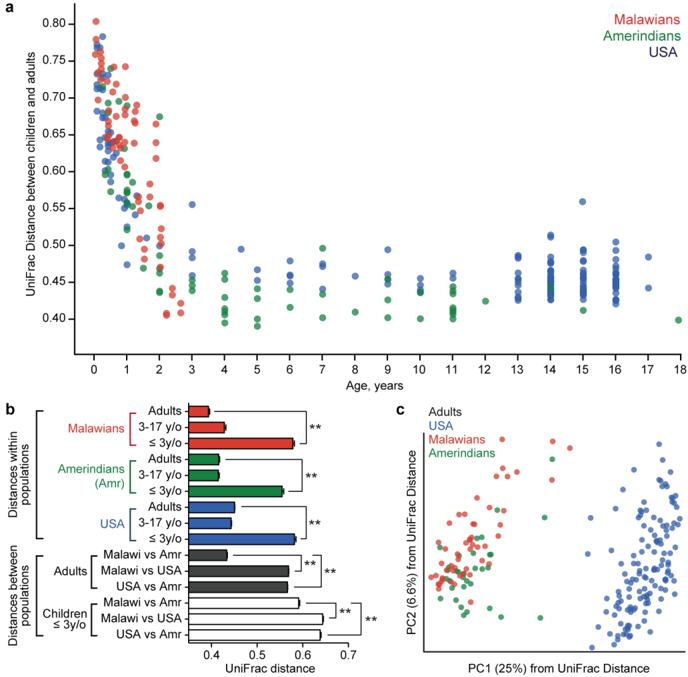
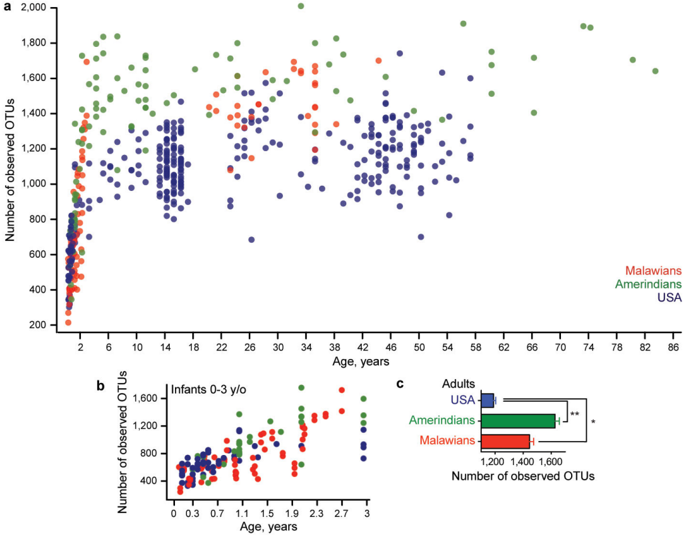
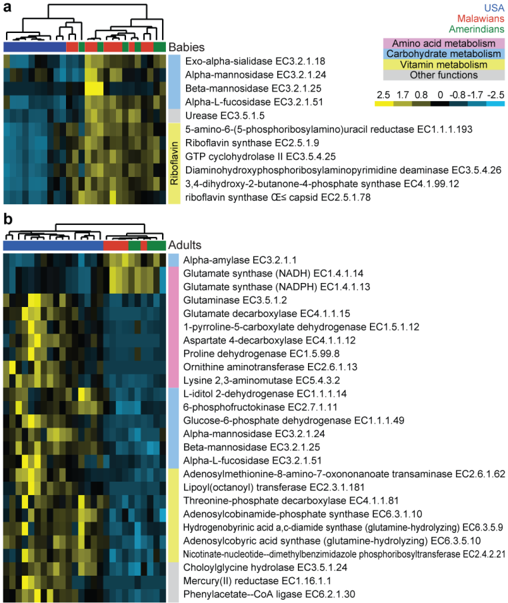
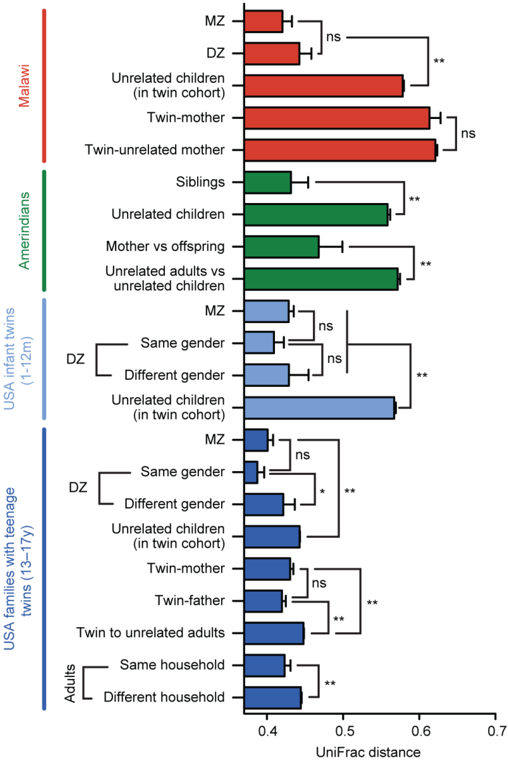
Verification
Claims the paper makes
The claims and statistics of this paper haven’t been checked yet.
Free: it reads the open-access text and checks the first 5 claims that cite a source we can check. Create a free account to check every claim.
Claims other papers make about this one
Each is checked against this paper’s own text: does it say what the citing paper says it does?
The cited source doesn’t support the claim as written.
In the citing paper
“Similar, albeit less marked, patterns were already observed for adults22,23,24,25 with different lifestyles but were never investigated in younger individuals.”
From Maternal and food microbial sources shape the infant microbiome of a rural Ethiopian population (2023) · cites this paper as [22]
Checked by a reasoning model — may be wrong.
Experimental — accuracy not yet measuredThe source backs part of the claim, not all of it — or backs it for a different population, condition or comparison.
In the citing paper
“The inverse relationship between Prevotella and Bacteroides has been reproduced in studies comparing the intestinal microbiota of residents of agrarian societies in South America and Bangladesh with residents of industrialized societies4, 37.”
From Diet and the Intestinal Microbiome: Associations, Functions, and Implications for Health and Disease (2014) · cites this paper as [4]
Experimental — accuracy not yet measuredThe source backs part of the claim, not all of it — or backs it for a different population, condition or comparison.
In the citing paper
“Moreover, geographic variations in the composition of intestinal microbiota have been described and implicated in the development of autoimmunity.28,29”
From Microbiota as Predictor of Mortality in Allogeneic Hematopoietic-Cell Transplantation (2020) · cites this paper as [28]
Experimental — accuracy not yet measuredThe source backs part of the claim, not all of it — or backs it for a different population, condition or comparison.
In the citing paper
“different human host cohorts may harbor remarkably different Gram-negative versus Gram-positive diversity3, 30, and a protocol appropriate for one type of community may work well in one study but not in another.”
From Assessment of variation in microbial community amplicon sequencing by the Microbiome Quality Control (MBQC) project consortium (2017) · cites this paper as [3]
Experimental — accuracy not yet measuredThe source backs part of the claim, not all of it — or backs it for a different population, condition or comparison.
In the citing paper
“Most critical events in education of host immunity may take place during the first years of life, in which microbiota composition displays the highest intra- and inter-individual variability before reaching a more stable adult-like configuration at the age of ~3 years.18–20”
From Interaction between microbiota and immunity in health and disease (2020) · cites this paper as [20]
Experimental — accuracy not yet measured
24 more claims about this paper
Create a free account to see every claim other papers make about this one.
Self-check
Percentages, sums and reported differences re-computed from the paper’s own numbers.
The self-check needs the paper’s full text.
Citations
Cites
QIIME allows analysis of high-throughput community sequencing data
Caporaso, J. G., Kuczynski, J., Stombaugh, J., Bittinger, K., Bushman, F. D., Costello, E. K., Fierer, N., Peña, A. G., Goodrich, J. K., Gordon, J. I., et al. (2010) · Nature Methods · doi:10.1038/nmeth.f.303 · Cited by 34,887
Self-citationSilhouettes: A graphical aid to the interpretation and validation of cluster analysis
Rousseeuw, P. J. (1987) · Journal of Computational and Applied Mathematics · doi:10.1016/0377-0427(87)90125-7 · Cited by 21,392
Classification and Regression by randomForest
Liaw, A. I., & Wiener, M. C. (2007) · Cited by 18,594
A human gut microbial gene catalogue established by metagenomic sequencing
MetaHIT Consortium, Qin, J., Li, R., Raes, J., Arumugam, M., Burgdorf, K. S., Manichanh, C., Nielsen, T., Pons, N., Levenez, F., et al. (2010) · Nature · doi:10.1038/nature08821 · Cited by 11,624 · cited 1×
“Shotgun reads were filtered using custom Perl scripts and publicly available software to remove (1) all reads ,60 nucleotides; (2) Titanium pyrosequencing reads with two continuous and/or three total degenerate bases (N); (3) all duplicates (a known artefact of pyrosequencing), defined as sequences in which the initia…”
MethodFinding groups in data: an introduction to cluster analysis
(1991) · Choice Reviews Online · doi:10.5860/choice.28-4558 · Cited by 10,474
UniFrac: a New Phylogenetic Method for Comparing Microbial Communities
Lozupone, C., & Knight, R. (2005) · Applied and Environmental Microbiology · doi:10.1128/aem.71.12.8228-8235.2005 · Cited by 8,227
Self-citationA core gut microbiome in obese and lean twins
Turnbaugh, P. J., Hamady, M., Yatsunenko, T., Cantarel, B. L., Duncan, A., Ley, R. E., Sogin, M. L., Jones, W. J., Roe, B. A., Affourtit, J. P., et al. (2009) · Nature · doi:10.1038/nature07540 · Cited by 7,823
Self-citationEnterotypes of the human gut microbiome
MetaHIT Consortium (additional members), Arumugam, M., Raes, J., Pelletier, E., Le Paslier, D., Yamada, T., Mende, D. R., Fernandes, G. R., Tap, J., Bruls, T., et al. (2011) · Nature · doi:10.1038/nature09944 · Cited by 7,548
Linking long-term dietary patterns with gut microbial enterotypes
Wu, G. D., Chen, J., Hoffmann, C., Bittinger, K., Chen, Y.-Y., Keilbaugh, S. A., Bewtra, M., Knights, D., Walters, W. A., Knight, R., et al. (2011) · Science · doi:10.1126/science.1208344 · Cited by 6,513
Self-citationDe Filippo, C., Cavalieri, D., Di Paola, M., Ramazzotti, M., Poullet, J. B., Massart, S., Collini, S., Pieraccini, G., & Lionetti, P. (2010) · Proceedings of the National Academy of Sciences · doi:10.1073/pnas.1005963107 · Cited by 5,579
Cited by
Items 501–600 of 1,221
Gorzelak, M. A., Gill, S. K., Tasnim, N., Ahmadi-Vand, Z., Jay, M., & Gibson, D. L. (2015) · PLOS ONE · doi:10.1371/journal.pone.0134802 · Cited by 306
Dzutsev, A., Badger, J. H., Perez-Chanona, E., Roy, S., Salcedo, R., Smith, C. K., & Trinchieri, G. (2017) · Annual Review of Immunology · doi:10.1146/annurev-immunol-051116-052133 · Cited by 302
“Throughout adulthood, the microbiota is relatively stable, although disease onset, use of antibiotics, and changes in alimentation affect its composition (28).”
BackgroundBletz, M. C., Loudon, A. H., Becker, M. H., Bell, S. C., Woodhams, D. C., Minbiole, K. P. C., & Harris, R. N. (2013) · Ecology Letters · doi:10.1111/ele.12099 · Cited by 305
Vázquez-Castellanos, J. F., Serrano-Villar, S., Latorre, A., Artacho, A., Ferrús, M. L., Madrid, N., Vallejo, A., Sainz, T., Martínez-Botas, J., Ferrando-Martínez, S., et al. (2015) · Mucosal Immunology · doi:10.1038/mi.2014.107 · Cited by 302
Resveratrol-induced gut microbiota reduces obesity in high-fat diet-fed mice
Wang, P., Li, D., Ke, W., Liang, D., Hu, X., & Chen, F. (2020) · International Journal of Obesity · doi:10.1038/s41366-019-0332-1 · Cited by 301
The gut microbiota and metabolic disease: current understanding and future perspectives
Arora, T., & Bäckhed, F. (2016) · Journal of Internal Medicine · doi:10.1111/joim.12508 · Cited by 303
Magne, F., Puchi Silva, A., Carvajal, B., & Gotteland, M. (2017) · Frontiers in Pediatrics · doi:10.3389/fped.2017.00192 · Cited by 300
“The diversity of the infant gut microbiota increases gradually when solid foods are introduced, eventually reaching a stable adult-like microbiota at 2–3 years of age (73).”
BackgroundMicrobiota regulation of the mammalian gut-brain axis
Burokas, A., Moloney, R. D., Dinan, T. G., & Cryan, J. F. (2015) · Advances in applied microbiology · doi:10.1016/bs.aambs.2015.02.001 · Cited by 300
High-resolution phylogenetic microbial community profiling
Singer, E., Bushnell, B., Coleman-Derr, D., Bowman, B., Bowers, R. M., Levy, A., Gies, E. A., Cheng, J.-F., Copeland, A., Klenk, H.-P., et al. (2016) · The ISME Journal · doi:10.1038/ismej.2015.249 · Cited by 306
“Massive individual and institutional efforts have been made to standardize classification of environmental 16S rRNA sequences through dedicated database development and custom analysis tools (Giovannoni et al., 1990; Muyzer et al., 1993; Desantis et al., 2006; Janssen, 2006; Turnbaugh et al., 2007; Bolhuis and Stal, 2…”
InfluentialSewage Reflects the Microbiomes of Human Populations
Newton, R. J., McLellan, S. L., Dila, D. K., Vineis, J. H., Morrison, H. G., Eren, A. M., & Sogin, M. L. (2015) · mBio · doi:10.1128/mbio.02574-14 · Cited by 299
“The National Center for Biotechnology Information Sequence Read Archive has archived the raw data under BioProjects PRJNA261344 and PRJNA264400.”
BackgroundInfluentialWolters, M., Ahrens, J., Romaní-Pérez, M., Watkins, C., Sanz, Y., Benítez-Páez, A., Stanton, C., & Günther, K. (2019) · Clinical Nutrition · doi:10.1016/j.clnu.2018.12.024 · Cited by 299
Schwimmer, J. B., Johnson, J. S., Angeles, J. E., Behling, C., Belt, P. H., Borecki, I., Bross, C., Durelle, J., Goyal, N. P., Hamilton, G., et al. (2019) · Gastroenterology · doi:10.1053/j.gastro.2019.06.028 · Cited by 298
Biogeography of the intestinal mucosal and lumenal microbiome in the rhesus macaque
Yasuda, K., Oh, K., Ren, B., Tickle, T. L., Franzosa, E. A., Wachtman, L. M., Miller, A. D., Westmoreland, S. V., Mansfield, K. G., Vallender, E. J., et al. (2015) · Cell Host & Microbe · doi:10.1016/j.chom.2015.01.015 · Cited by 298
Gut microbiota diversity predicts immune status in HIV-1 infection
Nowak, P., Troseid, M., Avershina, E., Barqasho, B., Neogi, U., Holm, K., Hov, J. R., Noyan, K., Vesterbacka, J., Svärd, J., et al. (2015) · AIDS · doi:10.1097/qad.0000000000000869 · Cited by 301
“Moreover, an influence of a geographical difference in the ‘background’ microbiota cannot be dismissed [38].”
BackgroundInterindividual variability in gut microbiota and host response to dietary interventions
Healey, G. R., Murphy, R., Brough, L., Butts, C. A., & Coad, J. (2017) · Nutrition Reviews · doi:10.1093/nutrit/nux062 · Cited by 292
“Human observational studies Traditional populations have been studied to investigate the influence of modern lifestyles in economically developed countries on the structural and functional capacity of the gut microbiota.(12,17,75,78,79) De Filippo and colleagues(17) demonstrated that, in comparison with each other, Eu…”
Cervicovaginal Microbiota and Reproductive Health: The Virtue of Simplicity
Anahtar, M. N., Gootenberg, D. B., Mitchell, C. M., & Kwon, D. S. (2018) · Cell Host & Microbe · doi:10.1016/j.chom.2018.01.013 · Cited by 297
Intestinal mucus and their glycans: A habitat for thriving microbiota
Luis, A. S., & Hansson, G. C. (2023) · Cell Host & Microbe · doi:10.1016/j.chom.2023.05.026 · Cited by 284
Sex differences in the gut microbiome–brain axis across the lifespan
Jašarević, E., Morrison, K. E., & Bale, T. L. (2016) · Philosophical Transactions of the Royal Society B: Biological Sciences · doi:10.1098/rstb.2015.0122 · Cited by 293
The prenatal gut microbiome: are we colonized with bacteria in utero ?
Walker, R. W., Clemente, J. C., Peter, I., & Loos, R. J. F. (2017) · Pediatric Obesity · doi:10.1111/ijpo.12217 · Cited by 293
Self-citationExploring the avian gut microbiota: current trends and future directions
Waite, D. W., & Taylor, M. W. (2015) · Frontiers in Microbiology · doi:10.3389/fmicb.2015.00673 · Cited by 297
High sensitivity of 454 pyrosequencing for detection of rare species in aquatic communities
Zhan, A., Hulák, M., Sylvester, F., Huang, X., Adebayo, A. A., Abbott, C. L., Adamowicz, S. J., Heath, D. D., Cristescu, M. E., & MacIsaac, H. J. (2013) · Methods in Ecology and Evolution · doi:10.1111/2041-210x.12037 · Cited by 292
“Next-generation sequencing technology, especially 454 pyrosequencing, has been applied to identify species composition of soil microbes (Shade et al. 2012), aquatic metazo-ans (Fonseca et al. 2010; Shokralla et al. 2011), human gut flora (Yatsunenko et al. 2012), and other communities.”
Urbanization and the gut microbiota in health and inflammatory bowel disease
Zuo, T., Kamm, M. A., Colombel, J.-F., & Ng, S. C. (2018) · Nature Reviews Gastroenterology & Hepatology · doi:10.1038/s41575-018-0003-z · Cited by 293
Food, immunity, and the microbiome
Tilg, H., & Moschen, A. R. (2015) · Gastroenterology · doi:10.1053/j.gastro.2014.12.036 · Cited by 292
Nutritional iron turned inside out: intestinal stress from a gut microbial perspective
Kortman, G. A. M., Raffatellu, M., Swinkels, D. W., & Tjalsma, H. (2014) · FEMS Microbiology Reviews · doi:10.1111/1574-6976.12086 · Cited by 291
“…and young children belong to the population that most often requires oral iron therapy and that altering the gut microbiota composition may have a relatively large impact on the developing microbiota of infants that do not yet have developed a stable core microbiota (Yatsunenko et al., 2012).”
BackgroundDiversity in gut bacterial community of school-age children in Asia
Nakayama, J., Watanabe, K., Jiang, J., Matsuda, K., Chao, S.-H., Haryono, P., La-ongkham, O., Sarwoko, M.-A., Sujaya, I. N., Zhao, L., et al. (2015) · Scientific Reports · doi:10.1038/srep08397 · Cited by 286
Toward Accurate and Quantitative Comparative Metagenomics
Nayfach, S., & Pollard, K. S. (2016) · Cell · doi:10.1016/j.cell.2016.08.007 · Cited by 292
“…cohorts are increasingly being done (Aru-mugam et al., 2011; Finucane et al., 2014; Koren et al., 2013; Li et al., 2014b; Lozupone et al., 2013; Yatsunenko et al., 2012), and large studies usually involve experiments conducted across multiple institutions (Ehrlich, 2011; Peterson et al., 2009).”
BackgroundMcNulty, N. P., Wu, M., Erickson, A. R., Pan, C., Erickson, B. K., Martens, E. C., Pudlo, N. A., Muegge, B. D., Henrissat, B., Hettich, R. L., et al. (2013) · PLoS Biology · doi:10.1371/journal.pbio.1001637 · Cited by 292
“Culture-independent surveys of the healthy adult gut microbiota consistently conclude that it is composed primarily of members of two bacterial phyla, the Bacteroidetes and Firmicutes [16–21].”
BackgroundSelf-citationInvestigating Colonization of the Healthy Adult Gastrointestinal Tract by Fungi
Auchtung, T. A., Fofanova, T. Y., Stewart, C. J., Nash, A. K., Wong, M. C., Gesell, J. R., Auchtung, J. M., Ajami, N. J., & Petrosino, J. F. (2018) · mSphere · doi:10.1128/msphere.00092-18 · Cited by 290
“1% of metagenomic reads from adult stool samples have mapped to fungal species (8, 9) and that fungal genomes are ~3 to 10 times larger than bacterial genomes, it is possible to estimate that of the 1013 microorganisms in the GI tract (10), about a billion compose what is often referred to as the gut mycobiota or myco…”
BackgroundMobile genes in the human microbiome are structured from global to individual scales
Brito, I. L., Yilmaz, S., Huang, K., Xu, L., Jupiter, S. D., Jenkins, A. P., Naisilisili, W., Tamminen, M., Smillie, C. S., Wortman, J. R., et al. (2016) · Nature · doi:10.1038/nature18927 · Cited by 288
Microbiome effects on immunity, health and disease in the lung
Shukla, S. D., Budden, K. F., Neal, R., & Hansbro, P. M. (2017) · Clinical & Translational Immunology · doi:10.1038/cti.2017.6 · Cited by 287
An integrative view of microbiome-host interactions in inflammatory bowel diseases
Wlodarska, M., Kostic, A. D., & Xavier, R. J. (2015) · Cell Host & Microbe · doi:10.1016/j.chom.2015.04.008 · Cited by 287
“Micro-Eukaryotes Similar to the bacterial component of the human fecal microbiota, the micro-eukaryote community is dependent on geography (Parfrey et al., 2014; Yatsunenko et al., 2012).”
BackgroundAlterations in Intestinal Microbiota Correlate With Susceptibility to Type 1 Diabetes
Alkanani, A. K., Hara, N., Gottlieb, P. A., Ir, D., Robertson, C. E., Wagner, B. D., Frank, D. N., & Zipris, D. (2015) · Diabetes · doi:10.2337/db14-1847 · Cited by 292
“HLA, n (%) 3 alone 5 (22) 10 (29) 5 (24) 11 (34) 4 alone 3 (13) 13 (37) 12 (57) 8 (25) 3 plus 4 4 (17) 9 (26) 4 (19) 10 (31) x/x 11 (48) 3 (8) 0 3 (10)”
Social behavior shapes the chimpanzee pan-microbiome
Moeller, A. H., Foerster, S., Wilson, M. L., Pusey, A. E., Hahn, B. H., & Ochman, H. (2016) · Science Advances · doi:10.1126/sciadv.1500997 · Cited by 296
“Although social interactions can promote the spread of pathogens (1), our results suggest that sociality may also provide protection against disease by fostering commensal andmutualisticmicrobial diversity.”
BackgroundDevelopment of the preterm infant gut microbiome: a research priority
Groer, M. W., Luciano, A. A., Dishaw, L. J., Ashmeade, T. L., Miller, E., & Gilbert, J. A. (2014) · Microbiome · doi:10.1186/2049-2618-2-38 · Cited by 285
“in biological and anatomical niches and to be influenced by a host of ecological and genetic factors [3].”
Making a microbiome: the many determinants of host-associated microbial community composition
Adair, K. L., & Douglas, A. E. (2017) · Current Opinion in Microbiology · doi:10.1016/j.mib.2016.11.002 · Cited by 284
Kashyap, P. C., Marcobal, A., Ursell, L. K., Smits, S. A., Sonnenburg, E. D., Costello, E. K., Higginbottom, S. K., Domino, S. E., Holmes, S. P., Relman, D. A., et al. (2013) · Proceedings of the National Academy of Sciences · doi:10.1073/pnas.1306070110 · Cited by 285
Self-citationModeling Sustainable Food Systems
Allen, T., & Prosperi, P. (2016) · Environmental Management · doi:10.1007/s00267-016-0664-8 · Cited by 276
Complexity and health functionality of plant cell wall fibers from fruits and vegetables
Padayachee, A., Day, L., Howell, K., & Gidley, M. J. (2017) · Critical Reviews in Food Science and Nutrition · doi:10.1080/10408398.2013.850652 · Cited by 279
“Microbiomes of infants can be enriched by genes attributable to breakdown of glycans in breast milk and intestinal mucosa, nitrogen breakdown and vitamin synthesis (Yatsunenko et al., 2012).”
BackgroundInfluentialHigh-throughput, single-microbe genomics with strain resolution, applied to a human gut microbiome
Zheng, W., Zhao, S., Yin, Y., Zhang, H., Needham, D. M., Evans, E. D., Dai, C. L., Lu, P. J., Alm, E. J., & Weitz, D. A. (2022) · Science · doi:10.1126/science.abm1483 · Cited by 283
“The behavior and biological effects of a microbial community depend not only on its composition (8, 9) but also on the biochemical processes that occur within eachmicrobe and the interplays between them (10, 11); these processes are strongly affected by the genomes of each individual microbe living in that community.”
BackgroundDa Silva, H. E., Teterina, A., Comelli, E. M., Taibi, A., Arendt, B. M., Fischer, S. E., Lou, W., & Allard, J. P. (2018) · Scientific Reports · doi:10.1038/s41598-018-19753-9 · Cited by 283
“5B,C (7, 41) 45A,C (14, 116) 70A,B (22, 168) <0.”
Human gut microbiota community structures in urban and rural populations in Russia
Tyakht, A. V., Kostryukova, E. S., Popenko, A. S., Belenikin, M. S., Pavlenko, A. V., Larin, A. K., Karpova, I. Y., Selezneva, O. V., Semashko, T. A., Ospanova, E. A., et al. (2013) · Nature Communications · doi:10.1038/ncomms3469 · Cited by 282
Broad‐Spectrum Antibacterial Activity of Carbon Nanotubes to Human Gut Bacteria
Chen, H., Wang, B., Gao, D., Guan, M., Zheng, L., Ouyang, H., Chai, Z., Zhao, Y., & Feng, W. (2013) · Small · doi:10.1002/smll.201202792 · Cited by 283
Role of antibiotics for treatment of inflammatory bowel disease
Nitzan, O. (2016) · World Journal of Gastroenterology · doi:10.3748/wjg.v22.i3.1078 · Cited by 279
Nutrition and the gut microbiome in the elderly
Salazar, N., Valdés-Varela, L., González, S., Gueimonde, M., & de los Reyes-Gavilán, C. G. (2017) · Gut Microbes · doi:10.1080/19490976.2016.1256525 · Cited by 282
“At the phylum taxonomic level, the dominant bacteria into healthy adults are Firmicutes, and Bacteroidetes, which constitute between 80–90% of the total microbiota, with representatives of Proteobacteria, Fusobacteria, Cyanobacteria, Verrucomicrobia and Actinobacteria phyla, among others often found at considerably lo…”
BackgroundCross-species comparisons of host genetic associations with the microbiome
Goodrich, J. K., Davenport, E. R., Waters, J. L., Clark, A. G., & Ley, R. E. (2016) · Science · doi:10.1126/science.aad9379 · Cited by 290
“Turnbaugh et al. (2009) and Yatsunenko et al. (2012) sampled equivalent numbers of young-adult twin pairs (~50) from Missouri and characterized their gut microbiomes by sequencing partial 16S ribosomal RNA (rRNA) genes amplified from fecal DNA (7, 8).”
BackgroundTzeng, A., Sangwan, N., Jia, M., Liu, C.-C., Keslar, K. S., Downs-Kelly, E., Fairchild, R. L., Al-Hilli, Z., Grobmyer, S. R., & Eng, C. (2021) · Genome Medicine · doi:10.1186/s13073-021-00874-2 · Cited by 275
“Subsequently, we identified 48 bacterial genera that were differentially abundant after stratifying by tissue type and adjusting for known confounders and microbiome-influencing factors (patient age, race, hospital) [9, 33, 34].”
BackgroundThe role of gut dysbiosis in Parkinson’s disease: mechanistic insights and therapeutic options
Wang, Q., Luo, Y., Ray Chaudhuri, K., Reynolds, R., Tan, E.-K., & Pettersson, S. (2021) · Brain · doi:10.1093/brain/awab156 · Cited by 281
West, C. E., Renz, H., Jenmalm, M. C., Kozyrskyj, A. L., Allen, K. J., Vuillermin, P., Prescott, S. L., MacKay, C., Salminen, S., Wong, G., et al. (2015) · Journal of Allergy and Clinical Immunology · doi:10.1016/j.jaci.2014.11.012 · Cited by 278
The altered landscape of the human skin microbiome in patients with primary immunodeficiencies
Oh, J., Freeman, A. F., Program, N. C. S., Park, M., Sokolic, R., Candotti, F., Holland, S. M., Segre, J. A., & Kong, H. H. (2013) · Genome Research · doi:10.1101/gr.159467.113 · Cited by 282
“…the human body (e.g., gut, skin, oral) (The Human Microbiome Project Consortium 2012), model organisms (Chung et al. 2012), and geographic regions (Yatsunenko et al. 2012) have suggested the presence of strong selective control on the microbial communities that can colonize and persist in…”
BackgroundFermented foods, microbiota, and mental health: ancient practice meets nutritional psychiatry
Selhub, E. M., Logan, A. C., & Bested, A. C. (2014) · Journal of Physiological Anthropology · doi:10.1186/1880-6805-33-2 · Cited by 280
“Diet, rather than hygiene per se, was reported to be the key spark for the development of intestinal microbiota structure [116].”
BackgroundIntestinal microbiota of infants with colic: development and specific signatures
de Weerth, C., Fuentes, S., Puylaert, P., & de Vos, W. M. (2013) · Pediatrics · doi:10.1542/peds.2012-1449 · Cited by 279
The Microbiota and Microbiome in Aging: Potential Implications in Health and Age‐Related Diseases
Zapata, H. J., & Quagliarello, V. J. (2015) · Journal of the American Geriatrics Society · doi:10.1111/jgs.13310 · Cited by 279
“The composition of the gut microbiota in children approximates the composition seen in adults by the age of 3.(12) A myriad of clinical changes accompany aging (Figure 1).”
Handley, S. A., Thackray, L. B., Zhao, G., Presti, R., Miller, A. D., Droit, L., Abbink, P., Maxfield, L. F., Kambal, A., Duan, E., et al. (2012) · Cell · doi:10.1016/j.cell.2012.09.024 · Cited by 278
“Additional analysis by using principal component analysis, as well as supervised and unsupervised random forest analysis (Yatsunenko et al., 2012), showed no association between SIV infection and the bacterial microbiome.”
Complementary symbiont contributions to plant decomposition in a fungus-farming termite
Poulsen, M., Hu, H., Li, C., Chen, Z., Xu, L., Otani, S., Nygaard, S., Nobre, T., Klaubauf, S., Schindler, P. M., et al. (2014) · Proceedings of the National Academy of Sciences · doi:10.1073/pnas.1319718111 · Cited by 282
“Digestive symbiotic communities in animal guts provide excellent examples of such ambiguities; recent studies of human microbiotas show that gut communities vary by subject age, geography (5), and diet (6) and that deviating microbiotas can be associated with compromised health (7).”
Environmental remodeling of human gut microbiota and antibiotic resistome in livestock farms
Sun, J., Liao, X.-P., D’Souza, A. W., Boolchandani, M., Li, S.-H., Cheng, K., Luis Martínez, J., Li, L., Feng, Y.-J., Fang, L.-X., et al. (2020) · Nature Communications · doi:10.1038/s41467-020-15222-y · Cited by 277
International Society of Sports Nutrition Position Stand: Probiotics
Jäger, R., Mohr, A. E., Carpenter, K. C., Kerksick, C. M., Purpura, M., Moussa, A., Townsend, J. R., Lamprecht, M., West, N. P., Black, K., et al. (2019) · Journal of the International Society of Sports Nutrition · doi:10.1186/s12970-019-0329-0 · Cited by 277
Microbiota succession throughout life from the cradle to the grave
Martino, C., Dilmore, A. H., Burcham, Z. M., Metcalf, J. L., Jeste, D., & Knight, R. (2022) · Nature Reviews Microbiology · doi:10.1038/s41579-022-00768-z · Cited by 275
Self-citationXiong, W., Wang, Y., Sun, Y., Ma, L., Zeng, Q., Jiang, X., Li, A., Zeng, Z., & Zhang, T. (2018) · Microbiome · doi:10.1186/s40168-018-0419-2 · Cited by 274
“Alterations in fecal taxonomic phyla depend on class and number of courses of antibiotics [54], as well as diet [55–57], age [58], geographic location [59], and disease status [60].”
BackgroundCircadian rhythm and the gut microbiome
Voigt, R. M., Forsyth, C. B., Green, S. J., Engen, P. A., & Keshavarzian, A. (2016) · International Review of Neurobiology · doi:10.1016/bs.irn.2016.07.002 · Cited by 274
Perinatal factors affect the gut microbiota up to four years after birth
Fouhy, F., Watkins, C., Hill, C. J., O’Shea, C.-A., Nagle, B., Dempsey, E. M., O’Toole, P. W., Ross, R. P., Ryan, C. A., & Stanton, C. (2019) · Nature Communications · doi:10.1038/s41467-019-09252-4 · Cited by 274
Lavelle, A., Lennon, G., O'Sullivan, O., Docherty, N., Balfe, A., Maguire, A., Mulcahy, H. E., Doherty, G., O'Donoghue, D., Hyland, J., et al. (2015) · Gut · doi:10.1136/gutjnl-2014-307873 · Cited by 280
“7 This allowed us to weigh those bacterial families that were most discriminatory between the two cohorts, in order of their predictive power instead of simply relying on statistical signi fi cance of raw abundance.”
BackgroundMadan, J. C., Hoen, A. G., Lundgren, S. N., Farzan, S. F., Cottingham, K. L., Morrison, H. G., Sogin, M. L., Li, H., Moore, J. H., & Karagas, M. R. (2016) · JAMA Pediatrics · doi:10.1001/jamapediatrics.2015.3732 · Cited by 281
Arrhythmic Gut Microbiome Signatures Predict Risk of Type 2 Diabetes
Reitmeier, S., Kiessling, S., Clavel, T., List, M., Almeida, E. L., Ghosh, T. S., Neuhaus, K., Grallert, H., Linseisen, J., Skurk, T., et al. (2020) · Cell Host & Microbe · doi:10.1016/j.chom.2020.06.004 · Cited by 279
Co-evolution and Co-speciation of Host-Gut Bacteria Systems
Groussin, M., Mazel, F., & Alm, E. J. (2020) · Cell Host & Microbe · doi:10.1016/j.chom.2020.06.013 · Cited by 275
Walker, A. W., Martin, J. C., Scott, P., Parkhill, J., Flint, H. J., & Scott, K. P. (2015) · Microbiome · doi:10.1186/s40168-015-0087-4 · Cited by 273
“that it may take up to 3 years to establish an adult-like microbiota [16].”
BackgroundThe Role of Gut Microbiota on Insulin Resistance
Caricilli, A., & Saad, M. (2013) · Nutrients · doi:10.3390/nu5030829 · Cited by 274
“In spite of the fact that our knockout mice and those used in the other studies mentioned above had the same genetic background, they were bred in different rooms and fed with food from different sources, which can certainly have a role in the establishment and maintenance of gut microbiota [111].”
BackgroundArrieta, M.-C., Arévalo, A., Stiemsma, L., Dimitriu, P., Chico, M. E., Loor, S., Vaca, M., Boutin, R. C. T., Morien, E., Jin, M., et al. (2018) · Journal of Allergy and Clinical Immunology · doi:10.1016/j.jaci.2017.08.041 · Cited by 276
“Period (d) Median (IQR) 10 (3-21) 7 (1-48) .”
Adaptive immune education by gut microbiota antigens
Zhao, Q., & Elson, C. O. (2018) · Immunology · doi:10.1111/imm.12896 · Cited by 268
Rowan, S., Jiang, S., Korem, T., Szymanski, J., Chang, M.-L., Szelog, J., Cassalman, C., Dasuri, K., McGuire, C., Nagai, R., et al. (2017) · Proceedings of the National Academy of Sciences · doi:10.1073/pnas.1702302114 · Cited by 272
Gut microbiomes of wild great apes fluctuate seasonally in response to diet
Hicks, A. L., Lee, K. J., Couto-Rodriguez, M., Patel, J., Sinha, R., Guo, C., Olson, S. H., Seimon, A., Seimon, T. A., Ondzie, A. U., et al. (2018) · Nature Communications · doi:10.1038/s41467-018-04204-w · Cited by 272
Engevik, M. A., Luk, B., Chang-Graham, A. L., Hall, A., Herrmann, B., Ruan, W., Endres, B. T., Shi, Z., Garey, K. W., Hyser, J. M., et al. (2019) · mBio · doi:10.1128/mbio.01087-19 · Cited by 269
De Filippo, C., Di Paola, M., Ramazzotti, M., Albanese, D., Pieraccini, G., Banci, E., Miglietta, F., Cavalieri, D., & Lionetti, P. (2017) · Frontiers in Microbiology · doi:10.3389/fmicb.2017.01979 · Cited by 270
“A fiber and plant-derived polysaccharide-rich diet in children and adults is associated with a human gut microbiota enriched in Bacteroidetes phylum compared to Firmicutes (De Filippo et al., 2010; Yatsunenko et al., 2012; David et al., 2014).”
BackgroundInfluentialKibe, R., Kurihara, S., Sakai, Y., Suzuki, H., Ooga, T., Sawaki, E., Muramatsu, K., Nakamura, A., Yamashita, A., Kitada, Y., et al. (2014) · Scientific Reports · doi:10.1038/srep04548 · Cited by 271
Laudadio, I., Fulci, V., Palone, F., Stronati, L., Cucchiara, S., & Carissimi, C. (2018) · OMICS: A Journal of Integrative Biology · doi:10.1089/omi.2018.0013 · Cited by 271
“Based on previous observation that micro-biome composition evolves toward an adult-like configu-ration within the 3-year period following birth (Yatsunenko et al., 2012), and taking into account that most of our samples were obtained from individuals older than three years, we believe that our…”
Gut-Brain Psychology: Rethinking Psychology From the Microbiota–Gut–Brain Axis
Liang, S., Wu, X., & Jin, F. (2018) · Frontiers in Integrative Neuroscience · doi:10.3389/fnint.2018.00033 · Cited by 263
“Bipolar disorder is significantly related to microbiota abnormalities (Evans S.J. et al., 2017; Yolken and Dickerson, 2017), and microbiota regulation probably alleviates the disorder (Hamdani et al., 2015; Dickerson et al., 2017).”
BackgroundMachine learning for microbiologists
Asnicar, F., Thomas, A. M., Passerini, A., Waldron, L., & Segata, N. (2024) · Nature Reviews Microbiology · doi:10.1038/s41579-023-00984-1 · Cited by 256
“In this initial exploratory data analysis, the conditions of interest (for example, cases versus controls, or sampling of different environments) are overlaid by colouring the samples in the plot 30,64,81–83 .”
Ronan, V., Yeasin, R., & Claud, E. C. (2021) · Gastroenterology · doi:10.1053/j.gastro.2020.08.065 · Cited by 261
“The infant microbiome converges to adult patterns by age three (19).”
BackgroundHealey, G., Murphy, R., Butts, C., Brough, L., Whelan, K., & Coad, J. (2018) · British Journal Of Nutrition · doi:10.1017/s0007114517003440 · Cited by 267
“Host genetics (1), life stage, geographical location (2), gender (3) and 25 antibiotic use (4) influence gut microbiota composition; however, diet plays a major role in 26”
BackgroundGut microbiota phenotypes of obesity
Stanislawski, M. A., Dabelea, D., Lange, L. A., Wagner, B. D., & Lozupone, C. A. (2019) · npj Biofilms and Microbiomes · doi:10.1038/s41522-019-0091-8 · Cited by 268
Self-citationHow biological sex of the host shapes its gut microbiota
Valeri, F., & Endres, K. (2021) · Frontiers in Neuroendocrinology · doi:10.1016/j.yfrne.2021.100912 · Cited by 264
“A human study addressing the composition of the gut microbiota during adolescence showed higher fecal microbiota dissimilarity (greater UniFrac distances between the fecal bacterial communities of twins with different gender) in teenager (13–17 years) twin pairs with opposite sex as compared to twins with the same sex…”
The Gut Microbiota (Microbiome) in Cardiovascular Disease and Its Therapeutic Regulation
Rahman, M. M., Islam, F., -Or-Rashid, M. H., Mamun, A. A., Rahaman, M. S., Islam, M. M., Meem, A. F. K., Sutradhar, P. R., Mitra, S., Mimi, A. A., et al. (2022) · Frontiers in Cellular and Infection Microbiology · doi:10.3389/fcimb.2022.903570 · Cited by 253
Pathways in Microbe-Induced Obesity
Cox, L. M., & Blaser, M. J. (2013) · Cell Metabolism · doi:10.1016/j.cmet.2013.05.004 · Cited by 266
“Perturbation during early life, when the gut community structure is emerging (Yatsunenko et al., 2012), may be most important, since it is occurring during a developmentally sensitive host window (Cho et al., 2012).”
InfluentialWampach, L., Heintz-Buschart, A., Hogan, A., Muller, E. E. L., Narayanasamy, S., Laczny, C. C., Hugerth, L. W., Bindl, L., Bottu, J., Andersson, A. F., et al. (2017) · Frontiers in Microbiology · doi:10.3389/fmicb.2017.00738 · Cited by 270
“The fact that diversity and evenness keep increasing over time has already been reported in previous studies (Yatsunenko et al., 2012; Jakobsson et al., 2014).”
ResultVemuri, R., Sylvia, K. E., Klein, S. L., Forster, S. C., Plebanski, M., Eri, R., & Flanagan, K. L. (2019) · Seminars in Immunopathology · doi:10.1007/s00281-018-0716-7 · Cited by 265
Xue, Z., Zhang, W., Wang, L., Hou, R., Zhang, M., Fei, L., Zhang, X., Huang, H., Bridgewater, L. C., Jiang, Y., et al. (2015) · mBio · doi:10.1128/mbio.00022-15 · Cited by 265
“Compared with the predominance of Bifidobacterium in the human infant gut microbiota throughout the first year of life (34), Lactobacillus dominated the fecal communities of the nine giant panda cub samples in this study.”
BackgroundThe gut microbiota: A treasure for human health
Li, D., Wang, P., Wang, P., Hu, X., & Chen, F. (2016) · Biotechnology Advances · doi:10.1016/j.biotechadv.2016.08.003 · Cited by 261
“to precisely modify and establish the early childhood gut microbiota is urgently required (Yatsunenko et al., 2012).”
BackgroundInfluentialMacedo, D., Filho, A. J. M. C., Soares de Sousa, C. N., Quevedo, J., Barichello, T., Júnior, H. V. N., & Freitas de Lucena, D. (2017) · Journal of Affective Disorders · doi:10.1016/j.jad.2016.09.012 · Cited by 261
Current Understanding of Gut Microbiota in Mood Disorders: An Update of Human Studies
Huang, T.-T., Lai, J.-B., Du, Y.-L., Xu, Y., Ruan, L.-M., & Hu, S.-H. (2019) · Frontiers in Genetics · doi:10.3389/fgene.2019.00098 · Cited by 261
Paganini, D., & Zimmermann, M. B. (2017) · The American Journal of Clinical Nutrition · doi:10.3945/ajcn.117.156067 · Cited by 262
“In a study that compared the gut microbiota in young children from the United States, Venezuela, and Malawi, a common pattern was the dominance of bifidobacteria through the first year after birth; thereafter, bifidobacteria numbers fell steadily leading to the establishment of an adult-like gut microbiota at w3 y of…”
Biodiversity and functional genomics in the human microbiome
Morgan, X. C., Segata, N., & Huttenhower, C. (2013) · Trends in Genetics · doi:10.1016/j.tig.2012.09.005 · Cited by 263
“Roughly two-thirds of the subjects were under the age of 17, while the remaining third were between the ages of 18 and 70 [31].”
BackgroundJašarević, E., Howard, C. D., Misic, A. M., Beiting, D. P., & Bale, T. L. (2017) · Scientific Reports · doi:10.1038/srep44182 · Cited by 262
Role of the Gut Microbiome in Obesity and Diabetes Mellitus
Barlow, G. M., Yu, A., & Mathur, R. (2015) · Nutrition in Clinical Practice · doi:10.1177/0884533615609896 · Cited by 262
Microbial antigen encounter during a preweaning interval is critical for tolerance to gut bacteria
Knoop, K. A., Gustafsson, J. K., McDonald, K. G., Kulkarni, D. H., Coughlin, P. E., McCrate, S., Kim, D., Hsieh, C.-S., Hogan, S. P., Elson, C. O., et al. (2017) · Science Immunology · doi:10.1126/sciimmunol.aao1314 · Cited by 270
Shchegolkova, N. M., Krasnov, G. S., Belova, A. A., Dmitriev, A. A., Kharitonov, S. L., Klimina, K. M., Melnikova, N. V., & Kudryavtseva, A. V. (2016) · Frontiers in Microbiology · doi:10.3389/fmicb.2016.00090 · Cited by 262
“The stability of the GIT BC structure suggests that the incoming bacteria play a leading role only in the initial formation of the BC, whereas the final selection of predominant bacterial families is determined by the chemical composition of the nutrients (Arumugam et al., 2011; Nam et al., 2011; Wu et al., 2011; Yats…”
BackgroundIntersections Between Microbiome and Heart Failure: Revisiting the Gut Hypothesis
Nagatomo, Y., & Tang, W. H. W. (2015) · Journal of Cardiac Failure · doi:10.1016/j.cardfail.2015.09.017 · Cited by 259
“Recent development of highthroughput assays such as next-generation sequencing analysis of bacterial 16S ribosomal DNA has made it possible to explore the composition of huge numbers of diverse microbiota in the gut in animals and humans [5-8].”
BackgroundCho, J. H., & Feldman, M. (2015) · Nature Medicine · doi:10.1038/nm.3897 · Cited by 260
The importance of the gut microbiota after bariatric surgery
Aron-Wisnewsky, J., Doré, J., & Clement, K. (2012) · Nature Reviews Gastroenterology & Hepatology · doi:10.1038/nrgastro.2012.161 · Cited by 261
Aging progression of human gut microbiota
Xu, C., Zhu, H., & Qiu, P. (2019) · BMC Microbiology · doi:10.1186/s12866-019-1616-2 · Cited by 258
“Forest [11], as well as frequency-inverse document frequency and minimum-redundancy maximum-relevance [14], which effectively identified taxonomic or functional signatures showed aging-related changes of gut microbiota.”
BackgroundResultInfluentialProbiotics, Prebiotics, and Synbiotics: Gut and Beyond
Vyas, U., & Ranganathan, N. (2012) · Gastroenterology Research and Practice · doi:10.1155/2012/872716 · Cited by 256
The Gut Microbiota: Emerging Evidence in Autoimmune Diseases
Zhang, X., Chen, B.-D., Zhao, L.-D., & Li, H. (2020) · Trends in Molecular Medicine · doi:10.1016/j.molmed.2020.04.001 · Cited by 232
Metadata
- Authors
- Yatsunenko, T., Rey, F. E., Manary, M. J., Trehan, I., Dominguez-Bello, M. G., Contreras, M., Magris, M., Hidalgo, G., Baldassano, R. N., Anokhin, A. P., Heath, A. C., Warner, B., Reeder, J., Kuczynski, J., Caporaso, J. G., Lozupone, C. A., Lauber, C., Clemente, J. C., Knights, D., Knight, R., & Gordon, J. I.
- Affiliations
- Washington University in St. Louis (US)
- University of Malawi (MW)
- Children's Hospital of Philadelphia (US)
- University of Colorado Boulder (US)
- Northern Arizona University (US)
- Howard Hughes Medical Institute (US)
- Corresponding author
- Gordon, Jeffrey I.
- ORCID
- Venue
- Nature
- Published
- 2012-05-09
- Volume
- 486
- Issue
- 7402
- Pages
- 222-227
- ISSN
- 0028-0836 (ISSN-L)
- 1476-4687
- PMC
- PMC3376388
- OpenAlex
- W2162088497
- Semantic Scholar
- 54a6d777e3a84e46f1c74bc9a0482a7307bd79c7
- Cited by
- 7,815
- References
- 41
- Citations by year
- 2026: 373 · 2025: 472 · 2024: 576 · 2023: 580 · 2022: 730 · 2021: 786 · 2020: 769 · 2019: 674 · 2018: 597 · 2017: 559 · 2016: 534 · 2015: 433 · 2014: 356 · 2013: 287 · 2012: 82
- FWCI
- 148.99
- Type
- journal article
- Language
- en
- Open access
- green
- www.ncbi.nlm.nih.gov
- Licence
- www.springer.com/tdm (tdm)
- Locations
- Nature (publishedVersion)
- PubMed (publishedVersion)
- Europe PMC (PubMed Central) (acceptedVersion)
- PubMed Central (acceptedVersion)
- RePEc: Research Papers in Economics (submittedVersion)
- eScholarship (California Digital Library) (submittedVersion)
- Funders
- Howard Hughes Medical Institute
- Crohn's and Colitis Foundation
- National Institute on Alcohol Abuse and Alcoholism (K05AA017688)
- National Institute of Diabetes and Digestive and Kidney Diseases (DK078669, P01DK078669, K01DK090285)
- Eunice Kennedy Shriver National Institute of Child Health and Human Development (T32HD049338)
- Topics
- Life Sciences › Biochemistry, Genetics and Molecular Biology › Molecular Biology › Gut microbiota and health
- Health Sciences › Nursing › Nutrition and Dietetics › Infant Nutrition and Health
- Physical Sciences › Environmental Science › Ecology › Microbial Community Ecology and Physiology
- Keywords
- gut microbiota, fecal microbiota, age-related changes, regional variation, Westernization, monozygotic and dizygotic twins, human development, Amazonas, Malawi
- MeSH terms
- Adolescent, Adult, Age Factors, Aged, Bacteria, Child, Child, Preschool, Feces, Female, Geography, Humans, Infant, Intestines, Malawi, Male, Middle Aged, Phylogeny, RNA, Ribosomal, 16S, Twins, Dizygotic, Twins, Monozygotic, United States, Venezuela, Biodiversity, Metagenome, Young Adult
About these checks
Registry, retraction, Cites and statistics results are computed, not judged, with one exception: a printed reference that no index lists is read once by a model before it counts as a citation error. Claims are extracted by a model and kept only when their quote appears verbatim in the text; each cited source is then checked, with a model’s help, for whether it says what the claim relies on. Those verdicts can be wrong — read the claim’s quote and the cited source before relying on one.
Statistics and arithmetic are recomputed, not judged.
Confidence bands are shown only for fields calibrated on our annotated test set. None is calibrated yet, so no band is shown.
What counts as a claim ›How we measure confidence ›How we check this ›
Are you an author, or do you see a problem with this page? Request a review
Data sources
Bibliographic data: Semantic Scholar, OpenAlex, Crossref.
Contains information from the Semantic Scholar Academic Graph Datasets, made available under the ODC Attribution License (ODC-BY 1.0).
Semantic Scholar’s data is described in: Kinney, R., et al. (2023). The Semantic Scholar Open Data Platform. arXiv:2301.10140.
