

Human gut microbiome viewed across age and geography
Open accessThe DOI matches its Crossref record; 41 of the 41 references it cites were found in a registry or an index.
Abstract
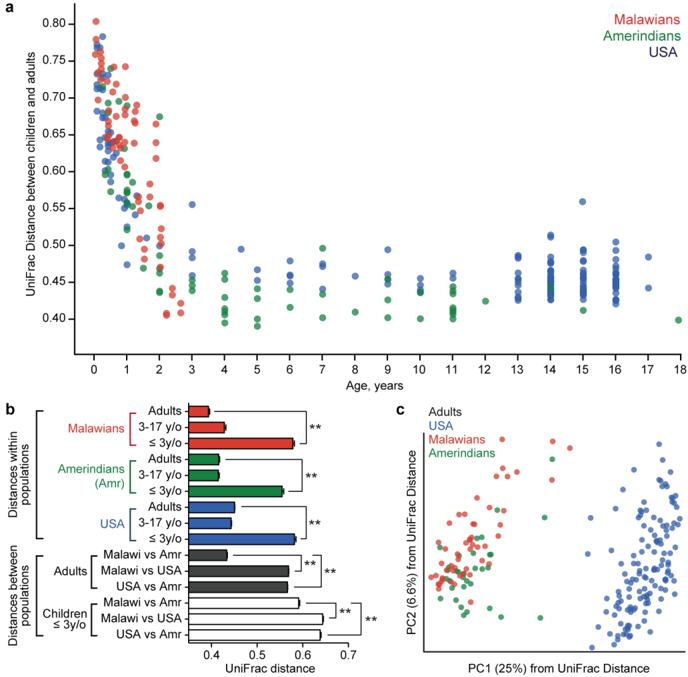
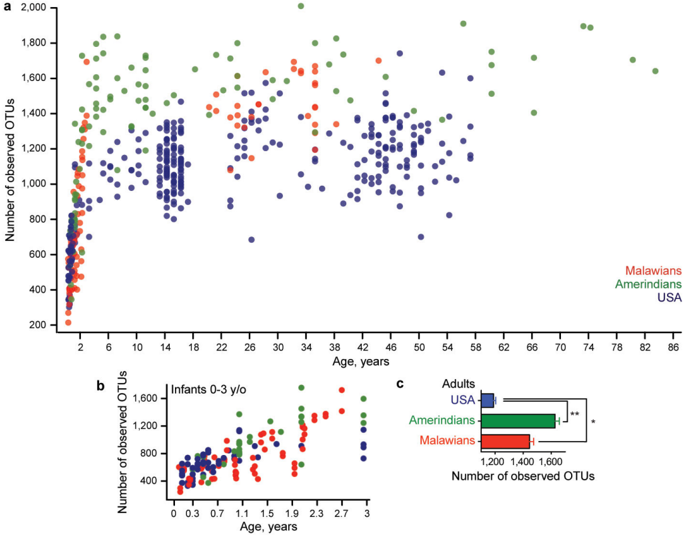
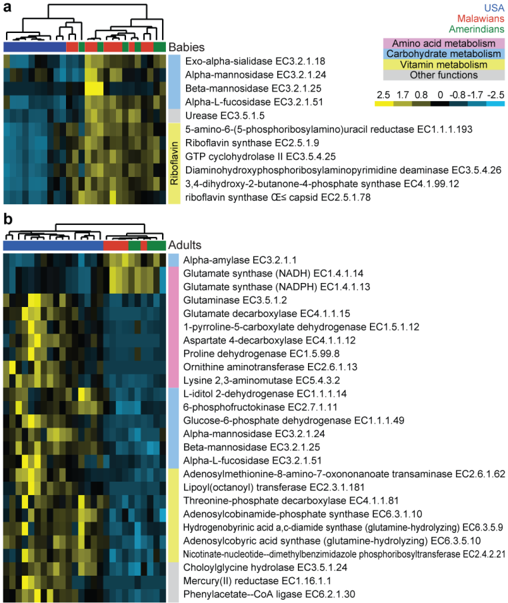
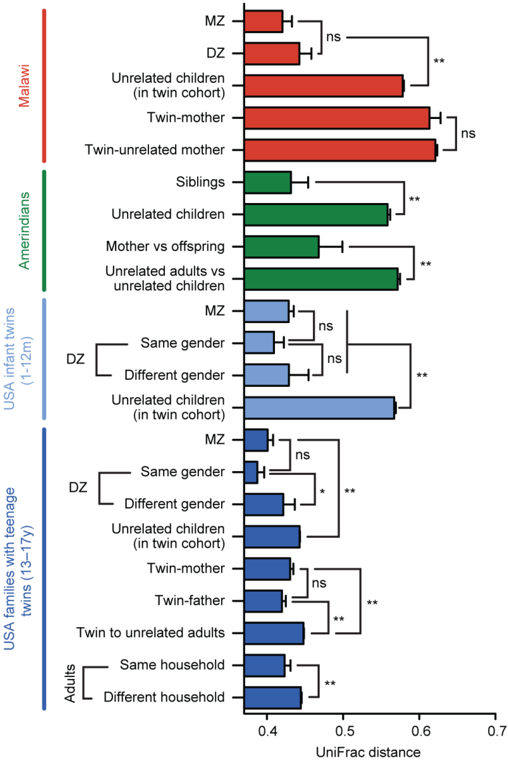
Gut microbial communities represent one source of human genetic and metabolic diversity. To examine how gut microbiomes differ among human populations, here we characterize bacterial species in fecal samples from 531 individuals, plus the gene content of 110 of them. The cohort encompassed healthy children and adults from the Amazonas of Venezuela, rural Malawi and US metropolitan areas and included mono- and dizygotic twins. Shared features of the functional maturation of the gut microbiome were identified during the first three years of life in all three populations, including age-associated changes in the genes involved in vitamin biosynthesis and metabolism. Pronounced differences in bacterial assemblages and functional gene repertoires were noted between US residents and those in the other two countries. These distinctive features are evident in early infancy as well as adulthood. Our findings underscore the need to consider the microbiome when evaluating human development, nutritional needs, physiological variations and the impact of westernization.
Overview
The claims and statistics of this paper haven’t been checked yet.
Free: it reads the open-access text and checks the first 5 claims that cite a source we can check. Create a free account to check every claim.
Integrity signals
Registry
Cites
Statistics
Figures
Verification
Claims the paper makes
The claims and statistics of this paper haven’t been checked yet.
Free: it reads the open-access text and checks the first 5 claims that cite a source we can check. Create a free account to check every claim.
Claims other papers make about this one
Each is checked against this paper’s own text: does it say what the citing paper says it does?
The cited source doesn’t support the claim as written.
In the citing paper
“Similar, albeit less marked, patterns were already observed for adults22,23,24,25 with different lifestyles but were never investigated in younger individuals.”
From Maternal and food microbial sources shape the infant microbiome of a rural Ethiopian population (2023) · cites this paper as [22]
Checked by a reasoning model — may be wrong.
Experimental — accuracy not yet measuredThe source backs part of the claim, not all of it — or backs it for a different population, condition or comparison.
In the citing paper
“The inverse relationship between Prevotella and Bacteroides has been reproduced in studies comparing the intestinal microbiota of residents of agrarian societies in South America and Bangladesh with residents of industrialized societies4, 37.”
From Diet and the Intestinal Microbiome: Associations, Functions, and Implications for Health and Disease (2014) · cites this paper as [4]
Experimental — accuracy not yet measuredThe source backs part of the claim, not all of it — or backs it for a different population, condition or comparison.
In the citing paper
“Moreover, geographic variations in the composition of intestinal microbiota have been described and implicated in the development of autoimmunity.28,29”
From Microbiota as Predictor of Mortality in Allogeneic Hematopoietic-Cell Transplantation (2020) · cites this paper as [28]
Experimental — accuracy not yet measuredThe source backs part of the claim, not all of it — or backs it for a different population, condition or comparison.
In the citing paper
“different human host cohorts may harbor remarkably different Gram-negative versus Gram-positive diversity3, 30, and a protocol appropriate for one type of community may work well in one study but not in another.”
From Assessment of variation in microbial community amplicon sequencing by the Microbiome Quality Control (MBQC) project consortium (2017) · cites this paper as [3]
Experimental — accuracy not yet measuredThe source backs part of the claim, not all of it — or backs it for a different population, condition or comparison.
In the citing paper
“Most critical events in education of host immunity may take place during the first years of life, in which microbiota composition displays the highest intra- and inter-individual variability before reaching a more stable adult-like configuration at the age of ~3 years.18–20”
From Interaction between microbiota and immunity in health and disease (2020) · cites this paper as [20]
Experimental — accuracy not yet measured
24 more claims about this paper
Create a free account to see every claim other papers make about this one.
Self-check
Percentages, sums and reported differences re-computed from the paper’s own numbers.
The self-check needs the paper’s full text.
Citations
Cites
QIIME allows analysis of high-throughput community sequencing data
Caporaso, J. G., Kuczynski, J., Stombaugh, J., Bittinger, K., Bushman, F. D., Costello, E. K., Fierer, N., Peña, A. G., Goodrich, J. K., Gordon, J. I., et al. (2010) · Nature Methods · doi:10.1038/nmeth.f.303 · Cited by 34,887
Self-citationSilhouettes: A graphical aid to the interpretation and validation of cluster analysis
Rousseeuw, P. J. (1987) · Journal of Computational and Applied Mathematics · doi:10.1016/0377-0427(87)90125-7 · Cited by 21,392
Classification and Regression by randomForest
Liaw, A. I., & Wiener, M. C. (2007) · Cited by 18,594
A human gut microbial gene catalogue established by metagenomic sequencing
MetaHIT Consortium, Qin, J., Li, R., Raes, J., Arumugam, M., Burgdorf, K. S., Manichanh, C., Nielsen, T., Pons, N., Levenez, F., et al. (2010) · Nature · doi:10.1038/nature08821 · Cited by 11,624 · cited 1×
“Shotgun reads were filtered using custom Perl scripts and publicly available software to remove (1) all reads ,60 nucleotides; (2) Titanium pyrosequencing reads with two continuous and/or three total degenerate bases (N); (3) all duplicates (a known artefact of pyrosequencing), defined as sequences in which the initia…”
MethodFinding groups in data: an introduction to cluster analysis
(1991) · Choice Reviews Online · doi:10.5860/choice.28-4558 · Cited by 10,474
UniFrac: a New Phylogenetic Method for Comparing Microbial Communities
Lozupone, C., & Knight, R. (2005) · Applied and Environmental Microbiology · doi:10.1128/aem.71.12.8228-8235.2005 · Cited by 8,227
Self-citationA core gut microbiome in obese and lean twins
Turnbaugh, P. J., Hamady, M., Yatsunenko, T., Cantarel, B. L., Duncan, A., Ley, R. E., Sogin, M. L., Jones, W. J., Roe, B. A., Affourtit, J. P., et al. (2009) · Nature · doi:10.1038/nature07540 · Cited by 7,823
Self-citationEnterotypes of the human gut microbiome
MetaHIT Consortium (additional members), Arumugam, M., Raes, J., Pelletier, E., Le Paslier, D., Yamada, T., Mende, D. R., Fernandes, G. R., Tap, J., Bruls, T., et al. (2011) · Nature · doi:10.1038/nature09944 · Cited by 7,548
Linking long-term dietary patterns with gut microbial enterotypes
Wu, G. D., Chen, J., Hoffmann, C., Bittinger, K., Chen, Y.-Y., Keilbaugh, S. A., Bewtra, M., Knights, D., Walters, W. A., Knight, R., et al. (2011) · Science · doi:10.1126/science.1208344 · Cited by 6,513
Self-citationDe Filippo, C., Cavalieri, D., Di Paola, M., Ramazzotti, M., Poullet, J. B., Massart, S., Collini, S., Pieraccini, G., & Lionetti, P. (2010) · Proceedings of the National Academy of Sciences · doi:10.1073/pnas.1005963107 · Cited by 5,579
Cited by
Items 601–700 of 1,221
Alterations of the gut microbiome in Chinese patients with systemic lupus erythematosus
He, Z., Shao, T., Li, H., Xie, Z., & Wen, C. (2016) · Gut Pathogens · doi:10.1186/s13099-016-0146-9 · Cited by 255
“It is well known that the human gut microbiome could be susceptible to the host’s genotype [10], age [11], sex [12] and diet [13].”
BackgroundSanctuary, M. R., Kain, J. N., Chen, S. Y., Kalanetra, K., Lemay, D. G., Rose, D. R., Yang, H. T., Tancredi, D. J., German, J. B., Slupsky, C. M., et al. (2019) · PLOS ONE · doi:10.1371/journal.pone.0210064 · Cited by 255
“Our youngest study participant was 3 years of age and the gut microbiome is stable and adult-like at this age [76].”
BackgroundWilliams, B., Grant, L., Gidley, M., & Mikkelsen, D. (2017) · International Journal of Molecular Sciences · doi:10.3390/ijms18102203 · Cited by 256
“In a study of American microbiomes from individuals consuming a generally Western diet, the bacterial populations had enhanced numbers of genes associated with the degradation of amino acids and simple sugars [124], while other studies have found increased production of beneficial SCFA and the potential for butyrate p…”
BackgroundThe influence of ethnicity and geography on human gut microbiome composition
Gaulke, C. A., & Sharpton, T. J. (2018) · Nature Medicine · doi:10.1038/s41591-018-0210-8 · Cited by 258
The Human Gut Phage Community and Its Implications for Health and Disease
Manrique, P., Dills, M., & Young, M. (2017) · Viruses · doi:10.3390/v9060141 · Cited by 254
“The microbiome structure of healthy newborns evolves in the first 2–3 years of life from a near sterile environment towards a diverse adult‐like microbiome that is maintained throughout adulthood, until age‐related changes progressively promote composition changes towards an elderly‐like microbiome (Figure 2) [48,49].”
BackgroundHLA-B27 and Human β2-Microglobulin Affect the Gut Microbiota of Transgenic Rats
Lin, P., Bach, M., Asquith, M., Lee, A. Y., Akileswaran, L., Stauffer, P., Davin, S., Pan, Y., Cambronne, E. D., Dorris, M., et al. (2014) · PLoS ONE · doi:10.1371/journal.pone.0105684 · Cited by 255
Self-citationPotential role of the intestinal microbiota in programming health and disease: Figure 1
Goulet, O. (2015) · Nutrition Reviews · doi:10.1093/nutrit/nuv039 · Cited by 254
Laursen, M. F., Andersen, L. B. B., Michaelsen, K. F., Mølgaard, C., Trolle, E., Bahl, M. I., & Licht, T. R. (2016) · mSphere · doi:10.1128/msphere.00069-15 · Cited by 251
Microbiome as a therapeutic target in alcohol-related liver disease
Sarin, S. K., Pande, A., & Schnabl, B. (2019) · Journal of Hepatology · doi:10.1016/j.jhep.2018.10.019 · Cited by 253
Delivery Mode Affects Stability of Early Infant Gut Microbiota
Mitchell, C. M., Mazzoni, C., Hogstrom, L., Bryant, A., Bergerat, A., Cher, A., Pochan, S., Herman, P., Carrigan, M., Sharp, K., et al. (2020) · Cell Reports Medicine · doi:10.1016/j.xcrm.2020.100156 · Cited by 238
Genome-Wide Association Studies of the Human Gut Microbiota
Davenport, E. R., Cusanovich, D. A., Michelini, K., Barreiro, L. B., Ober, C., & Gilad, Y. (2015) · PLOS ONE · doi:10.1371/journal.pone.0140301 · Cited by 251
“This table contains tables of P-values and q-values for the sex associations (linear model, see methods) for the USA and Venezuelan individuals from Yatsunenko et al. A q-value< = 0.05 was PLOS ONE | DOI:10.1371/journal.pone.0140301 November 3, 2015 17 / 22 considered significantly differentially abundant between the…”
MethodInfluentialStaubach, F., Baines, J. F., Künzel, S., Bik, E. M., & Petrov, D. A. (2013) · PLoS ONE · doi:10.1371/journal.pone.0070749 · Cited by 251
“In contrast to the complex microbial communities associated with mammals like humans and mice, which are estimated to consist of hundreds or even thousands of taxa [10,18], some studies suggest that only a handful of bacterial species dominate the microbial communities of invertebrates [19,20].”
BackgroundGut microbiota changes in the extreme decades of human life: a focus on centenarians
Santoro, A., Ostan, R., Candela, M., Biagi, E., Brigidi, P., Capri, M., & Franceschi, C. (2018) · Cellular and Molecular Life Sciences · doi:10.1007/s00018-017-2674-y · Cited by 250
“Twin studies have revealed that the once similar microbial composition of opposite-sex twins becomes distinctly different after puberty when compared to that of same-sex twins which remains compositionally similar [57].”
BackgroundPrediction of Early Childhood Caries via Spatial-Temporal Variations of Oral Microbiota
Teng, F., Yang, F., Huang, S., Bo, C., Xu, Z. Z., Amir, A., Knight, R., Ling, J., & Xu, J. (2015) · Cell Host & Microbe · doi:10.1016/j.chom.2015.08.005 · Cited by 247
“Along the temporal scale, microbiota change as the host ages, and their diversity and composition can change substantially due to the particular physiology, diet, and environmental exposure at a specific stage of host development (Song et al., 2013; Stahringer et al., 2012; Yatsunenko et al., 2012).”
BackgroundSelf-citationFactors Affecting Gastrointestinal Microbiome Development in Neonates
Chong, C., Bloomfield, F., & O’Sullivan, J. (2018) · Nutrients · doi:10.3390/nu10030274 · Cited by 247
“The infant’s gut microbial composition increases in number and diversity as they age [14,15].”
BackgroundNg, S. C., Xu, Z., Mak, J. W. Y., Yang, K., Liu, Q., Zuo, T., Tang, W., Lau, L., Lui, R. N., Wong, S. H., et al. (2022) · Gut · doi:10.1136/gutjnl-2020-323617 · Cited by 249
Gomez, A., Petrzelkova, K. J., Burns, M. B., Yeoman, C. J., Amato, K. R., Vlckova, K., Modry, D., Todd, A., Jost Robinson, C. A., Remis, M. J., et al. (2016) · Cell Reports · doi:10.1016/j.celrep.2016.02.013 · Cited by 248
“These data support previous observations of a loss of microbial diversity in industrialized human populations compared with traditional groups (Moeller et al., 2014; Yatsunenko et al., 2012).”
BackgroundResultGut microbiota and non-alcoholic fatty liver disease: new insights
Aron-Wisnewsky, J., Gaborit, B., Dutour, A., & Clement, K. (2013) · Clinical Microbiology and Infection · doi:10.1111/1469-0691.12140 · Cited by 248
“First, recent data in humans have focused on the importance of bacterial diversity rather than the composition in different phyla [74].”
BackgroundAntibiotics and the developing infant gut microbiota and resistome
Gibson, M. K., Crofts, T. S., & Dantas, G. (2015) · Current Opinion in Microbiology · doi:10.1016/j.mib.2015.07.007 · Cited by 246
“Following initial colonization, term and preterm IGM alike begin to increase in diversity with continual dynamic turnover in bacterial composition driven primarily by chronological age; however, specific bacterial succession patterns are unique to these two populations [13,14 ,19].”
Shetty, S. A., Hugenholtz, F., Lahti, L., Smidt, H., & de Vos, W. M. (2017) · FEMS Microbiology Reviews · doi:10.1093/femsre/fuw045 · Cited by 255
“tus, and gender and geographical location (Biagi et al. 2010; De Filippo et al. 2010; Claesson et al. 2012; Yatsunenko et al. 2012).”
BackgroundGut microbiota in patients with obesity and metabolic disorders — a systematic review
XU, Z., JIANG, W., HUANG, W., LIN, Y., CHAN, F. K. L., & NG, S. C. (2022) · Genes & Nutrition · doi:10.1186/s12263-021-00703-6 · Cited by 234
Cerdá, B., Pérez, M., Pérez-Santiago, J. D., Tornero-Aguilera, J. F., González-Soltero, R., & Larrosa, M. (2016) · Frontiers in Physiology · doi:10.3389/fphys.2016.00051 · Cited by 247
“In fact, a decrease in Bacteroidetes phylum and Prevotella genus in the microbiota of constipated obese children was observed in comparison with the microbiota of obese children with normal intestinal transit time (Zhu et al., 2014).”
The microbiome in respiratory medicine: current challenges and future perspectives
Faner, R., Sibila, O., Agustí, A., Bernasconi, E., Chalmers, J. D., Huffnagle, G. B., Manichanh, C., Molyneaux, P. L., Paredes, R., Pérez Brocal, V., et al. (2017) · European Respiratory Journal · doi:10.1183/13993003.02086-2016 · Cited by 247
Novel players in coeliac disease pathogenesis: role of the gut microbiota
Verdu, E. F., Galipeau, H. J., & Jabri, B. (2015) · Nature Reviews Gastroenterology & Hepatology · doi:10.1038/nrgastro.2015.90 · Cited by 247
The Microbiome of the Prostate Tumor Microenvironment
Cavarretta, I., Ferrarese, R., Cazzaniga, W., Saita, D., Lucianò, R., Ceresola, E. R., Locatelli, I., Visconti, L., Lavorgna, G., Briganti, A., et al. (2017) · European Urology · doi:10.1016/j.eururo.2017.03.029 · Cited by 247
Aguayo‐Mazzucato, C., Diaque, P., Hernandez, S., Rosas, S., Kostic, A., & Caballero, A. E. (2019) · Diabetes/Metabolism Research and Reviews · doi:10.1002/dmrr.3097 · Cited by 246
Global phylogeography and ancient evolution of the widespread human gut virus crAssphage
Edwards, R. A., Vega, A. A., Norman, H. M., Ohaeri, M., Levi, K., Dinsdale, E. A., Cinek, O., Aziz, R. K., McNair, K., Barr, J. J., et al. (2019) · Nature Microbiology · doi:10.1038/s41564-019-0494-6 · Cited by 245
Xu, L., Lochhead, P., Ko, Y., Claggett, B., Leong, R. W., & Ananthakrishnan, A. N. (2017) · Alimentary Pharmacology & Therapeutics · doi:10.1111/apt.14291 · Cited by 245
“While gut microbial composition and function are susceptible to disruption throughout life, it has been elegantly established that the microbiome is most unstable and sensitive to external environmental exposures in early infancy.(8,9) Consequently, factors that contribute to perturbation of the microbiome in early li…”
BackgroundHuman Milk Oligosaccharides (HMOS)
Chen, X. (2015) · Advances in Carbohydrate Chemistry and Biochemistry · doi:10.1016/bs.accb.2015.08.002 · Cited by 244
Yi, D., & Kim, S. (2021) · Nutrients · doi:10.3390/nu13093094 · Cited by 222
“Studies have shown that some strains of species, such as Lactobacillus and Bifidobacterium, are shared in mother’s HBM and infant’s feces, supporting that HBM contributes to the vertical transmission of commensal bacteria [39,47,53,59,60].”
BackgroundBiological significance of short-chain fatty acid metabolism by the intestinal microbiome
Puertollano, E., Kolida, S., & Yaqoob, P. (2014) · Current Opinion in Clinical Nutrition and Metabolic Care · doi:10.1097/mco.0000000000000025 · Cited by 244
Gut microbiome heritability is nearly universal but environmentally contingent
Grieneisen, L., Dasari, M., Gould, T. J., Björk, J. R., Grenier, J.-C., Yotova, V., Jansen, D., Gottel, N., Gordon, J. B., Learn, N. H., et al. (2021) · Science · doi:10.1126/science.aba5483 · Cited by 243
Self-citationMaternal vertical transmission affecting early-life microbiota development
Wang, S., Ryan, C. A., Boyaval, P., Dempsey, E. M., Ross, R. P., & Stanton, C. (2020) · Trends in Microbiology · doi:10.1016/j.tim.2019.07.010 · Cited by 243
Benedé-Ubieto, R., Cubero, F. J., & Nevzorova, Y. A. (2024) · Gut Microbes · doi:10.1080/19490976.2024.2331460 · Cited by 242
“53 Human adult microbiota is composed of 100 trillion microorganisms that include commensal bacteria, pro-and anti-inflammatory, pathogenic, and nonpathogenic bacteria, fungi, and viruses that maintain gut homeostasis.”
BackgroundResveratrol, Metabolic Syndrome, and Gut Microbiota
Chaplin, A., Carpéné, C., & Mercader, J. (2018) · Nutrients · doi:10.3390/nu10111651 · Cited by 242
“Dietary habits on the whole have a significant role in shaping the gut microbiota–this is evidenced by the fact that individuals of different countries have distinct bacterial populations [192].”
BackgroundThe influence of diet on anti-cancer immune responsiveness
Soldati, L., Di Renzo, L., Jirillo, E., Ascierto, P. A., Marincola, F. M., & De Lorenzo, A. (2018) · Journal of Translational Medicine · doi:10.1186/s12967-018-1448-0 · Cited by 242
Nutrition and the Immune System: A Complicated Tango
Venter, C., Eyerich, S., Sarin, T., & Klatt, K. C. (2020) · Nutrients · doi:10.3390/nu12030818 · Cited by 242
Liu, R. T., Rowan-Nash, A. D., Sheehan, A. E., Walsh, R. F. L., Sanzari, C. M., Korry, B. J., & Belenky, P. (2020) · Brain, Behavior, and Immunity · doi:10.1016/j.bbi.2020.03.026 · Cited by 242
Blum, H. E. (2017) · Advances in Medical Sciences · doi:10.1016/j.advms.2017.04.005 · Cited by 218
Gut microbiome composition and diversity are related to human personality traits
Johnson, K. V.-A. (2020) · Human Microbiome Journal · doi:10.1016/j.humic.2019.100069 · Cited by 240
Microbiome, inflammation, epigenetic alterations, and mental diseases
Alam, R., Abdolmaleky, H. M., & Zhou, J. (2017) · American Journal of Medical Genetics Part B Neuropsychiatric Genetics · doi:10.1002/ajmg.b.32567 · Cited by 240
Thomson, P., Medina, D. A., & Garrido, D. (2018) · Food Microbiology · doi:10.1016/j.fm.2017.09.001 · Cited by 241
Mancabelli, L., Milani, C., Lugli, G. A., Turroni, F., Cocconi, D., van Sinderen, D., & Ventura, M. (2017) · FEMS Microbiology Ecology · doi:10.1093/femsec/fix153 · Cited by 238
“Interestingly, also the gut microbiota profiles of CDI samples possess a higher abundance of opportunistic pathogens belonging to the phylum Proteobacteria and a lower abundance of taxa that are associated with health promoting effects, such as Bifidobacterium and Faecalibacterium (Milani et al. 2014; Ventura et al. 2…”
BackgroundInfluentialImpacts of microbiome metabolites on immune regulation and autoimmunity
Haase, S., Haghikia, A., Wilck, N., Müller, D. N., & Linker, R. A. (2018) · Immunology · doi:10.1111/imm.12933 · Cited by 239
Tunable Expression Tools Enable Single-Cell Strain Distinction in the Gut Microbiome
Whitaker, W. R., Shepherd, E. S., & Sonnenburg, J. L. (2017) · Cell · doi:10.1016/j.cell.2017.03.041 · Cited by 244
Transmission of human-associated microbiota along family and social networks
Brito, I. L., Gurry, T., Zhao, S., Huang, K., Young, S. K., Shea, T. P., Naisilisili, W., Jenkins, A. P., Jupiter, S. D., Gevers, D., et al. (2019) · Nature Microbiology · doi:10.1038/s41564-019-0409-6 · Cited by 246
Morphine induces changes in the gut microbiome and metabolome in a morphine dependence model
Wang, F., Meng, J., Zhang, L., Johnson, T., Chen, C., & Roy, S. (2018) · Scientific Reports · doi:10.1038/s41598-018-21915-8 · Cited by 238
Probiotics in Disease Prevention and Treatment
Liu, Y., Tran, D. Q., & Rhoads, J. M. (2018) · The Journal of Clinical Pharmacology · doi:10.1002/jcph.1121 · Cited by 231
Ruiz-Moyano, S., Totten, S. M., Garrido, D. A., Smilowitz, J. T., German, J. B., Lebrilla, C. B., & Mills, D. A. (2013) · Applied and Environmental Microbiology · doi:10.1128/aem.01843-13 · Cited by 238
“fants show increased bacterial diversity (11, 12).”
Zeissig, S., & Blumberg, R. S. (2014) · Nature Immunology · doi:10.1038/ni.2847 · Cited by 236
Human Microbiota-Associated Mice: A Model with Challenges
Arrieta, M.-C., Walter, J., & Finlay, B. B. (2016) · Cell Host & Microbe · doi:10.1016/j.chom.2016.04.014 · Cited by 234
The Interplay Between Neutrophils and CD8+ T Cells Improves Survival in Human Colorectal Cancer
Governa, V., Trella, E., Mele, V., Tornillo, L., Amicarella, F., Cremonesi, E., Muraro, M. G., Xu, H., Droeser, R., Däster, S. R., et al. (2017) · Clinical Cancer Research · doi:10.1158/1078-0432.ccr-16-2047 · Cited by 234
“Thus, differences in human gut microbiome in different geographic areas (50) might also be of importance in the evaluation of the prognostic significance of neutrophil infiltration in colorectal cancer.”
BackgroundPractical considerations for large-scale gut microbiome studies
Vandeputte, D., Tito, R. Y., Vanleeuwen, R., Falony, G., & Raes, J. (2017) · FEMS Microbiology Reviews · doi:10.1093/femsre/fux027 · Cited by 238
“Given the relative stability of suchmarkers within an individual (Wu et al. 2011; Yatsunenko et al. 2012; Donaldson, Lee and Mazmanian 2015), not fulfilling this condition would”
BackgroundReconstruction of ancient microbial genomes from the human gut
Wibowo, M. C., Yang, Z., Borry, M., Hübner, A., Huang, K. D., Tierney, B. T., Zimmerman, S., Barajas-Olmos, F., Contreras-Cubas, C., García-Ortiz, H., et al. (2021) · Nature · doi:10.1038/s41586-021-03532-0 · Cited by 246
Distrutti, E., O’Reilly, J.-A., McDonald, C., Cipriani, S., Renga, B., Lynch, M. A., & Fiorucci, S. (2014) · PLoS ONE · doi:10.1371/journal.pone.0106503 · Cited by 237
“gut microbiota both in rats [34] and humans [35,36].”
BackgroundThe relationship between phenolic compounds from diet and microbiota: impact on human health
Valdés, L., Cuervo, A., Salazar, N., Ruas-Madiedo, P., Gueimonde, M., & González, S. (2015) · Food & Function · doi:10.1039/c5fo00322a · Cited by 235
The role of intestinal microbiota in cardiovascular disease
Jin, M., Qian, Z., Yin, J., Xu, W., & Zhou, X. (2019) · Journal of Cellular and Molecular Medicine · doi:10.1111/jcmm.14195 · Cited by 232
Fecal microbiota imbalance in Mexican children with type 1 diabetes
Mejía-León, M. E., Petrosino, J. F., Ajami, N. J., Domínguez-Bello, M. G., & de la Barca, A. M. C. (2014) · Scientific Reports · doi:10.1038/srep03814 · Cited by 235
Gut Microbiota and Their Neuroinflammatory Implications in Alzheimer’s Disease
Giau, V., Wu, S., Jamerlan, A., An, S., Kim, S., & Hulme, J. (2018) · Nutrients · doi:10.3390/nu10111765 · Cited by 232
“Shifts from Bifidobacterium to Clostridia and Bacteriodetes occur as the host develops from an infant into an adult [18].”
BackgroundBaseline human gut microbiota profile in healthy people and standard reporting template
King, C. H., Desai, H., Sylvetsky, A. C., LoTempio, J., Ayanyan, S., Carrie, J., Crandall, K. A., Fochtman, B. C., Gasparyan, L., Gulzar, N., et al. (2019) · PLOS ONE · doi:10.1371/journal.pone.0206484 · Cited by 235
“On the other hand, Spirochaetes, Planctomycetes identified in this study were not shown in their list [45].”
BackgroundMcHardy, I. H., Li, X., Tong, M., Ruegger, P., Jacobs, J., Borneman, J., Anton, P., & Braun, J. (2013) · Microbiome · doi:10.1186/2049-2618-1-26 · Cited by 234
“001), which is known to correlate with changes in intestinal microbiota composition [26,44,45], no other subject-reported metadata (including serum CD4 levels, serum viral titers, duration of infection, and ethnicity) significantly correlated with any of the first five principal components of the combined data.”
BackgroundRaiten, D. J., Ashour, F. A. S., Ross, A. C., Meydani, S. N., Dawson, H. D., Stephensen, C. B., Brabin, B. J., Suchdev, P. S., & van Ommen, B. (2015) · The Journal of Nutrition · doi:10.3945/jn.114.194571 · Cited by 234
Elvers, K. T., Wilson, V. J., Hammond, A., Duncan, L., Huntley, A. L., Hay, A. D., & van der Werf, E. T. (2020) · BMJ Open · doi:10.1136/bmjopen-2019-035677 · Cited by 225
The multifaceted roles of breast milk antibodies
Atyeo, C., & Alter, G. (2021) · Cell · doi:10.1016/j.cell.2021.02.031 · Cited by 225
Effects of the gut microbiota on bone mass
Ohlsson, C., & Sjögren, K. (2015) · Trends in Endocrinology & Metabolism · doi:10.1016/j.tem.2014.11.004 · Cited by 233
The Influence of Lung Microbiota on Lung Carcinogenesis, Immunity, and Immunotherapy
Ramírez-Labrada, A. G., Isla, D., Artal, A., Arias, M., Rezusta, A., Pardo, J., & Gálvez, E. M. (2020) · Trends in Cancer · doi:10.1016/j.trecan.2019.12.007 · Cited by 233
“Nevertheless, similar to the upper respiratory tract and gut, it is likely that the bacterial communities in the lung are dynamic [28,29], since the airways are constantly exposed to air that flows through the upper respiratory tract and oral cavity.”
BackgroundThe role of diet in shaping human gut microbiota
Rinninella, E., Tohumcu, E., Raoul, P., Fiorani, M., Cintoni, M., Mele, M. C., Cammarota, G., Gasbarrini, A., & Ianiro, G. (2023) · Best Practice & Research Clinical Gastroenterology · doi:10.1016/j.bpg.2023.101828 · Cited by 214
Wang, M., Li, M., Wu, S., Lebrilla, C. B., Chapkin, R. S., Ivanov, I., & Donovan, S. M. (2015) · Journal of Pediatric Gastroenterology and Nutrition · doi:10.1097/mpg.0000000000000752 · Cited by 230
“previous studies (7,9), our PCoA and dbRDA showed that the fecal microbiota composition of BF differed from that of FF infants.”
ResultThompson, A. L., Monteagudo-Mera, A., Cadenas, M. B., Lampl, M. L., & Azcarate-Peril, M. A. (2015) · Frontiers in Cellular and Infection Microbiology · doi:10.3389/fcimb.2015.00003 · Cited by 230
Fecal microbiota transplantation broadening its application beyond intestinal disorders
Xu, M.-Q. (2015) · World Journal of Gastroenterology · doi:10.3748/wjg.v21.i1.102 · Cited by 231
Morton, E. R., Lynch, J., Froment, A., Lafosse, S., Heyer, E., Przeworski, M., Blekhman, R., & Ségurel, L. (2015) · PLOS Genetics · doi:10.1371/journal.pgen.1005658 · Cited by 231
“in the East and West African tropical savanna, respectively [15,18] and a population from Malawi living in a relatively dry subtropical area of East Africa [16].”
BackgroundInfluentialCommunity assembly of a euryhaline fish microbiome during salinity acclimation
Schmidt, V. T., Smith, K. F., Melvin, D. W., & Amaral‐Zettler, L. A. (2015) · Molecular Ecology · doi:10.1111/mec.13177 · Cited by 237
“The same problem exists for studies of all vertebrate animals, including humans, which are exposed to a wide range of uncontrolled environmental variables (Ley et al. 2008; Yatsunenko et al. 2012).”
BackgroundRates of gut microbiome divergence in mammals
Nishida, A. H., & Ochman, H. (2018) · Molecular Ecology · doi:10.1111/mec.14473 · Cited by 235
The Microbiome in Psychology and Cognitive Neuroscience
Sarkar, A., Harty, S., Lehto, S. M., Moeller, A. H., Dinan, T. G., Dunbar, R. I. M., Cryan, J. F., & Burnet, P. W. J. (2018) · Trends in Cognitive Sciences · doi:10.1016/j.tics.2018.04.006 · Cited by 232
Close social relationships correlate with human gut microbiota composition
Dill-McFarland, K. A., Tang, Z.-Z., Kemis, J. H., Kerby, R. L., Chen, G., Palloni, A., Sorenson, T., Rey, F. E., & Herd, P. (2019) · Scientific Reports · doi:10.1038/s41598-018-37298-9 · Cited by 233
Self-citationRingel-Kulka, T., Cheng, J., Ringel, Y., Salojärvi, J., Carroll, I., Palva, A., de Vos, W. M., & Satokari, R. (2013) · PLoS ONE · doi:10.1371/journal.pone.0064315 · Cited by 230
“Our finding of significantly higher diversity (Simpson and Shannon diversity indices) in the abundance and richness of the intestinal microbiota in adults compared to children is consistent with findings from other previously reported studies [31,32,40,50,51,52].”
BackgroundResultInfluentialUltra-deep sequencing of Hadza hunter-gatherers recovers vanishing gut microbes
Carter, M. M., Olm, M. R., Merrill, B. D., Dahan, D., Tripathi, S., Spencer, S. P., Yu, F. B., Jain, S., Neff, N., Jha, A. R., et al. (2023) · Cell · doi:10.1016/j.cell.2023.05.046 · Cited by 216
“Industrialized Societies of Humans) taxa, respectively (Blaser, 2017; Clemente et al., 2015; Martínez et al., 2015; Modi et al., 2014; Mueller et al., 2015; Sonnenburg and Sonnenburg, 2019a; Yatsunenko et al., 2012).”
Chua, H.-H., Chou, H.-C., Tung, Y.-L., Chiang, B.-L., Liao, C.-C., Liu, H.-H., & Ni, Y.-H. (2018) · Gastroenterology · doi:10.1053/j.gastro.2017.09.006 · Cited by 229
Soto-Martin, E. C., Warnke, I., Farquharson, F. M., Christodoulou, M., Horgan, G., Derrien, M., Faurie, J.-M., Flint, H. J., Duncan, S. H., & Louis, P. (2020) · mBio · doi:10.1128/mbio.00886-20 · Cited by 229
“For example, folate synthesis genes seem to be enriched in the gut microbiota of babies, while cobalamin and thiamine biosynthesis genes increase with age (19, 20).”
Spatial heterogeneity and co-occurrence patterns of human mucosal-associated intestinal microbiota
Zhang, Z., Geng, J., Tang, X., Fan, H., Xu, J., Wen, X., Ma, Z. (., & Shi, P. (2014) · The ISME Journal · doi:10.1038/ismej.2013.185 · Cited by 232
“Currently, high inter-individual variations of gut microbiota within humans has been reported by many studies (Eckburg et al., 2005; Costello et al., 2009; Qin et al., 2010; Arumugam et al., 2011; Claesson et al., 2011; Yatsunenko et al., 2012; Schloissnig et al., 2013).”
BackgroundFrye, R. E., Slattery, J., Delhey, L., Furgerson, B., Strickland, T., Tippett, M., Sailey, A., Wynne, R., Rose, S., Melnyk, S., et al. (2018) · Molecular Psychiatry · doi:10.1038/mp.2016.168 · Cited by 217
Sarcopenia and Muscle Aging: A Brief Overview
Dao, T., Green, A. E., Kim, Y. A., Bae, S.-J., Ha, K.-T., Gariani, K., Lee, M.-R., Menzies, K. J., & Ryu, D. (2020) · Endocrinology and Metabolism · doi:10.3803/enm.2020.405 · Cited by 228
“Recent studies reported that the diversity and composition of gut microbiome—the entire set of microorganisms residing in the digestive system of the host—could be altered significantly with aging [85,86].”
BackgroundOh, J.-H., Alexander, L. M., Pan, M., Schueler, K. L., Keller, M. P., Attie, A. D., Walter, J., & van Pijkeren, J.-P. (2019) · Cell Host & Microbe · doi:10.1016/j.chom.2018.11.016 · Cited by 229
Garrido, D., Dallas, D. C., & Mills, D. A. (2013) · Microbiology · doi:10.1099/mic.0.064113-0 · Cited by 228
Newton, R. J., Bootsma, M. J., Morrison, H. G., Sogin, M. L., & McLellan, S. L. (2013) · Microbial Ecology · doi:10.1007/s00248-013-0200-9 · Cited by 228
“A low probability of occurrence was selected because of the high variation in the human fecal sample communities [40, 41], which is one of the drivers for the Bayesian probability predictions.”
BackgroundTransmission of the gut microbiota: spreading of health
Browne, H. P., Neville, B. A., Forster, S. C., & Lawley, T. D. (2017) · Nature Reviews Microbiology · doi:10.1038/nrmicro.2017.50 · Cited by 232
A Clinician's Primer on the Role of the Microbiome in Human Health and Disease
Khanna, S., & Tosh, P. K. (2014) · Mayo Clinic Proceedings · doi:10.1016/j.mayocp.2013.10.011 · Cited by 227
Tannock, G. W., Lawley, B., Munro, K., Gowri Pathmanathan, S., Zhou, S. J., Makrides, M., Gibson, R. A., Sullivan, T., Prosser, C. G., Lowry, D., et al. (2013) · Applied and Environmental Microbiology · doi:10.1128/aem.03910-12 · Cited by 230
“Differences in the compositions of stool microbiotas of infants occur between geographical regions, sometimes quite closely situated (8, 9).”
BackgroundInteractions in the microbiome: communities of organisms and communities of genes
Boon, E., Meehan, C. J., Whidden, C., Wong, D. H.-J., Langille, M. G. I., & Beiko, R. G. (2014) · FEMS Microbiology Reviews · doi:10.1111/1574-6976.12035 · Cited by 230
“, 2013) and that diversity is best represented as a gradient rather than a finite and small number of discrete states (Jeffery et al., 2012; Yatsunenko et al., 2012).”
BackgroundDeehan, E. C., Duar, R. M., Armet, A. M., Perez-Muñoz, M. E., Jin, M., & Walter, J. (2017) · Microbiology Spectrum · doi:10.1128/microbiolspec.bad-0019-2017 · Cited by 221
The microbiota in inflammatory bowel disease: Current and therapeutic insights
Lane, E. R., Zisman, T., & Suskind, D. (2017) · Journal of Inflammation Research · doi:10.2147/jir.s116088 · Cited by 226
Martínez-del Campo, A., Bodea, S., Hamer, H. A., Marks, J. A., Haiser, H. J., Turnbaugh, P. J., & Balskus, E. P. (2015) · mBio · doi:10.1128/mbio.00042-15 · Cited by 224
The gut microbiota of Colombians differs from that of Americans, Europeans and Asians
Escobar, J. S., Klotz, B., Valdes, B. E., & Agudelo, G. M. (2014) · BMC Microbiology · doi:10.1186/s12866-014-0311-6 · Cited by 227
“While some of them analyzed as few as nine or 12 individuals [20,60] others sampled 100 subjects or more [24,31,35,41,87].”
BackgroundMethodResultInfluentialThe Central Role of the Gut Microbiota in Chronic Inflammatory Diseases
Ferreira, C. M., Vieira, A. T., Vinolo, M. A. R., Oliveira, F. A., Curi, R., & Martins, F. D. S. (2014) · Journal of Immunology Research · doi:10.1155/2014/689492 · Cited by 223
“The first appearance of adaptive immunity in humans coincides with acquisition of a complex diet and microbiota, which suggests that mucosal immunity in the intestines has evolved to tolerate diverse microbes and food antigens.”
BackgroundAge and Gender Affect the Composition of Fungal Population of the Human Gastrointestinal Tract
Strati, F., Di Paola, M., Stefanini, I., Albanese, D., Rizzetto, L., Lionetti, P., Calabrò, A., Jousson, O., Donati, C., Cavalieri, D., et al. (2016) · Frontiers in Microbiology · doi:10.3389/fmicb.2016.01227 · Cited by 224
Baldini, F., Hertel, J., Sandt, E., Thinnes, C. C., Neuberger-Castillo, L., Pavelka, L., Betsou, F., Krüger, R., Thiele, I., on behalf of the NCER-PD Consortium, et al. (2020) · BMC Biology · doi:10.1186/s12915-020-00775-7 · Cited by 230
The gut microbiota and its role in the development of allergic disease: A wider perspective
West, C. E., Jenmalm, M. C., & Prescott, S. L. (2015) · Clinical & Experimental Allergy · doi:10.1111/cea.12332 · Cited by 223
Oral microbiome: possible harbinger for children’s health
Xiao, J., Fiscella, K. A., & Gill, S. R. (2020) · International Journal of Oral Science · doi:10.1038/s41368-020-0082-x · Cited by 223
Zhong, H., Penders, J., Shi, Z., Ren, H., Cai, K., Fang, C., Ding, Q., Thijs, C., Blaak, E. E., Stehouwer, C. D. A., et al. (2019) · Microbiome · doi:10.1186/s40168-018-0608-z · Cited by 220
The Burden of Carbohydrates in Health and Disease
Clemente-Suárez, V. J., Mielgo-Ayuso, J., Martín-Rodríguez, A., Ramos-Campo, D. J., Redondo-Flórez, L., & Tornero-Aguilera, J. F. (2022) · Nutrients · doi:10.3390/nu14183809 · Cited by 194
Metadata
- Authors
- Yatsunenko, T., Rey, F. E., Manary, M. J., Trehan, I., Dominguez-Bello, M. G., Contreras, M., Magris, M., Hidalgo, G., Baldassano, R. N., Anokhin, A. P., Heath, A. C., Warner, B., Reeder, J., Kuczynski, J., Caporaso, J. G., Lozupone, C. A., Lauber, C., Clemente, J. C., Knights, D., Knight, R., & Gordon, J. I.
- Affiliations
- Washington University in St. Louis (US)
- University of Malawi (MW)
- Children's Hospital of Philadelphia (US)
- University of Colorado Boulder (US)
- Northern Arizona University (US)
- Howard Hughes Medical Institute (US)
- Corresponding author
- Gordon, Jeffrey I.
- ORCID
- Venue
- Nature
- Published
- 2012-05-09
- Volume
- 486
- Issue
- 7402
- Pages
- 222-227
- ISSN
- 0028-0836 (ISSN-L)
- 1476-4687
- PMC
- PMC3376388
- OpenAlex
- W2162088497
- Semantic Scholar
- 54a6d777e3a84e46f1c74bc9a0482a7307bd79c7
- Cited by
- 7,815
- References
- 41
- Citations by year
- 2026: 373 · 2025: 472 · 2024: 576 · 2023: 580 · 2022: 730 · 2021: 786 · 2020: 769 · 2019: 674 · 2018: 597 · 2017: 559 · 2016: 534 · 2015: 433 · 2014: 356 · 2013: 287 · 2012: 82
- FWCI
- 148.99
- Type
- journal article
- Language
- en
- Open access
- green
- www.ncbi.nlm.nih.gov
- Licence
- www.springer.com/tdm (tdm)
- Locations
- Nature (publishedVersion)
- PubMed (publishedVersion)
- Europe PMC (PubMed Central) (acceptedVersion)
- PubMed Central (acceptedVersion)
- RePEc: Research Papers in Economics (submittedVersion)
- eScholarship (California Digital Library) (submittedVersion)
- Funders
- Howard Hughes Medical Institute
- Crohn's and Colitis Foundation
- National Institute on Alcohol Abuse and Alcoholism (K05AA017688)
- National Institute of Diabetes and Digestive and Kidney Diseases (DK078669, P01DK078669, K01DK090285)
- Eunice Kennedy Shriver National Institute of Child Health and Human Development (T32HD049338)
- Topics
- Life Sciences › Biochemistry, Genetics and Molecular Biology › Molecular Biology › Gut microbiota and health
- Health Sciences › Nursing › Nutrition and Dietetics › Infant Nutrition and Health
- Physical Sciences › Environmental Science › Ecology › Microbial Community Ecology and Physiology
- Keywords
- gut microbiota, fecal microbiota, age-related changes, regional variation, Westernization, monozygotic and dizygotic twins, human development, Amazonas, Malawi
- MeSH terms
- Adolescent, Adult, Age Factors, Aged, Bacteria, Child, Child, Preschool, Feces, Female, Geography, Humans, Infant, Intestines, Malawi, Male, Middle Aged, Phylogeny, RNA, Ribosomal, 16S, Twins, Dizygotic, Twins, Monozygotic, United States, Venezuela, Biodiversity, Metagenome, Young Adult
About these checks
Registry, retraction, Cites and statistics results are computed, not judged, with one exception: a printed reference that no index lists is read once by a model before it counts as a citation error. Claims are extracted by a model and kept only when their quote appears verbatim in the text; each cited source is then checked, with a model’s help, for whether it says what the claim relies on. Those verdicts can be wrong — read the claim’s quote and the cited source before relying on one.
Statistics and arithmetic are recomputed, not judged.
Confidence bands are shown only for fields calibrated on our annotated test set. None is calibrated yet, so no band is shown.
What counts as a claim ›How we measure confidence ›How we check this ›
Are you an author, or do you see a problem with this page? Request a review
Data sources
Bibliographic data: Semantic Scholar, OpenAlex, Crossref.
Contains information from the Semantic Scholar Academic Graph Datasets, made available under the ODC Attribution License (ODC-BY 1.0).
Semantic Scholar’s data is described in: Kinney, R., et al. (2023). The Semantic Scholar Open Data Platform. arXiv:2301.10140.
