

Human gut microbiome viewed across age and geography
Open accessThe DOI matches its Crossref record; 41 of the 41 references it cites were found in a registry or an index.
Abstract
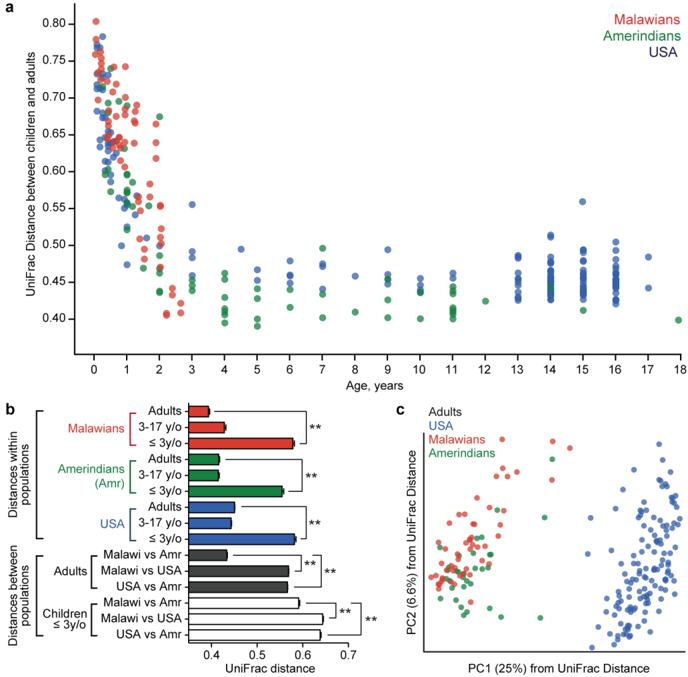
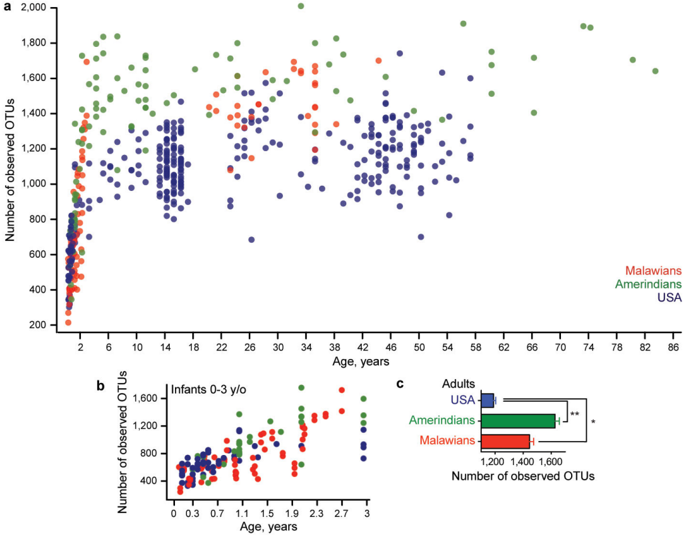
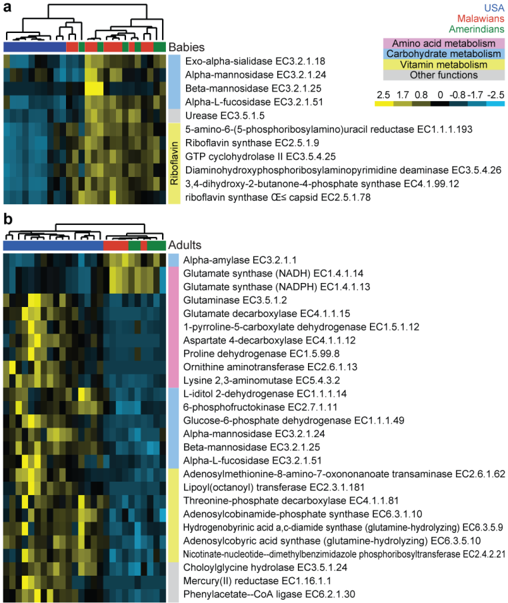
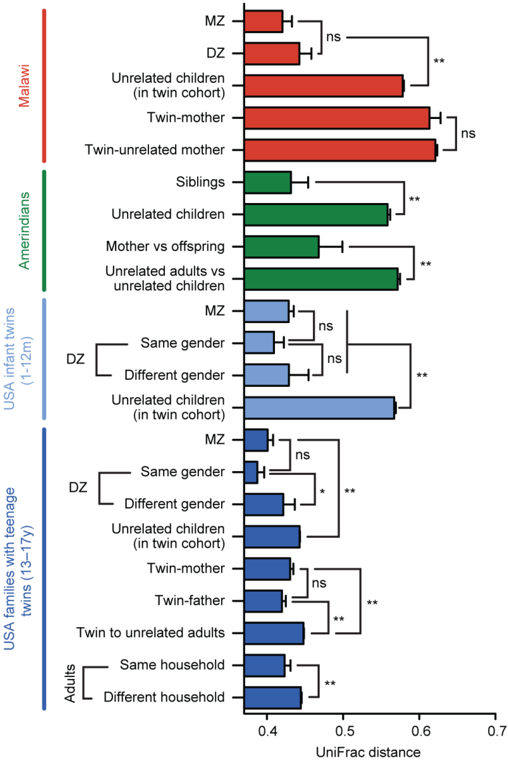
Gut microbial communities represent one source of human genetic and metabolic diversity. To examine how gut microbiomes differ among human populations, here we characterize bacterial species in fecal samples from 531 individuals, plus the gene content of 110 of them. The cohort encompassed healthy children and adults from the Amazonas of Venezuela, rural Malawi and US metropolitan areas and included mono- and dizygotic twins. Shared features of the functional maturation of the gut microbiome were identified during the first three years of life in all three populations, including age-associated changes in the genes involved in vitamin biosynthesis and metabolism. Pronounced differences in bacterial assemblages and functional gene repertoires were noted between US residents and those in the other two countries. These distinctive features are evident in early infancy as well as adulthood. Our findings underscore the need to consider the microbiome when evaluating human development, nutritional needs, physiological variations and the impact of westernization.
Overview
The claims and statistics of this paper haven’t been checked yet.
Free: it reads the open-access text and checks the first 5 claims that cite a source we can check. Create a free account to check every claim.
Integrity signals
Registry
Cites
Statistics
Figures
Verification
Claims the paper makes
The claims and statistics of this paper haven’t been checked yet.
Free: it reads the open-access text and checks the first 5 claims that cite a source we can check. Create a free account to check every claim.
Claims other papers make about this one
Each is checked against this paper’s own text: does it say what the citing paper says it does?
The cited source doesn’t support the claim as written.
In the citing paper
“Similar, albeit less marked, patterns were already observed for adults22,23,24,25 with different lifestyles but were never investigated in younger individuals.”
From Maternal and food microbial sources shape the infant microbiome of a rural Ethiopian population (2023) · cites this paper as [22]
Checked by a reasoning model — may be wrong.
Experimental — accuracy not yet measuredThe source backs part of the claim, not all of it — or backs it for a different population, condition or comparison.
In the citing paper
“The inverse relationship between Prevotella and Bacteroides has been reproduced in studies comparing the intestinal microbiota of residents of agrarian societies in South America and Bangladesh with residents of industrialized societies4, 37.”
From Diet and the Intestinal Microbiome: Associations, Functions, and Implications for Health and Disease (2014) · cites this paper as [4]
Experimental — accuracy not yet measuredThe source backs part of the claim, not all of it — or backs it for a different population, condition or comparison.
In the citing paper
“Moreover, geographic variations in the composition of intestinal microbiota have been described and implicated in the development of autoimmunity.28,29”
From Microbiota as Predictor of Mortality in Allogeneic Hematopoietic-Cell Transplantation (2020) · cites this paper as [28]
Experimental — accuracy not yet measuredThe source backs part of the claim, not all of it — or backs it for a different population, condition or comparison.
In the citing paper
“different human host cohorts may harbor remarkably different Gram-negative versus Gram-positive diversity3, 30, and a protocol appropriate for one type of community may work well in one study but not in another.”
From Assessment of variation in microbial community amplicon sequencing by the Microbiome Quality Control (MBQC) project consortium (2017) · cites this paper as [3]
Experimental — accuracy not yet measuredThe source backs part of the claim, not all of it — or backs it for a different population, condition or comparison.
In the citing paper
“Most critical events in education of host immunity may take place during the first years of life, in which microbiota composition displays the highest intra- and inter-individual variability before reaching a more stable adult-like configuration at the age of ~3 years.18–20”
From Interaction between microbiota and immunity in health and disease (2020) · cites this paper as [20]
Experimental — accuracy not yet measured
24 more claims about this paper
Create a free account to see every claim other papers make about this one.
Self-check
Percentages, sums and reported differences re-computed from the paper’s own numbers.
The self-check needs the paper’s full text.
Citations
Cites
QIIME allows analysis of high-throughput community sequencing data
Caporaso, J. G., Kuczynski, J., Stombaugh, J., Bittinger, K., Bushman, F. D., Costello, E. K., Fierer, N., Peña, A. G., Goodrich, J. K., Gordon, J. I., et al. (2010) · Nature Methods · doi:10.1038/nmeth.f.303 · Cited by 34,887
Self-citationSilhouettes: A graphical aid to the interpretation and validation of cluster analysis
Rousseeuw, P. J. (1987) · Journal of Computational and Applied Mathematics · doi:10.1016/0377-0427(87)90125-7 · Cited by 21,392
Classification and Regression by randomForest
Liaw, A. I., & Wiener, M. C. (2007) · Cited by 18,594
A human gut microbial gene catalogue established by metagenomic sequencing
MetaHIT Consortium, Qin, J., Li, R., Raes, J., Arumugam, M., Burgdorf, K. S., Manichanh, C., Nielsen, T., Pons, N., Levenez, F., et al. (2010) · Nature · doi:10.1038/nature08821 · Cited by 11,624 · cited 1×
“Shotgun reads were filtered using custom Perl scripts and publicly available software to remove (1) all reads ,60 nucleotides; (2) Titanium pyrosequencing reads with two continuous and/or three total degenerate bases (N); (3) all duplicates (a known artefact of pyrosequencing), defined as sequences in which the initia…”
MethodFinding groups in data: an introduction to cluster analysis
(1991) · Choice Reviews Online · doi:10.5860/choice.28-4558 · Cited by 10,474
UniFrac: a New Phylogenetic Method for Comparing Microbial Communities
Lozupone, C., & Knight, R. (2005) · Applied and Environmental Microbiology · doi:10.1128/aem.71.12.8228-8235.2005 · Cited by 8,227
Self-citationA core gut microbiome in obese and lean twins
Turnbaugh, P. J., Hamady, M., Yatsunenko, T., Cantarel, B. L., Duncan, A., Ley, R. E., Sogin, M. L., Jones, W. J., Roe, B. A., Affourtit, J. P., et al. (2009) · Nature · doi:10.1038/nature07540 · Cited by 7,823
Self-citationEnterotypes of the human gut microbiome
MetaHIT Consortium (additional members), Arumugam, M., Raes, J., Pelletier, E., Le Paslier, D., Yamada, T., Mende, D. R., Fernandes, G. R., Tap, J., Bruls, T., et al. (2011) · Nature · doi:10.1038/nature09944 · Cited by 7,548
Linking long-term dietary patterns with gut microbial enterotypes
Wu, G. D., Chen, J., Hoffmann, C., Bittinger, K., Chen, Y.-Y., Keilbaugh, S. A., Bewtra, M., Knights, D., Walters, W. A., Knight, R., et al. (2011) · Science · doi:10.1126/science.1208344 · Cited by 6,513
Self-citationDe Filippo, C., Cavalieri, D., Di Paola, M., Ramazzotti, M., Poullet, J. B., Massart, S., Collini, S., Pieraccini, G., & Lionetti, P. (2010) · Proceedings of the National Academy of Sciences · doi:10.1073/pnas.1005963107 · Cited by 5,579
Cited by
Items 1,001–1,100 of 1,221
Co-evolution in context: The importance of studying gut microbiomes in wild animals
Amato, K. R. (2013) · Microbiome Science and Medicine · doi:10.2478/micsm-2013-0002 · Cited by 166
Versini, M., Jeandel, P.-Y., Bashi, T., Bizzaro, G., Blank, M., & Shoenfeld, Y. (2015) · BMC Medicine · doi:10.1186/s12916-015-0306-7 · Cited by 166
“Hence, population migration from rural areas in contact with animals and environmental flora to more sanitized urban areas has affected the microbiota diversity [73,74], thereby likely favoring immune-mediated disorders.”
BackgroundAssociation between gut microbiota and bone health: Potential mechanisms and prospective
Chen, Y.-C., Greenbaum, J., Shen, H., & Deng, H.-W. (2017) · The Journal of Clinical Endocrinology & Metabolism · doi:10.1210/jc.2017-00513 · Cited by 165
Hoen, A. G., Li, J., Moulton, L. A., O'Toole, G. A., Housman, M. L., Koestler, D. C., Guill, M. F., Moore, J. H., Hibberd, P. L., Morrison, H. G., et al. (2015) · The Journal of Pediatrics · doi:10.1016/j.jpeds.2015.02.049 · Cited by 165
“A cross-sectional analysis of individuals from infancy throughout adulthood on 3 continents revealed the greatest inter-individual variability in the gut microbiota occurs in the first 3 years, after which time subjects had similarity to others in terms of microbial patterns (12).”
BackgroundInfluence of Maternal Milk on the Neonatal Intestinal Microbiome
Gopalakrishna, K. P., & Hand, T. W. (2020) · Nutrients · doi:10.3390/nu12030823 · Cited by 165
“In adults, SCFAs (acetate, propionate, and butyrate) are largely produced by strict anaerobic bacteria, such as Bacteroides and Firmicutes, that together form a healthy and diverse microbiome.”
BackgroundInfluentialElRakaiby, M., Dutilh, B. E., Rizkallah, M. R., Boleij, A., Cole, J. N., & Aziz, R. K. (2014) · OMICS: A Journal of Integrative Biology · doi:10.1089/omi.2014.0018 · Cited by 164
“It will take more time to have a global representation of healthy microbiomes from humans living in different geographical areas and with different socioeconomic standards; yet some pilot attempts have been made (Yatsunenko et al., 2012; Lin et al., 2013) The main features of the published human microbiome sequence ar…”
Gut microbiome-Mediterranean diet interactions in improving host health
Nagpal, R., Shively, C. A., Register, T. C., Craft, S., & Yadav, H. (2019) · F1000Research · doi:10.12688/f1000research.18992.1 · Cited by 164
“As mentioned above, diet shapes the gut microbiome by supplying specific substrates that differentially foster the growth of specific gut microbial communities 87–89 ; this diet-microbiome network is universally consistent in human and animal studies 85,87,90,91 .”
BackgroundHolscher, H. D., Caporaso, J. G., Hooda, S., Brulc, J. M., Fahey, G. C., & Swanson, K. S. (2015) · The American Journal of Clinical Nutrition · doi:10.3945/ajcn.114.092064 · Cited by 164
Self-citationThe relationship between the gut microbiome and host gene expression: a review
Nichols, R. G., & Davenport, E. R. (2021) · Human Genetics · doi:10.1007/s00439-020-02237-0 · Cited by 164
“The composition of the microbiome rapidly diversifies up to the age of three, steadily increases until around the age of 40, and then remains fairly stable (de la Cuesta-Zuluaga et al. 2019; Yadav et al. 2016; Yatsunenko et al. 2012).”
BackgroundImpact of Westernized Diet on Gut Microbiota in Children on Leyte Island
Nakayama, J., Yamamoto, A., Palermo-Conde, L. A., Higashi, K., Sonomoto, K., Tan, J., & Lee, Y.-K. (2017) · Frontiers in Microbiology · doi:10.3389/fmicb.2017.00197 · Cited by 164
Gut microbiota: a potential regulator of neurodevelopment
Tognini, P. (2017) · Frontiers in Cellular Neuroscience · doi:10.3389/fncel.2017.00025 · Cited by 163
“Notably, during the second and third year of life the microbiome is subjected to an important evolution, becoming more similar to the adult ecosystem (Yatsunenko et al., 2012), indicating a further link between commensal bacteria and ASD.”
Cope, E. K., Goldberg, A. N., Pletcher, S. D., & Lynch, S. V. (2017) · Microbiome · doi:10.1186/s40168-017-0266-6 · Cited by 163
Gut microbiota, the pharmabiotics they produce and host health
Patterson, E., Cryan, J. F., Fitzgerald, G. F., Ross, R. P., Dinan, T. G., & Stanton, C. (2014) · Proceedings of the Nutrition Society · doi:10.1017/s0029665114001426 · Cited by 163
“The development and diversification of the gut microbiota continues into adulthood and is further influenced by several factors, including diet and environment((23)).”
BackgroundVohr, B. R., Poggi Davis, E., Wanke, C. A., & Krebs, N. F. (2017) · Pediatrics · doi:10.1542/peds.2016-2828f · Cited by 163
Rosa, B. A., Supali, T., Gankpala, L., Djuardi, Y., Sartono, E., Zhou, Y., Fischer, K., Martin, J., Tyagi, R., Bolay, F. K., et al. (2018) · Microbiome · doi:10.1186/s40168-018-0416-5 · Cited by 163
“is complex but relatively stable in composition and function [1].”
BackgroundResultInfluentialImpact of Gut Microbiota on Obesity, Diabetes, and Cardiovascular Disease Risk
Miele, L., Giorgio, V., Alberelli, M. A., De Candia, E., Gasbarrini, A., & Grieco, A. (2015) · Current Cardiology Reports · doi:10.1007/s11886-015-0671-z · Cited by 163
Leung, M. H. Y., & Lee, P. K. H. (2016) · Microbiome · doi:10.1186/s40168-016-0165-2 · Cited by 163
“Their study also shows greater microbial richness and diversity in the guts of rural subjects, an observation recapitulated in later studies [58, 59, 100–102].”
ResultLinking dietary patterns with gut microbial composition and function
Sheflin, A. M., Melby, C. L., Carbonero, F., & Weir, T. L. (2017) · Gut Microbes · doi:10.1080/19490976.2016.1270809 · Cited by 162
“5x increase in amylase activity required for starch digestion, most likely the result of their higher maize intake.(19) While these studies point to the important influence of dietary patterns on gut microbial composition, there are numerous non-dietary environmental factors that could also contribute to geographical…”
BackgroundVemuri, R., Shankar, E. M., Chieppa, M., Eri, R., & Kavanagh, K. (2020) · Microorganisms · doi:10.3390/microorganisms8040483 · Cited by 162
Cultivating Healthy Growth and Nutrition through the Gut Microbiota
Subramanian, S., Blanton, L. V., Frese, S. A., Charbonneau, M., Mills, D. A., & Gordon, J. I. (2015) · Cell · doi:10.1016/j.cell.2015.03.013 · Cited by 162
“[PubMed: 12562767] Sela DA, Chapman J, Adeuya A, Kim JH, Chen F, Whitehead TR, Lapidus A, Rokhsar DS, Lebrilla CB, German JB, et al. The genome sequence of Bifidobacterium longum subsp. infantis reveals adaptations for milk utilization within the infant microbiome.”
InfluentialSelf-citationTorow, N., Marsland, B. J., Hornef, M. W., & Gollwitzer, E. S. (2017) · Mucosal Immunology · doi:10.1038/mi.2016.81 · Cited by 162
“A number of studies that compared the microbiota of neonates and adults have outlined significant differences and an overall increase in the microbial density and diversity.(46,47) Althoughmicrobial density reaches plateau levels shortly after birth in humans and mice,(46) diversity and thus a competitivemicrobiota is…”
BackgroundDeterminants of IBD Heritability: Genes, Bugs, and More
Turpin, W., Goethel, A., Bedrani, L., & Croitoru, M. (2018) · Inflammatory Bowel Diseases · doi:10.1093/ibd/izy085 · Cited by 162
A single genus in the gut microbiome reflects host preference and specificity
Eren, A. M., Sogin, M. L., Morrison, H. G., Vineis, J. H., Fisher, J. C., Newton, R. J., & McLellan, S. L. (2015) · The ISME Journal · doi:10.1038/ismej.2014.97 · Cited by 162
“Microbial community datasets from fecal samples have described patterns of host-association and external factors that shape the gut microbiome (Ley et al., 2008; Muegge et al., 2011; Lozupone et al., 2012; Yatsunenko et al., 2012).”
BackgroundInfluentialDwiyanto, J., Hussain, M. H., Reidpath, D., Ong, K. S., Qasim, A., Lee, S. W. H., Lee, S. M., Foo, S. C., Chong, C. W., & Rahman, S. (2021) · Scientific Reports · doi:10.1038/s41598-021-82311-3 · Cited by 161
The gut microbiome and mental health: implications for anxiety- and trauma-related disorders
Malan-Muller, S., Valles-Colomer, M., Raes, J., Lowry, C. A., Seedat, S., & Hemmings, S. M. J. (2018) · OMICS: A Journal of Integrative Biology · doi:10.1089/omi.2017.0077 · Cited by 161
“Turn-baugh et al. (2009) and Yatsunenko et al. (2012) investigated whether this was also the case in humans.”
Pursuing Human-Relevant Gut Microbiota-Immune Interactions
Spencer, S. P., Fragiadakis, G. K., & Sonnenburg, J. L. (2019) · Immunity · doi:10.1016/j.immuni.2019.08.002 · Cited by 161
“Ensuing studies of traditional populations around the world including Africa, South America, Papua New Guinea, Madagascar, and Asia have expanded our understanding of the variety of forms the human microbiome can take in healthy individuals(Ayeni et al., 2018; Clemente et al., 2015; Jha et al., 2018; Martínez et al.,…”
BackgroundCurrent understanding of the gut microbiota shaping mechanisms
Chang, C.-S., & Kao, C.-Y. (2019) · Journal of Biomedical Science · doi:10.1186/s12929-019-0554-5 · Cited by 161
“with DZ twins, despite the differences have no statistical power [21, 22].”
BackgroundThe gut microbiome in food allergy
Zhao, W., Ho, H.-E., & Bunyavanich, S. (2019) · Annals of Allergy, Asthma & Immunology · doi:10.1016/j.anai.2018.12.012 · Cited by 160
Microbiome, trimethylamine N-oxide, and cardiometabolic disease
Tang, W. H. W., & Hazen, S. L. (2017) · Translational Research · doi:10.1016/j.trsl.2016.07.007 · Cited by 160
Wacklin, P., Tuimala, J., Nikkilä, J., Tims, S., Mäkivuokko, H., Alakulppi, N., Laine, P., Rajilic-Stojanovic, M., Paulin, L., de Vos, W. M., et al. (2014) · PLoS ONE · doi:10.1371/journal.pone.0094863 · Cited by 160
“differ from that of dizygotic twins [4], [5].”
BackgroundOgbo, F. A., Agho, K., Ogeleka, P., Woolfenden, S., Page, A., Eastwood, J., & Global Child Health Research Interest Group (2017) · PLOS ONE · doi:10.1371/journal.pone.0171792 · Cited by 160
Microbial Urease in Health and Disease
Mora, D., & Arioli, S. (2014) · PLoS Pathogens · doi:10.1371/journal.ppat.1004472 · Cited by 160
“Several microbial species belonging to the human microbiota produce active urease, and these species take advantage of urea hydrolysis, as has been demonstrated for the oral bacteria Streptococcus salivarius [11] and Actinomyces naeslundii [12] and hypothesized for other species of the gut microbiota [13,14].”
BackgroundKe, X., Walker, A., Haange, S.-B., Lagkouvardos, I., Liu, Y., Schmitt-Kopplin, P., von Bergen, M., Jehmlich, N., He, X., Clavel, T., et al. (2019) · Molecular Metabolism · doi:10.1016/j.molmet.2019.01.012 · Cited by 160
“It has been proposed that when compared with African rural diets that are high in complex carbohydrates, a westernized diet is associated with metagenomes enriched in amino acidand simple sugar-degrading enzymes [77].”
BackgroundArmour, C. R., Nayfach, S., Pollard, K. S., & Sharpton, T. J. (2019) · mSystems · doi:10.1128/msystems.00332-18 · Cited by 160
Gut Microbiome Profiles Are Associated With Type 2 Diabetes in Urban Africans
Doumatey, A. P., Adeyemo, A., Zhou, J., Lei, L., Adebamowo, S. N., Adebamowo, C., & Rotimi, C. N. (2020) · Frontiers in Cellular and Infection Microbiology · doi:10.3389/fcimb.2020.00063 · Cited by 159
Mayneris-Perxachs, J., Arnoriaga-Rodríguez, M., Luque-Córdoba, D., Priego-Capote, F., Pérez-Brocal, V., Moya, A., Burokas, A., Maldonado, R., & Fernández-Real, J.-M. (2020) · Microbiome · doi:10.1186/s40168-020-00913-x · Cited by 159
“There is some evidence to support that the gut microbiota differs between sex, although the results are inconsistent [1–10, 12, 15], partly because sexual dimorphism in the gut microbiome may also be influenced by diet, age, obesity, ethnicity, and genotype [6].”
ResultCheng, J., Ringel-Kulka, T., Heikamp-de Jong, I., Ringel, Y., Carroll, I., de Vos, W. M., Salojärvi, J., & Satokari, R. (2016) · The ISME Journal · doi:10.1038/ismej.2015.177 · Cited by 159
“A recent large-scale study showed that, from 1–3 years of age, children from both Amazonas of Venezuela and rural Malawi had an increasingly diverse microbiota, whereas children from the United States in this age category did not show a similar trend (Yatsunenko et al., 2012; Schloss et al., 2014).”
BackgroundResultInfluentialRole of dietary fiber in promoting immune health—An EAACI position paper
Venter, C., Meyer, R. W., Greenhawt, M., Pali‐Schöll, I., Nwaru, B., Roduit, C., Untersmayr, E., Adel‐Patient, K., Agache, I., Agostoni, C., et al. (2022) · Allergy · doi:10.1111/all.15430 · Cited by 159
Gut Microbiota in Colorectal Cancer: Biological Role and Therapeutic Opportunities
Pandey, H., Tang, D. W. T., Wong, S. H., & Lal, D. (2023) · Cancers · doi:10.3390/cancers15030866 · Cited by 159
Gut Microbiome Composition in Non-human Primates Consuming a Western or Mediterranean Diet
Nagpal, R., Shively, C. A., Appt, S. A., Register, T. C., Michalson, K. T., Vitolins, M. Z., & Yadav, H. (2018) · Frontiers in Nutrition · doi:10.3389/fnut.2018.00028 · Cited by 159
“Diet-microbiome interactions are consistently reproducible in clinical and animal studies [5, 8, 10, 11].”
BackgroundMoreno-Pérez, D., Bressa, C., Bailén, M., Hamed-Bousdar, S., Naclerio, F., Carmona, M., Pérez, M., González-Soltero, R., Montalvo-Lominchar, M., Carabaña, C., et al. (2018) · Nutrients · doi:10.3390/nu10030337 · Cited by 158
“can use the urea from protein catabolism as a source of nitrogen [47].”
Psychological comorbidity in gastrointestinal diseases: Update on the brain-gut-microbiome axis
Person, H., & Keefer, L. (2021) · Progress in Neuro-Psychopharmacology and Biological Psychiatry · doi:10.1016/j.pnpbp.2020.110209 · Cited by 158
“It continues to develop and is subject to dynamic changes until stabilizing at three years-of-age (Backhed et al., 2015; Yatsunenko et al., 2012).”
BackgroundValladares, R., Bojilova, L., Potts, A. H., Cameron, E., Gardner, C., Lorca, G., & Gonzalez, C. F. (2013) · The FASEB Journal · doi:10.1096/fj.12-223339 · Cited by 158
“Numerous interactions between commensal bacteria and their mammalian hosts occur at the intestinal epithelium, which comprises the body’s largest surface area and is residence to trillions of bacteria from hundreds of bacterial species (1).”
BackgroundAge and the aging process significantly alter the small bowel microbiome
Leite, G., Pimentel, M., Barlow, G. M., Chang, C., Hosseini, A., Wang, J., Parodi, G., Sedighi, R., Rezaie, A., & Mathur, R. (2021) · Cell Reports · doi:10.1016/j.celrep.2021.109765 · Cited by 158
Modulation of the faecal microbiome of healthy adult dogs by inclusion of potato fibre in the diet
Panasevich, M. R., Kerr, K. R., Dilger, R. N., Fahey, G. C., Guérin-Deremaux, L., Lynch, G. L., Wils, D., Suchodolski, J. S., Steer, J. M., Dowd, S. E., et al. (2015) · British Journal of Nutrition · doi:10.1017/s0007114514003274 · Cited by 158
“host’s microbiome are affected by a number of factors including genetics((1)), age((2)), geographical location((3)) and especially diet((4)).”
BackgroundCeliac Disease and the Microbiome
Valitutti, F., Cucchiara, S., & Fasano, A. (2019) · Nutrients · doi:10.3390/nu11102403 · Cited by 157
“At approximately three years of age, a child’s gut microbiota composition and diversity are very similar to the adult microbiota [30].”
BackgroundGut–Skin Axis: Unravelling the Connection between the Gut Microbiome and Psoriasis
Thye, A. Y.-K., Bah, Y.-R., Law, J. W.-F., Tan, L. T.-H., He, Y.-W., Wong, S.-H., Thurairajasingam, S., Chan, K.-G., Lee, L.-H., & Letchumanan, V. (2022) · Biomedicines · doi:10.3390/biomedicines10051037 · Cited by 156
Validating bifidobacterial species and subspecies identity in commercial probiotic products
Lewis, Z. T., Shani, G., Masarweh, C. F., Popovic, M., Frese, S. A., Sela, D. A., Underwood, M. A., & Mills, D. A. (2016) · Pediatric Research · doi:10.1038/pr.2015.244 · Cited by 154
“Bifidobacterium-containing products are often used in a NICU setting due to their status as generally recognized as safe (GRAS) microorganisms, their ubiquity in the gut of healthy breast-fed infants, and their observed health effects (17,18).”
BackgroundInflammatory pathways in Alzheimer’s disease mediated by gut microbiota
Qian, X.-H., Song, X.-X., Liu, X.-L., Chen, S.-D., & Tang, H.-D. (2021) · Ageing Research Reviews · doi:10.1016/j.arr.2021.101317 · Cited by 153
Duodenal microbiota composition and mucosal homeostasis in pediatric celiac disease
Cheng, J., Kalliomäki, M., Heilig, H. G., Palva, A., Lähteenoja, H., de Vos, W. M., Salojärvi, J., & Satokari, R. (2013) · BMC Gastroenterology · doi:10.1186/1471-230x-13-113 · Cited by 152
“Gut colonization starts immediately after birth, and considerable microbiota maturation takes place during the first years of life followed by a gradual microbiota succession until young adulthood [8-10].”
BackgroundSpeciation by Symbiosis: the Microbiome and Behavior
Shropshire, J. D., & Bordenstein, S. R. (2016) · mBio · doi:10.1128/mbio.01785-15 · Cited by 152
Linking microbiota to human diseases: a systems biology perspective
Wu, H., Tremaroli, V., & Bäckhed, F. (2015) · Trends in Endocrinology & Metabolism · doi:10.1016/j.tem.2015.09.011 · Cited by 150
“As the microbiota matures during the first years of life, with the main changes occurring within the first 12 months [24–26], it is likely that microbiota perturbations during postnatal life may be critical for the host's long-term metabolic regulation by affecting the immune system, which co-develops with the gut mic…”
BackgroundGarrido, D., Nwosu, C., Ruiz-Moyano, S., Aldredge, D., German, J. B., Lebrilla, C. B., & Mills, D. A. (2012) · Molecular & Cellular Proteomics · doi:10.1074/mcp.m112.018119 · Cited by 150
“The presence of certain species of Bifidobacterium is a major feature of breast-fed infants (4), and the dominance of these microorganisms is thought to be associated with beneficial health effects (5, 6).”
BackgroundSocioeconomic Status and the Gut Microbiome: A TwinsUK Cohort Study
Bowyer, R. C. E., Jackson, M. A., Le Roy, C. I., Ni Lochlainn, M., Spector, T. D., Dowd, J. B., & Steves, C. J. (2019) · Microorganisms · doi:10.3390/microorganisms7010017 · Cited by 150
“In addition to diet and health status, there are a range of SES-associated factors that were unexplored in this analysis and could also contribute to the associations observed, such as historical medication use, pet ownership [47], social relationships and stressors, and host environment [48,49].”
BackgroundThe impact of nutrition on intestinal bacterial communities
Flint, H. J., Duncan, S. H., & Louis, P. (2017) · Current Opinion in Microbiology · doi:10.1016/j.mib.2017.04.005 · Cited by 149
Exploration of bacterial community classes in major human habitats
Zhou, Y., Mihindukulasuriya, K. A., Gao, H., La Rosa, P. S., Wylie, K. M., Martin, J. C., Kota, K., Shannon, W. D., Mitreva, M., Sodergren, E., et al. (2014) · Genome Biology · doi:10.1186/gb-2014-15-5-r66 · Cited by 149
“Several studies have not favored the enterotype concept [16-18].”
BackgroundJefferson, A., & Adolphus, K. (2019) · Frontiers in Nutrition · doi:10.3389/fnut.2019.00033 · Cited by 149
Intrinsic challenges in ancient microbiome reconstruction using 16S rRNA gene amplification
Ziesemer, K. A., Mann, A. E., Sankaranarayanan, K., Schroeder, H., Ozga, A. T., Brandt, B. W., Zaura, E., Waters-Rist, A., Hoogland, M., Salazar-García, D. C., et al. (2015) · Scientific Reports · doi:10.1038/srep16498 · Cited by 148
Intestinal dysbiosis in children with short bowel syndrome is associated with impaired outcome
Engstrand Lilja, H., Wefer, H., Nyström, N., Finkel, Y., & Engstrand, L. (2015) · Microbiome · doi:10.1186/s40168-015-0084-7 · Cited by 145
“Most cases of SBS occur in neonates during a period when the sterile intestines normally are colonized by bacteria, reaching a microbial profile characteristic of the adult gastrointestinal tract around 2 to 4 years of age [6].”
BackgroundMethodThe effects of gut microbiota on CNS function in humans
Tillisch, K. (2014) · Gut Microbes · doi:10.4161/gmic.29232 · Cited by 144
Development of gut microbiota during the first 2 years of life
Wernroth, M.-L., Peura, S., Hedman, A. M., Hetty, S., Vicenzi, S., Kennedy, B., Fall, K., Svennblad, B., Andolf, E., Pershagen, G., et al. (2022) · Scientific Reports · doi:10.1038/s41598-022-13009-3 · Cited by 143
Lin, Y., Lau, H. C.-H., Liu, Y., Kang, X., Wang, Y., Ting, N. L.-N., Kwong, T. N.-Y., Han, J., Liu, W., Liu, C., et al. (2022) · Gastroenterology · doi:10.1053/j.gastro.2022.06.038 · Cited by 142
Characterizing oral microbial communities across dentition states and colonization niches
Mason, M. R., Chambers, S., Dabdoub, S. M., Thikkurissy, S., & Kumar, P. S. (2018) · Microbiome · doi:10.1186/s40168-018-0443-2 · Cited by 142
“Recent investigations have revealed the existence of indigenous bacterial consortia that are specific to each body habitat and are ubiquitous among individuals (the core microbiome), implying that these species are uniquely adapted to the niche [21, 22], while emerging evidence indicates that there may be specific cor…”
Goyal, M. S., Venkatesh, S., Milbrandt, J., Gordon, J. I., & Raichle, M. E. (2015) · Proceedings of the National Academy of Sciences · doi:10.1073/pnas.1511465112 · Cited by 141
Self-citationUse of dietary indices to control for diet in human gut microbiota studies
Bowyer, R. C. E., Jackson, M. A., Pallister, T., Skinner, J., Spector, T. D., Welch, A. A., & Steves, C. J. (2018) · Microbiome · doi:10.1186/s40168-018-0455-y · Cited by 140
Effects of Antidiabetic Drugs on Gut Microbiota Composition
Montandon, S., & Jornayvaz, F. (2017) · Genes · doi:10.3390/genes8100250 · Cited by 135
“They are modulated by the diet, host health, age, ethnicity and genetics and thus are unique and highly variable among individuals [2,3].”
BackgroundTiming the Microbes: The Circadian Rhythm of the Gut Microbiome
Liang, X., & FitzGerald, G. A. (2017) · Journal of Biological Rhythms · doi:10.1177/0748730417729066 · Cited by 132
“…stems from the combined influence of host genetics (Benson et al., 2010), ageing (Biagi et al., 2010; Agans et al., 2011), geographic locations (Yatsunenko et al., 2012), lifestyle (Annalisa et al., 2014), diet (Wu et al., 2011; Zoetendal and de Vos, 2014), and pet ownership (Song et al.,…”
BackgroundEarly Development of the Gut Microbiome and Immune-Mediated Childhood Disorders
Li, M., Wang, M., & Donovan, S. (2014) · Seminars in Reproductive Medicine · doi:10.1055/s-0033-1361825 · Cited by 131
Lehtimäki, J., Karkman, A., Laatikainen, T., Paalanen, L., von Hertzen, L., Haahtela, T., Hanski, I., & Ruokolainen, L. (2017) · Scientific Reports · doi:10.1038/srep45651 · Cited by 131
Peters, B. A., Lin, J., Qi, Q., Usyk, M., Isasi, C. R., Mossavar-Rahmani, Y., Derby, C. A., Santoro, N., Perreira, K. M., Daviglus, M. L., et al. (2022) · mSystems · doi:10.1128/msystems.00273-22 · Cited by 130
“In humans, sex differences in the gut microbiome also appear to emerge after puberty (9), and several large studies in humans have shown differences in gut microbiome composition between men and women, reporting higher species richness and lower Prevotella abundance in women (10–16).”
BackgroundSelf-citationBhargava, A., Arnold, A. P., Bangasser, D. A., Denton, K. M., Gupta, A., Hilliard Krause, L. M., Mayer, E. A., McCarthy, M., Miller, W. L., Raznahan, A., et al. (2021) · Endocrine Reviews · doi:10.1210/endrev/bnaa034 · Cited by 130
“Human studies comparing the microbiome of twins also revealed more divergences in microbial composition in opposite-sex versus same-sex twins (241).”
BackgroundLopetuso, L. R., Deleu, S., Godny, L., Petito, V., Puca, P., Facciotti, F., Sokol, H., Ianiro, G., Masucci, L., Abreu, M., et al. (2023) · Gut · doi:10.1136/gutjnl-2023-329948 · Cited by 129
Boehme, M., van de Wouw, M., Bastiaanssen, T. F. S., Olavarría-Ramírez, L., Lyons, K., Fouhy, F., Golubeva, A. V., Moloney, G. M., Minuto, C., Sandhu, K. V., et al. (2020) · Molecular Psychiatry · doi:10.1038/s41380-019-0425-1 · Cited by 128
Chen, Y.-R., Zheng, H.-M., Zhang, G.-X., Chen, F.-L., Chen, L.-D., & Yang, Z.-C. (2020) · Scientific Reports · doi:10.1038/s41598-020-66369-z · Cited by 127
Multiscale Evolutionary Dynamics of Host-Associated Microbiomes
Ferreiro, A., Crook, N., Gasparrini, A. J., & Dantas, G. (2018) · Cell · doi:10.1016/j.cell.2018.02.015 · Cited by 127
“Much work has been done to describe the community-level changes that themicrobiome undergoes under varied selective pressures using metagenomic techniques (Gibson et al., 2016; Subramanian et al., 2014; Yatsunenko et al., 2012), but it is important also to understand how individual microbial populations evolve in such…”
Modeling metabolism of the human gut microbiome
Magnúsdóttir, S., & Thiele, I. (2018) · Current Opinion in Biotechnology · doi:10.1016/j.copbio.2017.12.005 · Cited by 127
Gut microbiome as a clinical tool in gastrointestinal disease management: are we there yet?
Quigley, E. M. M. (2017) · Nature Reviews Gastroenterology & Hepatology · doi:10.1038/nrgastro.2017.29 · Cited by 125
Diet, Microbiota and Immune System in Type 1 Diabetes Development and Evolution
Mejía-León, M., & Barca, A. (2015) · Nutrients · doi:10.3390/nu7115461 · Cited by 125
“In contrast, in the same age group of the United States [21], Italy [17], China [19], Japan [19] and Taiwan [19], the present gut microbiota is dominated by Bacteroides.”
BackgroundProbiotics, prebiotics, and the host microbiome: the science of translation
Petschow, B., Doré, J., Hibberd, P., Dinan, T., Reid, G., Blaser, M., Cani, P. D., Degnan, F. H., Foster, J., Gibson, G., et al. (2013) · Annals of the New York Academy of Sciences · doi:10.1111/nyas.12303 · Cited by 124
Mining the human gut microbiota for effector strains that shape the immune system
Ahern, P. P., Faith, J. J., & Gordon, J. I. (2014) · Immunity · doi:10.1016/j.immuni.2014.05.012 · Cited by 123
The Gut Microbiome as a Target for the Treatment of Type 2 Diabetes
Aydin, Ö., Nieuwdorp, M., & Gerdes, V. (2018) · Current Diabetes Reports · doi:10.1007/s11892-018-1020-6 · Cited by 124
Klimenko, N. S., Tyakht, A. V., Popenko, A. S., Vasiliev, A. S., Altukhov, I. A., Ischenko, D. S., Shashkova, T. I., Efimova, D. A., Nikogosov, D. A., Osipenko, D. A., et al. (2018) · Nutrients · doi:10.3390/nu10050576 · Cited by 123
“Obviously, their lower ranking was linked to the fact that our sample included few of the metagenomes enriched in Bacteroides and Prevotella identified in some other studies [55].”
ResultThe intestinal microbiota and host immune interactions in the critically ill
Schuijt, T. J., van der Poll, T., de Vos, W. M., & Wiersinga, W. J. (2013) · Trends in Microbiology · doi:10.1016/j.tim.2013.02.001 · Cited by 123
Posttraumatic stress disorder: does the gut microbiome hold the key?
Leclercq, S., Forsythe, P., & Bienenstock, J. (2016) · The Canadian Journal of Psychiatry · doi:10.1177/0706743716635535 · Cited by 121
Recent advances in modulation of cardiovascular diseases by the gut microbiota
Masenga, S. K., Hamooya, B., Hangoma, J., Hayumbu, V., Ertuglu, L. A., Ishimwe, J., Rahman, S., Saleem, M., Laffer, C. L., Elijovich, F., et al. (2022) · Journal of Human Hypertension · doi:10.1038/s41371-022-00698-6 · Cited by 121
“During aging, there is additional exposure to external microbes through diet and contact with other environment factors such as farm animals and pets [58].”
BackgroundBested, A. C., Logan, A. C., & Selhub, E. M. (2013) · Gut Pathogens · doi:10.1186/1757-4749-5-3 · Cited by 121
Dostal, A., Baumgartner, J., Riesen, N., Chassard, C., Smuts, C. M., Zimmermann, M. B., & Lacroix, C. (2014) · British Journal of Nutrition · doi:10.1017/s0007114514001160 · Cited by 121
Deciphering the tête-à-tête between the microbiota and the immune system
Surana, N. K., & Kasper, D. L. (2014) · Journal of Clinical Investigation · doi:10.1172/jci72332 · Cited by 120
“Over the past 25 years, the hygiene hypothesis has evolved to suggest that microbial exposures can modulate disease incidence and/or severity in genetically predisposed patients (79–81).”
Lefter, R., Ciobica, A., Timofte, D., Stanciu, C., & Trifan, A. (2019) · Medicina · doi:10.3390/medicina56010011 · Cited by 120
“Thus, a series of studies on the faecal microbiota sampled from traditional foraging communities in Tanzania [49] and rural agrarian communities in Malawi [50], Burkina Faso, and Amerindians from Venezuela [51] showed, as compared to the samples of European or USA urban controls, significantly higher levels of microbi…”
ResultHegelmaier, T., Lebbing, M., Duscha, A., Tomaske, L., Tönges, L., Holm, J. B., Bjørn Nielsen, H., Gatermann, S. G., Przuntek, H., & Haghikia, A. (2020) · Cells · doi:10.3390/cells9020376 · Cited by 118
“Moreover, Prevotella enrichment has been linked to a rich-fiber diet, which is the primary source for SFCA including butyrate [46,47].”
BackgroundSu, T., Liu, R., Lee, A., Long, Y., Du, L., Lai, S., Chen, X., Wang, L., Si, J., Owyang, C., et al. (2018) · Gastroenterology Research and Practice · doi:10.1155/2018/6961783 · Cited by 117
Hughes, R. L., Kable, M. E., Marco, M., & Keim, N. L. (2019) · Advances in Nutrition · doi:10.1093/advances/nmz049 · Cited by 117
“There are significant interindividual differences in microbiome composition, function, and diversity (4, 5).”
BackgroundEcophylogenetics Clarifies the Evolutionary Association between Mammals and Their Gut Microbiota
Gaulke, C. A., Arnold, H. K., Humphreys, I. R., Kembel, S. W., O’Dwyer, J. P., & Sharpton, T. J. (2018) · mBio · doi:10.1128/mbio.01348-18 · Cited by 117
“A separate data set of region V4 16S rRNA gene sequences (34) consisting of 528 human sequences—314 of which were from the United States (Western) and 114 and 100 of which were from Malawi and Venezuela, respectively (non-Western)—was downloaded from MG-RAST (accession no. mgp401).”
Beilharz, J. E., Kaakoush, N. O., Maniam, J., & Morris, M. J. (2018) · Molecular Psychiatry · doi:10.1038/mp.2017.38 · Cited by 116
Fostering of advanced mutualism with gut microbiota by Immunoglobulin A
Sutherland, D. B., Suzuki, K., & Fagarasan, S. (2016) · Immunological Reviews · doi:10.1111/imr.12384 · Cited by 115
A systems biology approach to studying the role of microbes in human health
Thiele, I., Heinken, A., & Fleming, R. M. (2013) · Current Opinion in Biotechnology · doi:10.1016/j.copbio.2012.10.001 · Cited by 114
“[10,11]).”
The role of the gut microbiota in the metabolism of polyphenols as characterized by gnotobiotic mice
Pasinetti, G. M., Singh, R., Westfall, S., Herman, F., Faith, J., & Ho, L. (2018) · Journal of Alzheimer s Disease · doi:10.3233/jad-171151 · Cited by 112
“Despite this diversity, a standard healthy gut microbiota profile has emerged as the composition of the microbiota is now recognized as an important factor in understanding individual nutritional needs [50,51].”
BackgroundPopulation structure of human gut bacteria in a diverse cohort from rural Tanzania and Botswana
Hansen, M. E. B., Rubel, M. A., Bailey, A. G., Ranciaro, A., Thompson, S. R., Campbell, M. C., Beggs, W., Dave, J. R., Mokone, G. G., Mpoloka, S. W., et al. (2019) · Genome Biology · doi:10.1186/s13059-018-1616-9 · Cited by 110
“The US cohort had the least bacterial diversity, while the Sandawe had the highest, similar to previous comparisons of industrialized populations versus hunter-gatherers [24–27, 30] and small-scale agropastoralists [22, 23].”
ResultCan we ‘seize’ the gut microbiota to treat epilepsy?
De Caro, C., Iannone, L. F., Citraro, R., Striano, P., De Sarro, G., Constanti, A., Cryan, J. F., & Russo, E. (2019) · Neuroscience & Biobehavioral Reviews · doi:10.1016/j.neubiorev.2019.10.002 · Cited by 110
Intra-individual variation of plasma trimethylamine-N-oxide (TMAO), betaine and choline over 1 year
Kühn, T., Rohrmann, S., Sookthai, D., Johnson, T., Katzke, V., Kaaks, R., von Eckardstein, A., & Müller, D. (2017) · Clinical Chemistry and Laboratory Medicine (CCLM) · doi:10.1515/cclm-2016-0374 · Cited by 110
“As dietary habits and the composition of the intestinal microbiota may be prone to changes, despite a certain stability of both factors during adulthood [21, 22], it could be speculated that TMAO levels undergo significant changes over time.”
Background
Metadata
- Authors
- Yatsunenko, T., Rey, F. E., Manary, M. J., Trehan, I., Dominguez-Bello, M. G., Contreras, M., Magris, M., Hidalgo, G., Baldassano, R. N., Anokhin, A. P., Heath, A. C., Warner, B., Reeder, J., Kuczynski, J., Caporaso, J. G., Lozupone, C. A., Lauber, C., Clemente, J. C., Knights, D., Knight, R., & Gordon, J. I.
- Affiliations
- Washington University in St. Louis (US)
- University of Malawi (MW)
- Children's Hospital of Philadelphia (US)
- University of Colorado Boulder (US)
- Northern Arizona University (US)
- Howard Hughes Medical Institute (US)
- Corresponding author
- Gordon, Jeffrey I.
- ORCID
- Venue
- Nature
- Published
- 2012-05-09
- Volume
- 486
- Issue
- 7402
- Pages
- 222-227
- ISSN
- 0028-0836 (ISSN-L)
- 1476-4687
- PMC
- PMC3376388
- OpenAlex
- W2162088497
- Semantic Scholar
- 54a6d777e3a84e46f1c74bc9a0482a7307bd79c7
- Cited by
- 7,815
- References
- 41
- Citations by year
- 2026: 373 · 2025: 472 · 2024: 576 · 2023: 580 · 2022: 730 · 2021: 786 · 2020: 769 · 2019: 674 · 2018: 597 · 2017: 559 · 2016: 534 · 2015: 433 · 2014: 356 · 2013: 287 · 2012: 82
- FWCI
- 148.99
- Type
- journal article
- Language
- en
- Open access
- green
- www.ncbi.nlm.nih.gov
- Licence
- www.springer.com/tdm (tdm)
- Locations
- Nature (publishedVersion)
- PubMed (publishedVersion)
- Europe PMC (PubMed Central) (acceptedVersion)
- PubMed Central (acceptedVersion)
- RePEc: Research Papers in Economics (submittedVersion)
- eScholarship (California Digital Library) (submittedVersion)
- Funders
- Howard Hughes Medical Institute
- Crohn's and Colitis Foundation
- National Institute on Alcohol Abuse and Alcoholism (K05AA017688)
- National Institute of Diabetes and Digestive and Kidney Diseases (DK078669, P01DK078669, K01DK090285)
- Eunice Kennedy Shriver National Institute of Child Health and Human Development (T32HD049338)
- Topics
- Life Sciences › Biochemistry, Genetics and Molecular Biology › Molecular Biology › Gut microbiota and health
- Health Sciences › Nursing › Nutrition and Dietetics › Infant Nutrition and Health
- Physical Sciences › Environmental Science › Ecology › Microbial Community Ecology and Physiology
- Keywords
- gut microbiota, fecal microbiota, age-related changes, regional variation, Westernization, monozygotic and dizygotic twins, human development, Amazonas, Malawi
- MeSH terms
- Adolescent, Adult, Age Factors, Aged, Bacteria, Child, Child, Preschool, Feces, Female, Geography, Humans, Infant, Intestines, Malawi, Male, Middle Aged, Phylogeny, RNA, Ribosomal, 16S, Twins, Dizygotic, Twins, Monozygotic, United States, Venezuela, Biodiversity, Metagenome, Young Adult
About these checks
Registry, retraction, Cites and statistics results are computed, not judged, with one exception: a printed reference that no index lists is read once by a model before it counts as a citation error. Claims are extracted by a model and kept only when their quote appears verbatim in the text; each cited source is then checked, with a model’s help, for whether it says what the claim relies on. Those verdicts can be wrong — read the claim’s quote and the cited source before relying on one.
Statistics and arithmetic are recomputed, not judged.
Confidence bands are shown only for fields calibrated on our annotated test set. None is calibrated yet, so no band is shown.
What counts as a claim ›How we measure confidence ›How we check this ›
Are you an author, or do you see a problem with this page? Request a review
Data sources
Bibliographic data: Semantic Scholar, OpenAlex, Crossref.
Contains information from the Semantic Scholar Academic Graph Datasets, made available under the ODC Attribution License (ODC-BY 1.0).
Semantic Scholar’s data is described in: Kinney, R., et al. (2023). The Semantic Scholar Open Data Platform. arXiv:2301.10140.
