

Human gut microbiome viewed across age and geography
Open accessThe DOI matches its Crossref record; 41 of the 41 references it cites were found in a registry or an index.
Abstract
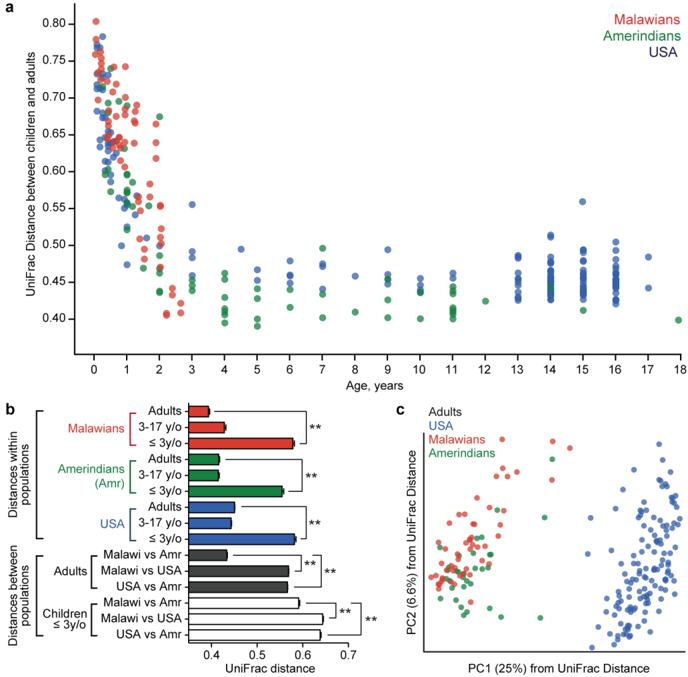
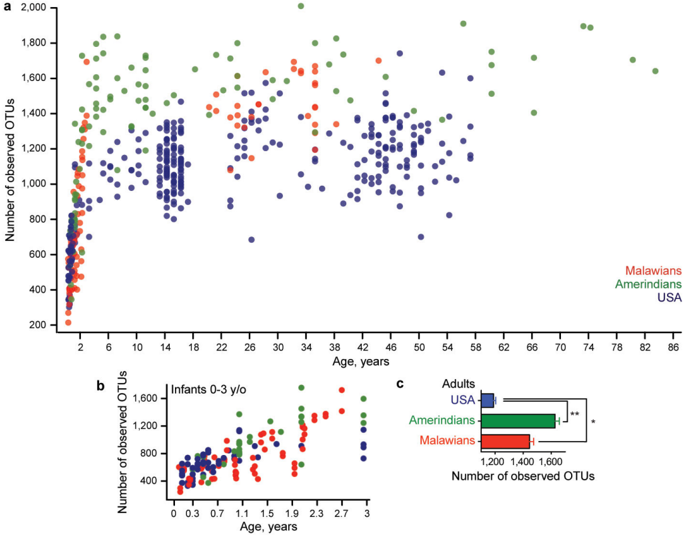
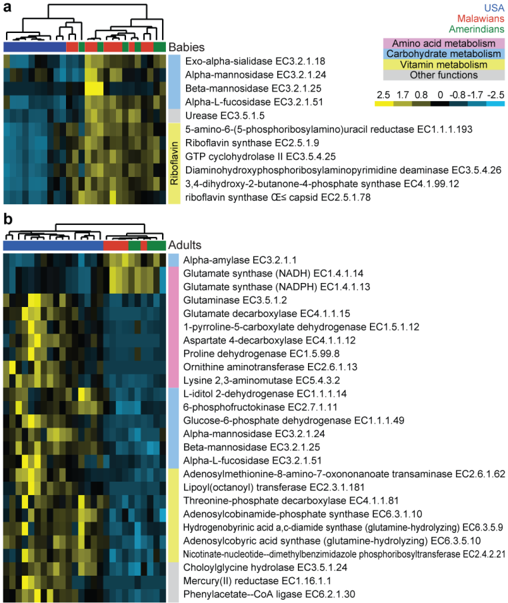
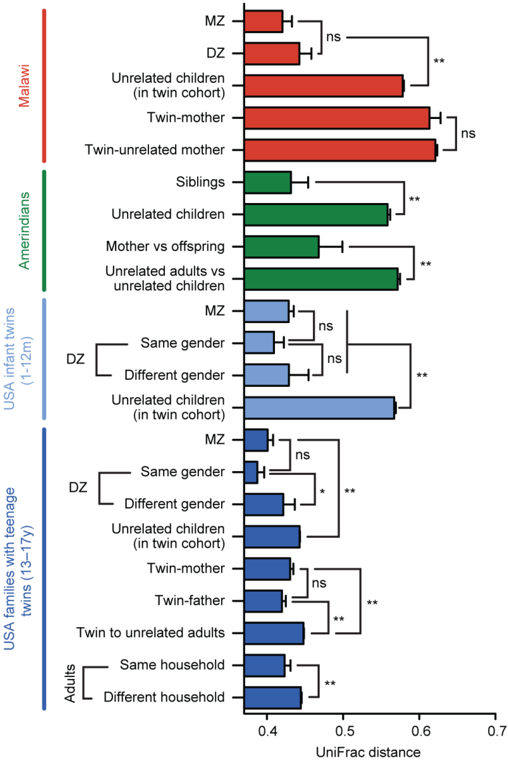
Gut microbial communities represent one source of human genetic and metabolic diversity. To examine how gut microbiomes differ among human populations, here we characterize bacterial species in fecal samples from 531 individuals, plus the gene content of 110 of them. The cohort encompassed healthy children and adults from the Amazonas of Venezuela, rural Malawi and US metropolitan areas and included mono- and dizygotic twins. Shared features of the functional maturation of the gut microbiome were identified during the first three years of life in all three populations, including age-associated changes in the genes involved in vitamin biosynthesis and metabolism. Pronounced differences in bacterial assemblages and functional gene repertoires were noted between US residents and those in the other two countries. These distinctive features are evident in early infancy as well as adulthood. Our findings underscore the need to consider the microbiome when evaluating human development, nutritional needs, physiological variations and the impact of westernization.
Overview
The claims and statistics of this paper haven’t been checked yet.
Free: it reads the open-access text and checks the first 5 claims that cite a source we can check. Create a free account to check every claim.
Integrity signals
Registry
Cites
Statistics
Figures
Verification
Claims the paper makes
The claims and statistics of this paper haven’t been checked yet.
Free: it reads the open-access text and checks the first 5 claims that cite a source we can check. Create a free account to check every claim.
Claims other papers make about this one
Each is checked against this paper’s own text: does it say what the citing paper says it does?
The cited source doesn’t support the claim as written.
In the citing paper
“Similar, albeit less marked, patterns were already observed for adults22,23,24,25 with different lifestyles but were never investigated in younger individuals.”
From Maternal and food microbial sources shape the infant microbiome of a rural Ethiopian population (2023) · cites this paper as [22]
Checked by a reasoning model — may be wrong.
Experimental — accuracy not yet measuredThe source backs part of the claim, not all of it — or backs it for a different population, condition or comparison.
In the citing paper
“The inverse relationship between Prevotella and Bacteroides has been reproduced in studies comparing the intestinal microbiota of residents of agrarian societies in South America and Bangladesh with residents of industrialized societies4, 37.”
From Diet and the Intestinal Microbiome: Associations, Functions, and Implications for Health and Disease (2014) · cites this paper as [4]
Experimental — accuracy not yet measuredThe source backs part of the claim, not all of it — or backs it for a different population, condition or comparison.
In the citing paper
“Moreover, geographic variations in the composition of intestinal microbiota have been described and implicated in the development of autoimmunity.28,29”
From Microbiota as Predictor of Mortality in Allogeneic Hematopoietic-Cell Transplantation (2020) · cites this paper as [28]
Experimental — accuracy not yet measuredThe source backs part of the claim, not all of it — or backs it for a different population, condition or comparison.
In the citing paper
“different human host cohorts may harbor remarkably different Gram-negative versus Gram-positive diversity3, 30, and a protocol appropriate for one type of community may work well in one study but not in another.”
From Assessment of variation in microbial community amplicon sequencing by the Microbiome Quality Control (MBQC) project consortium (2017) · cites this paper as [3]
Experimental — accuracy not yet measuredThe source backs part of the claim, not all of it — or backs it for a different population, condition or comparison.
In the citing paper
“Most critical events in education of host immunity may take place during the first years of life, in which microbiota composition displays the highest intra- and inter-individual variability before reaching a more stable adult-like configuration at the age of ~3 years.18–20”
From Interaction between microbiota and immunity in health and disease (2020) · cites this paper as [20]
Experimental — accuracy not yet measured
24 more claims about this paper
Create a free account to see every claim other papers make about this one.
Self-check
Percentages, sums and reported differences re-computed from the paper’s own numbers.
The self-check needs the paper’s full text.
Citations
Cites
QIIME allows analysis of high-throughput community sequencing data
Caporaso, J. G., Kuczynski, J., Stombaugh, J., Bittinger, K., Bushman, F. D., Costello, E. K., Fierer, N., Peña, A. G., Goodrich, J. K., Gordon, J. I., et al. (2010) · Nature Methods · doi:10.1038/nmeth.f.303 · Cited by 34,887
Self-citationSilhouettes: A graphical aid to the interpretation and validation of cluster analysis
Rousseeuw, P. J. (1987) · Journal of Computational and Applied Mathematics · doi:10.1016/0377-0427(87)90125-7 · Cited by 21,392
Classification and Regression by randomForest
Liaw, A. I., & Wiener, M. C. (2007) · Cited by 18,594
A human gut microbial gene catalogue established by metagenomic sequencing
MetaHIT Consortium, Qin, J., Li, R., Raes, J., Arumugam, M., Burgdorf, K. S., Manichanh, C., Nielsen, T., Pons, N., Levenez, F., et al. (2010) · Nature · doi:10.1038/nature08821 · Cited by 11,624 · cited 1×
“Shotgun reads were filtered using custom Perl scripts and publicly available software to remove (1) all reads ,60 nucleotides; (2) Titanium pyrosequencing reads with two continuous and/or three total degenerate bases (N); (3) all duplicates (a known artefact of pyrosequencing), defined as sequences in which the initia…”
MethodFinding groups in data: an introduction to cluster analysis
(1991) · Choice Reviews Online · doi:10.5860/choice.28-4558 · Cited by 10,474
UniFrac: a New Phylogenetic Method for Comparing Microbial Communities
Lozupone, C., & Knight, R. (2005) · Applied and Environmental Microbiology · doi:10.1128/aem.71.12.8228-8235.2005 · Cited by 8,227
Self-citationA core gut microbiome in obese and lean twins
Turnbaugh, P. J., Hamady, M., Yatsunenko, T., Cantarel, B. L., Duncan, A., Ley, R. E., Sogin, M. L., Jones, W. J., Roe, B. A., Affourtit, J. P., et al. (2009) · Nature · doi:10.1038/nature07540 · Cited by 7,823
Self-citationEnterotypes of the human gut microbiome
MetaHIT Consortium (additional members), Arumugam, M., Raes, J., Pelletier, E., Le Paslier, D., Yamada, T., Mende, D. R., Fernandes, G. R., Tap, J., Bruls, T., et al. (2011) · Nature · doi:10.1038/nature09944 · Cited by 7,548
Linking long-term dietary patterns with gut microbial enterotypes
Wu, G. D., Chen, J., Hoffmann, C., Bittinger, K., Chen, Y.-Y., Keilbaugh, S. A., Bewtra, M., Knights, D., Walters, W. A., Knight, R., et al. (2011) · Science · doi:10.1126/science.1208344 · Cited by 6,513
Self-citationDe Filippo, C., Cavalieri, D., Di Paola, M., Ramazzotti, M., Poullet, J. B., Massart, S., Collini, S., Pieraccini, G., & Lionetti, P. (2010) · Proceedings of the National Academy of Sciences · doi:10.1073/pnas.1005963107 · Cited by 5,579
Cited by
Items 401–500 of 1,221
Gut–organ axis: a microbial outreach and networking
Ahlawat, S., Asha, & Sharma, K. K. (2021) · Letters in Applied Microbiology · doi:10.1111/lam.13333 · Cited by 361
“Approximately at 3 years of age, a child’s phylogenetic composition and diversity of intestinal microbiota has been evolved towards those of adults (Yatsunenko et al. 2012; Rinninella et al. 2019).”
BackgroundThe Lung Microbiome, Immunity, and the Pathogenesis of Chronic Lung Disease
O’Dwyer, D. N., Dickson, R. P., & Moore, B. B. (2016) · The Journal of Immunology · doi:10.4049/jimmunol.1600279 · Cited by 362
“However, it is likely from studies of the upper respiratory tract and intestinal microbiota that these bacterial communities are dynamic (37, 38).”
BackgroundGut microbiota Turicibacter strains differentially modify bile acids and host lipids
Lynch, J. B., Gonzalez, E. L., Choy, K., Faull, K. F., Jewell, T., Arellano, A., Liang, J., Yu, K. B., Paramo, J., & Hsiao, E. Y. (2023) · Nature Communications · doi:10.1038/s41467-023-39403-7 · Cited by 347
Peng, Z., Cheng, S., Kou, Y., Wang, Z., Jin, R., Hu, H., Zhang, X., Gong, J.-F., Li, J., Lu, M., et al. (2020) · Cancer Immunology Research · doi:10.1158/2326-6066.cir-19-1014 · Cited by 361
The Role of the Microbiome in the Developmental Origins of Health and Disease
Stiemsma, L. T., & Michels, K. B. (2018) · Pediatrics · doi:10.1542/peds.2017-2437 · Cited by 355
Intestinal microbiota and diet in IBS: causes, consequences, or epiphenomena?
Rajilić-Stojanović, M., Jonkers, D. M., Salonen, A., Hanevik, K., Raes, J., Jalanka, J., de Vos, W. M., Manichanh, C., Golic, N., Enck, P., et al. (2015) · American Journal of Gastroenterology · doi:10.1038/ajg.2014.427 · Cited by 359
Functional metagenomic profiling of intestinal microbiome in extreme ageing
Rampelli, S., Candela, M., Turroni, S., Biagi, E., Collino, S., Franceschi, C., O'Toole, P. W., & Brigidi, P. (2013) · Aging · doi:10.18632/aging.100623 · Cited by 359
“An important factor which affects the gut microbiota in ageing is diet [18].”
BackgroundImpact of Childhood Malnutrition on Host Defense and Infection
Ibrahim, M. K., Zambruni, M., Melby, C. L., & Melby, P. C. (2017) · Clinical Microbiology Reviews · doi:10.1128/cmr.00119-16 · Cited by 344
Kastl, A. J., Terry, N. A., Wu, G. D., & Albenberg, L. G. (2020) · Cellular and Molecular Gastroenterology and Hepatology · doi:10.1016/j.jcmgh.2019.07.006 · Cited by 358
Bacteria from Diverse Habitats Colonize and Compete in the Mouse Gut
Seedorf, H., Griffin, N. W., Ridaura, V. K., Reyes, A., Cheng, J., Rey, F. E., Smith, M. I., Simon, G. M., Scheffrahn, R. H., Woebken, D., et al. (2014) · Cell · doi:10.1016/j.cell.2014.09.008 · Cited by 360
“In a final transplantation experiment, one group of mice received human fecal microbiota samples from individuals representing three healthy adult human populations with distinct cultural traditions living on three continents (metropolitan areas of the United States, rural villages in southern Malawi, and the Amazonas…”
BackgroundSelf-citationAntibiotic-mediated gut microbiome perturbation accelerates development of type 1 diabetes in mice
Livanos, A. E., Greiner, T. U., Vangay, P., Pathmasiri, W., Stewart, D., McRitchie, S., Li, H., Chung, J., Sohn, J., Kim, S., et al. (2016) · Nature Microbiology · doi:10.1038/nmicrobiol.2016.140 · Cited by 354
Self-citationGut Microbiota and Chronic Constipation: A Review and Update
Ohkusa, T., Koido, S., Nishikawa, Y., & Sato, N. (2019) · Frontiers in Medicine · doi:10.3389/fmed.2019.00019 · Cited by 354
“Because the intestinal flora is changed by age (9).”
BackgroundFennema, D., Phillips, I. R., & Shephard, E. A. (2016) · Drug Metabolism and Disposition · doi:10.1124/dmd.116.070615 · Cited by 355
“The human gut microbiome displays considerable interindividual and intraindividual variation (Caporaso et al., 2011; Yatsunenko et al., 2012).”
BackgroundRabus, R., Venceslau, S. S., Wöhlbrand, L., Voordouw, G., Wall, J. D., & Pereira, I. A. C. (2015) · Advances in Microbial Physiology · doi:10.1016/bs.ampbs.2015.05.002 · Cited by 358
Liévin-Le Moal, V., & Servin, A. L. (2014) · Clinical Microbiology Reviews · doi:10.1128/cmr.00080-13 · Cited by 354
“The adult human intestine has been estimated to contain trillions of microbes, including hundreds of species and thousands of subspecies, which display age- and geography-related differences and are distributed as a function of the intestinal site; they have a predominantly symbiotic relationship with their host (15,…”
BackgroundNagpal, R., Wang, S., Ahmadi, S., Hayes, J., Gagliano, J., Subashchandrabose, S., Kitzman, D. W., Becton, T., Read, R., & Yadav, H. (2018) · Scientific Reports · doi:10.1038/s41598-018-30114-4 · Cited by 347
Chu, H., Duan, Y., Yang, L., & Schnabl, B. (2019) · Gut · doi:10.1136/gutjnl-2018-316307 · Cited by 354
The Intestinal Metabolome: An Intersection Between Microbiota and Host
Ursell, L. K., Haiser, H. J., Van Treuren, W., Garg, N., Reddivari, L., Vanamala, J., Dorrestein, P. C., Turnbaugh, P. J., & Knight, R. (2014) · Gastroenterology · doi:10.1053/j.gastro.2014.03.001 · Cited by 355
“These findings are supported by 16S amplicon studies showing that the infant microbiota comes to resemble that of adults from the same community at 2 years of age.(41) It is also apparent that the intestinal microbiota of infants is”
ResultSelf-citationThe first thousand days - intestinal microbiology of early life: Establishing a symbiosis
Wopereis, H., Oozeer, R., Knipping, K., Belzer, C., & Knol, J. (2014) · Pediatric Allergy and Immunology · doi:10.1111/pai.12232 · Cited by 352
“vaginal delivery), geographic origin and linked to that, cultural traditions, especially regarding diet, are factors profoundly influencing the microbiota development (26, 27).”
BackgroundInfluentialHost–microorganism interactions in lung diseases
Marsland, B. J., & Gollwitzer, E. S. (2014) · Nature Reviews Immunology · doi:10.1038/nri3769 · Cited by 351
Do Vertebrate Gut Metagenomes Confer Rapid Ecological Adaptation?
Alberdi, A., Aizpurua, O., Bohmann, K., Zepeda-Mendoza, M. L., & Gilbert, M. T. P. (2016) · Trends in Ecology & Evolution · doi:10.1016/j.tree.2016.06.008 · Cited by 366
Sun, S., Jones, R. B., & Fodor, A. A. (2020) · Microbiome · doi:10.1186/s40168-020-00815-y · Cited by 335
“The Human_KW study compared urban and rural subjects in China, while the US and non-US subjects were compared for the Human_TY study.”
MethodInfluentiald'Enfert, C., Kaune, A.-K., Alaban, L.-R., Chakraborty, S., Cole, N., Delavy, M., Kosmala, D., Marsaux, B., Fróis-Martins, R., Morelli, M., et al. (2021) · FEMS Microbiology Reviews · doi:10.1093/femsre/fuaa060 · Cited by 347
Markle, J. G., & Fish, E. N. (2014) · Trends in Immunology · doi:10.1016/j.it.2013.10.006 · Cited by 347
Madan, J. C., Koestler, D. C., Stanton, B. A., Davidson, L., Moulton, L. A., Housman, M. L., Moore, J. H., Guill, M. F., Morrison, H. G., Sogin, M. L., et al. (2012) · mBio · doi:10.1128/mbio.00251-12 · Cited by 356
“It has been demonstrated that over time, the intestinal microbiome increases in diversity in humans, beginning at birth (32, 33), with transition to the height of diversity by the age of 1 to 3 years, mirroring an adult pattern (33, 34).”
BackgroundMulti-kingdom ecological drivers of microbiota assembly in preterm infants
Rao, C., Coyte, K. Z., Bainter, W., Geha, R. S., Martin, C. R., & Rakoff-Nahoum, S. (2021) · Nature · doi:10.1038/s41586-021-03241-8 · Cited by 356
Microbial Genetic Composition Tunes Host Longevity
Han, B., Sivaramakrishnan, P., Lin, C.-C. J., Neve, I. A. A., He, J., Tay, L. W. R., Sowa, J. N., Sizovs, A., Du, G., Wang, J., et al. (2017) · Cell · doi:10.1016/j.cell.2017.05.036 · Cited by 353
“Changes in the bacterial composition of the microbiota have been observed in elderly people, and dietdriven microbiota alterations have been shown to improve their health (Claesson et al., 2012; Yatsunenko et al., 2012).”
Nutrition, IBD and Gut Microbiota: A Review
Mentella, M. C., Scaldaferri, F., Pizzoferrato, M., Gasbarrini, A., & Miggiano, G. A. D. (2020) · Nutrients · doi:10.3390/nu12040944 · Cited by 340
“During the first one to three years of life, the immune system and gut microbes develop a dependency relationship, leading to establishment of the host–microbiome homeostasis [87–89] destined to remain stable unless there is an occurrence of an illness, the use of antibiotics or considerable changes in diet [90,91].”
BackgroundDogra, S., Sakwinska, O., Soh, S.-E., Ngom-Bru, C., Brück, W. M., Berger, B., Brüssow, H., Lee, Y. S., Yap, F., Chong, Y.-S., et al. (2015) · mBio · doi:10.1128/mbio.02419-14 · Cited by 350
“In this study, the switch between aerobes and anaerobes occurred between birth and month 3 of infancy, in agreement with previous studies (11, 25, 26).”
BackgroundResultInfluentialReyman, M., van Houten, M. A., Watson, R. L., Chu, M. L. J. N., Arp, K., de Waal, W. J., Schiering, I., Plötz, F. B., Willems, R. J. L., van Schaik, W., et al. (2022) · Nature Communications · doi:10.1038/s41467-022-28525-z · Cited by 343
Interactions between Intestinal Microbiota and Host Immune Response in Inflammatory Bowel Disease
Zhang, M., Sun, K., Wu, Y., Yang, Y., Tso, P., & Wu, Z. (2017) · Frontiers in Immunology · doi:10.3389/fimmu.2017.00942 · Cited by 347
“The phylogenetic diversity of the intestinal microbiota increases with growth and development and ultimately leads to a complex and relatively stable community of microorganisms at the age of roughly 2–3 years (18, 19).”
BackgroundThe impact of the microbiota-gut-brain axis on Alzheimer’s disease pathophysiology
Doifode, T., Giridharan, V. V., Generoso, J. S., Bhatti, G., Collodel, A., Schulz, P. E., Forlenza, O. V., & Barichello, T. (2021) · Pharmacological Research · doi:10.1016/j.phrs.2020.105314 · Cited by 347
Home Life: Factors Structuring the Bacterial Diversity Found within and between Homes
Dunn, R. R., Fierer, N., Henley, J. B., Leff, J. W., & Menninger, H. L. (2013) · PLoS ONE · doi:10.1371/journal.pone.0064133 · Cited by 344
“Furthermore, these results reinforce the idea that people sharing households also share a significant fraction of the bacterial taxa on and in their bodies [50].”
ResultAssembly of the Caenorhabditis elegans gut microbiota from diverse soil microbial environments
Berg, M., Stenuit, B., Ho, J., Wang, A., Parke, C., Knight, M., Alvarez-Cohen, L., & Shapira, M. (2016) · The ISME Journal · doi:10.1038/ismej.2015.253 · Cited by 362
“The ISME Journal in Greengenes release 13_5, as described previously (Yatsunenko et al., 2012).”
BackgroundMethodDysbiosis in Inflammatory Bowel Disease: Pathogenic Role and Potential Therapeutic Targets
Santana, P. T., Rosas, S. L. B., Ribeiro, B. E., Marinho, Y., & de Souza, H. S. P. (2022) · International Journal of Molecular Sciences · doi:10.3390/ijms23073464 · Cited by 325
Convergence of gut microbiomes in myrmecophagous mammals
Delsuc, F., Metcalf, J. L., Wegener Parfrey, L., Song, S. J., González, A., & Knight, R. (2014) · Molecular Ecology · doi:10.1111/mec.12501 · Cited by 347
“patterns have been observed in humans (Yatsunenko et al. 2012), although geographical variation is often also”
BackgroundSelf-citationWhy Is Initial Bacterial Colonization of the Intestine Important to Infants' and Children's Health?
Houghteling, P. D., & Walker, W. A. (2015) · Journal of Pediatric Gastroenterology and Nutrition · doi:10.1097/mpg.0000000000000597 · Cited by 351
“In another study of infants and adults from the United States, Amerindians from Venezuela, and individuals from rural Malawi, the differences in gene expression in the microbiome reflect a striking adaptation of the microbiota to the different diets in these populations.”
BackgroundResultInfluentialAnalysis of microbial compositions: a review of normalization and differential abundance analysis
Lin, H., & Peddada, S. D. (2020) · npj Biofilms and Microbiomes · doi:10.1038/s41522-020-00160-w · Cited by 341
Xie, H., Guo, R., Zhong, H., Feng, Q., Lan, Z., Qin, B., Ward, K. J., Jackson, M. A., Xia, Y., Chen, X., et al. (2016) · Cell Systems · doi:10.1016/j.cels.2016.10.004 · Cited by 341
“…in the gut microbiota between people from different countries (Li et al., 2014; Human Microbiome Project Consortium, 2012; Tyakht et al., 2013; Yatsunenko et al., 2012), current location (when divided into four main regions across the UK) influenced the abundance profile of gut microbial…”
Mizrahi-Man, O., Davenport, E. R., & Gilad, Y. (2013) · PLoS ONE · doi:10.1371/journal.pone.0053608 · Cited by 340
“However, recently, other platforms (such as the Illumina MiSEQ and HiSEQ) have become much more attractive for microbiome studies due to increase in sequencing read length (to ,100 bp at the moment and up to ,250 bp next year) combined with a much higher and cheaper output [10,13–15].”
BackgroundMorrow, A. L., Lagomarcino, A. J., Schibler, K. R., Taft, D. H., Yu, Z., Wang, B., Altaye, M., Wagner, M., Gevers, D., Ward, D. V., et al. (2013) · Microbiome · doi:10.1186/2049-2618-1-13 · Cited by 343
“Consistent with previous studies in preterm infants [12,51-53], the dominant phyla were Proteobacteria and Firmicutes, with a minor contribution (1% to 2%) from Bacteroidetes and Actinobacteria.”
ResultGastrointestinal symptoms associated with COVID-19: impact on the gut microbiome
Villapol, S. (2020) · Translational Research · doi:10.1016/j.trsl.2020.08.004 · Cited by 343
“The infant microbiota shows reduced diversity and will remain unstable for the first few years of experience until it becomes an adult-like microbiota.(80) The gut microbiota within an individual is considered stable throughout adult life.”
Rebuilding the Gut Microbiota Ecosystem
Gagliardi, A., Totino, V., Cacciotti, F., Iebba, V., Neroni, B., Bonfiglio, G., Trancassini, M., Passariello, C., Pantanella, F., & Schippa, S. (2018) · International Journal of Environmental Research and Public Health · doi:10.3390/ijerph15081679 · Cited by 340
The effect of heritability and host genetics on the gut microbiota and metabolic syndrome
Lim, M. Y., You, H. J., Yoon, H. S., Kwon, B., Lee, J. Y., Lee, S., Song, Y.-M., Lee, K., Sung, J., & Ko, G. (2017) · Gut · doi:10.1136/gutjnl-2015-311326 · Cited by 345
A Gut Microbiome Signature for Cirrhosis Due to Nonalcoholic Fatty Liver Disease
Caussy, C., Tripathi, A., Humphrey, G., Bassirian, S., Singh, S., Faulkner, C., Bettencourt, R., Rizo, E., Richards, L., Xu, Z. Z., et al. (2019) · Nature Communications · doi:10.1038/s41467-019-09455-9 · Cited by 338
Self-citationTurroni, F., Ventura, M., Buttó, L. F., Duranti, S., O’Toole, P. W., Motherway, M. O., & van Sinderen, D. (2014) · Cellular and Molecular Life Sciences · doi:10.1007/s00018-013-1318-0 · Cited by 336
“Additional metabolic functions of the gut microbiota include synthesis of vitamins (see review [37]), and bile acid biotransformation [38].”
BackgroundRapid changes in the gut microbiome during human evolution
Moeller, A. H., Li, Y., Mpoudi Ngole, E., Ahuka-Mundeke, S., Lonsdorf, E. V., Pusey, A. E., Peeters, M., Hahn, B. H., & Ochman, H. (2014) · Proceedings of the National Academy of Sciences · doi:10.1073/pnas.1419136111 · Cited by 340
“(5), because the datasets were produced by bead-beating DNA extraction, PCR of the V4 region of 16S rDNA, and Illumina sequencing.”
BackgroundMethodInfluentialYu, E. W., Gao, L., Stastka, P., Cheney, M. C., Mahabamunuge, J., Torres Soto, M., Ford, C. B., Bryant, J. A., Henn, M. R., & Hohmann, E. L. (2020) · PLOS Medicine · doi:10.1371/journal.pmed.1003051 · Cited by 329
Ruminococcus gnavus : friend or foe for human health
Crost, E. H., Coletto, E., Bell, A., & Juge, N. (2023) · FEMS Microbiology Reviews · doi:10.1093/femsre/fuad014 · Cited by 335
“Several lines of evidence suggest that R. gnavus increases in relative abundance post weaning while others such as Bifidobacterium species are known to decrease in relative abundance (Yatsunenko et al. 2012).”
BackgroundThe Intestinal Microenvironment and Functional Gastrointestinal Disorders
Barbara, G., Feinle-Bisset, C., Ghoshal, U. C., Santos, J., Vanner, S. J., Vergnolle, N., Zoetendal, E. G., & Quigley, E. M. (2016) · Gastroenterology · doi:10.1053/j.gastro.2016.02.028 · Cited by 335
“Comparative studies have demonstrated huge differences in microbiota composition between human populations in Western and those in developing countries and suggested that these are based on lifestyle and long-term dietary pattern differences.(16) Short-term dietary changes have also been shown to impact the compositio…”
BackgroundBifidobacteria and Their Molecular Communication with the Immune System
Ruiz, L., Delgado, S., Ruas-Madiedo, P., Sánchez, B., & Margolles, A. (2017) · Frontiers in Microbiology · doi:10.3389/fmicb.2017.02345 · Cited by 326
“…8 | Article 2345 factor for bifidobacterial establishment in the gut, and breast-fed infants have been shown to possess higher levels of bifidobacteria than formula-fed infants (Yatsunenko et al., 2012); these high bifidobacterial levels decrease after breast milk cessation (Davis et al., 2016).”
BackgroundInflammatory Bowel Disease as a Model for Translating the Microbiome
Huttenhower, C., Kostic, A. D., & Xavier, R. J. (2014) · Immunity · doi:10.1016/j.immuni.2014.05.013 · Cited by 332
“The microbiome also changes rapidly during early development, particularly during infant colonization (Koenig et al., 2011; Sharon et al., 2013; Yatsunenko et al., 2012).”
BackgroundInflammation in Renal Diseases: New and Old Players
Andrade-Oliveira, V., Foresto-Neto, O., Watanabe, I. K. M., Zatz, R., & Câmara, N. O. S. (2019) · Frontiers in Pharmacology · doi:10.3389/fphar.2019.01192 · Cited by 330
Elevated rates of horizontal gene transfer in the industrialized human microbiome
Groussin, M., Poyet, M., Sistiaga, A., Kearney, S. M., Moniz, K., Noel, M., Hooker, J., Gibbons, S. M., Segurel, L., Froment, A., et al. (2021) · Cell · doi:10.1016/j.cell.2021.02.052 · Cited by 335
“Transitioning from nonindustrialized to industrialized lifestyles is associated with changes in gut microbiome composition and decreased bacterial species diversity (Brewster et al., 2019; Hansen et al., 2019; McDonald et al., 2018; Pasolli et al., 2019; Schnorr et al., 2014; Sonnenburg and Sonnenburg, 2019b; Yatsunen…”
BackgroundFisher, C. K., & Mehta, P. (2014) · PLoS ONE · doi:10.1371/journal.pone.0102451 · Cited by 340
“de stochasticity by including a log-normally distributed multiplicative noise, i(t). Specically, the dynamics are modeled by the equations x i(t+ t) = i(t)x i(t)exp(t X j c ij(x j(t) h x ji)); (2) where hx jiis equilibrium abundance of species jand is set by the carrying capacity of the environment. In writing these e…”
BackgroundMethodComparative Gut Microbiota of 59 Neotropical Bird Species
Hird, S. M., Sánchez, C., Carstens, B. C., & Brumfield, R. T. (2015) · Frontiers in Microbiology · doi:10.3389/fmicb.2015.01403 · Cited by 332
Ancient and modern environmental DNA
Pedersen, M. W., Overballe-Petersen, S., Ermini, L., Sarkissian, C. D., Haile, J., Hellstrom, M., Spens, J., Thomsen, P. F., Bohmann, K., Cappellini, E., et al. (2015) · Philosophical Transactions of the Royal Society B: Biological Sciences · doi:10.1098/rstb.2013.0383 · Cited by 329
Deciphering chicken gut microbial dynamics based on high-throughput 16S rRNA metagenomics analyses
Mohd Shaufi, M. A., Sieo, C. C., Chong, C. W., Gan, H. M., & Ho, Y. W. (2015) · Gut Pathogens · doi:10.1186/s13099-015-0051-7 · Cited by 328
“Despite the extensive use of NGS in unravelling the function and importance of human gut microbiome [18-20], there is currently a lack of detail in biodiversity assessment using HT-NGS to understand the”
BackgroundComparison of the gut microbiomes of 12 bony fish and 3 shark species
Givens, C., Ransom, B., Bano, N., & Hollibaugh, J. (2015) · Marine Ecology Progress Series · doi:10.3354/meps11034 · Cited by 328
Understanding the impact of antibiotic perturbation on the human microbiome
Schwartz, D. J., Langdon, A. E., & Dantas, G. (2020) · Genome Medicine · doi:10.1186/s13073-020-00782-x · Cited by 322
“after which the microbiome stabilizes with less dramatic monthly changes [26, 35].”
BackgroundAberrant gut microbiota composition at the onset of type 1 diabetes in young children
de Goffau, M. C., Fuentes, S., van den Bogert, B., Honkanen, H., de Vos, W. M., Welling, G. W., Hyöty, H., & Harmsen, H. J. M. (2014) · Diabetologia · doi:10.1007/s00125-014-3274-0 · Cited by 326
“A study by Yatsunenko et al showed that the phylogenetic bacterial composition evolves towards an adult-like configuration within a 3 year period after birth [29].”
MethodComputational meta'omics for microbial community studies
Segata, N., Boernigen, D., Tickle, T. L., Morgan, X. C., Garrett, W. S., & Huttenhower, C. (2013) · Molecular Systems Biology · doi:10.1038/msb.2013.22 · Cited by 326
“This is already starting to be the case with large 16S and, gradually, metagenomic data sets defining healthy human microbial baselines (Qin et al , 2010; Yatsunenko et al , 2012; The Human Microbiome Project Consortium, 2012b).”
BackgroundThe gut microbiome, diet, and links to cardiometabolic and chronic disorders
Aron-Wisnewsky, J., & Clément, K. (2016) · Nature Reviews Nephrology · doi:10.1038/nrneph.2015.191 · Cited by 325
Gut microbiota diversity according to dietary habits and geographical provenance
Senghor, B., Sokhna, C., Ruimy, R., & Lagier, J.-C. (2018) · Human Microbiome Journal · doi:10.1016/j.humic.2018.01.001 · Cited by 299
Vitaglione, P., Mennella, I., Ferracane, R., Rivellese, A. A., Giacco, R., Ercolini, D., Gibbons, S. M., La Storia, A., Gilbert, J. A., Jonnalagadda, S., et al. (2015) · The American Journal of Clinical Nutrition · doi:10.3945/ajcn.114.088120 · Cited by 324
High-Specificity Targeted Functional Profiling in Microbial Communities with ShortBRED
Kaminski, J., Gibson, M. K., Franzosa, E. A., Segata, N., Dantas, G., & Huttenhower, C. (2015) · PLOS Computational Biology · doi:10.1371/journal.pcbi.1004557 · Cited by 333
“After evaluating ShortBRED on synthetic data, we applied it to profile antibiotic resistance protein families in the gut micro- biomes of individuals from the United States, China, Malawi, and Venezuela.”
BackgroundMethodInfluentialSorbara, M. T., & Pamer, E. G. (2019) · Mucosal Immunology · doi:10.1038/s41385-018-0053-0 · Cited by 320
Advancing human gut microbiota research by considering gut transit time
Procházková, N., Falony, G., Dragsted, L. O., Licht, T. R., Raes, J., & Roager, H. M. (2023) · Gut · doi:10.1136/gutjnl-2022-328166 · Cited by 308
Tipping elements in the human intestinal ecosystem
Lahti, L., Salojärvi, J., Salonen, A., Scheffer, M., & de Vos, W. M. (2014) · Nature Communications · doi:10.1038/ncomms5344 · Cited by 325
Gut DNA viromes of Malawian twins discordant for severe acute malnutrition
Reyes, A., Blanton, L. V., Cao, S., Zhao, G., Manary, M., Trehan, I., Smith, M. I., Wang, D., Virgin, H. W., Rohwer, F., et al. (2015) · Proceedings of the National Academy of Sciences · doi:10.1073/pnas.1514285112 · Cited by 331
“The configuration of the bacterial component of the gut microbiota of healthy infants evolves to an adult-like configuration during the first 2–3 y of life (2, 3).”
BackgroundSelf-citationIntestinal dysbiosis and probiotic applications in autoimmune diseases
de Oliveira, G. L. V., Leite, A. Z., Higuchi, B. S., Gonzaga, M. I., & Mariano, V. S. (2017) · Immunology · doi:10.1111/imm.12765 · Cited by 322
Zhou, Y., Xu, Z. Z., He, Y., Yang, Y., Liu, L., Lin, Q., Nie, Y., Li, M., Zhi, F., Liu, S., et al. (2018) · mSystems · doi:10.1128/msystems.00188-17 · Cited by 317
“It is well known that the gut microbiotas of human populations residing across different geographical locations are associated with significant differences in microbiota composition (17).”
BackgroundSelf-citationAnalysis of Microbiome Data in the Presence of Excess Zeros
Kaul, A., Mandal, S., Davidov, O., & Peddada, S. D. (2017) · Frontiers in Microbiology · doi:10.3389/fmicb.2017.02114 · Cited by 328
Immune homeostasis, dysbiosis and therapeutic modulation of the gut microbiota
Peterson, C. T., Sharma, V, Elmén, L., & Peterson, S. N. (2015) · Clinical and Experimental Immunology · doi:10.1111/cei.12474 · Cited by 318
Finding the Missing Links among Metabolites, Microbes, and the Host
Dorrestein, P. C., Mazmanian, S. K., & Knight, R. (2014) · Immunity · doi:10.1016/j.immuni.2014.05.015 · Cited by 317
Self-citationIntegrated multi-omics of the human gut microbiome in a case study of familial type 1 diabetes
Heintz-Buschart, A., May, P., Laczny, C. C., Lebrun, L. A., Bellora, C., Krishna, A., Wampach, L., Schneider, J. G., Hogan, A., de Beaufort, C., et al. (2016) · Nature Microbiology · doi:10.1038/nmicrobiol.2016.180 · Cited by 316
Lin, A., Bik, E. M., Costello, E. K., Dethlefsen, L., Haque, R., Relman, D. A., & Singh, U. (2013) · PLoS ONE · doi:10.1371/journal.pone.0053838 · Cited by 314
“Recent work highlights the importance of geography in explaining the gut microbiota composition of adults and children [6,7] and underscores the need to select additional geographic settings in an effort to characterize the global extent of human-associated microbial diversity [8].”
BackgroundSeasonal Variation in Human Gut Microbiome Composition
Davenport, E. R., Mizrahi-Man, O., Michelini, K., Barreiro, L. B., Ober, C., & Gilad, Y. (2014) · PLoS ONE · doi:10.1371/journal.pone.0090731 · Cited by 314
“associated with differences in climates, genetic background, access to medical care, sanitary practices, and pathogen exposure across populations, in addition to differences in diet [2,22,23].”
BackgroundMethodInfluentialThe Healthy Human Blood Microbiome: Fact or Fiction?
Castillo, D. J., Rifkin, R. F., Cowan, D. A., & Potgieter, M. (2019) · Frontiers in Cellular and Infection Microbiology · doi:10.3389/fcimb.2019.00148 · Cited by 318
Ehrlich, A. M., Pacheco, A. R., Henrick, B. M., Taft, D., Xu, G., Huda, M. N., Mishchuk, D., Goodson, M. L., Slupsky, C., Barile, D., et al. (2020) · BMC Microbiology · doi:10.1186/s12866-020-02023-y · Cited by 311
Utilisation of Mucin Glycans by the Human Gut Symbiont Ruminococcus gnavus Is Strain-Dependent
Crost, E. H., Tailford, L. E., Le Gall, G., Fons, M., Henrissat, B., & Juge, N. (2013) · PLoS ONE · doi:10.1371/journal.pone.0076341 · Cited by 311
“In healthy subjects, the composition of the adult gut microbiota is remarkably stable [7].”
BackgroundImpact of the gut microbiota on the development of obesity and type 2 diabetes mellitus
Moreno-Indias, I., Cardona, F., Tinahones, F. J., & Queipo-Ortuño, M. I. (2014) · Frontiers in Microbiology · doi:10.3389/fmicb.2014.00190 · Cited by 310
“The microbiota of breast-fed infants is dominated by Bifidobacterium (Turroni et al., 2012; Yatsunenko et al., 2012) and Ruminococcus (Morelli, 2008), with significantly lower rates of colonization by Escherichia coli, C. difficile, Bacteroides fragilis, and Lactobacillus than those observed in…”
BackgroundThe Maturing Development of Gut Microbiota in Commercial Piglets during the Weaning Transition
Chen, L., Xu, Y., Chen, X., Fang, C., Zhao, L., & Chen, F. (2017) · Frontiers in Microbiology · doi:10.3389/fmicb.2017.01688 · Cited by 309
“However, Bifidobacterium was predominant in the human infant gut microbiota throughout the 1st year of life (Yatsunenko et al., 2012; Backhed et al., 2015).”
BackgroundGut microbiota injury in allogeneic haematopoietic stem cell transplantation
Shono, Y., & van den Brink, M. R. M. (2018) · Nature Reviews Cancer · doi:10.1038/nrc.2018.10 · Cited by 309
The Relationship Between the Human Genome and Microbiome Comes into View
Goodrich, J. K., Davenport, E. R., Clark, A. G., & Ley, R. E. (2017) · Annual Review of Genetics · doi:10.1146/annurev-genet-110711-155532 · Cited by 311
Molecular and cellular mechanisms of food allergy and food tolerance
Chinthrajah, R. S., Hernandez, J. D., Boyd, S. D., Galli, S. J., & Nadeau, K. C. (2016) · Journal of Allergy and Clinical Immunology · doi:10.1016/j.jaci.2016.02.004 · Cited by 307
A phylogenetic transform enhances analysis of compositional microbiota data
Silverman, J. D., Washburne, A. D., Mukherjee, S., & David, L. A. (2017) · eLife · doi:10.7554/elife.21887 · Cited by 319
Takagi, T., Naito, Y., Inoue, R., Kashiwagi, S., Uchiyama, K., Mizushima, K., Tsuchiya, S., Dohi, O., Yoshida, N., Kamada, K., et al. (2019) · Journal of Gastroenterology · doi:10.1007/s00535-018-1488-5 · Cited by 314
Host Genetics and Gut Microbiome: Challenges and Perspectives
Kurilshikov, A., Wijmenga, C., Fu, J., & Zhernakova, A. (2017) · Trends in Immunology · doi:10.1016/j.it.2017.06.003 · Cited by 309
“The first two studies on microbiome heritability, performed using relatively small twin cohorts (54 and 87 twin pairs), showed that the overall microbiome composition (represented as between-sample distances) was not significantly different between MZ and DZ twins, although the difference between MZ twins was slightly…”
BackgroundMicrobiota-gut-brain axis and the central nervous system
Zhu, X., Han, Y., Du, J., Liu, R., Jin, K., & Yi, W. (2017) · Oncotarget · doi:10.18632/oncotarget.17754 · Cited by 308
“Age and diet, in particular, can have a significant impact on gut microbiota [4, 5], and numerous human and animal studies have demonstrated that different diets can cause a significant change in the microbiota.”
BackgroundThe Human Neonatal Gut Microbiome: A Brief Review
Gritz, E. C., & Bhandari, V. (2015) · Frontiers in Pediatrics · doi:10.3389/fped.2015.00017 · Cited by 305
“An individual’s ultimate adult gut microbiome profile is likely governed by an elucidated interplay between initial colonizing microbiota, genes, normal gut development, diet, and environment (14, 21, 25, 26).”
BackgroundDistinct antimicrobial peptide expression determines host species-specific bacterial associations
Franzenburg, S., Walter, J., Künzel, S., Wang, J., Baines, J. F., Bosch, T. C. G., & Fraune, S. (2013) · Proceedings of the National Academy of Sciences · doi:10.1073/pnas.1304960110 · Cited by 312
The cellular composition of the human immune system is shaped by age and cohabitation
Carr, E. J., Dooley, J., Garcia-Perez, J. E., Lagou, V., Lee, J. C., Wouters, C., Meyts, I., Goris, A., Boeckxstaens, G., Linterman, M. A., et al. (2016) · Nature Immunology · doi:10.1038/ni.3371 · Cited by 316
Saffouri, G. B., Shields-Cutler, R. R., Chen, J., Yang, Y., Lekatz, H. R., Hale, V. L., Cho, J. M., Battaglioli, E. J., Bhattarai, Y., Thompson, K. J., et al. (2019) · Nature Communications · doi:10.1038/s41467-019-09964-7 · Cited by 311
Self-citationMicrobiome and Allergic Diseases
Pascal, M., Perez-Gordo, M., Caballero, T., Escribese, M. M., Lopez Longo, M. N., Luengo, O., Manso, L., Matheu, V., Seoane, E., Zamorano, M., et al. (2018) · Frontiers in Immunology · doi:10.3389/fimmu.2018.01584 · Cited by 295
“Data from different populations show that the highest interindividual microbial variability occurs during the first 3 years of age (26).”
BackgroundInfluentialSpecific gut microbiota features and metabolic markers in postmenopausal women with obesity
Brahe, L. K., Le Chatelier, E., Prifti, E., Pons, N., Kennedy, S., Hansen, T., Pedersen, O., Astrup, A., Ehrlich, S. D., & Larsen, L. H. (2015) · Nutrition & Diabetes · doi:10.1038/nutd.2015.9 · Cited by 303
Gasparrini, A. J., Wang, B., Sun, X., Kennedy, E. A., Hernandez-Leyva, A., Ndao, I. M., Tarr, P. I., Warner, B. B., & Dantas, G. (2019) · Nature Microbiology · doi:10.1038/s41564-019-0550-2 · Cited by 310
Self-citationGut microbiota diversity across ethnicities in the United States
Brooks, A. W., Priya, S., Blekhman, R., & Bordenstein, S. R. (2018) · PLOS Biology · doi:10.1371/journal.pbio.2006842 · Cited by 304
Assessing the Fecal Microbiota: An Optimized Ion Torrent 16S rRNA Gene-Based Analysis Protocol
Milani, C., Hevia, A., Foroni, E., Duranti, S., Turroni, F., Lugli, G. A., Sanchez, B., Martín, R., Gueimonde, M., van Sinderen, D., et al. (2013) · PLoS ONE · doi:10.1371/journal.pone.0068739 · Cited by 307
“Germ-free fecal samples from rats were mixed with various combinations of nine different microbial strains belonging to the following species: Bifidobacterium longum, Collinsella intestinalis, Blautia coccoides, Blautia producta, Faecalibacterium prausnitzii, Escherichia coli, Prevotella copri, Klebsiella pneumoniae,…”
Fujio-Vejar, S., Vasquez, Y., Morales, P., Magne, F., Vera-Wolf, P., Ugalde, J. A., Navarrete, P., & Gotteland, M. (2017) · Frontiers in Microbiology · doi:10.3389/fmicb.2017.01221 · Cited by 302
“Microbiota can vary among individuals or populations according to host genetics, dietary habits, age, ethnic origin, geographic location and lifestyle (Zoetendal et al., 1998; Turnbaugh et al., 2008, 2009; De Filippo et al., 2010; Arumugam et al., 2011; Yatsunenko et al., 2012; Claesson et al., 2012; Cotillard et al.,…”
Background
Metadata
- Authors
- Yatsunenko, T., Rey, F. E., Manary, M. J., Trehan, I., Dominguez-Bello, M. G., Contreras, M., Magris, M., Hidalgo, G., Baldassano, R. N., Anokhin, A. P., Heath, A. C., Warner, B., Reeder, J., Kuczynski, J., Caporaso, J. G., Lozupone, C. A., Lauber, C., Clemente, J. C., Knights, D., Knight, R., & Gordon, J. I.
- Affiliations
- Washington University in St. Louis (US)
- University of Malawi (MW)
- Children's Hospital of Philadelphia (US)
- University of Colorado Boulder (US)
- Northern Arizona University (US)
- Howard Hughes Medical Institute (US)
- Corresponding author
- Gordon, Jeffrey I.
- ORCID
- Venue
- Nature
- Published
- 2012-05-09
- Volume
- 486
- Issue
- 7402
- Pages
- 222-227
- ISSN
- 0028-0836 (ISSN-L)
- 1476-4687
- PMC
- PMC3376388
- OpenAlex
- W2162088497
- Semantic Scholar
- 54a6d777e3a84e46f1c74bc9a0482a7307bd79c7
- Cited by
- 7,815
- References
- 41
- Citations by year
- 2026: 373 · 2025: 472 · 2024: 576 · 2023: 580 · 2022: 730 · 2021: 786 · 2020: 769 · 2019: 674 · 2018: 597 · 2017: 559 · 2016: 534 · 2015: 433 · 2014: 356 · 2013: 287 · 2012: 82
- FWCI
- 148.99
- Type
- journal article
- Language
- en
- Open access
- green
- www.ncbi.nlm.nih.gov
- Licence
- www.springer.com/tdm (tdm)
- Locations
- Nature (publishedVersion)
- PubMed (publishedVersion)
- Europe PMC (PubMed Central) (acceptedVersion)
- PubMed Central (acceptedVersion)
- RePEc: Research Papers in Economics (submittedVersion)
- eScholarship (California Digital Library) (submittedVersion)
- Funders
- Howard Hughes Medical Institute
- Crohn's and Colitis Foundation
- National Institute on Alcohol Abuse and Alcoholism (K05AA017688)
- National Institute of Diabetes and Digestive and Kidney Diseases (DK078669, P01DK078669, K01DK090285)
- Eunice Kennedy Shriver National Institute of Child Health and Human Development (T32HD049338)
- Topics
- Life Sciences › Biochemistry, Genetics and Molecular Biology › Molecular Biology › Gut microbiota and health
- Health Sciences › Nursing › Nutrition and Dietetics › Infant Nutrition and Health
- Physical Sciences › Environmental Science › Ecology › Microbial Community Ecology and Physiology
- Keywords
- gut microbiota, fecal microbiota, age-related changes, regional variation, Westernization, monozygotic and dizygotic twins, human development, Amazonas, Malawi
- MeSH terms
- Adolescent, Adult, Age Factors, Aged, Bacteria, Child, Child, Preschool, Feces, Female, Geography, Humans, Infant, Intestines, Malawi, Male, Middle Aged, Phylogeny, RNA, Ribosomal, 16S, Twins, Dizygotic, Twins, Monozygotic, United States, Venezuela, Biodiversity, Metagenome, Young Adult
About these checks
Registry, retraction, Cites and statistics results are computed, not judged, with one exception: a printed reference that no index lists is read once by a model before it counts as a citation error. Claims are extracted by a model and kept only when their quote appears verbatim in the text; each cited source is then checked, with a model’s help, for whether it says what the claim relies on. Those verdicts can be wrong — read the claim’s quote and the cited source before relying on one.
Statistics and arithmetic are recomputed, not judged.
Confidence bands are shown only for fields calibrated on our annotated test set. None is calibrated yet, so no band is shown.
What counts as a claim ›How we measure confidence ›How we check this ›
Are you an author, or do you see a problem with this page? Request a review
Data sources
Bibliographic data: Semantic Scholar, OpenAlex, Crossref.
Contains information from the Semantic Scholar Academic Graph Datasets, made available under the ODC Attribution License (ODC-BY 1.0).
Semantic Scholar’s data is described in: Kinney, R., et al. (2023). The Semantic Scholar Open Data Platform. arXiv:2301.10140.
