

Human gut microbiome viewed across age and geography
Open accessThe DOI matches its Crossref record; 41 of the 41 references it cites were found in a registry or an index.
Abstract
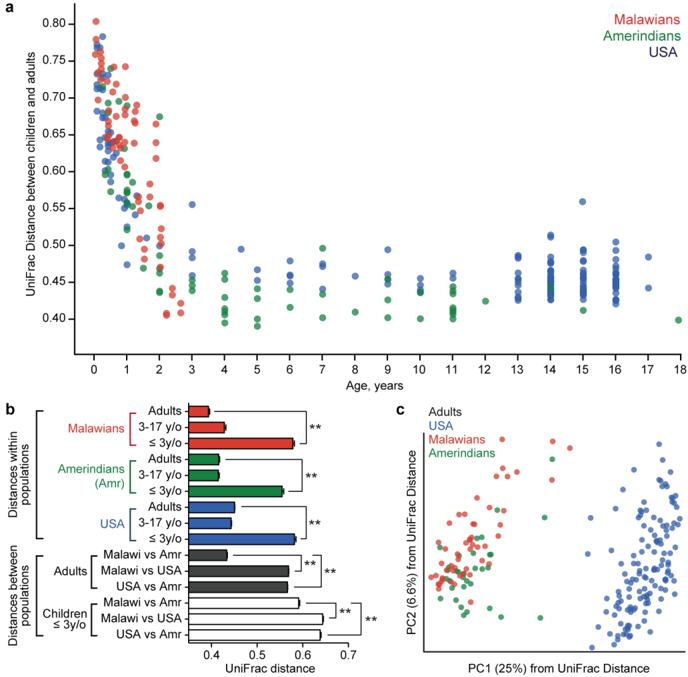
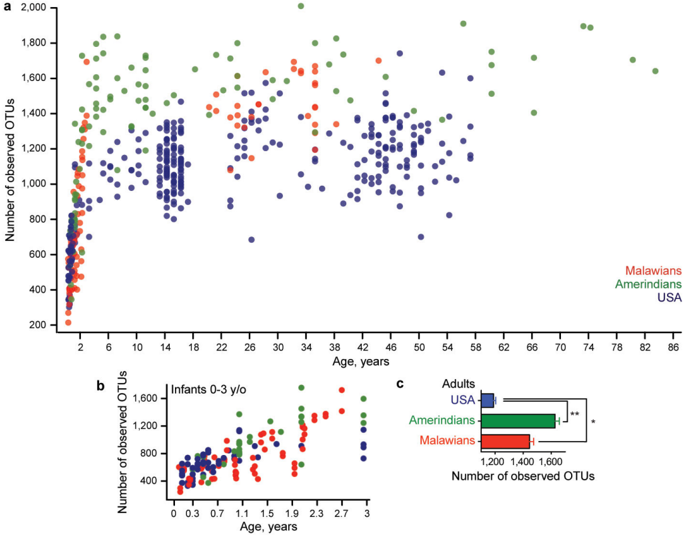
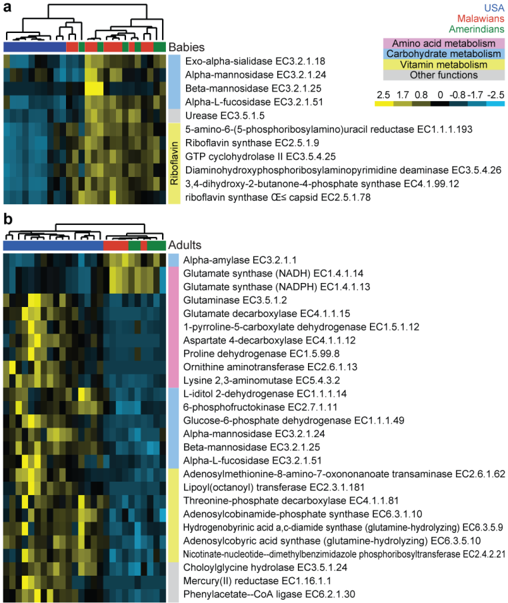
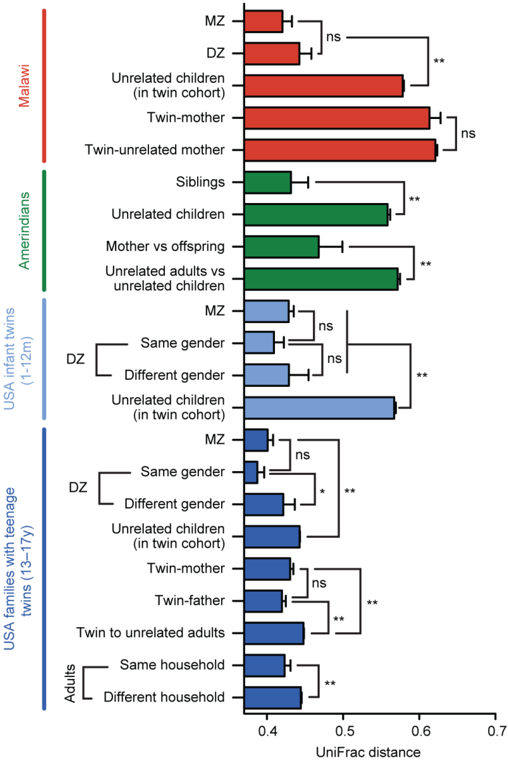
Gut microbial communities represent one source of human genetic and metabolic diversity. To examine how gut microbiomes differ among human populations, here we characterize bacterial species in fecal samples from 531 individuals, plus the gene content of 110 of them. The cohort encompassed healthy children and adults from the Amazonas of Venezuela, rural Malawi and US metropolitan areas and included mono- and dizygotic twins. Shared features of the functional maturation of the gut microbiome were identified during the first three years of life in all three populations, including age-associated changes in the genes involved in vitamin biosynthesis and metabolism. Pronounced differences in bacterial assemblages and functional gene repertoires were noted between US residents and those in the other two countries. These distinctive features are evident in early infancy as well as adulthood. Our findings underscore the need to consider the microbiome when evaluating human development, nutritional needs, physiological variations and the impact of westernization.
Overview
The claims and statistics of this paper haven’t been checked yet.
Free: it reads the open-access text and checks the first 5 claims that cite a source we can check. Create a free account to check every claim.
Integrity signals
Registry
Cites
Statistics
Figures
Verification
Claims the paper makes
The claims and statistics of this paper haven’t been checked yet.
Free: it reads the open-access text and checks the first 5 claims that cite a source we can check. Create a free account to check every claim.
Claims other papers make about this one
Each is checked against this paper’s own text: does it say what the citing paper says it does?
The cited source doesn’t support the claim as written.
In the citing paper
“Similar, albeit less marked, patterns were already observed for adults22,23,24,25 with different lifestyles but were never investigated in younger individuals.”
From Maternal and food microbial sources shape the infant microbiome of a rural Ethiopian population (2023) · cites this paper as [22]
Checked by a reasoning model — may be wrong.
Experimental — accuracy not yet measuredThe source backs part of the claim, not all of it — or backs it for a different population, condition or comparison.
In the citing paper
“The inverse relationship between Prevotella and Bacteroides has been reproduced in studies comparing the intestinal microbiota of residents of agrarian societies in South America and Bangladesh with residents of industrialized societies4, 37.”
From Diet and the Intestinal Microbiome: Associations, Functions, and Implications for Health and Disease (2014) · cites this paper as [4]
Experimental — accuracy not yet measuredThe source backs part of the claim, not all of it — or backs it for a different population, condition or comparison.
In the citing paper
“Moreover, geographic variations in the composition of intestinal microbiota have been described and implicated in the development of autoimmunity.28,29”
From Microbiota as Predictor of Mortality in Allogeneic Hematopoietic-Cell Transplantation (2020) · cites this paper as [28]
Experimental — accuracy not yet measuredThe source backs part of the claim, not all of it — or backs it for a different population, condition or comparison.
In the citing paper
“different human host cohorts may harbor remarkably different Gram-negative versus Gram-positive diversity3, 30, and a protocol appropriate for one type of community may work well in one study but not in another.”
From Assessment of variation in microbial community amplicon sequencing by the Microbiome Quality Control (MBQC) project consortium (2017) · cites this paper as [3]
Experimental — accuracy not yet measuredThe source backs part of the claim, not all of it — or backs it for a different population, condition or comparison.
In the citing paper
“Most critical events in education of host immunity may take place during the first years of life, in which microbiota composition displays the highest intra- and inter-individual variability before reaching a more stable adult-like configuration at the age of ~3 years.18–20”
From Interaction between microbiota and immunity in health and disease (2020) · cites this paper as [20]
Experimental — accuracy not yet measured
24 more claims about this paper
Create a free account to see every claim other papers make about this one.
Self-check
Percentages, sums and reported differences re-computed from the paper’s own numbers.
The self-check needs the paper’s full text.
Citations
Cites
QIIME allows analysis of high-throughput community sequencing data
Caporaso, J. G., Kuczynski, J., Stombaugh, J., Bittinger, K., Bushman, F. D., Costello, E. K., Fierer, N., Peña, A. G., Goodrich, J. K., Gordon, J. I., et al. (2010) · Nature Methods · doi:10.1038/nmeth.f.303 · Cited by 34,887
Self-citationSilhouettes: A graphical aid to the interpretation and validation of cluster analysis
Rousseeuw, P. J. (1987) · Journal of Computational and Applied Mathematics · doi:10.1016/0377-0427(87)90125-7 · Cited by 21,392
Classification and Regression by randomForest
Liaw, A. I., & Wiener, M. C. (2007) · Cited by 18,594
A human gut microbial gene catalogue established by metagenomic sequencing
MetaHIT Consortium, Qin, J., Li, R., Raes, J., Arumugam, M., Burgdorf, K. S., Manichanh, C., Nielsen, T., Pons, N., Levenez, F., et al. (2010) · Nature · doi:10.1038/nature08821 · Cited by 11,624 · cited 1×
“Shotgun reads were filtered using custom Perl scripts and publicly available software to remove (1) all reads ,60 nucleotides; (2) Titanium pyrosequencing reads with two continuous and/or three total degenerate bases (N); (3) all duplicates (a known artefact of pyrosequencing), defined as sequences in which the initia…”
MethodFinding groups in data: an introduction to cluster analysis
(1991) · Choice Reviews Online · doi:10.5860/choice.28-4558 · Cited by 10,474
UniFrac: a New Phylogenetic Method for Comparing Microbial Communities
Lozupone, C., & Knight, R. (2005) · Applied and Environmental Microbiology · doi:10.1128/aem.71.12.8228-8235.2005 · Cited by 8,227
Self-citationA core gut microbiome in obese and lean twins
Turnbaugh, P. J., Hamady, M., Yatsunenko, T., Cantarel, B. L., Duncan, A., Ley, R. E., Sogin, M. L., Jones, W. J., Roe, B. A., Affourtit, J. P., et al. (2009) · Nature · doi:10.1038/nature07540 · Cited by 7,823
Self-citationEnterotypes of the human gut microbiome
MetaHIT Consortium (additional members), Arumugam, M., Raes, J., Pelletier, E., Le Paslier, D., Yamada, T., Mende, D. R., Fernandes, G. R., Tap, J., Bruls, T., et al. (2011) · Nature · doi:10.1038/nature09944 · Cited by 7,548
Linking long-term dietary patterns with gut microbial enterotypes
Wu, G. D., Chen, J., Hoffmann, C., Bittinger, K., Chen, Y.-Y., Keilbaugh, S. A., Bewtra, M., Knights, D., Walters, W. A., Knight, R., et al. (2011) · Science · doi:10.1126/science.1208344 · Cited by 6,513
Self-citationDe Filippo, C., Cavalieri, D., Di Paola, M., Ramazzotti, M., Poullet, J. B., Massart, S., Collini, S., Pieraccini, G., & Lionetti, P. (2010) · Proceedings of the National Academy of Sciences · doi:10.1073/pnas.1005963107 · Cited by 5,579
Cited by
Items 801–900 of 1,221
Gradual Changes of Gut Microbiota in Weaned Miniature Piglets
Hu, J., Nie, Y., Chen, J., Zhang, Y., Wang, Z., Fan, Q., & Yan, X. (2016) · Frontiers in Microbiology · doi:10.3389/fmicb.2016.01727 · Cited by 198
Polyphenols in Health and Disease: Gut Microbiota, Bioaccessibility, and Bioavailability
Bié, J., Sepodes, B., Fernandes, P. C. B., & Ribeiro, M. H. L. (2023) · Compounds · doi:10.3390/compounds3010005 · Cited by 186
“There is some controversy regarding the timeline evolution of the profile of the microbiota from early age to adulthood [40,41].”
BackgroundInteractions between the intestinal microbiome and helminth parasites
Zaiss, M. M., & Harris, N. L. (2016) · Parasite Immunology · doi:10.1111/pim.12274 · Cited by 202
Vlasova, A. N., Kandasamy, S., Chattha, K. S., Rajashekara, G., & Saif, L. J. (2016) · Veterinary Immunology and Immunopathology · doi:10.1016/j.vetimm.2016.01.003 · Cited by 196
“…(Actinobacteria) appear between days 2 and 5 after birth and reach a maximum of up to 99% of all bacteria within one week becoming the predominant bacterial component of the infant fecal microbiota (Kurokawa et al., 2007; Mitsuoka and Kaneuchi, 1977; Turroni et al., 2012; Yatsunenko et al., 2012).”
BackgroundMika, A., Van Treuren, W., González, A., Herrera, J. J., Knight, R., & Fleshner, M. (2015) · PLOS ONE · doi:10.1371/journal.pone.0125889 · Cited by 197
“To our knowledge, the most comprehensive study to date investigating microbial diversity across age included samples from infants, children, adolescents, and adults and demonstrated that interpersonal variation in microbial composition was significantly greater in children versus adults [30].”
BackgroundResultSelf-citationComparison of normalization methods for the analysis of metagenomic gene abundance data
Pereira, M. B., Wallroth, M., Jonsson, V., & Kristiansson, E. (2018) · BMC Genomics · doi:10.1186/s12864-018-4637-6 · Cited by 197
“Human gut II contains 110 samples of sequenced DNA from microbiomes in the human gut of healthy individuals in North and South America [35].”
Altered Gut Microbiota in Chinese Children With Autism Spectrum Disorders
Ma, B., Liang, J., Dai, M., Wang, J., Luo, J., Zhang, Z., & Jing, J. (2019) · Frontiers in Cellular and Infection Microbiology · doi:10.3389/fcimb.2019.00040 · Cited by 193
“Microbiota varies with age, genetics, dietary habits, geographic environment, and other host-associated factors (Yatsunenko et al., 2012).”
BackgroundCooper, P., Walker, A. W., Reyes, J., Chico, M., Salter, S. J., Vaca, M., & Parkhill, J. (2013) · PLoS ONE · doi:10.1371/journal.pone.0076573 · Cited by 197
“Recent evidence suggests that these two genera are inversely correlated [34],[35], and that Prevotella spp.”
BackgroundGut Microbial Ecosystem in Parkinson Disease: New Clinicobiological Insights from Multi‐Omics
Tan, A. H., Chong, C. W., Lim, S., Yap, I. K. S., Teh, C. S. J., Loke, M. F., Song, S., Tan, J. Y., Ang, B. H., Tan, Y. Q., et al. (2021) · Annals of Neurology · doi:10.1002/ana.25982 · Cited by 196
“genetics and diet may be more influential.(74) Some studies highlighted an influence of antiparkinsonian medications (particularly catechol-O-methyltransferase inhibitor),(8,10) but we did not detect a significant effect of any antiparkinsonian medication class on microbiome or metabolome in patients.”
BackgroundDevelopment of the Human Mycobiome over the First Month of Life and across Body Sites
Ward, T. L., Dominguez-Bello, M. G., Heisel, T., Al-Ghalith, G., Knights, D., & Gale, C. A. (2018) · mSystems · doi:10.1128/msystems.00140-17 · Cited by 197
“Longer-term studies of fecal microbiome development have shown that bacterial communities mature toward an adult-like state during the first 2 to 3 years of life (36, 56).”
Self-citationClavel, T., Desmarchelier, C., Haller, D., Gérard, P., Rohn, S., Lepage, P., & Daniel, H. (2014) · Gut Microbes · doi:10.4161/gmic.29331 · Cited by 196
Dey, N., Wagner, V. E., Blanton, L. V., Cheng, J., Fontana, L., Haque, R., Ahmed, T., & Gordon, J. I. (2015) · Cell · doi:10.1016/j.cell.2015.08.059 · Cited by 195
“for the present study, all previously collected samples had been analyzed by 16S rRNA sequencing and the results described in previous reports (Yatsunenko et al., 2012; Ridaura et al., 2013; Subramanian et al., 2014).”
InfluentialSelf-citationEpigenetic Regulation at the Interplay Between Gut Microbiota and Host Metabolism
Miro-Blanch, J., & Yanes, O. (2019) · Frontiers in Genetics · doi:10.3389/fgene.2019.00638 · Cited by 195
An Improved Method for High Quality Metagenomics DNA Extraction from Human and Environmental Samples
Bag, S., Saha, B., Mehta, O., Anbumani, D., Kumar, N., Dayal, M., Pant, A., Kumar, P., Saxena, S., Allin, K. H., et al. (2016) · Scientific Reports · doi:10.1038/srep26775 · Cited by 195
Inflammaging and Cancer: A Challenge for the Mediterranean Diet
Ostan, R., Lanzarini, C., Pini, E., Scurti, M., Vianello, D., Bertarelli, C., Fabbri, C., Izzi, M., Palmas, G., Biondi, F., et al. (2015) · Nutrients · doi:10.3390/nu7042589 · Cited by 195
“The impact of the habitual diet on the GM of the elderly [186,187] has been recently highlighted in a”
BackgroundGut Bacteriophage: Current Understanding and Challenges
Sutton, T. D. S., & Hill, C. (2019) · Frontiers in Endocrinology · doi:10.3389/fendo.2019.00784 · Cited by 202
“Of these microorganisms, bacteria are by far the most characterized, making up the vast majority of the DNA sequences and biomass (6, 7).”
BackgroundMicrobiota’s role in health and diseases
El-Sayed, A., Aleya, L., & Kamel, M. (2021) · Environmental Science and Pollution Research · doi:10.1007/s11356-021-14593-z · Cited by 191
“This is mainly attributed to the high-fiber low-protein diet consumption in African countries (de Filippo et al. 2010; Yatsunenko et al. 2012; Lin et al. 2013).”
BackgroundABO genotype alters the gut microbiota by regulating GalNAc levels in pigs
Yang, H., Wu, J., Huang, X., Zhou, Y., Zhang, Y., Liu, M., Liu, Q., Ke, S., He, M., Fu, H., et al. (2022) · Nature · doi:10.1038/s41586-022-04769-z · Cited by 189
Rotavirus vaccine response correlates with the infant gut microbiota composition in Pakistan
Harris, V., Ali, A., Fuentes, S., Korpela, K., Kazi, M., Tate, J., Parashar, U., Wiersinga, W. J., Giaquinto, C., de Weerth, C., et al. (2018) · Gut Microbes · doi:10.1080/19490976.2017.1376162 · Cited by 195
“Additionally, the infant microbiome is characterized by a low diversity and high inter-individual variability with large microbiome fluctuations over time.(20)”
BackgroundRintala, A., Pietilä, S., Munukka, E., Eerola, E., Pursiheimo, J.-P., Laiho, A., Pekkala, S., & Huovinen, P. (2017) · Journal of Biomolecular Techniques : JBT · doi:10.7171/jbt.17-2801-003 · Cited by 194
Roager, H. M., Licht, T. R., Poulsen, S. K., Larsen, T. M., & Bahl, M. I. (2014) · Applied and Environmental Microbiology · doi:10.1128/aem.03549-13 · Cited by 194
“main discriminatory taxon, as previously reported (9, 32).”
Sex- and Gender-Based Pharmacological Response to Drugs
Mauvais-Jarvis, F., Berthold, H. K., Campesi, I., Carrero, J.-J., Dhakal, S., Franconi, F., Gouni-Berthold, I., Heiman, M. L., Kautzky-Willer, A., Klein, S. L., et al. (2021) · Pharmacological Reviews · doi:10.1124/pharmrev.120.000206 · Cited by 192
“Although early studies suggest that the human GI microbiome is relatively stable and adult-like after the first 3 years of life (Yatsunenko et al., 2012), recent data indicate that the GI microbiota community of preadolescent children is different than that of adults when compared taxonomically (Hollister et al.”
ResultKindinger, L. M., MacIntyre, D. A., Lee, Y. S., Marchesi, J. R., Smith, A., McDonald, J. A. K., Terzidou, V., Cook, J. R., Lees, C., Israfil-Bayli, F., et al. (2016) · Science Translational Medicine · doi:10.1126/scitranslmed.aag1026 · Cited by 194
“34–36 weeks 2/24 (8) 8/25 (32) 10 (20)”
Human milk and related oligosaccharides as prebiotics
Barile, D., & Rastall, R. A. (2013) · Current Opinion in Biotechnology · doi:10.1016/j.copbio.2013.01.008 · Cited by 193
Diaz Heijtz, R. (2016) · Seminars in Fetal and Neonatal Medicine · doi:10.1016/j.siny.2016.04.012 · Cited by 193
Laursen, M. F., Bahl, M. I., Michaelsen, K. F., & Licht, T. R. (2017) · Frontiers in Microbiology · doi:10.3389/fmicb.2017.00356 · Cited by 197
“The consistently observed increase in gut microbial alpha diversity during the time period coinciding with complementary feeding (Yatsunenko et al., 2012; Kostic et al., 2015; Avershina et al., 2016) and recent evidence showing that this increase is driven by transition from breastfeeding to family…”
BackgroundEmerging Priorities for Microbiome Research
Cullen, C. M., Aneja, K. K., Beyhan, S., Cho, C. E., Woloszynek, S., Convertino, M., McCoy, S. J., Zhang, Y., Anderson, M. Z., Alvarez-Ponce, D., et al. (2020) · Frontiers in Microbiology · doi:10.3389/fmicb.2020.00136 · Cited by 190
“, 2015), and by 16S rRNA-based taxa composition (Yatsunenko et al., 2012).”
BackgroundDe Leoz, M. L. A., Kalanetra, K. M., Bokulich, N. A., Strum, J. S., Underwood, M. A., German, J. B., Mills, D. A., & Lebrilla, C. B. (2015) · Journal of Proteome Research · doi:10.1021/pr500759e · Cited by 192
Microbiome, Metabolome and Inflammatory Bowel Disease
Ahmed, I., Roy, B., Khan, S., Septer, S., & Umar, S. (2016) · Microorganisms · doi:10.3390/microorganisms4020020 · Cited by 193
“The results were similar when the microbiota of healthy individuals from South America and South Asia were compared with healthy individuals from an industrialized country such as the United States [61].”
BackgroundInfluentialXie, Y.-H., Gao, Q.-Y., Cai, G.-X., Sun, X.-M., Zou, T.-H., Chen, H.-M., Yu, S.-Y., Qiu, Y.-W., Gu, W.-Q., Chen, X.-Y., et al. (2017) · EBioMedicine · doi:10.1016/j.ebiom.2017.10.005 · Cited by 194
“…or her genetic status, feeding pattern, age, gender, dietary habit, health situation, drug intake and wealth level, making gut microbiota a highly potential biomarker (Ding and Schloss, 2014, Costello et al., 2009, Quigley, 2017, Sun and Kato, 2016, Peters et al., 2016, Yatsunenko et al., 2012).”
BackgroundSzulińska, M., Łoniewski, I., Van Hemert, S., Sobieska, M., & Bogdański, P. (2018) · Nutrients · doi:10.3390/nu10060773 · Cited by 187
Microbial enterotypes in personalized nutrition and obesity management
Christensen, L., Roager, H. M., Astrup, A., & Hjorth, M. F. (2018) · The American Journal of Clinical Nutrition · doi:10.1093/ajcn/nqy175 · Cited by 190
Synthetic ecology of the human gut microbiota
Vrancken, G., Gregory, A. C., Huys, G. R. B., Faust, K., & Raes, J. (2019) · Nature Reviews Microbiology · doi:10.1038/s41579-019-0264-8 · Cited by 193
The global human gut microbiome: genes, lifestyles, and diet
Parizadeh, M., & Arrieta, M.-C. (2023) · Trends in Molecular Medicine · doi:10.1016/j.molmed.2023.07.002 · Cited by 184
Experimental design and quantitative analysis of microbial community multiomics
Mallick, H., Ma, S., Franzosa, E. A., Vatanen, T., Morgan, X. C., & Huttenhower, C. (2017) · Genome Biology · doi:10.1186/s13059-017-1359-z · Cited by 192
Crosstalk between the microbiota-gut-brain axis and depression
Du, Y., Gao, X.-R., Peng, L., & Ge, J.-F. (2020) · Heliyon · doi:10.1016/j.heliyon.2020.e04097 · Cited by 191
“Moreover, age, geography [18], diet [19], and the use of medication [20] could influence the microbiota composition [21].”
BackgroundLiu, J., He, X.-X., Lin, X.-R., Chen, W.-C., Zhou, Q.-X., Shu, W.-S., & Huang, L.-N. (2015) · Environmental Science & Technology · doi:10.1021/es5049804 · Cited by 191
Zhong, X.-Z., Ma, S.-C., Wang, S.-P., Wang, T.-T., Sun, Z.-Y., Tang, Y.-Q., Deng, Y., & Kida, K. (2018) · Bioresource Technology · doi:10.1016/j.biortech.2017.09.116 · Cited by 191
Proteus mirabilis Biofilm: Development and Therapeutic Strategies
Wasfi, R., Hamed, S. M., Amer, M. A., & Fahmy, L. I. (2020) · Frontiers in Cellular and Infection Microbiology · doi:10.3389/fcimb.2020.00414 · Cited by 182
Norman, J. M., Handley, S. A., & Virgin, H. W. (2014) · Gastroenterology · doi:10.1053/j.gastro.2014.02.001 · Cited by 191
Hsu, T., Joice, R., Vallarino, J., Abu-Ali, G., Hartmann, E. M., Shafquat, A., DuLong, C., Baranowski, C., Gevers, D., Green, J. L., et al. (2016) · mSystems · doi:10.1128/msystems.00018-16 · Cited by 188
“We compared the distribution of antibiotic resistance gene markers in our data set to the distributions in four previously profiled shotgun datasets corresponding to the gut microbiomes of 552 individuals in the United States (12, 40), China (39), Malawi (40), and Venezuela (40), as well as to the distribution in one…”
ResultSchwab, C., Ruscheweyh, H.-J., Bunesova, V., Pham, V. T., Beerenwinkel, N., & Lacroix, C. (2017) · Frontiers in Microbiology · doi:10.3389/fmicb.2017.00095 · Cited by 187
The Threat of Antimicrobial Resistance on the Human Microbiome
Brinkac, L., Voorhies, A., Gomez, A., & Nelson, K. E. (2017) · Microbial Ecology · doi:10.1007/s00248-017-0985-z · Cited by 186
“In fact, lifestyle factors related to subsistence, diet, and other cultural drivers strongly shape the GI microbiome [60, 61].”
BackgroundDoes Soil Contribute to the Human Gut Microbiome?
Blum, W. E. H., Zechmeister-Boltenstern, S., & Keiblinger, K. M. (2019) · Microorganisms · doi:10.3390/microorganisms7090287 · Cited by 184
“The functional categorization of genes that were obtained from the gut of Amerindians with a typically protein-rich diet showed parallels to that of carnivorous mammals [36].”
BackgroundInfluentialMaternal exposures and the infant gut microbiome: a systematic review with meta-analysis
Grech, A., Collins, C. E., Holmes, A., Lal, R., Duncanson, K., Taylor, R., & Gordon, A. (2021) · Gut Microbes · doi:10.1080/19490976.2021.1897210 · Cited by 186
Gut microbial dysbiosis in indian children with autism spectrum disorders
Pulikkan, J., Maji, A., Dhakan, D. B., Saxena, R., Mohan, B., Anto, M. M., Agarwal, N., Grace, T., & Sharma, V. K. (2018) · Microbial Ecology · doi:10.1007/s00248-018-1176-2 · Cited by 189
Dual role of tumour-infiltrating T helper 17 cells in human colorectal cancer
Amicarella, F., Muraro, M. G., Hirt, C., Cremonesi, E., Padovan, E., Mele, V, Governa, V, Han, J., Huber, X., Droeser, R. A., et al. (2017) · Gut · doi:10.1136/gutjnl-2015-310016 · Cited by 189
Microbiota and Lifestyle: A Special Focus on Diet
Redondo-Useros, N., Nova, E., González-Zancada, N., Díaz, L. E., Gómez-Martínez, S., & Marcos, A. (2020) · Nutrients · doi:10.3390/nu12061776 · Cited by 189
“Geographic factors include genetic and cultural factors of the different populations across the world and represent one of the main inter-individual factors responsible for the differences in microbial diversity among rural and urban populations [29].”
BackgroundInfluentialJašarević, E., Howard, C. D., Morrison, K., Misic, A., Weinkopff, T., Scott, P., Hunter, C., Beiting, D., & Bale, T. L. (2018) · Nature Neuroscience · doi:10.1038/s41593-018-0182-5 · Cited by 189
Understanding the role of the gut microbiome in gastrointestinal cancer: A review
Ağagündüz, D., Cocozza, E., Cemali, Ö., Bayazıt, A. D., Nanì, M. F., Cerqua, I., Morgillo, F., Saygılı, S. K., Berni Canani, R., Amero, P., et al. (2023) · Frontiers in Pharmacology · doi:10.3389/fphar.2023.1130562 · Cited by 189
“In studies conducted in adult groups, the diets of those living in rural areas were based on plant-based foods, the diversity in microbial composition was high and Prevotella was dominant; on the other hand, it has been found that microbial diversity is less and Bacteroides are dominant in those living in developed so…”
BackgroundGonzález-Sarrías, A., Espín, J. C., & Tomás-Barberán, F. A. (2017) · Trends in Food Science & Technology · doi:10.1016/j.tifs.2017.07.010 · Cited by 189
Garrido, D., Ruiz-Moyano, S., Lemay, D. G., Sela, D. A., German, J. B., & Mills, D. A. (2015) · Scientific Reports · doi:10.1038/srep13517 · Cited by 188
The Gut Microbiota and Liver Disease
Llorente, C., & Schnabl, B. (2015) · Cellular and Molecular Gastroenterology and Hepatology · doi:10.1016/j.jcmgh.2015.04.003 · Cited by 190
Gomez, A., Petrzelkova, K., Yeoman, C. J., Vlckova, K., Mrázek, J., Koppova, I., Carbonero, F., Ulanov, A., Modry, D., Todd, A., et al. (2015) · Molecular Ecology · doi:10.1111/mec.13181 · Cited by 190
“As diet is considered to be a major a driver behind the evolution of primates, influencing morphology, physiology and ecology (Milton 1993; Aiello & Wheeler 1995), the forces shaping primate microbiomes could potentially be understood through the reconstruction of environmental and dietary factors (Yatsunenko et al. 2…”
BackgroundResultWagner Mackenzie, B., Waite, D. W., & Taylor, M. W. (2015) · Frontiers in Microbiology · doi:10.3389/fmicb.2015.00130 · Cited by 193
Causality of small and large intestinal microbiota in weight regulation and insulin resistance
Scheithauer, T. P. M., Dallinga-Thie, G. M., de Vos, W. M., Nieuwdorp, M., & van Raalte, D. H. (2016) · Molecular Metabolism · doi:10.1016/j.molmet.2016.06.002 · Cited by 188
“A stable microbiota develops from the age of 2e3 years [72].”
BackgroundGut Microbiota: The Brain Peacekeeper
Mu, C., Yang, Y., & Zhu, W. (2016) · Frontiers in Microbiology · doi:10.3389/fmicb.2016.00345 · Cited by 188
The influence of diet on the gut microbiota and its consequences for health
Doré, J., & Blottière, H. (2015) · Current Opinion in Biotechnology · doi:10.1016/j.copbio.2015.01.002 · Cited by 188
“Comparing microbiota diversity in terms of number of detectable OTUs (operational taxonomic units, defined by 16S rDNA sequence comparisons), through the lifespan in populations of various geographical origin, revealed a higher microbiome diversity in Amerindians and Malawians compared to northAmericans [9].”
Sympatric chimpanzees and gorillas harbor convergent gut microbial communities
Moeller, A. H., Peeters, M., Ndjango, J.-B., Li, Y., Hahn, B. H., & Ochman, H. (2013) · Genome Research · doi:10.1101/gr.154773.113 · Cited by 187
“…of unrelated hosts living in the same household tend to have more similar sets of bacterial phylotypes than do those of unrelated hosts of different households (Yatsunenko et al. 2012), and in experiments with mice, hosts reared in the same cage tend to share gut bacteria (Campbell et al. 2012).”
Frost, F., Kacprowski, T., Rühlemann, M., Pietzner, M., Bang, C., Franke, A., Nauck, M., Völker, U., Völzke, H., Dörr, M., et al. (2021) · Gut · doi:10.1136/gutjnl-2020-322753 · Cited by 187
“6 9 This approach can be problematic as people of different ages have often been subjected to very different environmental conditions in the early years of their lives, which is a period of particular sensibility for the initial gut microbiota constitution.”
Carbohydrates and the human gut microbiota
Chassard, C., & Lacroix, C. (2013) · Current Opinion in Clinical Nutrition and Metabolic Care · doi:10.1097/mco.0b013e3283619e63 · Cited by 188
Davis, J. C. C., Lewis, Z. T., Krishnan, S., Bernstein, R. M., Moore, S. E., Prentice, A. M., Mills, D. A., Lebrilla, C. B., & Zivkovic, A. M. (2017) · Scientific Reports · doi:10.1038/srep40466 · Cited by 186
Diet and microbiota linked in health and disease
Requena, T., Martínez-Cuesta, M. C., & Peláez, C. (2018) · Food & Function · doi:10.1039/c7fo01820g · Cited by 186
Linking gut microbiota, metabolic syndrome and economic status based on a population-level analysis
He, Y., Wu, W., Wu, S., Zheng, H.-M., Li, P., Sheng, H.-F., Chen, M.-X., Chen, Z.-H., Ji, G.-Y., Zheng, Z.-D.-X., et al. (2018) · Microbiome · doi:10.1186/s40168-018-0557-6 · Cited by 185
Jardon, K. M., Canfora, E. E., Goossens, G. H., & Blaak, E. E. (2022) · Gut · doi:10.1136/gutjnl-2020-323715 · Cited by 181
“29 Although a core microbiota exists, its composition is highly individualised and shaped by genetics, 30 sex, 31 32 age, 33 34 ethnicity 35 and environmental factors, such as drug use 28 36 and habitual diet.”
BackgroundEvolutionary adaptation in fucosyllactose uptake systems supports bifidobacteria-infant symbiosis
Sakanaka, M., Hansen, M. E., Gotoh, A., Katoh, T., Yoshida, K., Odamaki, T., Yachi, H., Sugiyama, Y., Kurihara, S., Hirose, J., et al. (2019) · Science Advances · doi:10.1126/sciadv.aaw7696 · Cited by 187
“(E and F) The deposited metagenome data of 83 individuals from the United States (n = 50), Malawi (n = 18), and Venezuela (n = 15) were used for the analysis (132,556 ± 76,952 reads per sample) (3).”
BackgroundMethodDeveloping a metagenomic view of xenobiotic metabolism
Haiser, H. J., & Turnbaugh, P. J. (2013) · Pharmacological Research · doi:10.1016/j.phrs.2012.07.009 · Cited by 186
The influence of sex and gender on immunity, infection and vaccination.
Ruggieri, A., Anticoli, S., D’Ambrosio, A., Giordani, L., & Viora, M. (2017) · Annali dell Istituto Superiore di Sanità · doi:10.4415/ann_16_02_11 · Cited by 186
“Recent finding suggest that the hormonal status of the host can shape microbiome composition and reciprocally, the microbiome may exert various influence over host sex hormone levels, contributing to the differences in the immune response between females and males [43].”
BackgroundLarge-Scale Survey of Gut Microbiota Associated With MHE Via 16S rRNA-Based Pyrosequencing
Zhang, Z., Zhai, H., Geng, J., Yu, R., Ren, H., Fan, H., & Shi, P. (2013) · American Journal of Gastroenterology · doi:10.1038/ajg.2013.221 · Cited by 188
Chu, D. M., Meyer, K. M., Prince, A. L., & Aagaard, K. M. (2016) · Gut Microbes · doi:10.1080/19490976.2016.1241357 · Cited by 188
Gut Protozoa: Friends or Foes of the Human Gut Microbiota?
Chabé, M., Lokmer, A., & Ségurel, L. (2017) · Trends in Parasitology · doi:10.1016/j.pt.2017.08.005 · Cited by 188
Gut Microbiome and Antibiotics
Iizumi, T., Battaglia, T., Ruiz, V., & Perez Perez, G. I. (2017) · Archives of Medical Research · doi:10.1016/j.arcmed.2017.11.004 · Cited by 187
Maji, A., Misra, R., Dhakan, D. B., Gupta, V., Mahato, N. K., Saxena, R., Mittal, P., Thukral, N., Sharma, E., Singh, A., et al. (2018) · Environmental Microbiology · doi:10.1111/1462-2920.14015 · Cited by 185
“The intrasample diversity (alpha) and inter-sample diversity (beta) using unweighted UniFrac distances were performed, as described previously (Lozupone and Knight, 2005; Qin et al., 2012; Yatsunenko et al., 2012), for rarefied OTU tables at a depth of 270,000 sequences/sample.”
MethodInfant and Adult Gut Microbiome and Metabolome in Rural Bassa and Urban Settlers from Nigeria
Ayeni, F. A., Biagi, E., Rampelli, S., Fiori, J., Soverini, M., Audu, H. J., Cristino, S., Caporali, L., Schnorr, S. L., Carelli, V., et al. (2018) · Cell Reports · doi:10.1016/j.celrep.2018.05.018 · Cited by 187
“Amazonas State of Venezuela, and urban US adults (Yatsunenko et al., 2012) were used.”
BackgroundMethodResultInfluentialRole of Personalized Nutrition in Chronic-Degenerative Diseases
Di Renzo, L., Gualtieri, P., Romano, L., Marrone, G., Noce, A., Pujia, A., Perrone, M. A., Aiello, V., Colica, C., & De Lorenzo, A. (2019) · Nutrients · doi:10.3390/nu11081707 · Cited by 181
The intestinal microbiota in inflammatory bowel disease
Becker, C., Neurath, M. F., & Wirtz, S. (2015) · ILAR Journal · doi:10.1093/ilar/ilv030 · Cited by 185
Gut Microbiomes of Indian Children of Varying Nutritional Status
Ghosh, T. S., Sen Gupta, S., Bhattacharya, T., Yadav, D., Barik, A., Chowdhury, A., Das, B., Mande, S. S., & Nair, G. B. (2014) · PLoS ONE · doi:10.1371/journal.pone.0095547 · Cited by 186
“The gut microbiomes are observed to be heterogeneous across populations [11,12].”
BackgroundThe Human Gut Microbiota and Undernutrition
Gordon, J. I., Dewey, K. G., Mills, D. A., & Medzhitov, R. M. (2012) · Science Translational Medicine · doi:10.1126/scitranslmed.3004347 · Cited by 186
Self-citationGarrido, D., Ruiz-Moyano, S., Kirmiz, N., Davis, J. C., Totten, S. M., Lemay, D. G., Ugalde, J. A., German, J. B., Lebrilla, C. B., & Mills, D. A. (2016) · Scientific Reports · doi:10.1038/srep35045 · Cited by 183
Regionalized Development and Maintenance of the Intestinal Adaptive Immune Landscape
Agace, W. W., & McCoy, K. D. (2017) · Immunity · doi:10.1016/j.immuni.2017.04.004 · Cited by 187
Laforest-Lapointe, I., & Arrieta, M.-C. (2017) · Frontiers in Immunology · doi:10.3389/fimmu.2017.00788 · Cited by 181
“Proc Natl Acad Sci U S A (2010) 107(27):12204–9.”
BackgroundInfluentialThe gut microbiota as a novel regulator of cardiovascular function and disease
Battson, M. L., Lee, D. M., Weir, T. L., & Gentile, C. L. (2018) · The Journal of Nutritional Biochemistry · doi:10.1016/j.jnutbio.2017.12.010 · Cited by 183
The role of diet and intestinal microbiota in the development of metabolic syndrome
Santos-Marcos, J. A., Perez-Jimenez, F., & Camargo, A. (2019) · The Journal of Nutritional Biochemistry · doi:10.1016/j.jnutbio.2019.03.017 · Cited by 180
Pichler, M. J., Yamada, C., Shuoker, B., Alvarez-Silva, C., Gotoh, A., Leth, M. L., Schoof, E., Katoh, T., Sakanaka, M., Katayama, T., et al. (2020) · Nature Communications · doi:10.1038/s41467-020-17075-x · Cited by 189
Gut microbiome variation modulates the effects of dietary fiber on host metabolism
Murga-Garrido, S. M., Hong, Q., Cross, T.-W. L., Hutchison, E. R., Han, J., Thomas, S. P., Vivas, E. I., Denu, J., Ceschin, D. G., Tang, Z.-Z., et al. (2021) · Microbiome · doi:10.1186/s40168-021-01061-6 · Cited by 185
“Humans harbor diverse and dynamic microbial communities in their intestines that span the three domains of life [1, 2].”
Self-citationThe Gut Microbiota of Healthy Aged Chinese Is Similar to That of the Healthy Young
Bian, G., Gloor, G. B., Gong, A., Jia, C., Zhang, W., Hu, J., Zhang, H., Zhang, Y., Zhou, Z., Zhang, J., et al. (2017) · mSphere · doi:10.1128/msphere.00327-17 · Cited by 185
Gut microbiome transition across a lifestyle gradient in Himalaya
Jha, A. R., Davenport, E. R., Gautam, Y., Bhandari, D., Tandukar, S., Ng, K. M., Fragiadakis, G. K., Holmes, S., Gautam, G. P., Leach, J., et al. (2018) · PLOS Biology · doi:10.1371/journal.pbio.2005396 · Cited by 186
Diversity, compositional and functional differences between gut microbiota of children and adults
Radjabzadeh, D., Boer, C. G., Beth, S. A., van der Wal, P., Kiefte-De Jong, J. C., Jansen, M. A. E., Konstantinov, S. R., Peppelenbosch, M. P., Hays, J. P., Jaddoe, V. W. V., et al. (2020) · Scientific Reports · doi:10.1038/s41598-020-57734-z · Cited by 184
Priming for Life: Early Life Nutrition and the Microbiota-Gut-Brain Axis
Ratsika, A., Codagnone, M. C., O’Mahony, S., Stanton, C., & Cryan, J. F. (2021) · Nutrients · doi:10.3390/nu13020423 · Cited by 182
Li, J., Quinque, D., Horz, H.-P., Li, M., Rzhetskaya, M., Raff, J. A., Hayes, M. G., & Stoneking, M. (2014) · BMC Microbiology · doi:10.1186/s12866-014-0316-1 · Cited by 184
“Therefore, it is important to understand what constitutes a “normal” bacterial community in the healthy human body [7-9], and how this might vary across populations.”
BackgroundEffect of Cigarette Smoke on Gut Microbiota: State of Knowledge
Gui, X., Yang, Z., & Li, M. D. (2021) · Frontiers in Physiology · doi:10.3389/fphys.2021.673341 · Cited by 183
Gut Microbiome: Westernization and the Disappearance of Intestinal Diversity
Segata, N. (2015) · Current Biology · doi:10.1016/j.cub.2015.05.040 · Cited by 184
Gut Microbial Succession Follows Acute Secretory Diarrhea in Humans
David, L. A., Weil, A., Ryan, E. T., Calderwood, S. B., Harris, J. B., Chowdhury, F., Begum, Y., Qadri, F., LaRocque, R. C., & Turnbaugh, P. J. (2015) · mBio · doi:10.1128/mbio.00381-15 · Cited by 192
“The Late-Stage group was primarily composed of Prevotella, which previous studies have found to dominate healthy human gut samples in the developing world (26, 27).”
BackgroundLim, E. S., Reyes, A., Antonio, M., Saha, D., Ikumapayi, U. N., Adeyemi, M., Stine, O. C., Skelton, R., Brennan, D. C., Mkakosya, R. S., et al. (2013) · Virology · doi:10.1016/j.virol.2012.12.005 · Cited by 186
“The index stool specimen was obtained in January 2009 from a healthy, 15 month-old male living in Malawi as part of a human gut microbiome survey of healthy and malnourished children (Yatsunenko et al., 2012).”
Self-citationPediatric Fecal Microbiota Harbor Diverse and Novel Antibiotic Resistance Genes
Moore, A. M., Patel, S., Forsberg, K. J., Wang, B., Bentley, G., Razia, Y., Qin, X., Tarr, P. I., & Dantas, G. (2013) · PLoS ONE · doi:10.1371/journal.pone.0078822 · Cited by 186
“family members, pets [10,40]) and resistance phenotypes and genotypes, subject or family member exposure to several of the agents tested (tigecycline, D-cycloserine, tetracycline, and chloramphenicol) were extremely unlikely in this cohort.”
BackgroundFraune, S., Anton-Erxleben, F., Augustin, R., Franzenburg, S., Knop, M., Schröder, K., Willoweit-Ohl, D., & Bosch, T. C. G. (2015) · The ISME Journal · doi:10.1038/ismej.2014.239 · Cited by 188
“, 2004) and facilitate nutrient supply by breakdown of complex carbohydrates or synthesis of essential amino acids (Sandström et al., 2000; Douglas et al., 2001; Yatsunenko et al., 2012).”
BackgroundBozzi, D., Rasmussen, J. A., Carøe, C., Sveier, H., Nordøy, K., Gilbert, M. T. P., & Limborg, M. T. (2021) · Animal Microbiome · doi:10.1186/s42523-021-00096-2 · Cited by 183
“This suggests that high levels of alpha diversity are not necessarily beneficial in adult salmon in contrast to what is often observed in mammals [86] and that a relatively low microbial biodiversity should be expected also in healthy salmon.”
BackgroundThe developing gut microbiota and its consequences for health
Butel, M.-J., Waligora-Dupriet, A.-J., & Wydau-Dematteis, S. (2018) · Journal of Developmental Origins of Health and Disease · doi:10.1017/s2040174418000119 · Cited by 182
“During the infant stage of life, numerous bacteria are encountered in the environment and gut microbiota develops with increased diversity toward the adult pattern by age 3 years.(12)”
Backgroundvon Martels, J. Z. H., Sadaghian Sadabad, M., Bourgonje, A. R., Blokzijl, T., Dijkstra, G., Faber, K. N., & Harmsen, H. J. M. (2017) · Anaerobe · doi:10.1016/j.anaerobe.2017.01.001 · Cited by 184
Feng, J., Li, B., Jiang, X., Yang, Y., Wells, G. F., Zhang, T., & Li, X. (2018) · Environmental Microbiology · doi:10.1111/1462-2920.14009 · Cited by 185
Metadata
- Authors
- Yatsunenko, T., Rey, F. E., Manary, M. J., Trehan, I., Dominguez-Bello, M. G., Contreras, M., Magris, M., Hidalgo, G., Baldassano, R. N., Anokhin, A. P., Heath, A. C., Warner, B., Reeder, J., Kuczynski, J., Caporaso, J. G., Lozupone, C. A., Lauber, C., Clemente, J. C., Knights, D., Knight, R., & Gordon, J. I.
- Affiliations
- Washington University in St. Louis (US)
- University of Malawi (MW)
- Children's Hospital of Philadelphia (US)
- University of Colorado Boulder (US)
- Northern Arizona University (US)
- Howard Hughes Medical Institute (US)
- Corresponding author
- Gordon, Jeffrey I.
- ORCID
- Venue
- Nature
- Published
- 2012-05-09
- Volume
- 486
- Issue
- 7402
- Pages
- 222-227
- ISSN
- 0028-0836 (ISSN-L)
- 1476-4687
- PMC
- PMC3376388
- OpenAlex
- W2162088497
- Semantic Scholar
- 54a6d777e3a84e46f1c74bc9a0482a7307bd79c7
- Cited by
- 7,815
- References
- 41
- Citations by year
- 2026: 373 · 2025: 472 · 2024: 576 · 2023: 580 · 2022: 730 · 2021: 786 · 2020: 769 · 2019: 674 · 2018: 597 · 2017: 559 · 2016: 534 · 2015: 433 · 2014: 356 · 2013: 287 · 2012: 82
- FWCI
- 148.99
- Type
- journal article
- Language
- en
- Open access
- green
- www.ncbi.nlm.nih.gov
- Licence
- www.springer.com/tdm (tdm)
- Locations
- Nature (publishedVersion)
- PubMed (publishedVersion)
- Europe PMC (PubMed Central) (acceptedVersion)
- PubMed Central (acceptedVersion)
- RePEc: Research Papers in Economics (submittedVersion)
- eScholarship (California Digital Library) (submittedVersion)
- Funders
- Howard Hughes Medical Institute
- Crohn's and Colitis Foundation
- National Institute on Alcohol Abuse and Alcoholism (K05AA017688)
- National Institute of Diabetes and Digestive and Kidney Diseases (DK078669, P01DK078669, K01DK090285)
- Eunice Kennedy Shriver National Institute of Child Health and Human Development (T32HD049338)
- Topics
- Life Sciences › Biochemistry, Genetics and Molecular Biology › Molecular Biology › Gut microbiota and health
- Health Sciences › Nursing › Nutrition and Dietetics › Infant Nutrition and Health
- Physical Sciences › Environmental Science › Ecology › Microbial Community Ecology and Physiology
- Keywords
- gut microbiota, fecal microbiota, age-related changes, regional variation, Westernization, monozygotic and dizygotic twins, human development, Amazonas, Malawi
- MeSH terms
- Adolescent, Adult, Age Factors, Aged, Bacteria, Child, Child, Preschool, Feces, Female, Geography, Humans, Infant, Intestines, Malawi, Male, Middle Aged, Phylogeny, RNA, Ribosomal, 16S, Twins, Dizygotic, Twins, Monozygotic, United States, Venezuela, Biodiversity, Metagenome, Young Adult
About these checks
Registry, retraction, Cites and statistics results are computed, not judged, with one exception: a printed reference that no index lists is read once by a model before it counts as a citation error. Claims are extracted by a model and kept only when their quote appears verbatim in the text; each cited source is then checked, with a model’s help, for whether it says what the claim relies on. Those verdicts can be wrong — read the claim’s quote and the cited source before relying on one.
Statistics and arithmetic are recomputed, not judged.
Confidence bands are shown only for fields calibrated on our annotated test set. None is calibrated yet, so no band is shown.
What counts as a claim ›How we measure confidence ›How we check this ›
Are you an author, or do you see a problem with this page? Request a review
Data sources
Bibliographic data: Semantic Scholar, OpenAlex, Crossref.
Contains information from the Semantic Scholar Academic Graph Datasets, made available under the ODC Attribution License (ODC-BY 1.0).
Semantic Scholar’s data is described in: Kinney, R., et al. (2023). The Semantic Scholar Open Data Platform. arXiv:2301.10140.
