

Human gut microbiome viewed across age and geography
Open accessThe DOI matches its Crossref record; 41 of the 41 references it cites were found in a registry or an index.
Abstract
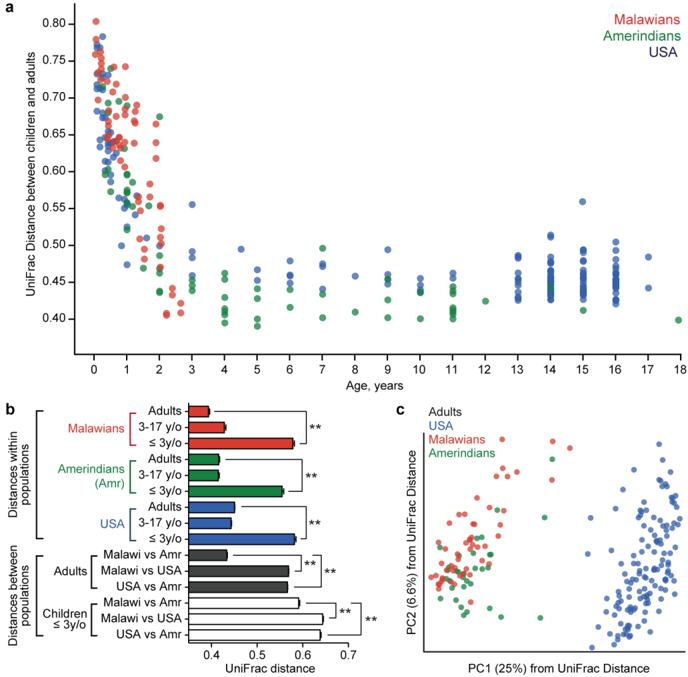
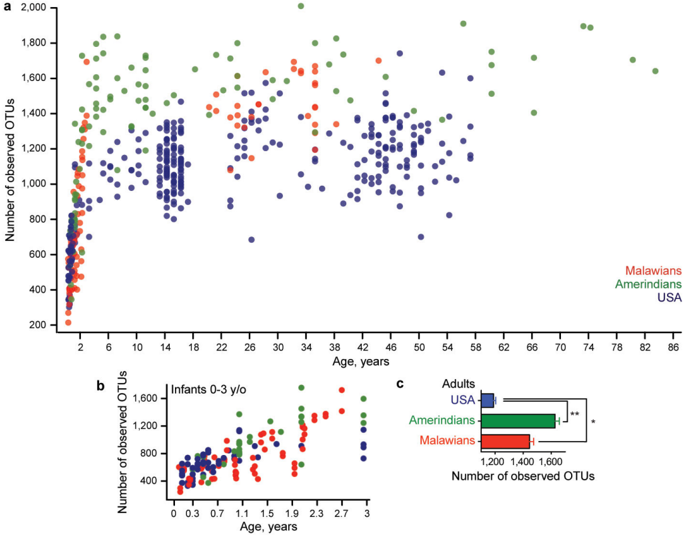
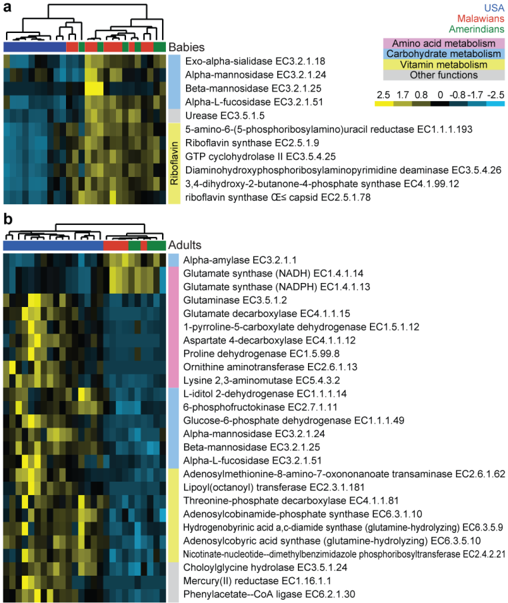
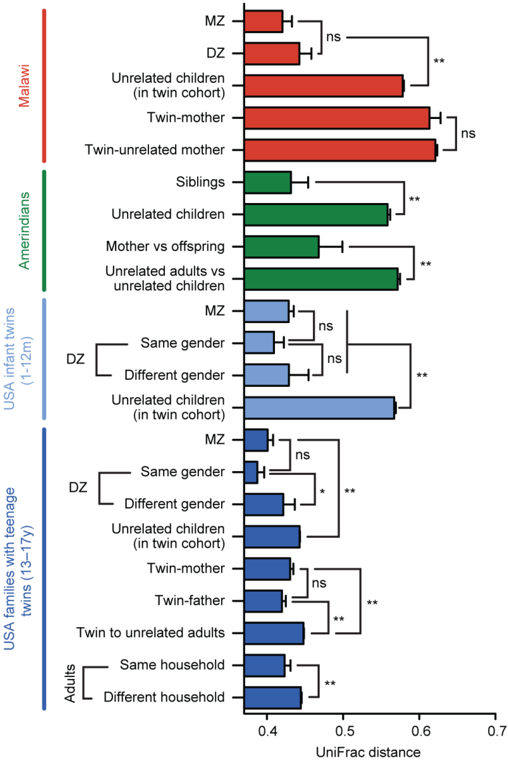
Gut microbial communities represent one source of human genetic and metabolic diversity. To examine how gut microbiomes differ among human populations, here we characterize bacterial species in fecal samples from 531 individuals, plus the gene content of 110 of them. The cohort encompassed healthy children and adults from the Amazonas of Venezuela, rural Malawi and US metropolitan areas and included mono- and dizygotic twins. Shared features of the functional maturation of the gut microbiome were identified during the first three years of life in all three populations, including age-associated changes in the genes involved in vitamin biosynthesis and metabolism. Pronounced differences in bacterial assemblages and functional gene repertoires were noted between US residents and those in the other two countries. These distinctive features are evident in early infancy as well as adulthood. Our findings underscore the need to consider the microbiome when evaluating human development, nutritional needs, physiological variations and the impact of westernization.
Overview
The claims and statistics of this paper haven’t been checked yet.
Free: it reads the open-access text and checks the first 5 claims that cite a source we can check. Create a free account to check every claim.
Integrity signals
Registry
Cites
Statistics
Figures
Verification
Claims the paper makes
The claims and statistics of this paper haven’t been checked yet.
Free: it reads the open-access text and checks the first 5 claims that cite a source we can check. Create a free account to check every claim.
Claims other papers make about this one
Each is checked against this paper’s own text: does it say what the citing paper says it does?
The cited source doesn’t support the claim as written.
In the citing paper
“Similar, albeit less marked, patterns were already observed for adults22,23,24,25 with different lifestyles but were never investigated in younger individuals.”
From Maternal and food microbial sources shape the infant microbiome of a rural Ethiopian population (2023) · cites this paper as [22]
Checked by a reasoning model — may be wrong.
Experimental — accuracy not yet measuredThe source backs part of the claim, not all of it — or backs it for a different population, condition or comparison.
In the citing paper
“The inverse relationship between Prevotella and Bacteroides has been reproduced in studies comparing the intestinal microbiota of residents of agrarian societies in South America and Bangladesh with residents of industrialized societies4, 37.”
From Diet and the Intestinal Microbiome: Associations, Functions, and Implications for Health and Disease (2014) · cites this paper as [4]
Experimental — accuracy not yet measuredThe source backs part of the claim, not all of it — or backs it for a different population, condition or comparison.
In the citing paper
“Moreover, geographic variations in the composition of intestinal microbiota have been described and implicated in the development of autoimmunity.28,29”
From Microbiota as Predictor of Mortality in Allogeneic Hematopoietic-Cell Transplantation (2020) · cites this paper as [28]
Experimental — accuracy not yet measuredThe source backs part of the claim, not all of it — or backs it for a different population, condition or comparison.
In the citing paper
“different human host cohorts may harbor remarkably different Gram-negative versus Gram-positive diversity3, 30, and a protocol appropriate for one type of community may work well in one study but not in another.”
From Assessment of variation in microbial community amplicon sequencing by the Microbiome Quality Control (MBQC) project consortium (2017) · cites this paper as [3]
Experimental — accuracy not yet measuredThe source backs part of the claim, not all of it — or backs it for a different population, condition or comparison.
In the citing paper
“Most critical events in education of host immunity may take place during the first years of life, in which microbiota composition displays the highest intra- and inter-individual variability before reaching a more stable adult-like configuration at the age of ~3 years.18–20”
From Interaction between microbiota and immunity in health and disease (2020) · cites this paper as [20]
Experimental — accuracy not yet measured
24 more claims about this paper
Create a free account to see every claim other papers make about this one.
Self-check
Percentages, sums and reported differences re-computed from the paper’s own numbers.
The self-check needs the paper’s full text.
Citations
Cites
QIIME allows analysis of high-throughput community sequencing data
Caporaso, J. G., Kuczynski, J., Stombaugh, J., Bittinger, K., Bushman, F. D., Costello, E. K., Fierer, N., Peña, A. G., Goodrich, J. K., Gordon, J. I., et al. (2010) · Nature Methods · doi:10.1038/nmeth.f.303 · Cited by 34,887
Self-citationSilhouettes: A graphical aid to the interpretation and validation of cluster analysis
Rousseeuw, P. J. (1987) · Journal of Computational and Applied Mathematics · doi:10.1016/0377-0427(87)90125-7 · Cited by 21,392
Classification and Regression by randomForest
Liaw, A. I., & Wiener, M. C. (2007) · Cited by 18,594
A human gut microbial gene catalogue established by metagenomic sequencing
MetaHIT Consortium, Qin, J., Li, R., Raes, J., Arumugam, M., Burgdorf, K. S., Manichanh, C., Nielsen, T., Pons, N., Levenez, F., et al. (2010) · Nature · doi:10.1038/nature08821 · Cited by 11,624 · cited 1×
“Shotgun reads were filtered using custom Perl scripts and publicly available software to remove (1) all reads ,60 nucleotides; (2) Titanium pyrosequencing reads with two continuous and/or three total degenerate bases (N); (3) all duplicates (a known artefact of pyrosequencing), defined as sequences in which the initia…”
MethodFinding groups in data: an introduction to cluster analysis
(1991) · Choice Reviews Online · doi:10.5860/choice.28-4558 · Cited by 10,474
UniFrac: a New Phylogenetic Method for Comparing Microbial Communities
Lozupone, C., & Knight, R. (2005) · Applied and Environmental Microbiology · doi:10.1128/aem.71.12.8228-8235.2005 · Cited by 8,227
Self-citationA core gut microbiome in obese and lean twins
Turnbaugh, P. J., Hamady, M., Yatsunenko, T., Cantarel, B. L., Duncan, A., Ley, R. E., Sogin, M. L., Jones, W. J., Roe, B. A., Affourtit, J. P., et al. (2009) · Nature · doi:10.1038/nature07540 · Cited by 7,823
Self-citationEnterotypes of the human gut microbiome
MetaHIT Consortium (additional members), Arumugam, M., Raes, J., Pelletier, E., Le Paslier, D., Yamada, T., Mende, D. R., Fernandes, G. R., Tap, J., Bruls, T., et al. (2011) · Nature · doi:10.1038/nature09944 · Cited by 7,548
Linking long-term dietary patterns with gut microbial enterotypes
Wu, G. D., Chen, J., Hoffmann, C., Bittinger, K., Chen, Y.-Y., Keilbaugh, S. A., Bewtra, M., Knights, D., Walters, W. A., Knight, R., et al. (2011) · Science · doi:10.1126/science.1208344 · Cited by 6,513
Self-citationDe Filippo, C., Cavalieri, D., Di Paola, M., Ramazzotti, M., Poullet, J. B., Massart, S., Collini, S., Pieraccini, G., & Lionetti, P. (2010) · Proceedings of the National Academy of Sciences · doi:10.1073/pnas.1005963107 · Cited by 5,579
Cited by
Items 1,101–1,200 of 1,221
Links between Dietary Protein Sources, the Gut Microbiota, and Obesity
Madsen, L., Myrmel, L. S., Fjære, E., Liaset, B., & Kristiansen, K. (2017) · Frontiers in Physiology · doi:10.3389/fphys.2017.01047 · Cited by 110
“In humans dietary patterns play important roles in shaping the gut microbiota (De Filippo et al., 2010; Muegge et al., 2011; Yatsunenko et al., 2012; David et al., 2014; Schnorr et al., 2014; Carmody et al., 2015; Graf et al., 2015) as well as in the development of obesity (Bellissimo and Akhavan,…”
BackgroundGut resistome development in healthy twin pairs in the first year of life
Moore, A. M., Ahmadi, S., Patel, S., Gibson, M. K., Wang, B., Ndao, I. M., Deych, E., Shannon, W., Tarr, P. I., Warner, B. B., et al. (2015) · Microbiome · doi:10.1186/s40168-015-0090-9 · Cited by 109
“Prior studies have shown that Enterobacteriaceae are enriched in the gut microbial communities of young infants and decrease with time [15, 29]; the observed decrease in chloramphenicol-resistant multidrug efflux pumps during the first year of life in this cohort may be a reflection of maturation of the gut microbial…”
BackgroundResultSelf-citationHygiene and other early childhood influences on the subsequent function of the immune system
Rook, G. A. W., Lowry, C. A., & Raison, C. L. (2015) · Brain Research · doi:10.1016/j.brainres.2014.04.004 · Cited by 109
Ferrocino, I., Di Cagno, R., De Angelis, M., Turroni, S., Vannini, L., Bancalari, E., Rantsiou, K., Cardinali, G., Neviani, E., & Cocolin, L. (2015) · PLOS ONE · doi:10.1371/journal.pone.0128669 · Cited by 107
“Moreover, in another study [38], substantial differences in the microbiota of healthy children and adults from Venezuela, Malawi and US metropolitan areas have been reported, although geographic differences cannot be excluded as being of influence.”
BackgroundTuikhar, N., Keisam, S., Labala, R. K., Imrat, Ramakrishnan, P., Arunkumar, M. C., Ahmed, G., Biagi, E., & Jeyaram, K. (2019) · Mechanisms of Ageing and Development · doi:10.1016/j.mad.2019.02.001 · Cited by 103
Distinct patterns in the gut microbiota after surgical or medical therapy in obese patients
Medina, D. A., Pedreros, J. P., Turiel, D., Quezada, N., Pimentel, F., Escalona, A., & Garrido, D. (2017) · PeerJ · doi:10.7717/peerj.3443 · Cited by 101
“Moreover, gut microbiota composition is influenced by geography 341 distribution (De Filippo et al., 2010; Yatsunenko et al., 2012).”
BackgroundPartula, V., Mondot, S., Torres, M. J., Kesse-Guyot, E., Deschasaux, M., Assmann, K., Latino-Martel, P., Buscail, C., Julia, C., Galan, P., et al. (2019) · The American Journal of Clinical Nutrition · doi:10.1093/ajcn/nqz029 · Cited by 100
The Burden of Antipsychotic-Induced Weight Gain and Metabolic Syndrome in Children
Libowitz, M. R., & Nurmi, E. L. (2021) · Frontiers in Psychiatry · doi:10.3389/fpsyt.2021.623681 · Cited by 99
“Reduced diversity and stability of the microbiome of children compared to adults could explain the increased sensitivity to AIWG seen in youth (65, 260, 261).”
BackgroundHaran, J. P., Bucci, V., Dutta, P., Ward, D., & McCormick, B. (2018) · Journal of Medical Microbiology · doi:10.1099/jmm.0.000640 · Cited by 97
The Effects of Dietary Pattern during Intensified Training on Stool Microbiota of Elite Race Walkers
Murtaza, N., Burke, L. M., Vlahovich, N., Charlesson, B., O’ Neill, H., Ross, M. L., Campbell, K. L., Krause, L., & Morrison, M. (2019) · Nutrients · doi:10.3390/nu11020261 · Cited by 96
Reframing anorexia nervosa as a metabo-psychiatric disorder
Bulik, C. M., Carroll, I. M., & Mehler, P. (2021) · Trends in Endocrinology & Metabolism · doi:10.1016/j.tem.2021.07.010 · Cited by 96
“[20], with studies reporting the importance of gut microbial communities in harvesting energy from the diet [23] and predicting an individual’s postprandial glycemic index [24].”
BackgroundCallaghan, B. L., Fields, A., Gee, D. G., Gabard-Durnam, L., Caldera, C., Humphreys, K. L., Goff, B., Flannery, J., Telzer, E. H., Shapiro, M., et al. (2020) · Development and Psychopathology · doi:10.1017/s0954579419000087 · Cited by 93
“For the microbiome, this period of maximally enhanced sensitivity to environments appears to extend from birth to around the fourth year of life, with both the overall numbers of species represented in the gut and their taxonomic relation to adult bacteria increasing dramatically across this time frame (Yatsunenko et…”
BackgroundInfluentialThe connection between microbiome and schizophrenia
Golofast, B., & Vales, K. (2020) · Neuroscience & Biobehavioral Reviews · doi:10.1016/j.neubiorev.2019.12.011 · Cited by 92
Of microbes and minds: A narrative review on the second brain aging
Calvani, R., Picca, A., Lo Monaco, M. R., Landi, F., Bernabei, R., & Marzetti, E. (2018) · Frontiers in Medicine · doi:10.3389/fmed.2018.00053 · Cited by 92
“, faster during infancy and slightly slower in early childhood) (64, 65).”
BackgroundValverde-Molina, J., & García-Marcos, L. (2023) · Nutrients · doi:10.3390/nu15030486 · Cited by 92
“The gut microbiome composition is dynamic, especially in the first years of life, when it diversifies rapidly prior to stabilising, with respect to the distribution of the dominant bacteria phylum, at the age of three years [25].”
BackgroundBacterial induction of B cell senescence promotes age-related changes in the gut microbiota
Kawamoto, S., Uemura, K., Hori, N., Takayasu, L., Konishi, Y., Katoh, K., Matsumoto, T., Suzuki, M., Sakai, Y., Matsudaira, T., et al. (2023) · Nature Cell Biology · doi:10.1038/s41556-023-01145-5 · Cited by 91
Gut microbiome-mediated metabolism effects on immunity in rural and urban African populations
Stražar, M., Temba, G. S., Vlamakis, H., Kullaya, V. I., Lyamuya, F., Mmbaga, B. T., Joosten, L. A. B., van der Ven, A. J. A. M., Netea, M. G., de Mast, Q., et al. (2021) · Nature Communications · doi:10.1038/s41467-021-25213-2 · Cited by 91
Bioinformatics for the Human Microbiome Project
Gevers, D., Pop, M., Schloss, P. D., & Huttenhower, C. (2012) · PLoS Computational Biology · doi:10.1371/journal.pcbi.1002779 · Cited by 91
“This proved to be the case in the HMP as well [46], in contrast to a more complex continuum of community configurations occupied by the gut microbiota, particularly when meta-analyzed with the MetaHIT cohort [46,47].”
ResultNishitsuji, K., Watanabe, S., Xiao, J., Nagatomo, R., Ogawa, H., Tsunematsu, T., Umemoto, H., Morimoto, Y., Akatsu, H., Inoue, K., et al. (2018) · Scientific Reports · doi:10.1038/s41598-018-34571-9 · Cited by 90
Luk, B., Veeraragavan, S., Engevik, M., Balderas, M., Major, A., Runge, J., Luna, R. A., & Versalovic, J. (2018) · PLOS ONE · doi:10.1371/journal.pone.0196510 · Cited by 90
“However, the infant microbiota is vastly different from the adult microbiota in both humans and mice, and early conventionalization with an adult microbiota may not sufficiently recapit-ulate effects of the neonatal microbiome on neurodevelopment [22, 23].”
Tamburini, F. B., Maghini, D., Oduaran, O. H., Brewster, R., Hulley, M. R., Sahibdeen, V., Norris, S. A., Tollman, S., Kahn, K., Wagner, R. G., et al. (2022) · Nature Communications · doi:10.1038/s41467-021-27917-x · Cited by 88
Melnik, A. V., da Silva, R. R., Hyde, E. R., Aksenov, A. A., Vargas, F., Bouslimani, A., Protsyuk, I., Jarmusch, A. K., Tripathi, A., Alexandrov, T., et al. (2017) · Analytical Chemistry · doi:10.1021/acs.analchem.7b01381 · Cited by 87
Self-citationWickramasinghe, S., Pacheco, A. R., Lemay, D. G., & Mills, D. A. (2015) · BMC Microbiology · doi:10.1186/s12866-015-0508-3 · Cited by 86
“Culture-based studies over the years and high-throughput metagenomic studies have demonstrated that Bifidobacterium is a commonly enriched member of the intestinal microbiota of breastfed infants [14, 15].”
BackgroundRuiz, A., Cerdó, T., Jáuregui, R., Pieper, D. H., Marcos, A., Clemente, A., García, F., Margolles, A., Ferrer, M., Campoy, C., et al. (2017) · Environmental Microbiology · doi:10.1111/1462-2920.13713 · Cited by 85
Lu, N., Hu, Y., Zhu, L., Yang, X., Yin, Y., Lei, F., Zhu, Y., Du, Q., Wang, X., Meng, Z., et al. (2014) · Scientific Reports · doi:10.1038/srep04302 · Cited by 84
The hunt for a healthy microbiome
Eisenstein, M. (2020) · Nature · doi:10.1038/d41586-020-00193-3 · Cited by 84
(2020) · doi:10.1016/j.gpb.2020.06.011 · Cited by 84
“The 16S rRNA gene sequencing data of the ICU American cohort [6], the healthy Chinese cohort [14], and the healthy American cohort [15] are available in the Sequence Read Archive (SRA) at the National Center for Biotechnology Information (SRA: ERP012810, SRP107602, and ERP001500, respectively), and…”
Wong, J. M. (2014) · The American Journal of Clinical Nutrition · doi:10.3945/ajcn.113.071639 · Cited by 84
“The Bacteroides enterotype was associated with animal protein, a variety of amino acids, and saturated fats, whereas the Prevotella enterotype was associated with higher carbohydrates and simple sugars (48).”
InfluentialAssociation of dietary patterns with the gut microbiota in older, community-dwelling men
Shikany, J. M., Demmer, R. T., Johnson, A. J., Fino, N. F., Meyer, K., Ensrud, K. E., Lane, N. E., Orwoll, E. S., Kado, D. M., Zmuda, J. M., et al. (2019) · The American Journal of Clinical Nutrition · doi:10.1093/ajcn/nqz174 · Cited by 83
Acute and repeated exposure to social stress reduces gut microbiota diversity in Syrian hamsters
Partrick, K. A., Chassaing, B., Beach, L. Q., McCann, K. E., Gewirtz, A. T., & Huhman, K. L. (2018) · Behavioural Brain Research · doi:10.1016/j.bbr.2018.02.005 · Cited by 83
de Goffau, M. C., Jallow, A. T., Sanyang, C., Prentice, A. M., Meagher, N., Price, D. J., Revill, P. A., Parkhill, J., Pereira, D. I. A., & Wagner, J. (2021) · Nature Microbiology · doi:10.1038/s41564-021-01023-6 · Cited by 82
“As described further in the protocol, the sample size of 200 per arm also provides: (1) 90% power (10% one-sided type I error rate) for testing the superiority of IHAT over FeSO4 for the prevalence of diarrhoea when prevalence is 0.”
BackgroundGut microbiota variations in depression and anxiety: a systematic review
Cao, Y., Cheng, Y., Pan, W., Diao, J., Sun, L., & Meng, M. (2025) · BMC Psychiatry · doi:10.1186/s12888-025-06871-8 · Cited by 80
“First, geographic region and diet could affect the composition of the microbiome [72, 73].”
NOD-like receptors in intestinal homeostasis and epithelial tissue repair
Parlato, M., & Yeretssian, G. (2014) · International Journal of Molecular Sciences · doi:10.3390/ijms15069594 · Cited by 79
“This complex microbiota shapes the intestinal physiology predominantly by maintaining immune homeostasis [7], protecting against enteric pathogen colonization [8], and procuring nutrient metabolism [9].”
BackgroundMicrobial embryonal colonization during pipefish male pregnancy
Beemelmanns, A., Poirier, M., Bayer, T., Kuenzel, S., & Roth, O. (2019) · Scientific Reports · doi:10.1038/s41598-018-37026-3 · Cited by 78
Maslanik, T., Tannura, K., Mahaffey, L., Loughridge, A. B., Benninson, L., Ursell, L., Greenwood, B. N., Knight, R., & Fleshner, M. (2012) · PLoS ONE · doi:10.1371/journal.pone.0050636 · Cited by 77
“Prevotella is a highly prevalent genus of Gram-negative bacteria in the normal commensal bacterial community and has been reported to drive the overall composition of the flora [59].”
BackgroundSelf-citationThe resistance within: antibiotic disruption of the gut microbiome and resistome dynamics in infancy
Thänert, R., Sawhney, S. S., Schwartz, D. J., & Dantas, G. (2022) · Cell Host & Microbe · doi:10.1016/j.chom.2022.03.013 · Cited by 76
Pharmacometabonomics and personalized medicine
Everett, J. R., Loo, R. L., & Pullen, F. S. (2013) · Annals of Clinical Biochemistry International Journal of Laboratory Medicine · doi:10.1177/0004563213497929 · Cited by 75
Flannery, J. E., Stagaman, K., Burns, A. R., Hickey, R. J., Roos, L. E., Giuliano, R. J., Fisher, P. A., & Sharpton, T. J. (2020) · mBio · doi:10.1128/mbio.02780-19 · Cited by 75
Geographic Differences in Gut Microbiota Composition Impact Susceptibility to Enteric Infection
Porras, A. M., Shi, Q., Zhou, H., Callahan, R., Montenegro-Bethancourt, G., Solomons, N., & Brito, I. L. (2021) · Cell Reports · doi:10.1016/j.celrep.2021.109457 · Cited by 74
Luna, E., Parkar, S. G., Kirmiz, N., Hartel, S., Hearn, E., Hossine, M., Kurdian, A., Mendoza, C., Orr, K., Padilla, L., et al. (2022) · Applied and Environmental Microbiology · doi:10.1128/aem.01487-21 · Cited by 73
“B12 compared with formula-fed infants (53).”
Clinical translation of microbe‐based therapies: Current clinical landscape and preclinical outlook
Vargason, A. M., & Anselmo, A. C. (2018) · Bioengineering & Translational Medicine · doi:10.1002/btm2.10093 · Cited by 71
Exploring the Relationship between the Gut Microbiota and Ageing: A Possible Age Modulator
Salazar, J., Durán, P., Díaz, M. P., Chacín, M., Santeliz, R., Mengual, E., Gutiérrez, E., León, X., Díaz, A., Bernal, M., et al. (2023) · International Journal of Environmental Research and Public Health · doi:10.3390/ijerph20105845 · Cited by 71
“On the other hand, African individuals and people from rural Latin America who eat traditional diets rich in vegetables and natural products have healthier and more diverse microbiota compared to GM compositions from areas with Westernised diets (carnivore and fat-diet microbiome) [74,75].”
BackgroundAntibiotic administration and the development of obesity in children
Principi, N., & Esposito, S. (2016) · International Journal of Antimicrobial Agents · doi:10.1016/j.ijantimicag.2015.12.017 · Cited by 70
“[79] Yatsunenko T, Rey FE, Manary MJ, Trehan I, Dominguez-Bello MG, Contreras M, et al.”
BackgroundLorente-Picón, M., & Laguna, A. (2021) · Biomolecules · doi:10.3390/biom11030433 · Cited by 69
How the gut microbiome regulates host immune responses to viral vaccines
Vlasova, A. N., Takanashi, S., Miyazaki, A., Rajashekara, G., & Saif, L. J. (2019) · Current Opinion in Virology · doi:10.1016/j.coviro.2019.05.001 · Cited by 67
“While balanced fiber-rich diets maintain a healthy microbiota [15 ,37], disturbances in the nutritional status (especially in children) impair immune responses and compromise gut barrier integrity [40].”
BackgroundSalami, M. (2021) · Frontiers in Neuroscience · doi:10.3389/fnins.2021.613120 · Cited by 67
Paun, A., & Danska, J. S. (2016) · Pediatric Diabetes · doi:10.1111/pedi.12424 · Cited by 67
“Early post-natal development is critically important for both the host and the establishment of a complex microbiota.(95) In addition to diet and conditions during birth, which play important roles in shaping the infant gut microbiota, exposure to antibiotics likely exerts great”
BackgroundBeyond phylotyping: understanding the impact of gut microbiota on host biology
Reigstad, C. S., & Kashyap, P. C. (2013) · Neurogastroenterology & Motility · doi:10.1111/nmo.12134 · Cited by 66
Considerations for successful cancer immunotherapy in aged hosts
Hurez, V, Padrón, Á. S., Svatek, R. S., & Curiel, T. J. (2016) · Clinical and Experimental Immunology · doi:10.1111/cei.12875 · Cited by 65
Koopen, A. M., Almeida, E. L., Attaye, I., Witjes, J. J., Rampanelli, E., Majait, S., Kemper, M., Levels, J. H. M., Schimmel, A. W. M., Herrema, H., et al. (2021) · Frontiers in Microbiology · doi:10.3389/fmicb.2021.662159 · Cited by 64
“Although this was done to minimize the wellknown effects of ethnicity and sex (hormones) on the gut microbiota composition (Deschasaux et al., 2018; Yoon and Kim, 2021), this may have reduced generalization to the general population.”
BackgroundNasopharyngeal microbiome diversity changes over time in children with asthma
Pérez-Losada, M., Alamri, L., Crandall, K. A., & Freishtat, R. J. (2017) · PLoS ONE · doi:10.1371/journal.pone.0170543 · Cited by 63
Evidences of a new psychobiotic formulation on body composition and anxiety
Colica, C., Avolio, E., Bollero, P., Costa de Miranda, R., Ferraro, S., Sinibaldi Salimei, P., De Lorenzo, A., & Di Renzo, L. (2017) · Mediators of Inflammation · doi:10.1155/2017/5650627 · Cited by 63
“An external change of its composition could induce a dramatic variation on the hosts’ health [3, 4].”
BackgroundEjtahed, H.-S., Tito, R. Y., Siadat, S.-D., Hasani-Ranjbar, S., Hoseini-Tavassol, Z., Rymenans, L., Verbeke, K., Soroush, A.-R., Raes, J., & Larijani, B. (2019) · European Journal of Endocrinology · doi:10.1530/eje-18-0826 · Cited by 63
Berding, K., Holscher, H. D., Arthur, A. E., & Donovan, S. M. (2018) · The Journal of Nutritional Biochemistry · doi:10.1016/j.jnutbio.2018.01.002 · Cited by 61
Early settlers: which E. coli strains do you not want at birth?
Secher, T., Brehin, C., & Oswald, E. (2016) · American Journal of Physiology-Gastrointestinal and Liver Physiology · doi:10.1152/ajpgi.00091.2016 · Cited by 58
“consortium by the end of the third year of life (60).”
BackgroundShapiro, H., Suez, J., & Elinav, E. (2017) · Journal of Diabetes · doi:10.1111/1753-0407.12501 · Cited by 56
Potential etiologic factors of microbiome disruption in autism
Buie, T. (2015) · Clinical Therapeutics · doi:10.1016/j.clinthera.2015.04.001 · Cited by 55
“Between 2 and 3 years of age, there is stabilization of a child’s microbiome that seems consistent with an established adult community.(16) It is quite clear that dietary changes or other nutrient-based changes, such as supplementary fiber, can alter the composition of the microbiome(17) in individuals of all ages.”
BackgroundThe human microbiome in clinical translation: from bench to bedside
Bautista, J., Echeverría, C. E., Maldonado-Noboa, I., Ojeda-Mosquera, S., Hidalgo-Tinoco, C., & López-Cortés, A. (2025) · Frontiers in Microbiology · doi:10.3389/fmicb.2025.1632435 · Cited by 55
Humanization of wildlife gut microbiota in urban environments
Dillard, B. A., Chung, A. K., Gunderson, A. R., Campbell-Staton, S. C., & Moeller, A. H. (2022) · eLife · doi:10.7554/elife.76381 · Cited by 55
Ou, Y., Belzer, C., Smidt, H., & de Weerth, C. (2022) · Gut Microbes · doi:10.1080/19490976.2022.2038853 · Cited by 54
Alzheimer’s disease and gut microbiota: does trimethylamine N-oxide (TMAO) play a role?
Arrona Cardoza, P., Spillane, M. B., & Morales Marroquin, E. (2022) · Nutrition Reviews · doi:10.1093/nutrit/nuab022 · Cited by 53
Sahebkar, A., Serban, C., Ursoniu, S., & Banach, M. (2016) · Nutrition · doi:10.1016/j.nut.2015.06.009 · Cited by 52
“009 that gut microbiome varies among populations of different geographic origin or ethnicity [48].”
BackgroundThe shrinking human gut microbiome
Moeller, A. H. (2017) · Current Opinion in Microbiology · doi:10.1016/j.mib.2017.04.002 · Cited by 50
Dietary Habits of 2- to 9-Year-Old American Children Are Associated with Gut Microbiome Composition
Herman, D. R., Rhoades, N., Mercado, J., Argueta, P., Lopez, U., & Flores, G. E. (2020) · Journal of the Academy of Nutrition and Dietetics · doi:10.1016/j.jand.2019.07.024 · Cited by 50
“However, people in industrialized nations consuming a diet rich in animal proteins and fats, but poor in plant-based fibers (ie, a Western diet), generally have less diverse gut communities than people eating predominantly plant-based diets.(13,31,75,76) Results observed here suggest that within populations consuming…”
BackgroundResultInfluentialKarlsson Videhult, F., Öhlund, I., Stenlund, H., Hernell, O., & West, C. E. (2015) · European Journal of Nutrition · doi:10.1007/s00394-014-0715-y · Cited by 49
“During weaning, the gut microbial diversity increases, but it takes about 1–3 years before the commensal microbiota is established [10].”
BackgroundDifferding, M. K., Doyon, M., Bouchard, L., Perron, P., Guérin, R., Asselin, C., Massé, E., Hivert, M., & Mueller, N. T. (2020) · Pediatric Obesity · doi:10.1111/ijpo.12642 · Cited by 49
“Gut microbiota are highly dynamic over the first years of life, becoming more adult-like around age 3 years.(51) As such, some of the associations with microbiota signatures observed in our study will differ from studies(32) that assess microbiota closer to the time of complementary feeding.”
BackgroundYao, T., Chen, M.-H., & Lindemann, S. R. (2020) · FEMS Microbiology Ecology · doi:10.1093/femsec/fiaa158 · Cited by 49
Gamage, H. K. A. H., Tetu, S. G., Chong, R. W. W., Bucio-Noble, D., Rosewarne, C. P., Kautto, L., Ball, M. S., Molloy, M. P., Packer, N. H., & Paulsen, I. T. (2018) · Frontiers in Microbiology · doi:10.3389/fmicb.2018.01618 · Cited by 49
“Similar observations have been made in a number of studies that looked at different communities of people who consume diets rich in fiber in comparison to diets low in fiber (De Filippo et al., 2010; Yatsunenko et al., 2012; Lin et al., 2013; Schnorr et al., 2014; O’Keefe et al., 2015).”
ResultXiao, L., Gong, C., Ding, Y., Ding, G., Xu, X., Deng, C., Ze, X., Malard, P., & Ben, X. (2019) · Beneficial Microbes · doi:10.3920/bm2019.0025 · Cited by 48
Gut microbiota and inflammatory bowel disease: the role of antibiotics in disease management
Kerman, D. H., & Deshpande, A. R. (2014) · Postgraduate Medicine · doi:10.3810/pgm.2014.07.2779 · Cited by 47
Response of the human gut and saliva microbiome to urbanization in Cameroon
Lokmer, A., Aflalo, S., Amougou, N., Lafosse, S., Froment, A., Tabe, F. E., Poyet, M., Groussin, M., Said-Mohamed, R., & Ségurel, L. (2020) · Scientific Reports · doi:10.1038/s41598-020-59849-9 · Cited by 46
Segui-Perez, C., Huang, L. Z. X., Paganelli, F. L., Lievens, E., & Strijbis, K. (2025) · Scientific Reports · doi:10.1038/s41598-025-92125-2 · Cited by 45
“The intestinal Bifidobacterium population is declining upon cessation of breastfeeding but continues to be part of the adult gut microbiome 16 .”
Maternal microbiome in preeclampsia pathophysiology and implications on offspring health
Ishimwe, J. A. (2021) · Physiological Reports · doi:10.14814/phy2.14875 · Cited by 45
(2022) · doi:10.1080/19490976.2022.2107289 · Cited by 45
Simpson, J. B., Sekela, J. J., Graboski, A. L., Borlandelli, V. B., Barker, N. K., Sorgen, A. A., Bivins, M. M., Mordant, A. L., Johnson, R. L., Bhatt, A. P., et al. (2022) · doi:10.1101/2022.05.19.22274720 · Cited by 45
Age effects of distinct immune checkpoint blockade treatments in a mouse melanoma model
Padrón, Á., Hurez, V., Gupta, H. B., Clark, C. A., Pandeswara, S. L., Yuan, B., Svatek, R. S., Turk, M. J., Drerup, J. M., Li, R., et al. (2018) · Experimental Gerontology · doi:10.1016/j.exger.2017.12.025 · Cited by 44
The intersect of genetics, environment, and microbiota in asthma-perspectives and challenges
Tang, H. H. F., Teo, S. M., Sly, P. D., Holt, P. G., & Inouye, M. (2021) · Journal of Allergy and Clinical Immunology · doi:10.1016/j.jaci.2020.08.026 · Cited by 43
Zhang, Q., Linke, V., Overmyer, K. A., Traeger, L. L., Kasahara, K., Miller, I. J., Manson, D. E., Polaske, T. J., Kerby, R. L., Kemis, J. H., et al. (2023) · Nature Microbiology · doi:10.1038/s41564-023-01326-w · Cited by 43
“Environmental exposures and host genetic variation modulate gut microbiota composition 4–6 and contribute to the large degree of interpersonal variation observed in human gut microbial communities.”
Self-citationChanges in mouse gut bacterial community in response to different types of drinking water
Dias, M. F., Reis, M. P., Acurcio, L. B., Carmo, A. O., Diamantino, C. F., Motta, A. M., Kalapothakis, E., Nicoli, J. R., & Nascimento, A. M. A. (2018) · Water Research · doi:10.1016/j.watres.2017.12.052 · Cited by 43
Gut-microbiota-on-a-chip: an enabling field for physiological research
Trujillo-de Santiago, G., Lobo-Zegers, M. J., Montes-Fonseca, S. L., Zhang, Y. S., & Alvarez, M. M. (2018) · Microphysiological Systems · doi:10.21037/mps.2018.09.01 · Cited by 43
“Indeed, significant variation is observed in the core composition of the microbiota in different geographical and cultural settings, and a similarity in the gut microbiota among family members has been documented (59).”
BackgroundParker, J., O'Brien, C., & Hawrelak, J. (2022) · Obstetrics & Gynecology Science · doi:10.5468/ogs.21185 · Cited by 42
“The gut microbiota is relatively stable; however, it may undergo changes due to lifestyle, environmental chemicals, age, antibiotic use, stress, and dietary variation [15,19].”
BackgroundIntragenic DNA inversions expand bacterial coding capacity
Chanin, R. B., West, P. T., Park, R. M., Wirbel, J., Green, G. Z. M., Miklos, A. M., Gill, M. O., Hickey, A. S., Brooks, E. F., & Bhatt, A. S. (2023) · doi:10.1101/2023.03.11.532203 · Cited by 41
Mashaqi, S., & Gozal, D. (2020) · Sleep Medicine · doi:10.1016/j.sleep.2020.03.020 · Cited by 40
Mancabelli, L., Tarracchini, C., Milani, C., Lugli, G. A., Fontana, F., Turroni, F., van Sinderen, D., & Ventura, M. (2020) · Computational and Structural Biotechnology Journal · doi:10.1016/j.csbj.2020.08.028 · Cited by 39
“The strong correlation between diet and development of the infant gut microbiota has been highlighted in several studies [9,10].”
BackgroundDash, N. R., & Al Bataineh, M. T. (2021) · Diabetes & Metabolism Journal · doi:10.4093/dmj.2019.0202 · Cited by 37
“Specific profiles of gut microbiome have been linked to T2DM across the globe based on variation in diet, probiotic use, and ethnicity among others [26,27].”
BackgroundAI in microbiome‐related healthcare
Probul, N., Huang, Z., Saak, C. C., Baumbach, J., & List, M. (2024) · Microbial Biotechnology · doi:10.1111/1751-7915.70027 · Cited by 36
“…variability attributed to a variety of different factors ranging from high impact factors such as geography, diet and medication, via modest effects from host genomics to smaller but variable influences like general lifestyle (Falony et al., 2016; Gupta et al., 2017; Yatsunenko et al., 2012).”
BackgroundDerrien, M., Mikulic, N., Uyoga, M. A., Chenoll, E., Climent, E., Howard-Varona, A., Nyilima, S., Stoffel, N. U., Karanja, S., Kottler, R., et al. (2023) · Gut Microbes · doi:10.1080/19490976.2023.2178793 · Cited by 36
Enteroendocrine Cells: Metabolic Relays between Microbes and Their Host
Plovier, H., & Cani, P. D. (2017) · Endocrine Development · doi:10.1159/000475736 · Cited by 36
Sepich‐Poore, G. D., Guccione, C., Laplane, L., Pradeu, T., Curtius, K., & Knight, R. (2022) · BioEssays · doi:10.1002/bies.202100252 · Cited by 33
Self-citationTashiro, H., & Shore, S. A. (2021) · American Journal of Respiratory Cell and Molecular Biology · doi:10.1165/rcmb.2020-0288tr · Cited by 32
Harakeh, S., Angelakis, E., Karamitros, T., Bachar, D., Bahijri, S., Ajabnoor, G., Alfadul, S. M., Farraj, S. A., Al Amri, T., Al-Hejin, A., et al. (2020) · PLOS ONE · doi:10.1371/journal.pone.0230895 · Cited by 32
Maternal and food microbial sources shape the infant microbiome of a rural Ethiopian population
Manara, S., Selma-Royo, M., Huang, K. D., Asnicar, F., Armanini, F., Blanco-Miguez, A., Cumbo, F., Golzato, D., Manghi, P., Pinto, F., et al. (2023) · Current Biology · doi:10.1016/j.cub.2023.04.011 · Cited by 30
“Several factors shape the microbiome during the whole life, including diet, antibiotic use,(6,21) and other lifestyle aspects.(22,23) These factors have been investigated together in multiple studies that contrasted the human microbiome in populations living in highly industrialized countries, with limited contact wit…”
BackgroundWang, G., Cao, L., Li, S., Zhang, M., Li, Y., Duan, J., Li, Y., Hu, Z., Wu, J., Ni, J., et al. (2024) · npj Biofilms and Microbiomes · doi:10.1038/s41522-024-00582-w · Cited by 29
“AlthoughtheGMforanewborn appears haphazard, the dynamic microbial population develops rapidly until an adult-like composition is established by the age of 3 3 .”
BackgroundShiver, A. L., Sun, J., Culver, R., Violette, A., Wynter, C., Nieckarz, M., Mattiello, S. P., Sekhon, P. K., Bottacini, F., Friess, L., et al. (2025) · Cell · doi:10.1016/j.cell.2025.02.010 · Cited by 27
Ku, H.-J., Kim, Y.-T., & Lee, J.-H. (2020) · Journal of Microbiology and Biotechnology · doi:10.4014/jmb.2002.02042 · Cited by 26
“These newly emerged gut bacteria were observed in the healthy adult gut bacterial community, showing that maturation of the gut bacterial community to an adult-like configuration is facilitated by ingestion of solid foods [17].”
BackgroundDirect metagenomics investigation of non-surgical hard-to-heal wounds: a review
Morsli, M., Salipante, F., Magnan, C., Dunyach-Remy, C., Sotto, A., & Lavigne, J.-P. (2024) · Annals of Clinical Microbiology and Antimicrobials · doi:10.1186/s12941-024-00698-z · Cited by 26
“Geographical location influences the body microbiota [67], and here was shown to affect the diversity of microorganisms colonising the wounds.”
BackgroundSamarra, A., Cabrera-Rubio, R., Martínez-Costa, C., & Collado, M. C. (2024) · Gut Microbes · doi:10.1080/19490976.2024.2357176 · Cited by 25
“This may be explained by the impact of breastfeeding on the infant microbiome, as it is well-known that breastfeeding enriches the Bifidobacterium dominance, 51,52 and most of our study population is breastfed.”
BackgroundLewis, N., Villani, A., & Lagopoulos, J. (2025) · Neuroscience · doi:10.1016/j.neuroscience.2025.01.031 · Cited by 25
“Location of residence has also been shown to impact gut microbiota (Yatsunenko et al., 2012), and there was likely to be vast differences in diet, climate, and culture in the European and Asian countries of these studies.”
Anadón, A., Martínez-Larrañaga, M. R., Ares, I., & Martínez, M. A. (2016) · Nutraceuticals · doi:10.1016/b978-0-12-802147-7.00055-3 · Cited by 24
Evolutionary development and co‐phylogeny of primate‐associated bifidobacteria
Lugli, G. A., Alessandri, G., Milani, C., Mancabelli, L., Ruiz, L., Fontana, F., Borragán, S., González, A., Turroni, F., Ossiprandi, M. C., et al. (2020) · Environmental Microbiology · doi:10.1111/1462-2920.15108 · Cited by 24
“…exerts a diversity of metabolic and physiological activities that help to sustain host health, 48 including degradation of food components, protection from pathogens, promotion of host cell 49 differentiation, and stimulation/modulation of the host immune system (Yatsunenko et al., 2012).”
Background
Metadata
- Authors
- Yatsunenko, T., Rey, F. E., Manary, M. J., Trehan, I., Dominguez-Bello, M. G., Contreras, M., Magris, M., Hidalgo, G., Baldassano, R. N., Anokhin, A. P., Heath, A. C., Warner, B., Reeder, J., Kuczynski, J., Caporaso, J. G., Lozupone, C. A., Lauber, C., Clemente, J. C., Knights, D., Knight, R., & Gordon, J. I.
- Affiliations
- Washington University in St. Louis (US)
- University of Malawi (MW)
- Children's Hospital of Philadelphia (US)
- University of Colorado Boulder (US)
- Northern Arizona University (US)
- Howard Hughes Medical Institute (US)
- Corresponding author
- Gordon, Jeffrey I.
- ORCID
- Venue
- Nature
- Published
- 2012-05-09
- Volume
- 486
- Issue
- 7402
- Pages
- 222-227
- ISSN
- 0028-0836 (ISSN-L)
- 1476-4687
- PMC
- PMC3376388
- OpenAlex
- W2162088497
- Semantic Scholar
- 54a6d777e3a84e46f1c74bc9a0482a7307bd79c7
- Cited by
- 7,815
- References
- 41
- Citations by year
- 2026: 373 · 2025: 472 · 2024: 576 · 2023: 580 · 2022: 730 · 2021: 786 · 2020: 769 · 2019: 674 · 2018: 597 · 2017: 559 · 2016: 534 · 2015: 433 · 2014: 356 · 2013: 287 · 2012: 82
- FWCI
- 148.99
- Type
- journal article
- Language
- en
- Open access
- green
- www.ncbi.nlm.nih.gov
- Licence
- www.springer.com/tdm (tdm)
- Locations
- Nature (publishedVersion)
- PubMed (publishedVersion)
- Europe PMC (PubMed Central) (acceptedVersion)
- PubMed Central (acceptedVersion)
- RePEc: Research Papers in Economics (submittedVersion)
- eScholarship (California Digital Library) (submittedVersion)
- Funders
- Howard Hughes Medical Institute
- Crohn's and Colitis Foundation
- National Institute on Alcohol Abuse and Alcoholism (K05AA017688)
- National Institute of Diabetes and Digestive and Kidney Diseases (DK078669, P01DK078669, K01DK090285)
- Eunice Kennedy Shriver National Institute of Child Health and Human Development (T32HD049338)
- Topics
- Life Sciences › Biochemistry, Genetics and Molecular Biology › Molecular Biology › Gut microbiota and health
- Health Sciences › Nursing › Nutrition and Dietetics › Infant Nutrition and Health
- Physical Sciences › Environmental Science › Ecology › Microbial Community Ecology and Physiology
- Keywords
- gut microbiota, fecal microbiota, age-related changes, regional variation, Westernization, monozygotic and dizygotic twins, human development, Amazonas, Malawi
- MeSH terms
- Adolescent, Adult, Age Factors, Aged, Bacteria, Child, Child, Preschool, Feces, Female, Geography, Humans, Infant, Intestines, Malawi, Male, Middle Aged, Phylogeny, RNA, Ribosomal, 16S, Twins, Dizygotic, Twins, Monozygotic, United States, Venezuela, Biodiversity, Metagenome, Young Adult
About these checks
Registry, retraction, Cites and statistics results are computed, not judged, with one exception: a printed reference that no index lists is read once by a model before it counts as a citation error. Claims are extracted by a model and kept only when their quote appears verbatim in the text; each cited source is then checked, with a model’s help, for whether it says what the claim relies on. Those verdicts can be wrong — read the claim’s quote and the cited source before relying on one.
Statistics and arithmetic are recomputed, not judged.
Confidence bands are shown only for fields calibrated on our annotated test set. None is calibrated yet, so no band is shown.
What counts as a claim ›How we measure confidence ›How we check this ›
Are you an author, or do you see a problem with this page? Request a review
Data sources
Bibliographic data: Semantic Scholar, OpenAlex, Crossref.
Contains information from the Semantic Scholar Academic Graph Datasets, made available under the ODC Attribution License (ODC-BY 1.0).
Semantic Scholar’s data is described in: Kinney, R., et al. (2023). The Semantic Scholar Open Data Platform. arXiv:2301.10140.
