

Human gut microbiome viewed across age and geography
Open accessThe DOI matches its Crossref record; 41 of the 41 references it cites were found in a registry or an index.
Abstract
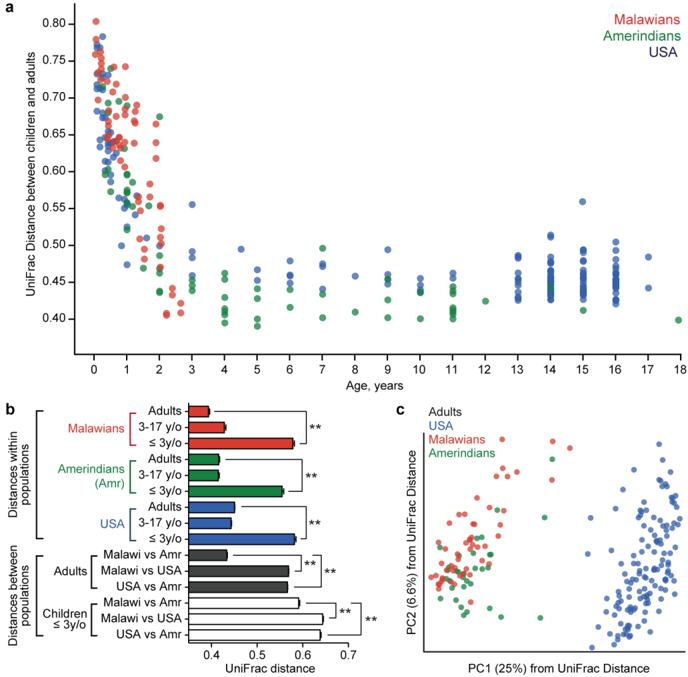
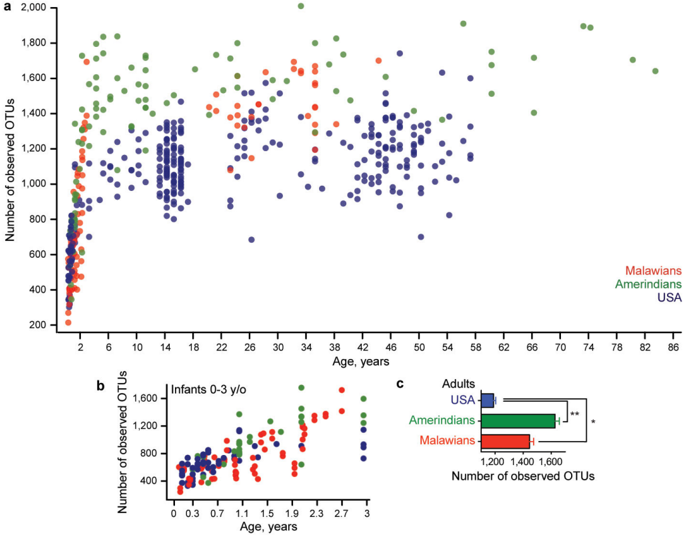
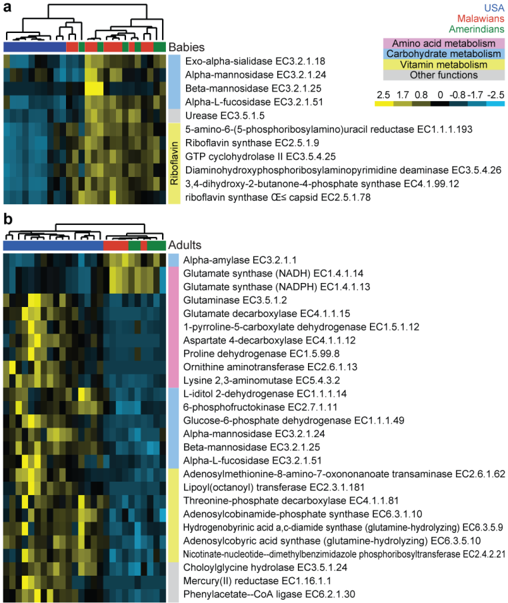
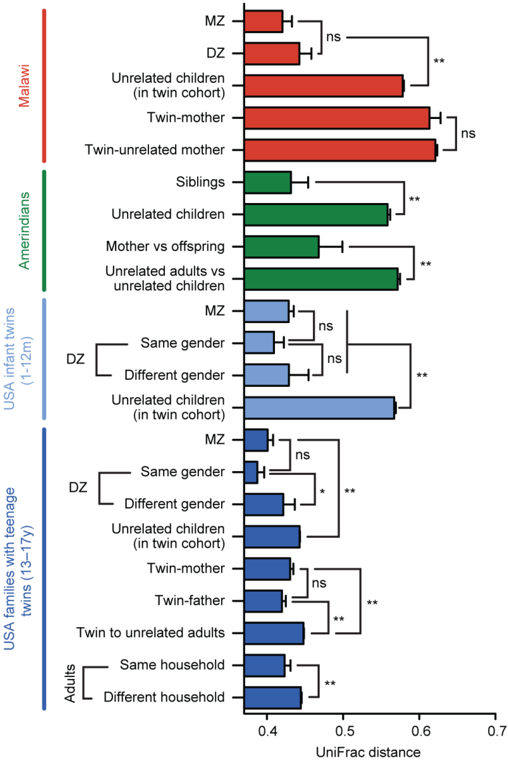
Gut microbial communities represent one source of human genetic and metabolic diversity. To examine how gut microbiomes differ among human populations, here we characterize bacterial species in fecal samples from 531 individuals, plus the gene content of 110 of them. The cohort encompassed healthy children and adults from the Amazonas of Venezuela, rural Malawi and US metropolitan areas and included mono- and dizygotic twins. Shared features of the functional maturation of the gut microbiome were identified during the first three years of life in all three populations, including age-associated changes in the genes involved in vitamin biosynthesis and metabolism. Pronounced differences in bacterial assemblages and functional gene repertoires were noted between US residents and those in the other two countries. These distinctive features are evident in early infancy as well as adulthood. Our findings underscore the need to consider the microbiome when evaluating human development, nutritional needs, physiological variations and the impact of westernization.
Overview
The claims and statistics of this paper haven’t been checked yet.
Free: it reads the open-access text and checks the first 5 claims that cite a source we can check. Create a free account to check every claim.
Integrity signals
Registry
Cites
Statistics
Figures
Verification
Claims the paper makes
The claims and statistics of this paper haven’t been checked yet.
Free: it reads the open-access text and checks the first 5 claims that cite a source we can check. Create a free account to check every claim.
Claims other papers make about this one
Each is checked against this paper’s own text: does it say what the citing paper says it does?
The cited source doesn’t support the claim as written.
In the citing paper
“Similar, albeit less marked, patterns were already observed for adults22,23,24,25 with different lifestyles but were never investigated in younger individuals.”
From Maternal and food microbial sources shape the infant microbiome of a rural Ethiopian population (2023) · cites this paper as [22]
Checked by a reasoning model — may be wrong.
Experimental — accuracy not yet measuredThe source backs part of the claim, not all of it — or backs it for a different population, condition or comparison.
In the citing paper
“The inverse relationship between Prevotella and Bacteroides has been reproduced in studies comparing the intestinal microbiota of residents of agrarian societies in South America and Bangladesh with residents of industrialized societies4, 37.”
From Diet and the Intestinal Microbiome: Associations, Functions, and Implications for Health and Disease (2014) · cites this paper as [4]
Experimental — accuracy not yet measuredThe source backs part of the claim, not all of it — or backs it for a different population, condition or comparison.
In the citing paper
“Moreover, geographic variations in the composition of intestinal microbiota have been described and implicated in the development of autoimmunity.28,29”
From Microbiota as Predictor of Mortality in Allogeneic Hematopoietic-Cell Transplantation (2020) · cites this paper as [28]
Experimental — accuracy not yet measuredThe source backs part of the claim, not all of it — or backs it for a different population, condition or comparison.
In the citing paper
“different human host cohorts may harbor remarkably different Gram-negative versus Gram-positive diversity3, 30, and a protocol appropriate for one type of community may work well in one study but not in another.”
From Assessment of variation in microbial community amplicon sequencing by the Microbiome Quality Control (MBQC) project consortium (2017) · cites this paper as [3]
Experimental — accuracy not yet measuredThe source backs part of the claim, not all of it — or backs it for a different population, condition or comparison.
In the citing paper
“Most critical events in education of host immunity may take place during the first years of life, in which microbiota composition displays the highest intra- and inter-individual variability before reaching a more stable adult-like configuration at the age of ~3 years.18–20”
From Interaction between microbiota and immunity in health and disease (2020) · cites this paper as [20]
Experimental — accuracy not yet measured
24 more claims about this paper
Create a free account to see every claim other papers make about this one.
Self-check
Percentages, sums and reported differences re-computed from the paper’s own numbers.
The self-check needs the paper’s full text.
Citations
Cites
QIIME allows analysis of high-throughput community sequencing data
Caporaso, J. G., Kuczynski, J., Stombaugh, J., Bittinger, K., Bushman, F. D., Costello, E. K., Fierer, N., Peña, A. G., Goodrich, J. K., Gordon, J. I., et al. (2010) · Nature Methods · doi:10.1038/nmeth.f.303 · Cited by 34,887
Self-citationSilhouettes: A graphical aid to the interpretation and validation of cluster analysis
Rousseeuw, P. J. (1987) · Journal of Computational and Applied Mathematics · doi:10.1016/0377-0427(87)90125-7 · Cited by 21,392
Classification and Regression by randomForest
Liaw, A. I., & Wiener, M. C. (2007) · Cited by 18,594
A human gut microbial gene catalogue established by metagenomic sequencing
MetaHIT Consortium, Qin, J., Li, R., Raes, J., Arumugam, M., Burgdorf, K. S., Manichanh, C., Nielsen, T., Pons, N., Levenez, F., et al. (2010) · Nature · doi:10.1038/nature08821 · Cited by 11,624 · cited 1×
“Shotgun reads were filtered using custom Perl scripts and publicly available software to remove (1) all reads ,60 nucleotides; (2) Titanium pyrosequencing reads with two continuous and/or three total degenerate bases (N); (3) all duplicates (a known artefact of pyrosequencing), defined as sequences in which the initia…”
MethodFinding groups in data: an introduction to cluster analysis
(1991) · Choice Reviews Online · doi:10.5860/choice.28-4558 · Cited by 10,474
UniFrac: a New Phylogenetic Method for Comparing Microbial Communities
Lozupone, C., & Knight, R. (2005) · Applied and Environmental Microbiology · doi:10.1128/aem.71.12.8228-8235.2005 · Cited by 8,227
Self-citationA core gut microbiome in obese and lean twins
Turnbaugh, P. J., Hamady, M., Yatsunenko, T., Cantarel, B. L., Duncan, A., Ley, R. E., Sogin, M. L., Jones, W. J., Roe, B. A., Affourtit, J. P., et al. (2009) · Nature · doi:10.1038/nature07540 · Cited by 7,823
Self-citationEnterotypes of the human gut microbiome
MetaHIT Consortium (additional members), Arumugam, M., Raes, J., Pelletier, E., Le Paslier, D., Yamada, T., Mende, D. R., Fernandes, G. R., Tap, J., Bruls, T., et al. (2011) · Nature · doi:10.1038/nature09944 · Cited by 7,548
Linking long-term dietary patterns with gut microbial enterotypes
Wu, G. D., Chen, J., Hoffmann, C., Bittinger, K., Chen, Y.-Y., Keilbaugh, S. A., Bewtra, M., Knights, D., Walters, W. A., Knight, R., et al. (2011) · Science · doi:10.1126/science.1208344 · Cited by 6,513
Self-citationDe Filippo, C., Cavalieri, D., Di Paola, M., Ramazzotti, M., Poullet, J. B., Massart, S., Collini, S., Pieraccini, G., & Lionetti, P. (2010) · Proceedings of the National Academy of Sciences · doi:10.1073/pnas.1005963107 · Cited by 5,579
Cited by
Items 701–800 of 1,221
You Are What You Host: Microbiome Modulation of the Aging Process
Heintz, C., & Mair, W. (2014) · Cell · doi:10.1016/j.cell.2014.01.025 · Cited by 222
“As humans age, the composition of our microbiome changes (Yatsunenko et al., 2012).”
BackgroundProteus spp. as Putative Gastrointestinal Pathogens
Hamilton, A. L., Kamm, M. A., Ng, S. C., & Morrison, M. (2018) · Clinical Microbiology Reviews · doi:10.1128/cmr.00085-17 · Cited by 222
Beule, L., & Karlovsky, P. (2020) · PeerJ · doi:10.7717/peerj.9593 · Cited by 221
Public human microbiome data are dominated by highly developed countries
Abdill, R. J., Adamowicz, E. M., & Blekhman, R. (2022) · PLoS Biology · doi:10.1371/journal.pbio.3001536 · Cited by 221
Bosi, A., Banfi, D., Bistoletti, M., Giaroni, C., & Baj, A. (2020) · International Journal of Tryptophan Research · doi:10.1177/1178646920928984 · Cited by 221
“The epithelium of the gastrointestinal tract contains different types of single sensory/secretory EECs, which represent the largest endocrine system of the human body.151 At least 15 types of EECs have been described, releasing more than 20 peptide hormones involved in the regulation of gut motility, gastric acid secr…”
BackgroundGut microbiota and malnutrition
Million, M., Diallo, A., & Raoult, D. (2017) · Microbial Pathogenesis · doi:10.1016/j.micpath.2016.02.003 · Cited by 219
Kim, M., Hwang, S., Park, E., & Bae, J. (2013) · Environmental Microbiology Reports · doi:10.1111/1758-2229.12079 · Cited by 220
“An increase in the abundance of Prevotella and Bacteroides was also observed in subjects HA, HB and HF, which was positively correlated with an SVD in subjects HA and HF (P 0.05) (Fig.”
BackgroundInfluentialEarly Development of the Gut Microbiota and Immune Health
Francino, M. (2014) · Pathogens · doi:10.3390/pathogens3030769 · Cited by 207
“Nevertheless, a typically adult pattern is probably not established until children reach the age of three [21].”
BackgroundMicrobial transmission in animal social networks and the social microbiome
Sarkar, A., Harty, S., Johnson, K. V.-A., Moeller, A. H., Archie, E. A., Schell, L. D., Carmody, R. N., Clutton-Brock, T. H., Dunbar, R. I. M., & Burnet, P. W. J. (2020) · Nature Ecology & Evolution · doi:10.1038/s41559-020-1220-8 · Cited by 223
Intestinal microbiota in early life and its implications on childhood health
Zhuang, L., Chen, H., Zhang, S., Zhuang, J., Li, Q., & Feng, Z. (2019) · Genomics, Proteomics & Bioinformatics · doi:10.1016/j.gpb.2018.10.002 · Cited by 219
“Nutrients can exert short-term and long-term effects on colonization patterns of the intestinal microbes in infants by shaping the composition of the microbial flora [20,166,167].”
BackgroundHuman milk metagenome: a functional capacity analysis
Ward, T. L., Hosid, S., Ioshikhes, I., & Altosaar, I. (2013) · BMC Microbiology · doi:10.1186/1471-2180-13-116 · Cited by 218
“4%, Figure 4), which correlates with previous studies demonstrating a high abundance of Bifidobacterium in the feces of BF-infants whereas FFinfants had a more varied microbiota [6,31,36].”
BackgroundResultSphingolipids in host–microbial interactions
Heaver, S. L., Johnson, E. L., & Ley, R. E. (2018) · Current Opinion in Microbiology · doi:10.1016/j.mib.2017.12.011 · Cited by 221
“[54], whose study included 228 samples from the USA, 54 samples from Malawi and 38 from Amerindians in Venezuela; and Smit et al.”
BackgroundFood allergy and the microbiome: Current understandings and future directions
Bunyavanich, S., & Berin, M. C. (2019) · Journal of Allergy and Clinical Immunology · doi:10.1016/j.jaci.2019.10.019 · Cited by 213
The human gut microbiome in health: Establishment and resilience of microbiota over a lifetime
Greenhalgh, K., Meyer, K. M., Aagaard, K. M., & Wilmes, P. (2016) · Environmental Microbiology · doi:10.1111/1462-2920.13318 · Cited by 218
“Finally, the interindividual variation within the GIT microbiome is much larger in infants compared to adults (Yatsunenko et al., 2012) suggesting that early successional patterns are not uniform, but nevertheless reach a relatively similar endpoint in the adult microbiome (Yatsunenko et al., 2012).”
BackgroundResultInfluentialThe changing metabolic landscape of bile acids – keys to metabolism and immune regulation
Mohanty, I., Allaband, C., Mannochio-Russo, H., El Abiead, Y., Hagey, L. R., Knight, R., & Dorrestein, P. C. (2024) · Nature Reviews Gastroenterology & Hepatology · doi:10.1038/s41575-024-00914-3 · Cited by 218
“The microbiome is progressively altered with age 298 , and a more limited delivery of cargo might parallel declines in health associated with ageing.”
Self-citationVandeputte, D., De Commer, L., Tito, R. Y., Kathagen, G., Sabino, J., Vermeire, S., Faust, K., & Raes, J. (2021) · Nature Communications · doi:10.1038/s41467-021-27098-7 · Cited by 215
Microbial glycan microarrays define key features of host-microbial interactions
Stowell, S. R., Arthur, C. M., McBride, R., Berger, O., Razi, N., Heimburg-Molinaro, J., Rodrigues, L. C., Gourdine, J.-P., Noll, A. J., von Gunten, S., et al. (2014) · Nature Chemical Biology · doi:10.1038/nchembio.1525 · Cited by 219
Homeostasis and dysbiosis of the gut microbiome in health and disease
Das, B., & Nair, G. B. (2019) · Journal of Biosciences · doi:10.1007/s12038-019-9926-y · Cited by 222
Sakanaka, M., Gotoh, A., Yoshida, K., Odamaki, T., Koguchi, H., Xiao, J.-Z., Kitaoka, M., & Katayama, T. (2019) · Nutrients · doi:10.3390/nu12010071 · Cited by 215
“[39] (n = 27 for FF and n = 34 for BF; 117,492 ± 55,056 reads/sample) were used for the analysis.”
Method(2020) · Progress in Molecular Biology and Translational Science · doi:10.1016/bs.pmbts.2020.04.003 · Cited by 212
Park, J. C., & Im, S.-H. (2020) · Experimental & Molecular Medicine · doi:10.1038/s12276-020-0473-2 · Cited by 210
The role of biogeography in shaping diversity of the intestinal microbiota in house mice
Linnenbrink, M., Wang, J., Hardouin, E. A., Künzel, S., Metzler, D., & Baines, J. F. (2013) · Molecular Ecology · doi:10.1111/mec.12206 · Cited by 217
“comparative studies, which are also likely relevant to human hosts (Yatsunenko et al. 2012).”
BackgroundThe gut microbial community in metabolic syndrome patients is modified by diet
Haro, C., Garcia-Carpintero, S., Alcala-Diaz, J. F., Gomez-Delgado, F., Delgado-Lista, J., Perez-Martinez, P., Rangel Zuñiga, O. A., Quintana-Navarro, G. M., Landa, B. B., Clemente, J. C., et al. (2016) · The Journal of Nutritional Biochemistry · doi:10.1016/j.jnutbio.2015.08.011 · Cited by 215
“Moreover, the inverse relationship between Prevotella and Bacteroides has been reproduced in studies comparing the microbiota of subjects from agrarian societies with those from industrialized societies [13,14].”
BackgroundSelf-citationInsights from Characterizing Extinct Human Gut Microbiomes
Tito, R. Y., Knights, D., Metcalf, J., Obregon-Tito, A. J., Cleeland, L., Najar, F., Roe, B., Reinhard, K., Sobolik, K., Belknap, S., et al. (2012) · PLoS ONE · doi:10.1371/journal.pone.0051146 · Cited by 216
Self-citationMunyaka, P. M., Khafipour, E., & Ghia, J.-E. (2014) · Frontiers in Pediatrics · doi:10.3389/fped.2014.00109 · Cited by 214
“Similarly, the biodiversity of microbiota from USA was lower than that from Malawians or Venezuelan Amerindians (65).”
BackgroundGerber, G. K. (2014) · FEBS Letters · doi:10.1016/j.febslet.2014.02.037 · Cited by 217
“[13], who analyzed microbiomes of 531 geographically diverse human subjects of different ages, although their study design was effectively cross-sectional rather than longitudinal.”
BackgroundWidespread Colonization of the Lung by Tropheryma whipplei in HIV Infection
Lozupone, C., Cota-Gomez, A., Palmer, B. E., Linderman, D. J., Charlson, E. S., Sodergren, E., Mitreva, M., Abubucker, S., Martin, J., Yao, G., et al. (2013) · American Journal of Respiratory and Critical Care Medicine · doi:10.1164/rccm.201211-2145oc · Cited by 219
Self-citationImpact of Diet on Human Intestinal Microbiota and Health
Salonen, A., & de Vos, W. M. (2014) · Annual Review of Food Science and Technology · doi:10.1146/annurev-food-030212-182554 · Cited by 215
“In this metagenomic analysis, the non-Western microbiomes did not show overrepresentation of genes devoted to themetabolism of complex carbohydrates or butyrate production (Yatsunenko et al. 2012).”
BackgroundObesity, diabetes, and the gut microbiome: an updated review
Singer-Englar, T., Barlow, G., & Mathur, R. (2019) · Expert Review of Gastroenterology & Hepatology · doi:10.1080/17474124.2019.1543023 · Cited by 214
“examined the development of the microbiome in Amerindians in Venezuela as well as populations from Malawi and the United States [155].”
BackgroundInfluentialA sparse covarying unit that describes healthy and impaired human gut microbiota development
Raman, A. S., Gehrig, J. L., Venkatesh, S., Chang, H.-W., Hibberd, M. C., Subramanian, S., Kang, G., Bessong, P. O., Lima, A. A. M., Kosek, M. N., et al. (2019) · Science · doi:10.1126/science.aau4735 · Cited by 221
“To compute the eigenvalues of the matrix C, solve (18) for Ω.”
MethodSelf-citationAshaolu, T. J., Ashaolu, J. O., & Adeyeye, S. A. O. (2021) · Journal of Applied Microbiology · doi:10.1111/jam.14843 · Cited by 207
“Several factors such as genetics, age, disease, stress and other host physiologic or environmental factors, as well as the use of medications affect gut microbiota (Yatsunenko et al. 2012; Goodrich et al. 2014).”
BackgroundCesarean section changes neonatal gut colonization
Stokholm, J., Thorsen, J., Chawes, B. L., Schjørring, S., Krogfelt, K. A., Bønnelykke, K., & Bisgaard, H. (2016) · Journal of Allergy and Clinical Immunology · doi:10.1016/j.jaci.2016.01.028 · Cited by 215
“In a subanalysis we designed a PLS model to describe fecal colonization patterns at 1 week based on delivery type: (1) natural delivery, (2) emergency cesarean section, and (3) elective”
Selective Manipulation of the Gut Microbiota Improves Immune Status in Vertebrates
Montalban-Arques, A., De Schryver, P., Bossier, P., Gorkiewicz, G., Mulero, V., Gatlin, D. M., & Galindo-Villegas, J. (2015) · Frontiers in Immunology · doi:10.3389/fimmu.2015.00512 · Cited by 214
“This observation is clearly illustrated in humans by a comparison of the incidence of inflammatory and metabolic diseases, such as type II diabetes, colon cancer, and asthma associated with “Western” diets and the low prevalence of the same associated with diets rich in dietary fiber, as found in rural areas (110, 111…”
BackgroundThe intestinal microbiota: its role in health and disease
Biedermann, L., & Rogler, G. (2015) · European Journal of Pediatrics · doi:10.1007/s00431-014-2476-2 · Cited by 211
“Another aspect that influences the bacterial composition is the age of the host, the gender, the area of living, the amount of stress perceived, the extent of regular physical exercise, the climate, and other influences that have been mentioned before [120, 213].”
BackgroundCauses of Impaired Oral Vaccine Efficacy in Developing Countries
Parker, E. P. K., Ramani, S., Lopman, B. A., Church, J. A., Iturriza-Gómara, M., Prendergast, A. J., & Grassly, N. C. (2018) · Future Microbiology · doi:10.2217/fmb-2017-0128 · Cited by 214
The interplay between Helicobacter pylori and gastrointestinal microbiota
Chen, C.-C., Liou, J.-M., Lee, Y.-C., Hong, T.-C., El-Omar, E. M., & Wu, M.-S. (2021) · Gut Microbes · doi:10.1080/19490976.2021.1909459 · Cited by 208
“pylori–experienced dendritic cells retain a semi-mature phenotype and induce immunosuppressive regulatory T cell (Treg) differentiation, rather than Th1 or Th17 cells from naive Th0 cells.(93,136,137) Tregs produced in the gastric mucosa are trafficked to”
BackgroundA bacteriophages journey through the human body
Barr, J. J. (2017) · Immunological Reviews · doi:10.1111/imr.12565 · Cited by 216
Dhakan, D. B., Maji, A., Sharma, A. K., Saxena, R., Pulikkan, J., Grace, T., Gomez, A., Scaria, J., Amato, K. R., & Sharma, V. K. (2019) · GigaScience · doi:10.1093/gigascience/giz004 · Cited by 216
The theory of disappearing microbiota and the epidemics of chronic diseases
Blaser, M. J. (2017) · Nature Reviews Immunology · doi:10.1038/nri.2017.77 · Cited by 212
Sunbeam: an extensible pipeline for analyzing metagenomic sequencing experiments
Clarke, E. L., Taylor, L. J., Zhao, C., Connell, A., Lee, J.-J., Fett, B., Bushman, F. D., & Bittinger, K. (2019) · Microbiome · doi:10.1186/s40168-019-0658-x · Cited by 217
“Metagenomic sequencing has enabled critical insights in microbiology [1-9], especially in the study of virus and bacteriophage communities [10-15], and is beginning to be used in clinical diagnosis [16-”
MethodVirome Diversity Correlates with Intestinal Microbiome Diversity in Adult Monozygotic Twins
Moreno-Gallego, J. L., Chou, S.-P., Di Rienzi, S. C., Goodrich, J. K., Spector, T. D., Bell, J. T., Youngblut, N. D., Hewson, I., Reyes, A., & Ley, R. E. (2019) · Cell Host & Microbe · doi:10.1016/j.chom.2019.01.019 · Cited by 217
“Co-twins, like other siblings, generally have more similar gut microbiomes within their twinships compared to unrelated individuals (Lee et al., 2011; Palmer et al., 2007; Tims et al., 2013; Turnbaugh et al., 2009; Yatsunenko et al., 2012).”
BackgroundThe Human Microbiome: From Symbiosis to Pathogenesis
Eloe-Fadrosh, E. A., & Rasko, D. A. (2013) · Annual Review of Medicine · doi:10.1146/annurev-med-010312-133513 · Cited by 210
Geographical variation of human gut microbial composition
Suzuki, T. A., & Worobey, M. (2014) · Biology Letters · doi:10.1098/rsbl.2013.1037 · Cited by 210
Lackey, K. A., Williams, J. E., Meehan, C. L., Zachek, J. A., Benda, E. D., Price, W. J., Foster, J. A., Sellen, D. W., Kamau-Mbuthia, E. W., Kamundia, E. W., et al. (2019) · Frontiers in Nutrition · doi:10.3389/fnut.2019.00045 · Cited by 212
Robust variation in infant gut microbiome assembly across a spectrum of lifestyles
Olm, M. R., Dahan, D., Carter, M. M., Merrill, B. D., Yu, F. B., Jain, S., Meng, X., Tripathi, S., Wastyk, H., Neff, N., et al. (2022) · Science · doi:10.1126/science.abj2972 · Cited by 215
Hoskinson, C., Dai, D. L. Y., Del Bel, K. L., Becker, A. B., Moraes, T. J., Mandhane, P. J., Finlay, B. B., Simons, E., Kozyrskyj, A. L., Azad, M. B., et al. (2023) · Nature Communications · doi:10.1038/s41467-023-40336-4 · Cited by 199
Nagata, N., Nishijima, S., Kojima, Y., Hisada, Y., Imbe, K., Miyoshi-Akiyama, T., Suda, W., Kimura, M., Aoki, R., Sekine, K., et al. (2022) · Gastroenterology · doi:10.1053/j.gastro.2022.03.054 · Cited by 209
Wang, L., Alammar, N., Singh, R., Nanavati, J., Song, Y., Chaudhary, R., & Mullin, G. E. (2020) · Journal of the Academy of Nutrition and Dietetics · doi:10.1016/j.jand.2019.05.015 · Cited by 209
Reprograming of gut microbiome energy metabolism by the FUT2 Crohn’s disease risk polymorphism
Tong, M., McHardy, I., Ruegger, P., Goudarzi, M., Kashyap, P. C., Haritunians, T., Li, X., Graeber, T. G., Schwager, E., Huttenhower, C., et al. (2014) · The ISME Journal · doi:10.1038/ismej.2014.64 · Cited by 207
“One possible explanation is that the inter-individual variation of gut microbial phylogenetic composition is inherently large (Human Microbiome Project C, 2012; Yatsunenko et al., 2012).”
BackgroundMethodMaternal Microbiota, Early Life Colonization and Breast Milk Drive Immune Development in the Newborn
Kalbermatter, C., Fernandez Trigo, N., Christensen, S., & Ganal-Vonarburg, S. C. (2021) · Frontiers in Immunology · doi:10.3389/fimmu.2021.683022 · Cited by 211
“The microbiome of an infant in its first three years of life is clearly distinguishable from an adult microbiome by a lower diversity index reflected in half as many operational taxonomic units (OTUs) compared to adults and higher interindividual variability (22, 23).”
BackgroundLeibovitzh, H., Lee, S.-H., Xue, M., Raygoza Garay, J. A., Hernandez-Rocha, C., Madsen, K. L., Meddings, J. B., Guttman, D. S., Espin-Garcia, O., Smith, M. I., et al. (2022) · Gastroenterology · doi:10.1053/j.gastro.2022.07.004 · Cited by 202
Biological control in the microbiome era: Challenges and opportunities
Massart, S., Martinez-Medina, M., & Jijakli, M. H. (2015) · Biological Control · doi:10.1016/j.biocontrol.2015.06.003 · Cited by 207
“To shed light on this question, metagenomics studies of microbiota associated to each crop from different geographical origins and at different physiological states are essential, as already done in humans (Yatsunenko et al., 2012).”
BackgroundMethodBrown, E. M., Wlodarska, M., Willing, B. P., Vonaesch, P., Han, J., Reynolds, L. A., Arrieta, M.-C., Uhrig, M., Scholz, R., Partida, O., et al. (2015) · Nature Communications · doi:10.1038/ncomms8806 · Cited by 213
Modulation of bone remodeling by the gut microbiota: A new therapy for osteoporosis
Lyu, Z., Hu, Y., Guo, Y., & Liu, D. (2023) · Bone Research · doi:10.1038/s41413-023-00264-x · Cited by 207
“Evidence from experiments in antibiotic-treated mice The administration of antibiotics is a model that is widely used to investigate the relationship between the GM and host metabolism.(24) Weaned female mice exhibited a higher BMD after antibiotic therapy (penicillin, vancomycin, penicillin plus vancomycin, or chlort…”
MethodMicrobiota Signaling Pathways that Influence Neurologic Disease
Cox, L. M., & Weiner, H. L. (2018) · Neurotherapeutics · doi:10.1007/s13311-017-0598-8 · Cited by 207
Microbial ‘old friends’, immunoregulation and socioeconomic status
Rook, G. A. W., Raison, C. L., & Lowry, C. A. (2014) · Clinical and Experimental Immunology · doi:10.1111/cei.12269 · Cited by 206
Mediterranean Diet and Health: Food Effects on Gut Microbiota and Disease Control
Del Chierico, F., Vernocchi, P., Dallapiccola, B., & Putignani, L. (2014) · International Journal of Molecular Sciences · doi:10.3390/ijms150711678 · Cited by 205
“Particularly, in the Malawian population, characterized by a low-fat/high-fiber diet, the abundance of the Bacteroides was lowest, but, between the Venezuelan and USA populations, no significant differences were found [142].”
BackgroundDoes the microbiota play a role in the pathogenesis of autoimmune diseases?
McLean, M. H., Dieguez, D., Miller, L. M., & Young, H. A. (2015) · Gut · doi:10.1136/gutjnl-2014-308514 · Cited by 208
Torow, N., & Hornef, M. W. (2017) · The Journal of Immunology · doi:10.4049/jimmunol.1601253 · Cited by 207
“High interindividual variation, but low diversity and density, characterize this early colonization phase that is dominated by bacteria specialized in milk fermentation, such as Lactobacillus, Streptococcus, and Bifidobacterium, in humans (26, 27).”
BackgroundNeonatal selection by Toll-like receptor 5 influences long-term gut microbiota composition
Fulde, M., Sommer, F., Chassaing, B., van Vorst, K., Dupont, A., Hensel, M., Basic, M., Klopfleisch, R., Rosenstiel, P., Bleich, A., et al. (2018) · Nature · doi:10.1038/s41586-018-0395-5 · Cited by 206
Analysis of the Intestinal Lumen Microbiota in an Animal Model of Colorectal Cancer
Zhu, Q., Jin, Z., Wu, W., Gao, R., Guo, B., Gao, Z., Yang, Y., & Qin, H. (2014) · PLoS ONE · doi:10.1371/journal.pone.0090849 · Cited by 206
Overview and systematic review of studies of microbiome in schizophrenia and bipolar disorder
Nguyen, T. T., Kosciolek, T., Eyler, L. T., Knight, R., & Jeste, D. V. (2018) · Journal of Psychiatric Research · doi:10.1016/j.jpsychires.2018.01.013 · Cited by 205
“…over time (Caporaso et al., 2011) and can be shaped by development (from birth through old age) (Dominguez-Bello et al., 2010; Koenig et al., 2011; Yatsunenko et al., 2012) and in response to intrinsic (e.g., immune system) and extrinsic (e.g., diet, exposure to drugs/medications, or physical…”
Self-citationDiet, the Gut Microbiome, and Epigenetics
Hullar, M. A. J., & Fu, B. C. (2014) · The Cancer Journal · doi:10.1097/ppo.0000000000000053 · Cited by 203
“Similar trends have been seen in other studies that compared residents in nonindustrialized and industrialized societies.(6,7) Although these observational studies lay the groundwork for the connection between diet and the microbiome in human populations, factors other than diet may influence the composition and funct…”
ResultBifidobacteria and the infant gut: an example of co-evolution and natural selection
Turroni, F., Milani, C., Duranti, S., Ferrario, C., Lugli, G. A., Mancabelli, L., van Sinderen, D., & Ventura, M. (2018) · Cellular and Molecular Life Sciences · doi:10.1007/s00018-017-2672-0 · Cited by 197
Factors Influencing Equine Gut Microbiota: Current Knowledge
Garber, A., Hastie, P. M., & Murray, J. (2020) · Journal of Equine Veterinary Science · doi:10.1016/j.jevs.2020.102943 · Cited by 251
“In human research, there are differences in the phylogenetic composition of fecal microbiota between individuals living in different countries [95].”
BackgroundPreserving microbial diversity
Bello, M. G. D., Knight, R., Gilbert, J. A., & Blaser, M. J. (2018) · Science · doi:10.1126/science.aau8816 · Cited by 205
Self-citationMillion, M., Tidjani Alou, M., Khelaifia, S., Bachar, D., Lagier, J.-C., Dione, N., Brah, S., Hugon, P., Lombard, V., Armougom, F., et al. (2016) · Scientific Reports · doi:10.1038/srep26051 · Cited by 204
RetractedJoint contributions of the gut microbiota and host genetics to feed efficiency in chickens
Wen, C., Yan, W., Mai, C., Duan, Z., Zheng, J., Sun, C., & Yang, N. (2021) · Microbiome · doi:10.1186/s40168-021-01040-x · Cited by 198
Sex, microbes, and polycystic ovary syndrome
Thackray, V. G. (2019) · Trends in Endocrinology & Metabolism · doi:10.1016/j.tem.2018.11.001 · Cited by 203
“For instance, a significant difference was found in the composition of the gut microbiome of fraternal twins of the opposite sex during adolescence compared with twins of the same sex, while no difference was detected between fraternal twins of the same or different sex during infancy [44].”
BackgroundTeo, S. M., Tang, H. H. F., Mok, D., Judd, L. M., Watts, S. C., Pham, K., Holt, B. J., Kusel, M., Serralha, M., Troy, N., et al. (2018) · Cell Host & Microbe · doi:10.1016/j.chom.2018.08.005 · Cited by 203
“, 2015) or the gut microbiome, which matures to an adult-like state by 3 years of age (Yatsunenko et al., 2012).”
Dickson, R. P., Erb-Downward, J. R., Freeman, C. M., Walker, N., Scales, B. S., Beck, J. M., Martinez, F. J., Curtis, J. L., Lama, V. N., & Huffnagle, G. B. (2014) · PLoS ONE · doi:10.1371/journal.pone.0097214 · Cited by 206
“While decreased bacterial diversity in the gut has been associated with obesity and geography [45,46], its significance in the lung apart from as a marker of acute infection is uncertain.”
BackgroundZhou, Y., Shan, G., Sodergren, E., Weinstock, G., Walker, W. A., & Gregory, K. E. (2015) · PLOS ONE · doi:10.1371/journal.pone.0118632 · Cited by 202
“The time dependent variation in the microbiome is not surprising because the infants’ intestinal microbiota is under rapid development in early life and the microbiome has been shown to be highly dynamic until approximately two years of age [27].”
BackgroundBaumann-Dudenhoeffer, A. M., D’Souza, A. W., Tarr, P. I., Warner, B. B., & Dantas, G. (2018) · Nature Medicine · doi:10.1038/s41591-018-0216-2 · Cited by 203
Self-citationIs Host Filtering the Main Driver of Phylosymbiosis across the Tree of Life?
Mazel, F., Davis, K. M., Loudon, A., Kwong, W. K., Groussin, M., & Parfrey, L. W. (2018) · mSystems · doi:10.1128/msystems.00097-18 · Cited by 202
“Within a host species, microbiota compositions can vary dramatically across body sites (1), across individuals that reside in different environments (2), or across host phenotypic traits, such as age (3) or diet (4).”
Disordered intestinal microbes are associated with the activity of Systemic Lupus Erythematosus
Li, Y., Wang, H.-F., Li, X., Li, H.-X., Zhang, Q., Zhou, H.-W., He, Y., Li, P., Fu, C., Zhang, X.-H., et al. (2019) · Clinical Science · doi:10.1042/cs20180841 · Cited by 202
“to many factors such as host’s age, sex, genotype, diet and geography (13-16).”
BackgroundVallès, Y., Artacho, A., Pascual-García, A., Ferrús, M. L., Gosalbes, M. J., Abellán, J. J., & Francino, M. P. (2014) · PLoS Genetics · doi:10.1371/journal.pgen.1004406 · Cited by 203
“In agreement, recent crosssectional studies have suggested that an adult-like gut community may not be reached before three years of age [25].”
BackgroundThe subgingival periodontal microbiota of the aging mouth
Feres, M., Teles, F., Teles, R., Figueiredo, L. C., & Faveri, M. (2016) · Periodontology 2000 · doi:10.1111/prd.12136 · Cited by 200
Gut microbiota, diet, and obesity-related disorders: the good, the bad, and the future challenges
Portune, K. J., Benítez‐Páez, A., Del Pulgar, E. M. G., Cerrudo, V., & Sanz, Y. (2017) · Molecular Nutrition & Food Research · doi:10.1002/mnfr.201600252 · Cited by 201
“Long-term dietary patterns appear to have a substantial effect on shaping the human gut microbiota [10], as common microbial features are observed in humans from geographically distinct countries with similar diets higher in plant-derived polysaccharides (South America, Malawi, Africa/Burkina Faso) compared to humans…”
BackgroundWipperman, M. F., Fitzgerald, D. W., Juste, M. A. J., Taur, Y., Namasivayam, S., Sher, A., Bean, J. M., Bucci, V., & Glickman, M. S. (2017) · Scientific Reports · doi:10.1038/s41598-017-10346-6 · Cited by 201
Methodologies for animals’ geographies: cultures, communication and genomics
Hodgetts, T., & Lorimer, J. (2015) · cultural geographies · doi:10.1177/1474474014525114 · Cited by 200
Antibiotic resistance genes as an emerging environmental contaminant
Sanderson, H., Fricker, C., Brown, R. S., Majury, A., & Liss, S. N. (2016) · Environmental Reviews · doi:10.1139/er-2015-0069 · Cited by 199
“Further, genera such as Treponema and Prevotella associated with the fermentation of fiberrich dietary components (underrepresented in urban diets) are no longer in abundance (De Filippo et al. 2010; Yatsunenko et al. 2012; Rampelli et al. 2015).”
BackgroundHuman gut microbiota and healthy aging: Recent developments and future prospective
Kumar, M., Babaei, P., Ji, B., & Nielsen, J. (2016) · Nutrition and Healthy Aging · doi:10.3233/nha-150002 · Cited by 198
“165 [49] Yatsunenko T, Rey FE, Manary MJ, Trehan I, DominguezBello MG, Contreras M, et al.”
BackgroundDevelopment of the Pediatric Gut Microbiome: Impact on Health and Disease
Ihekweazu, F. D., & Versalovic, J. (2018) · The American Journal of the Medical Sciences · doi:10.1016/j.amjms.2018.08.005 · Cited by 198
Hanus, M., Parada-Venegas, D., Landskron, G., Wielandt, A. M., Hurtado, C., Alvarez, K., Hermoso, M. A., López-Köstner, F., & De la Fuente, M. (2021) · Frontiers in Immunology · doi:10.3389/fimmu.2021.612826 · Cited by 199
Secretory IgA in the Coordination of Establishment and Maintenance of the Microbiota
Pabst, O., Cerovic, V., & Hornef, M. (2016) · Trends in Immunology · doi:10.1016/j.it.2016.03.002 · Cited by 201
You’ve got male: Sex and the microbiota-gut-brain axis across the lifespan
Jaggar, M., Rea, K., Spichak, S., Dinan, T. G., & Cryan, J. F. (2020) · Frontiers in Neuroendocrinology · doi:10.1016/j.yfrne.2019.100815 · Cited by 200
Links between the microbiome and bone
Hernandez, C. J., Guss, J. D., Luna, M., & Goldring, S. R. (2016) · Journal of Bone and Mineral Research · doi:10.1002/jbmr.2887 · Cited by 200
“The microbiota is shaped subsequently by diet and environmental exposure and reaches a steady state at about 3 years of age.((16)) The great majority of the human microbiome is located within the gastrointestinal system.”
BackgroundInfluentialKaczmarek, J. L., Musaad, S. M., & Holscher, H. D. (2017) · The American Journal of Clinical Nutrition · doi:10.3945/ajcn.117.156380 · Cited by 200
“, age (32), BMI (34), sex (33), and dietary fiber intake (5)].”
BackgroundA computationally fast variable importance test for random forests for high-dimensional data
Janitza, S., Celik, E., & Boulesteix, A.-L. (2018) · Advances in Data Analysis and Classification · doi:10.1007/s11634-016-0276-4 · Cited by 200
“The random forests method and its implemented importance measures have often been used for the identification of biomarkers (often genes) that can be used to differentiate between diseased and non-diseased subjects (e.g., Reif et al. 2009; Wang-Sattler et al. 2012; Yatsunenko et al. 2012).”
MethodOpen-Source Sequence Clustering Methods Improve the State Of the Art
Kopylova, E., Navas-Molina, J. A., Mercier, C., Xu, Z. Z., Mahé, F., He, Y., Zhou, H.-W., Rognes, T., Caporaso, J. G., & Knight, R. (2016) · mSystems · doi:10.1128/msystems.00003-15 · Cited by 204
Self-citationEmerging Technologies for Gut Microbiome Research
Arnold, J. W., Roach, J., & Azcarate-Peril, M. A. (2016) · Trends in Microbiology · doi:10.1016/j.tim.2016.06.008 · Cited by 198
“Consequently, dietary supplementation is one of the most easily performed means to beneficially modulate the microbiota [81, 82]; however, the specific activities and impact of supplements are unknown due to the complexity of the microbial community.”
Genetic risk for autoimmunity is associated with distinct changes in the human gut microbiome
Russell, J. T., Roesch, L. F. W., Ördberg, M., Ilonen, J., Atkinson, M. A., Schatz, D. A., Triplett, E. W., & Ludvigsson, J. (2019) · Nature Communications · doi:10.1038/s41467-019-11460-x · Cited by 201
Tu, Q., Yu, H., He, Z., Deng, Y., Wu, L., Van Nostrand, J. D., Zhou, A., Voordeckers, J., Lee, Y., Qin, Y., et al. (2014) · Molecular Ecology Resources · doi:10.1111/1755-0998.12239 · Cited by 200
“, 16S rDNA, amoA and nifH) and metagenomes (Sogin et al. 2006; He et al. 2010b; Qin et al. 2010, 2012; Hess et al. 2011; Mackelprang et al. 2011; Brisson et al. 2012; Deng et al. 2012; D ıez et al. 2012; Sintes et al. 2013; Yatsunenko et al. 2012; Zhou et al. 2012).”
BackgroundTherapeutic modulation of intestinal dysbiosis
Walker, A. W., & Lawley, T. D. (2013) · Pharmacological Research · doi:10.1016/j.phrs.2012.09.008 · Cited by 200
Identification of MW Polyomavirus, a Novel Polyomavirus in Human Stool
Siebrasse, E. A., Reyes, A., Lim, E. S., Zhao, G., Mkakosya, R. S., Manary, M. J., Gordon, J. I., & Wang, D. (2012) · Journal of Virology · doi:10.1128/jvi.01210-12 · Cited by 200
“The index stool specimen was obtained from a healthy, breast-fed, 15month-old female living in Mayaka, Malawi, in September 2008 as part of a global gut microbiome survey (48).”
BackgroundMethodSelf-citationDiet-microbiota interactions and their implications for healthy living
Jeffery, I., & O'Toole, P. (2013) · Nutrients · doi:10.3390/nu5010234 · Cited by 199
“There are a number of highly abundant species that are present in the majority of a population, but the overall composition of the gut depends on the age, health, diet and even geographical location of the individual [10].”
BackgroundSbihi, H., Boutin, R. C., Cutler, C., Suen, M., Finlay, B. B., & Turvey, S. E. (2019) · Allergy · doi:10.1111/all.13812 · Cited by 199
Lima, F. S., Oikonomou, G., Lima, S. F., Bicalho, M. L. S., Ganda, E. K., de Oliveira Filho, J. C., Lorenzo, G., Trojacanec, P., & Bicalho, R. C. (2015) · Applied and Environmental Microbiology · doi:10.1128/aem.03138-14 · Cited by 199
“Similar results of increased microbial diversity and convergence toward a mature bacterial composition with age were also reported in a study of the gut microbiomes of human populations from different geographical locations across different age groups (24).”
ResultThe role of the gastrointestinal microbiome in Helicobacter pylori pathogenesis
Sheh, A., & Fox, J. G. (2013) · Gut Microbes · doi:10.4161/gmic.26205 · Cited by 198
Allergy associations with the adult fecal microbiota: Analysis of the American Gut Project
Hua, X., Goedert, J. J., Pu, A., Yu, G., & Shi, J. (2016) · EBioMedicine · doi:10.1016/j.ebiom.2015.11.038 · Cited by 199
“After exclusions [duplicates, diabetes, inflammatory bowel disease, age b4 years (after which the microbiota resembles that of adults (Yatsunenko et al., 2012)), missing race, specimen not feces, antibiotic used in the past month], data were analyzed for 1879 AGP participants.”
Method
Metadata
- Authors
- Yatsunenko, T., Rey, F. E., Manary, M. J., Trehan, I., Dominguez-Bello, M. G., Contreras, M., Magris, M., Hidalgo, G., Baldassano, R. N., Anokhin, A. P., Heath, A. C., Warner, B., Reeder, J., Kuczynski, J., Caporaso, J. G., Lozupone, C. A., Lauber, C., Clemente, J. C., Knights, D., Knight, R., & Gordon, J. I.
- Affiliations
- Washington University in St. Louis (US)
- University of Malawi (MW)
- Children's Hospital of Philadelphia (US)
- University of Colorado Boulder (US)
- Northern Arizona University (US)
- Howard Hughes Medical Institute (US)
- Corresponding author
- Gordon, Jeffrey I.
- ORCID
- Venue
- Nature
- Published
- 2012-05-09
- Volume
- 486
- Issue
- 7402
- Pages
- 222-227
- ISSN
- 0028-0836 (ISSN-L)
- 1476-4687
- PMC
- PMC3376388
- OpenAlex
- W2162088497
- Semantic Scholar
- 54a6d777e3a84e46f1c74bc9a0482a7307bd79c7
- Cited by
- 7,815
- References
- 41
- Citations by year
- 2026: 373 · 2025: 472 · 2024: 576 · 2023: 580 · 2022: 730 · 2021: 786 · 2020: 769 · 2019: 674 · 2018: 597 · 2017: 559 · 2016: 534 · 2015: 433 · 2014: 356 · 2013: 287 · 2012: 82
- FWCI
- 148.99
- Type
- journal article
- Language
- en
- Open access
- green
- www.ncbi.nlm.nih.gov
- Licence
- www.springer.com/tdm (tdm)
- Locations
- Nature (publishedVersion)
- PubMed (publishedVersion)
- Europe PMC (PubMed Central) (acceptedVersion)
- PubMed Central (acceptedVersion)
- RePEc: Research Papers in Economics (submittedVersion)
- eScholarship (California Digital Library) (submittedVersion)
- Funders
- Howard Hughes Medical Institute
- Crohn's and Colitis Foundation
- National Institute on Alcohol Abuse and Alcoholism (K05AA017688)
- National Institute of Diabetes and Digestive and Kidney Diseases (DK078669, P01DK078669, K01DK090285)
- Eunice Kennedy Shriver National Institute of Child Health and Human Development (T32HD049338)
- Topics
- Life Sciences › Biochemistry, Genetics and Molecular Biology › Molecular Biology › Gut microbiota and health
- Health Sciences › Nursing › Nutrition and Dietetics › Infant Nutrition and Health
- Physical Sciences › Environmental Science › Ecology › Microbial Community Ecology and Physiology
- Keywords
- gut microbiota, fecal microbiota, age-related changes, regional variation, Westernization, monozygotic and dizygotic twins, human development, Amazonas, Malawi
- MeSH terms
- Adolescent, Adult, Age Factors, Aged, Bacteria, Child, Child, Preschool, Feces, Female, Geography, Humans, Infant, Intestines, Malawi, Male, Middle Aged, Phylogeny, RNA, Ribosomal, 16S, Twins, Dizygotic, Twins, Monozygotic, United States, Venezuela, Biodiversity, Metagenome, Young Adult
About these checks
Registry, retraction, Cites and statistics results are computed, not judged, with one exception: a printed reference that no index lists is read once by a model before it counts as a citation error. Claims are extracted by a model and kept only when their quote appears verbatim in the text; each cited source is then checked, with a model’s help, for whether it says what the claim relies on. Those verdicts can be wrong — read the claim’s quote and the cited source before relying on one.
Statistics and arithmetic are recomputed, not judged.
Confidence bands are shown only for fields calibrated on our annotated test set. None is calibrated yet, so no band is shown.
What counts as a claim ›How we measure confidence ›How we check this ›
Are you an author, or do you see a problem with this page? Request a review
Data sources
Bibliographic data: Semantic Scholar, OpenAlex, Crossref.
Contains information from the Semantic Scholar Academic Graph Datasets, made available under the ODC Attribution License (ODC-BY 1.0).
Semantic Scholar’s data is described in: Kinney, R., et al. (2023). The Semantic Scholar Open Data Platform. arXiv:2301.10140.
