

Human gut microbiome viewed across age and geography
Open accessThe DOI matches its Crossref record; 41 of the 41 references it cites were found in a registry or an index.
Abstract
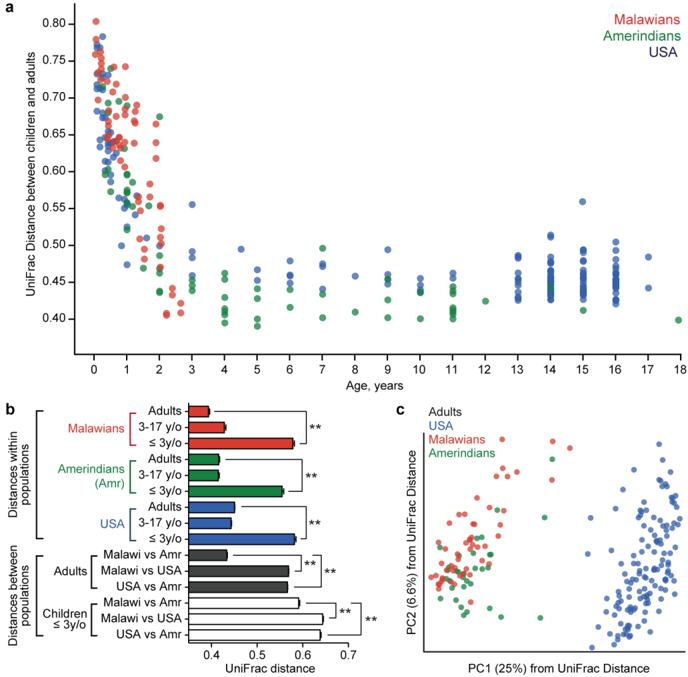
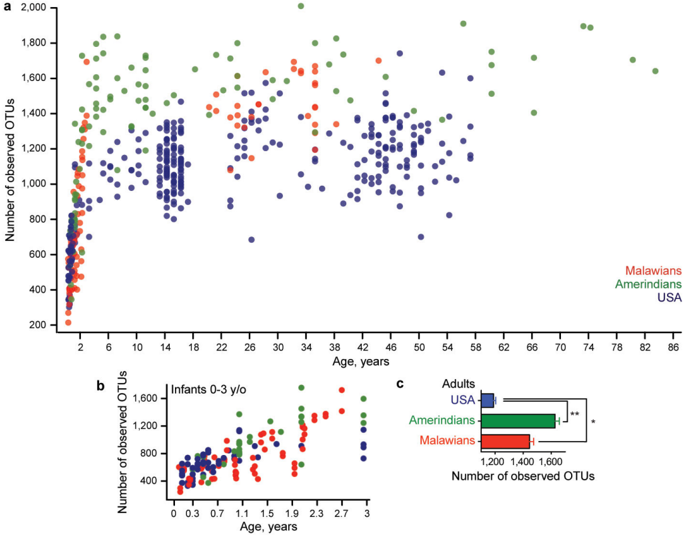
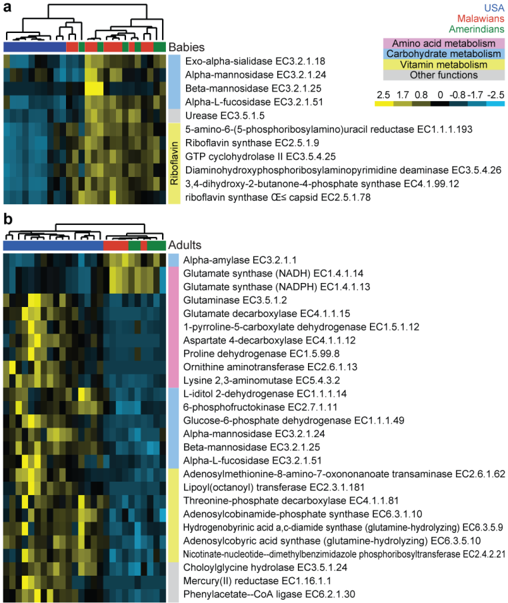
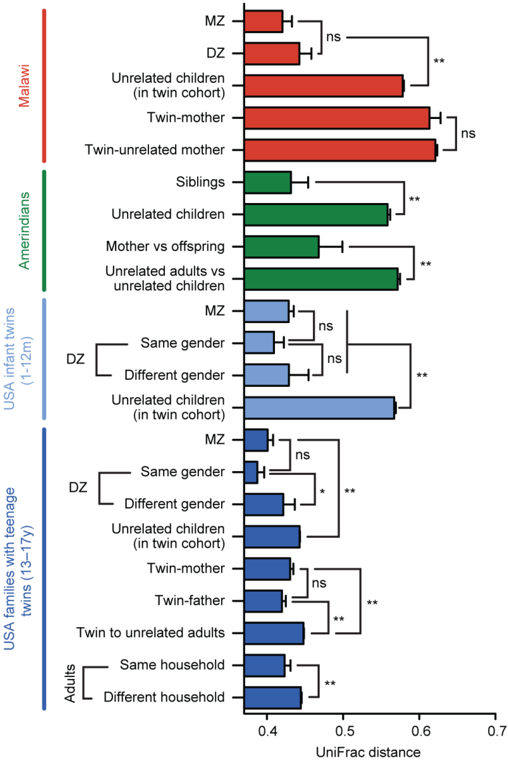
Gut microbial communities represent one source of human genetic and metabolic diversity. To examine how gut microbiomes differ among human populations, here we characterize bacterial species in fecal samples from 531 individuals, plus the gene content of 110 of them. The cohort encompassed healthy children and adults from the Amazonas of Venezuela, rural Malawi and US metropolitan areas and included mono- and dizygotic twins. Shared features of the functional maturation of the gut microbiome were identified during the first three years of life in all three populations, including age-associated changes in the genes involved in vitamin biosynthesis and metabolism. Pronounced differences in bacterial assemblages and functional gene repertoires were noted between US residents and those in the other two countries. These distinctive features are evident in early infancy as well as adulthood. Our findings underscore the need to consider the microbiome when evaluating human development, nutritional needs, physiological variations and the impact of westernization.
Overview
The claims and statistics of this paper haven’t been checked yet.
Free: it reads the open-access text and checks the first 5 claims that cite a source we can check. Create a free account to check every claim.
Integrity signals
Registry
Cites
Statistics
Figures
Verification
Claims the paper makes
The claims and statistics of this paper haven’t been checked yet.
Free: it reads the open-access text and checks the first 5 claims that cite a source we can check. Create a free account to check every claim.
Claims other papers make about this one
Each is checked against this paper’s own text: does it say what the citing paper says it does?
The cited source doesn’t support the claim as written.
In the citing paper
“Similar, albeit less marked, patterns were already observed for adults22,23,24,25 with different lifestyles but were never investigated in younger individuals.”
From Maternal and food microbial sources shape the infant microbiome of a rural Ethiopian population (2023) · cites this paper as [22]
Checked by a reasoning model — may be wrong.
Experimental — accuracy not yet measuredThe source backs part of the claim, not all of it — or backs it for a different population, condition or comparison.
In the citing paper
“The inverse relationship between Prevotella and Bacteroides has been reproduced in studies comparing the intestinal microbiota of residents of agrarian societies in South America and Bangladesh with residents of industrialized societies4, 37.”
From Diet and the Intestinal Microbiome: Associations, Functions, and Implications for Health and Disease (2014) · cites this paper as [4]
Experimental — accuracy not yet measuredThe source backs part of the claim, not all of it — or backs it for a different population, condition or comparison.
In the citing paper
“Moreover, geographic variations in the composition of intestinal microbiota have been described and implicated in the development of autoimmunity.28,29”
From Microbiota as Predictor of Mortality in Allogeneic Hematopoietic-Cell Transplantation (2020) · cites this paper as [28]
Experimental — accuracy not yet measuredThe source backs part of the claim, not all of it — or backs it for a different population, condition or comparison.
In the citing paper
“different human host cohorts may harbor remarkably different Gram-negative versus Gram-positive diversity3, 30, and a protocol appropriate for one type of community may work well in one study but not in another.”
From Assessment of variation in microbial community amplicon sequencing by the Microbiome Quality Control (MBQC) project consortium (2017) · cites this paper as [3]
Experimental — accuracy not yet measuredThe source backs part of the claim, not all of it — or backs it for a different population, condition or comparison.
In the citing paper
“Most critical events in education of host immunity may take place during the first years of life, in which microbiota composition displays the highest intra- and inter-individual variability before reaching a more stable adult-like configuration at the age of ~3 years.18–20”
From Interaction between microbiota and immunity in health and disease (2020) · cites this paper as [20]
Experimental — accuracy not yet measured
24 more claims about this paper
Create a free account to see every claim other papers make about this one.
Self-check
Percentages, sums and reported differences re-computed from the paper’s own numbers.
The self-check needs the paper’s full text.
Citations
Cites
QIIME allows analysis of high-throughput community sequencing data
Caporaso, J. G., Kuczynski, J., Stombaugh, J., Bittinger, K., Bushman, F. D., Costello, E. K., Fierer, N., Peña, A. G., Goodrich, J. K., Gordon, J. I., et al. (2010) · Nature Methods · doi:10.1038/nmeth.f.303 · Cited by 34,887
Self-citationSilhouettes: A graphical aid to the interpretation and validation of cluster analysis
Rousseeuw, P. J. (1987) · Journal of Computational and Applied Mathematics · doi:10.1016/0377-0427(87)90125-7 · Cited by 21,392
Classification and Regression by randomForest
Liaw, A. I., & Wiener, M. C. (2007) · Cited by 18,594
A human gut microbial gene catalogue established by metagenomic sequencing
MetaHIT Consortium, Qin, J., Li, R., Raes, J., Arumugam, M., Burgdorf, K. S., Manichanh, C., Nielsen, T., Pons, N., Levenez, F., et al. (2010) · Nature · doi:10.1038/nature08821 · Cited by 11,624 · cited 1×
“Shotgun reads were filtered using custom Perl scripts and publicly available software to remove (1) all reads ,60 nucleotides; (2) Titanium pyrosequencing reads with two continuous and/or three total degenerate bases (N); (3) all duplicates (a known artefact of pyrosequencing), defined as sequences in which the initia…”
MethodFinding groups in data: an introduction to cluster analysis
(1991) · Choice Reviews Online · doi:10.5860/choice.28-4558 · Cited by 10,474
UniFrac: a New Phylogenetic Method for Comparing Microbial Communities
Lozupone, C., & Knight, R. (2005) · Applied and Environmental Microbiology · doi:10.1128/aem.71.12.8228-8235.2005 · Cited by 8,227
Self-citationA core gut microbiome in obese and lean twins
Turnbaugh, P. J., Hamady, M., Yatsunenko, T., Cantarel, B. L., Duncan, A., Ley, R. E., Sogin, M. L., Jones, W. J., Roe, B. A., Affourtit, J. P., et al. (2009) · Nature · doi:10.1038/nature07540 · Cited by 7,823
Self-citationEnterotypes of the human gut microbiome
MetaHIT Consortium (additional members), Arumugam, M., Raes, J., Pelletier, E., Le Paslier, D., Yamada, T., Mende, D. R., Fernandes, G. R., Tap, J., Bruls, T., et al. (2011) · Nature · doi:10.1038/nature09944 · Cited by 7,548
Linking long-term dietary patterns with gut microbial enterotypes
Wu, G. D., Chen, J., Hoffmann, C., Bittinger, K., Chen, Y.-Y., Keilbaugh, S. A., Bewtra, M., Knights, D., Walters, W. A., Knight, R., et al. (2011) · Science · doi:10.1126/science.1208344 · Cited by 6,513
Self-citationDe Filippo, C., Cavalieri, D., Di Paola, M., Ramazzotti, M., Poullet, J. B., Massart, S., Collini, S., Pieraccini, G., & Lionetti, P. (2010) · Proceedings of the National Academy of Sciences · doi:10.1073/pnas.1005963107 · Cited by 5,579
Cited by
Items 301–400 of 1,221
Early‐life establishment of the swine gut microbiome and impact on host phenotypes
Mach, N., Berri, M., Estellé, J., Levenez, F., Lemonnier, G., Denis, C., Leplat, J., Chevaleyre, C., Billon, Y., Doré, J., et al. (2015) · Environmental Microbiology Reports · doi:10.1111/1758-2229.12285 · Cited by 448
Asnicar, F., Manara, S., Zolfo, M., Truong, D. T., Scholz, M., Armanini, F., Ferretti, P., Gorfer, V., Pedrotti, A., Tett, A., et al. (2017) · mSystems · doi:10.1128/msystems.00164-16 · Cited by 445
“Mucin utilization, specifically by infant gut microbial communities, is reflective of the higher abundance of mucin-degrading bifidobacteria observed from the taxonomic analyses described above (12, 59–61), whereas increased folate biosynthesis (12, 59, 60, 62) and decreased starch degradation (5) have been purported…”
BackgroundResultThe role of the lung microbiota and the gut–lung axis in respiratory infectious diseases
Dumas, A., Bernard, L., Poquet, Y., Lugo-Villarino, G., & Neyrolles, O. (2018) · Cellular Microbiology · doi:10.1111/cmi.12966 · Cited by 444
“The development of metaomics approaches (including 16S ribosomal RNA profiling and the more accurate shotgun‐ sequencing technology) has allowed a more detailed and extensive definition of the microbiome of healthy subjects throughout life and its dependence on gender, diet, or geographical location, as well as on the…”
MethodMartin, R., Makino, H., Cetinyurek Yavuz, A., Ben-Amor, K., Roelofs, M., Ishikawa, E., Kubota, H., Swinkels, S., Sakai, T., Oishi, K., et al. (2016) · PLOS ONE · doi:10.1371/journal.pone.0158498 · Cited by 443
“The exact age at which a stable adult-like composition is established is still unclear but it is thought to be around 3 years of age [22, 23].”
Kumar Singh, A., Cabral, C., Kumar, R., Ganguly, R., Kumar Rana, H., Gupta, A., Rosaria Lauro, M., Carbone, C., Reis, F., & Pandey, A. K. (2019) · Nutrients · doi:10.3390/nu11092216 · Cited by 433
“The maturation and evolution of the human gut microbes is an example of ecological succession [32,33].”
BackgroundMa, J., Prince, A. L., Bader, D., Hu, M., Ganu, R., Baquero, K., Blundell, P., Alan Harris, R., Frias, A. E., Grove, K. L., et al. (2014) · Nature Communications · doi:10.1038/ncomms4889 · Cited by 438
Country-specific antibiotic use practices impact the human gut resistome
Forslund, K., Sunagawa, S., Kultima, J. R., Mende, D. R., Arumugam, M., Typas, A., & Bork, P. (2013) · Genome Research · doi:10.1101/gr.155465.113 · Cited by 442
“Previously described Sanger and 454 Life Sciences (Roche) samples (Kurokawa et al. 2007; Arumugam et al. 2011; Yatsunenko et al. 2012) were converted into the same short-read format as the larger data set, and all samples were then stochastically down-sampled to a common size of 50 Mbp, before…”
BackgroundMethodResultInfluentialThe Gut Microbial Endocrine Organ: Bacterially Derived Signals Driving Cardiometabolic Diseases
Brown, J. M., & Hazen, S. L. (2015) · Annual Review of Medicine · doi:10.1146/annurev-med-060513-093205 · Cited by 438
Next-generation sequencing: insights to advance clinical investigations of the microbiome
Wensel, C. R., Pluznick, J. L., Salzberg, S. L., & Sears, C. L. (2022) · Journal of Clinical Investigation · doi:10.1172/jci154944 · Cited by 437
“Age, sex, and geography are fundamental as each impacts microbiome composition and likely function (68, 69).”
BackgroundMicrobial shifts in the aging mouse gut
Langille, M. G., Meehan, C. J., Koenig, J. E., Dhanani, A. S., Rose, R. A., Howlett, S. E., & Beiko, R. G. (2014) · Microbiome · doi:10.1186/s40168-014-0050-9 · Cited by 437
“Centenarians were found to have a decrease in Clostridia and an increase in Proteobacteria and Bacilli in their gut microbiomes [20].”
BackgroundResultInfluentialThe role of the intestinal microbiota in type 1 diabetes mellitus
Knip, M., & Siljander, H. (2016) · Nature Reviews Endocrinology · doi:10.1038/nrendo.2015.218 · Cited by 434
Going viral: next-generation sequencing applied to phage populations in the human gut
Reyes, A., Semenkovich, N. P., Whiteson, K., Rohwer, F., & Gordon, J. I. (2012) · Nature Reviews Microbiology · doi:10.1038/nrmicro2853 · Cited by 441
Self-citationRole of the Gut Microbiome in the Pathogenesis of Obesity and Obesity-Related Metabolic Dysfunction
Bouter, K. E., van Raalte, D. H., Groen, A. K., & Nieuwdorp, M. (2017) · Gastroenterology · doi:10.1053/j.gastro.2016.12.048 · Cited by 431
“intestinal microbiota composition is only to a limited extent heritable as was observed in monozygotic twin studies [13].”
BackgroundEarly-life gut microbiome composition and milk allergy resolution
Bunyavanich, S., Shen, N., Grishin, A., Wood, R., Burks, W., Dawson, P., Jones, S. M., Leung, D. Y. M., Sampson, H., Sicherer, S., et al. (2016) · Journal of Allergy and Clinical Immunology · doi:10.1016/j.jaci.2016.03.041 · Cited by 431
Self-citationGut microbiome and type 2 diabetes: where we are and where to go?
Sharma, S., & Tripathi, P. (2019) · The Journal of Nutritional Biochemistry · doi:10.1016/j.jnutbio.2018.10.003 · Cited by 428
The gut microbiota and healthy aging: A mini-review
Kim, S., & Jazwinski, S. M. (2018) · Gerontology · doi:10.1159/000490615 · Cited by 427
Tan, T. G., Sefik, E., Geva-Zatorsky, N., Kua, L., Naskar, D., Teng, F., Pasman, L., Ortiz-Lopez, A., Jupp, R., Wu, H.-J. J., et al. (2016) · Proceedings of the National Academy of Sciences · doi:10.1073/pnas.1617460113 · Cited by 427
“In infants, they are among the first colonizers of the intestine, and their abundance serves as a biomarker of a healthy microbiota (47, 48).”
Extreme Dysbiosis of the Microbiome in Critical Illness
McDonald, D., Ackermann, G., Khailova, L., Baird, C., Heyland, D., Kozar, R., Lemieux, M., Derenski, K., King, J., Vis-Kampen, C., et al. (2016) · mSphere · doi:10.1128/msphere.00199-16 · Cited by 426
“3 years) (16), dust from built-environment surfaces”
Self-citationMeta-analyses of studies of the human microbiota
Lozupone, C. A., Stombaugh, J., Gonzalez, A., Ackermann, G., Wendel, D., Vázquez-Baeza, Y., Jansson, J. K., Gordon, J. I., & Knight, R. (2013) · Genome Research · doi:10.1101/gr.151803.112 · Cited by 424
“…and Italy (De Filippo et al. 2010) from the gut microbiota of individuals in the developing world (Burkina Faso) (De Filippo et al. 2010), Malawi (Yatsunenko et al. 2012), and Venezuela (Yatsunenko et al. 2012), supports the conclusion that strong and consistent differences exist between the gut…”
BackgroundResultInfluentialSelf-citationGut Microbiome: What We Do and Don't Know
Cresci, G. A., & Bawden, E. (2015) · Nutrition in Clinical Practice · doi:10.1177/0884533615609899 · Cited by 417
A Review of the Benefits of Nature Experiences: More Than Meets the Eye
Franco, L. S., Shanahan, D. F., & Fuller, R. A. (2017) · International Journal of Environmental Research and Public Health · doi:10.3390/ijerph14080864 · Cited by 411
“Supporting this, 91% of Americans cite enjoyment of quiet and natural sounds as a reason to visit national parks [86], and 72% believe that a reason to protect national parks is to preserve the natural quiet and nature sounds [87], suggesting they consider them to be of some benefit.”
BackgroundArchaea and the Human Gut: New Beginning of an Old Story
Gaci, N., Borrel, G., Tottey, W., O’Toole, P. W., & Brugère, J.-F. (2014) · World Journal of Gastroenterology · doi:10.3748/wjg.v20.i43.16062 · Cited by 422
Role of priority effects in the early-life assembly of the gut microbiota
Sprockett, D., Fukami, T., & Relman, D. A. (2018) · Nature Reviews Gastroenterology & Hepatology · doi:10.1038/nrgastro.2017.173 · Cited by 419
The interaction among gut microbes, the intestinal barrier and short chain fatty acids
Ma, J., Piao, X., Mahfuz, S., Long, S., & Wang, J. (2022) · Animal Nutrition · doi:10.1016/j.aninu.2021.09.012 · Cited by 398
“According to recent studies, genotype, diet, age, disease, and lifestyle could affect the diversity of the microbiota (Conlon and Bird, 2015; Boulang e et al., 2016; Yatsunenko et al., 2012; Ob on-Santacana et al., 2019).”
BackgroundGut mucosal virome alterations in ulcerative colitis
Zuo, T., Lu, X.-J., Zhang, Y., Cheung, C. P., Lam, S., Zhang, F., Tang, W., Ching, J. Y. L., Zhao, R., Chan, P. K. S., et al. (2019) · Gut · doi:10.1136/gutjnl-2018-318131 · Cited by 423
The aging gut microbiome and its impact on host immunity
Bosco, N., & Noti, M. (2021) · Genes & Immunity · doi:10.1038/s41435-021-00126-8 · Cited by 413
“Variation in gut-microbial community structures due to environmental, socioeconomic, nutritional, or hygiene conditions may thus explain observed geographical heterogeneity in vaccine responses [50, 86].”
BackgroundKong, L.-C., Tap, J., Aron-Wisnewsky, J., Pelloux, V., Basdevant, A., Bouillot, J.-L., Zucker, J.-D., Doré, J., & Clément, K. (2013) · The American Journal of Clinical Nutrition · doi:10.3945/ajcn.113.058743 · Cited by 416
“In countries where people decrease their fat intake in favor of polysaccharides, the overall diversity of gut microbiota is greater compared with that of consumers of Western diets (30).”
BackgroundLow diversity gut microbiota dysbiosis: drivers, functional implications and recovery
Kriss, M., Hazleton, K. Z., Nusbacher, N. M., Martin, C. G., & Lozupone, C. A. (2018) · Current Opinion in Microbiology · doi:10.1016/j.mib.2018.07.003 · Cited by 416
“Remarkably, this path is very conserved in diverse geographic and socioeconomic settings [3].”
BackgroundSelf-citationSignalling cognition: The gut microbiota and hypothalamic-pituitary-adrenal axis
Rusch, J. A., Layden, B. T., & Dugas, L. R. (2023) · Frontiers in Endocrinology · doi:10.3389/fendo.2023.1130689 · Cited by 415
“A more stable and complex, adult-like microbiota starts to emerge as early as one to three years of age, although this development may continue as late as pre-adolescence (85, 86).”
BackgroundMicrobiota in Allergy and Asthma and the Emerging Relationship with the Gut Microbiome
Fujimura, K. E., & Lynch, S. V. (2015) · Cell Host & Microbe · doi:10.1016/j.chom.2015.04.007 · Cited by 414
“…that family members typically possess gut microbiomes that are more similar to each other than to others (Lee et al., 2011; Turnbaugh et al., 2009; Yatsunenko et al., 2012), their similarity was attributed to environmental factors, since the bacterial compositions of monozygotic twins were no…”
BackgroundResultInfluentialThe microbiota-gut-brain axis: neurobehavioral correlates, health and sociality
Montiel-Castro, A. J., González-Cervantes, R. M., Bravo-Ruiseco, G., & Pacheco-López, G. (2013) · Frontiers in Integrative Neuroscience · doi:10.3389/fnint.2013.00070 · Cited by 413
“On the other hand, Yatsunenko et al. (2012), characterized bacterial species in fecal samples from 531 individuals from different nationalities.”
BackgroundResultLewis, Z. T., Totten, S. M., Smilowitz, J. T., Popovic, M., Parker, E., Lemay, D. G., Van Tassell, M. L., Miller, M. J., Jin, Y.-S., German, J. B., et al. (2015) · Microbiome · doi:10.1186/s40168-015-0071-z · Cited by 412
“Bifidobacterium species are among the early colonizers of breastfed infants [2], with evidence that they are uniquely beneficial to the newborn infant in various ways [3-7].”
BackgroundThe role of the bacterial microbiome in lung disease
Dickson, R. P., Erb-Downward, J. R., & Huffnagle, G. B. (2013) · Expert Review of Respiratory Medicine · doi:10.1586/ers.13.24 · Cited by 419
Breast milk oligosaccharides: structure-function relationships in the neonate
Smilowitz, J. T., Lebrilla, C. B., Mills, D. A., German, J. B., & Freeman, S. L. (2014) · Annual Review of Nutrition · doi:10.1146/annurev-nutr-071813-105721 · Cited by 410
“breve (111, 149) preferentially consume smaller fucosylated and sialylated HMOs.”
BackgroundDiscrepant gut microbiota markers for the classification of obesity-related metabolic abnormalities
Zeng, Q., Li, D., He, Y., Li, Y., Yang, Z., Zhao, X., Liu, Y., Wang, Y., Sun, J., Feng, X., et al. (2019) · Scientific Reports · doi:10.1038/s41598-019-49462-w · Cited by 408
The links between gut microbiota and obesity and obesity related diseases
Geng, J., Ni, Q., Sun, W., Li, L., & Feng, X. (2022) · Biomedicine & Pharmacotherapy · doi:10.1016/j.biopha.2022.112678 · Cited by 399
Alteration of the fecal microbiota in Chinese patients with Parkinson’s disease
Qian, Y., Yang, X., Xu, S., Wu, C., Song, Y., Qin, N., Chen, S.-D., & Xiao, Q. (2018) · Brain, Behavior, and Immunity · doi:10.1016/j.bbi.2018.02.016 · Cited by 409
Oscillospira and related bacteria – From metagenomic species to metabolic features
Gophna, U., Konikoff, T., & Nielsen, H. B. (2017) · Environmental Microbiology · doi:10.1111/1462-2920.13658 · Cited by 409
“It appears to be positively associated with leanness and age [(Makivuokko et al., 2010; Yatsunenko et al., 2012; Biagi et al., 2016), see also (Konikoff and Gophna, 2016)] and is less abundant in persons with inflammatory bowel disease (Walters et al., 2014) or steatohepatitis (Zhu et al., 2013).”
BackgroundStructure and function of the healthy pre-adolescent pediatric gut microbiome
Hollister, E. B., Riehle, K., Luna, R. A., Weidler, E. M., Rubio-Gonzales, M., Mistretta, T.-A., Raza, S., Doddapaneni, H. V., Metcalf, G. A., Muzny, D. M., et al. (2015) · Microbiome · doi:10.1186/s40168-015-0101-x · Cited by 406
“Adult communities have also been described as having greater potential than infants [15] to produce vitamin B12 (cobalamin), a microbially synthesized compound with anti-inflammatory and anti-oxidant benefits and essential for neurological function [38–40].”
BackgroundMethodResultInfluentialPrecision Nutrition and the Microbiome, Part I: Current State of the Science
Mills, S., Stanton, C., Lane, J., Smith, G., & Ross, R. (2019) · Nutrients · doi:10.3390/nu11040923 · Cited by 399
Role of the gut microbiota in host appetite control: bacterial growth to animal feeding behaviour
Fetissov, S. O. (2017) · Nature Reviews Endocrinology · doi:10.1038/nrendo.2016.150 · Cited by 403
Phascolarctobacterium faecium abundant colonization in human gastrointestinal tract
Wu, F., Guo, X., Zhang, J., Zhang, M., Ou, Z., & Peng, Y. (2017) · Experimental and Therapeutic Medicine · doi:10.3892/etm.2017.4878 · Cited by 405
“However, the molecular classification of operational taxonomic units (OTUs) indicate the presence of more than 1,000 OTUs (OTUs, equivalent to species) in the gut of each in different societies, and that the number of OTUs increases with age (1,2).”
Ticinesi, A., Lauretani, F., Milani, C., Nouvenne, A., Tana, C., Del Rio, D., Maggio, M., Ventura, M., & Meschi, T. (2017) · Nutrients · doi:10.3390/nu9121303 · Cited by 401
“At present, geographical location [45] and diet [46] are the major environmental factors explaining the interindividual differences in healthy gut microbiota composition.”
BackgroundHorizontal transfer of antibiotic resistance genes in the human gut microbiome
McInnes, R. S., McCallum, G. E., Lamberte, L. E., & van Schaik, W. (2020) · Current Opinion in Microbiology · doi:10.1016/j.mib.2020.02.002 · Cited by 401
Age- and Sex-Dependent Patterns of Gut Microbial Diversity in Human Adults
de la Cuesta-Zuluaga, J., Kelley, S. T., Chen, Y., Escobar, J. S., Mueller, N. T., Ley, R. E., McDonald, D., Huang, S., Swafford, A. D., Knight, R., et al. (2019) · mSystems · doi:10.1128/msystems.00261-19 · Cited by 387
Self-citationApplication of metagenomics in the human gut microbiome
Wang, W.-L., Xu, S.-Y., Ren, Z.-G., Tao, L., Jiang, J.-W., & Zheng, S.-S. (2015) · World Journal of Gastroenterology · doi:10.3748/wjg.v21.i3.803 · Cited by 397
Beyond gut feelings: how the gut microbiota regulates blood pressure
Marques, F. Z., Mackay, C. R., & Kaye, D. M. (2018) · Nature Reviews Cardiology · doi:10.1038/nrcardio.2017.120 · Cited by 397
Metagenome Sequencing of the Hadza Hunter-Gatherer Gut Microbiota
Rampelli, S., Schnorr, S. L., Consolandi, C., Turroni, S., Severgnini, M., Peano, C., Brigidi, P., Crittenden, A. N., Henry, A. G., & Candela, M. (2015) · Current Biology · doi:10.1016/j.cub.2015.04.055 · Cited by 399
“Recent comparative GM metagenomic explorations carried out in different humanpopulations have shed light on certain GM functional adaptations to various cultural traditions, subsistence practices, and dietary habits [6, 7].”
InfluentialDe Filippis, F., Pasolli, E., Tett, A., Tarallo, S., Naccarati, A., De Angelis, M., Neviani, E., Cocolin, L., Gobbetti, M., Segata, N., et al. (2019) · Cell Host & Microbe · doi:10.1016/j.chom.2019.01.004 · Cited by 397
Marked seasonal variation in the wild mouse gut microbiota
Maurice, C. F., Knowles, S. C. L., Ladau, J., Pollard, K. S., Fenton, A., Pedersen, A. B., & Turnbaugh, P. J. (2015) · The ISME Journal · doi:10.1038/ismej.2015.53 · Cited by 405
Di Rienzi, S. C., Sharon, I., Wrighton, K. C., Koren, O., Hug, L. A., Thomas, B. C., Goodrich, J. K., Bell, J. T., Spector, T. D., Banfield, J. F., et al. (2013) · eLife · doi:10.7554/elife.01102 · Cited by 404
“When comparing three global human populations (Yatsunenko et al., 2012), we observed the highest abundances in fecal samples obtained from predominantly vegetarian Malawian and Venezuelan individuals (Figure 9C).”
BackgroundKnights, D., Ward, T. L., McKinlay, C. E., Miller, H., Gonzalez, A., McDonald, D., & Knight, R. (2014) · Cell Host & Microbe · doi:10.1016/j.chom.2014.09.013 · Cited by 396
Self-citationGonçalves, P., Araújo, J. R., & Di Santo, J. P. (2018) · Inflammatory Bowel Diseases · doi:10.1093/ibd/izx029 · Cited by 393
“cohabiting individuals show convergence in microbiomes (42, 43) possibly via direct 15 transmission (44).”
BackgroundIntegrated Metagenomics/Metaproteomics Reveals Human Host-Microbiota Signatures of Crohn's Disease
Erickson, A. R., Cantarel, B. L., Lamendella, R., Darzi, Y., Mongodin, E. F., Pan, C., Shah, M., Halfvarson, J., Tysk, C., Henrissat, B., et al. (2012) · PLoS ONE · doi:10.1371/journal.pone.0049138 · Cited by 395
“characterization of the human microbiome across different body sites [5] and across different ages and geographic areas [7].”
BackgroundRole of the Gut Microbiome in Uremia: A Potential Therapeutic Target
Ramezani, A., Massy, Z. A., Meijers, B., Evenepoel, P., Vanholder, R., & Raj, D. S. (2016) · American Journal of Kidney Diseases · doi:10.1053/j.ajkd.2015.09.027 · Cited by 394
“The phylogenetic composition of gut microbiota tends to be similar between individuals living in the same region, belonging to the same family, and having a similar diet.(19) Muegge et al(20) studied the gut microbiome profile in 33 mammalian species, including 18 humans, and reported that the difference in microbiome…”
BackgroundThe human microbiome in evolution
Davenport, E. R., Sanders, J. G., Song, S. J., Amato, K. R., Clark, A. G., & Knight, R. (2017) · BMC Biology · doi:10.1186/s12915-017-0454-7 · Cited by 393
“First, Western microbiomes consist of 15 to 30% fewer species than non-Western microbiomes [14, 18, 19].”
BackgroundInfluentialSelf-citationThe Role of the Gut Microbiota in Bile Acid Metabolism
Ramírez-Pérez, O., Cruz-Ramón, V., Chinchilla-López, P., & Méndez-Sánchez, N. (2017) · Annals of Hepatology · doi:10.5604/01.3001.0010.5672 · Cited by 391
The microbiome–gut–brain axis in Parkinson disease — from basic research to the clinic
Tan, A. H., Lim, S. Y., & Lang, A. E. (2022) · Nature Reviews Neurology · doi:10.1038/s41582-022-00681-2 · Cited by 392
Gut microbiota and cardiovascular disease: opportunities and challenges
Kazemian, N., Mahmoudi, M., Halperin, F., Wu, J. C., & Pakpour, S. (2020) · Microbiome · doi:10.1186/s40168-020-00821-0 · Cited by 384
Grosicki, G. J., Fielding, R. A., & Lustgarten, M. S. (2018) · Calcified Tissue International · doi:10.1007/s00223-017-0345-5 · Cited by 388
“The composition of gut microbiota is shown to be dynamic throughout the lifespan, undergoing rapid changes from birth until * 3 years of age, after which greater stability is established [11, 12].”
BackgroundMembers of the human gut microbiota involved in recovery from Vibrio cholerae infection
Hsiao, A., Ahmed, A. M. S., Subramanian, S., Griffin, N. W., Drewry, L. L., Petri, W. A., Haque, R., Ahmed, T., & Gordon, J. I. (2014) · Nature · doi:10.1038/nature13738 · Cited by 387
Self-citationThe human urinary microbiome; bacterial DNA in voided urine of asymptomatic adults
Lewis, D. A., Brown, R., Williams, J., White, P., Jacobson, S. K., Marchesi, J. R., & Drake, M. J. (2013) · Frontiers in Cellular and Infection Microbiology · doi:10.3389/fcimb.2013.00041 · Cited by 382
Recognizing Depression from the Microbiota–Gut–Brain Axis
Liang, S., Wu, X., Hu, X., Wang, T., & Jin, F. (2018) · International Journal of Molecular Sciences · doi:10.3390/ijms19061592 · Cited by 380
“Offspring acquire similar microbiota from parents via longitudinal and horizontal gene transfer under natural conditions [102].”
BackgroundWang, D. D., Nguyen, L. H., Li, Y., Yan, Y., Ma, W., Rinott, E., Ivey, K. L., Shai, I., Willett, W. C., Hu, F. B., et al. (2021) · Nature Medicine · doi:10.1038/s41591-020-01223-3 · Cited by 386
Bile Acids and Dysbiosis in Non-Alcoholic Fatty Liver Disease
Mouzaki, M., Wang, A. Y., Bandsma, R., Comelli, E. M., Arendt, B. M., Zhang, L., Fung, S., Fischer, S. E., McGilvray, I. G., & Allard, J. P. (2016) · PLOS ONE · doi:10.1371/journal.pone.0151829 · Cited by 385
“We do not believe the lack of age-matching to significantly affect our results as the healthy human adult microbiome is relatively stable during adulthood [53, 54].”
ResultThe Role of the Gut Microbiota in the Relationship Between Diet and Human Health
Perler, B. K., Friedman, E. S., & Wu, G. D. (2023) · Annual Review of Physiology · doi:10.1146/annurev-physiol-031522-092054 · Cited by 362
Impact of Polyphenols and Polyphenol-Rich Dietary Sources on Gut Microbiota Composition
Etxeberria, U., Fernández-Quintela, A., Milagro, F. I., Aguirre, L., Martínez, J. A., & Portillo, M. P. (2013) · Journal of Agricultural and Food Chemistry · doi:10.1021/jf402506c · Cited by 381
Ungaro, R., Bernstein, C. N., Gearry, R., Hviid, A., Kolho, K.-L., Kronman, M. P., Shaw, S., Van Kruiningen, H., Colombel, J.-F., & Atreja, A. (2014) · American Journal of Gastroenterology · doi:10.1038/ajg.2014.246 · Cited by 384
Gut microbiota as the key controllers of 'healthy' aging of elderly people
Ragonnaud, E., & Biragyn, A. (2021) · Immunity & Ageing · doi:10.1186/s12979-020-00213-w · Cited by 383
“the Amazonas of Venezuela, rural Malawi, and US metropolitan areas indicated that the phylogenic composition and the functional maturation of bacterial communities shift towards adult-like configuration during the first 3 years of childhood [25].”
BackgroundInfluentialThe amphibian skin‐associated microbiome across species, space and life history stages
Kueneman, J. G., Parfrey, L. W., Woodhams, D. C., Archer, H. M., Knight, R., & McKenzie, V. J. (2014) · Molecular Ecology · doi:10.1111/mec.12510 · Cited by 380
“microbial communities such as in the human gut (Yatsunenko et al. 2012).”
BackgroundSelf-citationThe biogeography of the atlantic salmon (Salmo salar) gut microbiome
Llewellyn, M. S., McGinnity, P., Dionne, M., Letourneau, J., Thonier, F., Carvalho, G. R., Creer, S., & Derome, N. (2016) · The ISME Journal · doi:10.1038/ismej.2015.189 · Cited by 383
“Both bacterial OTU richness and community stability declined over life-cycle stage in the intestine of S. salar, in stark contrast to mammals where community diversity increases after weaning and stabilises in early-to-late childhood (Yatsunenko et al., 2012).”
BackgroundDiet as a Trigger or Therapy for Inflammatory Bowel Diseases
Lewis, J. D., & Abreu, M. T. (2017) · Gastroenterology · doi:10.1053/j.gastro.2016.10.019 · Cited by 375
Mohr, A. E., Jäger, R., Carpenter, K. C., Kerksick, C. M., Purpura, M., Townsend, J. R., West, N. P., Black, K., Gleeson, M., Pyne, D. B., et al. (2020) · Journal of the International Society of Sports Nutrition · doi:10.1186/s12970-020-00353-w · Cited by 378
Precup, G., & Vodnar, D.-C. (2019) · British Journal of Nutrition · doi:10.1017/s0007114519000680 · Cited by 378
“Several other observational and cohort studies underlined the abundance of Prevotella species in Indian(31), Chinese, Kazaks(32), Turks, Moroccans(33), Indonesian, Thai(12), Filipinos(14), African (Malawian, Egyptian(34), Tanzanian and BaAka hunter–gatherers(15,18)) and Venezuelan rural or isolated populations(35), wh…”
Background“Blooming” in the gut: how dysbiosis might contribute to pathogen evolution.
Stecher, B., Maier, L., & Hardt, W.-D. (2013) · Nature Reviews Microbiology · doi:10.1038/nrmicro2989 · Cited by 378
“Originally published in: Nature Reviews Microbiology 11(4), http://doi.”
BackgroundCommunity characteristics of the gut microbiomes of competitive cyclists
Petersen, L. M., Bautista, E. J., Nguyen, H., Hanson, B. M., Chen, L., Lek, S. H., Sodergren, E., & Weinstock, G. M. (2017) · Microbiome · doi:10.1186/s40168-017-0320-4 · Cited by 377
Human microbiomes and their roles in dysbiosis, common diseases, and novel therapeutic approaches
Belizário, J. E., & Napolitano, M. (2015) · Frontiers in Microbiology · doi:10.3389/fmicb.2015.01050 · Cited by 372
The dormant blood microbiome in chronic, inflammatory diseases
Potgieter, M., Bester, J., Kell, D. B., & Pretorius, E. (2015) · FEMS Microbiology Reviews · doi:10.1093/femsre/fuv013 · Cited by 383
“2006, 2009), (v) age and geography (Delzenne and Cani 2011; Delzenne et al. 2011; Yatsunenko et al. 2012), (vi) inflammation (Cani et al.”
BackgroundAn Intestinal Microbiota–Farnesoid X Receptor Axis Modulates Metabolic Disease
Gonzalez, F. J., Jiang, C., & Patterson, A. D. (2016) · Gastroenterology · doi:10.1053/j.gastro.2016.08.057 · Cited by 372
Health Effects and Sources of Prebiotic Dietary Fiber
Carlson, J. L., Erickson, J. M., Lloyd, B. B., & Slavin, J. L. (2018) · Current Developments in Nutrition · doi:10.1093/cdn/nzy005 · Cited by 367
Relationship between the gut microbiome and brain function
Mohajeri, M. H., La Fata, G., Steinert, R. E., & Weber, P. (2018) · Nutrition Reviews · doi:10.1093/nutrit/nuy009 · Cited by 376
Helminth Colonization Is Associated with Increased Diversity of the Gut Microbiota
Lee, S. C., Tang, M. S., Lim, Y. A. L., Choy, S. H., Kurtz, Z. D., Cox, L. M., Gundra, U. M., Cho, I., Bonneau, R., Blaser, M. J., et al. (2014) · PLoS Neglected Tropical Diseases · doi:10.1371/journal.pntd.0002880 · Cited by 378
“Nevertheless, the unusually high abundance of Bifidobacterium in two of the young subjects is consistent with prior observations of its enrichment in the infant gut [7,8].”
BackgroundResultInfluentialA key genetic factor for fucosyllactose utilization affects infant gut microbiota development
Matsuki, T., Yahagi, K., Mori, H., Matsumoto, H., Hara, T., Tajima, S., Ogawa, E., Kodama, H., Yamamoto, K., Yamada, T., et al. (2016) · Nature Communications · doi:10.1038/ncomms11939 · Cited by 373
Pop, M., Walker, A. W., Paulson, J., Lindsay, B., Antonio, M., Hossain, M. A., Oundo, J., Tamboura, B., Mai, V., Astrovskaya, I., et al. (2014) · Genome Biology · doi:10.1186/gb-2014-15-6-r76 · Cited by 376
“These organisms are prevalent in the developing world [14], yet are relatively poorly studied due to fairly low prevalence”
BackgroundMetabolic and metagenomic outcomes from early-life pulsed antibiotic treatment
Nobel, Y. R., Cox, L. M., Kirigin, F. F., Bokulich, N. A., Yamanishi, S., Teitler, I., Chung, J., Sohn, J., Barber, C. M., Goldfarb, D. S., et al. (2015) · Nature Communications · doi:10.1038/ncomms8486 · Cited by 377
“For example, adults in developed countries have diminished gut microbiota diversity compared to those from areas without extensive modernization; 34 early-life antibiotic exposures could partially account for those findings.”
The Microbiome and Human Biology
Knight, R., Callewaert, C., Marotz, C., Hyde, E. R., Debelius, J. W., McDonald, D., & Sogin, M. L. (2017) · Annual Review of Genomics and Human Genetics · doi:10.1146/annurev-genom-083115-022438 · Cited by 373
Self-citationNiu, Q., Li, P., Hao, S., Zhang, Y., Kim, S. W., Li, H., Ma, X., Gao, S., He, L., Wu, W., et al. (2015) · Scientific Reports · doi:10.1038/srep09938 · Cited by 375
Donald, K., & Finlay, B. B. (2023) · Nature Reviews Immunology · doi:10.1038/s41577-023-00874-w · Cited by 354
“Adult-like stability in the gut microbiota and immune system are not reached until at least a few years of age in humans (3–4 weeks in mice) 2,12–15 .”
BackgroundGut microbiota and major depressive disorder: a systematic review and meta-analysis
Sanada, K., Nakajima, S., Kurokawa, S., Barceló-Soler, A., Ikuse, D., Hirata, A., Yoshizawa, A., Tomizawa, Y., Salas-Valero, M., Noda, Y., et al. (2020) · Journal of Affective Disorders · doi:10.1016/j.jad.2020.01.102 · Cited by 372
Carnitine metabolism to trimethylamine by an unusual Rieske-type oxygenase from human microbiota
Zhu, Y., Jameson, E., Crosatti, M., Schäfer, H., Rajakumar, K., Bugg, T. D. H., & Chen, Y. (2014) · Proceedings of the National Academy of Sciences · doi:10.1073/pnas.1316569111 · Cited by 372
The Gut Microbiota and Unhealthy Aging: Disentangling Cause from Consequence
DeJong, E. N., Surette, M. G., & Bowdish, D. M. E. (2020) · Cell Host & Microbe · doi:10.1016/j.chom.2020.07.013 · Cited by 370
Applying the core microbiome to understand host–microbe systems
Risely, A. (2020) · Journal of Animal Ecology · doi:10.1111/1365-2656.13229 · Cited by 363
Review of the relationships among polysaccharides, gut microbiota, and human health
Song, Q., Wang, Y., Huang, L., Shen, M., Yu, Y., Yu, Q., Chen, Y., & Xie, J. (2021) · Food Research International · doi:10.1016/j.foodres.2020.109858 · Cited by 357
Diet and the human gut microbiome: An international review
Wilson, A. S., Koller, K. R., Ramaboli, M. C., Nesengani, L. T., Ocvirk, S., Chen, C., Flanagan, C. A., Sapp, F. R., Merritt, Z. T., Bhatti, F., et al. (2020) · Digestive Diseases and Sciences · doi:10.1007/s10620-020-06112-w · Cited by 369
The gut microbiome and diet in psychiatry: focus on depression
Dash, S., Clarke, G., Berk, M., & Jacka, F. N. (2015) · Current Opinion in Psychiatry · doi:10.1097/yco.0000000000000117 · Cited by 369
“The microbial composition of an & the first few years of life [18] but continues to be influenced by age, genetics [19], geography [20], medication use [21,22 & ] and, most relevant to this review, diet [23].”
BackgroundThomas, S., Izard, J., Walsh, E., Batich, K., Chongsathidkiet, P., Clarke, G., Sela, D. A., Muller, A. J., Mullin, J. M., Albert, K., et al. (2017) · Cancer Research · doi:10.1158/0008-5472.can-16-2929 · Cited by 367
“Furthermore, microbial community diversity increased as the host aged across all populations (9).”
BackgroundInfluentialLawson, M. A. E., O’Neill, I. J., Kujawska, M., Gowrinadh Javvadi, S., Wijeyesekera, A., Flegg, Z., Chalklen, L., & Hall, L. J. (2020) · The ISME Journal · doi:10.1038/s41396-019-0553-2 · Cited by 365
“Previous work, including data presented in this study, indicates that multiple Bifidobacterium species and strains exist as a community within a single microbial (i.e. infant) ecosystem [23, 24, 44].”
Kau, A. L., Planer, J. D., Liu, J., Rao, S., Yatsunenko, T., Trehan, I., Manary, M. J., Liu, T.-C., Stappenbeck, T. S., Maleta, K. M., et al. (2015) · Science Translational Medicine · doi:10.1126/scitranslmed.aaa4877 · Cited by 372
“The gut microbiota operates as a metabolic “organ” that performs functions required for healthy growth, including vitamin biosynthesis and biotransformation of food ingredients (4).”
BackgroundSelf-citationMicrobial nutrient niches in the gut
Pereira, F. C., & Berry, D. (2017) · Environmental Microbiology · doi:10.1111/1462-2920.13659 · Cited by 369
“Increased alpha diversity and decreased beta diversity are observed in the gut microbiota of tribal populations in comparison to non-tribal populations, suggesting that better sanitation and other hygienic practices associated with industrialization might affect the dispersal of gut organisms and thereby influence the…”
BackgroundGut Microbiota Dysbiosis: Pathogenesis, Diseases, Prevention, and Therapy
Shen, Y., Fan, N., Ma, S., Cheng, X., Yang, X., & Wang, G. (2025) · MedComm · doi:10.1002/mco2.70168 · Cited by 301
Metadata
- Authors
- Yatsunenko, T., Rey, F. E., Manary, M. J., Trehan, I., Dominguez-Bello, M. G., Contreras, M., Magris, M., Hidalgo, G., Baldassano, R. N., Anokhin, A. P., Heath, A. C., Warner, B., Reeder, J., Kuczynski, J., Caporaso, J. G., Lozupone, C. A., Lauber, C., Clemente, J. C., Knights, D., Knight, R., & Gordon, J. I.
- Affiliations
- Washington University in St. Louis (US)
- University of Malawi (MW)
- Children's Hospital of Philadelphia (US)
- University of Colorado Boulder (US)
- Northern Arizona University (US)
- Howard Hughes Medical Institute (US)
- Corresponding author
- Gordon, Jeffrey I.
- ORCID
- Venue
- Nature
- Published
- 2012-05-09
- Volume
- 486
- Issue
- 7402
- Pages
- 222-227
- ISSN
- 0028-0836 (ISSN-L)
- 1476-4687
- PMC
- PMC3376388
- OpenAlex
- W2162088497
- Semantic Scholar
- 54a6d777e3a84e46f1c74bc9a0482a7307bd79c7
- Cited by
- 7,815
- References
- 41
- Citations by year
- 2026: 373 · 2025: 472 · 2024: 576 · 2023: 580 · 2022: 730 · 2021: 786 · 2020: 769 · 2019: 674 · 2018: 597 · 2017: 559 · 2016: 534 · 2015: 433 · 2014: 356 · 2013: 287 · 2012: 82
- FWCI
- 148.99
- Type
- journal article
- Language
- en
- Open access
- green
- www.ncbi.nlm.nih.gov
- Licence
- www.springer.com/tdm (tdm)
- Locations
- Nature (publishedVersion)
- PubMed (publishedVersion)
- Europe PMC (PubMed Central) (acceptedVersion)
- PubMed Central (acceptedVersion)
- RePEc: Research Papers in Economics (submittedVersion)
- eScholarship (California Digital Library) (submittedVersion)
- Funders
- Howard Hughes Medical Institute
- Crohn's and Colitis Foundation
- National Institute on Alcohol Abuse and Alcoholism (K05AA017688)
- National Institute of Diabetes and Digestive and Kidney Diseases (DK078669, P01DK078669, K01DK090285)
- Eunice Kennedy Shriver National Institute of Child Health and Human Development (T32HD049338)
- Topics
- Life Sciences › Biochemistry, Genetics and Molecular Biology › Molecular Biology › Gut microbiota and health
- Health Sciences › Nursing › Nutrition and Dietetics › Infant Nutrition and Health
- Physical Sciences › Environmental Science › Ecology › Microbial Community Ecology and Physiology
- Keywords
- gut microbiota, fecal microbiota, age-related changes, regional variation, Westernization, monozygotic and dizygotic twins, human development, Amazonas, Malawi
- MeSH terms
- Adolescent, Adult, Age Factors, Aged, Bacteria, Child, Child, Preschool, Feces, Female, Geography, Humans, Infant, Intestines, Malawi, Male, Middle Aged, Phylogeny, RNA, Ribosomal, 16S, Twins, Dizygotic, Twins, Monozygotic, United States, Venezuela, Biodiversity, Metagenome, Young Adult
About these checks
Registry, retraction, Cites and statistics results are computed, not judged, with one exception: a printed reference that no index lists is read once by a model before it counts as a citation error. Claims are extracted by a model and kept only when their quote appears verbatim in the text; each cited source is then checked, with a model’s help, for whether it says what the claim relies on. Those verdicts can be wrong — read the claim’s quote and the cited source before relying on one.
Statistics and arithmetic are recomputed, not judged.
Confidence bands are shown only for fields calibrated on our annotated test set. None is calibrated yet, so no band is shown.
What counts as a claim ›How we measure confidence ›How we check this ›
Are you an author, or do you see a problem with this page? Request a review
Data sources
Bibliographic data: Semantic Scholar, OpenAlex, Crossref.
Contains information from the Semantic Scholar Academic Graph Datasets, made available under the ODC Attribution License (ODC-BY 1.0).
Semantic Scholar’s data is described in: Kinney, R., et al. (2023). The Semantic Scholar Open Data Platform. arXiv:2301.10140.
