

Structure, function and diversity of the healthy human microbiome
Open accessThe DOI matches its Crossref record; 29 of the 29 references it cites were found in a registry or an index.
Abstract
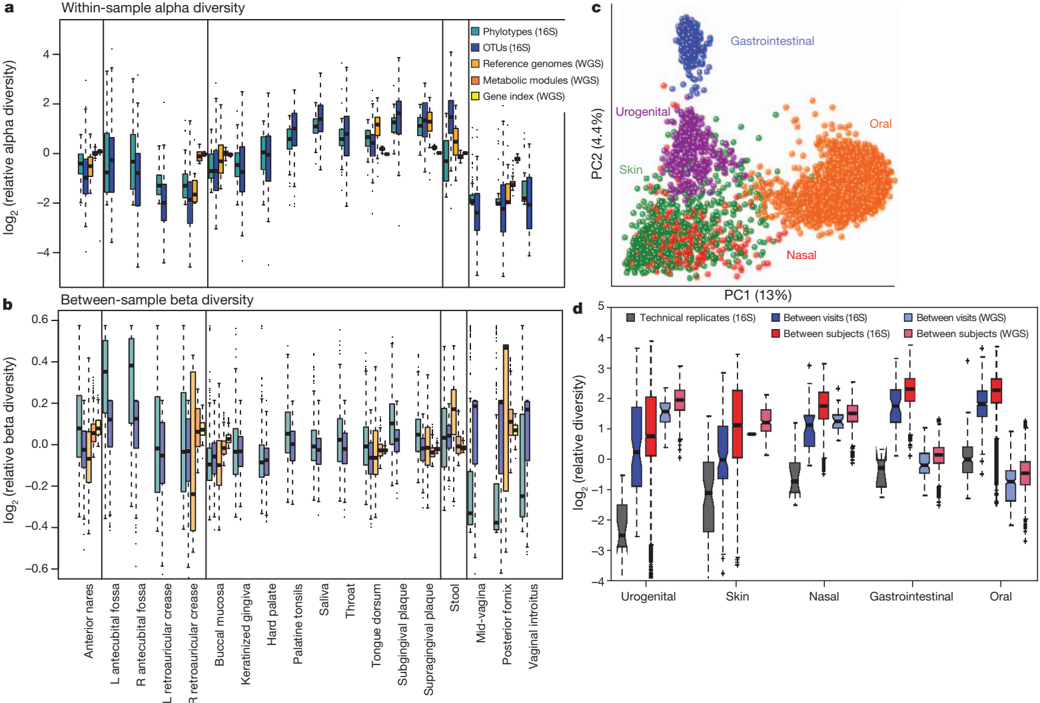
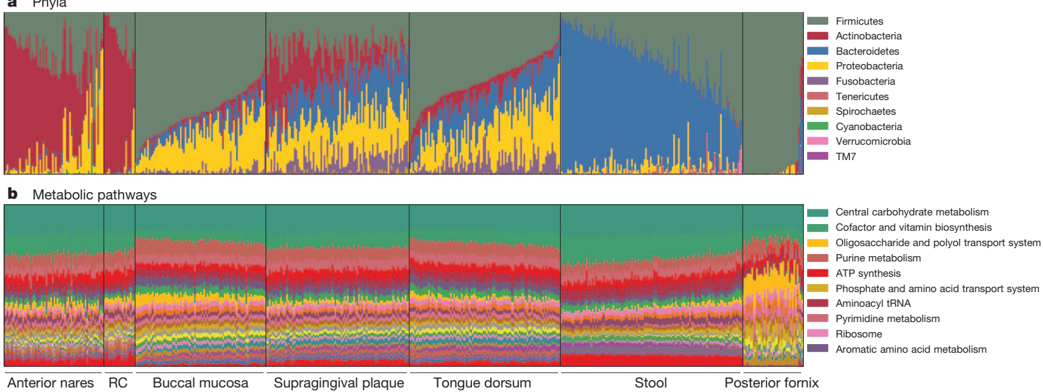
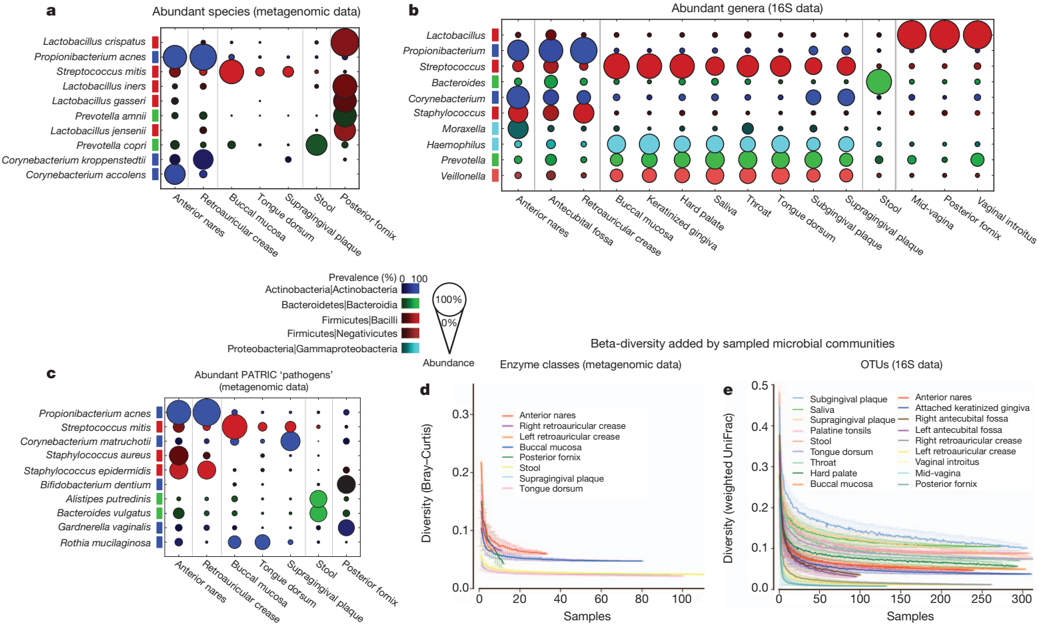
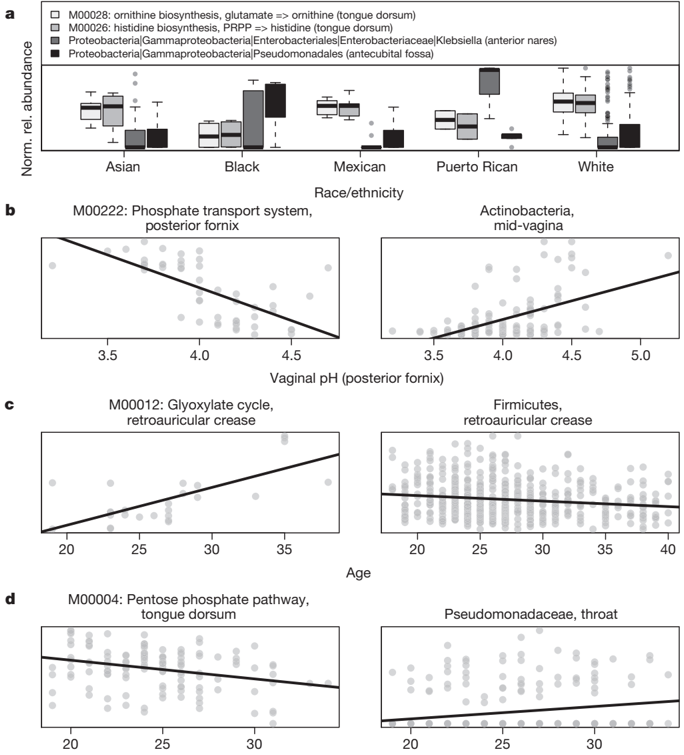
Studies of the human microbiome have revealed that even healthy individuals differ remarkably in the microbes that occupy habitats such as the gut, skin and vagina. Much of this diversity remains unexplained, although diet, environment, host genetics and early microbial exposure have all been implicated. Accordingly, to characterize the ecology of human-associated microbial communities, the Human Microbiome Project has analysed the largest cohort and set of distinct, clinically relevant body habitats so far. We found the diversity and abundance of each habitat’s signature microbes to vary widely even among healthy subjects, with strong niche specialization both within and among individuals. The project encountered an estimated 81–99% of the genera, enzyme families and community configurations occupied by the healthy Western microbiome. Metagenomic carriage of metabolic pathways was stable among individuals despite variation in community structure, and ethnic/racial background proved to be one of the strongest associations of both pathways and microbes with clinical metadata. These results thus delineate the range of structural and functional configurations normal in the microbial communities of a healthy population, enabling future characterization of the epidemiology, ecology and translational applications of the human microbiome.
Overview
The claims and statistics of this paper haven’t been checked yet.
Free: it reads the open-access text and checks the first 5 claims that cite a source we can check. Create a free account to check every claim.
Integrity signals
Registry
Cites
Statistics
Figures
Verification
Claims the paper makes
The claims and statistics of this paper haven’t been checked yet.
Free: it reads the open-access text and checks the first 5 claims that cite a source we can check. Create a free account to check every claim.
Claims other papers make about this one
Each is checked against this paper’s own text: does it say what the citing paper says it does?
The cited source doesn’t support the claim as written.
In the citing paper
“newly diagnosed cases with adenocarcinoma of the colon or rectum were recruited prior to surgery and treatment during 1985–19891, 2. Controls were patients awaiting elective surgery for non-oncologic, non-gastrointestinal conditions at these hospitals during the same period.”
From Assessment of variation in microbial community amplicon sequencing by the Microbiome Quality Control (MBQC) project consortium (2017) · cites this paper as [1]
Checked by a reasoning model — may be wrong.
Experimental — accuracy not yet measuredThe source backs part of the claim, not all of it — or backs it for a different population, condition or comparison.
In the citing paper
“Multiple factors affect the composition of the human gut microbiome, including geography, diet, infection and drug usage56,61–64.”
From Intestinal microbiota signatures of clinical response and immune-related adverse events in melanoma patients treated with anti-PD-1 (2022) · cites this paper as [64]
Experimental — accuracy not yet measuredThe source backs part of the claim, not all of it — or backs it for a different population, condition or comparison.
In the citing paper
“suggesting that no severe gut microbiome dysbiosis was present in the study group at baseline”
From Gut microbiome affects the response to anti-PD-1 immunotherapy in patients with hepatocellular carcinoma (2019) · cites this paper as [9]
Experimental — accuracy not yet measuredThe source backs part of the claim, not all of it — or backs it for a different population, condition or comparison.
In the citing paper
“Gut microbiota comprise thousands of microbial species that are involved in host metabolism by regulating energy extraction, activation of the immune system, drug metabolism, and other processes.”
From The Gut Microbiome Contributes to a Substantial Proportion of the Variation in Blood Lipids (2015) · cites this paper as [3]
Experimental — accuracy not yet measuredThe source backs part of the claim, not all of it — or backs it for a different population, condition or comparison.
In the citing paper
“The human gut microbiota contains thousands of different bacterial taxa as well as various archaea, eukaryotic microbes and viruses, more than three million genes, and harbors an enormous metabolic capacity [1, 2].”
From The athletic gut microbiota (2020) · cites this paper as [1]
Experimental — accuracy not yet measured
20 more claims about this paper
Create a free account to see every claim other papers make about this one.
Self-check
Percentages, sums and reported differences re-computed from the paper’s own numbers.
The self-check needs the paper’s full text.
Citations
Cites
Fast and accurate short read alignment with Burrows-Wheeler transform
Li, H., & Durbin, R. (2009) · Bioinformatics · doi:10.1093/bioinformatics/btp324 · Cited by 58,607
QIIME allows analysis of high-throughput community sequencing data
Caporaso, J. G., Kuczynski, J., Stombaugh, J., Bittinger, K., Bushman, F. D., Costello, E. K., Fierer, N., Peña, A. G., Goodrich, J. K., Gordon, J. I., et al. (2010) · Nature Methods · doi:10.1038/nmeth.f.303 · Cited by 34,887
Fast and accurate long-read alignment with Burrows-Wheeler transform.
Li, H., & Durbin, R. (2010) · Bioinformatics · doi:10.1093/bioinformatics/btp698 · Cited by 12,063
A human gut microbial gene catalogue established by metagenomic sequencing
MetaHIT Consortium, Qin, J., Li, R., Raes, J., Arumugam, M., Burgdorf, K. S., Manichanh, C., Nielsen, T., Pons, N., Levenez, F., et al. (2010) · Nature · doi:10.1038/nature08821 · Cited by 11,624
A core gut microbiome in obese and lean twins
Turnbaugh, P. J., Hamady, M., Yatsunenko, T., Cantarel, B. L., Duncan, A., Ley, R. E., Sogin, M. L., Jones, W. J., Roe, B. A., Affourtit, J. P., et al. (2009) · Nature · doi:10.1038/nature07540 · Cited by 7,823
Self-citationSokol, H., Pigneur, B., Watterlot, L., Lakhdari, O., Bermúdez-Humarán, L. G., Gratadoux, J.-J., Blugeon, S., Bridonneau, C., Furet, J.-P., Corthier, G., et al. (2008) · Proceedings of the National Academy of Sciences · doi:10.1073/pnas.0804812105 · Cited by 4,413
Vaginal microbiome of reproductive-age women
Ravel, J., Gajer, P., Abdo, Z., Schneider, G. M., Koenig, S. S. K., McCulle, S. L., Karlebach, S., Gorle, R., Russell, J., Tacket, C. O., et al. (2011) · Proceedings of the National Academy of Sciences · doi:10.1073/pnas.1002611107 · Cited by 4,254
Bacterial Community Variation in Human Body Habitats Across Space and Time
Costello, E. K., Lauber, C. L., Hamady, M., Fierer, N., Gordon, J. I., & Knight, R. (2009) · Science · doi:10.1126/science.1177486 · Cited by 3,231
Defining the normal bacterial flora of the oral cavity
Aas, J. A., Paster, B. J., Stokes, L. N., Olsen, I., & Dewhirst, F. E. (2005) · Journal of Clinical Microbiology · doi:10.1128/jcm.43.11.5721-5732.2005 · Cited by 3,092
Topographical and Temporal Diversity of the Human Skin Microbiome
Grice, E. A., Kong, H. H., Conlan, S., Deming, C. B., Davis, J., Young, A. C., Program, N. C. S., Bouffard, G. G., Blakesley, R. W., Murray, P. R., et al. (2009) · Science · doi:10.1126/science.1171700 · Cited by 2,953
Cited by
Items 1,301–1,400 of 1,676
Bang, C., Weidenbach, K., Gutsmann, T., Heine, H., & Schmitz, R. A. (2014) · PLoS ONE · doi:10.1371/journal.pone.0099411 · Cited by 171
Brandt, L. J. (2013) · American Journal of Gastroenterology · doi:10.1038/ajg.2012.450 · Cited by 171
Pechal, J. L., Schmidt, C. J., Jordan, H. R., & Benbow, M. E. (2018) · Scientific Reports · doi:10.1038/s41598-018-23989-w · Cited by 171
Microbiome Assembly across Multiple Body Sites in Low-Birthweight Infants
Costello, E. K., Carlisle, E. M., Bik, E. M., Morowitz, M. J., & Relman, D. A. (2013) · mBio · doi:10.1128/mbio.00782-13 · Cited by 171
Aging Microbiota-Gut-Brain Axis in Stroke Risk and Outcome
Honarpisheh, P., Bryan, R. M., & McCullough, L. D. (2022) · Circulation Research · doi:10.1161/circresaha.122.319983 · Cited by 171
Vitamin B 12 modulates the transcriptome of the skin microbiota in acne pathogenesis
Kang, D., Shi, B., Erfe, M. C., Craft, N., & Li, H. (2015) · Science Translational Medicine · doi:10.1126/scitranslmed.aab2009 · Cited by 171
Salivary Microbiome Diversity in Caries-Free and Caries-Affected Children
Jiang, S., Gao, X., Jin, L., & Lo, E. (2016) · International Journal of Molecular Sciences · doi:10.3390/ijms17121978 · Cited by 171
“This finding generally agreed with that of a previous study [19,20], in which similar distribution at the genus level was found in dental plaque collected from severe caries and caries-free children (32 months old).”
ResultNasko, D. J., Koren, S., Phillippy, A. M., & Treangen, T. J. (2018) · Genome Biology · doi:10.1186/s13059-018-1554-6 · Cited by 170
“To assess classification trends in real metagenomic data, two shotgun metagenomes were used: a fecal metagen-ome (SRS105153) and oral metagenome (SRS050029) from the Human Microbiome Project [37].”
MethodMicrobiota dysbiosis in select human cancers: Evidence of association and causality
Chen, J., Domingue, J. C., & Sears, C. L. (2017) · Seminars in Immunology · doi:10.1016/j.smim.2017.08.001 · Cited by 170
Mycobacterium tuberculosis: An Adaptable Pathogen Associated With Multiple Human Diseases
Chai, Q., Zhang, Y., & Liu, C. H. (2018) · Frontiers in Cellular and Infection Microbiology · doi:10.3389/fcimb.2018.00158 · Cited by 170
“The Human Microbiome Project (HMP) has generated massive information on the composition of the human microbiome (Huttenhower et al., 2012; Lloyd-Price et al., 2017).”
BackgroundMicrobiome Multi-Omics Network Analysis: Statistical Considerations, Limitations, and Opportunities
Jiang, D., Armour, C. R., Hu, C., Mei, M., Tian, C., Sharpton, T. J., & Jiang, Y. (2019) · Frontiers in Genetics · doi:10.3389/fgene.2019.00995 · Cited by 170
A Cutibacterium acnes antibiotic modulates human skin microbiota composition in hair follicles
Claesen, J., Spagnolo, J. B., Ramos, S. F., Kurita, K. L., Byrd, A. L., Aksenov, A. A., Melnik, A. V., Wong, W. R., Wang, S., Hernandez, R. D., et al. (2020) · Science Translational Medicine · doi:10.1126/scitranslmed.aay5445 · Cited by 170
Shi, B., Chang, M., Martin, J., Mitreva, M., Lux, R., Klokkevold, P., Sodergren, E., Weinstock, G. M., Haake, S. K., & Li, H. (2015) · mBio · doi:10.1128/mbio.01926-14 · Cited by 170
Utilization of the microbiome in personalized medicine
Ratiner, K., Ciocan, D., Abdeen, S. K., & Elinav, E. (2024) · Nature Reviews Microbiology · doi:10.1038/s41579-023-00998-9 · Cited by 170
“Whereas large-scale studies comprehensively demonstrated geographical microbiome variations across cultures, countries and continents 197–199 , most mechanistic microbiome studies to date included patients residing in developed countries in Europe, North America and some Asian countries 200 .”
A multi-omic future for microbiome studies
Jansson, J. K., & Baker, E. S. (2016) · Nature Microbiology · doi:10.1038/nmicrobiol.2016.49 · Cited by 170
Pancreatic Cancer, Inflammation, and Microbiome
Zambirinis, C. P., Pushalkar, S., Saxena, D., & Miller, G. (2014) · The Cancer Journal · doi:10.1097/ppo.0000000000000045 · Cited by 169
The Gut Microbiome and Sex Hormone-Related Diseases
He, S., Li, H., Yu, Z., Zhang, F., Liang, S., Liu, H., Chen, H., & Lü, M. (2021) · Frontiers in Microbiology · doi:10.3389/fmicb.2021.711137 · Cited by 169
The benefits and pitfalls of machine learning for biomarker discovery
Ng, S., Masarone, S., Watson, D., & Barnes, M. R. (2023) · Cell and Tissue Research · doi:10.1007/s00441-023-03816-z · Cited by 169
“It includes data from over 300 individuals across five different body sites (Human Microbiome Project Consortium 2012) The Human Protein Atlas (HPA) is a research project aimed at mapping all the human proteins in cells, tissues and organs using various omics technologies (Uhlén et al. 2015)…”
BackgroundRettedal, E. A., Gumpert, H., & Sommer, M. O. A. (2014) · Nature Communications · doi:10.1038/ncomms5714 · Cited by 169
Gomez-Arango, L. F., Barrett, H. L., McIntyre, H. D., Callaway, L. K., Morrison, M., & Nitert, M. D. (2017) · Scientific Reports · doi:10.1038/s41598-017-03066-4 · Cited by 168
Extensive Core Microbiome in Drone-Captured Whale Blow Supports a Framework for Health Monitoring
Apprill, A., Miller, C. A., Moore, M. J., Durban, J. W., Fearnbach, H., & Barrett-Lennard, L. G. (2017) · mSystems · doi:10.1128/msystems.00119-17 · Cited by 168
Qiao, Y., Wu, M., Feng, Y., Zhou, Z., Chen, L., & Chen, F. (2018) · Scientific Reports · doi:10.1038/s41598-018-19982-y · Cited by 168
Bober, J. R., Beisel, C. L., & Nair, N. U. (2018) · Annual Review of Biomedical Engineering · doi:10.1146/annurev-bioeng-062117-121019 · Cited by 168
Oral Dysbiotic Communities and Their Implications in Systemic Diseases
Sudhakara, P., Gupta, A., Bhardwaj, A., & Wilson, A. (2018) · Dentistry Journal · doi:10.3390/dj6020010 · Cited by 168
“gingivalis in addition to other Gram-negative organisms [48].”
BackgroundFernandes, R., Viana, S. D., Nunes, S., & Reis, F. (2019) · Biochimica et Biophysica Acta (BBA) - Molecular Basis of Disease · doi:10.1016/j.bbadis.2018.09.032 · Cited by 168
Human oral viruses are personal, persistent and gender-consistent
Abeles, S. R., Robles-Sikisaka, R., Ly, M., Lum, A. G., Salzman, J., Boehm, T. K., & Pride, D. T. (2014) · The ISME Journal · doi:10.1038/ismej.2014.31 · Cited by 168
The Gut Microbiome in Hypertension: Recent Advances and Future Perspectives
Avery, E. G., Bartolomaeus, H., Maifeld, A., Marko, L., Wiig, H., Wilck, N., Rosshart, S. P., Forslund, S. K., & Müller, D. N. (2021) · Circulation Research · doi:10.1161/circresaha.121.318065 · Cited by 168
Warinner, C., Speller, C., Collins, M. J., & Lewis, C. M. (2015) · Journal of Human Evolution · doi:10.1016/j.jhevol.2014.10.016 · Cited by 168
“…microbiomes observed in this study raised the question of whether ancient human microbiotamay bemore biogeographically structured than they are today, a question that has important implications for current attempts to define a ‘core’ human microbiome (Arumugam et al., 2011; Huse et al., 2012).”
Status of the Archaeal and Bacterial Census: an Update
Schloss, P. D., Girard, R. A., Martin, T., Edwards, J., & Thrash, J. C. (2016) · mBio · doi:10.1128/mbio.00201-16 · Cited by 167
“There have been major investments in studying the Earth’s microbiome using 16S rRNA gene sequencing through initiatives such as the Human Microbiome Project (9), the Earth Microbiome Project (10), and the International Census of Marine Microorganisms (11).”
Effect of flow and peristaltic mixing on bacterial growth in a gut-like channel
Cremer, J., Segota, I., Yang, C.-Y., Arnoldini, M., Sauls, J. T., Zhang, Z., Gutierrez, E., Groisman, A., & Hwa, T. (2016) · Proceedings of the National Academy of Sciences · doi:10.1073/pnas.1601306113 · Cited by 167
Johnson, H. R., Trinidad, D. D., Guzman, S., Khan, Z., Parziale, J. V., DeBruyn, J. M., & Lents, N. H. (2016) · PLOS ONE · doi:10.1371/journal.pone.0167370 · Cited by 167
Cremer, J., Arnoldini, M., & Hwa, T. (2017) · Proceedings of the National Academy of Sciences · doi:10.1073/pnas.1619598114 · Cited by 167
Navigating the Gut Buffet: Control of Polysaccharide Utilization in Bacteroides spp.
Schwalm, N. D., & Groisman, E. A. (2017) · Trends in Microbiology · doi:10.1016/j.tim.2017.06.009 · Cited by 167
Mapping the ecological networks of microbial communities
Xiao, Y., Angulo, M. T., Friedman, J., Waldor, M. K., Weiss, S. T., & Liu, Y.-Y. (2017) · Nature Communications · doi:10.1038/s41467-017-02090-2 · Cited by 167
“This is due to the fact that such microbial communities often display stability and resilience 26,27 , which leads to measurements containing largely their steady-state behavior.”
InfluentialLinks between environment, diet, and the hunter-gatherer microbiome
Fragiadakis, G. K., Smits, S. A., Sonnenburg, E. D., Van Treuren, W., Reid, G., Knight, R., Manjurano, A., Changalucha, J., Dominguez-Bello, M. G., Leach, J., et al. (2019) · Gut Microbes · doi:10.1080/19490976.2018.1494103 · Cited by 167
Maintaining homeostatic control of periodontal bone tissue
Hathaway‐Schrader, J. D., & Novince, C. M. (2021) · Periodontology 2000 · doi:10.1111/prd.12368 · Cited by 167
The oral microbiome in the pathophysiology of cardiovascular disease
Tonelli, A., Lumngwena, E. N., & Ntusi, N. A. B. (2023) · Nature Reviews Cardiology · doi:10.1038/s41569-022-00825-3 · Cited by 167
Zhou, X., Shen, X., Johnson, J. S., Spakowicz, D. J., Agnello, M., Zhou, W., Avina, M., Honkala, A., Chleilat, F., Chen, S. J., et al. (2024) · Cell Host & Microbe · doi:10.1016/j.chom.2024.02.012 · Cited by 167
Revisiting the hygiene hypothesis for allergy and asthma
Liu, A. H. (2015) · Journal of Allergy and Clinical Immunology · doi:10.1016/j.jaci.2015.08.012 · Cited by 167
The gut microbiota and Type 1 Diabetes
Gülden, E., Wong, F. S., & Wen, L. (2015) · Clinical Immunology · doi:10.1016/j.clim.2015.05.013 · Cited by 166
Biohybrid Microtube Swimmers Driven by Single Captured Bacteria
Stanton, M. M., Park, B., Miguel‐López, A., Ma, X., Sitti, M., & Sánchez, S. (2017) · Small · doi:10.1002/smll.201603679 · Cited by 166
Stanislawski, M. A., Dabelea, D., Wagner, B. D., Iszatt, N., Dahl, C., Sontag, M. K., Knight, R., Lozupone, C. A., & Eggesbø, M. (2018) · mBio · doi:10.1128/mbio.01751-18 · Cited by 166
Microbiota-Immune Interaction in the Pathogenesis of Gut-Derived Infection
Wang, C., Li, Q., & Ren, J. (2019) · Frontiers in Immunology · doi:10.3389/fimmu.2019.01873 · Cited by 166
Inflammatory Networks Linking Oral Microbiome with Systemic Health and Disease
Kleinstein, S. E., Nelson, K. E., & Freire, M. (2020) · Journal of Dental Research · doi:10.1177/0022034520926126 · Cited by 166
Where Next for Microbiome Research?
Waldor, M. K., Tyson, G., Borenstein, E., Ochman, H., Moeller, A., Finlay, B. B., Kong, H. H., Gordon, J. I., Nelson, K. E., Dabbagh, K., et al. (2015) · PLOS Biology · doi:10.1371/journal.pbio.1002050 · Cited by 166
“The microbial communities of human skin include signature taxa that are distinguishable from other epithelial sites (oral mucosa, vaginal mucosa, gut), highlighting some of the unique features of the skin microbiome [11].”
BackgroundMicrobiomes: unifying animal and plant systems through the lens of community ecology theory
Christian, N., Whitaker, B. K., & Clay, K. (2015) · Frontiers in Microbiology · doi:10.3389/fmicb.2015.00869 · Cited by 166
Horizontal gene transfer among host-associated microbes
Moura de Sousa, J., Lourenço, M., & Gordo, I. (2023) · Cell Host & Microbe · doi:10.1016/j.chom.2023.03.017 · Cited by 166
Examining the healthy human microbiome concept
Joos, R., Boucher, K., Lavelle, A., Arumugam, M., Blaser, M. J., Claesson, M. J., Clarke, G., Cotter, P. D., De Sordi, L., Dominguez-Bello, M. G., et al. (2025) · Nature Reviews Microbiology · doi:10.1038/s41579-024-01107-0 · Cited by 166
“…approaches is critical for future efforts and may contribute to more generalizable definitions of health, as microbiome functionality has been reported to be more stable and conserved across individuals 24 , in contrast to the interindividual variability seen in microbiome composition 141 .”
Hoen, A. G., Li, J., Moulton, L. A., O'Toole, G. A., Housman, M. L., Koestler, D. C., Guill, M. F., Moore, J. H., Hibberd, P. L., Morrison, H. G., et al. (2015) · The Journal of Pediatrics · doi:10.1016/j.jpeds.2015.02.049 · Cited by 165
Fungi inhabiting the healthy human gastrointestinal tract: a diverse and dynamic community
Hallen-Adams, H. E., Kachman, S. D., Kim, J., Legge, R. M., & Martínez, I. (2015) · Fungal Ecology · doi:10.1016/j.funeco.2015.01.006 · Cited by 165
Vesty, A., Biswas, K., Taylor, M. W., Gear, K., & Douglas, R. G. (2017) · PLOS ONE · doi:10.1371/journal.pone.0169877 · Cited by 165
Skin Immune Landscape: Inside and Outside the Organism
Abdallah, F., Mijouin, L., & Pichon, C. (2017) · Mediators of Inflammation · doi:10.1155/2017/5095293 · Cited by 165
“, a lipophilic bacterium that hydrolyses triglycerides present in sebum into free fatty acids resulting in skin acidification and emollition [5, 137, 138].”
BackgroundThe Seagrass Holobiont and Its Microbiome
Ugarelli, K., Chakrabarti, S., Laas, P., & Stingl, U. (2017) · Microorganisms · doi:10.3390/microorganisms5040081 · Cited by 165
Harsch, I. A., & Konturek, P. C. (2018) · Medical Sciences · doi:10.3390/medsci6020032 · Cited by 165
Metagenomic Approaches for Understanding New Concepts in Microbial Science
Alves, L. D. F., Westmann, C. A., Lovate, G. L., de Siqueira, G. M. V., Borelli, T. C., & Guazzaroni, M.-E. (2018) · International Journal of Genomics · doi:10.1155/2018/2312987 · Cited by 165
“[74] The Human Microbiome Project Consortium, “Structure, function and diversity of the healthy human microbiome,” Nature, vol.”
BackgroundThe microbiome and the hallmarks of cancer
Fulbright, L. E., Ellermann, M., & Arthur, J. C. (2017) · PLOS Pathogens · doi:10.1371/journal.ppat.1006480 · Cited by 164
Human-Derived Bifidobacterium dentium Modulates the Mammalian Serotonergic System and Gut–Brain Axis
Engevik, M. A., Luck, B., Visuthranukul, C., Ihekweazu, F. D., Engevik, A. C., Shi, Z., Danhof, H. A., Chang-Graham, A. L., Hall, A., Endres, B. T., et al. (2021) · Cellular and Molecular Gastroenterology and Hepatology · doi:10.1016/j.jcmgh.2020.08.002 · Cited by 164
Checa-Ros, A., Jeréz-Calero, A., Molina-Carballo, A., Campoy, C., & Muñoz-Hoyos, A. (2021) · Nutrients · doi:10.3390/nu13010249 · Cited by 164
The oral microbiome and adverse pregnancy outcomes
Cobb, C., Kelly, P., Williams, K., Babbar, S., Angolkar, M., & Derman, R. (2017) · International Journal of Women's Health · doi:10.2147/ijwh.s142730 · Cited by 164
Influence of Proton-Pump Inhibitors on the Luminal Microbiota in the Gastrointestinal Tract
Tsuda, A., Suda, W., Morita, H., Takanashi, K., Takagi, A., Koga, Y., & Hattori, M. (2015) · Clinical and Translational Gastroenterology · doi:10.1038/ctg.2015.20 · Cited by 164
ElRakaiby, M., Dutilh, B. E., Rizkallah, M. R., Boleij, A., Cole, J. N., & Aziz, R. K. (2014) · OMICS: A Journal of Integrative Biology · doi:10.1089/omi.2014.0018 · Cited by 164
Gut integrity in critical illness
Otani, S., & Coopersmith, C. M. (2019) · Journal of Intensive Care · doi:10.1186/s40560-019-0372-6 · Cited by 164
Holscher, H. D., Caporaso, J. G., Hooda, S., Brulc, J. M., Fahey, G. C., & Swanson, K. S. (2015) · The American Journal of Clinical Nutrition · doi:10.3945/ajcn.114.092064 · Cited by 164
Boutin, S., Graeber, S. Y., Weitnauer, M., Panitz, J., Stahl, M., Clausznitzer, D., Kaderali, L., Einarsson, G., Tunney, M. M., Elborn, J. S., et al. (2015) · PLOS ONE · doi:10.1371/journal.pone.0116029 · Cited by 164
Lu, Y. Y., Chen, T., Fuhrman, J. A., & Sun, F. (2017) · Bioinformatics · doi:10.1093/bioinformatics/btw290 · Cited by 164
Saad, R., Rizkallah, M. R., & Aziz, R. K. (2012) · Gut Pathogens · doi:10.1186/1757-4749-4-16 · Cited by 164
Logan, S. L., Thomas, J., Yan, J., Baker, R. P., Shields, D. S., Xavier, J. B., Hammer, B. K., & Parthasarathy, R. (2018) · Proceedings of the National Academy of Sciences · doi:10.1073/pnas.1720133115 · Cited by 164
Cross-Domain and Viral Interactions in the Microbiome
Rowan-Nash, A. D., Korry, B. J., Mylonakis, E., & Belenky, P. (2019) · Microbiology and Molecular Biology Reviews · doi:10.1128/mmbr.00044-18 · Cited by 163
Hisada, T., Endoh, K., & Kuriki, K. (2015) · Archives of Microbiology · doi:10.1007/s00203-015-1125-0 · Cited by 163
Liu, Y., Ko, E. Y.-L., Wong, K. K.-W., Chen, X., Cheung, W.-C., Law, T. S.-M., Chung, J. P.-W., Tsui, S. K.-W., Li, T.-C., & Chim, S. S.-C. (2019) · Fertility and Sterility · doi:10.1016/j.fertnstert.2019.05.015 · Cited by 163
Microbiology of diabetic foot infections: from Louis Pasteur to ‘crime scene investigation’
Spichler, A., Hurwitz, B. L., Armstrong, D. G., & Lipsky, B. A. (2015) · BMC Medicine · doi:10.1186/s12916-014-0232-0 · Cited by 163
CURRENT NUTRITIONAL RECOMMENDATIONS AND NOVEL DIETARY STRATEGIES TO MANAGE SARCOPENIA
CALVANI, R., MICCHELI, A., LANDI, F., BOSSOLA, M., CESARI, M., LEEUWENBURGH, C., SIEBER, C. C., BERNABEI, R., & MARZETTI, E. (2013) · Journal of Frailty & Aging · doi:10.14283/jfa.2013.7 · Cited by 163
Leung, M. H. Y., & Lee, P. K. H. (2016) · Microbiome · doi:10.1186/s40168-016-0165-2 · Cited by 163
The role of gut microbiota in bone homeostasis
Behera, J., Ison, J., Tyagi, S. C., & Tyagi, N. (2020) · Bone · doi:10.1016/j.bone.2020.115317 · Cited by 162
“Human Microbiome Project Consortium (2012) Structure, function and diversity of the healthy human microbiome.”
BackgroundLinking dietary patterns with gut microbial composition and function
Sheflin, A. M., Melby, C. L., Carbonero, F., & Weir, T. L. (2017) · Gut Microbes · doi:10.1080/19490976.2016.1270809 · Cited by 162
No evidence for a common blood microbiome based on a population study of 9,770 healthy humans
Tan, C. C. S., Ko, K. K. K., Chen, H., Liu, J., Loh, M., SG10K_Health Consortium, Chia, M., & Nagarajan, N. (2023) · Nature Microbiology · doi:10.1038/s41564-023-01350-w · Cited by 162
Mora, M., Mahnert, A., Koskinen, K., Pausan, M. R., Oberauner-Wappis, L., Krause, R., Perras, A. K., Gorkiewicz, G., Berg, G., & Moissl-Eichinger, C. (2016) · Frontiers in Microbiology · doi:10.3389/fmicb.2016.01573 · Cited by 162
A tale of two risks: smoking, diabetes and the subgingival microbiome
Ganesan, S. M., Joshi, V., Fellows, M., Dabdoub, S. M., Nagaraja, H. N., O’Donnell, B., Deshpande, N. R., & Kumar, P. S. (2017) · The ISME Journal · doi:10.1038/ismej.2017.73 · Cited by 162
Lappan, R., Imbrogno, K., Sikazwe, C., Anderson, D., Mok, D., Coates, H., Vijayasekaran, S., Bumbak, P., Blyth, C. C., Jamieson, S. E., et al. (2018) · BMC Microbiology · doi:10.1186/s12866-018-1154-3 · Cited by 162
Microbial biofilms and the human intestinal microbiome
de Vos, W. M. (2015) · npj Biofilms and Microbiomes · doi:10.1038/npjbiofilms.2015.5 · Cited by 162
Human gut bacteria contain acquired interbacterial defence systems
Ross, B. D., Verster, A. J., Radey, M. C., Schmidtke, D. T., Pope, C. E., Hoffman, L. R., Hajjar, A. M., Peterson, S. B., Borenstein, E., & Mougous, J. D. (2019) · Nature · doi:10.1038/s41586-019-1708-z · Cited by 162
Dwiyanto, J., Hussain, M. H., Reidpath, D., Ong, K. S., Qasim, A., Lee, S. W. H., Lee, S. M., Foo, S. C., Chong, C. W., & Rahman, S. (2021) · Scientific Reports · doi:10.1038/s41598-021-82311-3 · Cited by 161
The gut microbiome and mental health: implications for anxiety- and trauma-related disorders
Malan-Muller, S., Valles-Colomer, M., Raes, J., Lowry, C. A., Seedat, S., & Hemmings, S. M. J. (2018) · OMICS: A Journal of Integrative Biology · doi:10.1089/omi.2017.0077 · Cited by 161
“Furthermore, ethnic/racial background was one of the strongest associations of both microbes and pathways with clinical metadata (Human Micro-biome Project Consortium, 2012).”
Time to test antibacterial therapy in Alzheimer’s disease
Panza, F., Lozupone, M., Solfrizzi, V., Watling, M., & Imbimbo, B. P. (2019) · Brain · doi:10.1093/brain/awz244 · Cited by 161
Newly Explored Faecalibacterium Diversity Is Connected to Age, Lifestyle, Geography, and Disease
De Filippis, F., Pasolli, E., & Ercolini, D. (2020) · Current Biology · doi:10.1016/j.cub.2020.09.063 · Cited by 161
Kumagai, T., Rahman, F., & Smith, A. (2018) · Nutrients · doi:10.3390/nu10101405 · Cited by 161
“They degrade polysaccharides, synthesize vitamins, and produce short-fatty chain acids such as butyric acid and propionic acid by fermentation [60].”
BackgroundPursuing Human-Relevant Gut Microbiota-Immune Interactions
Spencer, S. P., Fragiadakis, G. K., & Sonnenburg, J. L. (2019) · Immunity · doi:10.1016/j.immuni.2019.08.002 · Cited by 161
Potential Use of Marine Seaweeds as Prebiotics: A Review
Lopez-Santamarina, A., Miranda, J. M., Mondragon, A. D. C., Lamas, A., Cardelle-Cobas, A., Franco, C. M., & Cepeda, A. (2020) · Molecules · doi:10.3390/molecules25041004 · Cited by 161
New View on Dietary Fiber Selection for Predictable Shifts in Gut Microbiota
Cantu-Jungles, T. M., & Hamaker, B. R. (2020) · mBio · doi:10.1128/mbio.02179-19 · Cited by 161
Olomu, I. N., Pena-Cortes, L. C., Long, R. A., Vyas, A., Krichevskiy, O., Luellwitz, R., Singh, P., & Mulks, M. H. (2020) · BMC Microbiology · doi:10.1186/s12866-020-01839-y · Cited by 161
“an attempt determine whether a core healthy human microbiome exists in each of these sites [1, 2].”
BackgroundMicrobiota-Derived Metabolites in Tumor Progression and Metastasis
Rossi, T., Vergara, D., Fanini, F., Maffia, M., Bravaccini, S., & Pirini, F. (2020) · International Journal of Molecular Sciences · doi:10.3390/ijms21165786 · Cited by 161
“This is also because the composition of the microbiota varies greatly from person to person, even in healthy individuals, and does not necessarily provide functional information [9,10].”
BackgroundThe microbial landscape of colorectal cancer
White, M. T., & Sears, C. L. (2024) · Nature Reviews Microbiology · doi:10.1038/s41579-023-00973-4 · Cited by 161
“First, the microbiome of healthy patients is highly variable 11 .”
Comparison of Collection Methods for Fecal Samples in Microbiome Studies
Vogtmann, E., Chen, J., Amir, A., Shi, J., Abnet, C. C., Nelson, H., Knight, R., Chia, N., & Sinha, R. (2017) · American Journal of Epidemiology · doi:10.1093/aje/kww177 · Cited by 161
When pathogenic bacteria meet the intestinal microbiota
Rolhion, N., & Chassaing, B. (2016) · Philosophical Transactions of the Royal Society B: Biological Sciences · doi:10.1098/rstb.2015.0504 · Cited by 160
Traumatic Brain Injury in Mice Induces Acute Bacterial Dysbiosis Within the Fecal Microbiome
Treangen, T. J., Wagner, J., Burns, M. P., & Villapol, S. (2018) · Frontiers in Immunology · doi:10.3389/fimmu.2018.02757 · Cited by 160
Armour, C. R., Nayfach, S., Pollard, K. S., & Sharpton, T. J. (2019) · mSystems · doi:10.1128/msystems.00332-18 · Cited by 160
The Role of the Gut Microbiota in Lipid and Lipoprotein Metabolism
Yu, Y., Raka, F., & Adeli, K. (2019) · Journal of Clinical Medicine · doi:10.3390/jcm8122227 · Cited by 160
Chng, K. R., Ghosh, T. S., Tan, Y. H., Nandi, T., Lee, I. R., Ng, A. H. Q., Li, C., Ravikrishnan, A., Lim, K. M., Lye, D., et al. (2020) · Nature Ecology & Evolution · doi:10.1038/s41559-020-1236-0 · Cited by 160
Rodrigues, R. R., Gurung, M., Li, Z., García-Jaramillo, M., Greer, R., Gaulke, C., Bauchinger, F., You, H., Pederson, J. W., Vasquez-Perez, S., et al. (2021) · Nature Communications · doi:10.1038/s41467-020-20313-x · Cited by 160
Karcher, N., Nigro, E., Punčochář, M., Blanco-Míguez, A., Ciciani, M., Manghi, P., Zolfo, M., Cumbo, F., Manara, S., Golzato, D., et al. (2021) · Genome Biology · doi:10.1186/s13059-021-02427-7 · Cited by 159
Self-citation
Metadata
- Authors
- The Human Microbiome Project Consortium
- Venue
- Nature
- Published
- 2012-06
- Volume
- 486
- Issue
- 7402
- Pages
- 207-214
- ISSN
- 0028-0836 (ISSN-L)
- 1476-4687
- PMC
- PMC3564958
- OpenAlex
- W2128769815
- Semantic Scholar
- 0c431405ec1eb4b84a52ed1fcc530454a4b8bf6f
- Cited by
- 11,726
- References
- 29
- Citations by year
- 2026: 586 · 2025: 748 · 2024: 890 · 2023: 950 · 2022: 1024 · 2021: 1202 · 2020: 1137 · 2019: 1032 · 2018: 863 · 2017: 853 · 2016: 732 · 2015: 651 · 2014: 532 · 2013: 413 · 2012: 104
- FWCI
- 218.52
- Type
- journal article
- Language
- en
- Open access
- hybrid
- doi.org
- Licence
- cc-by-nc-sa
- creativecommons.org/licenses/by-nc-sa/3.0/ (tdm)
- Locations
- Nature (publishedVersion, cc-by-nc-sa)
- PubMed (publishedVersion)
- Goce Delchev University Repository (Goce Delčev University of Štip) (acceptedVersion)
- Europe PMC (PubMed Central) (acceptedVersion)
- PubMed Central (acceptedVersion)
- eScholarship (California Digital Library) (submittedVersion, cc-by)
- Rutgers University Community Repository (Rutgers University) (submittedVersion)
- Open Access Server of the Woods Hole Scientific Community (Woods Hole Scientific Community) (submittedVersion)
- eScholarship (California Digital Library) (submittedVersion)
- Funders
- National Science Foundation (DEAC02-05CH11231, 1053486, 0812111)
- Howard Hughes Medical Institute (DE-AC02-05CH11231)
- U.S. Department of Energy (-AC02-05CH11231, Contract No. DE-AC02-05-CH11231, 05CH11231, No. DE-AC02-05-CH11231, DE AC02 05CH11231, DE-AC02-)
- Gordon and Betty Moore Foundation
- Rice University
- Gladstone Institutes
- Crohn's and Colitis Foundation
- Crohn's and Colitis Foundation of Canada
- Fonds Wetenschappelijk Onderzoek (DE-AC02-05CH11231)
- Vlaamse regering
- National Institutes of Health (5r01hg005172-03, n01hg62088-6-0-1, DE-AC02–05CH11231, DBI-1053486, DP2OD001500, 5r01hg004857-03, n01ai30071-19-0-3)
- Defense Threat Reduction Agency (B104153I, DE-AC02-05CH11231, B084531I)
- Office of Science (No. DE-AC02- 05-CH11231, DEAC02–05CH11231, AC02-05CH11231, DE-AC02, 05CH11231, Contract No. DE-AC02-05CH11231)
- Horace H. Rackham School of Graduate Studies, University of Michigan
- National Human Genome Research Institute (R01HG004885, U54HG003067, R01HG005975, R01-HG004857, U54HG004969, R01HG004853, U54HG003079, U01HG004866, R01HG005969, R01-HG005172, U54HG003273, R01HG004872, R21HG005811, U54HG004968, N01 HG062088, R01HG004906, R01HG004908, U54HG004973, R01HG004856, R01HG004900, R01HG005171, R01HG004877)
- National Cancer Institute (R21CA139193)
- National Institute of General Medical Sciences (T32GM087237)
- National Institute of Allergy and Infectious Diseases (UH2AI083263, UH3AI083263, U54AI084844, T32AI007528, N01 AI030071)
- National Institute of Diabetes and Digestive and Kidney Diseases (UH2DK083990, UH3DK083993)
- National Institute of Arthritis and Musculoskeletal and Skin Diseases (UH2 AR057504, UH2AR057506, UH3-AR057504)
- National Institute of Dental and Craniofacial Research (P30DE020751, R01DE021574, U01DE016937, RC1DE0202098, R37DE016937, RC1DE020298)
- U.S. National Library of Medicine
- Division of Biological Infrastructure (DBI-1053486)
- Army Research Office (DE-AC02-05CH11231, W911NF-11-1-0473, W911NF, W911NF-11)
- Los Alamos National Laboratory (DE-AC02-05CH11231)
- Topics
- Life Sciences › Biochemistry, Genetics and Molecular Biology › Molecular Biology › Gut microbiota and health
- Physical Sciences › Environmental Science › Ecology › Microbial Community Ecology and Physiology
- Health Sciences › Dentistry › Periodontics › Oral microbiology and periodontitis research
- Keywords
- human microbiome, healthy individuals, microbial diversity, gut microbiota, skin microbiome, vaginal microbiota, ecological specialization, metabolic pathways, Human Microbiome Project, metagenomics, microbial ecology
- MeSH terms
- Adolescent, Adult, Bacteria, Female, Health, Humans, Male, Phenotype, RNA, Ribosomal, 16S, Ecosystem, Biodiversity, Metabolic Networks and Pathways, Metagenome, Young Adult, Metagenomics
About these checks
Registry, retraction, Cites and statistics results are computed, not judged, with one exception: a printed reference that no index lists is read once by a model before it counts as a citation error. Claims are extracted by a model and kept only when their quote appears verbatim in the text; each cited source is then checked, with a model’s help, for whether it says what the claim relies on. Those verdicts can be wrong — read the claim’s quote and the cited source before relying on one.
Statistics and arithmetic are recomputed, not judged.
Confidence bands are shown only for fields calibrated on our annotated test set. None is calibrated yet, so no band is shown.
What counts as a claim ›How we measure confidence ›How we check this ›
Are you an author, or do you see a problem with this page? Request a review
Data sources
Bibliographic data: Semantic Scholar, OpenAlex, Crossref.
Contains information from the Semantic Scholar Academic Graph Datasets, made available under the ODC Attribution License (ODC-BY 1.0).
Semantic Scholar’s data is described in: Kinney, R., et al. (2023). The Semantic Scholar Open Data Platform. arXiv:2301.10140.
