

Structure, function and diversity of the healthy human microbiome
Open accessThe DOI matches its Crossref record; 29 of the 29 references it cites were found in a registry or an index.
Abstract
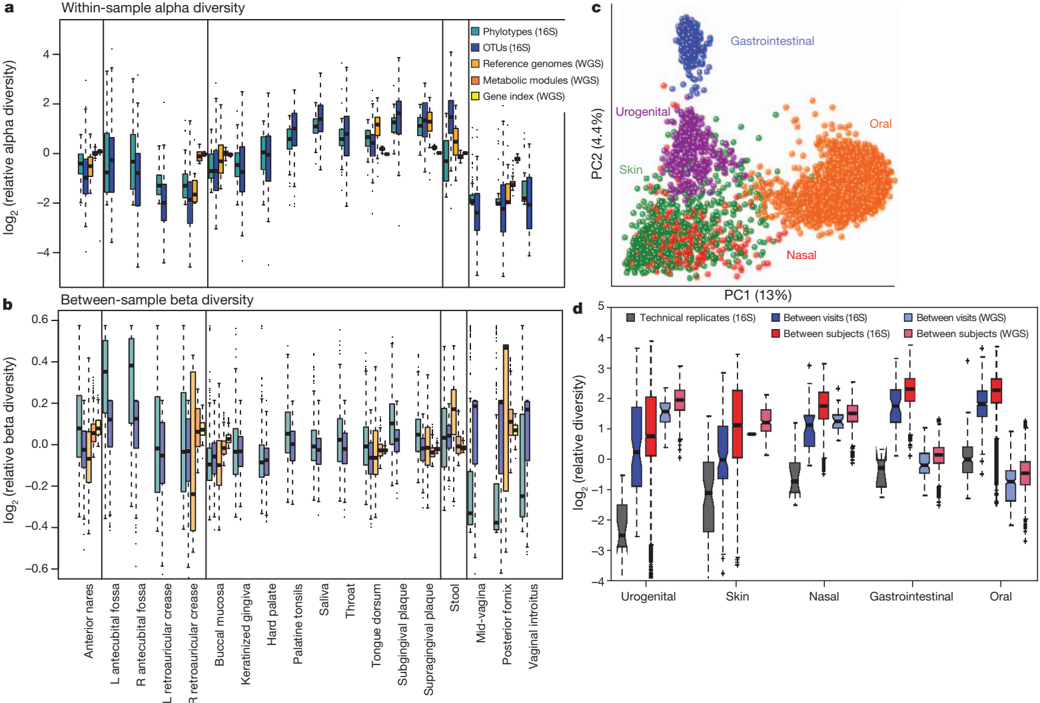
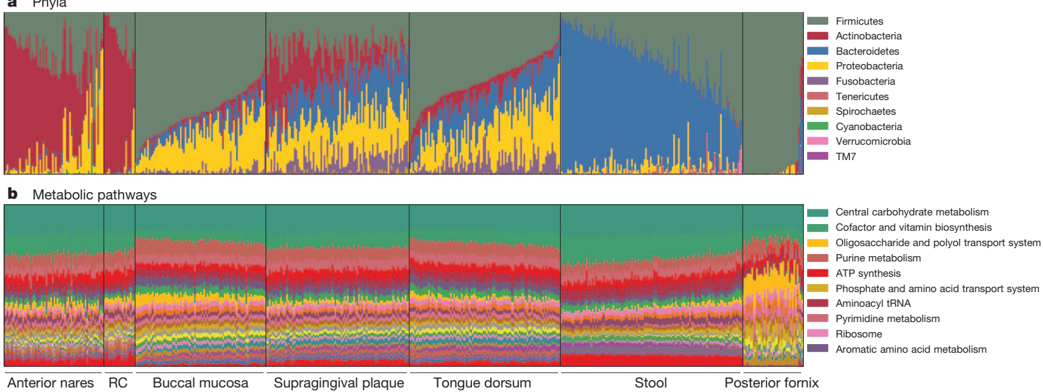
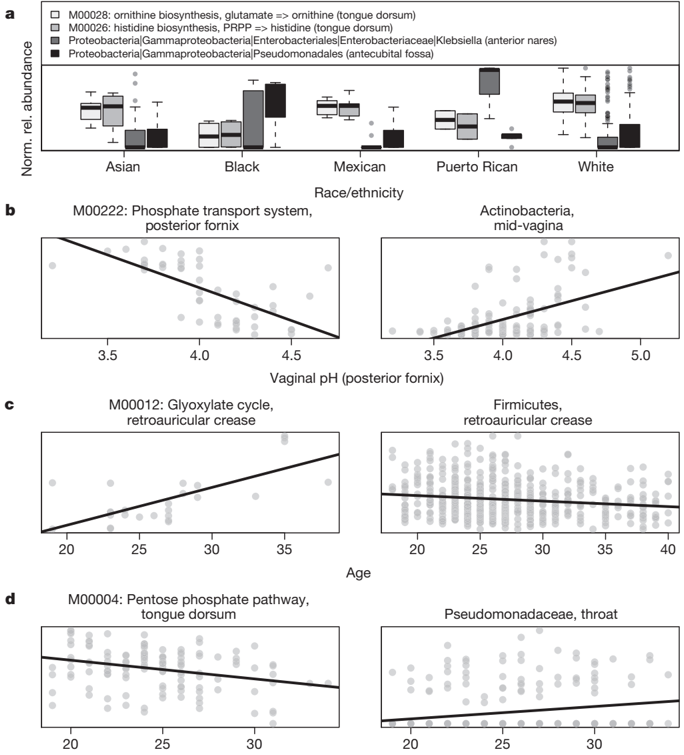
Studies of the human microbiome have revealed that even healthy individuals differ remarkably in the microbes that occupy habitats such as the gut, skin and vagina. Much of this diversity remains unexplained, although diet, environment, host genetics and early microbial exposure have all been implicated. Accordingly, to characterize the ecology of human-associated microbial communities, the Human Microbiome Project has analysed the largest cohort and set of distinct, clinically relevant body habitats so far. We found the diversity and abundance of each habitat’s signature microbes to vary widely even among healthy subjects, with strong niche specialization both within and among individuals. The project encountered an estimated 81–99% of the genera, enzyme families and community configurations occupied by the healthy Western microbiome. Metagenomic carriage of metabolic pathways was stable among individuals despite variation in community structure, and ethnic/racial background proved to be one of the strongest associations of both pathways and microbes with clinical metadata. These results thus delineate the range of structural and functional configurations normal in the microbial communities of a healthy population, enabling future characterization of the epidemiology, ecology and translational applications of the human microbiome.
Overview
The claims and statistics of this paper haven’t been checked yet.
Free: it reads the open-access text and checks the first 5 claims that cite a source we can check. Create a free account to check every claim.
Integrity signals
Registry
Cites
Statistics
Figures
Verification
Claims the paper makes
The claims and statistics of this paper haven’t been checked yet.
Free: it reads the open-access text and checks the first 5 claims that cite a source we can check. Create a free account to check every claim.
Claims other papers make about this one
Each is checked against this paper’s own text: does it say what the citing paper says it does?
The cited source doesn’t support the claim as written.
In the citing paper
“newly diagnosed cases with adenocarcinoma of the colon or rectum were recruited prior to surgery and treatment during 1985–19891, 2. Controls were patients awaiting elective surgery for non-oncologic, non-gastrointestinal conditions at these hospitals during the same period.”
From Assessment of variation in microbial community amplicon sequencing by the Microbiome Quality Control (MBQC) project consortium (2017) · cites this paper as [1]
Checked by a reasoning model — may be wrong.
Experimental — accuracy not yet measuredThe source backs part of the claim, not all of it — or backs it for a different population, condition or comparison.
In the citing paper
“Multiple factors affect the composition of the human gut microbiome, including geography, diet, infection and drug usage56,61–64.”
From Intestinal microbiota signatures of clinical response and immune-related adverse events in melanoma patients treated with anti-PD-1 (2022) · cites this paper as [64]
Experimental — accuracy not yet measuredThe source backs part of the claim, not all of it — or backs it for a different population, condition or comparison.
In the citing paper
“suggesting that no severe gut microbiome dysbiosis was present in the study group at baseline”
From Gut microbiome affects the response to anti-PD-1 immunotherapy in patients with hepatocellular carcinoma (2019) · cites this paper as [9]
Experimental — accuracy not yet measuredThe source backs part of the claim, not all of it — or backs it for a different population, condition or comparison.
In the citing paper
“Gut microbiota comprise thousands of microbial species that are involved in host metabolism by regulating energy extraction, activation of the immune system, drug metabolism, and other processes.”
From The Gut Microbiome Contributes to a Substantial Proportion of the Variation in Blood Lipids (2015) · cites this paper as [3]
Experimental — accuracy not yet measuredThe source backs part of the claim, not all of it — or backs it for a different population, condition or comparison.
In the citing paper
“The human gut microbiota contains thousands of different bacterial taxa as well as various archaea, eukaryotic microbes and viruses, more than three million genes, and harbors an enormous metabolic capacity [1, 2].”
From The athletic gut microbiota (2020) · cites this paper as [1]
Experimental — accuracy not yet measured
20 more claims about this paper
Create a free account to see every claim other papers make about this one.
Self-check
Percentages, sums and reported differences re-computed from the paper’s own numbers.
The self-check needs the paper’s full text.
Citations
Cites
Fast and accurate short read alignment with Burrows-Wheeler transform
Li, H., & Durbin, R. (2009) · Bioinformatics · doi:10.1093/bioinformatics/btp324 · Cited by 58,607
QIIME allows analysis of high-throughput community sequencing data
Caporaso, J. G., Kuczynski, J., Stombaugh, J., Bittinger, K., Bushman, F. D., Costello, E. K., Fierer, N., Peña, A. G., Goodrich, J. K., Gordon, J. I., et al. (2010) · Nature Methods · doi:10.1038/nmeth.f.303 · Cited by 34,887
Fast and accurate long-read alignment with Burrows-Wheeler transform.
Li, H., & Durbin, R. (2010) · Bioinformatics · doi:10.1093/bioinformatics/btp698 · Cited by 12,063
A human gut microbial gene catalogue established by metagenomic sequencing
MetaHIT Consortium, Qin, J., Li, R., Raes, J., Arumugam, M., Burgdorf, K. S., Manichanh, C., Nielsen, T., Pons, N., Levenez, F., et al. (2010) · Nature · doi:10.1038/nature08821 · Cited by 11,624
A core gut microbiome in obese and lean twins
Turnbaugh, P. J., Hamady, M., Yatsunenko, T., Cantarel, B. L., Duncan, A., Ley, R. E., Sogin, M. L., Jones, W. J., Roe, B. A., Affourtit, J. P., et al. (2009) · Nature · doi:10.1038/nature07540 · Cited by 7,823
Self-citationSokol, H., Pigneur, B., Watterlot, L., Lakhdari, O., Bermúdez-Humarán, L. G., Gratadoux, J.-J., Blugeon, S., Bridonneau, C., Furet, J.-P., Corthier, G., et al. (2008) · Proceedings of the National Academy of Sciences · doi:10.1073/pnas.0804812105 · Cited by 4,413
Vaginal microbiome of reproductive-age women
Ravel, J., Gajer, P., Abdo, Z., Schneider, G. M., Koenig, S. S. K., McCulle, S. L., Karlebach, S., Gorle, R., Russell, J., Tacket, C. O., et al. (2011) · Proceedings of the National Academy of Sciences · doi:10.1073/pnas.1002611107 · Cited by 4,254
Bacterial Community Variation in Human Body Habitats Across Space and Time
Costello, E. K., Lauber, C. L., Hamady, M., Fierer, N., Gordon, J. I., & Knight, R. (2009) · Science · doi:10.1126/science.1177486 · Cited by 3,231
Defining the normal bacterial flora of the oral cavity
Aas, J. A., Paster, B. J., Stokes, L. N., Olsen, I., & Dewhirst, F. E. (2005) · Journal of Clinical Microbiology · doi:10.1128/jcm.43.11.5721-5732.2005 · Cited by 3,092
Topographical and Temporal Diversity of the Human Skin Microbiome
Grice, E. A., Kong, H. H., Conlan, S., Deming, C. B., Davis, J., Young, A. C., Program, N. C. S., Bouffard, G. G., Blakesley, R. W., Murray, P. R., et al. (2009) · Science · doi:10.1126/science.1171700 · Cited by 2,953
Cited by
Items 1,001–1,100 of 1,676
Metagenomic analysis of double-stranded DNA viruses in healthy adults
Wylie, K. M., Mihindukulasuriya, K. A., Zhou, Y., Sodergren, E., Storch, G. A., & Weinstock, G. M. (2014) · BMC Biology · doi:10.1186/preaccept-4291631291397469 · Cited by 224
Intestinal microbiome and fitness in kidney disease
Meijers, B., Evenepoel, P., & Anders, H.-J. (2019) · Nature Reviews Nephrology · doi:10.1038/s41581-019-0172-1 · Cited by 224
The Dental Plaque Microbiome in Health and Disease
Peterson, S. N., Snesrud, E., Liu, J., Ong, A. C., Kilian, M., Schork, N. J., & Bretz, W. (2013) · PLoS ONE · doi:10.1371/journal.pone.0058487 · Cited by 224
“This composition is consistent with data generated as part of the HMP consortium surveys [34–36].”
ResultOral microbiome: possible harbinger for children’s health
Xiao, J., Fiscella, K. A., & Gill, S. R. (2020) · International Journal of Oral Science · doi:10.1038/s41368-020-0082-x · Cited by 223
Calcinotto, A., Brevi, A., Chesi, M., Ferrarese, R., Garcia Perez, L., Grioni, M., Kumar, S., Garbitt, V. M., Sharik, M. E., Henderson, K. J., et al. (2018) · Nature Communications · doi:10.1038/s41467-018-07305-8 · Cited by 223
Phages and their potential to modulate the microbiome and immunity
Federici, S., Nobs, S. P., & Elinav, E. (2021) · Cellular & Molecular Immunology · doi:10.1038/s41423-020-00532-4 · Cited by 222
Characterization of the microbiome of nipple aspirate fluid of breast cancer survivors
Chan, A. A., Bashir, M., Rivas, M. N., Duvall, K., Sieling, P. A., Pieber, T. R., Vaishampayan, P. A., Love, S. M., & Lee, D. J. (2016) · Scientific Reports · doi:10.1038/srep28061 · Cited by 222
Engineered Regulatory Systems Modulate Gene Expression of Human Commensals in the Gut
Lim, B., Zimmermann, M., Barry, N. A., & Goodman, A. L. (2017) · Cell · doi:10.1016/j.cell.2017.03.045 · Cited by 222
Homeostasis and dysbiosis of the gut microbiome in health and disease
Das, B., & Nair, G. B. (2019) · Journal of Biosciences · doi:10.1007/s12038-019-9926-y · Cited by 222
Yang, C., Mogno, I., Contijoch, E. J., Borgerding, J. N., Aggarwala, V., Li, Z., Siu, S., Grasset, E. K., Helmus, D. S., Dubinsky, M. C., et al. (2020) · Cell Host & Microbe · doi:10.1016/j.chom.2020.01.016 · Cited by 221
“[PubMed: 11157169] Human Microbiome Project C (2012).”
BackgroundInfluentialSphingolipids in host–microbial interactions
Heaver, S. L., Johnson, E. L., & Ley, R. E. (2018) · Current Opinion in Microbiology · doi:10.1016/j.mib.2017.12.011 · Cited by 221
Altered microbiome composition in individuals with fibromyalgia
Minerbi, A., Gonzalez, E., Brereton, N. J. B., Anjarkouchian, A., Dewar, K., Fitzcharles, M.-A., Chevalier, S., & Shir, Y. (2019) · Pain · doi:10.1097/j.pain.0000000000001640 · Cited by 220
The human gut microbiome in health: Establishment and resilience of microbiota over a lifetime
Greenhalgh, K., Meyer, K. M., Aagaard, K. M., & Wilmes, P. (2016) · Environmental Microbiology · doi:10.1111/1462-2920.13318 · Cited by 218
“Concluding remarks and perspectives Given the complexity and diversity of microbial community structures in healthy individuals (Huttenhower et al., 2012), it may be at present difficult to define attributes characteristic of baseline ‘healthy’ microbiomes.”
BackgroundInfluentialRuminal microbiota–host interaction and its effect on nutrient metabolism
Liu, K., Zhang, Y., Yu, Z., Xu, Q., Zheng, N., Zhao, S., Huang, G., & Wang, J. (2021) · Animal Nutrition · doi:10.1016/j.aninu.2020.12.001 · Cited by 218
“The rumen is described as a “black box” due to the multifarious microbes, and the ruminal microbiota is regarded as a new organ consisting of trillions of microbes, and its gene content is hundreds of times that of host cells (Huttenhower et al., 2012).”
BackgroundDissecting the contribution of host genetics and the microbiome in complex behaviors
Buffington, S. A., Dooling, S. W., Sgritta, M., Noecker, C., Murillo, O. D., Felice, D. F., Turnbaugh, P. J., & Costa-Mattioli, M. (2021) · Cell · doi:10.1016/j.cell.2021.02.009 · Cited by 218
“—16S rRNA gene sequencing was performed by the Center for Metagenomic & Microbiome Research at Baylor College of Medicine as previously described (Buffington et al., 2016; Sgritta et al., 2019).”
InfluentialHuman milk metagenome: a functional capacity analysis
Ward, T. L., Hosid, S., Ioshikhes, I., & Altosaar, I. (2013) · BMC Microbiology · doi:10.1186/1471-2180-13-116 · Cited by 218
The Human Gut Microbiome as a Transporter of Antibiotic Resistance Genes between Continents
Bengtsson-Palme, J., Angelin, M., Huss, M., Kjellqvist, S., Kristiansson, E., Palmgren, H., Larsson, D. G. J., & Johansson, A. (2015) · Antimicrobial Agents and Chemotherapy · doi:10.1128/aac.00933-15 · Cited by 218
Gerber, G. K. (2014) · FEBS Letters · doi:10.1016/j.febslet.2014.02.037 · Cited by 217
“This finding highlights the power of studies using defined microbial communities, and the perils of performing lumped ‘‘metagenomics’’ analyses [37] that ignore individual strains and species.”
BackgroundIntegrative methods for analyzing big data in precision medicine
Gligorijević, V., Malod‐Dognin, N., & Pržulj, N. (2016) · PROTEOMICS · doi:10.1002/pmic.201500396 · Cited by 216
On the Importance of the Microbiome and Pathobiome in Coral Health and Disease
Sweet, M. J., & Bulling, M. T. (2017) · Frontiers in Marine Science · doi:10.3389/fmars.2017.00009 · Cited by 216
A bacteriophages journey through the human body
Barr, J. J. (2017) · Immunological Reviews · doi:10.1111/imr.12565 · Cited by 216
Dhakan, D. B., Maji, A., Sharma, A. K., Saxena, R., Pulikkan, J., Grace, T., Gomez, A., Scaria, J., Amato, K. R., & Sharma, V. K. (2019) · GigaScience · doi:10.1093/gigascience/giz004 · Cited by 216
What lives on our skin: ecology, genomics and therapeutic opportunities of the skin microbiome
Scharschmidt, T. C., & Fischbach, M. A. (2013) · Drug Discovery Today: Disease Mechanisms · doi:10.1016/j.ddmec.2012.12.003 · Cited by 215
Vandeputte, D., De Commer, L., Tito, R. Y., Kathagen, G., Sabino, J., Vermeire, S., Faust, K., & Raes, J. (2021) · Nature Communications · doi:10.1038/s41467-021-27098-7 · Cited by 215
Impact of Diet on Human Intestinal Microbiota and Health
Salonen, A., & de Vos, W. M. (2014) · Annual Review of Food Science and Technology · doi:10.1146/annurev-food-030212-182554 · Cited by 215
“1998), technological advancements have enabled high-throughput analyses, including metagenome studies of hundreds of individuals using second-generation sequencing technologies and phylogenetic microarrays (Huttenhower et al. 2012; Qin et al. 2010, 2012; Rajilić-Stojanović et al. 2011; Salonen et al. 2012).”
BackgroundExercise training modifies gut microbiota in normal and diabetic mice
Lambert, J. E., Myslicki, J. P., Bomhof, M. R., Belke, D. D., Shearer, J., & Reimer, R. A. (2015) · Applied Physiology, Nutrition, and Metabolism · doi:10.1139/apnm-2014-0452 · Cited by 214
Dysbiosis of microbiome and probiotic treatment in a genetic model of autism spectrum disorders
Tabouy, L., Getselter, D., Ziv, O., Karpuj, M., Tabouy, T., Lukic, I., Maayouf, R., Werbner, N., Ben-Amram, H., Nuriel-Ohayon, M., et al. (2018) · Brain, Behavior, and Immunity · doi:10.1016/j.bbi.2018.05.015 · Cited by 214
Sanchez-Rodriguez, E., Egea-Zorrilla, A., Plaza-Díaz, J., Aragón-Vela, J., Muñoz-Quezada, S., Tercedor-Sánchez, L., & Abadia-Molina, F. (2020) · Nutrients · doi:10.3390/nu12030605 · Cited by 214
Vaiserman, A., Romanenko, M., Piven, L., Moseiko, V., Lushchak, O., Kryzhanovska, N., Guryanov, V., & Koliada, A. (2020) · BMC Microbiology · doi:10.1186/s12866-020-01903-7 · Cited by 214
Selective Manipulation of the Gut Microbiota Improves Immune Status in Vertebrates
Montalban-Arques, A., De Schryver, P., Bossier, P., Gorkiewicz, G., Mulero, V., Gatlin, D. M., & Galindo-Villegas, J. (2015) · Frontiers in Immunology · doi:10.3389/fimmu.2015.00512 · Cited by 214
Human symbionts inject and neutralize antibacterial toxins to persist in the gut
Wexler, A. G., Bao, Y., Whitney, J. C., Bobay, L.-M., Xavier, J. B., Schofield, W. B., Barry, N. A., Russell, A. B., Tran, B. Q., Goo, Y. A., et al. (2016) · Proceedings of the National Academy of Sciences · doi:10.1073/pnas.1525637113 · Cited by 214
Bishehsari, F., Engen, P. A., Preite, N. Z., Tuncil, Y. E., Naqib, A., Shaikh, M., Rossi, M., Wilber, S., Green, S. J., Hamaker, B. R., et al. (2018) · Genes · doi:10.3390/genes9020102 · Cited by 214
“Proteobacteria and Actinobacteria constitute the remaining 10% of the microbial system [66].”
BackgroundPlasma proteomic biomarker signature of age predicts health and life span
Tanaka, T., Basisty, N., Fantoni, G., Candia, J., Moore, A. Z., Biancotto, A., Schilling, B., Bandinelli, S., & Ferrucci, L. (2020) · eLife · doi:10.7554/elife.61073 · Cited by 213
Rocca, J. D., Simonin, M., Blaszczak, J. R., Ernakovich, J. G., Gibbons, S. M., Midani, F. S., & Washburne, A. D. (2019) · Frontiers in Microbiology · doi:10.3389/fmicb.2018.03272 · Cited by 213
“Large collaborative endeavors, like the Earth and Human Microbiome Projects, revealed fundamental biogeographic patterns of microbial diversity under “baseline” or “steady state” conditions (Human Microbiome Project Consortium, 2012; Gilbert et al., 2014; Lloyd-Price et al., 2017; Thompson et al., 2017).”
BackgroundAnalyses of Intestinal Microbiota: Culture versus Sequencing: Figure 1
Hiergeist, A., Gläsner, J., Reischl, U., & Gessner, A. (2015) · ILAR Journal · doi:10.1093/ilar/ilv017 · Cited by 213
“Mimicking the native environment by the use of a diffusion chamber was also successful in growing previously uncultivated marine bacterial species (Kaeberlein et al. 2002).”
BackgroundEmerging role of bacterial extracellular vesicles in cancer
Chronopoulos, A., & Kalluri, R. (2020) · Oncogene · doi:10.1038/s41388-020-01509-3 · Cited by 213
Pathways and functions of gut microbiota metabolism impacting host physiology
Krishnan, S., Alden, N., & Lee, K. (2015) · Current Opinion in Biotechnology · doi:10.1016/j.copbio.2015.08.015 · Cited by 212
The preterm placental microbiome varies in association with excess maternal gestational weight gain
Antony, K. M., Ma, J., Mitchell, K. B., Racusin, D. A., Versalovic, J., & Aagaard, K. (2015) · American Journal of Obstetrics and Gynecology · doi:10.1016/j.ajog.2014.12.041 · Cited by 212
Probst, A. J., Auerbach, A. K., & Moissl-Eichinger, C. (2013) · PLoS ONE · doi:10.1371/journal.pone.0065388 · Cited by 212
Commensal bacteria mediated defenses against pathogens
Abt, M. C., & Pamer, E. G. (2014) · Current Opinion in Immunology · doi:10.1016/j.coi.2014.03.003 · Cited by 212
Functional and phylogenetic assembly of microbial communities in the human microbiome
Shafquat, A., Joice, R., Simmons, S. L., & Huttenhower, C. (2014) · Trends in Microbiology · doi:10.1016/j.tim.2014.01.011 · Cited by 212
Host Genetic Control of the Oral Microbiome in Health and Disease
Gomez, A., Espinoza, J. L., Harkins, D. M., Leong, P., Saffery, R., Bockmann, M., Torralba, M., Kuelbs, C., Kodukula, R., Inman, J., et al. (2017) · Cell Host & Microbe · doi:10.1016/j.chom.2017.08.013 · Cited by 212
Gut Microbiota and Tacrolimus Dosing in Kidney Transplantation
Lee, J. R., Muthukumar, T., Dadhania, D., Taur, Y., Jenq, R. R., Toussaint, N. C., Ling, L., Pamer, E., & Suthanthiran, M. (2015) · PLOS ONE · doi:10.1371/journal.pone.0122399 · Cited by 211
Epidemiologic studies of the human microbiome and cancer
Vogtmann, E., & Goedert, J. J. (2016) · British Journal of Cancer · doi:10.1038/bjc.2015.465 · Cited by 211
Intestinal Barrier and Permeability in Health, Obesity and NAFLD
Portincasa, P., Bonfrate, L., Khalil, M., Angelis, M. D., Calabrese, F. M., D’Amato, M., Wang, D. Q.-H., & Di Ciaula, A. (2021) · Biomedicines · doi:10.3390/biomedicines10010083 · Cited by 211
“In the human gut, the two major phyla include Firmicutes, which are mainly enriched in Gram-positive bacteria with facultative, anaerobic, bacilli, and cocci, and Bacteroidetes encompassing Gramnegative bacteria and, in the human gut, Bacteroides, Alistipes, Parabacteroides, and Prevotella genus primarily [14]).”
BackgroundLiu, S., Liu, X., Guo, J., Yang, R., Wang, H., Sun, Y., Chen, B., & Dong, R. (2023) · Environmental Science & Technology · doi:10.1021/acs.est.2c04706 · Cited by 211
Codiversification of gut microbiota with humans
Suzuki, T. A., Fitzstevens, J. L., Schmidt, V. T., Enav, H., Huus, K. E., Mbong Ngwese, M., Grießhammer, A., Pfleiderer, A., Adegbite, B. R., Zinsou, J. F., et al. (2022) · Science · doi:10.1126/science.abm7759 · Cited by 210
The human gut sterolbiome: bile acid-microbiome endocrine aspects and therapeutics
Ridlon, J. M., & Bajaj, J. S. (2015) · Acta Pharmaceutica Sinica B · doi:10.1016/j.apsb.2015.01.006 · Cited by 210
HumanNet v2: human gene networks for disease research
Hwang, S., Kim, C. Y., Yang, S., Kim, E., Hart, T., Marcotte, E. M., & Lee, I. (2019) · Nucleic Acids Research · doi:10.1093/nar/gky1126 · Cited by 210
Site-specific programming of the host epithelial transcriptome by the gut microbiota
Sommer, F., Nookaew, I., Sommer, N., Fogelstrand, P., & Bäckhed, F. (2015) · Genome Biology · doi:10.1186/s13059-015-0614-4 · Cited by 210
Noecker, C., Eng, A., Srinivasan, S., Theriot, C. M., Young, V. B., Jansson, J. K., Fredricks, D. N., & Borenstein, E. (2016) · mSystems · doi:10.1128/msystems.00013-15 · Cited by 210
“Indeed, the metabolic capacity of the gut microbiome appears to be relatively constant across healthy individuals (7), and yet, it can vary dramatically in response to perturbations like antibiotic treatment or diet changes (8, 9) or in a variety of disease states (10, 11).”
Gut Microbiota, Host Organism, and Diet Trialogue in Diabetes and Obesity
Lazar, V., Ditu, L.-M., Pircalabioru, G. G., Picu, A., Petcu, L., Cucu, N., & Chifiriuc, M. C. (2019) · Frontiers in Nutrition · doi:10.3389/fnut.2019.00021 · Cited by 210
Abid, A., Davies, S. J., Waines, P., Emery, M., Castex, M., Gioacchini, G., Carnevali, O., Bickerdike, R., Romero, J., & Merrifield, D. L. (2013) · Fish & Shellfish Immunology · doi:10.1016/j.fsi.2013.09.039 · Cited by 210
Metagenomic analysis reveals the microbiome and resistome in migratory birds
Cao, J., Hu, Y., Liu, F., Wang, Y., Bi, Y., Lv, N., Li, J., Zhu, B., & Gao, G. F. (2020) · Microbiome · doi:10.1186/s40168-019-0781-8 · Cited by 210
“about how to manipulate samples; we extracted DNA from soil according to its protocol [51].”
MethodThe Human Microbiome: From Symbiosis to Pathogenesis
Eloe-Fadrosh, E. A., & Rasko, D. A. (2013) · Annual Review of Medicine · doi:10.1146/annurev-med-010312-133513 · Cited by 210
The nasal cavity microbiota of healthy adults
Bassis, C. M., Tang, A. L., Young, V. B., & Pynnonen, M. A. (2014) · Microbiome · doi:10.1186/2049-2618-2-27 · Cited by 209
Functional genomics of lactic acid bacteria: from food to health
Douillard, F. P., & de Vos, W. M. (2014) · Microbial Cell Factories · doi:10.1186/1475-2859-13-s1-s8 · Cited by 209
Unexplored diversity and strain-level structure of the skin microbiome associated with psoriasis
Tett, A., Pasolli, E., Farina, S., Truong, D. T., Asnicar, F., Zolfo, M., Beghini, F., Armanini, F., Jousson, O., De Sanctis, V., et al. (2017) · npj Biofilms and Microbiomes · doi:10.1038/s41522-017-0022-5 · Cited by 209
Dey, P. (2019) · Pharmacological Research · doi:10.1016/j.phrs.2019.104367 · Cited by 209
Introduction to host microbiome symbiosis in health and disease
Malard, F., Dore, J., Gaugler, B., & Mohty, M. (2021) · Mucosal Immunology · doi:10.1038/s41385-020-00365-4 · Cited by 209
NIH Human Microbiome Portfolio Analysis Team (2019) · Microbiome · doi:10.1186/s40168-019-0620-y · Cited by 209
The links between the gut microbiome, aging, modern lifestyle and Alzheimer's disease
Askarova, S., Umbayev, B., Masoud, A.-R., Kaiyrlykyzy, A., Safarova, Y., Tsoy, A., Olzhayev, F., & Kushugulova, A. (2020) · Frontiers in Cellular and Infection Microbiology · doi:10.3389/fcimb.2020.00104 · Cited by 208
The intestinal microbiota in allogeneic hematopoietic cell transplant and graft-versus-host disease
Staffas, A., Burgos da Silva, M., & van den Brink, M. R. M. (2017) · Blood · doi:10.1182/blood-2016-09-691394 · Cited by 208
Gut Dysbiosis in Animals Due to Environmental Chemical Exposures
Rosenfeld, C. S. (2017) · Frontiers in Cellular and Infection Microbiology · doi:10.3389/fcimb.2017.00396 · Cited by 208
“The Human Microbiome Project, which has been a useful tool in understanding how gut microbiome changes effect health and disease in humans (Human Microbiome Project Consortium, 2012a,b), could serve as a template for creation of such a database devoted specifically to gut microbiome changes induced by environmental ch…”
BackgroundMethodSpecies abundance information improves sequence taxonomy classification accuracy
Kaehler, B. D., Bokulich, N. A., McDonald, D., Knight, R., Caporaso, J. G., & Huttley, G. A. (2019) · Nature Communications · doi:10.1038/s41467-019-12669-6 · Cited by 208
The interplay between Helicobacter pylori and gastrointestinal microbiota
Chen, C.-C., Liou, J.-M., Lee, Y.-C., Hong, T.-C., El-Omar, E. M., & Wu, M.-S. (2021) · Gut Microbes · doi:10.1080/19490976.2021.1909459 · Cited by 208
Ecological Approaches to Oral Biofilms: Control without Killing
Marsh, P. D., Head, D. A., & Devine, D. A. (2015) · Caries Research · doi:10.1159/000377732 · Cited by 208
The Microbiome of the Middle Meatus in Healthy Adults
Ramakrishnan, V. R., Feazel, L. M., Gitomer, S. A., Ir, D., Robertson, C. E., & Frank, D. N. (2013) · PLoS ONE · doi:10.1371/journal.pone.0085507 · Cited by 208
Does the microbiota play a role in the pathogenesis of autoimmune diseases?
McLean, M. H., Dieguez, D., Miller, L. M., & Young, H. A. (2015) · Gut · doi:10.1136/gutjnl-2014-308514 · Cited by 208
Reprograming of gut microbiome energy metabolism by the FUT2 Crohn’s disease risk polymorphism
Tong, M., McHardy, I., Ruegger, P., Goudarzi, M., Kashyap, P. C., Haritunians, T., Li, X., Graeber, T. G., Schwager, E., Huttenhower, C., et al. (2014) · The ISME Journal · doi:10.1038/ismej.2014.64 · Cited by 207
Systematic review: microbial dysbiosis and nonalcoholic fatty liver disease
Wieland, A., Frank, D. N., Harnke, B., & Bambha, K. (2015) · Alimentary Pharmacology & Therapeutics · doi:10.1111/apt.13376 · Cited by 207
d-OptCom: Dynamic Multi-level and Multi-objective Metabolic Modeling of Microbial Communities
Zomorrodi, A. R., Islam, M. M., & Maranas, C. D. (2014) · ACS Synthetic Biology · doi:10.1021/sb4001307 · Cited by 207
Huson, D. H., Albrecht, B., Bağcı, C., Bessarab, I., Górska, A., Jolic, D., & Williams, R. B. H. (2018) · Biology Direct · doi:10.1186/s13062-018-0208-7 · Cited by 206
q2-sample-classifier: machine-learning tools for microbiome classification and regression
Bokulich, N., Dillon, M., Bolyen, E., Kaehler, B., Huttley, G., & Caporaso, J. (2018) · Journal of Open Source Software · doi:10.21105/joss.00934 · Cited by 206
Dickson, R. P., Erb-Downward, J. R., Freeman, C. M., Walker, N., Scales, B. S., Beck, J. M., Martinez, F. J., Curtis, J. L., Lama, V. N., & Huffnagle, G. B. (2014) · PLoS ONE · doi:10.1371/journal.pone.0097214 · Cited by 206
Exploring interactions of plant microbiomes
Andreote, F. D., Gumiere, T., & Durrer, A. (2014) · Scientia Agricola · doi:10.1590/0103-9016-2014-0195 · Cited by 206
Overview and systematic review of studies of microbiome in schizophrenia and bipolar disorder
Nguyen, T. T., Kosciolek, T., Eyler, L. T., Knight, R., & Jeste, D. V. (2018) · Journal of Psychiatric Research · doi:10.1016/j.jpsychires.2018.01.013 · Cited by 205
“Only with the advent of high-throughput sequencing techniques has it become apparent that the microbiome is a rich and diverse ecosystem with implications for human health and disease (Human Microbiome Project, 2012; Knight et al., 2017).”
Salmonella versus the Microbiome
Rogers, A. W. L., Tsolis, R. M., & Bäumler, A. J. (2021) · Microbiology and Molecular Biology Reviews · doi:10.1128/mmbr.00027-19 · Cited by 205
Ren, Y., Geng, Y., Du, Y., Li, W., Lu, Z.-M., Xu, H.-Y., Xu, G.-H., Shi, J.-S., & Xu, Z.-H. (2018) · The Journal of Nutritional Biochemistry · doi:10.1016/j.jnutbio.2018.03.005 · Cited by 204
Identification and evaluation of the microbiome in the female and male reproductive tracts
Koedooder, R., Mackens, S., Budding, A., Fares, D., Blockeel, C., Laven, J., & Schoenmakers, S. (2019) · Human Reproduction Update · doi:10.1093/humupd/dmy048 · Cited by 204
Wu, Y., Cheng, X., Jiang, G., Tang, H., Ming, S., Tang, L., Lu, J., Guo, C., Shan, H., & Huang, X. (2021) · npj Biofilms and Microbiomes · doi:10.1038/s41522-021-00232-5 · Cited by 204
Ishii, S., Suzuki, S., Norden-Krichmar, T. M., Tenney, A., Chain, P. S. G., Scholz, M. B., Nealson, K. H., & Bretschger, O. (2013) · Nature Communications · doi:10.1038/ncomms2615 · Cited by 204
The human gut virome: a multifaceted majority
Ogilvie, L. A., & Jones, B. V. (2015) · Frontiers in Microbiology · doi:10.3389/fmicb.2015.00918 · Cited by 204
“…in the bacterial component of the human gut microbiome carried by individuals, which has been found to vary at the level of species and strain (Huttenhower et al., 2012), persistence of a small portion of the global virome within each individual, and also the ability of viral populations (in…”
BackgroundCross-biome comparison of microbial association networks
Faust, K., Lima-Mendez, G., Lerat, J.-S., Sathirapongsasuti, J. F., Knight, R., Huttenhower, C., Lenaerts, T., & Raes, J. (2015) · Frontiers in Microbiology · doi:10.3389/fmicb.2015.01200 · Cited by 204
“For comparison, PEP distributions of soil and host networks (first and second box plot) as well as soil and host networks excluding biomes with less than 100 OTUs (nasal cavity, skin, and vagina from the HMP dataset) and without higher-level taxa and metadata (third and fourth box plot) are also displayed.”
MethodInfluentialOpen-Source Sequence Clustering Methods Improve the State Of the Art
Kopylova, E., Navas-Molina, J. A., Mercier, C., Xu, Z. Z., Mahé, F., He, Y., Zhou, H.-W., Rognes, T., Caporaso, J. G., & Knight, R. (2016) · mSystems · doi:10.1128/msystems.00003-15 · Cited by 204
Guild-based analysis for understanding gut microbiome in human health and diseases
Wu, G., Zhao, N., Zhang, C., Lam, Y. Y., & Zhao, L. (2021) · Genome Medicine · doi:10.1186/s13073-021-00840-y · Cited by 203
Sex, microbes, and polycystic ovary syndrome
Thackray, V. G. (2019) · Trends in Endocrinology & Metabolism · doi:10.1016/j.tem.2018.11.001 · Cited by 203
“While initial 16S rRNA gene sequencing (see Glossary) studies did not identify significant sex-dependent differences in the gut microbiome [37], subsequent studies reported an important influence of sex on the taxonomic composition of gut microbes [38,39].”
Diet Supplementation, Probiotics, and Nutraceuticals in SARS-CoV-2 Infection: A Scoping Review
Infusino, F., Marazzato, M., Mancone, M., Fedele, F., Mastroianni, C. M., Severino, P., Ceccarelli, G., Santinelli, L., Cavarretta, E., Marullo, A. G. M., et al. (2020) · Nutrients · doi:10.3390/nu12061718 · Cited by 203
Vallès, Y., Artacho, A., Pascual-García, A., Ferrús, M. L., Gosalbes, M. J., Abellán, J. J., & Francino, M. P. (2014) · PLoS Genetics · doi:10.1371/journal.pgen.1004406 · Cited by 203
Cohen, L. J., Kang, H.-S., Chu, J., Huang, Y.-H., Gordon, E. A., Reddy, B. V. B., Ternei, M. A., Craig, J. W., & Brady, S. F. (2015) · Proceedings of the National Academy of Sciences · doi:10.1073/pnas.1508737112 · Cited by 203
Interpreting 16S metagenomic data without clustering to achieve sub-OTU resolution
Tikhonov, M., Leach, R. W., & Wingreen, N. S. (2015) · The ISME Journal · doi:10.1038/ismej.2014.117 · Cited by 203
“Great progress has been made using this approach, uncovering the surprising diversity of microbial communities in all habitats [39], demonstrating the existence of discrete subtypes of vaginal community (idem), and possibly of the gut community (“enterotypes” [40]), to name only a few.”
BackgroundMorgan, X. C., Kabakchiev, B., Waldron, L., Tyler, A. D., Tickle, T. L., Milgrom, R., Stempak, J. M., Gevers, D., Xavier, R. J., Silverberg, M. S., et al. (2015) · Genome Biology · doi:10.1186/s13059-015-0637-x · Cited by 203
Species-Level Deconvolution of Metagenome Assemblies with Hi-C–Based Contact Probability Maps
Burton, J. N., Liachko, I., Dunham, M. J., & Shendure, J. (2014) · G3 Genes|Genomes|Genetics · doi:10.1534/g3.114.011825 · Cited by 203
Diet, the Gut Microbiome, and Epigenetics
Hullar, M. A. J., & Fu, B. C. (2014) · The Cancer Journal · doi:10.1097/ppo.0000000000000053 · Cited by 203
LeFort, K. R., Rungratanawanich, W., & Song, B.-J. (2024) · Cellular and Molecular Life Sciences · doi:10.1007/s00018-023-05061-7 · Cited by 202
A Robust Framework for Microbial Archaeology
Warinner, C., Herbig, A., Mann, A., Fellows Yates, J. A., Weiß, C. L., Burbano, H. A., Orlando, L., & Krause, J. (2017) · Annual Review of Genomics and Human Genetics · doi:10.1146/annurev-genom-091416-035526 · Cited by 202
“The ability to rapidly and inexpensively sequence tens or hundreds of thousands of partial 16S rRNA gene sequences simultaneously using HTS was essential to the success of the Human Microbiome Project (79), and bioinformatics tools such as Quantitative Insights into Microbial Ecology (QIIME) (24, 128) and mothur (168)…”
BackgroundMethodEndometrial microbiota—new player in town
Moreno, I., & Franasiak, J. M. (2017) · Fertility and Sterility · doi:10.1016/j.fertnstert.2017.05.034 · Cited by 202
Is Host Filtering the Main Driver of Phylosymbiosis across the Tree of Life?
Mazel, F., Davis, K. M., Loudon, A., Kwong, W. K., Groussin, M., & Parfrey, L. W. (2018) · mSystems · doi:10.1128/msystems.00097-18 · Cited by 202
Jeffery, I. B., Das, A., O’Herlihy, E., Coughlan, S., Cisek, K., Moore, M., Bradley, F., Carty, T., Pradhan, M., Dwibedi, C., et al. (2020) · Gastroenterology · doi:10.1053/j.gastro.2019.11.301 · Cited by 202
Initial insights into bacterial succession during human decomposition
Hyde, E. R., Haarmann, D. P., Petrosino, J. F., Lynne, A. M., & Bucheli, S. R. (2015) · International Journal of Legal Medicine · doi:10.1007/s00414-014-1128-4 · Cited by 202
Metadata
- Authors
- The Human Microbiome Project Consortium
- Venue
- Nature
- Published
- 2012-06
- Volume
- 486
- Issue
- 7402
- Pages
- 207-214
- ISSN
- 0028-0836 (ISSN-L)
- 1476-4687
- PMC
- PMC3564958
- OpenAlex
- W2128769815
- Semantic Scholar
- 0c431405ec1eb4b84a52ed1fcc530454a4b8bf6f
- Cited by
- 11,726
- References
- 29
- Citations by year
- 2026: 586 · 2025: 748 · 2024: 890 · 2023: 950 · 2022: 1024 · 2021: 1202 · 2020: 1137 · 2019: 1032 · 2018: 863 · 2017: 853 · 2016: 732 · 2015: 651 · 2014: 532 · 2013: 413 · 2012: 104
- FWCI
- 218.52
- Type
- journal article
- Language
- en
- Open access
- hybrid
- doi.org
- Licence
- cc-by-nc-sa
- creativecommons.org/licenses/by-nc-sa/3.0/ (tdm)
- Locations
- Nature (publishedVersion, cc-by-nc-sa)
- PubMed (publishedVersion)
- Goce Delchev University Repository (Goce Delčev University of Štip) (acceptedVersion)
- Europe PMC (PubMed Central) (acceptedVersion)
- PubMed Central (acceptedVersion)
- eScholarship (California Digital Library) (submittedVersion, cc-by)
- Rutgers University Community Repository (Rutgers University) (submittedVersion)
- Open Access Server of the Woods Hole Scientific Community (Woods Hole Scientific Community) (submittedVersion)
- eScholarship (California Digital Library) (submittedVersion)
- Funders
- National Science Foundation (DEAC02-05CH11231, 1053486, 0812111)
- Howard Hughes Medical Institute (DE-AC02-05CH11231)
- U.S. Department of Energy (-AC02-05CH11231, Contract No. DE-AC02-05-CH11231, 05CH11231, No. DE-AC02-05-CH11231, DE AC02 05CH11231, DE-AC02-)
- Gordon and Betty Moore Foundation
- Rice University
- Gladstone Institutes
- Crohn's and Colitis Foundation
- Crohn's and Colitis Foundation of Canada
- Fonds Wetenschappelijk Onderzoek (DE-AC02-05CH11231)
- Vlaamse regering
- National Institutes of Health (5r01hg005172-03, n01hg62088-6-0-1, DE-AC02–05CH11231, DBI-1053486, DP2OD001500, 5r01hg004857-03, n01ai30071-19-0-3)
- Defense Threat Reduction Agency (B104153I, DE-AC02-05CH11231, B084531I)
- Office of Science (No. DE-AC02- 05-CH11231, DEAC02–05CH11231, AC02-05CH11231, DE-AC02, 05CH11231, Contract No. DE-AC02-05CH11231)
- Horace H. Rackham School of Graduate Studies, University of Michigan
- National Human Genome Research Institute (R01HG004885, U54HG003067, R01HG005975, R01-HG004857, U54HG004969, R01HG004853, U54HG003079, U01HG004866, R01HG005969, R01-HG005172, U54HG003273, R01HG004872, R21HG005811, U54HG004968, N01 HG062088, R01HG004906, R01HG004908, U54HG004973, R01HG004856, R01HG004900, R01HG005171, R01HG004877)
- National Cancer Institute (R21CA139193)
- National Institute of General Medical Sciences (T32GM087237)
- National Institute of Allergy and Infectious Diseases (UH2AI083263, UH3AI083263, U54AI084844, T32AI007528, N01 AI030071)
- National Institute of Diabetes and Digestive and Kidney Diseases (UH2DK083990, UH3DK083993)
- National Institute of Arthritis and Musculoskeletal and Skin Diseases (UH2 AR057504, UH2AR057506, UH3-AR057504)
- National Institute of Dental and Craniofacial Research (P30DE020751, R01DE021574, U01DE016937, RC1DE0202098, R37DE016937, RC1DE020298)
- U.S. National Library of Medicine
- Division of Biological Infrastructure (DBI-1053486)
- Army Research Office (DE-AC02-05CH11231, W911NF-11-1-0473, W911NF, W911NF-11)
- Los Alamos National Laboratory (DE-AC02-05CH11231)
- Topics
- Life Sciences › Biochemistry, Genetics and Molecular Biology › Molecular Biology › Gut microbiota and health
- Physical Sciences › Environmental Science › Ecology › Microbial Community Ecology and Physiology
- Health Sciences › Dentistry › Periodontics › Oral microbiology and periodontitis research
- Keywords
- human microbiome, healthy individuals, microbial diversity, gut microbiota, skin microbiome, vaginal microbiota, ecological specialization, metabolic pathways, Human Microbiome Project, metagenomics, microbial ecology
- MeSH terms
- Adolescent, Adult, Bacteria, Female, Health, Humans, Male, Phenotype, RNA, Ribosomal, 16S, Ecosystem, Biodiversity, Metabolic Networks and Pathways, Metagenome, Young Adult, Metagenomics
About these checks
Registry, retraction, Cites and statistics results are computed, not judged, with one exception: a printed reference that no index lists is read once by a model before it counts as a citation error. Claims are extracted by a model and kept only when their quote appears verbatim in the text; each cited source is then checked, with a model’s help, for whether it says what the claim relies on. Those verdicts can be wrong — read the claim’s quote and the cited source before relying on one.
Statistics and arithmetic are recomputed, not judged.
Confidence bands are shown only for fields calibrated on our annotated test set. None is calibrated yet, so no band is shown.
What counts as a claim ›How we measure confidence ›How we check this ›
Are you an author, or do you see a problem with this page? Request a review
Data sources
Bibliographic data: Semantic Scholar, OpenAlex, Crossref.
Contains information from the Semantic Scholar Academic Graph Datasets, made available under the ODC Attribution License (ODC-BY 1.0).
Semantic Scholar’s data is described in: Kinney, R., et al. (2023). The Semantic Scholar Open Data Platform. arXiv:2301.10140.
