

Structure, function and diversity of the healthy human microbiome
Open accessThe DOI matches its Crossref record; 29 of the 29 references it cites were found in a registry or an index.
Abstract
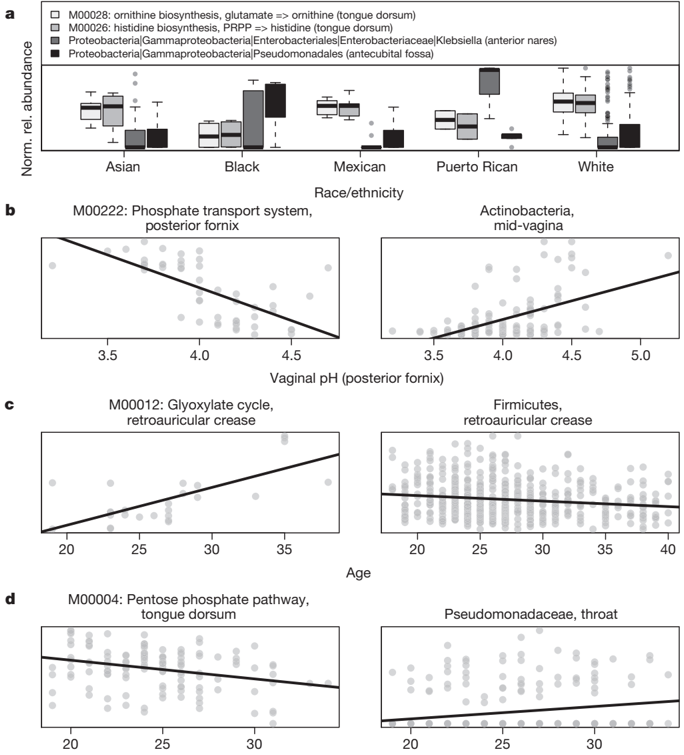
Studies of the human microbiome have revealed that even healthy individuals differ remarkably in the microbes that occupy habitats such as the gut, skin and vagina. Much of this diversity remains unexplained, although diet, environment, host genetics and early microbial exposure have all been implicated. Accordingly, to characterize the ecology of human-associated microbial communities, the Human Microbiome Project has analysed the largest cohort and set of distinct, clinically relevant body habitats so far. We found the diversity and abundance of each habitat’s signature microbes to vary widely even among healthy subjects, with strong niche specialization both within and among individuals. The project encountered an estimated 81–99% of the genera, enzyme families and community configurations occupied by the healthy Western microbiome. Metagenomic carriage of metabolic pathways was stable among individuals despite variation in community structure, and ethnic/racial background proved to be one of the strongest associations of both pathways and microbes with clinical metadata. These results thus delineate the range of structural and functional configurations normal in the microbial communities of a healthy population, enabling future characterization of the epidemiology, ecology and translational applications of the human microbiome.
Overview
The claims and statistics of this paper haven’t been checked yet.
Free: it reads the open-access text and checks the first 5 claims that cite a source we can check. Create a free account to check every claim.
Integrity signals
Registry
Cites
Statistics
Figures
Verification
Claims the paper makes
The claims and statistics of this paper haven’t been checked yet.
Free: it reads the open-access text and checks the first 5 claims that cite a source we can check. Create a free account to check every claim.
Claims other papers make about this one
Each is checked against this paper’s own text: does it say what the citing paper says it does?
The cited source doesn’t support the claim as written.
In the citing paper
“newly diagnosed cases with adenocarcinoma of the colon or rectum were recruited prior to surgery and treatment during 1985–19891, 2. Controls were patients awaiting elective surgery for non-oncologic, non-gastrointestinal conditions at these hospitals during the same period.”
From Assessment of variation in microbial community amplicon sequencing by the Microbiome Quality Control (MBQC) project consortium (2017) · cites this paper as [1]
Checked by a reasoning model — may be wrong.
Experimental — accuracy not yet measuredThe source backs part of the claim, not all of it — or backs it for a different population, condition or comparison.
In the citing paper
“Multiple factors affect the composition of the human gut microbiome, including geography, diet, infection and drug usage56,61–64.”
From Intestinal microbiota signatures of clinical response and immune-related adverse events in melanoma patients treated with anti-PD-1 (2022) · cites this paper as [64]
Experimental — accuracy not yet measuredThe source backs part of the claim, not all of it — or backs it for a different population, condition or comparison.
In the citing paper
“suggesting that no severe gut microbiome dysbiosis was present in the study group at baseline”
From Gut microbiome affects the response to anti-PD-1 immunotherapy in patients with hepatocellular carcinoma (2019) · cites this paper as [9]
Experimental — accuracy not yet measuredThe source backs part of the claim, not all of it — or backs it for a different population, condition or comparison.
In the citing paper
“Gut microbiota comprise thousands of microbial species that are involved in host metabolism by regulating energy extraction, activation of the immune system, drug metabolism, and other processes.”
From The Gut Microbiome Contributes to a Substantial Proportion of the Variation in Blood Lipids (2015) · cites this paper as [3]
Experimental — accuracy not yet measuredThe source backs part of the claim, not all of it — or backs it for a different population, condition or comparison.
In the citing paper
“The human gut microbiota contains thousands of different bacterial taxa as well as various archaea, eukaryotic microbes and viruses, more than three million genes, and harbors an enormous metabolic capacity [1, 2].”
From The athletic gut microbiota (2020) · cites this paper as [1]
Experimental — accuracy not yet measured
20 more claims about this paper
Create a free account to see every claim other papers make about this one.
Self-check
Percentages, sums and reported differences re-computed from the paper’s own numbers.
The self-check needs the paper’s full text.
Citations
Cites
Fast and accurate short read alignment with Burrows-Wheeler transform
Li, H., & Durbin, R. (2009) · Bioinformatics · doi:10.1093/bioinformatics/btp324 · Cited by 58,607
QIIME allows analysis of high-throughput community sequencing data
Caporaso, J. G., Kuczynski, J., Stombaugh, J., Bittinger, K., Bushman, F. D., Costello, E. K., Fierer, N., Peña, A. G., Goodrich, J. K., Gordon, J. I., et al. (2010) · Nature Methods · doi:10.1038/nmeth.f.303 · Cited by 34,887
Fast and accurate long-read alignment with Burrows-Wheeler transform.
Li, H., & Durbin, R. (2010) · Bioinformatics · doi:10.1093/bioinformatics/btp698 · Cited by 12,063
A human gut microbial gene catalogue established by metagenomic sequencing
MetaHIT Consortium, Qin, J., Li, R., Raes, J., Arumugam, M., Burgdorf, K. S., Manichanh, C., Nielsen, T., Pons, N., Levenez, F., et al. (2010) · Nature · doi:10.1038/nature08821 · Cited by 11,624
A core gut microbiome in obese and lean twins
Turnbaugh, P. J., Hamady, M., Yatsunenko, T., Cantarel, B. L., Duncan, A., Ley, R. E., Sogin, M. L., Jones, W. J., Roe, B. A., Affourtit, J. P., et al. (2009) · Nature · doi:10.1038/nature07540 · Cited by 7,823
Self-citationSokol, H., Pigneur, B., Watterlot, L., Lakhdari, O., Bermúdez-Humarán, L. G., Gratadoux, J.-J., Blugeon, S., Bridonneau, C., Furet, J.-P., Corthier, G., et al. (2008) · Proceedings of the National Academy of Sciences · doi:10.1073/pnas.0804812105 · Cited by 4,413
Vaginal microbiome of reproductive-age women
Ravel, J., Gajer, P., Abdo, Z., Schneider, G. M., Koenig, S. S. K., McCulle, S. L., Karlebach, S., Gorle, R., Russell, J., Tacket, C. O., et al. (2011) · Proceedings of the National Academy of Sciences · doi:10.1073/pnas.1002611107 · Cited by 4,254
Bacterial Community Variation in Human Body Habitats Across Space and Time
Costello, E. K., Lauber, C. L., Hamady, M., Fierer, N., Gordon, J. I., & Knight, R. (2009) · Science · doi:10.1126/science.1177486 · Cited by 3,231
Defining the normal bacterial flora of the oral cavity
Aas, J. A., Paster, B. J., Stokes, L. N., Olsen, I., & Dewhirst, F. E. (2005) · Journal of Clinical Microbiology · doi:10.1128/jcm.43.11.5721-5732.2005 · Cited by 3,092
Topographical and Temporal Diversity of the Human Skin Microbiome
Grice, E. A., Kong, H. H., Conlan, S., Deming, C. B., Davis, J., Young, A. C., Program, N. C. S., Bouffard, G. G., Blakesley, R. W., Murray, P. R., et al. (2009) · Science · doi:10.1126/science.1171700 · Cited by 2,953
Cited by
Items 1,601–1,676 of 1,676
Lee, S. M., Dong, T. S., Krause-Sorio, B., Siddarth, P., Milillo, M. M., Lagishetty, V., Datta, T., Aguilar-Faustino, Y., Jacobs, J. P., & Lavretsky, H. (2022) · International Psychogeriatrics · doi:10.1017/s1041610221000120 · Cited by 43
Gut-microbiota-on-a-chip: an enabling field for physiological research
Trujillo-de Santiago, G., Lobo-Zegers, M. J., Montes-Fonseca, S. L., Zhang, Y. S., & Alvarez, M. M. (2018) · Microphysiological Systems · doi:10.21037/mps.2018.09.01 · Cited by 43
Parker, J., O'Brien, C., & Hawrelak, J. (2022) · Obstetrics & Gynecology Science · doi:10.5468/ogs.21185 · Cited by 42
Targeting the human gut microbiome with small-molecule inhibitors
Woo, A. Y. M., Aguilar Ramos, M. A., Narayan, R., Richards-Corke, K. C., Wang, M. L., Sandoval-Espinola, W. J., & Balskus, E. P. (2023) · Nature Reviews Chemistry · doi:10.1038/s41570-023-00471-4 · Cited by 42
Louvel, G., Der Sarkissian, C., Hanghøj, K., & Orlando, L. (2016) · Molecular Ecology Resources · doi:10.1111/1755-0998.12546 · Cited by 42
El Alam, M. B., Sims, T. T., Kouzy, R., Biegert, G. W. G., Abi Jaoude, J., Karpinets, T. V., Yoshida-Court, K., Wu, X., Delgado Medrano, A. Y., Mezzari, M. P., et al. (2020) · doi:10.1101/2020.04.10.036426 · Cited by 41
Wang, Y., Zhu, W., Shu, M., Jiang, Y., Gallo, R. L., Liu, Y.-T., & Huang, C.-M. (2012) · PLoS ONE · doi:10.1371/journal.pone.0047798 · Cited by 41
Exploring the bacterial assemblages along the human nasal passage
Wos‐Oxley, M. L., Chaves‐Moreno, D., Jáuregui, R., Oxley, A. P. A., Kaspar, U., Plumeier, I., Kahl, S., Rudack, C., Becker, K., & Pieper, D. H. (2016) · Environmental Microbiology · doi:10.1111/1462-2920.13378 · Cited by 40
“…the core bacterial species making up global bacterial assemblages of healthy human anterior nares (Costello et al., 2009; Grice et al., 2009; Frank et al., 2010; Wos-Oxley et al., 2010; Human Microbiome Project, 2012) and more recently of healthy human middle meatuses (Ramakrishnan et al., 2013).”
BackgroundInfluentialTsigalou, C., Paraschaki, A., Karvelas, A., Kantartzi, K., Gagali, K., Tsairidis, D., & Bezirtzoglou, E. (2021) · Metabolism Open · doi:10.1016/j.metop.2021.100081 · Cited by 40
“During the last decades, improvements in cultureindependent methodologies namely Next Generation Sequencing (NGS), expansion of bioinformatics and huge projects as Human Microbiome Project in 2007, contributed and shed light in human microbiome’s functions [5].”
BackgroundMicrobiome: paediatricians’ perspective
Arora, S., Dewan, P., & Gupta, P. (2015) · Indian Journal of Medical Research · doi:10.4103/0971-5916.171275 · Cited by 39
Deciphering mechanisms and implications of bacterial translocation in human health and disease
Jin, S., Wetzel, D., & Schirmer, M. (2022) · Current Opinion in Microbiology · doi:10.1016/j.mib.2022.102147 · Cited by 39
Artificial intelligence approaches to human-microbiome protein–protein interactions
Lim, H., Cankara, F., Tsai, C.-J., Keskin, O., Nussinov, R., & Gursoy, A. (2022) · Current Opinion in Structural Biology · doi:10.1016/j.sbi.2022.102328 · Cited by 39
The making of a miscreant: tobacco smoke and the creation of pathogen-rich biofilms
Shah, S. A., Ganesan, S. M., Varadharaj, S., Dabdoub, S. M., Walters, J. D., & Kumar, P. S. (2017) · npj Biofilms and Microbiomes · doi:10.1038/s41522-017-0033-2 · Cited by 39
Assessing alignment-based taxonomic classification of ancient microbial DNA
Eisenhofer, R., & Weyrich, L. S. (2019) · PeerJ · doi:10.7717/peerj.6594 · Cited by 39
Pathogenesis of Clostridium difficile Infection and Its Potential Role in Inflammatory Bowel Disease
Monaghan, T. M., Cockayne, A., & Mahida, Y. R. (2015) · Inflammatory Bowel Diseases · doi:10.1097/mib.0000000000000461 · Cited by 38
Hasan, M. R., Sundararaju, S., Tang, P., Tsui, K.-M., Lopez, A. P., Janahi, M., Tan, R., & Tilley, P. (2020) · Scientific Reports · doi:10.1038/s41598-020-68159-z · Cited by 37
Microbiome in human immunodeficiency virus infection
Salas, J. T., & Chang, T. L. (2014) · Clinics in Laboratory Medicine · doi:10.1016/j.cll.2014.08.005 · Cited by 36
Shen, Y.-C., Lee, P.-C., Kuo, Y.-L., Wu, W.-K., Chen, C.-C., Lei, C.-H., Yeh, C.-P., Hsu, C., Hsu, C.-H., Lin, Z.-Z., et al. (2021) · Journal of Hepatocellular Carcinoma · doi:10.2147/jhc.s315696 · Cited by 36
Pathophysiology and recent therapeutic insights of sickle cell disease
Shah, F., & Dwivedi, M. (2020) · Annals of Hematology · doi:10.1007/s00277-020-03977-9 · Cited by 36
Assembly of gut-derived bacterial communities follows “early-bird” resource utilization dynamics
Aranda-Díaz, A., Willis, L., Nguyen, T. H., Ho, P.-Y., Vila, J., Thomsen, T., Chavez, T., Yan, R., Yu, F. B., Neff, N., et al. (2023) · doi:10.1101/2023.01.13.523996 · Cited by 35
Self-citationWatanabe, Y., Arase, S., Nagaoka, N., Kawai, M., & Matsumoto, S. (2016) · PLoS ONE · doi:10.1371/journal.pone.0150559 · Cited by 35
Metabolic modeling with Big Data and the gut microbiome
Sung, J., Hale, V., Merkel, A. C., Kim, P.-J., & Chia, N. (2016) · Applied & Translational Genomics · doi:10.1016/j.atg.2016.02.001 · Cited by 35
“This is an open access article under the CC BY-NC-ND license (http://creativecommons.org/licenses/by-nc-nd/4.0/).”
BackgroundInfluentialCorrecting index databases improves metagenomic studies
Méric, G., Wick, R. R., Watts, S. C., Holt, K. E., & Inouye, M. (2019) · doi:10.1101/712166 · Cited by 34
Microbiome and -omics application in food industry
Ferrocino, I., Rantsiou, K., & Cocolin, L. (2022) · International Journal of Food Microbiology · doi:10.1016/j.ijfoodmicro.2022.109781 · Cited by 34
“Mapping exercises are still a new research area widely explored in humans (Huttenhower et al., 2012; Nash et al., 2017), soils (Thompson et al., 2017) and environment (Danko et al., 2021), however few studies reported an in-depth mapping or meta-analysis of foods and foodstuff.”
The Intestinal Microbiome in Nonalcoholic Fatty Liver Disease
Puri, P., & Sanyal, A. J. (2018) · Clinics in Liver Disease · doi:10.1016/j.cld.2017.08.009 · Cited by 33
Singh, S. V., Ganguly, R., Jaiswal, K., Yadav, A. K., Kumar, R., & Pandey, A. K. (2023) · World Journal of Clinical Cases · doi:10.12998/wjcc.v11.i19.4458 · Cited by 33
Murtaza, N., Ó Cuív, P., & Morrison, M. (2017) · Gastroenterology Clinics of North America · doi:10.1016/j.gtc.2016.09.005 · Cited by 32
Maternal and food microbial sources shape the infant microbiome of a rural Ethiopian population
Manara, S., Selma-Royo, M., Huang, K. D., Asnicar, F., Armanini, F., Blanco-Miguez, A., Cumbo, F., Golzato, D., Manghi, P., Pinto, F., et al. (2023) · Current Biology · doi:10.1016/j.cub.2023.04.011 · Cited by 30
Self-citationAslam, H., Trakman, G., Dissanayake, T., Todd, E., Harrison, P., Alby, C., Jabeen, T., Gamage, E., Travica, N., Marshall, S., et al. (2026) · Journal of Translational Medicine · doi:10.1186/s12967-025-07428-9 · Cited by 30
“The significance of alpha and beta diversities in understanding the intricate dynamics of the gut microbiota and its connection to health outcomes is of intense interest [226].”
Topical cream with live lactobacilli modulates the skin microbiome and reduce acne symptoms
Lebeer, S., Oerlemans, E., Claes, I., Wuyts, S., Henkens, T., Spacova, I., van den Broek, M., Tuyaerts, I., Wittouck, S., De Boeck, I., et al. (2018) · doi:10.1101/463307 · Cited by 29
Deep Nasal Sinus Cavity Microbiota Dysbiosis in Parkinson’s Disease
Pal, G., Ramirez, V., Engen, P. A., Naqib, A., Forsyth, C. B., Green, S. J., Mahdavinia, M., Batra, P. S., Tajudeen, B. A., & Keshavarzian, A. (2021) · npj Parkinson s Disease · doi:10.1038/s41531-021-00254-y · Cited by 28
Colombo, A. P. V., do Souto, R. M., da Silva-Boghossian, C. M., Miranda, R., & Lourenço, T. G. B. (2015) · Current Oral Health Reports · doi:10.1007/s40496-014-0041-8 · Cited by 28
D’Accolti, M., Soffritti, I., Bini, F., Mazziga, E., Cason, C., Comar, M., Volta, A., Bisi, M., Fumagalli, D., Mazzacane, S., et al. (2023) · Microbiome · doi:10.1186/s40168-023-01512-2 · Cited by 27
Mohr, A. E., Pugh, J., O'Sullivan, O., Black, K., Townsend, J. R., Pyne, D. B., Wardenaar, F. C., West, N. P., Whisner, C. M., & McFarland, L. V. (2022) · Frontiers in Nutrition · doi:10.3389/fnut.2022.809983 · Cited by 27
A Benchmark of Genetic Variant Calling Pipelines Using Metagenomic Short-Read Sequencing
Andreu-Sánchez, S., Chen, L., Wang, D., Augustijn, H. E., Zhernakova, A., & Fu, J. (2021) · Frontiers in Genetics · doi:10.3389/fgene.2021.648229 · Cited by 27
“This is especially true for VarScan2, where default values are not tuned for metagenomic calling and resulted in very restrictive cutoffs that reduced the number of calls.”
BackgroundMethodInfluentialSelf-citationZhong, F., Xu, Y., Lai, H.-Y., Yang, M., Cheng, L., Liu, X., Sun, X., Yang, Y., Wang, J., Lv, W., et al. (2022) · Frontiers in Physiology · doi:10.3389/fphys.2022.1004863 · Cited by 26
“Greater gut microbiota diversity is more protective for maintaining intestinal homeostasis, improving the integrity of the intestinal mucosal barrier (Human Microbiome Project, 2012; Faith et al., 2013), and resisting the harmful factors in the environment (Sommer et al., 2017).”
BackgroundMicrobial growth dynamics and human disease
Segre, J. A. (2015) · Science · doi:10.1126/science.aad0781 · Cited by 26
Metagenomic symphony of the intestinal ecosystem: How the composition affects the mind
Malan-Müller, S., Martín-Hernández, D., Caso, J. R., Matthijnssens, J., Rodríguez-Urrutia, A., Lowry, C. A., & Leza, J. C. (2025) · Brain, Behavior, and Immunity · doi:10.1016/j.bbi.2024.09.033 · Cited by 24
“This explains why, although the taxonomic composition of the human microbiome varies significantly between individuals, the gene composition or functional capacity remains relatively conserved 92 .”
BackgroundBiegert, G., El Alam, M. B., Karpinets, T., Wu, X., Sims, T. T., Yoshida-Court, K., Lynn, E. J., Yue, J., Medrano, A. D., Petrosino, J., et al. (2021) · Journal of Microbiological Methods · doi:10.1016/j.mimet.2021.106213 · Cited by 24
Chemoproteomic identification of a DPP4 homolog in Bacteroides thetaiotaomicron
Keller, L. J., Nguyen, T. H., Liu, L. J., Hurysz, B. M., Lakemeyer, M., Guerra, M., Gelsinger, D. J., Chanin, R., Ngo, N., Lum, K. M., et al. (2023) · Nature Chemical Biology · doi:10.1038/s41589-023-01357-8 · Cited by 24
Whole brain radiotherapy induces cognitive dysfunction in mice: key role of gut microbiota
Luo, X.-X., Yang, C., Zhan, G.-F., Li, S., Hua, D.-Y., Luo, A.-L., & Yuan, X.-L. (2020) · Psychopharmacology · doi:10.1007/s00213-020-05520-0 · Cited by 23
Giraud, C., Callac, N., Beauvais, M., Mailliez, J.-R., Ansquer, D., Selmaoui-Folcher, N., Pham, D., Wabete, N., & Boulo, V. (2021) · PeerJ · doi:10.7717/peerj.12241 · Cited by 23
“Microorganisms have also been extensively studied for their implication in the human microbiota (Huttenhower et al., 2012) and thus for their involvement in health, development and behavior (Cho & Blaser, 2012; Moloney et al.”
Systems to model the personalized aspects of microbiome health and gut dysbiosis
Matthewman, C., Narin, A., Huston, H., & Hopkins, C. E. (2023) · Molecular Aspects of Medicine · doi:10.1016/j.mam.2022.101115 · Cited by 23
Xin, J., Sun, N., Wang, H., Ma, H., Wu, B., Li, L., Wang, Y., Huang, H., Zeng, D., Bai, X., et al. (2021) · Ecotoxicology and Environmental Safety · doi:10.1016/j.ecoenv.2021.113006 · Cited by 22
Malczewski, A. B., Ketheesan, N., Coward, J. I. G., & Navarro, S. (2021) · Frontiers in Immunology · doi:10.3389/fimmu.2021.624434 · Cited by 22
Gut dysbiosis in oncology: a risk factor for immunoresistance
(2026) · doi:10.1038/s41422-025-01212-6 · Cited by 24
Microbiome modeling: a beginner's guide
Lange, E., Kranert, L., Krüger, J., Benndorf, D., & Heyer, R. (2024) · Frontiers in Microbiology · doi:10.3389/fmicb.2024.1368377 · Cited by 21
The role of microbiota in allogeneic hematopoietic stem cell transplantation
Chang, C.-C., Hayase, E., & Jenq, R. R. (2021) · Expert Opinion on Biological Therapy · doi:10.1080/14712598.2021.1872541 · Cited by 20
Tang, Q., Hao, Y., Wang, L., Lu, C., Li, M., Si, Z., Wu, X., & Lu, Z. (2021) · BMC Microbiology · doi:10.1186/s12866-021-02253-8 · Cited by 20
Yang, Z., Du, C., Chang, Z., Yang, Y., & Hu, L. (2025) · Frontiers in Cellular and Infection Microbiology · doi:10.3389/fcimb.2025.1612223 · Cited by 19
Corfe, B. M., Harden, C. J., Bull, M., & Garaiova, I. (2015) · Proceedings of the Nutrition Society · doi:10.1017/s0029665114001670 · Cited by 18
Chen, H., Cao, T., Zhang, B., & Cai, H. (2023) · Frontiers in Pharmacology · doi:10.3389/fphar.2023.1097284 · Cited by 18
Does fluoride exposure impact on the human microbiome?
Moran, G. P., Zgaga, L., Daly, B., Harding, M., & Montgomery, T. (2023) · Toxicology Letters · doi:10.1016/j.toxlet.2023.03.001 · Cited by 18
Han, Y. J., Kim, S., Shin, H., Kim, H. W., & Park, J. D. (2024) · Frontiers in Immunology · doi:10.3389/fimmu.2024.1451356 · Cited by 17
Wei, X., Yu, L., Zhang, C., Ni, Y., Zhang, H., Zhai, Q., & Tian, F. (2023) · Foods · doi:10.3390/foods12050922 · Cited by 17
Different Reactions in Each Enterotype Depending on the Intake of Probiotic Yogurt Powder
Lee, S., You, H., Lee, M., Kim, D., Jung, S., Park, Y., & Hyun, S. (2021) · Microorganisms · doi:10.3390/microorganisms9061277 · Cited by 16
Proto-dolomite formation in microbial consortia dominated by Halomonas strains
Alibrahim, A., Al-Gharabally, D., Mahmoud, H., & Dittrich, M. (2019) · Extremophiles · doi:10.1007/s00792-019-01135-2 · Cited by 16
Peppermint oil effects on the gut microbiome in children with functional abdominal pain
Thapa, S., Luna, R. A., Chumpitazi, B. P., Oezguen, N., Abdel‐Rahman, S. M., Garg, U., Musaad, S., Versalovic, J., Kearns, G. L., & Shulman, R. J. (2022) · Clinical and Translational Science · doi:10.1111/cts.13224 · Cited by 15
Epigenetic phase variation in the gut microbiome enhances bacterial adaptation
Ni, M., Junker, K., Liu, Y., Fan, Y., Li, Y., Qiao, W., Zhang, X.-S., Ksiezarek, M., Mead, E. A., Tourancheau, A., et al. (2026) · Cell Host & Microbe · doi:10.1016/j.chom.2026.04.019 · Cited by 13
Human Gut Metagenomes Encode Diverse GH156 Sialidases
Mann, E., Shekarriz, S., & Surette, M. G. (2022) · Applied and Environmental Microbiology · doi:10.1128/aem.01755-22 · Cited by 12
Human gut metagenomes encode diverse GH156 sialidases
(2022) · doi:10.1101/2022.06.28.497753 · Cited by 12
Assessing the Influence of Dietary History on Gut Microbiota
Yang, B., Ye, C., Yan, B., He, X., & Xing, K. (2019) · Current Microbiology · doi:10.1007/s00284-018-1616-8 · Cited by 8
Rukke, H. V., Engen, S. A., Schenck, K., & Petersen, F. C. (2016) · Molecular Oral Microbiology · doi:10.1111/omi.12123 · Cited by 8
DeepToA: an ensemble deep-learning approach to predicting the theater of activity of a microbiome
Zeng, W., Gautam, A., & Huson, D. H. (2022) · Bioinformatics · doi:10.1093/bioinformatics/btac584 · Cited by 7
DeepToA: An Ensemble Deep-Learning Approach to Predicting the Theater of Activity of a Microbiome
(2022) · doi:10.1101/2022.04.04.486969 · Cited by 7
Netter, U., Bisht, V., Gaurav, A., Sharma, R., Ghosh, A., Bisht, V. S., Ambatipudi, K., Sharma, H. P., Mohanty, S., Loat, S., et al. (2025) · The FEBS Journal · doi:10.1111/febs.70131 · Cited by 6
(2024) · doi:10.1101/2024.06.04.597308 · Cited by 6
Ghaly, T. M., Rajabal, V., Russell, D., Colombi, E., & Tetu, S. G. (2025) · doi:10.1101/2025.04.02.646905 · Cited by 5
(2025) · doi:10.1111/1462-2920.70178 · Cited by 5
“…sequencing has revolutionised the field of microbial ecology, allowing a culture-independent view of the structure and function of microbiomes (Huttenhower et al. 2012; Sunagawa et al. 2015; Bahram et al. 2018, 2022), and facilitating unprecedented insights into their ecology and evolution at…”
Human gut microbiome: the hypothesis of a gut-muscle axis in the elderly
Ticinesi, A., Tana, C., Nouvenne, A., & Meschi, T. (2018) · Deutsche Zeitschrift für Sportmedizin · doi:10.5960/dzsm.2018.355 · Cited by 4
Commensal microbiota-derived signals regulate host immune system through epigenetic modifications
Takahashi, D., & Hase, K. (2015) · Inflammation and Regeneration · doi:10.2492/inflammregen.35.129 · Cited by 3
Recent advances in systemic lupus erythematosus and microbiota: from bench to bedside
Zhan, Y., Liu, Q., Zhang, B., Huang, X., & Lu, Q. (2022) · Frontiers of Medicine · doi:10.1007/s11684-022-0957-7 · Cited by 3
Stapleton, A. E. (2014) · Frontiers in Plant Science · doi:10.3389/fpls.2014.00250 · Cited by 2
Aseptic manufacturing of regenerative medicine products using isolator technology
Kokubo, M., & Akers, J. E. (2016) · Gene Therapy and Cell Therapy Through the Liver · doi:10.1007/978-4-431-55666-4_13 · Cited by 2
The Microbiome, Metabolism, and Networks in Precision Nutrition
Mensah, G. E., Maseng, M. G., Allard, S., & Gilbert, J. A. (2024) · Precision Nutrition · doi:10.1016/b978-0-443-15315-0.00011-0 · Cited by 2
Biegert, G., Karpinets, T., Wu, X., Alam, M. B. E., Sims, T. T., Yoshida-Court, K., Lynn, E. J., Yue, J., Medrano, A. D., Petrosino, J., et al. (2020) · doi:10.1101/2020.05.05.080002 · Cited by 1
Metadata
- Authors
- The Human Microbiome Project Consortium
- Venue
- Nature
- Published
- 2012-06
- Volume
- 486
- Issue
- 7402
- Pages
- 207-214
- ISSN
- 0028-0836 (ISSN-L)
- 1476-4687
- PMC
- PMC3564958
- OpenAlex
- W2128769815
- Semantic Scholar
- 0c431405ec1eb4b84a52ed1fcc530454a4b8bf6f
- Cited by
- 11,726
- References
- 29
- Citations by year
- 2026: 586 · 2025: 748 · 2024: 890 · 2023: 950 · 2022: 1024 · 2021: 1202 · 2020: 1137 · 2019: 1032 · 2018: 863 · 2017: 853 · 2016: 732 · 2015: 651 · 2014: 532 · 2013: 413 · 2012: 104
- FWCI
- 218.52
- Type
- journal article
- Language
- en
- Open access
- hybrid
- doi.org
- Licence
- cc-by-nc-sa
- creativecommons.org/licenses/by-nc-sa/3.0/ (tdm)
- Locations
- Nature (publishedVersion, cc-by-nc-sa)
- PubMed (publishedVersion)
- Goce Delchev University Repository (Goce Delčev University of Štip) (acceptedVersion)
- Europe PMC (PubMed Central) (acceptedVersion)
- PubMed Central (acceptedVersion)
- eScholarship (California Digital Library) (submittedVersion, cc-by)
- Rutgers University Community Repository (Rutgers University) (submittedVersion)
- Open Access Server of the Woods Hole Scientific Community (Woods Hole Scientific Community) (submittedVersion)
- eScholarship (California Digital Library) (submittedVersion)
- Funders
- National Science Foundation (DEAC02-05CH11231, 1053486, 0812111)
- Howard Hughes Medical Institute (DE-AC02-05CH11231)
- U.S. Department of Energy (-AC02-05CH11231, Contract No. DE-AC02-05-CH11231, 05CH11231, No. DE-AC02-05-CH11231, DE AC02 05CH11231, DE-AC02-)
- Gordon and Betty Moore Foundation
- Rice University
- Gladstone Institutes
- Crohn's and Colitis Foundation
- Crohn's and Colitis Foundation of Canada
- Fonds Wetenschappelijk Onderzoek (DE-AC02-05CH11231)
- Vlaamse regering
- National Institutes of Health (5r01hg005172-03, n01hg62088-6-0-1, DE-AC02–05CH11231, DBI-1053486, DP2OD001500, 5r01hg004857-03, n01ai30071-19-0-3)
- Defense Threat Reduction Agency (B104153I, DE-AC02-05CH11231, B084531I)
- Office of Science (No. DE-AC02- 05-CH11231, DEAC02–05CH11231, AC02-05CH11231, DE-AC02, 05CH11231, Contract No. DE-AC02-05CH11231)
- Horace H. Rackham School of Graduate Studies, University of Michigan
- National Human Genome Research Institute (R01HG004885, U54HG003067, R01HG005975, R01-HG004857, U54HG004969, R01HG004853, U54HG003079, U01HG004866, R01HG005969, R01-HG005172, U54HG003273, R01HG004872, R21HG005811, U54HG004968, N01 HG062088, R01HG004906, R01HG004908, U54HG004973, R01HG004856, R01HG004900, R01HG005171, R01HG004877)
- National Cancer Institute (R21CA139193)
- National Institute of General Medical Sciences (T32GM087237)
- National Institute of Allergy and Infectious Diseases (UH2AI083263, UH3AI083263, U54AI084844, T32AI007528, N01 AI030071)
- National Institute of Diabetes and Digestive and Kidney Diseases (UH2DK083990, UH3DK083993)
- National Institute of Arthritis and Musculoskeletal and Skin Diseases (UH2 AR057504, UH2AR057506, UH3-AR057504)
- National Institute of Dental and Craniofacial Research (P30DE020751, R01DE021574, U01DE016937, RC1DE0202098, R37DE016937, RC1DE020298)
- U.S. National Library of Medicine
- Division of Biological Infrastructure (DBI-1053486)
- Army Research Office (DE-AC02-05CH11231, W911NF-11-1-0473, W911NF, W911NF-11)
- Los Alamos National Laboratory (DE-AC02-05CH11231)
- Topics
- Life Sciences › Biochemistry, Genetics and Molecular Biology › Molecular Biology › Gut microbiota and health
- Physical Sciences › Environmental Science › Ecology › Microbial Community Ecology and Physiology
- Health Sciences › Dentistry › Periodontics › Oral microbiology and periodontitis research
- Keywords
- human microbiome, healthy individuals, microbial diversity, gut microbiota, skin microbiome, vaginal microbiota, ecological specialization, metabolic pathways, Human Microbiome Project, metagenomics, microbial ecology
- MeSH terms
- Adolescent, Adult, Bacteria, Female, Health, Humans, Male, Phenotype, RNA, Ribosomal, 16S, Ecosystem, Biodiversity, Metabolic Networks and Pathways, Metagenome, Young Adult, Metagenomics
About these checks
Registry, retraction, Cites and statistics results are computed, not judged, with one exception: a printed reference that no index lists is read once by a model before it counts as a citation error. Claims are extracted by a model and kept only when their quote appears verbatim in the text; each cited source is then checked, with a model’s help, for whether it says what the claim relies on. Those verdicts can be wrong — read the claim’s quote and the cited source before relying on one.
Statistics and arithmetic are recomputed, not judged.
Confidence bands are shown only for fields calibrated on our annotated test set. None is calibrated yet, so no band is shown.
What counts as a claim ›How we measure confidence ›How we check this ›
Are you an author, or do you see a problem with this page? Request a review
Data sources
Bibliographic data: Semantic Scholar, OpenAlex, Crossref.
Contains information from the Semantic Scholar Academic Graph Datasets, made available under the ODC Attribution License (ODC-BY 1.0).
Semantic Scholar’s data is described in: Kinney, R., et al. (2023). The Semantic Scholar Open Data Platform. arXiv:2301.10140.
