

Structure, function and diversity of the healthy human microbiome
Open accessThe DOI matches its Crossref record; 29 of the 29 references it cites were found in a registry or an index.
Abstract
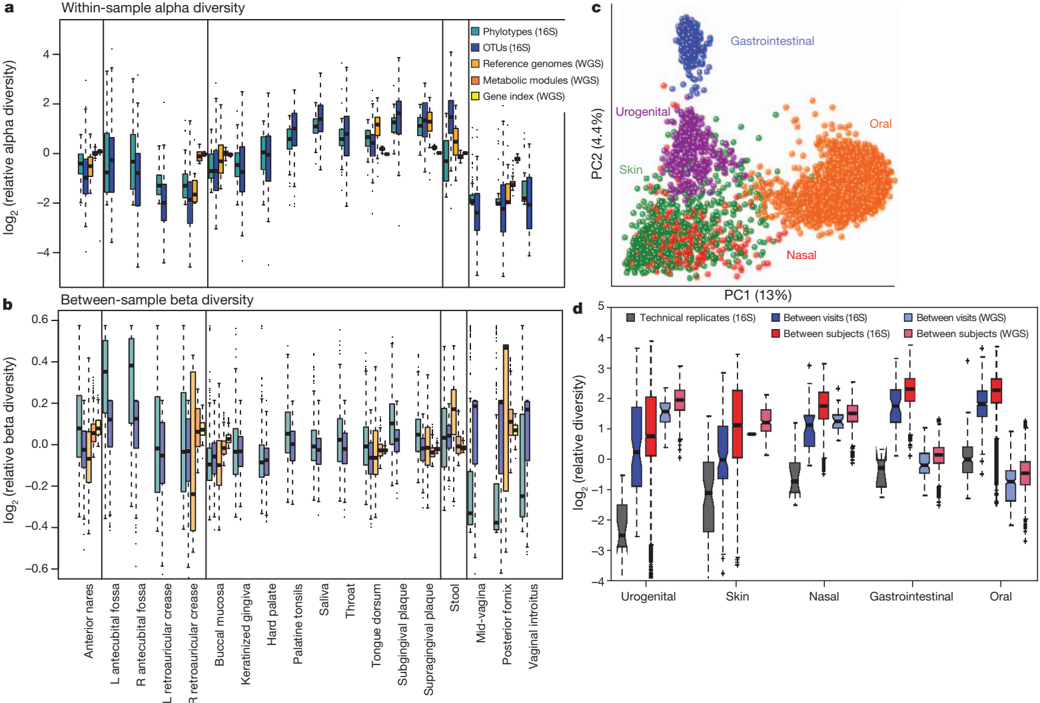
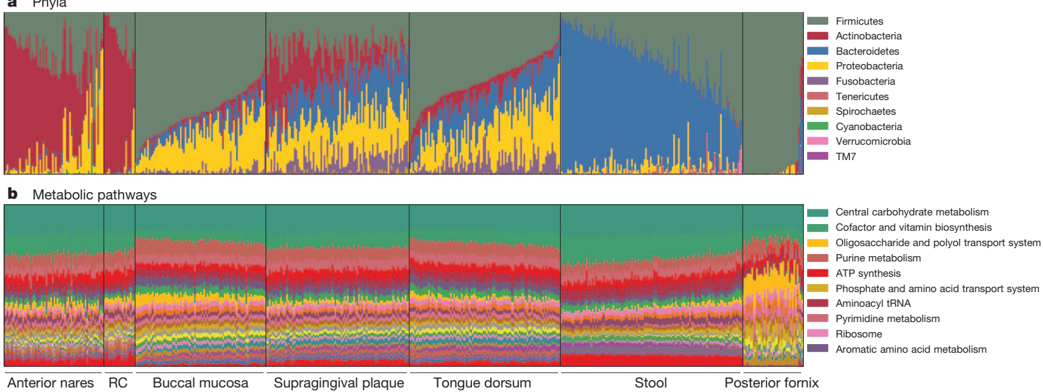
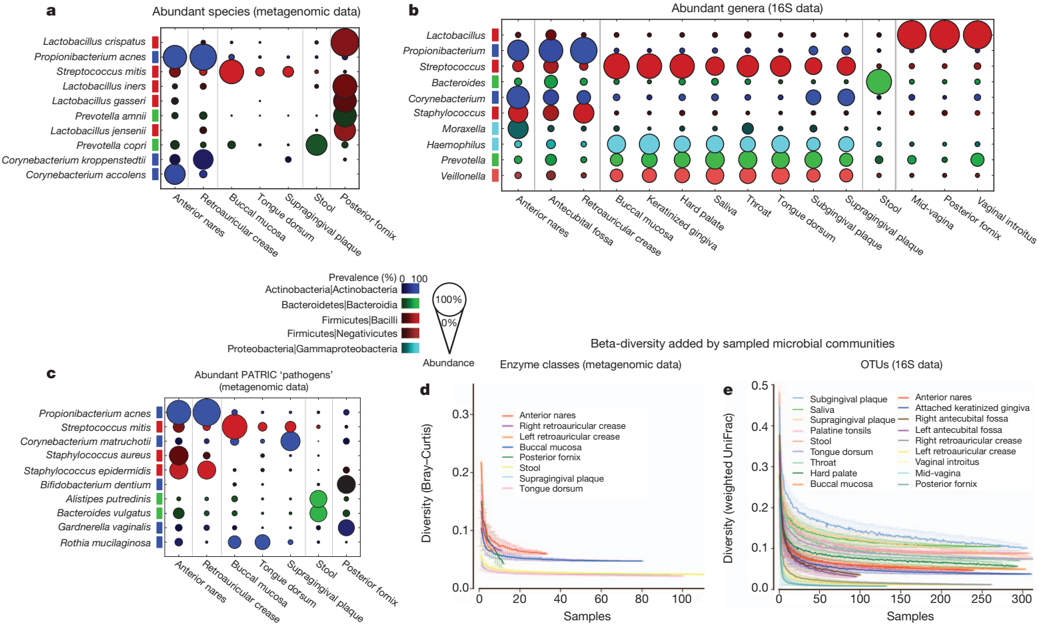
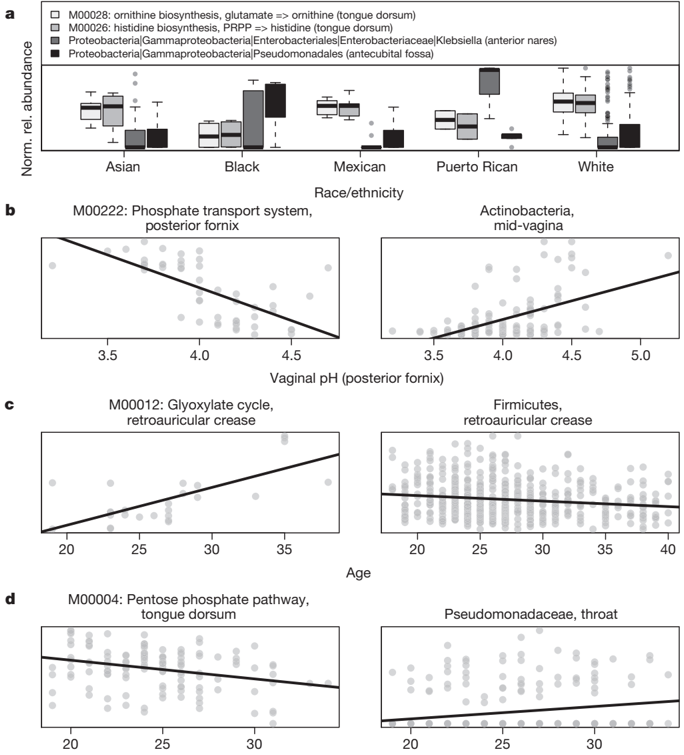
Studies of the human microbiome have revealed that even healthy individuals differ remarkably in the microbes that occupy habitats such as the gut, skin and vagina. Much of this diversity remains unexplained, although diet, environment, host genetics and early microbial exposure have all been implicated. Accordingly, to characterize the ecology of human-associated microbial communities, the Human Microbiome Project has analysed the largest cohort and set of distinct, clinically relevant body habitats so far. We found the diversity and abundance of each habitat’s signature microbes to vary widely even among healthy subjects, with strong niche specialization both within and among individuals. The project encountered an estimated 81–99% of the genera, enzyme families and community configurations occupied by the healthy Western microbiome. Metagenomic carriage of metabolic pathways was stable among individuals despite variation in community structure, and ethnic/racial background proved to be one of the strongest associations of both pathways and microbes with clinical metadata. These results thus delineate the range of structural and functional configurations normal in the microbial communities of a healthy population, enabling future characterization of the epidemiology, ecology and translational applications of the human microbiome.
Overview
The claims and statistics of this paper haven’t been checked yet.
Free: it reads the open-access text and checks the first 5 claims that cite a source we can check. Create a free account to check every claim.
Integrity signals
Registry
Cites
Statistics
Figures
Verification
Claims the paper makes
The claims and statistics of this paper haven’t been checked yet.
Free: it reads the open-access text and checks the first 5 claims that cite a source we can check. Create a free account to check every claim.
Claims other papers make about this one
Each is checked against this paper’s own text: does it say what the citing paper says it does?
The cited source doesn’t support the claim as written.
In the citing paper
“newly diagnosed cases with adenocarcinoma of the colon or rectum were recruited prior to surgery and treatment during 1985–19891, 2. Controls were patients awaiting elective surgery for non-oncologic, non-gastrointestinal conditions at these hospitals during the same period.”
From Assessment of variation in microbial community amplicon sequencing by the Microbiome Quality Control (MBQC) project consortium (2017) · cites this paper as [1]
Checked by a reasoning model — may be wrong.
Experimental — accuracy not yet measuredThe source backs part of the claim, not all of it — or backs it for a different population, condition or comparison.
In the citing paper
“Multiple factors affect the composition of the human gut microbiome, including geography, diet, infection and drug usage56,61–64.”
From Intestinal microbiota signatures of clinical response and immune-related adverse events in melanoma patients treated with anti-PD-1 (2022) · cites this paper as [64]
Experimental — accuracy not yet measuredThe source backs part of the claim, not all of it — or backs it for a different population, condition or comparison.
In the citing paper
“suggesting that no severe gut microbiome dysbiosis was present in the study group at baseline”
From Gut microbiome affects the response to anti-PD-1 immunotherapy in patients with hepatocellular carcinoma (2019) · cites this paper as [9]
Experimental — accuracy not yet measuredThe source backs part of the claim, not all of it — or backs it for a different population, condition or comparison.
In the citing paper
“Gut microbiota comprise thousands of microbial species that are involved in host metabolism by regulating energy extraction, activation of the immune system, drug metabolism, and other processes.”
From The Gut Microbiome Contributes to a Substantial Proportion of the Variation in Blood Lipids (2015) · cites this paper as [3]
Experimental — accuracy not yet measuredThe source backs part of the claim, not all of it — or backs it for a different population, condition or comparison.
In the citing paper
“The human gut microbiota contains thousands of different bacterial taxa as well as various archaea, eukaryotic microbes and viruses, more than three million genes, and harbors an enormous metabolic capacity [1, 2].”
From The athletic gut microbiota (2020) · cites this paper as [1]
Experimental — accuracy not yet measured
20 more claims about this paper
Create a free account to see every claim other papers make about this one.
Self-check
Percentages, sums and reported differences re-computed from the paper’s own numbers.
The self-check needs the paper’s full text.
Citations
Cites
Fast and accurate short read alignment with Burrows-Wheeler transform
Li, H., & Durbin, R. (2009) · Bioinformatics · doi:10.1093/bioinformatics/btp324 · Cited by 58,607
QIIME allows analysis of high-throughput community sequencing data
Caporaso, J. G., Kuczynski, J., Stombaugh, J., Bittinger, K., Bushman, F. D., Costello, E. K., Fierer, N., Peña, A. G., Goodrich, J. K., Gordon, J. I., et al. (2010) · Nature Methods · doi:10.1038/nmeth.f.303 · Cited by 34,887
Fast and accurate long-read alignment with Burrows-Wheeler transform.
Li, H., & Durbin, R. (2010) · Bioinformatics · doi:10.1093/bioinformatics/btp698 · Cited by 12,063
A human gut microbial gene catalogue established by metagenomic sequencing
MetaHIT Consortium, Qin, J., Li, R., Raes, J., Arumugam, M., Burgdorf, K. S., Manichanh, C., Nielsen, T., Pons, N., Levenez, F., et al. (2010) · Nature · doi:10.1038/nature08821 · Cited by 11,624
A core gut microbiome in obese and lean twins
Turnbaugh, P. J., Hamady, M., Yatsunenko, T., Cantarel, B. L., Duncan, A., Ley, R. E., Sogin, M. L., Jones, W. J., Roe, B. A., Affourtit, J. P., et al. (2009) · Nature · doi:10.1038/nature07540 · Cited by 7,823
Self-citationSokol, H., Pigneur, B., Watterlot, L., Lakhdari, O., Bermúdez-Humarán, L. G., Gratadoux, J.-J., Blugeon, S., Bridonneau, C., Furet, J.-P., Corthier, G., et al. (2008) · Proceedings of the National Academy of Sciences · doi:10.1073/pnas.0804812105 · Cited by 4,413
Vaginal microbiome of reproductive-age women
Ravel, J., Gajer, P., Abdo, Z., Schneider, G. M., Koenig, S. S. K., McCulle, S. L., Karlebach, S., Gorle, R., Russell, J., Tacket, C. O., et al. (2011) · Proceedings of the National Academy of Sciences · doi:10.1073/pnas.1002611107 · Cited by 4,254
Bacterial Community Variation in Human Body Habitats Across Space and Time
Costello, E. K., Lauber, C. L., Hamady, M., Fierer, N., Gordon, J. I., & Knight, R. (2009) · Science · doi:10.1126/science.1177486 · Cited by 3,231
Defining the normal bacterial flora of the oral cavity
Aas, J. A., Paster, B. J., Stokes, L. N., Olsen, I., & Dewhirst, F. E. (2005) · Journal of Clinical Microbiology · doi:10.1128/jcm.43.11.5721-5732.2005 · Cited by 3,092
Topographical and Temporal Diversity of the Human Skin Microbiome
Grice, E. A., Kong, H. H., Conlan, S., Deming, C. B., Davis, J., Young, A. C., Program, N. C. S., Bouffard, G. G., Blakesley, R. W., Murray, P. R., et al. (2009) · Science · doi:10.1126/science.1171700 · Cited by 2,953
Cited by
Items 1,201–1,300 of 1,676
Genome editing using the endogenous type I CRISPR-Cas system in Lactobacillus crispatus
Hidalgo-Cantabrana, C., Goh, Y. J., Pan, M., Sanozky-Dawes, R., & Barrangou, R. (2019) · Proceedings of the National Academy of Sciences · doi:10.1073/pnas.1905421116 · Cited by 185
Gupta, N., Buffa, J. A., Roberts, A. B., Sangwan, N., Skye, S. M., Li, L., Ho, K. J., Varga, J., DiDonato, J. A., Tang, W. H. W., et al. (2020) · Arteriosclerosis, Thrombosis, and Vascular Biology · doi:10.1161/atvbaha.120.314139 · Cited by 185
Complement modulates the cutaneous microbiome and inflammatory milieu
Chehoud, C., Rafail, S., Tyldsley, A. S., Seykora, J. T., Lambris, J. D., & Grice, E. A. (2013) · Proceedings of the National Academy of Sciences · doi:10.1073/pnas.1307855110 · Cited by 184
Li, J., Quinque, D., Horz, H.-P., Li, M., Rzhetskaya, M., Raff, J. A., Hayes, M. G., & Stoneking, M. (2014) · BMC Microbiology · doi:10.1186/s12866-014-0316-1 · Cited by 184
“However, recent studies have shown that instead of distinct microbial species being either beneficial or harmful for human health, perturbations in the global balance of the microbiome might play a more important role [5,6].”
BackgroundRapidly expanding knowledge on the role of the gut microbiome in health and disease
Cénit, M. C., Matzaraki, V., Tigchelaar, E. F., & Zhernakova, A. (2014) · Biochimica et Biophysica Acta (BBA) - Molecular Basis of Disease · doi:10.1016/j.bbadis.2014.05.023 · Cited by 184
Gut Microbiome: Westernization and the Disappearance of Intestinal Diversity
Segata, N. (2015) · Current Biology · doi:10.1016/j.cub.2015.05.040 · Cited by 184
Diversity, compositional and functional differences between gut microbiota of children and adults
Radjabzadeh, D., Boer, C. G., Beth, S. A., van der Wal, P., Kiefte-De Jong, J. C., Jansen, M. A. E., Konstantinov, S. R., Peppelenbosch, M. P., Hays, J. P., Jaddoe, V. W. V., et al. (2020) · Scientific Reports · doi:10.1038/s41598-020-57734-z · Cited by 184
Wang, B., Zhang, L., Wang, Y., Dai, T., Qin, Z., Zhou, F., & Zhang, L. (2022) · Signal Transduction and Targeted Therapy · doi:10.1038/s41392-022-00986-0 · Cited by 184
Short Chain Fatty Acid Metabolism in Relation to Gut Microbiota and Genetic Variability
Ramos Meyers, G., Samouda, H., & Bohn, T. (2022) · Nutrients · doi:10.3390/nu14245361 · Cited by 184
Temporal and technical variability of human gut metagenomes
Voigt, A. Y., Costea, P. I., Kultima, J. R., Li, S. S., Zeller, G., Sunagawa, S., & Bork, P. (2015) · Genome Biology · doi:10.1186/s13059-015-0639-8 · Cited by 184
Vitamin D and the gut microbiome: a systematic review of in vivo studies
Waterhouse, M., Hope, B., Krause, L., Morrison, M., Protani, M. M., Zakrzewski, M., & Neale, R. E. (2019) · European Journal of Nutrition · doi:10.1007/s00394-018-1842-7 · Cited by 183
MixMC: A Multivariate Statistical Framework to Gain Insight into Microbial Communities
Lê Cao, K.-A., Costello, M.-E., Lakis, V. A., Bartolo, F., Chua, X.-Y., Brazeilles, R., & Rondeau, P. (2016) · PLOS ONE · doi:10.1371/journal.pone.0160169 · Cited by 183
Lee, J.-Y., Cevallos, S. A., Byndloss, M. X., Tiffany, C. R., Olsan, E. E., Butler, B. P., Young, B. M., Rogers, A. W. L., Nguyen, H., Kim, K., et al. (2020) · Cell Host & Microbe · doi:10.1016/j.chom.2020.06.001 · Cited by 183
The Human Respiratory System and its Microbiome at a Glimpse
Santacroce, L., Charitos, I. A., Ballini, A., Inchingolo, F., Luperto, P., De Nitto, E., & Topi, S. (2020) · Biology · doi:10.3390/biology9100318 · Cited by 183
“However, local changes that alter this symbiosis, creating the condition of dysbiosis, lead to diseases, such as respiratory infections, allergies and asthma, which are due in part to the first colonization, influenced mainly by the modality of delivery (caesarean section, normal) but also by breastfeeding [3,12].”
BackgroundHansen, R., Scott, K. P., Khan, S., Martin, J. C., Berry, S. H., Stevenson, M., Okpapi, A., Munro, M. J., & Hold, G. L. (2015) · PLOS ONE · doi:10.1371/journal.pone.0133320 · Cited by 183
The gut microbiota as a novel regulator of cardiovascular function and disease
Battson, M. L., Lee, D. M., Weir, T. L., & Gentile, C. L. (2018) · The Journal of Nutritional Biochemistry · doi:10.1016/j.jnutbio.2017.12.010 · Cited by 183
Host genetic variation and its microbiome interactions within the Human Microbiome Project
Kolde, R., Franzosa, E. A., Rahnavard, G., Hall, A. B., Vlamakis, H., Stevens, C., Daly, M. J., Xavier, R. J., & Huttenhower, C. (2018) · Genome Medicine · doi:10.1186/s13073-018-0515-8 · Cited by 182
Self-citationThe interaction between smoking, alcohol and the gut microbiome
Capurso, G., & Lahner, E. (2017) · Best Practice & Research Clinical Gastroenterology · doi:10.1016/j.bpg.2017.10.006 · Cited by 182
Jiang, Z. D., Ajami, N. J., Petrosino, J. F., Jun, G., Hanis, C. L., Shah, M., Hochman, L., Ankoma‐Sey, V., DuPont, A. W., Wong, M. C., et al. (2017) · Alimentary Pharmacology & Therapeutics · doi:10.1111/apt.13969 · Cited by 182
The Microbiome and Genitourinary Cancer: A Collaborative Review
Markowski, M. C., Boorjian, S. A., Burton, J. P., Hahn, N. M., Ingersoll, M. A., Maleki Vareki, S., Pal, S. K., & Sfanos, K. S. (2019) · European Urology · doi:10.1016/j.eururo.2018.12.043 · Cited by 182
Quantifying and Understanding Well-to-Well Contamination in Microbiome Research
Minich, J. J., Sanders, J. G., Amir, A., Humphrey, G., Gilbert, J. A., & Knight, R. (2019) · mSystems · doi:10.1128/msystems.00186-19 · Cited by 182
Relationship between gut microbiota, probiotics, and type 2 diabetes mellitus
Salgaço, M. K., Oliveira, L. G. S., Costa, G. N., Bianchi, F., & Sivieri, K. (2019) · Applied Microbiology and Biotechnology · doi:10.1007/s00253-019-10156-y · Cited by 182
Gut Dysbiosis and Muscle Aging: Searching for Novel Targets against Sarcopenia
Picca, A., Fanelli, F., Calvani, R., Mulè, G., Pesce, V., Sisto, A., Pantanelli, C., Bernabei, R., Landi, F., & Marzetti, E. (2018) · Mediators of Inflammation · doi:10.1155/2018/7026198 · Cited by 181
Do bacteria shape our development? Crosstalk between intestinal microbiota and HPA axis
de Weerth, C. (2017) · Neuroscience & Biobehavioral Reviews · doi:10.1016/j.neubiorev.2017.09.016 · Cited by 181
“…prevalent stress-related psychiatric disorders, such as anxiety and depression, and to gastrointestinal disorders, such as irritable bowel syndrome (IBS, prevalence ∼14%), with high comorbidity between these conditions (Gros et al., 2009; Hungin et al., 2005; Kelly et al., 2015; Rea et al., 2016;).”
Tackmann, J., Matias Rodrigues, J. F., & von Mering, C. (2019) · Cell Systems · doi:10.1016/j.cels.2019.08.002 · Cited by 181
Microbial Contribution to the Human Metabolome: Implications for Health and Disease
Van Treuren, W., & Dodd, D. (2020) · Annual Review of Pathology: Mechanisms of Disease · doi:10.1146/annurev-pathol-020117-043559 · Cited by 181
Barrientos-Durán, A., Fuentes-López, A., de Salazar, A., Plaza-Díaz, J., & García, F. (2020) · Nutrients · doi:10.3390/nu12020419 · Cited by 181
Milk Microbiota: What Are We Exactly Talking About?
Oikonomou, G., Addis, M. F., Chassard, C., Nader-Macias, M. E. F., Grant, I., Delbès, C., Bogni, C. I., Le Loir, Y., & Even, S. (2020) · Frontiers in Microbiology · doi:10.3389/fmicb.2020.00060 · Cited by 181
Parfrey, L. W., Walters, W. A., Lauber, C. L., Clemente, J. C., Berg-Lyons, D., Teiling, C., Kodira, C., Mohiuddin, M., Brunelle, J., Driscoll, M., et al. (2014) · Frontiers in Microbiology · doi:10.3389/fmicb.2014.00298 · Cited by 181
“In contrast, bacterial community composition at comparably high taxonomic levels is broadly consistent across individuals and across populations; e.g., Bacteroidetes and Firmicutes are generally the dominant phyla (Figure 1; Ley et al., 2008b; Consortium, 2012; Yatsunenko et al., 2012).”
BackgroundMetagenomics: An Effective Approach for Exploring Microbial Diversity and Functions
Nam, N., Do, H., Loan Trinh, K., & Lee, N. (2023) · Foods · doi:10.3390/foods12112140 · Cited by 181
On the limits of 16S rRNA gene-based metagenome prediction and functional profiling
Matchado, M. S., Rühlemann, M., Reitmeier, S., Kacprowski, T., Frost, F., Haller, D., Baumbach, J., & List, M. (2024) · Microbial Genomics · doi:10.1099/mgen.0.001203 · Cited by 181
“To overcome this limitation, MetGEM introduced a generalised genome-scale model, where metagenome-scale networks are constructed using the assembly of gut organisms through reconstruction and analysis (AGORA) collections [34] and the Human Microbiome Project (HMP) [37].”
MethodBacterial community collapse: a meta‐analysis of the sinonasal microbiota in chronic rhinosinusitis
Wagner Mackenzie, B., Waite, D. W., Hoggard, M., Douglas, R. G., Taylor, M. W., & Biswas, K. (2017) · Environmental Microbiology · doi:10.1111/1462-2920.13632 · Cited by 181
Whitney, J. C., Peterson, S. B., Kim, J., Pazos, M., Verster, A. J., Radey, M. C., Kulasekara, H. D., Ching, M. Q., Bullen, N. P., Bryant, D., et al. (2017) · eLife · doi:10.7554/elife.26938 · Cited by 181
The influence of the human microbiome and probiotics on cardiovascular health
Ettinger, G., MacDonald, K., Reid, G., & Burton, J. P. (2014) · Gut Microbes · doi:10.4161/19490976.2014.983775 · Cited by 180
The intestinal microbiome and health
Tuddenham, S., & Sears, C. L. (2015) · Current Opinion in Infectious Diseases · doi:10.1097/qco.0000000000000196 · Cited by 180
Pre-pregnancy weight, gestational weight gain, and the gut microbiota of mothers and their infants
Stanislawski, M. A., Dabelea, D., Wagner, B. D., Sontag, M. K., Lozupone, C. A., & Eggesbø, M. (2017) · Microbiome · doi:10.1186/s40168-017-0332-0 · Cited by 180
Engineering the gut microbiota to treat hyperammonemia
Shen, T.-C. D., Albenberg, L., Bittinger, K., Chehoud, C., Chen, Y.-Y., Judge, C. A., Chau, L., Ni, J., Sheng, M., Lin, A., et al. (2015) · Journal of Clinical Investigation · doi:10.1172/jci79214 · Cited by 180
The fish microbiome and its interactions with mucosal tissues
Merrifield, D. L., & Rodiles, A. (2015) · Mucosal Health in Aquaculture · doi:10.1016/b978-0-12-417186-2.00010-8 · Cited by 179
Species-Level Analysis of DNA Sequence Data from the NIH Human Microbiome Project
Conlan, S., Kong, H. H., & Segre, J. A. (2012) · PLoS ONE · doi:10.1371/journal.pone.0047075 · Cited by 179
Accurate read-based metagenome characterization using a hierarchical suite of unique signatures
Freitas, T. A. K., Li, P.-E., Scholz, M. B., & Chain, P. S. G. (2015) · Nucleic Acids Research · doi:10.1093/nar/gkv180 · Cited by 179
“MetaPhlAn had been used widely since its publication (27,28) and has been shown to outperform tools such as the Naı̈ve Bayes classifier (NBC), PhyloPythiaS, Phymm, PhymmBL and the Rapid Identification of Taxonomic Assignments (RITA) pipeline (see (6) for this comparison).”
MethodBiedermann, L., Brülisauer, K., Zeitz, J., Frei, P., Scharl, M., Vavricka, S. R., Fried, M., Loessner, M. J., Rogler, G., & Schuppler, M. (2014) · Inflammatory Bowel Diseases · doi:10.1097/mib.0000000000000129 · Cited by 178
Warinner, C., Korzow Richter, K., & Collins, M. J. (2022) · Chemical Reviews · doi:10.1021/acs.chemrev.1c00703 · Cited by 178
MAPseq: highly efficient k-mer search with confidence estimates, for rRNA sequence analysis
Matias Rodrigues, J. F., Schmidt, T. S. B., Tackmann, J., & von Mering, C. (2017) · Bioinformatics · doi:10.1093/bioinformatics/btx517 · Cited by 178
Geographical patterns of the standing and active human gut microbiome in health and IBD
Rehman, A., Rausch, P., Wang, J., Skieceviciene, J., Kiudelis, G., Bhagalia, K., Amarapurkar, D., Kupcinskas, L., Schreiber, S., Rosenstiel, P., et al. (2016) · Gut · doi:10.1136/gutjnl-2014-308341 · Cited by 178
Diet influences the functions of the human intestinal microbiome
De Angelis, M., Ferrocino, I., Calabrese, F. M., De Filippis, F., Cavallo, N., Siragusa, S., Rampelli, S., Di Cagno, R., Rantsiou, K., Vannini, L., et al. (2020) · Scientific Reports · doi:10.1038/s41598-020-61192-y · Cited by 178
Holscher, H. D., Bauer, L. L., Gourineni, V., Pelkman, C. L., Fahey, G. C., & Swanson, K. S. (2015) · The Journal of Nutrition · doi:10.3945/jn.115.217331 · Cited by 178
Understanding the responses of ocean biota to a complex matrix of cumulative anthropogenic change
Boyd, P., & Hutchins, D. (2012) · Marine Ecology Progress Series · doi:10.3354/meps10121 · Cited by 177
Hasegawa, K., Mansbach, J. M., Ajami, N. J., Espinola, J. A., Henke, D. M., Petrosino, J. F., Piedra, P. A., Shaw, C. A., Sullivan, A. F., & Camargo, C. A. (2016) · European Respiratory Journal · doi:10.1183/13993003.00152-2016 · Cited by 177
Linking the Gut Microbial Ecosystem with the Environment: Does Gut Health Depend on Where We Live?
Tasnim, N., Abulizi, N., Pither, J., Hart, M. M., & Gibson, D. L. (2017) · Frontiers in Microbiology · doi:10.3389/fmicb.2017.01935 · Cited by 177
“According to global surveys of fecal microbiota from healthy populations, variation between individuals in richness of gut microbiota is largely explained by age, ethnicity (Huttenhower et al., 2012), geography (Torrazza and Neu, 2011), medication exposure, blood parameters, bowel, diet, health, anthropometrics and li…”
BackgroundMicronutrient Requirements and Sharing Capabilities of the Human Gut Microbiome
Rodionov, D. A., Arzamasov, A. A., Khoroshkin, M. S., Iablokov, S. N., Leyn, S. A., Peterson, S. N., Novichkov, P. S., & Osterman, A. L. (2019) · Frontiers in Microbiology · doi:10.3389/fmicb.2019.01316 · Cited by 177
Tong, M., Li, X., Wegener Parfrey, L., Roth, B., Ippoliti, A., Wei, B., Borneman, J., McGovern, D. P. B., Frank, D. N., Li, E., et al. (2013) · PLoS ONE · doi:10.1371/journal.pone.0080702 · Cited by 177
Dickson, R. P., Erb-Downward, J. R., Prescott, H. C., Martinez, F. J., Curtis, J. L., Lama, V. N., & Huffnagle, G. B. (2014) · Journal of Clinical Microbiology · doi:10.1128/jcm.01028-14 · Cited by 176
Intestinal Microbiota and Celiac Disease: Cause, Consequence or Co-Evolution?
Cenit, M., Olivares, M., Codoñer-Franch, P., & Sanz, Y. (2015) · Nutrients · doi:10.3390/nu7085314 · Cited by 176
Microbiome changes through ontogeny of a tick pathogen vector
Zolnik, C. P., Prill, R. J., Falco, R. C., Daniels, T. J., & Kolokotronis, S. (2016) · Molecular Ecology · doi:10.1111/mec.13832 · Cited by 176
Review article: the gut microbiome in inflammatory bowel disease—avenues for microbial management
McIlroy, J., Ianiro, G., Mukhopadhya, I., Hansen, R., & Hold, G. L. (2018) · Alimentary Pharmacology & Therapeutics · doi:10.1111/apt.14384 · Cited by 176
Jeong, J., Yun, K., Mun, S., Chung, W.-H., Choi, S.-Y., Nam, Y.-D., Lim, M. Y., Hong, C. P., Park, C., Ahn, Y. J., et al. (2021) · Scientific Reports · doi:10.1038/s41598-020-80826-9 · Cited by 176
The evolution and changing ecology of the African hominid oral microbiome
Fellows Yates, J. A., Velsko, I. M., Aron, F., Posth, C., Hofman, C. A., Austin, R. M., Parker, C. E., Mann, A. E., Nägele, K., Arthur, K. W., et al. (2021) · Proceedings of the National Academy of Sciences · doi:10.1073/pnas.2021655118 · Cited by 176
“…has focused on clinical samples obtained from industrialized populations that have daily oral hygiene routines and access to antibiotics (1, 6), but far less is known about the global diversity of the oral microbiome, especially from diverse past and present nonindustrialized societies (7).”
The Role of the Gut Microbiota in the Pathogenesis of Diabetes
Bielka, W., Przezak, A., & Pawlik, A. (2022) · International Journal of Molecular Sciences · doi:10.3390/ijms23010480 · Cited by 176
The Oral Microbiome of Children: Development, Disease, and Implications Beyond Oral Health
Gomez, A., & Nelson, K. E. (2017) · Microbial Ecology · doi:10.1007/s00248-016-0854-1 · Cited by 175
Self-citationPredictable modulation of cancer treatment outcomes by the gut microbiota
(2020) · doi:10.1186/s40168-020-00811-2 · Cited by 175
Ritari, J., Salojärvi, J., Lahti, L., & de Vos, W. M. (2015) · BMC Genomics · doi:10.1186/s12864-015-2265-y · Cited by 175
The culturome of the human nose habitats reveals individual bacterial fingerprint patterns
Kaspar, U., Kriegeskorte, A., Schubert, T., Peters, G., Rudack, C., Pieper, D. H., Wos‐Oxley, M., & Becker, K. (2016) · Environmental Microbiology · doi:10.1111/1462-2920.12891 · Cited by 175
Bats as Reservoir Hosts of Human Bacterial Pathogen,Bartonella mayotimonensis
Veikkolainen, V., Vesterinen, E. J., Lilley, T. M., & Pulliainen, A. T. (2014) · Emerging Infectious Diseases · doi:10.3201/eid2006.130956 · Cited by 175
Verster, A. J., Ross, B. D., Radey, M. C., Bao, Y., Goodman, A. L., Mougous, J. D., & Borenstein, E. (2017) · Cell Host & Microbe · doi:10.1016/j.chom.2017.08.010 · Cited by 175
Fusobacterium nucleatum and colorectal cancer: A mechanistic overview
Hashemi Goradel, N., Heidarzadeh, S., Jahangiri, S., Farhood, B., Mortezaee, K., Khanlarkhani, N., & Negahdari, B. (2019) · Journal of Cellular Physiology · doi:10.1002/jcp.27250 · Cited by 175
“These species are crucial for human physiology under homeostatic conditions (Huttenhower et al., 2012) but are also related to many diseases including CRC, inflammatory bowel disease (IBD), and obesity (Brown, DeCoffe, Molcan, & Gibson, 2012; Gordon, 2012; Hold et al., 2014).”
BackgroundFelizardo, R. J. F., Watanabe, I. K. M., Dardi, P., Rossoni, L. V., & Câmara, N. O. S. (2019) · Pharmacological Research · doi:10.1016/j.phrs.2019.01.019 · Cited by 175
Gut Microbial Signatures Can Discriminate Unipolar from Bipolar Depression
Zheng, P., Yang, J., Li, Y., Wu, J., Liang, W., Yin, B., Tan, X., Huang, Y., Chai, T., Zhang, H., et al. (2020) · Advanced Science · doi:10.1002/advs.201902862 · Cited by 175
Discovering new indicators of fecal pollution
McLellan, S. L., & Eren, A. M. (2014) · Trends in Microbiology · doi:10.1016/j.tim.2014.08.002 · Cited by 175
From cultured to uncultured genome sequences: metagenomics and modeling microbial ecosystems
Garza, D. R., & Dutilh, B. E. (2015) · Cellular and Molecular Life Sciences · doi:10.1007/s00018-015-2004-1 · Cited by 175
Cai, Y.-Y., Huang, F.-Q., Lao, X., Lu, Y., Gao, X., Alolga, R. N., Yin, K., Zhou, X., Wang, Y., Liu, B., et al. (2022) · npj Biofilms and Microbiomes · doi:10.1038/s41522-022-00273-4 · Cited by 175
Role of Insect Gut Microbiota in Pesticide Degradation: A Review
Siddiqui, J. A., Khan, M. M., Bamisile, B. S., Hafeez, M., Qasim, M., Rasheed, M. T., Rasheed, M. A., Ahmad, S., Shahid, M. I., & Xu, Y. (2022) · Frontiers in Microbiology · doi:10.3389/fmicb.2022.870462 · Cited by 175
“Symbiotic bacteria can be critical for host survival and growth (Consortium, 2012; Douglas, 2015; Berasategui et al., 2016).”
BackgroundZhao, X., Han, Q., Liu, Y., Sun, C., Gang, X., & Wang, G. (2016) · Journal of Diabetes Research · doi:10.1155/2016/2794591 · Cited by 174
D-Tryptophan From Probiotic Bacteria Influences the Gut Microbiome and Allergic Airway Disease
Kepert, I., Fonseca, J., Müller, C., Milger, K., Hochwind, K., Kostric, M., Fedoseeva, M., Ohnmacht, C., Dehmel, S., Nathan, P., et al. (2017) · Journal of Allergy and Clinical Immunology · doi:10.1016/j.jaci.2016.09.003 · Cited by 174
Viral communities of the human gut: metagenomic analysis of composition and dynamics
Aggarwala, V., Liang, G., & Bushman, F. D. (2017) · Mobile DNA · doi:10.1186/s13100-017-0095-y · Cited by 174
Vasapolli, R., Schütte, K., Schulz, C., Vital, M., Schomburg, D., Pieper, D. H., Vilchez-Vargas, R., & Malfertheiner, P. (2019) · Gastroenterology · doi:10.1053/j.gastro.2019.05.068 · Cited by 174
García-Bayona, L., & Comstock, L. E. (2019) · mBio · doi:10.1128/mbio.01762-19 · Cited by 174
Lamas, B., Martins Breyner, N., & Houdeau, E. (2020) · Particle and Fibre Toxicology · doi:10.1186/s12989-020-00349-z · Cited by 174
“A majority of these bacteria belong to the phyla Firmicutes and Bacteroidetes, representing approximately 90% of the microbial population, while other species are members of the phyla Proteobacteria, Verrucomicrobia, Actinobacteria, Fusobacteria and Cyanobacteria [30, 31].”
BackgroundLong, Y., Wu, M., Kwoh, C. K., Luo, J., & Li, X. (2020) · Bioinformatics · doi:10.1093/bioinformatics/btaa598 · Cited by 174
From meta-omics to causality: experimental models for human microbiome research
Fritz, J. V., Desai, M. S., Shah, P., Schneider, J. G., & Wilmes, P. (2013) · Microbiome · doi:10.1186/2049-2618-1-14 · Cited by 174
Mobile phones carry the personal microbiome of their owners
Meadow, J. F., Altrichter, A. E., & Green, J. L. (2014) · PeerJ · doi:10.7717/peerj.447 · Cited by 174
Betel nut chewing, oral premalignant lesions, and the oral microbiome
Hernandez, B. Y., Zhu, X., Goodman, M. T., Gatewood, R., Mendiola, P., Quinata, K., & Paulino, Y. C. (2017) · PLOS ONE · doi:10.1371/journal.pone.0172196 · Cited by 173
Lennard, K., Dabee, S., Barnabas, S. L., Havyarimana, E., Blakney, A., Jaumdally, S. Z., Botha, G., Mkhize, N. N., Bekker, L.-G., Lewis, D. A., et al. (2018) · Infection and Immunity · doi:10.1128/iai.00410-17 · Cited by 173
Mapping Interactions of Microbial Metabolites with Human G-Protein-Coupled Receptors
Colosimo, D. A., Kohn, J. A., Luo, P. M., Piscotta, F. J., Han, S. M., Pickard, A. J., Rao, A., Cross, J. R., Cohen, L. J., & Brady, S. F. (2019) · Cell Host & Microbe · doi:10.1016/j.chom.2019.07.002 · Cited by 173
Impact of prebiotics and probiotics on skin health
Al-Ghazzewi, F. H., & Tester, R. F. (2014) · Beneficial Microbes · doi:10.3920/bm2013.0040 · Cited by 173
Impact of food additives on the composition and function of gut microbiota: A review
Cao, Y., Liu, H., Qin, N., Ren, X., Zhu, B., & Xia, X. (2020) · Trends in Food Science & Technology · doi:10.1016/j.tifs.2020.03.006 · Cited by 173
Yan, F., & Polk, D. B. (2020) · Frontiers in Immunology · doi:10.3389/fimmu.2020.01428 · Cited by 173
Indoor-Air Microbiome in an Urban Subway Network: Diversity and Dynamics
Leung, M. H. Y., Wilkins, D., Li, E. K. T., Kong, F. K. F., & Lee, P. K. H. (2014) · Applied and Environmental Microbiology · doi:10.1128/aem.02244-14 · Cited by 173
Meta'omic Analytic Techniques for Studying the Intestinal Microbiome
Morgan, X. C., & Huttenhower, C. (2014) · Gastroenterology · doi:10.1053/j.gastro.2014.01.049 · Cited by 173
Potential and active functions in the gut microbiota of a healthy human cohort
Tanca, A., Abbondio, M., Palomba, A., Fraumene, C., Manghina, V., Cucca, F., Fiorillo, E., & Uzzau, S. (2017) · Microbiome · doi:10.1186/s40168-017-0293-3 · Cited by 172
Gut Microbiota, Nitric Oxide, and Microglia as Prerequisites for Neurodegenerative Disorders
Tse, J. K. Y. (2017) · ACS Chemical Neuroscience · doi:10.1021/acschemneuro.7b00176 · Cited by 172
Ma, B., France, M. T., Crabtree, J., Holm, J. B., Humphrys, M. S., Brotman, R. M., & Ravel, J. (2020) · Nature Communications · doi:10.1038/s41467-020-14677-3 · Cited by 172
Song, Y., Garg, S., Girotra, M., Maddox, C., von Rosenvinge, E. C., Dutta, A., Dutta, S., & Fricke, W. F. (2013) · PLoS ONE · doi:10.1371/journal.pone.0081330 · Cited by 172
Expanding role of gut microbiota in lipid metabolism
Ghazalpour, A., Cespedes, I., Bennett, B. J., & Allayee, H. (2016) · Current Opinion in Lipidology · doi:10.1097/mol.0000000000000278 · Cited by 172
Toward a Predictive Understanding of Earth’s Microbiomes to Address 21st Century Challenges
Blaser, M. J., Cardon, Z. G., Cho, M. K., Dangl, J. L., Donohue, T. J., Green, J. L., Knight, R., Maxon, M. E., Northen, T. R., Pollard, K. S., et al. (2016) · mBio · doi:10.1128/mbio.00714-16 · Cited by 172
Antibiotic use during pregnancy: how bad is it?
Kuperman, A. A., & Koren, O. (2016) · BMC Medicine · doi:10.1186/s12916-016-0636-0 · Cited by 172
Lam, K. N., Spanogiannopoulos, P., Soto-Perez, P., Alexander, M., Nalley, M. J., Bisanz, J. E., Nayak, R. R., Weakley, A. M., Yu, F. B., & Turnbaugh, P. J. (2021) · Cell Reports · doi:10.1016/j.celrep.2021.109930 · Cited by 172
Ma, J., Hong, Y., Zheng, N., Xie, G., Lyu, Y., Gu, Y., Xi, C., Chen, L., Wu, G., Li, Y., et al. (2020) · Gut Microbes · doi:10.1080/19490976.2020.1763770 · Cited by 171
Self-citationThe Milieu Intérieur Consortium, Scepanovic, P., Hodel, F., Mondot, S., Partula, V., Byrd, A., Hammer, C., Alanio, C., Bergstedt, J., Patin, E., et al. (2019) · Microbiome · doi:10.1186/s40168-019-0747-x · Cited by 171
The role of infection in the pathogenesis of idiopathic pulmonary fibrosis
Molyneaux, P. L., & Maher, T. M. (2013) · European Respiratory Review · doi:10.1183/09059180.00000713 · Cited by 171
Tracking human sewage microbiome in a municipal wastewater treatment plant
Cai, L., Ju, F., & Zhang, T. (2014) · Applied Microbiology and Biotechnology · doi:10.1007/s00253-013-5402-z · Cited by 171
“1 %) was detected as the most dominant genus in the influent sewage, which was also found with a very high abundance in human oral cavity but at an extremely low level in the human gut (Arumugam et al. 2011; Huttenhower et al. 2012).”
BackgroundResultInfluential
Metadata
- Authors
- The Human Microbiome Project Consortium
- Venue
- Nature
- Published
- 2012-06
- Volume
- 486
- Issue
- 7402
- Pages
- 207-214
- ISSN
- 0028-0836 (ISSN-L)
- 1476-4687
- PMC
- PMC3564958
- OpenAlex
- W2128769815
- Semantic Scholar
- 0c431405ec1eb4b84a52ed1fcc530454a4b8bf6f
- Cited by
- 11,726
- References
- 29
- Citations by year
- 2026: 586 · 2025: 748 · 2024: 890 · 2023: 950 · 2022: 1024 · 2021: 1202 · 2020: 1137 · 2019: 1032 · 2018: 863 · 2017: 853 · 2016: 732 · 2015: 651 · 2014: 532 · 2013: 413 · 2012: 104
- FWCI
- 218.52
- Type
- journal article
- Language
- en
- Open access
- hybrid
- doi.org
- Licence
- cc-by-nc-sa
- creativecommons.org/licenses/by-nc-sa/3.0/ (tdm)
- Locations
- Nature (publishedVersion, cc-by-nc-sa)
- PubMed (publishedVersion)
- Goce Delchev University Repository (Goce Delčev University of Štip) (acceptedVersion)
- Europe PMC (PubMed Central) (acceptedVersion)
- PubMed Central (acceptedVersion)
- eScholarship (California Digital Library) (submittedVersion, cc-by)
- Rutgers University Community Repository (Rutgers University) (submittedVersion)
- Open Access Server of the Woods Hole Scientific Community (Woods Hole Scientific Community) (submittedVersion)
- eScholarship (California Digital Library) (submittedVersion)
- Funders
- National Science Foundation (DEAC02-05CH11231, 1053486, 0812111)
- Howard Hughes Medical Institute (DE-AC02-05CH11231)
- U.S. Department of Energy (-AC02-05CH11231, Contract No. DE-AC02-05-CH11231, 05CH11231, No. DE-AC02-05-CH11231, DE AC02 05CH11231, DE-AC02-)
- Gordon and Betty Moore Foundation
- Rice University
- Gladstone Institutes
- Crohn's and Colitis Foundation
- Crohn's and Colitis Foundation of Canada
- Fonds Wetenschappelijk Onderzoek (DE-AC02-05CH11231)
- Vlaamse regering
- National Institutes of Health (5r01hg005172-03, n01hg62088-6-0-1, DE-AC02–05CH11231, DBI-1053486, DP2OD001500, 5r01hg004857-03, n01ai30071-19-0-3)
- Defense Threat Reduction Agency (B104153I, DE-AC02-05CH11231, B084531I)
- Office of Science (No. DE-AC02- 05-CH11231, DEAC02–05CH11231, AC02-05CH11231, DE-AC02, 05CH11231, Contract No. DE-AC02-05CH11231)
- Horace H. Rackham School of Graduate Studies, University of Michigan
- National Human Genome Research Institute (R01HG004885, U54HG003067, R01HG005975, R01-HG004857, U54HG004969, R01HG004853, U54HG003079, U01HG004866, R01HG005969, R01-HG005172, U54HG003273, R01HG004872, R21HG005811, U54HG004968, N01 HG062088, R01HG004906, R01HG004908, U54HG004973, R01HG004856, R01HG004900, R01HG005171, R01HG004877)
- National Cancer Institute (R21CA139193)
- National Institute of General Medical Sciences (T32GM087237)
- National Institute of Allergy and Infectious Diseases (UH2AI083263, UH3AI083263, U54AI084844, T32AI007528, N01 AI030071)
- National Institute of Diabetes and Digestive and Kidney Diseases (UH2DK083990, UH3DK083993)
- National Institute of Arthritis and Musculoskeletal and Skin Diseases (UH2 AR057504, UH2AR057506, UH3-AR057504)
- National Institute of Dental and Craniofacial Research (P30DE020751, R01DE021574, U01DE016937, RC1DE0202098, R37DE016937, RC1DE020298)
- U.S. National Library of Medicine
- Division of Biological Infrastructure (DBI-1053486)
- Army Research Office (DE-AC02-05CH11231, W911NF-11-1-0473, W911NF, W911NF-11)
- Los Alamos National Laboratory (DE-AC02-05CH11231)
- Topics
- Life Sciences › Biochemistry, Genetics and Molecular Biology › Molecular Biology › Gut microbiota and health
- Physical Sciences › Environmental Science › Ecology › Microbial Community Ecology and Physiology
- Health Sciences › Dentistry › Periodontics › Oral microbiology and periodontitis research
- Keywords
- human microbiome, healthy individuals, microbial diversity, gut microbiota, skin microbiome, vaginal microbiota, ecological specialization, metabolic pathways, Human Microbiome Project, metagenomics, microbial ecology
- MeSH terms
- Adolescent, Adult, Bacteria, Female, Health, Humans, Male, Phenotype, RNA, Ribosomal, 16S, Ecosystem, Biodiversity, Metabolic Networks and Pathways, Metagenome, Young Adult, Metagenomics
About these checks
Registry, retraction, Cites and statistics results are computed, not judged, with one exception: a printed reference that no index lists is read once by a model before it counts as a citation error. Claims are extracted by a model and kept only when their quote appears verbatim in the text; each cited source is then checked, with a model’s help, for whether it says what the claim relies on. Those verdicts can be wrong — read the claim’s quote and the cited source before relying on one.
Statistics and arithmetic are recomputed, not judged.
Confidence bands are shown only for fields calibrated on our annotated test set. None is calibrated yet, so no band is shown.
What counts as a claim ›How we measure confidence ›How we check this ›
Are you an author, or do you see a problem with this page? Request a review
Data sources
Bibliographic data: Semantic Scholar, OpenAlex, Crossref.
Contains information from the Semantic Scholar Academic Graph Datasets, made available under the ODC Attribution License (ODC-BY 1.0).
Semantic Scholar’s data is described in: Kinney, R., et al. (2023). The Semantic Scholar Open Data Platform. arXiv:2301.10140.
